The First Photograph of a Human Being: A Photo Taken by Louis Daguerre in 1838
You’ve likely heard the reason people never smile in very old photographs. Early photography could be an excruciatingly slow process. With exposure times of up to 15 minutes, portrait subjects found it impossible to hold a grin, which could easily slip into a pained grimace and ruin the picture. A few minutes represented a marked improvement on the time it took to make the very first photograph, Nicéphore Niépce’s 1826 “heliograph.” Capturing the shapes of light and shadow outside his window, Niépce’s image “required an eight-hour exposure,” notes the Christian Science Monitor, “long enough that the sunlight reflects off both sides of the buildings.”
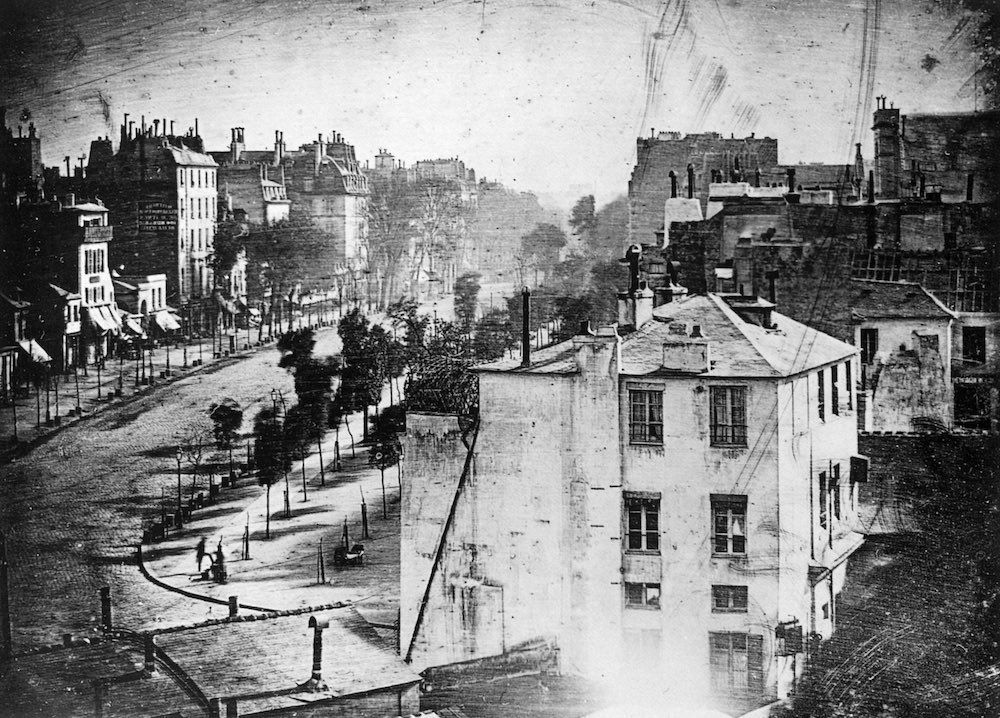
Niépce’s business and inventing partner is much more well-known: Louis Jacques Mandé Daguerre, who went on after Niépce’s death in 1833 to develop the Daguerreotype process, patenting it in 1839. That same year, the first selfie was born. And the year prior Daguerre himself took what most believe to be the very first photograph of a human, in a street scene of the Boulevard du Temple in Paris. The image shows us one of Daguerre’s early successful attempts at image-making, in which, writes NPR’s Robert Krulwich, “he exposed a chemically treated metal plate for ten minutes. Others were walking or riding in carriages down that busy street that day, but because they moved, they didn’t show up.”
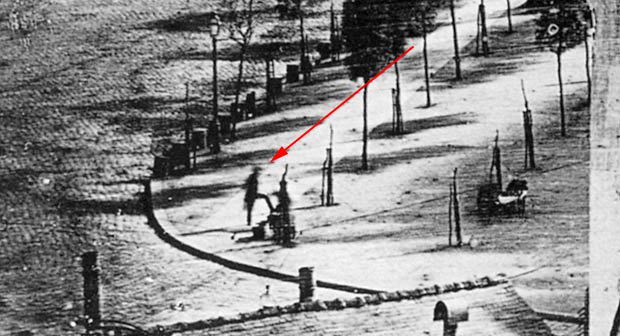
Visible, however, in the lower left quadrant is a man standing with his hands behind his back, one leg perched on a platform. A closer look reveals the fuzzy outline of the person shining his boots. A much finer-grained analysis of the photograph shows what may be other, less distinct figures, including what looks like two women with a cart or pram, a child’s face in a window, and various other passersby. The photograph marks a historically important period in the development of the medium, one in which photography passed from curiosity to revolutionary technology for both artists and scientists.
Although Daguerre had been working on a reliable method since the 1820s, it wasn’t until 1838, the Metropolitan Museum of Art explains, that his “continued experiments progressed to the point where he felt comfortable showing examples of the new medium to selected artists and scientists in the hope of lining up investors.” Photography’s most popular 19th century use—perhaps then as now—was as a means of capturing faces. But Daguerre’s earliest plates “were still life compositions of plaster casts after antique sculpture,” lending “the ‘aura’ of art to pictures made by mechanical means.” He also took photographs of shells and fossils, demonstrating the medium’s utility for scientific purposes.
If portraits were perhaps less interesting to Daguerre’s investors, they were essential to his successors and admirers. Candid shots of people moving about their daily lives as in this Paris street scene, however, proved next to impossible for several more decades. What was formerly believed to be the oldest such photograph, an 1848 image from Cincinnati, shows what appears to be two men standing at the edge of the Ohio River. It seems as though they’ve come to fetch water, but they must have been standing very still to have appeared so clearly. Photography seemed to stop time, freezing a static moment forever in physical form. Blurred images of people moving through the frame expose the illusion. Even in the stillest, stiffest of images, there is movement, an insight Eadweard Muybridge would make central to his experiments in motion photography just a few decades after Daguerre debuted his world-famous method.
Note: An earlier version of this post appeared on our site in 2017.
Related Content:
The First Photograph Ever Taken (1826)
The First “Selfie” In History Taken by Robert Cornelius, a Philadelphia Chemist, in 1839
Josh Jones is a writer and musician based in Durham, NC.
Read More...
A 400-Year-Old Ring that Unfolds to Track the Movements of the Heavens
Rings with a discreet dual purpose have been in use since before the common era, when Hannibal, facing extradition, allegedly ingested the poison he kept secreted behind a gemstone on his finger. (More recently, poison rings gave rise to a popular Game of Thrones fan theory…)
Victorians prevented their most closely kept secrets—illicit love letters, perhaps? Last wills and testaments?—from falling into the wrong hands by wearing the keys to the boxes containing these items concealed in signet rings and other statement-type pieces.
A tiny concealed blade could be lethal on the finger of a skilled (and no doubt, beautiful) assassin. These days, they might be used to collect a bit of one’s attacker’s DNA.
Enter the fictional world of James Bond, and you’ll find a number of handy dandy spy rings including one that doubles as a camera, and another capable of shattering bulletproof glass with a single twist.
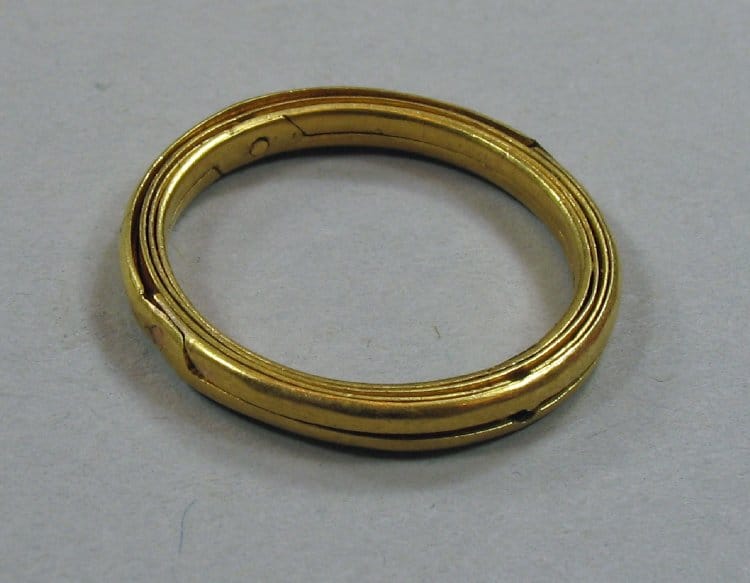
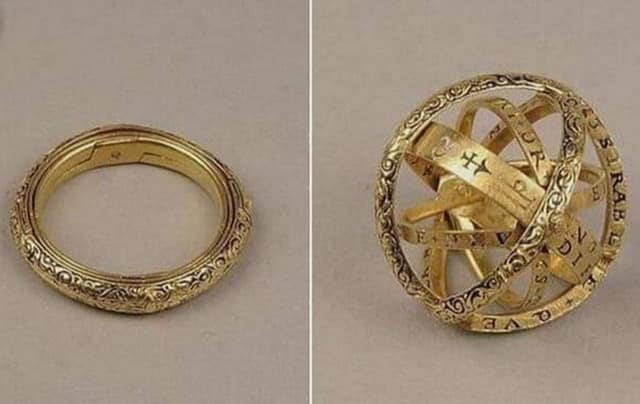
Armillary sphere rings like the ones in the British Museum’s collection and the Swedish Historical Museum (top) serve a more benign purpose. Folded together, the two-part outer hoop and three interior hoops give the illusion of a simple gold band. Slipped off the wearer’s finger, they can fan out into a physical model of celestial longitude and latitude.
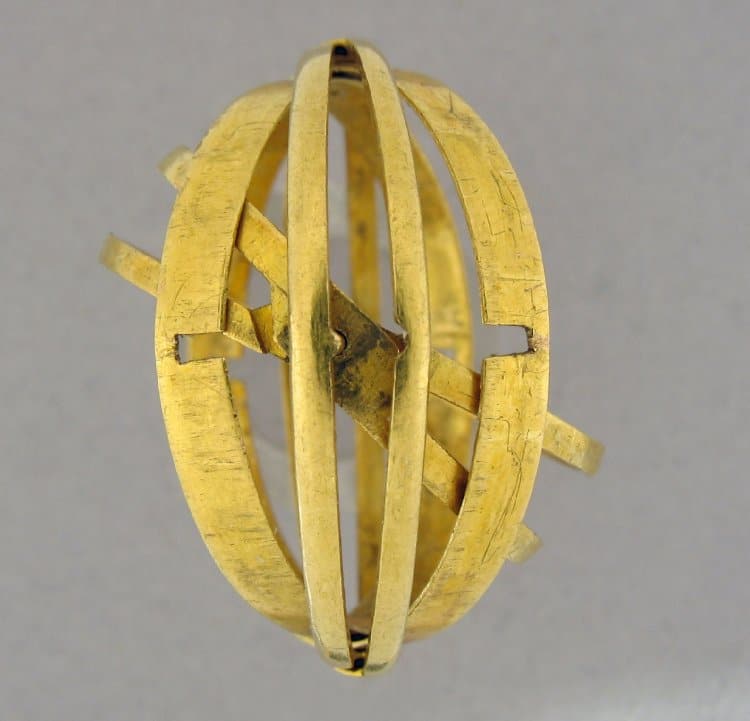
Art historian Jessica Stewart writes that in the 17th century, rings such as the above specimen were “used by astronomers to study and make calculations. These pieces of jewelry were considered tokens of knowledge. Inscriptions or zodiac symbols were often used as decorative elements on the bands.”
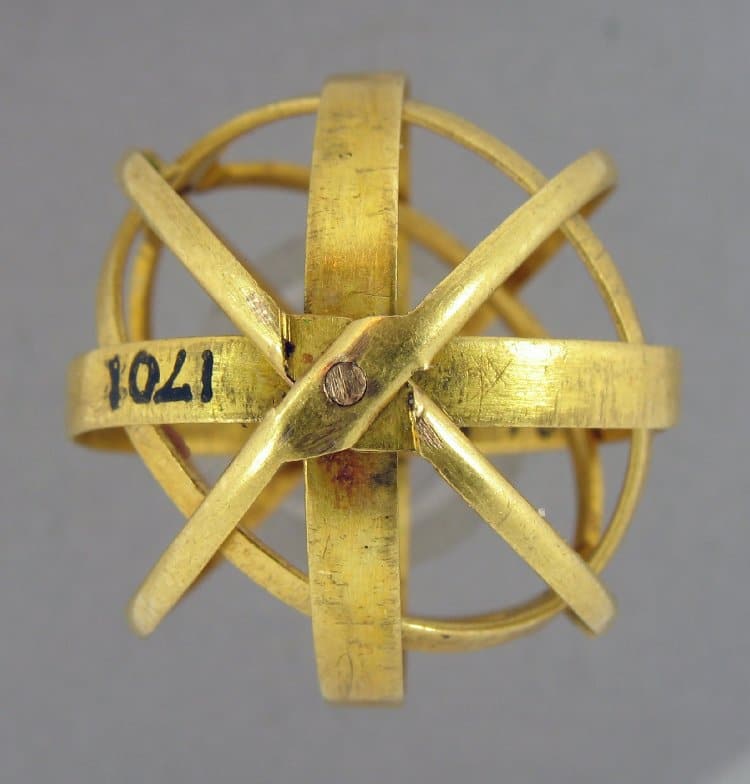
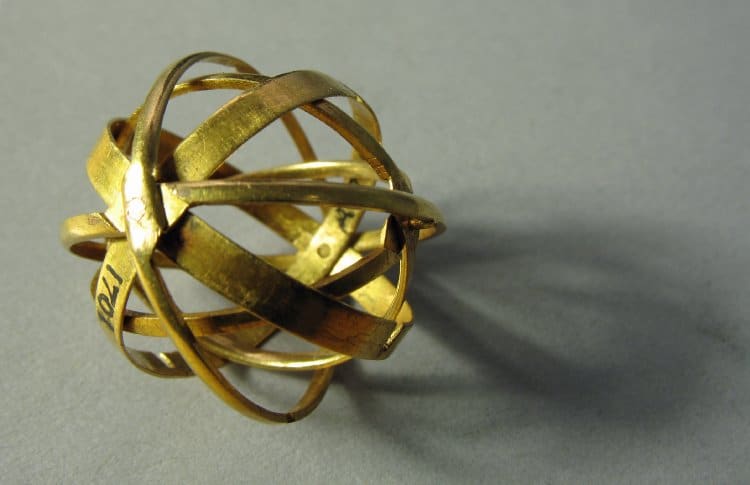
The armillary sphere rings in the British Museum’s collection are made of a soft high-alloy gold.
Jewelry-loving modern astronomers seeking an old school finger-based calculation tool that really works can order armillary sphere rings from Brooklyn-based designer Black Adept.
If you would like to support the mission of Open Culture, consider making a donation to our site. It’s hard to rely 100% on ads, and your contributions will help us continue providing the best free cultural and educational materials to learners everywhere. You can contribute through PayPal, Patreon, and Venmo (@openculture). Thanks!
Related Content:
When Astronomer Johannes Kepler Wrote the First Work of Science Fiction, The Dream (1609)
The Rembrandt Book Bracelet: Behold a Functional Bracelet Featuring 1400 Rembrandt Drawings
Ayun Halliday is an author, illustrator, theater maker and Chief Primatologist in New York City.
Read More...Discover the Oldest Book of the Americas: A Close Look at the Astronomical Maya Codex of Mexico
From the mighty Maya civilization, which dominated Mesoamerica for more than three and a half millennia, we have exactly four books. Only one of them predates the arrival of Spanish conquistadors in the sixteenth century: the Códice Maya de México, or Maya Codex of Mexico, which was created between 1021 and 1152. Though incomplete, and hardly in good shape otherwise, its artwork — colored in places with precious materials — vividly evokes an ancient worldview now all but lost. In the video above from the Getty Museum and Smarthistory, art historians Andrew Turner and Lauren Kilroy-Ewbank tell us what we’re looking at when we behold the remains of this sacred Mayan book, the oldest ever found in the Americas.
“This book has a controversial history,” says Turner. “It was long considered to be a fake due to the strange circumstances in which it surfaced.” After its discovery in a private collection in Mexico City in the nineteen-sixties, it was rumored to have been looted from a cave in Chiapas.
At first pronounced a fake by experts, due to its lack of resemblance to the other extant Mayan texts, it was only verified as the genuine article in 2018. For a non-specialist, the question remains: what is the Códice about? Its purpose, as Kilroy-Ewbank puts it, is astronomical, relaying as it does “information about the cycle of the planet Venus” — which, as Turner adds, “was considered a dangerous planet” by the Mayans.
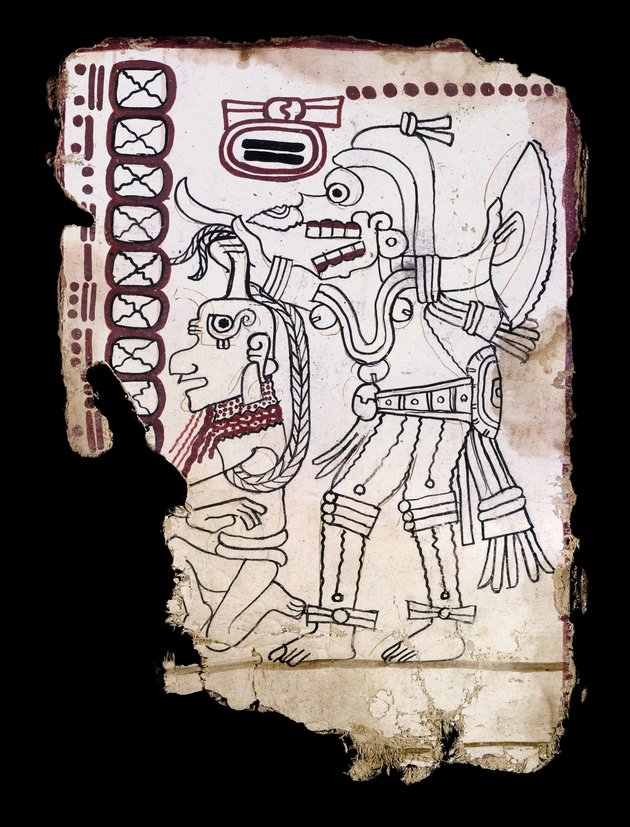
The Códice contains records of Venus’ 584-day cycle over the course of 140 years, testifying to the scrutiny Mayan astronomers gave to its complicated pattern of rising and falling. They thus managed to determine — as many ancient civilizations did not — that it was both the Morning Star and the Evening Star, although they seem to have been more interested in what its movements revealed about the intentions of the deities they saw as controlling it, and thus the likelihood of events like war or famine. Those gods weren’t benevolent: one page shows “a frightful skeletal deity that has a blunt knife sticking out of his nasal cavity,” holding “a giant jagged blade up” with one hand and “the hair of a captive whose head he’s freshly severed” with the other. That’s hardly the sort of image that comes to our modern minds when we gaze up at the night sky, but then, we don’t see things like the Mayans did.
via Aeon
Related content:
A 400-Year-Old Ring that Unfolds to Track the Movements of the Heavens
The Ancient Astronomy of Stonehenge Decoded
How the Ancient Mayans Used Chocolate as Money
Based in Seoul, Colin Marshall writes and broadcasts on cities, language, and culture. His projects include the Substack newsletter Books on Cities and the book The Stateless City: a Walk through 21st-Century Los Angeles. Follow him on the social network formerly known as Twitter at @colinmarshall.
Read More...Aldous Huxley to George Orwell: My Hellish Vision of the Future is Better Than Yours (1949)

In 1949, George Orwell received a curious letter from his former high school French teacher.
Orwell had just published his groundbreaking book Nineteen Eighty-Four, which received glowing reviews from just about every corner of the English-speaking world. His French teacher, as it happens, was none other than Aldous Huxley, who taught at Eton for a spell before writing Brave New World (1931), the other great 20th-century dystopian novel.
Huxley starts off the letter praising the book, describing it as “profoundly important.” He continues, “The philosophy of the ruling minority in Nineteen Eighty-Four is a sadism which has been carried to its logical conclusion by going beyond sex and denying it.”
Then Huxley switches gears and criticizes the book, writing, “Whether in actual fact the policy of the boot-on-the-face can go on indefinitely seems doubtful. My own belief is that the ruling oligarchy will find less arduous and wasteful ways of governing and of satisfying its lust for power, and these ways will resemble those which I described in Brave New World.” (Listen to him read a dramatized version of the book here.)
Basically, while praising Nineteen Eighty-Four, Huxley argues that his version of the future was more likely to come to pass.
In Huxley’s seemingly dystopian World State, the elite amuse the masses into submission with a mind-numbing drug called Soma and an endless buffet of casual sex. Orwell’s Oceania, on the other hand, keeps the masses in check with fear thanks to an endless war and a hyper-competent surveillance state. At first blush, they might seem like they are diametrically opposed but, in fact, an Orwellian world and a Huxleyan one are simply two different modes of oppression.
While we haven’t quite arrived at either dystopian vision, the power of both books is that they tap into our fears of the state. While Huxley might make you look askance at The Bachelor or Facebook, Orwell makes you recoil in horror at the government throwing around phrases like “enhanced interrogation” and “surgical drone strikes.”
You can read Huxley’s full letter below.
Wrightwood. Cal.
21 October, 1949
Dear Mr. Orwell,
It was very kind of you to tell your publishers to send me a copy of your book. It arrived as I was in the midst of a piece of work that required much reading and consulting of references; and since poor sight makes it necessary for me to ration my reading, I had to wait a long time before being able to embark on Nineteen Eighty-Four.
Agreeing with all that the critics have written of it, I need not tell you, yet once more, how fine and how profoundly important the book is. May I speak instead of the thing with which the book deals — the ultimate revolution? The first hints of a philosophy of the ultimate revolution — the revolution which lies beyond politics and economics, and which aims at total subversion of the individual’s psychology and physiology — are to be found in the Marquis de Sade, who regarded himself as the continuator, the consummator, of Robespierre and Babeuf. The philosophy of the ruling minority in Nineteen Eighty-Four is a sadism which has been carried to its logical conclusion by going beyond sex and denying it. Whether in actual fact the policy of the boot-on-the-face can go on indefinitely seems doubtful. My own belief is that the ruling oligarchy will find less arduous and wasteful ways of governing and of satisfying its lust for power, and these ways will resemble those which I described in Brave New World. I have had occasion recently to look into the history of animal magnetism and hypnotism, and have been greatly struck by the way in which, for a hundred and fifty years, the world has refused to take serious cognizance of the discoveries of Mesmer, Braid, Esdaile, and the rest.
Partly because of the prevailing materialism and partly because of prevailing respectability, nineteenth-century philosophers and men of science were not willing to investigate the odder facts of psychology for practical men, such as politicians, soldiers and policemen, to apply in the field of government. Thanks to the voluntary ignorance of our fathers, the advent of the ultimate revolution was delayed for five or six generations. Another lucky accident was Freud’s inability to hypnotize successfully and his consequent disparagement of hypnotism. This delayed the general application of hypnotism to psychiatry for at least forty years. But now psycho-analysis is being combined with hypnosis; and hypnosis has been made easy and indefinitely extensible through the use of barbiturates, which induce a hypnoid and suggestible state in even the most recalcitrant subjects.
Within the next generation I believe that the world’s rulers will discover that infant conditioning and narco-hypnosis are more efficient, as instruments of government, than clubs and prisons, and that the lust for power can be just as completely satisfied by suggesting people into loving their servitude as by flogging and kicking them into obedience. In other words, I feel that the nightmare of Nineteen Eighty-Four is destined to modulate into the nightmare of a world having more resemblance to that which I imagined in Brave New World. The change will be brought about as a result of a felt need for increased efficiency. Meanwhile, of course, there may be a large scale biological and atomic war — in which case we shall have nightmares of other and scarcely imaginable kinds.
Thank you once again for the book.
Yours sincerely,
Aldous Huxley
Note: An earlier version of this post appeared on our site in 2015.
Related Content:
Hear Aldous Huxley Narrate His Dystopian Masterpiece, Brave New World
George Orwell Explains in a Revealing 1944 Letter Why He’d Write 1984
Aldous Huxley to George Orwell: My Hellish Vision of the Future is Better Than Yours (1949)
Aldous Huxley’s Most Beautiful, LSD-Assisted Death: A Letter from His Widow
Jonathan Crow is a writer and filmmaker whose work has appeared in Yahoo!, The Hollywood Reporter, and other publications.
Read More...The 1976 Synth Album That Promised to Help Your Plants Grow: Discover Mother Earth’s Plantasia
In 1973, Peter Tompkins and Christopher Bird’s The Secret Life of Plants became a bestseller. Drawing from the results of scientific studies about whose replicability we may now feel certain doubts, the book suggested that emotion, and indeed sentience, belong not just to humans and animals, but also to, say, the potted fern in your living room. Many of Tompkins and Bird’s readers must have owned such a plant, and probably a variety of others besides, given the nineteen-seventies’ fad for domestic vegetation. Though ridiculed in the major media, The Secret Life of Plants proved sufficiently in tune with its time to inspire a feature-length documentary film with a high-tech soundtrack by none other than Stevie Wonder.
Did Wonder ever hear the album Mother Earth’s Plantasia? Subtitled Warm Earth Music for Plants… and the People Who Love Them, the album also features electronic compositions — exclusively electronic compositions, in fact, performed entirely with a Moog synthesizer. Its composer Mort Garson had been a versatile professional in the world of what was then called “easy listening,” and worked on the writing, arrangement, or production of popular songs like Brenda Lee’s “Dynamite,” Ruby & The Romantics’ “Our Day Will Come,” The Sandpipers’ “Guantanamera,” and Bill Withers’ “Three Nights and a Morning.” Upon meeting Robert Moog himself at a convention in 1967, Garson seems to have undergone a conversion, becoming one of the first composers to dedicate himself to exploring the musical potential of the then-novel synthesizer technology.
The music Garson went on to make with his Moog reflects the zeitgeist: there was Electronic Hair Pieces, with versions of numbers from the musical Hair, a series of twelve discs based on the signs of the zodiac, and even the score that accompanied the Apollo 11 moon landing broadcast. Of particular interest to early electronic music buffs is Black Mass, for which Garson took the pseudonym Lucifer, and which ought to be worth adding to one’s library with Halloween coming up.
Mother Earth’s Plantasia was released in 1976, three years before the Secret Life of Plants movie, though released may not be the right word: it could only be obtained free with purchase of either a houseplant from a shop called Mother Earth on Melrose Avenue in Los Angeles or a Simmons mattress from Sears. As music YouTuber David Hartley explains in his latest video, Garson was asked to create an album of music conducive to plant growth by Mother Earth’s owners, Lynn and Joel Rapp.
For decades thereafter, Mother Earth’s Plantasia could presumably be encountered by serious crate-diggers: the Pharcyde, for example, sampled one of its tracks on “Guestlist” in 2000. But it was only in the twenty-tens, after the establishment of YouTube and its obscure-music-uploading culture, that the album found an audience appreciative enough to inspire a proper release. (Its rediscovery played out similarly to that of Mariya Takeuchi’s “Plastic Love,” the golden tip of the Japanese city pop revival.) Its tracks eventually even appeared in ad campaigns for TurboTax and the French supermarket chain Intermarché. To listeners today, they may sound uncannily like video game music as it would take shape in the eighties, albeit with a soft-edged analog texture. As far as whether it actually helps plants grow, even Joel Rapp’s liner notes can only manage the promise that “it couldn’t possibly hurt.” But I can report that it does a decent job putting my infant twins to sleep.
Related Content:
How the Moog Synthesizer Changed the Sound of Music
Plants Emit High-Pitched Sounds When They Get Cut, or Stressed by Drought, a New Study Shows
Based in Seoul, Colin Marshall writes and broadcasts on cities, language, and culture. His projects include the Substack newsletter Books on Cities and the book The Stateless City: a Walk through 21st-Century Los Angeles. Follow him on the social network formerly known as Twitter at @colinmarshall.
Read More...The Fascinating Story of How the Electric Music Pioneer Delia Derbyshire Created the Original Doctor Who Theme (1963)
We’ve focused a fair bit here on the work of Delia Derbyshire, pioneering electronic composer of the mid-twentieth century—featuring two documentaries on her and discussing her role in almost creating an electronic backing track for Paul McCartney’s “Yesterday.” There’s good reason to devote so much attention to her: Derbyshire’s work with the BBC’s Radiophonic Workshop laid the bedrock for a good deal of the sound design we hear on TV and radio today.
And, as we pointed out previously, her electronic music, recorded under her own name and with the band White Noise, influenced “most every current legend in the business—from Aphex Twin and the Chemical Brothers to Paul Hartnoll of Orbital.”
Yet for all her influence among dance music composers and sound effects wizards, Derbyshire and her music remain pretty obscure—that is except for one composition, instantly recognizable as the original theme to the BBC’s sci-fi hit Doctor Who (hear it at the top), “the best-known work of a ragtag group of technicians,” writes The Atlantic, “who unwittingly helped shape the course of 20th-century music.” Written by composer Ron Grainer, the song was actually brought into being by the Radiophonic Workshop, and by Derbyshire especially. The story of the Doctor Who theme’s creation is almost as interesting as the tune itself, with its “swooping, hissing and pulsing” that “manages to be at once haunting, goofy and ethereal.” Just above, you can see Derbyshire and her assistant Dick Mills tell it in brief.
What we learn from them is fascinating, considering that compositions like this are now created in powerful computer systems with dozens of separate tracks and digital effects. The Doctor Who theme, on the other hand, recorded in 1963, was made even before basic analog synthesizers came into use. “There are no musicians,” says Mills, “there are no synthesizers, and in those days, we didn’t even have a 2‑track or a stereo machine, it was always mono.” (Despite popular misconceptions, the theme does not feature a Theremin.) Derbyshire confirms; each and every part of the song “was constructed on quarter-inch mono tape,” she says, “inch by inch by inch,” using such recording techniques as “filtered white noise” and something called a “wobbulator.” How were all of these painstakingly constructed individual parts combined without multitrack technology? “We created three separate tapes,” Derbyshire explains, “put them onto three machines and stood next to them and said “Ready, steady, go!” and pushed all the ‘start’ buttons at once. It seemed to work.”
The theme came about when Grainer received a commission from the BBC after his well-received work on other series. He “composed the theme on a single sheet of A4 manuscript,” writes Mark Ayres in an extensive online history, “and sent it over from his home in Portugal, leaving the Workshop to get on with it.” Aware that the musique concrète techniques Derbyshire and her team used “were very time-consuming, Grainer provided a very simple composition, in essence just the famous bass line and a swooping melody,” as well as vaguely evocative instructions for orchestration like “wind bubble” and “cloud.” Ayres writes, “To an inventive radiophonic composer such as Delia Derbyshire, this was a gift.” Indeed “upon hearing it,” The Atlantic notes, “a very impressed Grainer barely recognized it as his composition. Due to BBC policies at the time, Grainer—against his objections—is still officially credited as the sole writer.” But the credit for this futuristic work—which sounds absolutely like nothing else of the time and “which brought to a wide audience methods once exclusive to the high modernism of experimental composition”—should equally go to Derbyshire and her team. You can contrast that ahead-of-its-time original theme with all of the iterations to follow in the video just above.
Note: An earlier version of this post appeared on our site in 2016.
Related Content:
Hear Seven Hours of Women Making Electronic Music (1938- 2014)
Two Documentaries Introduce Delia Derbyshire, the Pioneer in Electronic Music
Josh Jones is a writer and musician based in Durham, NC.
Read More...Explore a New Digital Edition of Printing Types, the Authoritative History of Printing & Typography from 1922
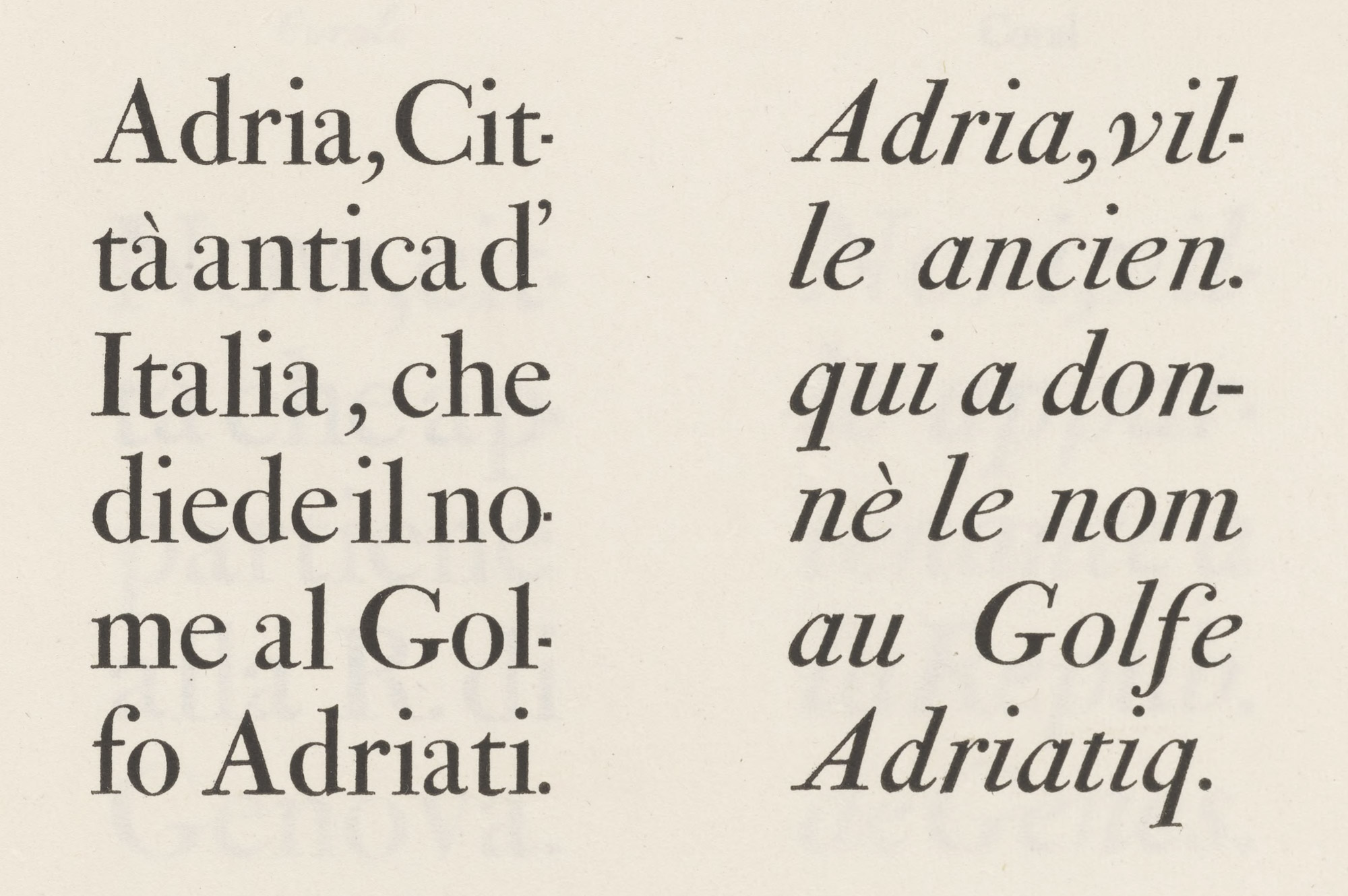
Times New Roman has been around since 1931, longer than most of us have been alive — and for longer than many of us have been alive, word-processing applications have come with it as the default font. We tend, therefore, to regard it less as something created than as something for all intents and purposes eternal, but there was a time when publishers had to actively adopt it. The first American firm to start using Times New Roman was the Merrymount Press, which had already made a highly prestigious name for itself with publications like the elegant Book of Common Prayer financed by no less a captain of industry than J. Pierpont Morgan. But other printers knew Merrymount for a book that would have inspired in them an equally worshipful impulse.
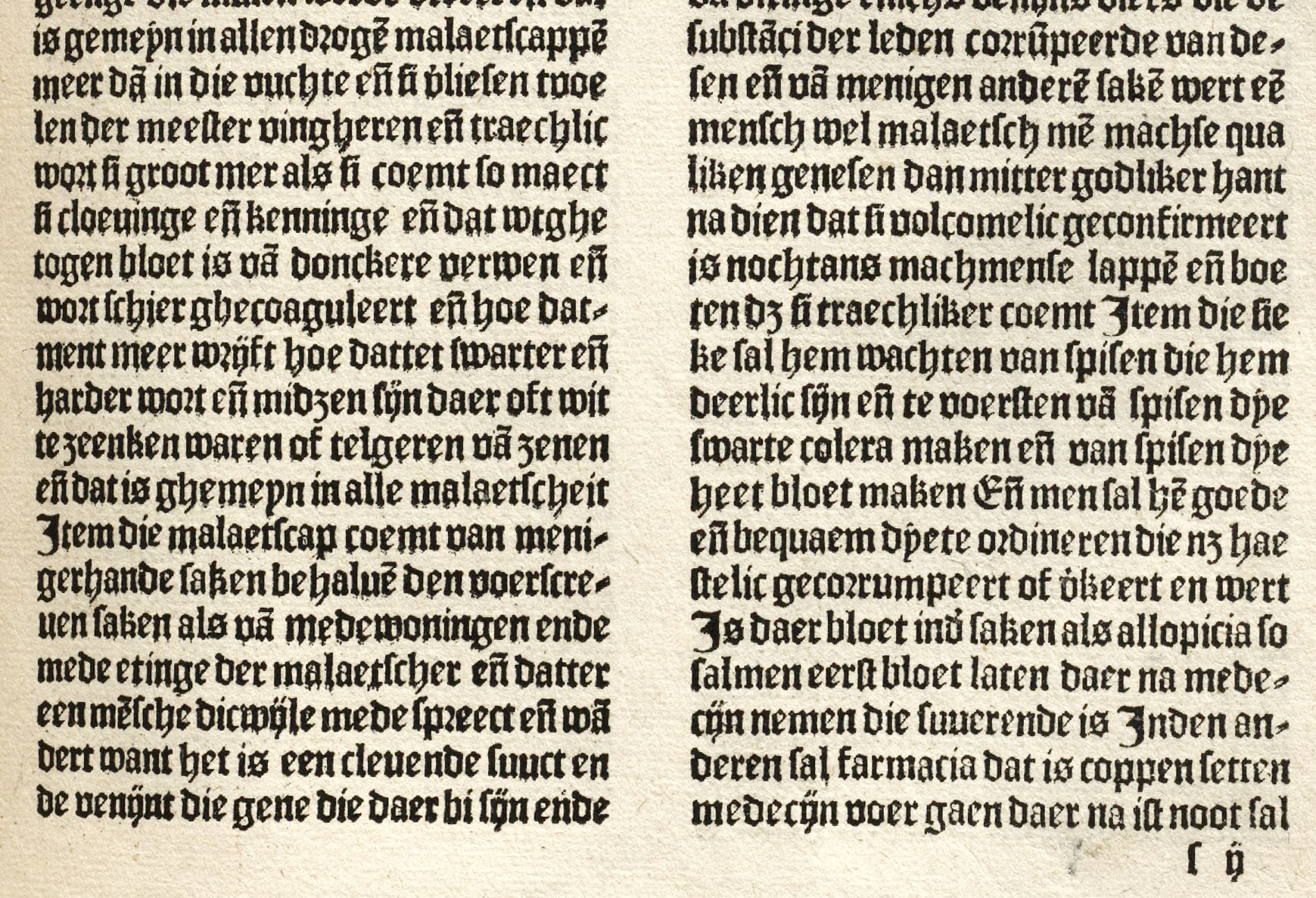
“Released in 1922 with a later revision in 1937,” Printing Types: Their History, Forms and Use “became known as the standard work on the history of [printing and typography] and a basic book for all interested in the graphic arts. This two-volume work spans nearly 450 years and includes detailed analyses of the printers and type designers and their work.”
So writes the designer Nicholas Rougeux, previously featured here on Open Culture for his digital editions of vintage books like Illustrations of the Natural Orders of Plants; British & Exotic Mineralogy; A Monograph of the Trochilidæ, or Family of Humming-Birds; Werner’s Nomenclature of Colours; Euclid’s Elements, and Pierre-Joseph Redouté’s collections of rose and lily illustrations. His latest project to go live is a painstakingly assembled digital edition of Printing Types, which you can explore here.
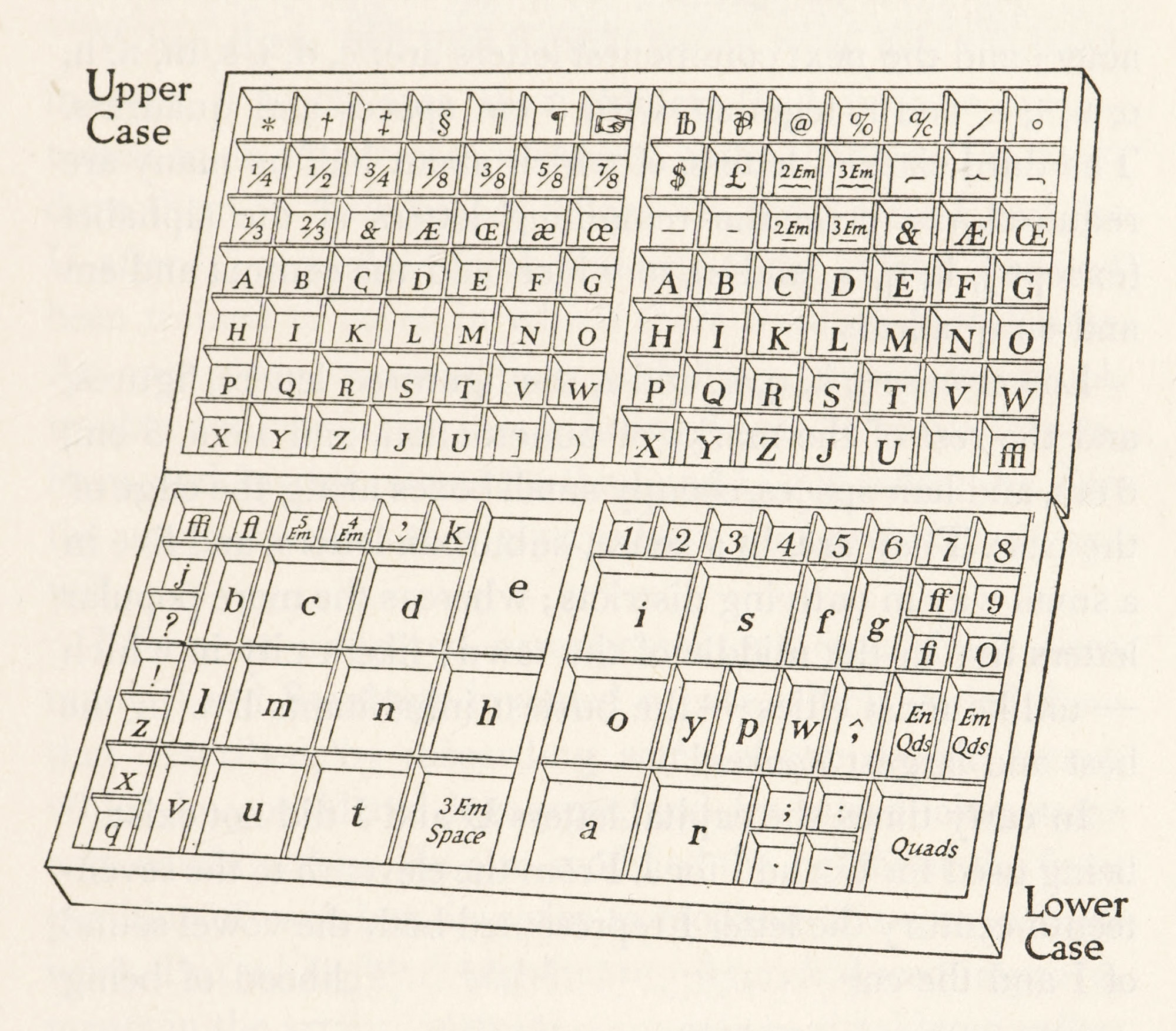
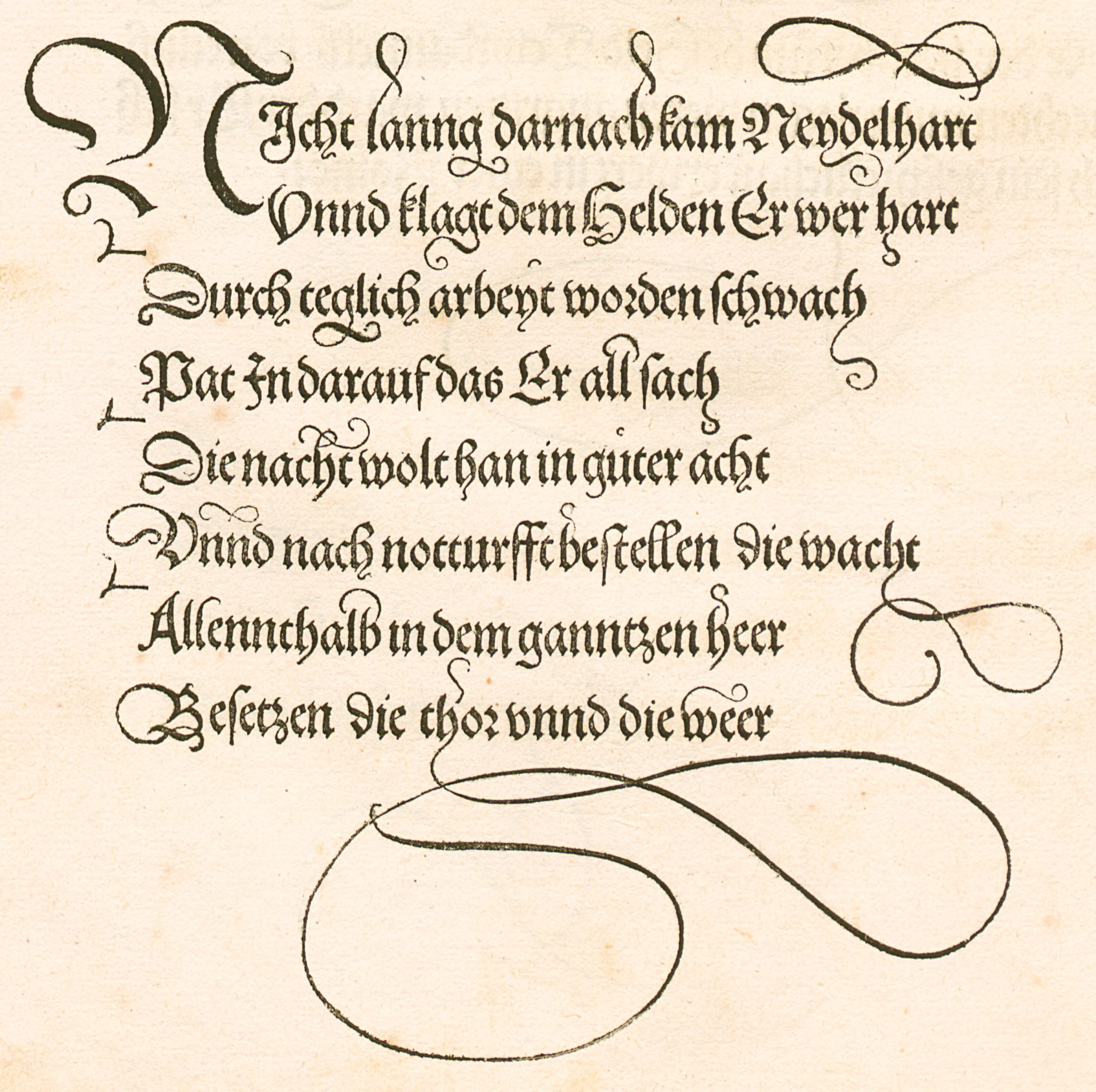
That book was also originally the work of one man, Merrymount Press founder Daniel Berkeley Updike. “During his tenure at Harvard University, he taught a course on Technique of Printing in the Graduate School of Business Administration for five years,” Rougeux writes, “the lectures of which served as the basis for Printing Types.” In the book, Updike offers a history of “the art of typography from the dawn of Western printing in the fifteenth century to the beginning of the twentieth — focusing primarily on European printing in Germany, France, Italy, the Netherlands, Spain, and England as well as the United States.” In tracing “the development of type design,” he also discusses “the importance of each historic period and the lessons they contain for contemporary designers.”
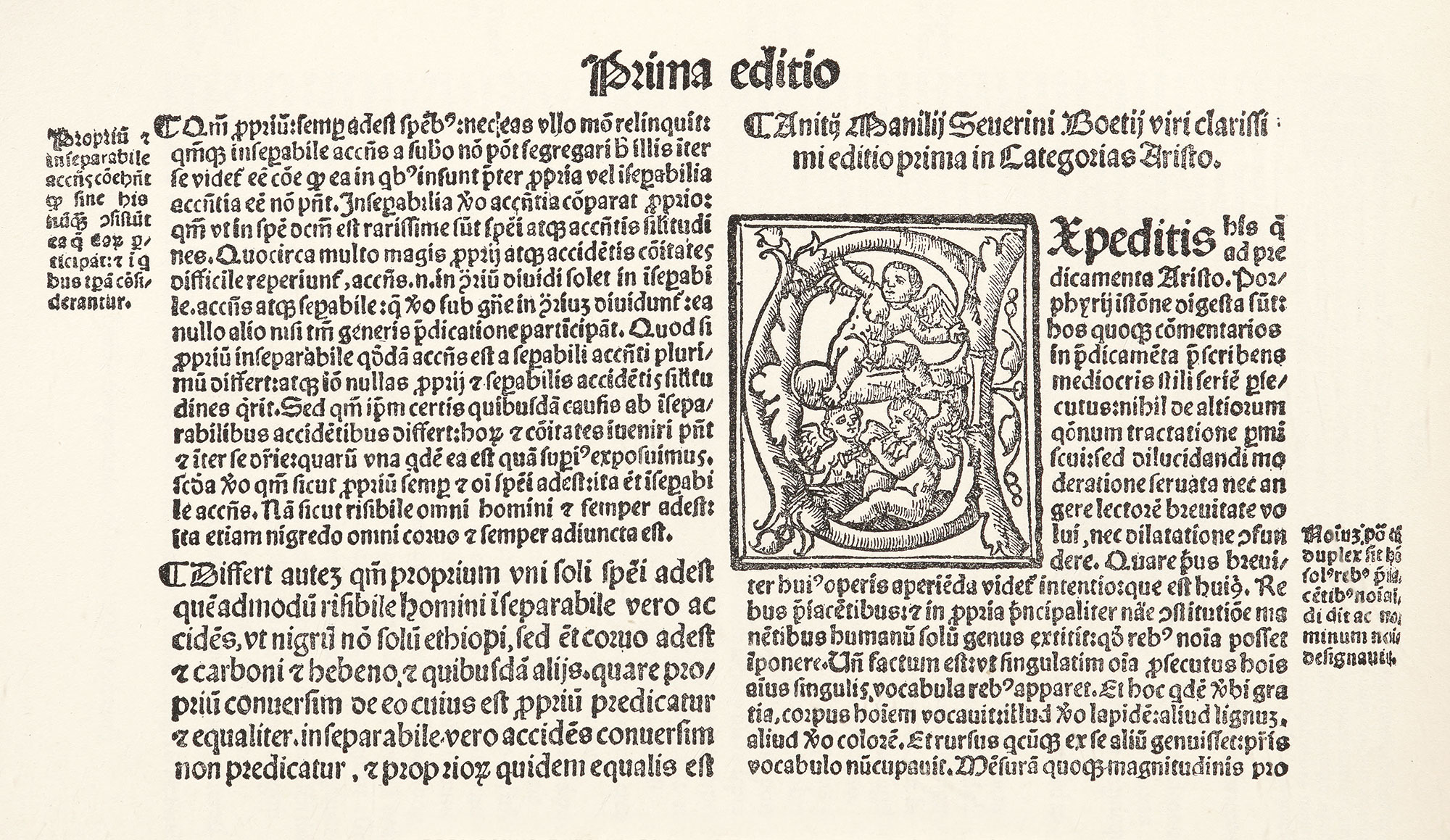
Originally published in 1922 and extensively revised in 1937, Printing Types long stood as the authoritative history of typography in the Latin alphabet, with its “more than 360 facsimile illustrations showcasing examples of typography, borders, flowers, and pages pulled from the books covered.” Tracking down the sources of those illustrations constituted no small part of the painstaking production of Rougeux’s digital edition, and the 100 of them most highly praised by Updike have also been made available for purchase in poster form. For those who do a lot of work with text, in print or digital forms, it could provide just as much motivation as an actual copy of Printing Types on the shelf to find our way beyond the defaults.
Related Content:
The History of Typography Told in Five Animated Minutes
Behold a Digitization of “The Most Beautiful of All Printed Books,” The Kelmscott Chaucer
Fonts in Use: Enter a Giant Archive of Typography, Featuring 12,618 Typefaces
Based in Seoul, Colin Marshall writes and broadcasts on cities, language, and culture. His projects include the Substack newsletter Books on Cities and the book The Stateless City: a Walk through 21st-Century Los Angeles. Follow him on the social network formerly known as Twitter at @colinmarshall.
Read More...A 107-Year-Old Irish Farmer Reflects on the Changes He’s Seen During His Life (1965)
Talk to a clear-headed 107-year-old today, and you could expect to hear stories of adolescence in the Great Depression, or — if you’re lucky — the Jazz Age seen through a child’s eyes. It’s no common experience to have been formed by the age of radio and live deep into the age of the smartphone, but arguably, Michael Fitzpatrick lived through even greater civilizational transformation. Born in Ireland in 1858, he sat for the interview above 107 years later in 1965, which was broadcast on television. That device was well on its way to saturating Western society at the time, as the automobile already had, while mankind was taking to the skies in jetliners and even to the stars in rocket ships.
The contrast between the world into which Fitzpatrick was born and the one in which he eventually found himself is made starker by his being a son of the land. A lifelong farmer, he can honestly reply, when asked to name the biggest change he’s seen, “Machinery.”
Not all of his answers come across quite so clearly, owing to his thick dialect that must surely have gone extinct by now, even in rural Ireland. Luckily, the video comes with subtitles, making it easier to understand what he has to say about the advent of the “mowing machine” and his memories of the Bodyke evictions of the eighteen-eighties, when mêlées broke out over a local landlord’s attempt to oust his destitute tenants.
One can come up with vaguely analogous events to the Bodyke evictions in the modern world, but in essence, they belong to the long stretch of history when to be human meant to engage in agriculture, or to oversee it. The Industrial Revolution didn’t happen at the same pace everywhere at once, and indeed, Fitzpatrick lived the first part of his life in an effectively pre-industrial reality, before witnessing the scarcely believable process of mechanization take place all around him. He experienced, in other words, the arrival of the civilization into which we were all born, and to which we know no alternative. As for those of us of a certain age today, we can expect to be asked six or seven decades hence — assuming we can go the distance — what life was like with only dial-up internet.
Related content:
Real Interviews with People Who Lived in the 1800s
Philosopher Bertrand Russell Talks About the Time When His Grandfather Met Napoleon
1400 Engravings from the 19th Century Flow Together in the Short Animation “Still Life”
A Rare Smile Captured in a 19th Century Photograph
Based in Seoul, Colin Marshall writes and broadcasts on cities, language, and culture. His projects include the Substack newsletter Books on Cities and the book The Stateless City: a Walk through 21st-Century Los Angeles. Follow him on the social network formerly known as Twitter at @colinmarshall.
Read More...40,000-Year-Old Symbols Found in Caves Worldwide May Be the Earliest Written Language
We may take it for granted that the earliest writing systems developed with the Sumerians around 3400 B.C.E. The archaeological evidence so far supports the theory. But it may also be possible that the earliest writing systems predate 5000-year-old cuneiform tablets by several thousand years. And what’s more, it may be possible, suggests paleoanthropologist Genevieve von Petzinger, that those prehistoric forms of writing, which include the earliest known hashtag marks, consisted of symbols nearly as universal as emoji.
The study of symbols carved into cave walls all over the world—including penniforms (feather shapes), claviforms (key shapes), and hand stencils—could eventually push us to “abandon the powerful narrative,” writes Frank Jacobs at Big Think, “of history as total darkness until the Sumerians flip the switch.” Though the symbols may never be truly decipherable, their purposes obscured by thousands of years of separation in time, they clearly show humans “undimming the light many millennia earlier.”
While burrowing deep underground to make cave paintings of animals, early humans as far back as 40,000 years ago also developed a system of signs that is remarkably consistent across and between continents. Von Petzinger spent years cataloguing these symbols in Europe, visiting “52 caves,” reports New Scientist’s Alison George, “in France, Spain, Italy and Portugal. The symbols she found ranged from dots, lines, triangles, squares and zigzags to more complex forms like ladder shapes, hand stencils, something called a tectiform that looks a bit like a post with a roof, and feather shapes called penniforms.”
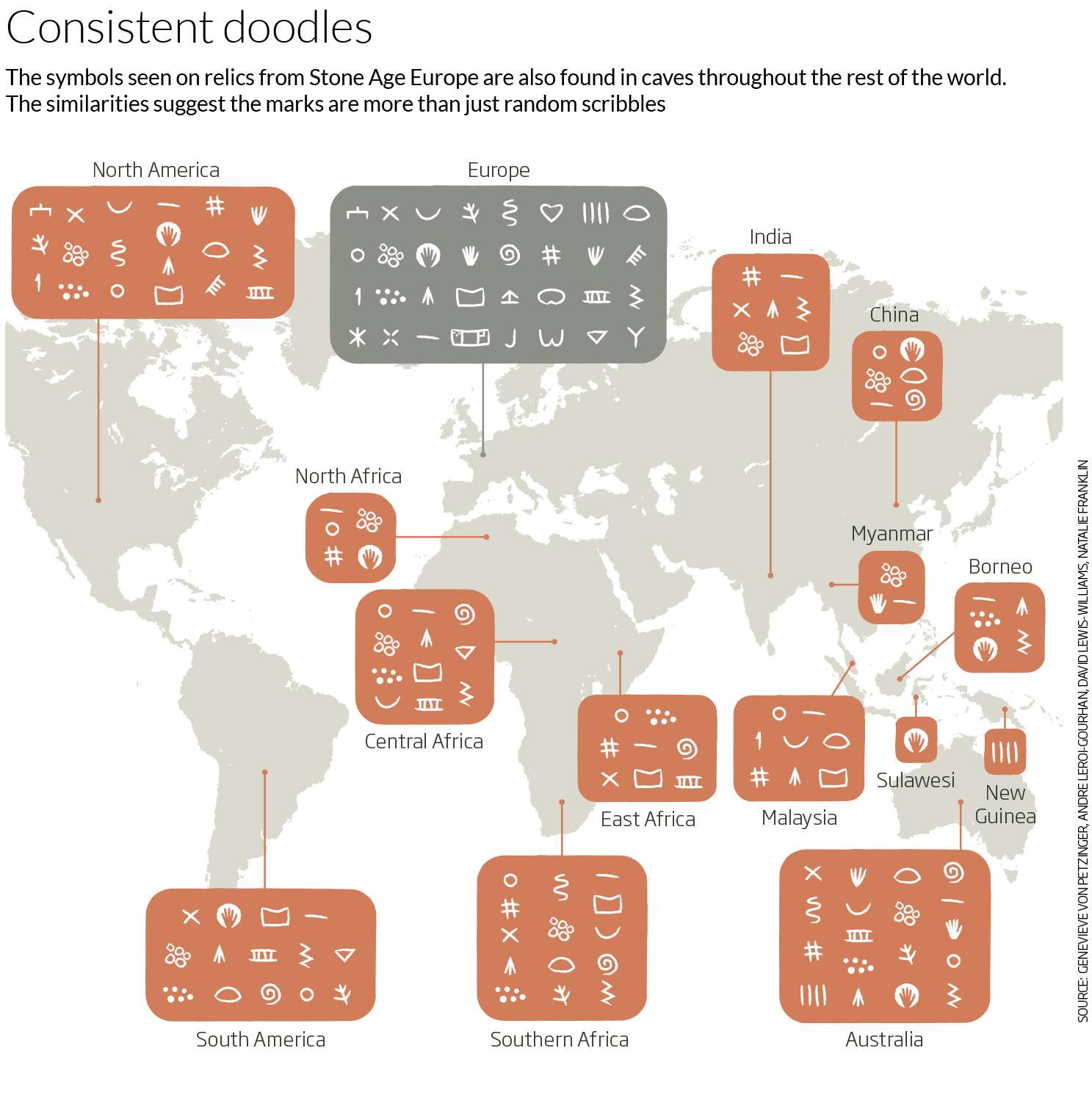
She discovered 32 signs found all over the continent, carved and painted over a very long period of time. “For tens of thousands of years,” Jacobs points out, “our ancestors seem to have been curiously consistent with the symbols they used.” Von Petzinger sees this system as a carryover from modern humans’ migration into Europe from Africa. “This does not look like the start-up phase of a brand-new invention,” she writes in her book The First Signs: Unlocking the mysteries of the world’s oldest symbols.
In her TED Talk at the top, von Petzinger describes this early system of communication through abstract signs as a precursor to the “global network of information exchange” in the modern world. “We’ve been building on the mental achievements of those who came before us for so long,” she says, “that it’s easy to forget that certain abilities haven’t already existed,” long before the formal written records we recognize. These symbols traveled: they aren’t only found in caves, but also etched into deer teeth strung together in an ancient necklace.
Von Petzinger believes, writes George, that “the simple shapes represent a fundamental shift in our ancestors’ mental skills,” toward using abstract symbols to communicate. Not everyone agrees with her. As the Bradshaw Foundation notes, when it comes to the European symbols, eminent prehistorian Jean Clottes argues “the signs in the caves are always (or nearly always) associated with animal figures and thus cannot be said to be the first steps toward symbolism.”
Of course, it’s also possible that both the signs and the animals were meant to convey ideas just as a written language does. So argues MIT linguist Cora Lesure and her co-authors in a paper published in Frontiers in Psychology last year. Cave art might show early humans “converting acoustic sounds into drawings,” notes Sarah Gibbens at National Geographic. Lesure says her research “suggests that the cognitive mechanisms necessary for the development of cave and rock art are likely to be analogous to those employed in the expression of the symbolic thinking required for language.”
In other words, under her theory, “cave and rock [art] would represent a modality of linguistic expression.” And the symbols surrounding that art might represent an elaboration on the theme. The very first system of writing, shared by early humans all over the world for tens of thousands of years.
Note: An earlier version of this post appeared on our site in 2019.
Related Content:
Tracing English Back to Its Oldest Known Ancestor: An Introduction to Proto-Indo-European
Was a 32,000-Year-Old Cave Painting the Earliest Form of Cinema?
Josh Jones is a writer and musician based in Durham, NC.
Read More...Leonardo Da Vinci’s To-Do List from 1490: The Plan of a Renaissance Man
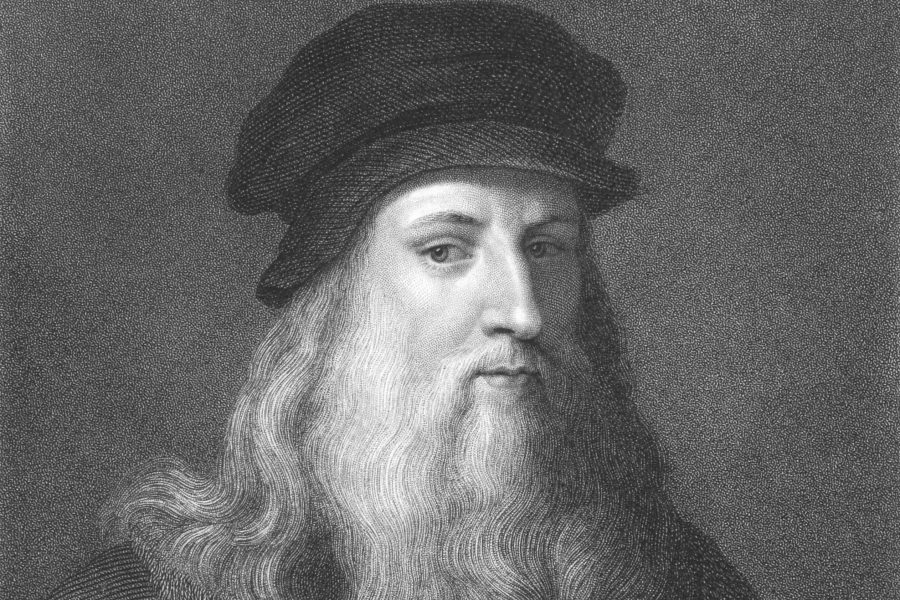
Most people’s to-do lists are, almost by definition, pretty dull, filled with those quotidian little tasks that tend to slip out of our minds. Pick up the laundry. Get that thing for the kid. Buy milk, canned yams and kumquats at the local market.
Leonardo Da Vinci was, however, no ordinary person. And his to-do lists were anything but dull.
Da Vinci would carry around a notebook, where he would write and draw anything that moved him. “It is useful,” Leonardo once wrote, to “constantly observe, note, and consider.” Buried in one of these books, dating back to around the 1490s, is a to-do list. And what a to-do list.
NPR’s Robert Krulwich had it directly translated. And while all of the list might not be immediately clear, remember that Da Vinci never intended for it to be read by web surfers 500 years in the future.
[Calculate] the measurement of Milan and Suburbs
[Find] a book that treats of Milan and its churches, which is to be had at the stationer’s on the way to Cordusio
[Discover] the measurement of Corte Vecchio (the courtyard in the duke’s palace).
[Discover] the measurement of the castello (the duke’s palace itself)
Get the master of arithmetic to show you how to square a triangle.
Get Messer Fazio (a professor of medicine and law in Pavia) to show you about proportion.
Get the Brera Friar (at the Benedictine Monastery to Milan) to show you De Ponderibus (a medieval text on mechanics)
[Talk to] Giannino, the Bombardier, re. the means by which the tower of Ferrara is walled without loopholes (no one really knows what Da Vinci meant by this)
Ask Benedetto Potinari (A Florentine Merchant) by what means they go on ice in Flanders
Draw Milan
Ask Maestro Antonio how mortars are positioned on bastions by day or night.
[Examine] the Crossbow of Mastro Giannetto
Find a master of hydraulics and get him to tell you how to repair a lock, canal and mill in the Lombard manner
[Ask about] the measurement of the sun promised me by Maestro Giovanni Francese
Try to get Vitolone (the medieval author of a text on optics), which is in the Library at Pavia, which deals with the mathematic.
You can just feel Da Vinci’s voracious curiosity and intellectual restlessness. Note how many of the entries are about getting an expert to teach him something, be it mathematics, physics or astronomy. Also who casually lists “draw Milan” as an ambition?
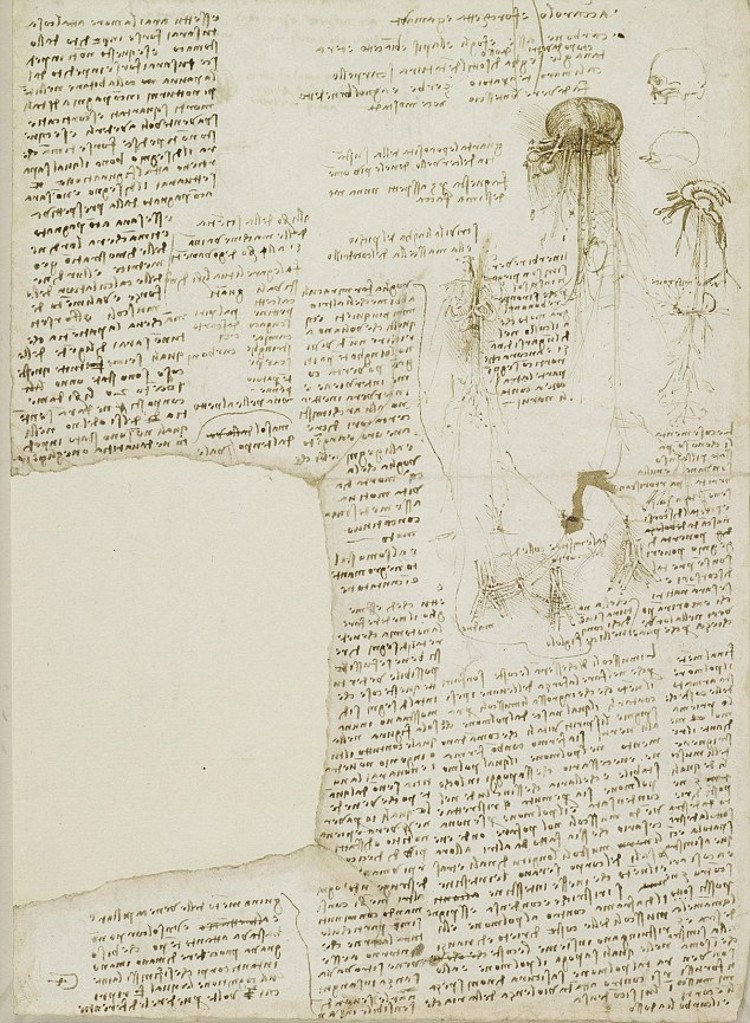
Later to-do lists, dating around 1510, seemed to focus on Da Vinci’s growing fascination with anatomy. In a notebook filled with beautifully rendered drawings of bones and viscera, he rattles off more tasks that need to get done. Things like get a skull, describe the jaw of a crocodile and tongue of a woodpecker, assess a corpse using his finger as a unit of measurement.
On that same page, he lists what he considers to be important qualities of an anatomical draughtsman. A firm command of perspective and a knowledge of the inner workings of the body are key. So is having a strong stomach.
You can see a page of Da Vinci’s notebook above but be warned. Even if you are conversant in 16th century Italian, Da Vinci wrote everything in mirror script.
Note: An earlier version of this post appeared on our site in December, 2014.
If you would like to support the mission of Open Culture, consider making a donation to our site. It’s hard to rely 100% on ads, and your contributions will help us continue providing the best free cultural and educational materials to learners everywhere. You can contribute through PayPal, Patreon, and Venmo (@openculture). Thanks!
Related Content:
Leonardo da Vinci’s Handwritten Resume (Circa 1482)
Thomas Edison’s Hugely Ambitious “To-Do” List from 1888
Umberto Eco Explains Why We Make Lists
Johnny Cash’s Short and Personal To-Do List
Jonathan Crow is a writer and filmmaker whose work has appeared in Yahoo!, The Hollywood Reporter, and other publications.
Read More...Support Us
We're hoping to rely on loyal readers, rather than erratic ads. Please click the Donate button and support Open Culture. You can use Paypal, Venmo, Patreon, even Crypto! We thank you!

About Us

Open Culture scours the web for the best educational media. We find the free courses and audio books you need, the language lessons & educational videos you want, and plenty of enlightenment in between.
Advertise With Us
FREE UPDATES!
GET OUR DAILY EMAIL
Get the best cultural and educational resources on the web curated for you in a daily email. We never spam. Unsubscribe at any time.
FOLLOW ON SOCIAL MEDIA
Open Culture editor Dan Colman scours the web for the best educational media. He finds the free courses and audio books you need, the language lessons & movies you want, and plenty of enlightenment in between.
Advertise With Us

