Hold Me Closer, Tony Danza and Other Misheard Lyrics for Your Listening Pleasure
As the Ramones so memorably didn’t sing, “Twenty-twenty-twenty-four hours to go…I want a piece of bacon.” Substitute ham, and you’ve got yourself Collective Cadenza’s History of Misheard Lyrics, Opus No. 13. The classically trained performers are nothing if not game. The visual aids are ridiculously on message. The goal? A one-take musical compendium of pop’s most commonly misapprehended phrases. (Prior projects include subjecting “What a Wonderful World” to sixteen musical genres and a lovely History of Lyrics That Aren’t Lyrics.)
With all the current debate over the real world worthiness of expensive college educations, it’s reassuring to see recent Julliard grads helping themselves to the crown once sported by Mr. Jaws and Dr. Demento.
And now, readers, it’s your turn to shake it like a polar bear ninja. Was your favorite aural fail acknowledged above? Or will you be using the space below to demand its inclusion in a follow up?
Read More...Watch the World’s Oldest Working Digital Computer — the 1951 Harwell Dekatron — Get Fired Up Again
The next time you feel frustrated with your aging personal computer, just watch the video above. In these fifty seconds, the National Museum of Computing fires up the Harwell Dekatron, also known as the Wolverhampton Instrument for Teaching Computation — or, naturally, the WITCH. Holder of the title of the world’s oldest working original digital computer, the WITCH, first built in 1951, went into retirement from Wolverhampton’s Staffordshire Technical College in 1973. A three-year restoration of the computer — all two-and-a-half tons, 828 flashing Dekatron valves, and 480 relays of it — began in 2008. Now, having just finished returning the machine to tip-top shape, they’ve actually booted it up, as you can see. “In 1951 the Harwell Dekatron was one of perhaps a dozen computers in the world,” The National Museum of Computing’s press release quotes its trustee Kevin Murrell as saying, “and since then it has led a charmed life surviving intact while its contemporaries were recycled or destroyed.”
The Harwell Atomic Energy Research Establishment provided the Dekatron its first tasks, cranking out calculations formerly done by hand. When it passed into obsolescence there in 1957, Staffordshire Technical College took the massive computer off Harwell’s hands, and there it became the WITCH, used for teaching purposes over the next sixteen years. When it outlived even its educational use, the WITCH went on display at the Birmingham Museum of Science and Industry, and finally to dismantlement and storage. Now it offers a whirring, clattering, flashing, retro-technological spectacle to new generations of computer enthusiasts. Some of them may be shocked to learn that, by virtue of sheer age, it doesn’t adhere to some of the very qualities of digital computing they take for granted: it doesn’t calculate in binary code, but decimal code, hence the name “Dekatron.” Though its practical applications would seem limited in the modern world, rest assured that some young hobbyist is even now pondering how to get the thing onto the web.
h/t: BoingBoing
Related content:
A Short History of Romanian Computing: From 1961 to 1989
Colin Marshall hosts and produces Notebook on Cities and Culture. Follow him on Twitter at @colinmarshall.
Read More...How a Crossword Puzzle is Made: Behind the Scenes with The New York Times
If you still subscribe to old-fashioned print newspapers, chances are it’s because you like doing crossword puzzles and putting pen(cil) to paper. If you fall into this camp, we give you this: Will Shortz, the crossword puzzle editor for The New York Times (and the only known person to hold a college degree in enigmatology) presenting a quick, behind-the-scenes look at how the NYT puzzle gets made. Off we go.
Read More...
Great Big Ideas: Free Course Features Top Thinkers Tackling the World’s Most Important Ideas in 12 Lectures
Begun in 2011 by Big Think and the Jack Parker Corporation, The Floating University is an online educational initiative that debuted at Harvard, Yale, and Bard College. The purpose of The Floating University, according to its site, is to “democratize access to the world’s best thinkers” by providing free, approximately one hour-long courses on a wide range of topics, taught at a university level by experts and professors in the various fields. The inaugural course, the most favored at the three universities, is Great Big Ideas, and it more or less does what it says: tackles some of the largest, most perplexing questions in digestible introductions that also manage to be rigorous, informative, and thought-provoking.
In the lecture above, for example, Harvard cognitive psychologist and linguist Steven Pinker presents an “eSeminar” in linguistics, addressing dogged questions in the field over whether or not humans have an innate, universal grammar (as Noam Chomsky has famously argued); why language is so fundamental to our social relationships; and how language evolved.
Pinker, who describes human language in broad terms as a “miracle” and a “window into the human mind,” also gets into the specific subfields of linguistics, discussing them in terms that any layperson can understand without much diluting the fascinating philosophical and scientific debates around what Darwin called our “instinctive tendency to speak” to one another, from infancy onward, all over the world, in some 6000 different languages.
The Great Big Ideas (now added to our list of 1200 Free Online Courses) lecture series consists of twelve lectures total, including Pinker’s. The other eleven are:
- Malthus Miffed: Are People the Problem, the Solution, or Both? An Introduction to Demography and Populations Study Through an Examination of the World’s Population. by Joel Cohen (Columbia).
- The Universe in a Nutshell: The Physics of Everything. by Michio Kaku (CUNY).
- Of the People, by the People, for the People? The Rawls-Nozick Debates as an Introduction to the Philosophy of Politics and Economics. by Tamar Gendler (Yale)
- Do Not Pass Go, Do Not Collect $200: Monopolies as an Introduction to Economics. by Saul Levmore (U Chicago)
- The Psychology of Everything: What Compassion, Racism, and Sex tell us about Human Nature. by Paul Bloom (Yale)
- If You’re So Free, Why Do You Follow Others? The Sociological Science Behind Social Networks and Social Influence. by Nicholas Christakis (Harvard)
- Who Wants to Be a Billionaire? Everything You Need to Know About Finance and Investing in Under an Hour. by William Ackman
- What’s Up, Doc? Is Biomedical Research Really Close to Curing Anything? by Douglas Melton (Harvard)
- Art Now: Aesthetics Across Music, Painting, Architecture, Movies, and More. by Leon Boststein (Harvard)
- Standing on the Shoulders of Giants: The Essential Value of a Classic Education. by Jeffrey Brenzel (Yale)
- The Authority of Ideas: Decoding the DNA of Education in Search of Actual Knowledge. by Lawrence Summers (Harvard)
Josh Jones is a doctoral candidate in English at Fordham University and a co-founder and former managing editor of Guernica / A Magazine of Arts and Politics.
Read More...Reefer Madness, 1936’s Most Unintentionally Hilarious “Anti-Drug” Exploitation Film, Free Online
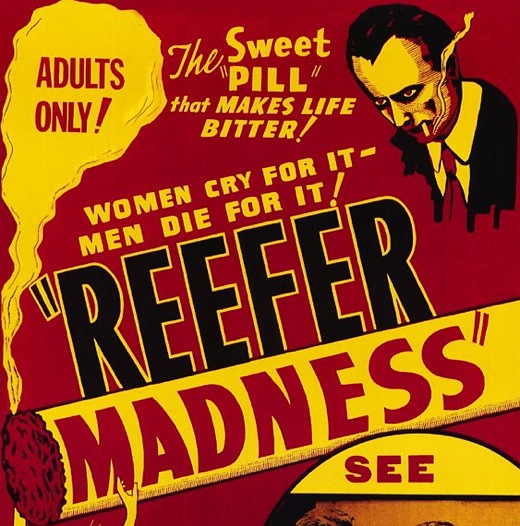
The motion picture you are about to witness may startle you. It would not have been possible, otherwise, to sufficiently emphasize the frightful toll of the new drug menace which is destroying the youth of America in alarmingly increasing numbers. Marihuana is that drug — a violent narcotic — an unspeakable scourge — The Real Public Enemy Number One! Or at least that’s how the opening crawl of Reefer Madness tells it.
Also known, in other forms, as Tell Your Children, The Burning Question, Dope Addict, Doped Youth and Love Madness, the film has spent the past forty years accruing cult credibility on the (highly overlapping) midnight-movie and cannabis-culture circuits. That peculiar spelling of what we know as marijuana reveals only a whiff of its distinctive blend of hand-wringing salaciousness, aggressive squareness, and sheer ignorance. Keith Stroup, founder of the National Organization for the Reform of Marijuana Laws, spotted the movie’s unintended comedic potential back in 1971, when he bought a print and began college-campus screenings. It today draws more prolonged, disbelieving guffaws and chortles than ever before.
Since Reefer Madness has fallen into the public domain, you can hold your own midnight screening nearly without effort by watching it online. Behold the deeply askew motion picture that began as a church-funded morality play, got into the hands of early exploitation-film icon Dwain Esper (he of 1934’s Maniac, 1937’s How to Undress in Front of Your Husband, and 1938’s Sex Madness), and wound up as an uproarious mainstay of hazy university auditoria. While the film clearly knows nothing of marijuana or its real effects — or, seemingly, of the real effects of any narcotic — that doesn’t stop its script from yielding a host of resonant lines. These run from the “straightforward question” of whether “you have, perhaps unwillingly, acquired a certain habit through association with certain undesirable people” to the recollection of having been “high enough to take over the marines and the navy” to that immortal imperative, “Bring me some reefers!” Laugh if you must, but bear in mind the final words from the solemn Dr. Carroll: “The next tragedy may be that of your daughter’s… or your son’s… or yours… or yours… or yours!”
You can always find Reefer Madness in our collection, 4,000+ Free Movies Online: Great Classics, Indies, Noir, Westerns, Documentaries & More.
Related content:
This is What Oliver Sacks Learned on LSD and Amphetamines
Bela Lugosi Discusses His Drug Habit as He Leaves the Hospital in 1955
Beyond Timothy Leary: 2002 Film Revisits History of LSD
Colin Marshall hosts and produces Notebook on Cities and Culture. Follow him on Twitter at @colinmarshall.
Read More...Noam Chomsky Spells Out the Purpose of Education
E + ducere: “To lead or draw out.” The etymological Latin roots of “education.” According to a former Jesuit professor of mine, the fundamental sense of the word is to draw others out of “darkness,” into a “more magnanimous view” (he’d say, his arms spread wide). As inspirational as this speech was to a seminar group of budding higher educators, it failed to specify the means by which this might be done, or the reason. Lacking a Jesuit sense of mission, I had to figure out for myself what the “darkness” was, what to lead people towards, and why. It turned out to be simpler than I thought, in some respects, since I concluded that it wasn’t my job to decide these things, but rather to present points of view, a collection of methods—an intellectual toolkit, so to speak—and an enthusiastic model. Then get out of the way. That’s all an educator can, and should do, in my humble opinion. Anything more is not education, it’s indoctrination. Seemed simple enough to me at first. If only it were so. Few things, in fact, are more contentious (Google the term “assault on education,” for example).
What is the difference between education and indoctrination? This debate rages back hundreds, thousands, of years, and will rage thousands more into the future. Every major philosopher has had one answer or another, from Plato to Locke, Hegel and Rousseau to Dewey. Continuing in that venerable tradition, linguist, political activist, and academic generalist extraordinaire Noam Chomsky, one of our most consistently compelling public intellectuals, has a lot to say in the video above and elsewhere about education.
First, Chomsky defines his view of education in an Enlightenment sense, in which the “highest goal in life is to inquire and create. The purpose of education from that point of view is just to help people to learn on their own. It’s you the learner who is going to achieve in the course of education and it’s really up to you to determine how you’re going to master and use it.” An essential part of this kind of education is fostering the impulse to challenge authority, think critically, and create alternatives to well-worn models. This is the pedagogy I ended up adopting, and as a college instructor in the humanities, it’s one I rarely have to justify.
Chomsky defines the opposing concept of education as indoctrination, under which he subsumes vocational training, perhaps the most benign form. Under this model, “People have the idea that, from childhood, young people have to be placed into a framework where they’re going to follow orders. This is often quite explicit.” (One of the entries in the Oxford English Dictionary defines education as “the training of an animal,” a sense perhaps not too distinct from what Chomsky means). For Chomsky, this model of education imposes “a debt which traps students, young people, into a life of conformity. That’s the exact opposite of what traditionally comes out of the Enlightenment.” In the contest between these two definitions—Athens vs. Sparta, one might say—is the question that plagues educational reformers at the primary and secondary levels: “Do you train for passing tests or do you train for creative inquiry?”
Chomsky goes on to discuss the technological changes in education occurring now, the focus of innumerable discussions and debates about not only the purpose of education, but also the proper methods (a subject this site is deeply invested in), including the current unease over the shift to online over traditional classroom ed or the value of a traditional degree versus a certificate. Chomsky’s view is that technology is “basically neutral,” like a hammer that can build a house or “crush someone’s skull.” The difference is the frame of reference under which one uses the tool. Again, massively contentious subject, and too much to cover here, but I’ll let Chomsky explain. Whatever you think of his politics, his erudition and experience as a researcher and educator make his views on the subject well worth considering.
Josh Jones is a doctoral candidate in English at Fordham University and a co-founder and former managing editor of Guernica / A Magazine of Arts and Politics.
Read More...The Drinking Party, 1965 Film Adapts Plato’s Symposium to Modern Times
The word “symposium” tends to conjure images of a formal, academic gathering, which it most often is these days. It’s kind of a stuffy word, but it shouldn’t be. In Plato’s day, it was simply a drinking party, the kind you might have with a group of brainy acquaintances when the last course is cleared, there’s no shortage of wine, and no one has to work the next day. (This being ancient Greece, these were all-male affairs). Plutarch defined a symposium as “a passing of time over wine, which, guided by gracious behavior, ends in friendship.” Plato’s Symposium, the best-known of his dialogues, is much more in the latter vein—a celebration among accomplished friends to mark the triumph of the poet Agathon’s first tragedy. The dialogue contains seven speeches on love, including of course, one from Plato’s primary mouthpiece Socrates. But the main draw is comic playwright Aristophanes; no undergraduate who takes a philosophy course forgets his romantic origin myth, in which love actually is a yearning for one’s missing other half.
When writer and director Jonathan Miller decided to adapt Plato’s classic text into a film in 1965, he evidently decided to combine both the modern, academic definition of “symposium” and its classical precedent. His film is called The Drinking Party, and involves its share of that in moderation (as in the original), but it also transposes Plato’s casual gathering to a group of students in formal attire dining on a neo-Classical terrace with an Oxford don, their classics master. Each character adopts the role of one of Plato’s Symposium speakers. A few things to note here: the excerpt above is of relatively high quality, but the complete film itself (below) did not fare nearly as well: transferred from a well-worn 16mm print from a university archive, the film is muddy, scratched and quite dim. This is too bad. Miller’s film, which was shown to college philosophy students in the 60s and 70s, sunk into cultural oblivion for a couple decades, and copies of it are very rare. Nonetheless, this is well worth watching, particularly for students of philosophy. The Drinking Party was produced as part of a mid-60s arts documentary series called “Sunday Night,” which ran from 1965–1968.
Related Content:
Find The Symposium and other great works in our collection of 375 Free eBooks.
Josh Jones is a doctoral candidate in English at Fordham University and a co-founder and former managing editor of Guernica / A Magazine of Arts and Politics.
Read More...Filmmaker Errol Morris Gives Us “11 Excellent Reasons Not to Vote?”
All throughout this interminably long presidential election cycle, which has been going on since at least 2010, I’ve had a laser-like focus on political news. You might even call it a death grip. Because I’m a politics junkie. It’s a disease, I know, I recognize I need help, and I’ll get it—after November 6th. As a politics junkie, I am subject to a certain severe irritation: profound exasperation with those mythical beasts called “undecided voters,” who are even more galling than third party voters are to hyper-partisans. “What?” I shout at the radio, when one of these crypto-zoological creatures calls in. “You dreamers, you oblivious blockheaded dreamers!” I shout, and other things. Yes, in my mania, I’ve shouted these things at the radio, because how can people not have made up their minds months ago, been glued to internet news and opinion for hours, pored over miniscule policy details, destroyed their eyesight, collapsed their spine under the weight of civic duty? How, indeed. But perhaps (and every politics junkie fears this possibility), the undecided voters aren’t idiots—perhaps they’re thoughtful, kind, trusting, truly… dare I say it, independent….
Now with all of our weird vitriol directed at the “undecideds,” preternaturally myopic junkies lose sight of a bloc with the power to bend, break, or shatter the scales altogether—non-voters. In a nation that has expended trillions of dollars, thousands of lives, and quite a lot of international good will to give others the right to vote in Iraq, Libya, Afghanistan, we make a pretty poor showing at the polls every four years, with roughly half of us declining to exercise our fundamental right to vote for our leaders. Think about that: half. Fifty percent of Americans: when women only won the right in 1920 and after amending the Constitution. When African Americans fought for a hundred years and only fully won the right in 1965 with the Voting Rights Act. These are significant–if significantly belated—achievements, and, to be sure, they’re the reason so many people treasure their vote as a precious token of political autonomy. But non-voters are an invisible enigma: no one talks much about the appallingly low turnout in this country, except to mention it in passing. So documentary filmmaker Errol Morris (The Thin Blue Line, The Fog of War), provocateur and social critic, decided to discuss the issue with over 50 people under the age of 40. The result is the short film above, teasingly titled “11 Reasons Not to Vote?”
What Morris found confounds the faithful—the junkies scowling into their microfiche readers. Non-voters, and the undecided, can take a larger view; as Morris points out in his accompanying New York Times essay, non-voters not only comment on the fact that no major party candidate has discussed issues so many people care about—poverty, climate change, the drug war, the dysfunctional prison system—but non-voters realize that if no one’s talking, nothing will be done. Some of them may be cynical, but many more may justly say they’re realists. Perhaps it’s us, the voters, who are dreamers.
The 11 reasons Morris gives, with tongue lodged in cheek, are as follows (with my explanatory glosses in parentheses):
- You can’t depend on demigods (Hint: politicians aren’t demigods, even when they seem so)
- Like jazz, apathy is an American art form (slack, an appropriate response to political fundamentalism?)
- Florida (debacle, year 2000)
- The Electoral College (does anyone understand this thing?)
- Missed entrepreneurial opportunities (one vote, one price)
- Potential extradition (absentee ballot if under rendition?)
- Awkward family dinners (voting out of spite for family members)
- Traffic (accidents on the way to polls canceled out by dating opportunities at the polls)
- Forced analogies (warning: involves football)
- Overzealous advocates (carrots and sticks)
- Masculinity is underappreciated (The Man: stick it to him)
I come away from Morris’s exercise subdued, not cured, but perhaps ready to wean myself away enough to look at why we make elections matter so much, when they seem to do so little for so many. That said, however, I’m still going to vote. The comment that struck me more than any other was this: “If you don’t vote, you cancel your own vote.” Morris replies, “that’d be stupid.” And it would be, I think, damn it all.
Josh Jones is a doctoral candidate in English at Fordham University and a co-founder and former managing editor of Guernica / A Magazine of Arts and Politics.
Read More...Helen Keller Pays a Visit to Martha Graham’s Dance Studio Circa 1954
Helen Keller’s story is remarkable. With the help of Anne Sullivan, Keller (1880–1968) escaped from a “double dungeon of darkness and silence” and achieved great things. In 1904, she graduated from Radcliffe College (now Harvard), becoming the first deaf blind person to earn a B.A. in the U.S.. She went on to write 14 books (a few more than the rest of us) and championed important political causes. A radical at heart, she backed women’s suffrage and birth control movements, helped found the ACLU, urged pacifism, and railed against capitalism. She counted many world leaders and cultural luminaries as friends, palling around with figures like Charlie Chaplin and Mark Twain. And then there’s the time she paid a visit to the dance studio of Martha Graham and gained a tactile introduction to modern dance. The narrator describes the memorable scene fairly well. But, if you want more backstory and photos, you should head over to BrainPickings to get the bigger picture.
Related Must-See Video: Helen Keller and Anne Sullivan Together in 1930
Read More...Richard Linklater’s Slacker, the Classic Gen‑X Indie Film
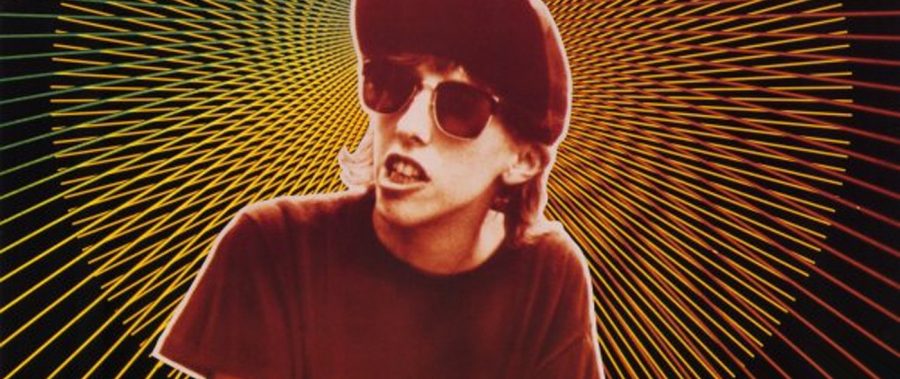
Think back to the American independent film boom (sometimes known as “indiewood”) of the nineties. Which of that time’s fresh-faced auteurs strike you as important? Which of their first features retain their impact? Quentin Tarantino’s Reservoir Dogs, certainly; Kevin Smith’s Clerks, which summoned a vast fan culture out of nowhere; Robert Rodriguez’s much-discussed “$7,000 movie” El Mariachi; Steven Soderbergh’s concept-proving Sex, Lies, and Videotape, perhaps the bellwether of the entire movement. But you may underestimate Richard Linklater’s low-key debut Slacker at your peril.
He constructed the 1991 film (available to view on YouTube) as a series of set pieces — some irreverent, some meandering, and some bizarre, but most all of them with stealthily universal resonance — taking place across the college town of Austin, Texas. Douglas Coupland having coined the term “Generation X” with his eponymous novel less than four months before, the North American zeitgeist had come to take serious, if smirking, notice of all these slouchy twentysomethings who seemed to turn up without warning, spouting endless streams of ideas, theories, wisecracks, and elaborate plans, yet drained of anything recognizable as ambition. These slackers, as we now call them without hesitation, make up the dramatis personæ of Slacker. You can see them in their own peculiar type of action by watching the picture free online.
The first slacker to appear, a deeply conflicted motormouth in the back seat of a taxi, comes played by Linklater himself. He seems normal enough, essentially an aimless late-twentysomething you still meet in coffee shops today. But as the camera drifts from block to block, from neighborhood to Austin neighborhood, picking up on any low-momentum story it can, behaviors turn stranger. A bookstore clerk who lives for JFK conspiracy theories logorrheically describes his own book-in-progress on the subject to a helpless acquaintance. A skinny student type living in a room crammed with televisions and even wearing one on back claims desperation to own yet another set. Two fellows egg a third on to throw a typewriter off a bridge and thus symbolically finalize a breakup. And let us never forget the immortal segment wherein Butthole Surfers drummer Teresa Taylor attempts to sell what she describes as a “Madonna pap smear.” Like the early films of Tarantino, Smith, and Rodriguez, Slacker remains thrillingly fun to watch, especially for the enthusiast of micro-budget cinema. But somewhere around its final passage, which begins when a slacker picks up the Pixelvision camera through which we ourselves see the next few minutes, you realize you’ve been watching something on a higher plane. Forced to bet which of the films of this movement scholars will relish enthusiastically a century from now, I’d bet on Slacker, which has now beed added to our ever-expanding list, 4,000+ Free Movies Online: Great Classics, Indies, Noir, Westerns, Documentaries & More.
Related Content:
My Best Friend’s Birthday, Quentin Tarantino’s 1987 Debut Film
Colin Marshall hosts and produces Notebook on Cities and Culture. Follow him on Twitter at @colinmarshall.
Read More...Support Us
We're hoping to rely on loyal readers, rather than erratic ads. Please click the Donate button and support Open Culture. You can use Paypal, Venmo, Patreon, even Crypto! We thank you!

About Us

Open Culture scours the web for the best educational media. We find the free courses and audio books you need, the language lessons & educational videos you want, and plenty of enlightenment in between.
Advertise With Us
FREE UPDATES!
GET OUR DAILY EMAIL
Get the best cultural and educational resources on the web curated for you in a daily email. We never spam. Unsubscribe at any time.
FOLLOW ON SOCIAL MEDIA
Open Culture editor Dan Colman scours the web for the best educational media. He finds the free courses and audio books you need, the language lessons & movies you want, and plenty of enlightenment in between.
Advertise With Us

