Alain de Botton Presents Ten Virtues for the Modern Day
At the end of my college years, I found I needed to take one final political science course to complete my major. I chose a small summer session on the subject of virtue. Having enrolled with no idea what to expect, I finished the quarter less changed by the assigned readings and classroom discussions than by the very — and very unusual — task of having to think about virtue at all. Jokes about the distance of virtue from modern college students’ minds write themselves, but Alain de Botton, a man given to much thought and writing about such lost topics, suspects that the same condition afflicts all of us. Hence his introducing, under the banner of his institution The School of Life, the Virtues Project. It emerges into an unreceptive environment. As de Botton puts it in this introductory post, “In the modern world, the idea of trying to be a ‘good person’ conjures up all sorts of negative associations: of piety, solemnity, bloodlessness and sexual renunciation, as if goodness were something one would try to embrace only when other more difficult but more fulfilling avenues had been exhausted.”
“Throughout history,” he continues, “societies have been interested in fostering virtues, in training us to be more virtuous, but we’re one of the first generations to have zero public interest in this.” In order to bring that number up, de Botton and The School of Life have enumerated ten simple but universal virtues — resilience, empathy, patience, sacrifice, politeness, humor, self-awareness, forgiveness, hope, and confidence — and embedded them in a manifesto, of which you can download a handsome PDF version. This provides the foundational text of the Virtues Project, a component of de Botton’s larger mission, laid out in his recent book Religion for Atheists, to repurpose for modern society the elements of faith that have demonstrated practical value throughout history. Since my adult life, which effectively began as that last poli-sci course ended, has chiefly presented the challenge of winning and maintaining my own self-respect, I’ll be committing these ten virtues to memory, and no doubt watching for the Virtues Project’s lectures and public events to come.
Related content:
Alain de Botton Wants a Religion for Atheists: Introducing Atheism 2.0
Socrates on TV, Courtesy of Alain de Botton (2000)
Alain de Botton Proposes a Kinder, Gentler Philosophy of Success
Colin Marshall hosts and produces Notebook on Cities and Culture and writes essays on literature, film, cities, Asia, and aesthetics. He’s at work on a book about Los Angeles, A Los Angeles Primer. Follow him on Twitter at @colinmarshall.
Read More...The Scared Is Scared: A Child’s Wisdom for Starting New Chapters (Creative or Otherwise) in Life
The future’s uncertainty has paralyzed many an artist. How to begin?
Were you to take the advice of 6‑year-old Asa Baker-Rouse, you might show the word “start” in a box, add an equals sign, frame it with a box, make the word orange, then green, then white in a green box….
Asa is both narrator and muse of The Scared is Scared, the final project of recent Middlebury College grad, Bianca Giaever’s independently designed Narrative Studies major. Rather than hand the boy a script, she allowed him to determine the course of her film, literally visualizing his spontaneous monologue with the help of several game friends, a trick implemented earlier in Holy Cow Lisa, which built on an interview with her college advisor.
The result should appeal to anyone who had a soft spot for PeeWee’s Playhouse’s Penny cartoons. It’s cute all right, but The Scared is Scared also boasts an effortless-seeming profundity. Asa may be of the age where piano-shaped cookies and secret sleepovers represent the pinnacle of anarchy, but he’s got an ancient master’s take on things coming to their inevitable end. By committing to roll with whatever unknowns this child might supply, Giaver taps into a rich vein of creativity. Along the way, she makes peace with a very familiar-feeling unknown, the fate of the young artist leaving college’s cozy embrace.
It turns out to be a perfect place to start.
Related Content:
One of the Biggest Risks is Being Too Cautious…
Paulo Coelho on The Fear of Failure
J.K. Rowling Tells Harvard Grads Why Success Begins with Failure
Read More...
How Spike Lee Got His First Big Break: From She’s Gotta Have It to That Iconic Air Jordan Ad
“Film found me,” says Spike Lee in the clip above from mediabistro’s “My First Big Break” series. We may now know him as one of his generation’s most outspoken, conviction-driven American filmmakers, but he says he only got into the game because he couldn’t land a job. Entering the long, hot, unemployed summer of 1977, the young Lee spied a Super‑8 movie camera in a friend’s house. Borrowing it, he roamed the streets of an unusually down-at-heel New York City, shooting the exuberant emergence of disco, the anxiety over the Son of Sam killings, the unrest that bubbled up during blackouts, and the countless other facets of urban life he’s continued to explore throughout his career. Encouraged by a film professor at Morehouse College, he then put in the hours to edit all this footage he’d simply grabbed for fun into a documentary called Last Hustle in Brooklyn. Nearly a decade later, he made his first feature, She’s Gotta Have It, an early entry in what would become the American indie film boom of the nineties.
Lee not only directed She’s Gotta Have It, but played one of its most memorable characters, a smooth-talking hustler of a b‑boy named Mars Blackmon. Mars cares about having the freshest gear, a trait he shares with the man who created him. This did not escape the notice of famous advertising agency Wieden+Kennedy; when a couple of their employees saw Lee’s performance as Mars, they knew they’d found the ideal pitchman for one of their client’s products. The company: Nike. The product: the Air Jordan. As surprised as anyone that such a major firm and the iconic athlete Michael Jordan would take a chance on a young director, Lee went ahead and shot the commercial above, which announced him as a new force in the late-1980s zeitgeist. To learn much more about this period of Lee’s career and its subsequent development, watch his episode of Inside the Actors Studio. Though considerably less of a motormouth than Mars Blackmon, Lee tells a compelling story, especially his own.
Related content:
40 Great Filmmakers Go Old School, Shoot Short Films with 100 Year Old Camera
Colin Marshall hosts and produces Notebook on Cities and Culture and writes essays on literature, film, cities, Asia, and aesthetics. He’s at work on a book about Los Angeles, A Los Angeles Primer. Follow him on Twitter at @colinmarshall.
Read More...Read Jane Austen’s Fiction Manuscripts Free Online
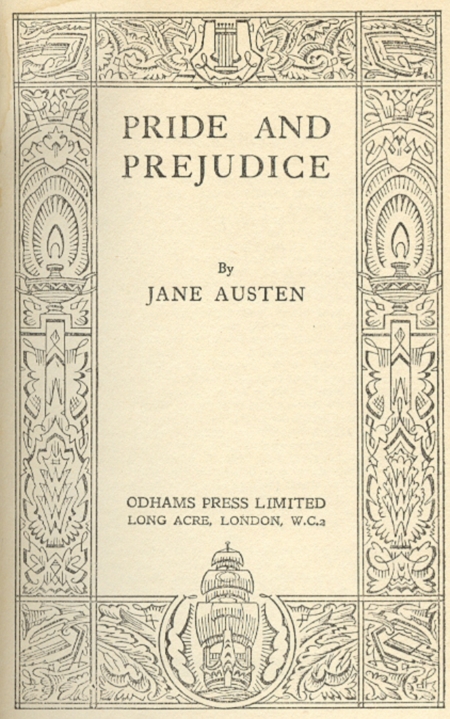
“Currently, it seems, Jane Austen is hotter than Quentin Tarantino.” Martin Amis wrote this in the New Yorker back in 1996, when Tarantino had cultural heat to spare. Even today, as the filmmaker rides high on another one of his periodic waves of pop-cultural exuberance and controversy-courting violence, Austen may still win the popularity contest. Her much-read, often-adapted second novel Pride and Prejudice has, in fact, just passed its 200th anniversary of publication, and its reputation as a reliably sharp and engaging comedy seems stronger than ever.
Especially striking for a novel of its age, this reputation appears to have also grown wider than ever. Though some have always dismissed her — and will always dismiss her — as a writer of mere romantic fiction meant solely for women, admiration for Austen knows no demographic boundaries. Just look at her high-profile living male enthusiasts, a group that ranges from Amis to venture capitalist and essayist Paul Graham, who names Austen as one of his heroes. “In her novels I can’t see the gears at work,” Graham writes. “Though I’d really like to know how she does what she does, I can’t figure it out, because she’s so good that her stories don’t seem made up.”
“When I was introduced to the novel, at the age of fourteen,” Amis writes of Pride and Prejudice, “I read twenty pages and then besieged my stepmother’s study until she told me what I needed to know. I needed to know that Darcy married Elizabeth. (I needed to know that Bingley married Jane.) I needed this information as badly as I had ever needed anything. Pride and Prejudice suckers you. Amazingly — and, I believe, uniquely — it goes on suckering you.” And if that 200-year-old novel fails to sucker you, perhaps its 202-year-old predecessor Sense and Sensibility or its 199-year-old successor Mansfield Park will. You can browse Austen’s hand-written manuscripts pertaining to these and other of her novels in Jane Austen’s Fiction Manuscripts, an online joint project from the University of Oxford and King’s College London. Austen’s fanbase, perhaps because of its broadness, seems to contain relatively few obsessive exegetes (compared to, say, acolytes of Thomas Pynchon), but you can only read her six novels so many times before feeling a need, if a vain one, to glimpse those “gears at work.” And if this contact with Austen’s creative spirit moves you to write your own adaptation of Pride and Prejudice, why not think outside the box and check on Tarantino’s availability to direct?
Copies of Pride and Prejudice can be found in our collection of Free Audio Books and Free eBooks.
You can also download free audio versions of Jane Austen novels if you take part in the free trial programs offered by Audible.com and FreeAudioBooks.com.
Related content:
Dominic West (aka Jimmy McNulty) Reads Jane Austen
Nietzsche, Melville, Jane Austen & More: The Latest Audio Book Classics Released by Librivox
Colin Marshall hosts and produces Notebook on Cities and Culture and writes essays on literature, film, cities, Asia, and aesthetics. He’s at work on a book about Los Angeles, A Los Angeles Primer. Follow him on Twitter at @colinmarshall.
Read More...Jack Kerouac’s Naval Reserve Enlistment Mugshot, 1943

In the summer of 1942, Jack Kerouac followed in the footsteps of Joseph Conrad and Eugene O’Neill and went to sea. After dropping out of Columbia University the previous Fall, the 20-year-old Kerouac signed up for the merchant marine and shipped out aboard the U.S. Army Transport ship Dorchester.
Although World War II had broken out at about the time of his departure from Columbia, Kerouac’s motives for going to sea were more personal than patriotic. “My mother is very worried over my having joined the Merchant Marine,” Kerouac wrote in his journal at the time, “but I need money for college, I need adventure, of a sort (the real adventure of rotting wharves and seagulls, winey waters and ships, ports, cities, and faces & voices); and I want to study more of the earth, not out of books, but from direct experience.”
In October of 1942, after completing a voyage to and from an Army command base in Greenland (which he would later write about in Vanity of Duluoz), Kerouac left the merchant marine and returned to Columbia. That was lucky, because most of the Dorchester’s crew–more than 600 men–died three months later when the ship was torpedoed by a German U‑boat. But the restless Kerouac lasted only a month at Columbia before dropping out again and making plans to return to sea. In December of 1942 he enlisted in the U.S. Naval Reserve. He wanted to join the Naval Air Force, but failed an aptitude test. So on February 26, 1943 he was sent to the Naval Training Station in Newport, Rhode Island. That’s apparently when the photograph above was taken of the young Kerouac with his military haircut. It would have been right around the time of his 21st birthday.
Kerouac lasted only 10 days in boot camp. As Miriam Klieman writes at the National Archives, “The qualities that made On the Road a huge success and Kerouac a powerful storyteller, guide, and literary icon are the same ones that rendered him remarkably unsuitable for the military: independence, creativity, impulsivity, sensuality, and recklessness.” According to files released by the government in 2005, Naval doctors at Newport found Kerouac to be “restless, apathetic, seclusive” and determined that he was mentally unfit for service, writing that “neuropsychiatric examination disclosed auditory hallucinations, ideas of reference and suicide, and a rambling, grandiose, philosophical manner.” He was sent to the Naval Hospital in Bethesda Maryland and eventually discharged.
For more on Kerouac’s brief adventure in the Navy, read Kleiman’s Article, “Hit the Road, Jack! Kerouac Enlisted in the U.S. Navy But was Found ‘Unfit for Service’ ”
Related content:
Jack Kerouac Reads from On the Road, 1959
Jack Kerouac’s 30 Revelations for Writing Modern Prose
Read More...An Animated Interpretation of Billy Collins’ Poem, “Forgetfulness”
Some twenty-five years ago, my acting class spent an entire semester on the plays of Anton Chekhov. At the time, it felt very vital, but like so much else I studied in college, what I wound up retaining is sadly piecemeal. One thing I do remember is the youngest of the Three Sisters breakdown upon realizing that they’ll never make it to Moscow. At the heart of this freak-out is her despair that she, and everyone who matters to her, is aging, a condition she defines as diminishment. It seemed a bit over-the-top to me at the time. For god’s sake, she’s only 24. So what if she can’t remember a few words of schoolgirl Italian? Two and a half decades out, I was misremembering her name as Anya, a momentary confusion easily righted on my third Google search.
(IRINA. (Sobbing.) Where? Where has it all gone? Where is it? Oh my God, my God! I have forgotten everything, forgotten everything… Everything is confused in my head… I can’t remember what is the word for window in Italian, or for ceiling… I am forgetting everything, I forget more every day, and life flies past and never returns, never, and we will never go to Moscow… I see now that we will never go…)
I flashed on this long ago meltdown while watching “Forgetfulness,” the lovely animation of the Billy Collins poem, above. As Collins lists the seemingly inconsequential things lost, it occurred to me that the central “you” could stand for anybody: you, me, an elderly relative, Chekhov’s Irina. (Not Anya. If we’re to make it to Moscow, we better get cracking.)
We’re lucky to have artists like Chekhov, Collins, and by extension, animator Julian Grey, all possessed of the ability to imbue one of mankind’s most depressing and timely realities with tenderness and lyricism. Perhaps you’ll remember someone with whom to share “Forgetfulness”.
Related Content:
Billy Collins Poetry to Animated Life
The Animation of Billy Collins’ Poetry
Ayun Halliday describes some of the places she has been (not Moscow) in No Touch Monkey! And Other Travel Lessons Learned Too Late.
Read More...152 Big Thinkers Answer the Question “What Should We Be Worried About?”
It’s a new year, which means it’s time for the Edge.org to pose its annual question to some of the world’s finest minds. The 2013 edition asks the question, “What Should We Be Worried About?”. And the replies — 152 in total — feature thoughts by Nassim Nicholas Taleb, Daniel Dennett, Sherry Turkle, Lawrence Krauss, and Esther Dyson, plus the ones excerpted below. If you’re willing to go down the rabbit hole, you can access the complete collection of responses here.
What I fear most is that we will lack the will and the foresight to face the world’s problems squarely, but will instead retreat from them into superstition and ignorance. Consider how in 375 AD, after a dream in which he was whipped for being “a Ciceronian” rather than a Christian, Saint Jerome resolved no more to read the classical authors and to restrict himself only to Christian texts, how the Christians of Alexandria murdered the philosopher and mathematician Hypatia in 415, and realize that, at least in part, the so-called dark ages were not something imposed from without, a breakdown of civilization due to barbarian invasions, but a choice, a turning away from knowledge and discovery into a kind of religious fundamentalism. [Read the rest here.]
–Tim O’Reilly, Founder and CEO of O’Reilly Media, Inc.
Death is what makes this cyclical renewal and steady advance in organisms possible. Discovered by living things millions of years ago, aging and death permit a species to grow and flourish. Because natural selection ensures that the child-who-survives-to-reproduce is better than the parent (albeit infinitesimally so, for that is how evolution works), it is better for many species that the parent step out of the way and allow its (superior) child to succeed in its place.… So important is death that we have, wired into our genes, a self-destruct senescence program that shuts down operations once we have successfully reproduced, so that we eventually die, leaving our children—the fresher, newer, shinier versions of ourselves—to carry on with the best of what we have given them: the best genes, the best art, and the best ideas. Four billion years of death has served us well. Now, all this may be coming to an end, for one of the things we humans, with our evolved intelligence, are working hard at is trying to eradicate death.[Read the rest here.]
–Kate Jeffery, Head, Dept. of Cognitive, Perceptual and Brain Sciences, University College, London
Most of the smart people I know want nothing to do with politics. We avoid it like the plague… Is this because we feel that politics isn’t where anything significant happens? Or because we’re too taken up with what we’re doing, be it Quantum Physics or Statistical Genomics or Generative Music? Or because we’re too polite to get into arguments with people? … It’s politics that’s bleeding the poorer nations for the debts of their former dictators. It’s politics that allows special interests to run the country. It’s politics that helped the banks wreck the economy. It’s politics that prohibits gay marriage and stem cell research but nurtures Gaza and Guantanamo.… What worries me is that while we’re laissez-ing, someone else is faire-ing. [Read the rest here]
–Brian Eno, Artist, Composer, Producer
You can dive into the full collection at Edge.org. The photo above was taken by Katinka Matson.
Read More...Writers’ Houses Gives You a Virtual Tour of Famous Authors’ Homes
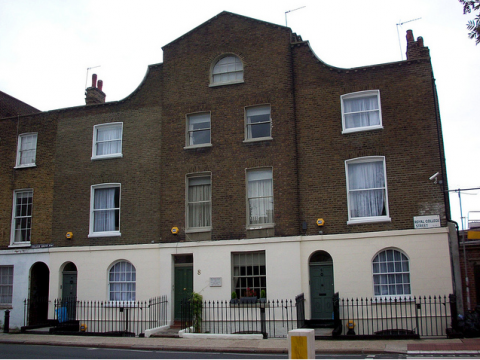 I’ve always been somewhat amused by the accounts of Paul Verlaine and Arthur Rimbaud’s brief bohemian affair. The older, married, and internally tortured Catholic Verlaine’s pining for the self-destructive and precocious young Rimbaud always presents a ridiculous picture in prose. But it’s a picture that takes on much clearer contours when, for the first time, I get to see the house they occupied on 8 Royal College Street (above). The image of the house, with its forbidding brick façade, gives their really pretty unpleasant story a gravitas that literary history can’t approach. Whether seen in person or in a photograph, the effect of viewing any revered author’s home is similar: histories once subject to biographers’ caprice take on the irrefutable weight of physical reality. And while I’d love to have the luxury of a pilgrimage to all my literary heroes’ homes, I’m content with the next best thing: an internet tour in pictures. That’s exactly what one gets at the Writers’ Houses site, which has collected dozens of images of famous writers’ homes, sourced mainly from user photos.
And so homebodies like myself can read their favorite Edna St. Vincent Millay sonnets while gazing at her Austerlitz, NY home “Steepletop” (below, a bit more modest than I’d imagined):
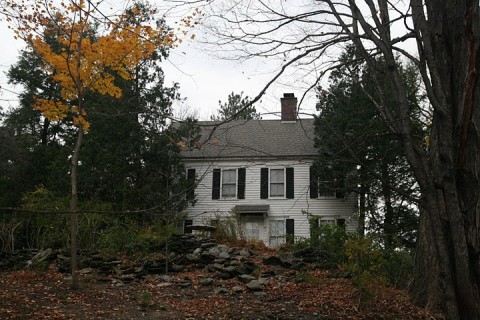
Likewise, I can read Flannery O’Connor’s grotesque little stories and be continually amazed that she did not emerge from some Medieval cloister in a fiery Southern wild but from the bright, rambling farmhouse called “Andalusia” (below).

And while I can only connect Thomas Hardy’s country gothic novels and bleak poetry with the terminal despair of a man who never leaves his firelit study in some sturdy, formal estate, his little cottage (below) is really kind of cheery and resembles something out of Peter Jackson’s Shire (though Hardy’s “Max Gate” home in Dorchester is exactly what I picture him in).

The Writers’ Houses site allows you to browse by author, state, and city, with a separate category for “international houses.” Its main page is a regular blog with a wealth of current information on writers’ homes, replete with links to other sites and sources. For lovers of travel and architectural and literary history, this is not to be missed.
via Kottke
Josh Jones is a doctoral candidate in English at Fordham University and a co-founder and former managing editor of Guernica / A Magazine of Arts and Politics.
Read More...The Epistemology of Dr. Seuss & More Philosophy Lessons from Great Children’s Stories
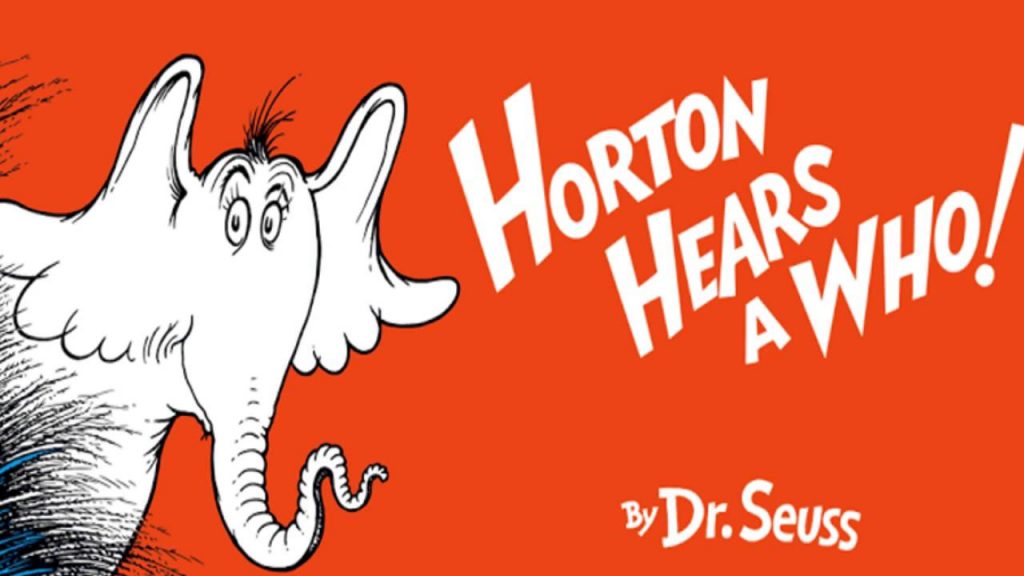
Now for a story which “raises questions about the theory and nature of knowledge.” An elephant “hears a faint noise coming from a small speck of dust; it seems to him like a tiny person is calling out for help.” He “finds it peculiar that a dust speck could speak so he reasons that there must be a very small creature on it. Without being able to see the creature, he seems to know it is there and that it is his duty to save it from harm. The other animals in the jungle see him speak to the dust speck and find it impossible that there could be a creature living on it.” Met with only disbelief, “he holds tight to what he knows is true and learns from the voice that there exists an entire universe.” At last, the speck’s resident tiny townspeople “come together and make enough noise for the animals to hear; they have proven their existence and the jungle animals are able to know what Horton has known all along.” Most of us have read this classic children’s book, Horton Hears a Who! by Dr. Seuss. But how many of us have probed its “questions about the nature of human knowledge”?
The last paragraph’s quoted text all comes from Teaching Children Philosophy’s Horton Hears a Who module. The project, an outgrowth of Mount Holyoke College professor Tom Wartenberg’s course “Philosophy for Children,” comes premised on the notion not only that youngsters can learn philosophy, but that they possess minds particularly well-suited to its study. Teaching Children Philosophy draws out the relevant philosophical issues and questions from the books they’ve been reading already, from the epistemology of Horton Hears a Who! to the metaphysics of Sylvester and the Magic Pebble to philosophy of mind in Harold and the Purple Crayon. Targeted toward parents, educators, and kids themselves, the site promises great solace to any philosophically minded reader (or reader-aloud) of children’s stories who feel they have long since exhausted the depths of these beloved slim volumes. “How does Horton know that this voice means there is a person on the speck?” “Is the moon that Harold draws the same as the moon we can see in the sky at night?” “If Sylvester is still a donkey because he thinks, what happens when Sylvester is not thinking?” You supply the children’s books, and Wartenberg and company supply the philosophy.
Related content:
Free Philosophy Courses from our Collection of 550 Free Online Courses from Top Universities
Colin Marshall hosts and produces Notebook on Cities and Culture. Follow him on Twitter at @colinmarshall.
Read More...200 Free Kids Educational Resources: Video Lessons, Apps, Books, Websites & More
This collection provides a list of free educational resources for K‑12 students (kindergarten through high school students) and their parents and teachers. Please tell us if we’re missing something valuable.
Below you will find free video lessons/tutorials; free mobile apps; free audiobooks, ebooks and textbooks; quality YouTube channels; free foreign language lessons; test prep materials; and free web resources in academic subjects like literature, history, science and computing.
Home Schooling Resources
- Free Zoom Artistic Backgrounds: If you would like to customize your Zoom background, you can find free art from Hayao Miyazaki’s Studio Ghibli (the makers of Princess Mononoke, Spirited Away, etc.) You can also get free art from world class museums. Instructions for customizing the background can be found here.
- Free Online Resources for Schools: A collection of resources curated by SchoolChoiceWeek.com. It covers communication platform resources, math and science resources, social studies resources and more.
- School Kit: A New Zealand organization provides free activities to NZ teachers and classrooms, using basic materials.
- Khan Academy: Khan Academy has created guides designed to help parents and teachers navigate remote learning.
- Google Teach From Home: A central hub of information, tips, training and tools from across Google for Education to help teachers keep teaching, even when they aren’t in the classroom.
- Google Learn at Home: Google has partnered with Khan Academy and other learning creators to bring parents & families resources and activities to make the coming days as educational and fun as possible. These resources won’t replace any homework assigned by teachers — but they can complement that work.
- How Schools Can Start Teaching Online in a Short Period of Time: Free Tutorials from the Stanford Online High School.
- Netflix Educational Documentaries: During the COVID-19 crisis, Netflix made some of its educational documentaries free to stream online. The list notably includes David Attenborough’s nature series Our Planet and Abstract, which looks at the art of design. Many of these documentaries are still free today.
- New York Public Library Resources: Need some good book recommendations? Read aloud suggestions? NYPL has your reading needs covered for kids of all ages. See sections for Ages 0–5, Kids, Teens, and Adults.
- Scholastic Learn at Home: Day-to-day projects to keep kids reading, thinking and learning. Goes from PreK to 9th grade.
- Free Online Drawing Lessons for Kids, Led by Favorite Artists & Illustrators: During the COVID-19 crisis, some well known illustrators (Mo Willems, Wendy McNaughton, Wendy, etc.) offered free drawing lessons for kids. These lessons are still free today.
- The National Constitution Center: This organization is offering daily live constitutional conversations for middle school, high school, and college students, available through Zoom, and accessible on home computer, laptop, or phone.
Free Audio Books, eBooks and Textbooks
- Free Audio Books: Our collection of 450 free audio books includes many children’s classics. The Wizard of Oz, Grimm’s Fairy Tales, The Adventures of Huckleberry Finn and Mark Twain, The Chronicles of Narnia by C.S. Lewis, The Swiss Family Robinson, Gulliver’s Travels, Anne of Green Gables, Aesop’s Fables, The Wizard of Oz series, and much more. You can download audio files straight to your computer or mobile device.
- Free eBooks: This collection includes many children’s classics in ebook format. You generally have the option to download these texts to your Kindle, iPad, Nook or computer. Video tutorials are included on the page. You may also want to visit our resource: Download 20 Popular High School Books Available as Free eBooks & Audio Books.
- Bartleby.com: Gives you access to free online classics of reference, literature, and nonfiction, including Strunk & White’s Elements of Style, The World Factbook, The Oxford Shakespeare, and The King James Bible.
- Calibre: Download free e‑book software that will manage your electronic library, convert e‑books from one format to another, and give you online access to free e‑books. We have more on it here.
- CK-12: This non-profit provides “open textbooks” for K‑12 students all over the world. It offers free high-quality, standards-aligned, open content in the STEM subjects (science, technology, engineering, and mathematics).
- Historic Children’s Books: The University of Florida’s Baldwin Library of Historical Children’s Literature has digitized 6,000 books. They’re free to read online from cover to cover. You can find other collections by The Library of Congress and UCLA.
- International Children’s Digital Library: Provides free access to high-quality children’s books from around the world in different languages, including Arabic, Afrikaans, Danish, English, Farsi and beyond. Start browsing the library here.
- Librivox: A favorite of ours, Librivox provides free audio books from the public domain. You will find 5000+ books in their catalogue.
- OER Commons: Free, adaptable, openly licensed textbooks and supplemental resources.
- Project Gutenberg: The mother of all ebook sites hosts 40000 free ebooks, and makes them accessible for Kindle, Android, iPad, and iPhone.
- The Harvard Classics: Harvard’s influential president, Charles W. Eliot, said that if you spent just 15 minutes a day reading the right books, you could give yourself a proper liberal education. He published a 51-volume series, now known as The Harvard Classics, and they’re available free online. Ideal for the older student.
- Free Textbook Collection: Our site provides a meta collection of free textbooks available on the web. It covers everything from Art History to Biology, Math, Physics, and Psychology.
- RadioLab for Kids: Kid-friendly stories curated by Radiolab. All in one bingeable spot.
- Watch Stars Read Classic Children’s Books: Betty White, James Earl Jones, Rita Moreno & Many More: Storyline Online streams imaginatively produced videos featuring celebrated actors including Viola Davis, Allison Janney, Chris Pine, Wanda Sykes, Justin Theroux, and Betty White reading children’s books alongside creatively produced illustrations.
Foreign Languages
- Open Culture Foreign Language Collection: This list created by Open Culture offers free lessons in 40 different languages. You can generally download the mp3/podcasts to your devices.
- Duolingo — Learn 30+ languages online with bite-size lessons based on science.
- Destinos: An Introduction to Spanish: This video instructional series for high school and college classrooms teaches Spanish speaking and listening skills. Produced by WGBH Boston.
- Deutsch – warum nicht?: An extensive collection of introductory German lessons put together by Deutsche Welle. Part 1, Part 2, Part 3 and Part 4.
- French in Action: Become fluent in French by exploring French culture in this well-known video series for high school and college classrooms. Produced by Yale University and WGBH Boston with Wellesley College.
- Ma France: The BBC offers 24 video lessons that will teach you French.
- Real Chinese: Presented by the BBC. A lively introduction to Mandarin Chinese presented in 10 short parts with video clips from the Real Chinese TV series.
- Talk Italian: A lively introduction to Italian presented by the BBC.
- WatchKnowLearn: This site has aggregated YouTube videos that will teach students new languages.
Video Lessons/Tutorials
- Free Courses: Our collection, 1,700 Free Online Courses from Top Universities, contains countless video lectures from courses offered by top universities. Some material can be useful for high school students, or their teachers.
- Khan Academy: The site famously features K‑12 video tutorials created by Sal Khan and team. It currently gives students access to thousands of video tutorials that explain the ins-and-outs of algebra, geometry, trigonometry, calculus, statistics, finance, physics, economics and more. Videos can also be accessed via YouTube, or on the Khan Academy’s website.
- Crash Courses: Created by author John Green, this YouTube channel provides crash courses in physics, philosophy, games, economics, U.S. government and politics, astronomy, anatomy & physiology, world history, computer science, biology, literature, ecology, chemistry, psychology, U.S. history and more.
- Learner.org: Run by The Annenberg Foundation, Learner.org hosts multimedia resources for teachers, students and lifelong learners. You can browse their general collection of educational videos here. Selected collections are cataloged below.
- MIT-K12: Taking a page from Khan, MIT is now producing ”short videos teaching basic concepts in science and engineering” for K‑12 students. The videos are generally created by MIT students. You can sort the videos by topic and grade level. Find versions of these videos on iTunes.
- NeoK12: Designated a “Great Site for Kids” by the American Library Association, this site provides educational videos, lessons, quizzes and educational games for K‑12 students in various subject areas, such as science, math, health, social studies and English.
- The Kid Should See This: This blog aggregates interesting, kid-friendly videos focusing on science, art, technology, and more. The videos weren’t necessarily made for kids, but kids can get a lot out of them. That’s the premise of the site.
- TED-Ed: The maker of TED Talks now provides carefully curated educational videos or “lessons worth sharing.” Topics range from Literature and Language, to Mathematics, to Science and Technology.
- Schoolhouse Rock: Animated musical educational short films that aired during the Saturday morning children’s programming on the U.S. television network ABC. The topics covered included grammar, science, economics, history, mathematics, and civics
- WatchKnowLearn: This site has indexed over 33,000 educational videos from YouTube and placed them into a directory of over 3,000 categories. The videos are available without registration or fees to teachers in the classroom and to students at home 24/7.
- YouTube EDU: A curated collection of educational videos from sources ranging from Sesame Street to Harvard. Created by YouTube itself.
Art & Visual Culture (Web Resources)
- A Virtual Tour of 30 World Class Museums and 2 Million Works of Art: The page gives you access to collections of digitized art from 30 world class museums. It features more than 2 million works of art.
- Google Art Project: A new tool that gives you access to more than 1,000 works of art appearing in 17 great museums across the world. Using Google’s Street View technology, you can now tour collections at 184 museums world wide, including the MoMA and Met in New York City, the Uffizi Gallery in Florence, the Hermitage in St. Petersburg, the Van Gogh Museum, and the Rijksmuseum in Amsterdam.
- ArtThink: Created by the San Francisco Museum of Modern Art, this site offers theme-based activities in visual arts, language arts, history and social studies. The site lets students investigate artists’ work, lives, and their historical context.
- Free Coloring Books from World-Class Libraries & Museums:World class museums and libraries have made free coloring books available for download.
- SmartHistory: Smarthistory provides an extensive collection of audio and video introductions to works of art found in standard art history survey texts. (See our post “An Introduction to 100 Important Paintings with Videos Created by Smarthistory.”) You can find a complete collection of their videos on YouTube
Support Us
We're hoping to rely on loyal readers, rather than erratic ads. Please click the Donate button and support Open Culture. You can use Paypal, Venmo, Patreon, even Crypto! We thank you!

About Us

Open Culture scours the web for the best educational media. We find the free courses and audio books you need, the language lessons & educational videos you want, and plenty of enlightenment in between.
Advertise With Us
FREE UPDATES!
GET OUR DAILY EMAIL
Get the best cultural and educational resources on the web curated for you in a daily email. We never spam. Unsubscribe at any time.
FOLLOW ON SOCIAL MEDIA
Open Culture editor Dan Colman scours the web for the best educational media. He finds the free courses and audio books you need, the language lessons & movies you want, and plenty of enlightenment in between.
Advertise With Us

