Jimi Hendrix Plays the Beatles: “Sgt. Pepper’s,” “Day Tripper,” and “Tomorrow Never Knows”
Who invented rock and roll? Ask Chuck Berry, he’ll tell you. It was Chuck Berry. Or was it Bill Haley, Jerry Lee Lewis, Little Richard? Muddy Waters? Robert Johnson? Maybe even Lead Belly? You didn’t, but if you asked me, I’d say that rock and roll, like country blues, came not from one lone hero but a matrix of black and white artists in the South—some with big names, some without—trading, stealing licks, spotlights, and hairdos. Country crooners, bluesmen, refugees from jazz and gospel. Maybe looking to cash in, maybe not. Did the teeny-bopper star system kill rock and roll’s outlaw heart? Or was it Buddy Holly’s plane crash? Big Payola? There’s a million theories in a million books, look it up.
Who resurrected rock and roll? The Beatles? The Stones? If you ask me, and you didn’t, it was one man, Jimi Hendrix. Anyone who ever cried into their beer over Don McLean’s maudlin eulogy had only to listen to more Hendrix.
He had it—the swagger, the hair, the trading, stealing, licks: from the blues, mostly, but also from whatever caught his ear. And just as those valorized giants of the fifties did, Hendrix covered his competition. Today, we bring you Hendrix playing The Beatles. Above, see him, Noel Redding, and Mitch Mitchell do “Sgt. Pepper’s Lonely Hearts Club Band” in 1967, mere days after the song’s release. As we wrote in a previous post, “The album came out on a Friday, and by Sunday night, Jimi Hendrix learned the songs and opened his own show with a cover of the title track.” And, might we say, he made it his very own. “Watch out for your ears, okay?” says Hendrix to the crowd. Indeed.
Just above, from ‘round that same time, hear Hendrix and Experience cover “Day Tripper,” one of many recordings made for BBC Radio, collected on the album BBC Sessions. Fuzzed-out, blistering, booming rock and roll of the purest grade. And below? Why it’s an extremely drunk Jim Morrison and a super loose Hendrix jamming out “Tomorrow Never Knows,” or something vaguely like it. Morrison’s vocal contributions come to nothing more than slurred moaning. (He’s very vocal in another cut from this session, called alternately “Morrison’s Lament” and “F.H.I.T.A”—an acronym you’ll get after a listen to Morrison’s obscene refrain.)
This raw take comes from a jam sometime in 1968 at New York’s The Scene club. Also playing were The Scene house band The McCoys, bassist Harvey Brooks, and Band of Gypsys drummer Buddy Miles. Johnny Winter may or may not have been there. Released on bootlegs called Bleeding Heart, Sky High, and Woke Up This Morning and Found Myself Dead, these sessions are a must-hear for Hendrix completists and lovers of deconstructed virtuoso blues-rock alike. After what Hendrix did for, and to, rock and roll, there really was nowhere to go but back to the skeletal bones of punk or into the outer limits of avant psych-noise and fusion. Don McLean should have written a song about that.
Note: An earlier version of this post appeared on our site in 2014.
Related Content:
In 1969 Telegram, Jimi Hendrix Invites Paul McCartney to Join a Super Group with Miles Davis
Jimi Hendrix Unplugged: Two Rare Recordings of Hendrix Playing Acoustic Guitar
How Science Fiction Formed Jimi Hendrix
Jimi Hendrix’s Final Interview Animated (1970)
Josh Jones is a writer and musician based in Durham, NC. Follow him at @jdmagness
Read More...Optical Poems by Oskar Fischinger: Discover the Avant-Garde Animator Despised by Hitler & Dissed by Disney
At a time when much of animation was consumed with little anthropomorphized animals sporting white gloves, Oskar Fischinger went in a completely different direction. His work is all about dancing geometric shapes and abstract forms spinning around a flat featureless background. Think of a Mondrian or Malevich painting that moves, often in time to the music. Fischinger’s movies have a mesmerizing elegance to them. Check out his 1938 short An Optical Poem above. Circles pop, sway and dart across the screen, all in time to Franz Liszt’s 2nd Hungarian Rhapsody. This is, of course, well before the days of digital. While it might be relatively simple to manipulate a shape in a computer, Fischinger’s technique was decidedly more low tech. Using bits of paper and fishing line, he individually photographed each frame, somehow doing it all in sync with Liszt’s composition. Think of the hours of mind-numbing work that must have entailed.
(Note: The copy of the film above has become faded, distorting some of the original vibrant colors used in Fischinger’s films. Nonetheless it gives you a taste of his creative work–of how he mixes animation with music. The clips below give you a more accurate sense of Fischinger’s original colors.)
Born in 1900 near Frankfurt, Fischinger trained as a musician and an architect before discovering film. In the 1930s, he moved to Berlin and started producing more and more abstract animations that ran before feature films. They proved to be popular too, at least until the National Socialists came to power. The Nazis were some of the most fanatical art critics of the 20th Century, and they hated anything non-representational. The likes of Paul Klee, Oskar Kokoschka and Wassily Kandinsky among others were written off as “degenerate.” (By stark contrast, the CIA reportedly loved Abstract Expressionism, but that’s a different story.) Fischinger fled Germany in 1936 for the sun and glamour of Hollywood.
The problem was that Hollywood was really not ready for Fischinger. Producers saw the obvious talent in his work, and they feared that it was too ahead of its time for broad audiences. “[Fischinger] was going in a completely different direction than any other animator at the time,” said famed graphic designer Chip Kidd in an interview with NPR. “He was really exploring abstract patterns, but with a purpose to them — pioneering what technically is the music video.”
Fischinger’s most widely seen American work was his short contribution to Walt Disney’s Fantasia. Fischinger created concept drawings for Fantasia, but most were not used, and only one short scene features his actual drawings. “The film is not really my work,” he later recalled. “Rather, it is the most inartistic product of a factory. …One thing I definitely found out: that no true work of art can be made with that procedure used in the Disney studio.” Fischinger didn’t work with Disney again and instead retreated into the art world.
There he found admirers who were receptive to his vision. John Cage, for one, considered the German animator’s experiments to be a major influence on his own work. Cage recalled his first meeting with Fischinger in an interview with Daniel Charles in 1968.
One day I was introduced to Oscar Fischinger who made abstract films quite precisely articulated on pieces of traditional music. When I was introduced to him, he began to talk with me about the spirit, which is inside each of the objects of this world. So, he told me, all we need to do to liberate that spirit is to brush past the object, and to draw forth its sound. That’s the idea which led me to percussion.
You can find excerpts of other Fischinger films over at Vimeo.
Note: An earlier version of this post appeared on our site in September, 2014.
Related Content:
The Nazi’s Philistine Grudge Against Abstract Art and The “Degenerate Art Exhibition” of 1937
How the CIA Secretly Funded Abstract Expressionism During the Cold War
Watch Dziga Vertov’s Unsettling Soviet Toys: The First Soviet Animated Movie Ever (1924)
Jonathan Crow is a writer and filmmaker whose work has appeared in Yahoo!, The Hollywood Reporter, and other publications.
Read More...Watch David Byrne Lead a Massive Choir in Singing David Bowie’s “Heroes”
Throughout the years, we’ve featured performances of Choir!Choir!Choir!–a large amateur choir from Toronto that meets weekly and sings their hearts out. You’ve seen them sing Prince’s “When Doves Cry,” Soundgarden’s “Black Hole Sun” (to honor Chris Cornell) and Leonard Cohen’s “Hallelujah.”
If you dig through their Youtube archive, you can also revisit performances of two Talking Heads classics–“Psycho Killer” and “Burning Down the House.” (Both below.) Which brings us to the video above. According to Consequence of Sound, Talking Heads frontman David Byrne has long been a big fan of Choir!Choir!Choir!. He writes on his web site:
I’ve sat mesmerized watching online videos of the Canadian group Choir! Choir! Choir! They somehow manage to get hundreds of strangers to sing beautifully together—in tune and full-voiced—with rich harmonies and detailed arrangements. With almost no rehearsal—how do they do it??
They manage to achieve lift off—that feeling of surrender when groups sing together—when we all become part of something larger than ourselves.
And back in 2018, Byrne got to experience some of that lift off firsthand. Hear him sing a moving version of David Bowie’s “Heroes” with Choir!Choir!Choir! Enjoy.
Psycho Killer
Burning Down the House
Related Content:
David Bowie’s “Heroes” Delightfully Performed by the Ukulele Orchestra of Great Britain
Depeche Mode Releases a Goosebump-Inducing Cover of David Bowie’s “Heroes”
Read More...Brian Eno Explores What Art Does in a New Book Co-Written with Artist Bette A
Brian Eno was thinking about the purpose of art a decade ago, as evidenced by his 2015 John Peel Lecture (previously featured here on Open Culture). But he was also thinking about it three decades ago, as evidenced by A Year with Swollen Appendices, his diary of the year 1995 published by Faber & Faber. This year, that same house is bringing out What Art Does: An Unfinished Theory, a new book on that very subject written by Eno, in collaboration with the artist and novelist Bette Adriaanse, better known as Bette A. It deals with the questions Eno lays out in the video above: “What does art do for us? Why does it exist? Why do we like art?”
These matters turn out to have preoccupied Eno “since I was a kid, really,” when he first got curious about a “biological, psychological explanation for the existence of art” — a drive not so readily followed, it seems, by young people today. Eno relates a conversation he had with an acquaintance’s fifteen-year-old daughter, who said to him, “I wanted to go to art school, actually, because I really love doing art, but my teacher said I was too bright for that, so I should go for science subjects.” He sees it as “the death of a culture, when you take the brightest young people and stop them from thinking about a huge area of human activity.”
Clearly times have changed since Eno’s youth, when art school could be a gateway to making a permanent mark on the culture. With What Art Does, Eno and Adriaanse set about creating a book that could easily be read by a bright teenager — or even her teacher — and consequently clarify that reader’s thinking about the importance of art. Eno has been discussing that subject for quite some time, and to Adriaanse fell the “thankless task” of reading through his many writings, lectures, and interviews in search of material that could be distilled into a single, pocket-sized book.
Eno clarifies that What Art Does is not an explanation of the whole of art, nor does it represent a definitive answer to the question implied by its title. It’s more important to him that the book expands the swath of human endeavor that its readers consider to be art. “Creativity is something that is born into humans,” he says, and the goal is “reawakening that, saying to people, ‘You can actually do it. Whatever it is, it’s your thing, you can do it.’ I like to say, it’s everything from Cézanne to cake decoration.” As “the place where people experiment with their feelings about things” and come to understand those feelings, art can happen anywhere, from the painter’s atelier or musician’s studio to the hair salon and the bakery: all settings, Eno’s fans would surely agree, that could benefit from the occasional Oblique Strategy.
Related content:
Brian Eno on Why Do We Make Art & What’s It Good For?: Download His 2015 John Peel Lecture
Eno: The New “Generative Documentary” on Brian Eno That’s Never the Same Movie Twice
Brian Eno’s Beautiful New Turntable Glows & Constantly Changes Colors as It Plays
Brian Eno’s Advice for Those Who Want to Do Their Best Creative Work: Don’t Get a Job
Brian Eno on Creating Music and Art As Imaginary Landscapes (1989)
David Byrne Gives Us the Lowdown on How Music Works (with Neuroscientist Daniel Levitin)
Based in Seoul, Colin Marshall writes and broadcasts on cities, language, and culture. His projects include the Substack newsletter Books on Cities and the book The Stateless City: a Walk through 21st-Century Los Angeles. Follow him on the social network formerly known as Twitter at @colinmarshall.
Read More...Flannery O’Connor: Friends Don’t Let Friends Read Ayn Rand
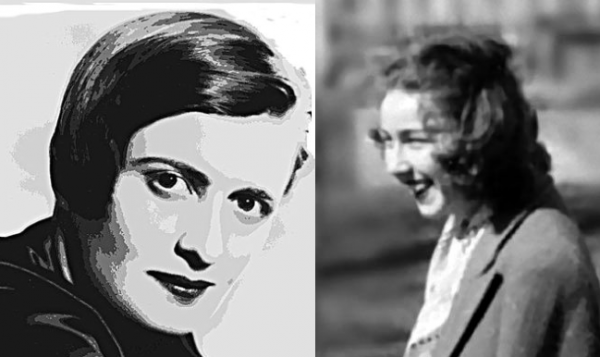
In a letter dated May 31, 1960, Flannery O’Connor, the author best known for her classic story, “A Good Man is Hard to Find” (listen to her read the story here) penned a letter to her friend, the playwright Maryat Lee. It begins rather abruptly, likely because it’s responding to something Maryat said in a previous letter:
I hope you don’t have friends who recommend Ayn Rand to you. The fiction of Ayn Rand is as low as you can get re fiction. I hope you picked it up off the floor of the subway and threw it in the nearest garbage pail. She makes Mickey Spillane look like Dostoevsky.
The letter, which you can read online or find in the book The Habit of Being, then turns to other matters.
O’Connor’s critical appraisal of Ayn Rand’s books is pretty straightforward. But here’s one factoid worth knowing. Mickey Spillane (referenced in O’Connor’s letter) was a hugely popular mystery writer, who sold some 225 million books during his lifetime. According to his Washington Post obit, “his specialty was tight-fisted, sadistic revenge stories, often featuring his alcoholic gumshoe Mike Hammer and a cast of evildoers.” Critics, appalled by the sex and violence in his books, dismissed his writing. But Ayn Rand defended him. In public, she said that Spillane was underrated. In her book The Romantic Manifesto, Rand put Spillane in some unexpected company when she wrote: “[Victor] Hugo gives me the feeling of entering a cathedral–Dostoevsky gives me the feeling of entering a chamber of horrors, but with a powerful guide–Spillane gives me the feeling of listening to a military band in a public park–Tolstoy gives me the feeling of an unsanitary backyard which I do not care to enter.”
All of this goes to show that _____. We’ll let you fill in the blank.
If you would like to support the mission of Open Culture, consider making a donation to our site. It’s hard to rely 100% on ads, and your contributions will help us continue providing the best free cultural and educational materials to learners everywhere. You can contribute through PayPal, Patreon, and Venmo (@openculture). Thanks!
Related Content:
Why Should We Read Flannery O’Connor? An Animated Video Makes the Case
When Ayn Rand Collected Social Security & Medicare, After Years of Opposing Benefit Programs
Ayn Rand Helped the FBI Identify It’s A Wonderful Life as Communist Propaganda
Hear Flannery O’Connor Read “A Good Man is Hard to Find” (1959)
Ayn Rand Issues 13 Commandments to Filmmakers for Making Good Capitalist Movies (1947)
Flannery O’Connor’s Satirical Cartoons: 1942–1945
Read More...What It Was Like to Get a Meal at a Medieval Tavern
At least since The Canterbury Tales, the setting of the medieval tavern has held out the promise of adventure. For their customer base during the actual Middle Ages, however, they had more utilitarian virtues. “If you ever find yourself in the late medieval period, and you are in need of food and drink, you’d better find yourself an inn, tavern, or alehouse,” says Tasting History host Max Miller in the video above. The differences between them had to do with quality: the taverns were nicer than the alehouses, and the inns were nicer than the taverns, having begun as full-service establishments where customers could stay the night.
As for what inn‑, tavern‑, or alehouse-goers would actually consume, Miller mentions that the local availability of ingredients would always be a factor. “You might just get a vegetable potage; in some places it would just be beans and cabbage.”
Elsewhere, though, it could be “a fish stew, or something with really quality meat in it.” For the recipe of the episode — this being a cooking show, after all — Miller chooses a common medieval meat stew called bukenade or boknade. The actual instructions he reads contain words revealing of their time period: the Biblical sounding smyte for cut, for instance, or eyroun, the Middle English term that ultimately lost favor to eggs.
The customers of taverns would originally have drunk wine, which in England was imported from France at some expense. As they grew more popular, these businesses diversified their menus, offering “cider from apples and perry from pears,” as well as the premium option of mead made with honey. Alehouses, as their name would suggest, began as private homes whose wives sold ale, at least the excess that the family itself couldn’t drink. However informal they sound, they were still subject to the same regulations as other drinking spots, and alewives found to be selling an inferior product were subject to the same kind of public humiliations inflicted upon any medieval miscreant — the likes of whom we might recognize from any number of the high-fantasy tales we read today.
Related content:
How to Make Medieval Mead: A 13th Century Recipe
How to Make Ancient Mesopotamian Beer: See the 4,000-Year-Old Brewing Method Put to the Test
Based in Seoul, Colin Marshall writes and broadcasts on cities, language, and culture. His projects include the Substack newsletter Books on Cities and the book The Stateless City: a Walk through 21st-Century Los Angeles. Follow him on the social network formerly known as Twitter at @colinmarshall.
Read More...Neil deGrasse Tyson Explains Who Was the Greatest Scientific Mind in History
Neil deGrasse Tyson has spent his career talking up not just science itself, but also its practitioners. If asked to name the greatest scientist of all time, one might expect him to need a minute to think about it — or even to find himself unable to choose. But that’s hardly Tyson’s style, as evidenced by the clip above from his 92nd Street Y conversation with Fareed Zakaria. “Who do you think is the most extraordinary scientific mind that humanity has produced?” Zakaria asks. “There’s no contest,” Tyson immediately responds. “Isaac Newton.”
Those familiar with Tyson will know he would be prepared for the follow-up. By way of explanation, he narrates certain events of Newton’s life: “He, working alone, discovers the laws of motion. Then he discovers the law of gravity.” Faced with the question of why planets orbit in ellipses rather than perfect circles, he first invents integral and differential calculus in order to determine the answer. Then he discovers the laws of optics. “Then he turns 26.” At this point in the story, young listeners who aspire to scientific careers of their own will be nervously recalculating their own intellectual and professional trajectories.
They must remember that Newton was a man of his place and time, specifically the England of the late seventeenth and early eighteenth centuries. And even there, he was an outlier the likes of which history has hardly known, whose eccentric tendencies also inspired him to come up with powdered toad-vomit lozenges and predict the date of the apocalypse (not that he’s yet been proven wrong on that score). But in our time as in his, future (or current) scientists would do well to internalize Newton’s spirit of inquiry, which got him presciently wondering whether, for instance, “the stars of the night sky are just like our sun, but just much, much farther away.”
“Great scientists are not marked by their answers, but by how great their questions are.” To find such questions, one needs not just curiosity, but also humility before the expanse of one’s own ignorance. “I do not know what I may appear to the world,” Newton once wrote, “but to myself I seem to have been only like a boy playing on the seashore, and diverting myself in now and then finding a smoother pebble or a prettier shell than ordinary, whilst the great ocean of truth lay all undiscovered before me.” Nearly three centuries after his death, that ocean remains forbiddingly but promisingly vast — at least to those who know how to look at it.
Related content:
Neil deGrasse Tyson on the Staggering Genius of Isaac Newton
Isaac Newton Conceived of His Most Groundbreaking Ideas During the Great Plague of 1665
Neil deGrasse Tyson Presents a Brief History of Everything in an 8.5 Minute Animation
In 1704, Isaac Newton Predicted That the World Will End in 2060
Neil deGrasse Tyson Lists 8 (Free) Books Every Intelligent Person Should Read
Isaac Newton Creates a List of His 57 Sins (Circa 1662)
Based in Seoul, Colin Marshall writes and broadcasts on cities, language, and culture. His projects include the Substack newsletter Books on Cities and the book The Stateless City: a Walk through 21st-Century Los Angeles. Follow him on the social network formerly known as Twitter at @colinmarshall.
Read More...When Charlie Chaplin Entered a Chaplin Look-Alike Contest & Came in 20th Place
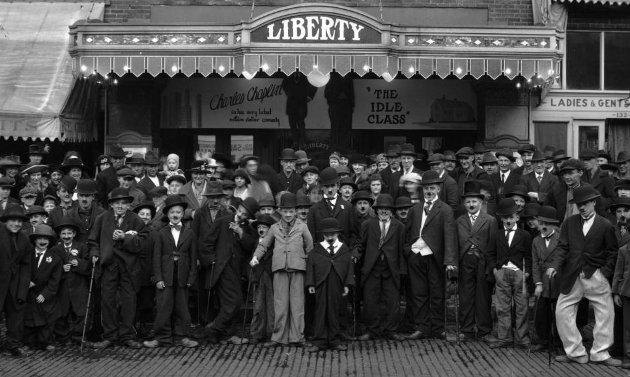
Charlie Chaplin started appearing in his first films in 1914—40 films, to be precise—and, by 1915, the United States had a major case of “Chaplinitis.” Chaplin mustaches were suddenly popping up everywhere–as were Chaplin imitators and Chaplin look-alike contests. A young Bob Hope apparently won one such contest in Cleveland. Chaplin Fever continued burning hot through 1921, the year when the Chaplin look-alike contest, shown above, was held outside the Liberty Theatre in Bellingham, Washington.
According to legend, somewhere between 1915 and 1921, Chaplin decided to enter a Chaplin look-alike contest, and lost, badly.
A short article called “How Charlie Chaplin Failed,” appearing in The Straits Times of Singapore in August of 1920, read like this:
Lord Desborough, presiding at a dinner of the Anglo-Saxon club told a story which will have an enduring life. It comes from Miss Mary Pickford who told it to Lady Desborough, “Charlie Chaplin was one day at a fair in the United States, where a principal attraction was a competition as to who could best imitate the Charlie Chaplin walk. The real Charlie Chaplin thought there might be a chance for him so he entered for the performance, minus his celebrated moustache and his boots. He was a frightful failure and came in twentieth.
A variation on the same story appeared in a New Zealand newspaper, the Poverty Bay Herald, again in 1920. As did another story in the Australian newspaper, the Albany Advertiser, in March, 1921.
A competition in Charlie Chaplin impersonations was held in California recently. There was something like 40 competitors, and Charlie Chaplin, as a joke, entered the contest under an assumed name. He impersonated his well known film self. But he did not win; he was 27th in the competition.
Did Chaplin come in 20th place? 27th place? Did he enter a contest at all? It’s fun to imagine that he did. But, a century later, many consider the story the stuff of urban legend. When one researcher asked the Association Chaplin to weigh in, they apparently had this to say: “This anecdote told by Lord Desborough, whoever he may have been, was quite widely reported in the British press at the time. There are no other references to such a competition in any other press clipping albums that I have seen so I can only assume that this is the source of that rumour, urban myth, whatever it is. However, it may be true.”
I’d like to believe it is.
Note: An earlier version of this post appeared on our site in early 2016.
Related Content:
6o+ Free Charlie Chaplin Films Online
Charlie Chaplin Films a Scene Inside a Lion’s Cage in 200 Takes
Read More...
Mahatma Gandhi’s List of the Seven Social Sins; or Tips on How to Avoid Living the Bad Life

Image via Wikimedia Commons
In 590 AD, Pope Gregory I unveiled a list of the Seven Deadly Sins – lust, gluttony, greed, sloth, wrath, envy and pride – as a way to keep the flock from straying into the thorny fields of ungodliness. These days, though, for all but the most devout, Pope Gregory’s list seems less like a means to moral behavior than a description of cable TV programming.
So instead, let’s look to one of the saints of the 20th century–Mahatma Gandhi. On October 22, 1925, Gandhi published a list he called the Seven Social Sins in his weekly newspaper Young India.
- Politics without principles.
- Wealth without work.
- Pleasure without conscience.
- Knowledge without character.
- Commerce without morality.
- Science without humanity.
- Worship without sacrifice.
The list sprang from a correspondence that Gandhi had with someone only identified as a “fair friend.” He published the list without commentary save for the following line: “Naturally, the friend does not want the readers to know these things merely through the intellect but to know them through the heart so as to avoid them.”
Unlike the Catholic Church’s list, Gandhi’s list is expressly focused on the conduct of the individual in society. Gandhi preached non-violence and interdependence and every single one of these sins are examples of selfishness winning out over the common good.
It’s also a list that, if fully absorbed, will make the folks over at the US Chamber of Commerce and Ayn Rand Institute itch. After all, “Wealth without work,” is a pretty accurate description of America’s 1%. (Investments ain’t work. Ask Thomas Piketty.) “Commerce without morality” sounds a lot like every single oil company out there and “knowledge without character” describes half the hacks on cable news. “Politics without principles” describes the other half.
In 1947, Gandhi gave his fifth grandson, Arun Gandhi, a slip of paper with this same list on it, saying that it contained “the seven blunders that human society commits, and that cause all the violence.” The next day, Arun returned to his home in South Africa. Three months later, Gandhi was shot to death by a Hindu extremist.
Note: An earlier version of this post appeared on our site in 2014.
Related Content:
Albert Einstein Expresses His Admiration for Mahatma Gandhi, in Letter and Audio
Isaac Newton Creates a List of His 57 Sins (Circa 1662)
Mahatma Gandhi Talks (in First Recorded Video)
When Mahatma Gandhi Met Charlie Chaplin (1931)
Hear Gandhi’s Famous Speech on the Existence of God (1931)
Jonathan Crow is a writer and filmmaker whose work has appeared in Yahoo!, The Hollywood Reporter, and other publications,
Read More...The Oldest Beer Receipt (Circa 2050 BC)

Above, we have the Alulu Beer Receipt. Written in cuneiform on an old clay tablet, the 4,000-year-old receipt documents a transaction. A brewer, named Alulu, delivered “the best” beer to a recipient named Ur-Amma, who apparently also served as the scribe. The Mesopotamians drank beer daily. And while they considered it a staple of everyday life, they also regarded it as a divine gift—something that contributed to human happiness and well-being.
In our archive, you can find the recipe for Sumerian beer and also watch it get made. That’s all free. No receipts will be issued.
Related Content
Discover the Oldest Beer Recipe in History From Ancient Sumeria, 1800 B.C.
How to Make Ancient Mesopotamian Beer: See the 4,000-Year-Old Brewing Method Put to the Test
5,000-Year-Old Chinese Beer Recipe Gets Recreated by Stanford Students
Read More...Support Us
We're hoping to rely on loyal readers, rather than erratic ads. Please click the Donate button and support Open Culture. You can use Paypal, Venmo, Patreon, even Crypto! We thank you!

About Us

Open Culture scours the web for the best educational media. We find the free courses and audio books you need, the language lessons & educational videos you want, and plenty of enlightenment in between.
Advertise With Us

FREE UPDATES!
GET OUR DAILY EMAIL
Get the best cultural and educational resources on the web curated for you in a daily email. We never spam. Unsubscribe at any time.
FOLLOW ON SOCIAL MEDIA

Open Culture editor Dan Colman scours the web for the best educational media. He finds the free courses and audio books you need, the language lessons & movies you want, and plenty of enlightenment in between.
Advertise With Us


