Watch Composer Wendy Carlos Demo an Original Moog Synthesizer (1989)
She’s worked with Stanley Kubrick *and* “Weird Al” Yankovic, and helped Robert Moog in the development of his eponymous synthesizer. Wendy Carlos is also one of the first high profile transgender artists–credited as Walter Carlos for Kubrick’s A Clockwork Orange but having transitioned to Wendy by the time of The Shining, in which only a few of her pieces were used.
In this brief clip from a 1989 BBC episode of Horizon, Carlos, accompanied by her two cats, explains how she uses analog synths to create electronic facsimiles of real instruments–in this case creating an approximation of a xylophone, sculpting a sine wave until it sounds like a mallet on wood.
The segment also shows Carlos operating one of the original Moog synths, about the size of a fridge and looking like an old telephone switchboard with a keyboard attached. By plugging and unplugging a series of cables, she demonstrates, the sine wave is deconstructed from its original “pure” but harsh sound. Later analog synths were additive, not subtractive, she explains. (It’s one of the few times I’ve seen old tech explained so well and so quickly.)
Along with working with Bob Moog, Carlos studied at Columbia-Princeton Electronic Music Center alongside two pioneers of early electronic music: Vladimir Ussachevsky and Otto Luening, both of whom would make very challenging compositions and musique concrete.
But Wendy chose both the classical and popular path, creating the Switched on Bach series that featured 18th century music played on the Moog synth and others. It would lead her to Kubrick and A Clockwork Orange’s idiosyncratic score and even more success. Apart from her score for Disney’s Tron, now very much beloved by fans, Carlos turned to more personal, soundscape work later. And in 2005, if you can find a copy, she put out a multiple-CD set of all her soundtrack work that Kubrick never used for The Shining and others.
The description of the entire Horizon episode has a technofear theme: “In Paris, Xavier Rodet has taught a computer to sing Mozart; in Greenwich Village, Wendy Carlos synthesises a classical concerto from electronic tones…In Australia, Manfred Clynes reckons he has discovered a universal human language of emotion. To prove it he creates feelings on tape. What’s left for human performers to contribute?”
This program was at least a decade after the first sampling keyboard, so the anxiety is either late or overhyped. But it also sounds familiar to our current concerns over AI (as seen in these very web pages!). Synths never replaced human instruments, but it did create more synth players. AI won’t replace human decision making (probably), but it will certainly create more AI programmers.
Note: An earlier version of this post appeared on our site in 2019.
Related Content:
Electronic Music Pioneer Wendy Carlos Demonstrates the Moog Synthesizer on the BBC (1970)
Ted Mills is a freelance writer on the arts.
Read More...Why the Romans Stopped Reading Books
Nobody reads books anymore. Whether or not that notion strikes you as true, you’ve probably heard it expressed fairly often in recent decades — just as you might have had you lived in the Roman Empire of late antiquity. During that time, as ancient-history YouTuber Garrett Ryan explains in the new Told in Stone video above, the “book trade declined with the educated elite that had supported it. The copying of secular texts slowed, and finally ceased. The books in Roman libraries, public and private, crumbled on their shelves. Only a small contingent of survivors found their way into monasteries.” As went the reading culture of the empire, so went the empire itself.
Some may be tempted to draw parallels with certain countries in existence today. But what may be more surprising is the extent of Roman reading at its height. Though only about one in ten Romans could read, Ryan explains, “the Roman elite defined themselves by a sophisticated literary education, and filled their cities with texts.”
Those included the Acta Diurna, a kind of proto-newspaper carved into stone or metal and displayed in public places. But from the reign of Augustus onward, “the city of Rome boasted an impressive array of public libraries,” filled with texts written on papyrus scrolls, and later — especially in the third and fourth centuries — on codices, whose format closely resembles books as we know them today.
Rome even had tabernae librariae, which we’d recognize as bookstores, whose techniques included painting the titles of bestsellers on their exterior columns. Some of them also published the books they sold, setting an early example of what we’d call “vertical integration.” Roman readers of the first century would all have had at least some familiarity with Martial’s Epigrams, but even such a big contemporary hit would have been outsold by a classic like the Aeneid, “the one book that any family with a library owned.” With 99 percent of its literature lost to us, we’re unlikely ever to determine if, like modern-day America, ancient Rome was really saturated with less-respectable works, its own equivalents of self help, business memoir, and genre fiction. Who knows? Perhaps Rome, too, had romantasy.
Related content:
What Was Actually Lost When the Library of Alexandria Burned?
Explore the Roman Cookbook, De Re Coquinaria, the Oldest Known Cookbook in Existence
Is America Declining Like Ancient Rome?
The First Work of Science Fiction: Read Lucian’s 2nd-Century Space Travelogue A True Story
How 99% of Ancient Literature Was Lost
Based in Seoul, Colin Marshall writes and broadcasts on cities, language, and culture. His projects include the Substack newsletter Books on Cities and the book The Stateless City: a Walk through 21st-Century Los Angeles. Follow him on the social network formerly known as Twitter at @colinmarshall.
Read More...Watch Jazz ‘Hot’, the Rare 1938 Short Film With Jazz Legend Django Reinhardt
Here’s a remarkable short film of the great jazz guitarist Django Reinhardt, violinist Stéphane Grappelli and their band the Quintette du Hot Club de France performing on a movie set in 1938. The film was hastily organized by the band’s British agent Lew Grade as a way to introduce the band’s unique style of guitar- and violin-based jazz to the British public before their first UK tour. As Michael Dregni writes in Gypsy Jazz: In Search of Django Reinhardt and the Soul of Gypsy Swing:
The Quintette was unknown to the British public, and there was no telling how their new music would resonate. So, Grade sought to educate his audience. He hired a movie crew to film a six-minute-plus promotional short entitled Jazz “Hot” to be shown in British theaters providing a lesson in jazz appreciation to warm up the crowds.
That would explain the didactic tone of the first two and a half minutes of the film, which plods along as a remedial lesson on the nature of jazz. It opens with an orchestra giving a note-for-note performance of Handel’s “Largo,” from the opera Xerxes, which the narrator then contrasts to the freedom of jazz improvisation.
But the film really comes alive when Django arrives on the screen and launches into a jazz arrangement of the popular French song “J’attendrai.” (The name means “I will wait,” and it’s a reworking of a 1933 Italian song, “Tornerai” or “You Will Return,” by Dino Olivieri and Nino Rastelli.) Although the sequences of Reinhardt and the band performing were obviously synchronized to a previously recorded track, Jazz “Hot” is the best surviving visual document of the legendary guitarist’s two-fingered fretting technique, which he developed after losing the use of most of his left hand in a fire. To learn more about Reinhardt, visit the links in the Relateds below.
Note: An earlier version of this post appeared on our site in 2013.
Related Content:
Watch Django Reinhardt & Stéphane Grappelli Play Masterfully Together in Vivid Color (1938)
Django Reinhardt Demonstrates His Guitar Genius in Rare Footage From the 1930s, 40s & 50s
Read More...Spike Jonze Creates a New Short Film (aka Commercial) for Apple
?si=UQ0XdCH-cVGe26AC
With his iconic Super Bowl ad in 1984, Ridley Scott began a tradition of accomplished filmmakers creating advertisements for Apple. In the years since, we’ve seen David Fincher shoot an ad promoting the iPhone 3GS, Michel Gondry direct a spot showcasing the iPhone’s cinematic features, and Spike Jonze craft a memorable ad for the HomePod. Now, Jonze returns with a new commercial (above) for the AirPods 4 with Active Noise Cancellation. The five-and-a-half-minute film, titled “Someday,” stars Pedro Pascal and it follows–writes Variety–his character as he “navigates an emotional journey of moving on after a breakup. When the grief-stricken man initiates Active Noise Cancellation on his AirPods 4, his world transforms: The cold, wintry palette flips into a vibrant dreamscape, and everything and everyone becomes part of the music.”
With a few clicks of the mouse and for $149.99, you, too, can transport yourself to your own sound-and-color filled world. It’s that easy.…
Related Content
Steve Jobs Narrates the First “Think Different” Ad (Never Aired)
Read More...When The Twilight Zone Imagined Fascism in America in a 1963 Episode Starring Dennis Hopper
Watch through The Twilight Zone, and you’ll find yourself spotting no end of familiar faces: Julie Newmar, Burt Reynolds, Robert Redford, Elizabeth Montgomery, William Shatner, even Buster Keaton. The 1963 episode “He’s Alive” is at least doubly notable in that respect, featuring as it does a young (but in acting sensibility, almost fully formed) Dennis Hopper as Peter Vollmer, a ne’er-do-well made into an aspiring dictator by none other than Adolf Hitler. Played by Curt Conway, a specialist in doctors, judges, and other authority figures, the undead Führer offers his young disciple instructions like the above, from an early scene before his identity is revealed.
“How do you move a mob, Mr. Vollmer? How do you excite them? How do you make them feel as one with you?” Hitler asks. The answer, which he then provides, is first to join them: “When you speak to them, speak to them as if you were a member of the mob. Speak to them in their language, on their level. Make their hate your hate. If they are poor, talk to them of poverty. If they are afraid, talk to them of their fears. And if they are angry, Mr. Vollmer… if they are angry, give them objects for their anger. But most of all, the thing that is most of the essence, Mr. Vollmer, is that you make this mob an extension of yourself.”
If accused of scapegoating minorities, he should address the throng thus: “Should I tell you who are the minorities? Should I tell you? We! We are the minorities.” Soon, we see Peter in full neo-Nazi gear delivering just such a harangue, thoroughly Hopper-ized in diction, to a modestly attended rally. How could these ordinary-looking attendees be a minority? “Because patriotism is a minority. Because love of country is the minority. Because to live in a free, white America seems to be of a minority opinion!” Though hardly artful, this rhetoric eventually makes him into a popular figure, albeit one whose rise is cut short when he turns to conspiracy to accelerate his rise to power.
And what of the spirit of Hitler? “Where will he go next, this phantom from another time, this resurrected ghost of a previous nightmare?” Twilight Zone creator Rod Serling asks in his episode-closing monologue. “Any place, every place where there’s hate, where there’s prejudice, where there’s bigotry.” It was against such broad social phenomena that Serling so often used his scripts to argue, and with “He’s Alive,” he made use of an unusually vivid ideological example. A veteran of the Second World War, which had ended less than twenty years earlier, Serling surely had even fresher memories of the threat of Hitler than did the general American public — and understood even more clearly what could happen if those memories were to fade away.
Related content:
When 20,000 Americans Held a Pro-Nazi Rally in Madison Square Garden
Watch The Twilight Zone’s Pilot Episode, Pitched by Rod Serling Himself (1959)
Walter Benjamin Explains How Fascism Uses Mass Media to Turn Politics Into Spectacle (1935)
Based in Seoul, Colin Marshall writes and broadcasts on cities, language, and culture. His projects include the Substack newsletter Books on Cities and the book The Stateless City: a Walk through 21st-Century Los Angeles. Follow him on the social network formerly known as Twitter at @colinmarshall.
Read More...Watch Dziga Vertov’s A Man with a Movie Camera: The 8th Best Film Ever Made
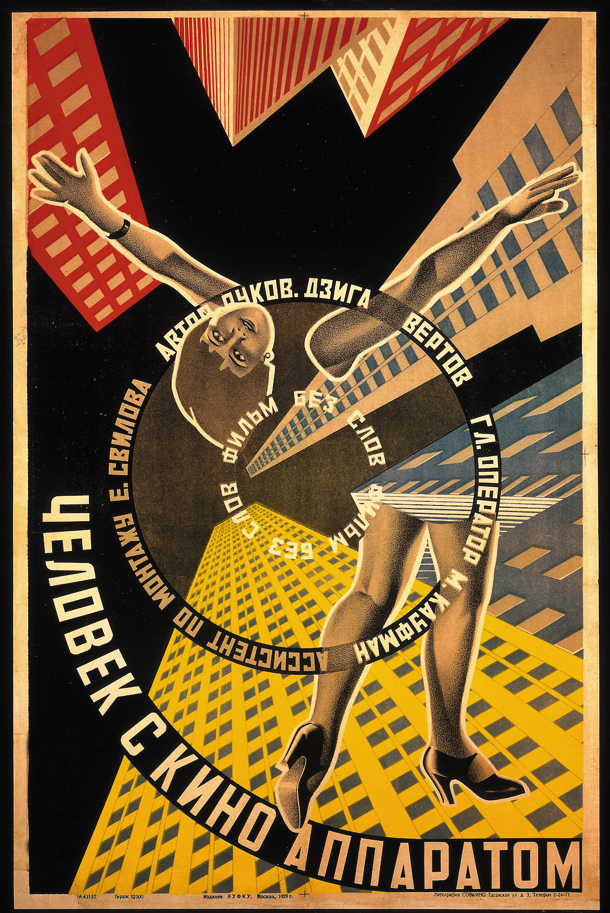
Of all the cinematic trailblazers to emerge during the early years of the Soviet Union – Sergei Eisenstein, Vsevolod Pudovkin, Lev Kuleshov – Dziga Vertov (né Denis Arkadievitch Kaufman, 1896–1954) was the most radical.
Whereas Eisenstein – as seen in that film school standard Battleship Potemkin – used montage editing to create new ways of telling a story, Vertov dispensed with story altogether. He loathed fiction films. “The film drama is the Opium of the people,” he wrote. “Down with Bourgeois fairy-tale scenarios…long live life as it is!” He called for the creation of a new kind of cinema free of the counter-revolutionary baggage of Western movies. A cinema that captured real life.
At the beginning of his masterpiece, A Man with a Movie Camera (1929) – which was named in 2012 by Sight and Sound magazine as the 8th best movie ever made – Vertov announced exactly what that kind of cinema would look like:
This film is an experiment in cinematic communication of real events without the help of intertitles, without the help of a story, without the help of theatre. This experimental work aims at creating a truly international language of cinema based on its absolute separation from the language of theatre and literature.
Gleefully using jump cuts, superimpositions, split screens and every other trick in a filmmaker’s arsenal, Vertov, along with his editor (and wife) Elizaveta Svilova, crafts a dizzying, impressionistic, propulsive portrait of the newly industrializing Soviet Union. The lengths to which Vertov goes to capture this “cinematic communication of real events” are startling: His camera soars over cities and gazes up at streetcars; it films machines chugging away and even records a woman giving birth. “I am eye. I am a mechanical eye,” Vertov once famously wrote. “I, a machine, am showing you a world, the likes of which only I can see.”
Yet Vertov’s stroke of genius was to expose the entire artifice of filmmaking within the movie itself. In A Man with a Movie Camera, Vertov shoots footage of his cameramen shooting footage. There’s a recurring shot of an eye staring through a lens. We see images from earlier in the movie getting edited into the film. This sort of cinematic self-reflexivity was decades ahead of its time, influencing such future experimental filmmakers as Chris Marker, Stan Brakhage and especially Jean-Luc Godard who in 1968 formed a radical filmmaking collective called The Dziga Vertov Group.
A Man with a Movie Camera is nothing short of exhilarating. Check it out above.
Note: An earlier version of this post appeared on our site in November 2014.
Jonathan Crow is a writer and filmmaker whose work has appeared in Yahoo!, The Hollywood Reporter, and other publications.
Related Content:
Watch Dziga Vertov’s Soviet Toys: The First Soviet Animated Movie Ever (1924)
Eight Free Films by Dziga Vertov, Creator of Soviet Avant-Garde Documentaries
Jonathan Crow is a Los Angeles-based writer and filmmaker whose work has appeared in Yahoo!, The Hollywood Reporter, and other publications. You can follow him at @jonccrow.
Read More...A Boy and His Atom: Watch The World’s Smallest Stop-Motion Film
What you’re watching above isn’t your ordinary film. No, this film — A Boy and His Atom – holds the Guinness World Record for being the World’s Smallest Stop-Motion Film. It’s literally a movie made with atoms, created by IBM nanophysicists who have “used a scanning tunneling microscope to move thousands of carbon monoxide molecules, all in the pursuit of making a movie so small it can be seen only when you magnify it 100 million times.” If you’re wondering what that means exactly, then I’d encourage you to watch the behind-the-scenes documentary below. It takes you right onto the set — or, rather into the laboratories — where IBM scientists reveal how they move 5,000 molecules around, creating a story frame by frame. As you watch the documentary, you’ll realize how far nanotechnology has come since Richard Feynman laid the conceptual foundations for the field in 1959.
Note: An earlier version of this post appeared on our site in 2013.
Related Content:
The Nano Guitar: Discover the World’s Smallest, Playable Microscopic Guitar
Stephen Fry Introduces the Strange New World of Nanoscience
Read More...Watch the Sci-Fi Short Film “I’m Not a Robot”: Winner of a 2025 Academy Award
Victoria Warmerdam, the writer and director of the short film, “I’m Not a Robot,” summarizes the plot of her 22-minute film as follows: The film “tells the story of Lara, a music producer who spirals into an existential crisis after repeatedly failing a CAPTCHA test—leading her to question whether she might actually be a robot. Through a dark comedic lens, [the film] explores themes of identity, self-determination, love, and technology in a world where the line between humanity and artificial intelligence is becoming increasingly blurred.” This past weekend, “I’m Not a Robot” won the Oscar for Best Live Action Short, marking the first time a Dutch short film received this honor. Distributed by The New Yorker, “I’m Not a Robot” can be viewed free online. We’re adding it to our collection of 4,000+ Free Movies Online: Great Classics, Indies, Noir, Westerns, Documentaries & More.
If you would like to support the mission of Open Culture, consider making a donation to our site. It’s hard to rely 100% on ads, and your contributions will help us continue providing the best free cultural and educational materials to learners everywhere. You can contribute through PayPal, Patreon, and Venmo (@openculture). Thanks!
Related Content
Glass: The Oscar-Winning “Perfect Short Documentary” on Dutch Glassmaking (1958)
The Classic 1956 Oscar-Winning Children’s Film, The Red Balloon
Read More...
The Classic 1972 Concert Film Pink Floyd: Live at Pompeii Gets Restored & Will Soon Hit IMAX Theaters
Today, when we watch genre-defining concert films like Monterey Pop, Woodstock, Gimme Shelter, or Ziggy Stardust and the Spiders from Mars, we look upon the audience with nearly as much interest as we do the performers. But Pink Floyd never did things in quite the same way as other rock bands of that era. In 1972, they put out a concert film with no audience at all, substituting for visual interest the majestic ruins of the ancient Roman amphitheater in Pompeii. Pink Floyd at Pompeii – MCMLXXII has lately been restored, and you can see the trailer for its upcoming worldwide cinemas-and-IMAX re-release above.
Even without the unpredictable element of attendees (apart from a few local children who snuck in to watch), the production had its difficulties. Ever musically rigorous, the Floyd insisted on playing live with their actual touring gear, which took three days to truck over from London.
Only then was it discovered that the amphitheater didn’t have enough electricity available to power it all, which ultimately required running a half-mile-long extension cord to the town hall. Though hardly unimpressive, the resulting footage fell short of feature length, which required supplementary shooting at the considerably less historic Studio Europasonor in Paris.
Pink Floyd at Pompeii – MCMLXXII was originally meant, in part, to promote their then-latest-release Meddle. That album is best remembered for “Echoes,” which occupies the entirety of side two, and which foreshadowed the kinds of ambitious compositions of which the post-Syd Barrett version of the Floyd would be capable. The film splits it up into two parts, one to open it and the other to close it; you can get a taste of this live rendition from the clip just above. In between the two halves of “Echoes” come songs like “Careful with That Axe, Eugene,” “A Saucerful of Secrets,” and “Mademoiselle Nobs,” as well as footage of the band in the studio, at work on their next project: an album called The Dark Side of the Moon.
Related content:
An Hour-Long Collection of Live Footage Documents the Early Days of Pink Floyd (1967–1972)
Watch the Rare Reunions of Pink Floyd: Concerts from 2005, 2010 & 2011
David Gilmour Makes His Live at Pompeii Concert Film Free to Watch Online
Take a High Def, Guided Tour of Pompeii
Based in Seoul, Colin Marshall writes and broadcasts on cities, language, and culture. His projects include the Substack newsletter Books on Cities and the book The Stateless City: a Walk through 21st-Century Los Angeles. Follow him on the social network formerly known as Twitter at @colinmarshall.
Read More...How the Nazis Waged War on Modern Art: Inside the “Degenerate Art” Exhibition of 1937
Before his fateful entry into politics, Adolf Hitler wanted to be an artist. Even to the most neutral imaginable observer, the known examples of the estimated 2,000 to 3,000 paintings and other works of art he produced in his early adulthood would hardly evidence astonishing genius. They do show a certain technical competence, especially where buildings are concerned. (Twice rejected from the Academy of Fine Arts Vienna, the young Hitler was advised to apply instead to the School of Architecture, a subject for which he also professed a passion.) But their lack of imagination and interest in humanity were too plain to ignore.
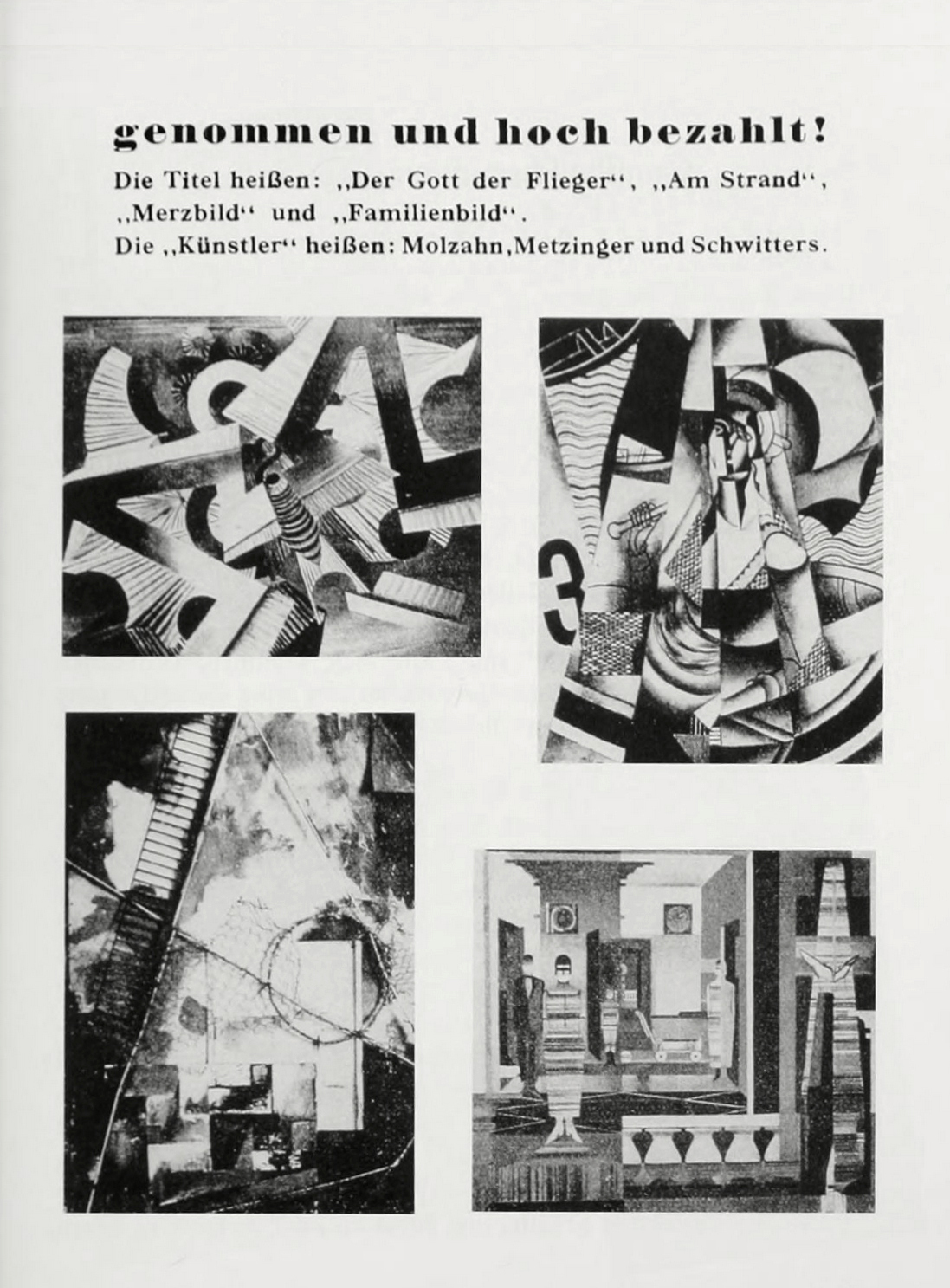
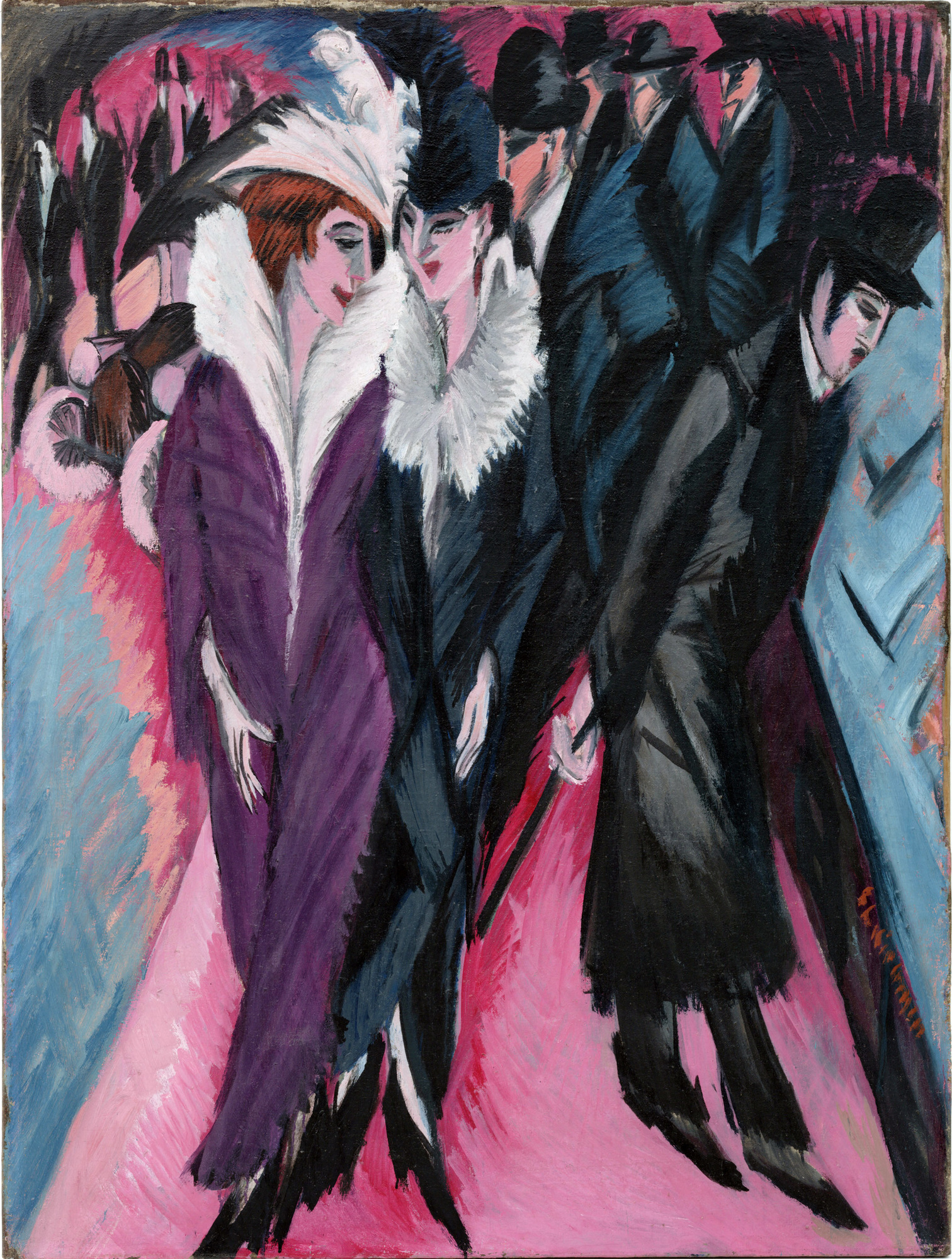
Could Hitler’s failure to gain entry to the art world explain anything about the cultural policy of the Nazi Party he went on to lead? Here on Open Culture, we’ve previously featured that policy’s single defining event: Die Ausstellung “Entartete Kunst,” or the Degenerate Art exhibition, staged in 1937 at the Institute of Archaeology in Munich’s Hofgarten.
Presenting 650 confiscated works of art purported to “insult German feeling, or destroy or confuse natural form or simply reveal an absence of adequate manual and artistic skill,” it soon became a great hit, attracting one million attendees in its first six weeks.
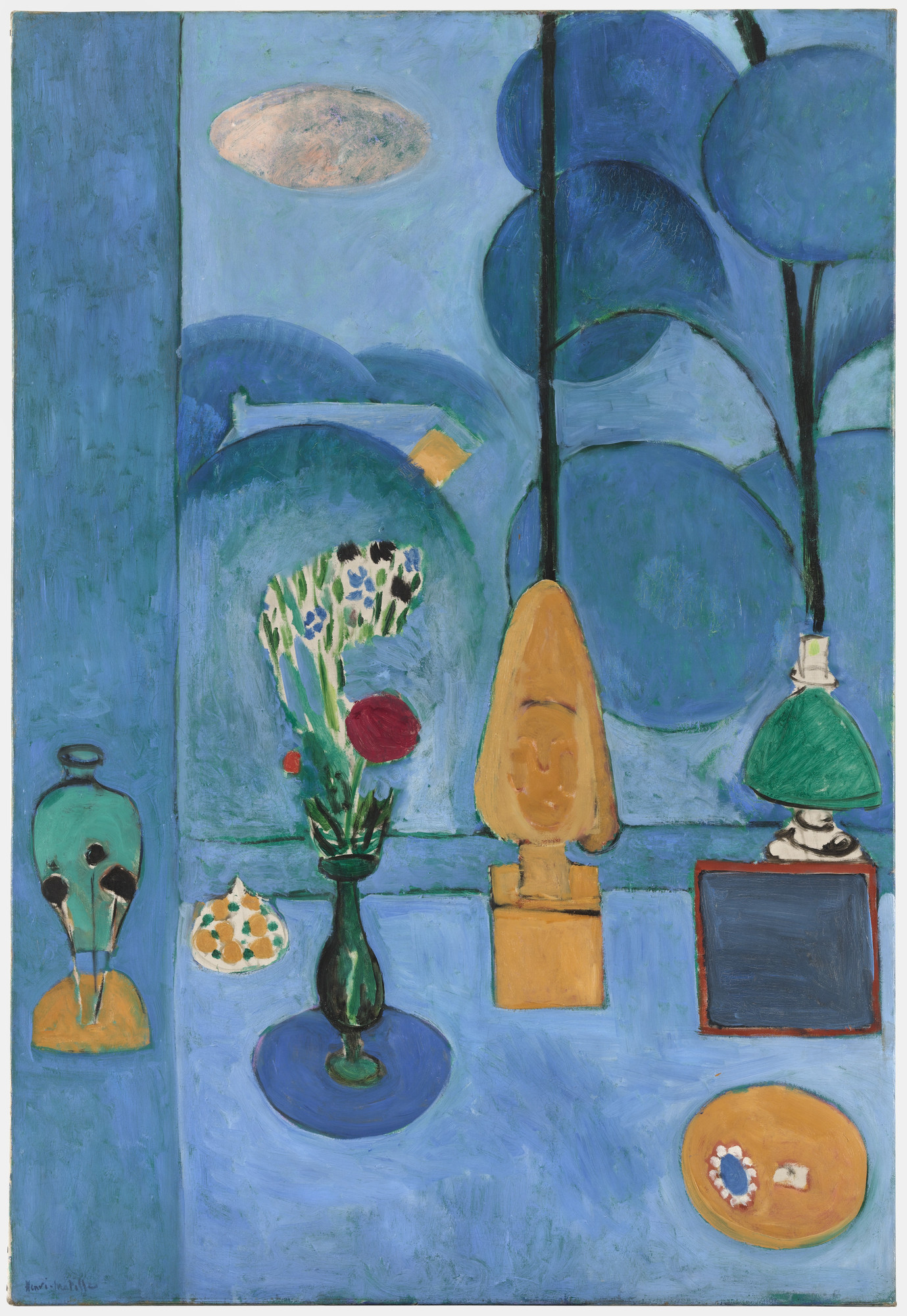
That may not come as much of a surprise when you consider the artists whose work was on display: Paul Klee, Georg Grosz, Otto Dix, Henri Matisse, Pablo Picasso, Wassily Kandinsky, Piet Mondrian, Marc Chagall, and even Grant Wood, to name just a few. It seems that the Nazis could come up with nothing quite so fascinating for the planned first Große Deutsche Kunstausstellung, or “Great German Art Exhibition,” whose collapse inspired Hitler’s chief propagandist Joseph Goebbels to suggest putting on a show not of the work that the Nazis approved, but of the work they didn’t.
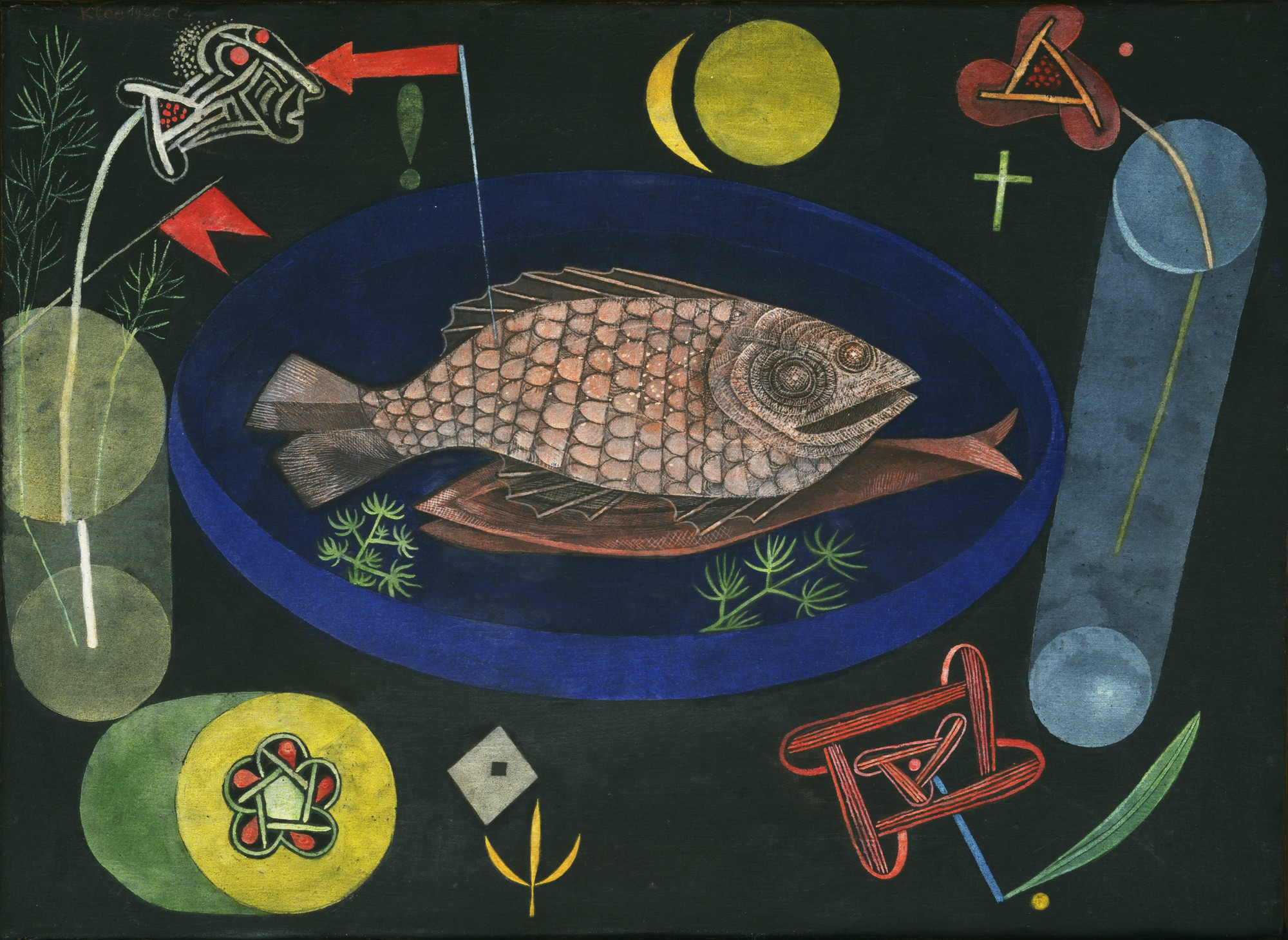
An admirer of certain Expressionists, Goebbels displayed more cultural open-mindedness than the Führer, who practically declared a war on modern art itself. You can learn more about it from David Grubin’s documentary Degenerate Art, which is available to watch online. The Nazis confiscated more than 5,000 works of art, and even maintained files on no fewer than 16,000 that they’d labeled “degenerate,” a historic inventory that has been made available to the public. Surprisingly, their blacklist did not include the oeuvre of Gustav Klimt, which they attempted to use for their own ends. It could be that, deep down, Hitler, the failed artist, knew good art when he saw it — and that it just made him all the more resentful.
Related content:
When the Nazis Declared War on Expressionist Art (1937)
How the Avant-Garde Art of Gustav Klimt Got Perversely Appropriated by the Nazis
The Nazis’ 10 Control-Freak Rules for Jazz Performers: A Strange List from World War II
How France Hid the Mona Lisa & Other Louvre Masterpieces During World War II
Based in Seoul, Colin Marshall writes and broadcasts on cities, language, and culture. His projects include the Substack newsletter Books on Cities and the book The Stateless City: a Walk through 21st-Century Los Angeles. Follow him on the social network formerly known as Twitter at @colinmarshall.
Read More...Support Us
We're hoping to rely on loyal readers, rather than erratic ads. Please click the Donate button and support Open Culture. You can use Paypal, Venmo, Patreon, even Crypto! We thank you!

About Us

Open Culture scours the web for the best educational media. We find the free courses and audio books you need, the language lessons & educational videos you want, and plenty of enlightenment in between.
Advertise With Us

FREE UPDATES!
GET OUR DAILY EMAIL
Get the best cultural and educational resources on the web curated for you in a daily email. We never spam. Unsubscribe at any time.
FOLLOW ON SOCIAL MEDIA

Open Culture editor Dan Colman scours the web for the best educational media. He finds the free courses and audio books you need, the language lessons & movies you want, and plenty of enlightenment in between.
Advertise With Us

