A Digital Library for Bartenders: Vintage Cocktail Books with Recipes Dating Back to 1753
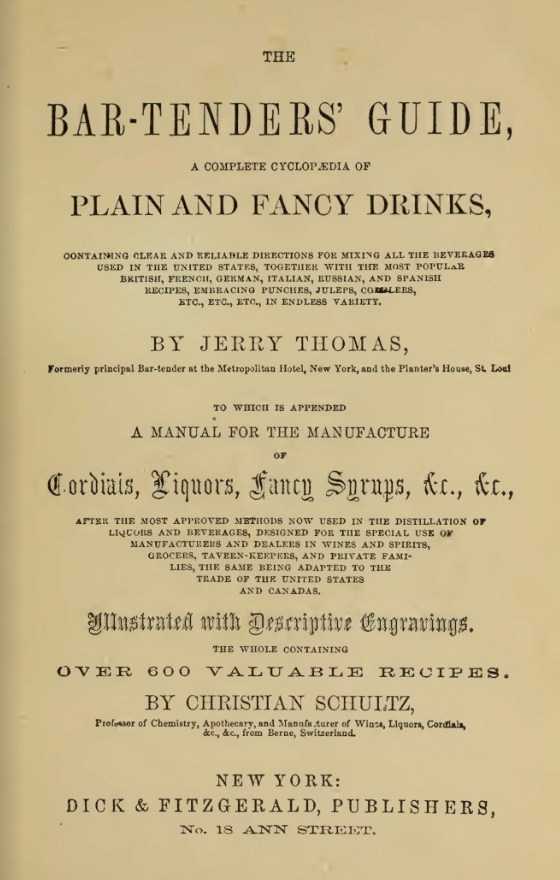
So, um… you look like you could use a drink… or another drink, or five…. I’ve given it up, but I can still mix a mean cocktail. How about a Stomach Julep (Julepum Stomachicum). No white suit or veranda required. It’s a “saffron syrup made with sherry, spirit rectified with mint, and a non-alcoholic mint distillate” among other “fascinating ingredients.” Yes, this is a recipe from a 1753 pharmacology textbook, but in 1753, one’s bartender might just as well also be the local alchemist, pharmacist, and captive audience. Fearing a resurgence of plague and other maladies, lacking proper healthcare or clean water, the Early Modern British fortified themselves with booze.
The New English Dispensatory might seem like an odd text, nonetheless, to include in an online library for bartenders, but it is perfectly in keeping with the spirit of the EUVS Digital Collection, an appreciable sampling of manuals, cocktail menus, recipe books, and historical ephemera related to “a profession that has rediscovered a justifiable sense of pride and purpose.”
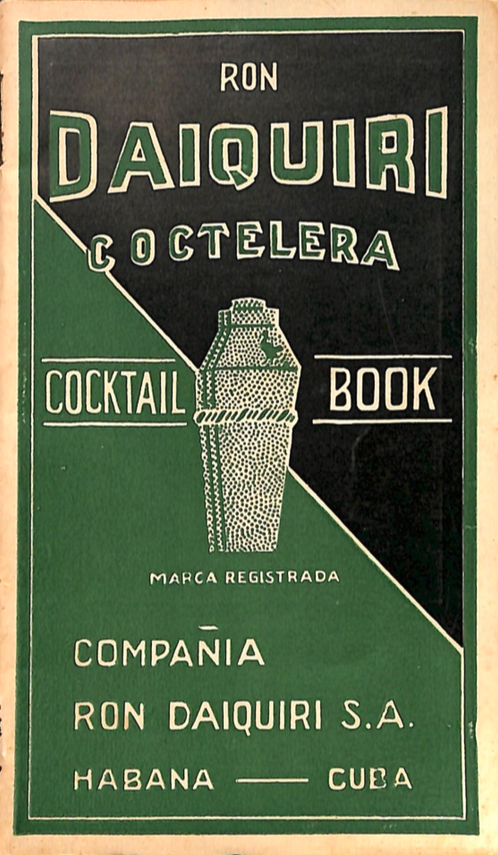
This sense does seem to vary greatly between establishments, but the collection does not discriminate, though it does display a particular fondness for Cuba in its current state of digitization—now up to a few dozen titles spanning the years 1753 to 1959. More books will be coming online soon out of a physical collection of “over 1,000 volumes.”
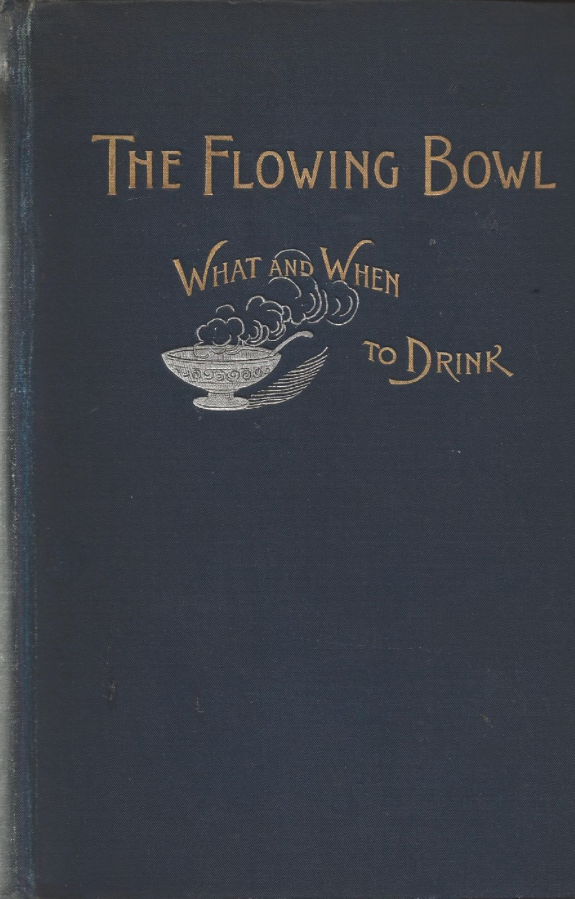
It may be hard to imagine earning a bartending Ph.D. but one could certainly find a dissertation topic in the impressive breadth and depth of the collection, even in its limited state. Or, more likely, one could put together a uniquely imaginative cocktail menu that no one else in town can boast of. Bartending is both art and science. In his 1892 book The Flowing Bowl, New York bartender William Schmidt, also known as “The Only William,” comments:
Mixed drinks might be compared to music: an orchestra will produce good music, provided all players are artists; but have only one or two inferior musicians in your band and you may be convinced they will spoil the entire harmony.
To the bartender’s list of supplementary roles in the lives of their customers, we can add another: conductor. William first came to prominence in the profession in Hamburg, Germany before emigrating to Chicago, then Manhattan. His tastes, in music and liquors, remained European. “The finest mixed drinks and their ingredients are of foreign origin. Are not all of the superior cordials of foreign make?” he wrote. Clearly he knew nothing of bourbon.
The Only William did know that fine art requires showmanship and style. He was “renowned for his acrobatic bartending feats: throwing flaming and non-flaming drinks in graceful arcs.” The EUVS Digital Collection presents William as a kind of bartending folk hero, a larger-than-life figure who was said to have invented a new drink daily. If this is so, it may not be so surprising. William was not only totally devoted to his art, but he was also a scholar, “credited with an encyclopedic knowledge of the classics.”
The Flowing Bowl contains Schmidt’s “history of various beverages, descriptions of historic Greco-Roman banquets, sample menus with beverage pairings, plus a lively selection of poetry readings whose focus is on drink.” One gets the sense he represents the ideal patron of The Bartender’s Library. What would such a model bartender do during the pandemic? I think he’d hit the books, especially given that so many, like his own, are free online. And given the ever-present possibility of plague and other calamities, I guess he’d offer spirited remedies to the people locked down at home with him.
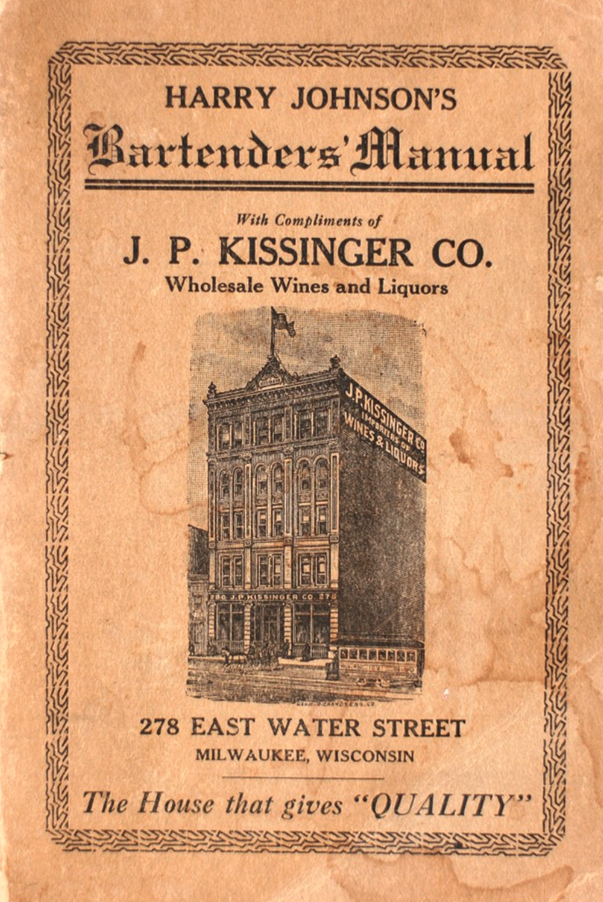
Note: One commenter on the Cocktail archive site left these comments, which might prove handy:
Here is a list of conversions, with Imperial measurements (from the U.K), as well as few British ones–as both are found in many classic cocktail books and can be mighty confusing.
1 quart (Imperial) = 40 ounces
1 quart = 32 ounces
1 bottle = 24 ounces
1 pint (Imperial) = 20 ounces
1 pint = 16 ounces
1/2 pint (Imperial) = 10 ounces
1/2 pint = 8 ounces
1 gill (Imperial) = 4.8 ounces
1 gill = 4 ounces
1 dram = 1/4 tablespoon (found in the British metric system or English recipes before approx. 1972)
1 wineglass = 2 ounces
1 jigger = 1 1/2 ounces – 1 1/4 ounces
1 pony = 1 (fluid) ounce = 2 tablespoons
1 tablespoon = 1/2 (fluid) ounces
1 teaspoon = 1/16 fluid ounces
A dash is a tricky one. When applied to bitters, a “dash” makes sense: it’s what comes out the top of the bottle. But if you find a recipe calling for “dashes of syrup,” check out similar drink recipes and use your judgment in how much you need.
Related Content:
Josh Jones is a writer and musician based in Washington, DC. Follow him @jdmagness
Read More...Before Creating the Moomins, Tove Jansson Drew Satirical Art Mocking Hitler & Stalin
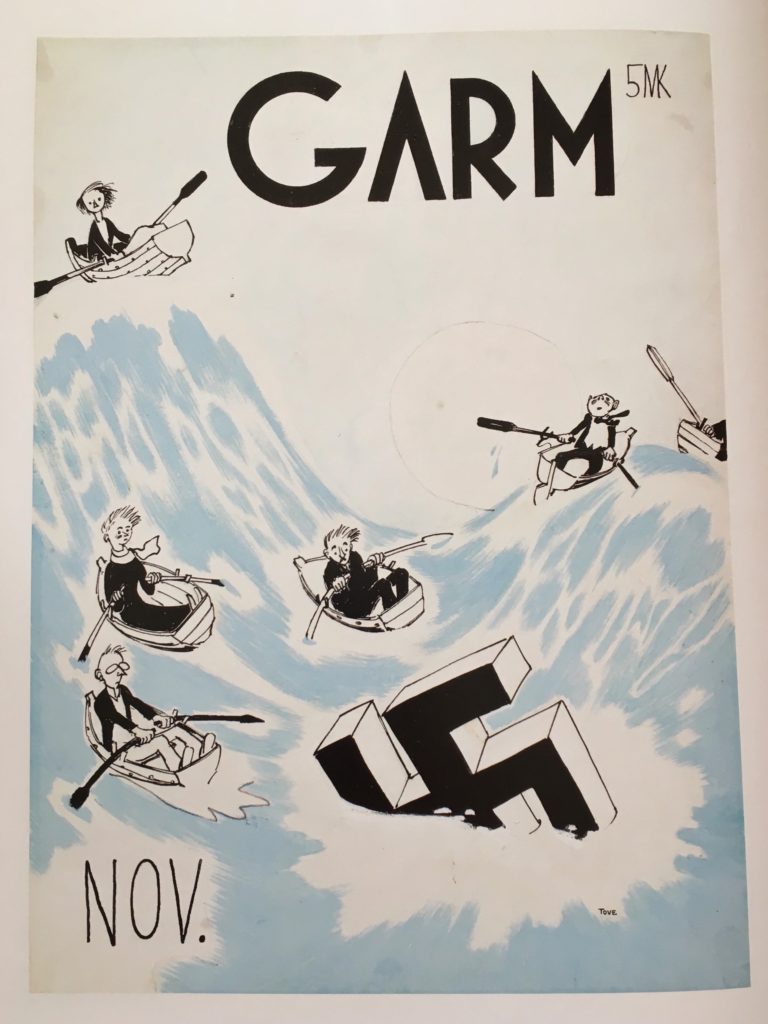
Much of the world has only recently discovered the Moomins, those lovable hippopotamus-like figures — given, it must be said, to moments of startling brusqueness and complexity — created in the 1940s by Finnish artist Tove Jansson. In forms ranging from dolls and school supplies to neck pillows and cellphone cases, they’ve lately become a full-blown craze in South Korea, where I live. Like any massively successful (and highly merchandisable) characters, the Moomins overshadow the rest of Jansson’s oeuvre. Hence exhibitions like Tove Jansson (1914–2001) at London’s Dulwich Picture Gallery, which “aims to rectify the fact that less attention has generally been paid to her range as a visual artist.”
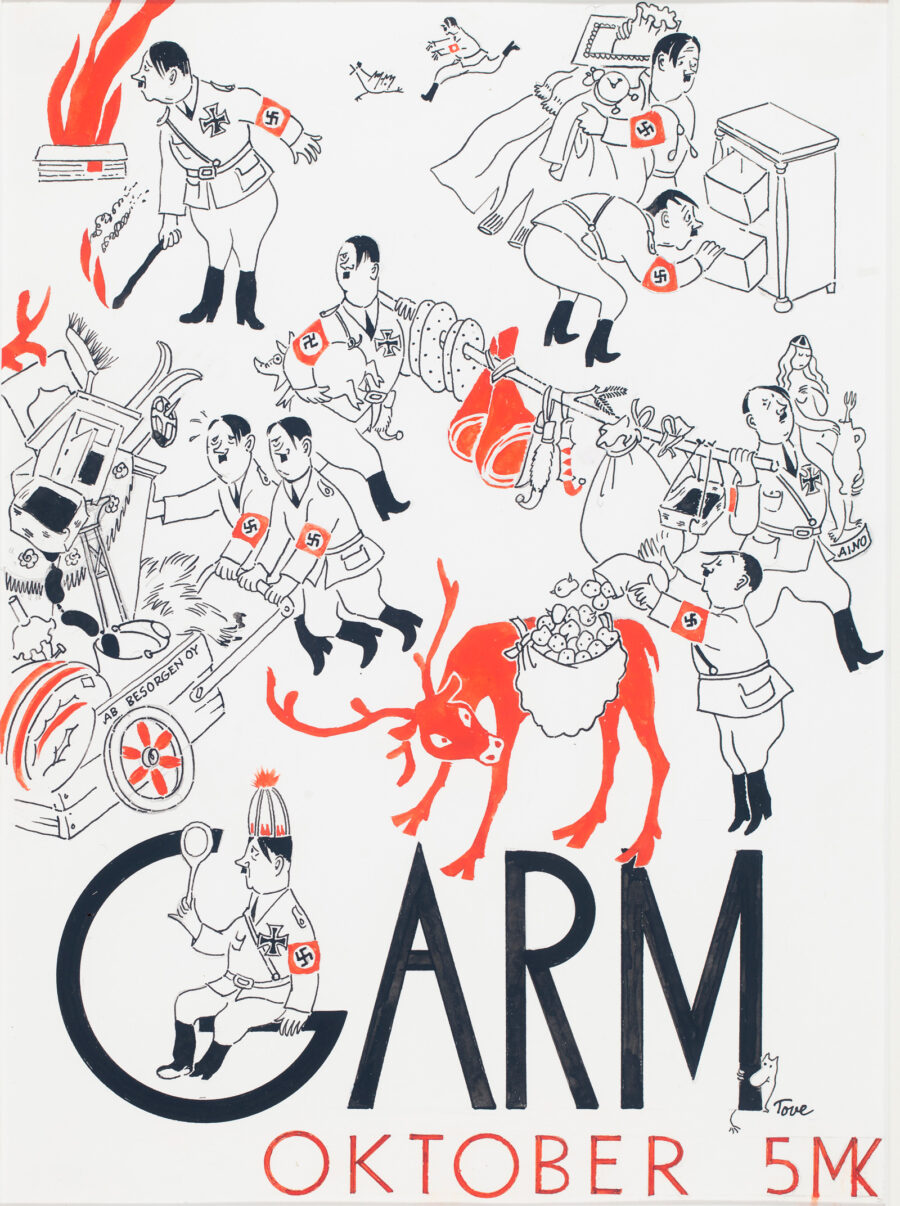
That description comes from Simon Willis’ review of the show in the New York Review of Books. “In October 1944, Tove Jansson drew a cover for Garm, a Finnish satirical magazine, showing a brigade of Adolf Hitlers as pudgy little thieves,” Willis writes. These drawer-rifling, house-burning caricatures “were not unusual for Jansson, who had been belittling Stalin and Hitler in the magazine since the early days of World War II.” But “peeking out at the chaos from behind the magazine’s title,” there was also a “tiny pale figure with a long nose”: a proto-Moomin making an appearance the year before the publication of the first Moomin book. (And even he was forged in mockery, having first been drawn by Jansson, so the story goes, as a caricature of Immanuel Kant.)
Having started contributing to Garm, according to the official Moomin web site, “in 1929 at the young age of 15 (her mother Signe Hammarsten-Jansson had worked for the publication since it started),” she kept on doing so until the magazine folded in 1953.
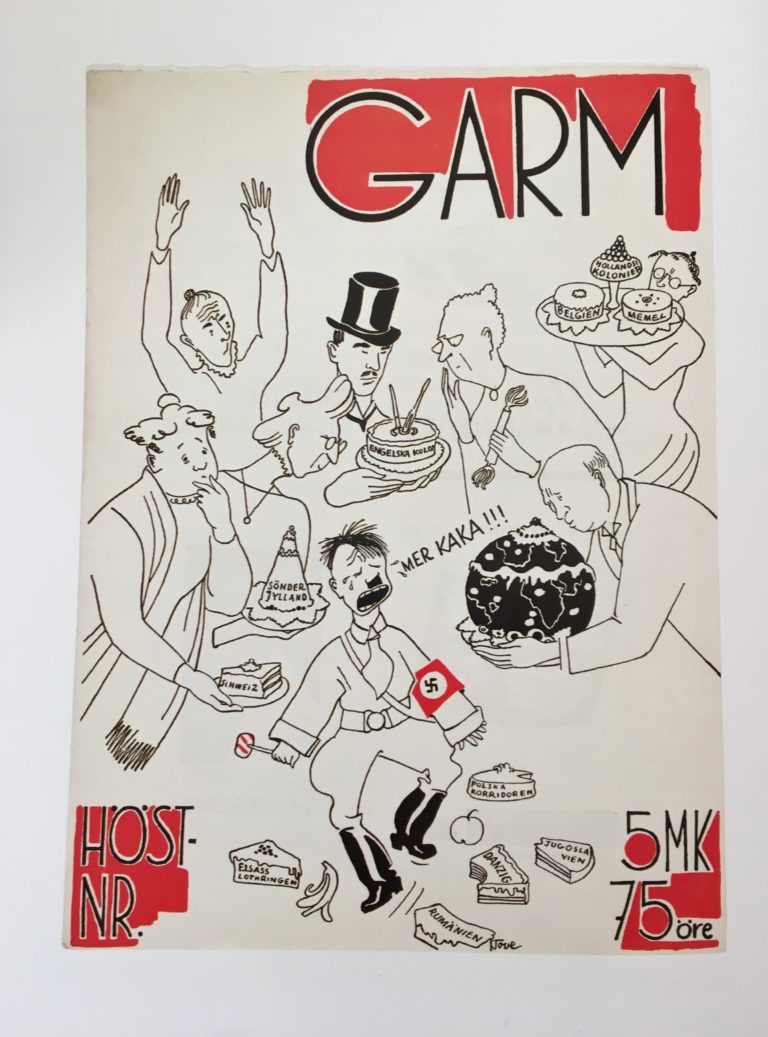
“During that period she drew more than 500 caricatures, a hundred cover images and countless other illustrations for the magazine.” In them, writes Glasstire’s Caleb Mathern, “angels appear on battlefields. Reindeer prepare to rain TNT. An effete, undersized Hitler cries instead of eating slices of cake. Jansson even impugns Stalin’s manhood with an oversized scabbard/undersized sword joke.” To the young Jansson, the best part was the chance, as she later put it, “to be beastly to Stalin and Hitler.”
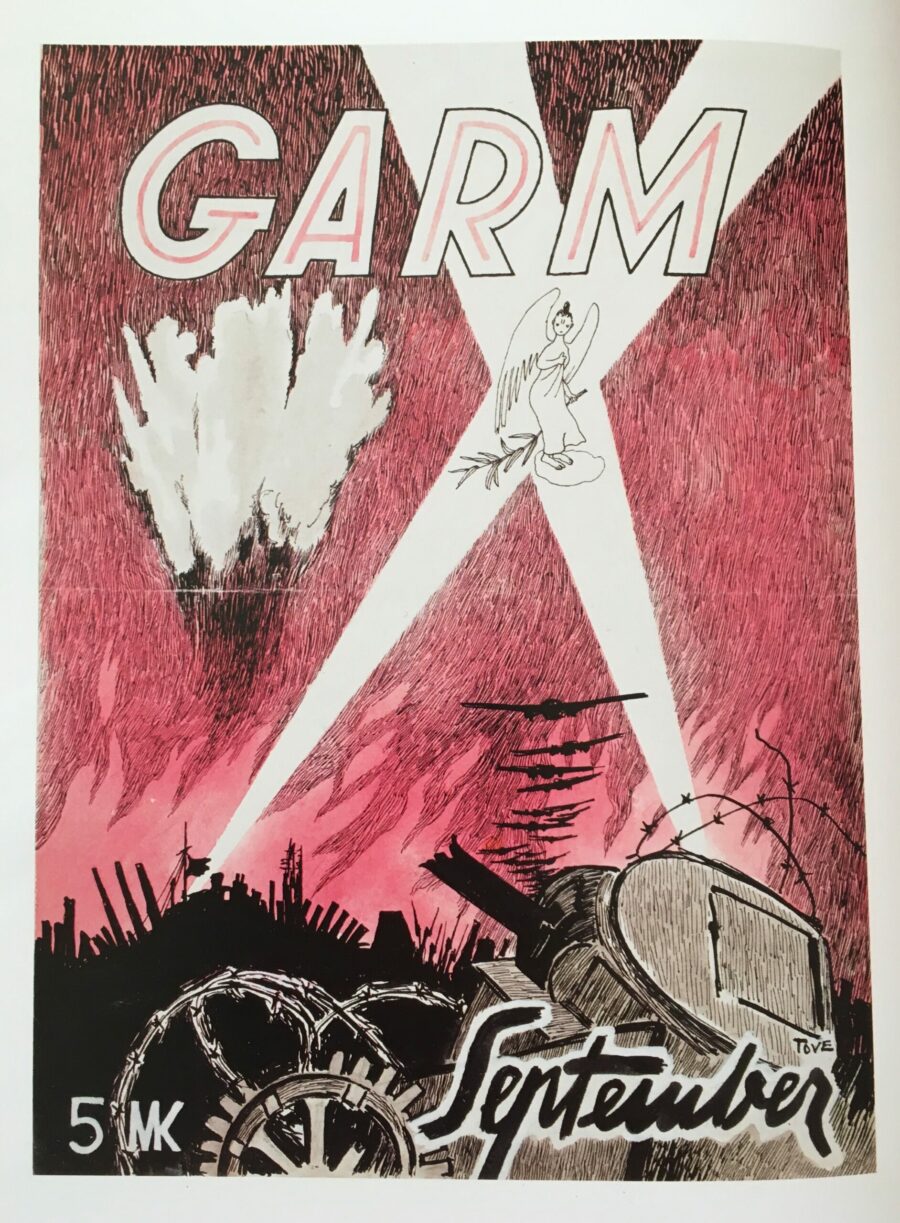
Even after the success of the Moomins, Jansson continued to draw on the imagery and emotions of war: “The first time we meet young Moomintroll and his Moominmamma in The Moomins and the Great Flood (1945), they are refugees, crossing a strange and threatening landscape in search of shelter. Moominpappa, meanwhile, is absent, as fathers often were during the war,” writes Aeon’s Richard W. Orange. In the next book “the world is threatened by a comet that sucks the water out of the sea, leaving an apocalyptic landscape in its wake.” With the Cold War heating up, the allegory would hardly have gone unnoticed. Like all master satirists, Jansson went on to transcend the solely topical — and indeed, so the increasingly Moomin-crazed world has demonstrated, the boundaries of time and culture.
Related Content:
Donald Duck & Friends Star in World War II Propaganda Cartoons
“The Ducktators”: Loony Tunes Turns Animation into Wartime Propaganda (1942)
Dr. Seuss Draws Anti-Japanese Cartoons During WWII, Then Atones with Horton Hears a Who!
Based in Seoul, Colin Marshall writes and broadcasts on cities, language, and culture. His projects include the Substack newsletter Books on Cities, the book The Stateless City: a Walk through 21st-Century Los Angeles and the video series The City in Cinema. Follow him on Twitter at @colinmarshall, on Facebook, or on Instagram.
Read More...The Time When National Lampoon Parodied Mad Magazine: A Satire of Satire (1971)
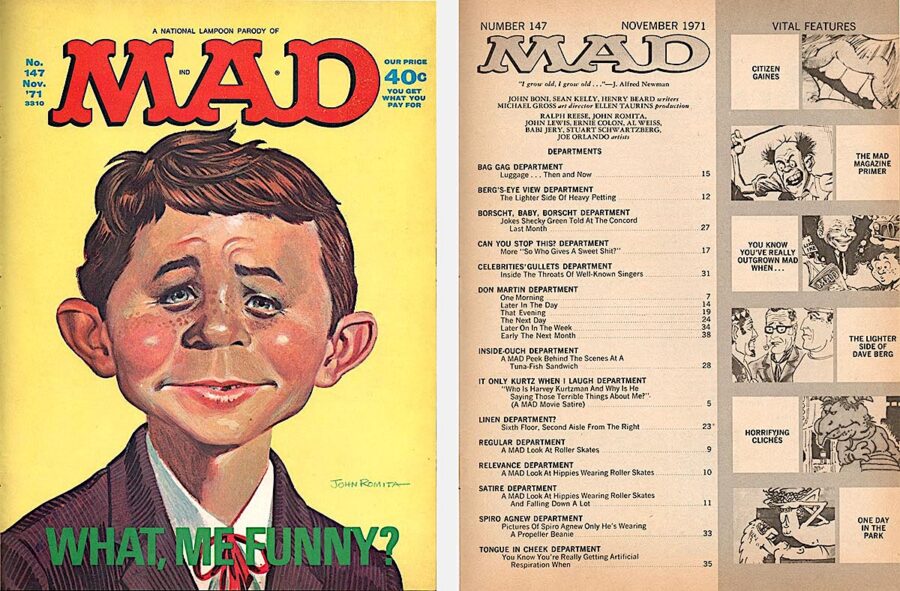
I grew up on Mad Magazine. It was the one magazine I made sure my parents got me every month. I bought the Super Specials, the paperback reprints, the flexi discs, and even the board game. When we’d go to swap meets, I’d bring home older issues from the 1960s, and try to figure out the politics from a decade before I was born. It was why this eight-year old kid knew anything about politics, and knew that Nixon sucked, Ford sucked, Carter kind of sucked, and Reagan definitely sucked.
And then, I just grew out of it. Although the original Harvey Kurtzman-written issues from the 1950s still felt vital, the “Usual Gang of Idiots” felt, well, safe and boring. I wouldn’t have said a bad word against them if you asked, but I would not have told any of my teenage friends they absolutely needed to read it. Until its cancellation in 2019, Mad would be a friendly sight on the newsstand, but I’d never pick it up. Nobody *really* had a bad word to say about Mad, did they?
Apparently an unusual new gang of idiots at the National Lampoon did, back in October 1971. This 15-page satire on Mad is as vicious a takedown as they come, its veins pulsing with the kind of vindictive glee only a true former fan can muster.
The “What, Me Funny?” issue is a collective voice of childhood betrayed, with spot-on parodies of Mort Drucker, Don Martin, Dave Berg, Al Jaffee, Jack Davis, Paul Coker, and others, drawn by artists like Joe Orlando, John Romita, and Ernie Colon, among others.
The main charge: after publisher William Gaines and Harvey Kurtzman had acrimoniously split and gone separate ways, Mad magazine grew embarrassed of its comic book past, and sought out a more middle-of-the-road audience, with humor less “in a jugular vein” and more in a juvenile vein. Like Saturday Night Live for the last five? ten? twenty? years, it had forgotten what satire was and how it works.
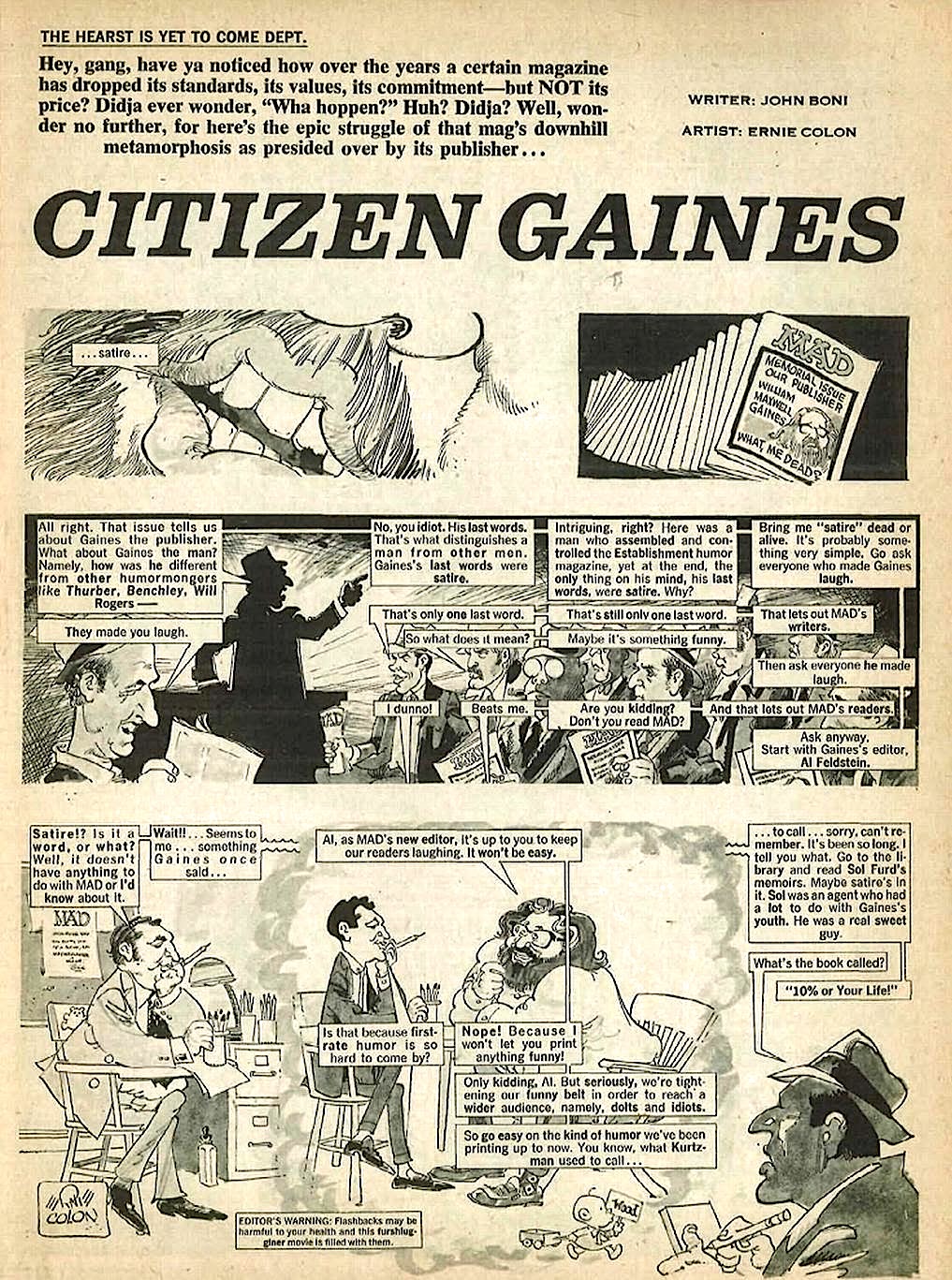
That’s the heart of its centerpiece, a Drucker-style parody of Citizen Kane called “Citizen Gaines”. The dying publisher’s last “Rosebud” word is “satire.” Like in the film, an anonymous reporter goes in search of clues to the word’s meaning, interviewing current editor Al Feldstein, writer Gary Belkin, and the “usual gang of idiots” who say things like “I only draw what they give me”. But the Jedediah Leland character in all this is Kurtzman, who Gaines betrays in a similar Kane fashion…for the money and power.
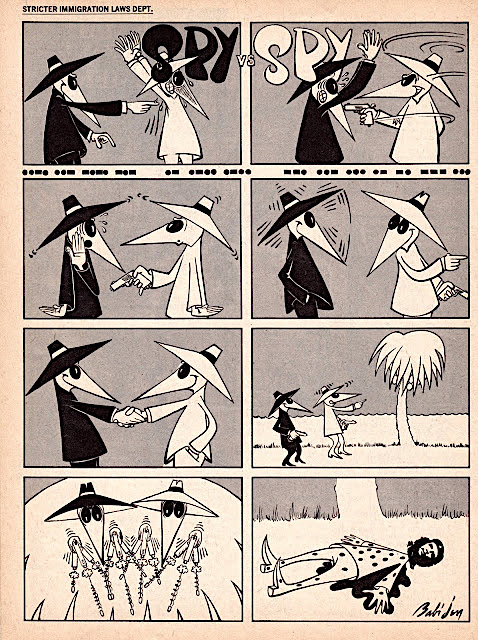
Elsewhere, Antonio Prohias’ “Spy vs. Spy” gets a realpoltik update, Don Martin-style violence is used to illustrate police brutality, and Dave Berg gets assailed for being a wishy-washy liberal in a satire of his “Lighter Side” strip. In fact, years later a fan used exactly the punchline (“Boy, are you an asshole”) when he met Dave Berg at a convention. (Berg had no idea about the parody.)
Over the years the fresh faces at Lampoon would also lose their satiric edge and a company that called Mad “juvenile” would later churn out endless T&A straight-to-video comedies. All students eventually become the master that they once took down. It’s as much a part of nature as portzebie.
Scan through the pages of the National Lampoon parody here.
Related Content:
The End of an Era: MAD Magazine Will Publish Its Last Issue With Original Content This Fall
When MAD Magazine Ruffled the Feathers of the FBI, Not Once But Three Times
Ted Mills is a freelance writer on the arts who currently hosts the Notes from the Shed podcast and is the producer of KCRW’s Curious Coast. You can also follow him on Twitter at @tedmills, and/or watch his films here.
Read More...Recipes from the Kitchen of Georgia O’Keeffe
What shall we read before bed?
Georgia O’Keeffe was a fan of cookbooks, telling her young assistant Margaret Wood that they were “enjoyable nighttime company, providing brief and pleasant reading.”
Among the culinary volumes in her Abiquiu, New Mexico ranch home were The Fanny Farmer Boston Cooking School Cookbook, The Joy of Cooking, Let’s Eat Right to Keep Fit and Cook Right, Live Longer.
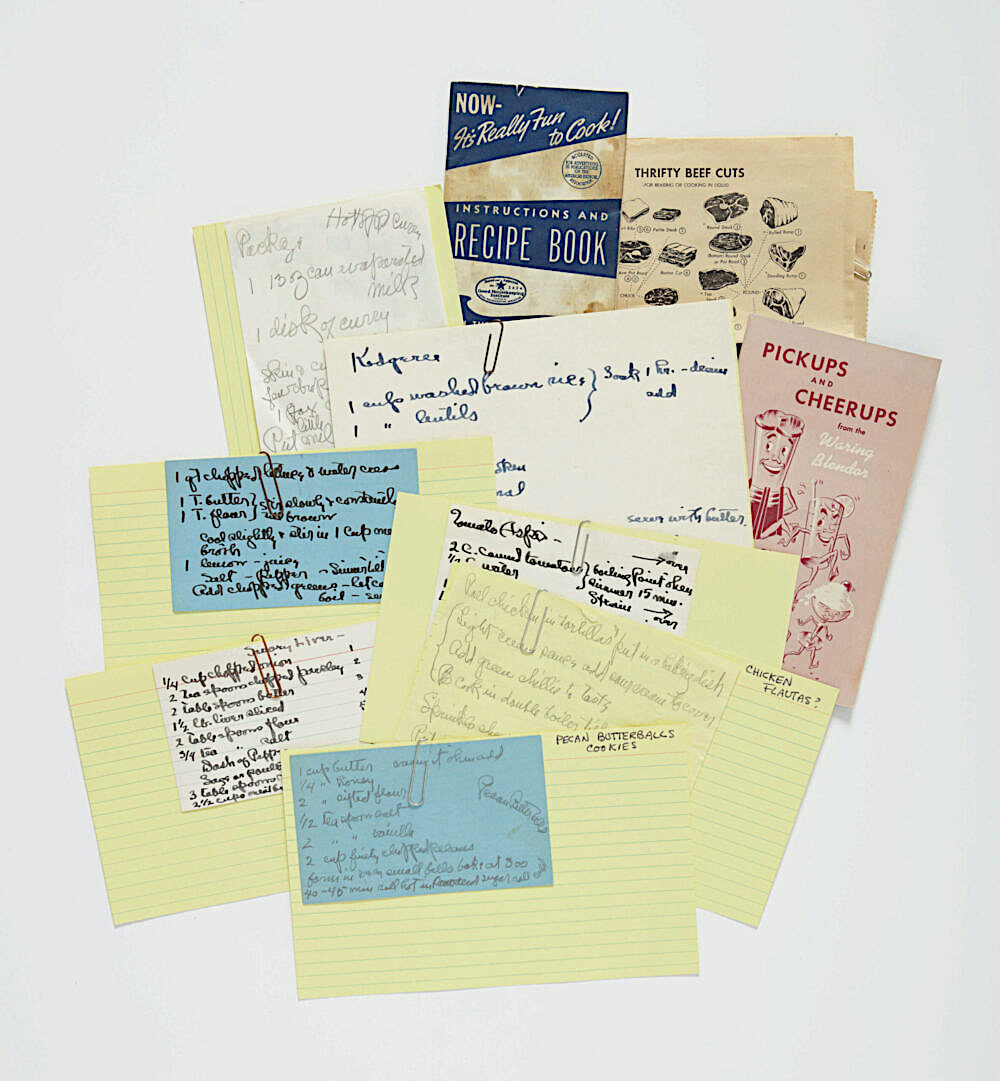
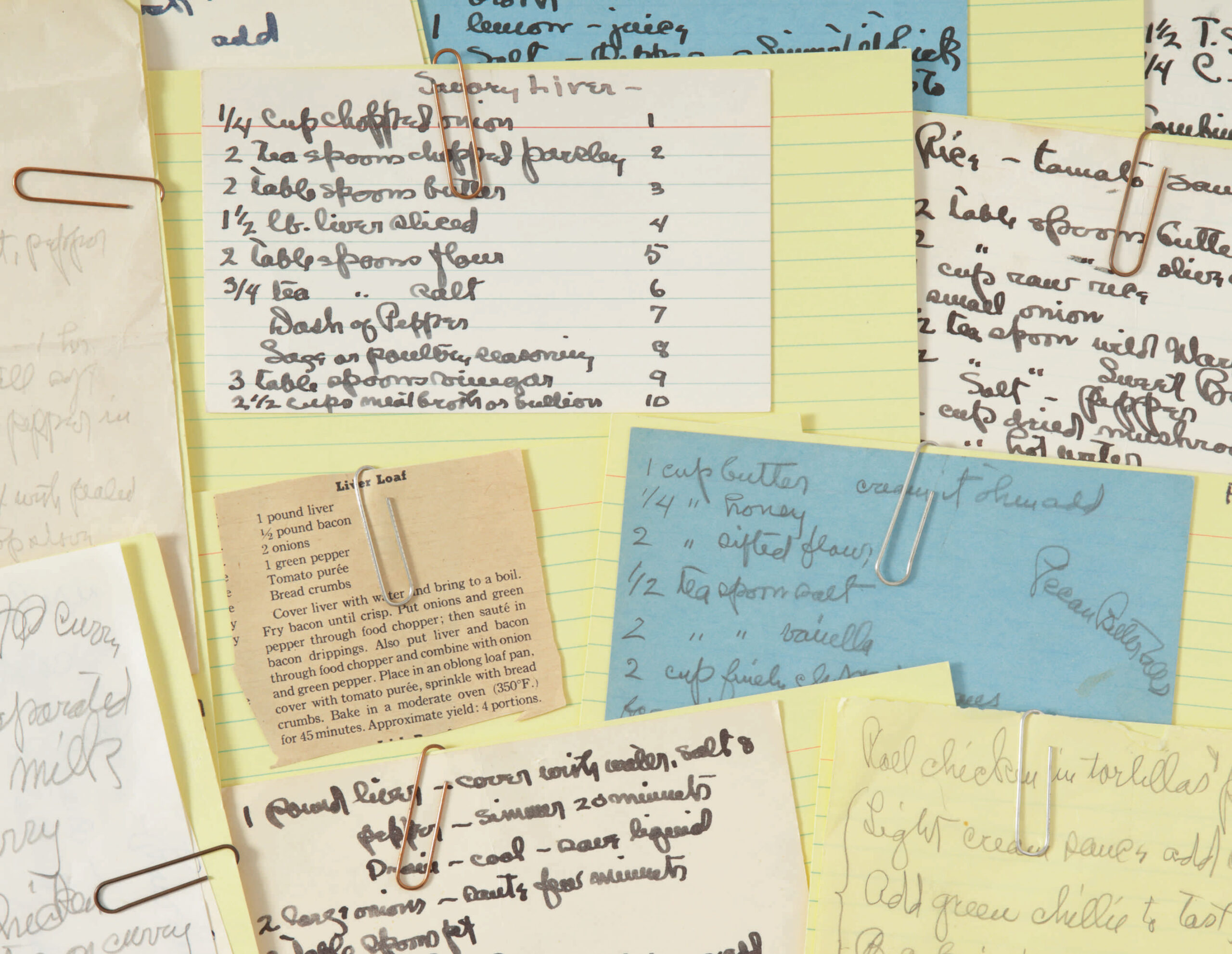
Also Pickups and Cheerups from the Waring Blender, a 21-page pamphlet featuring blended cocktails, that now rests in Yale University’s Beinecke Library, along with the rest of the contents of O’Keeffe’s recipe box, acquired the night before it was due to be auctioned at Sotheby’s. (Some of the images on this page come courtesy of Sotheby’s.)
In addition to recipes—inscribed by the artist’s own hand in ink from a fountain pen, typed by assistants, clipped from magazines and newspapers, or in promotional booklets such as the one published by the Waring Products Company—the box housed manuals for O’Keeffe’s kitchen appliances.
The booklet that came with her pressure cooker includes a spattered page devoted to cooking fresh veggies, a testament to her abiding interest in eating healthfully.
O’Keeffe had a high regard for salads, garden fresh herbs, and simple, locally sourced food.
Today’s buddha bowl craze is, however, “the opposite of what she would enjoy” according to Wood, author of the books Remembering Miss O’Keeffe: Stories from Abiquiu and A Painter’s Kitchen: Recipes from the Kitchen of Georgia O’Keeffe.
Wood, who was some 66 years younger than her employer, recently visited The Sporkful podcast to recall her first days on the job :
…she said, “Do you like to cook?”
And I said, “Yes, I certainly do.”
So she said, “Well, let’s give it a try.”
And after two days of my hippie health food, she said, “My dear, let me show you how I like my food.” My first way of trying to cook for us was a lot of brown rice and chopped vegetables with chicken added. And that was not what she liked.
An example of what she did like: Roasted lemon chicken with fried potatoes, a green salad featuring lettuce and herbs from her garden, and steamed broccoli.
Also yogurt made with the milk of local goats, whole wheat flour ground on the premises, watercress plucked from local streams, and home canning.
Most of these labor-intensive tasks fell to her staff, but she maintained a keen interest in the proceedings.
Not for nothing did the friend who referred Wood for the job warn her it would “require a lot of patience because Miss O’Keeffe was extremely particular.”
The jottings from the recipe box don’t really convey this exacting nature.
Those accustomed to the extremely specific instructions accompanying even the simplest recipes to be found on the Internet may be shocked by O’Keeffe’s brevity.
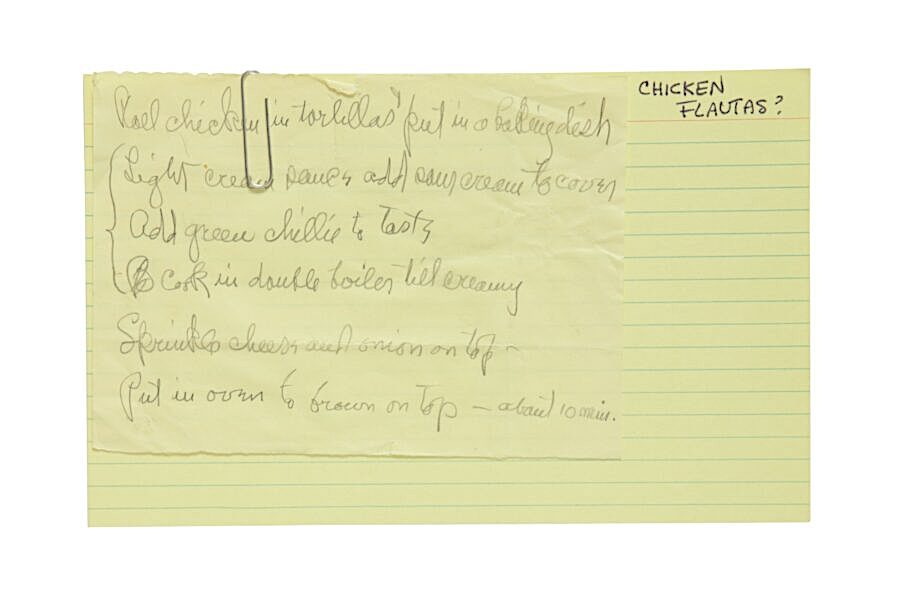
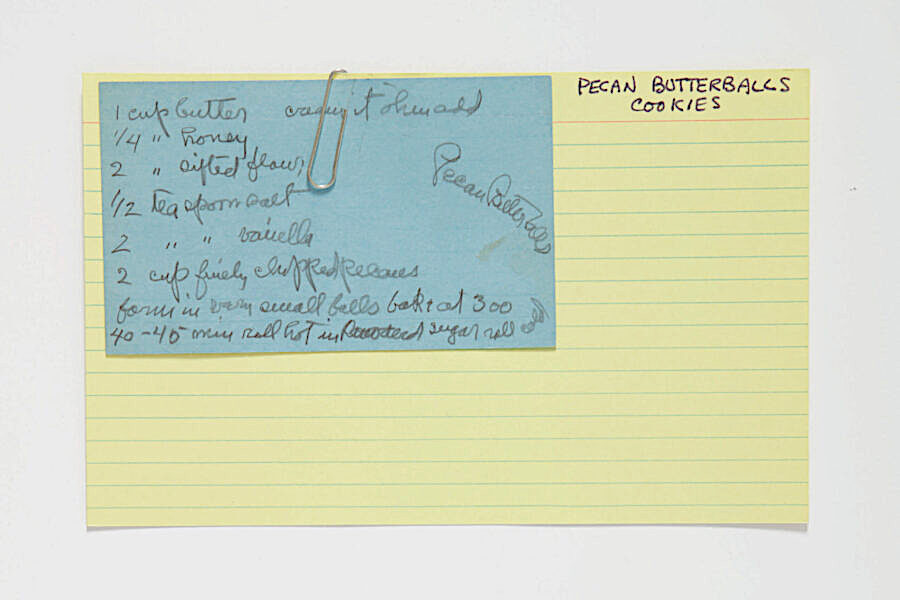
Perhaps we should assume that she stationed herself close by the first time any new hire prepared a recipe from one of her cards, knowing she would have to verbally correct and redirect.
(O’Keeffe insisted that Wood stir according to her method—don’t scrape the sides, dig down and lift up.)
The box also contained recipes that were likely rarities on O’Keeffe’s table, given her dietary preferences, though they are certainly evocative of the period: tomato aspic, Maryland fried chicken, Floating Islands, and a cocktail she may have first sipped in a Santa Fe hotel bar.
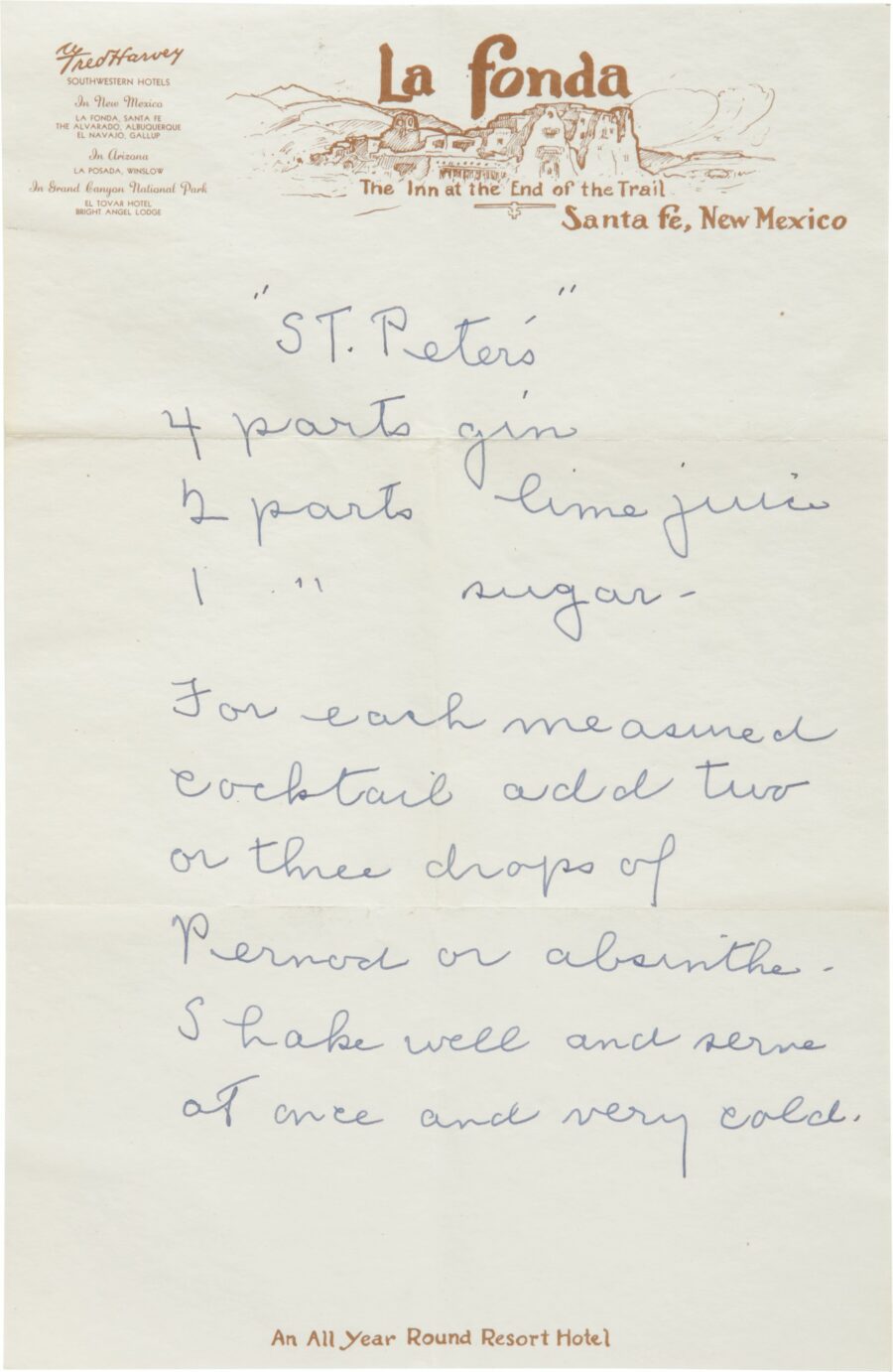
The Beinecke plans to digitize its newly acquired collection. This gives us hope that one day, the Georgia O’Keeffe Museum may follow suit with the red recipe binder Wood mentions in A Painter’s Kitchen:
This was affectionately referred to as “Mary’s Book,” named after a previous staff member who had compiled it. That notebook was continually consulted, and revised to include new recipes or to improve on older ones…. As she had collected a number of healthy and flavorful recipes, she would occasionally laugh and comment, “We should write a cookbook.”
Related Content:
Explore 1,100 Works of Art by Georgia O’Keeffe: They’re Now Digitized and Free to View Online
Georgia O’Keeffe: A Life in Art, a Short Documentary on the Painter Narrated by Gene Hackman
The Art & Cooking of Frida Kahlo, Salvador Dali, Georgia O’Keeffe, Vincent Van Gogh & More
Ayun Halliday is an author, illustrator, theater maker and Chief Primatologist of the East Village Inky zine. Follow her @AyunHalliday.
Read More...Mapping the Differences in How Americans Speak English: A Geographic Look at Words, Accents & Dialects
In the 2005 PBS documentary series Do You Speak American? journalist Robert MacNeil traveled from fabled “sea to shining sea” to explore the mysteries of American English. Among the many questions he addressed at the time was the widespread idea that mass media is “homogenizing American language or making us all talk the same.” MacNeil, and the linguists he interviewed, found that this wasn’t true, but what accounts for the misperception?
One reason we may have been inclined to think so is that regional accents seemed to disappear from television and other media, as the country became more suburban, and middle class white Americans distanced themselves from their immigrant roots and from African Americans and working-class Southerners. Aside from several broad ethnic stereotypes, many of which also faded during the Civil Rights era, the more-or-less authentic regional accents on TV seemed fewer and fewer.
A rush of media in recent decades, however, from Fargo to The Sopranos, has reintroduced Americans to the regional varieties of their language. At the same time, popular treatment of linguistics, like MacNeil’s documentary, have introduced us to the tools researchers use to study the diversity of difference in American English. Those differences can be measured, for example, in whether people pronounce “R” sounds in words like “car,” a characteristic linguists call “rhoticity.”
In the past century, Ben Trawick-Smith of Dialect Blog writes, “American and British attitudes toward non-rhoticity diverged. Where r‑lessness was once a prestige feature in both countries,” representing in the Southern planter class and Boston Brahmins in the U.S., for example, “it is a marker of working-class or vernacular speech in 21st-century America (typical of the broadest New York City, Boston and African American Vernacular Englishes).” In the short film at the top, you can hear several varieties of rhotic and non-rhotic American English in the mouths of speakers from 6 regions around the country.
Presented by linguist Henry Smith, Jr. the 1958 documentary details the phonetic differences of each speaker’s pronunciations. Linguists use certain words to test for a vernacular’s phonetic qualities, words like “water” and “oil,” which you can hear further up in a far more recent video, pronounced by speakers from different states around the U.S. Regional speech is also measured by the choice of words we use to talk about the same thing, with one of the most prominent examples in the U.S. being “Soda vs. Pop vs. Coke.” In the Atlantic video just above, see how those different words break down according to region, and learn a bit more about the “at least 10 distinct dialects of English” spoken in the U.S.
Related Content:
A Brief Tour of British & Irish Accents: 14 Ways to Speak English in 84 Seconds
What English Would Sound Like If It Was Pronounced Phonetically
The Speech Accent Archive: The English Accents of People Who Speak 341 Different Languages
Josh Jones is a writer and musician based in Durham, NC. Follow him at @jdmagness
Read More...How Science Fiction Formed Jimi Hendrix
“Through the entirety of his short life Jimi Hendrix was an avid fan of science fiction. As a young child Hendrix and his brother Leon would escape their troubled upbringing by dreaming up stories of far-off planets and flying saucers.” So begins the Polyphonic video above, an exploration of how sci-fi informed the apocalyptic images and spaced-out sounds in Hendrix’s songs. His love of science fiction “only intensified as an adult,” especially when Hendrix moved in with Chas Chandler, who would become his manager and producer, and who owned a large collection of sci-fi novels.
The books Hendrix read at the time provided him with the material he needed for a psychedelic revolution. He turned the “purplish haze” in Philip Jose Farmer’s Night of Light into “Purple Haze.” The song’s lyrics reference the disorienting state of mind characters in Farmer’s story experience from cosmic radiation, while they also allude, of course, to other kinds of altered states. Hendrix didn’t just weave sci-fi themes and references into his songs. He and Chandler composed space-rock epics that expanded the possibilities of the electric guitar and the recording studio.
“Third Stone from the Sun” is written “from the perspective of an alien scout who is observing Earth from afar.” Though he deflects with humor and innuendo, the alien character in the song expresses complete disgust with humanity: “Your people I do not understand / So to you I shall put an end.” In “Up from the Skies,” Hendrix sings from “the perspective of one who lived on Earth long ago, and is dismayed at the state of the planet when he comes back to visit.” Calling the Earth a “people farm,” he says to the planet as a whole, “I heard some of you got your families / Living in cages.”
The video links Hendrix’s use of science fiction as social commentary to some of the best-known writers of the genre, including Aldous Huxley, Isaac Asimov, Stanislaw Lem, and Ursula K. LeGuin. These are worthy comparisons, to be sure, but there is another tradition in which to situate him, one that had been at work in popular music since Sun Ra first stepped onstage and claimed to be from outer space. Hendrix’s responses to the “apocalyptic” images of the Vietnam War and the mass protest, civil unrest, and racial strife in the U.S. draws on an Afrofuturist lexicon as much as from predominately white sci-fi.
Coined in 1995 by critic Mark Dery in conversation with science fiction giant Samuel R. Delany, critic Greg Tate, and Professor Tricia Rose, the term “Afrofuturism” describes a hybrid sci-fi aesthetic that ties together past, present, and future Black experiences. “From Sun-Ra to Janelle Monáe, the appropriation of other-worldly and alien iconography establishes Afro-futurists as outsiders,” writes Mawena Yehouessi. Afrofuturism is the creative expression of double consciousness: C. Brandon Ogbunu traces the genre back to W.E.B. Du Bois’ 1920 short story “The Comet” and argues that the ability of Black artists to view the culture as both insiders and outsiders can “help us to consider universes of better alternatives.”
Hendrix’s narrators describe apocalyptic visions, but they do so from the point-of-view of other, better worlds, or better times, or, in “A Merman I Should Turn to Be”—perhaps one of Hendrix’s most trenchant critiques—an undersea refuge.
Well it’s too bad that our friends, can’t be with us today
Well it’s too bad
‘The machine, that we built,
Would never save us’, that’s what they say
(That’s why they ain’t coming with us today)
And they also said it’s impossible for a man to live and breathe under
Water, forever,
Was their main complaint
And they also threw this in my face, they said:
Anyway, you know good and well it would be beyond the will of God,
And the grace of the King (grace of the King)
(Yeah, yeah)
The perspective seems to anticipate the pessimistic, post-apocalyptic visions of Octavia Butler. It’s a view Afrofuturist theorist Kodwo Eshun links to the experiences of people of the African diaspora generally, who “live the estrangement that science-fiction writers envision. Black experience and science fiction are one and the same.” Afrofuturism has “always looked forward,” Taylor Crumpton writes at Clever, providing a “blueprint for cultural growth.” In Hendrix’s songs, we feel the urgent tension between a world on fire and a desire to escape, resolving, Polyphonic concludes, with “hope in a new way of living.”
Related Content:
Behold Moebius’ Many Psychedelic Illustrations of Jimi Hendrix
Josh Jones is a writer and musician based in Durham, NC. Follow him at @jdmagness
Read More...Watch Some of Eddie Van Halen’s (RIP) Greatest Performances: “Shredding Was Eddie’s Very Essence”
Growing up around metalheads gave me an appreciation for the guitar heroics of bands like Metallica, Iron Maiden, Judas Priest, etc. But one band everyone loved, I didn’t get. David Lee Roth, Sammy Hagar (let’s not speak of the Cherone era)… it didn’t matter to me. Van Halen seemed to be having way too much sleazy fun to fit my narrow ideas of metal. No spikes, no skulls, no black masses. “Runnin’ with the Devil” sounds like a campfire song, I said….
Sit down, they said, shut up, and listen to “Eruption.” So I did. And I said, Oh. Then I listened carefully to all the rest. I didn’t become a fan of Van Halen, the band. But it was obvious that Eddie Van Halen himself, who passed away yesterday from cancer at the age of 65, deserves the reputation as the most innovative guitarist since Hendrix. His endless creativity powered the band through its tumultuous lineup changes; his playing completely changed the design of metal guitars, not to mention the metal solo; his DIY guitar designs turned him into a builder of his own line of guitars and amplifiers.
There didn’t seem to be anything he couldn’t do with the instrument, but unlike many a guitar virtuoso, Van Halen was entirely self-taught. “Ninety percent of the things that I do on guitar, if I had taken lessons and learned to play by the book,” he once said, “I would not play at all the way I do… Crossing a Gibson with a Fender was out of necessity, because there was no guitar on the market that did what I wanted.” He’s referring to the “Frankenstein” guitar—a heavily modified Fender Strat—one of many such guitars he built, rewired, and painted to suit his needs.
Van Halen first showed off his pioneering two-hand tapping and vibrato dive bombs on the first of many “Frankenstrats” in “Eruption,” recorded as a short instrumental interlude between “Runnin’ with the Devil” and “Jamie’s Cryin’” on the 1978 debut Van Halen. He had innumerable moments of brilliance, in the studio and onstage, in decades afterward, including his unforgettable guitar work on “Thriller” and “Beat It,” classic solos that “will never be matched,” as Quincy Jones tweeted in tribute yesterday. (See “Beat It” live in a very low-quality video above.)
But guitarists still turn to “Eruption”, again and again, as “the peak of guitar performance,” Esquire’s culture editor Matt Miller writes. “It’s true,” Miller concedes, “there were no shortages of self-indulgent guitar solos in the ‘70s, but this one changed the game of how they would sound and what they would mean, heading in to the ‘80s. Every solo that followed would try to emulate the sound of Eddie’s mind-melting ‘Eruption.’” Van Halen insisted the solo wasn’t as complicated as fans made it out to be. There remains an “entire YouTube subculture dedicated to kids trying to play” the solo, to master the tone and technique of the man who may have been the most metal guitarist of them all.
We’ve barely touched on Van Halen’s legacy as a soloist and inventor of weird guitars, sounds and effects, and not at all on his equally important roles as a showman, songwriter, keyboard player, and rhythm guitarist. No matter how ridiculously fast and technical metal becomes, or how many extra strings players add to Eddie’s six, no one has ever matched his level of style and invention. It is no less the case in 2020 as it was in the late 70s that one can point to his solos and say, “with no hyperbole,” writes Miller, “this is shredding.” Truly, shredding was Eddie Van Halen’s very essence.
Related Content:
Musical Comedian Reggie Watts Reinvents Van Halen’s Classic, “Panama”
The Evolution of the Rock Guitar Solo: 28 Solos, Spanning 50 Years, Played in 6 Fun Minutes
Josh Jones is a writer and musician based in Durham, NC. Follow him at @jdmagness
Read More...Watch the Dadaist Masterpiece Ghosts Before Breakfast (1928): Hans Richter’s Film Was So Avant Garde It Was Desecrated by the Nazis
The hats won’t stay on heads. The bowtie won’t be tied. The gun can’t shoot and the target can’t keep still. When objects themselves rebel, something terrible is upon the land, and anarchism will out. This is one of the takeaways from painter Hans Richter’s 1928 DADA short film Ghosts Before Breakfast, or Vormittagsspuk in its original German (literally “Morning Spook”). And you might take that a very different way than the audience in 1928. That is fine. This is Dada. It is a bomb thrown into the mind.
But actual events and problems surround the film and its aftermath. By the end of the 1920s Richter was nearly two decades into his abstract/cubist painting career, and at the beginning of the decade he had already been experimenting with the relatively new medium of film. His 1921 Rhythmus 21 was one of the first films to attempt to bring abstract ideas–shapes, light, rhythm– to the medium. Writing in a German periodical around 1926, he said “…cinema can fulfill certain promises made by the ancient arts, in the realization of which painting and film become close neighbors and work together.”
Ah, but could music and silent film work together? In 1927 he was asked by the Gessellschaft Fur Neu Musik in Berlin to work with composer Paul Hindemith on a piece to screen at their annual festival. Hindemith suggested something pleasant, something set in the countryside. Richter ran out of time and shot something in an improvisational style. But, you know, sometimes deadlines really bring out the best in people. If the legacy of Ghosts Before Breakfast is any indication, it did. It’s considered by many to be one of the best Dada films for pure invention and playfulness.
If Ghosts has any narrative it’s this: objects confound their human owners, while a clock relentlessly counts down the minutes to noon, a play on the German phrase “Es ist fünf vor zwölf,” literally “five minutes to 12” or “time in running out.” (There’s also a duck).
Richter throws it all in: there’s backwards film, negative film, cut-out and stop-motion animation, in-camera special effects. And as a throughline, one of the simplest effects: four, then three, then two ghostly bowler hats floating in the sky, just out of the reach of their owners.
And the artist called in his friends to help: Richter used Bauhaus student and sculptor Werner Graeff, Hindemith himself, composer Darius Milhaud and his cousin/wife Madeleine Milhaud, and film editor Willi Pferdekamp to populate the film.
Ghosts has a tragic afterlife: the Nazis burned the original film and the score Hindemith wrote for it. However that has left a flowering of music in its wake, as composers have tried to fill the gap: Ian Gardener, Jean Hasse, the band The Real Tuesday Weld, and others. Steve Roden composed four versions for a LACMA retrospective of Richter’s work, using various Dadaist tactics, including recording a Hindemith vinyl he had prepared with sandpaper.
All scores have resisted perfect synchronization, however. Indeed, in 1947 Richter himself spoke out against that desire:
We should find a way to let the sound and the picture move on its own in the same direction, but nevertheless, separately. This refers to the spoken word as well as to the musical and other sounds.
Nearly 100 years old, Ghosts Before Breakfast is still setting the table for us, ready with a strong brew of truth.
Related Content:
Ted Mills is a freelance writer on the arts who currently hosts the Notes from the Shed podcast and is the producer of KCRW’s Curious Coast. You can also follow him on Twitter at @tedmills, and/or watch his films here.
Read More...When Shostakovich Adapted Gogol’s “The Nose” Into an Opera: Watch Giant Noses Tap Dancing on the Stage
The first-time reader of a story called “The Nose” may expect any number of things: a character with a keen sense of smell; a murder evidenced by the titular organ, disembodied; a broader ironic point about the things right in front of our faces that we somehow never see. But given its conception in the imagination of Nikolai Gogol, “The Nose” is about a nose — a nose that, on its own, lives, breathes, walks, and dresses in finery. The nose does this, it seems, in order to rise in rank past that of its former owner, the run-of-the-mill St. Petersburg civil servant Collegiate Assessor Kovalyov.
Written in 1835 and 1836, “The Nose” satirizes the long era in Imperial Russia after Peter the Great introduced the Table of Ranks. Meant to usher in a kind of proto-meritocracy, that system assigned rank to military and government officers according, at least in theory, to their ability and achievements. The fact that those who attained high enough ranks would rise the to the level of hereditary nobles created an all-out status war across many sections of society — a war, to the mind of Gogol the master observer of bureaucracy, that could pit a man not just against his colleagues and friends but against his own body parts.
Nearly a century after the story’s publication, a young Dmitri Shostakovich took it upon himself to adapt “The Nose” into his very first opera. In collaboration with Alexander Preis, Georgy Ionin, and Yevgeny Zamyatin (author of the enduring dystopian novel We), the composer rendered even more outrageously this tale of a nose gone rogue. Incorporating pieces of Gogol’s other stories like the “The Overcoat” and “Diary of a Madman” as well as the play Marriage and the diary Dead Souls — not to mention the writings of other Russian masters, including Dostoyevsky’s The Brothers Karamazov — the 1928 opera combines a wide variety of musical styles both traditional and experimental, and among its set pieces includes a number performed by giant tap-dancing noses.
You can see that part performed in the video above. The venue is London’s Royal Opera House, the director is Barrie Kosky of Berlin’s Komische Oper, and the year is 2016, half a century after The Nose’s revival. Though completed in the late 1920s, it didn’t premiere on stage in full until 1930, when Soviet censorship concentrated its energies on quashing such non-revolutionary spectacles. It wouldn’t be staged again in the Soviet Union until 1974, nearly a decade after its premiere in the United States. (Just a couple years before, Alexander Alexeieff and Claire Parker had adapted the story into the pinscreen animation previously featured here on Open Culture.) The sociopolitical concerns of Gogol’s early 19th century and Shostakovich’s early 20th may have passed, but the appeal of the former’s sharp satire — and the sheer Pythonesque weirdness of the latter’s operatic sensibility — certainly haven’t.
Related Content:
Revered Poet Alexander Pushkin Draws Sketches of Nikolai Gogol and Other Russian Artists
George Saunders’ Lectures on the Russian Greats Brought to Life in Student Sketches
Based in Seoul, Colin Marshall writes and broadcasts on cities, language, and culture. His projects include the Substack newsletter Books on Cities, the book The Stateless City: a Walk through 21st-Century Los Angeles and the video series The City in Cinema. Follow him on Twitter at @colinmarshall, on Facebook, or on Instagram.
Read More...An Animated Reading of “The Jabberwocky,” Lewis Carroll’s Nonsense Poem That Somehow Manages to Make Sense
“I can explain all the poems that ever were in vented—and a good many that haven’t been invented just yet.” —Humpty Dumpty
“The Jabberwocky,” Lewis Carroll’s classic poem from Through the Looking Glass, and What Alice Found There—the second installment of the most famously nonsensical adventure in literary history—is “full of seemingly nonsensical words that somehow manage to make sense,” says narrator Jack Cutmore-Scott in the animated reading above from TED-Ed Animation. That word, nonsense, is associated with Carroll’s fantasy world more than any other, but what does it mean for a story to be nonsense and be intelligible at the same time?
Carroll, a mathematician by training, understood the fundamental principle of nonsense, which “T.S. Eliot reminded us, is not an absence of sense but a parody of it,” as J. Patrick Lewis writes at The New York Times. “Some of the portmanteau words Carroll invented—chortle, burble, frabjous and others—are now fully vested members of the lexicon. And the verse’s structure is a mirror, as Alice discovered, of classical English poetry.” Carroll composed the first four lines ten years before Through the Looking Glass, as a parodic “Stanza of Anglo-Saxon Poetry” to amuse his family.
It may help, or not, to keep in mind that Carroll is not only mocking English poetic forms and conventions, but a particular historical form of English that is mostly unrecognizable to modern readers, and certainly to Alice. But the poem’s syntax and structure are so familiar that we can easily piece together a monster-slaying narrative in which, as Alice remarks, “somebody killed something.”
The ever-humble Humpty Dumpty is happy to explain, as was Carroll in his original composition, to which he attached a glossary very similar to the egg’s definitions and gave “the literal English” of the first stanza as:
“It was evening, and the smooth active badgers were scratching and boring holes in the hill side; all unhappy were the parrots, and the grave turtles squeaked out“.
There were probably sun dials on the top of the hill, and the “borogoves” were afraid that their nests would be undermined. The hill was probably full of the nests of “raths”, which ran out squeaking with fear on hearing the “toves” scratching outside. This is an obscure, but yet deeply affecting, relic of ancient Poetry.
Does this help? It does explain the mood Carroll is after, and he achieves it. The Jabberwocky is funny and playful and all the rest, but it is also deeply unsettling in its obscure mysteries and frightening descriptions of its title character.
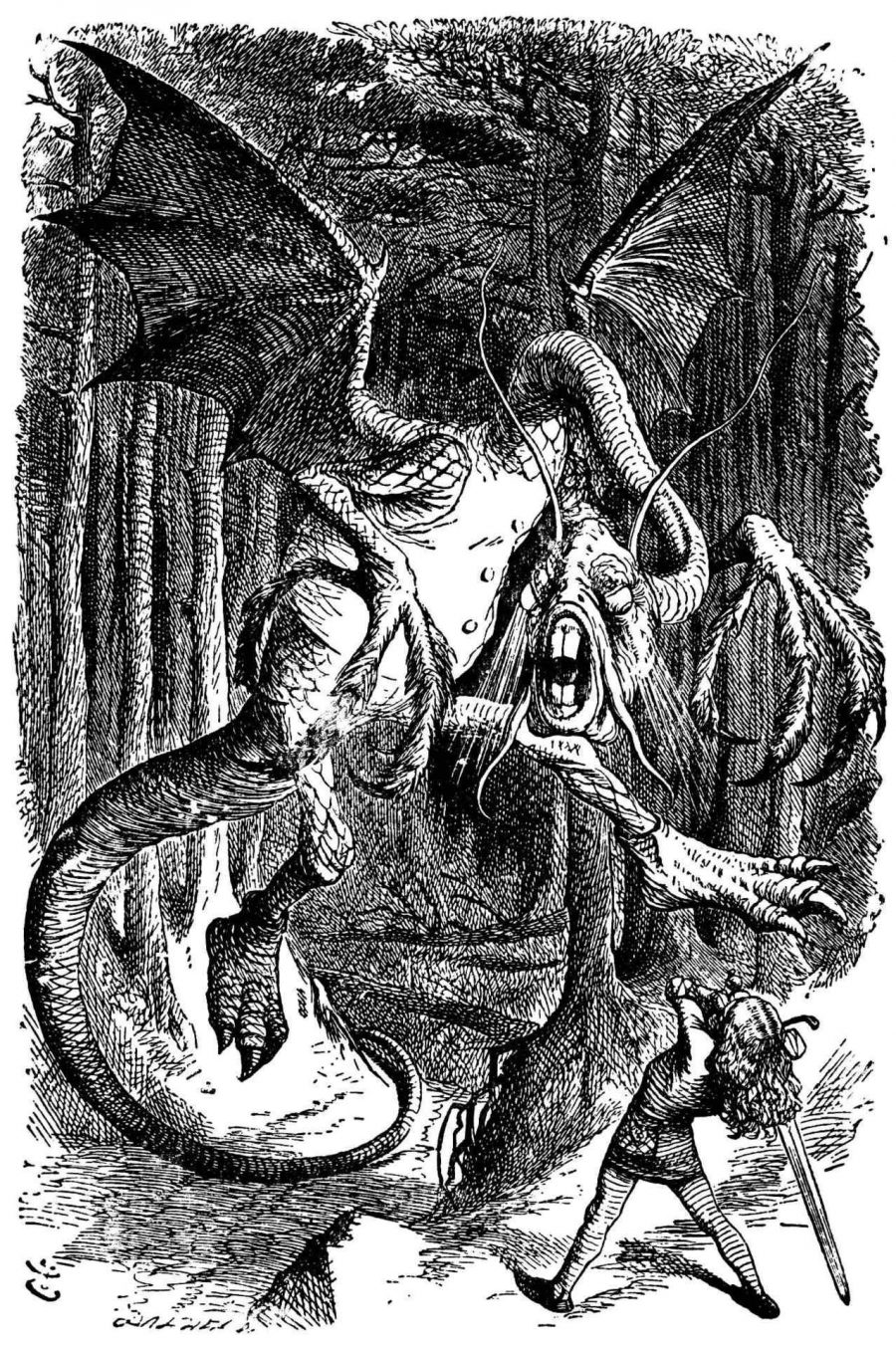
In John Tenniel’s famous illustration of the beast, it appears as a scaly, leathery dragon with a face somewhere between a deep-sea fish and an overgrown sewer rat. The animation by Sjaak Rood gives it a more classically dragon-like appearance, in the crazed style of Ralph Steadman, while the Bandersnatch looks like something Paul Klee would have invented. The choice of artistic influences here shows Rood connecting deeply with the nonsense tradition in modern art, one which also turns familiar forms into nightmarish beings that fill our heads with ideas.
Related Content:
O Frabjous Day! Neil Gaiman Recites Lewis Carroll’s “Jabberwocky” from Memory
Lewis Carroll’s Photographs of Alice Liddell, the Inspiration for Alice in Wonderland
Josh Jones is a writer and musician based in Durham, NC. Follow him at @jdmagness
Read More...Support Us
We're hoping to rely on loyal readers, rather than erratic ads. Please click the Donate button and support Open Culture. You can use Paypal, Venmo, Patreon, even Crypto! We thank you!

About Us

Open Culture scours the web for the best educational media. We find the free courses and audio books you need, the language lessons & educational videos you want, and plenty of enlightenment in between.
Advertise With Us

FREE UPDATES!
GET OUR DAILY EMAIL
Get the best cultural and educational resources on the web curated for you in a daily email. We never spam. Unsubscribe at any time.
FOLLOW ON SOCIAL MEDIA

Open Culture editor Dan Colman scours the web for the best educational media. He finds the free courses and audio books you need, the language lessons & movies you want, and plenty of enlightenment in between.
Advertise With Us

