Behold a Digitization of “The Most Beautiful of All Printed Books,” The Kelmscott Chaucer
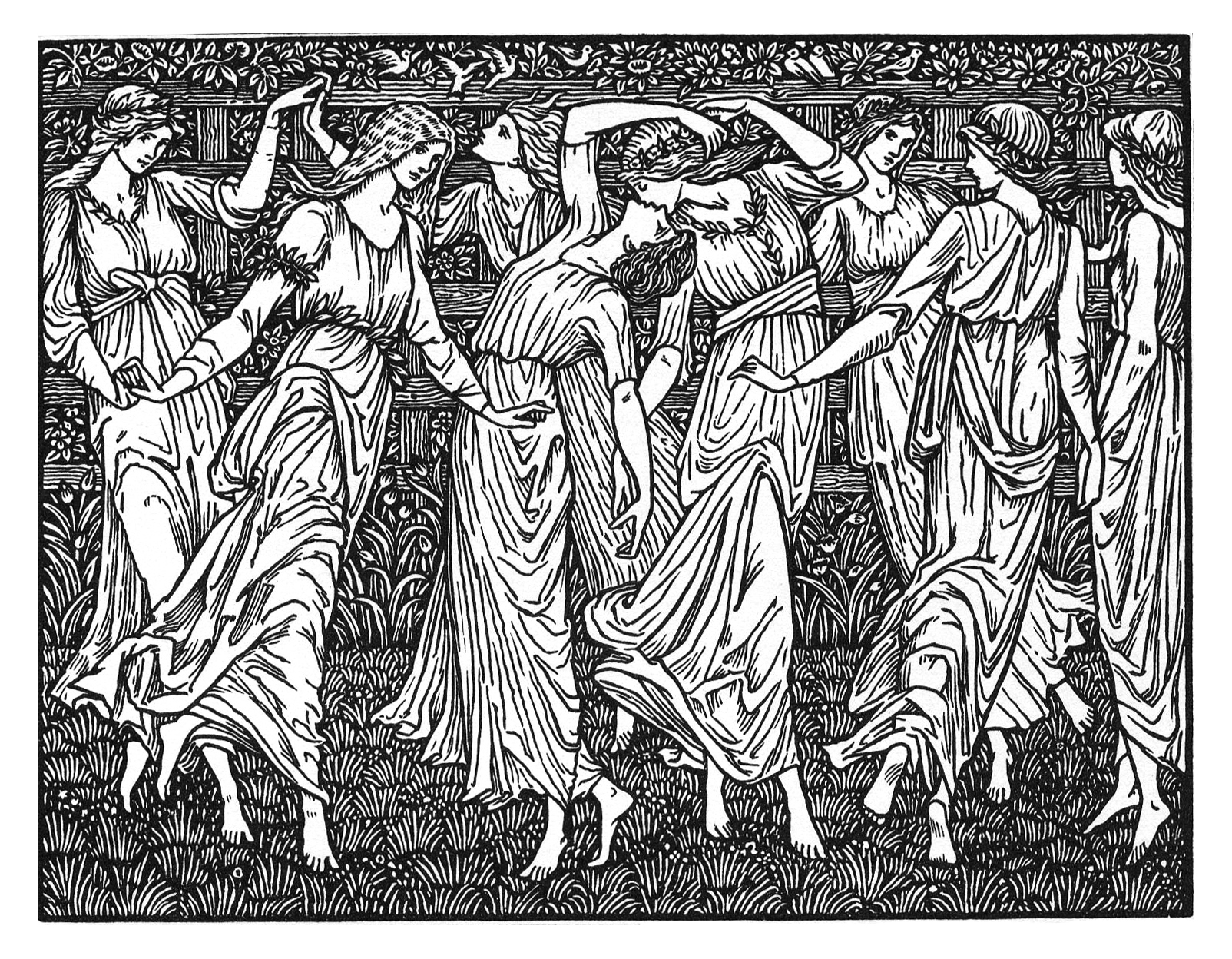
The history of the printed book stretches back well over a millennium, the title of the oldest known book currently being held by a Tang Dynasty work of the Diamond Sutra. But what about the most beautiful book? As a contender for that spot, Michael Goodman (previously featured here on Open Culture for his projects on the illustrations of Shakespeare and Dickens) has put forth the Kelmscott Chaucer, including the testimony of no less a literary figure than W.B. Yeats, who called it “the most beautiful of all printed books.” Goodman has also made the book freely available for our perusal on his new web site, The Kelmscott Chaucer Online.

“William Morris, the nineteenth-century designer, social reformer and writer, founded the Kelmscott Press towards the end of his life,” says the web site of the British Library. “He wanted to revive the skills of hand printing, which mechanization had destroyed, and restore the quality achieved by the pioneers of printing in the 15th century.”
Published in 1896, the Kelmscott Chaucer, fully titled The Works of Geoffrey Chaucer now newly imprinted, “is the triumph of the press. Its 87 wood-cut illustrations are by Edward Burne-Jones, the celebrated Victorian painter, who was a life-long friend of Morris. The illustrations were engraved by William Harcourt Hooper and printed in black, with shoulder and side titles.”

You can view all these elements and more, digitized in detail and entirely downloadable, on Goodman’s site, organized into separate sections dedicated to its illustrations, full pages, borders, frames, and even its decorated words — the likes of which we seldom, if ever, see in the printed books of our own, infinitely higher-tech century. “The edition I have used for this project is a facsimile from the 1950s that has sat on my shelf for many years,” Goodman notes. Given how few copies of the Kelmscott Chaucer were originally produced, thirteen copies on vellum, and another 58 on pig’s skin, “any special collection’s library who are lucky enough to own an original copy are likely to be very reluctant to embark upon any form of digitization due to the significant risk of damage that the process could inflict upon the book.”
If you’d like a closer look at the genuine article, which is much larger than the digitization may let on, you can get one in the video just above, hosted by London rare book dealer Adam Douglas. “It’s obvious as soon as we open to the beginning how much care and attention has been lavished on this book,” he says, highlighting the “beautiful designs in the pre-Raphaelite manner,” the woodcut initials throughout (no two of which are alike), and the “wonderful proportions” that match the Golden Ratio. It takes a certain sophistication, or at least knowledge of the history of printing and book design, to fully appreciate the Kelmscott Chaucer. But thanks to Goodman, younger readers — even much younger readers — can enjoy it in coloring-book form.
Related content:
Download Free Coloring Books from Nearly 100 Museums & Libraries
Based in Seoul, Colin Marshall writes and broadcasts on cities, language, and culture. His projects include the Substack newsletter Books on Cities, the book The Stateless City: a Walk through 21st-Century Los Angeles and the video series The City in Cinema. Follow him on Twitter at @colinmarshall or on Facebook.
Read More...Sinéad O’Connor’s Raw Isolated Vocals for “Nothing Compares 2 U”
Prince first recorded a demo of “Nothing Compares 2 U” in 1984. Then Sinéad O’Connor made the song her own … and made it famous. Chris Birkett, who co-produced and engineered the 1990 track, remembers the circumstances behind the recording: Speaking to Sound on Sound, he recalls: “I think the intensity of Sinéad’s performance came from the breakup of her latest relationship.” “She had been dating her manager, Fachtna O’Ceallaigh, who’s a really good guy and had been instrumental in getting her deal with Ensign Records. However, their relationship had gone pear-shaped and they were in the process of breaking up when we recorded ‘Nothing Compares 2 U’, so that’s probably why she did such a good vocal. She came into the studio, did it in one take, double-tracked it straight away and it was perfect because she was totally into the song. It mirrored her situation.” In the isolated track above, you can hear all of the rawness of the moment, captured just as Birkett heard it that day.
Related Content
Patti Smith’s Cover of Nirvana’s “Smells Like Teen Spirit” Strips the Song Down to its Heart
Hear a 19-Year-Old Prince Crushing It on Every Instrument in an Early Jam Session (1977)
Read More...
Pakistani Musicians Play a Wonderful Version of Dave Brubeck’s Jazz Classic, “Take Five”
How’s this for fusion? Here we have The Sachal Studios Orchestra, based in Lahore, Pakistan, playing an innovative cover of “Take Five,” the jazz standard written by Paul Desmond and performed by The Dave Brubeck Quartet in 1959. (Watch them perform it here.) Before he died in 2012, Brubeck called it the “most interesting” version he had ever heard. Once you watch the performance above, you’ll know why.
According to The Guardian, The Sachal Studios Orchestra was created by Izzat Majeed, a philanthropist based in London. When Pakistan fell under the dictatorship of General Zia-ul-Haq during the 1980s, Pakistan’s classical music scene fell on hard times. Many musicians were forced into professions they had never imagined — selling clothes, electrical parts, vegetables, etc. Whatever was necessary to get by. Today, many of these musicians have come together in a 60-person orchestra that plays in a state-of-the-art studio, designed partly by Abbey Road sound engineers.
You can purchase their album, Sachal Jazz: Interpretations of Jazz Standards & Bossa Nova, on Amazon. It includes versions of “Take Five” and “The Girl from Ipanema.”
Note: This post originally appeared on our site over a decade ago. For obvious reasons, we’re bringing it back.
Related Content:
How Dave Brubeck’s Time Out Changed Jazz Music
Watch an Incredible Performance of “Take Five” by the Dave Brubeck Quartet (1964)
An Uplifting Musical Surprise for Dave Brubeck in Moscow (1997)
Read More...Why Einstein Was a “Peerless” Genius, and Hawking Was an “Ordinary” Genius: A Scientist Explains
Genius sells. Publishers of biographies and studios behind Oscar-winning dramas can tell you that. So can network scientist Albert-László Barabási, who has actually conducted research into the nature of genius. “What really determines the ‘genius’ label?” he asks in the Big Think video above. When he and his collaborators “compared all geniuses to their scientific peers, we realized that there are really two very different classes: ordinary genius and peerless genius.” Considering the latter, Barabási points to the perhaps unsurprising example of Albert Einstein.
“When we looked at the scientists working at the same time, roughly in the same areas of physics that he did,” Barabási explains, “there was no one who would have a comparable productivity or scientific impact to him. He was truly alone.” Illustrating the class of “ordinary genius” is a figure almost as well-known as Einstein: Stephen Hawking. “To our surprise, we realized, there were about six other scientists who worked in roughly the same area, and had comparable, often bigger impacts than Stephen Hawking had” — and yet only he was publicly labeled a “genius.”
“The ‘genius’ label is a construct that society assigns to exceptional accomplishment, but exceptional accomplishment is not sufficient to get the genius label.” Throughout history, “remarkable individuals were always born in the vicinity of big cultural centers, and everything that is outside of the cultural centers was typically a desert of exceptional accomplishments.” Today, as venture capitalist and essayist Paul Graham once wrote, “a thousand Leonardos and a thousand Michelangelos walk among us. If DNA ruled, we should be greeted daily by artistic marvels. We aren’t, and the reason is that to make Leonardo you need more than his innate ability. You also need Florence in 1450.”
What would it take to discover the “hidden geniuses” who may have been born into unpropitious circumstances? This is one concern behind Barabási’s inquiry into the nature of scientific prominence. The question of “how does the quality of the idea that I picked, and the ultimate success, and my ability as a scientist connect to each other” led him to develop the “Q factor,” the measure of “our ability to turn ideas into discoveries.” His analysis of the data shows that, throughout a scientist’s career, the Q factor remains more or less stable. Applying it to big data “could help us to discover those that really had the accomplishment and deserve the genius label and put them in the right place.” If he’s correct, we can expect a bumper crop of books and movies on a whole new wave of geniuses in the years to come.
Related content:
What Character Traits Do Geniuses Share in Common?: From Isaac Newton to Richard Feynman
This is What Richard Feynman’s PhD Thesis Looks Like: A Video Introduction
Neil deGrasse Tyson on the Staggering Genius of Isaac Newton
Explore the Largest Online Archive Exploring the Genius of Leonard da Vinci
Based in Seoul, Colin Marshall writes and broadcasts on cities, language, and culture. His projects include the Substack newsletter Books on Cities, the book The Stateless City: a Walk through 21st-Century Los Angeles and the video series The City in Cinema. Follow him on Twitter at @colinmarshall or on Facebook.
Read More...Sinéad O’Connor Makes Her First US Television Appearance: Watch Her Sing “Mandinka” on Late Night with David Letterman (1988)
On September 7, 1988, a skinny, near bald, 21-year-old mother took the mic midway through Late Night with David Letterman and blew the socks off both the live studio audience and the folks viewing at home.
She also appeared as an unwilling participant in a cheesy greenroom sketch with fellow guests comedian Robert Klein, crooner Jerry Vale, and a female day player costumed as a sexy cigarette girl from another era.
It’s a stupid, retrograde bit that’s become even worse with age, but young Sinead O’Connor’s refusal to play along with the problematic premise was as true to form as her howling performance of Mandinka off her first album, The Lion and the Cobra.
Performing in a studded jean jacket and Claddagh ring, she made her live US television debut with eyes mostly closed.
Letterman introduced her as a “remarkable, young singer and writer from Ireland.”
It’s fun to see the truth of that canned line hitting the house band as the song progresses. Bandleader Paul Shaffer looks especially tickled by the ferocity of O’Connor’s performance and her confident musicianship.
In her memoir Rememberings, O’Connor explains that the song was inspired by the 1977 television adaptation of Alex Haley’s semi-autobiographical historical novel Roots:
I was a young girl when I saw it, and it moved something so deeply in me, I had a visceral response. I came to emotionally identify with the civil rights movement and slavery, especially given the theocracy I lived in and the oppression in my own home.
She reprised Mandinka several months later at the Grammy Awards. She may have lost Best Female Rock Vocal Performance to established legend Tina Turner, but the LA Times waggishly declared her “black halter top, bare midriff, torn, faded blue jeans and large black work shoes” the “outfit of the evening”:
The latest addition to her shaved-head look is a tattoo of militant rap group Public Enemy’s insignia–a view through a telescopic gun sight–over her left ear. None of which detracted from her electrifying performance of her song “Mandinka.”
“I thought it was a little odd that they asked me to perform, because of the way I look,” a nervous-looking O’Connor told the press backstage. “But I find it encouraging that they asked, because it’s an acknowledgment that they are prepared not to be so safe about the music and push forward with people slightly off the wall.”
Two years later, her cover of Prince’s Nothing Compares 2 U, abetted by her defiant appearance, made her a household name. Nominated for four Grammys, she declined an invitation to perform at the ceremony. She also declined her award for Best Alternative Music Performance.
In a letter to the sponsoring organization, the Recording Academy of the United States, she argued against the music industry’s priorities, its overt tendency to rank artists based on their commercial success:
As artists I believe our function is to express the feelings of the human race–to always speak the truth and never keep it hidden even though we are operating in a world which does not like the sound of the truth. I believe that our purpose is to inspire and, in some way, guide and heal the human race, of which we are all equal members.
Those looking for early-90s examples of man-splaining might appreciate Recording Academy President Michael Greene’s response, in which he overlooked the Letterman appearance, claiming the Grammys provided O’Connor with her first nationally televised exposure in the States:
We applaud that Sinead feels so strongly about these issues and believe that her convictions only add to the seriousness of her work. But she may be misguided. We respect her immensely as an artist… But I’m afraid that Sinead may not be properly informed about the difference between the overtly commercial aspects of popularity contests as opposed to the Grammys, which are voted on by the creative community.
O’Connor doubled down, attempting to rally her fellow musicians to shine a light on society’s ills, telling the LA Times that “It’s not enough any more to just sit in your chair and say, ‘Yeah, it’s terrible.’:”
Musicians are in a position to help heal this sickness, but I’d say 90% of the artists in the music business fail in that responsibility. You must acknowledge if you are an artist that you are a role model for young people, whether you like it or not. If you don’t want to accept that responsibility, you shouldn’t be an artist. With power comes responsibility.
The industry, including awards shows, sends out the message that selling more records is good rather than telling the truth.
Honoring commercial success is the obvious purpose of the American Music Awards telecast, but it’s also the intent of the Grammys as well.
I think if artists were to be awarded for what they had achieved in so far as telling the truth … as far as healing the human race, then I’d say Van Morrison or Ice Cube, people like that should be honored.
That statement lends an extra poignancy to our viewing of O’Connor and Morrison’s 1995 Letterman appearance, when, backed by the Chieftans, they duetted on Have I Told You Lately?
In the wake of O’Connor’s death at 56 last week, the media reminded us of the time she ripped up a picture of Pope John Paul II on Saturday Night Live as a way of drawing attention to the Catholic church’s coverup of sexual abuse by the clergy.
They reminded us of the time Frank Sinatra claimed he’d like to “kick her ass” when she wouldn’t submit to singing the National Anthem before a concert.
They reminded us of her correspondence with Miley Cyrus, wherein she warned the younger singer not to “obscure (her) talent by allowing (her)self to be pimped” either consciously or unconsciously.
Meanwhile, Letterman bassist Will Lee reacted to the news by revisiting that 1987 appearance on his Instagram:
Sinead O’Connor RIP — I always felt her pain, but now I don’t have to. She is free. Her death comes as a shock to the system because I always hoped she would find resolve, but she went too soon….
– Ayun Halliday is the Chief Primatologist of the East Village Inky zine and author, most recently, of Creative, Not Famous: The Small Potato Manifesto and Creative, Not Famous Activity Book. Follow her @AyunHalliday.
Read More...Behold A Grammar of Japanese Ornament and Design: The 19th Century Book That Introduced Western Audiences to Japanese Art (1880)
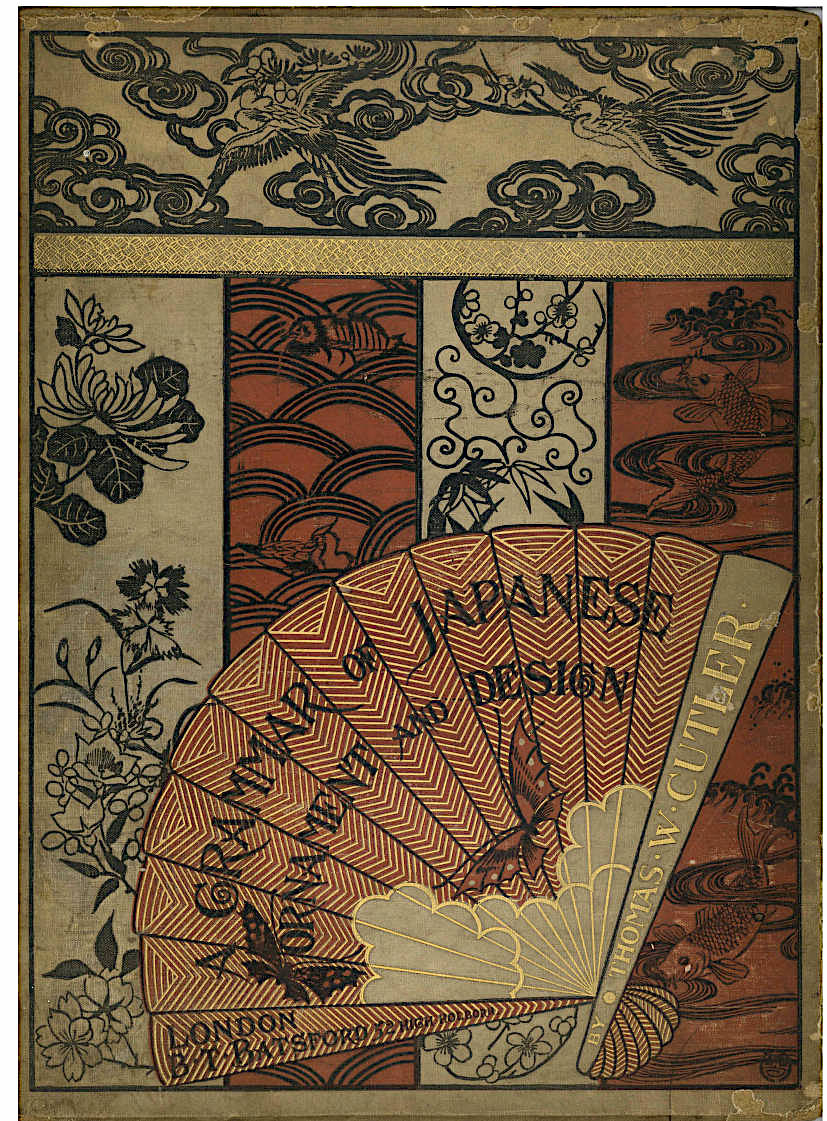
In 1880, architect Thomas W. Cutler endeavored to introduce his fellow Brits to Japanese art and design, a subject that remained novel for many Westerners of the time, given how recently the Tokugawa shogunate had “kept themselves aloof from all foreign intercourse, and their country jealously closed against strangers.”
Having written positively of China’s influence on Japanese artists, Cutler hoped that access to Western art would not prove a corrupting factor:
The fear that a bastard art of a very debased kind may arise in Japan, is not without foundation…The European artist, who will study the decorative art of Japan carefully and reverently, will not be in any haste to disturb, still less to uproot, the thought and feeling from which it has sprung; it is perhaps the ripest and richest fruit of a tree cultivated for many ages with the utmost solicitude and skill, under conditions of society peculiarly favorable to its growth.
Having never visited Japan himself, Cutler relied on previously published works, as well as numerous friends who were able to furnish him with “reliable information upon many subjects,” given their “long residence in the country.”
Accordingly, expect a bit of bias in A Grammar of Japanese Ornament and Design (1880).
That said, Cutler emerges as a robust admirer of Japan’s painting, lacquerware, ceramics, calligraphy, textiles, metalwork, enamelwork and netsuke carvings, the latter of which are “are often marvelous in their humor, detail, and even dignity.”
Only Japan’s wooden architecture, which he confidently pooh poohed as little more than “artistic carpentry, decoration, and gardening”, cleverly designed to withstand earthquakes, get shown less respect.
Cutler’s renderings of Japanese design motifs, undertaken in his free time, are the lasting legacy of his book, particularly for those on the prowl for copyright-free graphics.


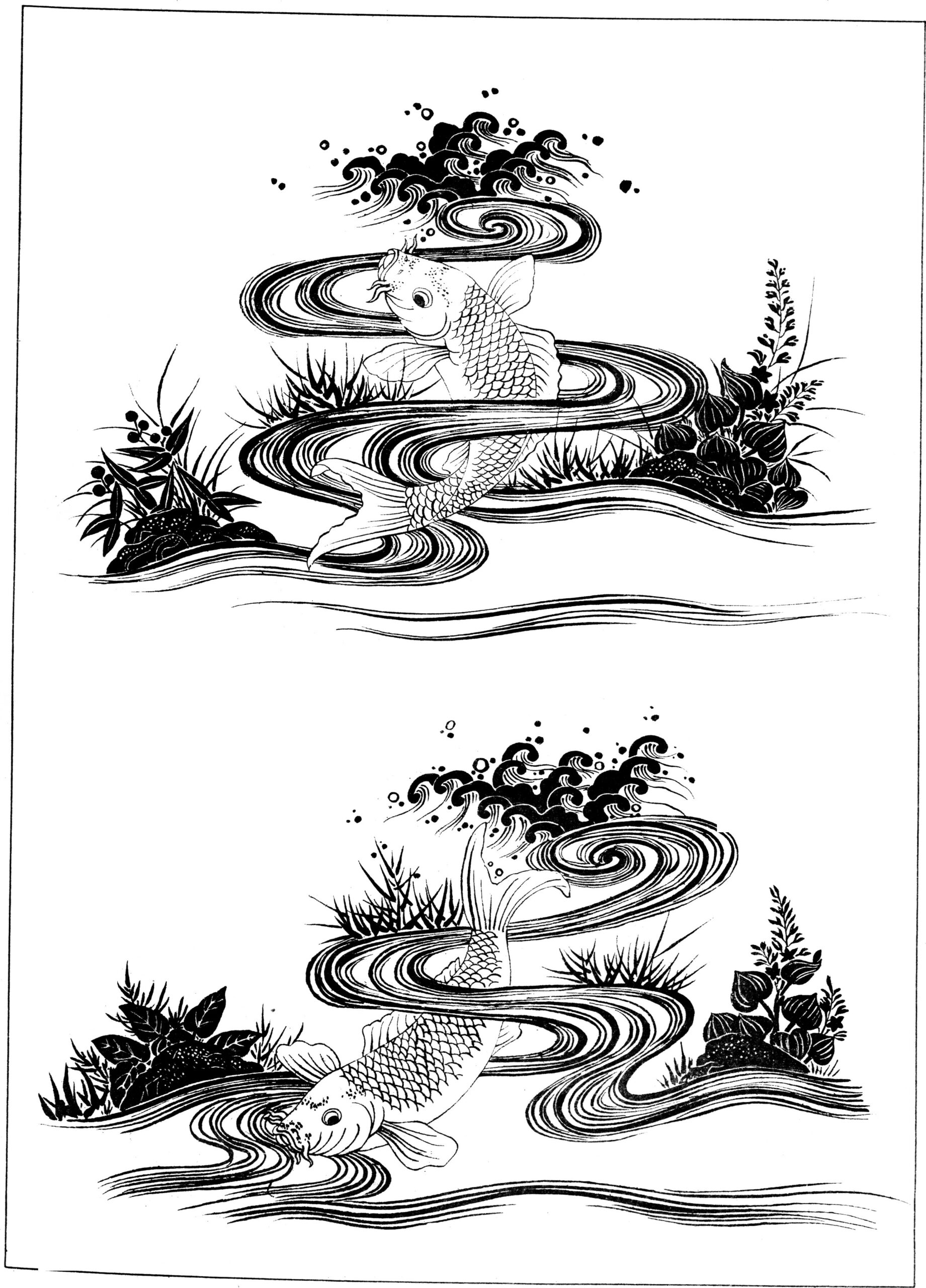

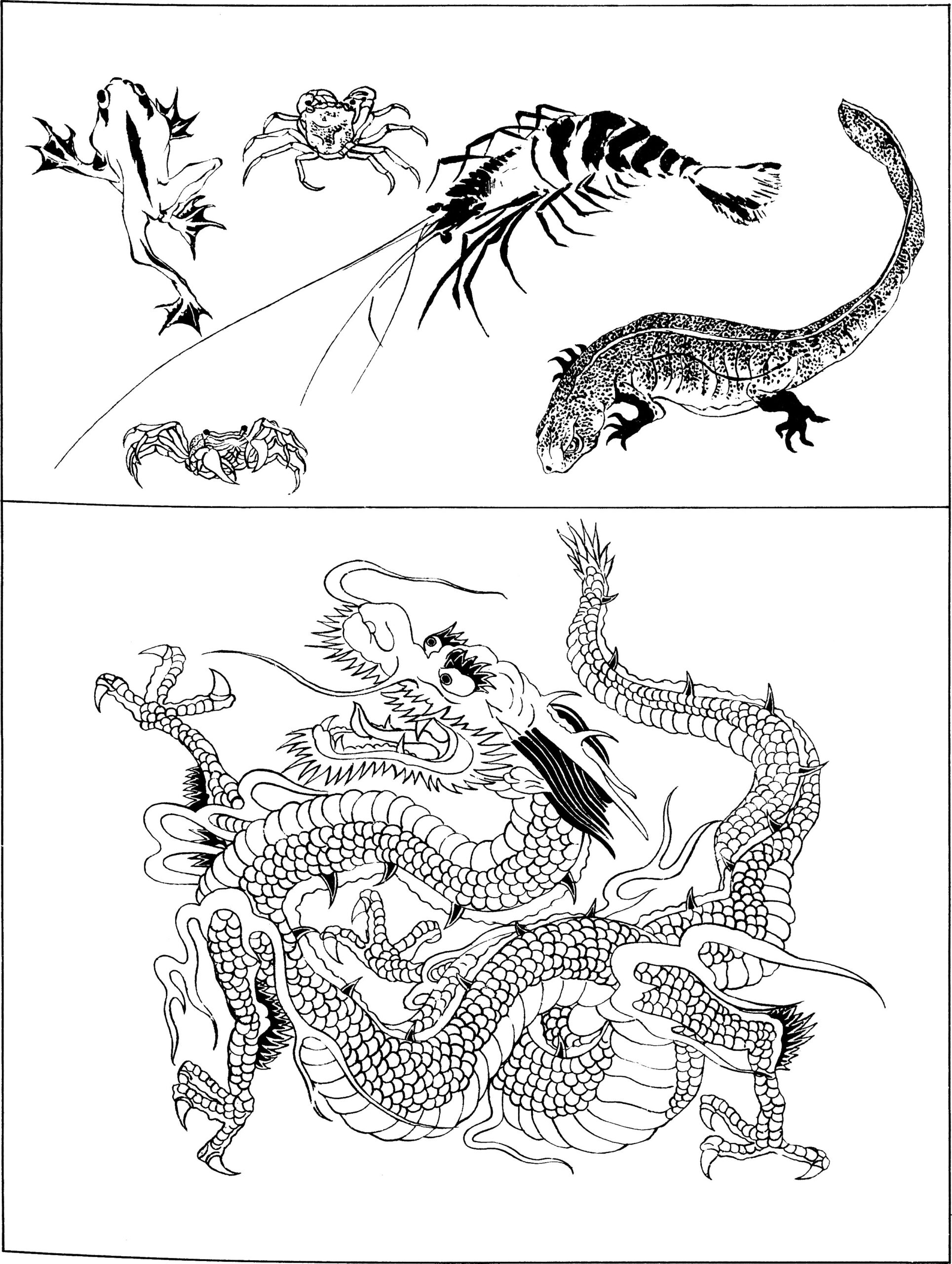
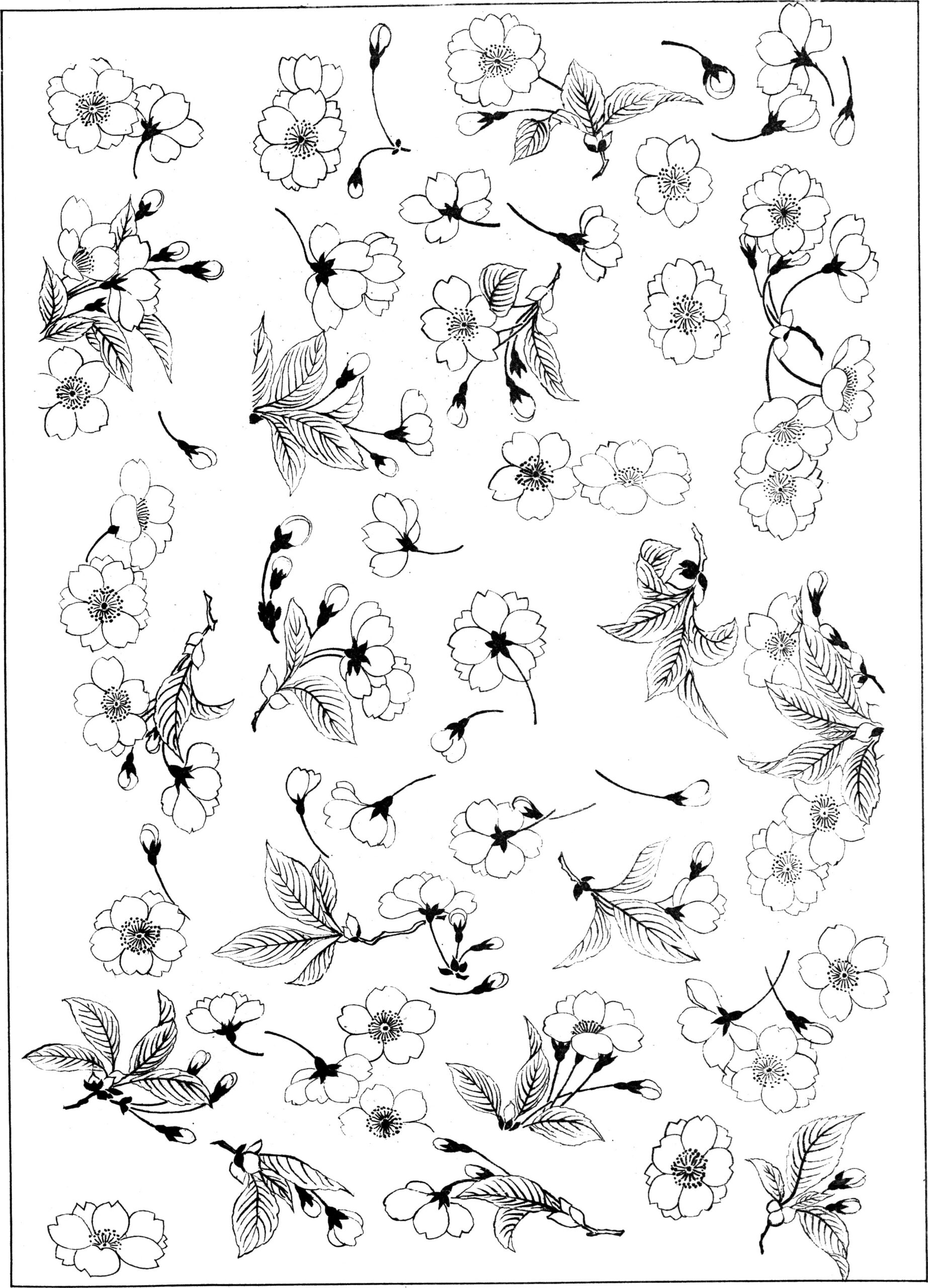

Cutler observed that the “most characteristic” element of Japanese decoration was its close ties to the natural world, adding that unlike Western designers, a Japanese artist “would throw his design a little out of the center, and cleverly balance the composition by a butterfly, a leaf, or even a spot of color.”
The below plant studies are drawn from the work of the great ukiyo‑e master Hokusai, a “man of the people” who ushered in a period of “vitality and freshness” in Japanese art.


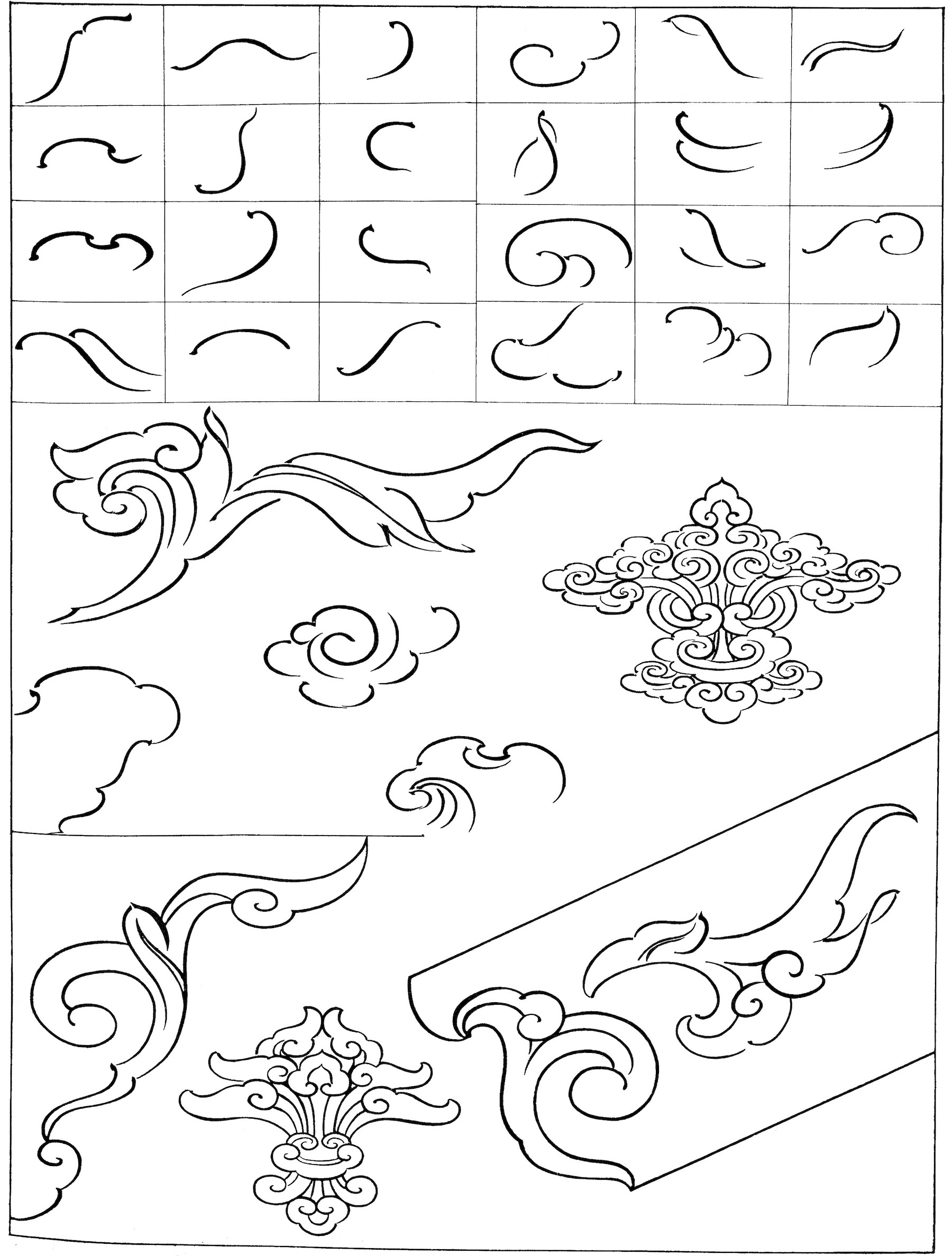
A sampler of curved lines made with single brush strokes can be used to create clouds or the intricate scrollwork that inspired Western artists and designers of the Aesthetic Movement.


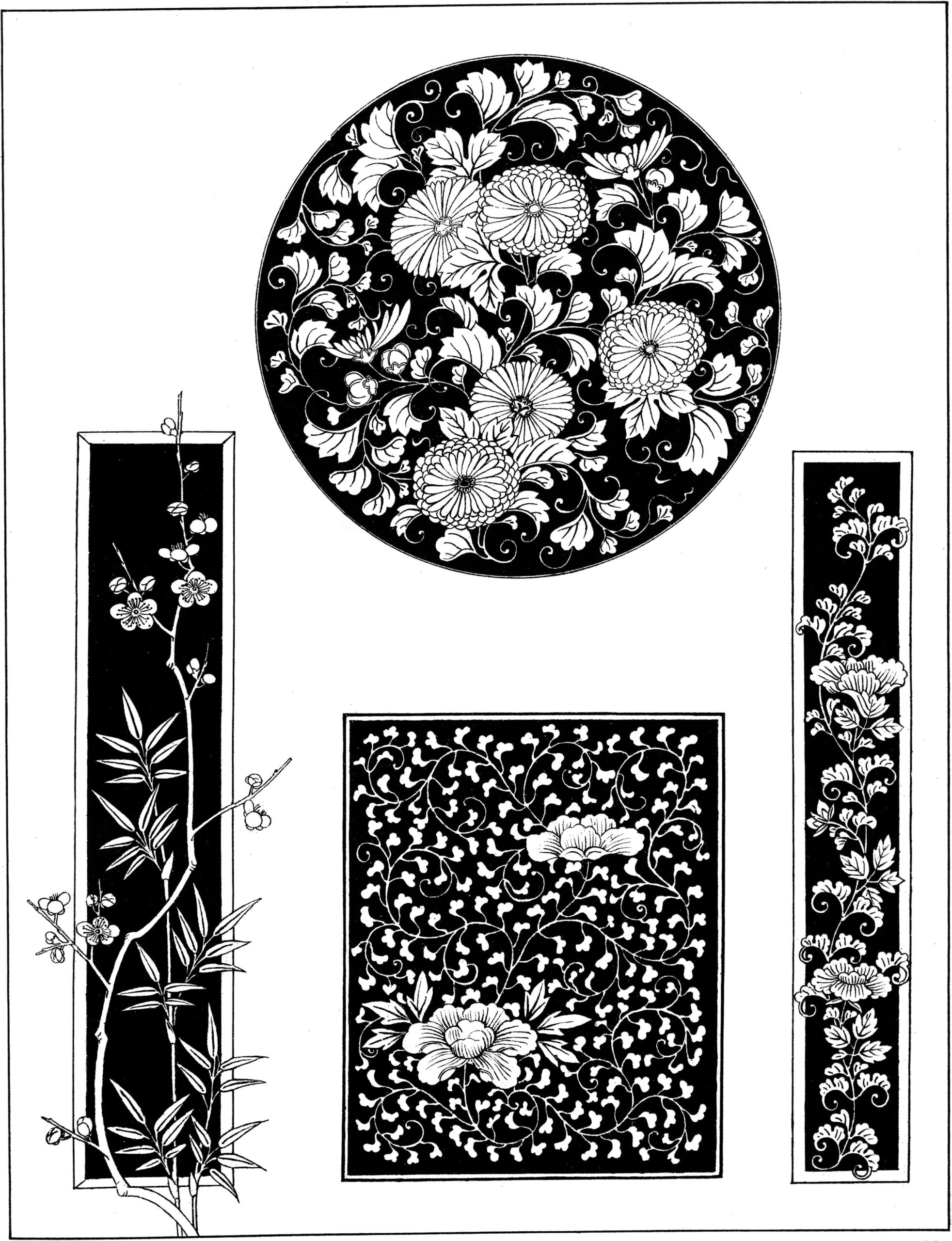
While Cutler might not have thought much of Japanese architecture, it’s worth noting that his book shows up in the footnotes of Frank Lloyd Wright and Japan: The Role of Traditional Japanese Art and Architecture in the Work of Frank Lloyd Wright.



Take a peek at some Japanese-inspired wallpaper of Cutler’s own design, then explore A Grammar of Japanese Ornament and Design by Thomas W. Cutler here.
Related Content
Download Classic Japanese Wave and Ripple Designs: A Go-to Guide for Japanese Artists from 1903
– Ayun Halliday is the Chief Primatologist of the East Village Inky zine and author, most recently, of Creative, Not Famous: The Small Potato Manifesto and Creative, Not Famous Activity Book. Follow her @AyunHalliday.
Read More...Christopher Nolan Visits a Paris Video Store & Talks with Cillian Murphy About the Films That Influenced Him
Christopher Nolan has by now inspired at least a couple generations of young viewers to dream of becoming filmmakers. For my own age cohort, the touchstone work was his breakout picture Memento, with its reverse-ordered story featuring a protagonist unable to create new memories. Others may have felt a greater impact from the reality-bending Inception or the dystopian sci-fi vision of Interstellar (to say nothing of all those Batman movies). But whether at the turn of the millennium or today, with Nolan’s latest feature Oppenheimer riding high at the box office, the best advice for such aspirants is the same: watch as many movies as possible.
‘The problem with Chris,” says Oppenheimer star Cillian Murphy in the video above, “is that he’s seen every film ever made.” “Not every film,” Nolan replies, a hand-waving denial that only bolsters the accusation. This takes place amid the shelves of JM Vidéo, one of the last two video stores still standing in the cinephile capital of Paris.
Nolan and Murphy paid a visit there to shoot an episode of Konbini Video Club, a Youtube series that has also brought on such auteurs as Wes Anderson, David Cronenberg, and Terry Gilliam. JM Vidéo feels like an especially suitable space for Nolan, given his advocacy of physical media. On the definitive Blu-Ray and 4k versions of his films, he explains, “there’s much less compression,” and “we control the color and the picture and the brightness,” whereas streaming is “like broadcasting a film: we don’t have much control over how it goes out.”
Nolan pulls off the shelves There Will Be Blood and Punch-Drunk Love, the work of his contemporary Paul Thomas Anderson, as well as classics that shaped his own directorial choices: Citizen Kane, Foreign Correspondent, Lawrence of Arabia, Dr. Strangelove. That last was forbidden viewing during the development of Oppenheimer: “I’m a big fan of Strangelove, but I stopped watching it for a couple of years while we were making the film, because it’s too daunting” — and because its blackly satirical take on how the men in control of the bomb decide the fate of the world couldn’t possibly have been improved upon. “I’m glad you didn’t mention it,” adds Murphy, who may not have seen as many movies as Nolan, but whose range of reference nevertheless demonstrates his own cinephile credentials. “No fighting in the war room.”
Related content:
David Cronenberg Visits a Video Store & Talks About His Favorite Movies
Terry Gilliam Visits a Video Store & Talks About His Favorite Movies and Actors
Based in Seoul, Colin Marshall writes and broadcasts on cities, language, and culture. His projects include the Substack newsletter Books on Cities, the book The Stateless City: a Walk through 21st-Century Los Angeles and the video series The City in Cinema. Follow him on Twitter at @colinmarshall or on Facebook.
Read More...1000+ Barbie Commercials Provides Context for This Summer’s Pinkest Blockbuster (1959–2023)
The Barbie movie has captured the popular imagination in a big way.
The New York Times can’t get enough of the recently opened summer blockbuster. Between reviews, fashion round ups, interviews, box office reports and op eds, it has published over two dozen pieces tied to this massive cultural moment.
Even those who don’t feel a burning need to catch Barbie at the multiplex are likely aware of the Barbenheimer phenom.
But what about those who grew up in feminist homes, or sisterless cis-males of a certain age?
Will a lack of hands-on experience diminish the cinematic pleasures of Barbie?
Not if you immerse yourself in BarbieCollectors’ chronological playlist of Barbie commercials before ticketing up. That’s over a thousand ads, spanning more than six decades.
The 1959 ad, above, that introduced the glamorous “teen age fashion doll” to the public clears up the misperception that pink has always been Barbie’s de facto color. It’s black-and-white, but so is the diagonal striped swimsuit the film’s star, Margot Robbie models in the film’s opener, a tongue in cheek homage to 2001: A Space Odyssey.
(Astute observers may note the similarities between some of the sophisticated ensembles original flavor Barbie sports here and the outfits Robbie donned for the pink carpet prior to the Screen Actors Guild strike.)
In the battle between pink and historical record, pink is destined to come out on top in the Barbie movie. Director Greta Gerwig and her design team punch up Barbie’s early 80’s Western look with a wide pink brush, lowering the neckline but keeping the wink.
The doll came with a working autograph stamp Robbie may consider adopting, should Barbie mania continue on into fall.
One of the most thrilling design elements of the movie is the human scale Dreamhouses occupied by Barbie and her friends, the majority of whom are also named Barbie.
The Dreamhouse has taken many architectural forms over the years — townhouse, cottage, mansion — but it always comes without a fourth wall.
Another cinematic treat is the roll call of vehicles Barbie commandeers on her journey to the real world with her hapless boyfriend, Ken.
Some of the film’s deeper cuts are jokes at the expense of misguided releases, Barbie sidekicks so ill-conceived that they were quickly discontinued, although 1993’s Earring Magic Ken became a bestseller, thanks to his popularity in the gay community.
Look for Barbie’s pregnant pal, Midge, her yellow Labrador retriever, Tanner (whose scoopable excrement was quickly deemed a choking hazard) and Growing up Skipper, the little sister who goes through puberty with a twist of the arm … “which is something you can’t do,” the commercial’s narrator taunts in a rare reversal of the “girls can be anything” ethos Mattel insists is part of the brand.
Of course, one can only cram so many knowingly-placed products into one feature-length film.
Are those of you who grew up with Barbie hurting from any glaring omissions? (Asking as a child of the Malibu Barbie era…)
Those who didn’t grow up with Barbie can play along too by sampling from BarbieCollectors’ massive chronological commercial playlist, then nominating your favorites in the comments.
Related Content
Mattel’s Barbie Turns Women of Medicine, Including COVID Vaccine Developer, Into Dolls
– Ayun Halliday is the Chief Primatologist of the East Village Inky zine and author, most recently, of Creative, Not Famous: The Small Potato Manifesto and Creative, Not Famous Activity Book. Follow her @AyunHalliday.
Read More...How a 1930s Architectural Masterpiece Harnesses the Sun to Keep Warm in the Winter & Cool in the Summer
Keeping the summer sun out and the winter sun in has figured prominently among the tasks of architecture ever since antiquity. As Aeschylus said, “only primitives and barbarians lack knowledge of houses turned to face the winter sun,” and he’d never even lived through a Chicago winter. Two and a half millennia later, in the suburb of Schaumburg, Illinois, the architect Paul Schweikher built a house not just turned to face the winter sun, but ingeniously and elegantly designed naturally to stay warm in the cold months and cool in the hot months. Architectural design educator Stewart Hicks explains how in the video above, an introduction to what’s now known as the Paul Schweikher House and Studio.
What will strike most visitors to the Schweikher House, which now operates as a museum, has less to do with its comfortable temperatures than with its look and feel. “The house doesn’t give all its secrets away at once,” says the site of design and furnishing company Trystcraft.
“Instead, the visitor is teased with hints that lead you under and past a carport, along a long board and batten wall around the perimeter of a lush courtyard with a magnificent tree — providing a wonderful contrast to the linearity of the structures surrounding it.” This “entry sequence” also introduces the house’s main materials: brick, most visibly, but also redwood now weathered to “a range of beautiful dark browns and grays.”
Schweikher used these materials and others to construct what Hicks calls a “direct gain passive solar system,” whose openings and overhangs are “positioned so that it lets in winter sun, while blocking the summer sun,” which beats down at a slightly different angle. “Elevated, operable openings on the other side of the building allow warm air to rise, and draw in air from outside,” in addition to other features that maintain a temperate interior climate without the use of any electrical or even mechanical apparatus. Having designed this residence for himself and his wife in 1937 put him on the vanguard of what would later be recognized as the American interpretation of mid-century modernism, as well as what’s now called “solar home” building technology. Arguably, Schweikher’s techniques are even more valuable today: the climate may change, after all, but the sun’s seasonal angles stay the same.
Related content:
1,300 Photos of Famous Modern American Homes Now Online, Courtesy of USC
What Frank Lloyd Wright’s Unusual Windows Tell Us About His Architectural Genius
What Is the House of the Rising Sun?: An Introduction to the Origins of the Classic Song
Based in Seoul, Colin Marshall writes and broadcasts on cities, language, and culture. His projects include the Substack newsletter Books on Cities, the book The Stateless City: a Walk through 21st-Century Los Angeles and the video series The City in Cinema. Follow him on Twitter at @colinmarshall or on Facebook.
Read More...How the Ancient Greeks Invented the First Computer: An Introduction to the Antikythera Mechanism (Circa 87 BC)
At the center of Indiana Jones and the Dial of Destiny is a device quite like the real ancient Greek artifact known as the Antikythera mechanism, which has been called the world’s oldest computer. “Every Indiana Jones adventure needs an exotic MacGuffin,” writes Smithsonian.com’s Meilan Solly, and in this latest and presumably last installment in its series, “the hero chases after the Archimedes Dial, a fictionalized version of the Antikythera mechanism that predicts the location of naturally occurring fissures in time.” After undergoing Indiana Jonesification, in other words, the Antikythera mechanism becomes a time machine, a function presumably not included in even the least responsible archaeological speculations about its still-unclear set of functions.
But according to Jo Marchant, author of Decoding the Heavens: Solving the Mystery of the World’s First Computer, the Antikythera mechanism really is “a time machine in a sense. When you turn the handle on the side, you are moving backward in time, you’re controlling time. You’re seeing the universe either being fast-forwarded or reversed, and you’re choosing the speed and can set it to any moment in history that you want.”
She refers to the fact that a handle on the side of the mechanism controls gears within it, which engage to compute and display “the positions of celestial bodies, the date, the timing of athletic games. There’s a calendar, there’s an eclipse prediction dial, and there are inscriptions giving you information about what the stars are doing.”
It seems that the Antikythera mechanism could tell you “everything you need to know about the state and workings of the cosmos,” at least if you’re an ancient Greek. But it also tells us something important about the ancient Greeks themselves: specifically, that they’d developed much more sophisticated mechanical engineering than we’d known before the early twentieth century, when the device was discovered in a shipwreck. According to the BBC video above on the details of the Antikythera mechanism’s known capabilities, Arthur C. Clarke thought that “if the ancient Greeks had understood the capabilities of the technology, then they would have reached the moon within 300 years.” A grand old civilization that turns out to have been on a course for outer space: now there’s a viable premise for the next big architectural adventure film franchise.
Related content:
How the Ancient Greeks Shaped Modern Mathematics: A Short, Animated Introduction
Modern Artists Show How the Ancient Greeks & Romans Made Coins, Vases & Artisanal Glass
Based in Seoul, Colin Marshall writes and broadcasts on cities, language, and culture. His projects include the Substack newsletter Books on Cities, the book The Stateless City: a Walk through 21st-Century Los Angeles and the video series The City in Cinema. Follow him on Twitter at @colinmarshall or on Facebook.
Read More...Support Us
We're hoping to rely on loyal readers, rather than erratic ads. Please click the Donate button and support Open Culture. You can use Paypal, Venmo, Patreon, even Crypto! We thank you!

About Us

Open Culture scours the web for the best educational media. We find the free courses and audio books you need, the language lessons & educational videos you want, and plenty of enlightenment in between.
Advertise With Us
FREE UPDATES!
GET OUR DAILY EMAIL
Get the best cultural and educational resources on the web curated for you in a daily email. We never spam. Unsubscribe at any time.
FOLLOW ON SOCIAL MEDIA
Open Culture editor Dan Colman scours the web for the best educational media. He finds the free courses and audio books you need, the language lessons & movies you want, and plenty of enlightenment in between.
Advertise With Us

