Why Russia Invaded Ukraine: A Useful Primer
Why did Russia launch an unprovoked war in Ukraine and risk creating a wider global conflict? If you haven’t closely tracked the ambitions of Vladimir Putin, this primer offers some helpful context. In 30 minutes, the video covers the geopolitical, economic and environmental backstory. As you watch the explainer, it’s worth keeping one thing in mind: For years, European nations have long resisted bringing Ukraine into the NATO fold, precisely because they knew it would trigger a conflict with Putin. And there had been no recent plan to revisit the issue. All of this suggests that Putin has highlighted the NATO threat (amply discussed in the video) because it would provide him a useful pretext for an invasion. There was hardly an imminent threat.
If you’re looking for other rationales not covered by this video, you could focus on two reasons provided by Hein Goemans, a professor of political science at the University of Rochester: Putin “wants to reestablish directly or indirectly, by annexation or by puppet-regimes, a Russian empire—be it the former USSR or Tsarist Russia. A second possible answer has to do with the role of domestic Russian politics, which the standard literature on conflict takes very seriously: Putin has seen what happened in some former Soviet successor republics and the former Yugoslavia, several of which experienced ‘Color Revolutions’ and democratized. Indeed, it was a Color Revolution in Ukraine in 2014, which Putin mischaracterizes as a military coup. He wants to prevent more of these revolutions and prevent a democratic encirclement of countries around him, which could provide a safe haven for Russian dissidents who’d be dangerous to Putin’s political survival. Both of these goals overlap in the sense that he is seeking regime change, which is a dangerous game.”
For a deeper dive into the imperial ambitions of Putin–his attempt to reconstitute the Russian Empire–read this eye-opening interview with Fiona Hill.
If you would like to support the mission of Open Culture, consider making a donation to our site. It’s hard to rely 100% on ads, and your contributions will help us continue providing the best free cultural and educational materials to learners everywhere. You can contribute through PayPal, Patreon, and Venmo (@openculture). Thanks!
Related Content
Why is Ukraine in Crisis?: A Quick Primer For Those Too Embarrassed to Ask (2014)
Why Putin Wants Alexei Navalny Dead
Free Online History Courses
Read More...West Point Expert Gives Ukrainians Advice on Conducting Effective Urban Warfare Against Russian Troops

John W. Spencer currently serves as the Chair of Urban Warfare Studies at the Modern War Institute at West Point. He’s also Co-Director of the Urban Warfare Project, and host of the Urban Warfare Project podcast. Ergo, he knows something about urban warfare.
On Twitter, he gave advice to civilians resistors in Ukraine, especially Kyiv, on how to resist the Russian invasions. His tweet thread reads as follows:
- So I’ve been asked what my advice would be to civilian resistors in Ukriane, especially Kyiv. Someone with no military training but wanting to resist. Here are a few things #Kyiv #UkraineUnderAttack :
- You have the power but you have to fight smart. The urban defense is hell for any soldier. It usually take 5 attackers to 1 defender. Russians do not have the numbers. Turn Kyiv and any urban area leading to Kyiv into a porcupine.
- Go out and build obstacles in the streets! Start with any bridge you can find (they should have been destroyed). Block them with cars, trucks, concrete, wood, trash, anything! Then block any spot in the city where there are tall buildings on each side. Already tight areas.
- If it is a street you still need to use. Build a S pattern obstacle that still slows a vehicle down. Think police check point (which you could set up if you wanted to catch saboteurs before military reach your location)
- Once you have obstacles (never stop building). I really mean thousands of barriers/obstacles. You can decided places to fight. Places to shoot from or ambush any soldier or vehicle that stops or slows down at your obstacles.
- Do NOT stand in the open and shoot or throw anything (to include molotov cocktail) at a Russian soldier or vehicles. Shoot from windows, behind cars, around alleyway corners. Build positions (concrete best) to fire from.
- You must prepare for the Russians to start using artillery to help their troops. Make sure the places you choose to shoot from are strong. If in a building, make holes in the walls so you can shoot from and bigger ones to move to other rooms or buildings. You must survive.
- Yes, use your molotov cocktails. Think about where you will stand to throw (then run). Dropping from windows above vehicles most ideal. Vehicles without weapons on top the most vulnerable, but if it is armor, choose where to hit.
- Form into groups. Ideally 3 to 5 and decided where to shoot at Russians from. You get to decide. Best if coordinated with another group and using your obstacles to slow something and shoot at from concealed and protected positions.
- Again, your survival to fight is important so think hard about where you will shoot from. Elevated positions down long streets. Shoot and run. Ambushes. Aim for the windows and doors of non-armor vehicles. Soldiers in open. One of the greatest fears of a soldier is a sniper.
- You are not a sniper, but you can put fear in their hearts if they think there are snipers everywhere. Again take care of yourselves to be able to resist. Drink water. 3 days without water and you won’t be able to fight. More later.
Rough Ukrainian Translation (Courtesy of Google Translate):
- Тож мене запитали, що б я порадив цивільним резисторам в Україні, особливо в Києві. Хтось без військової підготовки, але хоче чинити опір. Ось кілька речей #Kyiv #UkraineUnder Attack :
- У вас є сила, але ви повинні боротися розумно. Міська оборона — це пекло для будь-якого солдата. Зазвичай потрібно 5 нападників на 1 захисника. У росіян немає цифр. Перетворіть Київ і будь-яку міську територію, що веде до Києва, на дикобраза.
- Виходьте і будуйте перешкоди на вулицях! Почніть з будь-якого мосту, який ви можете знайти (їх слід було знищити). Блокуйте їх автомобілями, вантажівками, бетоном, деревом, сміттям, чим завгодно! Потім заблокуйте будь-яке місце в місті, де з обох боків є високі будівлі. Вже тісні ділянки.
- Якщо це вулиця, вам все одно потрібно користуватися. Побудуйте перешкоду типу S, яка все ще уповільнює транспортний засіб. Уявіть поліцейський контрольно-пропускний пункт (який ви можете встановити, якщо хочете зловити диверсантів до того, як військові прибудуть до вашого місця)
- Як тільки у вас є перешкоди (ніколи не припиняйте будувати). Я дійсно маю на увазі тисячі бар’єрів/перешкод. Ви можете визначити місця для боротьби. Місця для стрілянини або засідки будь-якого солдата чи транспортного засобу, які зупиняються або сповільнюються на ваших перешкодах.
- Do NOT stand in the open and shoot or throw anything (to include molotov cocktail) at a Russian soldier or vehicles. Shoot from windows, behind cars, around alleyway corners. Build positions (concrete best) to fire from.
- Ви повинні підготуватися до того, що росіяни почнуть використовувати артилерію для допомоги своїм військам. Переконайтеся, що місця, з яких ви обираєте стріляти, є міцними. Якщо в будівлі, зробіть отвори в стінах, щоб ви могли стріляти з більших, щоб переміститися в інші кімнати або будівлі. Ви повинні вижити.
- Так, використовуйте свої коктейлі Молотова. Подумайте, куди ви будете стояти, щоб кинути (тоді бігти). Найідеальнішим варіантом є падіння з вікон над транспортними засобами. Транспорт без зброї зверху найбільш вразливий, але якщо це броня, вибирайте, куди вдарити.
- Об’єднайтеся в групи. В ідеалі 3 до 5 і вирішив, звідки стріляти в росіян. Вам вирішувати. Найкраще, якщо координуватись з іншою групою та використовувати свої перешкоди, щоб уповільнити щось і стріляти з прихованих і захищених позицій.
- Знову ж таки, ваше виживання для боротьби важливе, тому добре подумайте, звідки ви будете стріляти. Піднесені позиції на довгих вулицях. Стріляй і бігай. Засідки. Націлюйтеся на вікна та двері неброньованих транспортних засобів. Солдати відкрито. Один з найбільших страхів солдата — снайпер.
- Ви не снайпер, але можете вселити в їхні серця страх, якщо вони думають, що снайпери всюди. Знову подбайте про себе, щоб мати можливість протистояти. Пити воду. 3 дні без води і ти не зможеш битися. Ще пізніше.
Are You a Fascist?: Take Theodor Adorno’s Authoritarian Personality Test Created to Combat Fascism (1947)
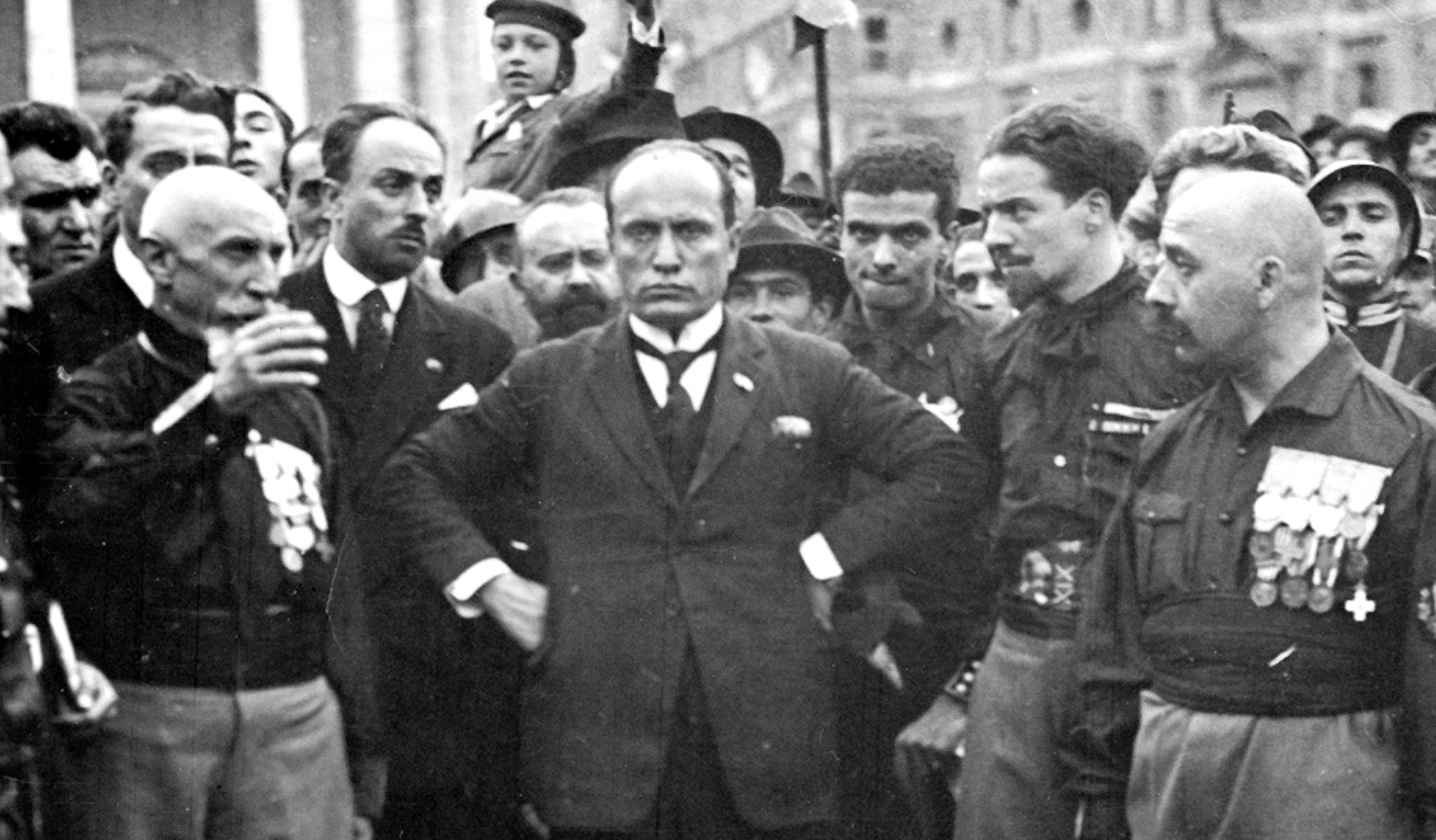
A man of various accomplishments, Theodor Adorno is perhaps most widely known as the very image of the midcentury European intellectual in exile. After his Jewish background got him forced out of Nazi Germany, he spent fifteen years in England and the United States. Despite his geographical distance from the troubles of the Continent — and even after the end of the Second World War — he understandably remained very much concerned with the nature of not just Hitler himself but all those who supported him. This led to such studies as his 1947 essay “Wagner, Nietzsche and Hitler” as well as (in collaboration with Berkeley researchers Else Frenkel-Brunswik, Daniel Levinson, and Nevitt Sanford) the 1950 book The Authoritarian Personality.
The Authoritarian Personality’s best-known tool to diagnose the titular personal and social condition is a quantitative system called the “California F‑scale” — the F stands for fascism — which produces a score based on a subject’s response to a set of propositions. “To create a personality test that actually revealed latent authoritarianism, the researchers had to give up on the idea that there’s a strong link between anti-Semitism and authoritarianism,” writes Ars Technica’s Annalee Newitz. “Though their experiences with the Holocaust suggested a causal connection between hatred of Jews and the rise of fascism, it turned out that people with authoritarian tendencies were more accurately described as ethnocentric.”
These would-be authoritarians also, as Adorno and his collaborators’ research found, “tended to distrust science and strongly disliked the idea of using imagination to solve problems. They preferred to stick to tried-and-true traditional methods of organizing society.” Other tendencies included “superstition, aggression, cynicism, conservatism, and an inordinate interest in the private sex lives of others.” All these findings informed an F‑scale test which consisted of the statements below. For each statement, participants had to select one of the following options : “Disagree Strongly,” “Disagree Mostly,” “Disagree Somewhat,” “Agree Somewhat,” “Agree,” or “MostlyAgree.”
- Obedience and respect for authority are the most important virtues children should learn.
- A person who has bad manners, habits, and breeding can hardly expect to get along with decent people.
- If people would talk less and work more, everybody would be better off.
- The business man and the manufacturer are much more important to society than the artist and the professor.
- Science has its place, but there are many important things that can never be understood by the human mind.
- Every person should have complete faith in some supernatural power whose decisions he obeys without question.
- Young people sometimes get rebellious ideas, but as they grow up they ought to get over them and settle down.
- What this country needs most, more than laws and political programs, is a few courageous, tireless, devoted leaders in whom the people can put their faith.
- No sane, normal, decent person could ever think of hurting a close friend or relative.
- Nobody ever learned anything really important except through suffering.
- What the youth needs most is strict discipline, rugged determination, and the will to work and fight for family and country.
- An insult to our honor should always be punished.
- Sex crimes, such as rape and attacks on children, deserve more than mere imprisonment; such criminals ought to be publicly whipped, or worse.
- There is hardly anything lower than a person who does not feel a great love, gratitude, and respect for his parents.
- Most of our social problems would be solved if we could somehow get rid of the immoral, crooked, and feebleminded people.
- Homosexuals are hardly better than criminals and ought to be severely punished.
- When a person has a problem or worry, it is best for him not to think about it, but to keep busy with more cheerful things.
- Nowadays more and more people are prying into matters that should remain personal and private.
- Some people are born with an urge to jump from high places.
- People can be divided into two distinct classes: the weak and the strong.
- Some day it will probably be shown that astrology can explain a lot of things.
- Wars and social troubles may someday be ended by an earthquake or flood that will destroy the whole world.
- No weakness or difficulty can hold us back if we have enough will power.
- It is best to use some prewar authorities in Germany to keep order and prevent chaos.
- Most people don’t realize how much our lives are controlled by plots hatched in secret places.
- Human nature being what it is, there will always be war and conflict.
- Familiarity breeds contempt.
- Nowadays when so many different kinds of people move around and mix together so much, a person has to protect himself especially carefully against catching an infection or disease from them.
- The wild sex life of the old Greeks and Romans was tame compared to some of the goings-on in this country, even in places where people might least expect it.
- The true American way of life is disappearing so fast that force may be necessary to preserve it.
You can take the test yourself here. But don’t take it too seriously: the F‑scale “has been heavily criticized by many psychologists because it is a better indicator of conservatism, an old-fashioned outlook, and a tendency to say ‘yes’ to anything rather than as a measure of authoritarianism,” write Ferdinand A. Gul and John J. Ray in their 1989 paper “Pitfalls in Using the F Scale to Measure Authoritarianism in Accounting Research.” That aside, any reasonably intelligent subject can easily figure out the motives of the test itself. Nevertheless, as Gizmodo’s Esther Inglis-Arkell writes, it offers an occasion to consider whether “you’re superstitious, conformist, or any other awful thing that will cause you to go out one morning and annex something” — no less a concern now, it seems, than it was in Adorno’s day.
Related content:
An Animated Introduction to Theodor Adorno & His Critique of Modern Capitalism
Hear Theodor Adorno’s Avant-Garde Musical Compositions
Theodor Adorno’s Philosophy of Punctuation
Toni Morrison Lists the 10 Steps That Lead Countries to Fascism (1995)
Umberto Eco Makes a List of the 14 Common Features of Fascism
Based in Seoul, Colin Marshall writes and broadcasts on cities, language, and culture. His projects include the Substack newsletter Books on Cities, the book The Stateless City: a Walk through 21st-Century Los Angeles and the video series The City in Cinema. Follow him on Twitter at @colinmarshall or on Facebook.
Read More...Starship Titanic: The Video Game Created by Douglas Adams (Hitchhiker’s Guide to the Galaxy), with Help from John Cleese & Terry Jones
“The starship Titanic was a monstrously pretty sight as it lay beached like a silver Arcturan Megavoidwhale among the laserlit tracery of its construction gantries”–writes Douglas Adams in The Life, The Universe and Everything, the third novel in the Hitchhiker’s Guide trilogy–“a brilliant cloud of pins and needles of light against the deep interstellar blackness; but when launched, it did not even manage to complete its very first radio message —an SOS—before undergoing a sudden and gratuitous total existence failure.”
This paragraph is a tiny humorous flourish in a series of novels filled with hundreds of them, but for some reason—possibly its relationship to the original doomed luxury liner–the Starship Titanic would go on to have an amazingly detailed second life as a video game. And while a paperback copy of any of Adams’ work is readily available, it can take some hunting to find a workable version of the game.
Douglas Adams designed the game himself, starting in 1996. A decade earlier, he had helped design the text-based adventure game adaptation of Hitchhiker’s Guide, and had expressed a desire to do more work in the video game field, after playing Myst and its sequel Riven. However, he said, “nothing really happens, and nobody is there. I thought, let’s do something similar but populate the environment with characters you can interact with.”
Co-founding the multi-media company Digital Village, Adams wrote the game’s script, set aboard the failing Titanic. The big difference, compared to Myst, is that the character can interact with characters on board, many of them butler-like robots. And instead of typing in commands, players could speak to the characters in real time using a natural language parsing engine called Spookitalk, utilizing over 10,000 lines/16 hours of dialog. Like its puzzle-game influences, it was maddening to play.
But also fun, as Monty Python’s Terry Jones and John Cleese both turn up among the voice actors, the former as a parrot, the latter as a doomsday bomb.
An article in Kotaku from 2015 mentions a tie-in novel that Adams was to write himself, after first assigning co-writers Neil Richards, Debbie Barham, and Michael Bywater to the task. But then:
Living up to his reputation for seemingly infinite tardiness, Adams admitted just three weeks before the book’s deadline that he hadn’t written a thing, and in the end the novel Douglas Adams’s Starship Titanic was written in a furious cascade of words by none other than Terry Jones (who claimed that he wrote the whole thing in the nude).
Even more interesting, Yoz Grahame, Digital Village’s web developer had been put in charge of creating the game’s promotional web presence. Buried deep down in a page was a mock forum supposedly being written by the lower-level crew of the Titanic. Grahame kept the forum open for fans of the upcoming game, only to find later that Adams fans had taken this comic easter egg to heart. Six months later there were ten-thousand posts in the mock forum. Users had continued on the story in the spirit of Adams.
“It was like ignoring the vegetable drawer of your fridge for a year, then opening it to find a bunch of very grateful sentient tomatoes busily working on their third opera,” Grahame told Kotaku. This forum went on for six years, with layers and layers of running jokes.
At the time of the Kotaku piece, the game, originally released on CD-ROM was functionally unplayable on modern video game systems.
Not so now. Six bucks will buy you a modernized copy of the game on Steam or GOG. If you’re curious like me, but have no time to devote the many, many hours to finishing the game, you can watch a 13-part walkthru video. (Note: Adams himself turns up at the very end in an unintentionally poignant cameo.)
Related Content:
Play The Hitchhiker’s Guide to the Galaxy Video Game Free Online, Designed by Douglas Adams in 1984
Ted Mills is a freelance writer on the arts who currently hosts the Notes from the Shed podcast and is the producer of KCRW’s Curious Coast. You can also follow him on Twitter at @tedmills, and/or watch his films here.
Read More...Hannah Arendt Explains How Propaganda Uses Lies to Erode All Truth & Morality: Insights from The Origins of Totalitarianism

Image by Bernd Schwabe, via Wikimedia Commons
At least when I was in grade school, we learned the very basics of how the Third Reich came to power in the early 1930s. Paramilitary gangs terrorizing the opposition, the incompetence and opportunism of German conservatives, the Reichstag Fire. And we learned about the critical importance of propaganda, the deliberate misinforming of the public in order to sway opinions en masse and achieve popular support (or at least the appearance of it). While Minister of Propaganda Joseph Goebbels purged Jewish and leftist artists and writers, he built a massive media infrastructure that played, writes PBS, “probably the most important role in creating an atmosphere in Germany that made it possible for the Nazis to commit terrible atrocities against Jews, homosexuals, and other minorities.”
How did the minority party of Hitler and Goebbels take over and break the will of the German people so thoroughly that they would allow and participate in mass murder? Post-war scholars of totalitarianism like Theodor Adorno and Hannah Arendt asked that question over and over, for several decades afterward. Their earliest studies on the subject looked at two sides of the equation. Adorno contributed to a massive volume of social psychology called The Authoritarian Personality, which studied individuals predisposed to the appeals of totalitarianism. He invented what he called the F‑Scale (“F” for “fascism”), one of several measures he used to theorize the Authoritarian Personality Type.
Arendt, on the other hand, looked closely at the regimes of Hitler and Stalin and their functionaries, at the ideology of scientific racism, and at the mechanism of propaganda in fostering “a curiously varying mixture of gullibility and cynicism with which each member… is expected to react to the changing lying statements of the leaders.” So she wrote in her 1951 Origins of Totalitarianism, going on to elaborate that this “mixture of gullibility and cynicism… is prevalent in all ranks of totalitarian movements”:
In an ever-changing, incomprehensible world the masses had reached the point where they would, at the same time, believe everything and nothing, think that everything was possible and nothing was true… The totalitarian mass leaders based their propaganda on the correct psychological assumption that, under such conditions, one could make people believe the most fantastic statements one day, and trust that if the next day they were given irrefutable proof of their falsehood, they would take refuge in cynicism; instead of deserting the leaders who had lied to them, they would protest that they had known all along that the statement was a lie and would admire the leaders for their superior tactical cleverness.
Why the constant, often blatant lying? For one thing, it functioned as a means of fully dominating subordinates, who would have to cast aside all their integrity to repeat outrageous falsehoods and would then be bound to the leader by shame and complicity. “The great analysts of truth and language in politics”—writes McGill University political philosophy professor Jacob T. Levy—including “George Orwell, Hannah Arendt, Vaclav Havel—can help us recognize this kind of lie for what it is.… Saying something obviously untrue, and making your subordinates repeat it with a straight face in their own voice, is a particularly startling display of power over them. It’s something that was endemic to totalitarianism.”
Arendt and others recognized, writes Levy, that “being made to repeat an obvious lie makes it clear that you’re powerless.” She also recognized the function of an avalanche of lies to render a populace powerless to resist, the phenomenon we now refer to as “gaslighting”:
The result of a consistent and total substitution of lies for factual truth is not that the lie will now be accepted as truth and truth be defamed as a lie, but that the sense by which we take our bearings in the real world—and the category of truth versus falsehood is among the mental means to this end—is being destroyed.
The epistemological ground thus pulled out from under them, most would depend on whatever the leader said, no matter its relation to truth. “The essential conviction shared by all ranks,” Arendt concluded, “from fellow traveler to leader, is that politics is a game of cheating and that the ‘first commandment’ of the movement: ‘The Fuehrer is always right,’ is as necessary for the purposes of world politics, i.e., world-wide cheating, as the rules of military discipline are for the purposes of war.”
“We too,” writes Jeffrey Isaacs at The Washington Post, “live in dark times”—an allusion to another of Arendt’s sobering analyses—“even if they are different and perhaps less dark.” Arendt wrote Origins of Totalitarianism from research and observations gathered during the 1940s, a very specific historical period. Nonetheless the book, Isaacs remarks, “raises a set of fundamental questions about how tyranny can arise and the dangerous forms of inhumanity to which it can lead.” Arendt’s analysis of propaganda and the function of lies seems particularly relevant at this moment. The kinds of blatant lies she wrote of might become so commonplace as to become banal. We might begin to think they are an irrelevant sideshow. This, she suggests, would be a mistake.
Note: An earlier version of this post appeared on our site in 2017.
Related Content:
The Origins of the Word “Gaslighting”: Scenes from the 1944 Film Gaslight
Hannah Arendt’s Original Articles on “the Banality of Evil” in the New Yorker Archive
Hannah Arendt Discusses Philosophy, Politics & Eichmann in Rare 1964 TV Interview
Josh Jones is a writer and musician based in Durham, NC. Follow him at @jdmagness
Read More...The New Herbal: A Masterpiece of Renaissance Botanical Illustrations Gets Republished in a Beautiful 900-Page Book

We’ve all have heard of the fuchsia, a flower (or genus of flowering plant) native to Central and South America but now grown far and wide. Though even the least botanically literate among us know it, we may have occasional trouble spelling its name. The key is to remember who the fuchsia was named for: Leonhart Fuchs, a German physician and botanist of the sixteenth century. More than 450 years after his death, Fuchs is remembered as not just the namesake of a flower, but as the author of an enormous book detailing the varieties of plants and their medicinal uses. His was a landmark achievement in the form known as the herbal, examples of which we’ve featured here on Open Culture from ninth- and eighteenth-century England.

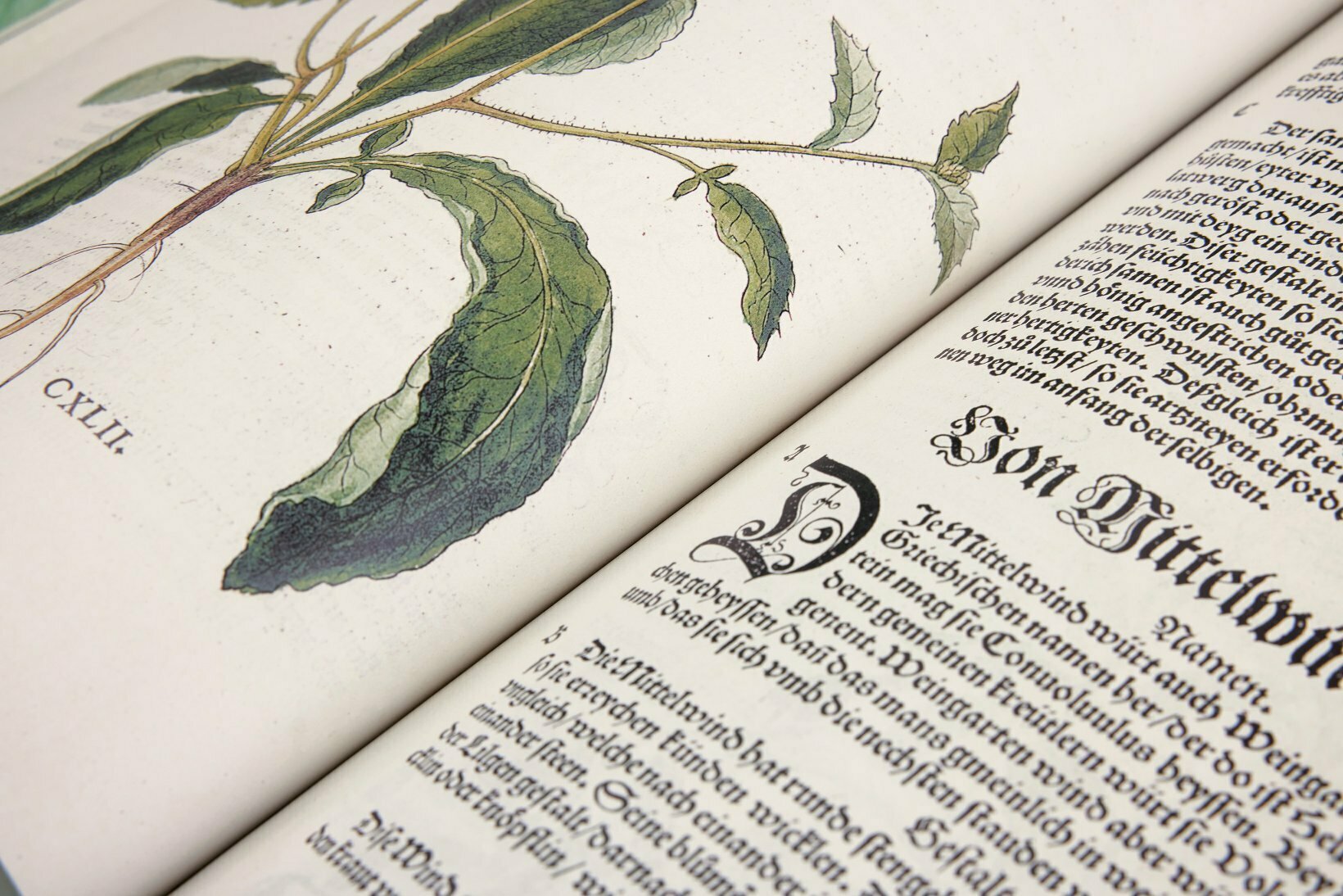
But De Historia Stirpium Commentarii Insignes, as this work was known upon its initial 1542 publication in Latin, has worn uncommonly well through the ages. Or rather, Fuchs’ personal, hand-colored original has, coming down to us in 2022 as the source for Taschen’s The New Herbal. “A masterpiece of Renaissance botany and publishing,” according to the publisher, the book includes “over 500 illustrations, including the first visual record of New World plant types such as maize, cactus, and tobacco.”
Buyers also have their choice of English, German, and French editions, each with its own translations of Fuchs’ “essays describing the plants’ features, origins, and medicinal powers.” (You can also read a Dutch version of the original online at Utrecht University Library Special Collections.)

Naturally, some of the information contained in these nearly five-century-old scientific writings will be a bit dated at this point, but the appeal of the illustrations has never dimmed. “Fuchs presented each plant with meticulous woodcut illustrations, refining the ability for swift species identification and setting new standards for accuracy and quality in botanical publications.” Over 500 of them go into the book: “Weighing more than 10 pounds,” writes Colossal’s Grace Ebert, “the nearly 900-page volume is an ode to Fuchs’ research and the field of Renaissance botany, detailing plants like the leafy garden balsam and root-covered mandrake.”

Taschen’s reproductions of these works of botanical art look to do justice to Leonhart Fuchs’ legacy, especially in the brilliance of their colors. It’s enough to reinforce the assumption that the man has received tribute not just through fuchsia the flower but fuchsia the color as well. But such a dual connection turns out to be in doubt: the color’s name derives from rosaniline hydrochloride, also known as fuchsine, originally a trade name applied by its manufacturer Renard frères et Franc. The name fuschine, in turn, derives from fuchs, the German translation of renard. The New Herbal is, of course, a work of botany rather than linguistics, but it should nevertheless stimulate in its beholders an awareness of the interconnection of knowledge that fired up the Renaissance mind.
via Colossal
Related content:
Two Million Wondrous Nature Illustrations Put Online by The Biodiversity Heritage Library
A Beautiful 1897 Illustrated Book Shows How Flowers Become Art Nouveau Designs
1,000-Year-Old Illustrated Guide to the Medicinal Use of Plants Now Digitized & Put Online
Based in Seoul, Colin Marshall writes and broadcasts on cities, language, and culture. His projects include the Substack newsletter Books on Cities, the book The Stateless City: a Walk through 21st-Century Los Angeles and the video series The City in Cinema. Follow him on Twitter at @colinmarshall or on Facebook.
Read More...Paula Cole Discusses Songwriting: Stream the Nakedly Examined Music Interview Online

This week’s Nakedly Examined Music podcast features the Grammy-winning singer-songwriter Paula Cole. After backing Peter Gabriel in the early 90s on his Secret World tour, she had major hits with “I Don’t Want to Wait” (later the theme song of Dawson’s Creek) and “Where Have All the Cowboys Gone.” She has released ten studio albums since 1994.
On this podcast, you’ll hear four full songs with discussions of their details: “Blues in Gray” from Revolution (2019), “Father” from 7 (2015), and “Hush, Hush, Hush” from This Fire (1996), plus “Steal Away/Hidden in Plain Sight” from American Quilt (2021). Intro: “I Don’t Want to Wait,” also from This Fire. For more, see paulacole.com.
After her hit-making, her style took a rather sharp turn with the 1999 Amen album; here’s “I Believe in Love,” a disco tune from that. Her Revolution album has some much more directly political songs like its title track. She’s done some jazz and folk covers with her recent American Quilt and Ballads album, like this tune. Here she is live in 1998 and a more recent stripped-down appearance. She can still sing “I Don’t Want to Wait” with pretty much the same tone, and in fact the version used to introduce the podcast is the artist’s re-recording, not the original.
Photo by Ebru Yildiz. Interview editing by Tyler Hislop of Pixelbox Media.
Nakedly Examined Music is a podcast hosted by Mark Linsenmayer, who also hosts The Partially Examined Life Philosophy Podcast, Pretty Much Pop: A Culture Podcast, and Philosophy vs. Improv. He releases music under the name Mark Lint.
Read More...Haruki Murakami’s Five Favorite Books

You could say that Haruki Murakami is a Japanese writer. And given that he was born in Japan to Japanese parents, grew up in Japan, and lives in Japan still today, you’d have geography, culture, and biology on your side. Yet Alfred Birnbaum, one of Murakami’s own English translators, has called him “an American writer who happens to write in Japanese.” To understand how this could be requires a consideration of not just Murakami’s writing, but the writers whose books inspired him. Take the hard-boiled novelist Raymond Chandler, whose The Long Goodbye appears on the list of Murakami’s five favorite books just posted at Literary Hub.
“I have translated all the novels of Raymond Chandler,” Murakami once said. “I like his style so much. I have read The Long Goodbye five or six times.” He must have read it for the first time in Kobe, where he grew up in the 1950s and 60s, and whose bookstores offered an abundance of pulp fiction left behind by departing U.S. military personnel. Chandler’s would have been one of the literary voices he internalized before sitting down to write his own first novel, Hear the Wind Sing, using the highly unusual method of beginning the story in English, or what English he commanded. He then translated this Philip Marlovian experiment back into Japanese, beginning a literary career of four decades and counting.
A translator when not writing his own fiction, Murakami has also rendered in his native language F. Scott Fitzgerald’s The Great Gatsby, perhaps the most symbolically American novel of them all. Literary Hub quotes him as saying that “had it not been for Fitzgerald’s novel, I would not be writing the kind of literature I am today (indeed, it is possible that I would not be writing at all, although that is neither here or there).” His prose is also the medium through which many Japanese readers have experienced J.D. Salinger’s The Catcher in the Rye: “I enjoyed it when I was seventeen, so I decided to translate it. I remembered it as being funny, but it’s dark and strong. I must have been disturbed when I was young.”
None of Murakami’s top five books are Japanese, but not all of them American. The list also includes Franz Kafka’sThe Castle, another book he encountered as a Kobe teenager: “It gave me a tremendous shock. The world Kafka described in that book was so real and so unreal at the same time that my heart and soul seemed torn into two pieces.” Though the two writers have their stylistic differences, “so real and so unreal at the same time” could just as well describe whatever genre it is that Murakami has invented and continues to advance today. “Most writers get weaker and weaker as they age,” he once said, “but Dostoevsky didn’t. He kept getting bigger and greater. He wrote The Brothers Karamazov in his late fifties.” Murakami is now in his early seventies, but who — even among those familiar with his inspirations — would dare predict what sort of novel he’ll give us next?
via Literary Hub
Related content:
Haruki Murakami Translates The Great Gatsby, the Novel That Influenced Him Most
David Foster Wallace’s Surprising List of His 10 Favorite Books, from C.S. Lewis to Tom Clancy
Stephen King Creates a List of His 10 Favorite Novels
Philip Roth (RIP) Creates a List of the 15 Books That Influenced Him Most
The Books Samuel Beckett Read and Really Liked (1941–1956)
Based in Seoul, Colin Marshall writes and broadcasts on cities, language, and culture. His projects include the Substack newsletter Books on Cities, the book The Stateless City: a Walk through 21st-Century Los Angeles and the video series The City in Cinema. Follow him on Twitter at @colinmarshall or on Facebook.
Read More...The Psychology of Messiness & Creativity: Study Shows How a Messy Desk and Creative Work Go Hand in Hand

Image via Wikimedia Commons
You may have come into contact at some point with Tracey Emin’s My Bed, an art installation that reproduces her private space during a time when she spent four days as a shut-in in 1998, “heartbroken”: the bed’s unmade, the bedside strewn with cigarettes, moccasins, a bottle of booze, food, and “what appears to be a sixteen year old condom”…. If you were savvy enough to be Tracey Emin in 1998—and none of us were—you would have sold that messy room for over four million dollars last year at a Christie’s auction. I doubt another buyer of that caliber will come along for a knock-off, but this doesn’t mean the messes we make while slobbing around our own homes are without their own, intangible, value.
Those messes, in fact, may be seedbeds of creativity, confirming a cliché as persistent as the one about doctors’ handwriting, and perhaps as accurate. It seems a messy desk, room, or studio may genuinely be a mark of genius at work. Albert Einstein for example, writes Elite Daily, had a desk that “looked like a spiteful ex-girlfriend had a mission to destroy his workspace.” Einstein responded to criticism of his work habits by asking, “If a cluttered desk is a sign of a cluttered mind, then what are we to think of an empty desk?”
Mark Twain also had a messy desk, “perhaps even more cluttered than that of Albert Einstein.” To find out whether the messiness trait’s relation to creativity is simply an “urban legend” or not, Kathleen Vohs (a researcher at the University of Minnesota’s Carlson School of Management) and her colleagues conducted a series of experiments in both tidy and unruly spaces with 188 adults given tasks to choose from.
Vohs describes her findings in the New York Times, concluding that messiness and creativity are at least very strongly correlated, and that “while cleaning up certainly has its benefits, clean spaces might be too conventional to let inspiration flow.” But there are trade-offs. Read about them in Vohs’ paper—“Physical Order Produces Healthy Choices, Generosity, and Conventionality, Whereas Disorder Produces Creativity.” And just above, see Vohs’ co-author Joe Redden, Assistant Professor of Marketing at the University of Minnesota’s Carlson School of Management, discuss the team’s fascinating results. If conducting such an experiment on yourself, it might be best to do so in a space that’s all your own, though, like the rest of us, you’re too late to creatively turn the mess you make into lucrative conceptual art.
Below, as a bonus, you can watch Tracey Emin talk about the dark emotional place from which My Bed emerged.
Note: An earlier version of this post appeared on our site in 2015.
Related Content:
Why You Do Your Best Thinking In The Shower: Creativity & the “Incubation Period”
John Cleese’s Philosophy of Creativity: Creating Oases for Childlike Play
Josh Jones is a writer and musician based in Durham, NC. Follow him at @jdmagness
Read More...The Dune Encyclopedia: The Controversial, Definitive Guide to the World of Frank Herbert’s Sci-Fi Masterpiece (1984)
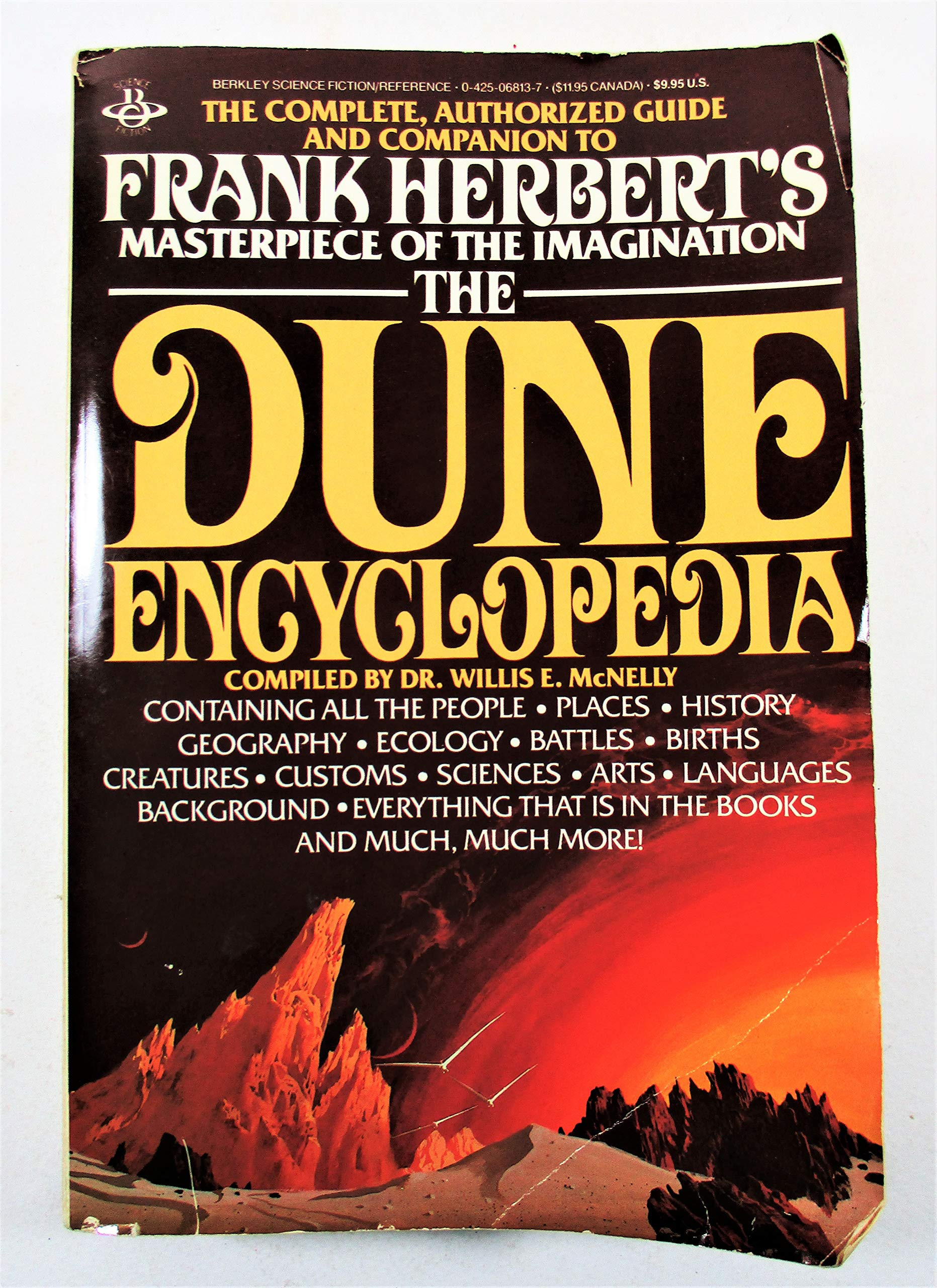
When David Lynch’s Hollywood version of Dune opened in theaters in 1984, Universal Studios distributed a printed a glossary to keep its audiences from getting confused. They got confused anyway, in part because of the film’s having been hollowed out in editing, and in part because the sheer elaborateness of Frank Herbert’s alternate reality poses potentially insurmountable challenges to faithful adaptation. Even many of the original Dune novels’ readers needed more help than a couple pages of definitions could offer. Luckily for them, the same year that saw the release of Lynch’s Dune also saw the publication of The Dune Encyclopedia, authorized by Herbert himself.
“Here is a rich background (and foreground) for the Dune Chronicles, including scholarly bypaths and amusing sidelights,” Herbert writes in the book’s introduction. “Some of the contributions are sure to arouse controversy, based as they are on questionable sources.” He couldn’t have known how right he was. Today The Dune Encyclopedia stands as what Inverse’s Ryan Britt calls “the most controversial Dune book ever”; long out of print, it may well also be the most expensive, with a current Amazon price of $1,300 in hardcover and $833 in paperback. (You can also find it online, at the Internet Archive.)
Still, The Dune Encyclopedia has its appreciators, not least the director of the latest (and most successful) cinematic attempt to realize Herbert’s vision. As Brit tells it, “an anonymous (though previously reliable) source stated that Denis Villeneuve is a big fan of The Dune Encyclopedia. But when he tried to plant references to the book in the new film, his ‘hand was slapped by the estate.’ ” The reason seems to involve the Encyclopedia’s conflicts with the novels: not those written by Herbert himself but, according to the Dune Wiki, “the later two prequel trilogies and sequel duology written after Frank Herbert’s death by Brian Herbert (Frank Herbert’s son) and Kevin J. Anderson, which they state complete the original series.”
Though co-signed by the The Dune Encyclopedia’s main author, literary scholar Willis E. McNelly, Brian Herbert and Kevin J. Anderson’s letter declaring the work’s de-canonization omits the fact “that the Encyclopedia is and always was a fallible in-universe document that openly misrepresents known history and adds historical embellishments.” It is, in other words, a book about Dune as well as a part of Dune. Not every book in our reality offers a perfectly true account of history, of course, and the same holds for the reality Frank Herbert created. This form implies the continuing possibility of expanding Dune’s literary universe by writing the books that exist within it, not just encyclopedias and scripture but, say epic sci-fi novels as well. What fan, after all, wouldn’t want to read the Dune of Dune?
Related content:
Rare Book Featuring the Concept Art for Jodorowsky’s Dune Goes Up for Auction (1975)
The Glossary Universal Studios Gave Out to the First Audiences of David Lynch’s Dune (1984)
The Encyclopedia of Science Fiction: 17,500 Entries on All Things Sci-Fi Are Now Free Online
Based in Seoul, Colin Marshall writes and broadcasts on cities, language, and culture. His projects include the Substack newsletter Books on Cities, the book The Stateless City: a Walk through 21st-Century Los Angeles and the video series The City in Cinema. Follow him on Twitter at @colinmarshall or on Facebook.
Read More...Support Us
We're hoping to rely on loyal readers, rather than erratic ads. Please click the Donate button and support Open Culture. You can use Paypal, Venmo, Patreon, even Crypto! We thank you!

About Us

Open Culture scours the web for the best educational media. We find the free courses and audio books you need, the language lessons & educational videos you want, and plenty of enlightenment in between.
Advertise With Us
FREE UPDATES!
GET OUR DAILY EMAIL
Get the best cultural and educational resources on the web curated for you in a daily email. We never spam. Unsubscribe at any time.
FOLLOW ON SOCIAL MEDIA
Open Culture editor Dan Colman scours the web for the best educational media. He finds the free courses and audio books you need, the language lessons & movies you want, and plenty of enlightenment in between.
Advertise With Us



