Are We All Getting More Depressed?: A New Study Analyzing 14 Million Books, Written Over 160 Years, Finds the Language of Depression Steadily Rising
The relations between thought, language, and mood have become subjects of study for several scientific fields of late. Some of the conclusions seem to echo religious notions from millennia ago. “As a man thinketh, so he is,” for example, proclaims a famous verse in Proverbs (one that helped spawn a self-help movement in 1903). Positive psychology might agree. “All that we are is the result of what we have thought,” says one translation of the Buddhist Dhammapada, a sentiment that cognitive behavioral therapy might endorse.
But the insights of these traditions — and of social psychology — also show that we’re embedded in webs of connection: we don’t only think alone; we think — and talk and write and read — with others. External circumstances influence mood as well as internal states of mind. Approaching these questions differently, researchers at the Luddy School of Informatics, Computing, and Engineering at Indiana University asked, “Can entire societies become more or less depressed over time?,” and is it possible to read collective changes in mood in the written languages of the past century or so?
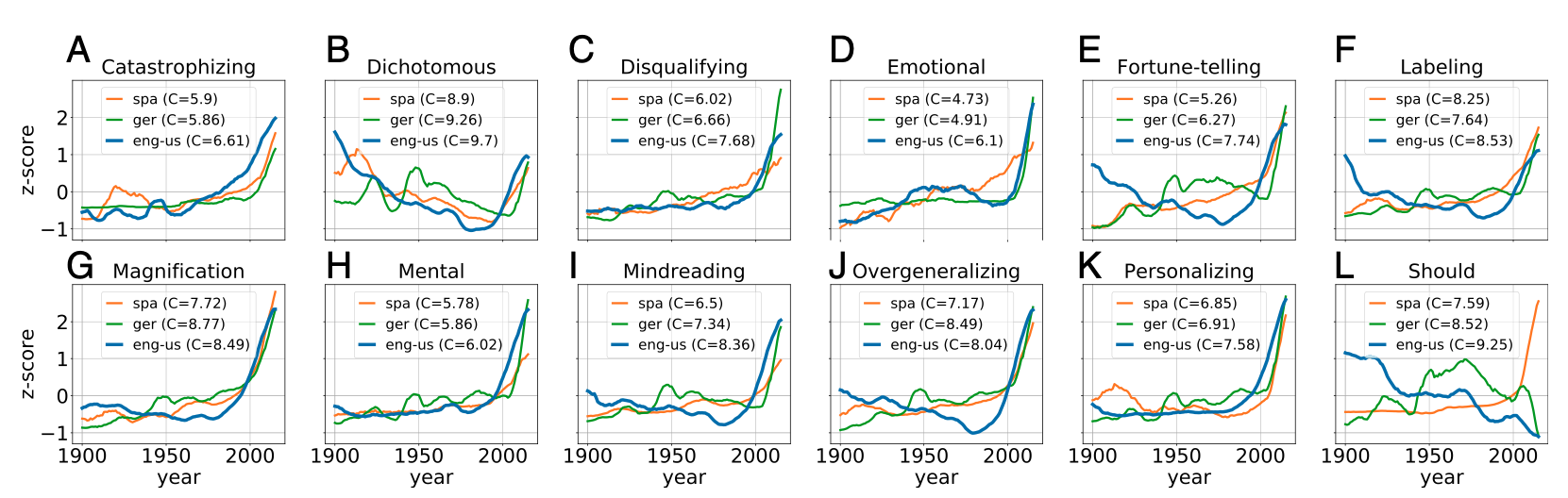
The team of scientists, led by Johan Bollen, Indiana University professor of informatics and computing, took a novel approach that brings together tools from at least two fields: large-scale data analysis and cognitive-behavioral therapy (CBT). Since diagnostic criteria for measuring depression have only been around for the past 40 years, the question seemed to resist longitudinal study. But CBT provided a means of analyzing language for markers of “cognitive distortions” — thinking that skews in overly negative ways. “Language is closely intertwined with this dynamic” of thought and mood, the researchers write in their study, “Historical language records reveal a surge of cognitive distortions in recent decades,” published just last month in PNAS.
Choosing three languages, English (US), German, and Spanish, the team looked for “short sequences of one to five words (n‑grams), labeled cognitive distortion schemata (CDS).” These words and phrases express negative thought processes like “catastrophizing,” “dichotomous reasoning,” “disqualifying the positive,” etc. Then, the researchers identified the prevalence of such language in a collection of over 14 million books published between 1855 and 2019 and uploaded to Google Books. The study controlled for language and syntax changes during that time and accounted for the increase in technical and non-fiction books published (though it did not distinguish between literary genres).
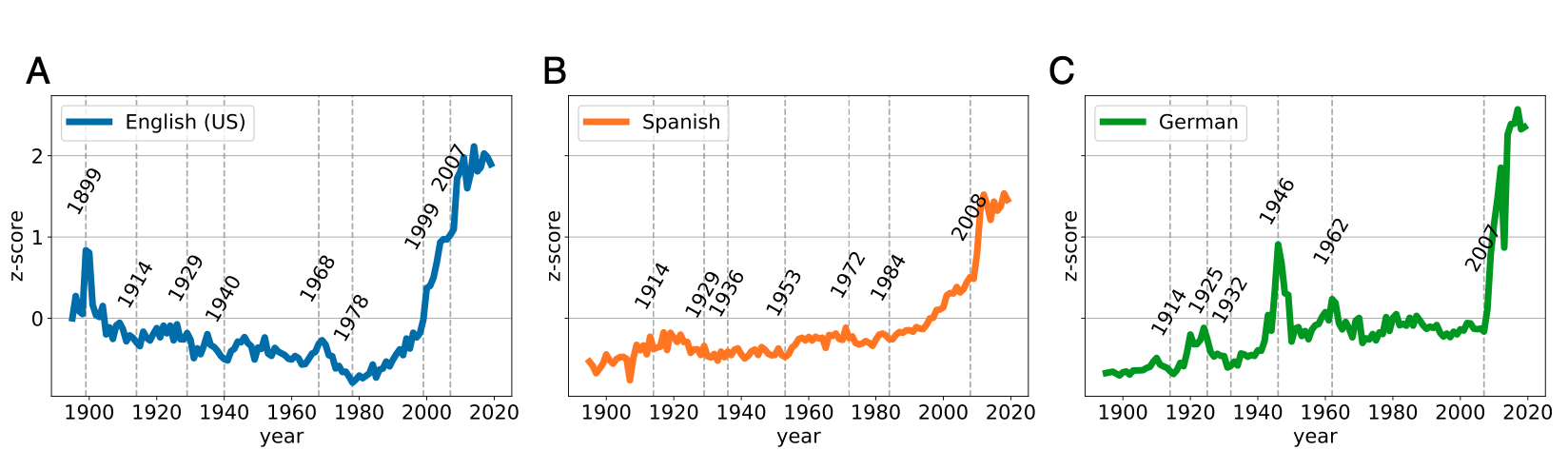
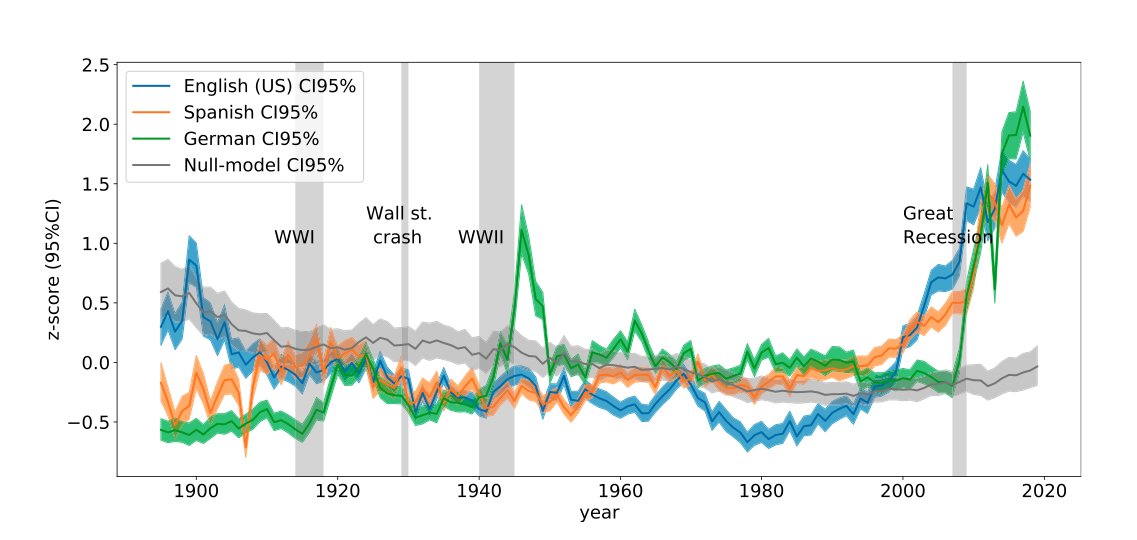
What the scientists found in all three languages was a distinctive “‘hockey stick’ pattern” — a sharp uptick in the language of depression after 1980 and into the present time. The only spikes that come close on the timeline occur in English language books during the Gilded Age and books published in German during and immediately after World War II. (Highly interesting, if unsurprising, findings.) Why the sudden, steep climb in language signifying depressive thinking? Does it actually mark a collective shift in mood, or show how historically oppressed groups have had more access to publishing in the past forty years, and have expressed less satisfaction with the status quo?
While they are careful to emphasize that they “make no causal claims” in the study, the researchers have some ideas about what’s happened, observing for example:
The US surge in CDS prevalence coincides with the late 1970s when wages stopped tracking increasing work productivity. This trend was associated with rises in income inequality to recent levels not seen since the 1930s. This phenomenon has been observed for most developed economies, including Germany, Spain and Latin America.
Other factors cited include the development of the World Wide Web and its facilitation of political polarization, “in particular us-vs.-them thinking… dichotomous reasoning,” and other maladaptive thought patterns that accompany depression. The scale of these developments might be enough to explain a major collective rise in depression, but one commenter offers an additional gloss:
The globe is *Literally* on fire, or historically flooding — Multiple economic crashes barely decades apart — a ghost town of a housing market — a multi-year global pandemic — wealth concentration at the .01% level — terrible pay/COL equations — blocking unionization/workers rights — abusive militarized police, without the restraint or training of actual military — You can’t afford X for a monthly mortgage payment! Pay 1.5x for rent instead! — endless wars for the last… 30…years? 50 if we include stuff like Korea, Cold War, Vietnam… How far has the IMC been milking the gov for funds to make the rich richer? Oh, and a billionaire 3‑way space race to determine who’s got the biggest “rocket”
These sound like reasons for global depression indeed, but the arrow could also go the other way: maybe catastrophic reasoning produced actual catastrophes; black and white thinking led to endless wars, etc…. More study is needed, says Bollen and his colleagues, yet it seems probable, given the data, that “large populations are increasingly stressed by pervasive cultural, economic, and social changes” — changes occurring more rapidly, frequently, and with greater impact on our daily lives than ever before. Read the full study at PNAS.
Related Content:
Josh Jones is a writer and musician based in Durham, NC. Follow him at @jdmagness
Read More...Discover the Stettheimer Dollhouse: The 12-Room Dollhouse Featuring Miniature, Original Modernist Art by Marcel Duchamp
The Stettheimer Dollhouse has been wowing young New Yorkers since it entered the Museum of the City of New York’s collection in 1944.
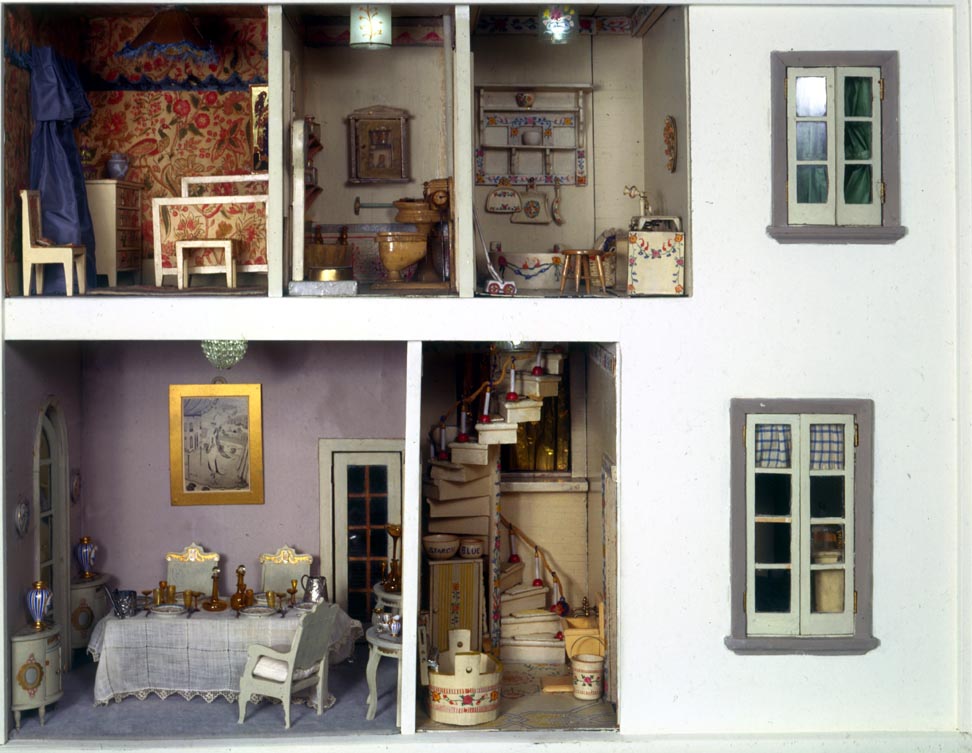
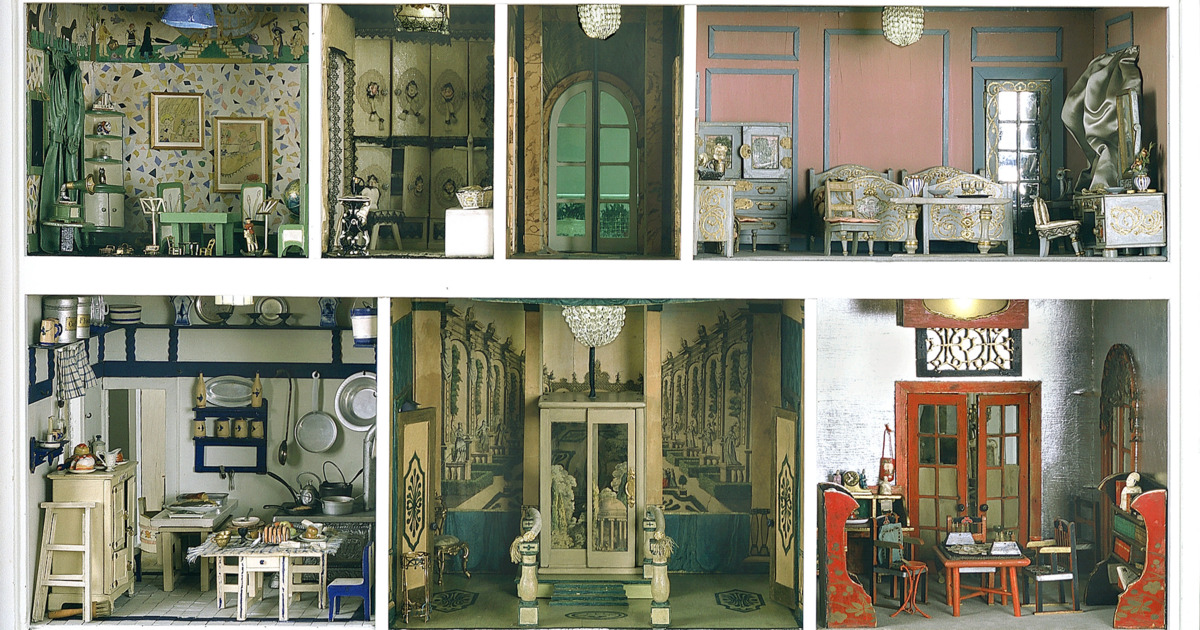
The luxuriously appointed, two-story, twelve-room house features tiny crystal chandeliers, trompe l’oeil panels, an itty bitty mah-jongg set, and a delicious-looking dessert assortment that would have driven Beatrix Potter’s Two Bad Mice wild.
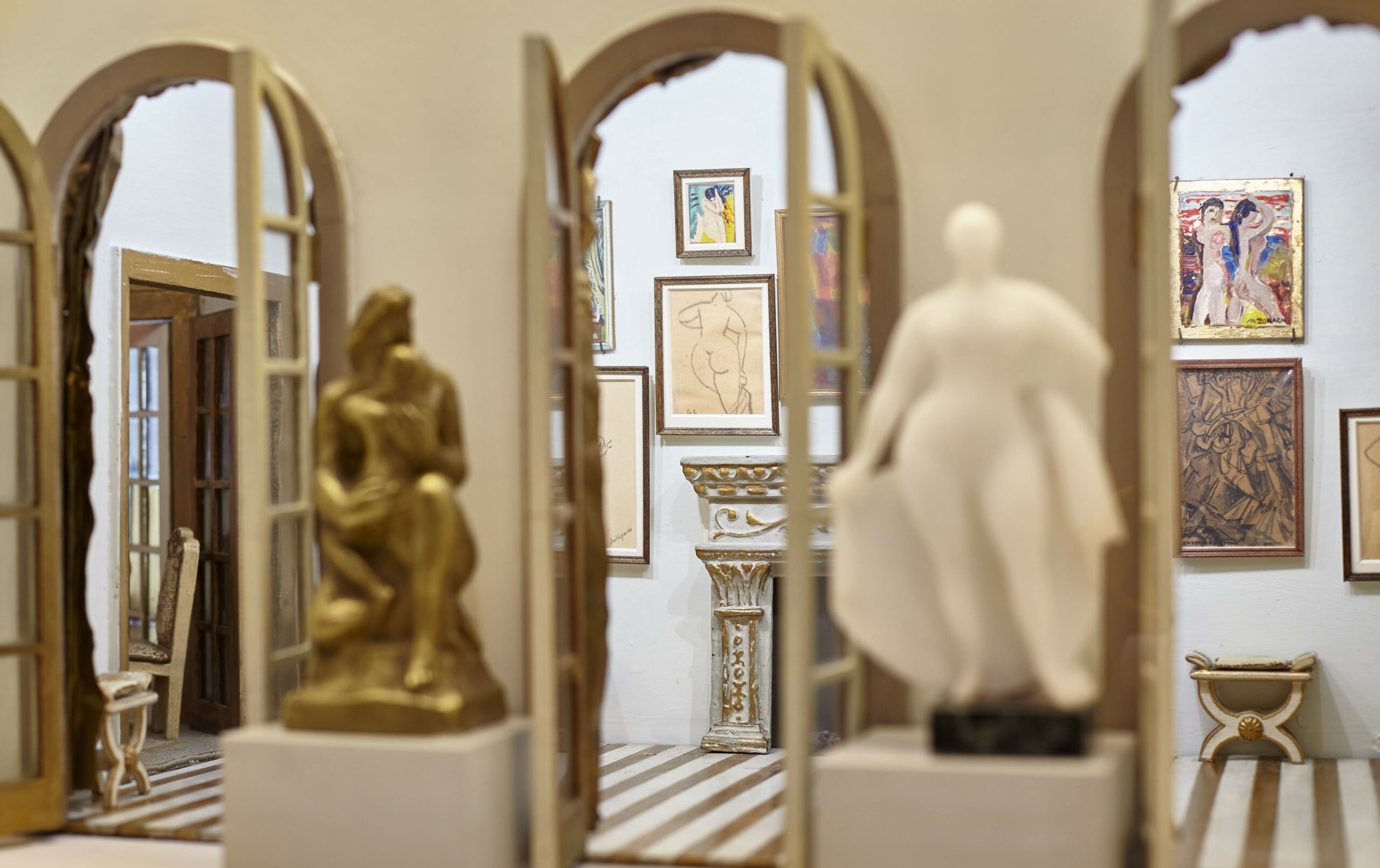
Its most astonishing feature, however, tends to go over its youngest fans’ heads — an art gallery filled with original modernist paintings, drawings, and sculptures by the likes of Marcel Duchamp, George Bellows, Gaston Lachaise, and Marguerite Zorach.
The house’s creator, Carrie Walter Stettheimer, drew on her family’s close personal ties to the avant-garde art world to secure these contributions.
The art dealer Paul Rosenberg described the affinity between these artists and the three wealthy Stettheimer sisters, one of whom, Florine, was herself a modernist painter:
Artists… went there and not at all merely because of the individualities of the trio of women and their tasteful hospitality. They went for the reason that they felt themselves entirely at home with the Stetties—so the trio was called—and the Stetties seemed to feel themselves entirely at home in their company. Art was an indispensable component of the modern, open intellectual life of the place. The sisters felt it as a living issue. Sincerely they lived it.
Art is definitely part of the dollhouse’s life.
Duchamp recreated Nude Descending a Staircase, inscribing the back “Pour la collection de la poupée de Carrie Stettheimer à l’occasion de sa fête en bon souvenir. Marcel Duchamp 23 juillet 1918 N.Y.”
Marguerite Thompson Zorach, Alexander Archipenko, and Paul Thevenaz also felt no compunction about furnishing a dollhouse with nudes.
Louis Bouché — the “bad boy of American art” as per the Stettheimers’ friend, writer and photographer Carl Van Vechten, made a tiny version of his painting, Mama’s Boy.
Carrie wrote to Gaston Lachaise, to thank him for two miniature nude drawings and an alabaster Venus:
My dolls and I thank you most sincerely for the lovely drawings that are to grace their art gallery. I think that the dolls—after they are born, which they are not, yet—ought to be the happiest and proudest dolls in the world as owners of the drawings and the beautiful statue. I am now hoping that they will never be born, so that I can keep them [the art works] forever in custody, and enjoy them myself, while awaiting their arrival.
Carrie worked on the dollhouse from from 1916 to 1935. Her sister Ettie donated it to the museum and took it upon herself to arrange the artwork. As Johanna Fateman writes in 4Columns:
Twenty-eight of the artists’ gifts were stored separately; Ettie selected thirteen from the collection, and her graceful arrangement became permanent, though it’s likely that the pieces were meant to be shown in rotation.
The Museum of the City of New York’s current exhibition, The Stettheimer Dollhouse: Up Close, includes photos of the artworks that Ettie did not choose to install.
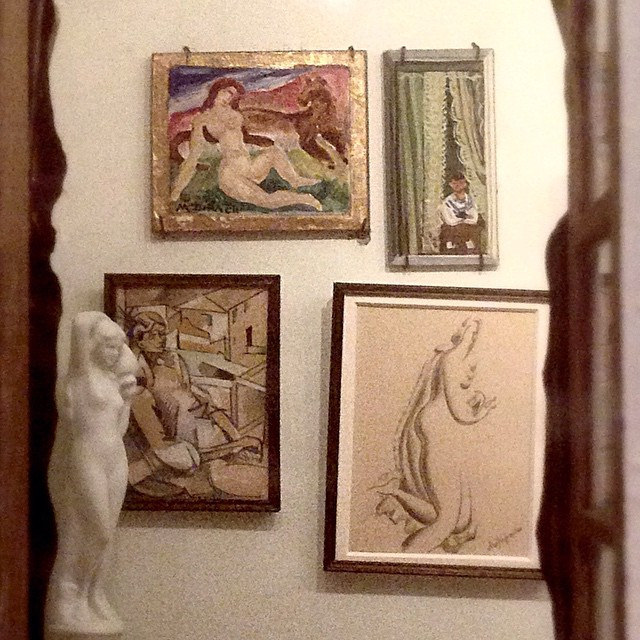
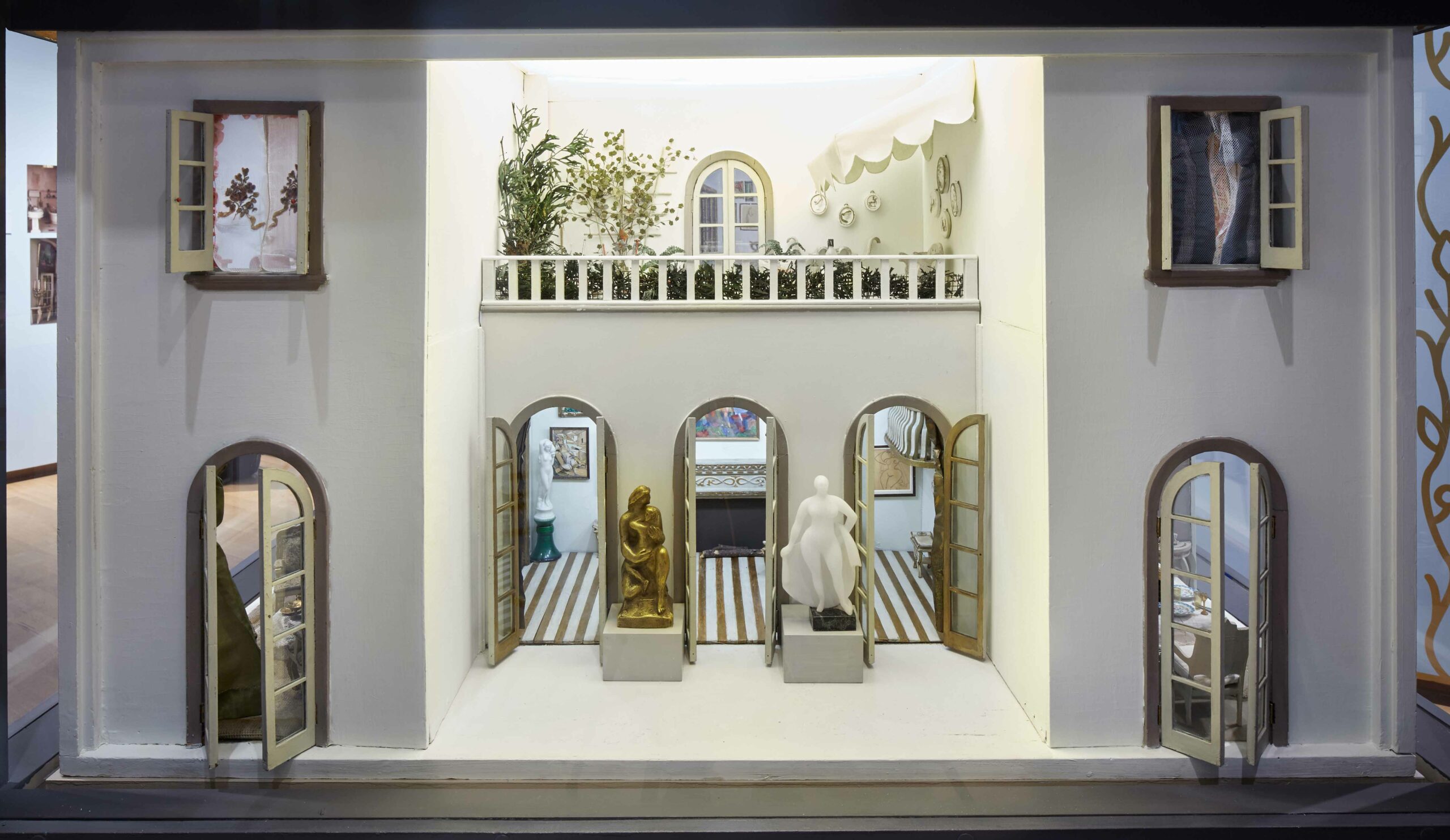
The works that have always been on view are Marcel Duchamp’s Nude Descending a Staircase, Alexander Archipenko’s Nude, Louis Bouche’s Mama’s Boy, Gaston Lachaise’s Venus and two nudes, Carl Sprinchorn’s Dancers, Albert Gleizes’ Seated Figure and Bermuda Landscape, Paul Thevenaz’s L’Ombre and Nude with Flowing Hair, Marguerite Zorach’s Bather and Bathers, William Zorach’s Mother and Child, and a painting of a ship by an unknown artist.
Related Content:
The Gruesome Dollhouse Death Scenes That Reinvented Murder Investigations
Ayun Halliday is an author, illustrator, theater maker and Chief Primatologist of the East Village Inky zine. Follow her @AyunHalliday.
Read More...Tony Hawk Breaks Down Skateboarding Into 21 Levels of Difficulty: From Easy to Complex
Thirty or so Christmases ago, I received my first skateboard. Alas, it was also my last skateboard: not long after I got the hang of balancing on the thing, it was run over and snapped in half by a mail truck. There went my last chance at Olympic athleticism, though I couldn’t have known it at the time: it debuted as an event at the Summer Olympics just this year, and its competitions are underway even now in Tokyo. This is, in any case, a bit late for me, given the relative… maturity of my years as against those of the average Olympic skateboarder. But then, Tony Hawk is in his fifties, and something tells me he could still show those kids a thing or two.
Hawk, the most famous skateboarder in the world, shows us 21 things in the Wired video above— specifically, 21 skateboarding moves, each one representative of a higher difficulty level than the last. At level one, we have the “flat-ground ollie,” which involves “using one foot to snap the tail of the board downward, and then you have the board sort of aiming up, and then sliding your front foot at the right time in order to bring that board up and level it out in the air.”
To the untrained eye, a well-executed ollie projects the image of skater and board are “jumping” as a whole. But it can only be mastered by those willing to keep their feet on the board, rather than obeying the instinct to put one foot off to the side. “People do that for years,” laments Hawk.
Level ten finds Hawk on the half-pipe doing a “360 aerial.” He describes the action as we watch him perform it: “I’m going up the ramp, I’m turning in the frontside direction a full 360, and I’m coming down backwards” — but not yet flipping the board while in the air, a slightly more advanced move. The final levels enter “the realm of unreality,” covering the NBD (Never Been Done) tricks that skaters nevertheless believe possible. For Level 21 he chooses the “1260 spin” — “three and a half rotations” — which he’s never even seen attempted. Or at least he hadn’t at the time of this video’s shoot in 2019; Mitchie Brusco landed one at the X Games just two days later. Even now, given the seemingly infinite potential variations of and expansions on every trick, skateboarding is unlikely to have hit its physical limits. Just imagine what the kids who successfully dodge their mailman now will be able to pull off when they grow up.
Related Content:
Werner Herzog Discovers the Ecstasy of Skateboarding: “That’s Kind of My People”
The Piano Played with 16 Increasing Levels of Complexity: From Easy to Very Complex
Based in Seoul, Colin Marshall writes and broadcasts on cities, language, and culture. His projects include the Substack newsletter Books on Cities, the book The Stateless City: a Walk through 21st-Century Los Angeles and the video series The City in Cinema. Follow him on Twitter at @colinmarshall or on Facebook.
Read More...The “Conjuring” Film Universe Digested — Pretty Much Pop: A Culture Podcast #101
With the release of The Conjuring: The Devil Made Me Do It, your Pretty Much Pop hosts Mark, Erica Spyres and Brian Hirt explore the larger “Conjuring universe” that started with the critically acclaimed 2013 James Wan film depicting the fictionalized supernatural investigations of Ed and Lorraine Warren (played by Patrick Wilson and Vera Farmiga). Largely using the plot-generating device of the couple’s storehouse of haunted objects, this series has extended into eight films to date with more planned.
Are these films actually scary? Insofar as these demons and ghosts do frighten us, can we (emotionally) buy into the power of Catholic symbols to keep them at bay? Is it OK to valorize these real-life people who were very likely hucksters?
Is grouping these films together merely a marketing gimmick, or is there real narrative justification for the continuity? Even without a common filmmaker, stars, or plot through-line, there is some value in a brand or franchise, just so you know more or less what you’re getting, but does that actually hold in this case, or have Warren-free stinkers like The Nun (2018) and The Curse of La Llorona (2019) already failed to meet the franchise’s standards?
Some of the articles we reflected on for this episode included:
- “The Conjuring Is the Ideal Cinematic Universe” by Joshua Rivera
- “How The Conjuring: The Devil Made Me Do It Embraces Satanic Panic” by David Crow
- “The Conjuring: The Devil Made Me Do It – Which Parts of the Film Are True?” by Rosie Fletcher
- “Every Time Ed & Lorraine Warren Were Exposed As Total Frauds” by Christopher Shultz
- “The Conjuring 4 Needs An Original Case For The Conjurverse’s Future To Work” by Daniel Dimanna
- “Hear Me Out: Why ‘The Conjuring’ Is a First-Class Faith Movie” by Tyler Daswick
- “‘The Conjuring 3’ Keeps Hollywood’s Fascination with Spiritual Warfare Alive” by John J. Miller
This episode includes bonus discussion you can access by supporting the podcast at patreon.com/prettymuchpop.
This podcast is part of the Partially Examined Life podcast network.
Pretty Much Pop: A Culture Podcast is the first podcast curated by Open Culture. Browse all Pretty Much Pop posts.
Read More...How ABBA Won Eurovision and Became International Pop Stars (1974)
Eurovision, the flashy original song contest that captivates Europeans, tends to get roundly mocked in the U.S., where we choose our stars by having them sing other people’s songs on TV in ridiculous costumes. Nonetheless, Americans have fallen in love with many a contest winner, and that’s no more true than in the case of ABBA, the Swedish pop-disco juggernaut who broke through to international stardom when they won in 1974 with “Waterloo,” chosen twice as the greatest song in the competition’s history.
The two couples — Agnetha Fältskog and Björn Ulvaus; Benny Andersson and Anni-Frid Lyngstad — first formed as Festfolket (“Party People”) in 1970, and Ulvaus and Andersson began submitting songs to Swedish national contest Melodifestivalen. In 1973, they submitted “Ring Ring,” finally placed third, then released an album called Ring Ring as Björn & Benny, Agnetha & Frida. They had taken on a new glam rock look and sound, and the album was a hit in parts of Europe and South Africa, but didn’t break the UK and US charts.
It was time for another name change, an anagram formed from the first letters of their first names. (They were obliged to ask permission from a local fish cannery called Abba, who agreed on condition the band didn’t make the canners “feel ashamed for what you’re doing.”) The name, producer Stig Anderson thought, would translate internationally, and the band would sing in English for their next single, the song that would launch their rapid ascent into seemingly eternal relevance.
How did “Waterloo” not only break ABBA into stardom but also “reinvent pop music” as we know it? As the Polyphonic video at the top explains, it did far more than raise the bar for every Eurovision performance since. ABBA brought glam, glitter, and theatrical bombast into pop, using Phil Spector’s “wall of sound” studio techniques to coax an enormous, enveloping sound from their vocal harmonies, guitars, pianos, horns, drums, etc., and taking heavy inspiration from English band Wizzard’s song “See My Baby Jive,” while “pulling back on the rock” and leaning into cleaner, more dance-floor-friendly production.
ABBA wisely put Agnetha and Anni-Frid’s vocal harmonies in the center, and they took a decidedly quirky turn from glam rock’s love of sleazy come-ons and songs about aliens. Originally called “Honey Pie,” the band’s breakout hit became “Waterloo” when Stig Anderson turned it into an odd reference to Napoleon’s surrender, “such a novel conceit for a song that it’s hard to forget.” ABBA continued this tradition in short story-songs like “Fernando,” first written with different lyrics in Swedish for Lyngstad, then rewritten in English by Ulvaeus as a tale about two old campaigners from the Mexican-American War.
Smart songwriting, catchy hooks, impeccable vocal harmonies, and flashy beauty — once the world saw and heard ABBA, few could resist them. But it took their uniquely theatrical (at the time) Eurovision performance to break them out, as Ulvaeus says. “We knew that the Eurovision Song Contest was the only route for a Swedish group to make it outside Sweden.” The win was huge, but the contest was a means to an end. True validation came with hit after hit, as ABBA proved themselves indispensable to wedding dance floors everywhere and “completely transformed what it meant to be a pop star.” See their original Eurovision performance of “Waterloo” just above.
Related Content:
Listen to ABBA’s “Dancing Queen” Played on a 1914 Fairground Organ
This Man Flew to Japan to Sing ABBA’s “Mamma Mia” in a Big Cold River
Josh Jones is a writer and musician based in Durham, NC. Follow him at @jdmagness
Read More...The Making of a Violin from Start to Finish: Watch a French Luthier Practice a Time-Honored Craft
Two families have been credited with making the greatest violins of the classical period: the Stradivari and the Guarneri. The first luthiers with those names were trained in the workshops of the Amati family, whose patriarch, Andrea, founded a legacy in Cremona in the mid 1500s when he gave the violin the form we know today, inventing f‑holes and perfecting the general shape and size of the instrument and others in its family.
But there’s far more to the story of the violin than its famous Italian maker names suggest, though these still stand for the height of quality and prestige. Violin-making centers arose elsewhere in Europe soon after the Stradivari and Guarneri set up shop. In France, the town of Mirecourt became “synonymous with French violins and the craft,” notes Corilon violins.
From 1732 on, French Mirecourt craftsmen followed the strict rules of their guild to uphold their high standards, and apprentices trained there were in demand far beyond the confines of the town. They frequently went on to found their own studios in other cities, especially Paris. Sometimes they later returned to Mirecourt after several years of success elsewhere. As a result the local art of making French violins had a strong effect on the outside world, whilst at the same time incorporating other influences.
Famous Mirecourt makers included Nicolas Lupot, called “the French Stradivarius.” The primary influence came from Cremona, but “important technical insights were adapted from German violin making.”
The city entered a new phase when Didier Nicolas became the first to manufacture violins serially in Mirecourt at the turn of the 19th century. His factory “employed some 600 people, making his business the first large-scale operation of its kind in the tradition-rich town in northern Frances Vosges mountains,” and inaugurating an industrial period that would last until the late 1960s.
The post-industrial late-20th century saw the collapse of Mirecourt’s great violin-making companies, but not the end of the city’s fame as France’s violin-making center, thanks in great part to Nicolas’ founding of L’École Nationale de Lutherie, “where excellent masters and violin makers keep the time-honored art alive and dynamic.” The city’s “guild heritage” lives on in the work of contemporary makers like Dominique Nicosia.
A master luthier and instructor at the school in Mirecourt, Nicosia shows us in the video at the top the time-honored techniques employed in the making of violins in France for hundreds of years, using metal tools he also makes himself. Watch the tradition come alive, learn more about the famous violin-making city, which remains the bow-making capital of the world here, and see Nicosia pass his skills and knowledge to a new generation in the video above from L’École Nationale de Lutherie.
Related Content:
Why Violins Have F‑Holes: The Science & History of a Remarkable Renaissance Design
Behold the “3Dvarius,” the World’s First 3‑D Printed Violin
Josh Jones is a writer and musician based in Durham, NC. Follow him at @jdmagness.
Read More...Epidemics in Western Society Since 1600: A Free Online Course from Yale University
From Yale University comes an unfortunately timely course, Epidemics in Western Society Since 1600. Recorded before the outbreak of COVID-19, the 25 lecture course, presented by historian Frank Snowden, covers the following ground:
This course consists of an international analysis of the impact of epidemic diseases on western society and culture from the bubonic plague to HIV/AIDS and the recent experience of SARS and swine flu. Leading themes include: infectious disease and its impact on society; the development of public health measures; the role of medical ethics; the genre of plague literature; the social reactions of mass hysteria and violence; the rise of the germ theory of disease; the development of tropical medicine; a comparison of the social, cultural, and historical impact of major infectious diseases; and the issue of emerging and re-emerging diseases.
You can watch the lectures on YouTube above, or on iTunes (Video — Audio). You can also read Snowden’s related book: Epidemics and Society: From the Black Death to the Present.
If you want to hear what Snowden has to say about COVID-19, we have two interviews below.
Coronavirus (COVID-19) Update: Epidemics in History
How Will COVID-19 Change the World? Historian Frank Snowden on Epidemics From the Black Death to Now
Epidemics in Western Society Since 1600 will be added to our list of Free Online History courses, a subset of our metacollection, 1,700 Free Online Courses from Top Universities.
If you would like to support the mission of Open Culture, consider making a donation to our site. It’s hard to rely 100% on ads, and your contributions will help us continue providing the best free cultural and educational materials to learners everywhere. You can contribute through PayPal, Patreon, and Venmo (@openculture). Thanks!
Related Content:
The History of the Plague: Every Major Epidemic in an Animated Map
Read More...Sylvia Plath’s Tarot Cards (Which Influenced the Poems in Ariel) Were Just Sold for $207,000
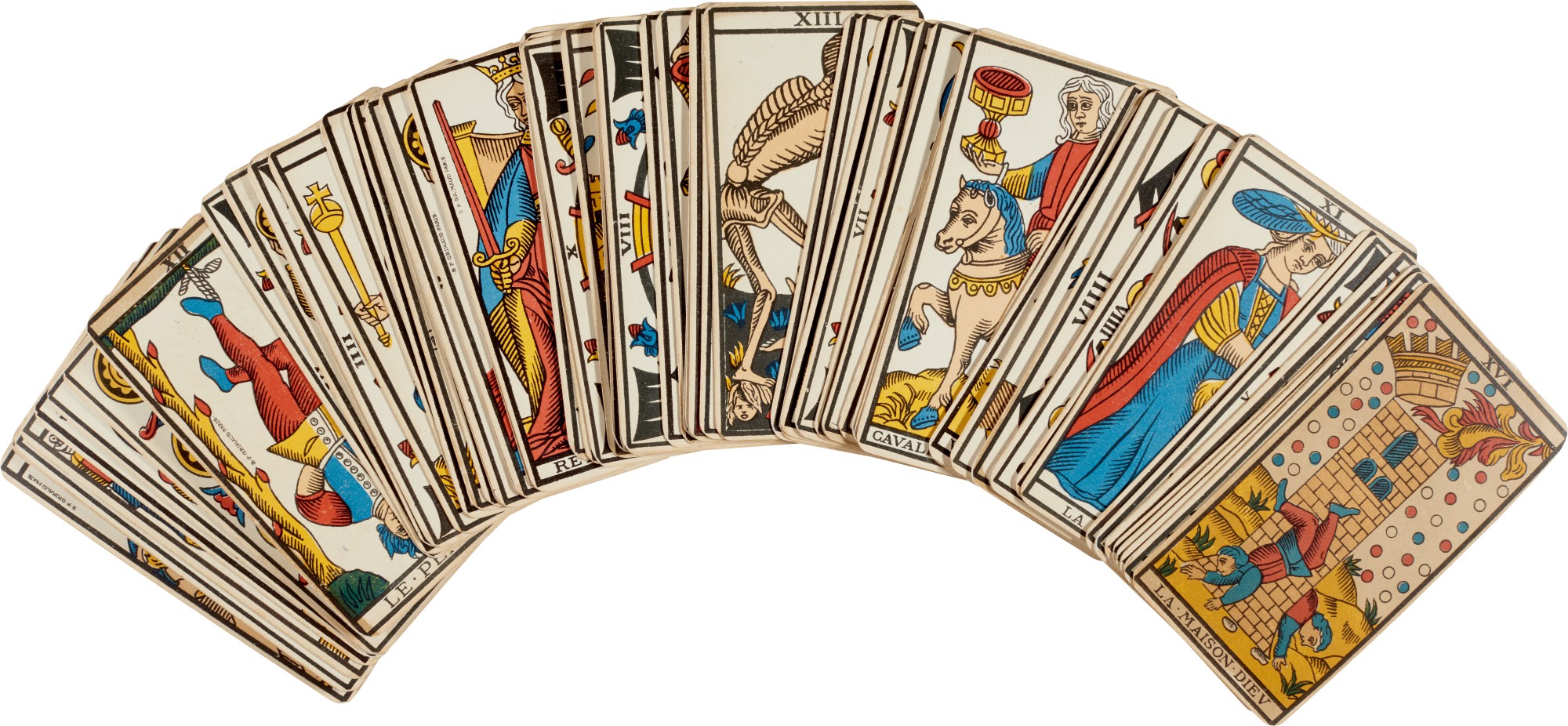
We celebrated my birthday yesterday: [Ted] gave me a lovely Tarot pack of cards and a dear rhyme with it, so after the obligations of this term are over your daughter shall start her way on the road to becoming a seeress & will also learn how to do horoscopes, a very difficult art which means reviving my elementary math.
- Sylvia Plath, in a letter to her mother, 28 October 1956
Sylvia Plath’s Tarot cards, a 24th birthday present from her husband, poet Ted Hughes, just went for £151,200 in an auction at Sotheby’s.
That’s approximately £100,000 more than this lot, a Tarot de Marseille deck printed by playing card manufacturer B.P. Grimaud de Paris, was expected to fetch.
The auction house’s description indicates that a few of the cards were discolored — evidence of use, as supported by Plath’s numerous references to Tarot in her journals.
Recall Tarot’s appearance in “Daddy,” her most widely known poem, and her identification with the Hanging Man card, in a poem of the same name:
By the roots of my hair some god got hold of me.
I sizzled in his blue volts like a desert prophet.
The nights snapped out of sight like a lizard’s eyelid :
A world of bald white days in a shadeless socket.
A vulturous boredom pinned me in this tree.
If he were I, he would do what I did.
This century has seen her collection Ariel restored to its author’s intended order.
The original order is said to correspond quite closely to Tarot, with the first twenty-two poems symbolizing the cards of the Major Arcana.
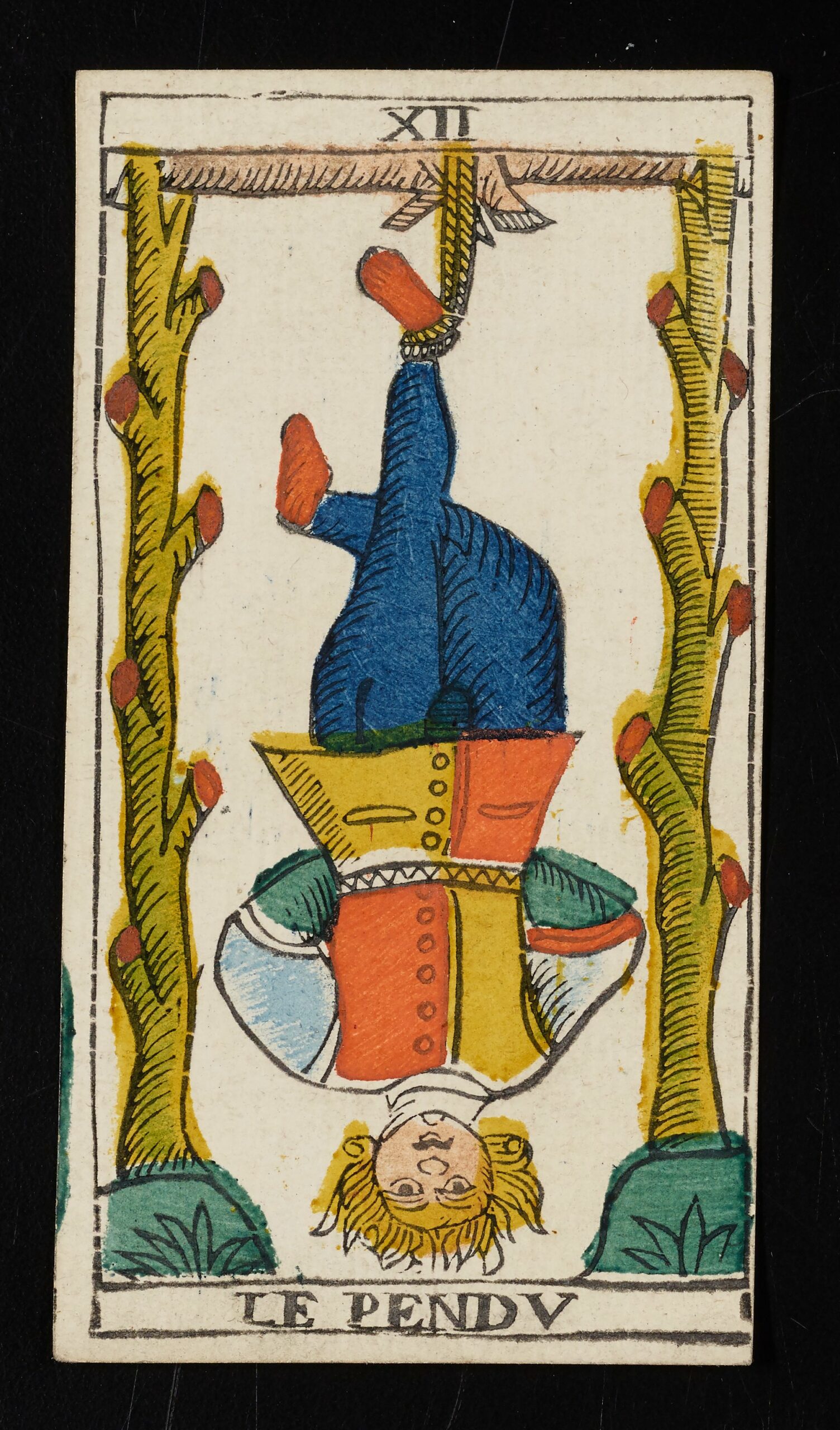
The next ten are aligned with the numbers of the Minor Arcana. Those are followed by four representing the Court cards. The collection’s final four poems can be seen to reference the pentacles, cups, swords and wands that comprise the Tarot’s suits.
Ariel’s manuscript was rearranged by Hughes, who dropped some of the “more lacerating” poems and added others in advance of its 1965 publication, two years after Plath’s death by suicide. (Hear Plath read poems from Ariel here.)
Daughter Frieda defends her father’s actions and describes how damaging they were to his reputation in her Foreword to Ariel: The Restored Edition.
One wonders if it’s significant that Plath’s Page of Cups, a card associated with positive messages related to family and loved ones, has a rip in it?
We also wonder who paid such a staggering price for those cards.
Will they give the deck a moon bath or salt burial to cleanse it of Plath’s negative energy?
Or is the winning bidder such a diehard fan, the chance to handle something so intimately connecting them to their literary hero neutralizes any occult misgivings?
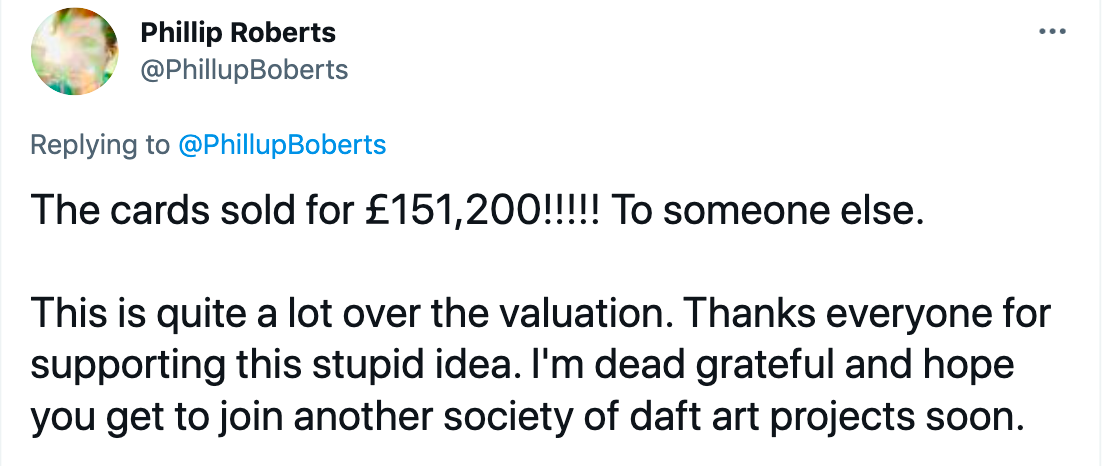
We rather wish Plath’s Tarot de Marseille had been awarded to Phillip Roberts in Shipley, England, who planned to exhibit them alongside her tarot-influenced poems in a pop up gallery at the Saltaire Festival. To finance this dream, he launched a crowd-funding campaign, pledging that every £100 donor could keep one of the cards, to be drawn at random, with all contributors invited to submit new art or writing to the mini-exhibition: Save Sylvia Plath’s cards from living in the drawers of some wealthy collector, and let’s make some art together!
Alas, Roberts and friends fell £148,990 short of the winning bid. Better luck next time, mate. We applaud your graciousness in defeat, as well as the spirit in which your project was conceived.
Related Content:
Why Should We Read Sylvia Plath? An Animated Video Makes the Case
Hear Sylvia Plath Read 18 Poems From Her Final Collection, Ariel, in 1962 Recording
Ayun Halliday is an author, illustrator, theater maker and Chief Primatologist of the East Village Inky zine. Follow her @AyunHalliday.
Read More...The Epic of Gilgamesh, the Oldest-Known Work of Literature in World History
You’re probably familiar with The Epic of Gilgamesh, the story of an overbearing Sumerian king and demi-god who meets his match in wild man Enkidu. Gilgamesh is humbled, the two become best friends, kill the forest guardian Humbaba, and face down spurned goddess Ishtar’s Bull of Heaven. When Enkidu dies, Gilgamesh goes looking for the only man to live forever, a survivor of a legendary pre-Biblical flood. The great king then tries, and fails, to gain eternal life himself. The story is packed with episodes of sex and violence, like the modern-day comics that are modeled on ancient mythology. It is also, as you may know, the oldest-known work of literature on Earth, written in cuneiform, the oldest-known form of writing.
This is one version of the story. But Gilgamesh beaks out of the tidy frame usually put around it. It is a “poem that exists in a pile of broken pieces,” Joan Acocella writes at The New Yorker, “in an extremely dead language.”
If Gilgamesh were based on a real king of Ur, he would have lived around 2700 BC. The first stories written about him come from some 800 years after that time, during the Old Babylonian period, after the last of the Sumerian dynasties had already ended. The version we tend to read in world literature and mythology courses comes from several hundred years later, notes the Metropolitan Museum of Art’s Ira Spar:
Some time in the twelfth century B.C., Sin-leqi-unninni, a Babylonian scholar, recorded what was to become a classic version of the Gilgamesh tale. Not content to merely copy an old version of the tale, this scholar most likely assembled various versions of the story from both oral and written sources and updated them in light of the literary concerns of his day, which included questions about human mortality and the nature of wisdom…. Sin-leqi-unninni recast Enkidu as Gilgamesh’s companion and brought to the fore concerns about unbridled heroism, the responsibilities of good governance, and the purpose of life.
This so-called “Standard Babylonian Version,” as you’ll learn in the TED-Ed video at the top by Soraya Field Fiorio, was itself only discovered in 1849 — very recent by comparison with other ancient texts we regularly read and study. The first archaeologists to discover it were searching not for Sumerian literature but for evidence that proved the Biblical stories. They thought they’d found it in Nineveh, in the excavated library of King Ashurbanipal, the oldest library in the world. Instead, they discovered the broken, incomplete tablets containing the story of Gilgamesh and Utnapishtim, who, like Noah from the Hebrew Bible, built an enormous boat in advance of a divinely ordered flood. The first person to translate the passages was so excited, he stripped off his clothes.
The flood story wasn’t the knock-down proof Christian scholars hoped for, but the discovery of the Gilgamesh epic was even more important for our understanding of the ancient world. What we know of the story, however, was already edited and redacted to suit a millennia-old agenda. The Epic of Gilgamesh “explains that Gilgamesh, although he is king of Uruk, acts as an arrogant, impulsive, and irresponsible ruler,” Spar writes. “Only after a frustrating and vain attempt to find eternal life does he emerge from immaturity to realize that one’s achievements, rather than immortality, serve as an enduring legacy.”
Other, much older versions of his story show the mythical king and his exploits in a different light. So how should we read Gilgamesh in the 21st century, a few thousand years after his first stories were composed? You can begin here with the TED-Ed summary and Crash Course in World Mythology video further up. Dig much deeper with the lecture above from Andrew George, Professor of Babylonian at the University of London’s School of Oriental and African Studies (SOAS).
George has produced one of the most highly respected translations of Gilgamesh, Acocella writes, one that “gives what remains of Sin-leqi-unninni’s text” and appends other fragmentary tablets discovered in Baghdad, showing how the meaning of the cuneiform symbols changed over the course of the millennia between the Old Babylonian stories and the “New Babylonian Version” of the Epic of Gilgamesh we think we know. Hear a full reading of Gilgamesh above, as translated by N.K. Sanders.
Related Content:
Hear The Epic of Gilgamesh Read in its Original Ancient Language, Akkadian
20 New Lines from The Epic of Gilgamesh Discovered in Iraq, Adding New Details to the Story
World Literature in 13 Parts: From Gilgamesh to García Márquez
Josh Jones is a writer and musician based in Durham, NC. Follow him at @jdmagness
Read More...Discover The Grammar of Ornament, One of the Great Color Books & Design Masterpieces of the 19th Century
In the mid-17th century, young Englishmen of means began to mark their coming of age with a “Grand Tour” across the Continent and even beyond. This allowed them to take in the elements of their civilizational heritage first-hand, especially the artifacts of classical antiquity and the Renaissance. After completing his architectural studies, a Londoner named Owen Jones embarked upon his own Grand Tour in 1832, rather late in the history of the tradition, but ideal timing for the research that inspired the project that would become his legacy.
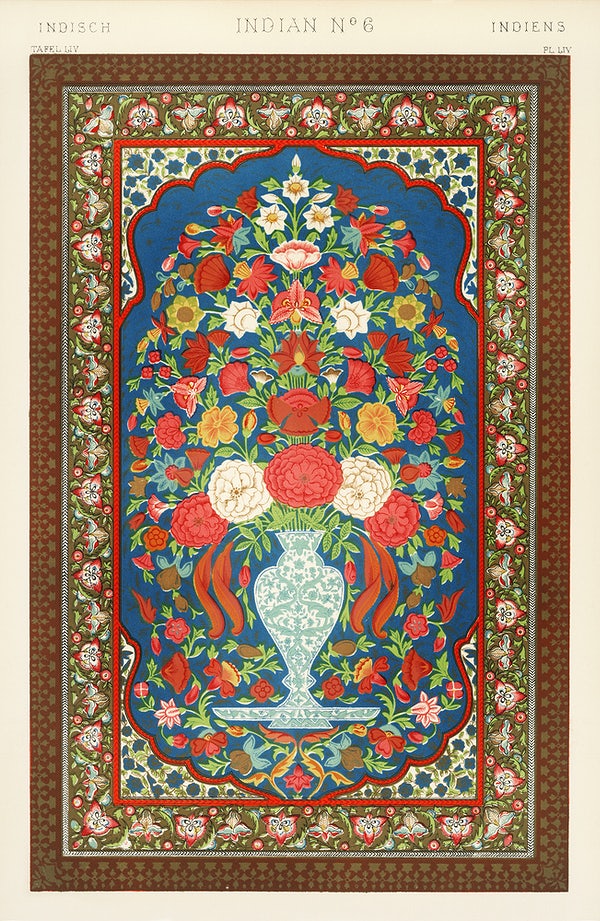
According to the Victoria and Albert Museum, Jones visited “Italy, Greece, Egypt and Turkey before arriving in Granada, in Spain to carry out studies of the Alhambra Palace that were to cement his reputation.”
He and French architect Jules Goury, “the first to study the Alhambra as a masterpiece of Islamic design,” produced “hundreds of drawings and plaster casts” of the historical, cultural, and aesthetic palimpsest of a building complex. The fruit of their labors was the book Plans, Elevations, Sections and Details of the Alhambra, “one of the most influential publications on Islamic architecture of all time.”
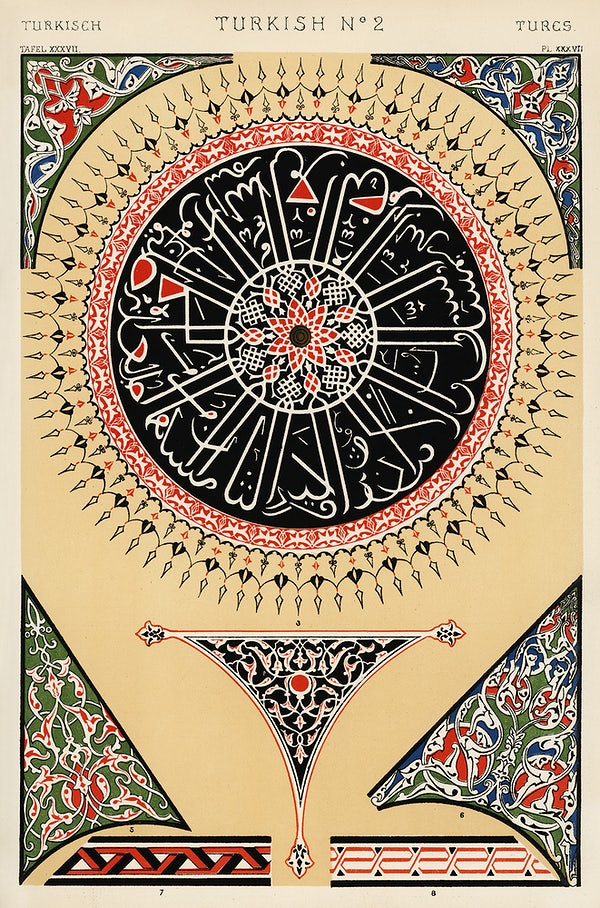
Published in the 1840s, the book pushed the printing technologies of the day to their limits. In search of a way to do justice to “the intricate and brightly colored decoration of the Alhambra Palace,” Jones had to put in more work researching “the then new technique of chromolithography — a method of producing multi-color prints using chemicals.” In the following decade, he would make even more ambitious use of chromolithography — and draw from a much wider swath of world culture — to create his printed magnum opus, The Grammar of Ornament.
With this book, Jones “set out to reacquaint his colleagues with the underlying principles that made art beautiful,” write Metropolitan Museum of Art curator Femke Speelberg and librarian Robyn Fleming. “Instead of writing an academic treatise on the subject, he chose to assemble a book of one hundred plates illustrating objects and patterns from around the world and across time, from which these principles could be distilled.” To accomplish this he drew on his own travel experiences as well as resources closer at hand, including “the museological and private collections that were available to him in England, and the objects that had been on display during the Universal Exhibitions held in London in 1851 and 1855.”
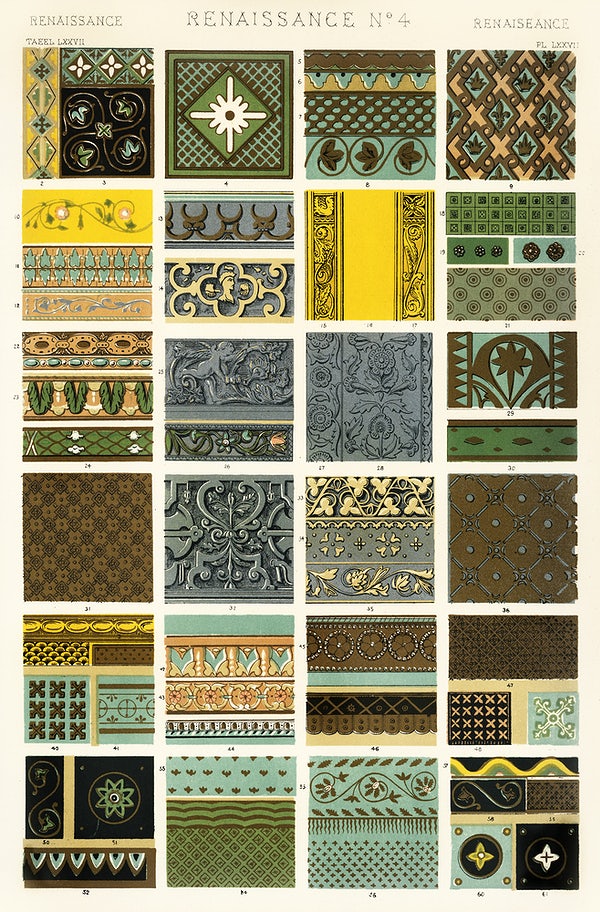
The Grammar of Ornament was published in 1856, emerging into a Britain “dominated by historical revivals such as Neoclassicism and the Gothic Revival,” says the V&A. “These design movements were riddled with religious and social connotations. Instead, Owen Jones sought a modern style with none of this cultural baggage. Setting out to identify the common principles behind the best examples of historical ornament, he formulated a design language that was suitable for the modern world, one which could be applied equally to wallpapers, textiles, furniture, metalwork and interiors.”
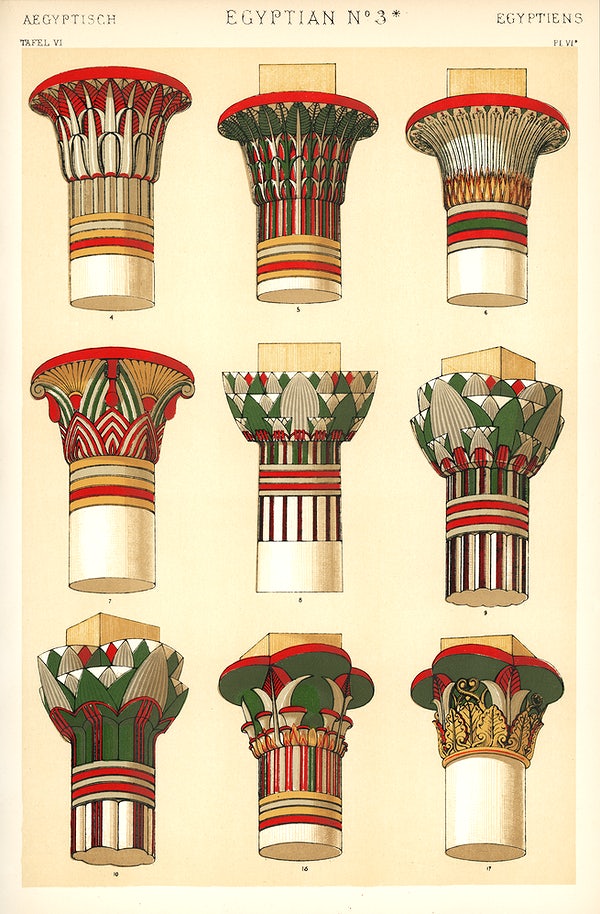
Indeed, the patterns so lavishly reproduced in the book soon became trends in real-world design. They weren’t always employed with the intellectual understanding Jones sought to instill, but since The Grammar of Ornament has never gone out of print (and can even be downloaded free from the Internet Archive), his principles remain available for all to learn — and his painstakingly artistic printing work remains available for all to admire — even in the corners of the world that lay beyond his imagination.
You can purchase a complete and unabridged color edition of The Grammar of Ornament online.
Related Content:
The Complex Geometry of Islamic Art & Design: A Short Introduction
A Beautiful 1897 Illustrated Book Shows How Flowers Become Art Nouveau Designs
Based in Seoul, Colin Marshall writes and broadcasts on cities, language, and culture. His projects include the Substack newsletter Books on Cities, the book The Stateless City: a Walk through 21st-Century Los Angeles and the video series The City in Cinema. Follow him on Twitter at @colinmarshall or on Facebook.
Read More...Support Us
We're hoping to rely on loyal readers, rather than erratic ads. Please click the Donate button and support Open Culture. You can use Paypal, Venmo, Patreon, even Crypto! We thank you!

About Us

Open Culture scours the web for the best educational media. We find the free courses and audio books you need, the language lessons & educational videos you want, and plenty of enlightenment in between.
Advertise With Us
FREE UPDATES!
GET OUR DAILY EMAIL
Get the best cultural and educational resources on the web curated for you in a daily email. We never spam. Unsubscribe at any time.
FOLLOW ON SOCIAL MEDIA
Open Culture editor Dan Colman scours the web for the best educational media. He finds the free courses and audio books you need, the language lessons & movies you want, and plenty of enlightenment in between.
Advertise With Us

