Route 66 Turns 100 This Year: Take a Tour of America’s Most Famous Highway
This past summer, the United States of America celebrated 250 years of independence. But for a great many Americana-lovers around the world, this year also brings another, even more resonant date: the 100th anniversary of the establishment of Route 66. In the months leading up to November 11th, the official birthday of what John Steinbeck dubbed the “Mother Road,” tourists both foreign and domestic have seized the occasion to make the 2,448-mile drive of which they’ve long dreamed. Running from Grant Park in Chicago to the Santa Monica Pier, Route 66 reveals a great swath of America’s big cities, small towns, historic sites, vast open spaces, natural wonders, and — most important for any enthusiast — pieces of roadside kitsch.
You’ll see plenty of all that in the video at the top of the post from Chris Attrell, one of the YouTubers who’s marked Route 66’s centennial year by driving it all and making a video along the way. He seems to have had less than ideal luck in reaching the attractions on his more than 100 stops during business hours, but in the true American spirit, he expresses optimism about getting back to them next time.
There are a host of schools of thought on which direction is best to drive the whole of Route 66, but Attrell heads inland from the coast, as travel vlogger Josh McNair did with his father for his channel Through My Lens a few years before. They take only two weeks to do so, a fairly rapid clip at which to cross seven states, or eight if you count the tiny segment that passes through the southeast corner of Kansas.
httpv:// www.youtube.com/watch?v=H0bA72fjHMQ
There are, no doubt, Route 66 purists who would insist that no stretch, no matter how short, can be bypassed — or at least no stretch of the 85 percent of the original highway that remains drivable today. Route 66 was decommissioned in 1985, nearly three decades after the construction of the U.S. Interstate Highway System began making it obsolete. But it wasn’t long thereafter that efforts began to preserve as much of it as possible as Historic Route 66, an enterprise that may have initially been driven by nostalgia, but increasingly trades in the exoticism of the once-ordinary. It’s easy to over-romanticize the days of pre-Interstate automobile travel, but as the aesthetics and rhythms of life in that period pass out of living memory, their remains become all the more compelling, even in total desuetude.
Anyone in search of total desuetude can hardly find more vivid examples, at least in my experience, than the Route 66 ghost towns (and, as Attrell calls them, “semi-ghost towns”) that the freeways passed by. For example, the strip of mostly hollowed-out lodgings that is Tucumcari, New Mexico has been a photographer’s dream for so long that a non-clichéd shot of the place can now be hard to come by. But for all the books published about it — and indeed, all the videos made about it — Route 66 is less a subject than an experience, a pilgrimage through an America of neon signs, period-accurate gas stations, memorabilia shops, eccentric artworks, hot dogs on sticks, Muffler Man statues, diners both operating and abandoned, and, of course, wigwam motels. May it endure to the United States’ quincentennial.
Related Content:
Why Route 66 Became America’s Most Famous Road
If You Drive Down a Stretch of Route 66, the Road Will Play “America the Beautiful”
12 Classic Literary Road Trips in One Handy Interactive Map
How Fast Food Began: The History of This Thoroughly American (and Now Global) Form of Dining
A Brief History of the Great American Road Trip
Based in Seoul, Colin Marshall writes and broadcasts on cities, language, and culture. He’s the author of the newsletter Books on Cities as well as the books 한국 요약 금지 (No Summarizing Korea) and Korean Newtro. Follow him on the social network formerly known as Twitter at @colinmarshall.
Read More...Download Hundreds of Issues of Jugend, Germany’s Pioneering Art Nouveau Magazine (1896–1940)
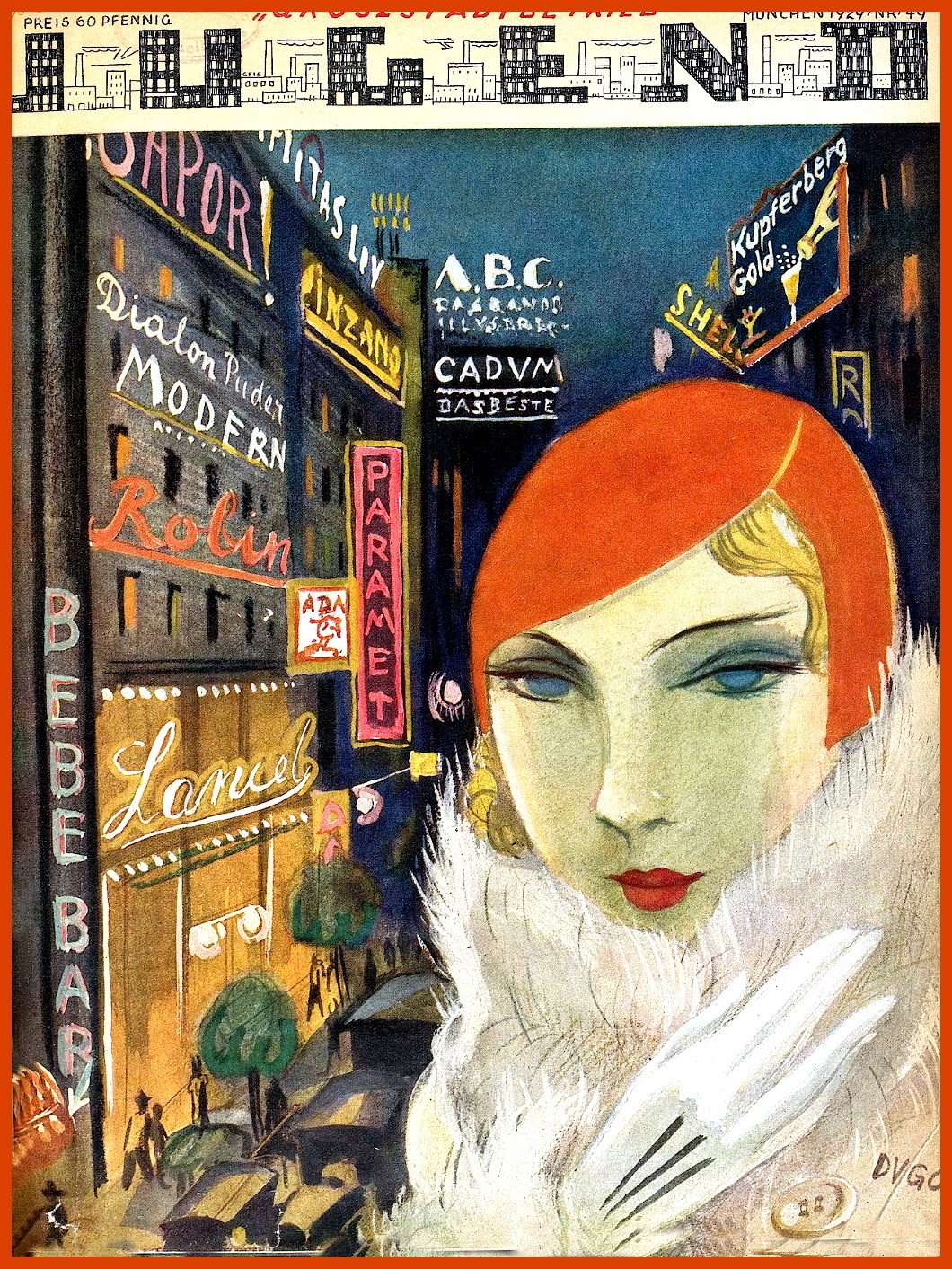
It’s an ungainly word for English speakers, which is maybe why we do not hear it often: Gleichschaltung. Yet the concept remains central for a clear view of what happened to Germany in the 1930s. In 1933, the nation completely transformed, seemingly overnight, through “a concerted policy of ‘coordination’ (Gleichschaltung),” the U.S. Holocaust Memorial Museum writes. “Culture, the economy, education, and law all came under Nazi control.” Those artists and organizations that were not purged had their essential character changed to reflect an entirely different set of artistic and political values. One publication, especially, serves as an example of the Nazification of culture.
The arts journal Jugend (Youth), writes Messy Nessy Chic, “had been turned largely into propaganda” between 1933 and 1940, its final year. But prior to the regime’s takeover, Jugend showcased the most avant-garde, “degenerate” artists of the era, and might have been “the ‘brainiest’ periodical of the day,” as one critic wrote in a 1904 issue of The Yale Literary Magazine. “There is no magazine published in England or in this country which is at all like it.”
You can take a look yourself—browse, search, and download hundreds of scanned issues of Jugend at the University of Heidelberg’s digital archive, thousands of pages in PDF form, spanning the magazine’s forty-four-year history. You can also see images at Flickr.
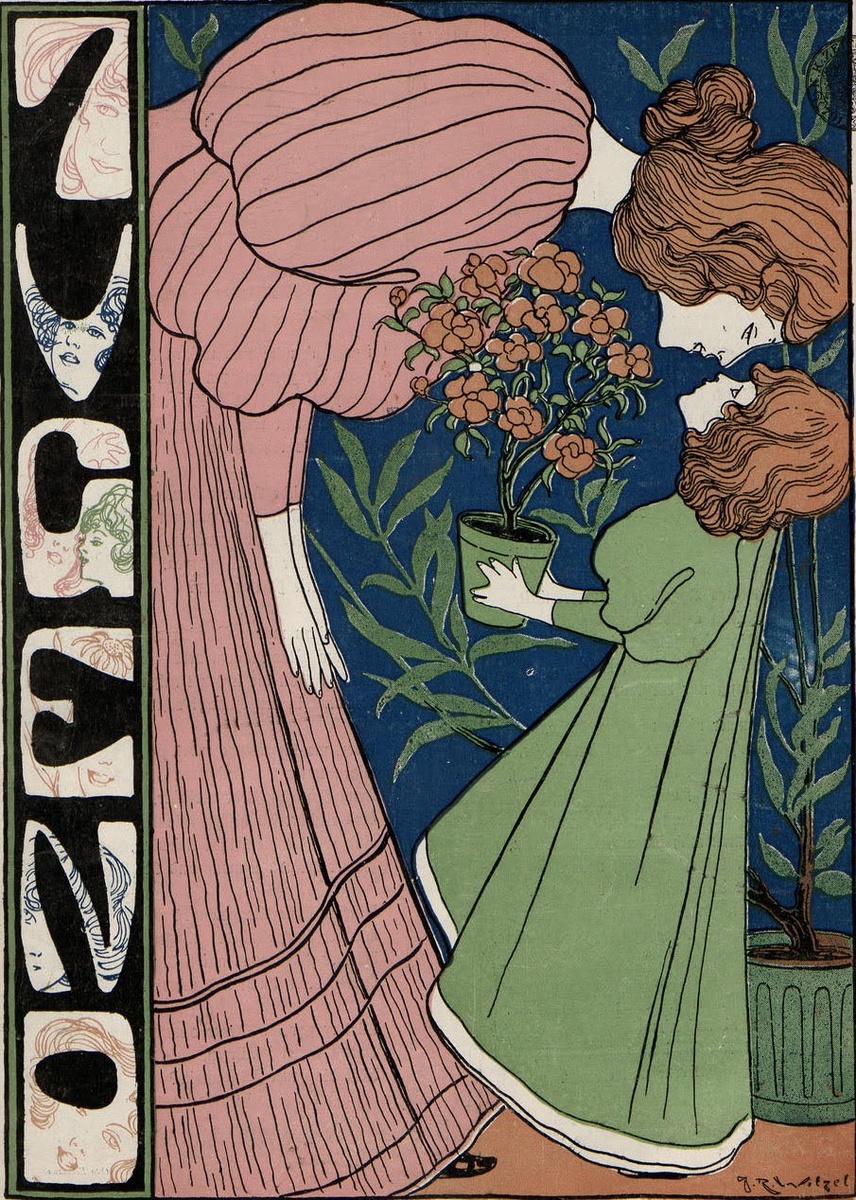
As in England, France, Austria, and the U.S., the Art Nouveau movement in Germany emerged from a whirlwind of post-Impressionist painting, Orientalist motifs, folk art, modernist art and advertising, book illustration, and graphic and industrial design. Appropriately, given its perch on the threshold of a new century, Art Nouveau looked both backward—to the medieval, gothic, and Romantic—and forward toward a more modernist, urbane, and urbanized sensibility.
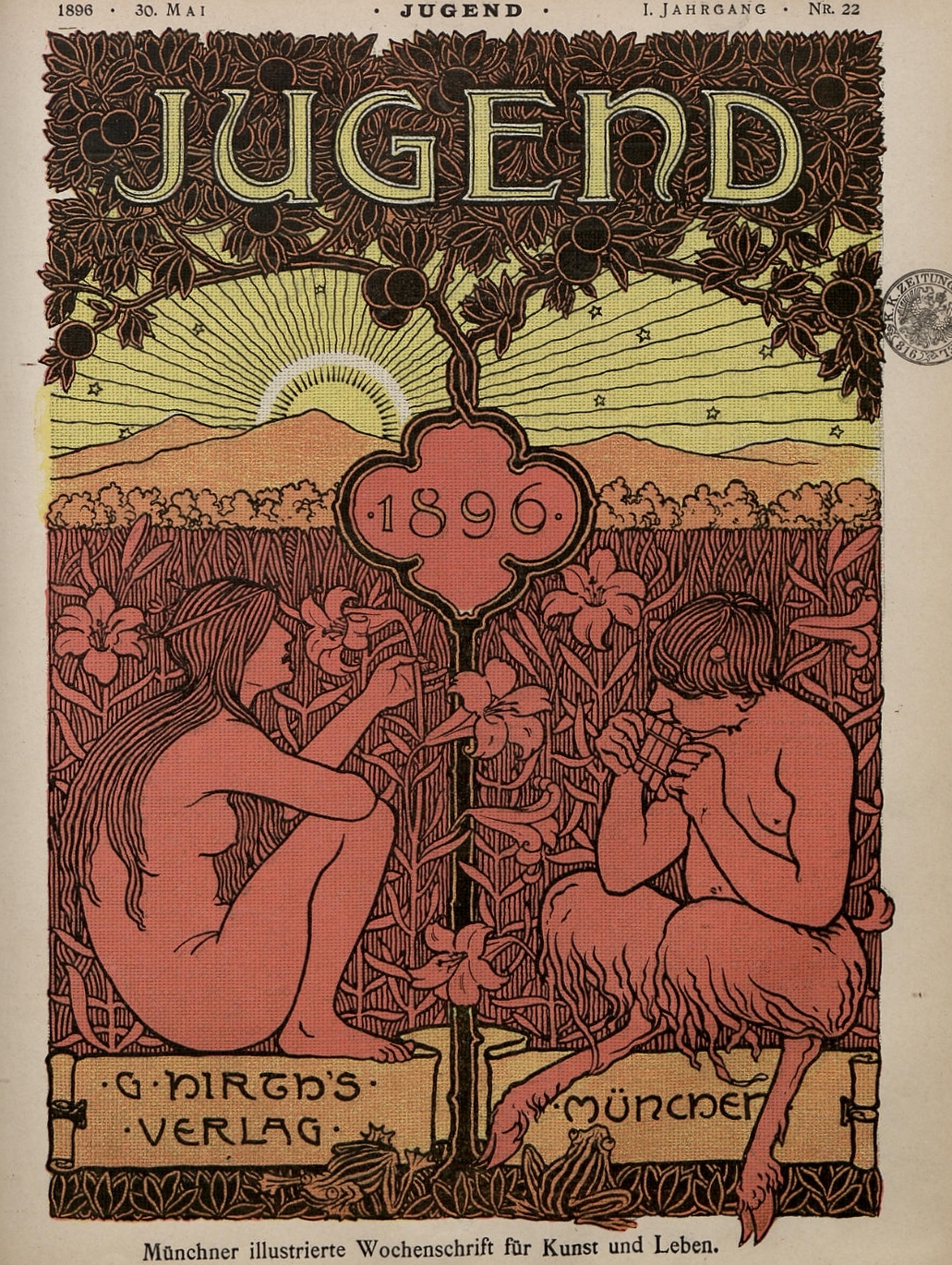
So influential was Jugend that Art Nouveau in Germany became known as Jugendstil. The Oxford Critical and Cultural History of Modernist Magazines writes, “Among Jugend’s most important qualities—indeed, an essential aspect of Art Nouveau and its German equivalent Jugendstil—was its brilliant escapism.” Founded in 1896 by writer Georg Hirth, the magazine was “from the start a venue to promote the new cultural Renaissance without recourse to the established ‘vintage’ art.” (See its very first cover right above.)
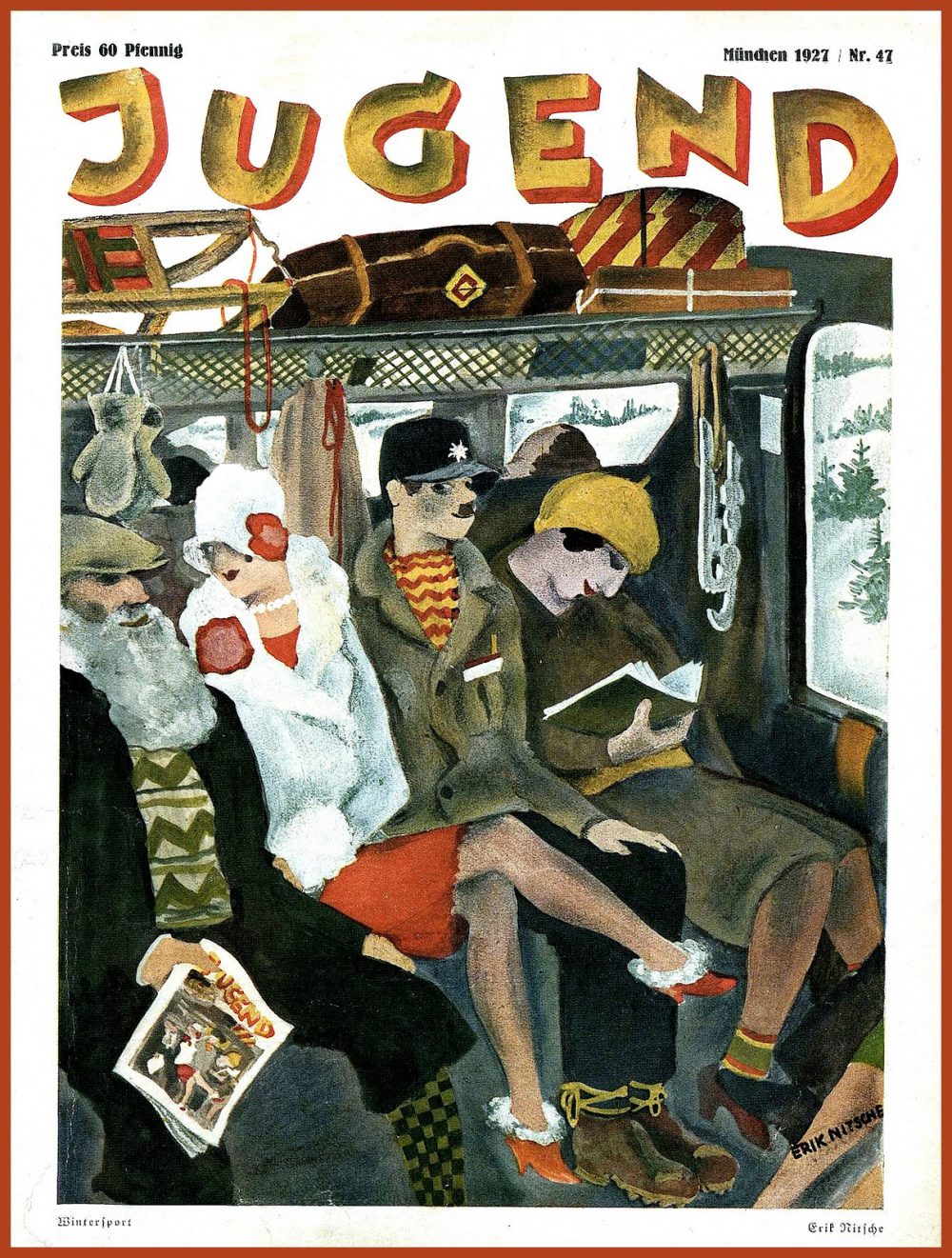
Jugendstil was primarily based in Munich, where most of its artists, designers, and writers lived and worked, until the turn of the century, when, notes the Art Encyclopedia, “the Munich group dispersed, heading for Berlin, Weimar and Darmstadt.” Art Nouveau in Germany developed in two phases, “a pre-1900 phase dominated by floral motifs, themselves rooted in English Art Nouveau and Japanese art,” and a “post-1900 phase, marked by a tendency towards abstract art.”
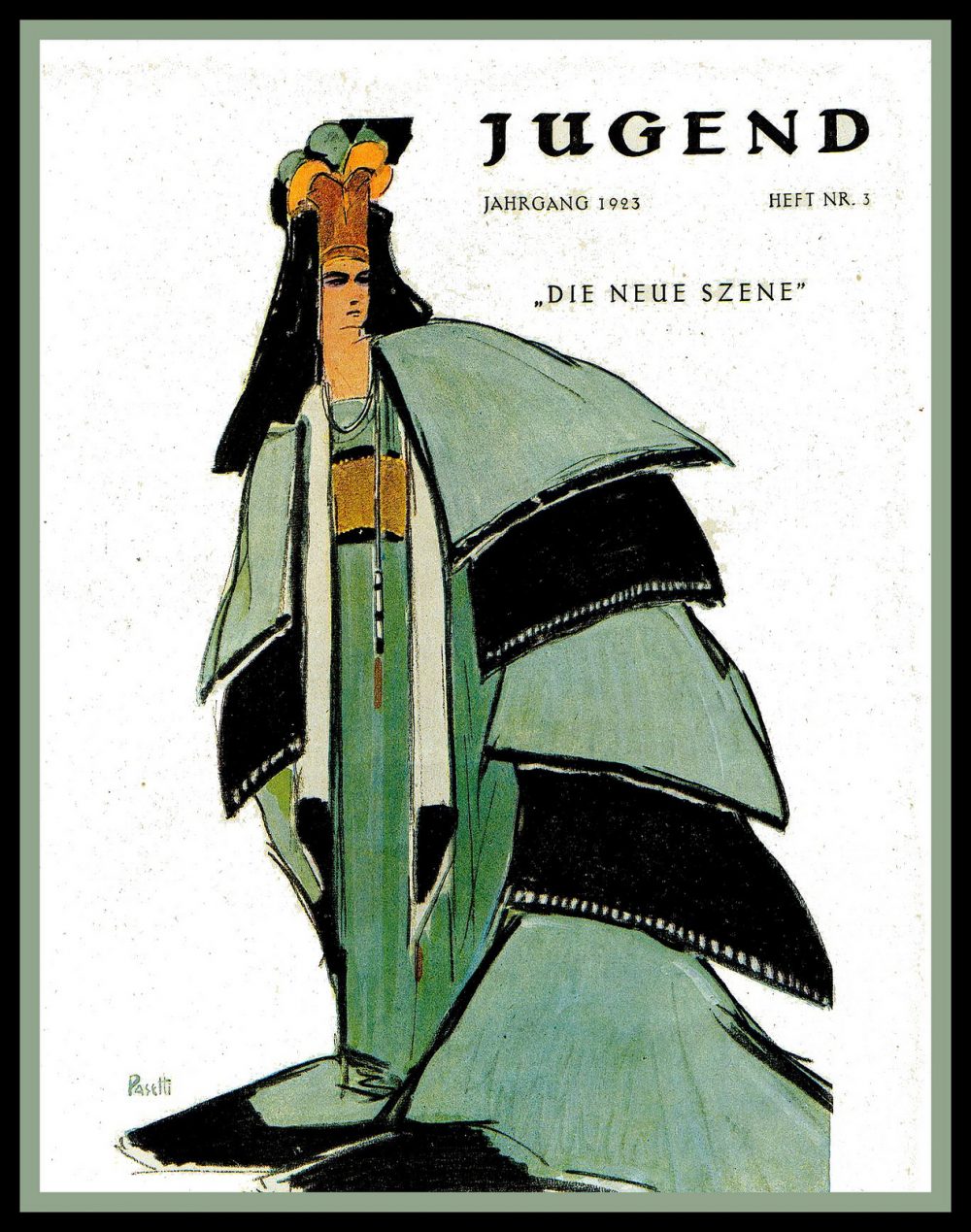
While we know the names of many Art Nouveau artists from elsewhere in Europe—Henri de Toulouse-Lautrec in France, Aubrey Beardsley in England, Gustav Klimt in Austria, for example—Jugendstil in Germany produced few international stars. Many of the artists published in its pages were relatively unknown at first. But its shockingly brilliant covers and radical editorial tone put it at the forefront of German arts for decades. “Jugend’s political and social platform,” wrote The Yale Literary Magazine critic, “is one of opposition—opposition to everything.”
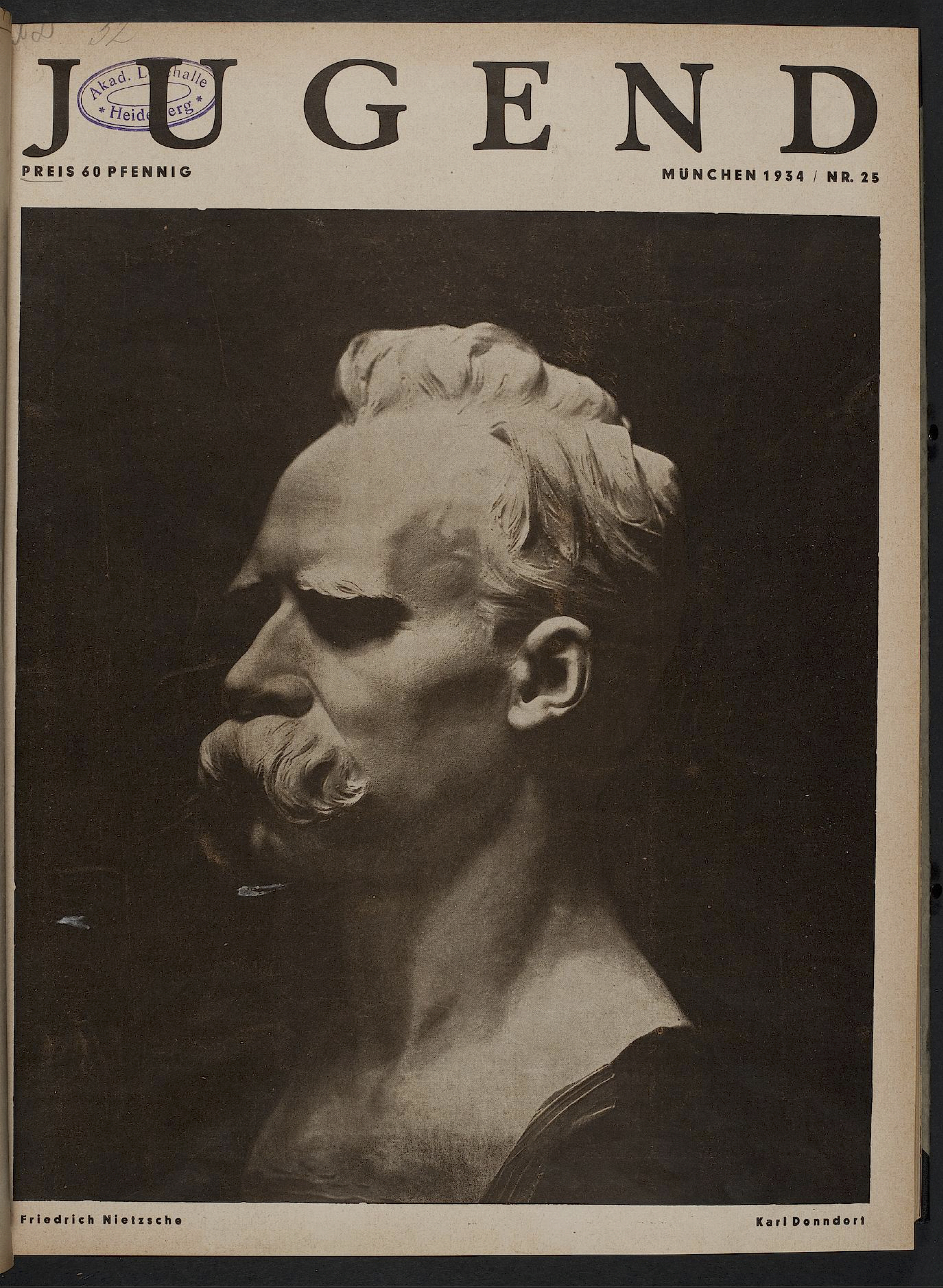
In 1933, however, the magazine was forced to comply with the kind of dour conservatism it had arisen explicitly to protest. Its wild covers and proudly original contents turned somber and neoclassical, as in the bust of Nietzsche on the cover above from 1934. Many of its artists disappeared or went into exile. But as we observe this transformation happening abruptly in the University of Heidelberg archive, we still see a magazine whose editorial staff held fast to notions of artistic quality, as they were forced to turn away from everything that had made Jugend exciting, cutting-edge, and worthy of its title.

via Messy Nessy Chic
Note: An earlier version of this post appeared on our site in 2017.
Related Content:
Extensive Archive of Avant-Garde & Modernist Magazines (1890–1939) Now Available Online
Josh Jones is a writer and musician based in Durham, NC.
Read More...The Ancient Greek Water Clock That Kept the Most Accurate Time for 1,800 Years
Today, we’re surrounded by technologies we could justifiably describe as time thieves. In ancient Greece, those who wanted to know where their time was going consulted a device they called a “water thief.” The roots of the clepsydra, or water clock, go back as far as the sixteenth century BC, with evidence of such devices found in modern-day Iraq, Iran, and Egypt, and more ambiguous evidence unearthed in places like India and China. The mechanism in the earliest examples takes not much more complex a form than a bowl out of which water slowly drips, albeit not at a regular pace. That natural impediment to hydraulic timekeeping wasn’t corrected until the third century BC, when a Greek inventor called Ctesibius set about making his own improvements.
Ctesibius’ automatic water clock used a vertical cylinder, rotating once yearly, marked with straight vertical lines representing the months of the year and curved horizontal lines representing the hours of the day. A pointer next to it indicated the current hour, its position changed by the water level of the cylinder in which it floated. That cylinder was filled through a feeding reservoir, itself constantly supplied with water.
The idea behind this arrangement was to keep the rate of flow steady, and thus the speed of the pointer constant. To empty the reservoir without the need for human intervention, Ctesibius incorporated a siphon that let water out every 24 hours, resetting the clock’s daily cycle. A water wheel attached to a simple system of gears kept the cylinder turning, so that its “display” could keep up with the ever-changing length of the daylight-based ancient Greek hour.
All this is explained with detailed visual aids in the animated Deconstructed video above. “In a world without electricity, digital logic, or even mechanical clocks,” says its narrator, “this ancient invention laid the foundation for automation and timekeeping as we know them today.” Indeed, Ctesibius’ clepsydra “kept better time than anything else on Earth for 1800 years,” until Christiaan Huygens invented the pendulum clock in 1656. There’s something in the swinging of such a mechanism that appeals to the innate human attraction to rhythm, and the metaphorical value of the grains of sand passing through an hourglass (an intermediary invention between Ctesibius and Huygens) remains strong even now. But it’s probably not a coincidence that the flow of time and the flow of water, at least from the human perspective, feel like two aspects of the same primal phenomenon.
Related Content:
How Medieval Islamic Engineering Brought Water to the Alhambra
How Clocks Changed Humanity Forever, Making Us Masters and Slaves of Time
Based in Seoul, Colin Marshall writes and broadcasts on cities, language, and culture. He’s the author of the newsletter Books on Cities as well as the books 한국 요약 금지 (No Summarizing Korea) and Korean Newtro. Follow him on the social network formerly known as Twitter at @colinmarshall.
Read More...Historian Timothy Snyder Teaches a Free Course on Hitler, Stalin & How “It” Can Happen Here
When the historian Timothy Snyder left Yale for the University of Toronto in 2024, he took with him the practice of occasionally putting his course lectures online, making them available to anyone who cares to learn from them. Above, you can watch ten lectures from his recent course Hitler and Stalin Today. In this course:
Snyder examines the Nazi and Soviet responses to the new globalized world they shared. The course begins with the colonial background that made totalitarianism possible, and which remains an essential element of our politics now. Their ideologies are described as worldviews and as practical politics, with an emphasis on the reasons for their appeal. Attention to their policies of mass killing, essential events of twentieth-century history, instruct us about how “it” can happen here. The study of dissident thought helps us to see connections between historical predicaments and our own, and instructs us about possible reactions as individuals and as citizens. The course asks what we have learned from the twentieth century and what lessons we should carry forward.
This course is for “anyone interested in understanding the relationship between history and contemporary democracy.” You can stream the lectures above, or watch them on YouTube.
Hitler and Stalin Today will be added to our collection, 1,700 Free Online Courses from Top Universities.
If you would like to support the mission of Open Culture, consider making a donation to our site. It’s hard to rely 100% on ads, and your contributions will help us continue providing the best free cultural and educational materials to learners everywhere. You can contribute through PayPal, Patreon, and Venmo (@openculture). Thanks!
Related Content
The Making of Modern Ukraine: A Free Online Course from Yale Professor Timothy Snyder
Actor John Lithgow Reads 20 Lessons on Tyranny, Penned by Historian Timothy Snyder
Read More...
Frank Lloyd Wright’s Secret Career as a Japanese Art Dealer & How It Shaped His Architecture
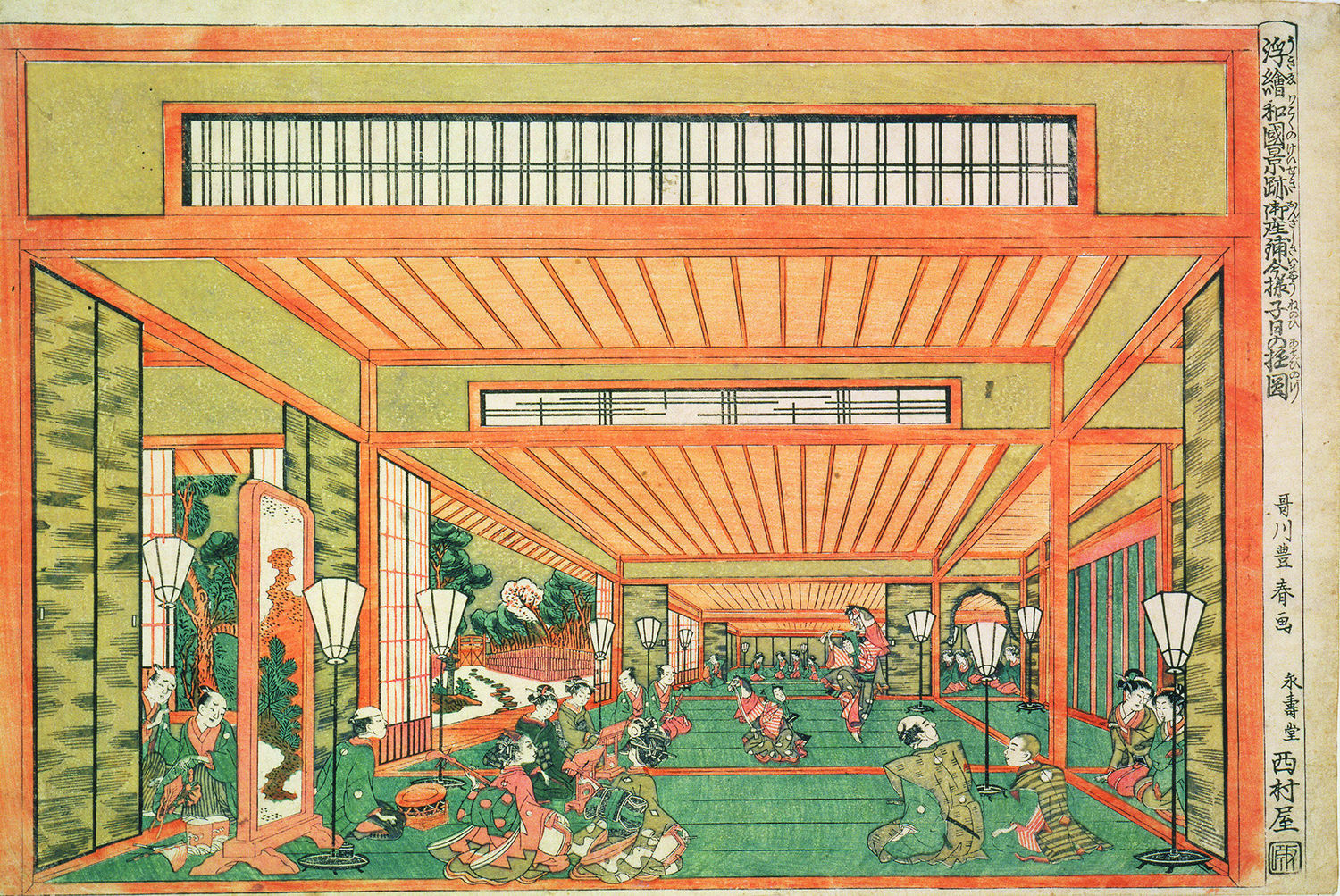
Frank Lloyd Wright was often strapped for cash. In that respect, he had something in common with Vincent van Gogh, who passed most of his much shorter life in more dire circumstances. Unlike Wright, who enjoyed decades of fame at the pinnacle of the American architectural profession, van Gogh remained practically unknown until after his death. But if they’ve encountered one another in the afterlife, they’ve certainly discussed one subject above all others: their shared appreciation for Japanese woodblock prints. Here on Open Culture, we’ve previously featured the collection of 500 such works of art that van Gogh left behind. At the end of Wright’s life in 1959, he owned about 6,000, many of which his estate had to sell to pay both Japanese art dealers and American tax collectors.
We could say that Wright died as he lived, advanced age having not evidently diminished either his financial recklessness or his obsession with ukiyo‑e. The masters of that classical “art of the floating world” like Hokusai and Hiroshige were among his favorite artists of any kind. When still a teenager, Wright went to work for the architect Joseph Silsbee, who’d built a chapel for his uncle.
“Silsbee’s cousin, Ernest Fenollosa, happened to be the world’s leading Western expert on Japanese art at the time,” writes Kevin Nute at The Conversation. It isn’t certain how well the young Wright knew Fenollosa — or indeed when he began collecting ukiyo‑e, writes Frank Lloyd Wright and the Art of Japan author Julia Meech-Pekarik, though he may have seen both Hokusai and Hiroshige’s works at the World’s Columbian Exposition in Chicago in 1893, “about the time he opened his practice in Oak Park.”
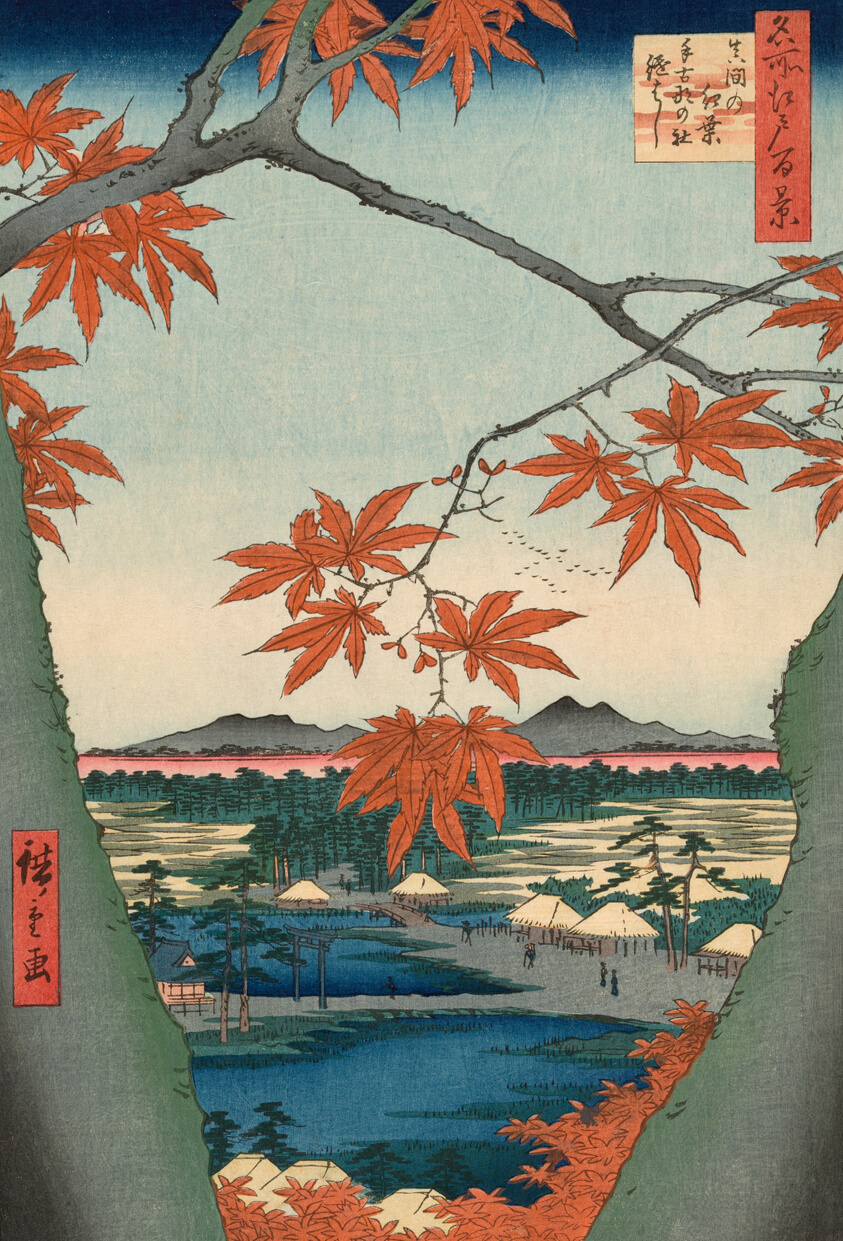
Eight years later, “Wright made his first voyage to Japan in pursuit of prints, and he did indeed return with enough expertise to stage an exhibition of his own Hiroshige collection at the Art Institute of Chicago in March of 1906.” He returned for two months in 1913, making it clear that he was only interested in using that time to acquire more prints. Later, while working on the Imperial Hotel between 1917 and 1922, he spent a total of more than three years there, later writing that “the pursuit of the Japanese print became my constant recreation while in Tokio,” a quest whose “adventures and excursions would take place at night or sometimes call for a journey by day to distant places.” This positioned him well to take on a sideline as a dealer (or as he liked to call himself, a merchant) of Japanese art in a United States only just becoming aware of its beauty — an especially advantageous condition in architecturally lean years.
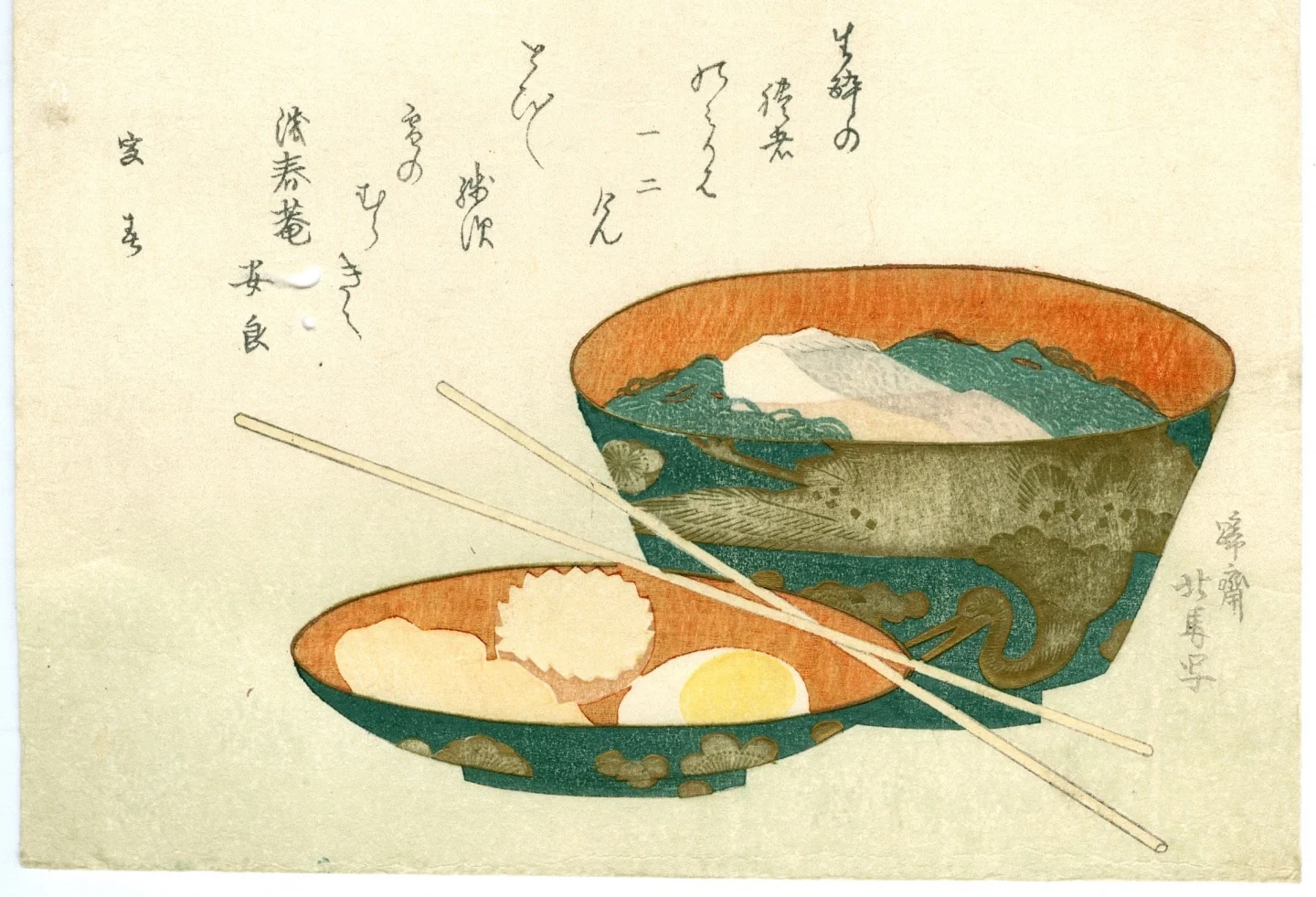
Wright valued ukiyo‑e, about which he published a book in 1912, for its sense of order, structure, nature, and simplicity. “Five lines where three are enough is stupidity,” he wrote. “Nine pounds where three are sufficient is stupidity. But to eliminate expressive words that intensify or vivify meaning in speaking or writing is not simplicity.” In his own form, he understood full well that “expressive changes of surface, emphasis of line, and especially textures of material, may go to make facts eloquent — forms more significant.” But it was Hokusai, Hiroshige, and countless other commercial artists of that earlier time and distant land that changed his approach to building in the first place. “When I saw the print and I saw the elimination of the insignificant and simplicity of vision, together with the sense of rhythm and the importance of design, I began to see nature in a totally different way.” And thus, thanks to Japanese art, did that most American of all architects begin taking shape.
Related content:
The Evolution of Hokusai’s Great Wave: A Study of 113 Known Copies of the Iconic Woodblock Print
How Frank Lloyd Wright Became Frank Lloyd Wright: A Video Introduction
Enter a Digital Archive of 213,000+ Beautiful Japanese Woodblock Prints
Based in Seoul, Colin Marshall writes and broadcasts on cities, language, and culture. He’s the author of the newsletter Books on Cities as well as the books 한국 요약 금지 (No Summarizing Korea) and Korean Newtro. Follow him on the social network formerly known as Twitter at @colinmarshall.
Read More...How the Japanese Practice of “Forest Bathing”—Or Just Hanging Out in the Woods—Can Lower Stress Levels and Fight Disease
When the U.S. media began reporting on the phenomenon of “forest bathing” as a therapy for mental and physical health, the online commentariat—as it will—mocked the concept relentlessly as yet another pretentious, bourgeois repackaging of something thoroughly mundane. Didn’t we just used to call it “going outside”?
Well, yes, if all “forest bathing” means is “going outside,” then it does sound like a grandiose and unnecessary phrase. The term, however, is not an American marketing invention but a translation of the Japanese shinrin-yoku. “Coined by the Japanese Ministry of Agriculture, Forestry and Fisheries in 1982,” writes Meeri Kim at The Washington Post, “the word literally translates to ‘taking in the forest atmosphere’ or ‘forest bathing’ and refers to the process of soaking up the sights, smells and sounds of a natural setting to promote physiological and psychological health.”
So what? We already have the examples of thousands of years of Buddhist monks (and Thich Nhat Hanh), of Henry David Thoreau, and the saints of the Sierra Club. But the oldest and most useful ideas and practices can get carelessly discarded in the frantic pursuit of innovation at all costs. The pushing of hi-tech outdoor gear, wearable activity trackers, and health apps that ask us to log every movement can make going outside feel like a daunting, expensive chore or a competitive event.
Forest bathing involves none of those things. “Just be with the trees,” as Ephrat Livni describes the practice, “no hiking, no counting steps on a Fitbit. You can sit or meander, but the point is to relax rather than accomplish anything.” You don’t have to hug the trees if you don’t want to, but at least sit under one for a spell. Even if you don’t attain enlightenment, you very well may reduce stress and boost immune function, according to several Japanese studies conducted between 2004 and 2012.
The Japanese government spent around four million dollars on studies conducted with hundreds of people “bathing” on 48 designated therapy trails. In his work, Qing Li, associate professor at Nippon Medical School in Tokyo, found “significant increases in NK [natural killer] cell activity in the week after a forest visit… positive effects lasted a month following each weekend in the woods.” Natural killer cells fight viruses and cancers, and are apparently stimulated by the oils that trees themselves secrete to ward off germs and pests. See the professor explain in the video above (he translates shinrin-yoku as taking a “forest shower,” and also claims to have bottled some of the effects).
Additionally, experiments conducted by Japan’s Chiba University found that forest bathing lowered heart rate and blood pressure and brought down levels of cortisol, the stress hormone that can wreak havoc on every system when large amounts circulate through the body. Then there are the less tangible psychological benefits of taking in the trees. Subjects in one study “showed significantly reduced hostility and depression scores” after a walk in the woods. These findings underscore that spending time in the forest is a medical intervention as well as an aesthetic and spiritual one, something scientists have long observed but haven’t been able to quantify.
In their review of a book called Your Brain on Nature, Mother Earth News quotes Franklin Hough, first chief of the U.S. Division of Forestry, who remarked in a 19th century medical journal that forests have “a cheerful and tranquilizing influence which they exert upon the mind, more especially when worn down by mental labor.” Hough’s hypothesis has been confirmed, and despite what might sound to English speakers like a slightly ridiculous name, forest bathing is serious therapy, especially for the ever-increasing number of urbanites and those who spend their days in strip malls, office complexes, and other overbuilt environments.
What is a guided forest bathing experience like? You can listen to NPR’s Alison Aubrey describe one above. She quotes Amos Clifford, founder of the Association of Nature & Forest Therapy, the certifying organization, as saying that a guide “helps you be here, not there,” sort of like a meditation instructor. Clifford has been pushing health care providers to “incorporate forest therapy as a stress-reduction strategy” in the U.S., and there’s no question that more stress reduction tools are sorely needed.
But, you may wonder, do you have to call it “forest bathing,” or pay for a certified guide, join a group, and buy some fancy outerwear to get the benefits of hanging out with trees? I say, consider the words of John Muir, the indefatigable 19th century naturalist, “father of the National Park System,” and founding saint of the Sierra Club: In the eternal youth of Nature you may renew your own. Go quietly, alone; no harm will befall you. The quote may underestimate the amount of risk or overstate the benefits, but you get the idea. Muir was not one to get tangled up in semantics or overly detailed analysis. Nonetheless, his work inspired Americans to step in and preserve so much of the country’s forest in the 19th and 20th centuries. Maybe the preventative medicine of “forest bathing” can help do the same in the 21st.
Note: An earlier version of this post appeared on our site in 2017.
Related Content:
Josh Jones is a writer and musician based in Durham, NC.
Read More...Bertrand Russell Explains Why Karl Marx’s Philosophy Produced the Disaster of Communism
In 1927, Bertrand Russell delivered a lecture titled “Why I Am Not a Christian.” At the time, such a declaration was still fairly bold, as was the reasoning he provided for it. Nearly three decades thereafter, he included in his collection Portraits from Memory another, shorter piece, “Why I Am Not a Communist.” That description was safe to apply to oneself in 1954, at least in the mainstream of the English-speaking world. It would have been riskier for those who moved in intellectual circles, as a celebrated philosopher like Russell most certainly did. What’s more, his criticism extended not just to communism as then instantiated by certain societies in the world, but to the thought of Karl Marx himself.
Russell makes two charges against Marx: “one, that he was muddle-headed; and the other, that his thinking was almost entirely inspired by hatred.” In his view, the author of Capital commits intellectual fraud by opportunistically accepting Thomas Malthus’ dire prediction of population growth (while rejecting it at other times), as well as applying David Ricardo’s theory of value, which describes it as a kind of embodied labor, to wages but not the prices of manufactured goods.
“He is entirely satisfied with the result, not because it is in accordance with the facts or because it is logically coherent, but because it is calculated to rouse fury in wage-earners.” Marx sees their uprising against capitalists as inevitable due to his “extension to world history of certain features prominent in England and France a hundred years ago” and belief in “a cosmic force called Dialectical Materialism which governs human history independently of human volitions.”
This dismissal of Marx’s worldview as “mere mythology” has something in common with Russell’s critique of Christianity, and not coincidentally so. “I think one of the troubles of the world has been the habit of dogmatically believing something or other,” he says in the clip above. “I think we ought always to entertain our opinions with some measure of doubt.” And “if a philosophy is to bring happiness, it should be inspired by kindly feeling. Now, Marx is not inspired by kindly feeling. Marx pretended that he wanted the happiness of the proletariat, but he really wanted is the unhappiness of the bourgeois. And it was because of that negative element, because of that hate element that his philosophy produced disaster.” There are, perhaps, arguments to be made that communism, as practiced in, for example, the Soviet Union, took the form it did precisely because it departed from Marxist lines. Whether that was better or worse than the alternative is a matter no philosopher can settle.
The clip above comes from the 1952 TV episode A Conversation with Bertrand Russell. Watch it in full here.
Related content:
A Short Animated Introduction to Karl Marx
Bertrand Russell’s 10 Commandments for Living in a Healthy Democracy
How to Spot a Communist by Using Literary Criticism: A 1955 Manual from the U.S. Military
Karl Marx & the Flaws of Capitalism: Lex Fridman Talks with Professor Richard Wolff
A Free Course on Karl Marx’s Capital, Volume 1 from Yale University
Based in Seoul, Colin Marshall writes and broadcasts on cities, language, and culture. He’s the author of the newsletter Books on Cities as well as the books 한국 요약 금지 (No Summarizing Korea) and Korean Newtro. Follow him on the social network formerly known as Twitter at @colinmarshall.
Read More...Meet Lloyd Kahn, the Counterculture Publisher Who Is Skateboarding at 91
Lloyd Kahn worked as an insurance broker before quitting in 1965. Then, he took a turn into the DIY building movement that emerged with the 1960s counterculture. Soon enough, he found himself editing the influential Whole Earth Catalog and publishing Shelter in 1973, a book still considered the bible of hand-built homes. Now 91 years old, Lloyd remains active in publishing. He also continues to run, paddleboard, and skateboard, a sport he took up when he turned 65. How many people can say that?
In the video above, Sierra Clark takes you inside Lloyd’s world, giving you a snapshot of his unconventional life. With a great touch, she highlights the habits and philosophy that have allowed him to live and age in a remarkable way. Staying curious and adventurous, trying new things, keeping in motion, eating well, making life and exercise fun—they’re all part of the mix for Lloyd. For Kahn, “Stay hungry, stay foolish” (the saying that appeared on the back of the last Whole Earth Catalog) isn’t just a motto. It has been a true way of life.
For more videos focusing on longevity and health, visit Sierra Clark’s YouTube channel here.
Related Content
Simone de Beauvoir’s Philosophy on Finding Meaning in Old Age
Life Lessons From 100-Year-Olds: Timeless Advice in a Short Film
97-Year-Old Philosopher Ponders the Meaning of Life: “What Is the Point of It All?”
Read More...
Why Inventing Color TV Was So Difficult
Many who read this will remember watching television on a black-and-white set at some point in their lives. Fewer will remember doing so because only black-and-white sets existed. Of course, your own experience will depend upon your country of origin. The United States began the transition to color television in 1953, and more than half of its population owned color sets less than twenty years thereafter. France’s stations started to change over in 1967, and the last one did so in 1983. South Korea, where I live, started its own regular color broadcasts in 1980, though at that point, those from the American Forces Network, Japan, and even North Korea could already be tuned in for years.
Today we all take color TV for granted, but as the Primal Space video above explains, its invention was no simple matter. Still, it occurred much earlier than most of us would imagine. In 1925, Scottish inventor John Logie Baird came up with the first television, which involved passing light through holes in a spinning disc onto a photoelectric cell for transmission through cables or radio waves. This system could only register the brightness of the light, producing a black-and-white image. But the mechanism itself suggested a means of introducing color: enlarge the disc, add separate sets of holes for red, green, and blue, and reproduce a frame of each in quick, cyclical succession at the other end, taking advantage of the human eye’s tendency to collapse them into a single image.
Baird first demonstrated his color television system in 1928. Though impressive, it also looked unlikely to perform at a scale that could produce a sharp, smooth moving picture. Other engineers saw more televisual promise in the technology of the cathode ray tube, or CRT, which Japanese inventor Kenjiro Takayanagi had already harnessed for his own black-and-white mechanical television in the year before. The key component was the iconoscope invented by Vladimir Zworykin in 1933. “Essentially the world’s first video camera,” it employed an internal electron gun to “scan” a captured image into a transmissible electrical signal. Still, the question remained: how to do it in color?
Enter the Radio Corporation of America, whose abbreviated name more than a few of us will remember from our childhood TV sets. Having developed a video camera “that took the incoming light and filtered it through special prisms to separate the red, green, and blue,” converting each into its own signal, RCA then faced the problem of delivering the result to viewers at home. None of the more than five million black-and-white sets already extant in the U.S. could receive those three signals at all. The solution involved using one electron gun per color, each of whose signals would be encoded so as to be hidden in the existing black-and-white television signal and then decoded by color sets. Consumers may not have taken up the technology all at once, but those who did in time for The Wizard of Oz’s first broadcast in 1956 surely understood that color TV had a future.
Related Content:
Watch a Television Station Switch From Black & White to Color for First Time (1967)
Discover the Lost Early Computer Art of Telidon, Canada’s TV Proto-Internet from the 1970s
Based in Seoul, Colin Marshall writes and broadcasts on cities, language, and culture. He’s the author of the newsletter Books on Cities as well as the books 한국 요약 금지 (No Summarizing Korea) and Korean Newtro. Follow him on the social network formerly known as Twitter at @colinmarshall.
Read More...How Leonardo da Vinci’s Procrastination Contributed to His Creativity
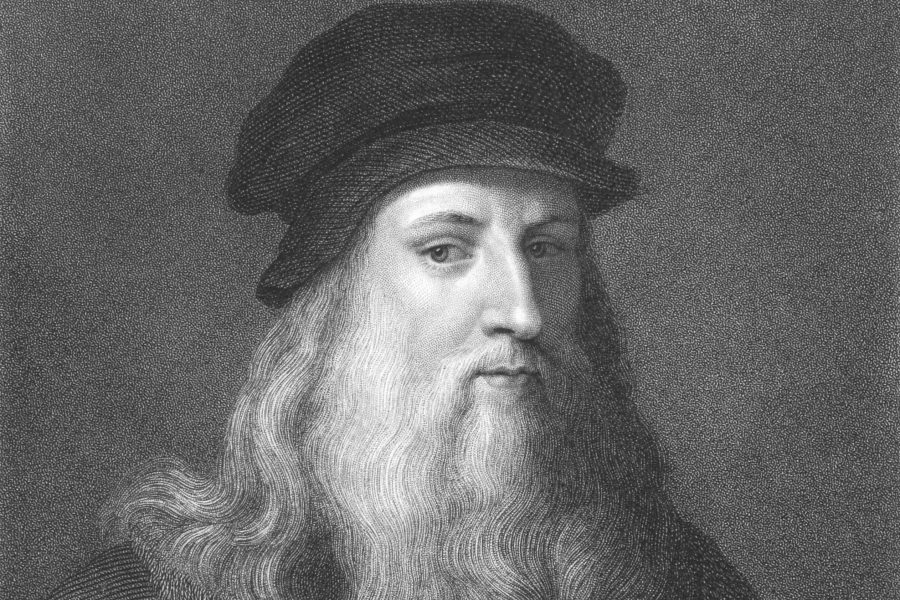
At the height of their productivity as Beatles, neither Paul McCartney nor John Lennon could read or write music notation. Clearly it didn’t keep them from making a cultural impact, and as with so much else in life, they regarded it humorously. As McCartney has said, they used to liken themselves to ancient Egyptian pharaohs, who relied on scribes rather than being literate themselves. It’s worth considering whether, all things considered, this inability was really a deficiency: not being rigorously schooled in the traditions and conventions of music could have given them just the freedom they needed to create fresh songs. And if you’ve struggled with procrastination, have you considered likening yourself to Leonardo da Vinci?
“Leonardo’s difficulties with sticking to tasks were pervasive from childhood,” says a ScienceDaily summary of a 2019 paper by clinical neuroscientist Marco Catani. “Accounts from biographers and contemporaries show Leonardo was constantly on the go, often jumping from task to task.” Regarding his life at a distance of half a millennium, we may consider Leonardo not just a genius but a highly productive one, with a body of work including numerous inventions built and unbuilt as well as paintings like Lady with an Ermine, The Last Supper, and the Mona Lisa — which nearly joined the man’s pile of abandoned projects. As Nicolas Cole writes at Inc., scholarship suggests that Leonardo “painted the Mona Lisa on and off for a few years starting in 1503, left it unfinished, and didn’t complete it until close to his death in 1519.”
“While painting The Last Supper, Leonardo would sometimes stare at the work for an hour, finally make one small stroke, and then leave,” writes Walter Isaacson in his biography Leonardo da Vinci. His explanation: “Men of lofty genius sometimes accomplish the most when they work least, for their minds are occupied with their ideas and the perfection of their conceptions, to which they afterwards give form.” When the non-Renaissance men of the world say things like that, it comes off as self-aggrandizing excuse-making. Many, perhaps most of us have spent so much time telling ourselves we’re preparing for a task that it just became another means of procrastination. But “procrastinating like Leonardo requires work: it involves gathering all the possible facts and ideas, and only after that allowing the collection to simmer,” notes Isaacson.
Not that the patrons frustrated by Leonardo’s failures to deliver could always keep that in mind. After he worked at the Vatican for three years, Pope Leo X dismissed him with the judgment that he would never accomplish anything, “for he begins by thinking of the end of the work, before the beginning.” Even Leonardo himself made a deathbed apology “to God and Man for leaving so much undone.” Having examined the nature of both Leonardo’s challenges and his brilliance, Catani comes to the conclusion that he exhibited traits consistent with a condition only given a name well within living memory, Attention Deficit Hyperactivity Disorder (ADHD). When we find ourselves compulsively fleeing from the incomplete work at hand, we’d do well to bear in mind not just Leonardo’s example, but also the words of aphorist Aaron Haspel: “We all suffer from a cluster of psychological disorders; it used to be known as personality.”
Related content:
The Neuroscience & Psychology of Procrastination, and How to Overcome It
The Art of Structured Procrastination
Miranda July Teaches You How to Avoid Procrastination
Leonardo da Vinci’s To-Do List from 1490: The Plan of a Renaissance Man
Medieval Monks Complained About Constant Distractions: Learn How They Worked to Overcome Them
Based in Seoul, Colin Marshall writes and broadcasts on cities, language, and culture. He’s the author of the newsletter Books on Cities as well as the books 한국 요약 금지 (No Summarizing Korea) and Korean Newtro. Follow him on the social network formerly known as Twitter at @colinmarshall.
Read More...Support Us
We're hoping to rely on loyal readers, rather than erratic ads. Please click the Donate button and support Open Culture. You can use Paypal, Venmo, Patreon, even Crypto! We thank you!

About Us

Open Culture scours the web for the best educational media. We find the free courses and audio books you need, the language lessons & educational videos you want, and plenty of enlightenment in between.
Advertise With Us

FREE UPDATES!
GET OUR DAILY EMAIL
Get the best cultural and educational resources on the web curated for you in a daily email. We never spam. Unsubscribe at any time.
FOLLOW ON SOCIAL MEDIA

Open Culture editor Dan Colman scours the web for the best educational media. He finds the free courses and audio books you need, the language lessons & movies you want, and plenty of enlightenment in between.
Advertise With Us

