A Celebration of Typewriters in Film & Television: A Supercut
There are a number of ways to come at video essayist Ariel Avissar’s two-minute supercut of typewriters in action on film and television.
Cinema buffs will itch to connect The Typewriter’s clips to titles. Here are some of the ones we were able to identify:
Mad Men
And then there are the typewriter enthusiasts, more concerned with make and model than anything relating to cinema:
Royal
Underwood
Olympia
Clark Nova
Smith Corona
IBM Selectric
Given the obsessive nature of both camps, it’s not surprising that there would be some crossover.
Here’s a delightfully nerdy investigation of the onscreen typewriters in Naked Lunch, David Cronenberg’s adaptation of William S. Burrough’s novel.
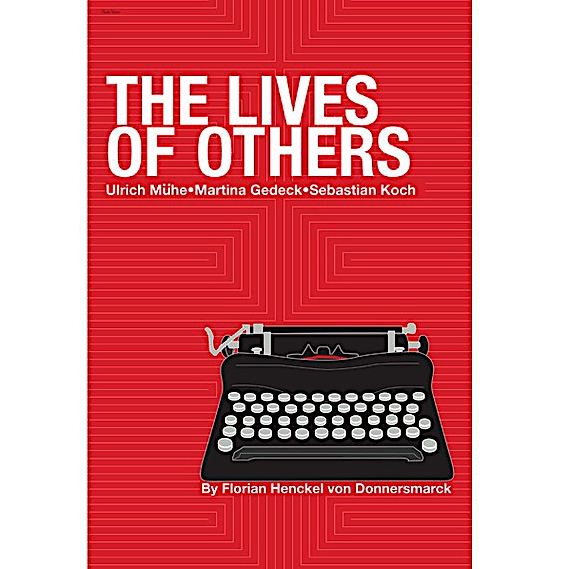
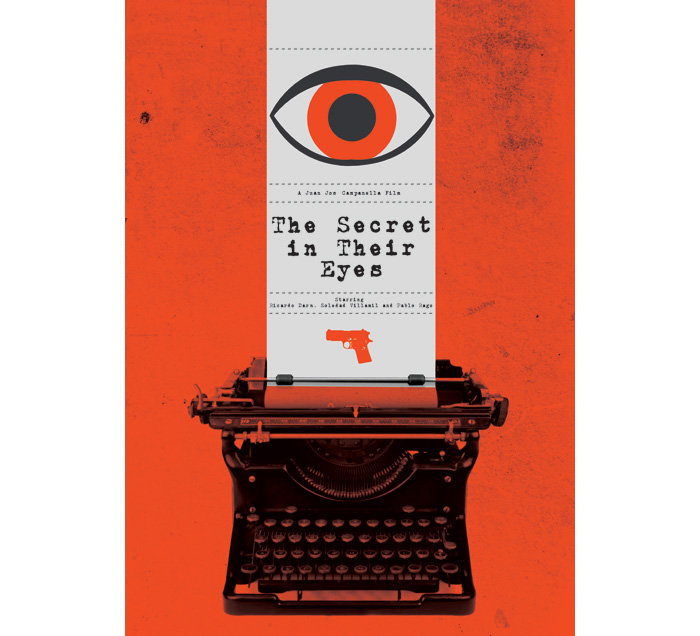
This collector’s top 10 list gives extra consideration to scripts that “place typewriters at the heart of the story.” First and second place feature typewriters on their posters.
An IBM Selectric III in Avissar’s supercut caused one viewer to reminisce about the anachronistic use of Selectric IIs in Mad Men’s first season secretarial pool. Creator Matthew Weiner admits the choice was deliberate. The first Selectric model is period appropriate, but much more difficult to find and challenging to maintain, plus their manual carriage returns would have created a headache for sound editors.
Avissar’s round up also serves to remind us of a particularly modern problem—the ongoing quest to portray texts and social media messages effectively on big and small screens. This dilemma didn’t exist back when typewriters were the primary text-based devices. A close up of whatever page was rolled onto the platen got the job done with a minimum of fuss.
Two of the most celebrated typewriter sequences in film history did not make the cut, possibly because neither features actual working typewriters: the NSFW anthropomorphic typewriter-bug in David Cronenberg’s adaptation of William S. Burrough’s Naked Lunch and Jerry Lewis’ inspired pantomime in Who’s Minding the Store, performed, like Avissar’s supercut, to the tune of composer Leroy Anderson’s The Typewriter.
Up for another challenge? Which top Hollywood star is “obsessed with typewriters”?
Watch more of Ariel Avissar’s supercuts, including a supermoon tribute and The Silence of the Lambs’ “clever, careful fingers” on his Vimeo channel.
Related Content:
Ayun Halliday is an author, illustrator, theater maker and Chief Primatologist of the East Village Inky zine. Follow her @AyunHalliday.
Read More...Saturday Night Live’s Very First Sketch: Watch John Belushi Launch SNL in October, 1975
How do you kick off the longest running live sketch comedy show in television history? If you’re in the cast and crew for the first episode of Saturday Night Live, you have no idea you’re doing anything of the kind. Still the pressure’s on, and the newly hired “Not Ready for Primetime Players” had a lot of competition on their own show that night. When Saturday Night, the original title for SNL, made its debut on October 11, 1975, doing live comedy on television was an extremely risky proposition.
So, what do you do if you’re producers Dick Ebersol and Lorne Michaels? Put your riskiest foot forward — John Belushi, the “first rock & roll star of comedy” writes Rolling Stone, and “the ‘live’ in Saturday Night Live.” The man who would be comedy’s king, for a time, before he left the stage too soon. His first sketch, and the first on-air for SNL, reveals “a tendency toward the timelessly peculiar,” Time magazine writes, that made the show an instant cult hit.
Rather than skewering topical issues or impersonating celebrities, the first sketch, “The Wolverines” goes after the ripe targets of an immigrant (Belushi) learning English and his teacher, played by head writer Michael O’Donoghue, who insists on making Belushi repeat the titular word in nonsensical phrases like “I would like to feed your fingertips to the wolverines.”
Belushi’s accent has shades of Andy Kaufman’s “foreign man” from Caspiar, and he gets a brief moment to display his physical comedy skills when he keels over in imitation of his teacher having a heart attack. “The Wolverines” is short, nonsensical, and weirdly sweet. “No one would know what kind of show this was from seeing that,” Michaels remembered. We can still look back at that wildly uneven first season and wonder what kind of show SNL would be now if it had held on to the anarchic spirit of the early years. But that’s a lot to ask of a 45-year-old live comedy show.
The night’s guest was George Carlin, who did not appear in any sketches, but who did get three separate monologues. The show also featured two musical guests, Billy Preston and Janis Ian. Andy Kaufman made an appearance doing his famous Mighty Mouse bit, and the Muppets were there (not the fun Muppets, but a “dark and grumpy version” Jim Henson disowned after the first season.)
The first episode was also the first to feature the iconic intro, “Live from New York, it’s Saturday Night!” — delivered by Chevy Chase. Though it has become a celebratory announcement, at the time “it’s Saturday Night!” was a dark reminder of the live comedy variety show, Saturday Night Live with Howard Cosell, then failing through its first and only season before its 18-episode run came to an end the following year.
See more from that weird first night above, including Carlin’s Football and Baseball monologue and the forgotten SNL Muppets, just above.
Related Content:
Classic Punk Rock Sketches from Saturday Night Live, Courtesy of Fred Armisen
Josh Jones is a writer and musician based in Durham, NC. Follow him at @jdmagness
Read More...The Iconic Dance Scene from Hellzapoppin’ Presented in Living Color with Artificial Intelligence (1941)
After Charles Lindbergh “hopped” the Atlantic in 1927, his history-making solo flight set off a craze for all things “Lindy.” Of the countless songs, foods, products, and trends created or named in honor of the famous onetime U.S. Air Mail pilot, only one remains recognizable these more than 90 years later: the Lindy Hop. Developed on the streets and in the clubs of Harlem, the dance proved explosively popular, though it took Hollywood a few years to capitalize on it. In the late 1930s, the musical Hellzapoppin’ brought the Lindy Hop to Broadway, and in 1941, Universal Pictures turned that stage show into a major motion picture directed by H.C. Potter (now best known for Mr. Blandings Builds His Dream House).
An often surreal, fourth-wall-breaking affair, Hellzapoppin’ is remembered mainly for the five-minute Lindy Hop musical number that comes about halfway through the film. It features a dance troupe called the Harlem Congaroos, played by the real-life Whitey’s Lindy Hoppers, a group of professional swing dancers founded at Harlem’s Savoy Ballroom, the origin point of the Lindy Hop as we know it today.
Its appearing members include Frankie Manning, whose name had become synonymous with the Lindy Hop in the 1930s, and Norma Miller, who as a twelve-year-old girl famously did the dance outside the Savoy for tips. Hellzapoppin’ preserves their athleticism and vitality for all time — with a hot jazz soundtrack to boot.
Like most Hollywood musicals of the early 1940s, Hellzapoppin’ was shot in black-and-white, and cinephiles will maintain that it’s best seen that way. But just as the technology powering long-haul flights has developed greatly since the days of Charles Lindbergh, so has the technology of film colorization. Take DeOldify, the “open-source, Deep Learning based project to colorize and restore old images and film footage” that “uses AI neural networks trained with thousands of reference pictures” – and that was used to produce the version of Hellzapoppin’s Lindy Hop number seen at the top of the post. It all looks much more convincing than when Ted Turner attempted to colorize Citizen Kane, but in lovers of dance, whatever sense of realism DeOldify contributes will mainly inspire a deeper longing to experience the culture of Harlem as it really was in the 1920s.
Related Content:
Based in Seoul, Colin Marshall writes and broadcasts on cities, language, and culture. His projects include the Substack newsletter Books on Cities, the book The Stateless City: a Walk through 21st-Century Los Angeles and the video series The City in Cinema. Follow him on Twitter at @colinmarshall or on Facebook.
Read More...Compare the Original Trailers of Classic Films with Their Modern Updates: Casablanca, Dog Day Afternoon & The Exorcist
You must remember this, a kiss is just a kiss and audiences’ taste in film trailers evolves, just like movies do.
HBO Max is capitalizing on these shifts by releasing a series of Modern Trailers for some of the classic (and not so classic… looking at you, Gremlins) films streaming on its platform.
Take the recut trailer for 1944’s Oscar winning Best Picture, Casablanca, above.
Rather than using a narrator to deliver exposition, it’s supplied by dialogue, superimposed over moody shots of Humphrey Bogart’s Rick, smoking, leveling a pistol, and surveying his bar. We’re given just enough of it to pique our interest.
When Ingrid Bergman makes her first entrance, halfway through, the composer pulls out the Pavlovian stops.
At seventy-five, Casablanca is such a part of the canon, even those who haven’t seen it can savor the modern trailer’s banquet of timeless lines, with the most celebrated saved for dessert.
By contrast, the original theatrical trailer took a maximalist approach, employing an urgent male narrator, hyperbolic title cards, and exotic travelogue. There’s heavy emphasis on danger, romance, and the presence of big name stars. The music is as thunderous as the sales pitch.
As Katie Kilkenny notes in a 2014 essay on movie trailer fatigue for The Atlantic:
In the 1940s and ’50s, previews tried to persuade the viewer of the movie’s superlative qualities with caps-locked placards and narration (“A mad adventure fraught with bold intrigue!” “The most exciting movie ever screened!” “The most memorable event in the annals of the motion pictures!”).
Now images and music do the heavy lifting. In an interview with Wired, Danish filmmaker and trailer guru Nicolas Winding Refn explains:
Directors talk about how it’s all about casting for them—when they get the right actors, their jobs are easier. For us, that’s true of music. Sometimes 70, 80 percent of the job can be trying to find that perfect piece. Trailers are all about rhythm, pacing, and feeling… I’ll watch the whole movie without sound, just looking for visuals—that little head turn, that glimpse, that spark of something. Then I’ll watch the movie just for dialog. I can get down to about 10 to 15 minutes and from there start crafting and making connections.
If you had zero pre-existing knowledge of Dog Day Afternoon and the more recognizable members of its cast — Al Pacino, the late Charles Durning, and the incomparable John Cazale, HBO Max’s trailer might fool you into thinking it’s a new release from a director who worshipped at the altar of the great, gritty NYC films of the 70s as an alternative to film school. They certainly got the period details right!
The original theatrical trailer from 1975 featured an info-heavy voiceover, choppier editing, and a lot more screen time for Judith Malina, co-founder of the Living Theater, as Pacino’s mother.
The modern trailer for The Exorcist, widely considered one of the scariest movies of all time, embraces a 21st-century promotional trope of horror films in which children play a central role: lean into the innocence before unleashing the hounds.
Extra points for black and purple text cards in Friz Quadrata font, and an extremely zing‑y button.
The disturbing original theatrical trailer by editor Bud Smith, below, was banned upon its release. Whether this is because its black-and-white flashes of a young Linda Blair and the demonic Pazuzu induced seizures, or because the studio was spooked by its arty sensibilities is up for debate.
Director William Friedkin, who called it “the best trailer ever made about The Exorcist,” reckons it was the latter.
***Photosensitive Epilepsy Warning*** (no joke.)
Smith’s disturbing vision was quickly replaced by the more conventional trailer, below. It gave away more shocks, but lacks the ability to burrow into your dreams, causing you to recheck the locks and go to bed with all the lights on.
Readers, do you have an all-time favorite movie trailer? Let us know in the comments.
Watch a playlist of HBO Max’s Modern Trailers here.
Related Content:
Watch 25 Alfred Hitchcock Trailers, Exciting Films in Their Own Right
Watch the 7 Hour Trailer for the 720 Hour Film, Ambiancé, the Longest Movie in History
Ayun Halliday is an author, illustrator, theater maker and Chief Primatologist of the East Village Inky zine. She most recently appeared as a French Canadian bear who travels to New York City in search of food and meaning in Greg Kotis’ short film, L’Ourse. Follow her @AyunHalliday.
Read More...The New Enlightenment and the Fight to Free Knowledge: Part 1
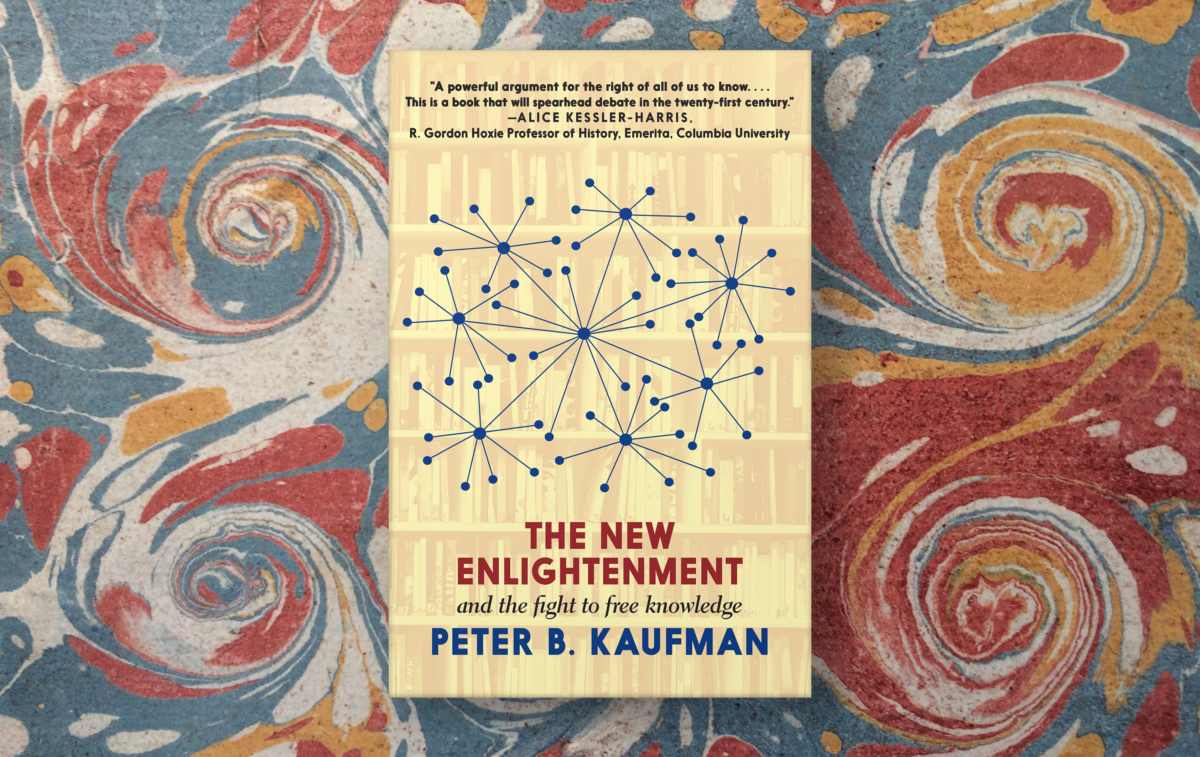
Editor’s Note: This month, MIT Open Learning’s Peter B. Kaufman has published The New Enlightenment and the Fight to Free Knowledge, a book that takes a historical look at the powerful forces that have purposely crippled our efforts to share knowledge widely and freely. His new work also maps out what we can do about it. In the coming days, Peter will be making his book available through Open Culture by publishing three short essays along with links to corresponding sections of his book. Today, you can find his short essay “The Monsterverse” below, and meanwhile read/download the first chapter of his book here. You can purchase the entire book online.
The Monsterverse – what exactly is it? Like Sauron and his minions from Mordor in The Lord of the Rings, like Sheev Palpatine and the armies of the Galactic empire from Star Wars, like Lord Voldemort and his henchmen the Death Eaters in Harry Potter, it’s the collective force of evil, one that strives to shut down human progress, freedom, justice, the spread of knowledge –the dissemination of (let us just say it) open culture. It’s the subject of the first chapter of my book, The New Enlightenment and the Fight to Free Knowledge – and its incarnations have been with us for thousands of years.
In 1536, which is when the book begins, it found its embodiment in Jacobus Latomus, who oversaw the trial and execution – by strangling and burning at the stake – of a translator and a priest named William Tyndale. Latomus, who himself was overseen by Thomas More, who himself was overseen by Henry VIII (with Pope Clement VII in a supporting role), choreographed Tyndale’s formal degradation, such that a couple dozen apostolic inquisitors and theologians, university rectors and faculty, lawyers and privy councilors – “heresy-hunters,” as his biographer calls them – led him out of his prison cell in public and in his priestly raiment to a high platform outdoors where oils of anointment were scraped symbolically from his hands, the bread and wine of the Eucharist situated next to him and then just as quickly removed, and then his vestments “ceremonially stripped away,” so that he would find himself, and all would see him as, no longer a priest. Death came next. This scholar and polymath to whom, it is now known, we owe as much as we owe William Shakespeare for our language, this lone man sought and slain by church and king and holy Roman emperor – his initial strangling did not go well, so that when he was subsequently lit on fire, and the flames first lapped at his feet and up his legs, lashed tight to the stake, he came to, and, while burning alive in front of the crowd of religious leaders and so-called justices (some seventeen trial commissioners) who had so summarily sent Tyndale to his death and gathered to watch it, live, he cried out, less to the crowd, it would seem, than to Another: “Lord! Lord! Open the King of England’s eyes!”
What did Tyndale do? He believed that the structure of communication during his time was broken and unfair, and with a core, unwavering focus, he sought to make it so that the main body of knowledge in his day could be accessed and then shared again by every man alive. He engaged in an unparalleled act of coding (not for nothing do we speak of computer programming “languages”), working through the Latin, Greek, Hebrew, and Aramaic of the Bible’s Old, then New, Testaments to bring all of its good books – from Genesis 1 to Revelation 22—into English for everyday readers. He is reported to have said, in response to a question from a priest who had challenged his work, a priest who read the Bible only in Latin: “I will cause a boy that driveth the plough shall know more of the Scripture than thou dost.” And he worked with the distribution technologies of his time – the YouTubes, websites, and Twitters back then – by connecting personally with book designers, paper suppliers, printers, boat captains, and horsemen across sixteenth-century Europe to bring the knowledge and the book that contained it into the hands of the people.
It wasn’t easy. In Tyndale’s time, popes and kings had decreed, out of concern for keeping their power, that the Bible could exist and be read and distributed “only in the assembly of Latin translations” that had been completed by the monk Saint Jerome in approximately 400 CE. The penalties for challenging the law were among the most severe imaginable, for such violations represented a panoply of civil transgressions and an entire complexity of heresies. In taking on the church and the king – in his effort simply and solely to translate and then distribute the Bible in English – Tyndale confronted “the greatest power[s] in the Western world.” As he “was translating and printing his New Testament in Worms,” his leading biographer reminds us, “a young man in Norwich was burned alive for the crime of owning a piece of paper on which was written the Lord’s Prayer in English.” The Bible had been inaccessible in Latin for a thousand years, this biographer writes, and “to translate it for the people became heresy, punishable by a solitary lingering death as a heretic; or, as had happened to the Cathars in southern France, or the Hussites in Bohemia and Lollards in England, official and bloody attempts to exterminate the species.”
Yuckadoo, the Monsterverse, but very much still with us. The strangleholds are real. And Tyndale’s successors in the fight to free knowledge include many freedom fighters and revolutionaries – going up against the forces that seek to constrain our growth as a society. Were Tyndale alive today, he would wonder about the state of copyright law and its overreach; the pervasive estate of surveillance capitalism; the sweeping powers of government to see and interfere in our communication. And he would wonder why the seemingly progressive forces on the side of freedom today – universities, museums, libraries, archives – don’t fight more against information oppression. Tyndale would recognize that the health pandemic, the economic crisis, the political violence we face today, are all the result of an information disorder, one that relies on squelching knowledge and promoting the darkest forms of ignorance for its success. How we come to grips with that challenge is the number-one question for our time. Discovering new paths to defeating it – overcoming the Dark Lords, destroying the Horcruxes, finally harnessing the Force – is the subject of the next two articles, and of the rest of the book.
Peter B. Kaufman works at MIT Open Learning and is the author of The New Enlightenment and the Fight to Free Knowledge. This is the first of three articles.
Read More...When Sci-Fi Legend Ursula K. Le Guin Translated the Chinese Classic, the Tao Te Ching
Brenda (laughing): Can you imagine a Taoist advertising agency? “Buy this if you feel like it. If it’s right. You may not need it.”
Ursula: There was an old cartoon in The New Yorker with a guy from an advertising agency showing his ad and the boss is saying “I think you need a little more enthusiasm Jones.” And his ad is saying, “Try our product, it really isn’t bad.”
Perhaps no Chinese text has had more lasting influence in the West than the Tao Te Ching, a work so ingrained in our culture by now, it has become a “changeless constant,” writes Maria Popova. “Every generation of admirers has felt, and continues to feel, a prescience in these ancient teachings so astonishing that they appear to have been written for their own time.” It speaks directly to us, we feel, or at least, that’s how we can feel when we find the right translation.
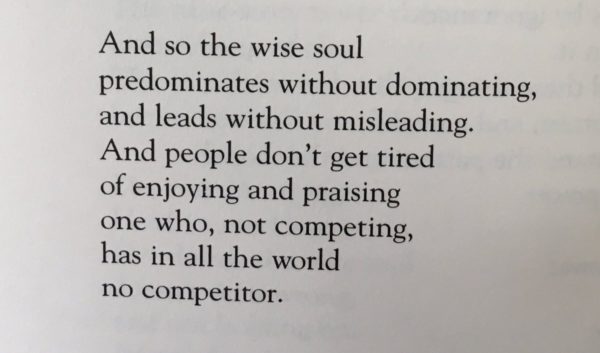
Admirers of the Taoist classic have included John Cage, Franz Kafka, Bruce Lee, Alan Watts, and Leo Tolstoy, all of whom were deeply affected by the millennia-old philosophical poetry attributed to Lao Tzu. That’s some heavy company for the rest of us to keep, maybe. It’s also a list of famous men. Not every reader of the Tao is male or approaches the text as the utterances of a patriarchal sage. One famous reader had the audacity to spend decades on her own, non-gendered, non-hierarchical translation, even though she didn’t read Chinese.
It’s not quite right to call Ursula Le Guin’s Tao Te Ching a translation, so much as an interpretation, or a “rendition,” as she calls it. “I don’t know Chinese,” she said in an interview with Brenda Peterson, “but I drew upon the Paul Carus translation of 1898 which has Chinese characters followed by a transliteration and a translation.” She used the Carus as a “touchstone for comparing other translations,” and started, in her twenties, “working on these poems. Every decade or so I’d do another chapter. Every reader has to start anew with such an ancient text.”
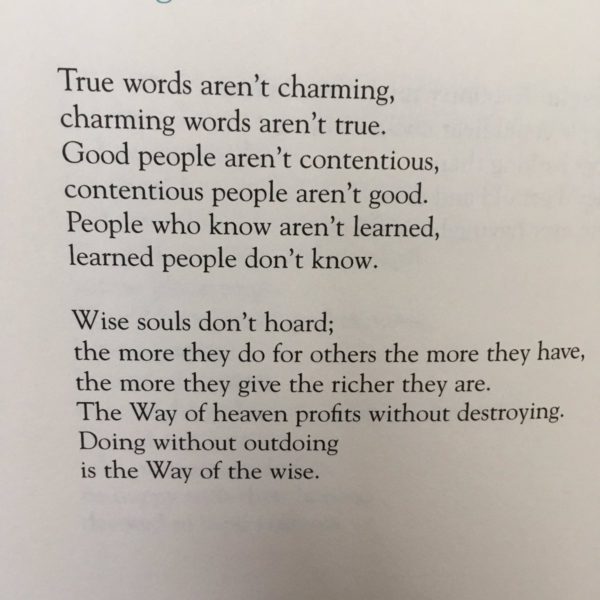
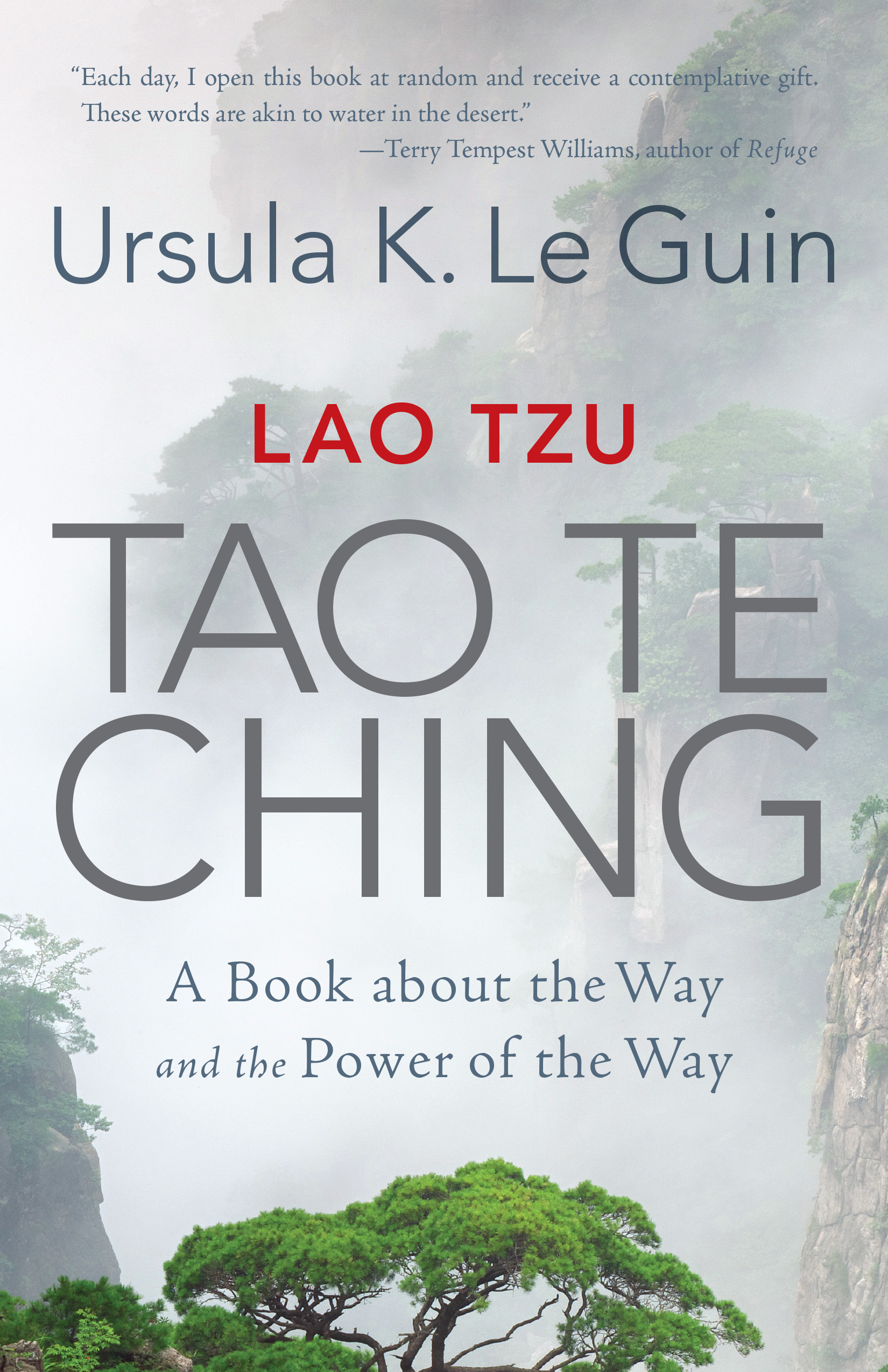
Le Guin drew out inflections in the text which have been obscured by translations that address the reader as a Ruler, Sage, Master, or King. In her introduction, Le Guin writes, “I wanted a Book of the Way accessible to a present-day, unwise, unpowerful, perhaps unmale reader, not seeking esoteric secrets, but listening for a voice that speaks to the soul.” To immediately get a sense of the difference, we might contrast editions of Arthur Waley’s translation, The Way and Its Power: a Study of the Tao Te Ching and Its Place in Chinese Thought, with Le Guin’s Tao Te Ching: A Book about the Way and the Power of the Way.
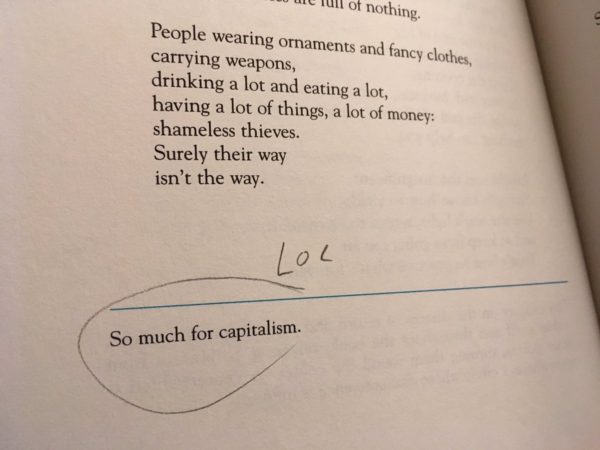
Waley’s translation “is never going to be equaled for what it does,” serving as a “manual for rulers,” Le Guin says. It was also designed as a guide for scholars, in most editions appending around 100 pages of introduction and 40 pages of opening commentary to the main text. Le Guin, by contrast, reduces her editorial presence to footnotes that never overwhelm, and often don’t appear at all (one note just reads “so much for capitalism”), as well as a few pages of endnotes on sources and variants. “I didn’t figure a whole lot of rulers would be reading it,” she said. “On the other hand, people in positions of responsibility, such as mothers, might be.”
Her version represents a lifelong engagement with a text Le Guin took to heart “as a teenage girl” she says, and found throughout her life that “it obviously is a book that speaks to women.” But her rendering of the poems does not substantially alter the substance. Consider the first two stanzas of her version of Chapter 11 (which she titles “The uses of not”) contrasted with Waley’s CHAPTER XI.
Waley
We put thirty spokes together and call it a wheel;
But it is on the space where there is nothing that the
usefulness of the wheel depends.
We turn clay to make a vessel;
But it is on the space where there is nothing that the
usefulness of the vessel depends.Le Guin
Thirty spokes
meet in the hub.
Where the wheel isn’t
is where is it’s useful.Hollowed out,
clay makes a pot.
Where the pot’s not
is where it’s useful.
Le Guin renders the lines as delightfully folksy oppositions with rhyme and repetition. Waley piles up argumentative clauses. “One of the things I love about Lao Tzu is he is so funny,” Le Guin comments in her note,” a quality that doesn’t come through in many other translations. “He’s explaining a profound and difficult truth here, one of those counterintuitive truths that, when the mind can accept them, suddenly double the size of the universe. He goes about it with this deadpan simplicity, talking about pots.”
Such images captivated the earthy anarchist Le Guin. She drew inspiration for the title of her 1971 novel The Lathe of Heaven from Taoist philosopher Chuang Tzu, perhaps showing how she reads her own interests into a text, as all translators and interpreters inevitably do. No translation is definitive. The borrowing turned out to be an example of how even respected Chinese language scholars can misread a text and get it wrong. She found the “lathe of heaven” phrase in James Legge’s translation of Chuang Tzu, and later learned on good authority that there were no lathes in China in Chuang Tzu’s time. “Legge was a bit off on that one,” she writes in her notes.
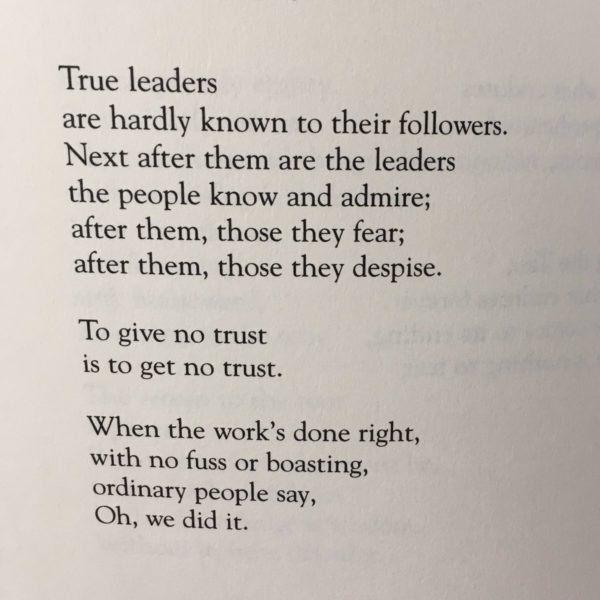
Scholarly density does not make for perfect accuracy or a readable translation. The versions of Legge and several others were “so obscure as to make me feel the book must be beyond Western comprehension,” writes Le Guin. But as the Tao Te Ching announces at the outset: it offers a Way beyond language. In Legge’s first few lines:
The Tao that can be trodden is not the enduring and
unchanging Tao. The name that can be named is not the enduring and
unchanging name.
Here is how Le Guin welcomes readers to the Tao — noting that “a satisfactory translation of this chapter is, I believe, perfectly impossible — in the first poem she titles “Taoing”:
The way you can go
isn’t the real way.
The name you can say
isn’t the real name.Heaven and earth
begin in the unnamed:
name’s the mother
of the ten thousand things.So the unwanting soul
sees what’s hidden,
and the ever-wanting soul
sees only what it wants.Two things, one origin,
but different in name,
whose identity is mystery.
Mystery of all mysteries!
The door to the hidden.
All images of the text courtesy of Austin Kleon.
Related Content:
Ursula K. Le Guin Names the Books She Likes and Wants You to Read
Ursula K. Le Guin’s Daily Routine: The Discipline That Fueled Her Imagination
Ursula K. Le Guin Stamp Getting Released by the US Postal Service
Josh Jones is a writer and musician based in Durham, NC. Follow him at @jdmagness
Read More...Flim: a New AI-Powered Movie-Screenshot Search Engine
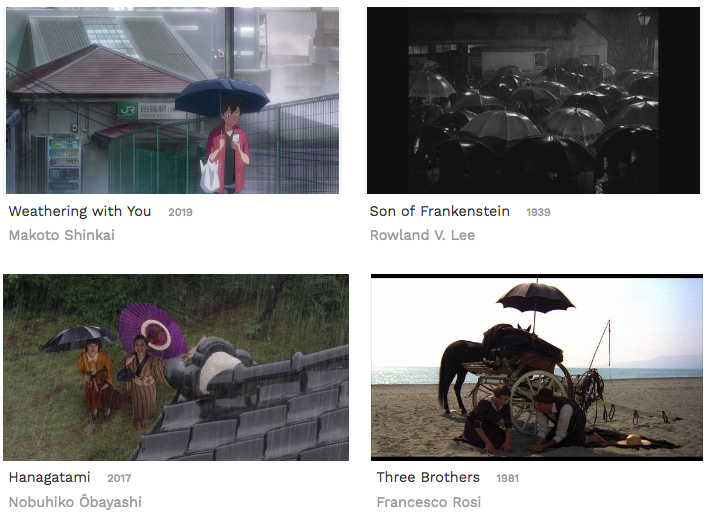
There was a time when cinephile shorthand consisted mostly of quotations from movies — from movies’ dialogue, to be precise. The distinction matters these days, now that the internet has enabled us to communicate just as easily with visual quotations as verbal ones. While some of us go the extra mile by manually combing through our film collections and taking the screenshots that best reflect our personal sentiments, most of us have long relied on the results, however approximate, served up by search engines like Google Images.
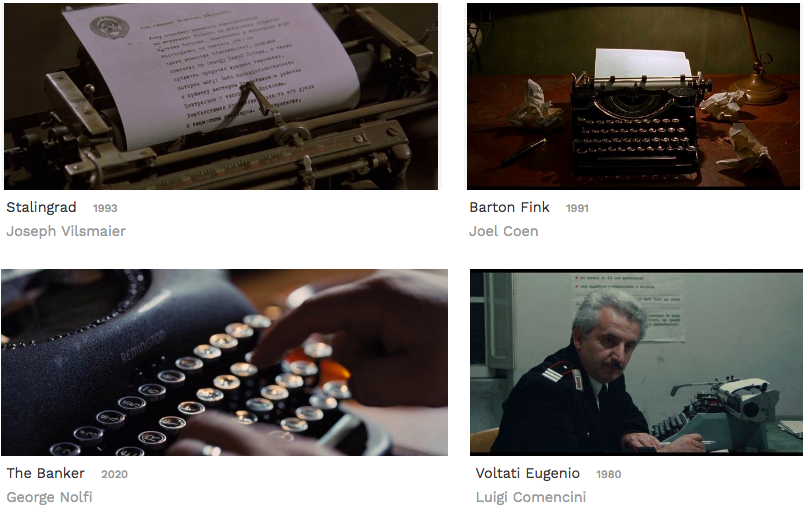
Now a promising new solution has emerged, called Flim (not to be confused with “film”). Described on its about page as “a constantly evolving database of HD screenshots,” with a claim of 50,000 provided daily, Flim uses artificial intelligence to perform color analysis and detect “objects, clothes, characters, etc.”
This means that when you enter terms like “tree,” “guitar,” “tuxedo,” or “pizza,” you get a selection of images including trees, guitars, tuxedos, and pizzas, all taken straight from a range of motion pictures wide enough to include The Nightmare Before Christmas and An American Werewolf in London, Easy Rider and Wayne’s World 2, Mélo and Wedding Crashers.
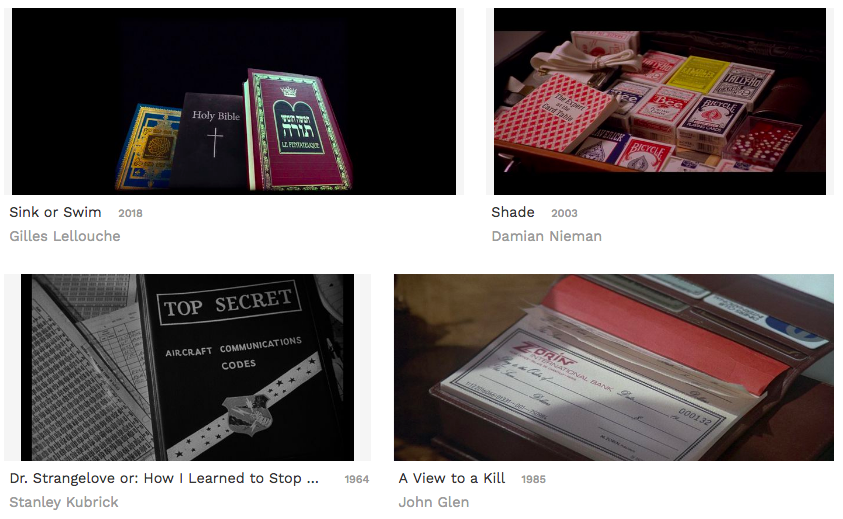
Artificial intelligence has come a long way in recent years, especially in its capacity to recognize the content of images. The one driving Flim does seem to have committed the occasional amusing misfile, but it’s still early days. And though cinephiles will be quick to notice the omissions in its database, they’ll find a great deal of visual material from the work of their favorite auteurs: more than 100 screenshots from that of David Lynch, more than 300 from that of Éric Rohmer, more than a thousand from that of Stanley Kubrick, and nearly 1,500 from that of Alfred Hitchcock.
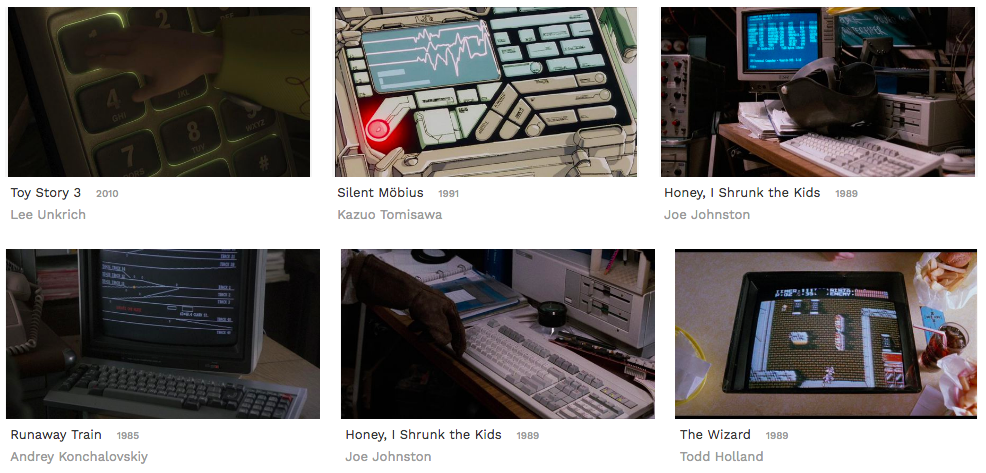
“I would love for the screenshot detail pages to include timecodes,” suggests Jason Kottke. It would make this an amazing tool for creating supercuts, film analysis videos, and other sorts of media. Imagine how much easier Christian Marclay’s job would have been with ‘clock’ and ‘watch’ searches on Flim.” Certainly I could have used it while making my own video essay on Los Angeles’ Bonaventure Hotel, a notable film-shoot location over the past few decades — though as yet the Bonaventure’s name returns no results, nor do the names of any other real-world buildings that come to mind.
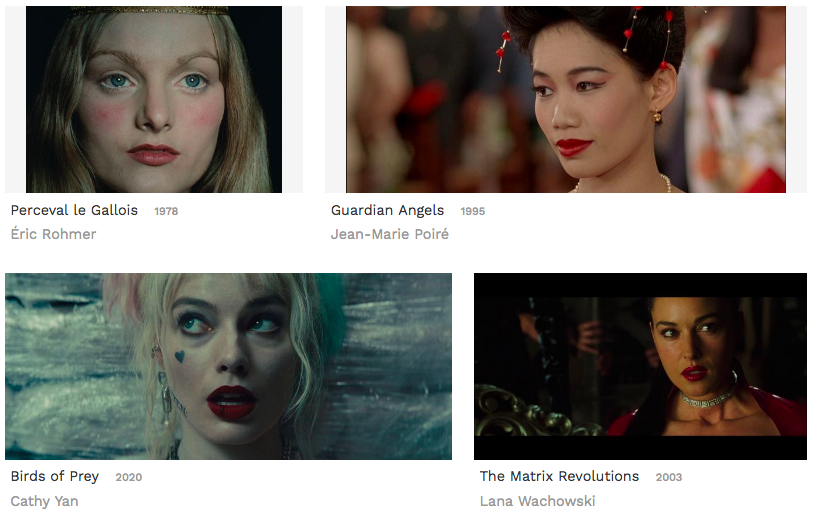
Still, if Flim expands apace, it will become a valuable resource for cinephiles and non-cinephiles alike, as well as filmmakers themselves: No Film School’s Jason Hellerman describes it as a potentially revolutionary aid for the assembly of “mood boards” and “lookbooks,” industry-standard elements of pitch presentations for “music videos, features, and commercials.” As with any newly developed tool of this kind, though, the most interesting uses will surely be the least obvious ones. In time, Flim could even prove to be a trusted source of reading recommendations.
via Kottke
Related Content:
The 100 Most Memorable Shots in Cinema Over the Past 100 Years
Download 6600 Free Films from The Prelinger Archives and Use Them However You Like
Download for Free 2.6 Million Images from Books Published Over Last 500 Years on Flickr
Based in Seoul, Colin Marshall writes and broadcasts on cities, language, and culture. His projects include the Substack newsletter Books on Cities, the book The Stateless City: a Walk through 21st-Century Los Angeles and the video series The City in Cinema. Follow him on Twitter at @colinmarshall or on Facebook.
Read More...RIP Radical Poet and Revolutionary Publisher Lawrence Ferlinghetti (1919–2021)
“Democracy is not a spectator sport,” Lawrence Ferlinghetti proclaimed on the wall of his City Lights bookstore, a San Francisco fixture since the poet, activist, and publisher founded the landmark with Peter D. Martin in 1953. Ferlinghetti, who died on Monday at age 101, was himself a fixture, a venerated steward of the counterculture. (See him read “Last Prayer,” above, in a clip from The Last Waltz). On his 100th birthday–on which the city instituted an annual “Lawrence Ferlinghetti Day”–Chloe Veltman interviewed him, describing the poet as “frail and nearly blind… but his mind is still on fire.” It was the same mind that started a publishing house in the 50s with the intent to stir an “international dissident ferment.”
Ferlinghetti and Martin started their bookstore with a mission: “to break literature out of its stuffy, academic cage,” Veltman writes, out of “its self-centered focus on what he calls ‘the me me me,’ and make it accessible to all.” City Lights was the first all-paperback bookstore, opened at a time, he says, when “paperbacks weren’t considered real books.”
For Ferlinghetti, literature and democracy were not separate pursuits. The idea was radical, and so were his patrons. “A bookstore is a natural place for poets to hang out,” Ferlinghetti told NPR’s Tom Vitale, “and they started showing up there”–“They” being East Coast Beats like Ginsberg, Kerouac, and the great, unsung Bob Kaufman.
Like a Northern California Shakespeare and Company, Ferlinghetti’s City Lights became the physical embodiment of a literary movement, especially after the infamous publication of Allen Ginsburg’s Howl and Other Poems, for which Ferlinghetti stood trial for obscenity, an event that “propelled the Beat generation into the international spotlight,” writes Evan Karp. “For the first and–arguably–only time, literature became a popular movement in the U.S.” Young people around the country realized that poetry was relevant to their politics (and lives), and vice versa.
Ferlinghetti published his own first book of poetry, Pictures of the Gone World, in the same year he published Ginsberg’s, but he has not received his critical due alongside the other Beats, despite the fact that his second book, 1958’s A Coney Island of the Mind, “sold more than 1 million copies over the year, ranking perhaps second to Howl as the most popular book of modern American poetry,” Fred Kaplan notes at Slate. (See him read the book’s first poem, “In Goya’s Greatest Scenes We Seem to See…,” from his City Lights office, above.)
Ferlinghetti himself never wanted to be identified with the movement. In a 2013 documentary, he emphatically says, “don’t call me a Beat. I was never a Beat poet.” He described his poetry as an “insurgent art”:
If you would be a poet, create works capable of answering the challenge of
apocalyptic times, even if this meaning sounds apocalyptic.
You are Whitman, you are Poe, you are Mark Twain, you are Emily Dickinson and Edna St. Vincent Millay, you are Neruda and Mayakovsky and Pasolini, you are an American or a non-American, you can conquer the conquerors with words.…
His purpose, he writes, was to pierce a culture he calls “a freeway fifty lanes wide / a concrete continent / spaced with bland billboards / illustrating imbecile illusions of happiness.” From his Navy service in WWII–in which he saw the aftermath of Nagasaki weeks after the dropping of the atomic bombs–to the last days of the Trump administration, he kept his keen eye on America’s abuses. His “poetry is notoriously critical of politicians and the status quo,” Karp writes, and he was “unafraid to name names and take stances publicly” as a writer and a lifelong activist.
“Gerald Nicosia, the critic,” Vitale points out, “says Ferlinghetti’s two greatest accomplishments were fighting censorship, and inaugurating a small press revolution.” What did Ferlinghetti himself think of his place in the culture? “In Plato’s republic, poets were considered subversive, a danger to the republic,” he told The New York Times in 1998. “I kind of relish that role.” As for what might finally shake the country out of the anti-democratic spirit that has held its people hostage to corporations and a hostile government, he was not sanguine: “It would take a whole new generation not devoted to the glorification of the capitalist system,” he said. “A generation not trapped in the me, me, me.”
Related Content:
2,000+ Cassettes from the Allen Ginsberg Audio Collection Now Streaming Online
Josh Jones is a writer and musician based in Durham, NC. Follow him at @jdmagness
Read More...Paul Simon Deconstructs “Mrs. Robinson” (1970)
There’s nothing like having a deadline. When Simon and Garfunkel were called on by director Mike Nichols to provide music for his 1967 comedy The Graduate, the film was already being edited, and the duo were working on the movie studio clock. To hear Simon tell it in this interview with Dick Cavett (from the same interview we featured earlier this week), it was that crunch time that produced one of their best songs, and their biggest hit, “Mrs. Robinson.”
In fact, the song stitched together two unrelated sketches. The first was the guitar fill that starts the song, which was Simon just riffing over a chase scene. “But it wasn’t working,” he says. The other, the chorus, was a fragment: “And here’s to you Mrs. Robinson, Jesus loves you more than you will know.”
“For no particular reason, the words just came into my head,” Simon tells Cavett. The next line mentioned Mrs. Roosevelt, and who knows where Simon might have gone with the song if Mike Nichols hadn’t told him to ditch anything political and keep with just the one character.
If you have the soundtrack to The Graduate, you’ll notice that the version of “Mrs. Robinson” only has scat singing in the verses, just making it up as they went along. There was no time to flesh out the track, and it fit in the movie better than any of the songs Mike Nichols had licensed already from the duo. It would be one of many prescient choices for the classic comedy, including casting the unknown Jewish 30-year-old Dustin Hoffman for the main role instead of the very white choices the studio was trying to push on the director.
It was only three months after the film came out that Simon and Garfunkel recorded the full version with the lyrics in the verses. It became their second number one single in 1968 and was the first rock song to win a Grammy for Record of the Year. But true to the original soundtrack version, it keeps its opening verse word-free.
And it’s an odd song. Simon describes the writing as stream of consciousness. Though Mrs. Robinson is indeed a character in the film, played by Anne Bancroft, the lyrics rarely reference the film, except for “It’s a little secret just the Robinson’s affair/Most of all you’ve got to hide it from the kids.” (And even here Simon seems to be singing about hiding prescription drugs). Instead Simon creates an elliptical narrative for Mrs. Robinson, placing her at the center of a story set…at a sanitarium, perhaps? The story jumps all around, but Mrs. Robinson remains confused, out of sorts, suffering the alienation of the suburban wife, nostalgic for an imaginary past. It’s where Joe DiMaggio comes in, called out like a savior (“a nation turns its lonely eyes to you”) when the “Jesus loves you” exhortations don’t work. Later, Simon would explain the DiMaggio reference as, “I thought of him as an American hero and that genuine heroes were in short supply.” (Simon was more of a Mickey Mantle fan, but DiMaggio had better syllables).
The good thing about writing in this stream of consciousness, Simon tells Cavett, is “You find out what was in your mind was relevant even though at the time it didn’t seem so.” The song sounds chipper, but those lyrics are the story of a society about to come apart, which it would do several months later in 1968. Like The Graduate, with its satire about suburbia, loosening morals, hypocrisy, and “plastics” both as a career choice and a way of describing society, the song is a revelation of a world to come.
Related Content:
Art Garfunkel Lists 1195 Books He Read Over 45 Years, Plus His 157 Favorites (Many Free)
Paul Simon Tells the Story of How He Wrote “Bridge Over Troubled Water” (1970)
Ted Mills is a freelance writer on the arts who currently hosts the Notes from the Shed podcast and is the producer of KCRW’s Curious Coast. You can also follow him on Twitter at @tedmills, and/or watch his films here.
Read More...Why Public Transit Sucks in the United States: Four Videos Tell the Story
Many different words could describe the state of public transportation in America today. In recent decades, more and more of a consensus seems to have settled around one word in particular: that it “sucks.” Given its “antiquated technology, safety concerns, crumbling infrastructure,” and often “nonexistence,” says the narrator of the video above, “it’s not hard to argue that the U.S. public transportation network is just not good.” That narrator, Sam Denby, is the creator of Wendover Productions, a Youtube channel all about geography, technology, economics, and the infrastructure where all three intersect. He believes not only that America’s public transit sucks, but that the country’s “lack of solid public transportation almost defines American culture.”
This would make a certain sense in a poor, small, struggling country — but not in the United States of America, described not long ago by Anne Applebaum in the Atlantic as “accustomed to thinking of itself as the best, most efficient, and most technologically advanced society in the world.”
As anyone making their first visit will experience, America’s still-formidable wealth and power doesn’t square with the experience on the ground, or indeed under it: whether by subway, bus, or streetcar, the task of navigating most U.S. cities is characterized by inconvenience, discomfort, and even impossibility. This in a country whose public transportation once really was the envy of the world: at the turn of the 20th century, its cities boasted 11,000 miles of streetcar track alone.
In the mid-2010s, by Denby’s reckoning, “the combined mileage of every tram, subway, light rail, and commuter rail system” added up only to 5,416. What happened in the hundred or so years between? He cites among other factors the production of the first widely affordable automobiles in the 1920s, and later that of buses, with their lower operating costs than streetcars — but as commonly operated today, their lower-quality transit experience as well. (Resentment about this large-scale replacement of urban streetcar systems runs deep enough to make some consider it a conspiracy.) The U.S. “grew up as the car grew up, so its cities were built for cars,” especially in its more recently settled west. Indirect subsides lowered the cost of gas, and from the 1950s the building of the Interstate Highway System made it easy, at least for at time, to commute between city and suburb.
As pointed out in the Vox videos “Why American Public Transit Is So Bad” and “How Highways Wrecked American Cities,” these massive roads ran not around or under cities (as they do in much of Europe and Asia) but straight through their centers, part of a larger process of “urban renewal” that ironically destroyed quite a few of what dense urban neighborhoods the U.S. had. More than half a century of highway-building, suburbanization, and strict zoning later, most Americans find themselves unable to get where they need to go without buying a car and driving themselves. The situation is even worse for those traveling between cities, as examined above in Wendover Productions’ “Why Trains Suck in America.” As an American, I take a certain satisfaction in hearing these questions addressed — but I take an even greater one in being an American living abroad.
Related Content:
A Subway Ride Through New York City: Watch Vintage Footage from 1905
Designer Massimo Vignelli Revisits and Defends His Iconic 1972 New York City Subway Map
A Brief History of the Great American Road Trip
Based in Seoul, Colin Marshall writes and broadcasts on cities, language, and culture. His projects include the Substack newsletter Books on Cities, the book The Stateless City: a Walk through 21st-Century Los Angeles and the video series The City in Cinema. Follow him on Twitter at @colinmarshall or on Facebook.
Read More...Support Us
We're hoping to rely on loyal readers, rather than erratic ads. Please click the Donate button and support Open Culture. You can use Paypal, Venmo, Patreon, even Crypto! We thank you!

About Us

Open Culture scours the web for the best educational media. We find the free courses and audio books you need, the language lessons & educational videos you want, and plenty of enlightenment in between.
Advertise With Us

FREE UPDATES!
GET OUR DAILY EMAIL
Get the best cultural and educational resources on the web curated for you in a daily email. We never spam. Unsubscribe at any time.
FOLLOW ON SOCIAL MEDIA

Open Culture editor Dan Colman scours the web for the best educational media. He finds the free courses and audio books you need, the language lessons & movies you want, and plenty of enlightenment in between.
Advertise With Us

