The Beach Boys’ Brian Wilson & Beatles Producer George Martin Break Down “God Only Knows,” the “Greatest Song Ever Written”
As an Englishman of a certain age, George Martin could, realistically, choose only one means of conveyance in Los Angeles: a red Coupe de Ville convertible, and a genuine 1950s model at that. But whatever that era’s glories of automobile design, its music was still in the dark ages — at least according to the millions upon millions of Beatles fans around the world today. The pop-cultural revolution that band ignited in the early 1960s owes, by some reckonings, as much to Martin’s work as it does to that of the Fab Four themselves. In his capacity as a producer and arranger — not to mention as the man who signed them to Parlophone records — Martin arguably led the Beatles to discover their own musical potential. And once they’d become a phenomenon, they also felt pressure to surpass themselves from other sources.
One was a young American singing group called the Beach Boys, who in less than five years had gone from putting out simple, repetitive tunes about surfing and root beer to crafting the teenage-symphonic masterpiece Pet Sounds. That album, so pop-music history tells it, picked up the gauntlet thrown down by the Beatles’ Rubber Soul, and in response to it came Sgt. Pepper’s Lonely Hearts Club Band, an era-defining release since popularly thought to have won the bands’ friendly competition.
But with his ear for composition, Martin surely knew that Pet Sounds would never truly be defeated, thanks in large part to “God Only Knows,” which Martin describes as “one of my favorite Beach Boys songs.” He does so in the clip at the top of the post, of a 1997 visit to Los Angeles in which he pilots his Cadillac to the home of the group’s musical mastermind Brian Wilson.
The two then enter the studio and pull out the original master tapes of “Got Only Knows” to listen to its components one by one. You can see and hear more of what went into its recording sessions through this two-part video from Behind the Sounds that presents raw tracks from the studio with notes on the various techniques and players (including the famous “Wrecking Crew,” with bassist Carol Kaye) involved. “What Brian had done was to write a beautiful song full of unusual changes,” says Martin, “and then devise a tapestry of sounds to enhance it.” As Martin rebuilds the tracks on the console, Wilson says he’s “making a better mix of this than I did in the master.” It’s quite a compliment, considering the source — but then so is the declaration of “God Only Knows “as “the greatest song ever written,” issued as it was by a certain Paul McCartney.
Related Content:
How the Beach Boys Created Their Pop Masterpieces: “Good Vibrations,” Pet Sounds, and More
Hear the Unique, Original Compositions of George Martin, Beloved Beatles Producer (RIP)
George Martin, Legendary Beatles Producer, Shows How to Mix the Perfect Song Dry Martini
Based in Seoul, Colin Marshall writes and broadcasts on cities, language, and culture. His projects include the Substack newsletter Books on Cities, the book The Stateless City: a Walk through 21st-Century Los Angeles and the video series The City in Cinema. Follow him on Twitter at @colinmarshall or on Facebook.
Read More...Japanese Violinist Covers Eddie Van Halen’s “Eruption”: Metal Meets Classical Again
In a 1992 journal article “Eruptions: heavy metal appropriations of classical virtuosity,” musicologist Robert Walser explored the link between heavy metal and classical music–the way in which metal guitarists studied classical music and created “a new kind of guitar virtuosity.” Published by Cambridge University Press, Walser’s essay comes to focus on Eddie Van Halen’s “Eruption,” the “solo that transformed rock guitar.” He writes: “Released in 1978 on Van Halen’s first album, ‘Eruption’ [see an extended live version below] is one minute and twenty-seven seconds of exuberant and playful virtuosity, a violinist’s precise and showy technique inflected by the vocal rhetoric of the blues and rock ’n’ roll irreverence.” The solo features rhythmic patterns reminiscent of J. S. Bach’s famous ‘Prelude in C major’, while “the harmonic progressions of ‘Eruption’ lead the listener along an aural adventure,” much like you’d find in the music of Vivaldi. None of this was an accident. As a youngster, Eddie Van Halen was raised on a diet of Mozart and Beethoven.
Above, you can watch “Jill,” a member of the Japanese metal band Unlucky Morpheus, perform a violin-driven version of “Eruption.” It’s classical meets metal once again, except this time a classical instrument takes the lead. Enjoy.
If you would like to support the mission of Open Culture, consider making a donation to our site. It’s hard to rely 100% on ads, and your contributions will help us continue providing the best free cultural and educational materials to learners everywhere. You can contribute through PayPal, Patreon, and Venmo (@openculture). Thanks!
Related Content:
14-Year-Old Girl’s Blistering Heavy Metal Performance of Vivaldi
Musical Comedian Reggie Watts Reinvents Van Halen’s Classic, “Panama”
Read More...The Internet Archive Now Digitizing 1,000,000+ Objects from a Massive Cinema History Library
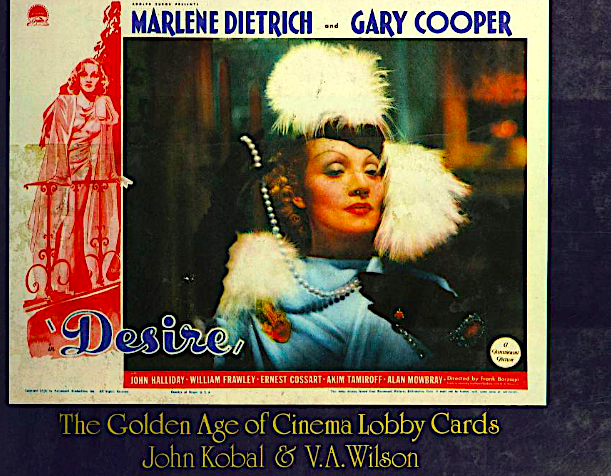
Major motion pictures need the work of writers, directors, actors, cinematographers, and a slew of other professionals besides. That group also includes researchers, whose role has until recently gone practically uncelebrated outside the industry. In 2015, filmmaker Daniel Raim brought the work of the film researcher to light with Harold and Lillian: A Hollywood Love Story, about production designer Harold Michelson and his researcher wife Lillian. “In Raim’s documentary, she talks about working on Fiddler on the Roof and the filmmakers needed to know what a Jewish woman’s undergarments looked like in the 1890s,” writes The Hollywood Reporter’s Emily Hilton. How could she find such obscure information?
“Michelson sat on a bench at Fairfax and Beverly near a Jewish deli and spoke to women who were about the right age to have been alive in that era.” One of these women “ran home and grabbed a sewing pattern for her to reference. This research inspired the outfits that Τevye’s daughters wear in the number: knee length bloomers with scalloped edges.”
As yet, this pattern hasn’t appeared in the Michelson Cinema Research Library, now hosted online at the Internet Archive. But it may yet, as the project of digitization and uploading has hardly begun: it was just last year that the nonagenarian Lillian Michelson donated to the Archive her formidable collection of research materials, amassed over her long career.

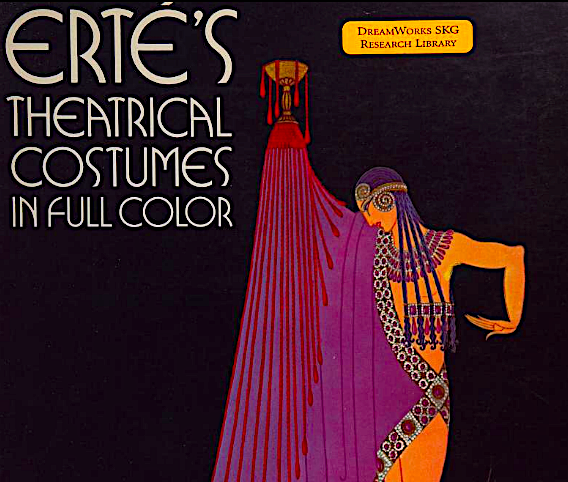
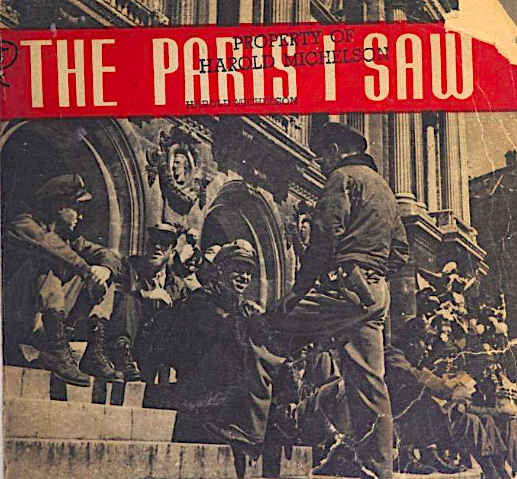
“After nearly six decades serving filmmakers first at Samuel Goldwyn, then the American Film Institute, Zoetrope Studio, Paramount and DreamWorks,” writes the Los Angeles Times’ Mary McNamara, “the library filled 1,594 boxes: tens of thousands of books, photographs, magazines and a panoply of other visual resources. All of this had been sitting for five years in a storage facility, paid for by friends who could not bear to see it all destroyed.” Now that the digital archival process is underway, you can browse the first 1,300 or so entries at the Internet Archive, which allows users to virtually check out the Michelson Cinema Research Library’s books on subjects ranging from theatrical costumes and vintage cinema lobby cards to places like Japan and Paris to less expected topics like the Amazing Kreskin and the externals of the Catholic Church.
But then, a Hollywood researcher must be prepared to learn about anything, and by all accounts Lillian Michelson was perhaps the greatest of them all. In addition to its comprehensiveness, her library became a hangout of choice for a variety of studio professionals and celebrities including Tom Waits. (“I wouldn’t be surprised if that’s how he found some time to unwind,” says Raim, “just drinking tea there.”) The Internet Archive describes her collection as consisting of “5,000 books, 30,000 photographs, and more than 1,000,000 clippings, scrapbooks and ephemera,” more of which will come online as time goes by. Eventually the site will contain all the materials from which Michelson drew vital knowledge for filmmakers like Roman Polanski, Alfred Hitchcock, and Stanley Kubrick. And if her research materials satisfied those three, they’re more than good enough for us.
Related Content:
Download 6600 Free Films from The Prelinger Archives and Use Them However You Like
Good Movies as Old Books: 100 Films Reimagined as Vintage Book Covers
1,150 Free Movies Online: Great Classics, Indies, Noir, Westerns, etc.
Based in Seoul, Colin Marshall writes and broadcasts on cities, language, and culture. His projects include the Substack newsletter Books on Cities, the book The Stateless City: a Walk through 21st-Century Los Angeles and the video series The City in Cinema. Follow him on Twitter at @colinmarshall or on Facebook.
Read More...Resilience Skills in a Time of Uncertainty: A Free Course from the University of Pennsylvania
Who could use a course on resilience these days? To get you through this winter of discontent, the University of Pennsylvania has created a free version of Dr. Karen Reivich’s “Resilience Skills” course. (It’s part of the Foundations of Positive Psychology Specialization offered through Coursera.) This course teaches students to 1.) understand the protective factors that make one resilient, 2.) make use of non-cognitive strategies that decrease anxiety, 3.) recognize thinking traps and how they undercut resilience, and 4.) create a buffer of positivity that boosts resilience in stressful situations.
The course technically runs four weeks, but it can be binge-watched at whatever rate you like. The course draws on the instructor’s book, The Resilience Factor: 7 Keys to Finding Your Inner Strength and Overcoming Life’s Hurdles. To take the course for free, select the “Audit” option during the registration process.
If you would like to support the mission of Open Culture, consider making a donation to our site. It’s hard to rely 100% on ads, and your contributions will help us continue providing the best free cultural and educational materials to learners everywhere. You can contribute through PayPal, Patreon, and Venmo (@openculture). Thanks!
Related Content:
Introduction to Psychology: A Free Course from Yale University
Building Your Resilience: Finding Meaning in Adversity–Take a Free & Timely Course Online
Read More...How to Make a Savile Row Suit: A Short Documentary from the Museum of Modern Art
Savile Row is unfashionable. This, of course, is its great strength: not for nothing does that London street stand as the last word in timeless tailoring. Since at least the early 19th century, men have gone to Savile Row not just to commission handmade suits from their favorite shops, but to participate in as many fittings as necessary throughout the process of bringing those suits ever closer to perfection. The result, over decades and indeed generations of regular patronage, is the cultivation of not fashion but style. Even so, Savile Row figures in the Museum of Modern Art’s online course Fashion as Design, whose videos on the making of a bespoke three-piece suit you can see here.
It all happens at Anderson & Sheppard, a fixture on the Row since 1906. In the first video, “behind a drawn curtain, a master cutter” — whose job includes not just cutting the cloth but interacting with the client — “takes an initial series of 27 measurements: 20 for the jacket, 7 for the trousers. From these measurements, the cutter fashions a pattern in heavy brown paper.”
We then see the cloth cut to this pattern, “and the many pieces of fabric are rolled for each garment into tiny packages, which await the tailors.” The second, which begins in the back of the house, shows how these tailors “receive their bundles of fabric and set about deciphering the cutter’s notes. Three weeks after a client’s measurements have been taken, his suit will be ready for a first fitting.”
Emphasis on “first”: though the young man being fitted here only appears for one session, some bespoke suits can require two, three, or more, worn each time as a wearable rough draft held together with bright white thread and marked up for later correction. This reflects not the tailor’s inability to get it right the first time, but the rigorous desire of the Savile Row habitué for an ideal fit. (Anderson & Sheppard’s list of former clients include such notoriously perfectionist dressers as Fred Astaire, Bryan Ferry, and Prince Charles.) Watching this process from start finish underscores the truth of those famous words, “The difference between style and fashion is quality” — famous words spoken by no less a detractor of Savile Row than Giorgio Armani, but true ones nonetheless.
Related Content:
Recalling Albert Camus’ Fashion Advice, Noam Chomsky Pans Glenn Greenwald’s Shiny Purple Tie
Fashion Designers in 1939 Predict How People Would Dress in the Year 2000
Browse a Collection of Over 83,500 Vintage Sewing Patterns
How Ladies & Gentlemen Got Dressed in the 18th Century: It Was a Pretty Involved Process
Based in Seoul, Colin Marshall writes and broadcasts on cities, language, and culture. His projects include the Substack newsletterBooks on Cities, the book The Stateless City: a Walk through 21st-Century Los Angeles and the video series The City in Cinema. Follow him on Twitter at @colinmarshall, on Facebook, or on Instagram.
Read More...How Lava Lamps Help Secure the Internet
Try not to think too hard about the concept of randomness — and especially about the question of how, exactly, one generates a random number. Most of us, of course, simply ask a computer to do it. But how can a computer, which by its very nature follows unambiguous directions in a predictable manner, come up with a truly random number, in the literal sense of the word? As far as the everyday purposes for which we might need “random” numbers — setting the combination on a lock, for instance — merely unpredictable numbers suffice. But where, exactly, can we draw the line between unpredictability and randomness?
Albert Einstein famously pronounced that “God does not play dice with the universe,” drawing on a metaphor still central to humanity’s conception of randomness. Dice provide “random” numbers in that, when thrown, they’re subject to too many physical factors — an area of some interest for Einstein — for us to reliably guess which way they’ll land. And so we find ourselves again delivered back from randomness into unpredictability. But achieving ever-greater unpredictability, which has proven invaluable to fields like cryptography, has necessitated combining computers with analog physical phenomena essentially similar to the rolling of dice.
Using a somewhat less ancient technology, internet security provider Cloudflare has taken a step closer to genuine randomness. “Every time you log in to any website, you’re assigned a unique identification number,” explains Wired’s Ellen Airhart. “It should be random, because if hackers can predict the number, they’ll impersonate you.” But who could predict “the goopy mesmeric swirlings of oil, water, and wax” within a lava lamp, let alone an entire wall covered with them? “Cloudflare films the lamps 24/7 and uses the ever-changing arrangement of pixels to help create a superpowered cryptographic key.”
Theoretically, Airhart acknowledges, “bad guys could sneak their own camera into Cloudflare’s lobby to capture the same scene,” but the company also “films the movements of a pendulum in its London office and records the measurements of a Geiger counter in Singapore to add more chaos to the equation. Crack that, Russians.” Constant vigilance against a threat from Russia aided by psychedelic bedroom light fixtures? You’d be forgiven for feeling unstuck in time, partially transported to the reality of half a century ago. But then, Cloudflare is headquartered in San Francisco — a city where the groundbreaking and the groovy haven’t parted ways just yet.
Related Content:
Stephen Fry Explains Cloud Computing in a Short Animated Video
“The Bay Lights,” The World’s Largest LED Light Sculpture, Debuts in San Francisco
How Art Nouveau Inspired the Psychedelic Designs of the 1960s
Visualizing WiFi Signals with Light
Based in Seoul, Colin Marshall writes and broadcasts on cities, language, and culture. His projects include the Substack newsletter Books on Cities, the book The Stateless City: a Walk through 21st-Century Los Angeles and the video series The City in Cinema. Follow him on Twitter at @colinmarshall, on Facebook, or on Instagram.
Read More...20 Lessons from the 20th Century About How to Defend Democracy from Authoritarianism: A Timely List from Yale Historian Timothy Snyder
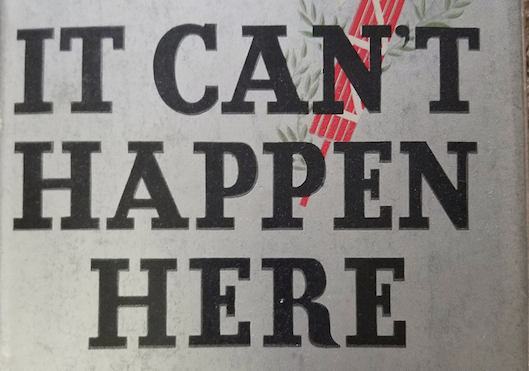
Image by Rob Kall, via Flickr Commons
Timothy Snyder, Housum Professor of History at Yale University, is one of the foremost scholars in the U.S. and Europe on the rise and fall of totalitarianism during the 1930s and 40s. Among his long list of appointments and publications, he has won multiple awards for his recent international bestsellers Bloodlands: Europe between Hitler and Stalin and last year’s Black Earth: The Holocaust as History and Warning. That book in part makes the argument that Nazism wasn’t only a German nationalist movement but had global colonialist origins—in Russia, Africa, and in the U.S., the nation that pioneered so many methods of human extermination, racist dehumanization, and ideologically-justified land grabs.
The hyper-capitalism portrayed in the U.S.—even during the Depression—Snyder writes, fueled Hitler’s imagination, such that he promised Germans “a life comparable to that of the American people,” whose “racially pure and uncorrupted” German population he described as “world class.” Snyder describes Hitler’s ideology as a myth of racialist struggle in which “there are really no values in the world except for the stark reality that we are born in order to take things from other people.” Or as we often hear these days, that acting in accordance with this principle is the “smart” thing to do. Like many far right figures before and after, Hitler aimed to restore a state of nature that for him was a perpetual state of race war for imperial dominance.
After the November 2016 election, Snyder wrote a profile of Hitler, a short piece that made no direct comparisons to any contemporary figure. But reading the facts of the historical case alarmed most readers. A few days later, the historian appeared on a Slate podcast to discuss the article, saying that after he submitted it, “I realized there was more.… there are an awful lot of echoes.” Snyder admits that history doesn’t actually repeat itself. But we’re far too quick, he says, to dismiss that idea as a cliché “and not think about history at all. History shows a range of possibilities.” Similar events occur across time under similar kinds of conditions. And it is, of course, possible to learn from the past.
If you’ve heard other informed analysis but haven’t read Snyder’s New York Review of Books columns on fascism in Putin’s Russia or the former Yanukovich’s Ukraine, or his long article “Hitler’s World May Not Be So Far Away,” you may have seen his widely-shared Facebook post making the rounds. As he argued in The Guardian last September, today we may be “too certain we are ethically superior to the Europeans of the 1940s.” On November, 15, 2016 Snyder wrote on Facebook that “Americans are no wiser than the Europeans who saw democracy yield to fascism, Nazism, or communism.” Snyder has been criticized for conflating these regimes, and rising “into the top rungs of punditdom,” but when it comes to body counts and levels of suppressive malignancy, it’s hard to argue that Stalinist Russia, any more than Tsarist Russia, was anyone’s idea of a democracy.
Rather than making a historical case for viewing the U.S. as exactly like one of the totalitarian regimes of WWII Europe, Snyder presents 20 lessons we might learn from those times and use creatively in our own where they apply. In my view, following his suggestions would make us wiser, more self-aware, proactive, responsible citizens, whatever lies ahead. Read Snyder’s lessons from his Facebook post below and consider ordering his latest book On Tyranny: Twenty Lessons from the Twentieth Century:
1. Do not obey in advance. Much of the power of authoritarianism is freely given. In times like these, individuals think ahead about what a more repressive government will want, and then start to do it without being asked. You’ve already done this, haven’t you? Stop. Anticipatory obedience teaches authorities what is possible and accelerates unfreedom.
2. Defend an institution. Follow the courts or the media, or a court or a newspaper. Do not speak of “our institutions” unless you are making them yours by acting on their behalf. Institutions don’t protect themselves. They go down like dominoes unless each is defended from the beginning.
3. Recall professional ethics. When the leaders of state set a negative example, professional commitments to just practice become much more important. It is hard to break a rule-of-law state without lawyers, and it is hard to have show trials without judges.
4. When listening to politicians, distinguish certain words. Look out for the expansive use of “terrorism” and “extremism.” Be alive to the fatal notions of “exception” and “emergency.” Be angry about the treacherous use of patriotic vocabulary.
5. Be calm when the unthinkable arrives. When the terrorist attack comes, remember that all authoritarians at all times either await or plan such events in order to consolidate power. Think of the Reichstag fire. The sudden disaster that requires the end of the balance of power, the end of opposition parties, and so on, is the oldest trick in the Hitlerian book. Don’t fall for it.
6. Be kind to our language. Avoid pronouncing the phrases everyone else does. Think up your own way of speaking, even if only to convey that thing you think everyone is saying. (Don’t use the internet before bed. Charge your gadgets away from your bedroom, and read.) What to read? Perhaps “The Power of the Powerless” by Václav Havel, 1984 by George Orwell, The Captive Mind by Czesław Milosz, The Rebel by Albert Camus, The Origins of Totalitarianism by Hannah Arendt, or Nothing is True and Everything is Possible by Peter Pomerantsev.
7. Stand out. Someone has to. It is easy, in words and deeds, to follow along. It can feel strange to do or say something different. But without that unease, there is no freedom. And the moment you set an example, the spell of the status quo is broken, and others will follow.
8. Believe in truth. To abandon facts is to abandon freedom. If nothing is true, then no one can criticize power, because there is no basis upon which to do so. If nothing is true, then all is spectacle. The biggest wallet pays for the most blinding lights.
9. Investigate. Figure things out for yourself. Spend more time with long articles. Subsidize investigative journalism by subscribing to print media. Realize that some of what is on your screen is there to harm you. Learn about sites that investigate foreign propaganda pushes.
10. Practice corporeal politics. Power wants your body softening in your chair and your emotions dissipating on the screen. Get outside. Put your body in unfamiliar places with unfamiliar people. Make new friends and march with them.
11. Make eye contact and small talk. This is not just polite. It is a way to stay in touch with your surroundings, break down unnecessary social barriers, and come to understand whom you should and should not trust. If we enter a culture of denunciation, you will want to know the psychological landscape of your daily life.
12. Take responsibility for the face of the world. Notice the swastikas and the other signs of hate. Do not look away and do not get used to them. Remove them yourself and set an example for others to do so.
13. Hinder the one-party state. The parties that took over states were once something else. They exploited a historical moment to make political life impossible for their rivals. Vote in local and state elections while you can.
14. Give regularly to good causes, if you can. Pick a charity and set up autopay. Then you will know that you have made a free choice that is supporting civil society helping others doing something good.
15. Establish a private life. Nastier rulers will use what they know about you to push you around. Scrub your computer of malware. Remember that email is skywriting. Consider using alternative forms of the internet, or simply using it less. Have personal exchanges in person. For the same reason, resolve any legal trouble. Authoritarianism works as a blackmail state, looking for the hook on which to hang you. Try not to have too many hooks.
16. Learn from others in other countries. Keep up your friendships abroad, or make new friends abroad. The present difficulties here are an element of a general trend. And no country is going to find a solution by itself. Make sure you and your family have passports.
17. Watch out for the paramilitaries. When the men with guns who have always claimed to be against the system start wearing uniforms and marching around with torches and pictures of a Leader, the end is nigh. When the pro-Leader paramilitary and the official police and military intermingle, the game is over.
18. Be reflective if you must be armed. If you carry a weapon in public service, God bless you and keep you. But know that evils of the past involved policemen and soldiers finding themselves, one day, doing irregular things. Be ready to say no. (If you do not know what this means, contact the United States Holocaust Memorial Museum and ask about training in professional ethics.)
19. Be as courageous as you can. If none of us is prepared to die for freedom, then all of us will die in unfreedom.
20. Be a patriot. The incoming president [Trump] is not. Set a good example of what America means for the generations to come. They will need it.
Note: This post originally appeared on our site in January 2017.
Related Content:
Umberto Eco Makes a List of the 14 Common Features of Fascism
George Orwell’s Final Warning: Don’t Let This Nightmare Situation Happen. It Depends on You!
Josh Jones is a writer and musician based in Durham, NC. Follow him at @jdmagness
Read More...Flair Magazine: The Short-Lived, Highly-Influential Magazine That Still Inspires Designers Today (1950)
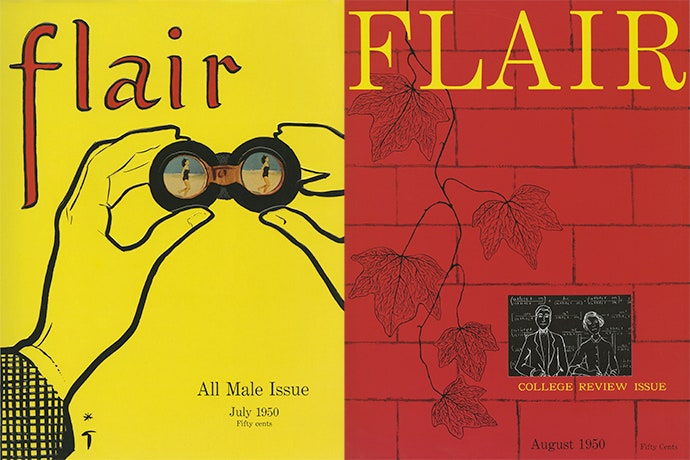
All magazines are their editors, but Flair was more its editor than any magazine had been before — or, for that matter, than any magazine has been since. Though she came to the end of her long life in England, a country to which she had expatriated with her fourth husband, a Briton, Fleur Cowles was as American a cultural figure as they come. Born Florence Freidman in 1908, she had performed on herself an unknowable number of Gatsbyesque acts of reinvention by 1950, when she found herself in a position to launch Flair. Her taste in husbands helped, married as she then was to Gardner “Mike” Cowles Jr., publisher of Look, a popular photo journal that Fleur had helped to lift from its lowbrow origins and make respectable among that all-powerful consumer demographic, postwar American women.
The success of the reinvented Look “allowed Cowles to ask her husband for what she really wanted: the capital to start her own publication, which she called ‘a class magazine,’ ” writes Eye on Design’s Rachel Syme. “She was tired of spreads about the best linoleum; she wanted to do an entire issue on Paris, or hire Ernest Hemingway to write a travel essay, or commission Colette to gossip about her love affairs.”
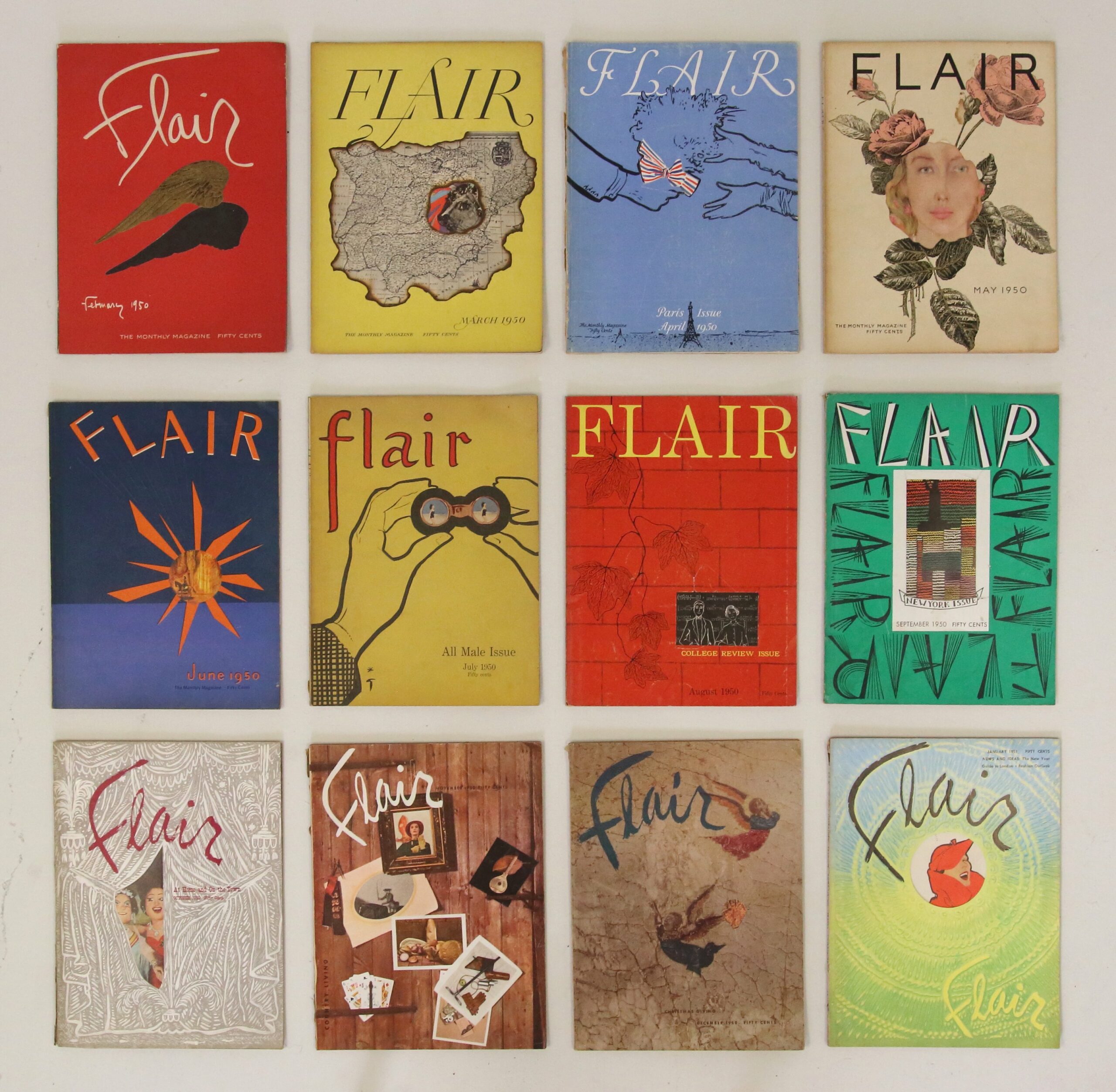
During Flair’s run she did all that and more, with a roster of contributors also including Salvador Dalí, Simone de Beauvoir, W. H. Auden, Gloria Swanson, Winston Churchill, Eleanor Roosevelt, and Jean Cocteau. In Flair’s debut issue, published in February 1950, “an article on the 28-year-old Lucian Freud came liberally accompanied with reproductions of his art—the first ever to appear in America.”
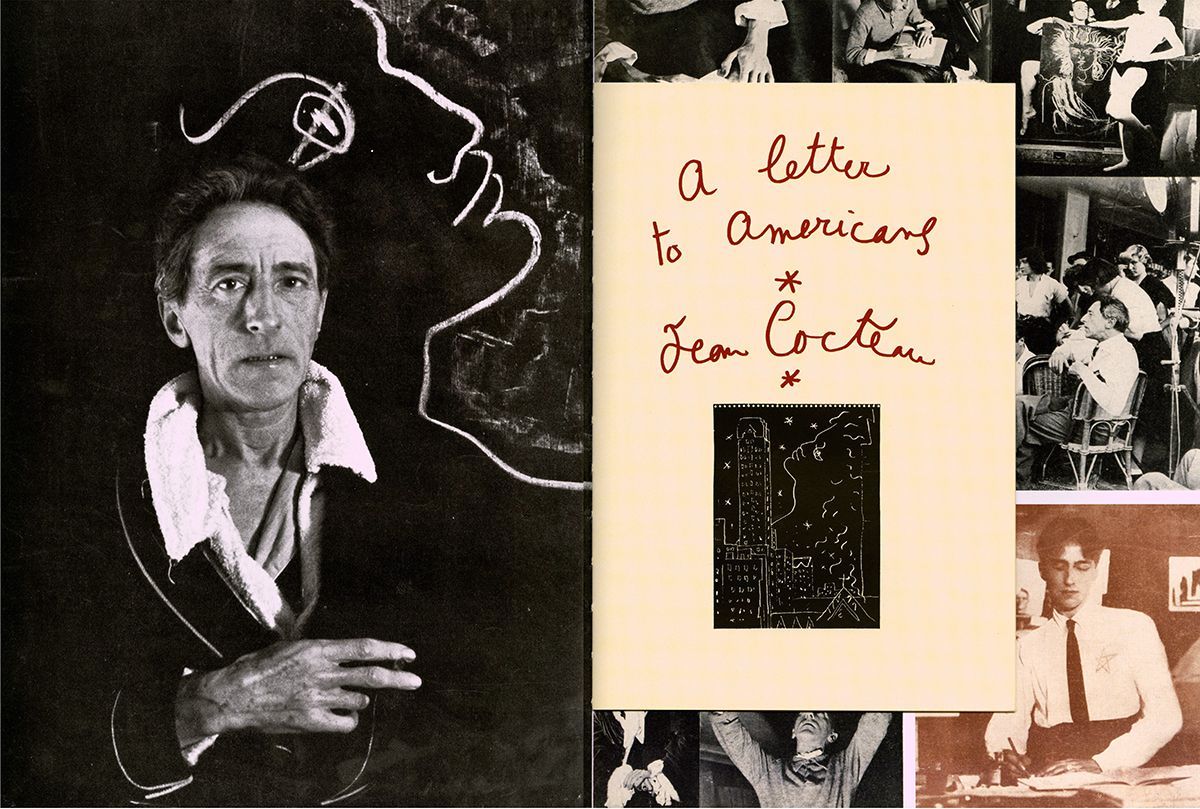
So writes Vanity Fair’s Amy Fine Collins in a profile of Clowes. “Angus Wilson and Tennessee Williams contributed short stories, Wilson’s printed on paper textured to resemble slubbed silk.” What’s more, “The Duke and Duchess of Windsor opened their home to Flair’s readers, treating them to their recondite and entertaining tips. A more futuristic approach to living was set forth in a two-page spread on Richard Kelly’s lighting design for Philip Johnson’s glass house in Connecticut.” Feature though it may have the work of an astonishingly varied group of luminaries — pulled in by Cowles’ vast and deliberately woven social net — Flair is even more respected today for each issue’s lavish, elaborate, and distinctive design.
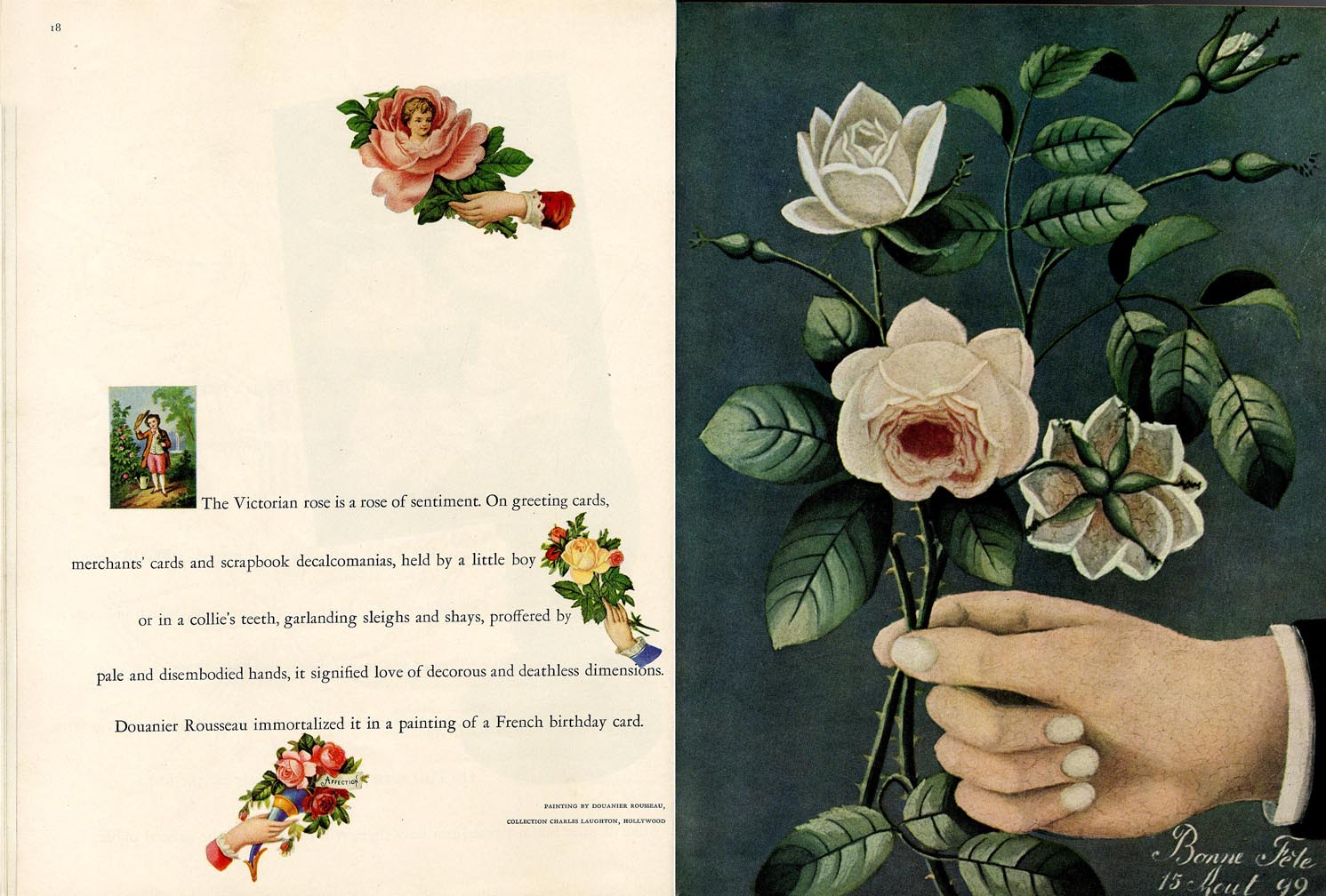
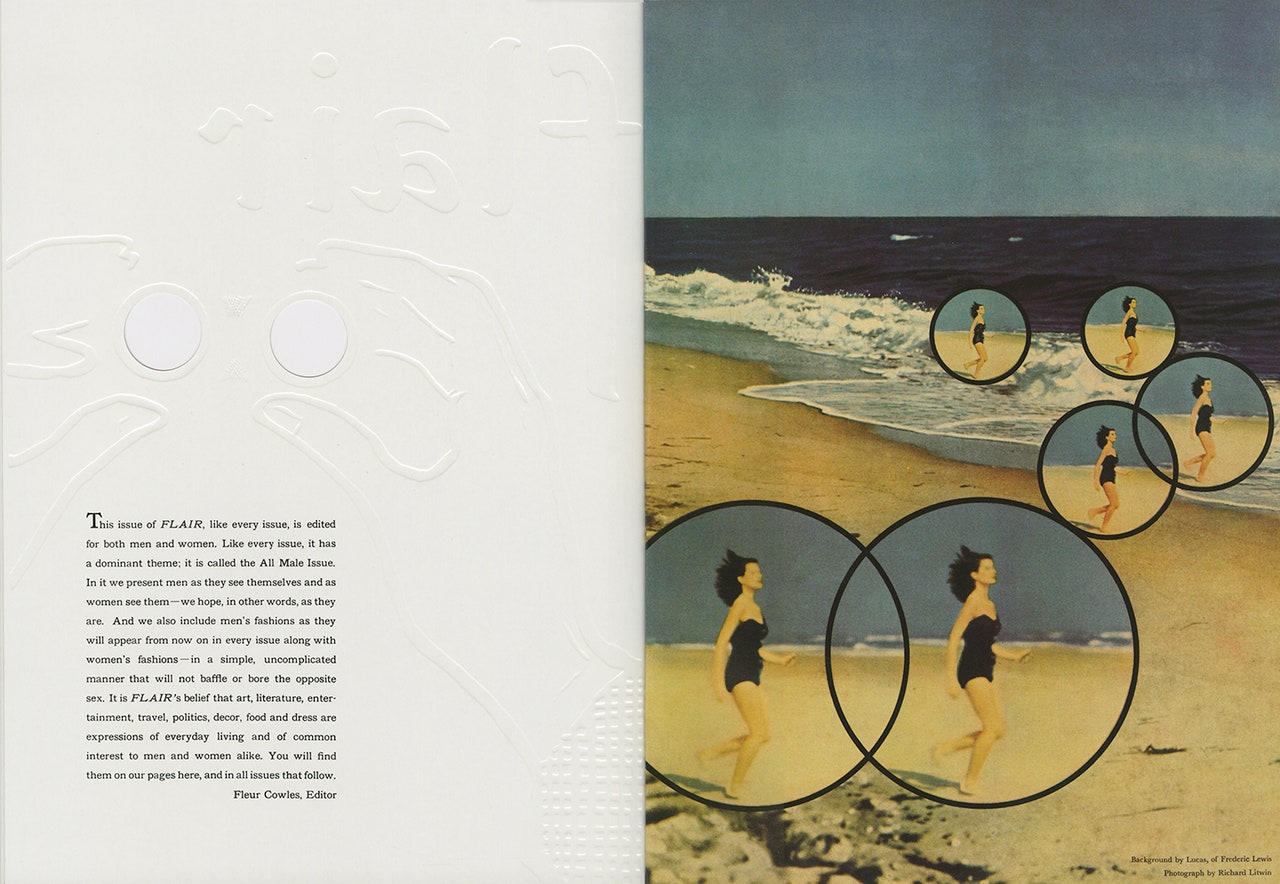
“If a feature would be better in dimension than on flat pages, why not fold half-pages inside double-page spreads?” asks Cowles in her memoirs, quoted in Print magazine. “Why not bind it as ‘a little book’ … giving it a special focus? If a feature was better ‘translated’ on textured paper, why use shiny paper?” And “if a painting was good enough to frame, why not print it on properly heavy stock? Why not bind little accordion folders into each issue to give the feeling of something more personal to the content?” One reason is the $2.5 million (1950 dollars) that Mike Cowles estimated Flair to have cost in the year it ran before he pulled its plug.
But then, by the early 1970s even the highly profitable Look had to fold — and of the two magazines, only one has become ever more sought-after, has books published in its tribute, and still inspires designers today. To take a closer look at the magazine, see The Best of Flair, a compilation of the magazine’s best content as chosen by Fleur Cowles herself. (See a video preview of the book above.)
Related Content:
Vogue Editor-in-Chief Anna Wintour Teaches a Course on Creativity & Leadership
Based in Seoul, Colin Marshall writes and broadcasts on cities, language, and culture. His projects include the Substack newsletter Books on Cities, the book The Stateless City: a Walk through 21st-Century Los Angeles and the video series The City in Cinema. Follow him on Twitter at @colinmarshall, on Facebook, or on Instagram.
Read More...Wonder Woman 1984 in Context — Pretty Much Pop: A Culture Podcast #76

The holiday film release season has now passed, having issued only one real blockbuster, which is the return of Wonder Woman. This week’s Pretty Much Pop likewise offers a returning hero: Our college-going guest from ep. 33 on heroine journeys has now grown into a grad student in comics history, and she brings her deep WW knowledge to consider with your hosts Erica Spyres, Mark Linsenmayer, and Brian Hirt.
Part of the relevant context is the 2017 biopic Professor Marston and the Wonder Women, which revealed the unorthodox views of WW’s creator, and so of course this shows up in how WW judges us: She’s not just a Captain America-style patriot, but a foreigner who in the new film compassionately condemns our 80s greed and dishonesty. But do the themes actually make sense? And what’s with having her love interest return from the dead, hijacking another man’s body with no acknowledgment that that’s very skeevy?
Also, how does the depiction of WW’s homeland compare to other feminist utopias like Herland and “Sultana’s Dream”? Does it matter that WW was created by and initially aimed primarily at males? We learn a little about the post-Marston WW (who couldn’t join the Justice League, which was for boys only!) and talk about the ’70s TV show, the outfits, the villains, and WW in love.
Here are a few supplementary articles:
- “The Surprising Origin Story of Wonder Woman” by Jill Lepore
- “Does Wonder Woman 1984 Have a Steve Trevor Problem?” by Sarah El-Mahmoud
- “The Warped Morality of ‘Wonder Woman 1984’ ” by Dani Di Placido
- “How Wonder Woman 1984 Reboots the DC Hero’s Forgotten Superpower” by Eric Francisco
- “How ‘Wonder Woman 1984’ Villain Maxwell Lord Stays True to the Comics” by Graeme McMillan
- And from our former guest, Noah Berlatsky: “HBO Max’s ‘Wonder Woman 1984’ Stars a Trump‑y Villain, Gal Gadot’s Charm and a Garbled Message”
Hear more of this podcast at prettymuchpop.com. This episode includes bonus discussion you can access by supporting the podcast at patreon.com/prettymuchpop. This podcast is part of the Partially Examined Life podcast network.
Pretty Much Pop: A Culture Podcast is the first podcast curated by Open Culture. Browse all Pretty Much Pop posts.
Read More...
When Iggy Pop Published an Essay, “Caesar Lives,” in an Academic Journal about His Love for Edward Gibbon’s The Decline and Fall of the Roman Empire (1995)
Purveyors of the shocking, primal idiocy of pure rock and roll can in many cases be some of the most intelligent people in pop. Or at least that’s the case with the king of shocking, primal idiocy, Iggy Pop. He has interpreted Whitman’s “barbaric yawp” and delivered the John Peel Lecture for BBC Music, becoming “a visiting professor from the School of Punk Rock Hard Knocks,” writes Rolling Stone and bringing an elder statesman’s perspective informed not only by his years in the bowels of the music industry but also by his avocation as a scholar of the Roman Empire….
Yes, that’s right, Iggy Pop is not only an adroit stylist of some of the most brilliantly stupid garage rock ever made, but he’s also a serious reader and thinker who once published a brief reflection on his relationship with Edward Gibbon’s The Decline and Fall of the Roman Empire in the academic journal Ireland Classics.
“Iggy Pop, like Bob Dylan,” writes E.J. Hutchinson, “has an avid interest in Roman antiquity and its genetic connection to contemporary life.” He may also be the sharpest, wiliest embodiment of post-industrial American decline—his entire musical personality a punch in the collective face of the nation’s delusions.
In 1982, horrified by the meanness, tedium and depravity of my existence as I toured the American South playing rock and roll music and going crazy in public, I purchased an abridged copy of The Decline and Fall of the Roman Empire (Dero Saunders, Penguin).
The grandeur of the subject appealed to me, as did the cameo illustration of Edward Gibbon, the author, on the front cover. He looked like a heavy dude.
Hutchinson gives us a finely wrought analysis of Pop’s “tour de force of classical Gibbonian English prose, a scrap of Ciceronian periodicity.” (Gibbon did, indeed, look like a heavy dude.) Pop’s reading of Gibbon, “with pleasure around 4 am, with my drugs and whisky in cheap motels,” absorbed him in its “clash of beliefs, personalities and values,” he writes, “played out on antiquity’s stage by crowds of the vulgar, led by huge archetypal characters.” All of this appealed to him, he writes, given his own role in “a political business… the music business, which is not about music at all, but is a kind of religion-rental.”
Gibbon’s massive saga, a monumental example of sweeping Enlightenment historiography, so captivated Pop that a decade later, it inspired “an extemporaneous soliloquy” he called “Caesar,” the closing track on 1993’s “overlooked masterpiece” American Caesar. The spoken word piece “made me laugh my ass off,” he writes, “because it was so true. America is Rome. Of course, why shouldn’t it be? All of Western life and institutions today are traceable to the Romans and their world. We are all Roman children for better or worse.”
But there was much more to Pop’s reading of Gibbon—which he eventually enjoyed in a “beautiful edition in three volumes of the magnificent original unabridged”—than a possibly facile comparison between one failing empire and another. Much more, indeed. Reading Gibbon, he writes (sounding very much like another proponent of the classics, Italo Calvino), taught him how to think about the present, and how to think, humbly, about himself. He ends his essay with a numbered list of “just some of the ways I benefit”:
- I feel a great comfort and relief knowing that there were others who lived and died and thought and fought so long ago; I feel less tyrannized by the present day.
- I learn much about the way our society really works, because the system-origins — military, religious, political, colonial, agricultural, financial — are all there to be scrutinized in their infancy. I have gained perspective.
- The language in which the book is written is rich and complete, as the language of today is not.
- I find out how little I know.
- I am inspired by the will and erudition which enabled Gibbon to complete a work of twenty-odd years. The guy stuck with things. I urge anyone who wants life on earth to really come alive for them to enjoy the beautiful ancestral ancient world.
Read Pop’s full 1995 Ireland Classics essay on Jstor or Medium.
Related Content:
The Splendid Book Design of the 1946 Edition of Gibbon’s Decline and Fall of the Roman Empire
Iggy Pop Reads Edgar Allan Poe’s Classic Horror Story, “The Tell-Tale Heart”
Stream Iggy Pop’s Two-Hour Radio Tribute to David Bowie
Josh Jones is a writer and musician based in Durham, NC. Follow him at @jdmagness
Read More...Support Us
We're hoping to rely on loyal readers, rather than erratic ads. Please click the Donate button and support Open Culture. You can use Paypal, Venmo, Patreon, even Crypto! We thank you!

About Us

Open Culture scours the web for the best educational media. We find the free courses and audio books you need, the language lessons & educational videos you want, and plenty of enlightenment in between.
Advertise With Us

FREE UPDATES!
GET OUR DAILY EMAIL
Get the best cultural and educational resources on the web curated for you in a daily email. We never spam. Unsubscribe at any time.
FOLLOW ON SOCIAL MEDIA

Open Culture editor Dan Colman scours the web for the best educational media. He finds the free courses and audio books you need, the language lessons & movies you want, and plenty of enlightenment in between.
Advertise With Us


