9 Things a Woman Couldn’t Do in 1971
More than a century after women’s suffrage in the United States, it’s not enough to bone up on the platforms of female primary candidates (though that’s an excellent start).
A Twitter user and self-described Old Crone named Robyn urged her fellow Americans to take a good long gander at a list of nine freedoms that women in the United States were not universally granted in 1971, the year Helen Reddy released the soon-to-be anthem, “I Am Woman,” above.
Even those of us who remember singing along as children may experience some shock that these facts check out on Snopes.
- CREDIT CARDS: Prior to the Equal Credit Opportunity Act of 1974, married women couldn’t get credit cards without their husbands’ signatures. Single women, divorcees, and widows were often required to have a man co-sign. The double standard also meant female applicants were frequently issued card limits up to 50% lower than that of males who earned identical wages.
- PREGNANT WORKERS: The Pregnancy Discrimination Act of 1978 protected pregnant women from being fired because of their impending maternity. But it came with a major loophole that’s still in need of closing. The language of the law stipulates that employers must accommodate pregnant workers only if concessions are being made for other employees who are “similar in their ability or inability to work.”
- JURY DUTY: In 1975, the Supreme Court declared it constitutionally unacceptable for states to deny women the opportunity to serve on juries. This is an arena where we’ve all come a long way, baby. It’s now completely normal for men to be excused from jury duty as the primary caregivers of their young children.
- MILITARY COMBAT: In 2013, former Secretary of Defense Leon Panetta and former Chairman of the Joint Chiefs of Staff, General Martin Dempsey announced that the Pentagon was rescinding the direct combat exclusion rule that barred women from serving in artillery, armor, infantry and other such battle roles. At the time of the announcement, the military had already seen more than 130 female soldiers killed, and 800 wounded on the front lines in Iraq and Afghanistan.
- IVY LEAGUE ADMISSIONS: Those who conceive of elite colleges as breeding grounds for sexual assault protests and Title IX activism would do well to remember that Columbia College didn’t admit women until 1983, following in the marginally deeper footsteps of others in the Ivy League—Harvard (1977), Dartmouth (1972), Brown (1971), Yale (1969), and Princeton (1969). These days, single-sex higher education options for women far outnumber those for men, but the networking power and increased earning potential an Ivy League degree confers remain the same.
- WORKPLACE HARASSMENT: In 1977, women who’d been sexually harassed in the workplace received confirmation in three separate trials that they could sue their employers under Title VII of the 1964 Civil Rights Act. In 1998, the Supreme Court ruled that same-sex harassment was also unlawful. In between was the television event of 1991, Anita Hill’s shocking testimony against her former boss, U.S. Supreme Court justice (then nominee) Clarence Thomas.
- SPOUSAL CONSENT: In 1993, spousal rape was officially outlawed in all 50 states. Not tonight honey, or you’ll have a headache in the form of your wife’s legal backup.
- HEALTH INSURANCE: In 2010, the Patient Protection and Affordable Care Act decreed that any health insurance plan established after March of that year could not charge women higher premiums than men for identical benefits. This was bad news for women who got their health insurance through their jobs, and whose employers were grandfathered into discriminatory plans established prior to 2010. Of course, that’s all ancient history now.
- CONTRACEPTIVES: In 1972, the Supreme Court made it legal for all citizens to possess birth control, irrespective of marital status, stating “if the right of privacy means anything, it is the right of the individual, married or single, to be free from unwarranted governmental intrusion into matters so fundamentally affecting a person as the decision whether to bear or beget a child.” (It’s worth noting, however, that in 1972, states could still constitutionally prohibit and punish sex outside of marriage.)
Feminism is NOT just for other women.
Note: An earlier version of this post appeared on our site in 2019.
Related Content:
No Women Need Apply: A Disheartening 1938 Rejection Letter from Disney Animation
How the Bicycle Accelerated the Women’s Rights Movement (Circa 1890)
Odd Vintage Postcards Document the Propaganda Against Women’s Rights 100 Years Ago
Ayun Halliday is an author, illustrator, and theater maker in NYC.
Read More...Watch 434 Avant-Garde and Surreal Short Films Online: Salvador Dalí, Marcel Duchamp, Luis Buñuel and Many More
Much has been written lately about the crisis in Hollywood, which has left many apparently sure-fire blockbusters floundering, theaters empty, and production jobs lost. There are many factors in play — some of them, as few diagnoses fail to point out, structural — but can we ignore the possibility of fatigue, perhaps even boredom, with film itself? We’ve posted in recent years here on Open Culture about the decay of cinema, the rise of “visual muzak” on Netflix, why movies don’t feel real anymore, and why movies don’t even feel like movies anymore. Even if they’ve limited their exposure to big-budget spectacles, most once-avid cinephiles will have felt all those phenomena for themselves by now, and many will be considering whether to look for a new art form to enjoy. But some will wonder: maybe there’s a cure?
There could well be, and a bracing one. If you seek a re-enchantment with film, there could be few better places to look than in the work of filmmakers who have broken that medium down to its very components and put it together again in unconventional ways. Some of the results shocked audiences fifty, sixty, seventy, even a hundred years ago — and indeed, some retain that power today.
You can take a journey through the history of such experimental, avant-garde, and surreal motion pictures with the YouTube playlist at the top of the post, which comprises 434 such videos. The exact number will vary depending upon your region of the world, as well as upon how many of them have come and gone since the playlist’s creation. Whatever the total, not even a fringe-cinema habitué will have seen everything on it (at least, not more than once).
Longtime Open Culture readers may recognize on the playlist the work of Dadaist Hans Richter and Marcel Duchamp, abstraction pioneer Viking Eggeling, early feminist filmmaker Germaine Dulac, and animator (as well as city symphonist) Walter Ruttmann, not to mention Salvador Dalí and Luis Buñuel.
They may or may not already have encountered the cinematic legacy of, say, Shūji Terayama, the all-around avant-gardist and provocateur whose influence is still felt in Japanese art today; Stan Brakhage, who forewent even the use of a camera and created his own cinema by manipulating film directly; or Michael Snow, whose Wavelength tells a story without leaving a single room in which very little happens. But then, after enough of these experimental, avant-garde, and surreal viewing experiences, you’ll remember that there are many ways for a film to tell a story — and much, much more that film can do besides storytelling, if only we’d let it.
Related Content:
A Page of Madness: The Lost Avant Garde Masterpiece from Early Japanese Cinema (1926)
Watch the Meditative Cinepoem “H20”: A Landmark Avant-Garde Art Film from 1929
Watch Meshes of the Afternoon, the Experimental Short Voted the 16th Best Film of All Time
Based in Seoul, Colin Marshall writes and broadcasts on cities, language, and culture. He’s the author of the newsletter Books on Cities as well as the books 한국 요약 금지 (No Summarizing Korea) and Korean Newtro. Follow him on the social network formerly known as Twitter at @colinmarshall.
Read More...How to Read Books That Challenge Your Mind: Advice from Robert Greene, Author of The 48 Laws of Power
If you’ve fallen out of the habit of reading books, you’re certainly not alone. Consider how often posts circulate on social media (itself a big part of the problem) about studies showing a rapid increase in the number of people who don’t even get one book read per year. How best to get back on the literary wagon? You might try going straight for the hard stuff, as it were, by taking on a novel like Moby-Dick. But that, according to the view articulated in the video above by The 48 Laws of Power author Robert Greene, would be like stepping back into the gym after years away and trying to bench press 300 pounds. Rather than starting with Melville’s masterpiece, build your way up to it — but once you get to it, you’ve got to finish it.
“You want to train yourself to finish books, and not constantly be going from one to another to another,” Greene says, and that holds even for those you may not enjoy. “When I read a book that I hate, that is boring, and I make myself read all the way through, I kind of take angry notes about it: God, this is ridiculous, this is so stupid, I hate this, this guy doesn’t know what he’s talking about. You can react to the book, you can have a dialogue with it, but you want to be able to have the patience to get through a 400- 500, 600-page book.” To return to the weight-training analogy, a shorter book to start could be “kind of easy, and it could be in a subject that interests you,” but upon finishing it, you should “choose something that’s a little bit difficult and a little bit complicated.”
The idea is deliberately to choose books that challenge you, a quality that doesn’t come from length alone. If one gives you an impression that “it’s not how you feel politically about the world, it’s not how you feel spiritually about the world, it’s something that’s a little bit outside what you would normally encounter,” take it as a sign that you should read it. Approaching the matter from the other direction, Greene also advises not to “just choose things that you think are entertaining and fun, because that’s going to make you lazy, and it’s going to make you weak, and it’s going to make you always look for things that are entertaining, fun, and distracting.” An airport-thriller-heavy diet may work for Malcolm Gladwell, but it’s unlikely to work for you.
As an example of a challenging read, Greene points to any of Robert Caro’s four biographical volumes about U.S. President Lyndon B. Johnson, one of which runs to well over 1,000 pages. He could also have suggested Caro’s earlier The Power Broker: Robert Moses and the Fall of New York, one of those books — alongside not just Moby-Dick, but also the Bible, Ulysses, War and Peace, and even Pride and Prejudice — that even many serious readers only pretend to have made it through, or indeed started. Whatever the material you use, Greene says, “I beg you to train your mind like you train your body, to go through something that’s a little more difficult, a little more challenging, that’s going to take some time for you. That’s the way to develop the habit of wanting to read, and to have the patience to read more books.” No pain, no gain, as the bodybuilders say; bear that in mind when you get to Melville’s distilled course on cetology.
Related content:
20 Books People Pretend to Read (and Now Your Confessions?)
5 Books You Can Read Again .… and Again and Again: Here’s Our Picks, Now Yours
7 Tips for Reading More Books in a Year
The Nature of Human Stupidity Explained by The 48 Laws of Power Author Robert Greene
Based in Seoul, Colin Marshall writes and broadcasts on cities, language, and culture. He’s the author of the newsletter Books on Cities as well as the books 한국 요약 금지 (No Summarizing Korea) and Korean Newtro. Follow him on the social network formerly known as Twitter at @colinmarshall.
Read More...An Animated Introduction to the Antikythera Mechanism: The World’s First Analog Computer from Ancient Greece
From TED-Ed comes an animated introduction to the Antikythera Mechanism, an ancient Greek device that dates back to the 2nd century BCE. TED writes: “In 1900, Greek divers stumbled upon a 2,000-year-old shipwreck whose contents would shake our understanding of the ancient world. Among the remains were fragments of mangled wood and corroded metal, which archaeologists soon realized were parts of the oldest geared device ever discovered — and humankind’s first computer. So, how did it work?” Above, science journalist Max G. Levy explains the inner workings of the Antikythera Mechanism and how the Greeks put the device to use.
For those who want to take a deeper dive into this ancient analog computer (there’s a lot more to learn), we invite you to explore the titles in the Relateds section below. They’ll take you deeper into this marvel of ancient engineering.
If you would like to support the mission of Open Culture, consider making a donation to our site. It’s hard to rely 100% on ads, and your contributions will help us continue providing the best free cultural and educational materials to learners everywhere. You can contribute through PayPal, Patreon, and Venmo (@openculture). Thanks!
Related Content
Read More...Watch All of Vivaldi’s Four Seasons Performed on Original Baroque Instruments
Antonio Vivaldi’s The Four Seasons reigns as one of the world’s most recognizable early 18th-century pieces, thanks to its frequent appearances in films and television commercials.
Upon its debut in 1725, The Four Seasons stunned listeners by telling a story without the help of a human voice. Vivaldi drew on four existing sonnets (possibly of his own provenance), using strings to paint a narrative filled with spring thunderstorms, summer’s swelter, autumnal hunts and harvests, and the icy winds of winter.
The composer studded his score with precisely placed lines from the sonnets, to convey his expectations that the musicians would use their instruments to sonically embody the experiences being described.
For two hundred years, musicians cleaved closely to Vivaldi’s original orchestration.
The last hundred years, however, have seen a wide range of instruments and interpretations. Drums, synths, an electric guitar, a Chinese pipa, an Indian sarangi, a pair of Inuit throat singers, a Japanese a cappella women’s chorus, a Theremin and a musical saw are among those to have taken a stab at The Four Seasons’ drowsing goatherd, barking dog, and twittering birdies.
Remembering that Vivaldi himself was a great innovator, we suggest that there’s nothing wrong with taking a break from all that to revisit the original flavor.
The San Francisco-based early music ensemble, Voices of Music does so beautifully, above, with a video playlist of live performances given between 2015 and 2018, with the four concertos edited to be presented in their traditional order.
Voices of Music co-directors David Tayler and Hanneke van Proosdij were adamant that these high quality audio recordings would leave listeners feeling as if they are in the same room with the musicians and their baroque instruments. As Tayler told Early Music America:
We did tests where we sat in the audience listening to the mix. We stopped when we got to the point that it sounded like sitting in the audience. We didn’t want something that looked like a concert, with a CD playing in the background.
Multiple stationery cameras ensured that the mostly standing performers’ spontaneous physical responses to the music and each other would not pass unremarked. As tempting as it is to savor these joyful sounds with ears alone, we recommend taking it in with your eyes, too. The pleasure these virtuosos take in Vivaldi and each other is a delight.
You also won’t want to miss the English translations of the sonnet, broken into subtitles and timed to appear at the exact place where they appear in Vivaldi’s 300 year-old score.
Spring:
Allegro — 0:00
Largo — 3:32
Allegro — 6:13
Summer:
Allegro non molto — 10:09
Adagio — 15:31
Presto — 17:46
Autumn:
Allegro — 20:42
Adagio molto — 26:14
Allegro — 28:25
Winter:
Allegro non molto — 31:56
Largo — 35:29
Allegro — 37:25
While the audience reactions were edited from the presentation above, we’d be remiss if we didn’t direct you to a playlist wherein these virtuoso players are seen graciously accepting the applause of the crowds who were lucky enough to catch these performances in person.
Note: An earlier version of this post appeared on our site in 2021.
If you would like to support the mission of Open Culture, consider making a donation to our site. It’s hard to rely 100% on ads, and your contributions will help us continue providing the best free cultural and educational materials to learners everywhere. You can contribute through PayPal, Patreon, and Venmo (@openculture). Thanks!
Related Content:
See Vivaldi’s Four Seasons Visualized in Colorfully Animated Scores
Why We Love Vivaldi’s “Four Seasons”: An Animated Music Lesson
Ayun Halliday is an author, theatermaker, and the Chief Primatologist in NYC.
Read More...
Rare Video: Vince Guaraldi’s First Televised Performance of “Linus and Lucy” (1964)
In 1964—a year before the release of A Charlie Brown Christmas—Vince Guaraldi gave the first televised performance of “Linus and Lucy.” Filmed for public television, the performance featured Guaraldi on piano, Tom Beeson on bass, and John Rae on drums. Long unseen, this 1964 performance captures the piece in its earliest televised form, well before A Charlie Brown Christmas became the second-best-selling jazz album in history. Sit back, take a deep breath, and enjoy this groovy, historic performance.
If you would like to support the mission of Open Culture, consider making a donation to our site. It’s hard to rely 100% on ads, and your contributions will help us continue providing the best free cultural and educational materials to learners everywhere. You can contribute through PayPal, Patreon, and Venmo (@openculture). Thanks!
Related Content
How Innovative Jazz Pianist Vince Guaraldi Became the Composer of Beloved Charlie Brown Music
Read More...Cats in Medieval Manuscripts & Paintings
Renaissance artist Albrecht Dürer (1471–1528) never saw a rhino himself, but by relying on eyewitness descriptions of the one King Manuel I of Portugal intended as a gift to the Pope, he managed to render a fairly realistic one, all things considered.
Medieval artists’ renderings of cats so often fell short of the mark, Youtuber Art Deco wonders if any of them had seen a cat before.
Point taken, but cats were well integrated into medieval society.
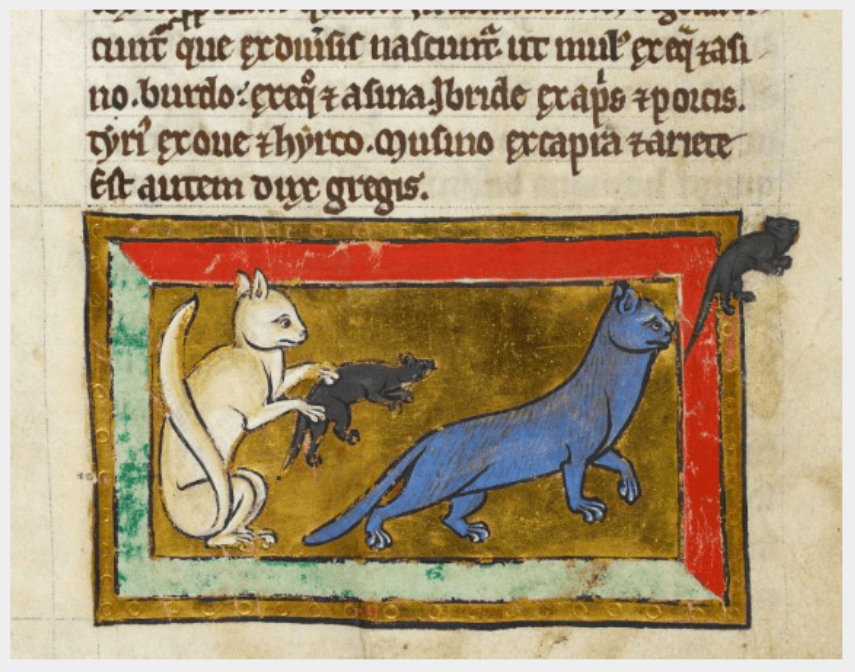
Royal 12 C xix f. 36v/37r (13th century)
Cats provided medieval citizens with the same pest control services they’d been performing since the ancient Egyptians first domesticated them.
Ancient Egyptians conveyed their gratitude and respect by regarding cats as symbols of divinity, protection, and strength.
Certain Egyptian goddesses, like Bastet, were imbued with unmistakably feline characteristics.
The Vintage News reports that harming a cat in those days was punishable by death, exporting them was illegal, and, much like today, the death of a cat was an occasion for public sorrow:
When a cat died, it was buried with honors, mummified and mourned by the humans. The body of the cat would be wrapped in the finest materials and then embalmed in order to preserve the body for a longer time. Ancient Egyptians went so far that they shaved their eyebrows as a sign of their deep sorrow for the deceased pet.
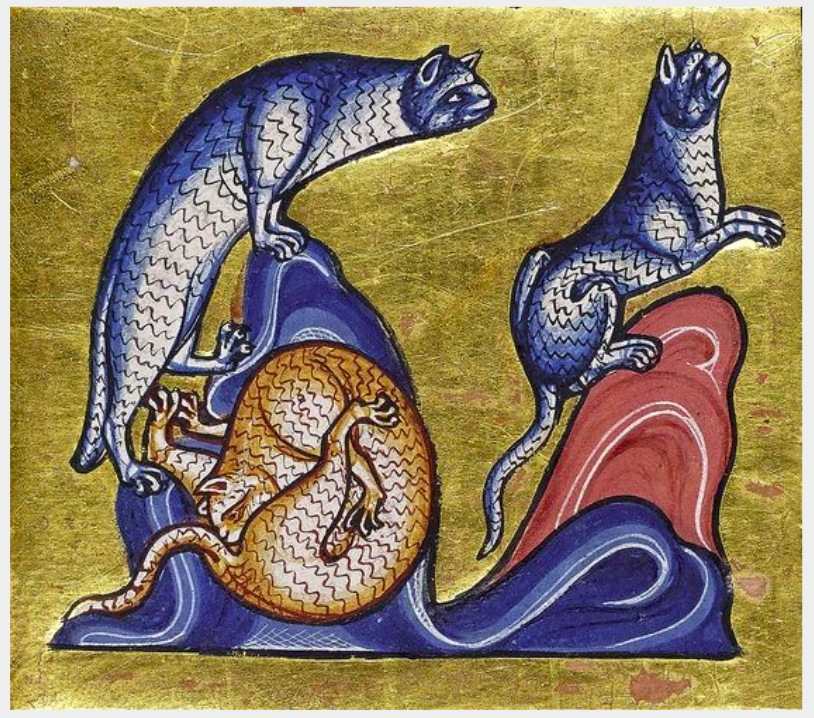
Aberdeen University Library, MS 24 f. 23v (England, c 1200)
The medieval church took a much darker view of our feline friends.
Their close ties to paganism and early religions were enough for cats to be judged guilty of witchcraft, sinful sexuality, and fraternizing with Satan.
In the late 12th-century, writer Walter Map, a soon-to-be archdeacon of Oxford, declared that the devil appeared before his devotees in feline form:
… hanging by a rope, a black cat of great size. As soon as they see this cat, the lights are turned out. They do not sing or recite hymns in a distinct way, but they mutter them with their teeth closed and they feel in the dark towards where they saw their lord, and when they find it, they kiss it, the more humbly depending on their folly, some on the paws, some under the tail, some on the genitals. And as if they have, in this way, received a license for passion, each one takes the nearest man or woman and they join themselves with the other for as long as they choose to draw out their game.
Pope Innocent VIII issued a papal bull in 1484 condemning the “devil’s favorite animal and idol of all witches” to death, along with their human companions.
13th-century Franciscan monk Bartholomaeus Anglicus refrained from demonic tattle, but neither did he paint cats as angels:
He is a full lecherous beast in youth, swift, pliant, and merry, and leapeth and reseth on everything that is to fore him: and is led by a straw, and playeth therewith: and is a right heavy beast in age and full sleepy, and lieth slyly in wait for mice: and is aware where they be more by smell than by sight, and hunteth and reseth on them in privy places: and when he taketh a mouse, he playeth therewith, and eateth him after the play. In time of love is hard fighting for wives, and one scratcheth and rendeth the other grievously with biting and with claws. And he maketh a ruthful noise and ghastful, when one proffereth to fight with another: and unneth is hurt when he is thrown down off an high place. And when he hath a fair skin, he is as it were proud thereof, and goeth fast about: and when his skin is burnt, then he bideth at home; and is oft for his fair skin taken of the skinner, and slain and flayed.
Pigs and rats also had a bad rep, and like cats, were tortured and executed in great numbers by pious humans.
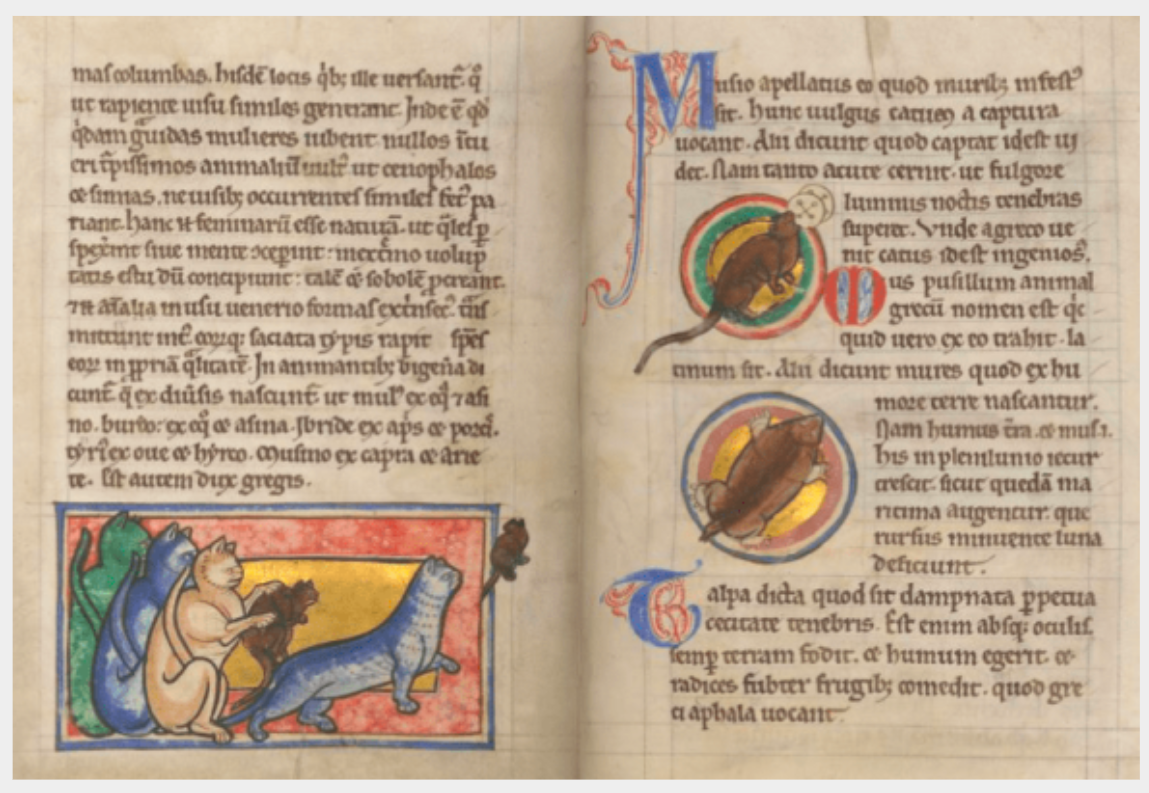
The Worksop Bestiary Morgan Library, MS M.81 f. 47r (England, c 1185)
Not every medieval city was anti-cat. As the Academic Cat Lady Johanna Feenstra writes of the above illustration from The Worksop Bestiary, one of the earliest English bestiaries:
Some would have interpreted the image of a cat pouncing on a rodent as a symbol for the devil going after the human soul. Others might have seen the cat in a completely different light. For instance, as Eucharistic guardians, making sure rodents could not steal and eat the Eucharistic wafers.
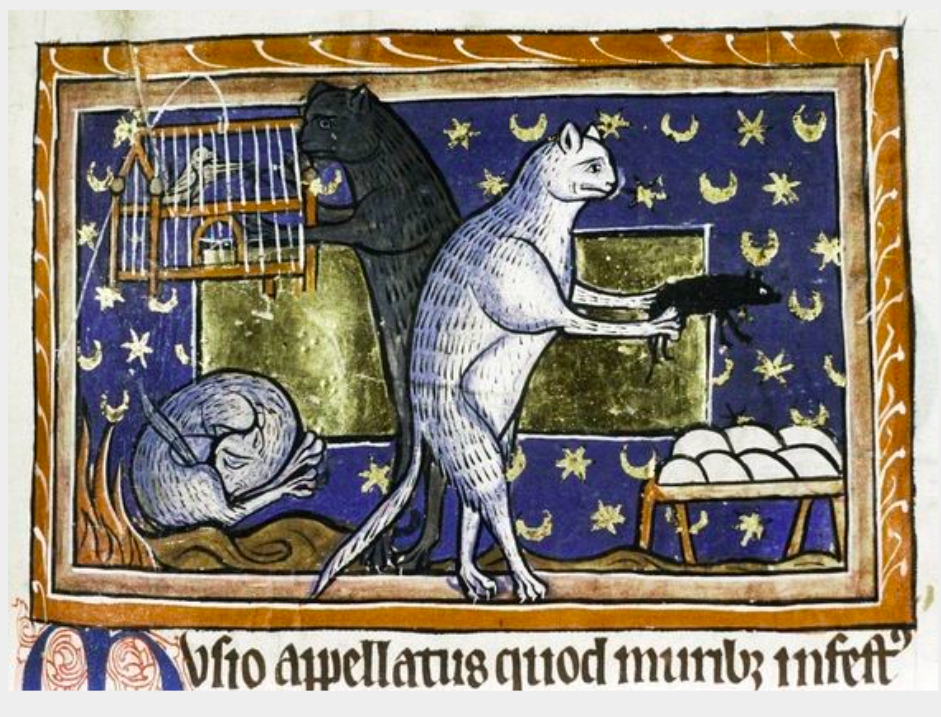
Bodleian Library Bodley 764 f. 51r (England, c 1225–50)
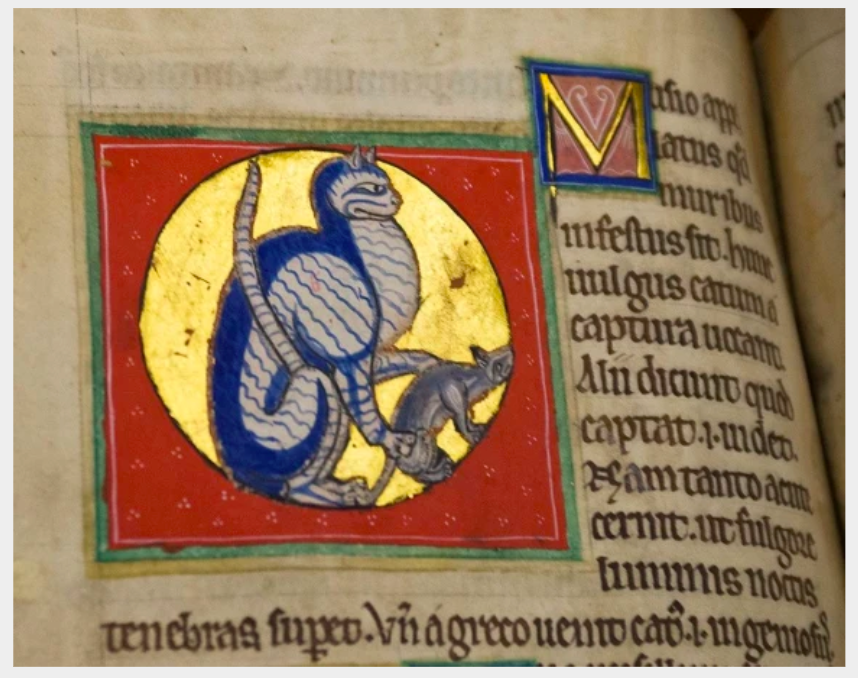
St John’s College Library, MS. 61 (England (York), 13th century)
It took cat lover Leonardo DaVinci to turn the situation around, with eleven sketches from life portraying cats in characteristic poses, much as we see them today. We’ll delve more into that in a future post.
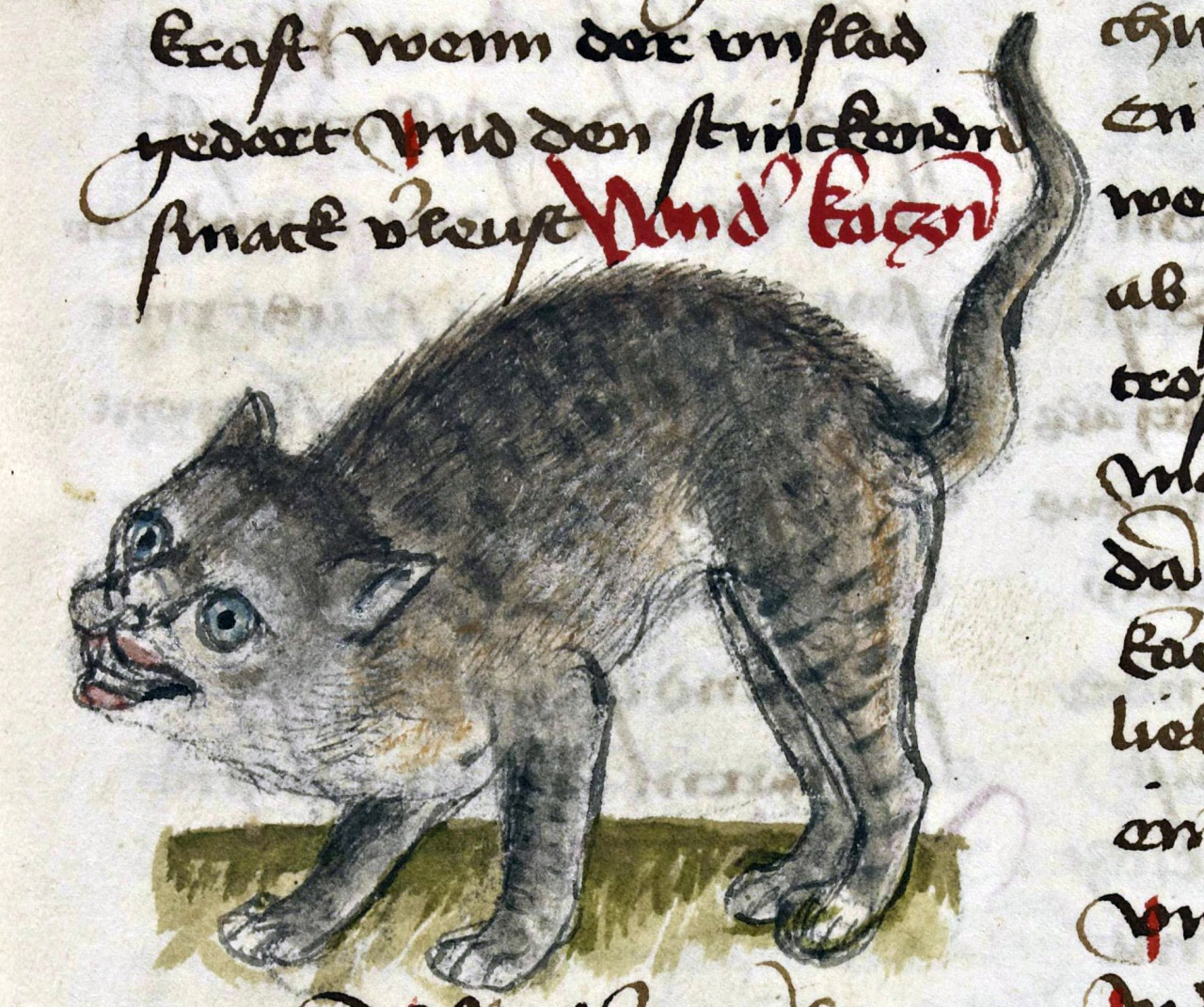
Conrad of Megenberg, ‘Das Buch der Natur’, Germany ca. 1434. Strasbourg, Bibliothèque nationale et universitaire, Ms.2.264, fol. 85r
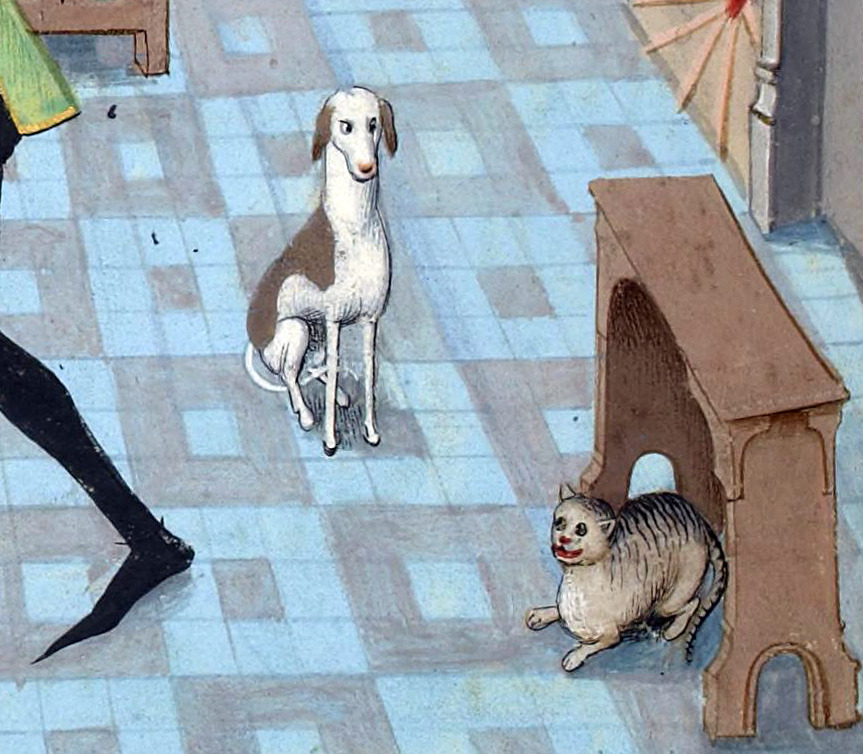
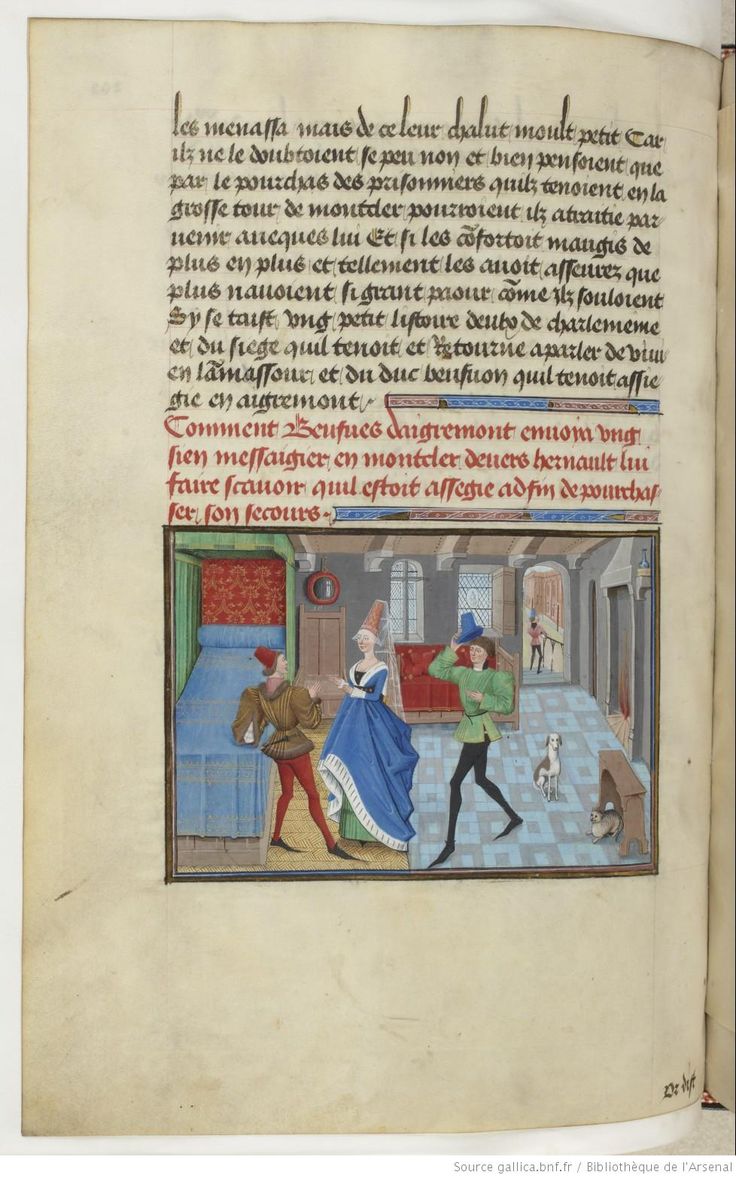

Note: An earlier version of this post appeared on our site in 2022.
Related Content
What People Named Their Cats in the Middle Ages: Gyb, Mite, Méone, Pangur Bán & More
Cats Migrated to Europe 7,000 Years Earlier Than Once Thought
Cats in Japanese Woodblock Prints: How Japan’s Favorite Animals Came to Star in Its Popular Art
- Ayun Halliday is the Chief Primatologist in NYC.
Read More...RIP Gladys Mae West, the Pioneering Black Mathematician Who Helped Lay the Foundation for GPS
Gladys Mae West was born in rural Virginia in 1930, grew up working on a tobacco farm, and died earlier this month a celebrated mathematician whose work made possible the GPS technology most of us use each and every day. Hers was a distinctively American life, in more ways than one. Seeking an escape from the agricultural labor she’d already gotten to know all too well, she won a scholarship to Virginia State College by becoming her high school class valedictorian; after earning her bachelor’s and master’s degrees in mathematics, she taught for a time and then applied for a job at the naval base up in Dahlgren. She first distinguished herself there by verifying the accuracy of bombing tables with a hand calculator, and from there moved on up to the computer programming team.
This was the early nineteen-sixties, when programming a computer meant not coding, but laboriously feeding punch cards into an enormous mainframe. West and her colleagues used IBM’s first transistorized machine, the 7030 (or “Stretch”), which was for a few years the fastest computer in the world.
It cost an equivalent of $81,860,000 in today’s dollars, but no other computer had the power to handle the project of calculating the precise shape of Earth as affected by gravity and the nature of the oceans. About a decade later, another team of government scientists made use of those very same calculations when putting together the model employed by the World Geodetic System, which GPS satellites still use today. Hence the tendency of celebratory obituaries to underscore the point that without West’s work, GPS wouldn’t be possible.
Nor do any of them neglect to point out the fact that West was black, one of just four such mathematicians working for the Navy at Dahlgren. Stories like hers have drawn much greater public interest since the success of Hidden Figures, the Hollywood adaptation of Margot Lee Shetterly’s book about the black female mathematicians at NASA during the Space Race. When that movie came out, in 2016, even West’s own children didn’t know the importance of the once-classified work she’d done. Only in 2018, when she provided that information on a biographical form she filled out for an event hosted by her college sorority, did it become public. She thus spent the last years of her long life as a celebrity, sought out by academics and journalists eager to understand the contributions of another no-longer-hidden figure. But to their questions about her own GPS use, she reportedly answered that she preferred a good old-fashioned paper map.
Related content:
Black History in Two Minutes: Watch 93 Videos Written & Narrated by Henry Louis Gates Jr.
Based in Seoul, Colin Marshall writes and broadcasts on cities, language, and culture. He’s the author of the newsletter Books on Cities as well as the books 한국 요약 금지 (No Summarizing Korea) and Korean Newtro. Follow him on the social network formerly known as Twitter at @colinmarshall.
Read More...Hannah Arendt Explains How Propaganda Uses Lies to Erode All Truth & Morality: Insights from The Origins of Totalitarianism

Image by Bernd Schwabe, via Wikimedia Commons
At least when I was in grade school, we learned the very basics of how the Third Reich came to power in the early 1930s. Paramilitary gangs terrorizing the opposition, the incompetence and opportunism of German conservatives, the Reichstag Fire. And we learned about the critical importance of propaganda, the deliberate misinforming of the public in order to sway opinions en masse and achieve popular support (or at least the appearance of it). While Minister of Propaganda Joseph Goebbels purged Jewish and leftist artists and writers, he built a massive media infrastructure that played, writes PBS, “probably the most important role in creating an atmosphere in Germany that made it possible for the Nazis to commit terrible atrocities against Jews, homosexuals, and other minorities.”
How did the minority party of Hitler and Goebbels take over and break the will of the German people so thoroughly that they would allow and participate in mass murder? Post-war scholars of totalitarianism like Theodor Adorno and Hannah Arendt asked that question over and over, for several decades afterward. Their earliest studies on the subject looked at two sides of the equation. Adorno contributed to a massive volume of social psychology called The Authoritarian Personality, which studied individuals predisposed to the appeals of totalitarianism. He invented what he called the F‑Scale (“F” for “fascism”), one of several measures he used to theorize the Authoritarian Personality Type.
Arendt, on the other hand, looked closely at the regimes of Hitler and Stalin and their functionaries, at the ideology of scientific racism, and at the mechanism of propaganda in fostering “a curiously varying mixture of gullibility and cynicism with which each member… is expected to react to the changing lying statements of the leaders.” So she wrote in her 1951 Origins of Totalitarianism, going on to elaborate that this “mixture of gullibility and cynicism… is prevalent in all ranks of totalitarian movements”:
In an ever-changing, incomprehensible world the masses had reached the point where they would, at the same time, believe everything and nothing, think that everything was possible and nothing was true… The totalitarian mass leaders based their propaganda on the correct psychological assumption that, under such conditions, one could make people believe the most fantastic statements one day, and trust that if the next day they were given irrefutable proof of their falsehood, they would take refuge in cynicism; instead of deserting the leaders who had lied to them, they would protest that they had known all along that the statement was a lie and would admire the leaders for their superior tactical cleverness.
Why the constant, often blatant lying? For one thing, it functioned as a means of fully dominating subordinates, who would have to cast aside all their integrity to repeat outrageous falsehoods and would then be bound to the leader by shame and complicity. “The great analysts of truth and language in politics”—writes McGill University political philosophy professor Jacob T. Levy—including “George Orwell, Hannah Arendt, Vaclav Havel—can help us recognize this kind of lie for what it is.… Saying something obviously untrue, and making your subordinates repeat it with a straight face in their own voice, is a particularly startling display of power over them. It’s something that was endemic to totalitarianism.”
Arendt and others recognized, writes Levy, that “being made to repeat an obvious lie makes it clear that you’re powerless.” She also recognized the function of an avalanche of lies to render a populace powerless to resist, the phenomenon we now refer to as “gaslighting”:
The result of a consistent and total substitution of lies for factual truth is not that the lie will now be accepted as truth and truth be defamed as a lie, but that the sense by which we take our bearings in the real world—and the category of truth versus falsehood is among the mental means to this end—is being destroyed.
The epistemological ground thus pulled out from under them, most would depend on whatever the leader said, no matter its relation to truth. “The essential conviction shared by all ranks,” Arendt concluded, “from fellow traveler to leader, is that politics is a game of cheating and that the ‘first commandment’ of the movement: ‘The Fuehrer is always right,’ is as necessary for the purposes of world politics, i.e., world-wide cheating, as the rules of military discipline are for the purposes of war.”
Arendt wrote Origins of Totalitarianism from research and observations gathered during the 1940s, a very specific historical period. Nonetheless the book, Jeffrey Isaacs remarks at The Washington Post, “raises a set of fundamental questions about how tyranny can arise and the dangerous forms of inhumanity to which it can lead.” Arendt’s analysis of propaganda and the function of lies seems particularly relevant at this moment. The kinds of blatant lies she wrote of might become so commonplace as to become banal. We might begin to think they are an irrelevant sideshow. This, she suggests, would be a mistake.
Note: An earlier version of this post appeared on our site in 2017.
Related Content:
Umberto Eco’s List of the 14 Common Features of Fascism
Read More...When Two Filmmakers Make the Same Movie — and One of Them Is Werner Herzog
In 1991, the French husband-and-wife volcanologist-filmmaker team Maurice and Katia Krafft were killed by the flow of ash from the eruption of Mount Unzen in Nagasaki. Inexplicably, Werner Herzog didn’t get around to making a film about them for more than 30 years. These would seem to be ideal subjects for the documentary half of his career, a large portion of which he’s spent on portraits of eccentric, romantic, often foolhardy, and more than occasionally ill-fated individuals who pit themselves, or in any case find themselves pitted, against the raw elements of nature. Their couplehood makes the Kraffts a slight exception in that lineup, but it also makes them even less resistible to a more conventional documentarian — not that a documentarian could get much less conventional than Herzog.
Hence, perhaps, the appearance of two entirely separate documentaries on the Kraffts in the same year, 2022: Herzog’s The Fire Within, and Sara Dosa’s Fire of Love. The Like Stories of Old video above performs a direct comparison of the two films, both of which make heavy use of the volcano footage shot by the Kraffts themselves.
Herzog assembles it into wordless, operatically scored, and sometimes quite long sequences, intensifying their quality of the sublime, which we feel in that aesthetic zone where awe of beauty and fear of existential annihilation overlap completely. These do nothing to advance a narrative, but everything to put forth what Herzog has often referred to in interviews as a sense of “ecstatic truth,” a distillation of reality that cannot be captured by any conventional documentary means.
The video’s host Tom van der Linden describes Fire of Love as “much more fast-paced. Images come and go so quickly that they don’t really have a chance to reveal that strange, secret beauty, to take the spotlight with their own mysterious stardom. Instead, they feel subservient to whatever predetermined emotion the narrative wants you to experience,” as if the director is giving you orders: “Be in awe. Feel the romance. And now the comedy.” That hardly suggests incompetence on the part of Dosa and her collaborators, or any deficiency in her highly acclaimed film. But it does give us a sense of what becomes wearying about the techniques of mainstream cinema in general, fictional, or nonfictional. The truth is that Werner Herzog may be uniquely well placed to appreciate not just the fearsomely enrapturing object of the Kraffts’ obsession, but also the driving passion, and flashes of ridiculousness, in the Kraffts themselves — who were, after all, fellow soldiers of cinema.
Related Content:
An Introduction to the Painting of Caspar David Friedrich, Romanticism & the Sublime
Underwater Volcanic Eruption Witnessed for the First Time
Werner Herzog Discovers the Ecstasy of Skateboarding: “That’s Kind of My People”
Based in Seoul, Colin Marshall writes and broadcasts on cities, language, and culture. He’s the author of the newsletter Books on Cities as well as the books 한국 요약 금지 (No Summarizing Korea) and Korean Newtro. Follow him on the social network formerly known as Twitter at @colinmarshall.
Read More...Support Us
We're hoping to rely on loyal readers, rather than erratic ads. Please click the Donate button and support Open Culture. You can use Paypal, Venmo, Patreon, even Crypto! We thank you!

About Us

Open Culture scours the web for the best educational media. We find the free courses and audio books you need, the language lessons & educational videos you want, and plenty of enlightenment in between.
Advertise With Us

FREE UPDATES!
GET OUR DAILY EMAIL
Get the best cultural and educational resources on the web curated for you in a daily email. We never spam. Unsubscribe at any time.
FOLLOW ON SOCIAL MEDIA

Open Culture editor Dan Colman scours the web for the best educational media. He finds the free courses and audio books you need, the language lessons & movies you want, and plenty of enlightenment in between.
Advertise With Us


