As mentioned earlier this week, Foo Fighters frontman Dave Grohl and producer Greg Kurstin have launched The Hanukkah Sessions, a festive music series where they cover a song–one for each night of Hanukkah–originally created by a Jewish musician. Above, watch them pay tribute to two nice Jewish boys from Queens named Jeffery Hyman and Thomas Erdelyi, aka the great Joey and Tommy Ramone. Hey! Oy! Let’s Goy!
If you would like to support the mission of Open Culture, consider making a donation to our site. It’s hard to rely 100% on ads, and your contributions will help us continue providing the best free cultural and educational materials to learners everywhere. You can contribute through PayPal, Patreon, and Venmo (@openculture). Thanks!
We’re all familiar with keyboard instruments. Many of us have also heard (or indeed made) music, of a kind, with the rims of wine glasses. But to unite the two required the truly American combination of genius, wherewithal, and penchant for folly found in one historical figure above all: Benjamin Franklin. As we’ve previously noted here on Open Culture, the musically inclined Franklin invented an instrument called the glass armonica (alternatively “glass harmonica”) — or rather he re-invented it, having seen and heard an early example played in London. Essentially a series of differently sized bowls arranged from large to small, all rotating on a shaft, the glass armonica allows its player to make polyphonic music of a downright celestial nature.
The playing, however, is easier written about than done. You can see that for yourself in the video above, in which guitarist Rob Scallon visits musician-preservationist Dennis James. Not only does James play a glass armonica, he plays a glass armonica he built himself — and has presumably rebuilt a few times as well, given its scarcely believable fragility.
Transportation presents its challenges, but so does the act of playing, which requires a routine of hand-washing (and subsequent re-wetting, with distilled water only) that even the coronavirus hasn’t got most of us used to. But even in the hands of a first-timer like Scallon, who makes sure to take his turn at the keyboard-of-bowls, the glass armonica sounds like no other instrument even most of us in the 21st century have heard. In the hands of one of its few living virtuosos, of course, the glass armonica is something else entirely.
“If this piece didn’t exist,” says James, holding a piece of sheet music, “I wouldn’t be sitting here.” He refers to Adagio & Rondo for glass armonica in C minor (KV 617), composed by none other than Wolfgang Amadeus Mozart. “In 1791, the last year of his life, Mozart wrote a piece for the German armonica player, Marianne Kirchgässner,” writes Timoty Judd at The Listeners’ Club. Like every glass armonica piece, according to James, one ends it by dropping suddenly into complete silence: “It’s the only instrument, up until that point, that could to that: die away to absolutely nothing.” Alas, writes James, not long after the debut of Mozart’s composition rumors circulated that “the strange, crystalline tones of Benjamin Franklin’s new instrument were a threat to public health.” A shame though that seems today, it does suit the multitalented Franklin’s ancillary reputation as an inveterate troublemaker.
Based in Seoul, Colin Marshall writes and broadcasts on cities and culture. His projects include the book The Stateless City: a Walk through 21st-Century Los Angeles and the video series The City in Cinema. Follow him on Twitter at @colinmarshall or on Facebook.
I got my booster shot the other week and through the miracles of modern science I barely knew a needle was in me before the pharmacist told me it was over. (I also didn’t feel any after effects, but your mileage may vary.) I mention this because before needles, before injectable vaccines, there was something called variolation.
Since ancient times, smallpox had a habit of decimating populations, disappearing, and reappearing elsewhere for another outbreak. It killed rulers and peasants alike. Symptoms included fever, vomiting, and most abhorrent, a body covered with fluid-filled blisters. It could blind you, and it could kill you. In variolation, a physician would take the infectious fluid from from a blister or scab on an infected person and rub it into scratches or cuts on a healthy patient’s skin. This would lead to a mild—but still particularly unpleasant—case of smallpox, and inoculate them against the virus.
But one can also see how the practice of variolation—introducing a diluted version of the virus in order for the immune system to do its work—points towards the science of vaccines.
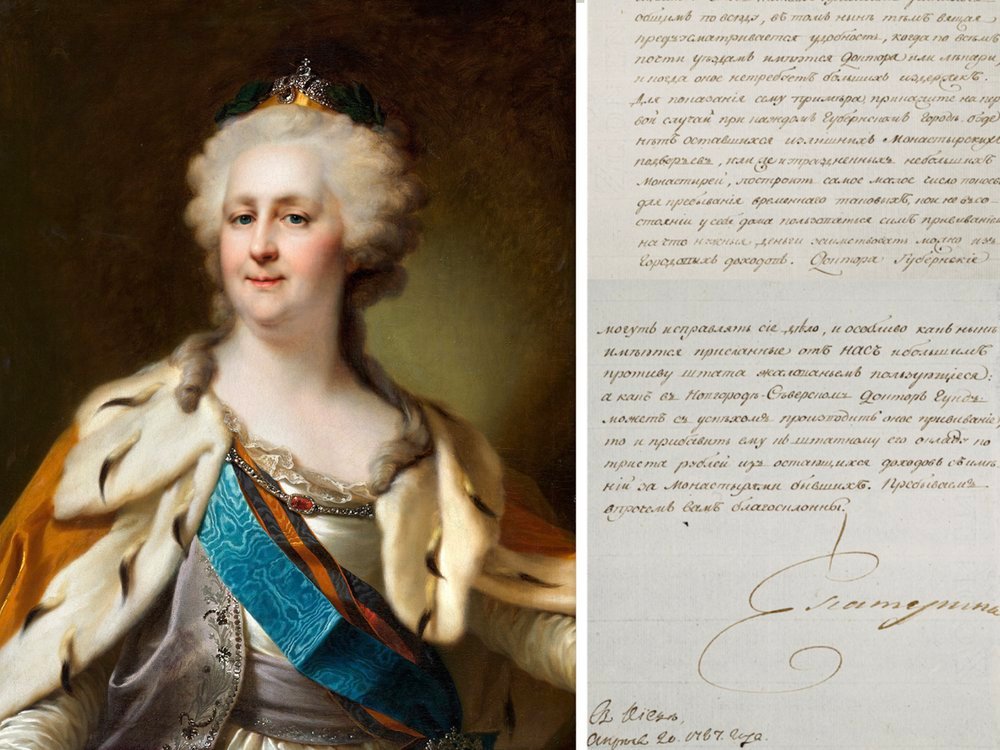
Addressed to a governor-general, Catherine the Great instructs him to make variolation available to everybody in his province.
“Among the other duties of the Welfare Boards in the Provinces entrusted to you,” she writes, “one of the most important should be the introduction of inoculation against smallpox, which, as we know, causes great harm, especially among the ordinary people.” She further orders inoculation centers be set up in convents and monasteries, funded by town revenues to pay doctors.
Catherine had a personal stake in all this. Her husband, Peter III caught the disease before he became emperor, and was left disfigured and scarred for life. When she got a chance to inoculate herself in 1768 she took it, calling in a Scottish doctor, Dr. Thomas Dimsdale, to perform the variolation. The procedure took place in secret, with a horse at the ready in case the procedure caused terrible side effects and he had to hot foot it out of Russia. That didn’t happen, and after a brief convalescence, Catherine revealed what she had done to her countrymen.
“My objective was, through my example, to save from death the multitude of my subjects who, not knowing the value of this technique, and frightened of it, were left in danger.”
Yet, despite her own bravery, 20 years later smallpox continued to rampage through Russia, hence the letter.
Nine years later in 1796, Dr. Edward Jenner found that the cowpox virus—which only caused mild, cold-like symptoms in humans—could inoculate humans against smallpox. Despite initial rejections from the scientific community, his discovery led to vaccination supplanting variolation. And it’s the reason we now use the word “vaccine”—it comes from the Latin word for cow.
Ted Mills is a freelance writer on the arts who currently hosts the Notes from the Shed podcast and is the producer of KCRW’s Curious Coast. You can also follow him on Twitter at @tedmills, and/or watch his films here.
…or, even more thrillingly, a child hominin on the High Tibetan Plateau, 169,000 to 226,000 years ago!
Perhaps one day your surface-marring gesture will be conceived of as a great gift to science, and possibly art. (Try this line of reasoning with the angry homeowner or shopkeeper who’s intent on measuring your hand against the one now permanently set into their new cement walkway.)
Tell them how in 2018, professional ichnologists doing fieldwork in Quesang Hot Spring, some 80 km northwest of Lhasa, were over the moon to find five handprints and five footprints dating to the Middle Pleistocene near the base of a rocky promontory.
Researchers led by David Zhang of Guangzhou University attribute the handprints to a 12-year-old, and the footprints to a 7‑year-old.
In a recent article in Science Bulletin, Zhang and his team conclude that the children’s handiwork is not only deliberate (as opposed to “imprinted during normal locomotion or by the use of hands to stabilize motion”) but also “an early act of parietal art.”
The Uranium dating of the travertine which received the kids’ hands and feet while still soft is grounds for excitement, moving the dial on the earliest known occupation (or visitation) of the Tibetan Plateau much further back than previously believed — from 90,000–120,000 years ago to 169,000–226,000 years ago.
That’s a lot of food for thought, evolutionarily speaking. As Zhang told TIME magazine, “you’re simultaneously dealing with a harsh environment, less oxygen, and at the same time, creating this.”
Zhang is steadfast that “this” is the world’s oldest parietal art — outpacing a Neanderthal artist’s red-pigmented hand stencil in Spain’s Cave of Maltravieso by more than 100,000 years.
Nick Barton, Professor of Paleolithic Archeology at Oxford wonders if the traces, intentionally placed though they may be, are less art than child’s play. (Team Wet Cement!)
Zhang counters that such arguments are predicated on modern notions of what constitutes art, driving his point home with an appropriately stone-aged metaphor:
When you use stone tools to dig something in the present day, we cannot say that that is technology. But if ancient people use that, that’s technology.
Cornell University’s Thomas Urban, who co-authored the Science Bulletin article with Zhang and a host of other researchers shares his colleagues aversion’ to definitions shaped by a modern lens:
Different camps have specific definitions of art that prioritize various criteria, but I would like to transcend that and say there can be limitations imposed by these strict categories that might inhibit us from thinking more broadly about creative behavior. I think we can make a solid case that this is not utilitarian behavior. There’s something playful, creative, possibly symbolic about this. This gets at a very fundamental question of what it actually means to be human.
In a recent series of Tweets and a follow-up interview with MEL magazine, legendary alt-rock producer and musician Steve Albini took responsibility for what he saw as his part in creating “edgelord” culture — the jokey, meme-worthy use of racist, misogynist and homophobic slurs that became so normalized it invaded the halls of Congress. “It was genuinely shocking when I realized that there were people in the music underground who weren’t playing when they were using language like that,” he says. “I wish that I knew how serious a threat fascism was in this country…. There was a joke made about the Illinois Nazis in The Blues Brothers. That’s how we all perceived them — as this insignificant, unimportant little joke. I wish that I knew then that authoritarianism in general and fascism specifically were going to become commonplace as an ideology.”
Perhaps, as Stephen Fry explains in the video clip above from his BBC documentary series Planet Word, we might better understand how casual dehumanization leads to fascism and genocide if we see how language has worked in history. The Holocaust, the most prominent but by no means only example of mass murder, could never have happened without the willing participation of what Daniel Goldhagen called “ordinary Germans” in his book Hitler’s Willing Executioners. Christopher Browning’s Ordinary Men, about the Final Solution in Poland, makes the point Fry makes above. Cultural factors played their part, but there was nothing innately Teutonic (or “Aryan”) about genocide. “We can all be grown up enough to know that it was humanity doing something to other parts of humanity,” says Fry. We’ve seen examples in our lifetimes in Rwanda, Myanmar, and maybe wherever we live — ordinary humans talked into doing terrible things to other people.
But no matter how often we encounter genocidal movements, it seems like “a massively difficult thing to get your head around,” says Fry: “how ordinary people (and Germans are ordinary people just like us)” could be made to commit atrocities. In the U.S., we have our own version of this — the history of lynching and its attendant industry of postcards and even more grisly memorabilia, like the trophies serial killers collect. “In each one of these genocidal moments… each example was preceded by language being used again and again and again to dehumanize the person that had to be killed in the eyes of their enemies,” says Fry. He briefly elaborates on the varieties of dehumanizing anti-Semitic slurs that became common in the 1930s, referring to Jewish people, for example, as vermin, apes, untermenschen, viruses, “anything but a human being.”
“If you start to characterize [someone this way], week after week after week after week,” says Fry, citing the constant radio broadcasts against the Tutsis in the Rwandan genocide, “you start to think of someone who is slightly sullen and disagreeable and you don’t like very much anyway, and you’re constantly getting the idea that they’re not actually human. Then it seems it becomes possible to do things to them we would call completely unhuman, and inhuman, and lacking humanity.” While it’s absolutely true, he says, that language “guarantees our freedom” through the “free exchange of ideas,” it can really only do that when language users respect others’ rights. When, however, we begin to see “special terms of insult for special kinds of people, then we can see very clearly, and history demonstrates it time and time again, that’s when ordinary people are able to kill.”
For instance, when was the last time you slaughtered someone for rendering offense to your Lord?
Not that the best practices surrounding such an assignment aren’t fascinating. Still, you’ll probably benefit more from incorporating the samurai approach to dealing with gossips or clueless colleagues.
If you want to adaptMaster Ninja Natori Masazumi’s Edo period instructions for cleaning blood from long swords, without damaging the blade, to polishing your stainless steel fridge, have at it:
Place horse droppings inside some paper and wipe it over a blade that has been used to cut someone. This will leave traces of the wiping and the blood will no longer be seen. If there are no horse droppings available to wipe the blade with, use the back of your straw sandals or soil inside paper.
The second scroll, “Ippei Yoko,” contains some explicit marching orders for the former.
If you’re squeamish — or eating — you may want to duck out of the video before Natori Masazumi’s granular instructions on the severing of enemy heads. (15:30 onward.)
Alternatively, you could make like an inexperienced young samurai and harden yourself to the graphic realities of bloodshed by attending executions and violent punishments in your downtime.
Again, the more everyday wisdom of “Heika Jodan,” the first scroll, will likely prove more pertinent. A few chestnuts to get you started:
Don’t say something about someone behind their back that you are not prepared to repeat to their face.
Keep your distance from “stupid” associates, but also resist the urge to make fun of them.
Never shy away from an act of virtue.
In an emergency, exit in a swift, but orderly manner.
Compliment the food when you’re a guest in someone’s home, even if you don’t like it.
If you’re the host, and two guests begin fighting, try to help settle the matter discreetly, to avoid lasting injuries or grudges.
Don’t pass the buck to excuse your own misdeeds.
Don’t panic in an unexpected situation — the first thing you should do is take a breath and settle your mind.
Whether traveling or just out and about, be prepared with necessary items, including, pencil, paper, money, medications…
When tempted to regale others with any supernatural encounters you may have had, remember that less is more.
For the second year in a row, Foo Fighters frontman Dave Grohl and producer Greg Kurstin have launched The Hanukkah Sessions, a festive music series where they cover a song–one for each night of Hanukkah–originally created by a Jewish musician. For the fourth night of Hanukkah this year, they celebrate “quite possibly the loudest and proudest of hard rocking Jews, David Lee Roth” with a rollicking version of Van Halen’s “Jump.” To watch their other celebratory tracks, click here.
If you would like to support the mission of Open Culture, consider making a donation to our site. It’s hard to rely 100% on ads, and your contributions will help us continue providing the best free cultural and educational materials to learners everywhere. You can contribute through PayPal, Patreon, and Venmo (@openculture). Thanks!
“By the end of the eighteenth and the beginning of the nineteenth century, the gloomy festival of punishment was dying out… Punishment, then, will tend to become the most hidden part of the penal process.” — Michel Foucault
The study of crime in the late 1800s began with racist pseudoscience like craniometry and phrenology, both of which have made a disturbing comeback in recent years. In his 1876 book, Criminal Man, the “father of criminology,” Cesare Lombrosco, defined “the criminal” as “an atavistic being who reproduces in his person the ferocious instincts of primitive humanity and the inferior of animals.” Lombrosco believed that certain cranial and facial features correspond to a “love of orgies and the irresistible craving for evil for its own sake, the desire not only to extinguish life in the victim, but to mutilate the corpse, tear its flesh, and drink its blood.” That such descriptions preceded Bram Stoker’s Dracula by several years may be no coincidence at all.
No such thing as a natural criminal type exists, but this has not stopped 19th century prejudices from embedding themselves in law enforcement, the prison system and the culture at large in the United States. Outside of the most sensationalist cases, however, we rarely hear from incarcerated people themselves, though they’ve had plenty say about their humanity in print since the turn of the 19th century, when the first prison newspaper, Forlorn Hope, was published in New York City on March 24, 1800.
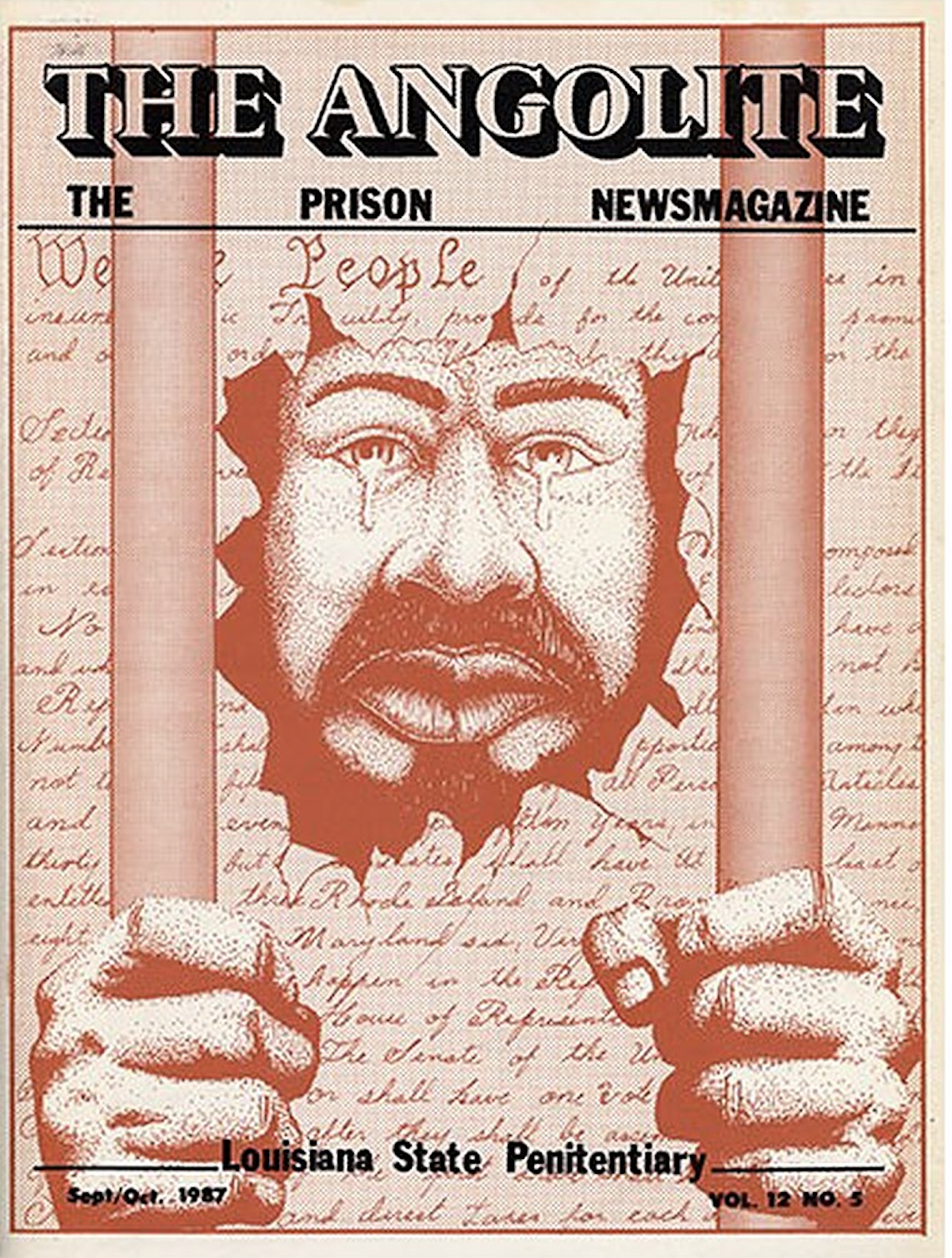
“In the intervening 200 years,” notes JSTOR, “over 500 prison newspapers have been published from U.S. prisons.” A new collection, American Prison Newspapers: 1800–2020 — Voices from the Inside, “will bring together hundreds of these periodicals from across the country into one collection that will represent penal institutions of all kinds, with special attention paid to women-only institutions.”
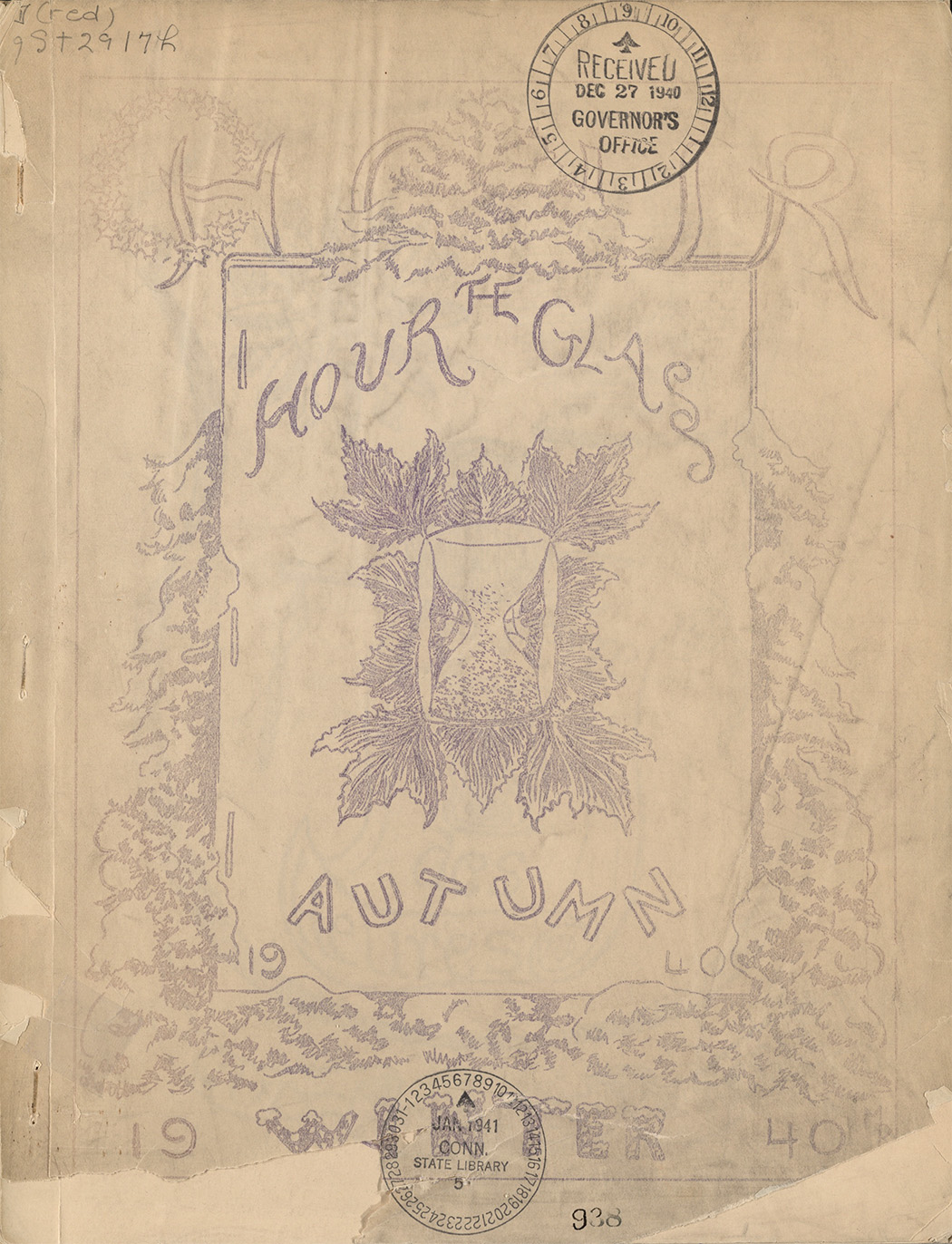
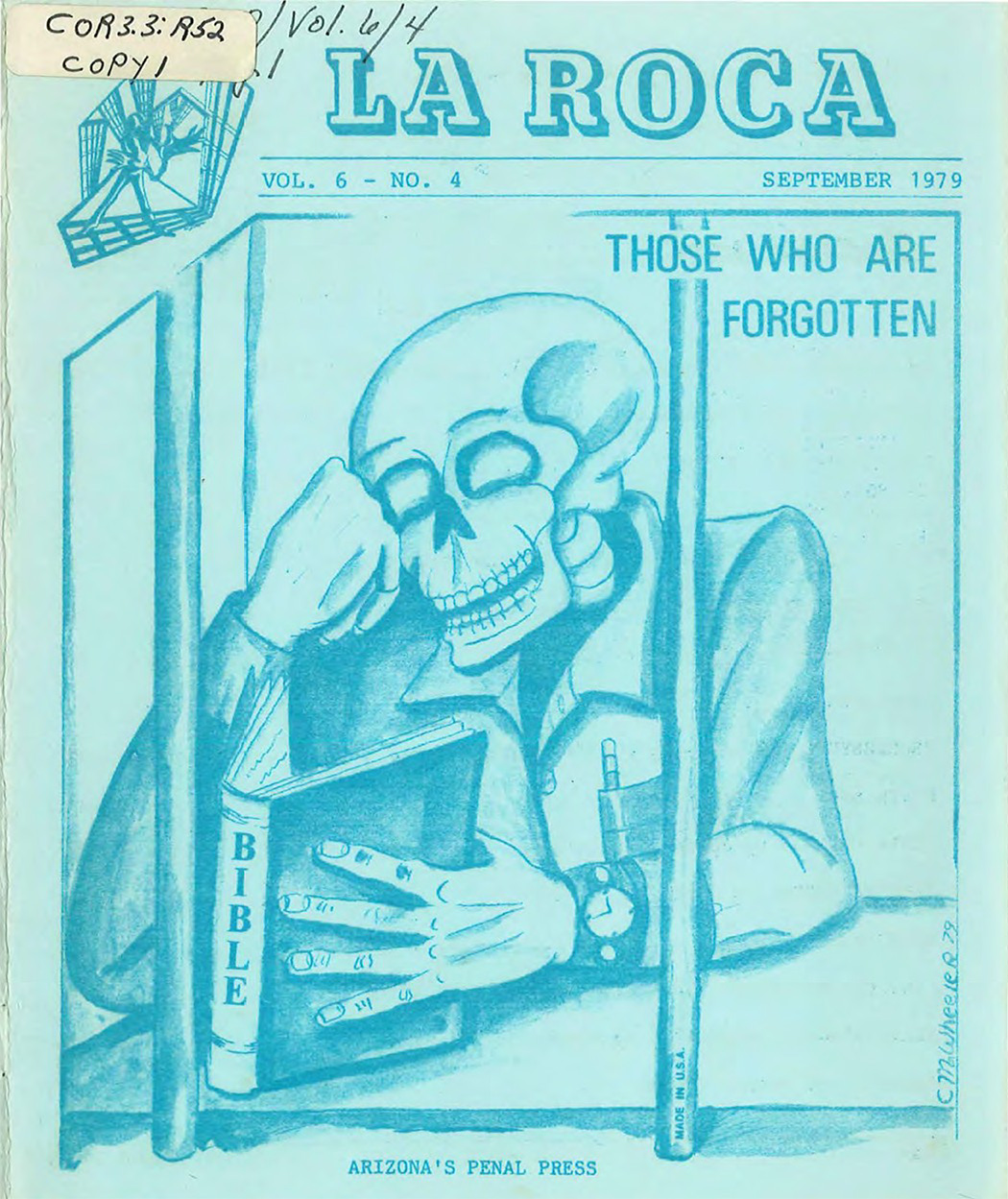
The U.S. incarcerates “over 2 million as of 2019” — and has produced some of the world’s most moving jail and prison literature, from Thoreau’s “Civil Disobedience” to Martin Luther King, Jr.‘s “Letter from a Birmingham Jail.” The newspapers in this collection do not often feature a similar level of literary bravura, but many show a high degree of professionalism and artistic quality. “Next to the faded, home-spun pages of The Hour Glass, published at the Farm for Women in Connecticut in the 1930s,” writes JSTOR Daily’s Kate McQueen, “readers will find polished staples of the 1970s like newspaper The Kentucky Inter-Prison Press and Arizona State Prison’s magazine La Roca.”
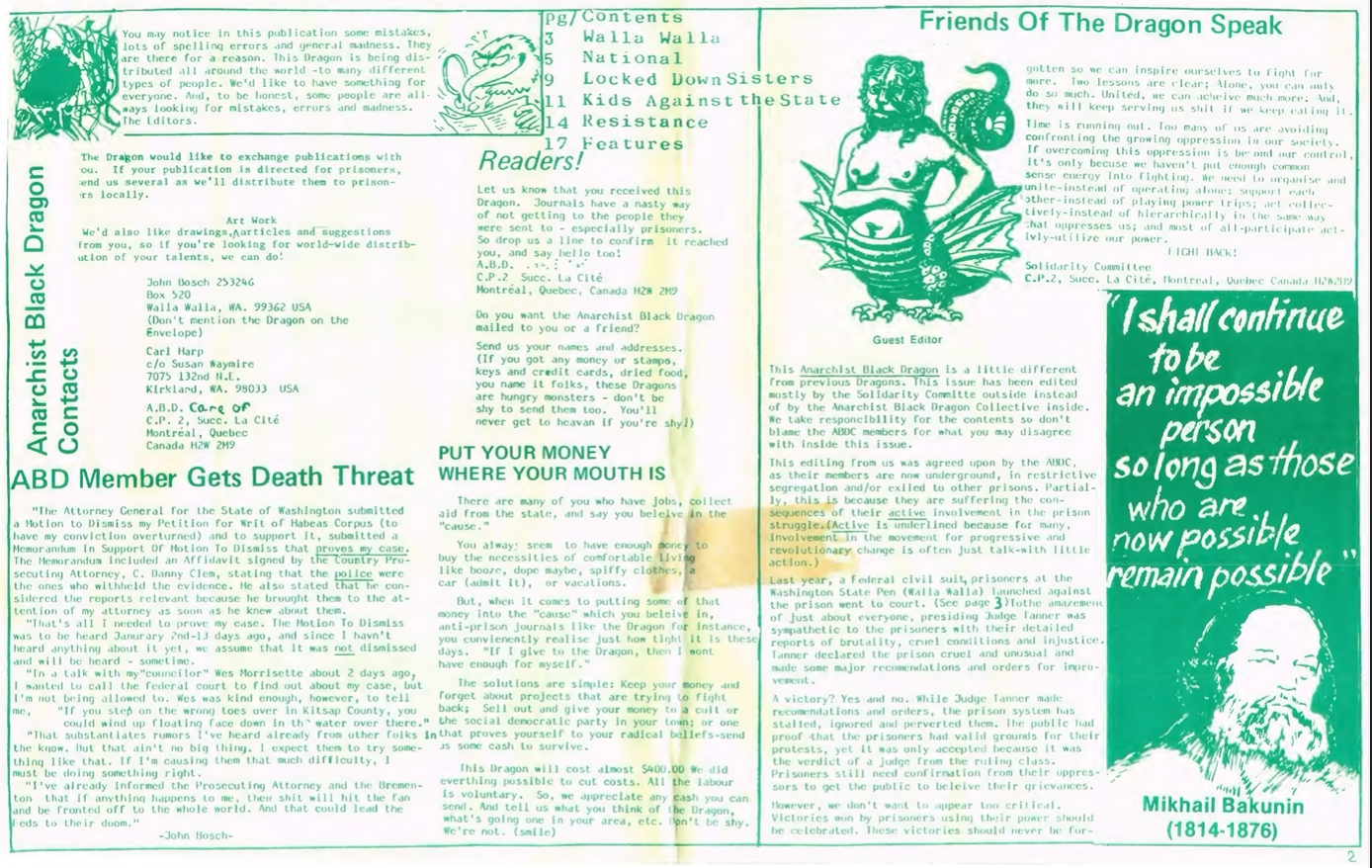
Many, if not most, of these publications were published with official sanction, and these “cover similar ground. They report on prison programing, profile locals of interest, and offer commentary on topics like parole and education” under the watchful gaze of the warden, whose photograph might appear on the masthead. “Incarcerated journalists walk a tightrope between oversight by administrations — even censorship — and seeking to report accurately on their experiences inside,” the collection points out. Prison newspapers gave inmates opportunities to share creative work and hone newly acquired literacy, literary, and legal skills. Those periodicals that circulated underground without the authorities’ permission had no need to equivocate about their politics. Washington State Penitentiary’s Anarchist Black Dragon, for example, took a fiercely radical stance on every page. Nowhere on the masthead will one find the names of correctional officers, or even a list of editors and contributors, or even a masthead.
Whether official, unofficial, or occupying a grey area, prison periodicals all hoped in some degree to “poke holes in the wall,” as Tom Runyon, editor of Iowa State Penitentiary’s Presidio wrote — reaching audiences outside the prison to refute criminological thinking. Arizona State Prison’s The Desert Press, led its January 1934 issue with the pressing headline “Are Convicts People?” (likely after Alice Duer Miller’s satirical 1904 “book of rhymes for suffrage times,” Are Women People?) Lawrence Snow, editor of Kentucky State Penitentiary’s Castle on the Cumberland, picked up the question with more formality in a 1964 column, asking, “How shall [a prison publication] go about its principal job of convincing the casual reader that convicts, although they have divorced themselves temporarily from society, still belong to the human race?” Given that the United States imprisons more people than any other nation in the world, the question seems more pertinent — urgent even — than ever before. Enter the American Prison Newspapers collection here.
A high school girl from Levittown, New York, the country’s first suburb, Maureen “Moe” Tucker hardly fit the profile of a rock star in one of the most influential bands of the 1960s. Then again, neither did any of the members of the Velvet Underground. Lou Reed, John Cale, Sterling Morrison, and Tucker had barely begun before Andy Warhol introduced them to Nico and billed them as the Exploding Plastic Inevitable, and it was Warhol who helped turn them into cult heroes. But Tucker made them sound like no one else. “Her style of drumming, that she invented” Reed once remarked, “is amazing. I’ve tried to get a drummer to do what she did and it’s impossible.” Her approach to Reed’s songs was a “mix of African trance rhythms and Ringo-like arrangement genius,” Adam Budofsky writes at Modern Drummer. “Her playing style was hugely responsible for the Velvet’s singular personality.”
Listen, for example, to 1970’s Loaded – which Tucker sat out due to pregnancy — next to The Velvet Underground & Nico, White Light/White Heat, or The Velvet Underground. Loaded, the only Velvet Underground album never to go out of print, may be called by some a “near-perfect rock album,” but it’s also the least experimental and least interesting of the band’s four studio releases, the sound of the band without Cale and Tucker, reaching for radio hits. The Velvet Underground with Moe Tucker, on the other hand, was the sound of a band that was constantly falling apart while rooting down into a primal rock and roll that would outlast them. It’s sublime, and Tucker deserves her reputation as “one of the head hypnotists,” in the words of Jonathan Richman.
Her contribution was as much youthful enthusiasm and nerve as raw talent. Compelled to play the drums by a love for the Rolling Stones, the Beatles, and Nigerian drummer Babatunde Olatunji, she might have banged away in unremarkable Long Island cover bands in her youth, becoming a more traditional player, had not Reed, who knew her brother, given her the chance to play the first paying VU gig at Summit High School in New Jersey. As she remembers it in the punk oral history project Please Kill Me:
I was a nervous wreck when we played that show. We were allowed to play three songs and we had practiced them at John Cale’s loft. We played, “Waiting For the Man,” “Heroin,” and I think the third one was “Venus In Furs.”
Our set was only about 15 minutes at the most and in each song something of mine broke. All my stuff was falling apart! The foot pedal broke in one song, the leg of the floor tom started going loose. I thought, Oh shit, I’m going to ruin this!
Instead of ruin, what followed were more gigs and a period of experimentation in which Tucker, who started with only a snare, tried out different configurations of the drum kit in long jam sessions at Warhol’s Factory: playing her bass drum with mallets on the floor, then on chairs while standing up, eschewing cymbals altogether, making judicious use of tom toms and tambourines, playing a few memorable shows with trashcans when her drums were stolen.… She had no training, no one in the band told her she was doing it wrong, and so she was free to reinvent the drums her way.
As you’ll see in the thorough documentary above, Foundation Velvet, by Cam Forrester, Tucker’s way was exactly what the Velvets needed to recreate rock and roll in their image. She had a “discipline with regards to playing the song, and not the instrument,” Forrester says. You’ll also see him recreate Tucker’s instrumentation. In the timestamps below, click on the demonstrations to see her drum setup for each track on the band’s first three albums.
Quotes/Introduction — 0:00 Background & musical beginnings — 3:50 “Tucker’s sister plays drums?” — 6:14 Andy Warhol, ‘The Factory’, and Nico — 9:07 The ‘Exploding Plastic Inevitable’ Shows — 12:46 A female drummer? — 15:09 ‘The Velvet Underground & Nico’ Sessions — 17:38 DRUM DEMONSTRATIONS — 21:22 Goodbye to Nico & Andy…hello to VOLUME! — 25:02 ‘White Light/White Heat’ & DRUMMING DEMONSTRATIONS — 28:18 John Cale leaves, and Doug Yule joins — 34:35 The third album & DRUMMING DEMONSTRATIONS — 37:07 ‘Loaded’, band breakup, and solo career — 43:09 Moe’s heroic return to the drums — 45:58 Retirement from the music business — 53:48 Influence & legacy — 54:28 “A natural drummer…” — 57:03
One can approximate Tucker’s style and reconstruct her influences, as Forrester has done here brilliantly, but there will never be another drummer like her.
In the annals of surprisingly impressive IMDb pages, few can surpass that of Wolfgang Amadeus Mozart. Despite having died a century before the birth of cinema, he has racked up and continues to rack up more composer credits each and every year. Many of these owe to the use of one piece, indeed one movement, in particular: the Lacrimosa from his Requiem, which contains the very last notes he ever wrote. “We should probably expect some of these uses to have a somber, funereal quality, and they do,” says Evan Puschak, better known as the Nerdwriter, in the new video essay above. In Amadeus, Miloš Forman’s film about the composer himself, the piece accompanies a sequence showing “Mozart’s dead body being unceremoniously transported and dumped into a mass grave.”
The shortcomings of Mozart’s burial have surely been compensated for by the glories of his legacy. But that legacy includes all manner of uses of the Lacrimosa in film and television, both glorious and inglorious. Given its “sense of both suspense and inevitability, which is a unique and potent combo,” it typically scores scenes of violence and villainy.
“The repeated association of Lacrimosa with evil conditions us to think of evil when we hear it, to the point that filmmakers choose it as a kind of shorthand, drawing on our memories of its past uses.” Eventually this hardened into cinematic convention, ultimately becoming “such a trope that it works brilliantly for parody and satire too,” as in The Big Lebowski’s meeting of its two titular figures. (Note that the music becomes muffled when the Dude leaves the room, implying that Lebowski had actually put it on himself.)
Elsewhere, the Lacrimosa has been marshaled to evoke such emotions as loneliness, desperation, and reckoning — and even, in one of Puschak’s more recent examples, “the immense, unruly power of the social internet.” If such a phenomenon would be difficult to explain to Mozart himself, imagine showing him the television series The Good Fight, where “Lacrimosa amplifies the comedy of a scene in which the lawyers get their hands on Donald Trump’s alleged ‘pee tape.’ ” But Mozart obviously understood full well the underlying artistic principles at work: Amadeusalso depicts him composing the Dies Irae, another of the Requiem’s movements, whose melody he adapts from a thirteenth-century Gregorian funeral mass. Even in his time, the music of the past offered a means of heightening the feelings of the present.
Based in Seoul, Colin Marshall writes and broadcasts on cities and culture. His projects include the book The Stateless City: a Walk through 21st-Century Los Angeles and the video series The City in Cinema. Follow him on Twitter at @colinmarshall or on Facebook.
In its nearly eight-hour runtime Peter Jackson’s new documentary series The Beatles: Get Back offers numerous minor revelations about the world’s favorite band. Among the filmmaker’s avowed aims was to show that, even on the verge of acrimonious dissolution, John, Paul, George, and Ringo enjoyed stretches of productiveness and conviviality. Much else comes out besides, including that the catering at Apple Corps headquarters was miserable (amounting most days to toast and digestive biscuits) and that, even amid the excesses of the late 1960s, the Beatles dressed more or less respectably (apart, that is, from George’s occasionally outlandish choices of outer- and footwear). But it also lays bare exactly how they created a song.
The Beatles went into these sessions with little material prepared. All they knew for sure was that they had to come up with a set of songs to be recorded live, without overdubs, in order to “get back” to the simplicity that had characterized their process before such aesthetically and technically convoluted albums as Revolver and Sgt. Pepper’s Lonely Hearts Club Band. These they would then perform in a concert film. The whole project was undertaken with what Rolling Stone’s Rob Sheffield calls a “magnificent arrogance. In a way, that’s what helped keep them together, through all their ups and downs. Without that level of arrogance, there’s no way an adventure as admirably daft as Get Back could happen in the first place.”
Somehow, to the very end, that arrogance always proved justified. For much of Jackson’s Get Back, the Beatles appear to be just screwing around, cracking jokes, drinking tea and beer, and launching into abortive performances in cartoon voices. And that’s when everyone shows up. “Lennon’s late again,” says Paul in the clip above. “I’m thinking of getting rid of him.” But instead of nursing resentment for his unpredictable musical partner, he sits down and starts playing. His first chords will sound familiar to any Beatles fan, though they belong to a song that doesn’t yet exist. Paul then adds to his strumming a bit of mostly non-verbal vocalization, which soon coheres into a melodic line: we (and a yawning George) are witness to the birth of “Get Back.”
During the lifetime of the Beatles, Paul seems to have been the most productive member. Even since the band’s end half a century ago, music has continued to flow unimpeded from his mind, shaped as if by pure instinct. In that time it has become ever more well-documented that he motivated the group to work, especially after the death of their manager Brian Epstein in 1967. While Get Back attests to a certain overbearing quality in his attitude toward the other Beatles, it also shows how McCartney’s hardworking-yet-freewheeling example encouraged each of them to express his own particular genius. When George gets stuck on the end of a lyric, for example, he, too, simply sings whatever comes to mind. Hence the temporary line “Something in the way she moves / Attracts me like a pomegranate” — and we all know how that tune eventually turned out.
Based in Seoul, Colin Marshall writes and broadcasts on cities and culture. His projects include the book The Stateless City: a Walk through 21st-Century Los Angeles and the video series The City in Cinema. Follow him on Twitter at @colinmarshall or on Facebook.
We're hoping to rely on loyal readers, rather than erratic ads. Please click the Donate button and support Open Culture. You can use Paypal, Venmo, Patreon, even Crypto! We thank you!
Open Culture scours the web for the best educational media. We find the free courses and audio books you need, the language lessons & educational videos you want, and plenty of enlightenment in between.