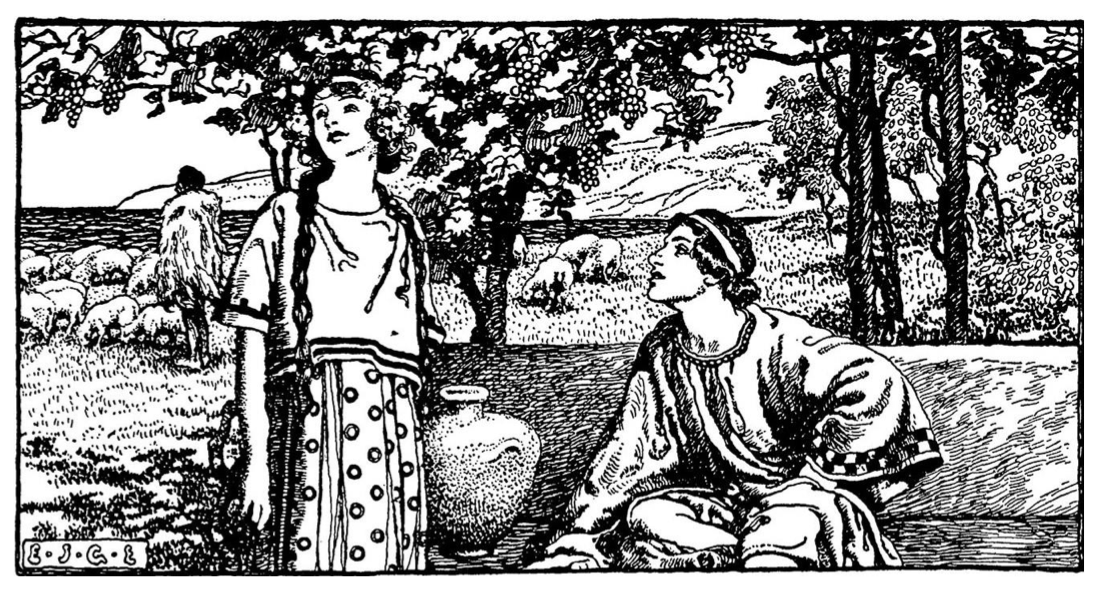
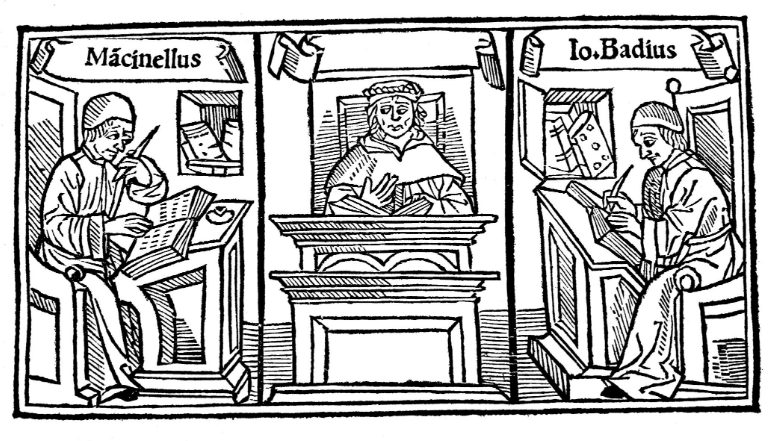
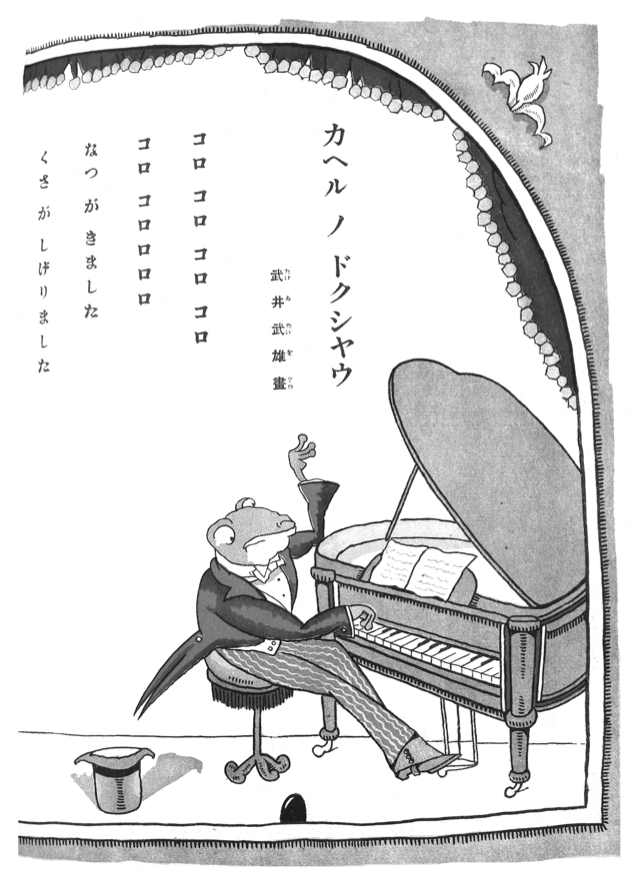
We here at Open Culture heartily endorse the practice of viewing art, whether in a physical museum, in the pages of a book, or online. For some, however, it tends to have one serious shortcoming: all the colors are already filled in. If you’re itching to use your own colored pencils, crayons, watercolors, or other tools of choice on drawings, paintings, and a variety of other works besides in the possession of well-known art institutions, these past few months are a time of year to savor thanks to the initiative Color Our Collections.
“Launched by The New York Academy of Medicine Library in 2016,” says its about page, it hosts an “annual coloring festival on social media during which libraries, museums, archives and other cultural institutions around the world share free coloring content featuring images from their collections.”
The de-colored pictures you see here offer just a taste of all you can find in this year’s Color Our Collections crop. Some of the participating institutions provide colorable selections from across their holdings, some stick to a certain theme, and some contribute actual volumes, digitized whole or created for the occasion. Take, for instance, the Ol’ Medical ColouringBook from Queen’s University Library, which promises hours of fun with pages like “anterior view of the skeletal system,” “ventral view of the brain,” and “urinary system shown on the female form.”
Based in Seoul, Colin Marshall writes and broadcasts on cities, language, and culture. His projects include the Substack newsletterBooks on Cities, the book The Stateless City: a Walk through 21st-Century Los Angeles and the video series The City in Cinema. Follow him on Twitter at @colinmarshall or on Facebook.
Note: Yesterday Harry Belafonte, the civil rights activist, singer and actor, passed away at age 96. In his memory, we’re bringing back a post from our archive, one that features Belafonte and other legends discussing the March on Washington, back in August, 1963. The film above is now made available by the US National Archives.
On the day of the historic “March on Washington for Jobs and Freedom” (August 28, 1963), known today as The Great March on Washington, CBS aired a 30-minute roundtable discussion featuring Harry Belafonte, James Baldwin, Marlon Brando, Charlton Heston, Joseph L. Mankiewicz and Sidney Poitier.
The whole segment is fascinating, even and perhaps especially because the speakers pursue their sometimes divergent agendas (Heston speaks optimistically about peaceful dissent, Brando hopes the Civil Rights movement may lead to reparations for Native Americans, while Belafonte warns ominously that the United States has now reached a “point of no return”). But it may be Joseph Mankiewicz, the sharp-witted writer/director of All About Eve, who provides one of the discussion’s pithiest lines: “Freedom, true freedom,” he says, “is not given by governments; it is taken by the people.”
If you would like to support the mission of Open Culture, consider making a donation to our site. It’s hard to rely 100% on ads, and your contributions will help us continue providing the best free cultural and educational materials to learners everywhere. You can contribute through PayPal, Patreon, and Venmo (@openculture). Thanks!
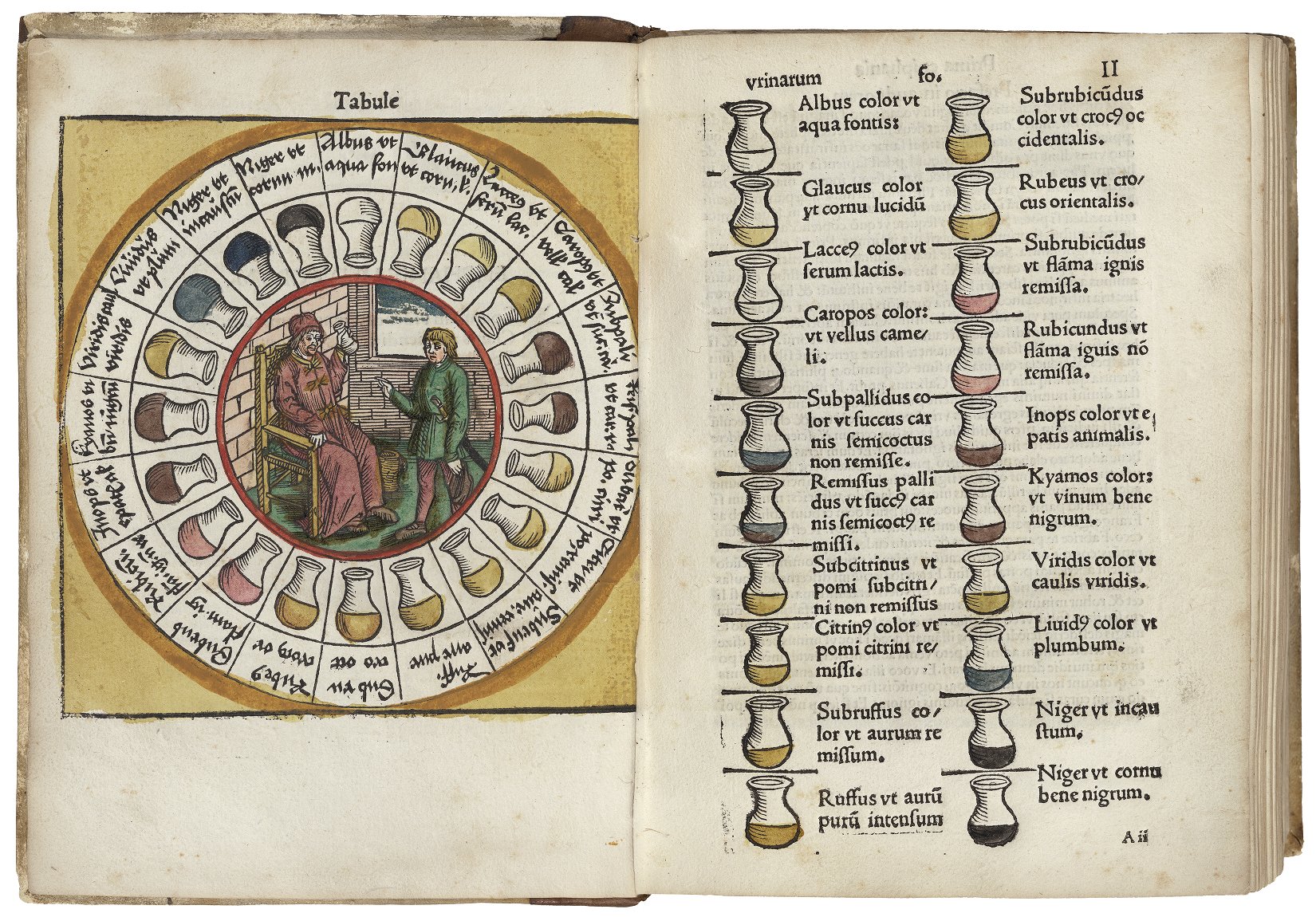
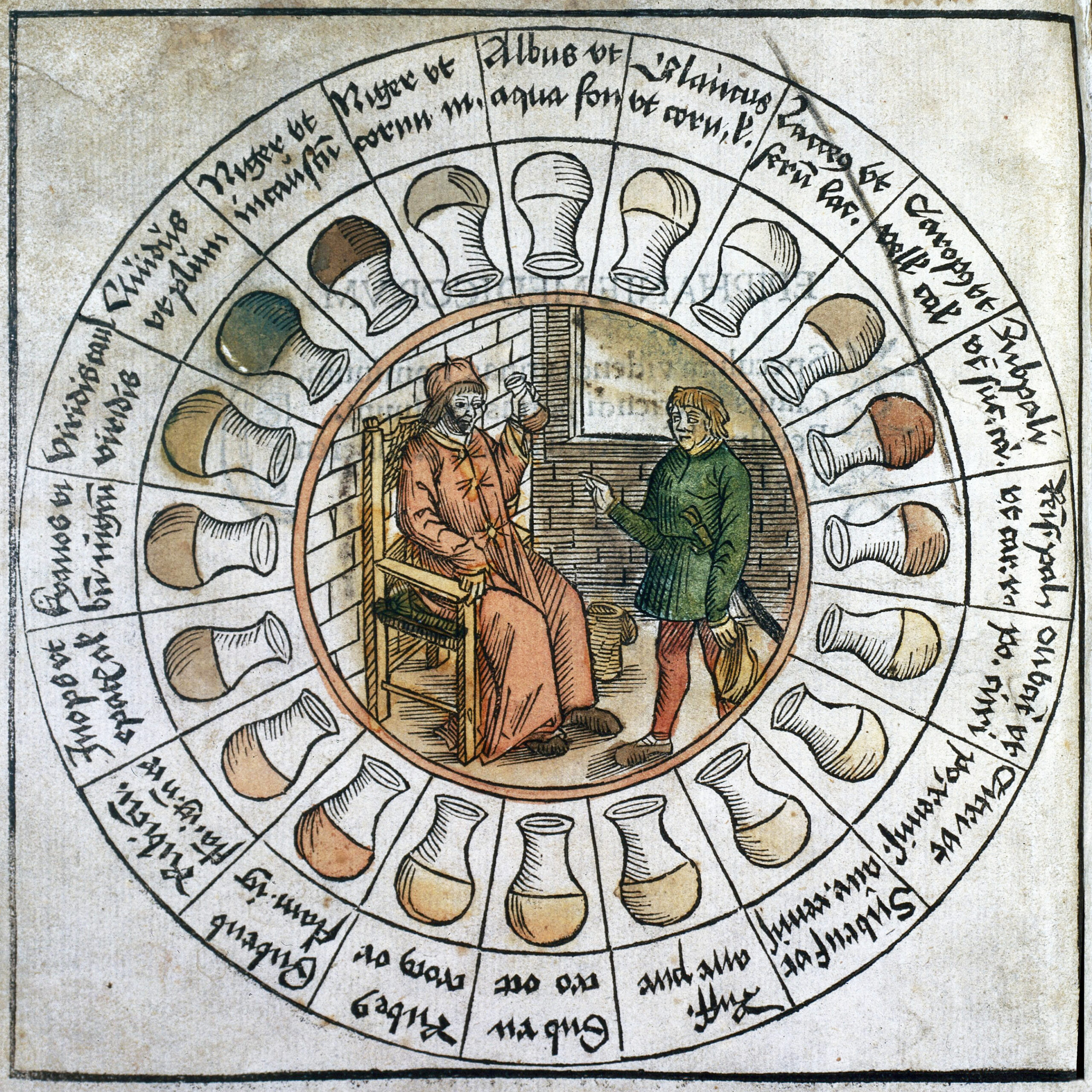
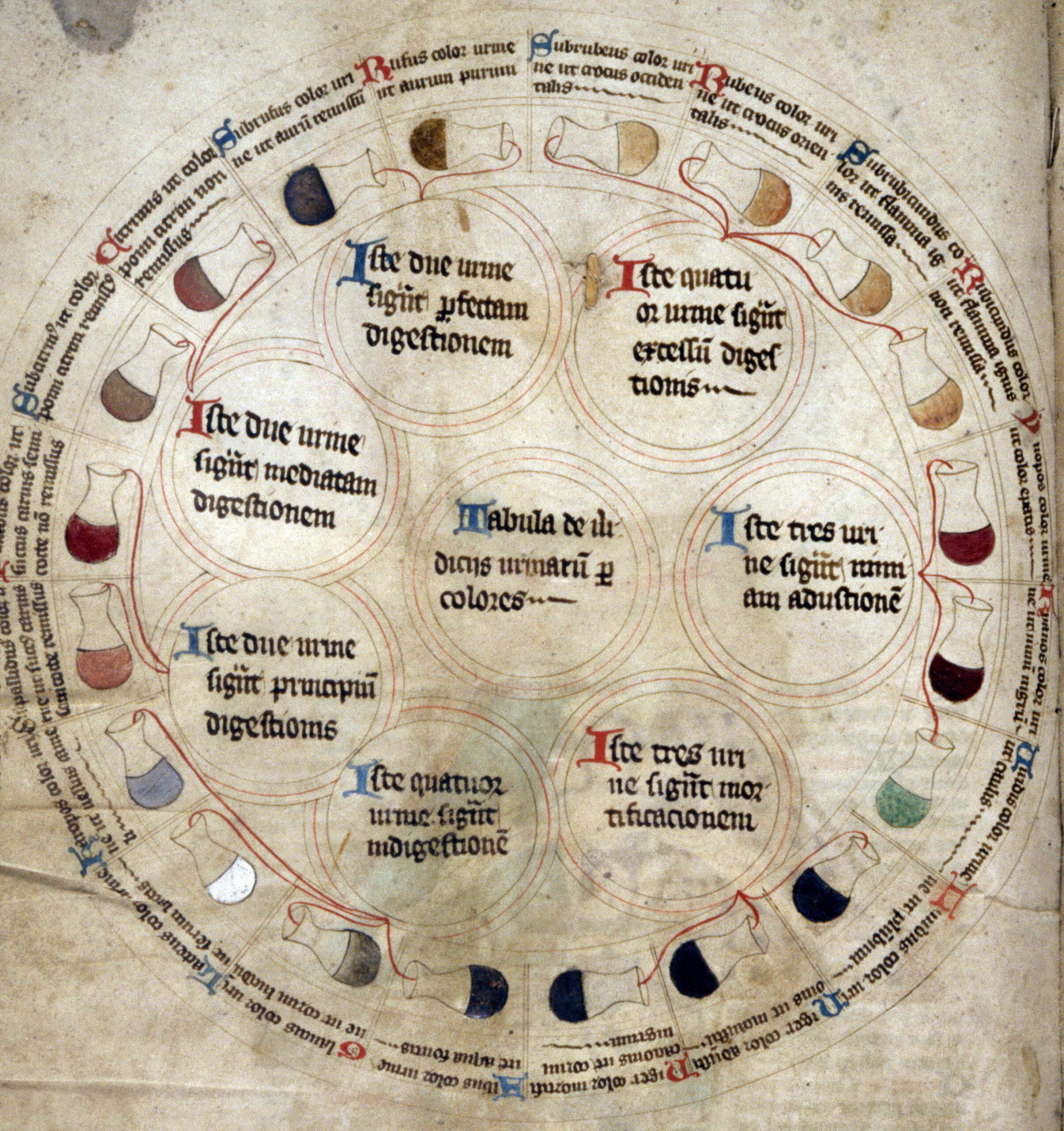
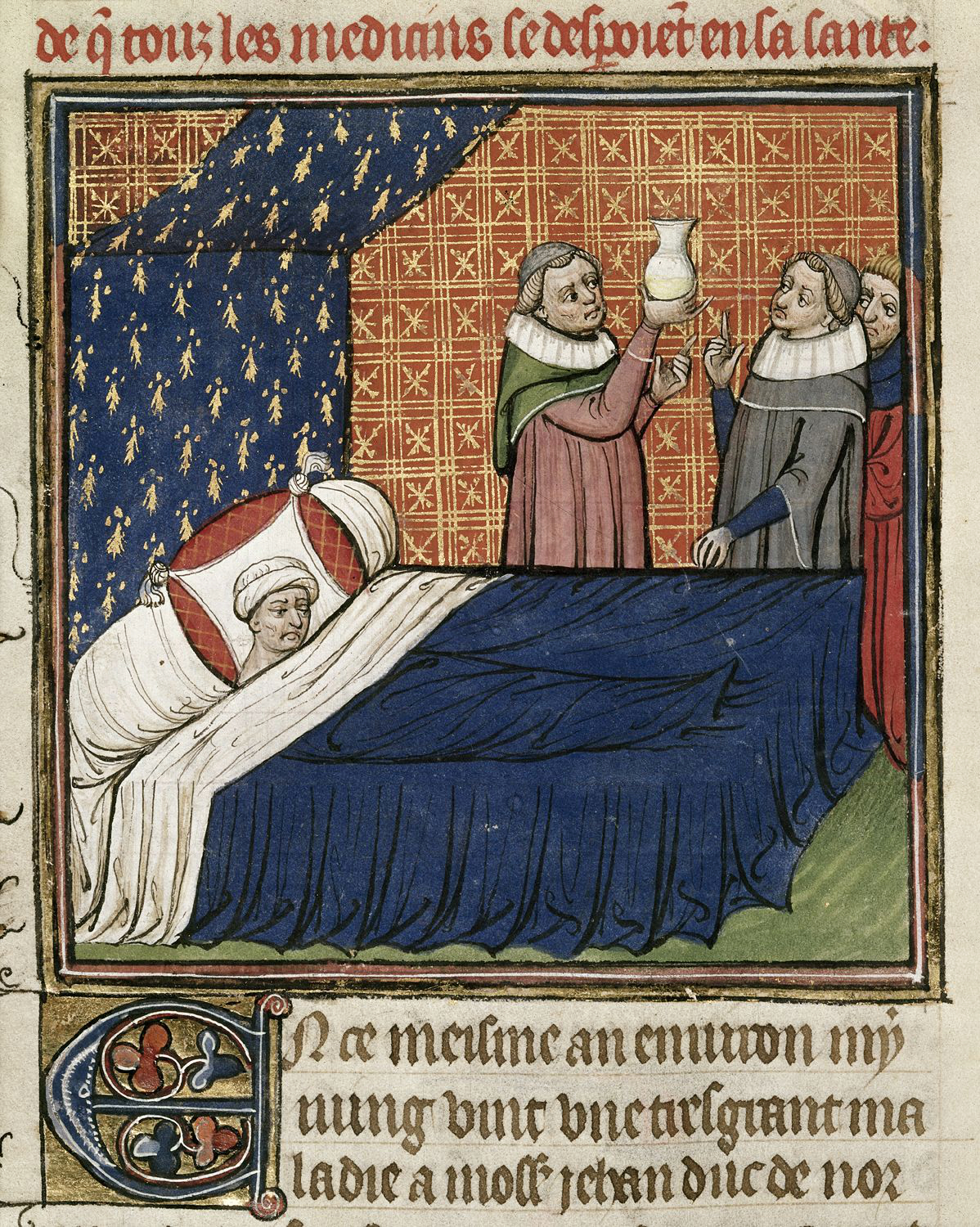
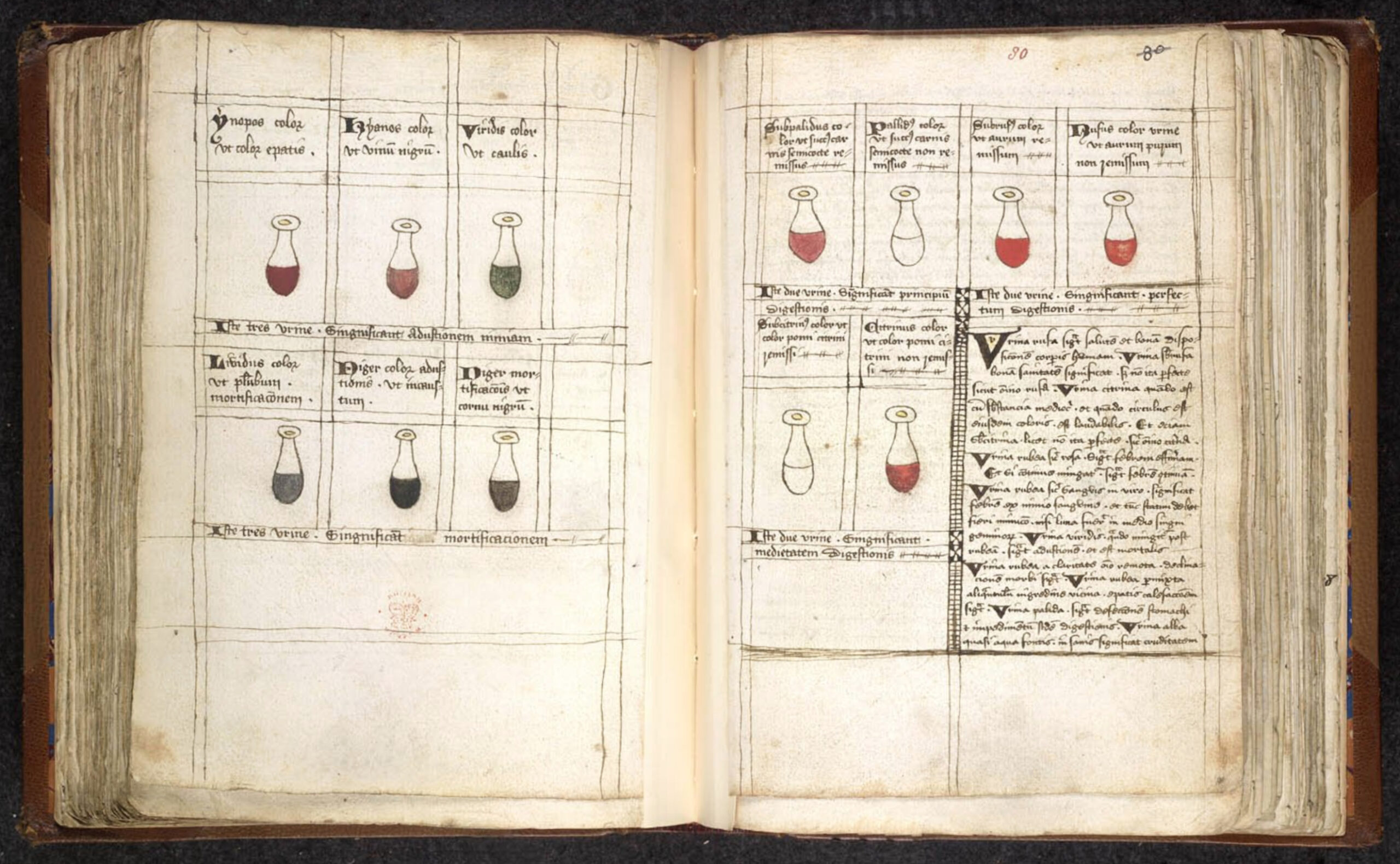
If you went to the doctor in late medieval Europe hoping to get a health complaint checked out, you could be sure of one thing: you’d have to hand over a urine sample. Though it dates back at least as far as the fourth millennium BC, the practice of uroscopy, as it’s called, seems to have been regarded as a near-universal diagnostic tool by the thirteenth century. At Medievalists.net, you can read excerpts of the then-definitive text On Urines, written about that time by French royal physician Gilles de Corbeil.
When a skilled physician examines a patient’s urine, de Corbeil explains, “health or illness, strength or debility, deficiency, excess, or balance, are determined with certainty.” Urine “darkened by a black cloudiness, and muddied with sediment, if produced on a critical day of an illness, and accompanied by poor hearing and insomnia, portends a flux of blood from the nose”; depending on other factors, “the patient will die or recover.”
Urine that looks livid near the surface could indicate a variety of conditions: “a mild form of hemitriteus fever; falling sickness; ascites; synochal fever; the rupture of a vein; catarrh, strangury; an ailment of the womb; a flux; a defect of the lungs; pain in the joints; consumptive phithisis; the extinction of natural heat.”
White urine could be a signal of everything from dropsy to lipothymia to hemorrhoids; wine-colored urine “means danger to health when it accompanies a continued fever; it is less to be feared if there is no fever.”
We may feel tempted, 800 years later, to discard all of this as pre-scientific nonsense. But compared with other diagnostic methods in the Middle Ages, uroscopy had a decent track record. “Urine was a particularly useful tool for diagnosing leprosy,” writes the Public Domain Review’s Katherine Harvey, “because the immediate physiological cause was thought to be a malfunctioning liver — an organ which was central to the digestive process, and thus any problems would be visible in the urine.” Indeed, “new forms of urine analysis have developed from these ancient traditions, and our present-day medical landscape is awash with urine samples.”
That’s certainly a vivid image, and so are the “urine wheels” that accompany Harvey’s piece: elaborate illustrations designed to help doctors identify the particular hue of a given sample, each one colored with the best pigmentation techniques of the time. But “there was no standardization,” notes Atlas Obscura’s Sarah Laskow, “and while some book publishers created detailed coloring instructions, the artisans who did the work didn’t always conform to those specifications.” As much prestige as these volumes surely exuded on the bookshelf, it was as true then as it is now that you become a good doctor not by reading manuals, but by getting your hands dirty.
Based in Seoul, Colin Marshall writes and broadcasts on cities, language, and culture. His projects include the Substack newsletterBooks on Cities, the book The Stateless City: a Walk through 21st-Century Los Angeles and the video series The City in Cinema. Follow him on Twitter at @colinmarshall or on Facebook.
I first discovered Stephen King at age 11, indirectly through a babysitter who would plop me down in front of daytime soaps and disappear. Bored with One Life to Live, I read the stacks of mass-market paperbacks my absentee guardian left around—romances, mysteries, thrillers, and yes, horror. It all seemed of a piece. King’s novels sure looked like those other lurid, pulpy books, and at least his early works mostly fit a certain formula, making them perfectly adaptable to Hollywood films. Yet for many years now, as he’s ranged from horror to broader subjects, King’s cultural stock has risen far above his genre peers. He’s become a “serious” writer and even, with his 2000 book On Writing—part memoir, part “textbook”—something of a writer’s writer, moving from the supermarket rack to the pages of The Paris Review.
Few contemporary writers have challenged the somewhat arbitrary division between literary and so-called genre fiction so much as Stephen King, whose status provokes word wars like this debate at the Los Angeles Review of Books. Whatever adjectives critics throw at him, King plows ahead, turning out book after book, refining his craft, happily sharing his insights, and reading whatever he likes. As evidence of his disregard for academic canons, we have his reading list for writers, which he attached as an appendix to On Writing. Best-selling genre writers like Nelson DeMille, Thomas Harris, and needs-no-introduction J.K. Rowling sit comfortably next to lit-class staples like Dickens, Faulkner, and Conrad. King recommends contemporary realist writers like Richard Bausch, John Irving, and Annie Proulx alongside the occasional postmodernist or “difficult” writer like Don DeLillo or Cormac McCarthy. He includes several non-fiction books as well.
King prefaces the list with a disclaimer: “I’m not Oprah and this isn’t my book club. These are the ones that worked for me, that’s all.” Below, we’ve excerpted twenty good reads he recommends for budding writers. These are books, King writes, that directly inspired him: “In some way or other, I suspect each book in the list had an influence on the books I wrote.” To the writer, he says, “a good many of these might show you some new ways of doing your work.” And for the reader? “They’re apt to entertain you. They certainly entertained me.”
Like much of King’s own work, many of these books suggest a spectrum, not a chasm, between the literary and the commercial, and many of their writers have found success with screen adaptations and Barnes & Noble displays as well as widespread critical acclaim. For the full range of King’s selections, see the entire list of 96 books at Aerogramme Writers’ Studio.
Of the original members of the Stooges, only Iggy Pop still lives. He has by now survived a great many other cultural figures who came up from the underground and into prominence through rock music in the nineteen-seventies. And not only is he still alive, he’s still putting out albums: his most recent, Every Loser, came out just this past January. It followed Free, from 2019, which includes his reading of Dylan Thomas’ “Do Not Go Gentle Into That Good Night” — an idea, Amanda Petrusich notes in a contemporary NewYorker profile, that came “after an advertising agency asked him to read the poem for a commercial voice-over.”
“At first, I resisted,” Pop says to Petrusich. “I’m not in junior high.” Indeed, as a vehicle for the expression of one’s own worldview, “Do Not Go Gentle Into That Good Night” feels about one rung up from “The Road Not Taken.”
Petrusich acknowledges that “the poem has grown increasingly meaningless over time, having been repeated and adapted to so many inane circumstances. Yet if you can shake off its familiarity the central idea — that a person should live vigorously, unapologetically — remains germane.” Pop’s distinctive Midwestern voice, made haggard but resonant by decade after decade of punk-rock rigors, also imbues it with an unexpected vitality.
Based in Seoul, Colin Marshall writes and broadcasts on cities, language, and culture. His projects include the Substack newsletterBooks on Cities, the book The Stateless City: a Walk through 21st-Century Los Angeles and the video series The City in Cinema. Follow him on Twitter at @colinmarshall or on Facebook.
Colin Browning, assistant editor of The Bluff, a Loyola Marymount University student newspaper, has some kopasetic casting suggestions for a hypothetical feature adaptation of the “Merriam-Webster classic.”
He’s just muggin’, of course. Still, he seems like a young man who’s got his boots on.
Dig?
…no?
In that case, you’d best acquaint yourself with the only cinematic dictionary adaptation we’re aware of, the Mr. Hepcat’s Dictionary number from Sensations of 1945, above.
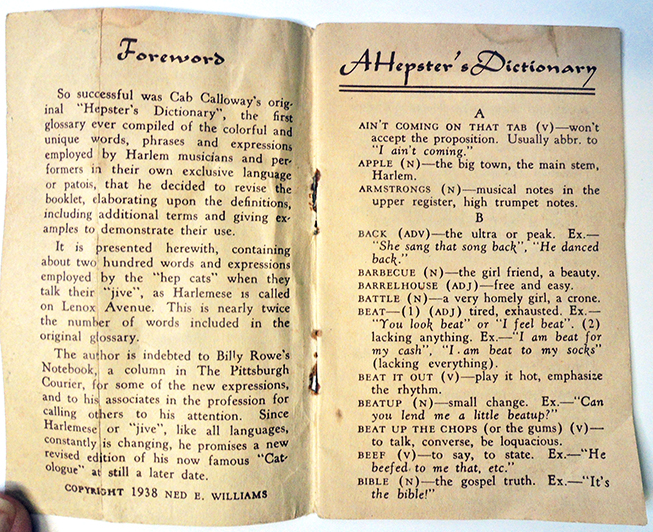
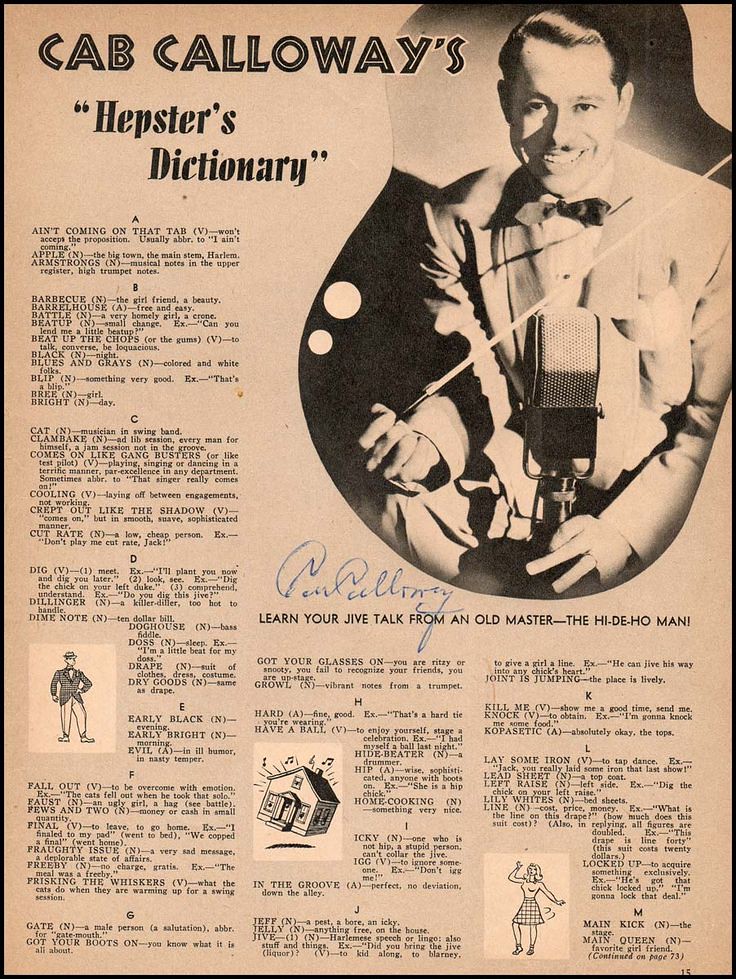
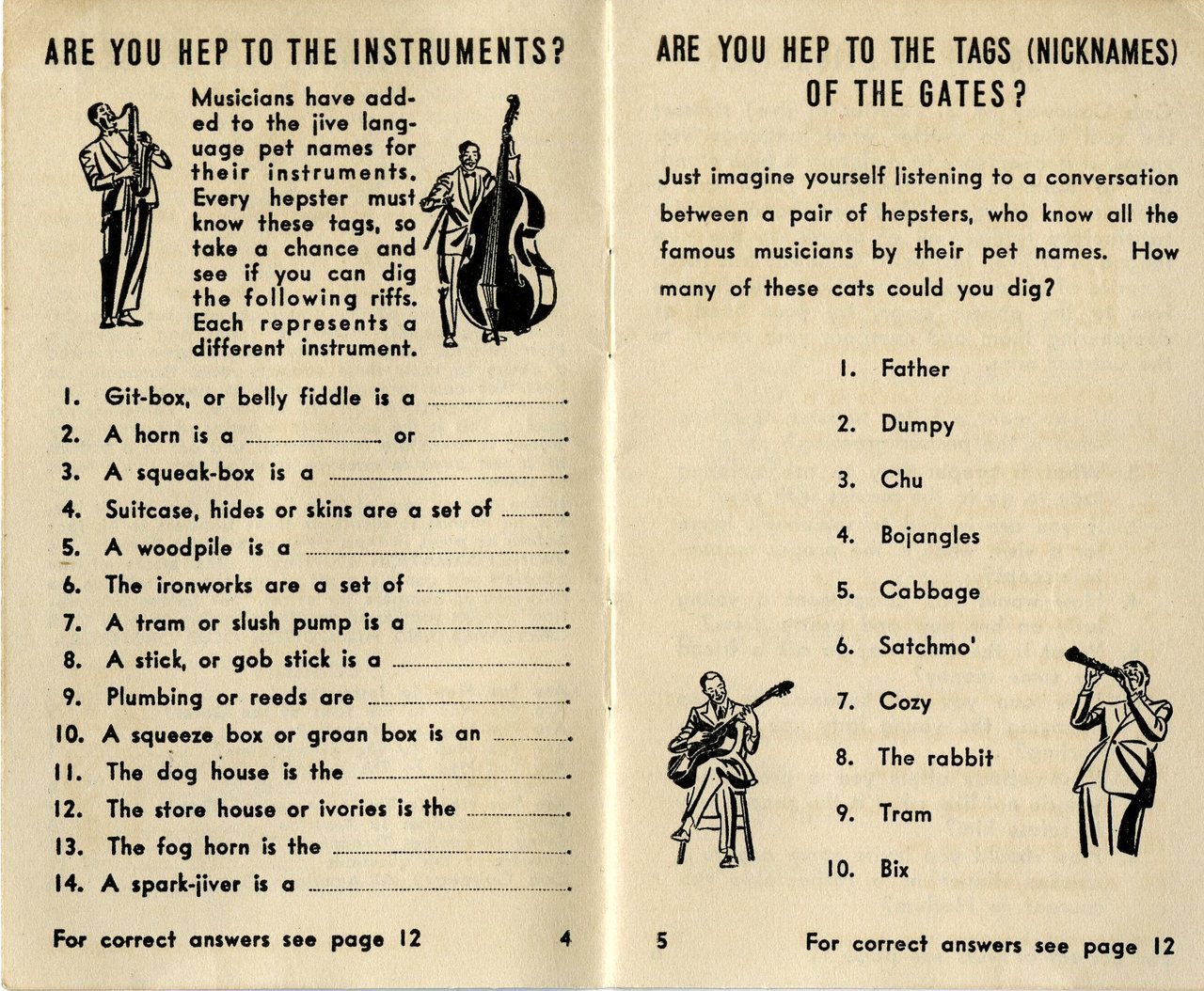
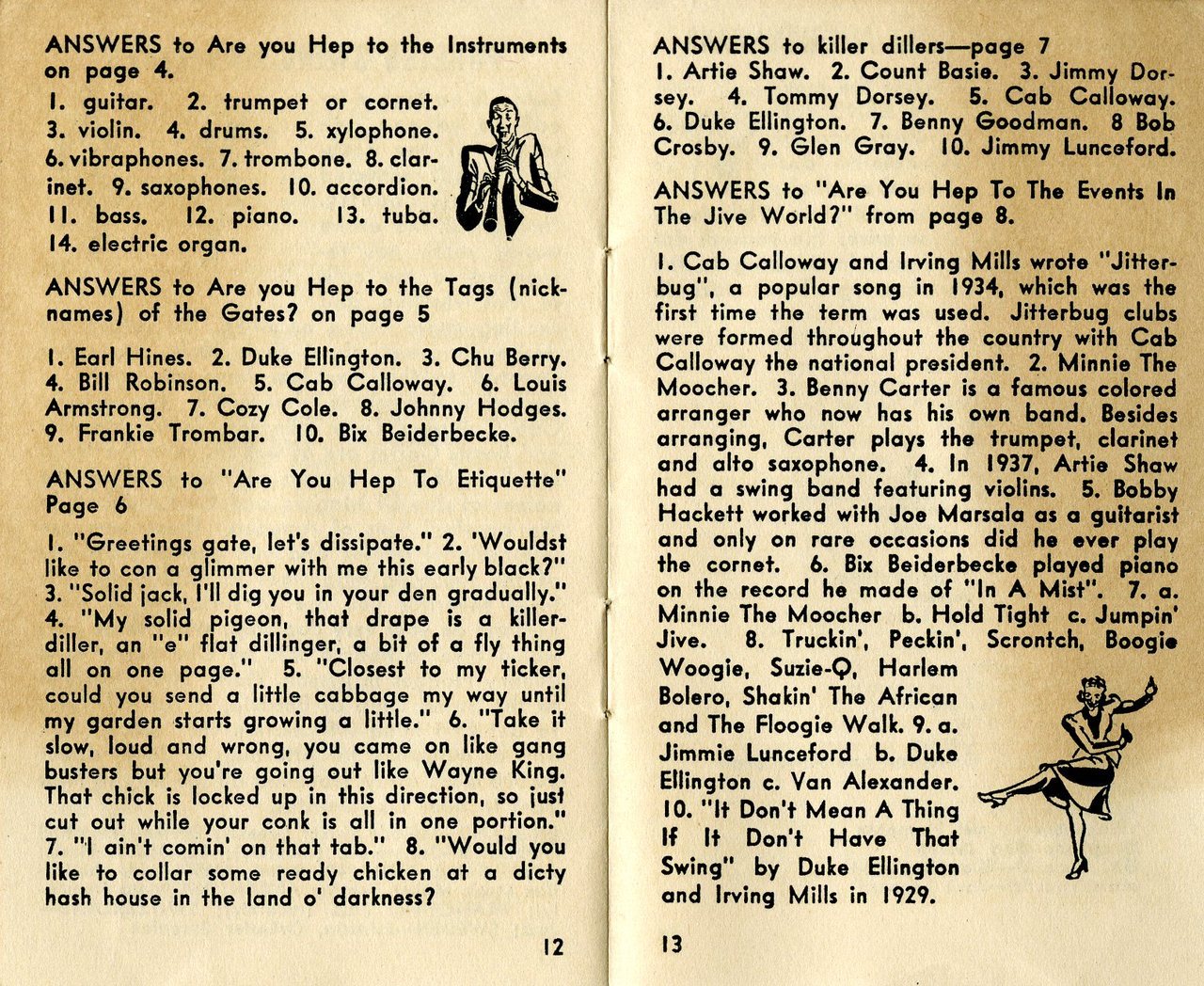
Musical team Al Sherman & Harry Tobias drew directly from Cab Calloway’s Cat-ologue: a Hepster’s Dictionary, a lexicon of Harlem jazz musicians’ slang originally published in 1938 ’ when choosing terms for Calloway to define for a young protégée, eager to be schooled in “the lingo all the jitterbugs use today.”
In between, Calloway, lays some iron in white tie and tails.
By the time the film came out, Calloway’s Hepster Dictionary was in its seventh edition, and had earned its place as the official jive language reference book of the New York Public Library.
As Calloway wrote in the foreword to the sixth edition:
“Jive talk” is now an everyday part of the English language. Its usage is now accepted in the movies, on the stage, and in the song products of Tin Pan Alley. It is reasonable to assume that jive will find new avenues in such hitherto remote places as Australia, the South Pacific, North Africa, China, Italy, France, Sicily, and inevitably Germany and wherever our Armed Forces may serve.
I don’t want to lend the impression here that the many words contained in this edition are the figments of my imagination. They were gathered from every conceivable source. Many first saw the light of printer’s ink in Billy Rowe’s widely read column “The Notebook,” in the Pittsburgh Courier.
And now to enrich our vocabularies…
HEPSTER’S DICTIONARY
A
A hummer (n.): exceptionally good. Ex., “Man, that boy is a hummer.”
Ain’t coming on that tab (v.): won’t accept the proposition. Usually abbr. to “I ain’t coming.”
Alligator (n.): jitterbug.
Apple (n.): the big town, the main stem, Harlem.
Armstrongs (n.): musical notes in the upper register, high trumpet notes.
B
Barbecue (n.): the girl friend, a beauty.
Barrelhouse (adj.): free and easy.
Battle (n.): a very homely girl, a crone.
Beat (adj.): (1) tired, exhausted. Ex., “You look beat” or “I feel beat.” (2) lacking anything. Ex, “I am beat for my cash”, “I am beat to my socks” (lacking everything).
Beat it out (v.): play it hot, emphasize the rhythm.
Beat up (adj.): sad, uncomplimentary, tired.
Beat up the chops (or the gums) (v.): to talk, converse, be loquacious.
Beef (v.): to say, to state. Ex., “He beefed to me that, etc.”
Bible (n.): the gospel truth. Ex., “It’s the bible!”
Black (n.): night.
Black and tan (n.): dark and light colored folks. Not colored and white folks as erroneously assumed.
Blew their wigs (adj.): excited with enthusiasm, gone crazy.
Blip (n.): something very good. Ex., “That’s a blip”; “She’s a blip.”
Blow the top (v.): to be overcome with emotion (delight). Ex., “You’ll blow your top when you hear this one.”
Boogie-woogie (n.): harmony with accented bass.
Boot (v.): to give. Ex., “Boot me that glove.”
Break it up (v.): to win applause, to stop the show.
Bree (n.): girl.
Bright (n.): day.
Brightnin’ (n.): daybreak.
Bring down ((1) n. (2) v.): (1) something depressing. Ex., “That’s a bring down.” (2) Ex., “That brings me down.”
Buddy ghee (n.): fellow.
Bust your conk (v.): apply yourself diligently, break your neck.
C
Canary (n.): girl vocalist.
Capped (v.): outdone, surpassed.
Cat (n.): musician in swing band.
Chick (n.): girl.
Chime (n.): hour. Ex., “I got in at six chimes.”
Clambake (n.): ad lib session, every man for himself, a jam session not in the groove.
Chirp (n.): female singer.
Cogs (n.): sun glasses.
Collar (v.): to get, to obtain, to comprehend. Ex., “I gotta collar me some food”; “Do you collar this jive?”
Come again (v.): try it over, do better than you are doing, I don’t understand you.
Comes on like gangbusters (or like test pilot) (v.): plays, sings, or dances in a terrific manner, par excellence in any department. Sometimes abbr. to “That singer really comes on!”
Cop (v.): to get, to obtain (see collar; knock).
Corny (adj.): old-fashioned, stale.
Creeps out like the shadow (v.): “comes on,” but in smooth, suave, sophisticated manner.
Crumb crushers (n.): teeth.
Cubby (n.): room, flat, home.
Cups (n.): sleep. Ex., “I gotta catch some cups.”
Cut out (v.): to leave, to depart. Ex., “It’s time to cut out”; “I cut out from the joint in early bright.”
Cut rate (n.): a low, cheap person. Ex., “Don’t play me cut rate, Jack!”
D
Dicty (adj.): high-class, nifty, smart.
Dig (v.): (1) meet. Ex., “I’ll plant you now and dig you later.” (2) look, see. Ex., “Dig the chick on your left duke.” (3) comprehend, understand. Ex., “Do you dig this jive?”
Dim (n.): evening.
Dime note (n.): ten-dollar bill.
Doghouse (n.): bass fiddle.
Domi (n.): ordinary place to live in. Ex., “I live in a righteous domi.”
Doss (n.): sleep. Ex., “I’m a little beat for my doss.”
Down with it (adj.): through with it.
Drape (n.): suit of clothes, dress, costume.
Dreamers (n.): bed covers, blankets.
Dry-goods (n.): same as drape.
Duke (n.): hand, mitt.
Dutchess (n.): girl.
E
Early black (n.): evening
Early bright (n.): morning.
Evil (adj.): in ill humor, in a nasty temper.
F
Fall out (v.): to be overcome with emotion. Ex., “The cats fell out when he took that solo.”
Fews and two (n.): money or cash in small quantity.
Final (v.): to leave, to go home. Ex., “I finaled to my pad” (went to bed); “We copped a final” (went home).
Fine dinner (n.): a good-looking girl.
Focus (v.): to look, to see.
Foxy (v.): shrewd.
Frame (n.): the body.
Fraughty issue (n.): a very sad message, a deplorable state of affairs.
Freeby (n.): no charge, gratis. Ex., “The meal was a freeby.”
Frisking the whiskers (v.): what the cats do when they are warming up for a swing session.
Frolic pad (n.): place of entertainment, theater, nightclub.
Fromby (adj.): a frompy queen is a battle or faust.
Front (n.): a suit of clothes.
Fruiting (v.): fickle, fooling around with no particular object.
Fry (v.): to go to get hair straightened.
G
Gabriels (n.): trumpet players.
Gammin’ (adj.): showing off, flirtatious.
Gasser (n, adj.): sensational. Ex., “When it comes to dancing, she’s a gasser.”
Gate (n.): a male person (a salutation), abbr. for “gate-mouth.”
Get in there (exclamation.): go to work, get busy, make it hot, give all you’ve got.
Gimme some skin (v.): shake hands.
Glims (n.): the eyes.
Got your boots on: you know what it is all about, you are a hep cat, you are wise.
Got your glasses on: you are ritzy or snooty, you fail to recognize your friends, you are up-stage.
Gravy (n.): profits.
Grease (v.): to eat.
Groovy (adj.): fine. Ex., “I feel groovy.”
Ground grippers (n.): new shoes.
Growl (n.): vibrant notes from a trumpet.
Gut-bucket (adj.): low-down music.
Guzzlin’ foam (v.): drinking beer.
H
Hard (adj.): fine, good. Ex., “That’s a hard tie you’re wearing.”
Hard spiel (n.): interesting line of talk.
Have a ball (v.): to enjoy yourself, stage a celebration. Ex., “I had myself a ball last night.”
Hep cat (n.): a guy who knows all the answers, understands jive.
Hide-beater (n.): a drummer (see skin-beater).
Hincty (adj.): conceited, snooty.
Hip (adj.): wise, sophisticated, anyone with boots on. Ex., “She’s a hip chick.”
Home-cooking (n.): something very dinner (see fine dinner).
Hot (adj.): musically torrid; before swing, tunes were hot or bands were hot.
Hype (n, v.): build up for a loan, wooing a girl, persuasive talk.
I
Icky (n.): one who is not hip, a stupid person, can’t collar the jive.
Igg (v.): to ignore someone. Ex., “Don’t igg me!)
In the groove (adj.): perfect, no deviation, down the alley.
J
Jack (n.): name for all male friends (see gate; pops).
Jam ((1)n, (2)v.): (1) improvised swing music. Ex., “That’s swell jam.” (2) to play such music. Ex., “That cat surely can jam.”
Jeff (n.): a pest, a bore, an icky.
Jelly (n.): anything free, on the house.
Jitterbug (n.): a swing fan.
Jive (n.): Harlemese speech.
Joint is jumping: the place is lively, the club is leaping with fun.
Jumped in port (v.): arrived in town.
K
Kick (n.): a pocket. Ex., “I’ve got five bucks in my kick.”
Kill me (v.): show me a good time, send me.
Killer-diller (n.): a great thrill.
Knock (v.): give. Ex., “Knock me a kiss.”
Kopasetic (adj.): absolutely okay, the tops.
L
Lamp (v.): to see, to look at.
Land o’darkness (n.): Harlem.
Lane (n.): a male, usually a nonprofessional.
Latch on (v.): grab, take hold, get wise to.
Lay some iron (v.): to tap dance. Ex., “Jack, you really laid some iron that last show!”
Lay your racket (v.): to jive, to sell an idea, to promote a proposition.
Lead sheet (n.): a topcoat.
Left raise (n.): left side. Ex., “Dig the chick on your left raise.”
Licking the chops (v.): see frisking the whiskers.
Licks (n.): hot musical phrases.
Lily whites (n.): bed sheets.
Line (n.): cost, price, money. Ex., “What is the line on this drape” (how much does this suit cost)? “Have you got the line in the mouse” (do you have the cash in your pocket)? Also, in replying, all figures are doubled. Ex., “This drape is line forty” (this suit costs twenty dollars).
Lock up: to acquire something exclusively. Ex., “He’s got that chick locked up”; “I’m gonna lock up that deal.”
M
Main kick (n.): the stage.
Main on the hitch (n.): husband.
Main queen (n.): favorite girl friend, sweetheart.
Man in gray (n.): the postman.
Mash me a fin (command.): Give me $5.
Mellow (adj.): all right, fine. Ex., “That’s mellow, Jack.”
Melted out (adj.): broke.
Mess (n.): something good. Ex., “That last drink was a mess.”
Meter (n.): quarter, twenty-five cents.
Mezz (n.): anything supreme, genuine. Ex., “this is really the mezz.”
Mitt pounding (n.): applause.
Moo juice (n.): milk.
Mouse (n.): pocket. Ex., “I’ve got a meter in the mouse.”
Muggin’ (v.): making ’em laugh, putting on the jive. “Muggin’ lightly,” light staccato swing; “muggin’ heavy,” heavy staccato swing.
Nicklette (n.): automatic phonograph, music box.
Nickel note (n.): five-dollar bill.
Nix out (v.): to eliminate, get rid of. Ex., “I nixed that chick out last week”; “I nixed my garments” (undressed).
Nod (n.): sleep. Ex., “I think I’l cop a nod.”
O
Ofay (n.): white person.
Off the cob (adj.): corny, out of date.
Off-time jive (n.): a sorry excuse, saying the wrong thing.
Orchestration (n.): an overcoat.
Out of the world (adj.): perfect rendition. Ex., “That sax chorus was out of the world.”
Ow!: an exclamation with varied meaning. When a beautiful chick passes by, it’s “Ow!”; and when someone pulls an awful pun, it’s also “Ow!”
P
Pad (n.): bed.
Pecking (n.): a dance introduced at the Cotton Club in 1937.
Peola (n.): a light person, almost white.
Pigeon (n.): a young girl.
Pops (n.): salutation for all males (see gate; Jack).
Pounders (n.): policemen.
Q
Queen (n.): a beautiful girl.
R
Rank (v.): to lower.
Ready (adj.): 100 per cent in every way. Ex., “That fried chicken was ready.”
Ride (v.): to swing, to keep perfect tempo in playing or singing.
Riff (n.): hot lick, musical phrase.
Righteous (adj.): splendid, okay. Ex., “That was a righteous queen I dug you with last black.”
Rock me (v.): send me, kill me, move me with rhythm.
Ruff (n.): quarter, twenty-five cents.
Rug cutter (n.): a very good dancer, an active jitterbug.
S
Sad (adj.): very bad. Ex., “That was the saddest meal I ever collared.”
Sadder than a map (adj.): terrible. Ex., “That man is sadder than a map.”
Salty (adj.): angry, ill-tempered.
Sam got you: you’ve been drafted into the army.
Send (v.): to arouse the emotions. (joyful). Ex., “That sends me!”
Set of seven brights (n.): one week.
Sharp (adj.): neat, smart, tricky. Ex., “That hat is sharp as a tack.”
Signify (v.): to declare yourself, to brag, to boast.
Skins (n.): drums.
Skin-beater (n.): drummer (see hide-beater).
Sky piece (n.): hat.
Slave (v.): to work, whether arduous labor or not.
Slide your jib (v.): to talk freely.
Snatcher (n.): detective.
So help me: it’s the truth, that’s a fact.
Solid (adj.): great, swell, okay.
Sounded off (v.): began a program or conversation.
Spoutin’ (v.): talking too much.
Square (n.): an unhep person (see icky; Jeff).
Stache (v.): to file, to hide away, to secrete.
Stand one up (v.): to play one cheap, to assume one is a cut-rate.
To be stashed (v.): to stand or remain.
Susie‑Q (n.): a dance introduced at the Cotton Club in 1936.
T
Take it slow (v.): be careful.
Take off (v.): play a solo.
The man (n.): the law.
Threads (n.): suit, dress or costume (see drape; dry-goods).
Tick (n.): minute, moment. Ex., “I’ll dig you in a few ticks.” Also, ticks are doubled in accounting time, just as money is doubled in giving “line.” Ex., “I finaled to the pad this early bright at tick twenty” (I got to bed this morning at ten o’clock).
Timber (n.): toothpick.
To dribble (v.): to stutter. Ex., “He talked in dribbles.”
Togged to the bricks: dressed to kill, from head to toe.
Too much (adj.): term of highest praise. Ex., “You are too much!”
Trickeration (n.): struttin’ your stuff, muggin’ lightly and politely.
Trilly (v.): to leave, to depart. Ex., “Well, I guess I’ll trilly.”
Truck (v.): to go somewhere. Ex., “I think I’ll truck on down to the ginmill (bar).”
Trucking (n.): a dance introduced at the Cotton Club in 1933.
Twister to the slammer (n.): the key to the door.
Two cents (n.): two dollars.
U
Unhep (adj.): not wise to the jive, said of an icky, a Jeff, a square.
V
Vine (n.): a suit of clothes.
V‑8 (n.): a chick who spurns company, is independent, is not amenable.
W
What’s your story?: What do you want? What have you got to say for yourself? How are tricks? What excuse can you offer? Ex., “I don’t know what his story is.”
Whipped up (adj.): worn out, exhausted, beat for your everything.
Wren (n.): a chick, a queen.
Wrong riff: the wrong thing said or done. Ex., “You’re coming up on the wrong riff.”
Y
Yarddog (n.): uncouth, badly attired, unattractive male or female.
Yeah, man: an exclamation of assent.
Z
Zoot (adj.): exaggerated
Zoot suit (n.): the ultimate in clothes. The only totally and truly American civilian suit.
That’s solid murder, gate!
If you’re not too beat, Jazz Night In America builds on Calloway’s dictionary with some additional vocabulary in the video below. Watch it for the meanings of stank, ictus, swoop, and scoop, defined collectively by drummer Ali Jackson as the sort of colloquialisms you use when you “don’t want everyone to know what you’re saying, but you want to express a point.”
Listen to poet Lemn Sissay’s BBC history of Cab Calloway’s Hepster’s Dictionaryhere.
The cases for traveling back in time and living in a past era are many and varied, but the case against doing so is always the same: dentistry. In every chapter of human history before this one, so we’re often told, everyone lived in at least a low-level state of agony inflicted by tooth problems, to say nothing of the unimaginable unsightliness of their smiles. But as justified as we probably are in laughing at the pearly whites on display in Hollywood period pieces, the historical record conflicts with our belief that the further you go into the past, the worst everyone’s teeth: ancient Romans, as explained in the Told In Stone video above, actually had better teeth than modern Europeans.
That’s hardly a high bar to clear, a modern American may joke. But then, the United States today takes dental care to an almost obsessive level, whereas the citizens of the Roman Empire had practically nothing to work with by comparison. “The standard, and often sole implement employed to clean teeth was a toothpick,” says Told in Stone creator Garrett Ryan. These “were paired with tooth powders, which were rubbed over the teeth and gums with an enthusiastic finger.” Ingredients included “pumice, pulverized bone, powdered glass, and crushed shell,” or sometimes “sheep’s sweat and the ash of a wolf’s head.” — all a far cry from anything offered on the toothpaste aisle today.
“Bad breath was a chronic condition in the classical world,” and “toothache seems to have been almost equally prevalent.” The treatment most commonly practiced by Roman dentists was extraction, performed without anesthetic. Yet only about a third of the preserved skeletons recovered from the ruins of Pompeii and Herculaneum were missing teeth, “and relatively few had cavities.” Though many societies today take dental condition as a marker of class, in ancient Rome the relationship was, to a certain extent, reversed: “A young girl wearing expensive jewelry, for example, already had five cavities, probably because her family could afford to give her plenty of snacks smothered in expensive and sugary honey.”
Indeed, “in the absence of processed sugar, oral bacteria were less aggressive than they are today.” Romans got cavities, but “the pervasive blackened teeth and hollow cheeks of early modern Europe,” an era at the unfortunate intersection of relatively plentiful sugar and relatively primitive dentistry, “were nearly as distant from the Roman experience as they are from ours.” Some of us here in the sugar-saturated twenty-first century, with its constant pursuit of dental perfection, may now be considering the potential benefits of shifting to an ancient Roman diet — without, of course, all those tiny, enamel-abrading stones that had a way of ending up in ancient Roman bread.
Based in Seoul, Colin Marshall writes and broadcasts on cities, language, and culture. His projects include the Substack newsletterBooks on Cities, the book The Stateless City: a Walk through 21st-Century Los Angeles and the video series The City in Cinema. Follow him on Twitter at @colinmarshall or on Facebook.
Playbill writes: “Nathan Lane is currently starring on Broadway in ‘Pictures From Home,’ opposite Zoë Wanamaker (who plays his wife) and Danny Burstein (who plays his son). In the inaugural entry to Playbill’s new video series, ‘My Life in the Theatre,’ Lane sits down with a Playbill binder containing every Playbill from every show he’s ever done on Broadway. Lane walks us through his career, including the time he asked Sondheim to write new songs for ‘The Frogs,’ how he almost changed his name to Norman Lane, and the production where he played a ‘thug version of Donald Trump.’ ”
If you would like to support the mission of Open Culture, consider making a donation to our site. It’s hard to rely 100% on ads, and your contributions will help us continue providing the best free cultural and educational materials to learners everywhere. You can contribute through PayPal, Patreon, and Venmo (@openculture). Thanks!
In April 2018, author Andrew Forrester wrote an open letterto “People Who Don’t Make Every Conceivable Effort to Ensure that the Bathroom Door is Locked.” And now Benedict Cumberbatch has read it, and read it well. This reading took place at Letters Live, an event celebrating the power of literary correspondence, held at London’s Royal Albert Hall. You can find other Cumberbatch readings in the Relateds below.
If you would like to support the mission of Open Culture, consider making a donation to our site. It’s hard to rely 100% on ads, and your contributions will help us continue providing the best free cultural and educational materials to learners everywhere. You can contribute through PayPal, Patreon, and Venmo (@openculture). Thanks!
Spoiler alert: The death of Logan Roy the weekend before last marked the end of an era. Or at the very least, it was notable for occasioning, in the Los Angeles Times, perhaps the first newspaper obituary of a fictional character. Roy was the mogul-patriarch at the center of the hit black comedy-drama Succession, which is now approaching the end of its fourth and final season on HBO. Brian Cox’s performance in that role had much to do with the success of Succession, so to speak, not least because he clearly understood that, for all its of-the-moment references, the series’ narrative is deeply rooted in concepts like dynasty and empire, which themselves extend way back to antiquity.
Antiquity happens to be the subject of two videos Cox narrated, just before the premiere of Succession, for the Youtube channel Arzamas. “Ancient Greece in 18 Minutes” and “Ancient Rome in 20 Minutes” deliver just what their titles promise, brief but clear and well-informed primers on the classical civilizations that modern Westerners have long thought of as the precursors to their own.
Of course, there were no single, continuous political or geographical entities called “Ancient Greece” and “Ancient Rome”; rather, those names refer to large regions of the world in which city-states rise and fell — as their very nature and relationships with one another changed dramatically — over a period of centuries upon centuries.
To these acclaimed videos Cox brings his signature irreverence-laced gravitas. At the very end of “Ancient Greece in 18 Minutes,” he tells of the Byzantine Empire, “which extended the life of Greek culture another thousand years — leaving us the weird Russian alphabet, for instance.” This line is funnier if you know that Arzamas is a Russian channel that has also put up videos on Russian history and culture: the one on the country’s twentieth-century art just above, for instance, which Cox also narrates. Russia has inherited elements of the ancient Greek and Roman civilizations, as have other distant lands like the United States of America. And wherever we live, we can laugh at Cox’s observation that “if an ancient Greek were to see modern democracy, he would say just one word: oligarchy” — a form of rule Logan Roy knew all about.
Based in Seoul, Colin Marshall writes and broadcasts on cities, language, and culture. His projects include the Substack newsletterBooks on Cities, the book The Stateless City: a Walk through 21st-Century Los Angeles and the video series The City in Cinema. Follow him on Twitter at @colinmarshall or on Facebook.
Even if you don’t think you know “Enter Sandman,” you know “Enter Sandman.” For more than thirty years it’s been the signature song of Metallica, the best-known heavy metal band in the world, and as such practically unavoidable — unavoidable, that is, unless you’re jazz drummer Larnell Lewis. Previously featured here on Open Culture for his demonstration of the thirteen levels of drumming difficulty, Lewis is most closely associated with the fusion band Snarky Puppy, and has, fair to say, spent his professional life outside the realm of metal. Hence the intrigue of the challenge he takes on in the video above: can he play through “Enter Sandman” after hearing it just once?
Metallica die-hards know how formidable a task this is. Recording the song in the first place took the band’s drummer Lars Ulrich more than one take — in fact, it took him nearly fifty takes, in each of which he played just one section of the song, never the whole thing straight through.
The final mix edits together all of the most precise and intense pieces of his performance into one seemingly impossible-to-replicate whole. But for Lewis, learning a song by ear and then playing it perfectly is all in a day’s work, a process he demonstrates in the earlier video just below, talking his listeners through his mental process of active listening to a percussion-free song, then coming up with all the drum parts on the fly.
Watching Lewis actively listen to “Enter Sandman” has the appeal of those viral videos in which Youtubers hear hit songs for the first time — but even more so, since Lewis knows his craft backwards and forwards, and doesn’t hesitate to express his own reactions and perceptions. He notes a few tricky shifts into half time, and even one especially dramatic shot that he foresees missing when he tries his own hand at the song. Apart from that, however, he then plays the song himself with an accuracy that astonishes even the Metallica fans in the comments. As one says, it’s hard to say which is more unbelievable: Lewis’ extraordinary talent or the fact that he’d never heard ‘Enter Sandman’ before. The man must never have set foot in a gym — but then, he probably gets more than enough of a workout at the drum kit.
Based in Seoul, Colin Marshall writes and broadcasts on cities, language, and culture. His projects include the Substack newsletterBooks on Cities, the book The Stateless City: a Walk through 21st-Century Los Angeles and the video series The City in Cinema. Follow him on Twitter at @colinmarshall or on Facebook.
We're hoping to rely on loyal readers, rather than erratic ads. Please click the Donate button and support Open Culture. You can use Paypal, Venmo, Patreon, even Crypto! We thank you!
Open Culture scours the web for the best educational media. We find the free courses and audio books you need, the language lessons & educational videos you want, and plenty of enlightenment in between.