Listen to Patti Smith’s Glorious Three Hour Farewell to CBGB’s on Its Final Night

CBGB is a state of mind — Pat­ti Smith

All good things must come to an end, but it hurt when CBGB’s, New York City’s cel­e­brat­ed — and famous­ly filthy — music club shut­tered for good on Octo­ber 15th, 2006, a vic­tim of sky­rock­et­ing Low­er East Side rents.

While plen­ty of punk and New Wave lumi­nar­ies cut their teeth on the leg­endary venue’s stage — Talk­ing Heads, The RamonesBlondie — final hon­ors went to Pat­ti Smith, a CBGB’s habitué, whose sev­en-week res­i­den­cy in 1975 earned her a major record deal.

In her Nation­al Book Award-win­ning mem­oir, Just Kids, Smith described her first impres­sions of the place, when she and her gui­tarist Lenny Kaye head­ed down­town to catch their friend Richard Hell’s band, Tele­vi­sion, fol­low­ing the pre­miere of the con­cert film, Ladies & Gen­tle­men, the Rolling Stones at the Ziegfeld:

CBGB was a deep and nar­row room along the right side, lit by over­hang­ing neon signs adver­tis­ing var­i­ous brands of beer. The stage was low, on the left-hand side, flanked by pho­to­graph­ic murals of turn-of-the-cen­tu­ry bathing belles. Past the stage was a pool table, and in back was a greasy kitchen and a room where the own­er, Hilly Krys­tal, worked and slept with his salu­ki, Jonathan…

It was a world away from the Ziegfeld. The absence of glam­our made it seem all the more famil­iar, a place that we could call our own. As the band played on, you could hear the whack of the pool cue hit­ting the balls, the salu­ki bark­ing, bot­tles clink­ing, the sounds of a scene emerg­ing. Though no one knew it, the stars were align­ing, the angels were call­ing.

Some 30 years lat­er, Kaye pre­pared to bid CBGB good­bye, telling the New York Times, “It’s like it’s grown its own bar­na­cles:”

 You couldn’t repli­cate the décor in a mil­lion years, and dis­man­tling all those lay­ers of archae­ol­o­gy of music in the club is a daunt­ing task.

The Vil­lage Voice observed that it was “a crazy, emo­tion­al night for every­one in the crowd and for every­one on the stage,” and the New York Times report­ed how Smith doc­u­ment­ed the club’s awning with a Polaroid, explain­ing, “I’m sen­ti­men­tal…”

But Smith, who active­ly encour­aged young fans to resist wor­ship­ing at the altar of the club’s rep­u­ta­tion when they could be start­ing scenes of their own, also pushed back against sen­ti­men­tal­i­ty, telling the crowd, “It’s not a fuck­ing tem­ple — it is what it is.”

That may be, but her three-and-a-half-hour per­for­mance, above, was still one for the his­to­ry books, from the open­ing read­ing of Piss Fac­to­ry (I’m gonna be some­body, I’m gonna get on that train, go to New York City /I’m gonna be so bad I’m gonna be a big star and I will nev­er return) to the clos­ing in memo­ri­am recita­tion (Joe Strum­merJohn­ny Thun­dersStiv BatorsJohn­ny, Joey, and Dee Dee Ramone…)

Smith took care that oth­er artists who helped make the scene were rep­re­sent­ed in her below set lists, from Blondie and Lou Reed to Tele­vi­sion and the Dead Boys:

Piss Fac­to­ry  0:22

Kimberly/Tide is High 12:40

Pale Blue Eyes 20:30

Lou (Reed) had a gift of tak­ing very sim­ple lines, ‘Linger on, your pale blue eyes,’ and make it so they mag­ni­fy on their own. That song has always haunt­ed me. (The Asso­ci­at­ed Press)

Mar­quee Moon/We Three 29:02

Tele­vi­sion will help wipe out media. They are not the­atre. Nei­ther were the ear­ly Stones or the Yard­birds. They are strong images proc­duce from pain and speed and the fanat­ic desire to make it. They are also inspired enough below the belt to prove that SEX is not dead in rock ’n’ roll. (Rock Scene)

Dis­tant Fin­gers 38:48

With­out Chains 47:50

We had emo­tion­al duties, and I respect­ed that. But I also thought it was impor­tant to do a song like that. (Rolling Stone)

Ghost Dance 55:30

Bird­land 1:00:08

Son­ic Reduc­er 1:11:52

Redon­do Beach 1:16:00

Free Mon­ey 1:20:44

Piss­ing in a Riv­er 1:28:27

Gimme Shel­ter 1:33:50

I was think­ing about the words to that: “War, chil­dren, it’s just a shot away.” To me, a song like that is more mean­ing­ful than ever. (Rolling Stone)

Space Mon­key 1:43

Blitzkrieg Bop / Beat on the Brat / Do You Remem­ber Rock ‘N’ Roll Radio? / Sheena Is a Punk Rocker 1:48:30

Ain’t It Strange 1:55:20

So You Want to Be a Rock ‘n’ Roll Star 2:02:11

Babelogue/Rock n Roll N — - — - — - 2:10:17 

Hap­py Birth­day to Flea 2:21:38

For Your Love 2:22:15

My Gen­er­a­tion 2:27:22

Land/Gloria 2:36:51

Even though I wrote the poem at the begin­ning of “Glo­ria” in 1970, it took all those years to evolve, to merge into “Glo­ria.” And that was pret­ty much done at CBGB. We record­ed Hors­es in 1975, and did all the ground­work at CBGB. (Rolling Stone)

Elegie 2:55:57

As I was read­ing that lit­tle list, those peo­ple seemed in that moment — because of the intense emo­tion­al ener­gy in that room — to be alive. Every­one in the room knew or heard of or loved one of those peo­ple. That col­lec­tive love and sor­row and recog­ni­tion made those peo­ple seem as alive as any of us. (Rolling Stone)

Relat­ed Con­tent 

Pat­ti Smith Plays at CBGB In One of Her First Record­ed Con­certs, Joined by Sem­i­nal Punk Band Tele­vi­sion (1975)

NYC’s Icon­ic Punk Club CBG­Bs Comes Alive in a Bril­liant Short Ani­ma­tion, Using David Godlis’ Pho­tos of Pat­ti Smith, The Ramones & More

Beau­ti­ful New Pho­to Book Doc­u­ments Pat­ti Smith’s Break­through Years in Music: Fea­tures Hun­dreds of Unseen Pho­tographs

Pat­ti Smith’s 40 Favorite Books

– Ayun Hal­l­i­day is the Chief Pri­ma­tol­o­gist of the East Vil­lage Inky zine and author, most recent­ly, of Cre­ative, Not Famous: The Small Pota­to Man­i­festo and Cre­ative, Not Famous Activ­i­ty Book. Fol­low her @AyunHalliday.

Ai Weiwei Recreates Monet’s Water Lilies Triptych Using 650,000 Lego Bricks

Near­ly a cen­tu­ry after Claude Mon­et paint­ed them, the Nymphéas, or Water Lilies, still impress as a vision of a seem­ing­ly minor sub­ject real­ized at a grand scale. The paint­ings installed in a ded­i­cat­ed room at the Musée de l’O­r­angerie in Paris make an espe­cial­ly strong impact on their view­ers — an impact sure­ly not lost on Ai Wei­wei, who has late­ly re-cre­at­ed anoth­er set of Water Lilies (a trip­tych whose orig­i­nal resides at the Muse­um of Mod­ern Art) entire­ly out of Lego bricks. Titled Water Lilies #1, this 50-foot-long plas­tic homage will go on dis­play at Lon­don’s Design Muse­um as part of Ai Wei­wei: Mak­ing Sense, which opens on April 7th and runs until July 30th.

“Ai used 650,000 Lego bricks in 22 col­ors in his ver­sion of the famous Impres­sion­ist trip­tych,” writes ART­news’ Karen K. Ho. Apart from sim­ply repli­cat­ing, brick by pix­el-like brick, the brush­strokes with which Mon­et repli­cat­ed the lily pond at his Giverny home, Wei­wei also includ­ed “a dark area on the right-hand side. The Design Muse­um said it rep­re­sents the under­ground dugout in Xin­jiang province where Ai and his father, Ai Qing, lived in forced exile in the 1960s.” On one lev­el, this is an unex­pect­ed addi­tion; on anoth­er, it’s just the touch one might expect from the most famous dis­si­dent Chi­nese artist alive.

Image by Ela Bialkowska/OKNO Stu­dio

Expe­ri­enced in the medi­um of Lego, Ai has also used every­one’s favorite build­ing blocks “to pro­duce por­traits of polit­i­cal pris­on­ers. In 2017, the Hir­sh­horn Muse­um and Sculp­ture Gallery exhib­it­ed 176 of these Lego art­works.” Mak­ing Sense will also include a new Lego piece called Unti­tled (Lego Inci­dent), which, as the Guardian’s Car­o­line Davies writes, “com­pris­es thou­sands of Lego blocks donat­ed by mem­bers of the pub­lic after Lego briefly refused to sell their prod­ucts to him in 2014.” It seems that Lego had reser­va­tions about being asso­ci­at­ed with such a polit­i­cal­ly charged project. The state­ment made by Water Lilies #1 may be less direct, but — enriched by its large scale, its cross-cul­tur­al inspi­ra­tion, and its mate­ri­als that have long been a near-uni­ver­sal fix­ture of child­hood — it won’t be any less pow­er­ful.

Relat­ed con­tent:

Monet’s Water Lilies: How World War I Inspired Mon­et to Paint His Final Mas­ter­pieces & Cre­ate “the World’s First Art Instal­la­tion”

How to Paint Water Lilies Like Mon­et in 14 Min­utes

Ai Wei­wei Cre­ates Hand-Silkscreened Scarves Draw­ing on a Chi­nese Paper Cut­ting Tra­di­tion

Who’s Afraid of Ai Wei­wei: A Short Doc­u­men­tary

Hokusai’s Icon­ic Print, “The Great Wave off Kana­gawa,” Recre­at­ed with 50,000 LEGO Bricks

The Vin­cent van Gogh “Star­ry Night” LEGO Set Is Now Avail­able: It’s Cre­at­ed in Col­lab­o­ra­tion with MoMA

Based in Seoul, Col­in Marshall writes and broad­casts on cities, lan­guage, and cul­ture. His projects include the Sub­stack newslet­ter Books on Cities, the book The State­less City: a Walk through 21st-Cen­tu­ry Los Ange­les and the video series The City in Cin­e­ma. Fol­low him on Twit­ter at @colinmarshall or on Face­book.

Hear the Oldest Song in the World: A Sumerian Hymn Written 3,400 Years Ago

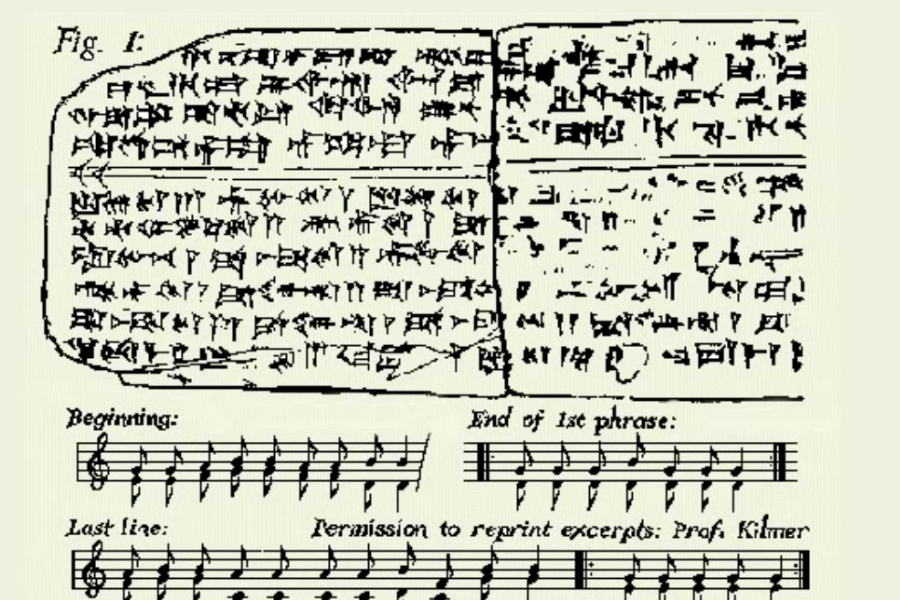
In the ear­ly 1950s, archae­ol­o­gists unearthed sev­er­al clay tablets from the 14th cen­tu­ry BCE. Found, WFMU tells us, “in the ancient Syr­i­an city of Ugar­it,” these tablets “con­tained cuneiform signs in the hur­ri­an lan­guage,” which turned out to be the old­est known piece of music ever dis­cov­ered, a 3,400 year-old cult hymn. Anne Draf­fko­rn Kilmer, pro­fes­sor of Assyri­ol­o­gy at the Uni­ver­si­ty of Cal­i­for­nia, pro­duced the inter­pre­ta­tion below in 1972. (She describes how she arrived at the musi­cal notation—in some tech­ni­cal detail—in this inter­view.) Since her ini­tial pub­li­ca­tions in the 60s on the ancient Sumer­ian tablets and the musi­cal the­o­ry found with­in, oth­er schol­ars of the ancient world have pub­lished their own ver­sions.

The piece, writes Richard Fink in a 1988 Arche­olo­gia Musi­calis arti­cle, con­firms a the­o­ry that “the 7‑note dia­ton­ic scale as well as har­mo­ny exist­ed 3,400 years ago.” This, Fink tells us, “flies in the face of most musi­col­o­gists’ views that ancient har­mo­ny was vir­tu­al­ly non-exis­tent (or even impos­si­ble) and the scale only about as old as the Ancient Greeks.”

Kilmer’s col­league Richard Crock­er claimed that the dis­cov­ery “rev­o­lu­tion­ized the whole con­cept of the ori­gin of west­ern music.” So, aca­d­e­m­ic debates aside, what does the old­est song in the world sound like? Lis­ten to a midi ver­sion below and hear it for your­self. Doubt­less, the midi key­board was not the Sume­ri­ans instru­ment of choice, but it suf­fices to give us a sense of this strange com­po­si­tion, though the rhythm of the piece is only a guess.

Kilmer and Crock­er pub­lished an audio book on vinyl (now on CD) called Sounds From Silence in which they nar­rate infor­ma­tion about ancient Near East­ern music, and, in an accom­pa­ny­ing book­let, present pho­tographs and trans­la­tions of the tablets from which the song above comes. They also give lis­ten­ers an inter­pre­ta­tion of the song, titled “A Hur­ri­an Cult Song from Ancient Ugar­it,” per­formed on a lyre, an instru­ment like­ly much clos­er to what the song’s first audi­ences heard. Unfor­tu­nate­ly, for that ver­sion, you’ll have to make a pur­chase, but you can hear a dif­fer­ent lyre inter­pre­ta­tion of the song by Michael Levy below, as tran­scribed by its orig­i­nal dis­cov­er­er Dr. Richard Dum­b­rill.

Note: An ear­li­er ver­sion of this post appeared on our site in 2014. It’s old but gold. So we hope you enjoy revis­it­ing it again.

If you would like to sup­port the mis­sion of Open Cul­ture, con­sid­er mak­ing a dona­tion to our site. It’s hard to rely 100% on ads, and your con­tri­bu­tions will help us con­tin­ue pro­vid­ing the best free cul­tur­al and edu­ca­tion­al mate­ri­als to learn­ers every­where. You can con­tribute through Pay­Pal, Patre­on, and Ven­mo (@openculture). Thanks!

Relat­ed Con­tent:

What Ancient Greek Music Sound­ed Like: Hear a Recon­struc­tion That is ‘100% Accu­rate’

Hear The Epic of Gil­gamesh Read in the Orig­i­nal Akka­di­an and Enjoy the Sounds of Mesopotamia

Down­load 10,000 of the First Record­ings of Music Ever Made, Cour­tesy of the Uni­ver­si­ty of Cal­i­for­nia-San­ta Bar­bara 

Josh Jones is a writer and musi­cian based in Durham, NC. Fol­low him at @jdmagness

by | Permalink | Make a Comment ( 6 ) |

The March of Intellect: Newspaper Cartoons Satirize the Belief in Technological Progress in 1820s England

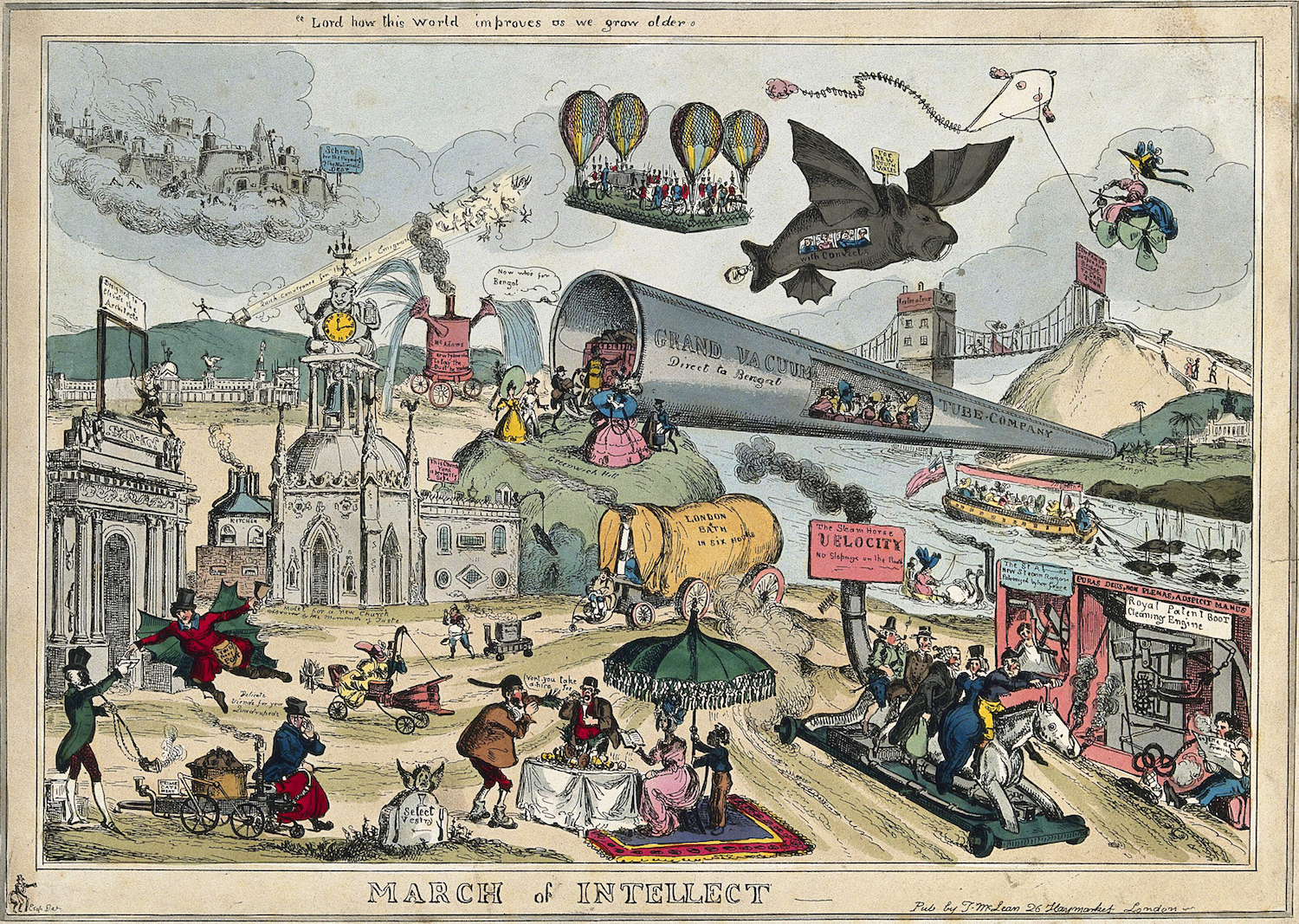
Before the Indus­tri­al Rev­o­lu­tion, few had occa­sion to con­sid­er the impact of tech­nol­o­gy on their lives. A few decades in, how­ev­er, cer­tain seg­ments of soci­ety thought about lit­tle else. That, in any case, is the impres­sion giv­en by the debate over what the Eng­lish press of the ear­ly nine­teenth cen­tu­ry called the “March of Intel­lect,” a label for the appar­ent­ly polar­iz­ing dis­course that arose from not just the devel­op­ment of indus­tri­al tech­nol­o­gy but the dis­sem­i­na­tion of “use­ful knowl­edge” that fol­lowed in its wake. Was this sort of edu­ca­tion an engine of progress, or sim­ply of dis­or­der?

The March of Intel­lec­t’s most vivid lega­cy con­sists of a series of news­pa­per car­toons pub­lished in the eigh­teen-twen­ties. They depict a world, as Hunter Dukes writes at the Pub­lic Domain Review, where “extrav­a­gant­ly dressed ladies win­dow-shop for pas­tel fin­ery and for­go stair­wells in favor of belt-dri­ven slides” while “a child is moments away from being paved into the road by a car­riage at full gal­lop”; where “men gorge them­selves on pineap­ples and guz­zle bot­tles at the Cham­pagne Depot” and “post­men flit around with winged capes”; where “even con­victs have it bet­ter: they embark for New South Wales on a gar­goyle zep­pelin, but still have panoram­ic views.”

So far, so Vic­to­ri­an. One could argue more or less in favor of the world described above, as ren­dered by artist William Heath. But in the future as envi­sioned in the car­toon at the top of the post by Robert Sey­mour (now best known as the orig­i­nal illus­tra­tor of Charles Dick­ens’ The Pick­wick Papers), the March of Intel­lect takes on a flam­boy­ant­ly malign aspect.

In it “a jol­ly automa­ton stomps across soci­ety,” writes Dukes. “Its head is a lit­er­al stack of knowl­edge — tomes of his­to­ry, phi­los­o­phy, and mechan­ic man­u­als pow­er two gas-lantern eyes. It wears sec­u­lar Lon­don Uni­ver­si­ty as a crown.” It sweeps away “pleas, plead­ings, delayed par­lia­men­tary bills, and obso­lete laws. Vic­ars, rec­tors, and quack doc­tors are turned on their heads.”

Near­ly two cen­turies lat­er, most would side instinc­tive­ly with the par­tic­i­pants in the March of Intel­lect debate who saw the pro­vi­sion of tech­ni­cal and sci­en­tif­ic knowl­edge to then-less-edu­cat­ed groups — women, chil­dren, the work­ing class — as an unam­bigu­ous good. Yet we may also feel trep­i­da­tion about the tech­nolo­gies emerg­ing in our own time, when, to name a cur­rent exam­ple, “arti­fi­cial­ly intel­li­gent chat­bots have fueled ongo­ing anx­i­eties about the mech­a­niza­tion of intel­lec­tu­al labor.” Every day brings new apoc­a­lyp­tic spec­u­la­tions about the rise of pow­er­ful think­ing machines run­ning roughshod over human­i­ty. If no artist today is illus­trat­ing them quite so enter­tain­ing­ly as Heath and Sey­mour did, so much the worse for our time.

via Pub­lic Domain Review

Relat­ed con­tent:

Jules Verne Accu­rate­ly Pre­dicts What the 20th Cen­tu­ry Will Look Like in His Lost Nov­el, Paris in the Twen­ti­eth Cen­tu­ry (1863)

How Futur­ists Envi­sioned the Future in the 1920s: Mov­ing Walk­ways, Per­son­al Heli­copters, Glass-Domed Cities, Dream Recorders & More

19th Cen­tu­ry Car­i­ca­tures of Charles Dar­win, Mark Twain, H.M. Stan­ley & Oth­er Famous Vic­to­ri­ans (1873)

The Charles Dick­ens Illus­trat­ed Gallery: A New Online Col­lec­tion Presents All of the Orig­i­nal Illus­tra­tions from Charles Dick­ens’ Nov­els

Based in Seoul, Col­in Marshall writes and broad­casts on cities, lan­guage, and cul­ture. His projects include the Sub­stack newslet­ter Books on Cities, the book The State­less City: a Walk through 21st-Cen­tu­ry Los Ange­les and the video series The City in Cin­e­ma. Fol­low him on Twit­ter at @colinmarshall or on Face­book.

Watch 13 Levels of Drumming, from Easy to Complex, Explained by Snarky Puppy Drummer Larnell Lewis

Above, Snarky Pup­py drum­mer Lar­nell Lewis explains drum­ming in 13 lev­els of dif­fi­cul­ty, from easy to com­plex, show­ing how “drum tech­niques build upon each oth­er as the eas­i­est lev­els incor­po­rate the hi-hat, bass and snare drums, and more dif­fi­cult lev­els include polyrhythms, the floor tom, ride cym­bals, syn­co­pa­tion and much more.” It’s fun to watch. In anoth­er video from the same series pro­duced by Wired mag­a­zine, musi­cian Jacob Col­lier explains the con­cept of har­mo­ny with increas­ing dif­fi­cul­ty to five dif­fer­ent peo­ple– a child, a teen, a col­lege stu­dent, a pro­fes­sion­al, and jazz leg­end Her­bie Han­cock. Enjoy…

If you would like to sup­port the mis­sion of Open Cul­ture, con­sid­er mak­ing a dona­tion to our site. It’s hard to rely 100% on ads, and your con­tri­bu­tions will help us con­tin­ue pro­vid­ing the best free cul­tur­al and edu­ca­tion­al mate­ri­als to learn­ers every­where. You can con­tribute through Pay­Pal, Patre­on, and Ven­mo (@openculture). Thanks!

Relat­ed Con­tent 

The Neu­ro­science of Drum­ming: Researchers Dis­cov­er the Secrets of Drum­ming & The Human Brain

What Makes John Bon­ham Such a Good Drum­mer? A New Video Essay Breaks Down His Inim­itable Style

The Case for Why Ringo Starr Is One of Rock’s Great­est Drum­mers

The Health Ben­e­fits of Drum­ming: Less Stress, Low­er Blood Pres­sure, Pain Relief, and Altered States of Con­scious­ness

Amélie Was Really a KGB Spy: Director Jean-Pierre Jeunet Re-Edits His Beloved Film, Amélie, into a New Comedic Short

No French film of this cen­tu­ry is more beloved than Jean-Pierre Jeunet’s Amélie. Or rather, no pro­tag­o­nist of a French film in this cen­tu­ry is more beloved than Audrey Tautou’s epony­mous Amélie. Hence, no doubt, why the movie is best known by that short ver­sion of its title rather than by the long ver­sion, Le fab­uleux des­tin d’Amélie Poulain. Now, more than twen­ty years after the release of Le fab­uleux des­tin d’Amélie Poulain, Jeunet has fol­lowed it up with La véri­ta­ble his­toire d’Amélie Poulain, which you can watch (with option­al French or Eng­lish sub­ti­tles) just above.

“After all this time,” Jeunet says in a brief intro­duc­tion, “I felt the moment was right to tell you, at long last, the real sto­ry of Amélie Poulain.” She turns out, accord­ing to his voice-over nar­ra­tion that fol­lows, not to be a sim­ple Mont­martre wait­ress who ded­i­cates her­self to sur­rep­ti­tious­ly enrich­ing the lives of those around her.

In fact she works as a spy for the KGB, hav­ing first been recruit­ed in child­hood with the promise of can­dy bars. That may sound far-fetched, but Jeunet sup­ports every detail of Amélie’s dou­ble life, and of the sto­ry of her re-entry into espi­onage after the fall of the Berlin Wall, using the very same scenes and involv­ing the very same char­ac­ters we remem­ber from Amélie.

On one lev­el, La véri­ta­ble his­toire d’Amélie Poulain tes­ti­fies to the endur­ing play­ful­ness that keeps Jeunet from tak­ing his own work — even the work that became a glob­al phe­nom­e­non — too seri­ous­ly. (Indeed, that spir­it is on dis­play in the orig­i­nal movie’s exag­ger­a­tion of whim­si­cal-French-film tropes.) Much like the Hol­ly­wood­i­fied Kubrick trail­ers we pre­vi­ous­ly fea­tured here on Open Cul­ture, this new short also con­sti­tutes a demon­stra­tion of how the mean­ing and impact of cin­e­ma are cre­at­ed not by the images them­selves, but rather by their con­text and jux­ta­po­si­tion. And so, with char­ac­ter­is­tic clev­er­ness, Jeunet has rein­vent­ed Amélie as a Sovi­et agent by employ­ing the prin­ci­ples of Sovi­et mon­tage.

via Kot­tke

Relat­ed con­tent:

The Shin­ing and Oth­er Com­plex Stan­ley Kubrick Films Recut as Sim­ple Hol­ly­wood Movies

Paris Through Pen­tax: Short Film Lets You See a Great City Through a Dif­fer­ent Lens

Tui­leries: The Coen Broth­ers’ Short Film About Steve Buscemi’s Very Bad Day in the Paris Metro

A Cin­e­mat­ic Jour­ney Through Paris, As Seen Through the Lens of Leg­endary Film­mak­er Éric Rohmer: Watch Rohmer in Paris

How to Jump the Paris Metro: A Wit­ty, Rebel­lious Primer from New Wave Direc­tor Luc Moul­let (1984)

His­to­ry Declas­si­fied: New Archive Reveals Once-Secret Doc­u­ments from World Gov­ern­ments

Based in Seoul, Col­in Marshall writes and broad­casts on cities, lan­guage, and cul­ture. His projects include the Sub­stack newslet­ter Books on Cities, the book The State­less City: a Walk through 21st-Cen­tu­ry Los Ange­les and the video series The City in Cin­e­ma. Fol­low him on Twit­ter at @colinmarshall or on Face­book.

Behold an Astonishing Near-Nightly Spectacle in the Lightning Capital of the World

Extreme weath­er con­di­tions have become a top­ic of grave con­cern. Are floods, earth­quakes, tor­na­does and cat­a­stroph­ic storms the new nor­mal?

Just for a moment, let’s trav­el to a place where extreme weath­er has always been the norm: Lake Mara­cai­bo in north­west­ern Venezuela.

Accord­ing to NASA’s Trop­i­cal Rain­fall Mea­sur­ing Mis­sion’s light­ning image sen­sor, it is the light­ning cap­i­tal of the world.

Chalk it up to the unique geog­ra­phy and cli­mate con­di­tions near the con­flu­ence of the lake and the Cata­tum­bo Riv­er. At night, the moist warm air above the water col­lides with cool breezes rolling down from the Andes, cre­at­ing an aver­age of 297 thun­der­storms a year.

Watch­ing pho­tog­ra­ph­er Jonas Pio­ntek’s short film doc­u­ment­ing the phe­nom­e­non, above, it’s not sur­pris­ing that chief among his tips for shoot­ing light­ning at night is a point­ed warn­ing to always keep a safe dis­tance from the storm. While view­able from as far as 400 kilo­me­ters away, the area near­est the light­ning activ­i­ty can aver­age 28 strikes per minute.

More than 400 years before Pio­ntek shared his impres­sions with the world, Span­ish poet Lope de Vega tapped Cata­tum­bo light­ning in his epic 1597 poem La Drag­ontea, cred­it­ing it, erro­neous­ly, with hav­ing  thwart­ed Sir Fran­cis Drake’s plans to con­quer the city of Mara­cai­bo under cov­er of night. His poet­ic license was per­sua­sive enough that it’s still an accept­ed part of the myth.

The “eter­nal storm” did how­ev­er give Venezue­lan naval forces a gen­uine nat­ur­al assist, by illu­mi­nat­ing a squadron of Span­ish ships on Lake Mara­cai­bo, which they defeat­ed on July 24, 1823, clear­ing the way to inde­pen­dence.

Once upon a time, large num­bers of local fish­er­men took advan­tage of their prime posi­tion to fish by night, although with recent defor­esta­tion, polit­i­cal con­flict, and eco­nom­ic decline dec­i­mat­ing the vil­lages where they live in tra­di­tion­al stilt­ed hous­es, their liveli­hood is in decline.

Mean­while the Eter­nal Storm has itself been affect­ed by forces of extreme weath­er. In 2010, a drought occa­sioned by a par­tic­u­lar­ly strong El Niño, caused light­ning activ­i­ty to cease for 6 weeks, its longest dis­ap­pear­ance in 104 years.

Envi­ron­men­tal­ist Erik Quiroga, who is cam­paign­ing for the Cata­tum­bo light­ning to be des­ig­nat­ed as the world’s first UNESCO World Her­itage Weath­er Phe­nom­e­non warns, “This is a unique gift and we are at risk of los­ing it.”

See more of Jonas Piontek’s Cata­tum­bo light­ning pho­tographs here.

– Ayun Hal­l­i­day is the Chief Pri­ma­tol­o­gist of the East Vil­lage Inky zine and author, most recent­ly, of Cre­ative, Not Famous: The Small Pota­to Man­i­festo and Cre­ative, Not Famous Activ­i­ty Book. Fol­low her @AyunHalliday.

Explore the Hereford Mappa Mundi, the Largest Medieval Map Still in Existence (Circa 1300)

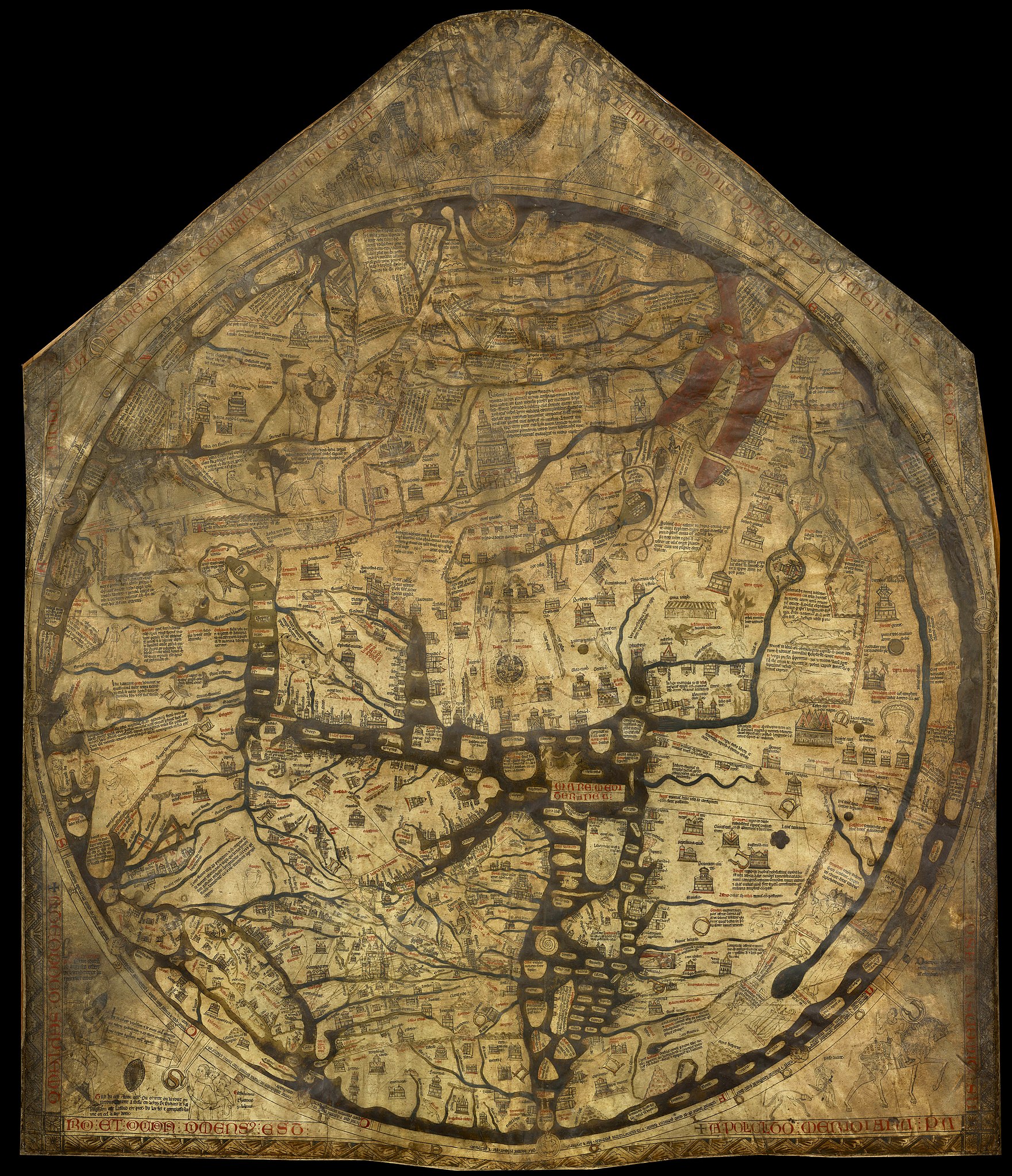
If you want­ed to see a map of the world in the four­teenth cen­tu­ry, you could hard­ly just pull up Google Earth. But you could, pro­vid­ed you lived some­where in or near the British Isles, make a pil­grim­age to Here­ford Cathe­dral. There you would find the shrine of St. Thomas Can­tilupe, the main attrac­tion for the true believ­er, but also what we now know as the Here­ford Map­pa Mun­di, a large-scale (64″ x 52″) depic­tion of the entire world — or at least entire world as con­ceived in the pious Eng­lish mind of the Mid­dle Ages, which turns out to be almost unrec­og­niz­able at first glance today.

Cre­at­ed around 1300, the Here­ford Map­pa Mun­di “serves as a sort of visu­al ency­clo­pe­dia of the peri­od, with draw­ings inspired by Bib­li­cal times through the Mid­dle Ages,” write Chris Grif­fiths and Thomas But­tery at BBC Trav­el.

“In addi­tion to illus­trat­ing events mark­ing the his­to­ry of humankind and 420 cities and geo­graph­i­cal fea­tures, the map shows plants, ani­mals, birds and strange or unknown crea­tures, and peo­ple.” These include one “ ‘Blem­mye’ — a war-like crea­ture with no head, but with facial fea­tures in its chest,” two “Sci­apods,” “men with one large foot,” and “four cave-dwelling Troglodites,” one of whom feasts on a snake.

Amid geog­ra­phy we would now con­sid­er severe­ly lim­it­ed as well as fair­ly man­gled — Europe is labeled as Asia, and vice ver­sa, to name only the most obvi­ous mis­take — the map also includes “super­nat­ur­al scenes from clas­si­cal Greek and Roman mythol­o­gy, Bib­li­cal tales and a col­lec­tion of pop­u­lar leg­ends and sto­ries.” As such, this reflects less about the world itself than about human­i­ty’s world­view in an era that drew few­er lines of demar­ca­tion between fact and leg­end. You can learn more about what it has to tell us in the Mod­ern His­to­ry TV video below, as well as in the video fur­ther down from Youtu­ber ShūBa̱ck, which asks, “Why are Medieval Maps so Weird?”

The intent of the Here­ford Map­pa Mun­di, ShūBa̱ck says, is to show that “the Bible is right.” To that end, “east is on top, as that’s where they said Jesus would come from on the day of judg­ment. Jerusalem is, of course, at the cen­ter.” Oth­er points of inter­est include the site of the cru­ci­fix­ion, the Tow­er of Babel, and the Gar­den of Eden — not to men­tion the loca­tions of the Gold­en Fleece and Mount Olym­pus. You can exam­ine all of these up close at the Here­ford Cathe­dral’s site, which offers a detailed 3D scan of the map, view­able from every angle, embed­ded with expla­na­tions of all its major fea­tures: in oth­er words, a kind of Google Medieval Earth.

via Aeon

Relat­ed con­tent:

The Evo­lu­tion of the World Map: An Inven­tive Info­graph­ic Shows How Our Pic­ture of the World Changed Over 1,800 Years

The Largest Ear­ly Map of the World Gets Assem­bled for the First Time: See the Huge, Detailed & Fan­tas­ti­cal World Map from 1587

40,000 Ear­ly Mod­ern Maps Are Now Freely Avail­able Online (Cour­tesy of the British Library)

The First Tran­sit Map: a Close Look at the Sub­way-Style Tab­u­la Peutin­ge­ri­ana of the 5th-Cen­tu­ry Roman Empire

The His­to­ry of Car­tog­ra­phy, “the Most Ambi­tious Overview of Map Mak­ing Ever Under­tak­en,” Is Free Online

The Biggest Mis­takes in Map­mak­ing His­to­ry

Based in Seoul, Col­in Marshall writes and broad­casts on cities, lan­guage, and cul­ture. His projects include the Sub­stack newslet­ter Books on Cities, the book The State­less City: a Walk through 21st-Cen­tu­ry Los Ange­les and the video series The City in Cin­e­ma. Fol­low him on Twit­ter at @colinmarshall or on Face­book.

« Go BackMore in this category... »
Quantcast