How Erik Satie Invented Modern Music: A Visual Explanation

Once you hear Erik Satie’s Gymnopédie No. 1, you nev­er for­get it. Not that pop­u­lar cul­ture would let you for­get it: the piece has been, and con­tin­ues to be, rein­ter­pret­ed and sam­pled by musi­cians work­ing in a vari­ety of gen­res from pop to elec­tron­ic to met­al. In ver­sions that sound close to what Satie would have intend­ed when he com­posed it in 1888, it’s also been fea­tured in count­less films and tele­vi­sion shows. It’s even heard with some fre­quen­cy in YouTube videos, though in the case of the one from The Music Pro­fes­sor above, it’s not just the sound­track, but also the sub­ject. Using an anno­tat­ed score, it explains just what makes the piece so endur­ing and influ­en­tial.

Upon “a sim­ple iambic rhythm with two ambigu­ous major 7th chords,” Gymnopédie No. 1 intro­duces a melody that “floats above an aus­tere pro­ces­sion of notes,” then “moves down the octave from F# to F#.” With its lack of a clear key, as well as its lack of devel­op­ment and dra­ma that the orches­tral music of the day would have trained lis­ten­ers to expect, the piece was “as shock­ing as the dance of naked Spar­tans it was meant to evoke.”

The melody makes its turns, but nev­er quite arrives at its seem­ing des­ti­na­tions, going around in cir­cles instead — before, all of a sud­den, swerv­ing into the “minor and dis­so­nant” before end­ing in “pro­found melan­choly.”

Despite music in gen­er­al hav­ing long since assim­i­lat­ed the dar­ing qual­i­ties of Gymnopédie No. 1, the orig­i­nal piece still catch­es our ears — in its sub­tle way — when­ev­er it comes on. So, in anoth­er way, do the less rec­og­niz­able and more exper­i­men­tal Gnossi­ennes with which Satie fol­lowed them up. In the video above, the Music Pro­fes­sor pro­vides a visu­al expla­na­tion of Gnossi­enne No. 1, dur­ing whose per­for­mance “soft dis­so­nance hangs in the air” while “a curi­ous melody floats over gen­tle syn­co­pa­tions in the left hand” over just two chords. The score comes with “sur­re­al com­ments”: “Très luisant,” “Du bout de la pen­sée,” “Pos­tulez en vous-même,” “Ques­tionez.” Satie is often cred­it­ed with pio­neer­ing what would become ambi­ent music; could these be pro­to-Oblique Strate­gies?

Relat­ed Con­tent:

Watch Ani­mat­ed Scores of Eric Satie’s Most Famous Pieces: “Gymno­pe­die No. 1” and “Gnossi­enne No. 1”

Lis­ten to Nev­er-Before-Heard Works by Erik Satie, Per­formed 100 Years After His Death

The Vel­vet Underground’s John Cale Plays Erik Satie’s Vex­a­tions on I’ve Got a Secret (1963)

Watch the 1917 Bal­let “Parade”: Cre­at­ed by Erik Satie, Pablo Picas­so & Jean Cocteau, It Pro­voked a Riot and Inspired the Word “Sur­re­al­ism”

Japan­ese Art Instal­la­tion Lets Peo­ple Play Erik Satie’s “Gymnopédie No. 1” As They Walk on Social­ly-Dis­tanced Notes on the Floor

How Erik Satie’s “Fur­ni­ture Music” Was Designed to Be Ignored and Paved the Way for Ambi­ent Music

Based in Seoul, Col­in Marshall writes and broad­casts on cities, lan­guage, and cul­ture. His projects include the Sub­stack newslet­ter Books on Cities and the book The State­less City: a Walk through 21st-Cen­tu­ry Los Ange­les. Fol­low him on the social net­work for­mer­ly known as Twit­ter at @colinmarshall.

Browse Thousands of Free Vintage Cocktail Recipes Online (1705–1951)

Where do the hip­ster mixol­o­gists of Tokyo, Mex­i­co City and Brook­lyn take their inspi­ra­tion?

If not from the Expo­si­tion Uni­verselle des Vins et Spir­itueux’ free col­lec­tion of dig­i­tized vin­tage cock­tail recipe books, per­haps they should start.

An ini­tia­tive of the Muse­um of Wine and Spir­its on the Ile de Ben­dor in South­east­ern France, the col­lec­tion is a boon to any­one with an inter­est in cock­tail cul­ture …dit­to design, illus­tra­tion, evolv­ing social mores…

1928’s Chee­rio, a Book of Punch­es and Cock­tails was writ­ten by Charles, for­mer­ly of Delmonico’s, tout­ed in the intro­duc­to­ry note as “one who has served drinks to Princes, Mag­nates and Sen­a­tors of many nations”. No doubt dis­cre­tion pre­vent­ed him from pub­lish­ing his sur­name.

Charles appar­ent­ly abid­ed by the the­o­ry that it’s five o’clock some­where, with drinks geared to var­i­ous times of day, from the moment you “stag­ger out of bed, grog­gy, grouchy and cross-tem­pered” (try a Charleston Brac­er or a Brandy Port Nog) to the mid­night hour when “insom­nia, bad dreams, dis­il­lu­sion­ment and despair” call for such reme­dies as a Cholera Cock­tail or an Egg Whiskey Fizz.

As not­ed on the cov­er, there’s a sec­tion devot­ed to favorite recipes of celebri­ties. These big­wigs’ names will like­ly mean noth­ing to you near­ly one hun­dred years lat­er, but their first per­son rem­i­nis­cences bring them roar­ing back to the­atri­cal, boozy life.

Here’s cel­e­brat­ed vaude­vil­lian Trix­ie Frig­an­za:

In that nau­ti­cal city of Venice, I first made the acquain­tance of a remark­ably deli­cious drink known as ‘Port and Star­board’. Pour one half part Grena­dine or rasp­ber­ry syrup in a cor­dial glass. Then on top of this pour one half por­tion of Creme de Men­the slow­ly so that the ingre­di­ents will not mix. Dear old Venice.

Indeed.

Pre­sum­ably any cock­tail recipe in the EUVS’s vast col­lec­tion could be adapt­ed as a mock­tail, but Charles gives a delib­er­ate nod to Pro­hi­bi­tion with a sec­tion on alco­hol-free (and extreme­ly easy to pre­pare) Tem­per­ance Drinks.

Don’t expect a Shirley Tem­ple — the triple threat child star was but an infant when Chee­rio was pub­lished. Expand your options with a Sarato­ga Cool­er or an Oggle Nog­gle instead.

Before attempt­ing to recite the poem that opens 1949’s Bot­toms Up: A Guide to Pleas­ant Drink­ing, you may want to slam a cou­ple of Depth Bombs Cock­tails or a Mer­ry Wid­ow Cock­tail No. 1.

In an abstemious con­di­tion, there’s no way this dit­ty can be made to scan…or rhyme:

The Advent of the Cock­tail

A lone­ly, aban­doned jig­ger of gin
Sat on a table top. “Alas”, cried he,
“Who will join me?” And he tried a friend­ly grin.
Came a pret­ty youth, Mam’selle Ver­mouth,
Who was bored with just being winey.
Said she to Sir Gin: “You’d be ever so nice
With Olive and Ice. And so they were Mar­ti­ni.

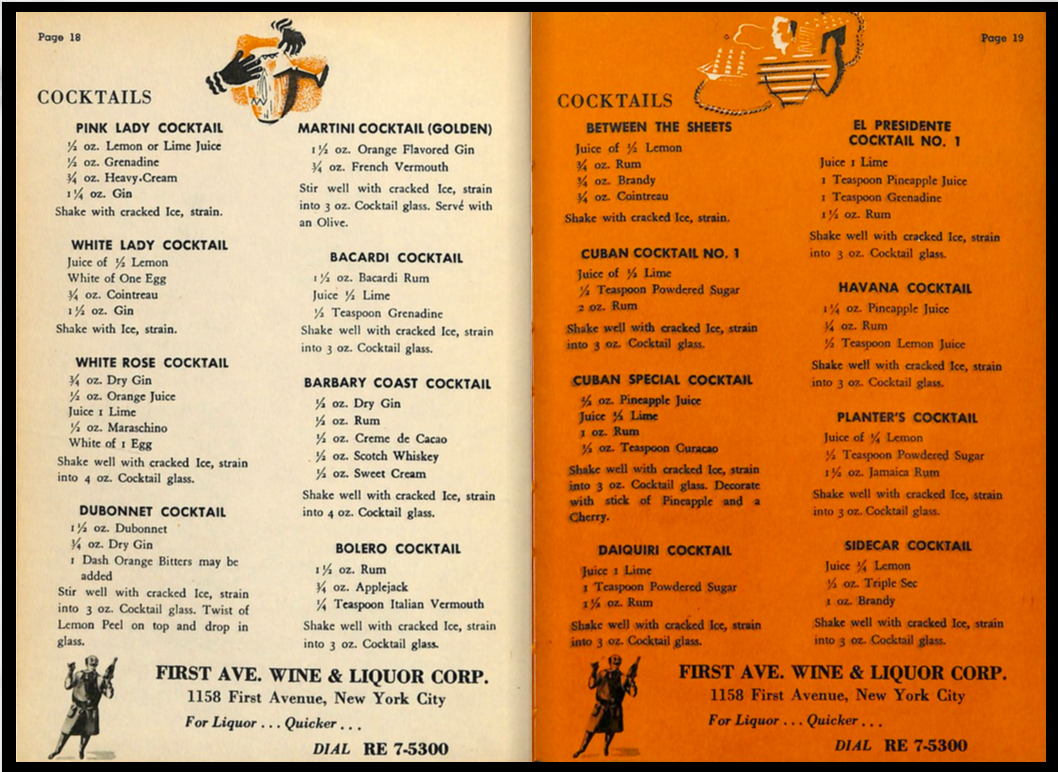
The cock­tail recipes are sol­id, through­out, how­ev­er, as one might expect from a book that dou­bled as an ad for spon­sor First Avenue Wine and Liquor Cor­po­ra­tion — “for Liquor…Quicker.”

We’ve yet to try any­thing from the “wines in cook­ery” sec­tion — but sus­pect that stur­dy fare like Pota­to Soup and Baked Beans could help sop up some of the alco­hol, even if con­tains some hair of the dog…

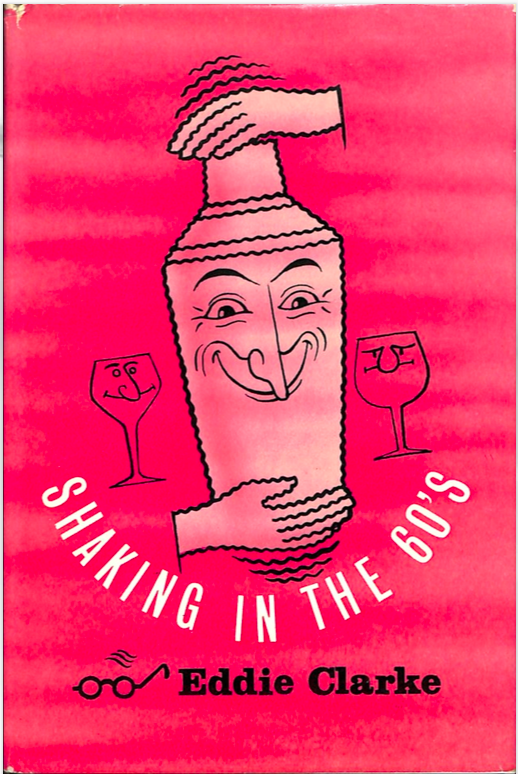
Shak­ing in the 60’s author Eddie Clark’s pre­vi­ous titles include Shak­ing with Eddie, Shake Again with Eddie and 1954’s Prac­ti­cal Bar Man­age­ment. 

Clark, who served as head bar­tender at London’s Savoy Hotel, Berke­ley Hotel and Albany Club, gets in the swing­ing 60s spir­it, by ded­i­cat­ing this work to “all imbib­ing lovers.”

William S. McCall’s decid­ed­ly boozy illus­tra­tions of ele­phants, anthro­po­mor­phized cock­tail glass­es and scant­i­ly clad ladies con­tribute to the fes­tive atmos­phere, though you prob­a­bly won’t be sur­prised to learn that some of them have not aged well.

Shak­ing in the 60’s boasts dozens of straight­for­ward cock­tail recipes (the Beat­nik the Bun­ny Hug and the Mon­key Hugall fea­ture Pern­od), a sur­pris­ing­ly seri­ous-mind­ed sec­tion on wine, and a cou­ple of pages devot­ed to non-alco­holic drinks.

If your child turns up their nose at Clark’s Remain Sober, serve ‘em an Alber­mar­le Pussy­cat.

Clark also draws on his pro­fes­sion­al exper­tise to help home bar­tenders get a grip on mea­sure­ment con­ver­sionssup­ply lists, and toasts.

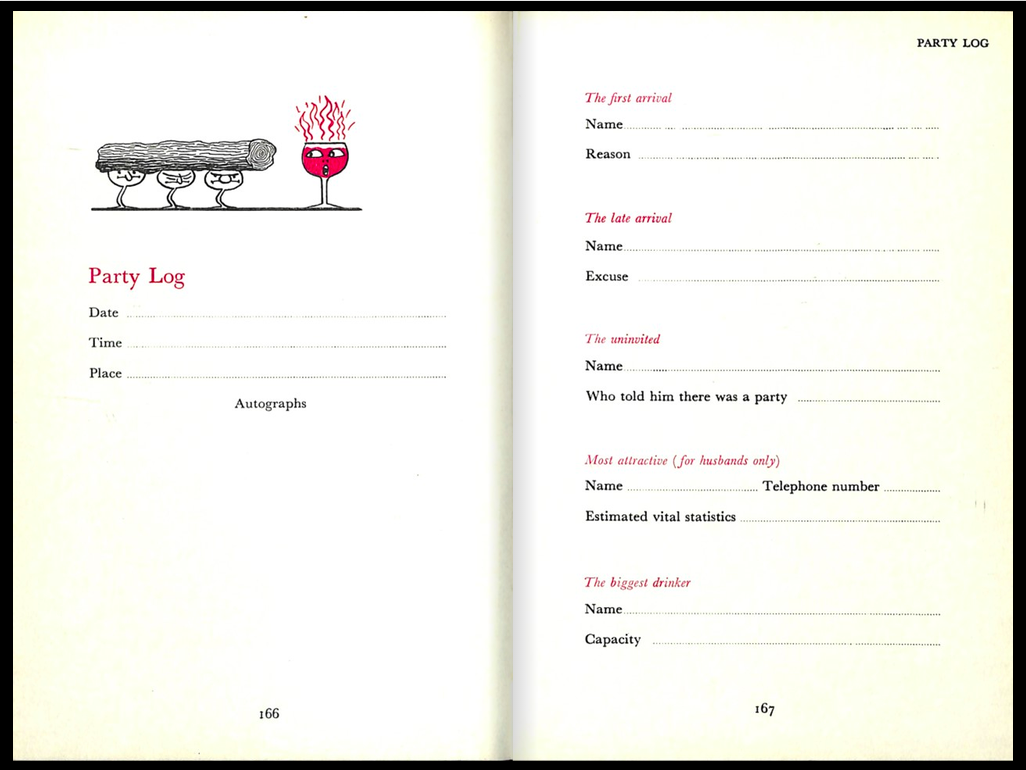
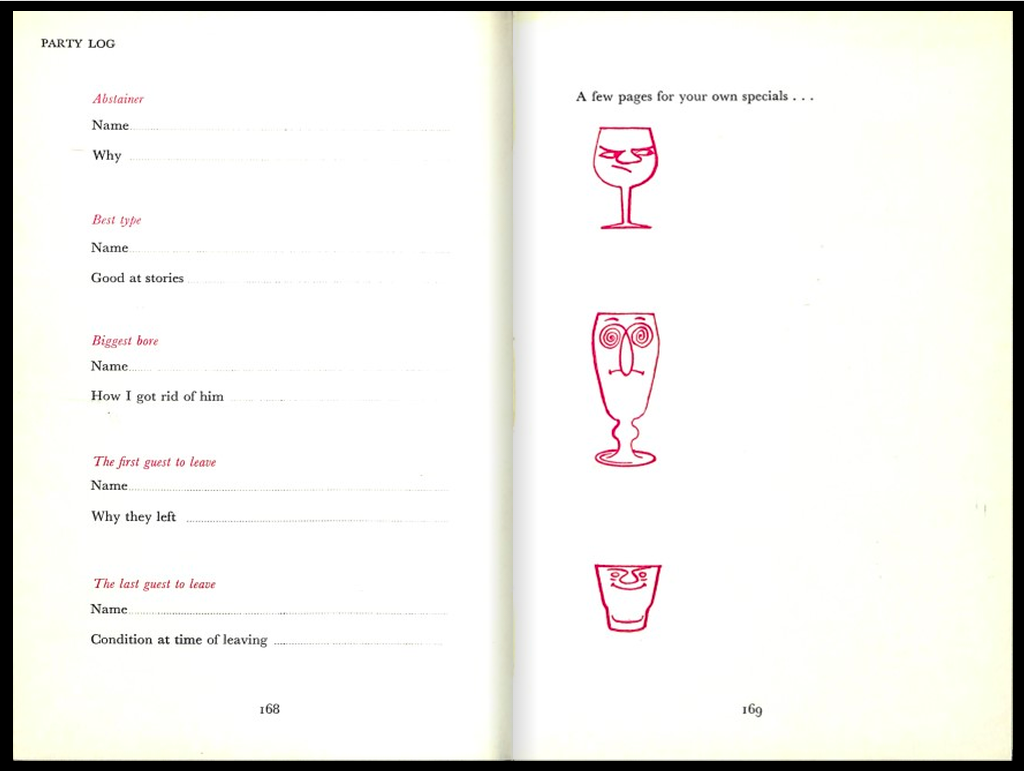
So con­fi­dent is he in his abil­i­ty to help read­ers throw a tru­ly mem­o­rable par­ty, he includes a dishy par­ty log, that prob­a­bly should be kept under lock and key after it’s been filled out. We imag­ine it would pair well with the Morn­ing Mashie, anoth­er Pern­od-based con­coc­tion ded­i­cat­ed to “all those enter­ing the hang­over class.”

Delve into the Expo­si­tion Uni­verselle des Vins et Spir­itueux’ free col­lec­tion of dig­i­tized vin­tage cock­tail recipe books from the 1820s through the 1960s here.

Note: An ear­li­er ver­sion of this post appeared on our site in 2021.

via Messy Nessy

Relat­ed Con­tent: 

A Dig­i­tal Library for Bar­tenders: Vin­tage Cock­tail Books with Recipes Dat­ing Back to 1753

A New Dig­i­tized Menu Col­lec­tion Lets You Revis­it the Cui­sine from the “Gold­en Age of Rail­road Din­ing”

Explore an Online Archive of 12,700 Vin­tage Cook­books

Ayun Hal­l­i­day is an author, illus­tra­tor, the­ater mak­er.

The Advanced Technology of Ancient Rome: Automatic Doors, Water Clocks, Vending Machines & More

Ancient Rome nev­er had an indus­tri­al rev­o­lu­tion. Grant­ed, cer­tain his­to­ri­ans have object­ed now and again to that once-set­tled claim, ges­tur­ing toward large heaps of pot­tery dis­cov­ered in garbage dumps and oth­er such arti­facts clear­ly pro­duced in large num­bers. Still, the fact remains that Ancient Rome nev­er had an indus­tri­al rev­o­lu­tion of the kind that fired up toward the end of the eigh­teenth cen­tu­ry, but not due to a com­plete absence of the rel­e­vant tech­nol­o­gy. As explained in the new Lost in Time video above, Romans had wit­nessed the pow­er of steam har­nessed back in the first cen­tu­ry — but they dis­missed it as a nov­el­ty, evi­dent­ly unable to see its pow­er to trans­form civ­i­liza­tion.

That’s just one of a vari­ety of exam­ples of gen­uine high Roman tech­nol­o­gy fea­tured in the video, many or all of which would seem implau­si­ble to the aver­age view­er if insert­ed into a sto­ry set in ancient Rome.

Take the set of auto­mat­ic doors installed in a tem­ple, trig­gered by a fire that heats an under­ground water tank, which in turn fills up a pot attached to a cable that — through a sys­tem of pul­leys — throws them open. (When the fire cools down, the doors then shut again.) This was the work of the Greek-born inven­tor Hero of Alexan­dria, who would bear com­par­i­son in one sense or anoth­er with every­one from Rube Gold­berg to Leonar­do da Vin­ci.

It was also Hero who came up with that ear­ly steam tur­bine, called the aeolip­ile. He came along too late, how­ev­er, to take cred­it for the “self-heal­ing” Roman con­crete pre­vi­ous­ly much-fea­tured here on Open Cul­ture, the mate­r­i­al of build­ings like the Pan­theon, “still the largest unre­in­forced con­crete dome in the world.” Anoth­er inven­tion high­light­ed in the video comes from Alexan­dria, but well before Hero’s time, and even before that of the Roman Empire itself: the accu­rate water clock engi­neered by Cte­si­bius, whose under­ly­ing design remained influ­en­tial in the Roman era. Hydraulic pow­er was also used in Roman mills, which made pos­si­ble com­plex fac­to­ry sys­tems, even in a civ­i­liza­tion that nev­er reached an indus­tri­al rev­o­lu­tion prop­er. And if a Roman fac­to­ry work­er got thirsty at break time, maybe he could drop a coin into one of Hero’s wine vend­ing machines.

Relat­ed con­tent:

How the Ancient Romans Built Their Roads, the Life­lines of Their Vast Empire

The Amaz­ing Engi­neer­ing of Roman Baths

The Roman Colos­se­um Decon­struct­ed: 3D Ani­ma­tion Reveals the Hid­den Tech­nol­o­gy That Pow­ered Rome’s Great Are­na

How Did Roman Aque­ducts Work?: The Most Impres­sive Achieve­ment of Ancient Rome’s Infra­struc­ture, Explained

The Ancient Roman Dodec­a­he­dron: The Mys­te­ri­ous Object That Has Baf­fled Archae­ol­o­gists for Cen­turies

Archae­ol­o­gists Dis­cov­er an Ancient Roman Snack Bar in the Ruins of Pom­peii

Based in Seoul, Col­in Marshall writes and broad­casts on cities, lan­guage, and cul­ture. His projects include the Sub­stack newslet­ter Books on Cities and the book The State­less City: a Walk through 21st-Cen­tu­ry Los Ange­les. Fol­low him on the social net­work for­mer­ly known as Twit­ter at @colinmarshall.

Discover the 100-Year-Old Self-Playing Violin, One of the Most Complex Music Players Ever Made

At the 1910 World’s Exhi­bi­tion in Brus­sels, Lud­wig Hupfeld unveiled the Phono­liszt-Vio­li­na, an instru­ment once dubbed “the eighth won­der of the world.” A lead­ing mak­er of auto­mat­ed instru­ments in Ger­many, Hupfeld built a com­pa­ny that pro­duced every­thing from phono­la push-up play­ers to play­er pianos. In 1907 he cre­at­ed his most famous inven­tion, the Phono­liszt-Vio­li­na. It fea­tured three ver­ti­cal­ly mount­ed vio­lins, each with a sin­gle active string, played by a rotat­ing bow of 1,300 horse­hairs. Mean­while, pneu­mat­ic bel­lows pressed the strings accord­ing to per­fo­rat­ed rolls. And a play­er piano could accom­pa­ny the vio­lins. Sold in upright home and com­mer­cial mod­els, the Phono­liszt-Vio­li­na enter­tained patrons of upscale hotels, restau­rants, and cafes, before grad­u­al­ly fad­ing into obso­les­cence. The Win­ter­gatan video above, along with the Wel­teMax video below, will give you a nice intro­duc­tion to one of the most com­plex music play­ers ever made.

If you would like to sign up for Open Culture’s free email newslet­ter, please find it here. It’s a great way to see our new posts, all bun­dled in one email, each day.

If you would like to sup­port the mis­sion of Open Cul­ture, con­sid­er mak­ing a dona­tion to our site. It’s hard to rely 100% on ads, and your con­tri­bu­tions will help us con­tin­ue pro­vid­ing the best free cul­tur­al and edu­ca­tion­al mate­ri­als to learn­ers every­where. You can con­tribute through Pay­Pal, Patre­on, and Ven­mo (@openculture). Thanks!

Relat­ed Con­tent 

What an 85-Year-Long Harvard Study Says Is the Real Key to Happiness

We’ve long used the French word milieu in Eng­lish, but not with quite the same range of mean­ings it has back in France. For exam­ple, French soci­ety (and espe­cial­ly the mem­bers of its old­er gen­er­a­tions) explic­it­ly rec­og­nizes the val­ue of a milieu in the sense of the col­lect­ed friends, acquain­tances, and rela­tions with whom one has reg­u­lar and fre­quent con­tact. Keep­ing a good milieu is a key task for liv­ing a good life. Robert Waldinger does­n’t use the word in the new hour-long Big Think video above, but then, he comes from a dif­fer­ent cul­tur­al back­ground: he’s Amer­i­can, for one, a Har­vard psy­chi­a­trist, and he also hap­pens to be a Zen Bud­dhist priest. But he would sure­ly agree whole­heart­ed­ly about the impor­tance of the milieu to human hap­pi­ness.

As the fourth direc­tor of the long-term Har­vard Study of Adult Devel­op­ment, which has been keep­ing an eye on the well-being of its sub­jects for more than 85 years now, Waldinger knows some­thing about hap­pi­ness. Ear­ly in the video, he cites find­ings that half of it is “a kind of bio­log­i­cal set point,” 10 per­cent is “based on our cur­rent life cir­cum­stances,” and the remain­ing 40 per­cent is under our con­trol. The sin­gle most impor­tant fac­tor in the vari­abil­i­ty of our hap­pi­ness, he explains, is our rela­tion­ships. To take the mea­sure of that aspect of our own lives, we should ask our­selves these ques­tions: “Do I have enough con­nec­tion in my life?” “Do I have rela­tion­ships that are warm and sup­port­ive?” “What am I get­ting from rela­tion­ships?”

There are, of course, good rela­tion­ships and bad rela­tion­ships, those that fill you with ener­gy and those that drain you of ener­gy. To a great extent, Waldinger says, good rela­tion­ships can be cul­ti­vat­ed, and even bad rela­tion­ships can be mod­i­fied or approached in an advan­ta­geous way. What makes learn­ing to do so impor­tant is that a lack of rela­tion­ships — that is, lone­li­ness — can take as much of a phys­i­cal toll as obe­si­ty or heavy smok­ing. Alas, since tele­vi­sion made its way into the home after the Sec­ond World War, we’ve lived with a rapid­ly and cease­less­ly mul­ti­ply­ing array of forces that make it dif­fi­cult to form and main­tain rela­tion­ships; at this point, we’re so “con­stant­ly dis­tract­ed by our won­der­ful screens” that we have trou­ble pay­ing atten­tion to even the peo­ple we think we love. This is where Zen comes in.

Atten­tion, as one of Waldinger’s own teach­ers in that tra­di­tion put it, is “the most basic form of love,” and med­i­ta­tion has always been a reli­able way to cul­ti­vate it. Such a prac­tice reveals our own minds to be “messy and chaot­ic,” and from that real­iza­tion, it’s not far to the under­stand­ing that “every­body’s minds are messy and chaot­ic.” Attain­ing a clear view of our own ques­tion­able impuls­es and irri­tat­ing defi­cien­cies helps us to accept those same qual­i­ties in oth­ers. “We can some­times imag­ine that oth­er peo­ple have it all fig­ured out, and we’re the only one who has ups and downs in our life,” says Waldinger, but the truth is that “every­body has ups and downs. We nev­er fig­ure it out, ulti­mate­ly.” The fleet­ing nature of sat­is­fac­tion con­sti­tutes just one facet of the imper­ma­nence Zen requires us to accept. Noth­ing lasts for­ev­er: cer­tain­ly not our lives, nor those of the mem­bers of our milieu, so if we want to enjoy them, we’d bet­ter start pay­ing atten­tion to them while we still can.

Relat­ed con­tent:

What Are the Keys to Hap­pi­ness? Lessons from a 75-Year-Long Har­vard Study

How to Be Hap­pi­er in 5 Research-Proven Steps, Accord­ing to Pop­u­lar Yale Pro­fes­sor Lau­rie San­tos

A 6‑Step Guide to Zen Bud­dhism, Pre­sent­ed by Psy­chi­a­trist-Zen Mas­ter Robert Waldinger

All You Need is Love: The Keys to Hap­pi­ness Revealed by a 75-Year Har­vard Study

How Much Mon­ey Do You Need to Be Hap­py? A New Study Gives Us Some Exact Fig­ures

How Lone­li­ness Is Killing Us: A Primer from Har­vard Psy­chi­a­trist & Zen Priest Robert Waldinger

Based in Seoul, Col­in Marshall writes and broad­casts on cities, lan­guage, and cul­ture. His projects include the Sub­stack newslet­ter Books on Cities and the book The State­less City: a Walk through 21st-Cen­tu­ry Los Ange­les. Fol­low him on the social net­work for­mer­ly known as Twit­ter at @colinmarshall.

Why You Should Only Work 3–4 Hours a Day, Like Charles Darwin, Virginia Woolf & Adam Smith

These days, we hear much said on social media — sure­ly too much — in favor of the “hus­tle cul­ture” and the “grind mind­set” (or, abbre­vi­at­ed for max­i­mum effi­cien­cy, the “grind­set”). Ded­i­ca­tion to your work is to be admired, pro­vid­ed that the work itself is of val­ue, but the more of a day’s hours you devote to it, the like­li­er returns are to dimin­ish. Oliv­er Burke­man, a pop­u­lar writer on pro­duc­tiv­i­ty and time man­age­ment, has made this point in a vari­ety of ways, usu­al­ly return­ing to the same find­ing: look at the work habits of a range of lumi­nar­ies includ­ing Charles Dar­win, Hen­ri Poin­caré, Thomas Jef­fer­son, Charles Dick­ens, Vir­ginia Woolf, J.G. Bal­lard, Ing­mar Bergman, Alice Munro, John le Car­ré, and Adam Smith, and you’ll find that they all put in about three or four hours of con­cen­trat­ed effort per day.

“You almost cer­tain­ly can’t con­sis­tent­ly do the kind of work that demands seri­ous men­tal focus for more than about three or four hours a day,” Burke­man writes on his site. If you do work of that kind, it would behoove you to “just focus on pro­tect­ing four hours — and don’t wor­ry if the rest of the day is char­ac­ter­ized by the usu­al scat­tered chaos.”

Doing so entails mak­ing an “inter­nal psy­cho­log­i­cal move: to give up demand­ing more of your­self than three or four hours of dai­ly high-qual­i­ty men­tal work.” You’ll also final­ly have to “aban­don the delu­sion that if you just man­aged to squeeze in a bit more work, you’d final­ly reach the com­mand­ing sta­tus of feel­ing ‘in con­trol’ and ‘on top of every­thing’ at last.”

The “the tru­ly valu­able skill here,” Burke­man con­tin­ues, “isn’t the capac­i­ty to push your­self hard­er, but to stop and recu­per­ate despite the dis­com­fort of know­ing that work remains unfin­ished, emails unan­swered, oth­er peo­ple’s demands unful­filled.” This is eas­i­er said than done, of course, but any attempt to imple­ment what Burke­man calls the “three-to-four-hour rule” must begin with a bit of tri­al and error: about when best in the day to sched­ule those hours, but also about how best to elim­i­nate dis­trac­tions dur­ing those hours. Under­neath all this lies the need to accept life’s fini­tude, as Burke­man explains in the inter­view at the top of the post, with its impli­ca­tion that we can only get so much done in what he often describes as our allot­ted 4,000 weeks — minus how­ev­er many thou­sand we’ve already lived so far.

To think more about man­ag­ing your time effec­tive­ly, see Burk­er­man’s books: Four Thou­sand Weeks: Time Man­age­ment for Mor­tals and also Med­i­ta­tions for Mor­tals: Four Weeks to Embrace Your Lim­i­ta­tions and Make Time for What Counts.

Relat­ed Con­tent:

Charles Dar­win & Charles Dick­ens’ Four-Hour Work Day: The Case for Why Less Work Can Mean More Pro­duc­tiv­i­ty

The Dai­ly Rou­tines of Famous Cre­ative Peo­ple, Pre­sent­ed in an Inter­ac­tive Info­graph­ic

Write Only 500 Words Per Day and Pub­lish 50+ Books: Gra­ham Greene’s Writ­ing Method

David Lynch Explains How Sim­ple Dai­ly Habits Enhance His Cre­ativ­i­ty

Haru­ki Murakami’s Dai­ly Rou­tine: Up at 4:00 a.m., 5–6 Hours of Writ­ing, Then a 10K Run

How to Read Many More Books in a Year: Watch a Short Doc­u­men­tary Fea­tur­ing Some of the World’s Most Beau­ti­ful Book­stores

Based in Seoul, Col­in Marshall writes and broad­casts on cities, lan­guage, and cul­ture. His projects include the Sub­stack newslet­ter Books on Cities and the book The State­less City: a Walk through 21st-Cen­tu­ry Los Ange­les. Fol­low him on the social net­work for­mer­ly known as Twit­ter at @colinmarshall.

Explore an Online Archive of 12,700 Vintage Cookbooks

“Ear­ly cook­books were fit for kings,” writes Hen­ry Notak­er at The Atlantic. “The old­est pub­lished recipe col­lec­tions” in the 15th and 16th cen­turies in West­ern Europe “emanat­ed from the palaces of mon­archs, princes, and grand señores.” Cook­books were more than recipe collections—they were guides to court eti­quette and sump­tu­ous records of lux­u­ri­ous liv­ing. In ancient Rome, cook­books func­tioned sim­i­lar­ly, as the extrav­a­gant fourth cen­tu­ry Cook­ing and Din­ing in Impe­r­i­al Rome demon­strates.

Writ­ten by Api­cius, “Europe’s old­est [cook­book] and Rome’s only one in exis­tence today”—as its first Eng­lish trans­la­tor described it—offers “a bet­ter way of know­ing old Rome and antique pri­vate life.” It also offers keen insight into the devel­op­ment of heav­i­ly fla­vored dish­es before the age of refrig­er­a­tion. Api­cius rec­om­mends that “cooks who need­ed to pre­pare birds with a ‘goat­ish smell’ should bathe them in a mix­ture of pep­per, lovage, thyme, dry mint, sage, dates, hon­ey, vine­gar, broth, oil and mus­tard,” Melanie Radz­ic­ki McManus notes at How Stuff Works.

Ear­ly cook­books com­mu­ni­cat­ed in “a folksy, impre­cise man­ner until the Indus­tri­al Rev­o­lu­tion of the 1800s,” when stan­dard (or met­ric) mea­sure­ment became de rigueur. The first cook­book by an Amer­i­can, Amelia Sim­mons’ 1796 Amer­i­can Cook­ery, placed British fine din­ing and lav­ish “Queen’s Cake” next to “john­ny cake, fed­er­al pan cake, buck­wheat cake, and Indi­an slap­jack,” Kei­th Stave­ly and Kath­leen Fitzger­ald write at Smith­son­ian, all recipes sym­bol­iz­ing “the plain, but well-run and boun­ti­ful Amer­i­can home.” With this book, “a dia­logue on how to bal­ance the sump­tu­ous with the sim­ple in Amer­i­can life had begun.”

Cook­books are win­dows into history—markers of class and caste, doc­u­ments of dai­ly life, and snap­shots of region­al and cul­tur­al iden­ti­ty at par­tic­u­lar moments in time. In 1950, the first cook­book writ­ten by a fic­tion­al lifestyle celebri­ty, Bet­ty Crock­er, debuted. It became “a nation­al best-sell­er,” McManus writes. “It even sold more copies that year than the Bible.” The image of the per­fect Step­ford house­wife may have been big­ger than Jesus in the 50s, but Crock­er’s career was decades in the mak­ing. She debuted in 1921, the year of pub­li­ca­tion for anoth­er, more hum­ble recipe book: the Pil­grim Evan­gel­i­cal Luther­an Church Ladies’ Aid Soci­ety of Chicago’s Pil­grim Cook Book.

As Ayun Hal­l­i­day not­ed in an ear­li­er post, this charm­ing col­lec­tion fea­tures recipes for “Blitz Torte, Cough Syrup, and Sauer­kraut Can­dy,” and it’s only one of thou­sands of such exam­ples at the Inter­net Archive’s Cook­book and Home Eco­nom­ics Col­lec­tion, drawn from dig­i­tized spe­cial col­lec­tions at UCLA, Berke­ley, and the Prelinger Library. When we last checked in, the col­lec­tion fea­tured 3,000 cook­books. It has grown since 2016 to a library of 12,700 vin­tage exam­ples of home­spun Amer­i­cana, fine din­ing, and mass mar­ket­ing.

Laugh at gag-induc­ing recipes of old; cringe at the pious advice giv­en to women osten­si­bly anx­ious to please their hus­bands; and mar­vel at how var­i­ous inter­na­tion­al and region­al cuisines have been rep­re­sent­ed to unsus­pect­ing Amer­i­can home cooks. (It’s hard to say whether the cov­er or the con­tents of a Chi­nese Cook Book in Plain Eng­lish from 1917 seem more offen­sive.) Cook­books of recipes from the Amer­i­can South are pop­u­lar, as are cov­ers fea­tur­ing stereo­typ­i­cal “mam­my” char­ac­ters. A more respect­ful inter­na­tion­al exam­ple, 1952’s Luchow’s Ger­man Cook­book gives us “the sto­ry and the favorite dish­es of Amer­i­ca’s most famous Ger­man restau­rant.”

There are guides to mush­rooms and “com­mon­er fun­gi, with spe­cial empha­sis on the edi­ble vari­eties”; col­lec­tions of “things moth­er used to make” and, most prac­ti­cal­ly, a cook­book for left­overs. And there is every oth­er sort of cook­book and home ec man­u­al you could imag­ine. The archive is stuffed with help­ful hints, rare ingre­di­ents, unex­pect­ed region­al cook­eries, and mil­lions of minute details about the habits of these books’ first hun­gry read­ers.

If you would like to sign up for Open Culture’s free email newslet­ter, please find it here. It’s a great way to see our new posts, all bun­dled in one email, each day.

If you would like to sup­port the mis­sion of Open Cul­ture, con­sid­er mak­ing a dona­tion to our site. It’s hard to rely 100% on ads, and your con­tri­bu­tions will help us con­tin­ue pro­vid­ing the best free cul­tur­al and edu­ca­tion­al mate­ri­als to learn­ers every­where. You can con­tribute through Pay­Pal, Patre­on, and Ven­mo (@openculture). Thanks!

Note: An ear­li­er ver­sion of this post appeared on our site in 2020.

Relat­ed Con­tent:

A Data­base of 5,000 His­tor­i­cal Cookbooks–Covering 1,000 Years of Food History–Is Now Online

Dis­cov­er the World’s Old­est Sur­viv­ing Cook­book, De Re Coquinar­ia, from Ancient Rome

A 13th-Cen­tu­ry Cook­book Fea­tur­ing 475 Recipes from Moor­ish Spain Gets Pub­lished in a New Trans­lat­ed Edi­tion

The World’s Old­est Cook­book: Dis­cov­er 4,000-Year-Old Recipes from Ancient Baby­lon

Josh Jones is a writer and musi­cian based in Durham, NC. 

How Egon Schiele Made Enduring Art from His Troubled Life and Times

“May you live in inter­est­ing times,” goes the apoc­ryphal but nev­er­the­less much-invoked “Chi­nese curse.” Egon Schiele, born in the Aus­tria-Hun­gary of 1890, cer­tain­ly did live in inter­est­ing times, and his work, as fea­tured in the new Great Art Explained video above, can look like the cre­ations of a cursed man. That’s espe­cial­ly true of those of his many self-por­traits that, as host James Payne puts it, ren­der his own body “more ema­ci­at­ed than it actu­al­ly was, rad­i­cal­ly dis­tort­ed and twist­ed, some­times face­less or limb­less, some­times in abject ter­ror.” Here Schiele worked at “an inter­sec­tion of suf­fer­ing and sex, as if he is dis­gust­ed by his own body.”

Such a pre­oc­cu­pa­tion, as Payne sug­gests, may not seem com­plete­ly unrea­son­able in a man who wit­nessed his own father’s death from syphilis — caught from a pros­ti­tute, on the night of his wed­ding to Schiele’s moth­er — when he was still in ado­les­cence.

But what tends to occu­py most dis­cus­sions of Schiele’s art is less his famil­ial or psy­cho­log­i­cal back­ground than his line: the “thin line between beau­ty and suf­fer­ing” that clear­ly obsessed him, yes, but also the line cre­at­ed by the hand with which he drew and paint­ed. His art remains imme­di­ate­ly rec­og­niz­able today because “his line has a par­tic­u­lar rhythm: angu­lar, tense, and eco­nom­i­cal­ly placed. It’s not just a means of describ­ing form; it’s a voice.”

In this voice, Schiele com­posed not like­ness­es but “psy­cho­log­i­cal por­traits, a search for the self or the ego, a pre­oc­cu­pa­tion of the time.” The fig­ure of Sig­mund Freud loomed large over fin-de-siè­cle Vien­na, of course, and into the twen­ti­eth cen­tu­ry, the city and its civ­i­liza­tion were “caught between the old impe­r­i­al order and mod­ern demo­c­ra­t­ic move­ments.” A “lab­o­ra­to­ry for psy­cho­analy­sis, rad­i­cal art, music, and taboo-break­ing lit­er­a­ture,” Vien­na had also giv­en rise to the career of Schiele’s men­tor Gus­tav Klimt. By the time Schiele hit his stride, he could express in his work “not just per­son­al dis­com­fort, but the sick­ness and fragili­ty of an entire soci­ety” — before he fell vic­tim to the Span­ish flu pan­dem­ic of 1918 at just 28 years old, along with his wife and unborn child. In a sense, he was unlucky to live when and where he did. But as his art also reminds us, we don’t mere­ly inhab­it our time and place; we’re cre­at­ed by them.

Relat­ed Con­tent:

New Dig­i­tal Archive Will Fea­ture the Com­plete Works of Egon Schiele: Start with 419 Paint­ings, Draw­ings & Sculp­tures

How Art Gets Stolen: What Hap­pened to Egon Schiele’s Paint­ing Boats Mir­rored in the Water After Its Theft by the Nazis

The Life & Art of Gus­tav Klimt: A Short Art His­to­ry Les­son on the Aus­tri­an Sym­bol­ist Painter and His Work

Gus­tav Klimt’s Icon­ic Paint­ing The Kiss: An Intro­duc­tion to Aus­tri­an Painter’s Gold­en, Erot­ic Mas­ter­piece (1908)

Great Art Explained: Watch 15 Minute Intro­duc­tions to Great Works by Warhol, Rothko, Kahlo, Picas­so & More

Based in Seoul, Col­in Marshall writes and broad­casts on cities, lan­guage, and cul­ture. His projects include the Sub­stack newslet­ter Books on Cities and the book The State­less City: a Walk through 21st-Cen­tu­ry Los Ange­les. Fol­low him on the social net­work for­mer­ly known as Twit­ter at @colinmarshall.

« Go BackMore in this category... »
Quantcast