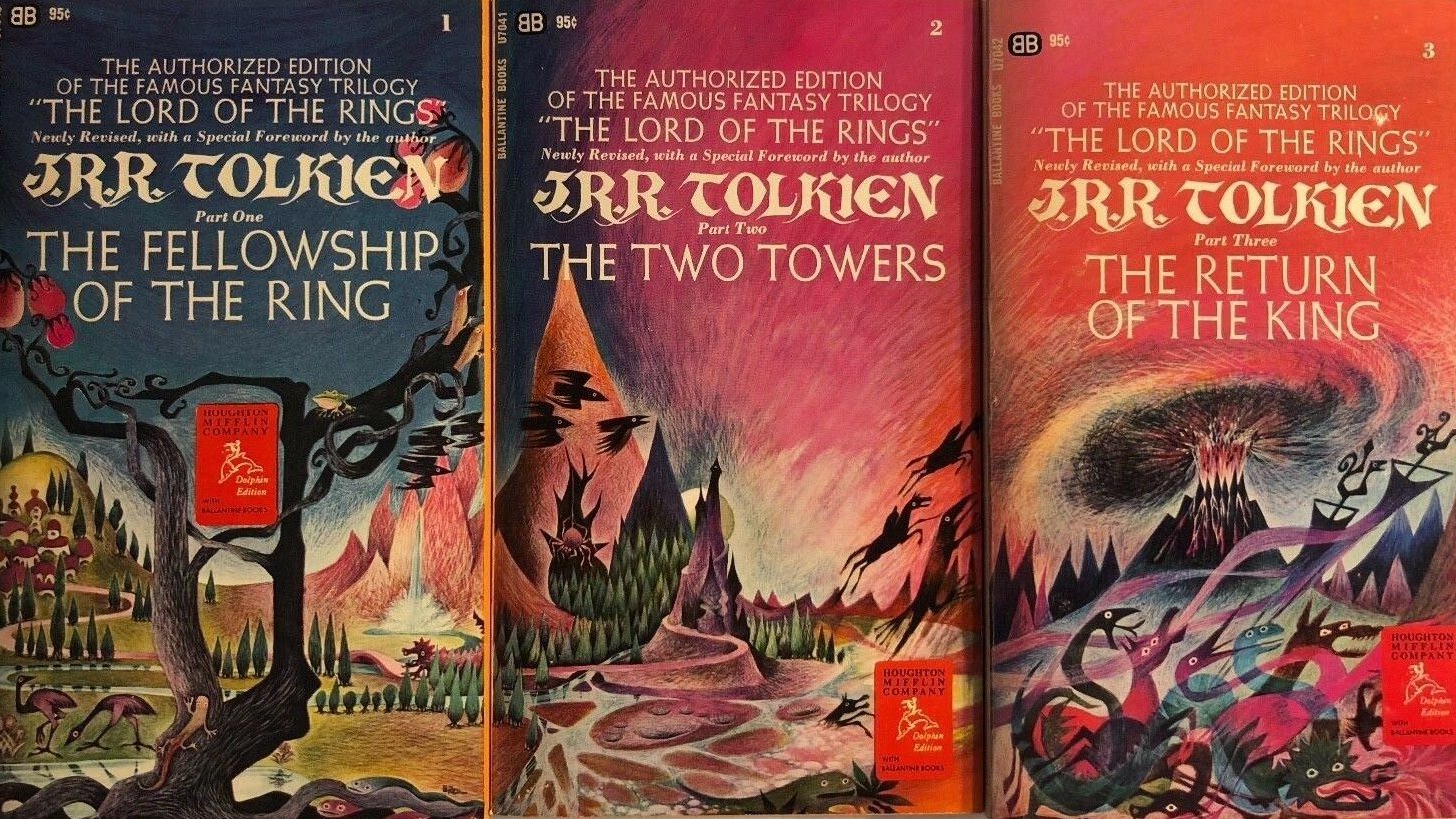
When the Nobel Prize Committee Rejected The Lord of the Rings: Tolkien “Has Not Measured Up to Storytelling of the Highest Quality” (1961)

When J.R.R. Tolkien’s Lord of the Rings books appeared in the mid-1950s, they were met with very mixed reviews, an unsur­pris­ing recep­tion giv­en that noth­ing like them had been writ­ten for adult read­ers since Edmund Spenser’s epic 16th cen­tu­ry Eng­lish poem The Faerie Queene, per­haps. At least, this was the con­tention of review­er Richard Hugh­es, who went on to write that “for width of imag­i­na­tion,” The Lord of the Rings “almost beg­gars par­al­lel.”

Scot­tish writer Nao­mi Mitchi­son did find a com­par­i­son: to Sir Thomas Mal­o­ry, author of the 15th cen­tu­ry Le Morte d’Arthur — hard­ly mis­placed, giv­en Tolkien’s day job as an Oxford don of Eng­lish lit­er­a­ture, but not the sort of thing that passed for con­tem­po­rary writ­ing in the 1950s, notwith­stand­ing the seri­ous appre­ci­a­tion of writ­ers like W.H. Auden for Tolkien’s tril­o­gy. “No pre­vi­ous writer,” the poet remarked in a New York Times review, “has, to my knowl­edge, cre­at­ed an imag­i­nary world and a feigned his­to­ry in such detail.”

Auden did find fault with Tolkien’s poet­ry, a fact upon which crit­ic Edmund Wil­son seized in his scathing 1956 Lord of the Rings review. “Mr. Auden is appar­ent­ly quite insen­si­tive — through lack of inter­est in the oth­er depart­ment,” wrote Wil­son, “to the fact that Tolkien’s prose is just as bad. Prose and verse are on the same lev­el of pro­fes­so­r­i­al ama­teur­ish­ness.” Five years lat­er, the Nobel prize jury would make the same judge­ment when they exclud­ed Tolkien’s books from con­sid­er­a­tion. Tolkien’s prose, wrote jury mem­ber Anders Öster­ling, “has not in any way mea­sured up to sto­ry­telling of the high­est qual­i­ty.”

The note was dis­cov­ered recent­ly by Swedish jour­nal­ist Andreas Ekström, who delved into the Nobel archive for 1961 and found that “the jury passed over names includ­ing Lawrence Dur­rell, Robert Frost, Gra­ham Greene, E.M. Forster, and Tolkien to come up with their even­tu­al win­ner, Yugosla­vian writer Ivo Andrić,” as Ali­son Flood reports at The Guardian. (The Nobel archives are sealed until 50 years after the year the award is giv­en.) Ekström has been read­ing through the archives “for the past five years or so,” he says, “and this was the first time I have seen Tolkien’s name among the sug­gest­ed can­di­dates.” His name appeared on the list chiefly through the machi­na­tions of his clos­est friend and chief sup­port­er, C.S. Lewis.

Lewis, “also of Oxford,” Wil­son sneered, “is able to top them all” in praise of Tolkien’s books. From the first appear­ance of his Mid­dle Earth fan­ta­sy in The Hob­bit, Lewis promised to “do all in my pow­er to secure for Tolkien’s great book the recog­ni­tion it deserves,” as he wrote in a 1953 let­ter to British pub­lish­er Stan­ley Unwin. In what might be con­sid­ered an uneth­i­cal pro­mo­tion of his friend’s work today, Lewis respond­ed tire­less­ly to crit­ics of the tril­o­gy, going so far, after the pub­li­ca­tion of The Two Tow­ers, to pen an essay on the sub­ject titled “The Dethrone­ment of Pow­er.” Here, Lewis explains the pro­lix qual­i­ty of Tolkien’s prose — that which crit­ics called “tedious” — as a nar­ra­tive neces­si­ty: “I do not think he could have done it any oth­er way.”

Tolkien’s biggest fan also urged read­ers to spend more time with the books and promised that the rewards would be great. In defense of the sec­ond work of the tril­o­gy, he con­clud­ed, “the book is too orig­i­nal and too opu­lent for any final judg­ment on a first read­ing. But we know at once that it has done things to us. We are not quite the same men. And though we must ration our­selves in our reread­ings, I have lit­tle doubt that the book will soon take its place among the indis­pens­ables.” And so has all of Tolkien’s work, becom­ing the lit­er­ary stan­dard by which high fan­ta­sy is mea­sured, with or with­out a Nobel prize.

Note: An ear­li­er ver­sion of this post appeared on our site in 2021.

Relat­ed Con­tent:

J.R.R. Tolkien Snubs a Ger­man Pub­lish­er Ask­ing for Proof of His “Aryan Descent” (1938)

110 Draw­ings and Paint­ings by J.R.R. Tolkien: Of Mid­dle-Earth and Beyond

J.R.R. Tolkien Expressed a “Heart­felt Loathing” for Walt Dis­ney and Refused to Let Dis­ney Stu­dios Adapt His Work

Dis­cov­er J.R.R. Tolkien’s Lit­tle-Known and Hand-Illus­trat­ed Children’s Book, Mr. Bliss

When J.R.R. Tolkien Worked for the Oxford Eng­lish Dic­tio­nary and “Learned More … Than Any Oth­er Equal Peri­od of My Life” (1919–1920)

Josh Jones is a writer and musi­cian based in Durham, NC. 

by | Permalink | Make a Comment ( 35 ) |

How John Coltrane Introduced the World to His Radical Sound with His Recording of “My Favorite Things” (1961)

John Coltrane released “more sig­nif­i­cant works” than his 1960 “My Favorite Things,” says Robin Wash­ing­ton in a PRX doc­u­men­tary on the clas­sic rework­ing of Rodgers and Hammerstein’s Broad­way hit. “A Love Supreme” is often cit­ed as the zenith of the saxophonist’s career. “But if you tried to explain that song to an aver­age lis­ten­er, you would lose them. [“My Favorite Things”] is a defin­i­tive work that every­one knows, and any­one can lis­ten to, and the fas­ci­nat­ing sto­ry of its evo­lu­tion is some­thing every­one can share and enjoy.” The song is acces­si­ble, a com­mer­cial­ly suc­cess­ful hit, and it is also an exper­i­men­tal mas­ter­piece.

Indeed, “My Favorite Things” may be the per­fect intro­duc­tion to Coltrane’s exper­i­men­tal­ism. After the dizzy­ing chord changes of 1959’s “Giant Steps,” this 14-minute, two-chord excur­sion pat­terned on the ragas of Ravi Shankar announced Coltrane’s move into the modal forms he refined until his death in 1967, as well as his embrace of the sopra­no sax­o­phone and his new quar­tet. It became “Coltrane’s most request­ed tune,” says Ed Wheel­er in The World Accord­ing to John Coltrane, “and a bridge to a broad pub­lic audi­ence.”

Coltrane’s take is also mes­mer­iz­ing, trance-induc­ing, “often com­pared to a whirling dervish,” notes the Poly­phon­ic video above, a ref­er­ence to the Sufi med­i­ta­tion tech­nique of spin­ning in a cir­cle. It’s an unlike­ly song choice for the exer­cise, which makes it all the more fas­ci­nat­ing. The Sound of Music, Rodgers and Hammerstein’s final Broad­way col­lab­o­ra­tion, was an “instant clas­sic,” and every­one who’d seen it walked away hum­ming the tune to “My Favorite Things.” By 1960, it had become a stan­dard, with sev­er­al cov­er ver­sions released by Leslie Uggams, The Pete King Chorale, the Hi-Lo’s, and the Nor­man Luboff Choir.

Hun­dreds more cov­ers would fol­low. None of them sound­ed like Coltrane’s. The modal form—in which musi­cians impro­vise in dif­fer­ent kinds of scales over sim­pli­fied chord structures—created the “open free­dom” in music explored on Miles Davis’ path­break­ing Kind of Blue, on which Coltrane played tenor sax. (It was Davis who bought Coltrane his first sopra­no sax that year.) Coltrane’s use of modal form in adap­ta­tions of pop­u­lar stan­dards like “My Favorite Things” and George Gershwin’s “Sum­mer­time” from Por­gy and Bess was an explic­it strat­e­gy to court a wider pub­lic, using the famil­iar to ori­ent his lis­ten­ers to the new.

The video essay brings in the exper­tise of musi­cian, com­pos­er, and YouTu­ber Adam Neely, who explains what makes Rogers and Hammerstein’s clas­sic unique among show tunes, and why it appealed to Coltrane as the cen­ter­piece of the 1961 album of the same name. The song’s unusu­al form and struc­ture allow the same melody to be played over both major and minor chords. Coltrane’s mod­i­fi­ca­tion of the song reduces it to the two ton­ics, E major and E minor, over which he and the band solo, intro­duc­ing a shift­ing tonal­i­ty and mood to the melody with each chord change.

Neely goes into greater depth, but it’s over­all an acces­si­ble expla­na­tion of Coltrane’s very acces­si­ble, yet ver­tig­i­nous­ly deep, “My Favorite Things.” Maybe only one ques­tion remains. Coltrane’s ren­di­tion came out four years before Julie Andrews’ icon­ic per­for­mance in the film adap­ta­tion of The Sound of Music, evok­ing the obvi­ous ques­tion,” says Wash­ing­ton: “Did he influ­ence her?”

If you would like to sup­port the mis­sion of Open Cul­ture, con­sid­er mak­ing a dona­tion to our site. It’s hard to rely 100% on ads, and your con­tri­bu­tions will help us con­tin­ue pro­vid­ing the best free cul­tur­al and edu­ca­tion­al mate­ri­als to learn­ers every­where. You can con­tribute through Pay­Pal, Patre­on, and Ven­mo (@openculture). Thanks!

Relat­ed Con­tent:

Jazz Decon­struct­ed: What Makes John Coltrane’s “Giant Steps” So Ground­break­ing and Rad­i­cal?

John Coltrane Draws a Pic­ture Illus­trat­ing the Math­e­mat­ics of Music

Dis­cov­er the Church of St. John Coltrane, Found­ed on the Divine Music of A Love Supreme

Behold John Coltrane’s Hand­writ­ten Out­line for His Mas­ter­piece A Love Supreme

Josh Jones is a writer and musi­cian based in Durham, NC. 

Why The Founding Fathers Were Obsessed with This Muslim Ruler

The writ­ings of the Found­ing Fathers of the Unit­ed States of Amer­i­ca include many a ref­er­ence to the likes of Cicero, Mon­tesquieu, and John Locke. That the names Hyder Ali and his son Tipu Sul­tan nev­er appear may not sound like much of a sur­prise, even if you hap­pen to know that they ruled the Indi­an region of Mysore, now offi­cial­ly called Mysu­ru, at the time. But his­to­ry records that more than a few Amer­i­cans, includ­ing Thomas Jef­fer­son and John Adams, fol­lowed with great inter­est the strug­gles of that father and son against the British. Those strug­gles took place from the mid-eigh­teenth to the ear­ly nine­teenth cen­tu­ry — a time when the Amer­i­can colonies, of course, had their own con­flict brew­ing with the moth­er­land.

Hyder became the Sul­tan of Mysore in the sev­en­teen-six­ties: “a dan­ger­ous time to come to pow­er in South Asia,” writes Blake Smith at Aeon, giv­en that “the British East India Com­pa­ny was expand­ing its pow­er through­out the Sub­con­ti­nent.” Ally­ing with France, much like the rebelling Amer­i­can colonists, Hyder “held off the British advance for anoth­er two decades, dying in 1782, just a year before the US tri­umphed in its own rebel­lion against Britain.”

Amer­i­ca’s fas­ci­na­tion with Hyder and his suc­ces­sor Tipu, who died in bat­tle with the East India Com­pa­ny in 1799, remained for some time. “Mysore’s rulers became famil­iar ref­er­ences in Amer­i­can news­pa­pers, poems and every­day con­ver­sa­tion. Yet, with­in a gen­er­a­tion, Amer­i­cans lost their sense of sol­i­dar­i­ty with the Indi­an Sub­con­ti­nent.”

You can learn more about this episode of his­to­ry from the PBS Ori­gins video above. It gets into detail about the life of Tipu, known as “the Tiger of Mysore,” a nick­name the man him­self did much to jus­ti­fy. He even “com­mis­sioned a near­ly life-sized automa­ton of a tiger eat­ing a British sol­dier,” says the video’s host, which “includ­ed a crank attached to a mech­a­nism inside the tiger’s body that simul­ta­ne­ous­ly lift­ed the dying man’s arm and pro­duced nois­es imi­tat­ing his final cries.” Though he and his army con­tin­ued to fight in that spir­it, Mysore’s sit­u­a­tion became unten­able after both the U.S. and France made their peace with Britain. Despite the recen­cy of the hos­til­i­ties, the new lib­er­at­ed colony soon became some­thing of an ally in the main­te­nance of the British Empire’s remain­ing ter­ri­to­ries, India includ­ed — and would ulti­mate­ly learn a les­son or two of its own about the glob­al exten­sion of pow­er.

Relat­ed con­tent:

The Amer­i­can Rev­o­lu­tion: A Free Course from Yale Uni­ver­si­ty

The Old­est Known Pho­tographs of India (1863–1870)

India on Film, 1899–1947: An Archive of 90 His­toric Films Now Online]

Watch the Rise and Fall of the British Empire in an Ani­mat­ed Time-Lapse Map ( 519 A.D. to 2014 A.D.)

200-Year-Old Robots That Play Music, Shoot Arrows & Even Write Poems: Watch Automa­tons in Action

Bertrand Russell’s Improb­a­ble Appear­ance in a Bol­ly­wood Film (1967)

Based in Seoul, Col­in Marshall writes and broad­casts on cities, lan­guage, and cul­ture. He’s the author of the newslet­ter Books on Cities as well as the books 한국 요약 금지 (No Sum­ma­riz­ing Korea) and Kore­an Newtro. Fol­low him on the social net­work for­mer­ly known as Twit­ter at @colinmarshall.

Nearly 50 Years Later, WKRP in Cincinnati Becomes a Real Radio Station

It took near­ly 50 years. WKRP in Cincin­nati is no longer just a TV sit­com. It’s now a real radio sta­tion in Cincin­nati.

A Cin­cy-area FM sta­tion, known as “The Oasis,” has adopt­ed the WKRP call let­ters after acquir­ing them from a non­prof­it radio sta­tion in North Car­oli­na. The Raleigh-based sta­tion put the call let­ters up for auc­tion as part of a fundrais­ing effort. And then The Oasis snapped them up.

To mark the offi­cial launch last week, the sta­tion played the TV show’s theme song for six straight hours. Mov­ing for­ward, the sta­tion will con­tin­ue play­ing clas­sic rock from the ’60s through the ’80s — much like the music fea­tured on the 1978–82 sit­com. As a bonus, Gary Sandy, who played pro­gram direc­tor Andy Travis, has record­ed pro­mos for the revived WKRP. If the orig­i­nal show was before your time, you can watch some episodes on YouTube. Enjoy…

If you would like to sup­port the mis­sion of Open Cul­ture, con­sid­er mak­ing a dona­tion to our site. It’s hard to rely 100% on ads, and your con­tri­bu­tions will help us con­tin­ue pro­vid­ing the best free cul­tur­al and edu­ca­tion­al mate­ri­als to learn­ers every­where. You can con­tribute through Pay­Pal, Patre­on, and Ven­mo (@openculture). Thanks!

Relat­ed Con­tent 

All the Music Played on MTV’s 120 Min­utes: A 2,500-Video Youtube Playlist

All of the Songs Played on “WKRP in Cincin­nati” in One Playlist: Stream 202 Clas­sic Tracks

MTV Rewind Lets You Revis­it 40,000 Music Videos & Com­mer­cials from the Gold­en Age of MTV


How a Volcanic Eruption Helped Unleash the Black Death in Europe in 1347

The flap of a but­ter­fly­’s wings on one side of the world can cause a hur­ri­cane on the oth­er, or so they say. If we take it a bit too lit­er­al­ly, that old obser­va­tion may make us won­der what a hur­ri­cane can cause. Or if not a hur­ri­cane, how about anoth­er kind of large-scale nat­ur­al dis­as­ter? If new find­ings by researchers from the Uni­ver­si­ty of Cam­bridge and the Leib­niz Insti­tute for the His­to­ry and Cul­ture of East­ern Europe are to be believed, a vol­cano’s erup­tion helped lead to the out­break and spread of the Black Death across Europe in the four­teenth cen­tu­ry. In the video above, British his­to­ry and envi­ron­men­tal sci­ence spe­cial­ist Paul Whitewick explains the evi­dence on a vis­it to one of the aban­doned medieval vil­lages strick­en by that plague.

As Cam­bridge’s Sarah Collins writes, “the evi­dence sug­gests that a vol­canic erup­tion — or clus­ter of erup­tions — around 1345 caused annu­al tem­per­a­tures to drop for con­sec­u­tive years due to the haze from vol­canic ash and gas­es, which in turn caused crops to fail across the Mediter­ranean region.” Des­per­ate Ital­ian city-states thus fell back on trad­ing with grain pro­duc­ers around the Black Sea. “This cli­mate-dri­ven change in long-dis­tance trade routes helped avoid famine, but in addi­tion to life-sav­ing food, the ships were car­ry­ing the dead­ly bac­teri­um that ulti­mate­ly caused the Black Death, enabling the first and dead­liest wave of the sec­ond plague pan­dem­ic to gain a foothold in Europe.”

An impor­tant clue came in the form of “infor­ma­tion con­tained in tree rings from the Span­ish Pyre­nees, where con­sec­u­tive ‘Blue Rings’ point to unusu­al­ly cold and wet sum­mers in 1345, 1346 and 1347 across much of south­ern Europe.” Records of lunar eclipses and lay­ers of sul­fur locked into ice cores dat­ing to about the same time fur­ther height­en the prob­a­bil­i­ty of vol­canic activ­i­ty. Key to tying these dis­parate pieces of evi­dence togeth­er are changes in trade routes: on a map, Whitewick traces “move­ment increas­ing along these cor­ri­dors, grain imports to the mar­itime republics of Venice and Genoa from north of the Black Sea and beyond, in 1347.” Accord­ing to writ­ten records, the Black Death came to Britain the fol­low­ing year, arriv­ing in “a coun­try already shaped by failed har­vests, weak­ened com­mu­ni­ties, and ris­ing move­ment of peo­ple and goods.”

Some com­mu­ni­ties weath­ered the plague and, in the full­ness of time, even bounced back; oth­ers, like the vil­lage amid whose remains Whitewick stands, prac­ti­cal­ly van­ished alto­geth­er. “This was a glob­al prob­lem that became very much a local one,” he says, under­scor­ing its rev­e­la­tion of the risk fac­tors present even in the ear­ly stages of what we now call glob­al­iza­tion. “A vol­canic erup­tion thou­sands of miles away altered cli­mate pat­terns, and that cli­mate reshaped har­vest and trade, and trade car­ried dis­ease. And here, in the qui­et Eng­lish fields, the con­se­quences have set­tled into the ground:” not quite as poet­ic an image as the but­ter­fly and the hur­ri­cane, grant­ed, but hard­ly less rel­e­vant to our own world for it.

Relat­ed Con­tent:

The His­to­ry of the Plague: Every Major Epi­dem­ic in an Ani­mat­ed Map

A 1665 Adver­tise­ment Promis­es a “Famous and Effec­tu­al” Cure for the Great Plague

The Strange Cos­tumes of the Plague Doc­tors Who Treat­ed 17th Cen­tu­ry Vic­tims of the Bubon­ic Plague

How the Sur­vivors of Pom­peii Escaped Mount Vesu­vius’ Dead­ly Erup­tion: A TED-Ed Ani­ma­tion Tells the Sto­ry

The 1883 Kraka­toa Explo­sion Made the Loud­est Sound in His­to­ry — So Loud It Trav­eled Around the World Four Times

1,000 Years of Medieval Euro­pean His­to­ry in 20 Min­utes

Based in Seoul, Col­in Marshall writes and broad­casts on cities, lan­guage, and cul­ture. He’s the author of the newslet­ter Books on Cities as well as the books 한국 요약 금지 (No Sum­ma­riz­ing Korea) and Kore­an Newtro. Fol­low him on the social net­work for­mer­ly known as Twit­ter at @colinmarshall.

Buckminster Fuller Creates an Animated Visualization of Human Population Growth from 1000 B.C.E. to 1965

Sit back, relax, put on some music (I’ve found Chopin’s Noc­turne in B major well-suit­ed), and watch the video above, a silent data visu­al­iza­tion by vision­ary archi­tect and sys­tems the­o­rist Buck­min­ster Fuller, “the James Brown of indus­tri­al design.” The short film from 1965 com­bines two of Fuller’s lead­ing con­cerns: the expo­nen­tial spread of the human pop­u­la­tion over finite mass­es of land and the need to revise our glob­al per­spec­tive via the “Dymax­ion map,” in order “to visu­al­ize the whole plan­et with greater accu­ra­cy,” as the Buck­min­ster Fuller Insti­tute writes, so that “we humans will be bet­ter equipped to address chal­lenges as we face our com­mon future aboard Space­ship Earth.”

Though you may know it best as the name of a geo­des­ic sphere at Disney’s Epcot Cen­ter, the term Space­ship Earth orig­i­nal­ly came from Fuller, who used it to remind us of our inter­con­nect­ed­ness and inter­de­pen­dence as we share resources on the only vehi­cle we know of that can sus­tain us in the cos­mos.

“We are all astro­nauts,” he wrote in his 1969 Oper­at­ing Man­u­al for Space­ship Earth, and yet we refuse to see the long-term con­se­quences of our actions on our spe­cial­ized craft: “One of the rea­sons why we are strug­gling inad­e­quate­ly today,” Fuller argued in his intro­duc­tion, “is that we reck­on our costs on too short­sight­ed a basis and are lat­er over­whelmed with the unex­pect­ed costs brought about by our short­sight­ed­ness.”

Like all vision­ar­ies, Fuller thought in long spans of time, and he used his design skills to help oth­ers do so as well. His pop­u­la­tion visu­al­iza­tion doc­u­ments human growth from 1000 B.C.E. to Fuller’s present, at the time, of 1965. In the image above (see a larg­er ver­sion here), we have a graph­ic from that same year—made col­lab­o­ra­tive­ly with artist and soci­ol­o­gist John McHale—showing the “shrink­ing of our plan­et by man’s increased trav­el and com­mu­ni­ca­tion speeds around the globe.” (It must be near micro­scop­ic by now.) Fuller takes an even longer view, look­ing at “the con­flu­ence of com­mu­ni­ca­tion and trans­porta­tion tech­nolo­gies,” writes Rikke Schmidt Kjær­gaard, “from 500,000 B.C.E. to 1965.”

Here Fuller com­bines his pop­u­la­tion data with the tech­no­log­i­cal break­throughs of moder­ni­ty. Though he’s thought of in some quar­ters as a genius and in some as a kook, Fuller demon­strat­ed his tremen­dous fore­sight in seem­ing­ly innu­mer­able ways. But it was in the realm of design that he excelled in com­mu­ni­cat­ing what he saw. “Pio­neers of data visu­al­iza­tion,” Fuller and McHale were two of “the first to chart long-term trends of indus­tri­al­iza­tion and glob­al­iza­tion.” Instead of becom­ing alarmed and fear­ful of what the trends showed, Fuller got to work design­ing for the future, ful­ly aware, writes the Fuller Insti­tute, that “the plan­et is a sys­tem, and a resilient one.”

Fuller thought like a rad­i­cal­ly inven­tive engi­neer, but he spoke and wrote like a peacenik prophet, writ­ing that a sys­tem of nar­row spe­cial­iza­tions ensures that skill sets “are not com­pre­hend­ed com­pre­hen­sive­ly… or they are real­ized only in neg­a­tive ways, in new weapon­ry or the indus­tri­al sup­port only of war far­ing.” We’ve seen this vision of soci­ety played out to a fright­en­ing extent. Fuller saw a way out, one in which every­one on the plan­et can live in com­fort and secu­ri­ty with­out con­sum­ing (then not renew­ing) the Earth’s resources. How can this be done? You’ll have to read Fuller’s work to find out. Mean­while, as his visu­al­iza­tions sug­gest, it’s best for us to take the long view—and give up on short-term rewards and profits—in our assess­ments of the state of Space­ship Earth.

Note: An ear­li­er ver­sion of this post appeared on our site in 2017.

Relat­ed Con­tent:

Buck­min­ster Fuller’s Map of the World: The Inno­va­tion that Rev­o­lu­tion­ized Map Design (1943)

How the Human Pop­u­la­tion Reached 8 Bil­lion: An Ani­mat­ed Video Cov­ers 300,000 Years of His­to­ry in Four Min­utes

The Life & Times of Buck­min­ster Fuller’s Geo­des­ic Dome: A Doc­u­men­tary

A Visu­al­iza­tion of the Unit­ed States’ Explod­ing Pop­u­la­tion Growth Over 200 Years (1790 – 2010)

Josh Jones is a writer and musi­cian based in Durham, NC.

by | Permalink | Make a Comment ( 1 ) |

How Yasujirō Ozu Learned to Use Color in His Masterful Films: A New Every Frame a Painting Video Essay

Yasu­jirō Ozu was born in 1903, and made films from the late nine­teen-twen­ties up until his death in 1963. Though not an espe­cial­ly long life, it spanned Japan’s pre- and post­war eras, mean­ing that in many ways, it end­ed in a very dif­fer­ent coun­try than it began. Not that you’d know it from Ozu’s films, whose dis­tinc­tive form and style must have changed less through the decades than those of any of his col­leagues. For view­ers only casu­al­ly acquaint­ed with his oeu­vre, it’s easy to joke that if you’ve seen one of his pic­tures, you’ve seen them all. But true Ozu enthu­si­asts, whose num­bers have steadi­ly grown all around the world since the film­mak­er’s death, under­stand that each phase of his career offers dis­tinc­tive plea­sures of its own.

In fact, Ozu per­sist­ed through sweep­ing changes in not just world his­to­ry, but also the his­to­ry of cin­e­ma. His first 34 films were silent, the next four­teen were sound in black-and-white, and his last six were in col­or. It is to the domes­tic mas­ter’s third act that Tony Zhou and Tay­lor Ramos have devot­ed their lat­est Every Frame a Paint­ing video essay.

As with most film­mak­ers, it took Ozu a few years to make col­or his own: in Equinox Flower, from 1958, “some of the scenes are so bright that it looks like an MGM musi­cal,” owing to his stu­dio’s desire to show­case the actress Fujiko Yamamo­to. And it’s not just the hues of her kimono that dom­i­nate the images: so does the red of Ozu’s sig­na­ture teapot when­ev­er it finds its way into the frame.

Ozu’s next col­or film Good Morn­ing makes use of a “much more nat­ur­al, earth-toned col­or palette. The images feel more bal­anced, and there isn’t one visu­al ele­ment that sticks out from all the oth­ers.” In his project after that, Float­ing Weeds (itself a remake of his 1934 silent A Sto­ry of Float­ing Weeds), he worked with the acclaimed cin­e­matog­ra­ph­er Kazuo Miya­gawa, who’d also col­lab­o­rat­ed with the likes of Kuro­sawa and Mizoguchi. Using strong light and shad­ow, Miya­gawa showed how, “by shap­ing the light, he could change how col­ors were per­ceived,” often in dif­fer­ent scenes framed in exact­ly the same way. At this point, any­one doing an Ozu binge-watch will feel that col­or itself is being adapt­ed to the rig­or­ous objec­tiv­i­ty of his work.

“His films are full of rep­e­ti­tions and small vari­a­tions,” Zhou says. “He will show the same hall­way again, and again, and again.” Seem­ing­ly minor ele­ments in one scene match visu­al­ly with ele­ments in oth­ers. “As a result, Ozu’s movies rhyme. One shot will mir­ror anoth­er, one per­son­’s behav­ior will be repeat­ed,” across not just an indi­vid­ual pic­ture, but his whole fil­mog­ra­phy. Watch through it, and “you’re struck by how sim­i­lar two peo­ple can be, how often one place resem­bles anoth­er, how life itself is cycli­cal, and Ozu used col­or as anoth­er way to build these pat­terns.” Though sub­tly expressed, these themes would cer­tain­ly have res­onat­ed with audi­ences in a soci­ety forced to rein­vent itself after los­ing the Sec­ond World War. Whether Ozu sus­pect­ed that they could draw even more atten­tion from future gen­er­a­tions far from Japan is a ques­tion not even his diaries, now the sub­ject of a doc­u­men­tary them­selves, can answer.

Relat­ed con­tent:

An Intro­duc­tion to Yasu­jirō Ozu, “the Most Japan­ese of All Film Direc­tors”

How One Sim­ple Cut Reveals the Cin­e­mat­ic Genius of Yasu­jirō Ozu

The Gold­en Age of Japan­ese Cin­e­ma: Kuro­sawa, Ozu, Mizoguchi & Beyond

Wes Ander­son & Yasu­jiro Ozu: New Video Essay Reveals the Unex­pect­ed Par­al­lels Between Two Great Film­mak­ers

How Mas­ter Japan­ese Ani­ma­tor Satoshi Kon Pushed the Bound­aries of Mak­ing Ani­me: A Video Essay

Every Frame a Paint­ing Returns to YouTube & Explores Why the Sus­tained Two-Shot Van­ished from Movies

Based in Seoul, Col­in Marshall writes and broad­casts on cities, lan­guage, and cul­ture. He’s the author of the newslet­ter Books on Cities as well as the books 한국 요약 금지 (No Sum­ma­riz­ing Korea) and Kore­an Newtro. Fol­low him on the social net­work for­mer­ly known as Twit­ter at @colinmarshall.

1,000 Years of Medieval European History in 20 Minutes

More than a few medieval­ists object to the term “Dark Ages” as applied to the peri­od in which they spe­cial­ize. That can seem wish­ful in light of most com­par­isons between medieval times and the Renais­sance that came after­ward, or indeed, the era of the Roman Empire that came before. Con­sid­er the state of Europe as the fourth cen­tu­ry began: “The great cities of antiq­ui­ty were depop­u­lat­ed, some left in ruins,” says the nar­ra­tor of the How So video above, telling the sto­ry of the con­ti­nen­t’s polit­i­cal and lin­guis­tic frag­men­ta­tion. “The Roman trans­porta­tion sys­tem decayed, erod­ing com­mu­ni­ca­tion and long-dis­tance trade. Coins van­ished, leav­ing no eco­nom­ic sys­tem to sup­port pro­fes­sion­al armies. Lit­er­a­cy plum­met­ed, crip­pling admin­is­tra­tive sys­tems. And most notably, peace and secu­ri­ty were gone.”

But there’s plen­ty more his­to­ry to come there­after: about a mil­len­ni­um’s worth, in fact, which the video cov­ers in a mere twen­ty min­utes. Events of note in that grand sweep include Jus­tin­ian I’s attempt to expand the Byzan­tine Empire of the east; the cre­ation and spread of the Islam­ic caliphate; Charle­mag­ne’s uni­fi­ca­tion of most of west­ern Chris­ten­dom; inva­sions by Vikings, Mag­yars, and Mus­lim raiders; the rise of cas­tles and the feu­dal sys­tem that they came to sym­bol­ize; the cre­ation of the Holy Roman Empire; the flour­ish­ing of cities and uni­ver­si­ties; and the Nor­man Con­quest of Eng­land, as seen on the Bayeux Tapes­try. There’s also the unpleas­ant­ness of the Black Death, which swept through Europe from the mid-four­teenth to the ear­ly six­teenth cen­tu­ry — but as with oth­er medieval dis­as­ters, the plague held the seeds of a civ­i­liza­tion­al rebirth.

“For some sur­vivors, the con­se­quences of the plague were not so grim,” says the nar­ra­tor. “As the pop­u­la­tion dropped, land became wide­ly avail­able, and the demand for labor rose dra­mat­i­cal­ly.” Peas­ants demand­ed improved con­di­tions and revolt­ed against the rulers who refused; ulti­mate­ly, they “gained new free­doms and oppor­tu­ni­ties, and work­ers enjoyed high­er wages. Cre­ativ­i­ty and inno­va­tion in sci­ence and cul­ture fol­lowed, cre­at­ing the envi­ron­ment in which Euro­pean schol­ars “defined the past mil­len­ni­um as ‘Dark Ages,’ and so posi­tioned them­selves as the tran­si­tion between the medieval and mod­ern world.” Some liken the cur­rent state of the world to the decline of the Roman Empire; if they’re cor­rect, maybe we have anoth­er Renais­sance to look for­ward to about 40 gen­er­a­tions down the road.

Relat­ed Con­tent:

A Free Yale Course on Medieval His­to­ry: 700 Years in 22 Lec­tures

What Did Peo­ple Eat in Medieval Times? A Video Series and New Cook­book Explain

How Every­thing in a Medieval Cas­tle Worked, from Its Moats to Its Dun­geons

What Sex Was Like in Medieval Times?: His­to­ri­ans Look at How Peo­ple Got It On in the Dark Ages

How the Byzan­tine Empire Rose, Fell, and Cre­at­ed the Glo­ri­ous Hagia Sophia: A His­to­ry in Ten Ani­mat­ed Min­utes

Advice for Time Trav­el­ing to Medieval Europe: How to Stay Healthy & Safe, and Avoid­ing Charges of Witch­craft

Based in Seoul, Col­in Marshall writes and broad­casts on cities, lan­guage, and cul­ture. He’s the author of the newslet­ter Books on Cities as well as the books 한국 요약 금지 (No Sum­ma­riz­ing Korea) and Kore­an Newtro. Fol­low him on the social net­work for­mer­ly known as Twit­ter at @colinmarshall.


« Go BackMore in this category... »
Quantcast