Charles and Ray Eames’ Powers of Ten Updated to Reflect Our Modern Understanding of the Universe

We’ve expe­ri­enced some mind­blow­ing tech­no­log­i­cal advances in the years fol­low­ing design­ers Charles and Ray Eames’ 1977 film Pow­ers of Ten: A Film Deal­ing with the Rel­a­tive Size of Things in the Uni­verse and the Effect of Adding Anoth­er Zero.

Cryp­tocur­ren­cy

Seg­ways

E‑cigarettes

And y’know, all sorts of inno­v­a­tive strides in the fields of med­i­cinecom­mu­ni­ca­tions, and envi­ron­men­tal sus­tain­abil­i­ty.

In the above video for the BBC, par­ti­cle physi­cist Bri­an Cox pays trib­ute to the Eames’ cel­e­brat­ed eight-and-a-half-minute doc­u­men­tary short, and uses the dis­cov­er­ies of the last four-and-a-half decades to kick the can a bit fur­ther down the road.

The orig­i­nal film helped ordi­nary view­ers get a han­dle on the universe’s out­er edges by tele­scop­ing up and out from a one-meter view of a pic­nic blan­ket in a Chica­go park at the rate of one pow­er of ten every 10 sec­onds.

Start with some­thing every­body can under­stand, right?

At 100 (102) meters — slight­ly less than the total length of an Amer­i­can foot­ball field, the pic­nick­ers become part of the urban land­scape, shar­ing their space with cars, boats at anchor in Lake Michi­gan, and a shock­ing dearth of fel­low pic­nick­ers.

One more pow­er of 10 and the pick­nick­ers dis­ap­pear from view, eclipsed by Sol­dier Field, the Shedd Aquar­i­um, the Field Muse­um and oth­er long­stand­ing down­town Chica­go insti­tu­tions.

At 1024 meters — 100 mil­lion light years away from the start­ing pic­nic blan­ket, the Eames butted up against the lim­its of the observ­able uni­verse, at least as far as 1977 was con­cerned.

They reversed direc­tion, hurtling back down to earth by one pow­er of ten every two sec­onds. With­out paus­ing for so much as hand­ful of fruit or a slice of pie, they dove beneath the skin of a doz­ing picnicker’s hand, con­tin­u­ing their jour­ney on a cel­lu­lar, then sub-atom­ic lev­el, end­ing inside a pro­ton of a car­bon atom with­in a DNA mol­e­cule in a white blood cell.

It still man­ages to put the mind in a whirl.

Sit tight, though, because, as Pro­fes­sor Cox points out, “Over 40 years lat­er, we can show a bit more.”

2021 relo­cates the pic­nic blan­ket to a pic­turesque beach in Sici­ly, and for­goes the trip inside the human body in favor of Deep Space, though the method of trav­el remains the same — expo­nen­tial, by pow­ers of ten.

1013 meters finds us head­ing into inter­stel­lar space, on the heels of Voy­agers 1 and 2, the twin space­crafts launched the same year as the Eames’ Pow­ers of Ten — 1977.

Hav­ing achieved their ini­tial objec­tive, the explo­ration of Jupiter and Sat­urn, these space­crafts’ mis­sion was expand­ed to Uranus, Nep­tune, and now, the out­er­most edge of the Sun’s domain. The data they, and oth­er explorato­ry crafts, have sent back allow Cox and oth­ers in the  sci­en­tif­ic com­mu­ni­ty to take us beyond the Eames’ out­er­most lim­its:

At 1026 meters, we switch our view to microwave. We can now see the cur­rent lim­it of our vision. This light forms a wall all around us. The light and dark patch­es show dif­fer­ences in tem­per­a­ture by frac­tions of a degree, reveal­ing where mat­ter was begin­ning to clump togeth­er to form the first galax­ies short­ly after the Big Bang. This light is known as the cos­mic microwave back­ground radi­a­tion. 

1027 meters…1,000,000,000,000,000,000,000,000,000. Beyond this point, the nature of the Uni­verse is tru­ly unchart­ed and debat­ed. This light was emit­ted around 380,000 years after the Big Bang. Before this time, the Uni­verse was so hot that it was not trans­par­ent to light. Is there sim­ply more uni­verse out there, yet to be revealed? Or is this region still expand­ing, gen­er­at­ing more uni­verse, or even oth­er uni­vers­es with dif­fer­ent phys­i­cal prop­er­ties to our own? How will our under­stand­ing of the Uni­verse have changed by 2077? How many more pow­ers of ten are out there?

Accord­ing to NASA, the Voy­ager crafts have suf­fi­cient pow­er and fuel to keep their “cur­rent suite of sci­ence instru­ments on” for anoth­er four years, at least. By then, Voy­ager 1 will be about 13.8 bil­lion miles, and Voy­ager 2 some 11.4 bil­lion miles from the Sun:

In about 40,000 years, Voy­ager 1 will drift with­in 1.6 light-years (9.3 tril­lion miles) of AC+79 3888, a star in the con­stel­la­tion of Camelopardalis which is head­ing toward the con­stel­la­tion Ophi­uchus. In about 40,000 years, Voy­ager 2 will pass 1.7 light-years (9.7 tril­lion miles) from the star Ross 248 and in about 296,000 years, it will pass 4.3 light-years (25 tril­lion miles) from Sir­ius, the bright­est star in the sky. The Voy­agers are destined—perhaps eternally—to wan­der the Milky Way.

If this dizzy­ing infor­ma­tion makes you yearn for 1987’s sim­ple plea­sures, this Way­back Machine link includes a fun inter­ac­tive for the orig­i­nal Pow­ers of Ten. Click the “show text” option on an expo­nen­tial slid­er tool to con­sid­er the scale of each stop in his­toric and tan­gi­ble con­text.

via Aeon

Relat­ed Con­tent:

Carl Sagan’s “The Pale Blue Dot” Ani­mat­ed

Watch Pow­ers of Ten and Let Design­ers Charles & Ray Eames Take You on a Bril­liant Tour of the Uni­verse

Watch Oscar-Nom­i­nat­ed Doc­u­men­tary Uni­verse, the Film that Inspired the Visu­al Effects of Stan­ley Kubrick’s 2001 and Gave the HAL 9000 Com­put­er Its Voice (1960)

Ayun Hal­l­i­day is the Chief Pri­ma­tol­o­gist of the East Vil­lage Inky zine and author, most recent­ly, of Cre­ative, Not Famous: The Small Pota­to Man­i­festo.  Fol­low her @AyunHalliday.

The Amazing Engineering of James Webb Telescope

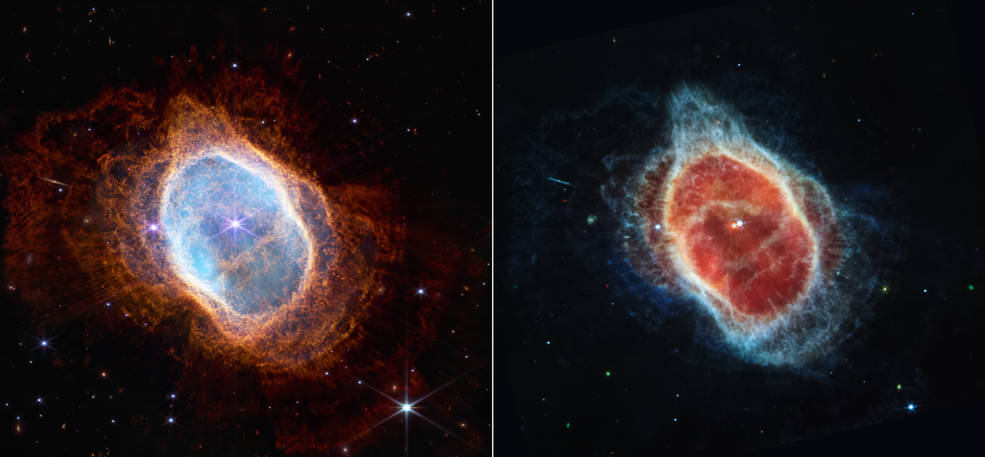
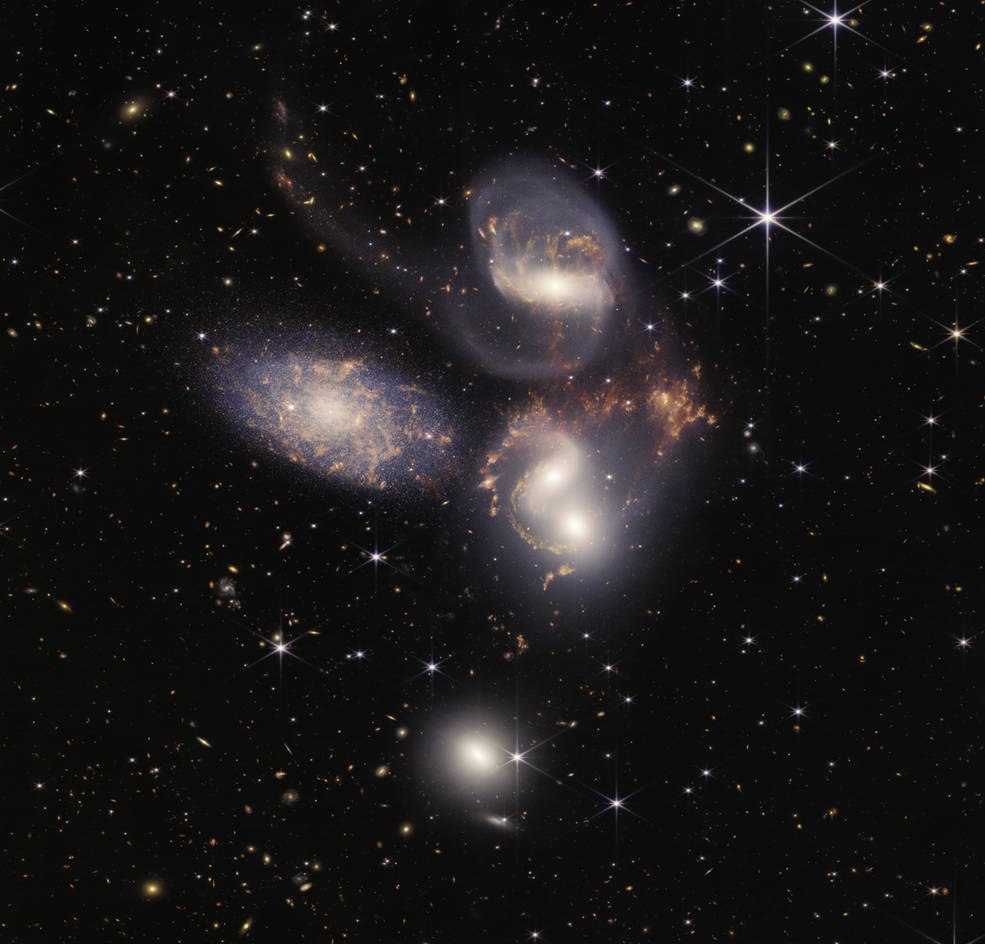
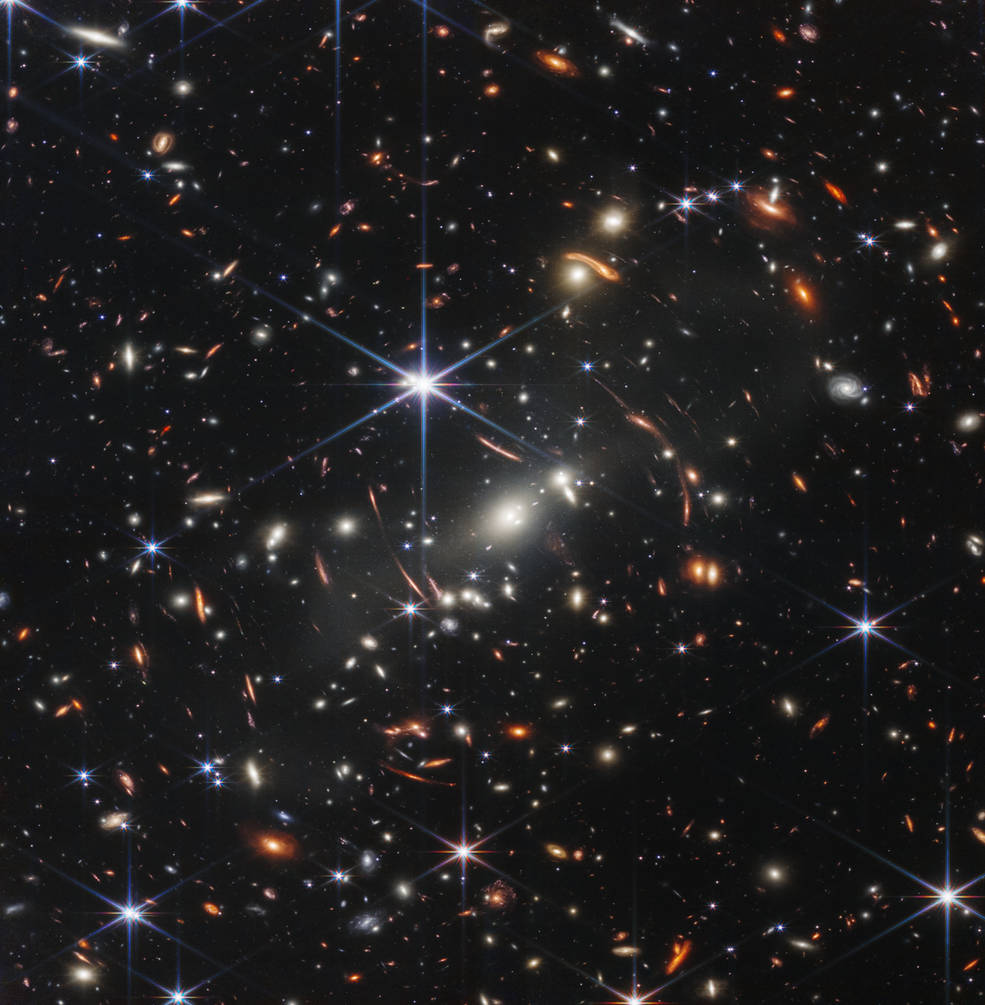
If you want to see the cur­rent height of tech­nol­o­gy, you could do worse than tak­ing a look at the James Webb Space Tele­scope. Mil­lions have been doing just that over the past few weeks, giv­en that this past Christ­mas Day wit­nessed the launch of that ten-bil­lion-dol­lar NASA project a decade in the mak­ing. As the suc­ces­sor to the now-ven­er­a­ble Hub­ble Space Tele­scope, the JWST is designed to go much far­ther into out­er space and thus see much fur­ther back in time, poten­tial­ly to the for­ma­tion of the first galax­ies. If all goes well, it will give us what the Real Engi­neer­ing video above calls a glimpse of the “ear­ly uni­verse from which we and every­thing we know was born.”

But one does not sim­ply glance sky­ward to see back 13.5 bil­lion years. No, “the com­bi­na­tion of tech­nolo­gies required to make the James Webb tele­scope pos­si­ble are unique to this time peri­od in human his­to­ry.” These include the heat shield that will unfold to pro­tect its sen­si­tive com­po­nents from the heat of the sun, to the onboard cry­ocool­er that main­tains the mid-infrared detec­tion instru­ment (which itself will enable the view­ing of many more stars and galax­ies than pre­vi­ous tele­scopes) at a cool sev­en degrees Kelvin, to the array of gold-coat­ed beryl­li­um mir­rors that can pick up unprece­dent­ed amounts of light.

How­ev­er com­pli­cat­ed the JWST’s devel­op­ment and launch, “the tru­ly nerve-wrack­ing process begins on day sev­en,” says the Real Engi­neer­ing video’s nar­ra­tor. At that point, with the satel­lite find­ing its pre­cise­ly deter­mined posi­tion 1.5 mil­lion kilo­me­ters from Earth, the heat shield begins unfold­ing, and “there are over 300 sin­gle points of fail­ure in this unfold­ing sequence: 300 chances for a ten bil­lion-dol­lar, 25-year project to end.” With that process under­way as of this writ­ing, the teeth of the pro­jec­t’s engi­neers are no doubt firm­ly embed­ded in their nails.

As it plays out, also-ner­vous fans of space explo­ration (who’ve had much to get excit­ed about in recent years) might con­sid­er dis­tract­ing them­selves with the above episode of Neil DeGrasse Tyson’s StarTalk. In it Tyson has in-depth dis­cus­sions about the JWST’s con­cep­tion, pur­pose, and poten­tial with both NASA astronomer Natal­ie Batal­ha and film­mak­er Nathaniel Kahn, whose doc­u­men­tary The Hunt for Plan­et B exam­ines the JWST team’s “quest to find anoth­er Earth among the stars.” But let’s not get ahead of our­selves: even if the shield deploys with­out a hitch, there remains the not-untricky process of unfold­ing those mir­rors. What we see through the tele­scope will no doubt change our ideas about human­i­ty’s place in the uni­verse — but if it func­tions as planned, we’ll have good rea­son to be pleased with human com­pe­tence.

Relat­ed Con­tent:

The Beau­ty of Space Pho­tog­ra­phy

Free Inter­ac­tive e‑Books from NASA Reveal His­to­ry, Dis­cov­er­ies of the Hub­ble & Webb Tele­scopes

How Sci­en­tists Col­orize Those Beau­ti­ful Space Pho­tos Tak­en By the Hub­ble Space Tele­scope

Van Gogh’s ‘Star­ry Night’ Re-Cre­at­ed by Astronomer with 100 Hub­ble Space Tele­scope Images

NASA Enlists Andy Warhol, Annie Lei­bovitz, Nor­man Rock­well & 350 Oth­er Artists to Visu­al­ly Doc­u­ment America’s Space Pro­gram

Based in Seoul, Col­in Mar­shall writes and broad­casts on cities and cul­ture. His projects include the book The State­less City: a Walk through 21st-Cen­tu­ry Los Ange­les and the video series The City in Cin­e­ma. Fol­low him on Twit­ter at @colinmarshall or on Face­book.

The Brilliant 19th-Century Astronomical Drawings of Étienne Léopold Trouvelot


The first pho­to of the moon was tak­en in 1850 by Louis Daguerre, from whom the daguer­rotype gets its name. We have no idea what that first image looked like as it was lost in a stu­dio fire. But the need to cat­a­log the heav­ens with mod­ern tools had start­ed, and was both fas­ci­nat­ing as it was lack­ing. Into this evo­lu­tion of sci­ence and art stepped Éti­enne Léopold Trou­velot, the French immi­grant, liv­ing in the States, an ama­teur sci­en­tist and an illus­tra­tor. He would dis­miss pho­tog­ra­phy of the heav­ens as “so blurred and indis­tinct that no details of any great val­ue can be secured.” And by illus­trat­ing instead by he saw through tele­scopes, he secured a place in art *and* sci­ence his­to­ry.

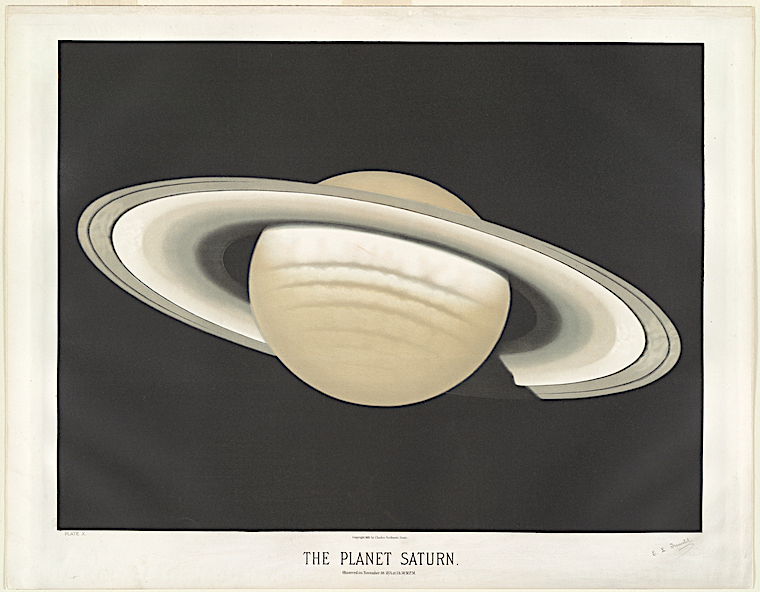
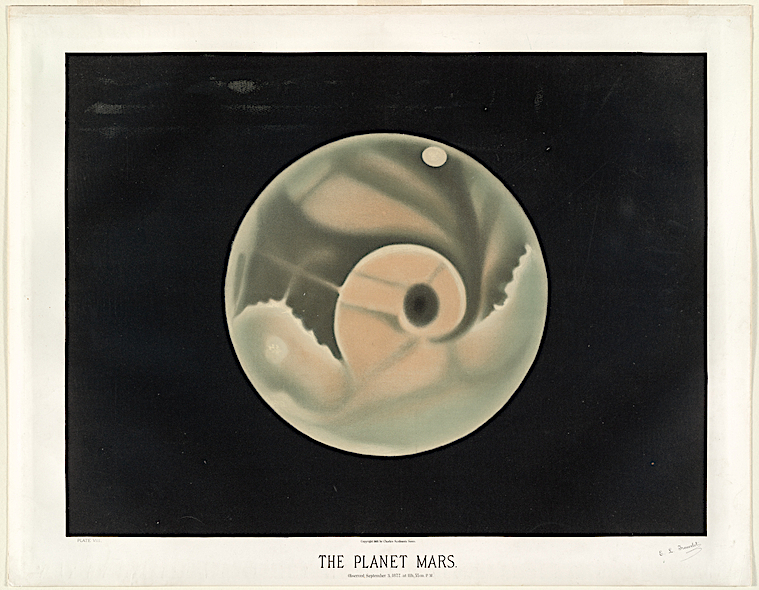
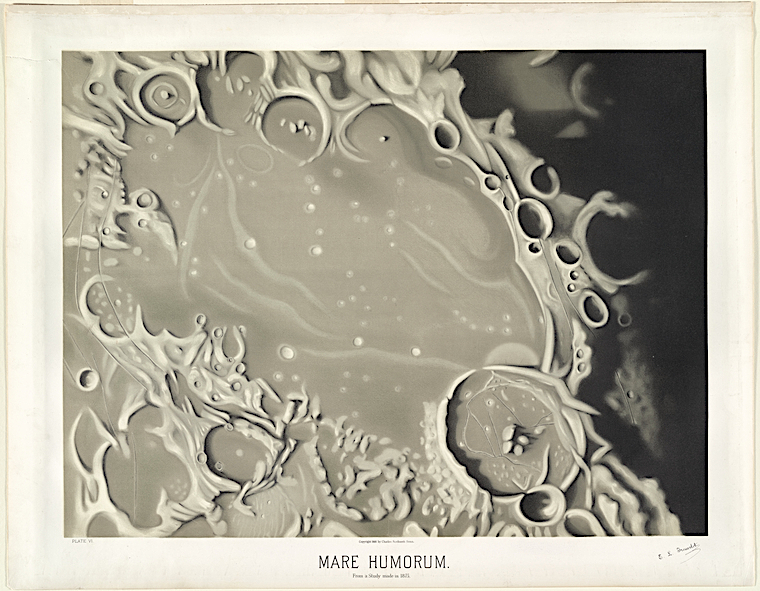
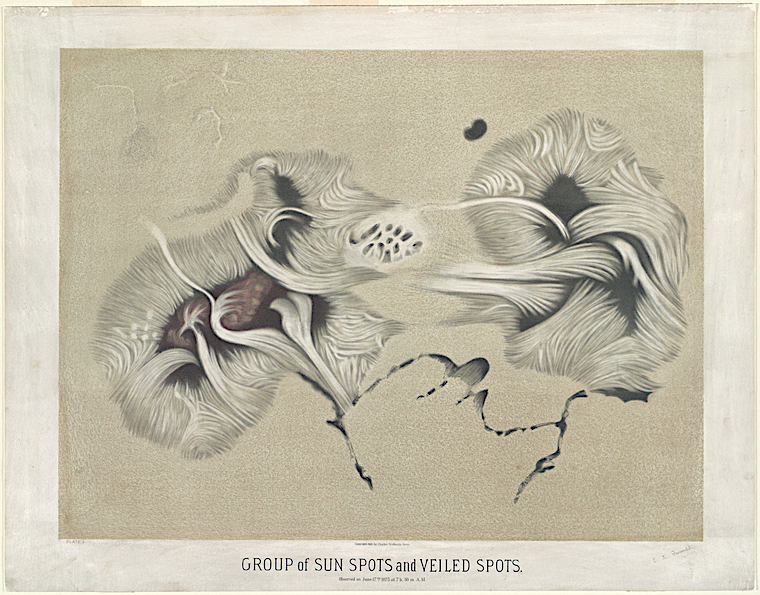
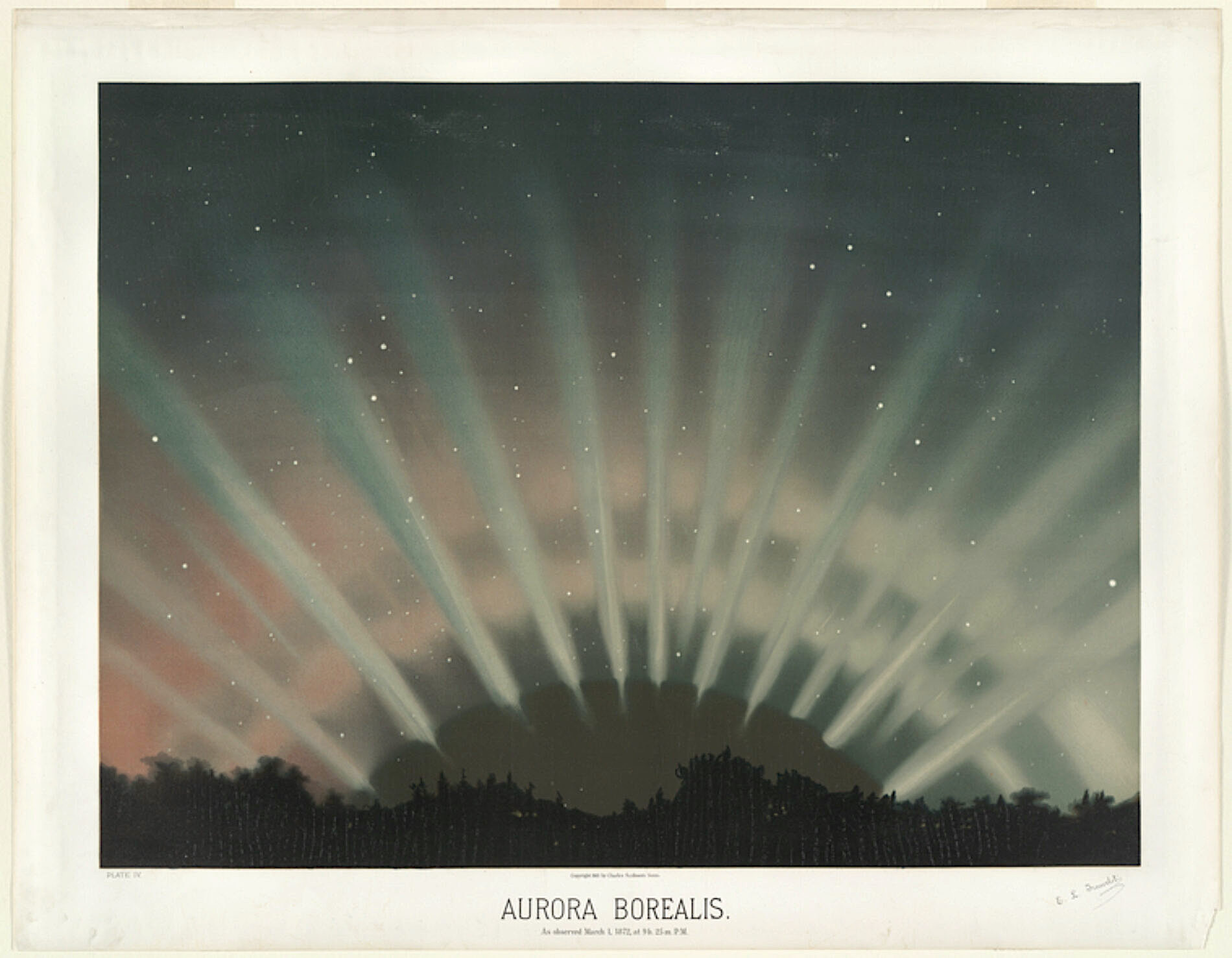
Trou­velot might have thought his sci­en­tif­ic papers would be his lega­cy. He wrote fifty in his life­time. Instead it is his rough­ly 7,000 illus­tra­tions of plan­ets, comets, and oth­er phe­nom­e­na that still please us to this day. The New York Pub­lic Library has put 15 of his best up on their site, and over at this page, you can com­pare what Trou­velot saw—-the great astronomer Emma Con­verse called Trou­velot the “prince of observers”—-to pho­tos from NASA’s archive.

Even if his Mars is a bit fan­ci­ful, look­ing translu­cent like a fish egg, his under­stand­ing of the plan­et echoes in the fol­low­ing cen­tu­ry of sci-fi para­noia. Some­thing strange must be there, he sug­gests.

Har­vard hired him to sketch at their college’s obser­va­to­ry, and he used pas­tels to bring the plan­ets to life. Engrav­ing or ink would not have worked as well as these soft shapes and deter­mined lines. His ren­der­ing of the moon sur­face is accu­rate but also fan­ci­ful, like whipped cream. And his sun spots might not be accu­rate, but they repli­cat­ed the god-like forces at work on its tumul­tuous sur­face. His Sat­urn is the most real­is­tic of them all. Even the NASA image doesn’t look too dif­fer­ent to Trouvelot’s art.

These images also help reha­bil­i­tate Trouvelot’s oth­er legacy—-the dread­ed Gyp­sy Moth. Before his stint as ama­teur sci­en­tist, he was also an ama­teur ento­mol­o­gist, and while research­ing silk­worms and silk pro­duc­tion, acci­den­tal­ly let Euro­pean gyp­sy moths into North Amer­i­ca, where they wreaked hav­oc on the forests of North Amer­i­ca. Saturn’s rings may look the same back then as they do now, but so does the dam­age of the gyp­sy moth, which accord­ing to Wikipedia is up to $868 mil­lion in dam­ages per year.

via Kot­tke

Relat­ed Con­tent:

A 9th Cen­tu­ry Man­u­script Teach­es Astron­o­my by Mak­ing Sub­lime Pic­tures Out of Words

Joce­lyn Bell Bur­nell Changed Astron­o­my For­ev­er; Her Ph.D. Advi­sor Won the Nobel Prize for It

A 16th-Cen­tu­ry Astron­o­my Book Fea­tured “Ana­log Com­put­ers” to Cal­cu­late the Shape of the Moon, the Posi­tion of the Sun, and More

Ted Mills is a free­lance writer on the arts who cur­rent­ly hosts the Notes from the Shed pod­cast and is the pro­duc­er of KCR­W’s Curi­ous Coast. You can also fol­low him on Twit­ter at @tedmills, and/or watch his films here.

17th Century Scientist Gives First Description of Alien Life: Hear Passages from Christiaan Huygens’ Cosmotheoros (1698)

Astro­bi­ol­o­gists can now extrap­o­late the evo­lu­tion­ary char­ac­ter­is­tics of pos­si­ble alien life, should it exist, giv­en the wealth of data avail­able on inter­plan­e­tary con­di­tions. But our ideas about aliens have drawn not from sci­ence but from what Adri­an Hor­ton at The Guardian calls “an engross­ing feed­back loop” of Hol­ly­wood films, comics books, and sci-fi nov­els. A lit­tle over three-hun­dred years ago — hav­ing nev­er heard of H.G. Wells or the X‑Files — Dutch sci­en­tist Chris­ti­aan Huy­gens answered the ques­tion of what alien life might look like in his work Cos­moth­e­o­ros, pub­lished after his death in 1698.

Every­one knows the names Galileo and Isaac New­ton, and near­ly every­one knows their major accom­plish­ments, but we find much less famil­iar­i­ty with Huy­gens, even though his achieve­ments “make him the great­est sci­en­tist in the peri­od between Galileo and New­ton,” notes the Pub­lic Domain Review.

Those achieve­ments include the dis­cov­ery of Saturn’s rings and its moon, Titan, the inven­tion of the first refract­ing tele­scope, a detailed map­ping of the Ori­on Neb­u­la, and some high­ly notable advance­ments in math­e­mat­ics. (Maybe we — Eng­lish speak­ers, that is — find his last name hard to pro­nounce?)

Huy­gens was a rev­o­lu­tion­ary thinker. After Coper­ni­cus, it became clear to him that “our plan­et is just one of many,” as schol­ar Hugo A. van den Berg writes, “and not set apart by any spe­cial con­sid­er­a­tion oth­er than the acci­den­tal fact that we hap­pen to be its inhab­i­tants.” Using the pow­ers of obser­va­tion avail­able to him, he the­o­rized that the inhab­i­tants of Jupiter and Sat­urn (he used the term “Plan­e­tar­i­ans”) must pos­sess “the Art of Nav­i­ga­tion,” espe­cial­ly “in hav­ing so many Moons to direct their Course…. And what a troop of oth­er things fol­low from this allowance? If they have Ships, they must have Sails and Anchors, Ropes, Pil­lies, and Rud­ders…”

“We may well laugh at Huy­gens,” van den Berg writes, “But sure­ly in our own cen­tu­ry, we are equal­ly parochial in our own way. We invari­ably fail to imag­ine what we fail to imag­ine.” Our ideas of aliens fly­ing space­craft already seem quaint giv­en mul­ti­ver­sal and inter­di­men­sion­al modes of trav­el in sci­ence fic­tion. Huy­gens had no cul­tur­al “feed­back loop.” He was mak­ing it up as he went. “In con­trast to Huy­gens’ astro­nom­i­cal works, Cos­moth­e­o­ros is almost entire­ly spec­u­la­tive,” notes van den Berg — though his spec­u­la­tions are through­out informed and guid­ed by sci­en­tif­ic rea­son­ing.

To under­mine the idea of Earth as spe­cial, cen­tral, and unique, “a thing that no Rea­son will per­mit,” Huy­gens wrote — meant pos­ing a poten­tial threat to “those whose Igno­rance or Zeal is too great.” There­fore, he willed his broth­er to pub­lish Cos­moth­e­o­ros after his death so that he might avoid the fate of Galileo. Already out of favor with Louis XIV, whom Huy­gens had served as a gov­ern­ment sci­en­tist, he wrote the book while back at home in The Hague, “fre­quent­ly ill with depres­sions and fevers,” writes the Pub­lic Domain Review. What did Huy­gens see in his cos­mic imag­i­na­tion of the sail­ing inhab­i­tants of Jupiter and Sat­urn? Hear for your­self above in a read­ing of Huy­gens’ Cos­moth­e­o­ros from Voic­es of the Past.

Huy­gens’ descrip­tions of intel­li­gent alien life derive from his lim­it­ed obser­va­tions about human and ani­mal life, and so he pro­pos­es the neces­si­ty of human-like hands and oth­er appendages, and rules out such things as an “elephant’s pro­boscis.” (He is par­tic­u­lar­ly fix­at­ed on hands, though some alien humanoids might also devel­op wings, he the­o­rizes.) Like all alien sto­ries to come, Huy­gens’ spec­u­la­tions, how­ev­er log­i­cal­ly he presents them, say “more about our­selves,” as Hor­ton writes, “our fears, our anx­i­eties, our hope, our adapt­abil­i­ty — than any poten­tial out­side vis­i­tor.” His descrip­tions show that while he did not need to place Earth at the cen­ter of the cos­mos, he mea­sured the cos­mos accord­ing to a very human scale.

Relat­ed Con­tent:

What Do Aliens Look Like? Oxford Astro­bi­ol­o­gists Draw a Pic­ture, Based on Dar­win­ian The­o­ries of Evo­lu­tion

Carl Sagan Sent Music & Pho­tos Into Space So That Aliens Could Under­stand Human Civ­i­liza­tion (Even After We’re Gone)

Richard Feyn­man: The Like­li­hood of Fly­ing Saucers

Josh Jones is a writer and musi­cian based in Durham, NC. Fol­low him at @jdmagness

Jocelyn Bell Burnell Changed Astronomy Forever; Her Ph.D. Advisor Won the Nobel Prize for It

A few years back, we high­light­ed a series of arti­cles called The Matil­da Effect — named for the fem­i­nist Matil­da Joslyn Gage, whose 1893 essay “Woman as an Inven­tor” inspired his­to­ri­ans like Cor­nell University’s Mar­garet Rossiter to recov­er the lost his­to­ries of women in sci­ence. Those his­to­ries are impor­tant not only for our under­stand­ing of women’s con­tri­bu­tions to sci­en­tif­ic advance­ment, but also because they tell us some­thing impor­tant about our­selves, who­ev­er we are, as film­mak­er Ben Proud­foot sug­gests in his “Almost Famous” series of short New York Times doc­u­men­taries.

Proud­foot casts a wide net in the telling, gath­er­ing sto­ries of an unknown woman N.B.A. draftee, a would-be first Black astro­naut who nev­er got to fly, a man who could have been the “next Colonel Sanders,” and a for­mer mem­ber of the Black Eyed Peas who quit before the band hit it big. Not all sto­ries of loss in “Almost Famous” are equal­ly trag­ic. Joce­lyn Bell Burnell’s sto­ry, which she her­self tells above, con­tains more than enough strug­gle, tri­umph, and crush­ing dis­ap­point­ment for a com­pelling tale.

An astronomer, Bell Bur­nell was instru­men­tal in the dis­cov­ery of pul­sars — a dis­cov­ery that changed the field for­ev­er. While her Ph.D. advi­sor Antony Hewish would be award­ed the Nobel Prize for the dis­cov­ery in 1974, Bell Burnell’s involve­ment was vir­tu­al­ly ignored, or treat­ed as a nov­el­ty. “When the press found out I was a woman,” she said in 2015, “we were bom­bard­ed with inquiries. My male super­vi­sor was asked the astro­phys­i­cal ques­tions while I was the human inter­est. Pho­tog­ra­phers asked me to unbut­ton my blouse low­er, whilst jour­nal­ists want­ed to know my vital sta­tis­tics and whether I was taller than Princess Mar­garet.”

In the film, Bur­nell describes a life­long strug­gle against a male-dom­i­nat­ed estab­lish­ment that mar­gin­al­ized her. She also tells a sto­ry of sup­port­ive Quak­er par­ents who nur­tured her will to fol­low her intel­lec­tu­al pas­sions despite the obsta­cles. Grow­ing up in Ire­land, she says, “I knew I want­ed to be an astronomer. But at that stage, there weren’t any women role mod­els that I knew of.” She com­ments, with under­stand­able anger, how many peo­ple con­grat­u­lat­ed her on her mar­riage and said “noth­ing about mak­ing a major astro­phys­i­cal dis­cov­ery.”

Many of us have sto­ries to tell about being denied achieve­ments or oppor­tu­ni­ties through cir­cum­stances not of our own mak­ing. We often hold those sto­ries close, feel­ing a sense of fail­ure and frus­tra­tion, mea­sur­ing our­selves against those who “made it” and believ­ing we have come up short. We are not alone. There are many who made the effort, and a few who got there first but didn’t get the prize for one unjust rea­son or anoth­er. The lack of offi­cial recog­ni­tion doesn’t inval­i­date their sto­ries, or ours. Hear­ing those sto­ries can inspire us to keep doing what we love and to keep push­ing through the oppo­si­tion. See more short “Almost Famous” doc­u­men­taries in The New York Times series here.

Relat­ed Con­tent: 

“The Matil­da Effect”: How Pio­neer­ing Women Sci­en­tists Have Been Denied Recog­ni­tion and Writ­ten Out of Sci­ence His­to­ry

How the Female Sci­en­tist Who Dis­cov­ered the Green­house Gas Effect Was For­got­ten by His­to­ry

Marie Curie Became the First Woman to Win a Nobel Prize, the First Per­son to Win Twice, and the Only Per­son in His­to­ry to Win in Two Dif­fer­ent Sci­ences

Josh Jones is a writer and musi­cian based in Durham, NC. Fol­low him at @jdmagness

The Sounds of Space: An Interplanetary Sonic Journey

There are those of us who, when pre­sent­ed with duel­ing star­ships in a movie or tele­vi­sion show, always make the same objec­tion: there’s no sound in out­er space. In the short film above, this valid if aggra­vat­ing­ly pedan­tic charge is con­firmed by Lori Glaze, Direc­tor of NASA’s Sci­ence Mis­sion Direc­torate’s Plan­e­tary Sci­ence Divi­sion. “Sound requires mol­e­cules,” she says. “You have to be able to move mol­e­cules with the sound waves, and with­out the mol­e­cules, the sound just does­n’t move.” Space has as few as ten atoms per cubic meter; our atmos­phere, by con­trast, has more ten tril­lion tril­lion — that’s “tril­lion tril­lion” with two Ts.

No won­der Earth can be such an infer­nal rack­et. But as every school­child knows, the rest of solar sys­tem as a whole is hard­ly emp­ty. In twen­ty min­utes, the The Sounds of Space takes us on a tour of the plan­ets from Mer­cury out to Plu­to and even Sat­urn’s moon of Titan, not just visu­al­iz­ing their sights but, if you like, aural­iz­ing their sounds.

These include real record­ings, like those of Venu­sian winds cap­tured by the Sovi­et lan­der Ven­era 14 in 1981. Most, how­ev­er, are sci­en­tif­i­cal­ly informed con­struc­tions of more spec­u­la­tive phe­nom­e­non: a “Mer­curyquake,” for instance, or a “Methanofall” on Titan.

A col­lab­o­ra­tion between film­mak­er John D. Boswell (also known as Melodysheep) and Twen­ty Thou­sand Hertz, a pod­cast about “the sto­ries behind the world’s most rec­og­niz­able and inter­est­ing sounds,” The Sounds of Space was recent­ly fea­tured at Aeon. That site rec­om­mends view­ing the film “as an explo­ration of the physics of sound, and the sci­ence of how we’ve evolved to receive sound waves right here on Earth.” How­ev­er you frame it, you’ll hear plen­ty of sounds the likes of which you’ve nev­er heard before, as well as the voic­es of Earth­lings high­ly knowl­edgable in these mat­ters: Glaze’s, but also those of NASA Plan­e­tary Astronomer Kei­th Noll and Research Astro­physi­cist Scott Guzewich. And as a bonus, you’ll be pre­pared to cri­tique the son­ic real­ism of the next bat­tle you see staged on the sur­face of Mars.

via Aeon

Relat­ed Con­tent:

NASA Puts Online a Big Col­lec­tion of Space Sounds, and They’re Free to Down­load and Use

Sun Ra Applies to NASA’s Art Pro­gram: When the Inven­tor of Space Jazz Applied to Make Space Art

42 Hours of Ambi­ent Sounds from Blade Run­ner, Alien, Star Trek and Doc­tor Who Will Help You Relax & Sleep

Plants Emit High-Pitched Sounds When They Get Cut, or Stressed by Drought, a New Study Shows

Based in Seoul, Col­in Mar­shall writes and broad­casts on cities, lan­guage, and cul­ture. His projects include the Sub­stack newslet­ter Books on Cities, the book The State­less City: a Walk through 21st-Cen­tu­ry Los Ange­les and the video series The City in Cin­e­ma. Fol­low him on Twit­ter at @colinmarshall or on Face­book.

Watch an Accurate Reconstruction of the World’s Oldest Computer, the 2,200 Year-Old Antikythera Mechanism, from Start to Finish

There’s noth­ing like an ancient mys­tery, espe­cial­ly one as seem­ing­ly insol­u­ble as the ori­gins of “the world’s first com­put­er,” the Antikythera mech­a­nism. Dis­cov­ered off the coast of the Greek island of Antikythera in 1901, the cor­rod­ed col­lec­tion of gears and dials seemed fake to sci­en­tists at first because of its inge­nious­ness. It has since been dat­ed to 100 to 150 BC and has inspired decades of research and spec­u­la­tive recon­struc­tion. Yet, no one knows who made it, and more impor­tant­ly, no one knows how it was made.

“The dis­tance between this device’s com­plex­i­ty and oth­ers made at the same time is infi­nite,” says Adam Woj­cik, a mate­ri­als sci­en­tist at the Uni­ver­si­ty Col­lege of Lon­don. “Frankly, there is noth­ing like it that has ever been found. It’s out of this world.”

The expres­sion should not make us think of ancient aliens — the Antikythera mech­a­nism con­tains more than enough evi­dence of human lim­i­ta­tion, show­ing a geo­cen­tric mod­el of the cos­mos with the only five plan­ets its mak­er would have known.

The 2,000-plus year-old device con­tin­ues to reveal its secrets, includ­ing hid­den inscrip­tions found dur­ing CT scans of the object, as Smith­son­ian report­ed in 2015. The mech­a­nism is “sim­i­lar in size to a man­tel clock, and bits of wood found on the frag­ments sug­gest it was housed in a wood­en case. Like a clock, the case would’ve had a large cir­cu­lar face with rotat­ing hands. There was a knob or han­dle on the side, for wind­ing the mech­a­nism for­ward or back­ward. And as the knob turned, trains of inter­lock­ing gear­wheels drove at least sev­en hands at var­i­ous speeds. Instead of hours and min­utes, the hands dis­played celes­tial time.”

If the Antikythera mech­a­nism is a “celes­tial clock,” who bet­ter to design and build its recon­struc­tion than a clock­mak­er? That is exact­ly what we see in the videos above, cre­at­ed for the clock­mak­ing YouTube chan­nel Click­spring. Using the best sci­en­tif­ic mod­el of the mech­a­nism to date — pub­lished this year by Dr. Tony Freeth and col­leagues of the Antikythera Mech­a­nism Research Project — Click­spring shows how the device might have fit togeth­er and makes edu­cat­ed guess­es about the right place­ment of its dozens of small parts.

You can see a pre­view of the Antikythera recon­struc­tion project at the top, watch the full project above, and see indi­vid­ual episodes show­cas­ing dif­fer­ent phas­es of con­struc­tion on YouTube. The mod­el “con­forms to all the phys­i­cal evi­dence,” Freeth writes, “and match­es the descrip­tions in the sci­en­tif­ic inscrip­tions engraved on the mech­a­nism itself.” What no one can fig­ure out, how­ev­er, is just how the ancient Greek arti­sans who made it shaped pre­ci­sion met­al parts with­out lath­es and oth­er mod­ern tools of the machine-mak­ers trade. Researchers, and clock­mak­ers, may have pieced togeth­er the Antikythera puz­zle, but the mys­tery of how it came into exis­tence at all remains unsolved.

Relat­ed Con­tent:

How the World’s Old­est Com­put­er Worked: Recon­struct­ing the 2,200-Year-Old Antikythera Mech­a­nism

Researchers Devel­op a Dig­i­tal Mod­el of the 2,200-Year-Old Antikythera Mech­a­nism, “the World’s First Com­put­er”

Mod­ern Artists Show How the Ancient Greeks & Romans Made Coins, Vas­es & Arti­sanal Glass

Josh Jones is a writer and musi­cian based in Durham, NC. Fol­low him at @jdmagness

A Finnish Astrophotographer Spent 12 Years Creating a 1.7 Gigapixel Panoramic Photo of the Entire Milky Way

In the final, cli­mac­tic scene of Japan­ese nov­el­ist Yasunari Kawabata’s Snow Coun­try, the Milky Way engulfs the pro­tag­o­nist — an aes­thete who keeps him­self detached from the world, a uni­ver­sal per­spec­tive over­tak­ing an insignif­i­cant indi­vid­ual.

We now know the Milky Way itself to be a minus­cule part of the whole, just one of 100 to 200 bil­lion galax­ies. But until Edwin Hub­ble’s obser­va­tions in 1924, it was thought to con­tain all the stars in exis­tence.

The Milky Way-as-uni­verse is a pow­er­ful image, and cer­tain­ly more com­pre­hen­si­ble than the uni­verse as astronomers cur­rent­ly under­stand it. Its vast­ness can’t be com­pressed into a sym­bol­ic form like the via lactea, “Milky Way,” or as the Greeks called it, galak­tikos kýk­los, “milky cir­cle.” Andy Brig­gs sum­ma­rizes just a few of the ancient myths and leg­ends:

To the ancient Arme­ni­ans, it was straw strewn across the sky by the god Vahagn. In east­ern Asia, it was the Sil­very Riv­er of Heav­en. The Finns and Esto­ni­ans saw it as the Path­way of the Birds.… Both the Greeks and the Romans saw the star­ry band as a riv­er of milk. The Greek myth said it was milk from the breast of the god­dess Hera, divine wife of Zeus. The Romans saw the riv­er of light as milk from their god­dess Ops.

A barred spi­ral galaxy spin­ning around a “galac­tic bulge” with an emp­ty cen­ter, a “mon­strous black hole,” notes Space.com, “bil­lions of times as mas­sive as the sun”… the Milky Way remains an awe­some sym­bol for a uni­verse too vast for us to hold in our minds.

Wit­ness, for exam­ple, the just-released image fur­ther up, a 1.7 gigapix­el panoram­ic pho­to of the Milky Way, from Tau­rus to Cygnus, 100,000 pix­els wide, pieced togeth­er from 234 pan­els by Finnish astropho­tog­ra­ph­er J‑P Met­savainio, who began the project all the way back in 2009. “I can hear music in this com­po­si­tion,” he writes at his site, “from high sparks and bub­bles at left to deep and mas­sive sounds at right.”

Over 12 years, and around 1250 hours of expo­sure, Michael Zhang writes at Petapix­el, Met­savainio “focused on dif­fer­ent areas and objects in the Milky Way, shoot­ing stitched mosaics of them as indi­vid­ual art­works.” As he began to knit the galac­tic clouds of stars and gasses togeth­er into a Pho­to­shop panora­ma, he dis­cov­ered a “com­plex image set which is part­ly over­lap­ping with lots of unim­aged areas between and around frames.” Over the years, he filled in the gaps, shoot­ing the “miss­ing data.” He describes his equip­ment and process in detail, for those flu­ent in the tech­ni­cal jar­gon. The rest of us can stare in silent won­der at more of Metsavainio’s work on his web­site (where you can also pur­chase prints) and Face­book, and let our­selves be over­tak­en by awe.

via Petapix­el and Kot­tke

Relat­ed Con­tent: 

NASA Releas­es a Mas­sive Online Archive: 140,000 Pho­tos, Videos & Audio Files Free to Search and Down­load

How Sci­en­tists Col­orize Those Beau­ti­ful Space Pho­tos Tak­en By the Hub­ble Space Tele­scope

Earth­rise, Apol­lo 8’s Pho­to of Earth from Space, Turns 50: Down­load the Icon­ic Pho­to­graph from NASA

Josh Jones is a writer and musi­cian based in Durham, NC. Fol­low him at @jdmagness

« Go BackMore in this category... »
Quantcast