A Digital Library for Bartenders: Vintage Cocktail Books with Recipes Dating Back to 1753

So, um… you look like you could use a drink… or anoth­er drink, or five…. I’ve giv­en it up, but I can still mix a mean cock­tail. How about a Stom­ach Julep (Julepum Stom­achicum). No white suit or veran­da required. It’s a “saf­fron syrup made with sher­ry, spir­it rec­ti­fied with mint, and a non-alco­holic mint dis­til­late” among oth­er “fas­ci­nat­ing ingre­di­ents.” Yes, this is a recipe from a 1753 phar­ma­col­o­gy text­book, but in 1753, one’s bar­tender might just as well also be the local alchemist, phar­ma­cist, and cap­tive audi­ence. Fear­ing a resur­gence of plague and oth­er mal­adies, lack­ing prop­er health­care or clean water, the Ear­ly Mod­ern British for­ti­fied them­selves with booze.

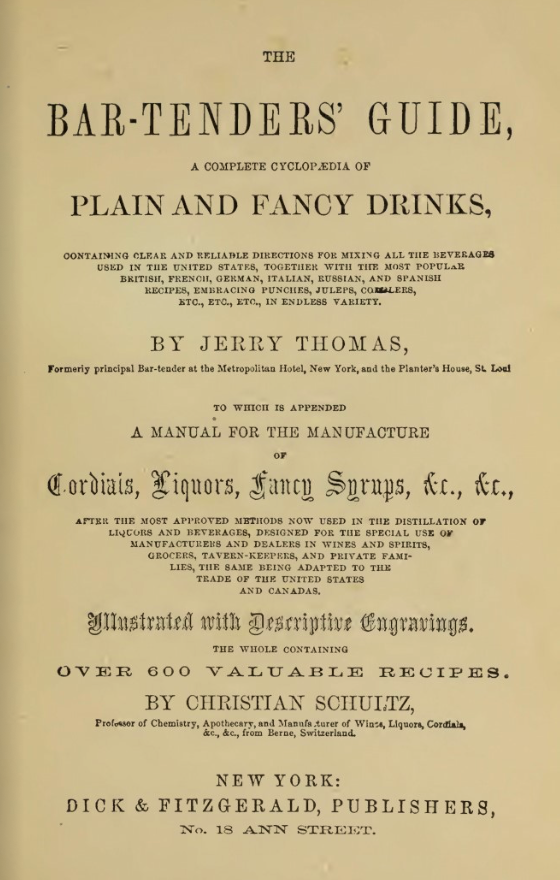
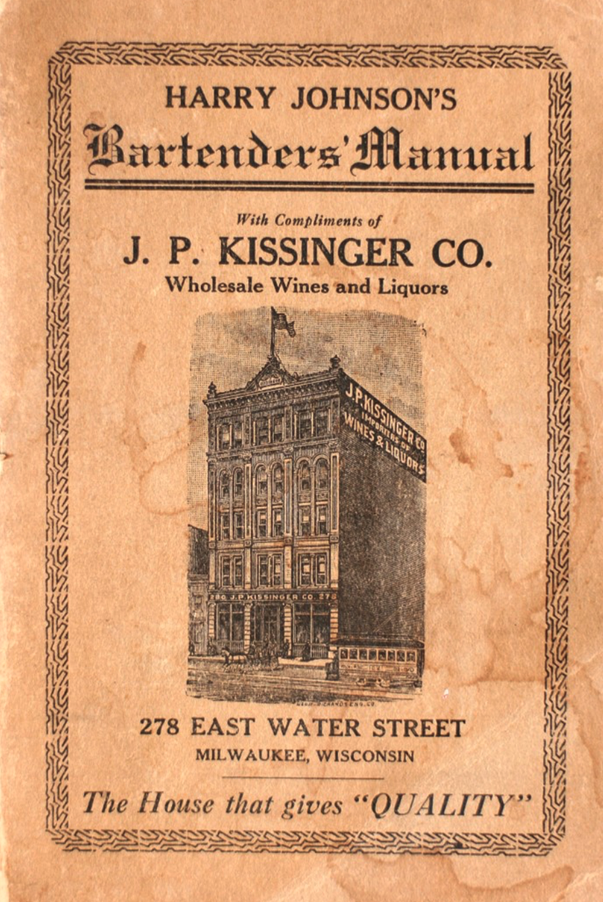
The New Eng­lish Dis­pen­sato­ry might seem like an odd text, nonethe­less, to include in an online library for bar­tenders, but it is per­fect­ly in keep­ing with the spir­it of the EUVS Dig­i­tal Col­lec­tion, an appre­cia­ble sam­pling of man­u­als, cock­tail menus, recipe books, and his­tor­i­cal ephemera relat­ed to “a pro­fes­sion that has redis­cov­ered a jus­ti­fi­able sense of pride and pur­pose.”

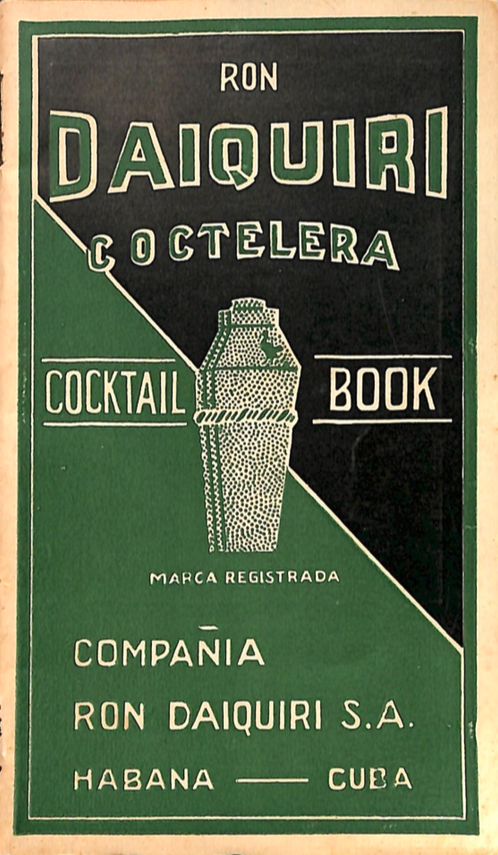
This sense does seem to vary great­ly between estab­lish­ments, but the col­lec­tion does not dis­crim­i­nate, though it does dis­play a par­tic­u­lar fond­ness for Cuba in its cur­rent state of digitization—now up to a few dozen titles span­ning the years 1753 to 1959. More books will be com­ing online soon out of a phys­i­cal col­lec­tion of “over 1,000 vol­umes.”

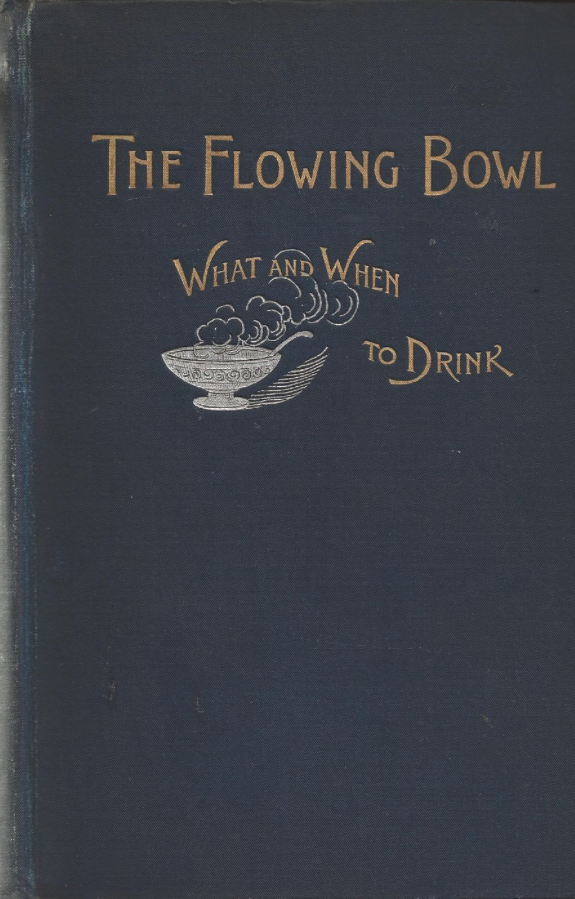
It may be hard to imag­ine earn­ing a bar­tend­ing Ph.D. but one could cer­tain­ly find a dis­ser­ta­tion top­ic in the impres­sive breadth and depth of the col­lec­tion, even in its lim­it­ed state. Or, more like­ly, one could put togeth­er a unique­ly imag­i­na­tive cock­tail menu that no one else in town can boast of. Bar­tend­ing is both art and sci­ence. In his 1892 book The Flow­ing Bowl, New York bar­tender William Schmidt, also known as “The Only William,” com­ments:

Mixed drinks might be com­pared to music: an orches­tra will pro­duce good music, pro­vid­ed all play­ers are artists; but have only one or two infe­ri­or musi­cians in your band and you may be con­vinced they will spoil the entire har­mo­ny.

To the bartender’s list of sup­ple­men­tary roles in the lives of their cus­tomers, we can add anoth­er: con­duc­tor. William first came to promi­nence in the pro­fes­sion in Ham­burg, Ger­many before emi­grat­ing to Chica­go, then Man­hat­tan. His tastes, in music and liquors, remained Euro­pean. “The finest mixed drinks and their ingre­di­ents are of for­eign ori­gin. Are not all of the supe­ri­or cor­dials of for­eign make?” he wrote. Clear­ly he knew noth­ing of bour­bon.

The Only William did know that fine art requires show­man­ship and style. He was “renowned for his acro­bat­ic bar­tend­ing feats: throw­ing flam­ing and non-flam­ing drinks in grace­ful arcs.” The EUVS Dig­i­tal Col­lec­tion presents William as a kind of bar­tend­ing folk hero, a larg­er-than-life fig­ure who was said to have invent­ed a new drink dai­ly. If this is so, it may not be so sur­pris­ing. William was not only total­ly devot­ed to his art, but he was also a schol­ar, “cred­it­ed with an ency­clo­pe­dic knowl­edge of the clas­sics.”

The Flow­ing Bowl con­tains Schmidt’s “his­to­ry of var­i­ous bev­er­ages, descrip­tions of his­toric Gre­co-Roman ban­quets, sam­ple menus with bev­er­age pair­ings, plus a live­ly selec­tion of poet­ry read­ings whose focus is on drink.” One gets the sense he rep­re­sents the ide­al patron of The Bartender’s Library. What would such a mod­el bar­tender do dur­ing the pan­dem­ic? I think he’d hit the books, espe­cial­ly giv­en that so many, like his own, are free online. And giv­en the ever-present pos­si­bil­i­ty of plague and oth­er calami­ties, I guess he’d offer spir­it­ed reme­dies to the peo­ple locked down at home with him.

Note: One com­menter on the Cock­tail archive site left these com­ments, which might prove handy:

Here is a list of con­ver­sions, with Impe­r­i­al mea­sure­ments (from the U.K), as well as few British ones–as both are found in many clas­sic cock­tail books and can be mighty con­fus­ing.

1 quart (Impe­r­i­al) = 40 ounces

1 quart = 32 ounces

1 bot­tle = 24 ounces

1 pint (Impe­r­i­al) = 20 ounces

1 pint = 16 ounces

1/2 pint (Impe­r­i­al) = 10 ounces

1/2 pint = 8 ounces

1 gill (Impe­r­i­al) = 4.8 ounces

1 gill = 4 ounces

1 dram = 1/4 table­spoon (found in the British met­ric sys­tem or Eng­lish recipes before approx. 1972)

1 wine­glass = 2 ounces

1 jig­ger = 1 1/2 ounces – 1 1/4 ounces

1 pony = 1 (flu­id) ounce = 2 table­spoons

1 table­spoon = 1/2 (flu­id) ounces

1 tea­spoon = 1/16 flu­id ounces

A dash is a tricky one. When applied to bit­ters, a “dash” makes sense: it’s what comes out the top of the bot­tle. But if you find a recipe call­ing for “dash­es of syrup,” check out sim­i­lar drink recipes and use your judg­ment in how much you need.

Relat­ed Con­tent: 

The Sci­ence of Beer: A New Free Online Course Promis­es to Enhance Your Appre­ci­a­tion of the Time­less Bev­er­age

A New Dig­i­tized Menu Col­lec­tion Lets You Revis­it the Cui­sine from the “Gold­en Age of Rail­road Din­ing”

The Recipes of Famous Artists: Din­ners & Cock­tails From Tol­stoy, Miles Davis, Mar­i­lyn Mon­roe, David Lynch & Many More

Josh Jones is a writer and musi­cian based in Wash­ing­ton, DC. Fol­low him @jdmagness

Recipes from the Kitchen of Georgia O’Keeffe

What shall we read before bed?

Geor­gia O’Keeffe was a fan of cook­books, telling her young assis­tant Mar­garet Wood that they were “enjoy­able night­time com­pa­ny, pro­vid­ing brief and pleas­ant read­ing.”

Among the culi­nary vol­umes in her Abiquiu, New Mex­i­co ranch home were The Fan­ny Farmer Boston Cook­ing School Cook­bookThe Joy of Cook­ingLet’s Eat Right to Keep Fit and Cook Right, Live Longer.

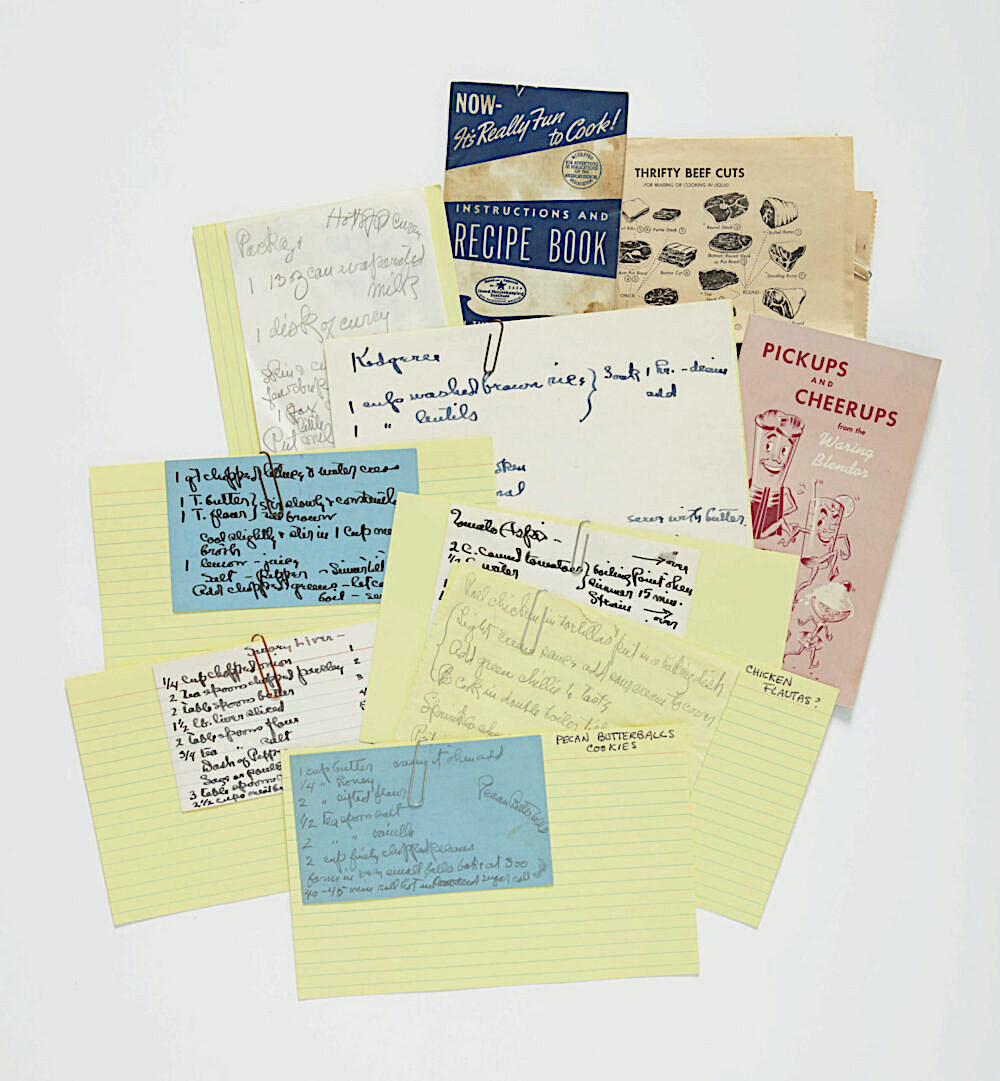
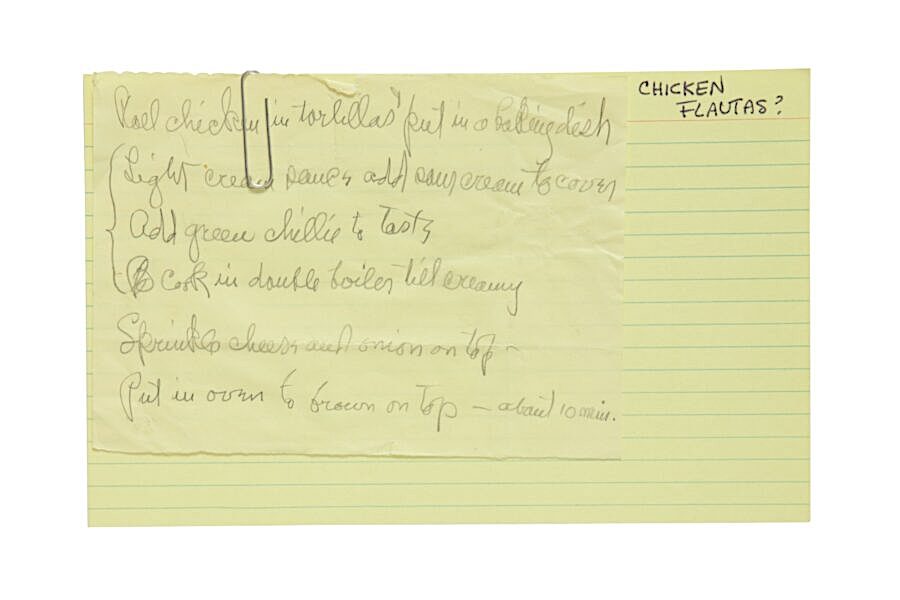
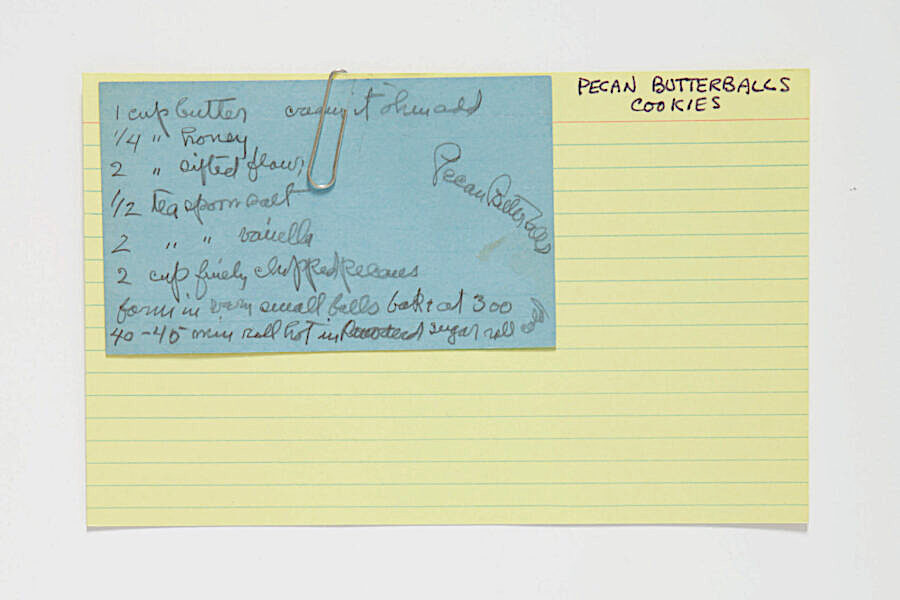
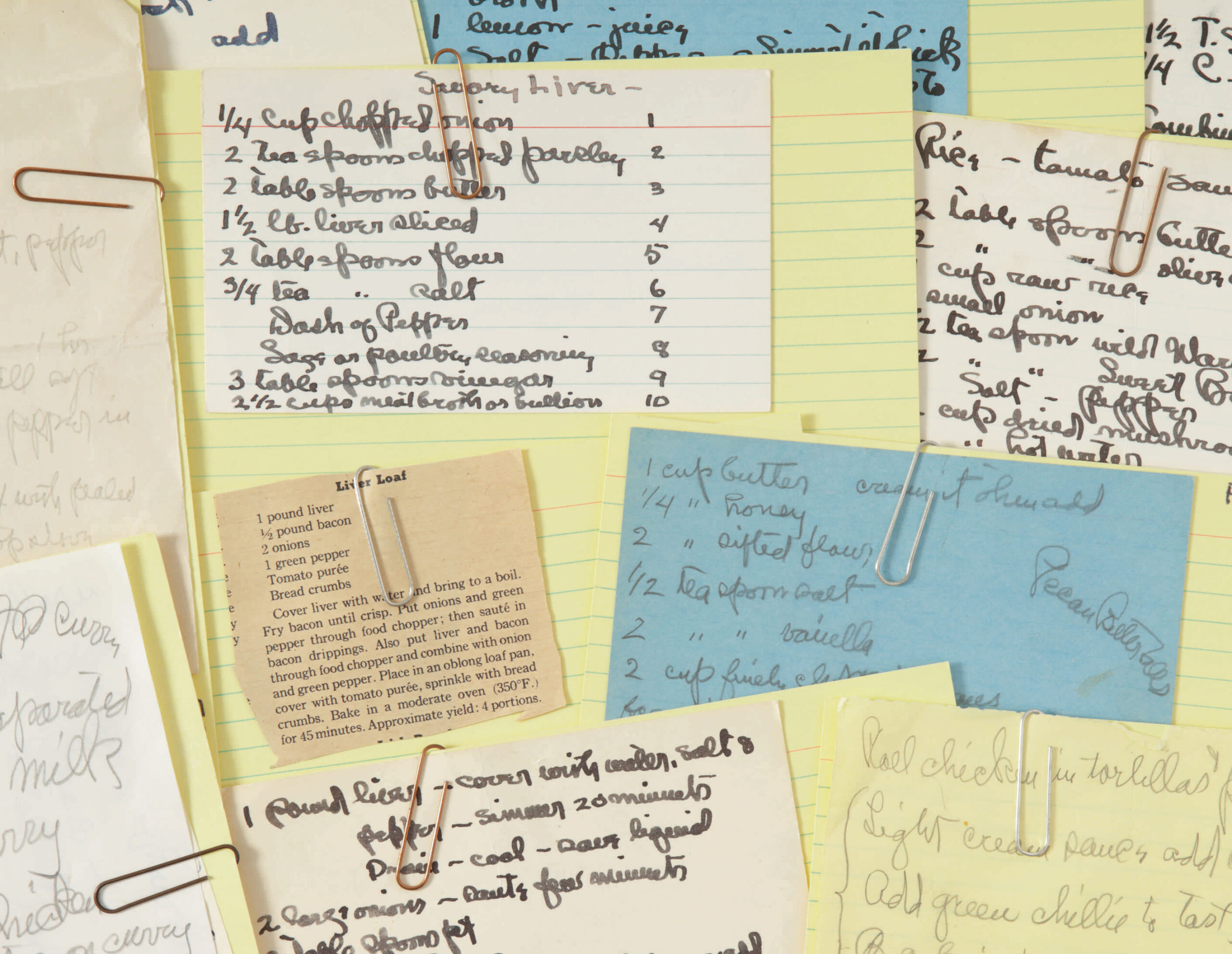
Also Pick­ups and Cheerups from the War­ing Blender, a 21-page pam­phlet fea­tur­ing blend­ed cock­tails, that now rests in Yale University’s Bei­necke Library, along with the rest of the con­tents of O’Keeffe’s recipe box, acquired the night before it was due to be auc­tioned at Sotheby’s. (Some of the images on this page come cour­tesy of Sothe­by’s.)

In addi­tion to recipes—inscribed by the artist’s own hand in ink from a foun­tain pen, typed by assis­tants, clipped from mag­a­zines and news­pa­pers, or in pro­mo­tion­al book­lets such as the one pub­lished by the War­ing Prod­ucts Company—the box housed man­u­als for O’Keeffe’s kitchen appli­ances.

The book­let that came with her pres­sure cook­er includes a spat­tered page devot­ed to cook­ing fresh veg­gies, a tes­ta­ment to her abid­ing inter­est in eat­ing health­ful­ly.

O’Keeffe had a high regard for sal­ads, gar­den fresh herbs, and sim­ple, local­ly sourced food.

Today’s bud­dha bowl craze is, how­ev­er, “the oppo­site of what she would enjoy” accord­ing to Wood, author of the books Remem­ber­ing Miss O’Ke­effe: Sto­ries from Abiquiu and A Painter’s Kitchen: Recipes from the Kitchen of Geor­gia O’Keeffe.

Wood, who was some 66 years younger than her employ­er, recent­ly vis­it­ed The Spork­ful pod­cast to recall her first days on the job :

…she said, “Do you like to cook?” 

And I said, “Yes, I cer­tain­ly do.” 

So she said, “Well, let’s give it a try.” 

And after two days of my hip­pie health food, she said, “My dear, let me show you how I like my food.” My first way of try­ing to cook for us was a lot of brown rice and chopped veg­eta­bles with chick­en added. And that was not what she liked. 

An exam­ple of what she did like: Roast­ed lemon chick­en with fried pota­toes, a green sal­ad fea­tur­ing let­tuce and herbs from her gar­den, and steamed broc­coli.

Also yogurt made with the milk of local goats, whole wheat flour ground on the premis­es, water­cress plucked from local streams, and home can­ning.

Most of these labor-inten­sive tasks fell to her staff, but she main­tained a keen inter­est in the pro­ceed­ings.

Not for noth­ing did the friend who referred Wood for the job warn her it would “require a lot of patience because Miss O’Ke­effe was extreme­ly par­tic­u­lar.”

The jot­tings from the recipe box don’t real­ly con­vey this exact­ing nature.

Those accus­tomed to the extreme­ly spe­cif­ic instruc­tions accom­pa­ny­ing even the sim­plest recipes to be found on the Inter­net may be shocked by O’Ke­ef­fe’s brevi­ty.


Per­haps we should assume that she sta­tioned her­self close by the first time any new hire pre­pared a recipe from one of her cards, know­ing she would have to ver­bal­ly cor­rect and redi­rect.

(O’Keeffe insist­ed that Wood stir accord­ing to her method—don’t scrape the sides, dig down and lift up.)

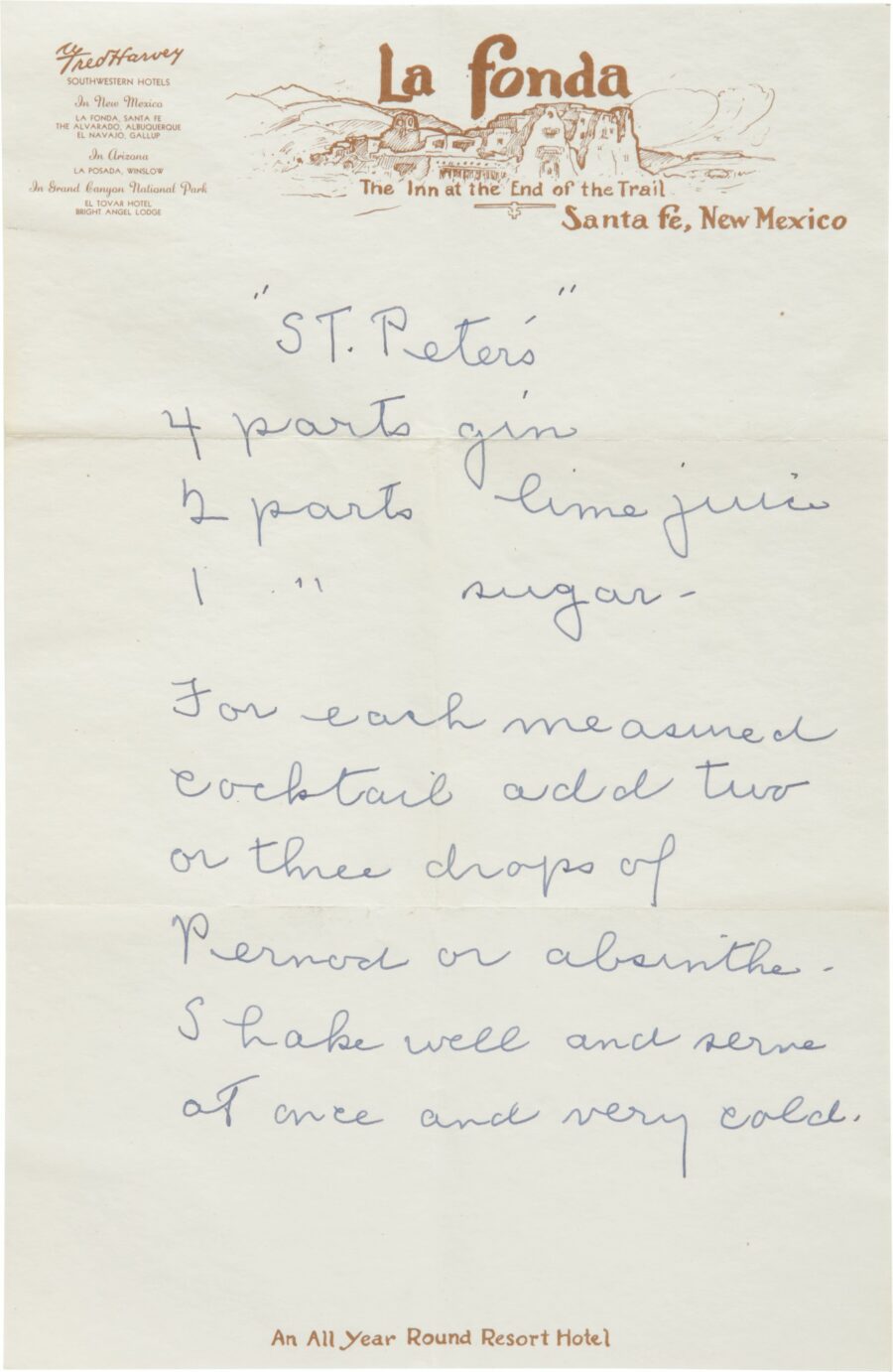
The box also con­tained recipes that were like­ly rar­i­ties on O’Keeffe’s table, giv­en her dietary pref­er­ences, though they are cer­tain­ly evoca­tive of the peri­od: toma­to aspic, Mary­land fried chick­enFloat­ing Islands, and a cock­tail she may have first sipped in a San­ta Fe hotel bar.

The Bei­necke plans to dig­i­tize its new­ly acquired col­lec­tion. This gives us hope that one day, the Geor­gia O’Keeffe Muse­um may fol­low suit with the red recipe binder Wood men­tions in A Painter’s Kitchen:

This was affec­tion­ate­ly referred to as “Mary’s Book,” named after a pre­vi­ous staff mem­ber who had com­piled it. That note­book was con­tin­u­al­ly con­sult­ed, and revised to include new recipes or to improve on old­er ones…. As she had col­lect­ed a num­ber of healthy and fla­vor­ful recipes, she would occa­sion­al­ly laugh and com­ment, “We should write a cook­book.”

Relat­ed Con­tent: 

Explore 1,100 Works of Art by Geor­gia O’Keeffe: They’re Now Dig­i­tized and Free to View Online

Geor­gia O’Keeffe: A Life in Art, a Short Doc­u­men­tary on the Painter Nar­rat­ed by Gene Hack­man

The Art & Cook­ing of Fri­da Kahlo, Sal­vador Dali, Geor­gia O’Keeffe, Vin­cent Van Gogh & More

Ayun Hal­l­i­day is an author, illus­tra­tor, the­ater mak­er and Chief Pri­ma­tol­o­gist of the East Vil­lage Inky zine.  Fol­low her @AyunHalliday.

How Some of the World’s Most Famous Cheeses Are Made: Camembert, Brie, Gorgonzola & More

Atten­tion cheese lovers!

Do you sali­vate at the thought of a Cheese Chan­nel?

Care­ful what you wish for.

Food pho­tog­ra­phers employ all man­ner of dis­gust­ing tricks to make junky pan­cakes and fast food burg­ers look irre­sistibly mouth­wa­ter­ing.

Food Insid­ers’ Region­al Eats tour of the Ital­ian Gor­gonzo­la-mak­ing process inside a ven­er­a­ble, fam­i­ly-owned Ital­ian cream­ery is the inverse of that.

The fin­ished prod­uct is wor­thy of a still life, but look out!

Despite the delib­er­ate­ly gen­tle motion of the cus­tom-made machin­ery into which the milk is poured, get­ting there is a stom­ach churn­ing prospect.

Per­son­al­ly, we don’t find the smell of that ven­er­a­ble, veined cheese offen­sive. The pun­gent aro­ma is prac­ti­cal­ly music to our nose, stim­u­lat­ing the cil­ia at the tips of our sen­so­ry cells, alert­ing our tongue that a rare and favorite fla­vor is in range.

Nor is it a mold issue.

Mar­co Inv­ernizzi, man­ag­ing direc­tor of Trecate’s hun­dred-year-old Caseifi­cio Si Inv­ernizzi, exudes such deep respect for Peni­cil­li­um roque­for­ti and the oth­er par­tic­u­lars of Gorgonzola’s pedi­gree, it would sure­ly be our hon­or to sam­ple one of the 400 wheels his cream­ery pro­duces every day.

Just give us a sec for the visu­als of that griz­zly birth video to fade from our mem­o­ry.

With the excep­tion of a close up on a faucet gush­ing milk into a buck­et, the peek inside the Camem­bert-mak­ing process is a bit eas­i­er to stom­ach.

There are curds, but they’re con­tained.

The cheese at Le 5 Frères, a fam­i­ly farm in the vil­lage of Bermonville, is made by old fash­ioned means, ladling micro-organ­ism-rich milk to which ren­net has been added into per­fo­rat­ed forms, that are topped off a total of five times in an hour.

The steamy tem­per­a­tures inside the arti­sanal brie mold­ing room at Seine-et-Marne’s 30 Arpents caus­es Food Insid­ers’ cam­era lens to fog, mak­ing for an impres­sion­is­tic view, swagged in white.

Near­ly 20 years ago, Mad Cow dis­ease came close to wip­ing this oper­a­tion out.

The cur­rent herd of friend­ly Hol­steins were all born on 30 Arpents’ land. Each pro­duces about 30 liters of milk (or slight­ly more than one dai­ly wheel of brie de Meaux) per day.

Get the scoop on Swiss Emmen­taler, Italy’s largest buf­fa­lo moz­zarel­la balls, and oth­er world cheese MVPs on Food Insider’s 87-video Cheese Insid­er playlist.

Relat­ed Con­tent:

An Ani­mat­ed His­to­ry of Cheese: 10,000 Years in Under Six Min­utes

How to Break Open a Big Wheel of Parme­san Cheese: A Delight­ful, 15-Minute Primer

Does Play­ing Music for Cheese Dur­ing the Aging Process Change Its Fla­vor? Researchers Find That Hip Hop Makes It Smelli­er, and Zeppelin’s “Stair­way to Heav­en” Makes It Milder

Ayun Hal­l­i­day is an author, illus­tra­tor, the­ater mak­er and Chief Pri­ma­tol­o­gist of the East Vil­lage Inky zine. Fol­low her @AyunHalliday.

A Database of 5,000 Historical Cookbooks–Covering 1,000 Years of Food History–Is Now Online

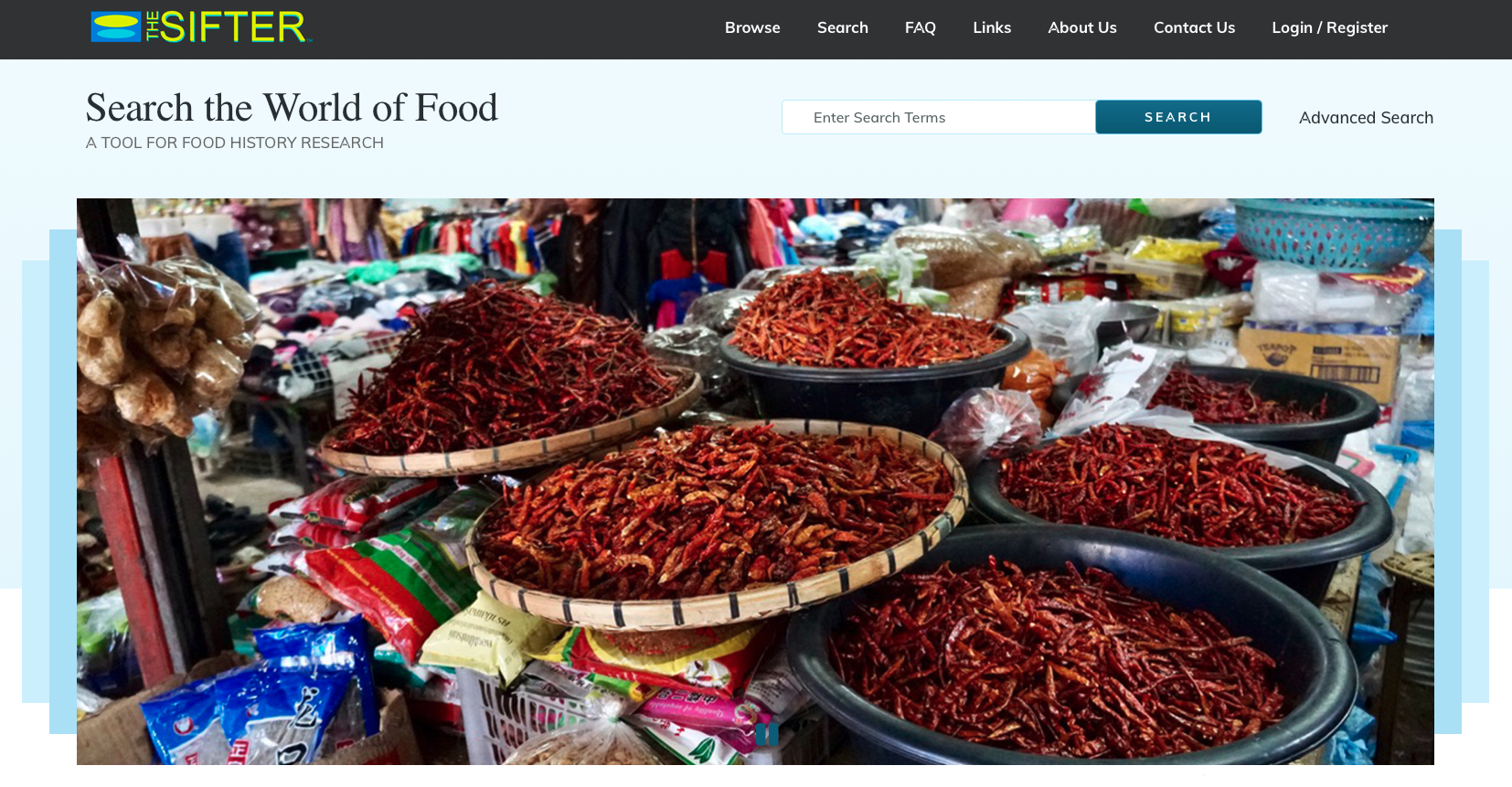
As you know if you’re a read­er of this site, there are vast, inter­ac­tive (and free!) schol­ar­ly data­bas­es online col­lect­ing just about every kind of arti­fact, from Bibles to bird calls, and yes, there are a sig­nif­i­cant num­ber of cook­books online, too. But prop­er search­able, his­tor­i­cal data­bas­es of cook­books seem to have appeared only late­ly. To my mind these might have been some of the first things to become avail­able. How impor­tant is eat­ing, after all, to vir­tu­al­ly every part of our lives? The fact is, how­ev­er, that schol­ars of food have had to invent the dis­ci­pline large­ly from scratch.

“West­ern schol­ars had a bias against study­ing sen­su­al expe­ri­ence,” writes Reina Gat­tuso at Atlas Obscu­ra, “the rel­ic of an Enlight­en­ment-era hier­ar­chy that con­sid­ered taste, touch, and fla­vor taboo top­ics for sober aca­d­e­m­ic inquiry. ‘It’s the baser sense,’ says Cathy Kauf­man, a pro­fes­sor of food stud­ies at the New School.” Kauf­man sits on the board of The Sifter, a new mas­sive, mul­ti-lin­gual online data­base of his­tor­i­cal recipe books. Anoth­er board mem­ber, sculp­tor Joe Wheaton, puts things more direct­ly: “Food his­to­ry has been a bit of an embar­rass­ment to a lot of aca­d­e­mics, because it involves women in the kitchen.”

Luck­i­ly for food schol­ars, the sit­u­a­tion has changed dra­mat­i­cal­ly. There are now over 2,000 his­tor­i­cal Mex­i­can cook­books of all kinds online at the Uni­ver­si­ty of Texas San Anto­nio, for exam­ple. (The UTSA is busy curat­ing and trans­lat­ing hun­dreds of those recipes into Eng­lish for what they call a “series of mini-cook­books.”)  And schol­ars of food his­to­ry may have to be pulled away by force from The Sifter, a vast, ever-expand­ing Wikipedia-like archive of food research.

The data­base col­lects “over 5,000 authors and 5,000 works with details about the authors and about the con­tents of the works,” the site explains. “The cen­tral doc­u­ments are cook­books and oth­er writ­ings relat­ed to get­ting, prepar­ing, and con­sum­ing food, and the activ­i­ties asso­ci­at­ed with them, as well as writ­ings about cul­tur­al and moral atti­tudes.” Like Wikipedia, users are invit­ed to sub­mit their own data, which can be edit­ed by oth­er users. Unlike the pub­lic ency­clo­pe­dia, which we know has seri­ous flaws, The Sifter is over­seen by experts, and inspired by none oth­er than the expert Julia Child her­self, or at least by her library.

Although the Sifter does not con­tain actu­al texts or recipes, it does col­lect the bib­li­o­graph­ic data of thou­sands of such books, a trea­sury for schol­ars, researchers, and his­to­ri­ans. The pri­ma­ry force behind the project, Bar­bara Wheaton, was a neigh­bor of Julia Childs’ in the ear­ly 1960s and used Childs’ library and Har­vard University’s Schlesinger Library Culi­nary Col­lec­tion (where she is now an hon­orary cura­tor) to become “one of the best-known schol­ars of culi­nary his­to­ry.” Her sto­ry illus­trates how a recent wealth of culi­nary schol­ar­ship did not just sud­den­ly appear but has been ger­mi­nat­ing for decades. The Sifter is the result of “Wheaton’s 50 years of labor.”

Wheaton launched the site in July with the help of a team of schol­ars and her chil­dren, Joe and Cather­ine. The Sifter con­tains “more than a thou­sand years of Euro­pean and U.S. cook­books, from the medieval Latin De Re Culi­nar­ia, pub­lished in 800, to The Romance of Can­dy, a 1938 trea­tise on British sweets.” It also col­lects bib­li­o­graph­ic data on cook­books, in their orig­i­nal lan­guages, from around the world. Wheaton hopes The Sifter will gen­er­ate new areas of research into the his­to­ry of what may be at once the most uni­ver­sal of all human activ­i­ties and the most cul­tur­al­ly, region­al­ly, and his­tor­i­cal­ly par­tic­u­lar. Per­haps a sil­ver lin­ing of so many years of schol­ar­ly neglect is that there is now so much work for food his­to­ri­ans to do. Get start­ed at The Sifter here.

via Atlas Obscu­ra

Relat­ed Con­tent:

An Archive of Hand­writ­ten Tra­di­tion­al Mex­i­can Cook­books Is Now Online

His­toric Mex­i­can Recipes Are Now Avail­able as Free Dig­i­tal Cook­books: Get Start­ed With Dessert

An Archive of 3,000 Vin­tage Cook­books Lets You Trav­el Back Through Culi­nary Time

Josh Jones is a writer and musi­cian based in Durham, NC. Fol­low him at @jdmagness

Miles Davis, Herbie Hancock & Other Jazz Musicians Sell Whisky & Spirits in Classic Japanese TV Commercials

I like to think that, when the occa­sion aris­es, I can speak pass­able Japan­ese. But pride goeth before the fall, and I fell flat on my first attempt to order a whisky in Tokyo. To my request for a Sun­to­ry neat the bar­tender respond­ed only with embar­rassed incom­pre­hen­sion. I repeat­ed myself, push­ing my Japan­i­fied pro­nun­ci­a­tion to par­o­d­ic lim­its: saaan-to-riii nee-to. At some point the man deci­phered my lin­guis­tic flail­ing. “Ah,” he said, bright­en­ing, “suuu-to-raaay-to?” To think that I could have han­dled this sit­u­a­tion with dig­ni­ty had I but seen the Sun­to­ry com­mer­cial above, in which Her­bie Han­cock sug­gests hav­ing a drink “straight.”

Would even the mad­dest men of the Amer­i­can adver­tis­ing indus­try coun­te­nance the idea of putting a jazz musi­cian in a com­mer­cial? Japan thinks dif­fer­ent­ly, how­ev­er, and in its eco­nom­ic-bub­ble era of the 1970s and 80s thought more dif­fer­ent­ly still.

At that time, Japan­ese tele­vi­sion spots — at least those com­mis­sioned by suf­fi­cient­ly deep-pock­et­ed com­pa­nies — began fea­tur­ing Amer­i­can celebri­ties like James Brown, Woody AllenNico­las Cage, Paul New­man, and Den­nis Hop­per. A 1979 Sun­to­ry ad that put Fran­cis Ford Cop­po­la along­side Aki­ra Kuro­sawa would, a quar­ter-cen­tu­ry on, inspire Cop­po­la’s daugh­ter Sofia to dra­ma­tize a sim­i­lar East-meets-West com­mer­cial sit­u­a­tion in her film Lost in Trans­la­tion.

Of all the things Amer­i­can embraced (and repur­posed) by Japan after its defeat in the Sec­ond World War, jazz music has main­tained the most intense­ly enthu­si­as­tic fan base. Japan­ese-made jazz has long been a for­mi­da­ble genre of its own, just as Japan­ese-made whisky has long held its own with the West­ern vari­eties. But when the mak­ers of Japan­ese whisky made an effort to sell their own prod­uct on tele­vi­sion to the new­ly wealthy Japan­ese peo­ple, they looked to Amer­i­can jazzmen to give it a shot of authen­tic­i­ty. Hav­ing recruit­ed Han­cock to pro­mote drink­ing their sin­gle-malt whisky at room tem­per­a­ture, Sun­to­ry got bassist Ron Carter as well as both Bran­ford and Ellis Marsalis to pro­mote drink­ing it hot.

Could the cul­tur­al asso­ci­a­tion between jazz and whisky extend to oth­er liquors? That was the gam­bit of a 1987 com­mer­cial fea­tur­ing Miles Davis, recent­ly inves­ti­gat­ed by Insid­e­Hook’s Aaron Gold­farb. Its prod­uct: shōchū, “a col­or­less, odor­less, yet often chal­leng­ing spir­it typ­i­cal­ly dis­tilled from rice (known as kome-jochu), bar­ley (mugi-jochu) or sweet pota­toes (imo-jochu).” New­ly launched with an appar­ent intent to pitch that staid bev­er­age to mon­eyed younger peo­ple, the brand VAN hired Davis to play a few notes on his trum­pet, then take a sip of its shōchū and pro­nounce it a “mir­a­cle.” He also describes him­self as “always on the van­guard,” hence, pre­sum­ably, the name VAN (though its being rem­i­nis­cent of VAN JACKET, the com­pa­ny that had ear­li­er brought Ivy League style to the same tar­get demo­graph­ic, could­n’t have been unwel­come).

Though Davis’ brand of cool did its part for the suc­cess of Hon­da scoot­ers and TDK cas­sette tapes, it proved not to be enough for VAN shōchū. The brand “was a big flop and had a very short life,” Gold­farb quotes an indus­try expert as say­ing, “prob­a­bly because shōchū is so quin­tes­sen­tial­ly Japan­ese, and a for­eign-style shōchū just didn’t make sense to most.” Per­haps the com­mer­cial itself also lacked the plea­sur­able sim­plic­i­ty of Sun­to­ry’s many jazz-ori­ent­ed spots, none of which turned out sim­pler or more plea­sur­able than the one with Sam­my Davis Jr. per­form­ing a cap­pel­la just above. In the process of pour­ing him­self a drink Davis plays the part of an entire jazz com­bo, using only his mouth and the objects at hand, includ­ing the ice in his glass. The con­cept would­n’t have worked quite so well had he tak­en his Sun­to­ry neat — or rather, straight.

Relat­ed Con­tent:

A 30-Minute Intro­duc­tion to Japan­ese Jazz from the 1970s: Like Japan­ese Whisky, It’s Under­rat­ed, But Very High Qual­i­ty

Watch Aki­ra Kuro­sawa & Fran­cis Ford Cop­po­la in Japan­ese Whisky Ads from 1979: The Inspi­ra­tion for Lost in Trans­la­tion

The Best Com­mer­cial Ever? James Brown Sells Miso Soup (1992)

Nico­las Cage, Paul New­man & Den­nis Hop­per Bring Their Amer­i­can Style to Japan­ese Com­mer­cials

Woody Allen Lives the “Deli­cious Life” in Ear­ly-80s Japan­ese Com­mer­cials

Glo­ri­ous Ear­ly 20th-Cen­tu­ry Japan­ese Ads for Beer, Smokes & Sake (1902–1954)

Based in Seoul, Col­in Mar­shall writes and broad­casts on cities, lan­guage, and cul­ture. His projects include the book The State­less City: a Walk through 21st-Cen­tu­ry Los Ange­les and the video series The City in Cin­e­ma. Fol­low him on Twit­ter at @colinmarshall, on Face­book, or on Insta­gram.

The Recipes of Famous Artists: Dinners & Cocktails From Tolstoy, Miles Davis, Marilyn Monroe, David Lynch & Many More

Celebri­ties (those who are not pro­fes­sion­al celebri­ty chefs, that is) release cook­books at an alarm­ing rate. Do we imag­ine most of their recipes were actu­al­ly curat­ed by the per­son on the cov­er? Do we sup­pose that per­son has spent the count­less hours in the kitchen required to become an author­i­ty on what the rest of us should eat? As in all things, it depends.

Stan­ley Tuc­ci seems to have more than proven his met­tle, releas­ing two well-loved cook­books and earn­ing praise from Mario Batali. But I’d also take a chance on Snoop Dogg’s From Crook to Cook, which includes 50 of his own recipes, such as “baked mac and cheese and fried Bologna sand­wich­es with chips.” How could you go wrong?

Many a celebri­ty cook­book aims for the fine-din­ing approach famous peo­ple are used to get­ting from per­son­al chefs. But Snoop joins a long tra­di­tion of artists whose sig­na­ture dish­es are every­day com­fort foods and hol­i­day favorites. What­ev­er else he and Leo Tol­stoy might find to talk about, for exam­ple (use your imag­i­na­tion), they would sure­ly swap mac and cheese recipes.

Tolstoy’s recipe for mac and cheese is made on the stove­top, not baked, but it sounds deli­cious all the same, with its lay­ers of Parme­san cheese. Far more com­plex meals, fit for Russ­ian aris­to­crats, appear in The Cook­book, a col­lec­tion of Tol­stoy fam­i­ly recipes, though we can hard­ly imag­ine the Tol­stoy fam­i­ly did much of the cook­ing them­selves.

Not so with Miles Davis, who also uses Parme­san in a dish not usu­al­ly known to fea­ture the Ital­ian cheese. His chili—or rather “Miles’s South Side Chica­go Chili Mack”—sounds incred­i­bly rich in a recipe pub­lished in 2007. “I could cook most of the French dish­es,” Miles wrote in his auto­bi­og­ra­phy, “and all the black Amer­i­can dish­es.” His skills in the kitchen were well attest­ed, though his per­son­al recipe book has been lost.

Oth­er celebri­ties like Mar­i­lyn Mon­roe also go with com­fort­ing old favorites. What appears in her recipe for turkey and stuff­ing (besides wal­nuts and no gar­lic… feel free to make sub­sti­tu­tions…)? That’s right, Parme­san cheese. If there’s a pat­tern in this rep­e­ti­tion, maybe it’s that the rest of us home cooks should do more with Parme­san cheese.

If you’re won­der­ing what kind of cheese Ernest Hem­ing­way puts on his favorite burg­er, the answer is none. Anoth­er celebri­ty cook who sure­ly did a good bit of his own cook­ing, Hem­ing­way asks a lot of those will­ing to take a chance on his burg­er recipe, which com­min­gles India rel­ish, capers, Beau Monde sea­son­ing, Mei Yen Pow­der with gar­lic, green onions, egg, and red or white wine.

Despite such unusu­al top­pings, a burg­er is still a burger—for mil­lions of peo­ple the most com­fort­ing food they can imag­ine. Crack­ing open Sal­vador Dali’s 1973 cook­book reveals few dish­es that are famil­iar, or actu­al­ly edi­ble or even legal. Dali formed ambi­tions to become a chef, he claimed, at the age of 6. Maybe that’s also when he came up with “Tof­fee with Pine Cones,” “Veal Cut­lets Stuffed with Snails,” and “Thou­sand Year Old Eggs.”

None of these recipes have in mind the needs of the carb-con­scious, or of veg­e­tar­i­ans and veg­ans. But some cre­ative reimag­in­ing could make them suit­able for sev­er­al kinds of mod­ern diets. (In Hemingway’s case, a sim­ple swap for any burg­er alter­na­tive might do the trick.) When it comes to cock­tail recipes, alter­na­tives are trick­i­er.

If you don’t drink alco­hol or eat meat, you’ll have lit­tle to gain from Leonard Cohen’s recipe for The Red Nee­dle, which involves two ounces of tequi­la and should be served with Mon­tre­al smoked meat sand­wich­es. Like­wise, I doubt there’s any veg­an, low-sug­ar, non-alco­holic way to make Eudo­ra Welty’s “Mother’s Eggnog” (which she also attrib­uted to Charles Dick­ens).

Maybe celebri­ty cook­books these days don’t con­tribute so much to the epi­dem­ic of heart dis­ease and hyper­ten­sion. But there’s some­thing to be said for the authen­tic­i­ty of recipes from famous peo­ple of the past. They reflect dish­es and drinks made with deep affection—for but­ter, cheese, carbs, salt, fat, and booze.

If it’s health­i­er fare you’re look­ing for, why not take a chance on Allen Ginsberg’s cold sum­mer borscht? Or David Lynch’s easy quinoa recipe? Aleis­ter Crowley’s recipe for a rice meant to be eat­en with cur­ry sounds delight­ful, though one can’t help but won­der at anoth­er lost recipe the infa­mous occultist once made for his fel­low moun­taineers on an expedition—a rice so spicy, he claimed, it made them “dash out of the tent after one mouth­ful and wal­low in the snow, snap­ping at it like mad dogs.”

See many more recipes from famous artists at the links below.

Relat­ed Con­tent:

Dessert Recipes of Icon­ic Thinkers: Emi­ly Dickinson’s Coconut Cake, George Orwell’s Christ­mas Pud­ding, Alice B. Tok­las’ Hashish Fudge & More

The Recipes of Icon­ic Authors: Jane Austen, Sylvia Plath, Roald Dahl, the Mar­quis de Sade & More

Pablo Picasso’s Two Favorite Recipes: Eel Stew & Omelette Tor­tilla Niçoise

Ernest Hemingway’s Sum­mer Camp­ing Recipes

Josh Jones is a writer and musi­cian based in Durham, NC. Fol­low him at @jdmagness

Dessert Recipes of Iconic Thinkers: Emily Dickinson’s Coconut Cake, George Orwell’s Christmas Pudding, Alice B. Toklas’ Hashish Fudge & More

Image via Wiki­me­dia Com­mons

Of all the desserts to attain cul­tur­al rel­e­vance over the past cen­tu­ry, can any hope to touch Alice B. Tok­las’ famous hashish fudge? Call­ing for such ingre­di­ents as black pep­per­corns, shelled almonds, dried figs, and most vital of all Cannabis sati­va, the recipe first appeared in 1954’s The Alice B. Tok­las Cook Book. (Tok­las would read the recipe aloud on the radio in the ear­ly 1960s, a time when the fudge’s key ingre­di­ent had become an object of much more intense pub­lic inter­est.) More than a how-to on Tok­las’ favorite dish­es, the book is also a kind of mem­oir, includ­ing rec­ol­lec­tions of her life with Gertrude Stein — her­self the author of the osten­si­ble Auto­bi­og­ra­phy of Alice B. Tok­las.

This puts us in the realm of seri­ous lit­er­a­ture where sweets, you might assume, are scarce­ly to be found. But bak­ing con­sti­tut­ed a part of the cre­ative process of no less a lit­er­ary mind than Emi­ly Dick­in­son, whose hand­writ­ten recipe for coconut cake appears above.

That same sheet of a paper’s reverse side, which you can see in our ear­li­er post about it, bears the first lines of her poem “The Things that nev­er can come back, are sev­er­al.” Dick­in­son also, as we’ve pre­vi­ous­ly post­ed here on Open Cul­ture, had her very own recipes for gin­ger­bread, donuts, and some­thing requir­ing five pounds of raisins called “black cake.”

It may seem obvi­ous that women like Tok­las and Dick­in­son, born and raised in the 19th cen­tu­ry, would have been expect­ed to learn this sort of thing. But a fair few of the lit­er­ary men of gen­er­a­tions past knew some­thing of their way around the kitchen as well. George Orwell, for instance, wrote an essay on “British cook­ery,” ear­ly in which he states that “in gen­er­al, British peo­ple pre­fer sweet things to spicy things.” While describ­ing “sweet dish­es and con­fec­tionery – cakes, pud­dings, jams, bis­cuits and sweet sauces” as the “glo­ry of British cook­ery,” he admits that “the nation­al addic­tion to sug­ar has not done the British palate any good.” And so he includes the recipe for a Christ­mas pud­ding which, sub­tle by that stan­dard, calls for only half a pound of the stuff.

Born a gen­er­a­tion after Orwell, Roald Dahl made no secret of his own sug­ar-addict­ed British palate. In his book Char­lie and the Choco­late Fac­to­ry Dahl had “daz­zled young read­ers with visions of Cav­i­ty-Fill­ing Caramels, Ever­last­ing Gob­stop­pers, and snozzber­ry-fla­vored wall­pa­per,” writes Open Cul­ture’s own Ayun Hal­l­i­day. But his own can­dy of choice was “the more pedes­tri­an Kit-Kat bar. In addi­tion to savor­ing one dai­ly (a lux­u­ry lit­tle Char­lie Buck­et could but dream of, pri­or to win­ning that most gold­en of tick­ets) he invent­ed a frozen con­fec­tion called ‘Kit-Kat Pud­ding,’ ” whose sim­ple recipe is as fol­lows: “Stack as many Kit-Kats as you like into a tow­er, using whipped cream for mor­tar, then shove the entire thing into the freez­er, and leave it there until sol­id.”

If you’re look­ing for a slight­ly more chal­leng­ing dessert that still comes with a cul­tur­al fig­ure’s impri­matur, you might give Nor­mal Rock­well’s favorite oat­meal cook­ies a try. Going deep­er into Amer­i­can his­to­ry, we’ve also got Thomas Jef­fer­son­’s recipe for ice cream, the taste for which he picked up while liv­ing in France in the 1780s. That same coun­try’s cui­sine also inspired Ernest Hem­ing­way’s fruit pie, meant for sum­mer-camp­ing with one’s pals: “If your pals are French­men,” Hem­ing­way adds, “they will kiss you.” Alas, if any­one has deter­mined the exact recipe for the most famous dessert in all of French lit­er­a­ture, Mar­cel Proust’s mem­o­ry-trig­ger­ing madeleines, they haven’t released it to the hun­gry pub­lic.

Relat­ed Con­tent:

The Recipes of Icon­ic Authors: Jane Austen, Sylvia Plath, Roald Dahl, the Mar­quis de Sade & More

Ernest Hemingway’s Sum­mer Camp­ing Recipes

82 Vin­tage Cook­books, Free to Down­load, Offer a Fas­ci­nat­ing Illus­trat­ed Look at Culi­nary and Cul­tur­al His­to­ry

His­toric Mex­i­can Recipes Are Now Avail­able as Free Dig­i­tal Cook­books: Get Start­ed With Dessert

Wagashi: Peruse a Dig­i­tized, Cen­turies-Old Cat­a­logue of Tra­di­tion­al Japan­ese Can­dies

Ani­mat­ed Noir: Key Lime Pie

Based in Seoul, Col­in Mar­shall writes and broad­casts on cities, lan­guage, and cul­ture. His projects include the book The State­less City: a Walk through 21st-Cen­tu­ry Los Ange­les and the video series The City in Cin­e­ma. Fol­low him on Twit­ter at @colinmarshall, on Face­book, or on Insta­gram.

The Wine Windows of Renaissance Florence Dispense Wine Safely Again During COVID-19

Every­thing old is new again and Tuscany’s buchette del vino—wine windows—are def­i­nite­ly rolling with the times.

As Lisa Har­vey ear­li­er report­ed in Atlas Obscu­rabuchette del vino became a thing in 1559, short­ly after Cosi­mo I de’ Medici decreed that Flo­rence-dwelling vine­yard own­ers could bypass tav­erns and wine mer­chants to sell their prod­uct direct­ly to the pub­lic. Wealthy wine fam­i­lies eager to pay less in tax­es quick­ly fig­ured out a workaround that would allow them to take advan­tage of the edict with­out requir­ing them to actu­al­ly open their palace doors to the rab­ble:

Any­one on the street could use the wood­en or met­al knock­er … and rap on a wine win­dow dur­ing its open hours. A well-respect­ed, well-paid ser­vant, called a can­ti­niere and trained in prop­er­ly pre­serv­ing wine, stood on the oth­er side. The can­ti­niere would open the lit­tle door, take the customer’s emp­ty straw-bot­tomed flask and their pay­ment, refill the bot­tle down in the can­ti­na (wine cel­lar), and hand it back out to the cus­tomer on the street.

Sev­en­ty years fur­ther on, these lit­er­al holes-in-the-walls served as a means of con­tact­less deliv­ery for post-Renais­sance Ital­ians in need of a drink as the sec­ond plague pan­dem­ic raged.

Schol­ar Francesco Rondinel­li (1589–1665) detailed some of the extra san­i­ta­tion mea­sures put in place in the ear­ly 1630s:

A met­al pay­ment col­lec­tion scoop replaced hand-to-hand exchange

Imme­di­ate vine­gar dis­in­fec­tion of all col­lect­ed coins

No exchange of emp­ty flasks brought from home

Cus­tomers who insist­ed on bring­ing their own reusable bot­tles could do self-serve refills via a met­al tube, to pro­tect the essen­tial work­er on the oth­er side of the win­dow.

Sound famil­iar?

After cen­turies of use, the win­dows died out, falling vic­tim to flood, WWII bomb­ings, fam­i­ly relo­ca­tions, and archi­tec­tur­al ren­o­va­tion.

The nov­el coro­n­avirus pan­dem­ic has def­i­nite­ly played a major role in putting wine win­dows back on the public’s radar, but Babae, a casu­al year-old restau­rant gets cred­it for being the first to reac­ti­vate a dis­used buchet­ta del vino for its intend­ed pur­pose, sell­ing glass­es of red for a sin­gle hour each day start­ing in August 2019.

Now sev­er­al oth­er authen­tic buchette have returned to ser­vice, with menus expand­ed to accom­mo­date serv­ings of ice cream and cof­fee.

Giv­en this suc­cess, per­haps they’ll take a cue from Japan’s 4.6 mil­lion vend­ing machines, and begin dis­pens­ing an even wider array of items.

They may even take a page from the past, and send some of the mon­ey they take in back out, along with food and yes—wine—to sus­tain needy mem­bers of the com­mu­ni­ty.

The Buchette del Vino Asso­ci­azi Cul­tur­ale cur­rent­ly lists 146 active and inac­tive wine win­dows in Flo­rence and the sur­round­ing regions, accom­pa­ny­ing their find­ings with pho­tos and arti­cles of his­tor­i­cal rel­e­vance.

Via Atlas Obscu­ra

Relat­ed Con­tent: 

Quar­an­tined Ital­ians Send a Mes­sage to Them­selves 10 Days Ago: What They Wish They Knew Then

Ital­ians’ Night­ly Sin­ga­longs Prove That Music Soothes the Sav­age Beast of Coro­n­avirus Quar­an­tine & Self-Iso­la­tion

A Free Course from MIT Teach­es You How to Speak Ital­ian & Cook Ital­ian Food All at Once

Ayun Hal­l­i­day is an author, illus­tra­tor, the­ater mak­er and Chief Pri­ma­tol­o­gist of the East Vil­lage Inky zine.  Fol­low her @AyunHalliday.

« Go BackMore in this category... »
Quantcast