In the era of the CATS trailer and #catsofinstagram, it’s easy to forget that scientific research is what originally convinced our feline friends to allow their images to be captured and disseminated.
An anonymous white French pussy took one for the team in 1894, when scientist/inventor Étienne-Jules Marey dropped it from an unspecified height in the Bois de Boulogne, filming its descent at 12 frames per second.
Marey’s preoccupation with the mechanics of organic locomotion extended to horses and humans. It prompted him to invent photographic techniques that prefigured cinematography, and, more darkly, to subject other, less-catlike creatures to deadfalls from similar heights.
(Children and animal rights activists, consider this your trigger warning.)
The white cat survived its ordeal by arching its back mid-air, effectively splitting its body in two to harness the inertia of its body weight, much like a figure skater controlling the velocity of her spin by the position of her arms.
Why waste a single one of your nine lives? Physics is your friend, especially when falling from a great height.
This short film was an award winner at the 2015 Drone Film festival held in Cabourg, France. Enjoy the ride.
If you would like to support the mission of Open Culture, consider making a donation to our site. It’s hard to rely 100% on ads, and your contributions will help us continue providing the best free cultural and educational materials to learners everywhere. You can contribute through PayPal, Patreon, and Venmo (@openculture). Thanks!
If a city has been around long enough, it will more than likely have suffered some sort of catastrophically destructive event: the Great Fire of London in 1666, the Great Chicago Fire of 1871, the Great Kantō earthquake that devastated Tokyo in 1923. Most of their names, come to think of it, include the word “great,” though not every source refers to San Francisco’s 1906 earthquake that way. Not, of course, to minimize its destructiveness: with a force that would measure 7.8 on the Richter scale, the earthquake ultimately destroyed 80 percent of the city — about 25,000 buildings, with lost property equivalent to $11.2 billion in today’s dollars — and killed 3,000 people.
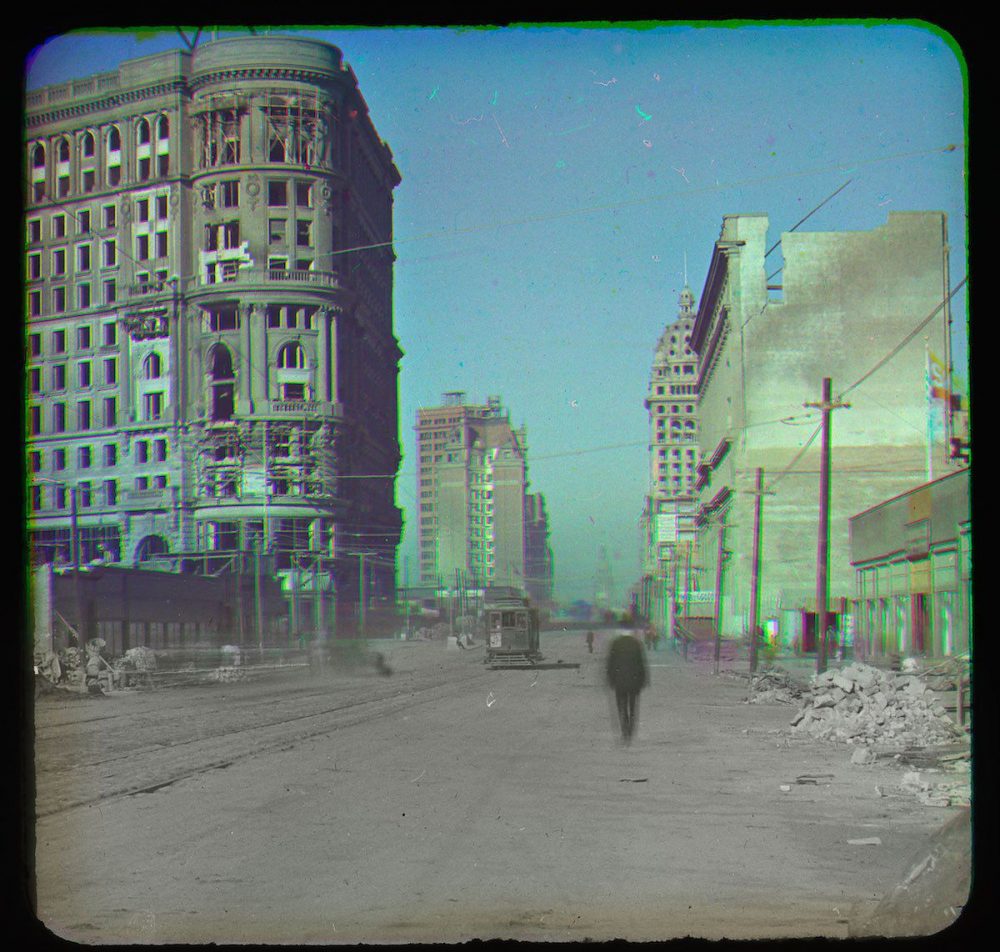
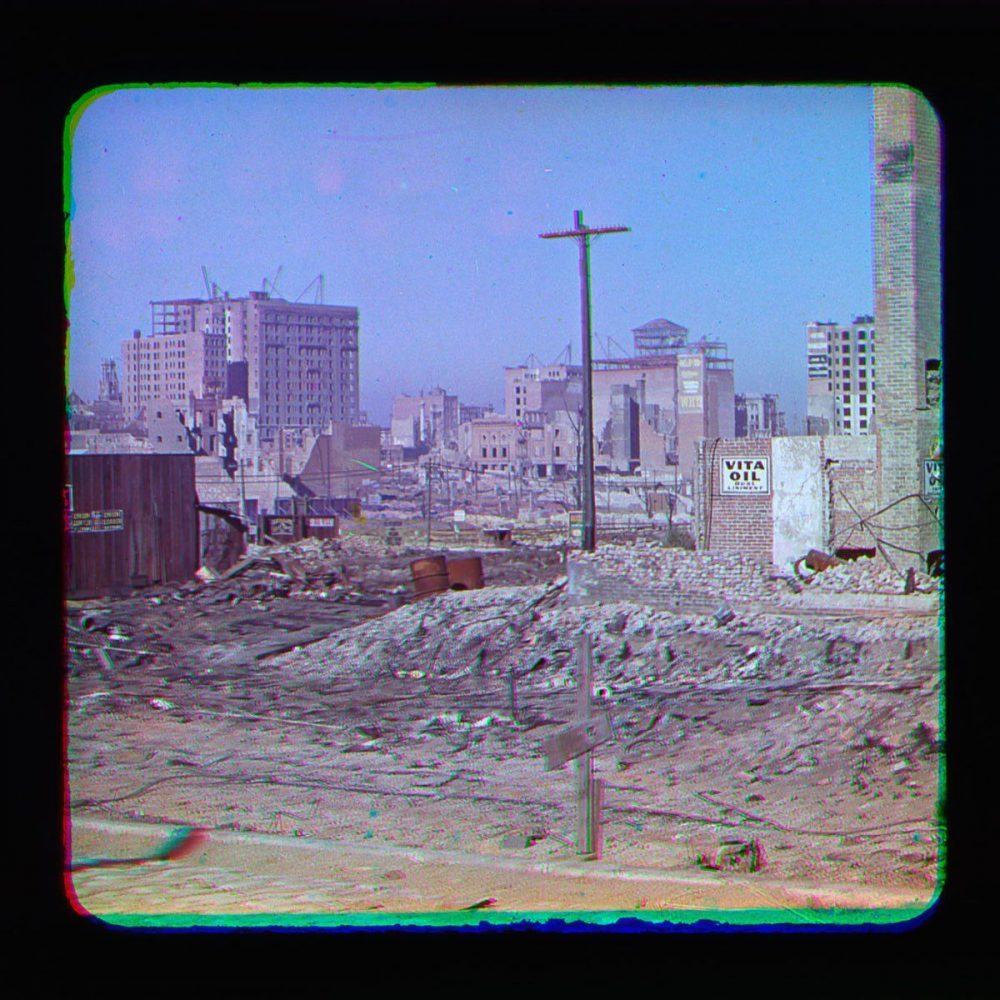
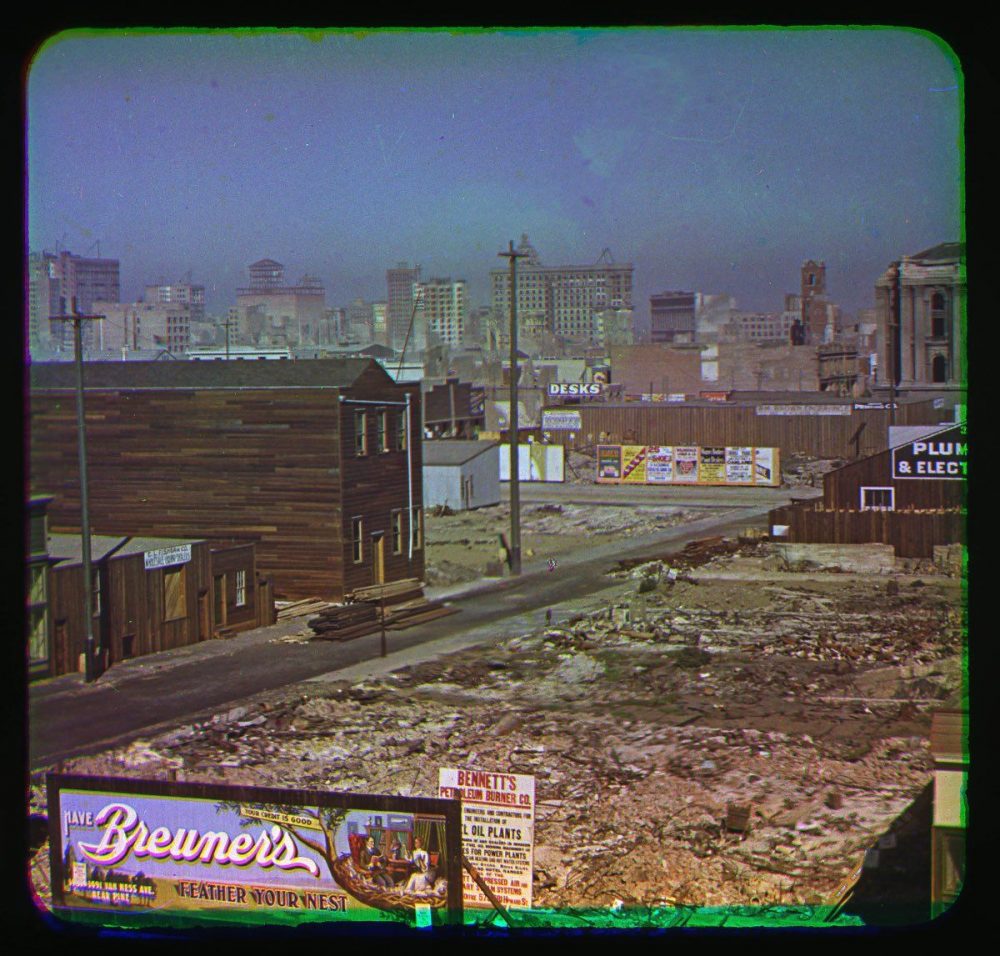
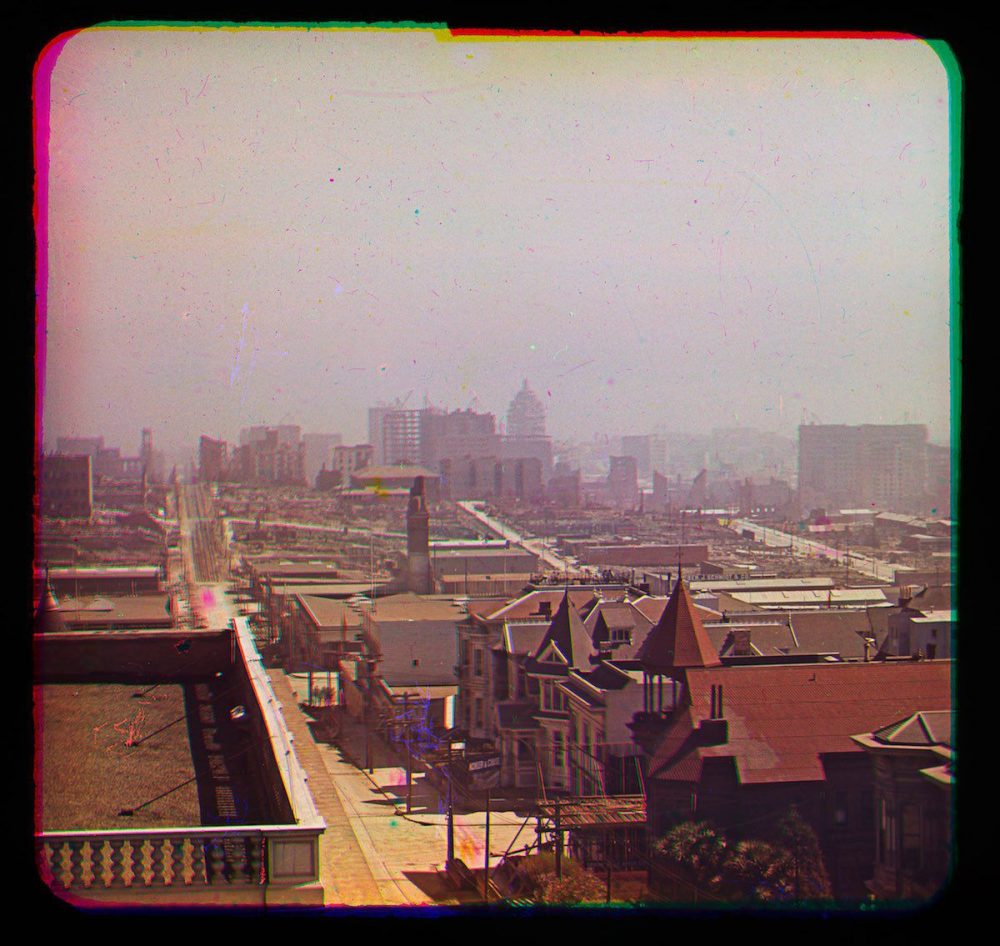
Six months after the disaster, an inventor named Frederick Eugene Ives arrived to document the still-fresh aftermath of the disaster. He had in hand something called a brr, a 3D color camera he designed himself. Its “system of mirrors and filters behind each lens split and filtered the light to create one pair of slides for each primary color of light (red, green, blue).
The slides were bound together in a special order with cloth tapes into a package known as a Krőmgram,” viewable only with a Krőmscőp, “the apparatus used to rebuild the image allowing the viewer to see in three-dimensional color.”
Anthony Brooks discovered Ives’ Krőmgrams of San Francisco in ruins only in 2009, reports the Telegraph. Most of its pictures were taken from a hotel rooftop, and “although hand-colored photographs of the quake’s destruction have surfaced before, Ives’ work is probably the only true color documentary evidence.” Such images would have astonished any contemporary viewer, not just for the devastation they showed but the lifelike color and depth with which they rendered it. And yet the Photochromoscope system never caught on, Brooks writes: “The Krőmscőp viewers were expensive ($50 in 1907 or about $1000 today adjusting for inflation), required strong sunlight or arc light for viewing, and were technically complex to use, despite Ives’ assertions to the contrary.”
But even though few probably saw these pictures in the early 20th century, Ives was hardly forgotten in the realm of photography. The recipient of several major scientific and engineering awards in his lifetime, he left behind such more widely adopted inventions as one of the several varieties of “halftone process” that allowed photographs to be reproduced in newspapers — just as newspapers around the country did after the earthquake struck, combining them with headlines like “WATER FRONT BURNS ALMOST TO THE FERRY,” “3,000 PEOPLE ARE HOMELESS,” and “SAN FRANCISCO ANNIHILATED.” But H.G. Wells, who was on a visit to the United States at the time, sensed more of a sanguinity in the Americans around him: “There is no doubt anywhere that San Francisco can be rebuilt, larger, better, and soon.”
Based in Seoul, Colin Marshall writes and broadcasts on cities, language, and culture. His projects include the book The Stateless City: a Walk through 21st-Century Los Angeles and the video series The City in Cinema. Follow him on Twitter at @colinmarshall, on Facebook, or on Instagram.
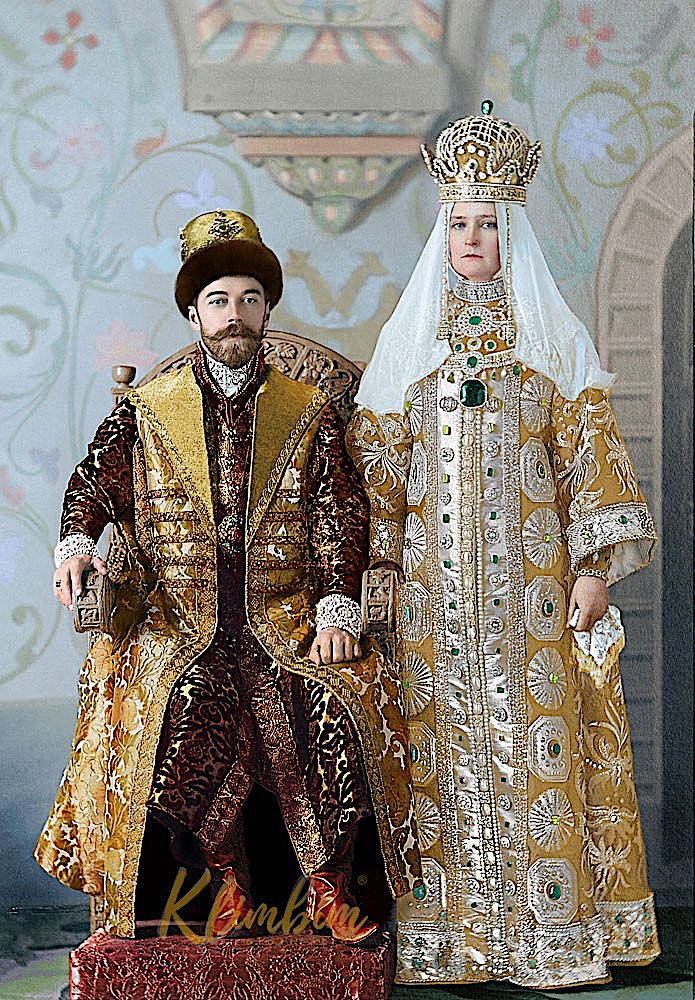
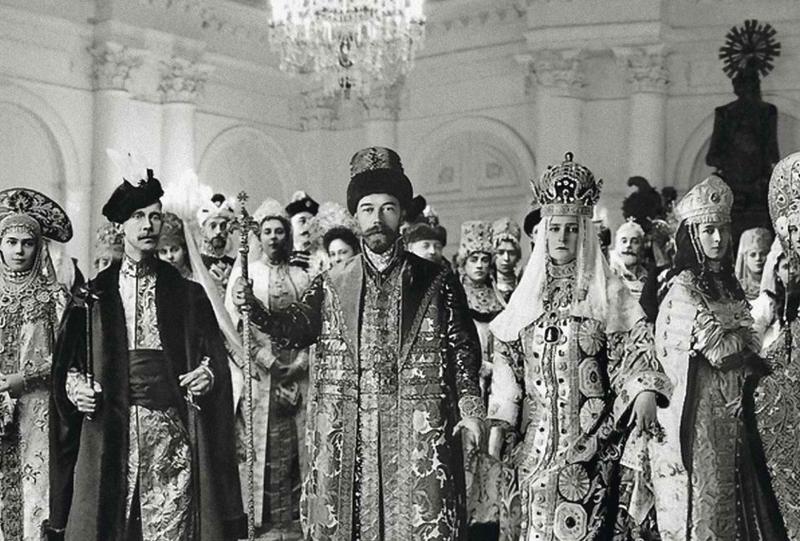
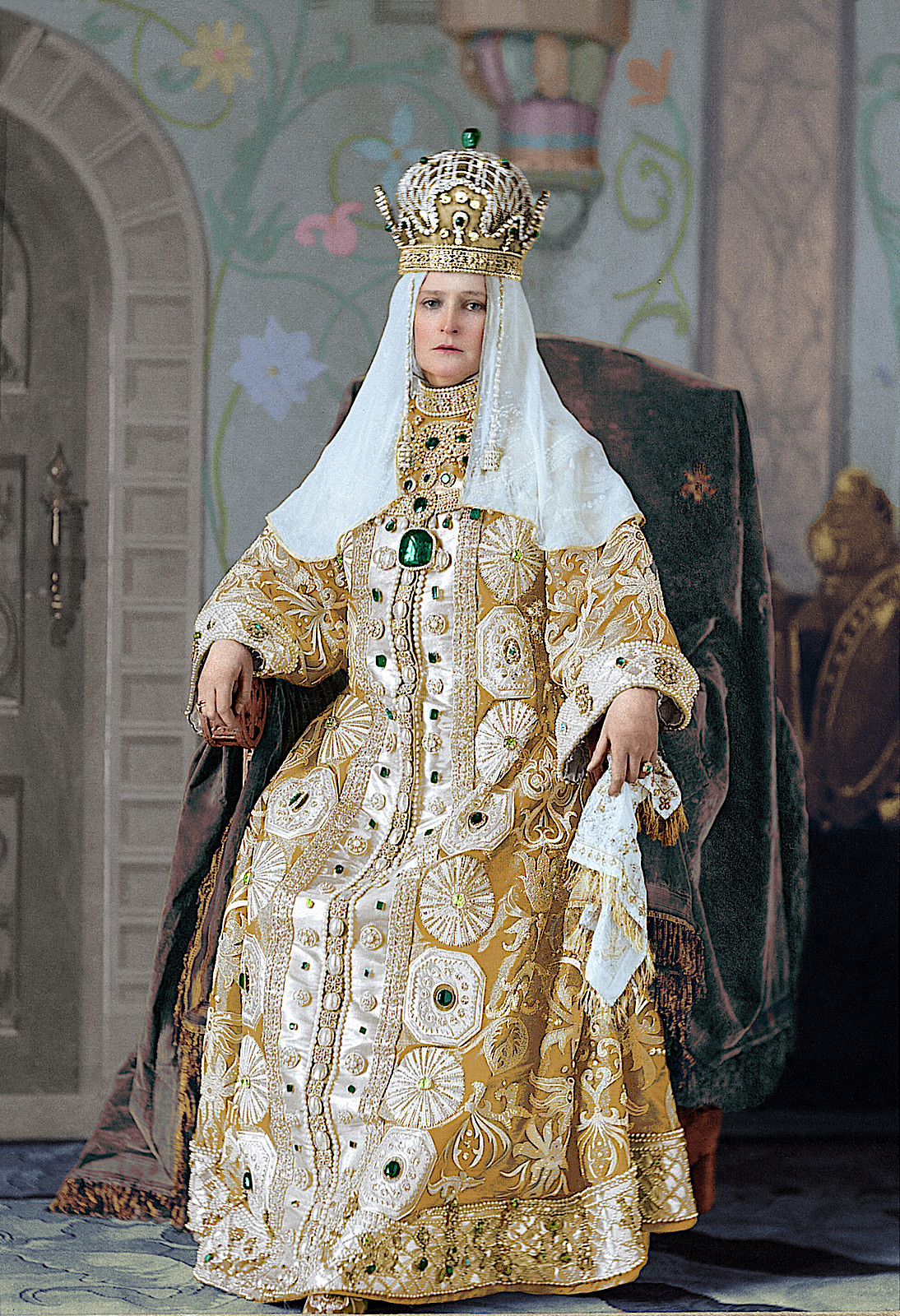
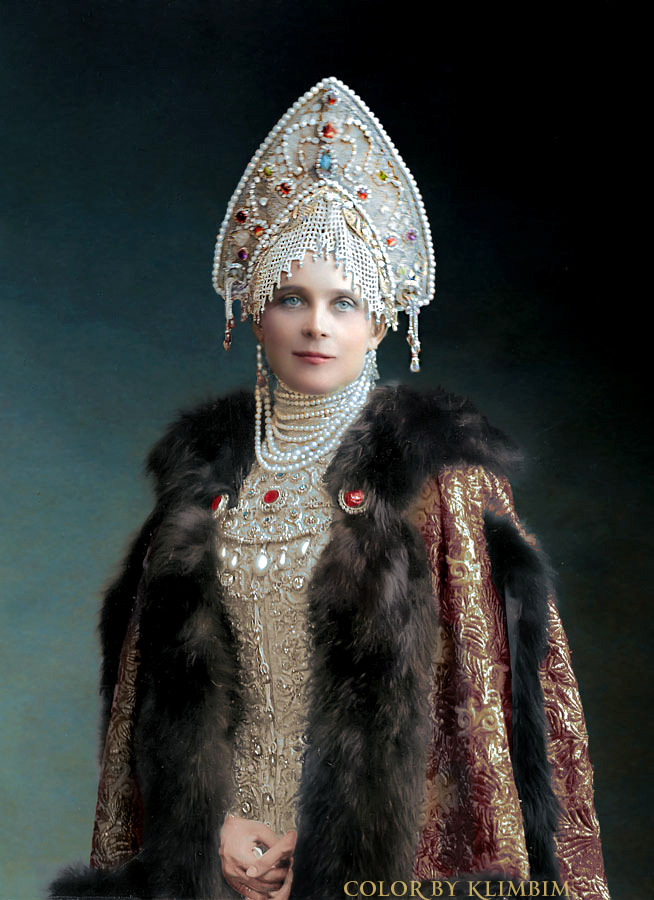
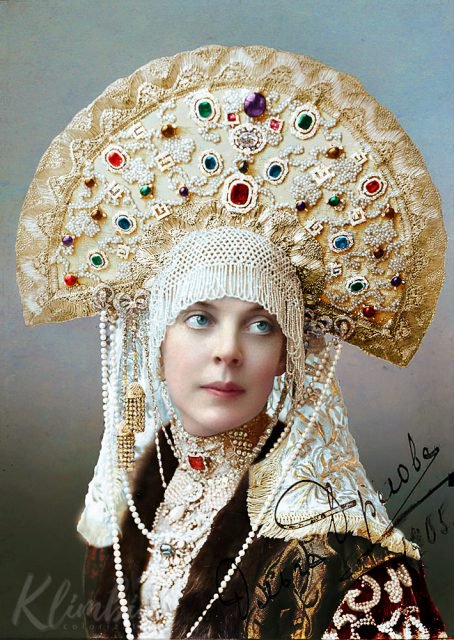
In 1903, the Romanovs, Russia’s last and longest-reigning royal family, held a lavish costume ball. It was to be their final blowout, and perhaps also the “last great royal ball” in Europe, writes the Vintage News. The party took place at the Winter Palace in St. Petersburg, 14 years before Czar Nicholas II’s abdication, on the 290th anniversary of Romanov rule. The Czar invited 390 guests and the ball ranged over two days of festivities, with elaborate 17th-century boyar costumes, including “38 original royal items of the 17th century from the armory in Moscow.”
“The first day featured feasting and dancing,” notes Russia Beyond, “and a masked ball was held on the second. Everything was captured in a photo album that continues to inspire artists to this day.” The entire Romanov family gathered for a photograph on the staircase of the Hermitage theater, the last time they would all be photographed together.
It is like seeing two different dead worlds superimposed on each other—the Romanovs’ playacting their beginning while standing on the threshold of their last days.
With the irony of hindsight, we will always look upon these poised aristocrats as doomed to violent death and exile. In a morbid turn of mind, I can’t help thinking of the baroque gothic of “The Masque of the Red Death,” Edgar Allan Poe’s story about a doomed aristocracy who seal themselves inside a costume ball while a contagion ravages the world outside: “The external world could take care of itself,” Poe’s narrator says. “In the meantime it was folly to grieve or to think. The prince had provided all the appliances of pleasure…. It was a voluptuous scene, that masquerade.”
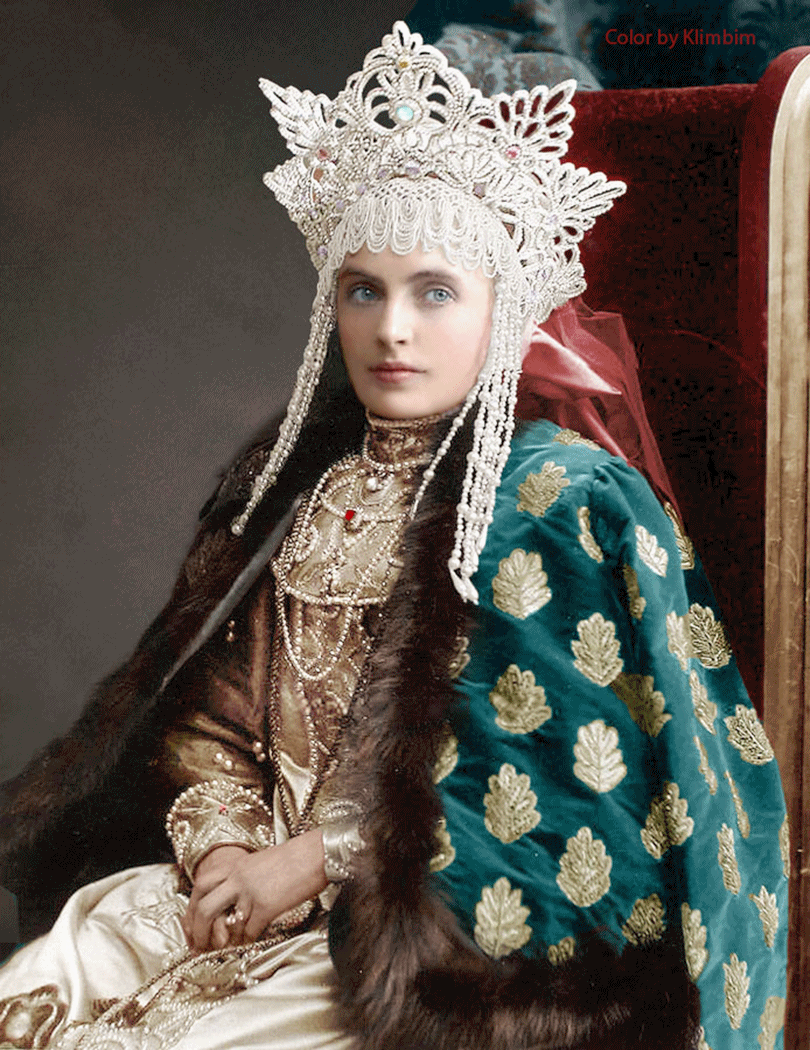
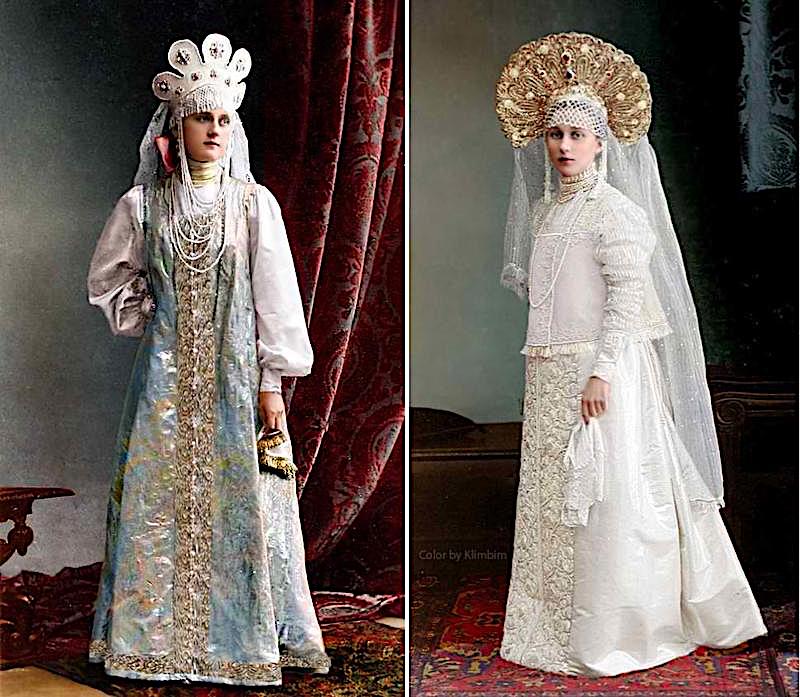
Maybe in our imagination, the Romanovs and their friends seem haunted by the weight of suffering outside their palace walls, in both their country and around Europe as the old order fell apart. Or perhaps they just look haunted the way everyone does in photographs from over 100 years ago. Does the colorizing of these photos by Russian artist Klimbim—who has done similar work with images of WW2 soldiers andportraits of Russian poets and writers—make them less ghostly?
It puts flesh on the pale monochromatic faces, gives the lavish costuming and furniture texture and dimension. Some of the images almost look like art nouveau illustrations (and resemble those of some of the finest illustrators of Poe’s work) and the work of contemporary painters like Gustav Klimt. Maybe it’s just me, but it seems that unease lingers in the eyes of some subjects—Empress Alexandra Fedorovna among them—a certain vague and troubled apprehension.
In their book A Lifelong Passion, authors Andrei Maylunas and Sergei Mironenko quote the Grand Duke Alexander Mikhailovitch who remembered the event as “the last spectacular ball in the history of the empire.” The Grand Duke also recalled that “a new and hostile Russia glared though the large windows of the palace… while we danced, the workers were striking and the clouds in the Far East were hanging dangerously low.” As Russia Beyond notes, soon after this celebration, “The global economic crisis marked the beginning of the end for the Russian Empire, and the court ceased to hold balls.”
In 1904, the Russo-Japanese War began, a war Russia was to lose the following year. Then the aristocracy’s power was further weakened by the Revolution of 1905, which Lenin would later call the “Great Dress Rehearsal” for the Revolutionary takeover of 1917. While the aristocracy costumed itself in the trappings of past glory, armies amassed to force their reckoning with the 20th century.
Who knows what thoughts went through the mind of the tzar, tzarina, and their heirs during those two days, and the minds of the almost 400 noblemen and women dressed in costumes specially designed by artist Sergey Solomko, who drew from the work of several historians to make accurate 17th-century recreations, while Peter Carl Fabergé chose the jewelry, including, writes the Vintage News, the tzarina’s “pearls topped by a diamond and emerald-studded crown” and an “enormous emerald” on her brocaded dress?
If the Romanovs had any inkling their almost 300-year dynasty was coming to its end and would take all of the Russian aristocracy with it, they were, at least, determined to go out with the highest style; the family with “almost certainly… the most absolutist powers” would spare no expense to live in their past, no matter what the future held for them. See the original, black and white photos, including that last family portrait, at History Daily and Russia Beyond, and see several more colorized images at the Vintage News.
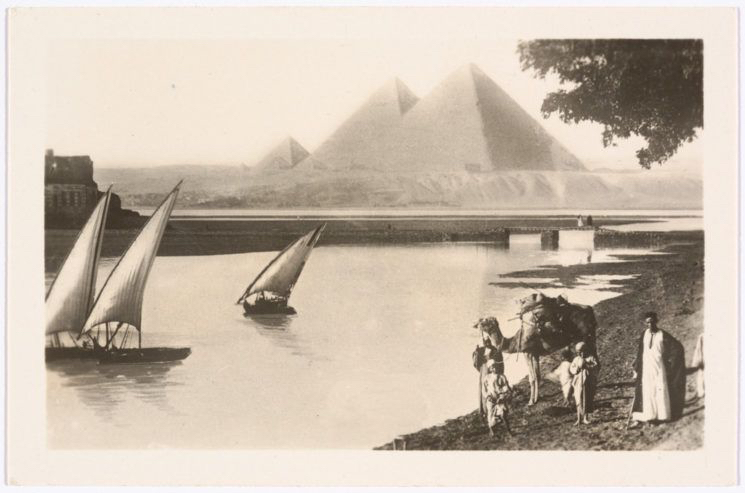
The history of photography, as most of us know it, has expanded by several thousand images and several more countries, thanks to the launch last month of the Arab Image Foundation’s online archive of photography “from the Middle East, North Africa, and the Arab diaspora dating from the mid-nineteenth century,” as the Getty’s photography blog The Iris reports.
The Beirut-based non-profit AIF has since digitized 22,000 images from its physical collection of 500,000+ photographs, collected since 1997, notes the Foundation, in “research missions and projects in Lebanon, Syria, Palestine, Jordan, Egypt, Morocco, Iraq, Iran, Mexico, Argentina and Senegal.” AIF hopes to eventually upload 55,000 scanned images, but funding issues have made the project a challenge.
Nonetheless, the trove of photos and negatives already made available not only significantly expands our view of photography’s reach and scope, but also our view of the Arab world—recording lost traditions, modernisms, and an array of cultural practices and attitudes that may surprise us, and that have since been suppressed in many of these same societies.
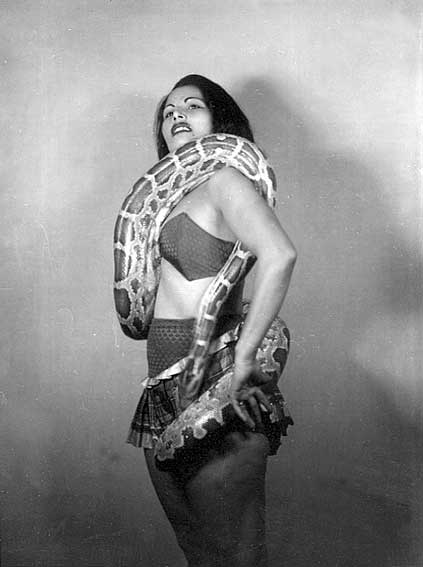
“From same-sex kisses and men in drag,” writes India Stoughton for the BBC, “to nude portraits and children posing with assault rifles, the Arab Image Foundation is replete with startling and sensationalist photographs.” There are many photographs of flamboyant stage performers and celebrities. And there are many more conventional collections, such as the family portraits of Palestinians living in Jerusalem, Nablus, Ramallah, and Jaffa before 1948.
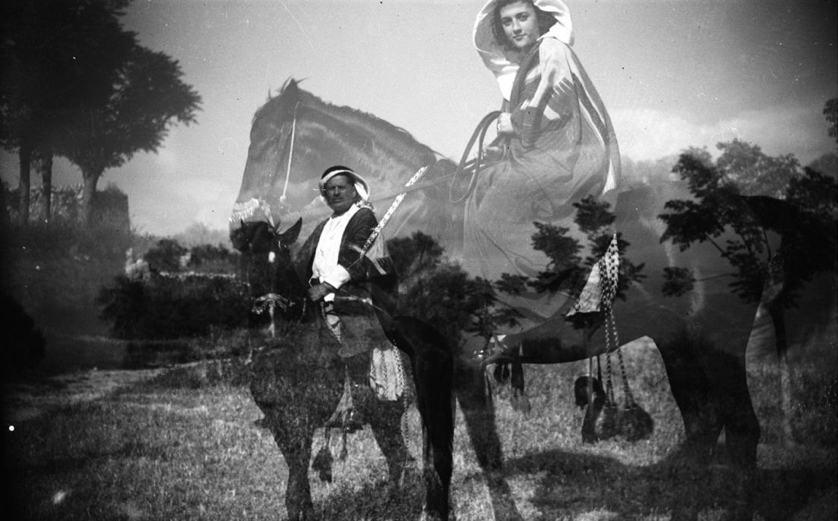
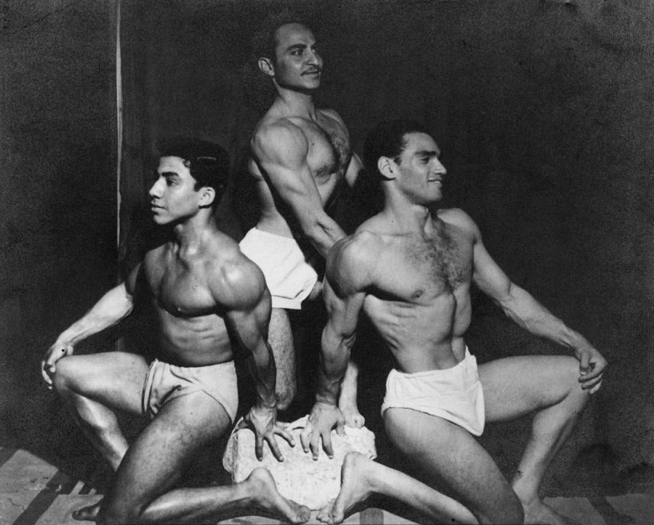
Amidst the hundreds of stiff portraits and awkward family photos, the archive features candid street shots and “many images of historic events and figures.” It also documents “watershed moments that have been overlooked by history.” Pin-up photography and pictures of male bodybuilders in Egypt; surrealist experiments with double exposures in 1924 by Lebanese photographer Marie al-Khazen, “one of the first female photographers in the Middle East,” writes Stoughton.
Al-Khazen’s “avant-garde compositions and habit of photographing herself and other women enjoying traditionally male pastimes, such as smoking, driving and hunting, made her a fascinating and unconventional figure.” The same adjectives apply to many of the photographers in this archive, whose work often shocks and surprises, but just as often communicates in more subtle ways the texture of everyday life for people in the Middle East and North Africa over the course of the late-19th to mid-20th centuries.
These images capture the daily lives of overlooked people groups, like the Bedouin hunters of Syria, as well as the lives of regular people before conservative regimes swept into power around the region and wiped away traces of modernization and the personal, religious, creative, and sexual freedoms we see represented. Now this photographic history joins several other comprehensive online libraries of historic photography, such as Europeana Photography, the George Eastman Museum, the Soviet Union’s premier photo magazine, and many more.
While not as extensive as some of these other collections, the AIF’s digital project is no less essential for the light it sheds on a past, and a medium, that continues to prove itself resistant to stereotypes. Enter the Arab Image Foundation’s digital archive here, and learn more about how these photographs have been digitally preserved at The Iris.
We may know a few names of historic women photographers, like Julia Margaret Cameron, Dorothea Lange, or Diane Arbus, but the significant presence of women in photography from its very beginnings doesn’t get much attention in the usual narrative, despite the fact that “by 1900,” as photographer Dawn Oosterhoff writes, census records in Britain and the U.S. showed that “there were more than 7000 professional women photographers,” a number that only grew as decades passed.
As photographic equipment became smaller, lighter, and more portable, photographers moved out into more challenging and dangerous situations. Among them were women who “fought tradition and were among the pioneer photojournalists,” working alongside men on the front lines of war zones around the world.
War photographers like Lee Miller—former Vogue model, Man Ray muse, and Surrealist artist—showed a side of war most people didn’t see, one in which women warriors, medical personnel, support staff, and workers, played significant roles and bore witness to mass suffering and acts of heroism.
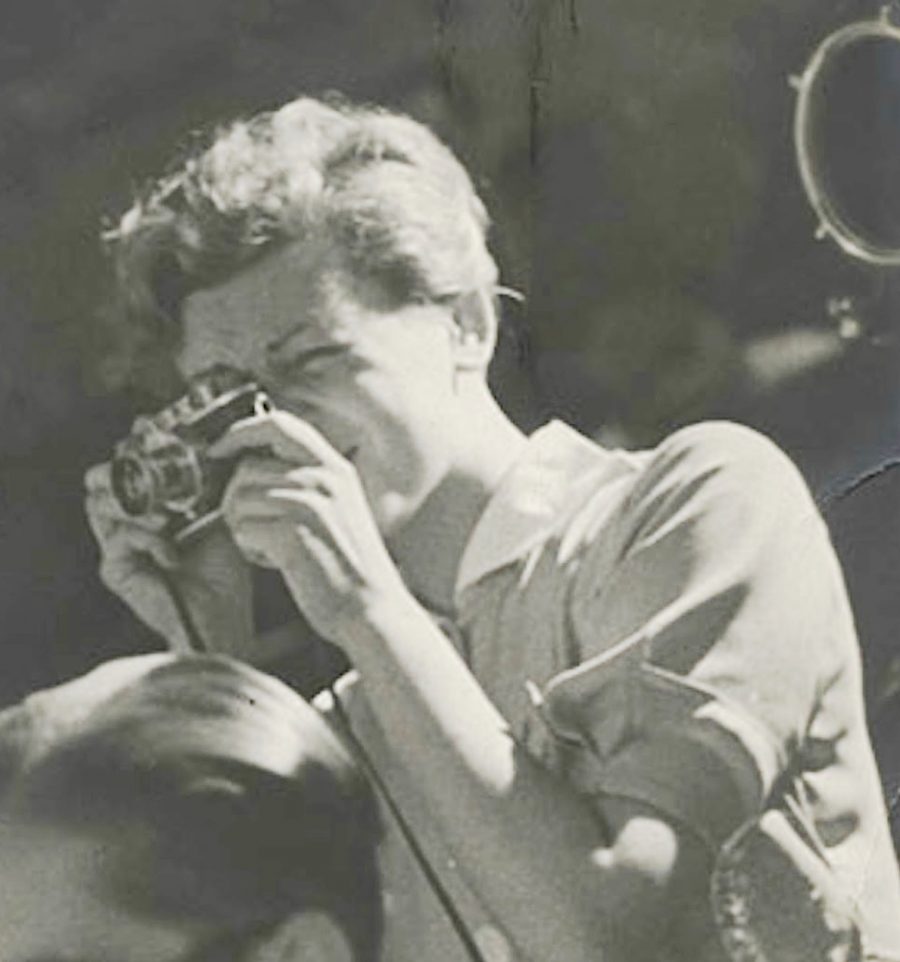
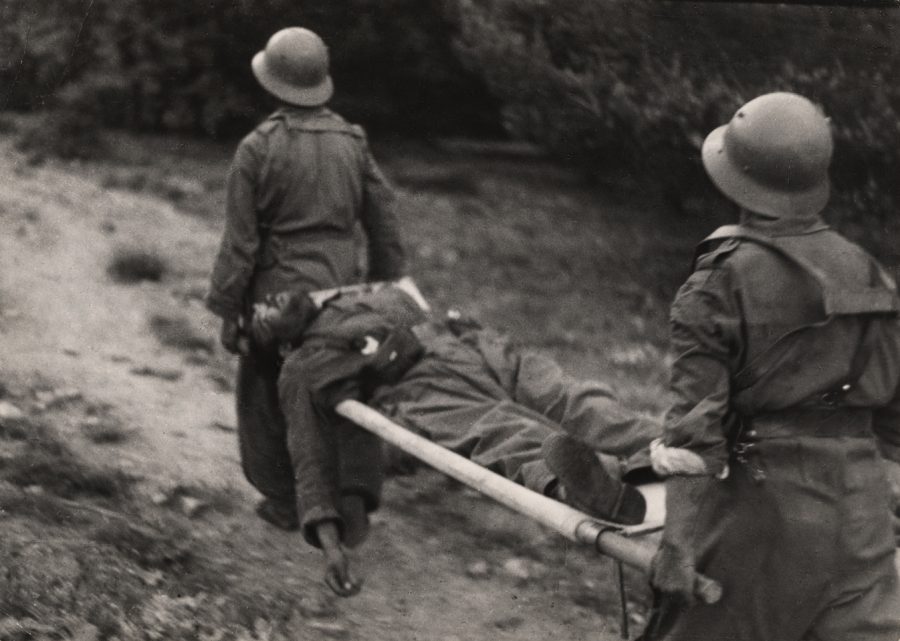
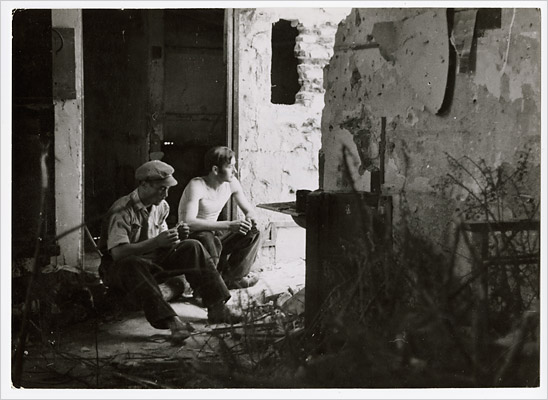
Before Miller captured the devastation at the European front, the horrors of Dachau, and Hitler’s bathtub, another female war photographer, Gerda Taro, documented the front lines of the Spanish Civil War. “One of the world’s first and greatest war photographers,” writes Giles Trent at The Guardian, Taro “died while photographing a chaotic retreat after the Battle of Brunete, shortly after Franco’s troops had one a major victory,” just days away from her 27th birthday. She was the first female photojournalist to be killed in action on the frontline and a major star in France at the time of her death.
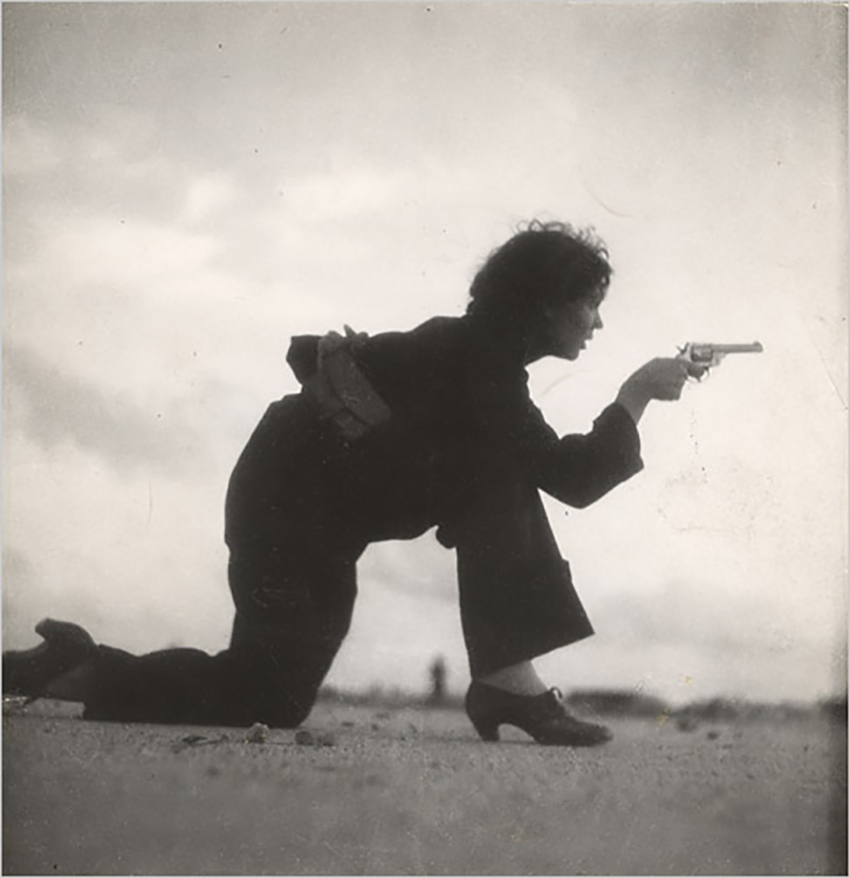
Woman Training for a Republican Militia, by Gerda Taro, via Wikimedia Commons
“On 1 August 1937,” notes a Magnum Photos bio, “thousands of people lined the streets of Paris to mourn the death” of Taro. The “26-year-old Jewish émigré from Leipzig… was eulogized as a courageous reporter who had sacrificed her life to bear witness to the suffering of civilians and troops…. The media proclaimed her a left-wing heroine, a martyr of the anti-fascist cause and a role model for young women everywhere.” Taro had fled to France in in 1933, after being arrested by the Nazis for distributing anti-fascist leaflets in Germany. She was determined to continue the fight in her new country.
Republican Soldiers at the Navacerrada Pass, by Gerda Taro, via Wikimedia Commons
Taro met another Jewish émigré, well-known Hungarian photographer Robert Capa, just getting his start at the time. The two became partners and lovers, arriving in Barcelona in 1936, “two-and-a-half weeks after the outbreak of the war.” Like Miller, Taro was drawn to women on the battlefield. In one of her first assignments, she documented militiawomen of the Unified Socialist Party of Catalonia training on a beach. “Motivated by a desire to raise awareness of the plight of Spanish civilians and the soldiers fighting for liberty,” her clear sympathies give her work depth and immediacy.
Republican Dinamiteros, in the Carabanchel Neighborhood of Madrid, by Gerda Taro, via Wikimedia Commons
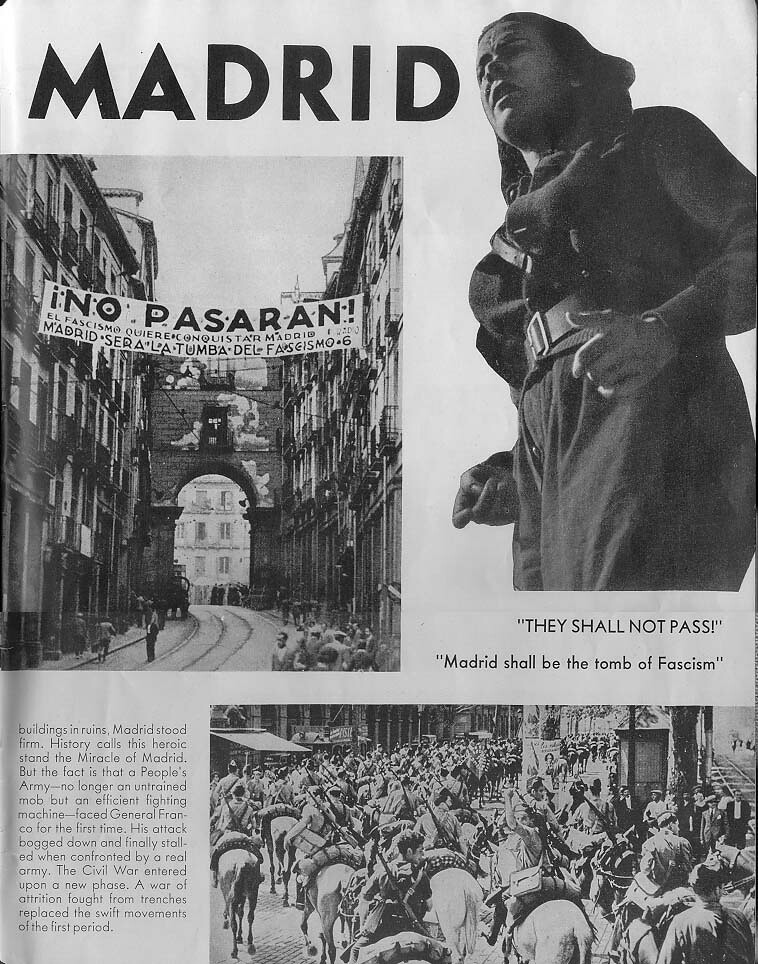
Taro’s photographs “were widely reproduced in the French leftist press,” points out the International Center of Photography. She “incorporated the dynamic camera angles of New Vision photography as well as a physical and emotional closeness to her subject.” After she was crushed by a tank in 1937, many of her photographs were incorrectly credited to Capa, and she sank into obscurity. She has achieved renewed recognition in recent years, especially after a trove of 4,500 negatives containing work by her and Capa was discovered in Mexico City.
Although she had been warned away from the front, Taro “got into this conviction that she had to bear witness,” says biographer Jane Rogoyska, “The troops loved her and she kept pushing.” She paid with her life, died a hero, and was forgotten until recently. Her legacy is celebrated in Rogoyska’s book, a novel about her and Capa by Susana Fortes, an International Center of Photography exhibition, film projects in the works, and a Google Doodle last August on her birthday. Learn more about Taro’s life and see many more of her captivating images, at Magnum Photos.
All of us here in the 2010s have, at one time or another, been street photographers. But up until 1838, nobody had ever been a street photographer. In that year when camera phones were well beyond even the ken of science fiction, Louis Daguerre, the inventor of the daguerreotype process and one of the fathers of photography itself, took the first photo of a human being. In so doing he also became the first street photographer, capturing as his picture did not just a human being but the urban environment inhabited by that human being, in this case Paris’ Boulevard du Temple. Daguerre’s picture begins the historical journey through 181 years of street photography, one street photo per year all soundtracked with period-appropriate songs, in the video above.
From the dawn of the practice, street photography (unlike smile-free early photographic portraiture) has shown life as it’s actually lived. Like the lone Parisian who happened to be standing still long enough for Daguerre’s camera to capture, the people populating these images go about their business with no concern for, or even awareness of, being photographed.
The earliest street photographs come mostly from Europe — London’s Trafalgar Square, Copenhagen’s former Ulfeldts Plads (now Gråbrødretorv), Rome’s Via di Ripetta — but as photography spread, so spread street photography. Rapidly industrializing cities in America and elsewhere in the former British Empire soon get in on the action, and a few decades later scenes from the cities of Asia, Africa, and the Middle East begin to appear.
Each of these 181 street photographs was taken for a reason, though most of those reasons are now unknown to us. But some pictures make it obvious, especially in the case of the startlingly common subgenre of post-disaster street photography: we see the aftermath of an 1858 brewery fire in Montreal, an 1866 explosion in Sydney, an 1874 flood in Pittsburgh, a 1906 earthquake in San Francisco, and a 1920 bombing in New York. Each of these pictures tells a story of a moment in the life of a particular city, but together they tell the story of the city itself, as it has over the past two centuries grown outward, upward, and in every other way necessary to accommodate growing populations; transportation technologies like bicycles, streetcars, automobiles; spaces like squares, cinemas, and cafés; and above all, the ever-diversifying forms of human life lived within them.
Based in Seoul, Colin Marshall writes and broadcasts on cities, language, and culture. His projects include the book The Stateless City: a Walk through 21st-Century Los Angeles and the video series The City in Cinema. Follow him on Twitter at @colinmarshall, on Facebook, or on Instagram.
Heads up: Creative Commons has officially launched CC Search, a search engine that indexes over 300 million images from 19 image collections, “including cultural works from museums (the Metropolitan Museum of Art, Cleveland Museum of Art), graphic designs and art works (Behance, DeviantArt), photos from Flickr, and an initial set of CC0 3D designs from Thingiverse.” All of the indexed images are in the public domain and released under Creative Commons licenses–meaning the images are generally free to use in a non-commercial setting.
If you would like to support the mission of Open Culture, consider making a donation to our site. It’s hard to rely 100% on ads, and your contributions will help us continue providing the best free cultural and educational materials to learners everywhere. You can contribute through PayPal, Patreon, and Venmo (@openculture). Thanks!
We're hoping to rely on loyal readers, rather than erratic ads. Please click the Donate button and support Open Culture. You can use Paypal, Venmo, Patreon, even Crypto! We thank you!
Open Culture scours the web for the best educational media. We find the free courses and audio books you need, the language lessons & educational videos you want, and plenty of enlightenment in between.