“ChatGPT rejects any notions of creative struggle, that our endeavors animate and nurture our lives giving them depth and meaning,” Cave writes. “It rejects that there is a collective, essential and unconscious human spirit underpinning our existence, connecting us all through our mutual striving.”
In “fast-tracking the commodification of the human spirit by mechanizing the imagination,” it works toward eliminating “the process of creation and its attendant challenges, viewing it as nothing more than a time-wasting inconvenience that stands in the way of the commodity itself.” But the creative impulse “must be defended at all costs, and just as we would fight any existential evil,” we should fight the forces set against it “tooth and nail, for we are fighting for the very soul of the world.”
These are strong words, and they sound even stronger when read aloud in the Letters Live video above by Stephen Fry. One may sense a certain irony here, given Fry’s well-known technophilia, but he and Cave have made common cause before, whether calling for government support of the arts or turning up for the coronation of King Charles III. “Fry refers to Cave’s Murder Ballads album in his book The Ode Less Travelled,” adds one Youtube commenter, “while Fry is rumored to be the person with ‘an enormous and encyclopedic brain’ in Cave’s song ‘We Call Upon the Author.’ ” ChatGPT could well be described as encyclopedic, but in no ordinary sense does it have a brain — the very thing of which authors are now called upon to make the fullest possible use.
Based in Seoul, Colin Marshall writes and broadcasts on cities, language, and culture. His projects include the Substack newsletterBooks on Cities, the book The Stateless City: a Walk through 21st-Century Los Angeles and the video series The City in Cinema. Follow him on Twitter at @colinmarshall or on Facebook.
During the pandemic, Peter Jackson’s documentary, Get Back, used cutting-edge software to restore footage from the Beatles’ Let It Be recording sessions. If you watched the film, you know it was magic. Now, his technology offers us another gift–the final Beatles song.
As the short film explains above, the making of the song, “Now and Then,” began in 1995, when Paul, George and Ringo started working with a demo recorded by John Lennon during the 1970s. The project eventually stalled out when the trio couldn’t pristinely extract Lennon’s vocals. Then George Harrison died, and another two decades slipped by. Last year, Jackson’s software salvaged the project, allowing the Beatles to capture the elusive Lennon vocal and complete their final song. “Now and Then” is set to be released on November 3, accompanied by a music video created by Jackson himself. Stay tuned for that.
If you would like to support the mission of Open Culture, consider making a donation to our site. It’s hard to rely 100% on ads, and your contributions will help us continue providing the best free cultural and educational materials to learners everywhere. You can contribute through PayPal, Patreon, and Venmo (@openculture). Thanks!
“A Man, a Plan, a Canal — Panama”: we all know the piece of infrastructure to which this famous palindrome refers. But who, exactly, is the man? Some might imagine President Theodore Roosevelt in the role, given his oversight of the project’s acquisition by the United States of America. But it’s more commonly thought to be George W. Goethals, the Roosevelt-appointed chief engineer who brought it to completion two years early. Then again, one could also make the case for French diplomat Ferdinand de Lesseps, who originally conceived of not only the Panama Canal but also the Suez Canal. And as long as we’re reaching back in history, how does Leonardo da Vinci strike you?
True, Leonardo died roughly four centuries before the Panama Canal broke ground. But that its mechanism works at all owes to one of his many inventions: the miter lock, documented in one of his notebooks from 1497. The design, as explained in the Lesics video above, involves “two V‑shaped wooden gates” attached with hinges to the sides of a river.
Given their shape, the water flowing through the river naturally forces the gates to close, one side forming a neat joint with the other. Inside, “as the water level rises, the pressure on the gate increases,” which seals it even more tightly. To facilitate re-opening the “perfect watertight lock” thus formed, Leonardo also specified a set of sluice valves in the gates that can be opened to even out the water levels again.
The twentieth-century builders of the Panama Canal benefited from technologies unavailable in Leonardo’s time: powerful motors, for instance, that could open and close the gates more efficiently than human muscle. And though it has undergone improvements over the past century (such as the replacement of the geared system attached to those motors with even more effective hydraulic cylinders), its structure and operation remain visibly derived from Leonardo’s elegant miter lock, as do those of the Suez Canal. About 80 ships pass through those two famous waterways each and every day, and ships of a size scarcely imaginable in the fifteenth century at that: not bad for a couple pieces of 500-year-old engineering.
Based in Seoul, Colin Marshall writes and broadcasts on cities, language, and culture. His projects include the Substack newsletterBooks on Cities, the book The Stateless City: a Walk through 21st-Century Los Angeles and the video series The City in Cinema. Follow him on Twitter at @colinmarshall or on Facebook.
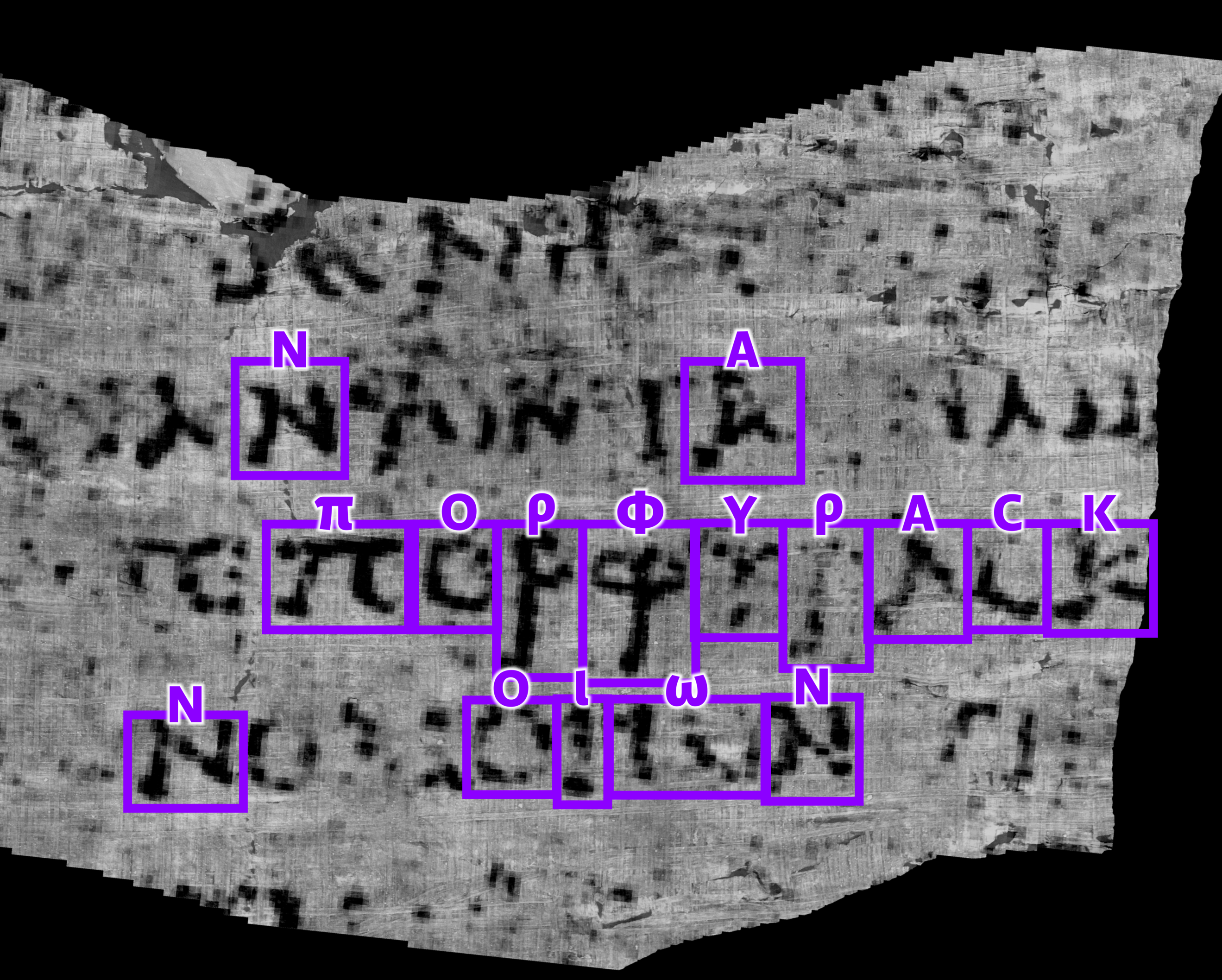
In the year 79, AD Mount Vesuvius erupted, burying both Pompeii and Herculaneum. In 1750, an Italian farmworker discovered an entombed seaside villa in Herculaneum while digging a well. When excavated, the residence yielded hundreds of scrolls, all of them turned into what looked and felt like lumps of ash, and practically all of them unrollable, let alone readable. Only in 2015 did humankind — or more specifically, University of Kentucky computer scientist Brent Seales and his team — develop the technology that could let us see what texts these ancient scrolls contain. Eventually, a particle accelerator and machine learning came into play. This timeline comes from the web site of the Vesuvius Challenge, “a machine learning and computer vision competition to read the Herculaneum Papyri.”
Funded by technology entrepreneurs Nat Friedman and Daniel Gross, the Vesuvius Challenge has given out $260,000 of its $1 million of prizes so far, including $40,000 to undergraduate student/engineer Luke Farritor, who identified ten letters in a section of one scroll, and $10,000 to biorobotics graduate student Youssef Nader, who subsequently and independently discovered those same letters.
The word they form? Porphyras, ancient Greek for “purple”: a color, incidentally, that signified wealth and power in the ancient world, not least because of the enormous amount of labor required to extract it from nature. That the Herculaneum Papyri have started to become readable also represents the culmination of a similarly impressive effort, albeit one based on technological development rather than the extraction of sea-snail glands.
As Nicholas Wade writes in the New York Times, the current method “uses computer tomography, the same technique as in CT scans” — executed with the aforementioned particle accelerator — “plus advancements in artificial intelligence” used “to help distinguish ink from papyrus.” You can learn more about the Vesuvius Challenge in the video above. Its creator Garrett Ryan, of ancient-history Youtube channel Told in Stone, has been previously featured here on Open Culture for his explanation of how 99 percent of ancient texts were lost — which means these charred scrolls could hold a great deal of knowledge about the ancient world. Do they contain, as Ryan fantasizes, the lost books of Livy, the dialogues of Aristotle, poems by Sappho? We’ll only know when someone figures out how best to use technology to decode them all. Artificial intelligence may be the key to the future, as we’ve often heard in recent years, but in this particular case, it offers a promising key to the past.
Based in Seoul, Colin Marshall writes and broadcasts on cities, language, and culture. His projects include the Substack newsletterBooks on Cities, the book The Stateless City: a Walk through 21st-Century Los Angeles and the video series The City in Cinema. Follow him on Twitter at @colinmarshall or on Facebook.
The Romans fashioned their buildings with concrete that has endured for 2,000 years. Their secret? Some researchers think it’s how the Romans heated lime. Others think it’s how they usedpozzolanic material such as volcanic ash. Nowhere does coffee figure into the equation. Too bad.
Happily, researchers at the Royal Melbourne Institute of Technology (RMIT) University have discovered that “concrete can be made 30% stronger by replacing a percentage of sand with spent coffee grounds, an organic waste product produced in huge amounts that usually ends up in landfills,” writes New Atlas. Rajeev Roychand (above), the lead author of a study in the Journal of Cleaner Production, notes: “The disposal of organic waste poses an environmental challenge as it emits large amounts of greenhouse gasses including methane and carbon dioxide, which contribute to climate change. The inspiration for our work was to find an innovative way of using the large amounts of coffee waste in construction projects rather than going to landfills—to give coffee a ‘double shot’ at life.” If Roychand’s research findings endure, archaeologists and materials engineers might enjoy puzzling over the mysteries of coffee and concrete another two millennia from now.
If you would like to support the mission of Open Culture, consider making a donation to our site. It’s hard to rely 100% on ads, and your contributions will help us continue providing the best free cultural and educational materials to learners everywhere. You can contribute through PayPal, Patreon, and Venmo (@openculture). Thanks!
Discovered amidst the wreckage of a sunken ship off the coast of Greece in 1901, the Antikythera Mechanism (previously featured here on Open Culture) is often considered the world’s oldest known analog computer. Dating back to approximately 150–100 BCE, the device has a complex arrangement of precisely cut gears, all designed to track celestial movements, predict lunar and solar eclipses, and chart the positions of planets. It’s a testament to Ancient Greek engineering. Above, you can see a fully functional replica of the Antikythera Mechanism re-created in LEGO, courtesy of the scientific journal Nature. As one YouTuber put it, “The device is unbelievably cool, and the video is masterfully done.”
If you would like to support the mission of Open Culture, consider making a donation to our site. It’s hard to rely 100% on ads, and your contributions will help us continue providing the best free cultural and educational materials to learners everywhere. You can contribute through PayPal, Patreon, and Venmo (@openculture). Thanks!
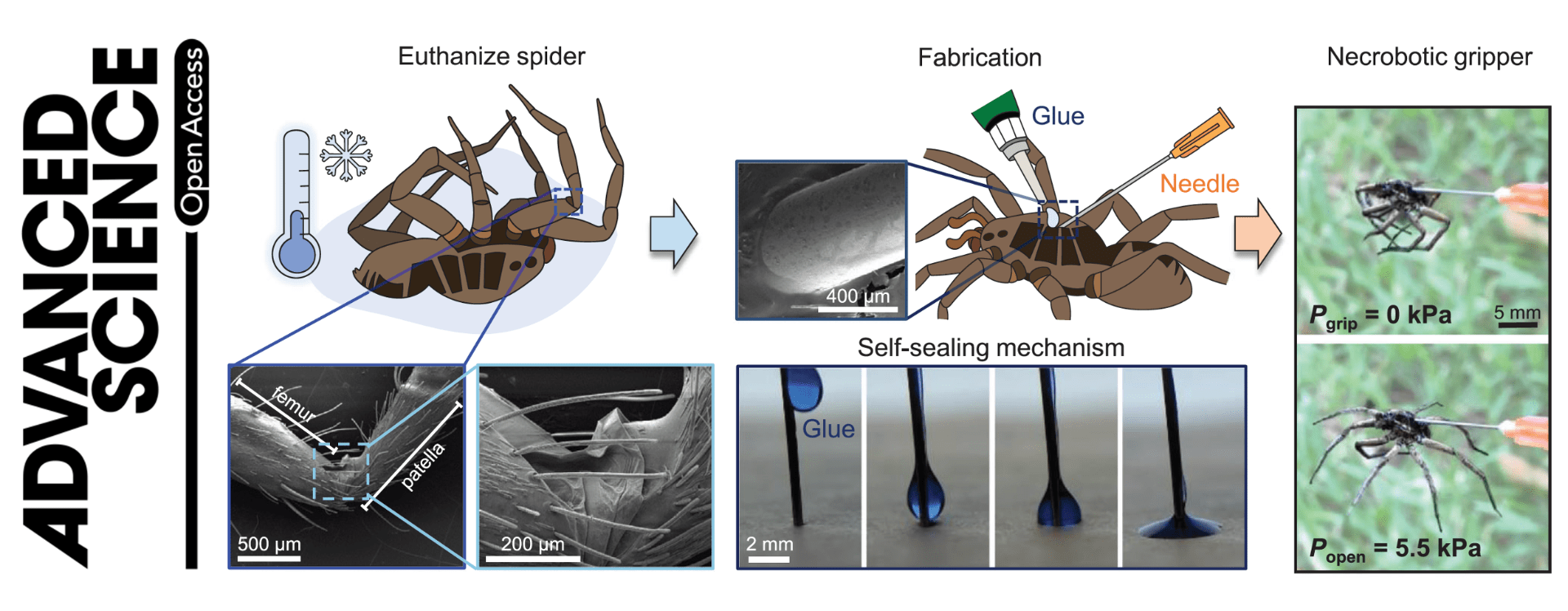
They only have flexor muscles, which allow their legs to curl in, and they extend them outward by hydraulic pressure. When they die, they lose the ability to actively pressurize their bodies. That’s why they curl up.
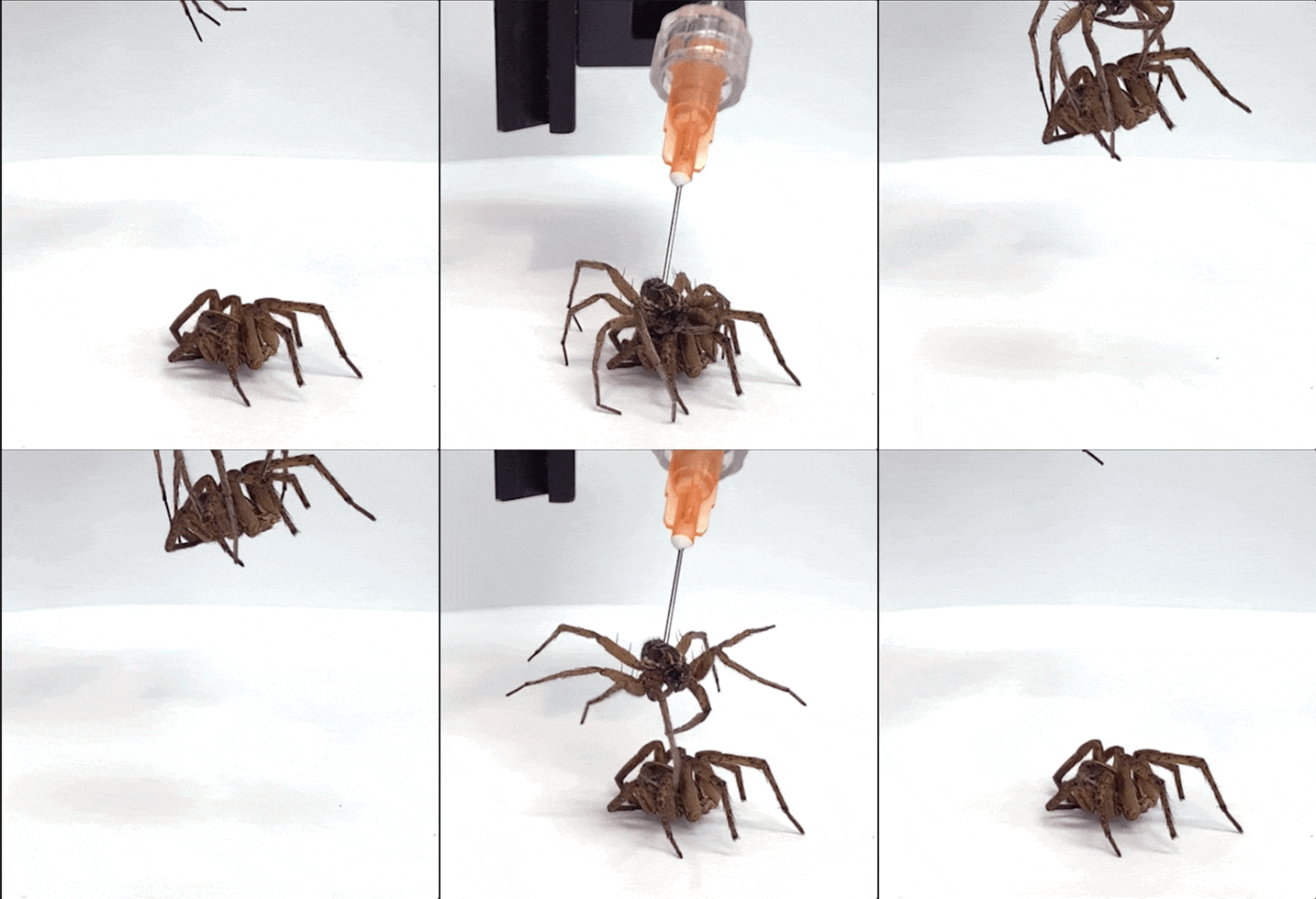
When a scientifically inclined human inserts a needle into a deceased spider’s hydraulic prosoma chamber, seals it with superglue, and delivers a tiny puff of air from a handheld syringe, all eight legs will straighten like fingers on jazz hands.
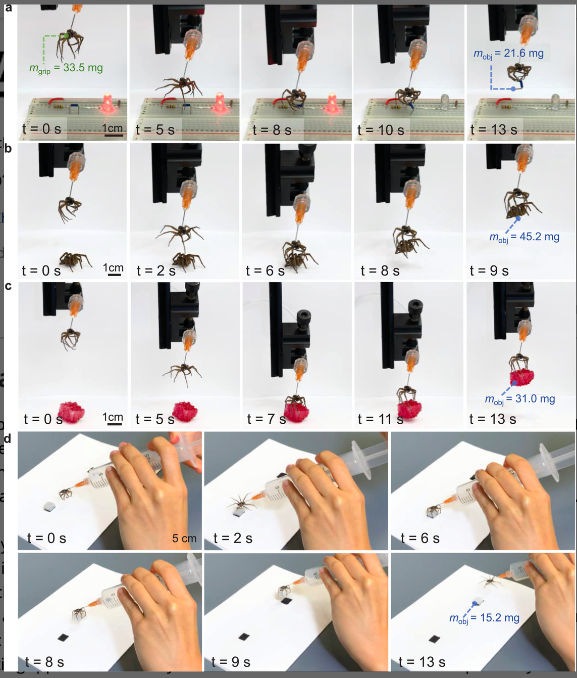
These necrobiotic spider gripper tools can lift around 130% of their body weight — smaller spiders are capable of handling more — and each one is good for approximately 1000 grips before degrading.
Preston and Yap envision putting the spiders to work sorting or moving small scale objects, assembling microelectronics, or capturing insects in the wild for further study.
Eventually, they hope to be able to isolate the movements of individual legs, as living spiders can.
Environmentally, these necrobiotic parts have a major advantage in that they’re fully biodegradable. When they’re no longer technologically viable, they can be composted. (Humans can be too, for that matter…)
The idea is as innovative as it is offbeat. As a soft robotics specialist, Preston is always seeking alternatives to hard plastics, metals and electronics:
We use all kinds of interesting new materials like hydrogels and elastomers that can be actuated by things like chemical reactions, pneumatics and light. We even have some recent work on textiles and wearables…The spider falls into this line of inquiry. It’s something that hasn’t been used before but has a lot of potential.”
Conquer any lingering arachnophobia by reading Yap and Preston’s research article, Necrobotics: Biotic Materials as Ready-to-Use Actuators, here.
More recently, the poet and international educator has combined her interest in amigurumi crocheted animals and ChatGPT, the open source AI chatbot.
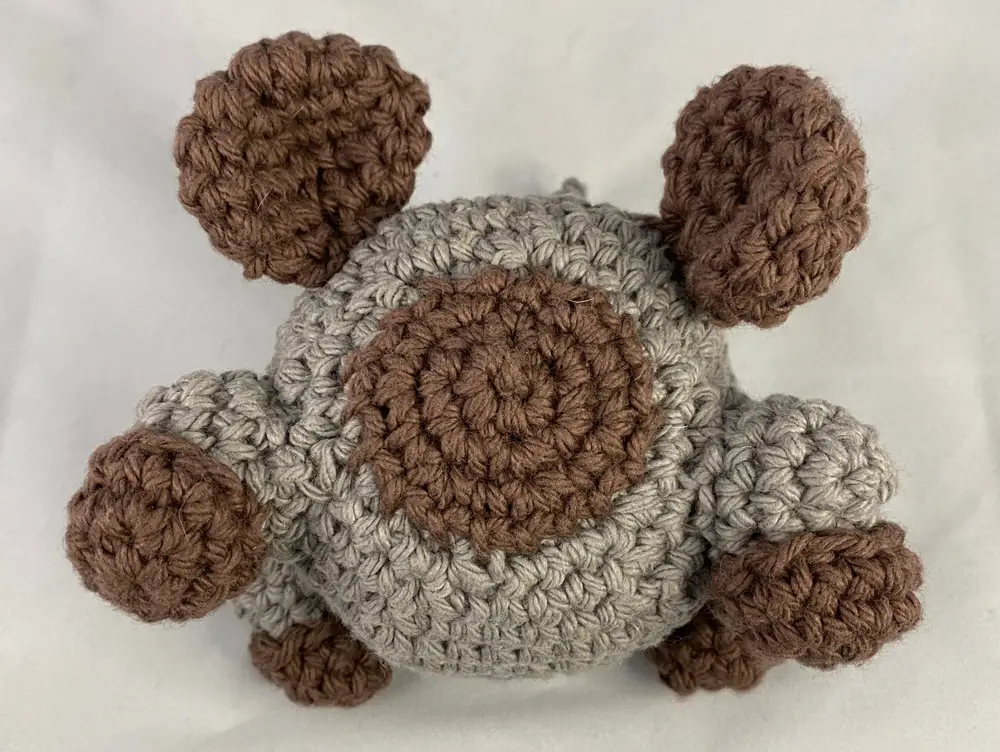
Having crocheted an amiguruminarwhal for a nephew earlier this year, she hopped on ChatGPT and asked it to create “a crochet pattern for a narwhal stuffed animal using worsted weight yarn.”
The result might have discouraged another querent, but Woolner got out her crochet hook and sallied forth, following ChatGPTs instructions to the letter, despite a number of red flags indicating that the chatbot’s grasp of narwhal anatomy was highly unreliable.
Its ignorance is part of its DNA. As a large language model, ChatGPT is capable of producing predictive text based on vast amounts of data in its memory bank. But it can’t see images.
It has no idea what a cat looks like or even what crochet is. It simply connects words that frequently appear together in its training data. The result is superficially plausible passages of text that often fall apart when exposed to the scrutiny of an expert—what’s been called “fluent bullshit.”
It’s also not too hot at math, a skill set knitters and crocheters bring to bear reading patterns, which traffic in numbers of rows and stitches, indicated by abbreviations that really flummox a chatbot.
Rnd 7: sc even (12); F/O and leave a long strand of yarn to sew the dorsal fin between rnds # 18–23. Do not stuff the fin.
Pity poor ChatGPT, though, like Woolner, it tried.
Their collaboration became a cause célèbre when Woolner debuted the “AI generated narwhal crochet monstrosity” on TikTok, aptly comparing the large tusk ChatGPT had her position atop its head to a chef’s toque.
Is that the best AI can do?
A recent This American Life episode details how Sebastien Bubeck, a machine learning researcher at Microsoft, commanded another large language model, GPT‑4, to create code that TikZ, a vector graphics producer, could use to “draw” a unicorn.
This collaborative experiment was perhaps more empirically successful than the ChatGPT amigurumi patterns Woolner dutifully rendered in yarn and fiberfill. This American Life’s David Kestenbaum was sufficiently awed by the resulting image to hazard a guess that “when people eventually write the history of this crazy moment we are in, they may include this unicorn.”
It’s not good, but it’s a fucking unicorn. The body is just an oval. It’s got four stupid rectangles for legs. But there are little squares for hooves. There’s a mane, an oval for the head. And on top of the head, a tiny yellow triangle, the horn. This is insane to say, but I felt like I was seeing inside its head. Like it had pieced together some idea of what a unicorn looked like and this was it.
Let’s not poo poo the merits of Woolner’s ongoing explorations though. As one commenter observed, it seems she’s “found a way to instantiate the weird messed up artifacts of AI generated images in the physical universe.”
To which Woolner responded that she “will either be spared or be one of the first to perish when AI takes over governance of us meat sacks.”
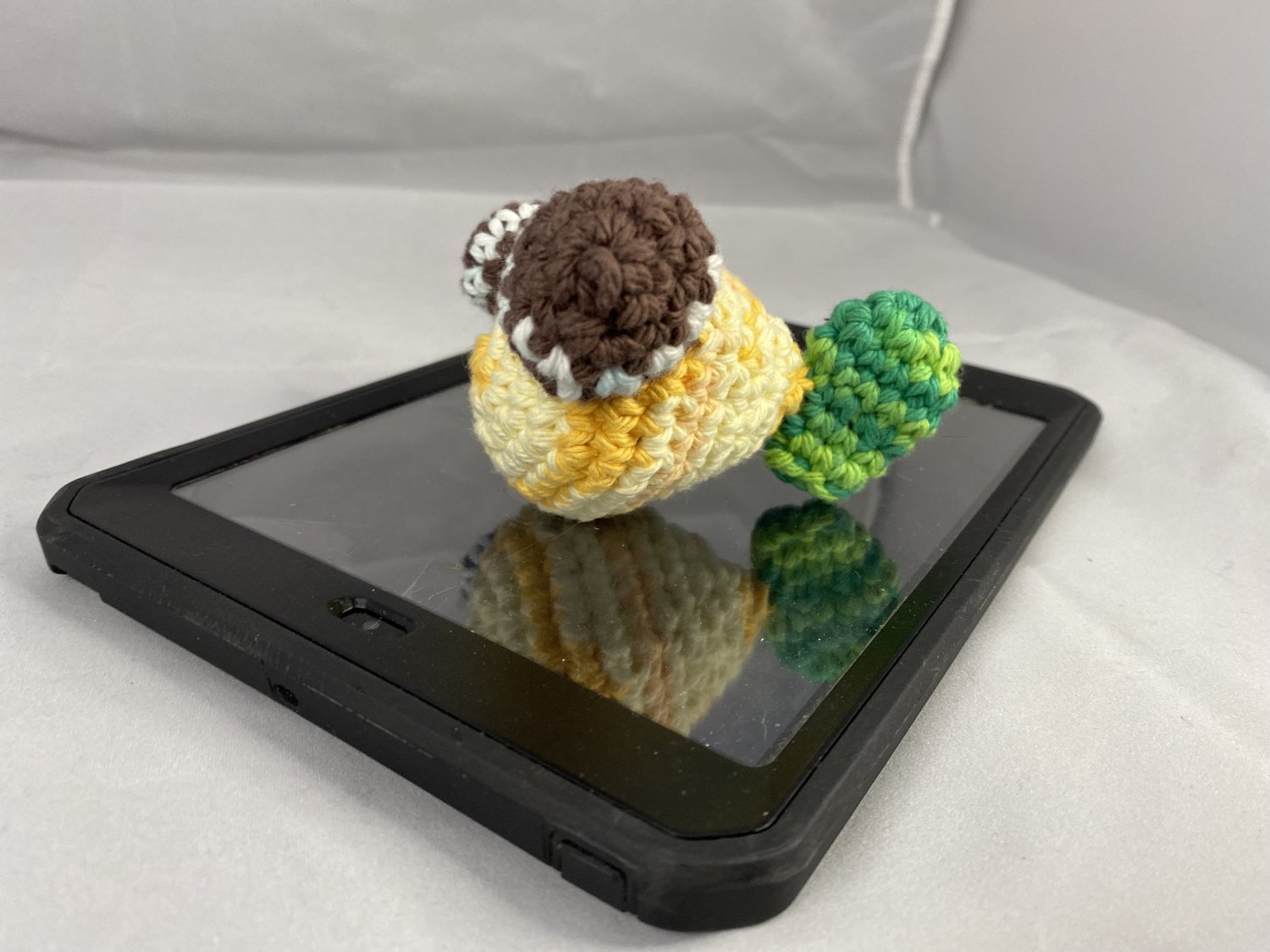
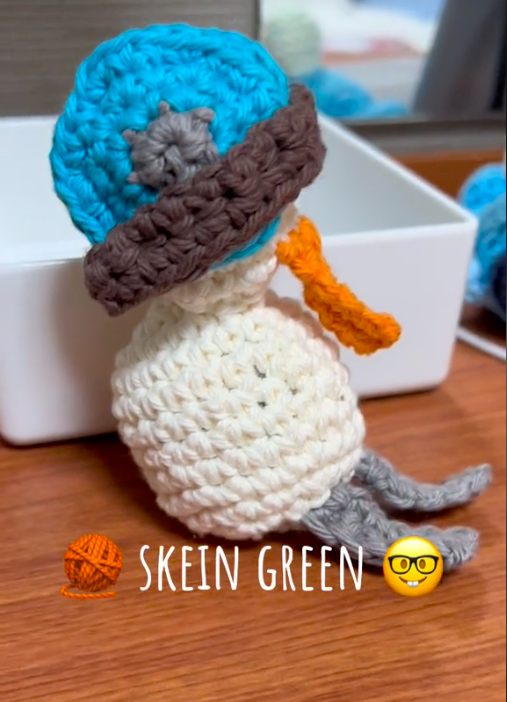
In the meantime, she’s continuing to harness ChatGPT to birth more monstrous amigurumi. Gerald the Narwhal’s has been joined by a cat, an otter, Norma the Normal Fish, XL the Newt, and Skein Green, a pelican bearing get well wishes for author and science vlogger Hank Green.
Two weeks later, the Daily Beast pronounced this attempt, nicknamed Gerard, “even less narwhal-looking than the first. Its body was a massive stuffed triangle, and its tusk looked like a gumdrop at one end.”
Woolner dubbed Gerard possibly the most frustrating AI-generated amigurumi of her acquaintance, owing to an onslaught of specificity on ChatCPT’s part. It overloaded her with instructions for every individual stitch, sometimes calling for more stitches in a row than existed in the entire pattern, then dipped out without telling her how to complete the body and tail.
As silly as it all may seem, Woolner believes her ChatGPT amigurumi collabsare a healthy model for artists using AI technology:
I think if there are ways for people in the arts to continue to create, but also approach AI as a tool and as a potential collaborator, that is really interesting. Because then we can start to branch out into completely different, new art forms and creative expressions—things that we couldn’t necessarily do before or didn’t have the spark or the idea to do can be explored.
If you, like Hank Green, have fallen for one of Woolner’s unholy creations, downloadable patterns are available here for $2 a pop.
Those seeking alternatives to fiberfill are advised to stuff their amigurumi with “abandoned hopes and dreams” or “all those free tee shirts you get from giving blood and running road races or whatever you do for fun”.
We're hoping to rely on loyal readers, rather than erratic ads. Please click the Donate button and support Open Culture. You can use Paypal, Venmo, Patreon, even Crypto! We thank you!
Open Culture scours the web for the best educational media. We find the free courses and audio books you need, the language lessons & educational videos you want, and plenty of enlightenment in between.