When the Wind Blows: An Animated Tale of Nuclear Apocalypse With Music by Roger Waters & David Bowie (1986)
Humanity has few fascinations as enduring as that with apocalypse. We’ve been telling ourselves stories of civilization’s destruction as long as we’ve had civilization to destroy. But those stories haven’t all been the same: each era envisions the end of the world in a way that reflects its own immediate preoccupations. In the mid nineteen-eighties, nothing inspired preoccupations quite so immediate as the prospect of sudden nuclear holocaust. The mounting public anxiety brought large audiences to such major aftermath-dramatizing “television events” as The Day After in the United States and the even more harrowing Threads in the United Kingdom.
“As a youngster growing up in the nineteen-eighties in a tiny village in the heart of the Cotswolds, I can attest to the fact that no part of the country, however remote and bucolic, was impervious to the threat of the Cold War escalating into a full-blown nuclear conflict,” writes Neil Mitchell at the British Film Institute.
“Popular culture was awash with nuclear war-themed films, comic strips, songs and novels.” This torrent included the artist-writer Raymond Briggs’ When the Wind Blows, a graphic novel about an elderly rural couple who survive a catastrophic strike on England. Jim and Hilda’s optimism and willingness to follow government instructions prove to be no match for nuclear winter, and however inexorable their fate, they manage not to see it right up until the end comes.
In 1986, When the Wind Blows was adapted into a feature film, directed by American animator Jimmy Murakami. Among its distinctive aesthetic choices is the combination of traditional cel animation for the characters with photographed miniatures for the backgrounds, as well as the commissioning of soundtrack music from the likes of Roger Waters, David Bowie, and Genesis — proper English rockers for a proper English production. If the adaptation of When the Wind Blows is less widely known today than other nuclear-apocalypse movies, that may owe to its sheer cultural specificity. It would be difficult to pick the movie’s most English scene, but a particularly strong contender is the one in which Hilda reminisces about how “it was nice in the war, really: the shelters, the blackout, the cups of tea.”
“The couple are fruitlessly nostalgic for the Blitz spirit of the Second World War, convinced the government-issued Protect and Survive pamphlets are worth the paper they’re printed on, and blindly under the assumption that there can be a winner in a nuclear war,” writes Mitchell. “These sweet, unassuming retirees represent an ailing, rose-tinted worldview and way of life that’s woefully unprepared for the magnitude of devastation wrought by the bomb.” You can see further analysis of the film’s art and worldview in the video at the top of the post from animation-focused Youtube channel Steve Reviews. In the event, humanity survived the long showdown of the Cold War, losing none of our penchant for apocalyptic fantasy as a result. However compulsively we imagine the end of the world today, will any of our visions prove as memorable as When the Wind Blows?
Related content:
Protect and Survive: 1970s British Instructional Films on How to Live Through a Nuclear Attack
How a Clean, Tidy Home Can Help You Survive the Atomic Bomb: A Cold War Film from 1954
Based in Seoul, Colin Marshall writes and broadcasts on cities, language, and culture. His projects include the Substack newsletter Books on Cities, the book The Stateless City: a Walk through 21st-Century Los Angeles and the video series The City in Cinema. Follow him on Twitter at @colinmarshall or on Facebook.
Read More...Brian Eno on the Loss of Humanity in Modern Music
In music, as in film, we have reached a point where every element of every composition can be fully produced and automated by computers. This is a breakthrough that allows producers with little or no musical training the ability to rapidly turn out hits. It also allows talented musicians without access to expensive equipment to record their music with little more than their laptops. But the ease of digital recording technology has encouraged producers, musicians, and engineers at all levels to smooth out every rough edge and correct every mistake, even in recordings of real humans playing old-fashioned analogue instruments. After all, if you could make the drummer play in perfect time every measure, the singer hit every note on key, or the guitarist play every note perfectly, why wouldn’t you?
One answer comes in a succinct quotation from Brian Eno’s Oblique Strategies, which Ted Mills referenced in a post here on Miles Davis: “Honor Your Mistakes as a Hidden Intention.” (The advice is similar to that Davis gave to Herbie Hancock, “There are no mistakes, just chances to improvise.”) In the short clip at the top, Eno elaborates in the context of digital production, saying “the temptation of the technology is to smooth everything out.”
But the net effect of correcting every perceived mistake is to “homogenize the whole song,” he says, “till every bar sounds the same… until there’s no evidence of human life at all in there.” There is a reason, after all, that even purely digital, “in the box” sequencers and drum machines have functions to “humanize” their beats—to make them correspond more to the looseness and occasional hesitancy of real human players.
This does not mean that there is no such thing as singing or playing well or badly—it means there is no such thing as perfection. Or rather, that perfection is not a worthy goal in music. The real hooks, the moments that we most connect with and return to again and again, are often happy accidents. Mills points to a whole Reddit thread devoted to mistakes left in recordings that became part of the song. And when it comes to playing perfectly in time or in tune, I think of what an atrocity would have resulted from running all of The Rolling Stones’ Exile on Main Street through a digital audio workstation to sand down the sharp edges and “fix” the mistakes. All of its shambling, mumbling, drunken barroom charm would be completely lost. That goes also for the entire recorded output of The Band, or most of Dylan’s albums (such as my personal favorite, John Wesley Harding).
To take a somewhat more modern example, listen to “Sirena” from Australian instrumental trio Dirty Three, above. This is a band that sounds forever on the verge of collapse, and it’s absolutely beautiful to hear (or see, if you get the chance to experience them live). This recording, from their album Ocean Songs, was made in 1998, before most production went fully digital, and there are very few records that sound like it anymore. Even dance music has the potential to be much more raw and organic, instead of having singers’ voices run through so much pitch correction software that they sound like machines.
There is a lot more to say about the way the albums represented above were recorded, but the overall point is that just as too much CGI has often ruined the excitement of cinema (we’re looking at you, George Lucas) —or as the digital “loudness wars” sapped much recorded music of its dynamic peaks and valleys—overzealous use of software to correct imperfections can ruin the human appeal of music, and render it sterile and disposable like so many cheap, plastic mass-produced toys. As with all of our use of advanced technology, questions about what we can do should always be followed by questions about what we’re really gaining, or losing, in the process.
Note: An earlier version of this post appeared on our site in 2016.
Related Content:
Brian Eno Creates a List of 20 Books That Could Rebuild Civilization
Brian Eno Shares His Critical Take on Art & NFTs: “I Mainly See Hustlers Looking for Suckers”
Josh Jones is a writer and musician based in Durham, NC. Follow him at @jdmagness
Read More...The Psychedelic Animated Video for Kraftwerk’s “Autobahn” (1979)
Ah, yes, “Autobahn.” From the moment the door slams and the ignition starts, prog rockers and pre-new wavers know a journey is afoot. Though the members of Kraftwerk made three albums before this, the members still looking like well meaning bookish hippies, 1974’s “Autobahn” is considered Year Zero for the denizens of the electric cafe, the four German robots who made human music with machines.
Created in 1979, but bopping around again in pop culture orbit is this cel-drawn animation by Roger Mainwood, created to promote “Autobahn” after most of the culture had caught up. By that last year of the ’70s Omni magazine was a year old, music was sifting through the shockwaves left by Bowie’s Low and Heroes, analog was flirting with digital, and the world was ready to drive on that long, electric highway.
Mainwood’s protagonist is part alien, part human, and he begins looking around in awe in his hip goggles, then setting off for a run straight out of a Muybridge loop, only to wind up floating, flying, sailing and swimming through a landscape indebted to Peter Max, PushPin Studios, underground comix, and 1930 modernism.
Mainwood had just graduated from London’s Royal College of Art Film and Television School, and was commissioned by John Halas, the Hungarian immigrant who became known as the Father of British Animation, for Kraftwerk’s record label. The label wanted to put out one of the first music Laserdiscs. (Halas, by the way, directed a very UPA-influenced short called “Automania” in 1963). According to Mainwood, he still doesn’t know if the band liked the short or even if they watched it.
Mainwood avoided any direct representation of driving or automobiles, much to his credit, which may be why the film holds its fascination. The animator continued in his field, winding up a producer of several classics of British animation, including The Snowman and the chilling When the Wind Blows. As for the meaning of “Autobahn,” we’ll let Mainwood have the last word:
Thinking back to my thought processes at that time, I remember wanting to specifically not have conventional cars in the film. I wanted a sense of a repetitive journey, and alienation, which I took to be what the music was about…hence the solitary futuristic figure, protected by large goggles, moving through and trying to connect with the journey he is taking. The automobile “monsters” are deliberately threatening (I have never been a big fan of cars or motorways!) and when our “hero” tries to make human contact (with different coloured clones of himself) he can never do it. In the end he realises he is making the repetitive and circular journey alone but strides forward purposefully at the end as he did in the beginning. All of which sounds rather pretentious…but I was a young thing in those days!
You can read more of an interview with Mainwood here.
Find more animations in our collection, 4,000+ Free Movies Online: Great Classics, Indies, Noir, Westerns, Documentaries & More.
Related Content:
Kraftwerk’s First Concert: The Beginning of the Endlessly Influential Band (1970)
Kraftwerk’s “The Robots” Performed by German 1st Graders in Cute Cardboard Robot Costumes
Ted Mills is a freelance writer on the arts who currently hosts the artist interview-based FunkZone Podcast. You can also follow him on Twitter at @tedmills, read his other arts writing at tedmills.com and/or watch his films here.
Read More...A New Course Teaches You How to Tap the Powers of ChatGPT and Put It to Work for You

Released in November 2022, ChatGPT gave us all a glimpse into the future world of AI–a sense of what the world will look like when chatbots can think and execute tasks on our behalf. There’s a good chance that you’ve already experimented loosely with ChatGPT, trying to test its strengths and weaknesses. But have you considered using ChatGPT to unlock your creativity and productivity in more substantive ways? If so, Vanderbilt University has a new course for you: Prompt Engineering for ChatGPT.
Created by Dr. Jules White, Prompt Engineering for ChatGPT will teach students how to write effective “prompts” (or well-crafted questions) so that they can leverage ChatGPT and other large language models. Large language models (LLMs) respond to “prompts” posed by users in natural language statements. If users can write good prompts, they can get effective answers from large language models and discover creative uses for these tools. Divided into six modules, the Vanderbilt course covers the art of writing effective prompts, starting with basic prompts and building toward more sophisticated ones. By course’s end, students should feel comfortable using ChatGPT to complete meaningful tasks in their personal and professional lives. For example, one student left this testimonial after completing the course:
As a medical researcher and medical writer with >30 years of experience, I was really stunned to see what the capabilities of LLMs are. Dr. White made a great work of explaining and giving examples. About halfway through the course I was able to put ChatGPT to work on a real work-related issue. With its help, I was able in fact to complete in 7 hours a job that would have required at least 20. Now, after completing the course, I believe that — by applying some more complex formatting — I could have shaved another couple of hours…”
Offered on the Coursera platform, Prompt Engineering for ChatGPT is designed for beginners. You only need a browser and a ChatGPT account. Designed to be completed in 18 hours, students can take the course for a fee ($49) and earn a credential at the end. Or they can also audit the course–and forego the credential–for no fee. Enroll here.
Nota Bene: Open Culture has a partnership with Coursera. We often feature their courses because the courses offer value to our readers. We typically receive fees when users sign up for a paid course, and sometimes we receive a fee for featuring an educational program itself. Those fees help support our operation.
Related Content
Read More...Watch Fritz Lang’s Metropolis with a Modern, New Electronic Soundtrack (1927)
From sound artist Tomer Baruch and drummer Alex Brajković comes a new electronic soundtrack for Fritz Lang’s century-old classic film, Metropolis. The new score comes with this preface:
One of the most significant themes in the dystopian feature is the blurred-to-nonexistent line separating man and machine; Human-like machines, Mechanical-humans, real-life android deepfakes, and above all the city of Metropolis, an enormous machine and within it men, slaved to maintain its operation. The theme that was disturbing in the beginning of the 20th century is as relevant as ever with the latest developments in AI, forcing us to rethink again what makes us human.
In analogy to that the soundtrack is based on archive recordings of early 20th century machinery, on top of which Tomer Baruch and Alex Brajkovic play analog synthesizers and drums. They interface with the machines and embody a relentlessly repetitive mechanical motion, one which is usually sequenced or programmed. By creating music which is in itself blurring the line between man and machine, by subjecting themselves to machine-like patterns, the musicians become a part of Metropolis, creating a disillusioned, intensified and darker than ever soundtrack for the film.
Baruch and Alex Brajković created the soundtrack for the Sounds of Silence Film Festival, Den Haag in 2019. Stream it above.
If you would like to support the mission of Open Culture, consider making a donation to our site. It’s hard to rely 100% on ads, and your contributions will help us continue providing the best free cultural and educational materials to learners everywhere. You can contribute through PayPal, Patreon, and Venmo (@openculture). Thanks!
Related Content
If Fritz Lang’s Iconic Film Metropolis Had a Kraftwerk Soundtrack
Read the Original 32-Page Program for Fritz Lang’s Metropolis (1927)
See Metropolis‘ Scandalous Dance Scene Colorized, Enhanced, and Newly Soundtracked
Read More...Why Einstein Was a “Peerless” Genius, and Hawking Was an “Ordinary” Genius: A Scientist Explains
Genius sells. Publishers of biographies and studios behind Oscar-winning dramas can tell you that. So can network scientist Albert-László Barabási, who has actually conducted research into the nature of genius. “What really determines the ‘genius’ label?” he asks in the Big Think video above. When he and his collaborators “compared all geniuses to their scientific peers, we realized that there are really two very different classes: ordinary genius and peerless genius.” Considering the latter, Barabási points to the perhaps unsurprising example of Albert Einstein.
“When we looked at the scientists working at the same time, roughly in the same areas of physics that he did,” Barabási explains, “there was no one who would have a comparable productivity or scientific impact to him. He was truly alone.” Illustrating the class of “ordinary genius” is a figure almost as well-known as Einstein: Stephen Hawking. “To our surprise, we realized, there were about six other scientists who worked in roughly the same area, and had comparable, often bigger impacts than Stephen Hawking had” — and yet only he was publicly labeled a “genius.”
“The ‘genius’ label is a construct that society assigns to exceptional accomplishment, but exceptional accomplishment is not sufficient to get the genius label.” Throughout history, “remarkable individuals were always born in the vicinity of big cultural centers, and everything that is outside of the cultural centers was typically a desert of exceptional accomplishments.” Today, as venture capitalist and essayist Paul Graham once wrote, “a thousand Leonardos and a thousand Michelangelos walk among us. If DNA ruled, we should be greeted daily by artistic marvels. We aren’t, and the reason is that to make Leonardo you need more than his innate ability. You also need Florence in 1450.”
What would it take to discover the “hidden geniuses” who may have been born into unpropitious circumstances? This is one concern behind Barabási’s inquiry into the nature of scientific prominence. The question of “how does the quality of the idea that I picked, and the ultimate success, and my ability as a scientist connect to each other” led him to develop the “Q factor,” the measure of “our ability to turn ideas into discoveries.” His analysis of the data shows that, throughout a scientist’s career, the Q factor remains more or less stable. Applying it to big data “could help us to discover those that really had the accomplishment and deserve the genius label and put them in the right place.” If he’s correct, we can expect a bumper crop of books and movies on a whole new wave of geniuses in the years to come.
Related content:
What Character Traits Do Geniuses Share in Common?: From Isaac Newton to Richard Feynman
This is What Richard Feynman’s PhD Thesis Looks Like: A Video Introduction
Neil deGrasse Tyson on the Staggering Genius of Isaac Newton
Explore the Largest Online Archive Exploring the Genius of Leonard da Vinci
Based in Seoul, Colin Marshall writes and broadcasts on cities, language, and culture. His projects include the Substack newsletter Books on Cities, the book The Stateless City: a Walk through 21st-Century Los Angeles and the video series The City in Cinema. Follow him on Twitter at @colinmarshall or on Facebook.
Read More...Behold A Grammar of Japanese Ornament and Design: The 19th Century Book That Introduced Western Audiences to Japanese Art (1880)
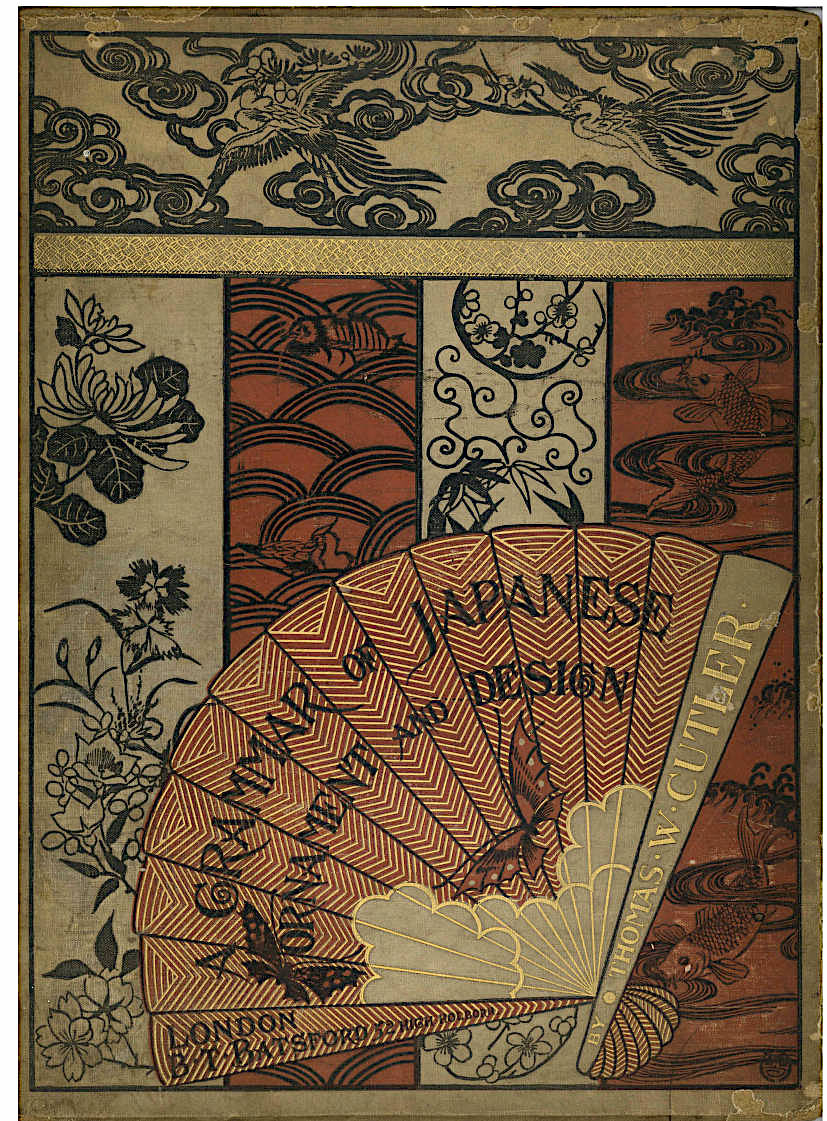
In 1880, architect Thomas W. Cutler endeavored to introduce his fellow Brits to Japanese art and design, a subject that remained novel for many Westerners of the time, given how recently the Tokugawa shogunate had “kept themselves aloof from all foreign intercourse, and their country jealously closed against strangers.”
Having written positively of China’s influence on Japanese artists, Cutler hoped that access to Western art would not prove a corrupting factor:
The fear that a bastard art of a very debased kind may arise in Japan, is not without foundation…The European artist, who will study the decorative art of Japan carefully and reverently, will not be in any haste to disturb, still less to uproot, the thought and feeling from which it has sprung; it is perhaps the ripest and richest fruit of a tree cultivated for many ages with the utmost solicitude and skill, under conditions of society peculiarly favorable to its growth.
Having never visited Japan himself, Cutler relied on previously published works, as well as numerous friends who were able to furnish him with “reliable information upon many subjects,” given their “long residence in the country.”
Accordingly, expect a bit of bias in A Grammar of Japanese Ornament and Design (1880).
That said, Cutler emerges as a robust admirer of Japan’s painting, lacquerware, ceramics, calligraphy, textiles, metalwork, enamelwork and netsuke carvings, the latter of which are “are often marvelous in their humor, detail, and even dignity.”
Only Japan’s wooden architecture, which he confidently pooh poohed as little more than “artistic carpentry, decoration, and gardening”, cleverly designed to withstand earthquakes, get shown less respect.
Cutler’s renderings of Japanese design motifs, undertaken in his free time, are the lasting legacy of his book, particularly for those on the prowl for copyright-free graphics.


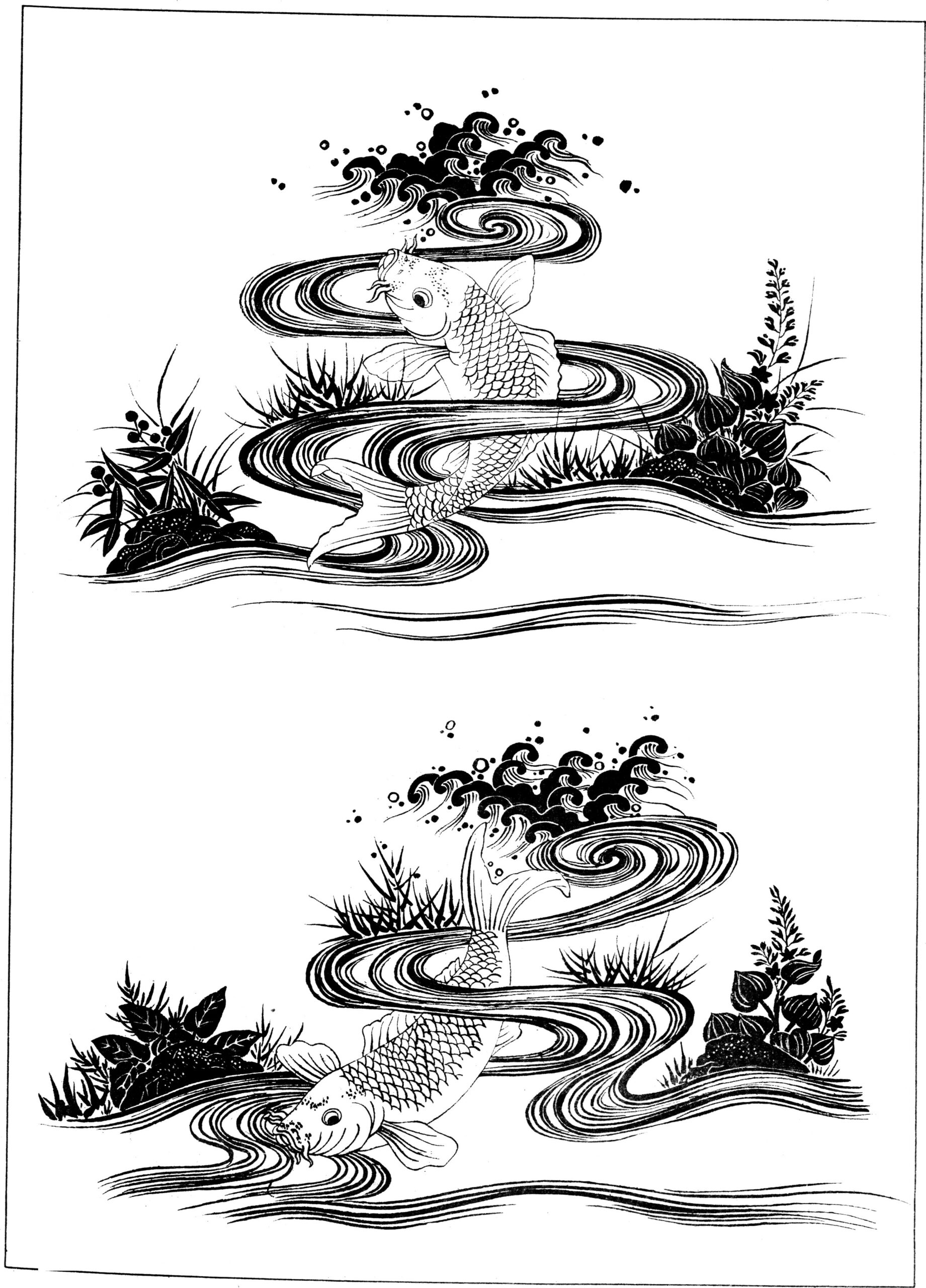
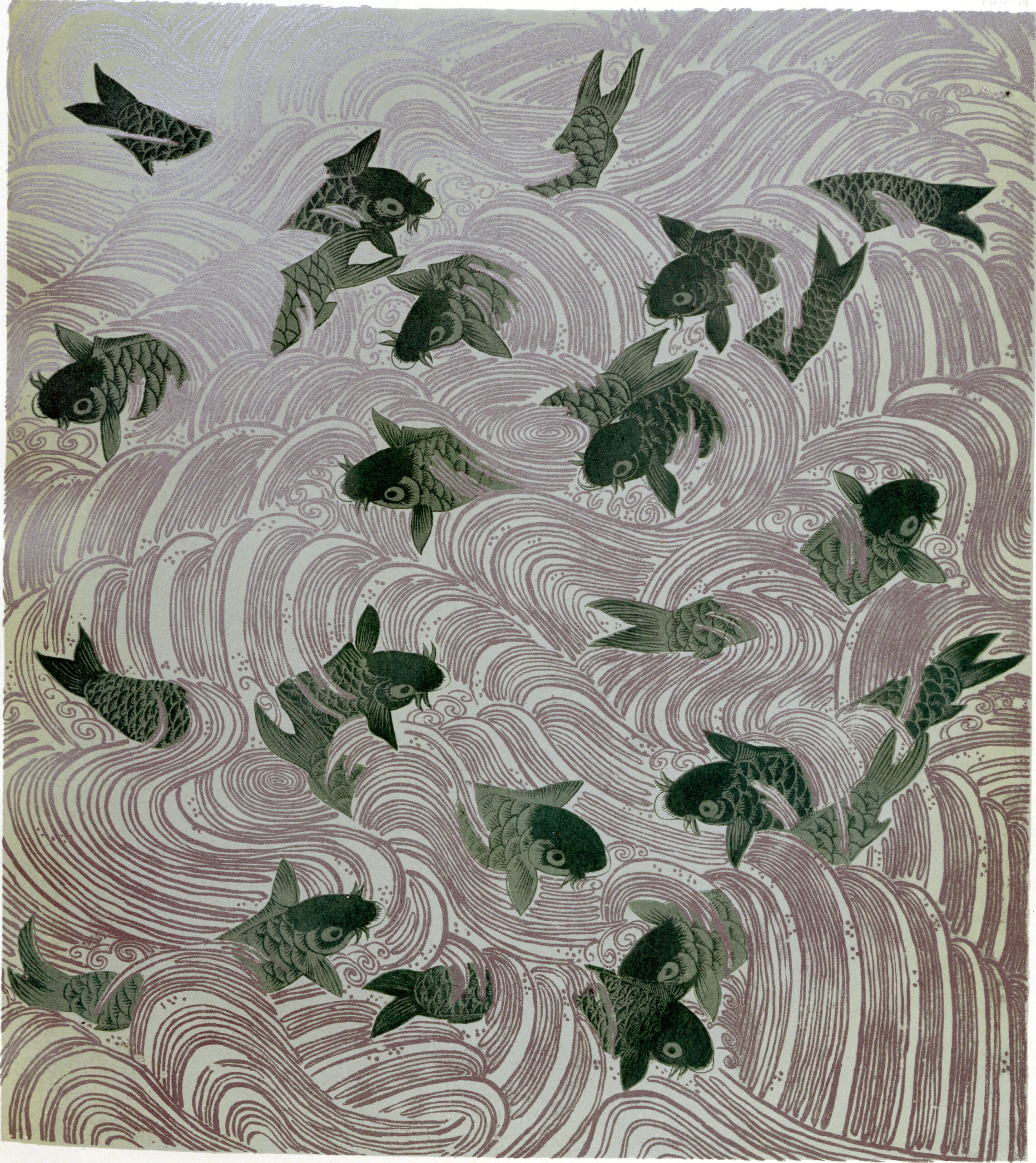
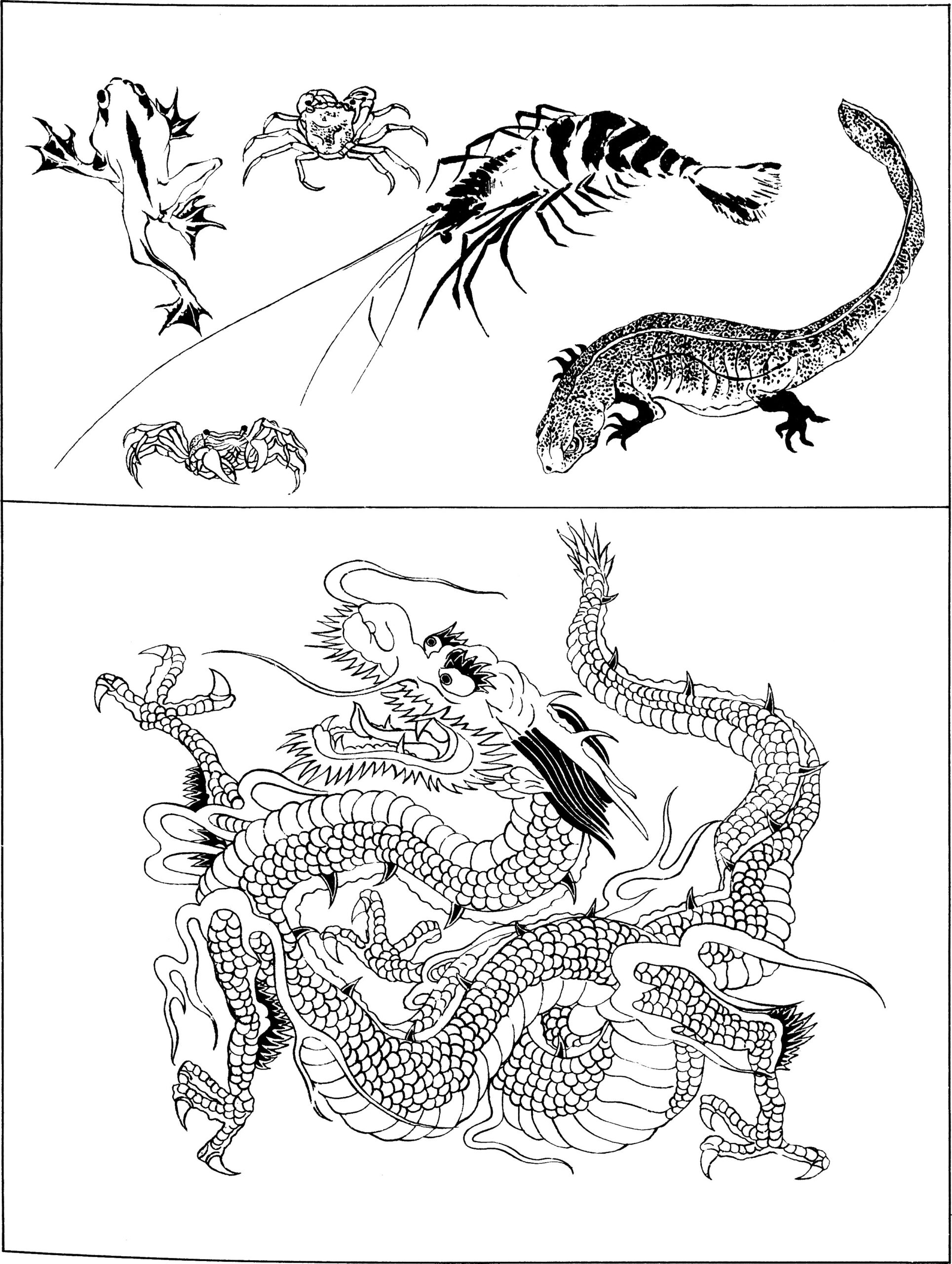

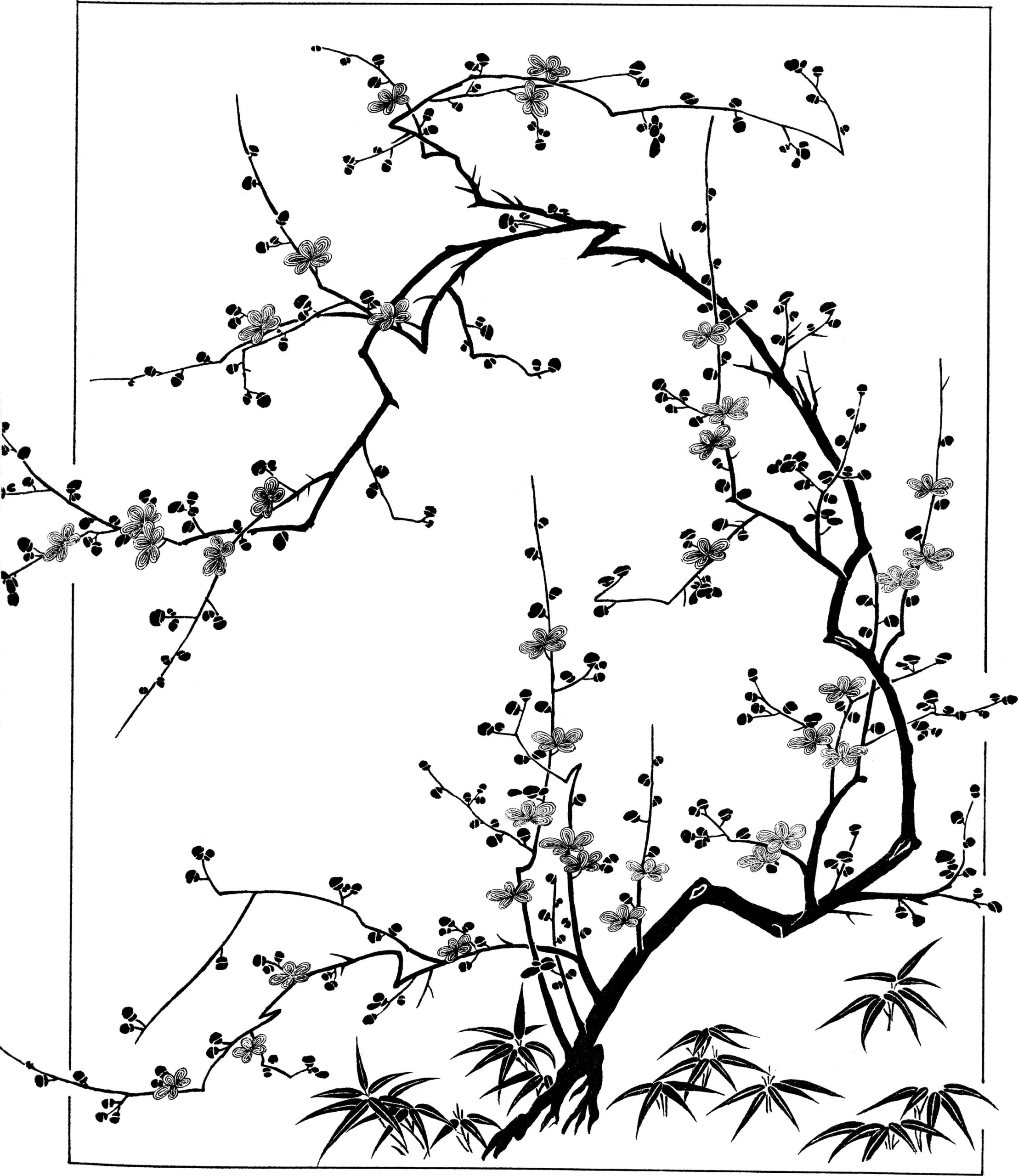
Cutler observed that the “most characteristic” element of Japanese decoration was its close ties to the natural world, adding that unlike Western designers, a Japanese artist “would throw his design a little out of the center, and cleverly balance the composition by a butterfly, a leaf, or even a spot of color.”
The below plant studies are drawn from the work of the great ukiyo‑e master Hokusai, a “man of the people” who ushered in a period of “vitality and freshness” in Japanese art.


A sampler of curved lines made with single brush strokes can be used to create clouds or the intricate scrollwork that inspired Western artists and designers of the Aesthetic Movement.
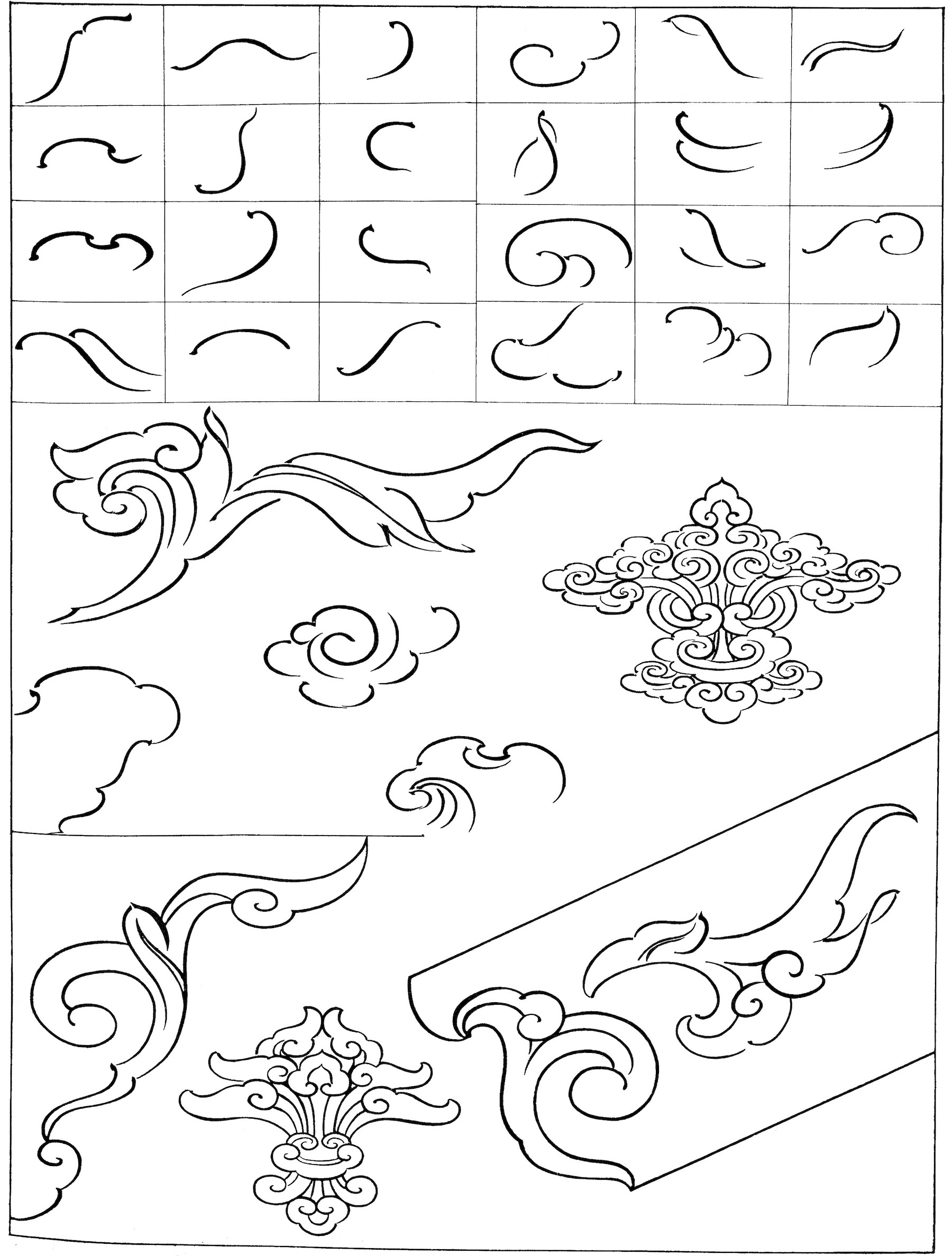
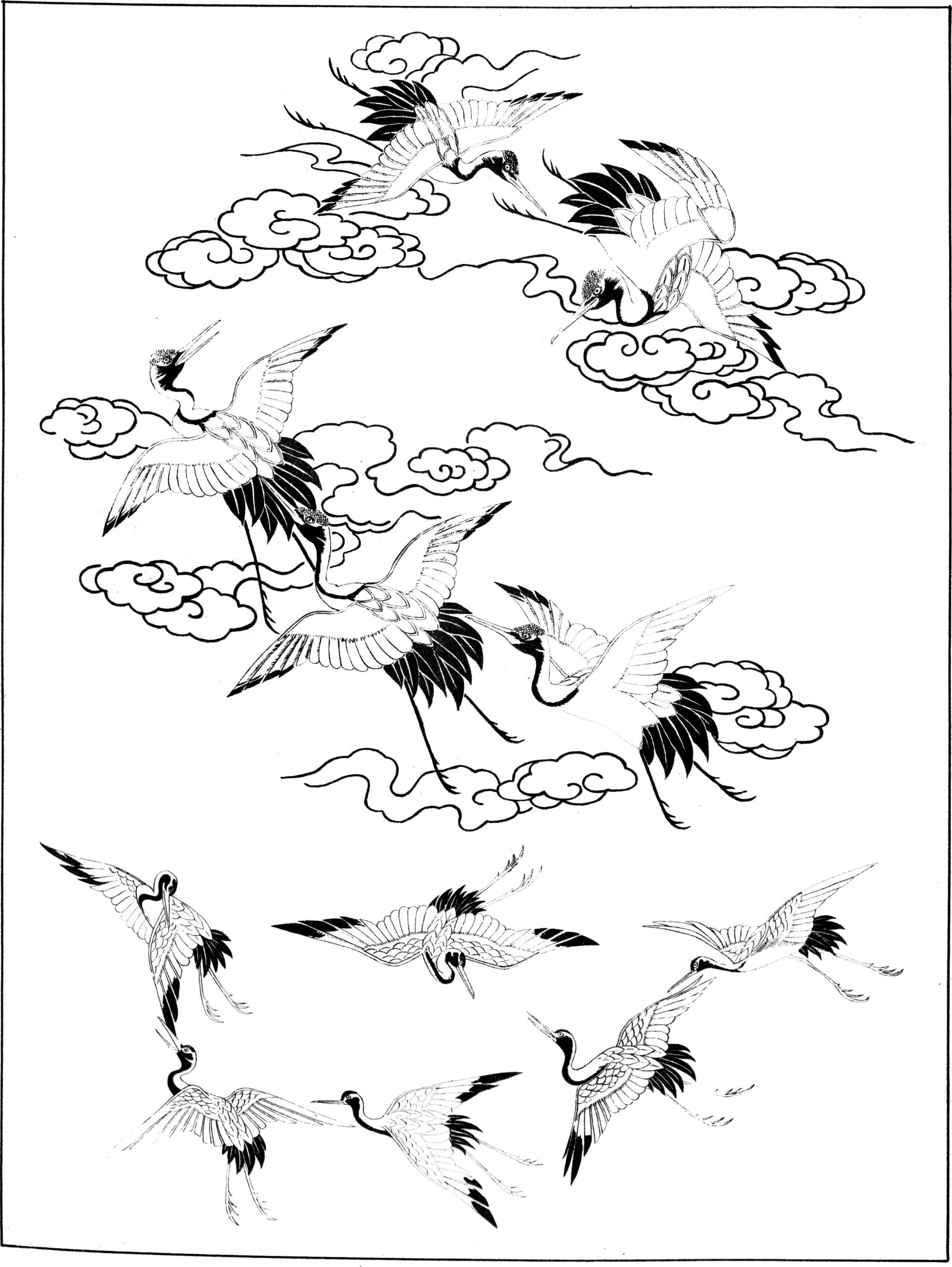

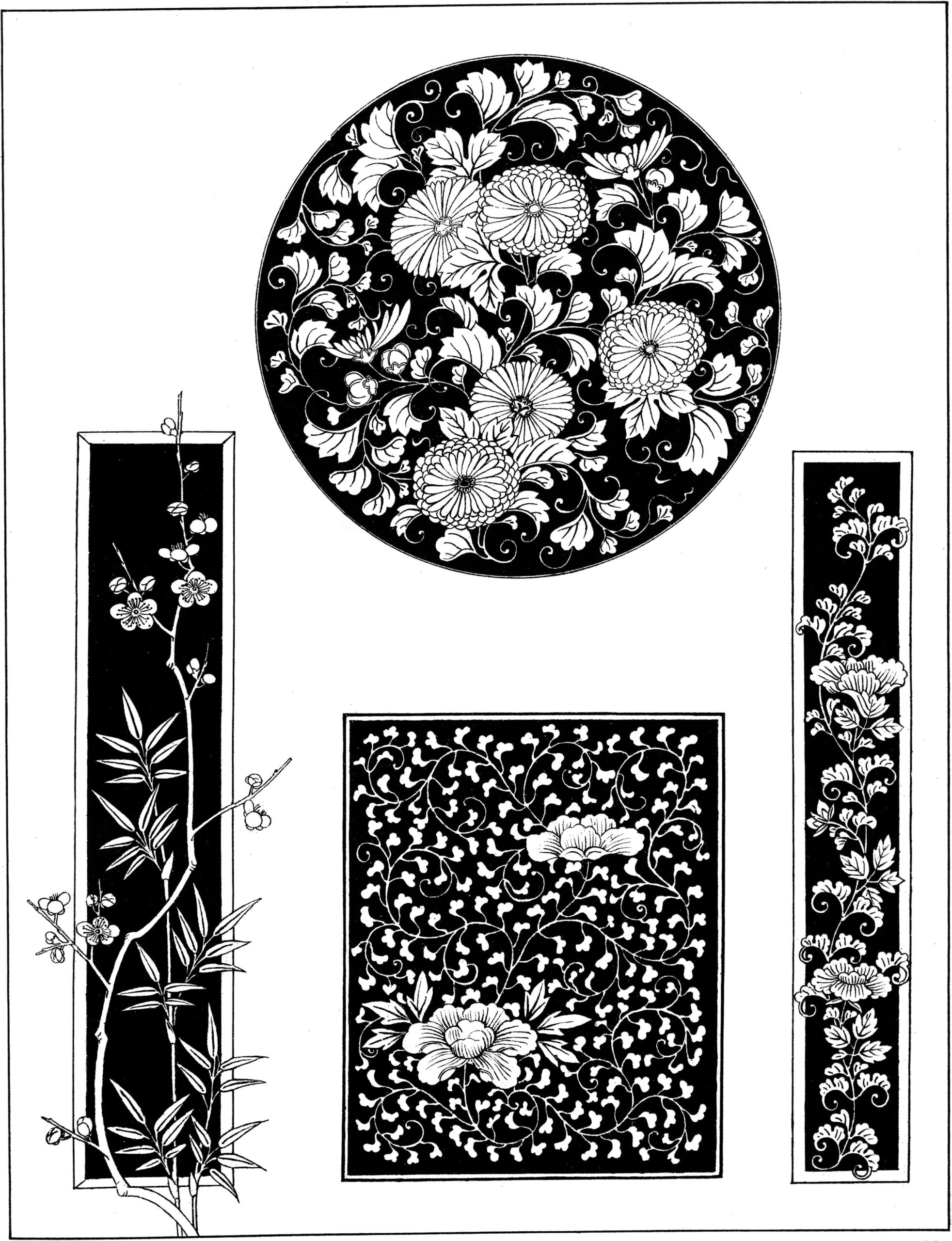
While Cutler might not have thought much of Japanese architecture, it’s worth noting that his book shows up in the footnotes of Frank Lloyd Wright and Japan: The Role of Traditional Japanese Art and Architecture in the Work of Frank Lloyd Wright.


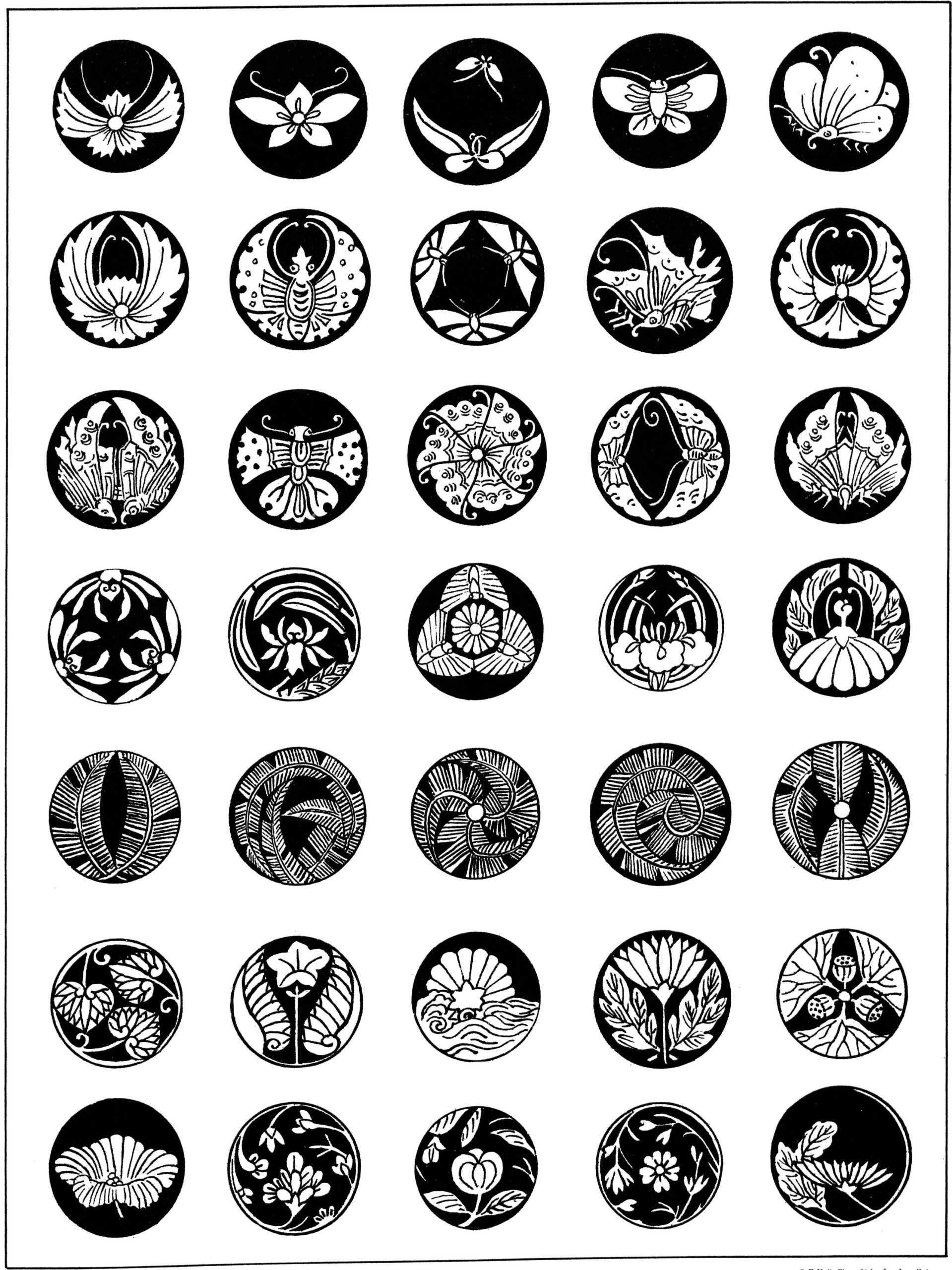
Take a peek at some Japanese-inspired wallpaper of Cutler’s own design, then explore A Grammar of Japanese Ornament and Design by Thomas W. Cutler here.
Related Content
Download Classic Japanese Wave and Ripple Designs: A Go-to Guide for Japanese Artists from 1903
– Ayun Halliday is the Chief Primatologist of the East Village Inky zine and author, most recently, of Creative, Not Famous: The Small Potato Manifesto and Creative, Not Famous Activity Book. Follow her @AyunHalliday.
Read More...How the Ancient Greeks Invented the First Computer: An Introduction to the Antikythera Mechanism (Circa 87 BC)
At the center of Indiana Jones and the Dial of Destiny is a device quite like the real ancient Greek artifact known as the Antikythera mechanism, which has been called the world’s oldest computer. “Every Indiana Jones adventure needs an exotic MacGuffin,” writes Smithsonian.com’s Meilan Solly, and in this latest and presumably last installment in its series, “the hero chases after the Archimedes Dial, a fictionalized version of the Antikythera mechanism that predicts the location of naturally occurring fissures in time.” After undergoing Indiana Jonesification, in other words, the Antikythera mechanism becomes a time machine, a function presumably not included in even the least responsible archaeological speculations about its still-unclear set of functions.
But according to Jo Marchant, author of Decoding the Heavens: Solving the Mystery of the World’s First Computer, the Antikythera mechanism really is “a time machine in a sense. When you turn the handle on the side, you are moving backward in time, you’re controlling time. You’re seeing the universe either being fast-forwarded or reversed, and you’re choosing the speed and can set it to any moment in history that you want.”
She refers to the fact that a handle on the side of the mechanism controls gears within it, which engage to compute and display “the positions of celestial bodies, the date, the timing of athletic games. There’s a calendar, there’s an eclipse prediction dial, and there are inscriptions giving you information about what the stars are doing.”
It seems that the Antikythera mechanism could tell you “everything you need to know about the state and workings of the cosmos,” at least if you’re an ancient Greek. But it also tells us something important about the ancient Greeks themselves: specifically, that they’d developed much more sophisticated mechanical engineering than we’d known before the early twentieth century, when the device was discovered in a shipwreck. According to the BBC video above on the details of the Antikythera mechanism’s known capabilities, Arthur C. Clarke thought that “if the ancient Greeks had understood the capabilities of the technology, then they would have reached the moon within 300 years.” A grand old civilization that turns out to have been on a course for outer space: now there’s a viable premise for the next big architectural adventure film franchise.
Related content:
How the Ancient Greeks Shaped Modern Mathematics: A Short, Animated Introduction
Modern Artists Show How the Ancient Greeks & Romans Made Coins, Vases & Artisanal Glass
Based in Seoul, Colin Marshall writes and broadcasts on cities, language, and culture. His projects include the Substack newsletter Books on Cities, the book The Stateless City: a Walk through 21st-Century Los Angeles and the video series The City in Cinema. Follow him on Twitter at @colinmarshall or on Facebook.
Read More...Explore the Largest Online Archive Exploring the Genius of Leonard da Vinci
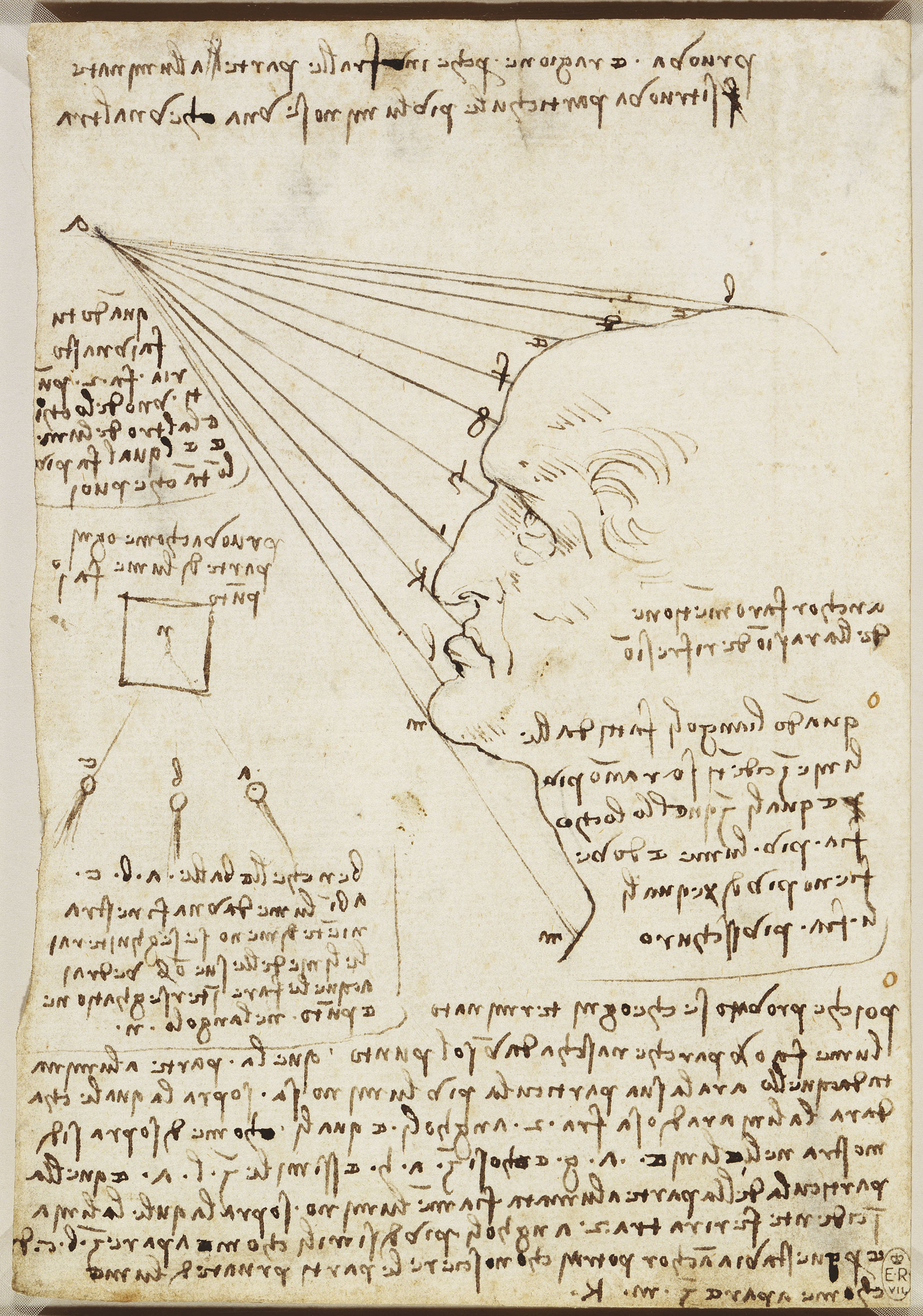
We dare not speculate as to what Leonardo DaVinci would make of artificial intelligence.
We are, however, fairly confident that he would love the Internet.
The Renaissance-era genius applied his sophisticated understanding of the human body and the natural world to other types of systems, including plans for civil engineering projects, military projectiles, and flying machines.
Google Arts & Culture’s new initiative Inside a Genius Mind offers an interactive experience of the codices in which Da Vinci made his sketches, diagrams, and notes.
It’s also a curatorial collaboration between a human — Oxford art history professor Martin Kemp — and artificial intelligence.
Professor Kemp, author of Living with Leonardo: Fifty Years of Sanity and Insanity in the Art World and Beyond, brings a lifetime of rigorous study and passion for the subject.
His non-human counterpart used machine learning to delve into the notebooks’ contents, investigating some 1040 pages from 6 volumes and “drawing thematic connections across time and subject matter to reflect Leonardo’s spirit of interdisciplinary imagination, innovation and the profound unity at the heart of his apparently diverse pursuits.”
Upon launching the experiment, you bushwhack your way through the individual codices by clicking on the sketches floating toward you like elements in a classic space-themed video game, or choose to enjoy one of five curated stories.
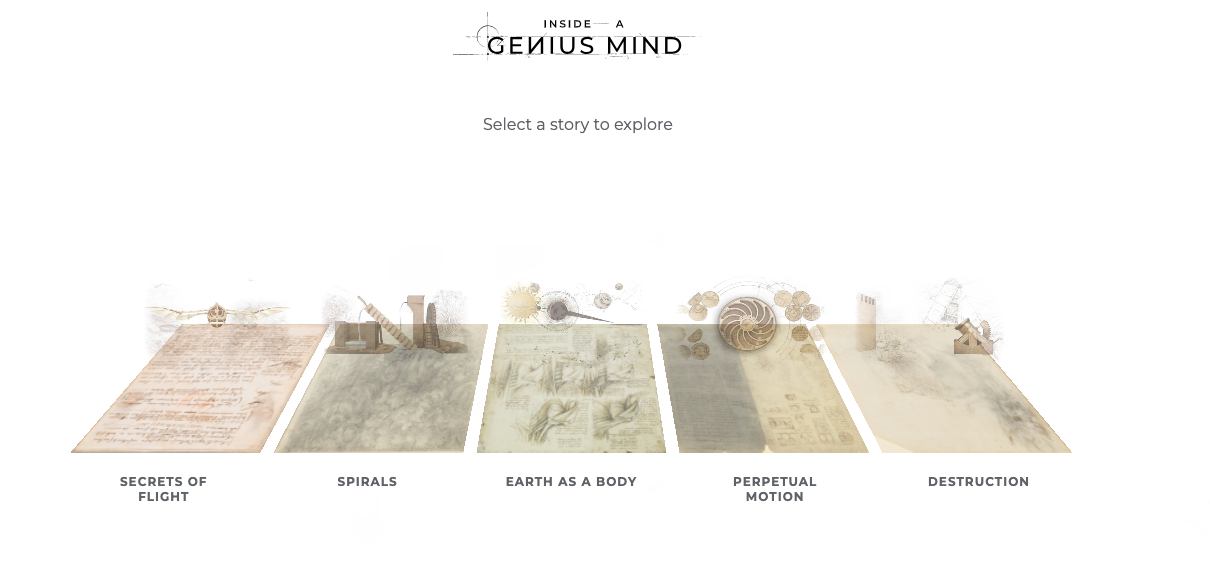
We went with Earth as Body, which gathers seven pages from the UK’s Royal Collection Trust’s Codex Windsor, and one from the Codex Leicester, which inspired an animated model that should surely please its current owner, Bill Gates.

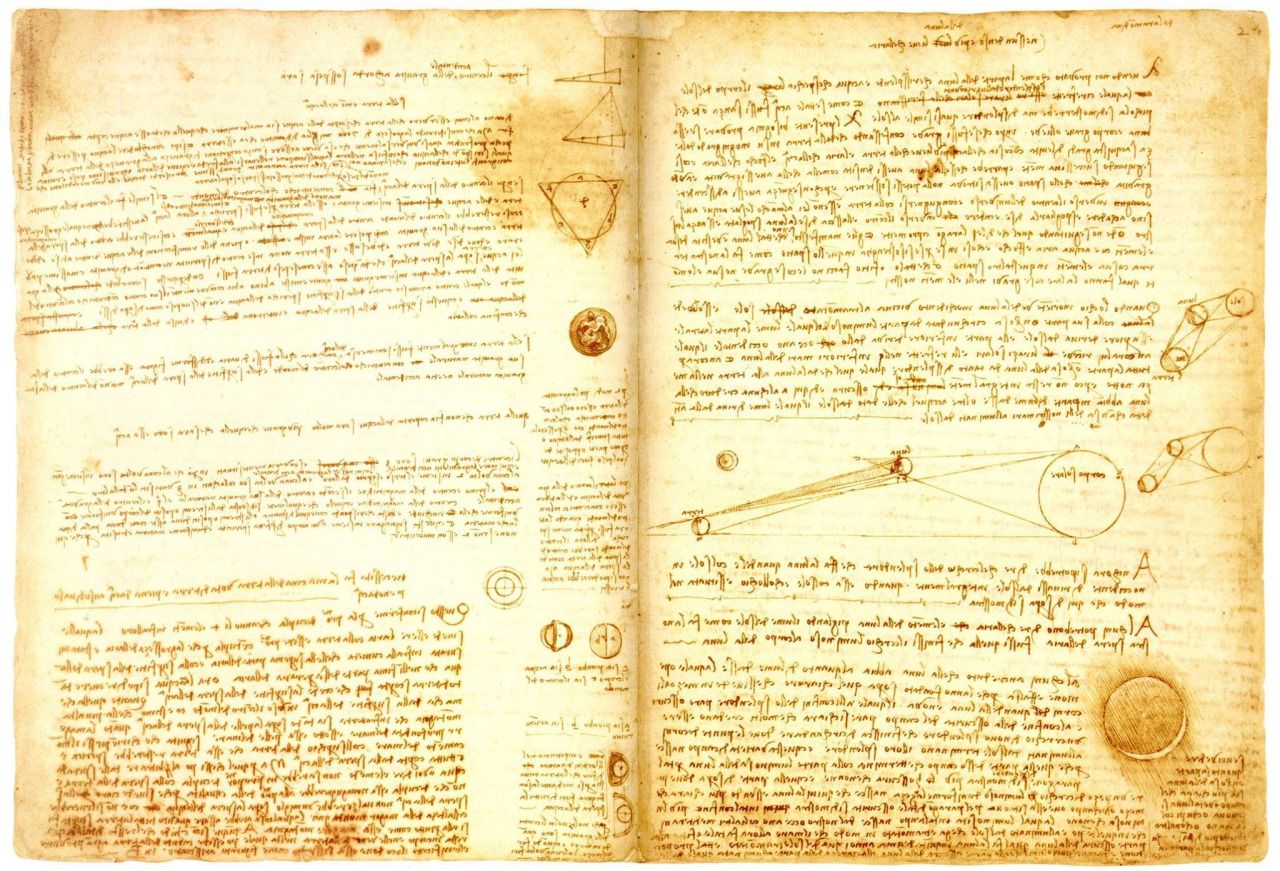
Using a discreet and somewhat fiddly navigation bar on the left side of the screen, we toured Leonardo’s renderings of the flayed muscles of the upper spine, the vessels and nerves of the neck and liver, the Arno valley with the route of a proposed canal that would run from Florence to Pisa, a view of the Alps from Milan, the fall of light on a face, studies of optics and men in action, and observations of the moon and earthshine.
How are these things related?
“Leonardo believed that the human body represented the whole natural world in miniature” and the selections do offer food for thought that Leonardo’s passion for the underlying laws of nature is the common thread running through his research and art.
Each image is accompanied a button inviting you to “explore” the work further. Click it for information about dimensions, provenance, and media, as well as some tantalizing biographical tidbits, such as this, adapted from the catalogue for the 2019 exhibit Leonardo da Vinci: A Life in Drawing:
Leonardo had first studied anatomy in the late 1480s. By the end of his life he claimed to have performed 30 human dissections, intending to publish an illustrated treatise on the subject, but this was never completed, and Leonardo’s work thus had no discernible impact on the discipline. His only documented dissection was carried out in the winter of 1507–8, when he performed an autopsy on an old man whose death he had witnessed in a hospital in Florence. The studies on this page from Leonardo’s notebook are based on that dissection: on the verso Leonardo depicts the vessels of the liver; and in notes elsewhere in the notebook he gives the first known clinical description of cirrhosis of the liver.
Perhaps you’d like to circumvent the machine learning and use your own genius mind to make connections a la Da Vinci?
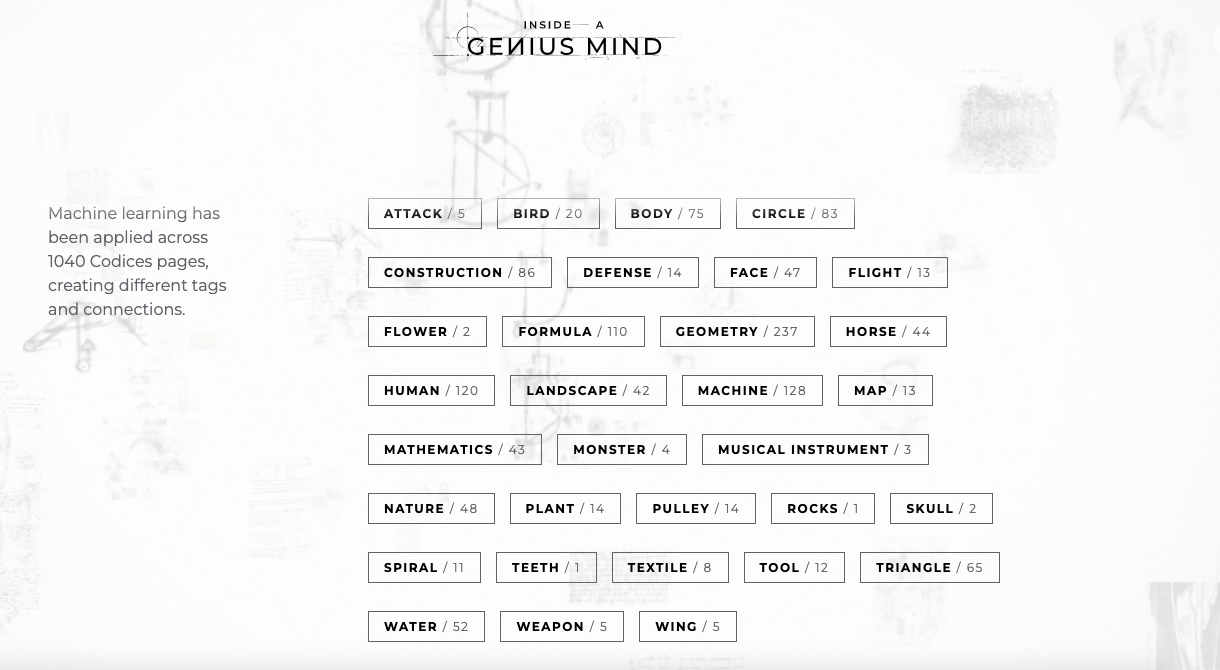
Try messing around with the AI tags. See what you can cobble together to forge a cohesive alliance between such elements as wing, horse, map, musical instruments, and spiral.
Or cleanse your palate by putting a mash-up of two codex sketches on a digital sticky with the help of Google AI, mindful that the master, who lived to the ripe old age of 67, was probably a bit more intentional with his time…
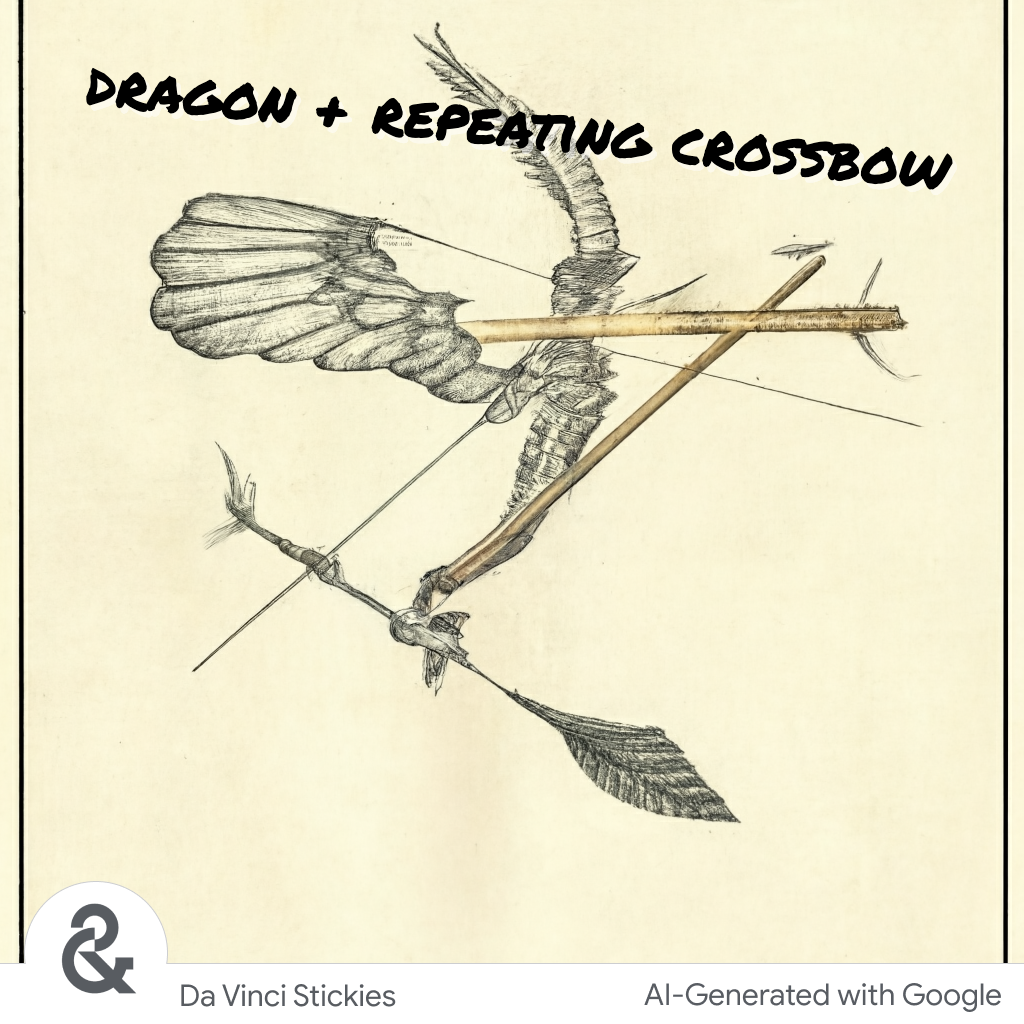
Begin your explorations of Google Arts & Culture’s Inside a Genius Mind here.
Related Content
The Ingenious Inventions of Leonardo da Vinci Recreated with 3D Animation
Leonardo Da Vinci’s To Do List (Circa 1490)
– Ayun Halliday is the Chief Primatologist of the East Village Inky zine and author, most recently, of Creative, Not Famous: The Small Potato Manifesto and Creative, Not Famous Activity Book. Follow her @AyunHalliday.
Read More...How Stanley Kubrick Adapted Stephen King’s The Shining into a Cinematic Masterpiece
For most of us, the title The Shining first calls to mind the Stanley Kubrick film, not the Stephen King novel from which it was adapted. Though it would be an exaggeration to say that the former has entirely eclipsed the latter, the enormous difference between the works’ relative cultural impact speaks for itself — as does the resentment King occasionally airs about Kubrick’s extensive reworking of his original story. At the center of both versions of The Shining is a winter caretaker at a mountain resort who goes insane and tries to murder his own family, but in most other respects, the experience of the two works could hardly be more different.
How King’s The Shining became Kubrick’s The Shining is the subject of the video essay above from Tyler Knudsen, better known as CinemaTyler, previously featured here on Open Culture for his videos on such auteurs as Robert Wiene, Jean Renoir, and Andrei Tarkovsky (as well as a seven-part series on Kubrick’s own 2001: A Space Odyssey). It begins with Kubrick’s search for a new idea after completing Barry Lyndon, which involved opening book after book at random and tossing against the wall any and all that proved unable to hold his attention. When it became clear that The Shining, the young King’s third novel, wouldn’t go flying, Kubrick enlisted the more experienced novelist Diane Johnson to collaborate with him on an adaptation for the screen.
Almost all of Kubrick’s films are based on books. As Knudsen explains it, “Kubrick felt that there aren’t many original screenwriters who are a high enough caliber as some of the greatest novelists,” and that starting with an already-written work “allowed him to see the story more objectively.” In determining the qualities that resonated with him, personally, “he could get at the core of what was good about the story, strip away the clutter, and enhance the most brilliant aspects with a profound sense of hindsight.” In no case do the transformative effects of this process come through more clearly than The Shining: Kubrick and Johnson reduced King’s almost 450 dialogue- and flashback-filled pages to a resonantly stark two and a half hours of film that has haunted viewers for four decades now.
“I don’t think the audience is likely to miss the many and self-consciously ‘heavy’ pages King devotes to things like Jack’s father’s drinking problem or Wendy’s mother,” Kubrick once said. Still, anyone can hack a story down: the hard part is knowing what to keep, and even more so what to intensify for maximum effect. Knudsen lists off a host of choices Kubrick and Johnson considered (including showing more Native American imagery, which should please fans of Bill Blakemore’s analysis in “The Family of Man”) but ultimately rejected. The result is a film with an abundance of visual detail, but only enough narrative and character detail to facilitate Kubrick’s aim of “using the audience’s own imagination against them,” letting them fill in the gaps with fears of their own. While his version of The Shining evades nearly all clichés, it does demonstrate the truth of one: less is more.
Related content:
How Stanley Kubrick Made 2001: A Space Odyssey: A Seven-Part Video Essay
Stanley Kubrick’s The Shining Reimagined as Wes Anderson and David Lynch Movies
The Shining and Other Complex Stanley Kubrick Films Recut as Simple Hollywood Movies
Based in Seoul, Colin Marshall writes and broadcasts on cities, language, and culture. His projects include the Substack newsletter Books on Cities, the book The Stateless City: a Walk through 21st-Century Los Angeles and the video series The City in Cinema. Follow him on Twitter at @colinmarshall or on Facebook.
Read More...Support Us
We're hoping to rely on loyal readers, rather than erratic ads. Please click the Donate button and support Open Culture. You can use Paypal, Venmo, Patreon, even Crypto! We thank you!

About Us

Open Culture scours the web for the best educational media. We find the free courses and audio books you need, the language lessons & educational videos you want, and plenty of enlightenment in between.
Advertise With Us
FREE UPDATES!
GET OUR DAILY EMAIL
Get the best cultural and educational resources on the web curated for you in a daily email. We never spam. Unsubscribe at any time.
FOLLOW ON SOCIAL MEDIA
Open Culture editor Dan Colman scours the web for the best educational media. He finds the free courses and audio books you need, the language lessons & movies you want, and plenty of enlightenment in between.
Advertise With Us

