See the Climactic Ending of Steven Spielberg’s Breakout Duel Recreated Entirely with 3D-Printed Models
With his last picture The Fabelmans, Steven Spielberg told a story of his own. Given his long-held stature as more or less the personification of big-screen Hollywood entertainment, there’s only one such story he could have told: that of how he became a filmmaker. The most memorable of The Fabelmans depicts the young directorial surrogate alone in the basement of his family home, re-creating the train crash scene from The Greatest Show on Earth with an eight-millimeter camera and a Lionel set. Today, on the brink of his ninth decade with his famous productivity hardly slowing, Spielberg remains, on some level, the wide-eyed boy smashing his toys together at just the right angle. What better way to pay him tribute than to replicate his cinematic achievements in miniature?
The Fabelmans ends with its protagonist a college student, eager to drop out and go straight to Hollywood. At the same point in life, the real Spielberg was about to receive an offer from Universal Pictures to write and direct the short film that became Amblin’, which itself led to a contract to direct television productions.
He showed what he could do with episodes of Marcus Welby, M.D., The Name of the Game, and Columbo, among other series. Then he stepped up to TV movies, a form regarded as inferior in all respects to theatrical releases, but one he managed to transcend on the first try. When it first aired in 1971 as an ABC Movie of the Week, Duel presented its viewers with a harrowing, near-mythological confrontation between a middle-aged traveling salesman in a Plymouth Valiant and an unseen trucker in a hulking, smoke-belching big rig who seems bent on destroying him.
Given that its director was just 24 years old at the time, Duel very much counts as early Spielberg. Yet it’s also distilled Spielberg, a head-on treatment of middle-class normality’s sudden encounter with a force of incomprehensible menace — a theme much revisited in his work since — with cinematic rhythms precisely calculated for optimal tension and release. An aspiring filmmaker could learn much from re-creating its sequences shot-for-shot. The YouTube channel Movies Miniatures Effects does just that in the video above, which documents a remaking with 3D-printed maquettes of the final crash, after Dennis Weaver’s desperate everyman manages to outwit his pursuer. “Sheer skill needed more philosophy for a fitting resolution,” wrote David Thomson of this ending. Perhaps so, but the more than 18 million views so far racked up by its miniature version do suggest a film that more than retains its power after 45 years.
Related Content:
Watch Steven Spielberg’s Rarely Seen 1968 Film Amblin’
Watch Steven Spielberg’s Debut: Two Films He Directed as a Teenager
How Movies Created Their Special Effects Before CGI: Metropolis, 2001: A Space Odyssey & More
How Car Chase Scenes Have Evolved Over 100 Years
Based in Seoul, Colin Marshall writes and broadcasts on cities, language, and culture. He’s the author of the newsletter Books on Cities as well as the books 한국 요약 금지 (No Summarizing Korea) and Korean Newtro. Follow him on the social network formerly known as Twitter at @colinmarshall.
Read More...Learn Ancient Greek in 118 Free Lessons: A Free Online Course from Brandeis & Harvard
Leonard Muellner (Professor Emeritus of Classical Studies at Brandeis University) and Belisi Gillespie (who now teaches classics at Agnes Scott College) have posted 118 videos on YouTube, which, when taken together, “present all the content covered in two semesters of a college-level Introduction to Ancient Greek course.”
The textbook used is Greek: An Intensive Course. 2nd edition. And if you read the blurb that accompanies each video on YouTube, you’ll find out 1) what material each video covers, and 2) what pages are being used in the textbook.
Made available online by Harvard’s Center for Hellenic Studies, the playlist of Ancient Greek lessons will be added to our collections, Learn 45+ Languages Online for Free: Spanish, Chinese, English & More and 1,700 Free Online Courses from Top Universities.
If you would like to support the mission of Open Culture, consider making a donation to our site. It’s hard to rely 100% on ads, and your contributions will help us continue providing the best free cultural and educational materials to learners everywhere. You can contribute through PayPal, Patreon, and Venmo (@openculture). Thanks!
Related Content:
Hear Homer’s Iliad Read in the Original Ancient Greek
What Ancient Greek Music Sounded Like: Listen to a Reconstruction That’s “100% Accurate”
Introduction to Ancient Greek History: A Free Online Course by Yale Historian Donald Kagan
The History of Ancient Greece in 18 Minutes: A Brisk Primer Narrated by Brian Cox
Read More...
Howard Zinn’s “What the Classroom Didn’t Teach Me About the American Empire”: An Illustrated Video Narrated by Viggo Mortensen
“Throughout U.S. history, our military has been used not for moral purposes but to expand economic, political, and military power,” says a cartoon Howard Zinn in Mike Konopacki’s 273-page comic book A People’s History of American Empire. Written with Zinn and historian Paul Buhle, the book adapts Zinn’s pathbreaking history from below, A People’s History of the United States, and his autobiography You Can’t Be Neutral on a Moving Train in a direct examination of the U.S. Imperium. Konopacki calls the book his “answer” to the textbooks of “the power structure.”
Above, you can see a short video adaptation of some key text from A People’s History of American Empire. Narrated by Viggo Mortensen, the video gives us a nutshell version of Zinn’s cultural, political, and moral education—what the Germans used to call bildung—as he grows from a somewhat naive WWII bomber pilot, to a college student on the G.I. Bill, to a graduate student, then professor, of history.
Along the way he notices that the map in every textbook labeled “Western Expansion” shows “the march across the continent as a natural, almost biological phenomenon”:
That huge acquisition of land called the Louisiana Purchase gave no hint of anything but vacant land acquired, no sense that this territory was occupied by hundreds of Indian tribes that would have to be annihilated or forced out of their homes in what we now call ethnic cleansing.
Zinn goes on to chart the rise of U.S. Imperialism into the twentieth century as the increasingly militarized nation seizes Mexican territory and invades Cuba and the Philippines. Then we come to the ostensibly anti-communist “police actions” in Korea and Vietnam, and Zinn’s highly influential 1967 book Vietnam: The Logic of Withdrawal. When entrusted by Daniel Ellsberg with hundreds of pages of the Pentagon Papers, Zinn learns that the war in Vietnam is largely waged for the same reasons as our other imperialist moves abroad: the papers “spoke bluntly of the U.S. motives as a quest for tin, rubber, oil.”
But what of the war Zinn begins with, the war in which he fought? Near the end of the short film, he returns to his days as a WWII bomber, when he heard a fellow pilot argue that the U.S. was as “motivated by ambitions of control and conquest” as its enemies. He disagreed at the time, but in the intervening years came to see his fellow airman’s point. What we get with our idealism about any war, Zinn says, is a seeming “Imperialism lite,” whose motives are benign. Soft power, we’ve been told (until recently), wins the day. But peel back the curtain on our actions in the world, and we will see the same atrocities, the same cruelties, and the same basic motivations as every other act of imperialist aggression.
Note: An earlier version of this post appeared on our site in 2013.
Related Content:
Howard Zinn’s Recommended Reading List for Activists Who Want to Change the World
See Albert Camus’ Historic Lecture, “The Human Crisis,” Performed by Actor Viggo Mortensen
Josh Jones is a writer and musician based in Durham, NC.
Read More...Cats in Medieval Manuscripts & Paintings
Renaissance artist Albrecht Dürer (1471–1528) never saw a rhino himself, but by relying on eyewitness descriptions of the one King Manuel I of Portugal intended as a gift to the Pope, he managed to render a fairly realistic one, all things considered.
Medieval artists’ renderings of cats so often fell short of the mark, Youtuber Art Deco wonders if any of them had seen a cat before.
Point taken, but cats were well integrated into medieval society.

Royal 12 C xix f. 36v/37r (13th century)
Cats provided medieval citizens with the same pest control services they’d been performing since the ancient Egyptians first domesticated them.
Ancient Egyptians conveyed their gratitude and respect by regarding cats as symbols of divinity, protection, and strength.
Certain Egyptian goddesses, like Bastet, were imbued with unmistakably feline characteristics.
The Vintage News reports that harming a cat in those days was punishable by death, exporting them was illegal, and, much like today, the death of a cat was an occasion for public sorrow:
When a cat died, it was buried with honors, mummified and mourned by the humans. The body of the cat would be wrapped in the finest materials and then embalmed in order to preserve the body for a longer time. Ancient Egyptians went so far that they shaved their eyebrows as a sign of their deep sorrow for the deceased pet.

Aberdeen University Library, MS 24 f. 23v (England, c 1200)
The medieval church took a much darker view of our feline friends.
Their close ties to paganism and early religions were enough for cats to be judged guilty of witchcraft, sinful sexuality, and fraternizing with Satan.
In the late 12th-century, writer Walter Map, a soon-to-be archdeacon of Oxford, declared that the devil appeared before his devotees in feline form:
… hanging by a rope, a black cat of great size. As soon as they see this cat, the lights are turned out. They do not sing or recite hymns in a distinct way, but they mutter them with their teeth closed and they feel in the dark towards where they saw their lord, and when they find it, they kiss it, the more humbly depending on their folly, some on the paws, some under the tail, some on the genitals. And as if they have, in this way, received a license for passion, each one takes the nearest man or woman and they join themselves with the other for as long as they choose to draw out their game.
Pope Innocent VIII issued a papal bull in 1484 condemning the “devil’s favorite animal and idol of all witches” to death, along with their human companions.
13th-century Franciscan monk Bartholomaeus Anglicus refrained from demonic tattle, but neither did he paint cats as angels:
He is a full lecherous beast in youth, swift, pliant, and merry, and leapeth and reseth on everything that is to fore him: and is led by a straw, and playeth therewith: and is a right heavy beast in age and full sleepy, and lieth slyly in wait for mice: and is aware where they be more by smell than by sight, and hunteth and reseth on them in privy places: and when he taketh a mouse, he playeth therewith, and eateth him after the play. In time of love is hard fighting for wives, and one scratcheth and rendeth the other grievously with biting and with claws. And he maketh a ruthful noise and ghastful, when one proffereth to fight with another: and unneth is hurt when he is thrown down off an high place. And when he hath a fair skin, he is as it were proud thereof, and goeth fast about: and when his skin is burnt, then he bideth at home; and is oft for his fair skin taken of the skinner, and slain and flayed.
Pigs and rats also had a bad rep, and like cats, were tortured and executed in great numbers by pious humans.

The Worksop Bestiary Morgan Library, MS M.81 f. 47r (England, c 1185)
Not every medieval city was anti-cat. As the Academic Cat Lady Johanna Feenstra writes of the above illustration from The Worksop Bestiary, one of the earliest English bestiaries:
Some would have interpreted the image of a cat pouncing on a rodent as a symbol for the devil going after the human soul. Others might have seen the cat in a completely different light. For instance, as Eucharistic guardians, making sure rodents could not steal and eat the Eucharistic wafers.

Bodleian Library Bodley 764 f. 51r (England, c 1225–50)

St John’s College Library, MS. 61 (England (York), 13th century)
It took cat lover Leonardo DaVinci to turn the situation around, with eleven sketches from life portraying cats in characteristic poses, much as we see them today. We’ll delve more into that in a future post.

Conrad of Megenberg, ‘Das Buch der Natur’, Germany ca. 1434. Strasbourg, Bibliothèque nationale et universitaire, Ms.2.264, fol. 85r

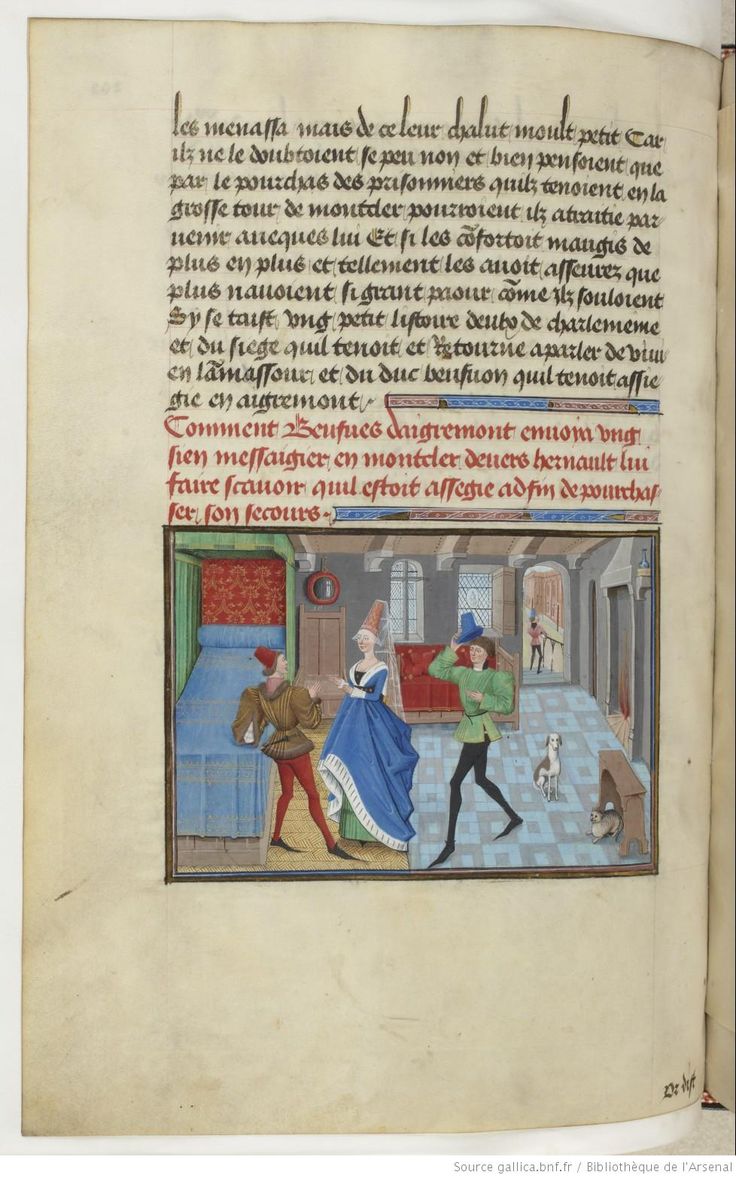

Note: An earlier version of this post appeared on our site in 2022.
Related Content
What People Named Their Cats in the Middle Ages: Gyb, Mite, Méone, Pangur Bán & More
Cats Migrated to Europe 7,000 Years Earlier Than Once Thought
Cats in Japanese Woodblock Prints: How Japan’s Favorite Animals Came to Star in Its Popular Art
- Ayun Halliday is the Chief Primatologist in NYC.
Read More...RIP Gladys Mae West, the Pioneering Black Mathematician Who Helped Lay the Foundation for GPS
Gladys Mae West was born in rural Virginia in 1930, grew up working on a tobacco farm, and died earlier this month a celebrated mathematician whose work made possible the GPS technology most of us use each and every day. Hers was a distinctively American life, in more ways than one. Seeking an escape from the agricultural labor she’d already gotten to know all too well, she won a scholarship to Virginia State College by becoming her high school class valedictorian; after earning her bachelor’s and master’s degrees in mathematics, she taught for a time and then applied for a job at the naval base up in Dahlgren. She first distinguished herself there by verifying the accuracy of bombing tables with a hand calculator, and from there moved on up to the computer programming team.
This was the early nineteen-sixties, when programming a computer meant not coding, but laboriously feeding punch cards into an enormous mainframe. West and her colleagues used IBM’s first transistorized machine, the 7030 (or “Stretch”), which was for a few years the fastest computer in the world.
It cost an equivalent of $81,860,000 in today’s dollars, but no other computer had the power to handle the project of calculating the precise shape of Earth as affected by gravity and the nature of the oceans. About a decade later, another team of government scientists made use of those very same calculations when putting together the model employed by the World Geodetic System, which GPS satellites still use today. Hence the tendency of celebratory obituaries to underscore the point that without West’s work, GPS wouldn’t be possible.
Nor do any of them neglect to point out the fact that West was black, one of just four such mathematicians working for the Navy at Dahlgren. Stories like hers have drawn much greater public interest since the success of Hidden Figures, the Hollywood adaptation of Margot Lee Shetterly’s book about the black female mathematicians at NASA during the Space Race. When that movie came out, in 2016, even West’s own children didn’t know the importance of the once-classified work she’d done. Only in 2018, when she provided that information on a biographical form she filled out for an event hosted by her college sorority, did it become public. She thus spent the last years of her long life as a celebrity, sought out by academics and journalists eager to understand the contributions of another no-longer-hidden figure. But to their questions about her own GPS use, she reportedly answered that she preferred a good old-fashioned paper map.
Related content:
Black History in Two Minutes: Watch 93 Videos Written & Narrated by Henry Louis Gates Jr.
Based in Seoul, Colin Marshall writes and broadcasts on cities, language, and culture. He’s the author of the newsletter Books on Cities as well as the books 한국 요약 금지 (No Summarizing Korea) and Korean Newtro. Follow him on the social network formerly known as Twitter at @colinmarshall.
Read More...Buckminster Fuller’s Dymaxion Sleep Plan: He Slept Two Hours a Day for Two Years & Felt “Vigorous” and “Alert”

One potential drawback of genius, it seems, is restlessness, a mind perpetually on the move. Of course, this is what makes many celebrated thinkers and artists so productive. That and the extra hours some gain by sacrificing sleep. Voltaire reportedly drank up to 50 cups of coffee a day, and seems to have suffered no particularly ill effects. Balzac did the same, and died at 51. The caffeine may have had something to do with it. Both Socrates and Samuel Johnson believed that sleep is wasted time, and “so for years has thought grey-haired Richard Buckminster Fuller,” wrote Time magazine in 1943, “futurific inventor of the Dymaxion house, the Dymaxion car and the Dymaxion globe.”
Engineer and visionary Fuller intended his “Dymaxion” brand to revolutionize every aspect of human life, or—in the now-slightly-dated parlance of our obsession with all things hacking—he engineered a series of radical “lifehacks.” Given his views on sleep, that seemingly essential activity also received a Dymaxion upgrade, the trademarked name combining “dynamic,” “maximum,” and “tension.” “Two hours of sleep a day,” Fuller announced, “is plenty.” Did he consult with specialists? Medical doctors? Biologists? Nothing as dull as that. He did what many a mad scientist does in the movies. (In the search, as Vincent Price says at the end of The Fly, “for the truth.”) He cooked up a theory, and tested it on himself.
“Fuller,” Time reported, “reasoned that man has a primary store of energy, quickly replenished, and a secondary reserve (second wind) that takes longer to restore.” He hypothesized that we would need less sleep if we stopped to take a nap at “the first sign of fatigue.” Fuller trained himself to do just that, forgoing the typical eight hours, more or less, most of us get per night. He found—as have many artists and researchers over the years—that “after a half-hour nap he was completely refreshed.” Naps every six hours allowed him to shrink his total sleep per 24-hour period to two hours. Did he, like the 50s mad scientist, become a tragic victim of his own experiment?
No danger of merging him with a fly or turning him invisible. The experiment’s failure may have meant a day in bed catching up on lost sleep. Instead, Fuller kept it up for two full years, 1932 and 1933, and reported feeling in “the most vigorous and alert condition that I have ever enjoyed.” He might have slept two hours a day in 30 minute increments indefinitely, Time suggests, but found that his “business associates… insisted on sleeping like other men,” and wouldn’t adapt to his eccentric schedule, though some not for lack of trying. In his book BuckyWorks J. Baldwin claims, “I can personally attest that many of his younger colleagues and students could not keep up with him. He never seemed to tire.”
A research organization looked into the sleep system and “noted that not everyone was able to train themselves to sleep on command.” The point may seem obvious to the significant number of people who suffer from insomnia. “Bucky disconcerted observers,” Baldwin writes, “by going to sleep in thirty seconds, as if he had thrown an Off switch in his head. It happened so quickly that it looked like he had had a seizure.” Buckminster Fuller was undoubtedly an unusual human, but human all the same. Time reported that “most sleep investigators agree that the first hours of sleep are the soundest.” A Colgate University researcher at the time discovered that “people awakened after four hours’ sleep were just as alert, well-coordinated physically and resistant to fatigue” as those who slept the full eight.
Sleep research since the forties has made a number of other findings about variable sleep schedules among humans, studying shift workers’ sleep and the so-called “biphasic” pattern common in cultures with very late bedtimes and siestas in the middle of the day. The success of this sleep rhythm “contradicts the normal idea of a monophasic sleeping schedule,” writes Evan Murray at MIT’s Culture Shock, “in which all our time asleep is lumped into one block.” Biphasic sleep results in six or seven hours of sleep rather than the seven to nine of monophasic sleepers. Polyphasic sleeping, however, the kind pioneered by Fuller, seems to genuinely result in even less needed sleep for many. It’s an idea that’s only become widespread “within roughly the last decade,” Murray noted in 2009. He points to the rediscovery, without any clear indebtedness, of Fuller’s Dymaxion system by college student Maria Staver, who named her method “Uberman,” in honor of Nietzsche, and spread its popularity through a blog and a book.
Murray also reports on another blogger, Steve Pavlina, who conducted the experiment on himself and found that “over a period of 5 1/2 months, he was successful in adapting completely,” reaping the benefits of increased productivity. But like Fuller, Pavlina gave it up, not for “health reasons,” but because, he wrote, “the rest of the world is monophasic” or close to it. Our long block of sleep apparently contains a good deal of “wasted transition time” before we arrive at the necessary REM state. Polyphasic sleep trains our brains to get to REM more quickly and efficiently. For this reason, writes Murray, “I believe it can work for everyone.” Perhaps it can, provided they are willing to bear the social cost of being out of sync with the rest of the world. But people likely to practice Dymaxion Sleep for several months or years probably already are.
Note: An earlier version of this post appeared on our site in 2017.
Related Content:
Bertrand Russell & Buckminster Fuller on Why We Should Work Less, and Live & Learn More
Everything I Know: 42 Hours of Buckminster Fuller’s Visionary Lectures Free Online (1975)
Josh Jones is a writer and musician based in Durham, NC.
Read More...The Life and Work of Afrobeat Creator Fela Kuti Explored by Radiolab’s Jad Abumrad
When discussing a musician like Fela Kuti, many of our usual terms fail us. They fail us, that is, if we came of age in a musical culture in which artists and bands put out an album of ten or so lyrics-forward songs every two or three years, promoting it on tour while also playing their biggest hits. Fela — as all his fans refer to him — could put out six or seven albums in a single year, and refused to play live any material he’d already recorded. Even the word song, as we know it, doesn’t quite reflect the nature of his compositions, which got expansive enough that two or three of them (or just one, half of it on each side) could fill a long-playing record.
Walter Benjamin said of great literary works that they either dissolve a genre or invent one, and Fela’s musical works invented the genre of Afrobeat. The sound of that genre, as explained by Noah Lefevre in the Polyphonic video above, reflects the distinctive formation of Fela himself, who was born and raised in Nigeria, studied at the Trinity College of Music in London, and came of age during the end of Africa’s era of decolonization. To a listener reared on Anglo-American popular music, his signature mixture of West African rhythms with jazz and funk textures sounds familiar enough — at least for the first ten or fifteen minutes, after which time the listening experience ascends to a different state entirely.
Sometimes it takes Fela just about that long to start singing, and when he does, he’s given to proclamations, chants, calls-and-responses, and political exhortations delivered in the kind of English that sounds highly unfamiliar to non-African listeners. Not that it’s always alienating: indeed, this particular combination of words and music has captivated generations of listeners from far outside its place of origin. One of them is David Byrne, who used Talking Heads’ Remain in Light as more or less a medium for channeling the musical spirit of Fela. Not that he himself was gone yet: indeed, he had almost two decades of his eventful life to go, one you can learn much more about from Fela Kuti: Fear No Man, a twelve-part biographical podcast by Jad Abumrad.
Brought into Fela’s world by a family connection, that former Radiolab host conducted dozens and dozens of interviews on the relationship between the man, his music, and the political context in which he found himself. The facts, as any Fela fan knows, don’t always align comfortably with mainstream sensibilities of the twenty-twenties — the charges range from essentialism to polygamy — but as Lefevre reminds us, an artist should be interpreted through the lens of his own culture and history. However many of us consider him a “problematic fave” today, Fela Kuti will always be the man who invented Afrobeat — and since nobody else has quite managed to replicate his grooves in their simultaneous tightness and looseness, bluntness and subtlety, perhaps also the man who dissolved it.
Related Content:
When Afrobeat Legend Fela Kuti Collaborated with Cream Drummer Ginger Baker
Zamrock: An Introduction to Zambia’s 1970s Rich & Psychedelic Rock Scene
The Awe-Inspiring But Tragic Story of Africa’s Festival In The Desert (2001–2012)
Stream 8,000 Vintage Afropop Recordings Digitized & Made Available by The British Library
Based in Seoul, Colin Marshall writes and broadcasts on cities, language, and culture. His projects include the Substack newsletter Books on Cities and the book The Stateless City: a Walk through 21st-Century Los Angeles. Follow him on the social network formerly known as Twitter at @colinmarshall.
Read More...Take a Tour of 18th-Century London, Recreated with AI
If you want to know what it was like to live in seventeenth-century London, read the diary of Samuel Pepys. While doing so, take note of his frequent references to the uncleanliness of the city’s streets: “very dirty and troublesome to walk through,” “mighty dirty after the rain,” and during the large-scale rebuilding in the aftermath of the Great Fire of 1666, “much built, yet very dirty and encumbered.” If you want to know what it was like to live in nineteenth-century London, read Charles Dickens. However much-lamented the difficulties it presents to young readers, the opening of Bleak House remains highly evocative, setting the scene with “as much mud in the streets, as if the waters had but newly retired from the face of the earth,” “dogs, undistinguishable in mire, and “horses, scarcely better; splashed to their very blinkers.”
This “mud,” an unspeakably foul admixture of substances, only began to recede permanently from London’s streets in the eighteen-fifties, after the installation of sewer systems. So normal for so long, its presence would hardly have been downplayed by the city’s observers back then, whether they recorded their observations on the page or on the canvas.
Even the painter’s idealizing impulse could only do so much, as evidenced by some of the shots included in the new video tour of eighteenth-century London from Majestic Studios above. Turning contemporary paintings and engravings into cinematic animations with artificial intelligence-generated video, it offers the next best thing to actual footage of the city as it would have been seen by the likes of Jonathan Swift, Samuel Johnson, Thomas Gainsborough, and Mary Wollstonecraft.
Seventeenth-century London was the cultural and commercial center of Georgian England, but also a city well on its way to becoming the center of the world. Some of its famous sights seen here in their eighteenth-century urban context include St. Paul’s Cathedral by Sir Christopher Wren, mastermind of the city’s post-Great Fire reconstruction; the old London Bridge, still lined with houses and shops; St. James’s Square after its transformation from a state once considered “muddy, neglected, and frankly, embarrassing for such prestigious addresses”; and the Tower of London on the bank of the River Thames. As for the river itself, it hardly goes ignored by the works of art that shape this video, or indeed un-glorified by them. But if you know anything about its condition before the turn of the twentieth century, you’ll be relieved that AI can’t yet restore its smell.
Related Content:
Take a Virtual Tour of Shakespeare’s Globe Theatre in London
The Evolution of London: 2,000 Years of Change Animated in 7 Minutes
The Oldest Known Footage of London (1890–1920) Features the City’s Great Landmarks
Hear the Evolution of the London Accent Over 660 Years: From 1346 to 2006
The Sights & Sounds of 18th-Century Paris Get Recreated with 3D Audio and Animation
Based in Seoul, Colin Marshall writes and broadcasts on cities, language, and culture. His projects include the Substack newsletter Books on Cities and the book The Stateless City: a Walk through 21st-Century Los Angeles. Follow him on the social network formerly known as Twitter at @colinmarshall.
Read More...Isaac Asimov Predicts the Future on The David Letterman Show (1980)
In 1980, Newsweek published a cantankerous and sadly on-the-nose diagnosis of the United States’ “cult of ignorance” — written by one Isaac Asimov, “professor of biochemistry at Boston University School of Medicine” and “author of 212 books, most of them on various scientific subjects for the general public.” Given this intimidating biography, and the fact that Asimov believed that “hardly anyone can read” in the U.S., we might expect the science fiction legend wanted nothing to do with television. We would be wrong.
Asimov seemed to love TV. In 1987, for example, the four-time Hugo winner wrote a humorously critical takedown of ALF for TV Guide. And he was a consummate TV entertainer, making his first major TV appearance on Johnny Carson’s Tonight Show in 1968, appearing four times on The Mike Douglas Show in the next few years, and giving his final television interviews to Dick Cavett in a two-part series in 1989. The same year he wrote about America’s cult of ignorance, he appeared on The David Letterman show to crack wise with the biggest wiseass on TV. Asimov held his own and then some.
“Asimov, sixty in this video, proves himself a natural comedian,” writes the Melville House blog; “Letterman, thirty-three, can barely keep up.” Surely Asimov’s banter had nothing to do with The David Letterman Show’s cancellation three days later. (Letterman was back on the air for eleven seasons two years later.) Their interview ranges widely from pop culture (Asimov confesses his appreciation for both Star Wars and The Empire Strikes Back) to “the future of medicine, space exploration, hope for mankind, and much more,” Vic Sage writes at Pop Culture Retrorama.
Asimov’s dry delivery — honed during his English-and-Yiddish-speaking Brooklyn childhood — is delightful. But the writer, teacher, and scientist hasn’t only come on TV to crack jokes, promote a book, and flaunt his muttonchops. He wants to educate his fellow Americans about the state of the future. (His Newsweek bio was outdated. As Letterman says, his appearance marked the publication of his 221st book.) Like Hari Seldon, the hero of his 1951 novel Foundation, Asimov felt confident in his ability to predict the course of human progress (or regress, as the case may be).
He also felt confident answering questions about what to do with outer space, and where to “put more men,” as Letterman says. His recommendation to build “factories” may strike us as a banal forerunner of Jeff Bezos’ even more banal plans for office parks in space. Asimov boasts of the vision he had of “pocket computers” in 1950 — hardly a reality in 1980. Dave complains about how complicated computers are, and Asimov accurately predicts that as technology catches up, they will get simpler to use. “But these are little things,” he says. “I never tried to predict. I just tried to write stories to pay my way through college.” He must have paid it several times over, and he seemed to get more right than he got wrong. See more of Asimov’s predictions in the links below.
Note: An earlier version of this post appeared on our site in 2021.
Related Content:
Isaac Asimov Laments the “Cult of Ignorance” in the United States (1980)
Josh Jones is a writer and musician based in Durham, NC.
Read More...How IKEA Revolutionized Furniture-Making
The humorist Sandra Tsing Loh once described her generational cohort as “today’s young, highly trained, downwardly mobile professionals: ‘dumpies.’ We’re just emerging from years of college only to learn that there are no jobs available for people with our advanced qualifications,” and thus no route to ownership of all their hoped-for lifestyle accoutrements. No, she’s not a millennial, but rather what she calls a “late boomer” in an essay that dates from the mid-nineties — a few years after IKEA founder Ingvar Kamprad “came into Southern California, uttering those five immortal words: ‘Halogen! Impossible Price: $29!’ The rest was history. In that instant, we dumpies found our niche. We rose up and became the IKEA Generation!”
IKEA could expand so far out of its native Sweden thanks to the success of products like the LACK coffee table, the subject of the new Primal Space video above. Though small in scale and highly unprepossessing in appearance (and, let’s face it, a visual byword for cheap furnishings second only to the number-one-selling BILLY bookshelf) it’s long been a steady seller the world over, not least because its price, just under the equivalent of ten euros when introduced in 1981, has never been raised. To manage that, IKEA has had to use every trick in its book: not just the do-it-yourself “flat-packed” design it pioneered, but also non-warping particle board, honeycomb paper structures for maximum strength using a minimum of material, and even newly engineered leg-folding machines.
However briskly it sells, this particular product may be unfortunately named in an English-speaking market; “What they ‘lack’ is stability,” one interviewee says to Loh. Still, it remains emblematic enough of the corporate mission once articulated by Kamprad himself: “To create a better everyday life for the majority of people.” (“How many Republican politicians can say they’ve done that?” Loh adds. “How many Democrats?”) That extends to the design of IKEA’s stores, which offer only one path to follow all the way through, like an extra-large funhouse. As noted in the video, while this forces customers to pass every product — and thus every temptation to impulse buy — it also turns a visit into an experience unto itself, before the customer even reaches the cafeteria. Funny; I could go for a plate of meatballs right about now.
If you want to take a deep dive into the origin and growth of IKEA, listen to this three hour episode from the Acquired podcast.
Related Content:
Hans Rosling Uses Ikea Props to Explain World of 7 Billion People
What Happens When a Cheap Ikea Print Gets Presented as Fine Art in a Museum
Meet the Memphis Group, the Bob Dylan-Inspired Designers of David Bowie’s Favorite Furniture
Spike Jonze’s Imaginative TV Ads
Charles & Ray Eames’ Iconic Lounge Chair Debuts on American TV (1956)
Based in Seoul, Colin Marshall writes and broadcasts on cities, language, and culture. His projects include the Substack newsletter Books on Cities and the book The Stateless City: a Walk through 21st-Century Los Angeles. Follow him on the social network formerly known as Twitter at @colinmarshall.
Read More...Support Us
We're hoping to rely on loyal readers, rather than erratic ads. Please click the Donate button and support Open Culture. You can use Paypal, Venmo, Patreon, even Crypto! We thank you!

About Us

Open Culture scours the web for the best educational media. We find the free courses and audio books you need, the language lessons & educational videos you want, and plenty of enlightenment in between.
Advertise With Us
FREE UPDATES!
GET OUR DAILY EMAIL
Get the best cultural and educational resources on the web curated for you in a daily email. We never spam. Unsubscribe at any time.
FOLLOW ON SOCIAL MEDIA
Open Culture editor Dan Colman scours the web for the best educational media. He finds the free courses and audio books you need, the language lessons & movies you want, and plenty of enlightenment in between.
Advertise With Us

