Free Science Fiction Classics on the Web: Huxley, Orwell, Asimov, Gaiman & Beyond
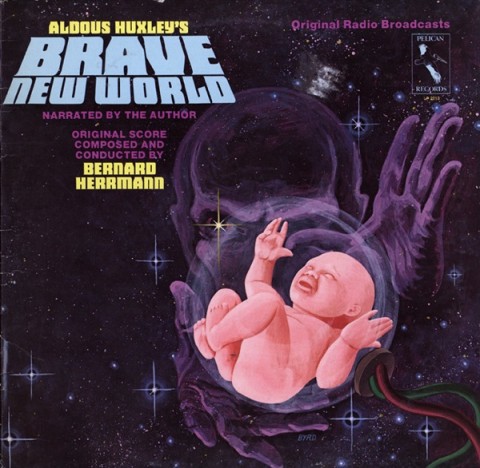
Today we’re bringing you a roundup of some of the great Science Fiction, Fantasy and Dystopian classics available on the web. And what better way to get started than with Aldous Huxley reading a dramatized recording of his 1932 novel, Brave New World. The reading aired on the CBS Radio Workshop in 1956. You can listen to Part 1 here and Part 2 here.
(FYI: You can download Huxley’s original work — as opposed to the dramatized version — in audio by signing up for a Free Trial with Audible.com, and that applies to other books mentioned here as well.)
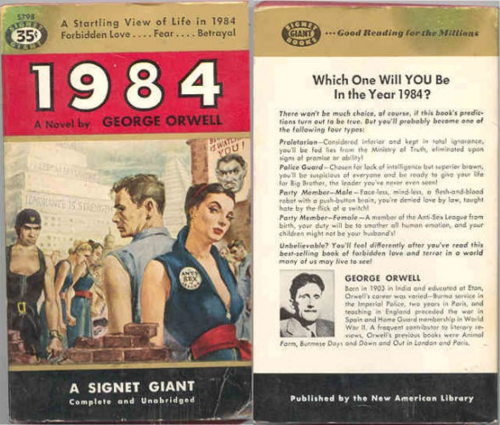
Little known fact. Aldous Huxley once gave George Orwell French lessons at Eton. And, 17 years after the release of Brave New World, Huxley’s pupil published 1984. The seminal dystopian work may be one of the most influential novels of the 20th century, and it’s almost certainly the most important political novel from that period. You can find it available on the web in three formats: Free eText — Free Audio Book – Free Movie.
In 1910, J. Searle Dawley wrote and directed Frankenstein. It took him three days to shoot the 12-minute film (when most films were actually shot in just one day). It marked the first time that Mary Shelley’s classic monster tale (text — audio) was ever adapted to film. And, somewhat notably, Thomas Edison had a hand (albeit it an indirect one) in making the film. The first Frankenstein film was shot at Edison Studios, the production company owned by the famous inventor.
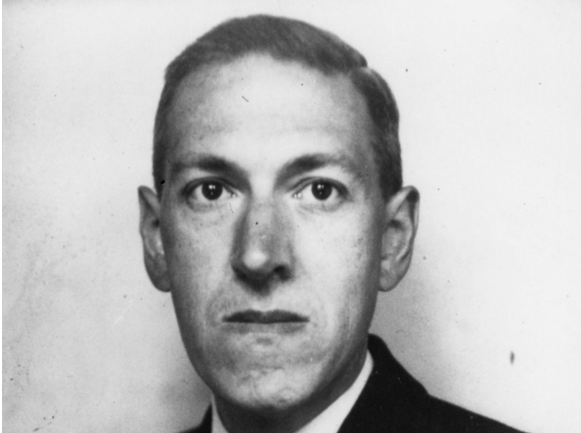
Stephen King and Joyce Carol Oates — they both pay homage to H.P. Lovecraft and his great tales. And you can too by spending time with his collected works, available in etext formats here and audio formats here (Free Mp3 Zip File – Free Stream).
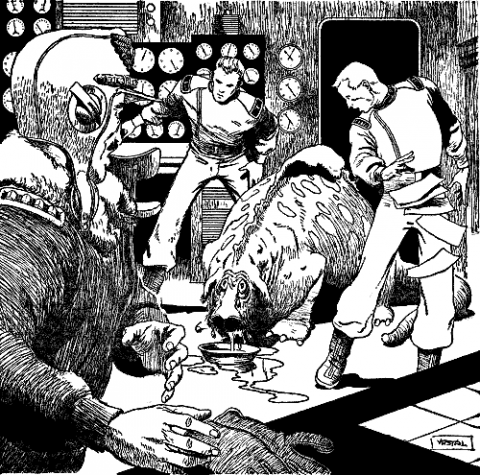
Philip K. Dick published 44 novels and 121 stories during his short lifetime, solidifying his position as one of America’s top sci-fi writers. If you’re not intimately familiar with his novels, then you almost certainly know major films based on Dick’s work – Blade Runner, Total Recall, A Scanner Darkly and Minority Report. To get you acquainted with PKD’s writing, we have culled together 14 short stories for your enjoyment.
eTexts (find download instructions here)
- “Beyond the Door”
- “Beyond Lies the Wub”
- “Mr. Spaceship”
- “Piper in the Woods”
- “Second Variety”
- “The Crystal Crypt”
- “The Defenders”
- “The Eyes Have It”
- “The Gun”
- “The Hanging Stranger”
- “The Skull”
- “The Variable Man”
- “Tony and the Beetles”
- “We Can Remember It For You Wholesale”
- iPad/iPhone
Audio
- “Beyond Lies the Wub” – Free MP3
- “Beyond the Door” – Free MP3
- “Second Variety” – Free MP3 Zip File – Stream Online
- “The Defenders” — Free MP3
- “The Hanging Stranger” – Free MP3
- “The Variable Man” – Free MP3 Zip File – Stream Online
- “Tony and the Beetles” – MP3 Part 1 – MP3 Part II

Back in the late 1930s, Orson Welles launched The Mercury Theatre on the Air, a radio program dedicated to bringing dramatic, theatrical productions to the American airwaves. The show had a fairly short run, lasting from 1938 to 1941. But it made its mark. During these few years, The Mercury Theatre aired The War of the Worlds, an episode narrated by Welles that led many Americans to believe their country was under Martian attack. The legendary production, perhaps the most famous ever aired on American radio, was based on H.G. Wells’ early sci-fi novel, and you can listen to the broadcast right here.

Between 1951 and 1953, Isaac Asimov published three books that formed the now famous Foundation Trilogy. Many considered it a masterwork in science fiction, and that view became official doctrine in 1966 when the trilogy received a special Hugo Award for Best All-Time Series, notably beating out Tolkien’s The Lord of the Rings. Eventually, the BBC decided to adapt Asimov’s trilogy to the radio, dramatizing the series in eight one-hour episodes that aired between May and June 1973. Thanks to The Internet Archive you can download the full program as a zip file, or stream it online:
Part 1 |MP3| Part 2 |MP3| Part 3 |MP3| Part 4 |MP3| Part 5 |MP3| Part 6 |MP3| Part 7 |MP3| Part 8 |MP3|
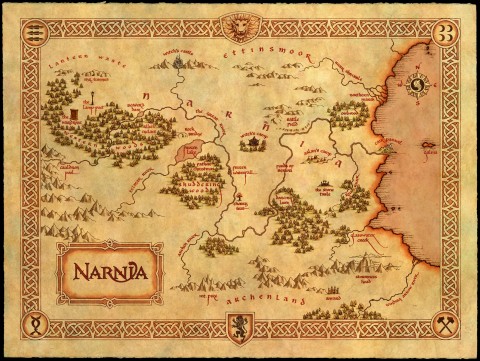
Before the days of Harry Potter, generations of young readers let their imaginations take flight with The Chronicles of Narnia, a series of seven fantasy novels written by C. S. Lewis. Like his friend J.R.R. Tolkien, Lewis served on the English faculty at Oxford University and took part in the Inklings, an Oxford literary group dedicated to fiction and fantasy. Published between 1950 and 1956, The Chronicles of Narnia has sold over 100 million copies in 47 languages, delighting younger and older readers worldwide.
Now, with the apparent blessing of the C.S. Lewis estate, the seven volume series is available in a free audio format. There are 101 audio recordings in total, each averaging 30 minutes and read by Chrissi Hart. Download the complete audio via the web or RSS Feed.

Neil Gaiman has emerged as one of today’s best fantasy writers. He has made comics respectable and published novels, including one that will be adapted by HBO. A great deal of his output, though, has been in the form of short stories, some available on the web in text format, others in audio.
Audio & Video
- “Harlequin Valentine” – Free Audio at Last.FM
- “How to Talk to Girls at Parties” – Free MP3
- “Orange” (read live) – Free Video
- “Other People” (read live) – Free Video
- The Truth Is a Cave in the Black Mountains – Free Audio
- The Graveyard Book (a novel read live with illustrations) – Free Video
- “Troll Bridge” (read live, starts at 4:00 mark) – Free iTunes
- “A Study in Emerald” – Free iTunes
Other Gaiman works can be download via Audible.com’s special Free Trial. More details here.
Text
- American Gods – Read the First Five Chapters Online
- “A Study in Emerald” — Read Online
- “Bitter Grounds” – Read Online
- “Cinnamon” – Read Online
- “Down to a Sunless Sea” – Read Online
- “I Cthulhu” – Read Online
- “The Case of the Four and Twenty Blackbirds” – Read Online
- “The Day the Saucers Came” – Read Online
- The Truth Is a Cave in the Black Mountains – Read Online

Between 1982 and 2000, Rudy Rucker wrote a series of four sci-fi novels that formed The Ware Tetralogy. The first two books in the series – Software and Wetware – won the Philip K. Dick Award for best novel. And William Gibson has called Rucker “a natural-born American street surrealist” or, more simply, one sui generis dude. And now the even better part: Rucker (who happens to be the great-great-great-grandson of Hegel) has released The Ware Tetralogy under a Creative Commons license, and you can download the full text for free in PDF and RTF formats. In total, the collection runs 800+ pages.
Read More...Neil deGrasse Tyson: ‘How Much Would You Pay for the Universe?’
“Nobody’s dreaming about tomorrow anymore,” says astrophysicist Neil deGrasse Tyson in this compelling little video on the decline of the American space program. “After we stopped going to the moon, it all ended. We stopped dreaming.” The video was put together by Evan Schurr with material from various sources. In it, Tyson asks us to imagine the possibilities for tomorrow if NASA’s budget were increased to just one penny for every tax dollar. It’s a point he raised earlier this month before a U.S. Senate committee (read the full testimony here), when he said:
The 2008 bank bailout of $750 billion was greater than all the money NASA had received in its half-century history; two years’ U.S. military spending exceeds it as well. Right now, NASA’s annual budget is half a penny on your tax dollar. For twice that–a penny on a dollar–we can transform the country from a sullen, dispirited nation, weary of economic struggle, to one where it has reclaimed its 20th century birthright to dream of tomorrow.
via The Daily Beast
Read More...Charles Bukowski Reads His Poem “The Secret of My Endurance”
–From Dangling In The Tournefortia (1982)
I still get letters in the mail, mostly from cracked-up
men in tiny rooms with factory jobs or no jobs who are
living with whores or no woman at all, no hope, just
booze and madness.
Most of their letters are on lined paper
written with an unsharpened pencil
or in ink
in tiny handwriting that slants to the
left
and the paper is often torn
usually halfway up the middle
and they say they like my stuff,
I’ve written from where it’s at, and
they recognize that. truly, I’ve given them a second
chance, some recognition of where they’re at.
it’s true, I was there, worse off than most
of them.
but I wonder if they realize where their letters
arrive?
well, they are dropped into a box
behind a six-foot hedge with a long driveway leading
to a two car garage, rose garden, fruit trees,
animals, a beautiful woman, mortgage about half
paid after a year, a new car,
fireplace and a green rug two-inches thick
with a young boy to write my stuff now,
I keep him in a ten-foot cage with a
typewriter, feed him whiskey and raw whores,
belt him pretty good three or four times
a week.
I’m 59 years old now and the critics say
my stuff is getting better than ever.
“Sweet Home Alabama” Played on Tesla Coils (and More Culture Around the Web)
You can create music with Tesla coils if you know how to modulate their “break rate” with MIDI data and a control unit. Case in point. Here we have two solid state musical Tesla coils, using a combined 24KW of power, to play a version of Lynyrd Skynyrd’s 1974 classic “Sweet Home Alabama” (listen to the original here). Also enjoy electrified versions of House of The Rising Sun and Dueling Banjos. via @webacion
More Culture from our Twitter Stream:
Jack Kerouac’s Only Full-Length Play Will Premiere, 55 years After It Was Written
First MITx Course Attracts 90,000 Students, Proving the Popularity of Online Learning. Find more Free Courses here.
Kurt Vonnegut: The Bombing of Dresden and the Creation of Slaughterhouse Five
The Iliad Visualized. We Helped Inspire the Project Says the Creator!
Paul Theroux Reads The Gospel According to Mark by Jorge Luis Borges. Added to our Free Audio Books.
“Mr. Goldman and Mr. Sachs” Recorded by @theharryshearer in 2009
Cool Old Sci-Fi Stories for Free on Amazon. Tip from @Frauenfelder
Jack Kerouac Writes a Letter to Marlon Brando
Scientists Use Thoreau’s Unpublished Journals to Track Climate Change
Classic Science Fiction Movies – in Pictures
Follow us on Facebook, Twitter and now Google Plus and share intelligent media with your friends! They’ll thank you for it.
Read More...For 95 Minutes, the BBC Brings George Orwell to Life
George Orwell occupies a funny place in the modern literary consciousness. The last few generations came to know him, in English class, as the author of the novels Animal Farm and Nineteen Eighty-Four. My own peers may remember their teachers’ awkward inversion of the earlier book, forced as they were to clarify Orwell’s already direct Russian Revolution allegory by explaining that, a long time ago, there lived a man named Trotsky who was a lot like Snowball the pig, and so on. The later book, many readers’ first glimpse at a realistic dystopia, tends to hit us harder. All those tinny, piped-in patriotic anthems; the varicose veins; the sawdusty cigarettes; the defeated cups of watery tea — why on Earth, we asked ourselves, did Orwell so confidently foresee a shambolic world of such simultaneous chintziness and brutality?
Apart from his six novels and four volumes of memoir, Orwell produced an astonishing quantity of essays. These I regularly consult in my brick-like Everyman’s Library edition, and I bought that on the strength of two particular pieces: “Politics and the English Language” and “Why I Write.” Many of us encounter these here or there in the course of higher education, and none of us with an interest in reading, writing, thinking, and the feedback loop between the three forget them. Pressured to cite the most incisive passage in all of Orwell, how could I decide between the former essay’s description of how “a mass of Latin words falls upon the facts like soft snow, blurring the outline and covering up all the details,” and the latter essay’s contrast of the writer’s ego against that of “the great mass of human beings” who, after thirty, “almost abandon the sense of being individuals at all — and live chiefly for others, or are simply smothered under drudgery”?
Despite passing at only 46, Orwell left an almost imposingly large body of written work. Readers who’ve savored it and want to learn, hear, and see more come up against a certain difficulty: we have a few photographs of Orwell, but as far as sound or film, nothing exists. Yet that didn’t stop BBC Four from putting together George Orwell: A Life in Pictures, casting actor Chris Langham as Orwell, having him speak Orwell’s words, and inserting him, Zelig-like, into historical footage real and reconstructed of Orwell’s places and times. Documentary purists may balk at this, but strong choices make strong films. As a compulsive reader of Orwell myself, I’ll take any chance I can to experience more richly the mind of this child of the “lower upper-middle class” whose fascination with poverty drove him down into it; this socialist who loathed both the trappings and proponents of socialism; this worshiper of hard manual labor who understood more about the impact of words than most of us do today; this famed writer who cloaked his given name of Eric Arthur Blair to better retreat, alone, into his gray, quasi-ascetic English pleasures.
Colin Marshall hosts and produces Notebook on Cities and Culture. Follow him on Twitter at @colinmarshall.
Read More...
Five Free Courses from Stanford Start This Month
 Stanford’s big open course initiative keeps rolling along. On March 12, three new courses will get underway:
Then, starting on March 19, two more will take flight:
The courses generally feature interactive video clips; short quizzes that provide instant feedback; the ability to pose high value questions to Stanford instructors; feedback on your overall performance in the class; and a statement of accomplishment at the end of the course.
And, yes, the courses are free and now open for enrollment.
As always, don’t miss our big list of 425 Free Online Courses. It may just be the single most awesome page on the web.
Story via Stanford University News. Algorithm image courtesy of BigStock.
Read More...David Foster Wallace: The Big, Uncut Interview (2003)
In 2003, an interviewer from German public television station ZDF sat down with novelist David Foster Wallace in a hotel room. The ensuing conversation, whose raw, unedited 84 minutes (find links to the complete interview below) made it to the internet after Wallace’s suicide, remains the most direct, expansive, and disarmingly rough-hewn media treatment of his themes, his personality, and the fascinating (if at times chilling) feedback loop between them.
You can also experience this conversation in short, thematically organized clips; above, we have “David Foster Wallace on Political Thinking in America.” Wallace expresses his concerns about the strong influence of television ads on elections, which means, he says, “we get candidates who are beholden to large donors and become, in some ways, corrupt, which disgusts the voters, makes them even less interested in politics, less willing to read and do the work of citizenship.” This he sees coupled with an individualistic marketing culture which stokes “that feeling of having to obey every impulse and gratify every desire” — “a strange kind of slavery.”
But as his pained, self-questioning expression reveals — especially when it retreats into strangely endearing post-answer cringes — Wallace did not believe he possessed the cure for, or even a precisely accurate diagnosis of, a sick society. Offering social criticism at a vast remove from the avuncular condemnation of a Noam Chomsky or the raised middle finger of a Bill Hicks, Wallace discusses his fears through a novelist’s consciousness that longs to, as he explains the desire elsewhere in the interview, “jump over the wall of self and inhabit someone else.” When the interviewer tells him about her peers’ frustration at feeling educated but “not being able to do anything with it,” Wallace puts himself in the mind of students who go from studying “the liberal arts: philosophy, classical stuff, languages, all very much about the nobility of the human spirit and broadening the mind” to “a specialized school to learn how to sue people or to figure out how to write copy that will make people buy a certain kind of SUV” to “jobs that are financially rewarding, but don’t have anything to do with what they got taught — and persuasively taught — was important and worthwhile.”
Underneath Wallace’s responses rushes a current of the questions his writing leads readers to think — and think hard — about: How far has entertainment evolved toward pure anesthetic? Can we still separate our needs from our wants, if we try? Has post-Gen X irony made us not just collectively ineffectual but that much easier to sell things to? Can we ever again use terms like “citizenship” without instinctively sneering at ourselves? To the David Foster Wallace novice, these clips make for a helpful thematic primer, but the full recording (see below) will thereafter become required viewing. The interview brims with the kind of asides that make it feel like a page from the notebook of one of Wallace’s own favorite literary craftsmen, Jorge Luis Borges. Wallace wonders aloud how much of what he says will get edited out, if he can discuss his all-consuming suspicion that “there’s something really good on another channel and I’m missing it” while he’s actually on television, and how to talk to the media about how difficult it is to talk to the media while pretending you don’t know you’re talking to the media. As he admits after unpacking one particularly difficult issue, “It’s all… complicated.”
The complete interview can be viewed up top.
Colin Marshall hosts and produces Notebook on Cities and Culture. Follow him on Twitter at @colinmarshall.
Read More...Name That Movie: 26 Films in One Animated Minute
Evan Seitz created this one-minute animation in which each letter of the alphabet represents a famous movie. How many can you name? The answers have been shared on Buzzfeed and The High Definite.
Don’t miss our collection of 450 Free Movies Online, which includes many great classics, indies, documentaries, noir films and more.
By profession, Matthias Rascher teaches English and History at a High School in northern Bavaria, Germany. In his free time he scours the web for good links and posts the best finds on Twitter.
Read More...Before Brokeback: The First Same-Sex Kiss in Cinema (1927)
BrainPickings recently highlighted the first kiss in cinema history. That takes you back to 1896, to a film brought to you by Thomas Edison. Now we rewind the videotape and present the first same-sex kiss in film history (or at least one of the earliest known ones). This Brokeback-before-Brokeback moment took place in the 1927 film Wings — the first and only silent film to win the Academy Award for Best Picture. Buddy Rogers and Richard Arlen star in the film, playing two combat pilots who vie for the affection of the same woman (Clara Bow). That’s the storyline. But neither, as writer Kevin Sessums writes, “shows as much love for her … as they do for each other.”
Find more classics in our collection, 4,000+ Free Movies Online: Great Classics, Indies, Noir, Westerns, Documentaries & More.
Follow Open Culture on Facebook and Twitter and share intelligent media with your friends. Or better yet, sign up for our daily email and get a daily dose of Open Culture in your inbox. And if you want to make sure that our posts definitely appear in your Facebook newsfeed, just follow these simple steps.
Read More...Nine PAC Ads from Stephen Colbert Spoof U.S. Election System
What to do about the sanctioned distortion of our political system? It’s hard to be optimistic when fixing the problem would realistically require a constitutional amendment. But that’s what Lawrence Lessig (Harvard law professor and founder of Creative Commons) is trying to do. Appearing at Google (see below), Lessig describes how special interests corrupt our political system, and what we can do to stop it. But even Lessig will admit that it’s an uphill battle.
That leaves us with the next best solution: turn a joke of an election system into a good joke. Enter Stephen Colbert. The comedian has created his own Super PAC (run by Jon Stewart) that comes complete with its own TV ads. The parody above — an attack ad on attack ads — makes its point pretty effectively. You can watch eight more Colbert PAC commercials here, and make a donation to his PAC here. And, if you’re feeling generous, you can show your support for Open Culture here.
Breaking News: Stephen Colbert ends quasi-presidential campaign
Read More...Support Us
We're hoping to rely on loyal readers, rather than erratic ads. Please click the Donate button and support Open Culture. You can use Paypal, Venmo, Patreon, even Crypto! We thank you!

About Us

Open Culture scours the web for the best educational media. We find the free courses and audio books you need, the language lessons & educational videos you want, and plenty of enlightenment in between.
Advertise With Us
FREE UPDATES!
GET OUR DAILY EMAIL
Get the best cultural and educational resources on the web curated for you in a daily email. We never spam. Unsubscribe at any time.
FOLLOW ON SOCIAL MEDIA
Open Culture editor Dan Colman scours the web for the best educational media. He finds the free courses and audio books you need, the language lessons & movies you want, and plenty of enlightenment in between.
Advertise With Us

