Brian Eno Shares His Critical Take on Art & NFTs: “I Mainly See Hustlers Looking for Suckers”
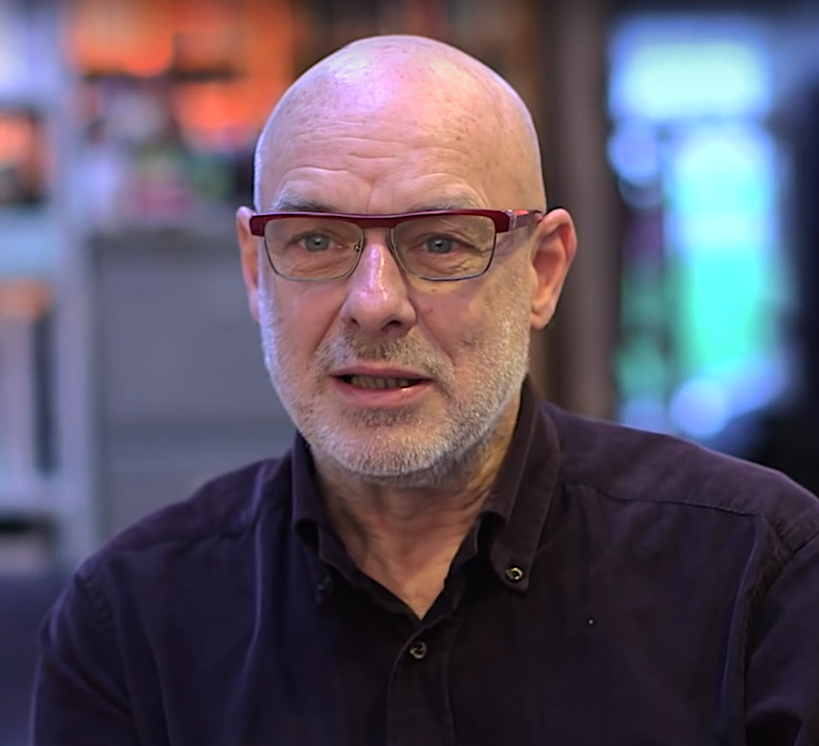
Image via Wikimedia Commons
It can feel, in our inequality-addled world, that we have little left in common — that there is no “we,” just us and them. But multiple crises driving us apart have the potential to unite the species. After all, a rapidly warming planet and global pandemic do threaten us all, even if they don’t threaten us equally. Do solutions exist in the creation of new forms of private property, new ways of moving capital around the world? Can the extinction-level byproducts of capitalist commodification and waste be mitigated by ingenious new forms of financialization? These seem to be the arguments made by purveyors of cryptocurrency and NFTs, an acronym meaning non fungible tokens and — if you haven’t noticed — the only thing anyone in the art world seems to talk about anymore. Why?
Brian Eno has put his opinion on the matter quite bluntly in a recent interview. “NFTs seem to me just a way for artists to get a little piece of the action from global capitalism,” he tells The Crypto Syllabus. “How sweet — now artists can become little capitalist assholes as well.” He obviously disapproves of using art solely to generate profit, but then if we know anything about Eno’s theory of creativity and influence over the past several decades, it’s that he believes the guiding reason for art is to generate more art.
“If I had primarily wanted to make money I would have had a different career as a different kind of person. I probably wouldn’t have chosen to be an artist.” There’s utterly no use in trying to peg Eno as technophobic or out of touch; quite the contrary. But the fictional financial products that have invaded every other sphere of life have no place in the arts, he argues.
When asked why NFTs are touted as a salvation for artists and the art world by cryptocurrency visionaries, including many of his friends and collaborators, Eno replies:
I can understand why the people who’ve done well from it are pleased, and it’s natural enough in a libertarian world to believe that something that benefits you must automatically be ‘right’ for the whole world. That belief is a version of what I call ‘automaticism’: the idea that if you leave things alone and let something or other – the market, nature, human will – take its course unimpeded you will automatically get a better result than you would by tinkering with it. The people who hold beliefs of this kind don’t have any qualms about tinkering themselves but just want a situation where nobody else gets to tinker. Especially the state.
That the sale of NFTs have only benefitted very few — to the tune of $69 million in a single sale in a recent high-profile case — doesn’t seem particularly troublesome to those who insist on their benefits. Nor do the creators of NFTs seem bothered by the enormous energy overhead required by the technology, “an ecological nightmare pyramid scheme,” writes Synthtopia — of which Eno says: “in a warming world a new technology that uses vast amounts of energy as ‘proof of work’ — that’s to say, simply to establish a certain age of exclusivity — really is quite insane.”
Eno readily answers questions about why NFTs seem so glamorous — it’s no great mystery, just a new form of accumulation, commodification and waste, one in particular that adds nothing to the world while hastening a climate collapse. NFTs are the “readymade reversed,” David Joselit argues: Where “Duchamp used the category of art to liberate materiality from commodifiable form; the NFT deploys the category of art to extract private property from freely available information.”
The discourse around NFTs also seems to liberate art from the category of art, and all that has meant to humankind for millennia as a communal practice, reducing creative productions to digital certificates of authenticity. “I am trying to keep an open mind about these questions,” Eno admits. “People I like and trust are convinced [NFTs] are the best thing since sliced bread, so I wish I could have a more positive view but right now I mainly see hustlers looking for suckers.”
Related Content:
What are Non-Fungible Tokens (NFTs)? And How Can a Work of Digital Art Sell for $69 Million
What Is Blockchain? Three Videos Explain the New Technology That Promises to Change Our World
Josh Jones is a writer and musician based in Durham, NC. Follow him at @jdmagness
Read More...The Amazing Engineering of James Webb Telescope
If you want to see the current height of technology, you could do worse than taking a look at the James Webb Space Telescope. Millions have been doing just that over the past few weeks, given that this past Christmas Day witnessed the launch of that ten-billion-dollar NASA project a decade in the making. As the successor to the now-venerable Hubble Space Telescope, the JWST is designed to go much farther into outer space and thus see much further back in time, potentially to the formation of the first galaxies. If all goes well, it will give us what the Real Engineering video above calls a glimpse of the “early universe from which we and everything we know was born.”
But one does not simply glance skyward to see back 13.5 billion years. No, “the combination of technologies required to make the James Webb telescope possible are unique to this time period in human history.” These include the heat shield that will unfold to protect its sensitive components from the heat of the sun, to the onboard cryocooler that maintains the mid-infrared detection instrument (which itself will enable the viewing of many more stars and galaxies than previous telescopes) at a cool seven degrees Kelvin, to the array of gold-coated beryllium mirrors that can pick up unprecedented amounts of light.
However complicated the JWST’s development and launch, “the truly nerve-wracking process begins on day seven,” says the Real Engineering video’s narrator. At that point, with the satellite finding its precisely determined position 1.5 million kilometers from Earth, the heat shield begins unfolding, and “there are over 300 single points of failure in this unfolding sequence: 300 chances for a ten billion-dollar, 25-year project to end.” With that process underway as of this writing, the teeth of the project’s engineers are no doubt firmly embedded in their nails.
As it plays out, also-nervous fans of space exploration (who’ve had much to get excited about in recent years) might consider distracting themselves with the above episode of Neil DeGrasse Tyson’s StarTalk. In it Tyson has in-depth discussions about the JWST’s conception, purpose, and potential with both NASA astronomer Natalie Batalha and filmmaker Nathaniel Kahn, whose documentary The Hunt for Planet B examines the JWST team’s “quest to find another Earth among the stars.” But let’s not get ahead of ourselves: even if the shield deploys without a hitch, there remains the not-untricky process of unfolding those mirrors. What we see through the telescope will no doubt change our ideas about humanity’s place in the universe — but if it functions as planned, we’ll have good reason to be pleased with human competence.
Related Content:
The Beauty of Space Photography
How Scientists Colorize Those Beautiful Space Photos Taken By the Hubble Space Telescope
Van Gogh’s ‘Starry Night’ Re-Created by Astronomer with 100 Hubble Space Telescope Images
Based in Seoul, Colin Marshall writes and broadcasts on cities and culture. His projects include the book The Stateless City: a Walk through 21st-Century Los Angeles and the video series The City in Cinema. Follow him on Twitter at @colinmarshall or on Facebook.
Read More...Asleep at the Wheel Frontman Ray Benson Discusses Half a Hundred Years of Songwriting: Stream the Nakedly Examined Music Interview Online
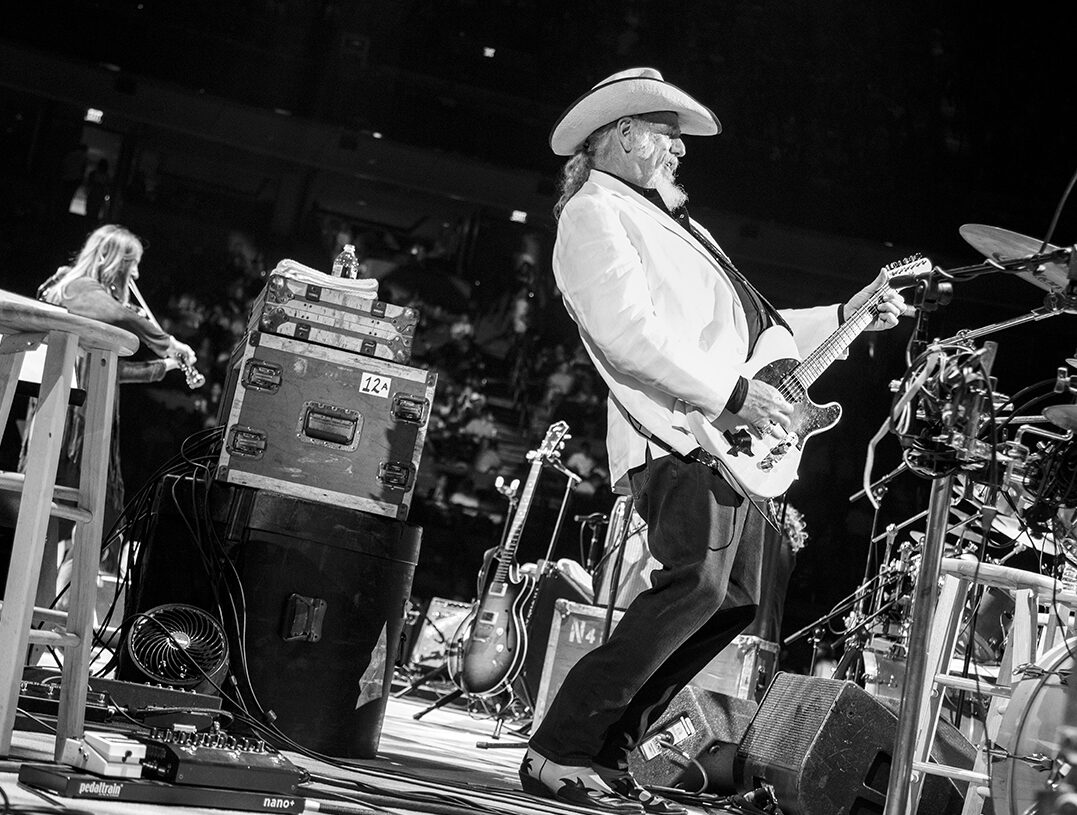
This week’s Nakedly Examined Music podcast features the Grammy-winning Texas swing band, Asleep at the Wheel, which Ray founded in 1969. They’ve released 26 albums of original tunes and classic covers while touring constantly, with Ray being the only consistent member through their various line-ups.
Your host Mark Linsenmayer talks with Ray about the title track from Half a Hundred Years (2021), “Pedernales Stroll” from Keepin’ Me Up Nights (1990), and “Am I High” from The Wheel (1977). Intro: “The Letter (That Johnny Walker Read)” from Texas Gold (1975). Closer: “The Road Will Hold Me Tonight” feat. Emmylou Harris and Willie Nelson, recorded in the early 80s but only released now on the new album. Learn more at asleepatthewheel.com.
Watch the video for “Half a Hundred Years.” Watch “Am I High?” live on 80s TV. Here’s the band live recently at the Paste Studio and playing their 25th Anniversary show on Austin City Limits in 1996. Their most famous tune is “Hot Rod Lincoln.” Here they are with Willie Nelson. Here’s a very old TV performance of “Take Me Back to Tulsa.” Hear all of “The Letter (That Johnny Walker Read).”
Image by Mike Shore.
Nakedly Examined Music is a podcast hosted by Mark Linsenmayer, who also hosts The Partially Examined Life Philosophy Podcast, Pretty Much Pop: A Culture Podcast, and Philosophy vs. Improv. He releases music under the name Mark Lint.
Read More...The Omicron Variant Explained by Neil deGrasse Tyson & Regeneron President George Yancopoulos
What is the Omicron Variant? How do vaccines work? And what about monoclonal antibody therapy? On this episode of StarTalk, Neil deGrasse Tyson has a wide-ranging and quite informative conversation with George Yancopoulos, president of Regeneron, the company that created the monoclonal antibody therapy now being used in the fight against COVID-19. And there’s an interesting side note: During the 1970s, Tyson and Yancopoulos were high school classmates together at Bronx Science. They’ve both come a long way, and now they re-unite to explain the science behind the latest phase of the pandemic.
If you would like to support the mission of Open Culture, consider making a donation to our site. It’s hard to rely 100% on ads, and your contributions will help us continue providing the best free cultural and educational materials to learners everywhere. You can contribute through PayPal, Patreon, and Venmo (@openculture). Thanks!
Related Content
1,700 Free Online Courses from Top Universities.
Neil deGrasse Tyson Lists 8 (Free) Books Every Intelligent Person Should Read
MIT Presents a Free Course on the COVID-19 Pandemic
Read More...Watch Bing Crosby’s Final Christmas Special, Featuring a Famous Duet with Bowie, and Bowie Introducing His New Song, “Heroes” (1977)
Bing Crosby died in October of 1977, but that didn’t stop him from appearing in living rooms all over America for Christmas. He’d already completed the shoot for his final CBS television special Bing Crosby’s Merrie Olde Christmas, along with such collaborators as Ron Moody, Stanley Baxter, the Trinity Boys Choir, Twiggy, and a young fellow by the name of David Bowie. Of course, Bowie had long since achieved his own dream of fame, at least to the younger generation; it was viewers who’d grown up listening to Crosby who needed an introduction. And they received a memorable one indeed, in the form of the Bowie-Crosby duet “Peace on Earth/Little Drummer Boy,” previously featured here on Open Culture.
This year you can watch Bing Crosby’s Merrie Olde Christmas in its hourlong entirety, which includes performances of “Have Yourself a Merry Little Christmas” and “Side by Side by Side” (from the late Stephen Sondheim’s Company), a (perhaps embellished) musical delineation of the extended Crosby family, and a session of literary reminiscence with none other than Charles Dickens.
The setup for all this is that Crosby, his wife, and children have all been brought to England by the invitation of the previously unknown Sir Percival Crosby, who desires to extend a hand to his “poor American relations” — and who happens to live next door to Bowie, that most English of all 1970s rock stars.
The search for Sir Crosby proceeds merrily, at one point prompting his famous relative to chat with Twiggy about the nature of love and loneliness, emotions “just as painful and just as beautiful as they ever were. Whether you’re a novelist, poet, or even a songwriter, it’s all in the way you sing.” These reflections lead into a stark music video for the title track of Bowie’s “ ‘Heroes’ ”, which had come out just weeks before (coincidentally, on the very day of Crosby’s death). Though a somewhat incongruous addition to such an old-fashioned production, it does vividly reflect a certain changing of the transatlantic pop-cultural guard.
In their scene together, Crosby and Bowie do exude an undeniable mutual respect, the younger man admitting even to have tried his hand at the older man’s signature holiday song, “White Christmas.” Having set off the 1940s Christmas-music boom by recording it 35 years before, Crosby sings it one last time himself to close out this special. Before doing so, he describes the Christmas season as “a time to look back with gratitude at being able to come this far, and a time to look ahead with hope and optimism.” Like all the elements of Bing Crosby’s Merrie Olde Christmas not involving David Bowie, these words were nothing new even then, but somehow they still manage to stoke our Christmas spirit all these decades later.
Related Content:
David Bowie & Bing Crosby Sing “The Little Drummer Boy/Peace on Earth” (1977)
David Bowie Sends a Christmas Greeting in the Voice of Elvis Presley
Revisit Kate Bush’s Peculiar Christmas Special, Featuring Peter Gabriel (1979)
Based in Seoul, Colin Marshall writes and broadcasts on cities and culture. His projects include the book The Stateless City: a Walk through 21st-Century Los Angeles and the video series The City in Cinema. Follow him on Twitter at @colinmarshall or on Facebook.
Read More...Why “White Christmas,” “Here Comes Santa Claus,” “Let It Snow,” and Other Classic Christmas Songs Come from the 1940s
Cast your mind back, if you will, to Christmastime eighty years ago, and imagine which holiday songs would have been in the air — or rather, which ones wouldn’t have been. You certainly wouldn’t have heard the likes of “Jingle Bell Rock” or “Rockin’ Around the Christmas Tree,” rock-and-roll itself not yet having emerged in the form we know today. Even the thoroughly un-rocking “Silver Bells” wouldn’t be recorded until 1951, for the now-forgotten Bob Hope film The Lemon Drop Kid. What of children’s favorites like “Here Comes Santa Claus,” “Rudolph, the Red-Nosed Reindeer,” and “Frosty the Snowman”? None were popular until Gene Autry laid them down in 1947, 1949, and 1950, respectively.
Even “The Christmas Song,” whose most beloved version was recorded by Nat King Cole, wasn’t written until 1945 (as was “Let It Snow”). The year before that brought “Have Yourself a Merry Little Christmas”; the year before that, “Santa Claus Is Comin’ to Town” and “I’ll Be Home for Christmas.” That was recorded first and most definitively by Bing Crosby, the singer most closely identified with the 1940s Christmas-music boom. That boom began, as the Cheddar Explains video at the top of the post tells it, with Crosby’s Christmas Day 1941 rendition of “White Christmas,” just weeks after the attack on Pearl Harbor.
“It’s no coincidence that the boom in Christmas tunes came during World War II, when tens of thousands of American soldiers were abroad defending their country, no doubt longing for the simple warmth of home,” writes The Atlantic’s Eric Harvey. “Irving Berlin invested ‘White Christmas’ with the sort of meterological longing that comes from living in Southern California, but troops picked up on the sentiment, making the song a classic in this regard.” This also happened to be the zenith of the golden age of radio (a compilation of whose Christmas broadcasts we featured last year here on Open Culture). “By the 1940s, radios were a default presence in most American homes. And by the late 1940s television was growing out of radio, and through the 1950s the pair set holiday living rooms around the country aglow with musical performances.”
That most popular Christmas songs still come from the 1940s and 50s (a Spotify playlist of which you can find here) has given rise to theories of a Baby-Boomer conspiracy to preserve their own childhoods at all costs to the culture. But then, as Christopher Ingraham writes in The Washington Post, “the postwar era really was an exceptional time in American history: jobs were plentiful, the economy was booming, and America’s influence on the world stage was at its peak.” Thus “what we now think of as the holiday aesthetic isn’t just about a particular time of the year — it’s also very much about a particular time of American history.” This aligns with the perception that Christmas has turned from a religious holiday into an American one. But take it from me, an American living in Korea: even on the other side of the world, you can’t escape its songs.
Related Content:
David Bowie & Bing Crosby Sing “The Little Drummer Boy” (1977)
Stream a Playlist of 79 Punk Rock Christmas Songs: The Ramones, The Damned, Bad Religion & More
Based in Seoul, Colin Marshall writes and broadcasts on cities and culture. His projects include the book The Stateless City: a Walk through 21st-Century Los Angeles and the video series The City in Cinema. Follow him on Twitter at @colinmarshall or on Facebook.
Read More...The 850 Books a Texas Lawmaker Wants to Ban Because They Could Make Students Feel Uncomfortable
“Who’s afraid of critical race theory?” asked lawyer, legal scholar and Harvard professor Derrick Bell in a 1995 essay. Bell helped pioneer the discipline in the 70s, and until recently, it remained mostly confined to academic journals, grad school seminars and the pages of progressive magazines. Now the phrase is everywhere. What happened? Did radical scholars force third graders to read footnotes? Or did conservatives show up fifty years late to a conversation, skip the reading, and decide the best way to respond was to lash out indiscriminately at every identity and civil rights issue that makes them uncomfortable, starting with kindergarten and working their way up? Maybe Bell’s question has answered itself.
In the recent moral panic over CRT, the term has become a denunciation, a shibboleth that can apply to any history, civics, or literature lesson broadly construed, whether taught through current events, fiction, poetry, memoir, nonfiction, or any material — to use the language of the “anti-CRT” Texas House Bill 3979 — that might make a student “feel discomfort, guilt, anguish, or any other form of psychological distress on account of the individual’s race or sex.” Connections to Bell’s critical race theory are tenuous, at best. As Allyson Waller notes at the Texas Tribune, that academic discipline “is not being taught in K‑12 schools.”
This fact means little to right wing legislators, school board members and parents’ groups, who have found a convenient boogeyman on which to project their anxieties. What the Texas bill means in practice has been impossible to parse. American Civil Liberties Union lawyer Emerson Sykes filed a federal suit over a similar law in Oklahoma, arguing that it’s “so vague,” as Michael Powell reports at The New York Times, “that it fails to provide reasonable legal guidance to teachers and could put jobs in danger.” A Black principal near Dallas has already been forced to resign in the anti-CRT panic, for writing a public letter after George Floyd’s death that declared, “Education is the key to stomping out ignorance, hate, and systemic racism.”
In another part of the state, a district-level executive director of curriculum has recommended teaching “other perspectives” on the Holocaust to meet the bill’s mandates. Teachers and administrators are not the only ones targeted by the bill and its supporters. “One minute they’re talking critical race theory,” says middle school librarian Carrie Damon. “Suddenly I’m hearing librarians are indoctrinating students. One library in Llano County, about 80 miles northwest of Austin, shut down for three days for a “thorough review” of every children’s book. At the statewide level, Texas Republican State Representative Matt Krause launched an anti-CRT witch-hunt, in advance of a run for State Attorney General, by emailing a list 850 books to state superintendents, asking if any of them appeared in their libraries.
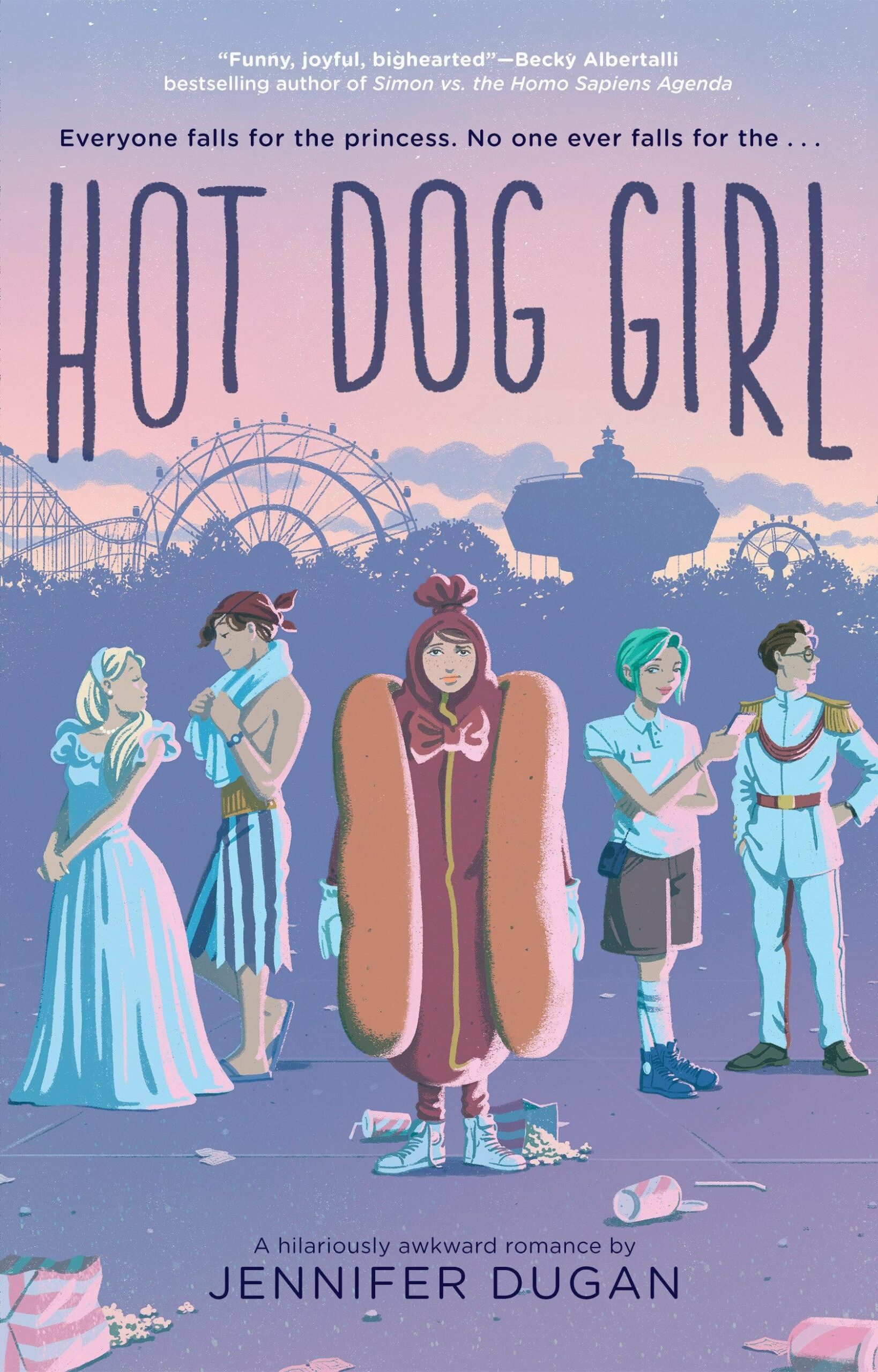
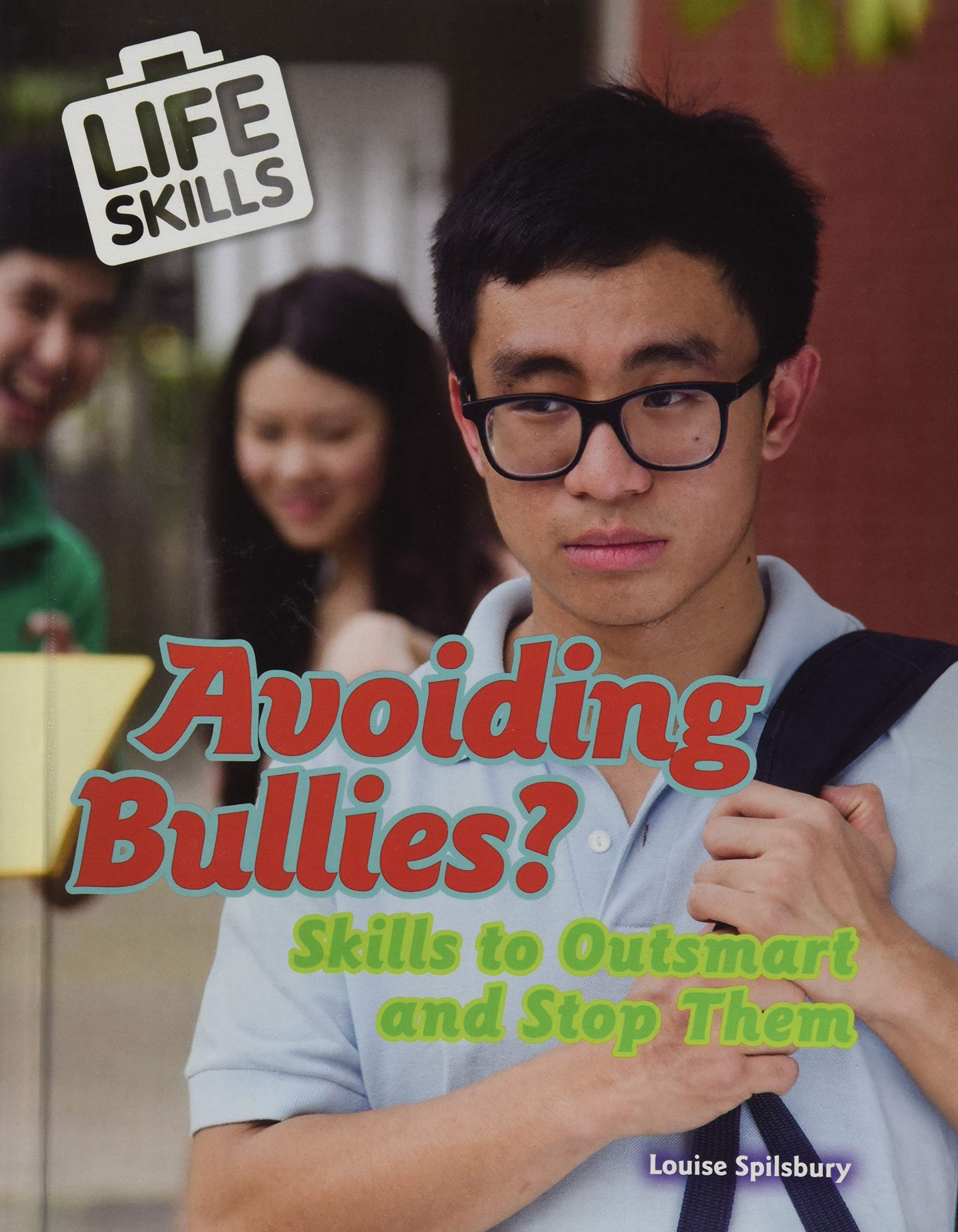
The list, writes Danika Ellis at Book Riot, is “a bizarre assortment of titles, formatted in a way that suggests it’s copy-and-pasted from library listings.” It includes books about human rights, sex education, any and every LGBTQ topic, race, American history, and policing. Ironically, it also includes books about burning books and bullying (a problem causing student walkouts around the country). The books range from those for young children to middle and high school students and college-aged young adults. Most of them “were written by women, people of color and LGBTQ writers.” It also includes “a particularly puzzling choice,” writes Powell (probably a mistake?): Cynical Theories by Helen Pluckrose and James Lindsay, two authors who have made careers out of exposing what they allege are illegitimate “grievances” in academia.
You can see Krause’s full list here. The state rep’s “motive was unclear,” Powell writes, but it seems clear enough he wished to flag these books for possible removal. Given that critical race theory is not, in fact, a phrase that means “anything that makes conservatives feel guilty and/or uncomfortable” but is foremost a legal theory, we might ask legal questions like cui bono? – “who benefits” from banning the books on Krause’s list? Who feels uncomfortable and guilty when they read about racist policing, healthy gay relationships, or the civil rights movement– and why? Should that discomfort provide just cause for censorship and the violation of other students’ rights to quality educational material? How can the subjective standard of “comfort” be used to evaluate the educational value of a book?
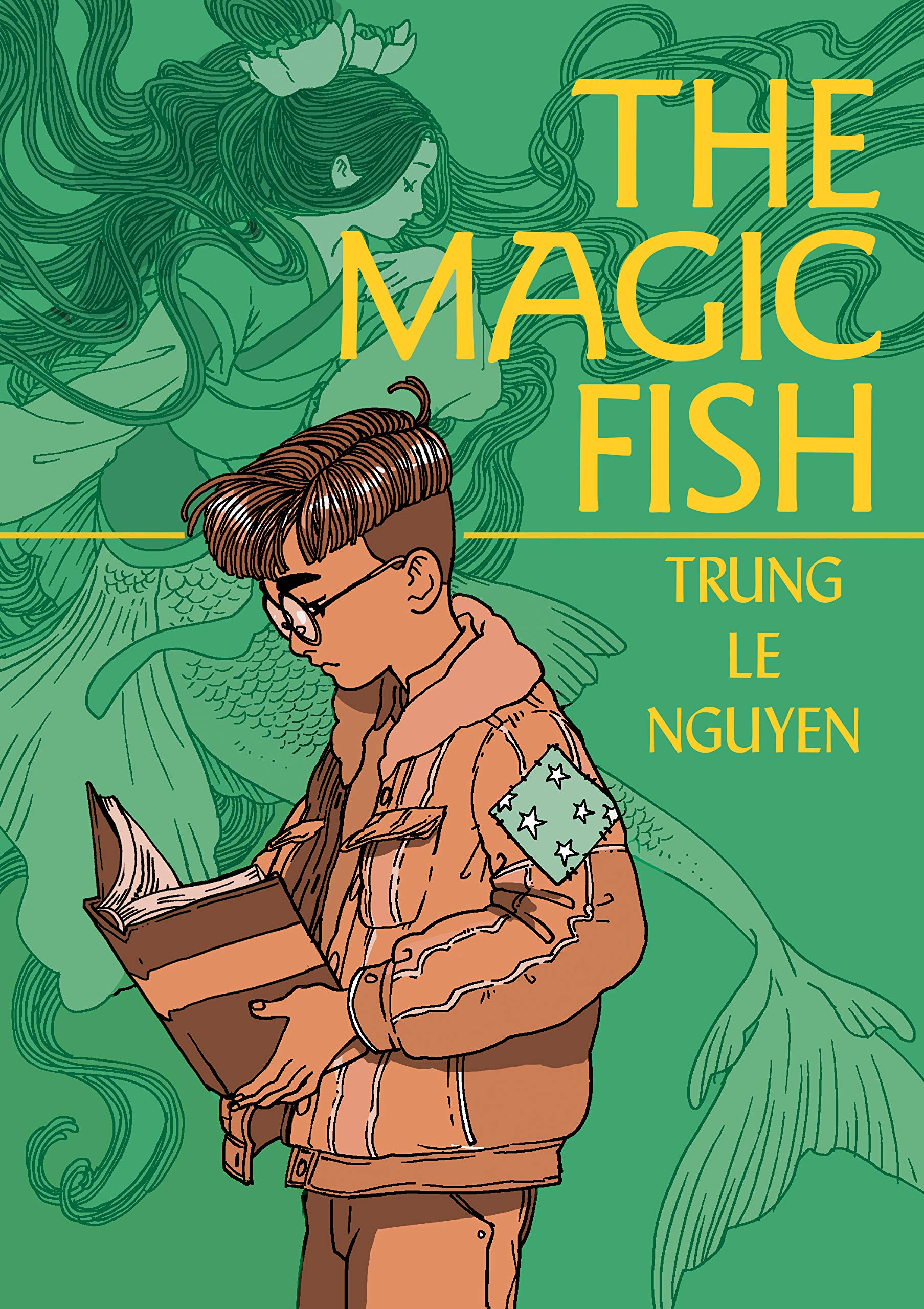
Debates over free inquiry in education seem never to end. (Consider that the first book banned in Colonial North America mocked the Puritans, who themselves loved nothing more than banning things.) As we approach the question this time around, it seems we might have learned not to ban books under vague laws that empower bigots to hunt down an amorphous enemy so insidious it can lurk anywhere and everywhere. Such laws have their own history, too, in the U.S. and elsewhere. Nowhere have they led to a state of affairs most of us want, one free from violence, bigotry, discrimination and state repression — that is, unless we need such things to make us comfortable.
Related Content:
America’s First Banned Book: Discover the 1637 Book That Mocked the Puritans
Read 14 Great Banned & Censored Novels Free Online: For Banned Books Week 2014
Josh Jones is a writer and musician based in Durham, NC. Follow him at @jdmagness
Read More...An Oscar-Winning Animation of Charles Dickens’ Classic Tale, A Christmas Carol (1971)
I HAVE endeavoured in this Ghostly little book, to raise the Ghost of an Idea, which shall not put my readers out of humour with themselves, with each other, with the season, or with me. May it haunt their houses pleasantly, and no one wish to lay it. — Charles Dickens
Some twenty years before Tim Burton’s The Nightmare Before Christmas, another animated entertainment injected “the most wonderful time of the year” with a potent dose of horror.
Surely I’m not the only child of the 70s to have been equal parts mesmerized and stricken by director Richard Williams’ faithful, if highly condensed, interpretation of Charles Dickens’ A Christmas Carol.
The 25-minute short features a host of hair-raising images drawn directly from Dickens’ text, from a spectral hearse in Scrooge’s hallway and the Ghost of Marley’s gaping maw, to a night sky populated with miserable, howling phantoms and the monstrous children lurking beneath the Ghost of Christmas Present’s skirts:
Yellow, meagre, ragged, scowling, wolfish; but prostrate, too, in their humility. Where graceful youth should have filled their features out, and touched them with its freshest tints, a stale and shrivelled hand, like that of age, had pinched, and twisted them, and pulled them into shreds. Where angels might have sat enthroned, devils lurked, and glared out menacing. No change, no degradation, no perversion of humanity, in any grade, through all the mysteries of wonderful creation, has monsters half so horrible and dread… This boy is Ignorance. This girl is Want. Beware them both, and all of their degree, but most of all beware this boy, for on his brow I see that written which is Doom, unless the writing be erased.
Producer Chuck Jones, whose earlier animated holiday special, Dr. Seuss’ How the Grinch Stole Christmas!, is in keeping with his classic work on Bugs Bunny and other Warner Bros. faves, insisted that this cartoon should mirror the look of the John Leech steel engravings illustrating Dickens’ 1843 original.
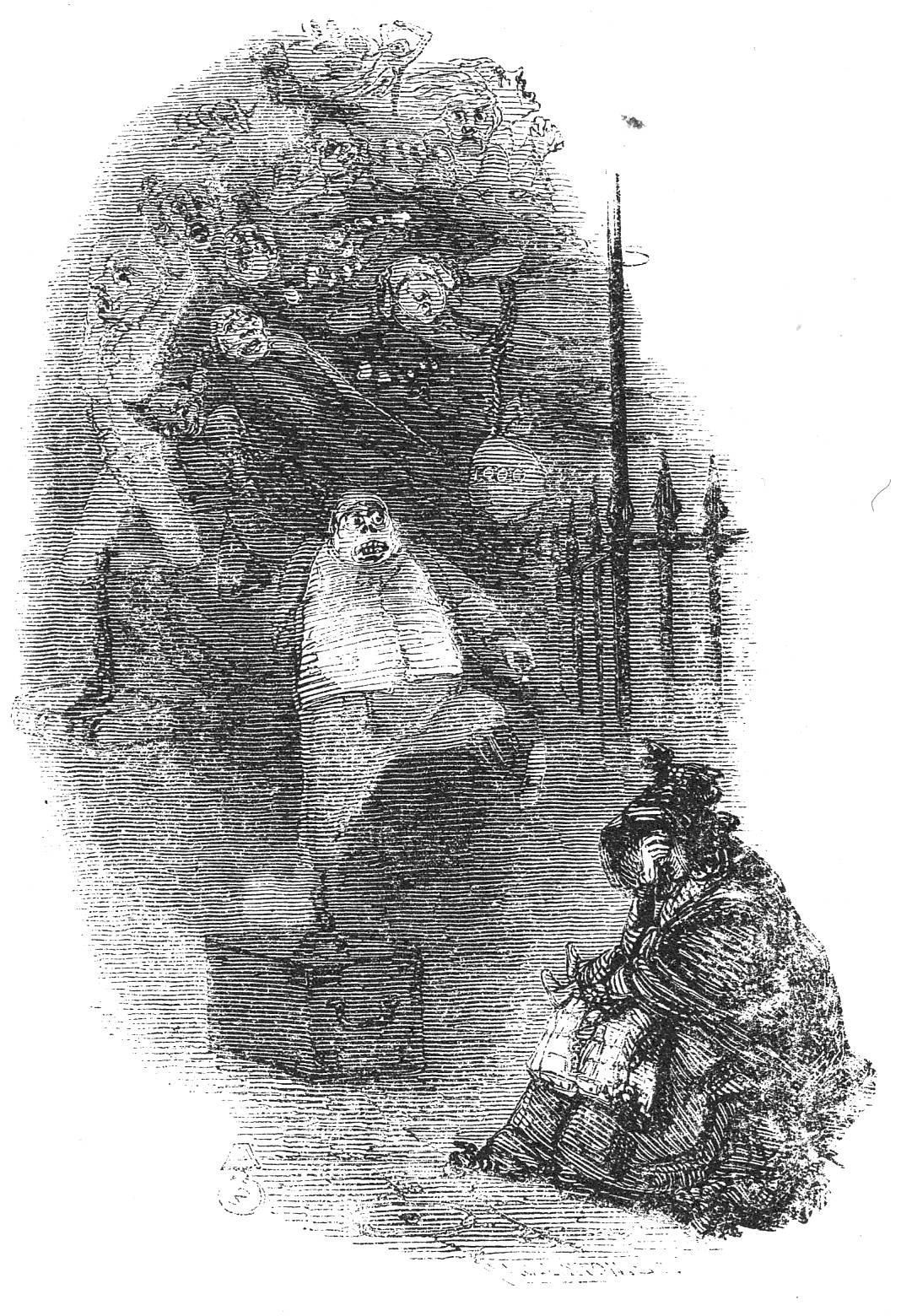
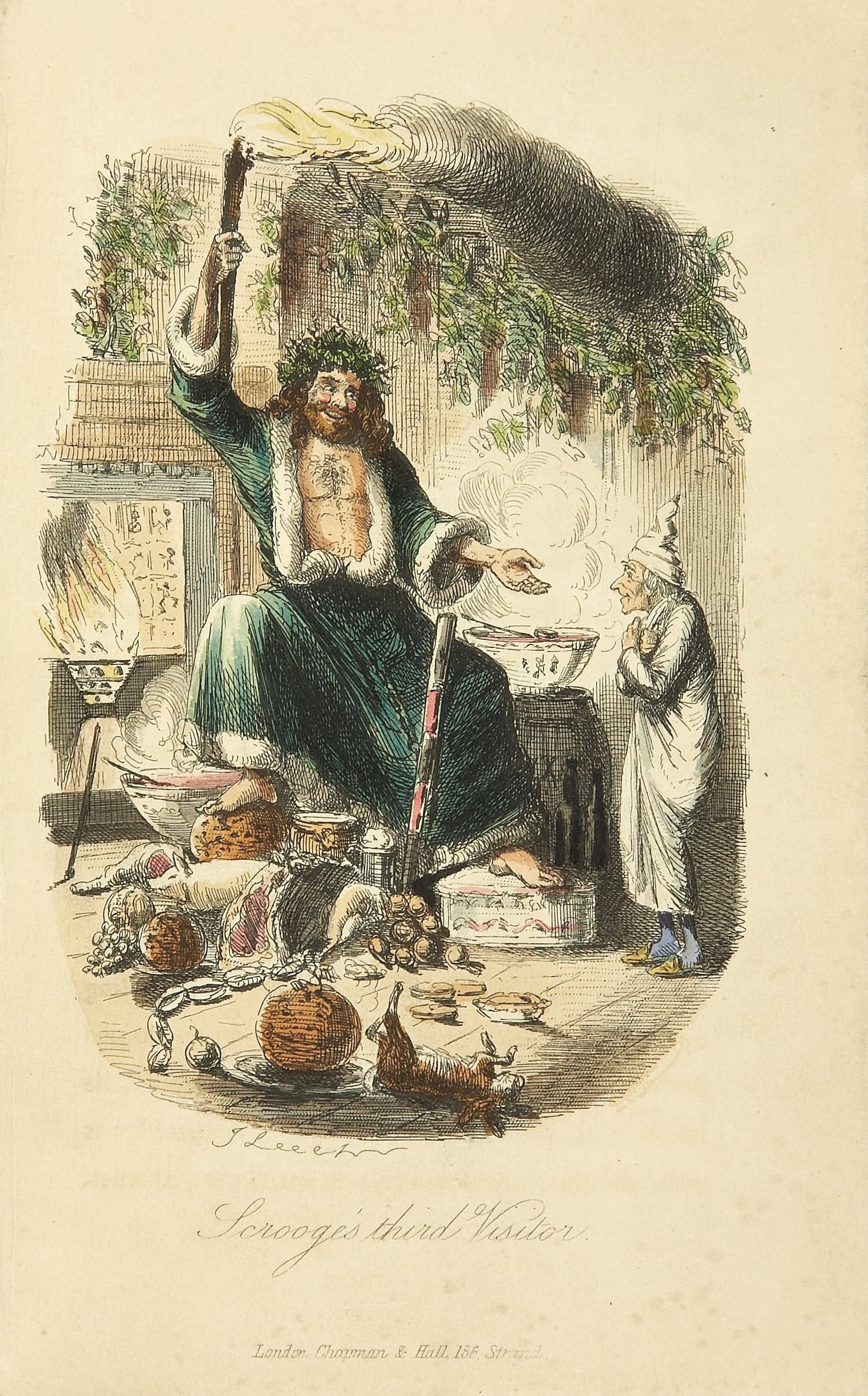
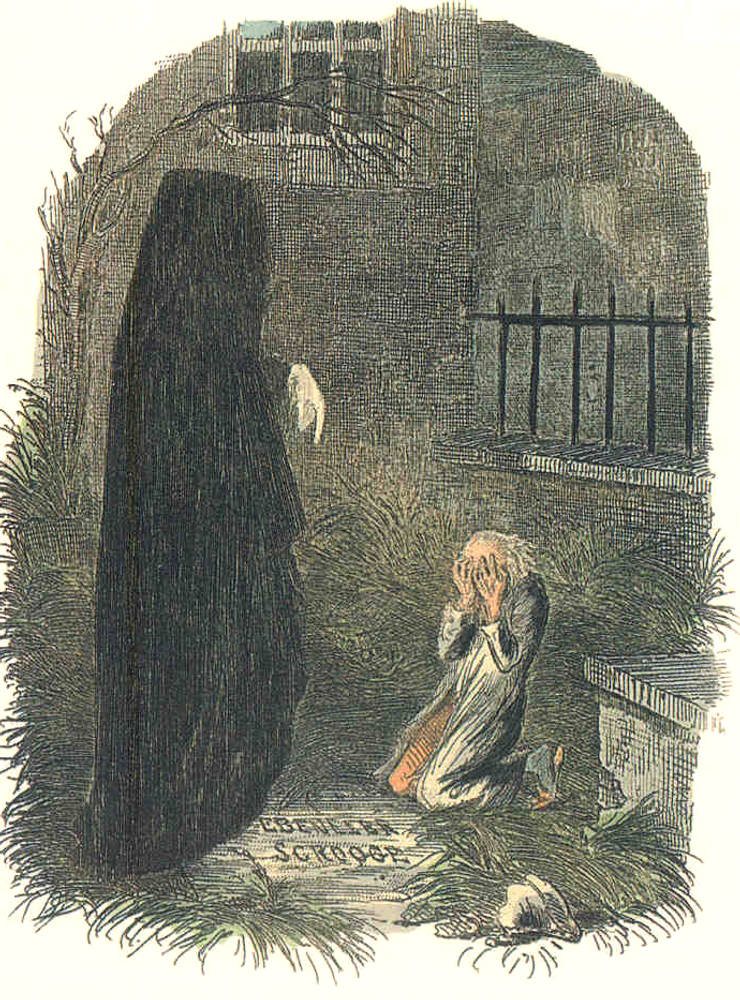
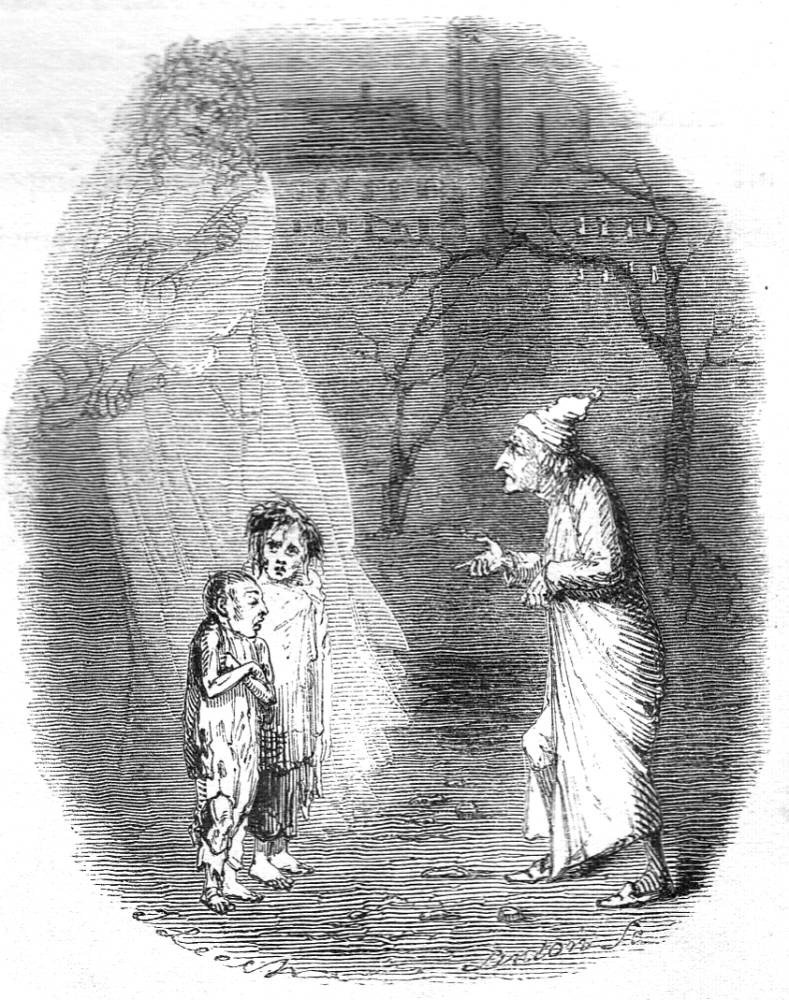
D.T. Nethery, a former Disney animation artist and fan of this Christmas Carol explains that the desired Victorian look was achieved with a labor-intensive process that involved drawing directly on cels with Mars Omnichrom grease pencil, then painting the backs and photographing them against detailed watercolored backgrounds.
As director Williams recalls below, he and a team including master animators Ken Harris and Abe Levitow were racing against an impossibly tight deadline that left them pulling 14-hour days and 7‑day work weeks. Reportedly, the final version was completed with just an hour to spare. (“We slept under our desks for this thing.”)
As Michael Lyons observes in Animation Scoop, the exhausted animators went above and beyond with Jones’ request for a pan over London’s rooftops, “making the entire twenty-five minutes of the short film take on the appearance of art work that has come to life”:
…there are scenes that seem to involve camera pans, or sequences in which the camera seemingly circles around the characters. Much of this involved not just animating the characters, but the backgrounds as well and in different sizes as they move toward and away from the frame. The hand-crafted quality, coupled with a three-dimensional feel in these moments, is downright tactile.
Revered British character actors Alistair Sim (Scrooge) and Michael Hordern (Marley’s Ghost) lent some extra class, reprising their roles from the evergreen, black-and-white 1951 adaptation.
The short’s television premiere caused such a sensation that it was given a subsequent theatrical release, putting it in the running for an Oscar for Best Animated Short Subject. (It won, beating out Tup-Tup from Croatia and the NSFW-ish Kama Sutra Rides Again which Stanley Kubrick had handpicked to play before A Clockwork Orange in the UK.)
With theaters in Dallas, Los Angeles, Portland, Providence, Tallahassee and Vancouver cancelling planned live productions of A Christmas Carol out of concern for the public health during this latest wave of the pandemic, we’re happy to get our Dickensian fix, snuggled up on the couch with this animated 50-year-old artifact of our childhood.…
Related Content:
Hear Neil Gaiman Read A Christmas Carol Just as Dickens Read It
Charles Dickens’ Hand-Edited Copy of His Classic Holiday Tale, A Christmas Carol
A Christmas Carol, A Vintage Radio Broadcast by Orson Welles (1939)
Ayun Halliday is the Chief Primaologist of the East Village Inky zine and author, most recently, of Creative, Not Famous: The Small Potato Manifesto. Follow her @AyunHalliday.
Read More...George Harrison “My Sweet Lord” Gets an Official Music Video, Featuring Ringo Starr, Al Yankovic, Patton Oswalt & Many Others
To help celebrate the 50th anniversary of George Harrison’s classic solo album, All Things Must Pass, the classic track, “My Sweet Lord,” has now received an official music video. And it features a number of cameo appearances–from other former Beatles (Ringo Starr), to family members (Olivia Harrison and Dhani Harrison), to other guests (Mark Hamill, Fred Armisen, Al Yankovic, Rosanna Arquette). Enjoy.
Featuring In Order of Appearance:
Mark Hamill
Fred Armisen
Vanessa Bayer
Moshe Kasher
Natasha Leggero
Jeff Lynne
Reggie Watts
Darren Criss
Patton Oswalt
Al Yankovic
David Gborie
Sam Richardson
Atsuko Okatsuka
Rosanna Arquette
Brandon Wardell
Ringo Starr
Joe Walsh
Jon Hamm
Brett Metter
Anders Holm
Dhani Harrison
Rupert Friend
Angus Sampson
Taika Waititi
Eric Wareheim
Tim Heidecker
Kate Micucci
Riki Lindhome
Alyssa Stonoha
Mitra Jouhari
Sandy Honig
Olivia Harrison
Aimee Mullins
Courtney Pauroso
Natalie Palamides
Shepard Fairey
Claudia O’Doherty
Tom Scharpling
Paul Scheer
Sarah Baker
Related Content
George Harrison Explains Why Everyone Should Play the Ukulele
Watch George Harrison’s Final Interview and Performance (1997)
Read More...
The True Meaning of Queen’s Rock Epic “Bohemian Rhapsody”
We’ve all given at least a little thought to “Bohemian Rhapsody.” I myself happen to have given it more than a little, since I and all my classmates had to learn the song and sing it together back in seventh-grade music class. But I haven’t given it as much thought as music Youtuber Polyphonic, whose exegesis “The True Meaning of Bohemian Rhapsody” appears above. “The apex of the 1970s rock experiment,” Queen’s six-minute rock epic “somehow manages to take the transformative structure of progressive rock and shove it into a form that could be a radio rock staple and sell out arenas worldwide.” It also delivers “an operatic breakdown, a legendary guitar solo, and iconic lyrics that perfectly walk the line between grounded and cryptic.”
Like all the best lyrics — and especially all the best lyrics of elaborately produced 1970s rock — the words to “Bohemian Rhapsody” invite all manner of readings. Polyphonic opts to take the concept of reading more literally, visually rendering his interpretation of the song through a set of tarot cards.
Within this traditional framework, he makes the thoroughly modern choice of grounding these often fantastical- or even bizarre-sounding lyrics in the sexual identity of Queen’s lead singer. Born in Zanzibar to a conservative Indian family, the boy who would become Freddie Mercury would have had more than one reason to feel out of place in the world. Do we have here an artistic sublimation of his personal isolation, alienation, and self-reinvention?
When it was released in 1975, “Bohemian Rhapsody” met with a critical reception here and there impressed, but on the whole indifferent or perplexed. Perhaps the song was simply too much, not just musically but culturally: it draws in a seemingly haphazard manner from the realms of cowboys, of opera, of Christianity, and of much else besides. But to Polyphonic, all these elements reflect the central theme of Mercury’s survival in and ultimate defiance of a hostile world. “In the end,” his character realizes, “people’s minds are not going to change, and his own identity isn’t going to change, so there’s no use hanging on in fear. Armed with this knowledge, Freddie Mercury completes his magnificent transformation and ascends to rock godhood.” Such an interpretation was far from my own mind in middle school, admittedly, but there were no doubt other students who could feel the powerful inspiration this sonic spectacle continues to offer.
Related Content:
1910 Fairground Organ Plays Queen’s “Bohemian Rhapsody,” and It Works Like a Charm
Watch Queen’s “Bohemian Rhapsody” Acted Out Literally as a Short Crime Film
Based in Seoul, Colin Marshall writes and broadcasts on cities and culture. His projects include the book The Stateless City: a Walk through 21st-Century Los Angeles and the video series The City in Cinema. Follow him on Twitter at @colinmarshall or on Facebook.
Read More...Support Us
We're hoping to rely on loyal readers, rather than erratic ads. Please click the Donate button and support Open Culture. You can use Paypal, Venmo, Patreon, even Crypto! We thank you!

About Us

Open Culture scours the web for the best educational media. We find the free courses and audio books you need, the language lessons & educational videos you want, and plenty of enlightenment in between.
Advertise With Us
FREE UPDATES!
GET OUR DAILY EMAIL
Get the best cultural and educational resources on the web curated for you in a daily email. We never spam. Unsubscribe at any time.
FOLLOW ON SOCIAL MEDIA
Open Culture editor Dan Colman scours the web for the best educational media. He finds the free courses and audio books you need, the language lessons & movies you want, and plenty of enlightenment in between.
Advertise With Us


