See the Well-Preserved Wreckage of Ernest Shackleton’s Ship Endurance Found in Antarctica
110 years after its first and last voyage, we remember the RMS Titanic and its touted “unsinkability” as one of the resounding ironies of maritime history. But 1912 also saw the launch of another newly built yet ill-fated ship whose name proved all too apt: Endurance, as it was rechristened by Sir Ernest Shackleton when he purchased it to use on his Imperial Trans-Antarctic Expedition of 1914. In January of the following year, Endurance got stuck in the ice of the Weddell Sea off Antarctica, and over the following ten months that ice slowly crushed and ultimately sank the ship. But her whole crew survived, thanks to Shackleton’s leading them more than 800 miles over the open ocean to safety.
Shackleton and his men have been celebrated for their endurance; as for Endurance herself, it has spent more than a century unseen at the bottom of the ocean — unseen, that is, until now. “A team of adventurers, marine archaeologists and technicians located the wreck at the bottom of the Weddell Sea, east of the Antarctic Peninsula, using undersea drones,” writes the New York Times’ Henry Fountain. “Battling sea ice and freezing temperatures, the team had been searching for more than two weeks in a 150-square-mile area around where the ship went down in 1915.”
Time turns out to have been kind to Shackleton’s ship: “Endurance’s relatively pristine appearance was not unexpected, given the cold water and the lack of wood-eating marine organisms in the Weddell Sea that have ravaged shipwrecks elsewhere.” You can glimpse Endurance in her watery grave in the Marine Technology TV video at the top of the post. But you’ll also see a lot more of another impressive ship: Agulhas II, the South African icebreaker used by Endurance22, as the $10 million research expedition was called. Whatever the challenges posed by finally tracking down Endurance, their brunt wasn’t borne by that mighty vessel.
“Aside from a few technical glitches involving the two submersibles, and part of a day spent icebound when operations were suspended, the search proceeded relatively smoothly,” reports Fountain. The nature of this expedition, especially in its use of submersibles to observe the wreckage without disturbing it, may bring back to mind (for those of us of a certain age) the 1992 documentary Titanica, which astonished us with the first up-close, IMAX-sized views of the sunken Titanic. Considering the advancements in exploratory and photographic technology in the three decades since — and the condition of Endurance itself — the film that eventually results from Endurance22 should astonish us all over again.
For anyone interested in Shackleton’s remarkable adventure, we recommend the book The Endurance: Shackleton’s Legendary Antarctic Expedition.
Related content:
Hear Ernest Shackleton Speak About His Antarctic Expedition in a Rare 1909 Recording
Google Street View Opens Up a Look at Shackleton’s Antarctic
How the Titanic Sank: James Cameron’s New CGI Animation
The Titanic: Rare Footage of the Ship Before Disaster Strikes (1911–1912)
Based in Seoul, Colin Marshall writes and broadcasts on cities, language, and culture. His projects include the Substack newsletter Books on Cities, the book The Stateless City: a Walk through 21st-Century Los Angeles and the video series The City in Cinema. Follow him on Twitter at @colinmarshall or on Facebook.
Read More...Brian Eno Creates a List of 20 Books That Could Rebuild Civilization

Creative Commons image via Wikimedia Commons
Artist and music producer Brian Eno wrote one of my very favorite books: A Year with Swollen Appendices, which takes the form of his personal diary of the year 1995 with essayistic chapters (the “swollen appendices”) on topics like “edge culture,” generative music, new ways of , pretension, CD-ROMs (a relevant topic back then), and payment structures for recording artists (a relevant topic again today). It also includes a fair bit of Eno’s correspondence with Stewart Brand, once editor of the Whole Earth Catalog and now president of the Long Now Foundation, “a counterpoint to today’s accelerating culture” meant to “help make long-term thinking more common” and “creatively foster responsibility in the framework of the next 10,000 years.”
It so happens that Eno now sits on the Long Now Foundation’s board and has had a hand in some of its projects. Naturally, he contributed suggested reading material to the foundation’s Manual of Civilization, a collection of books humanity could use to rebuild civilization, should it need rebuilding. Eno’s full list, which spans history, politics, philosophy, sociology, architecture, design, nature, and literature, runs as follows:
- Seeing Like a State by James C Scott
- The Mind in the Cave: Consciousness and the Origins of Art by David Lewis-Williams
- Crowds and Power by Elias Canetti
- The Wheels of Commerce by Fernand Braudel
- Keeping Together in Time by William McNeill
- Dancing in the Streets by Barbara Ehrenreich
- Roll Jordan Roll by Eugene Genovese
- A Pattern Language by Christopher Alexander et al
- The Face of Battle by John Keegan
- A History of the World in 100 Objects by Neil MacGregor
- Contingency, Irony and Solidarity by Richard Rorty
- The Notebooks by Leonardo da Vinci
- The Confidence Trap by David Runciman
- The Discoverers by Daniel Boorstein
- Mother Nature: A History of Mothers, Infants, and Natural Selection by Sarah Hrdy
- War and Peace by Leo Tolstoy
- The Cambridge World History of Food (2‑Volume Set) by Kenneth F. Kiple & Kriemhild Coneè Ornelas
- The Illustrated Flora of Britain and Northern Europe by Marjorie Blamey & Christopher Grey Wilson
- Printing and the Mind of Man by John Carter & Percy Muir
- Peter the Great: His Life and World by Richard Massie
If you’d like to know more books that have shaped Eno’s thinking, do pick up a copy of A Year with Swollen Appendices. Like all the best diarists, Eno makes plenty of references to his day-to-day reading material, and at the very end — beyond the last swollen appendix — he includes a bibliography (below), on which you’ll find more from Christopher Alexander, a reappearance of Rorty’s Contingency, Irony and Solidarity, and even Steward Brand’s own How Buildings Learn (on a television version of which the two would collaborate). You can find other writers and thinkers’s contributions to the Manual of Civilization here.
- Best Ideas: A Compendium of Social Innovation edited by Nicholas Albery
- A Foreshadowing of the 21st Century Art: The Color and Geometry of Very Early Turkish Carpets by Christopher Alexander
- Bridge Over the Drina by Ivo Andric
- Jihad vs. McWorld by Benjamin Barber
- The Artful Universe by John Barrow
- Brain of the Firm by Stafford Beer
- Midnight in the Garden of Good and Evil by John Berendt
- The Creators by Daniel Boorstin
- Lay My Burden Down: A Folk History of Slavery edited by B.A. Botkin
- How Buildings Learn by Stewart Brand
- Civilization and Capitalism by Fernand Braudel
- The Transformation of War by Martin van Creveld
- The Transfiguration of the Commonplace by Arthur Danto
- River Out of Eden by Richard Dawkins
- Darwin’s Dangerous Idea by Daniel Dennett
- Defence Policy Making edited by G.M. Dillon
- Women En Large: Image of Fat Nudes by Laurie Toby Edison and Debbie Notkin
- Birdsong by Sebastian Faulks
- Trust by Francis Fukuyama
- Edge City by Joel Garreau
- Ecce Homo by George Grosz
- Beyond Culture by Edward T. Hall
- Managing the Commons by Garrett Hardin and John Baden
- The Middle Ages by Friedrich Herr
- Going Bugs by James Hillman
- Culture of Complaint by Robert Hughes
- The Waning of the Middle Ages by Johann Huizinga
- The State We’re In by Will Hutton
- Out of Control: The Rise of Neo-Biological Civilization by Kevin Kelly
- Wild Blue Yonder by Nick Krotz
- Fetish Girls by Eric Kroll
- The Leopard by Giuseppe Tomasi di Lampedusa
- Artificial Life by Steven Levy
- Planetary Overload by A.J. McMichael
- Being Digital by Nicholas Negroponte
- Erotica Universalis by Gilles Neret
- Living Without a Goal by Jay Ogilvy
- Billy the Kid by Michael Ondaatje
- Evolution of Consciousness by Robert E. Ornstein
- Art and Pornography and Man’s Rage for Chaos by Morse Peckham
- Works and Texts by Tom Phillips
- The Language Instinct by Stephen Pinker
- In Search of a Better World by Karl Popper
- Prisoner’s Dilemma by William Poundstone
- Postcards by Annie Proulx
- Consequences of Pragmatism and Contingency, Irony, and Solidarity by Richard Rorty
- The Moor’s Last Sigh by Salman Rushdie
- England’s Dreaming by Jon Savage
- Lords of the Rim by Sterling Seagrave
- Art and Physics by Leonard Shlain
- I am That: Conversations with Sri Nisaragadatta Maharaj
- Face of the Gods and Flash of the Spirit by Robert Farris Thompson
- Ocean of Sound by David Toop
- The Seven Cultures of Capitalism by Charles Hampden Turner
- Black Lamb and Grey Falcon by Rebecca West
- Art and Anarchy by Edgar Wind
Note: An earlier version of this post appeared on our site in 2015.
Related Content:
Jump Start Your Creative Process with Brian Eno’s “Oblique Strategies”
Brian Eno on Creating Music and Art As Imaginary Landscapes (1989)
What Books Should Every Intelligent Person Read?: Tell Us Your Picks; We’ll Tell You Ours
Neil deGrasse Tyson Lists 8 (Free) Books Every Intelligent Person Should Read
The 10 Greatest Books Ever, According to 125 Top Authors (Download Them for Free)
Colin Marshall writes on cities, language, Asia, and men’s style. He’s at work on a book about Los Angeles, A Los Angeles Primer, and the video series The City in Cinema. Follow him on Twitter at @colinmarshall or on Facebook.
Read More...The Failed Logistics of Russia’s Invasion of Ukraine
If there’s a small silver lining in Putin’s assault on Ukraine, it’s that we’ve discovered the mediocrity of the Russian military. Russia expected a short and decisive war. Two weeks later, the invasion grinds on.
Already, Russia has lost 4,000 soldiers (the US lost 2,400 during its 20-year campaign in Afghanistan), while Ukraine still retains control of its major cities. Above, Wendover Productions breaks down a major factor behind Russia’s stumble–the failure of its logistics.
For more on this question, it’s worth listening to this interview with Retired Lt. General Mark Hertling, the former commanding general of U.S. Army Europe and 7th Army. Drawing on his own military experience, he elaborates on the major gaps in Russia’s strategic planning.
If you would like to support the mission of Open Culture, consider making a donation to our site. It’s hard to rely 100% on ads, and your contributions will help us continue providing the best free cultural and educational materials to learners everywhere. You can contribute through PayPal, Patreon, and Venmo (@openculture). Thanks!
Related Content
Russian Invasion of Ukraine Teach-Out: A Free Course from the University of Michigan
Why Russia Invaded Ukraine: A Useful Primer
Read More...The First Work of Science Fiction: Read Lucian’s 2nd-Century Space Travelogue A True Story
Late in life, Kingsley Amis declared that he would henceforth read only novels opening with the sentence “A shot rang out.” On one level, this would have sounded bizarre coming from one of Britain’s most prominent men of letters. But on another it aligned with his long-demonstrated appreciation of genre fiction, including not just stories of crime but also of high technology and space exploration. His lifelong interest in the latter inspired the Christian Gauss Lectures he delivered at Princeton in 1958, published soon thereafter as New Maps of Hell: A Survey of Science Fiction, a book that sees him trace the history of the genre well back beyond his own boyhood — about eighteen centuries beyond it.
“Histories of science fiction, as opposed to ‘imaginative literature,’ usually begin, not with Plato or The Birds of Aristophanes or the Odyssey, but with a work of the late Greek prose romancer Lucian of Samosata,” Amis writes. He refers to what scholars now know as A True Story (Ἀληθῆ διηγήματα), a novella-length fiction of the second century that has everything from space travel to interplanetary war to technology so advanced — as no less a sci-fi luminary than Arthur C. Clarke would put it much later — as to be indistinguishable from magic. At its core a work of fantastical satire, A True Story “deliberately piles extravagance upon extravagance for comic effect” in a rather un-science-fiction-like manner.
“Leaving aside the question whether there was enough science around in the second century to make science fiction feasible,” Amis writes, “I will merely remark that the sprightliness and sophistication of the True History” — as he knew the work — “make it read like a joke at the expense of nearly all early-modern science fiction, that written between, say, 1910 and 1940,” which he himself would have grown up reading.
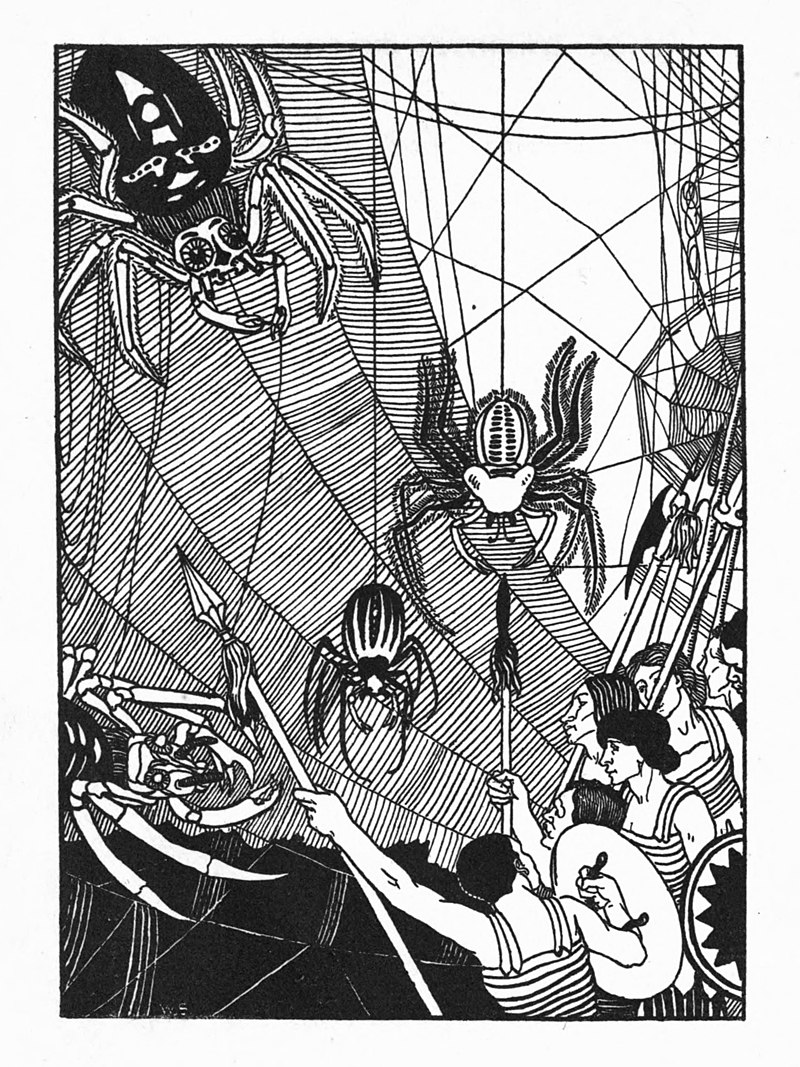
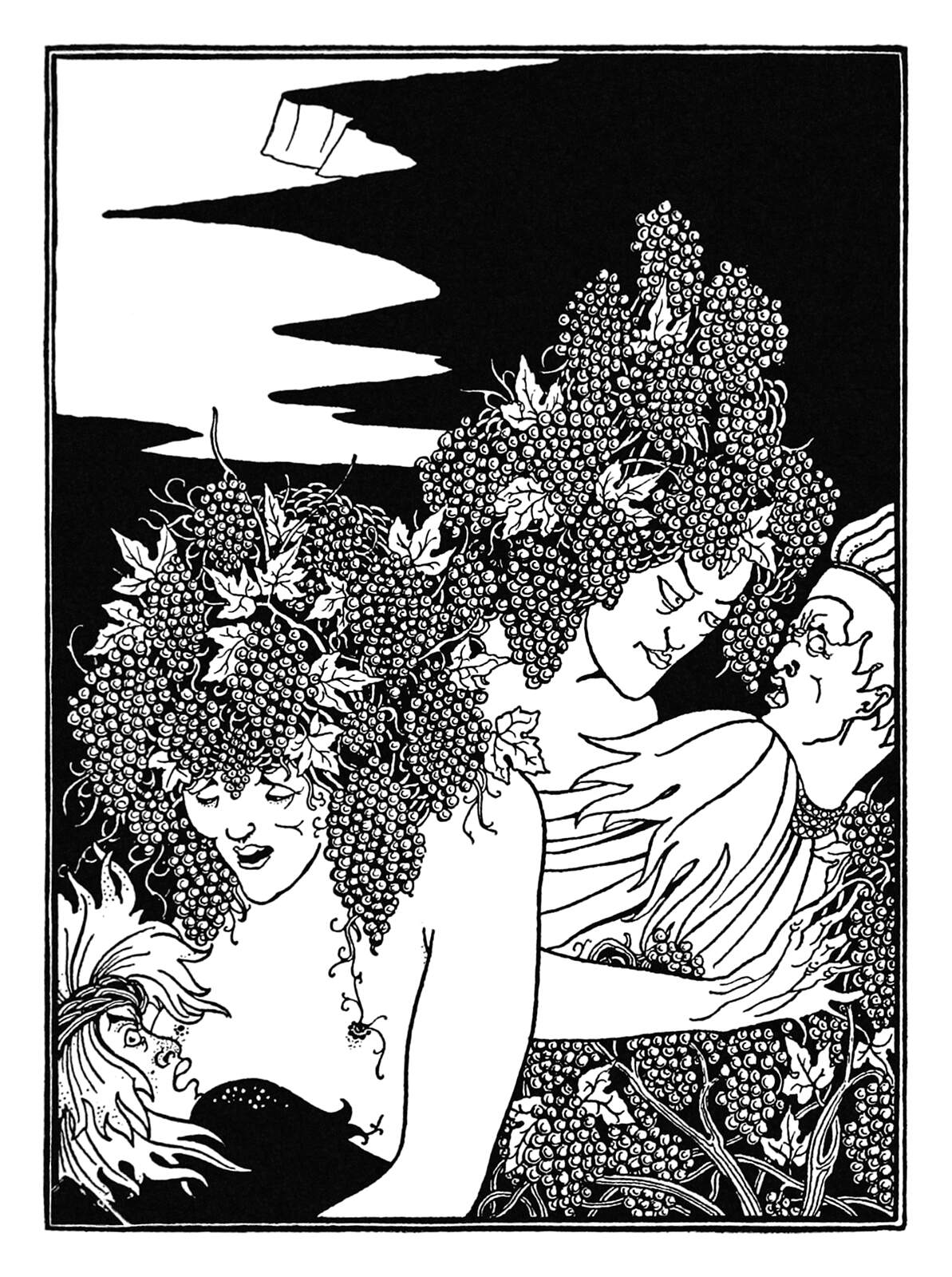
In the video by at the top of the post, filmmaker Gregory Austin McConnell summarizes Lucian’s entire travelogue, not neglecting to mention the river of wine, the tree-shaped women, the cities on the moon, the army of the sun, the battlefield-spinning space spiders, the dogs who ride on winged acorns, the floating sentient lamps, and the 187 and ½ mile-long whale.
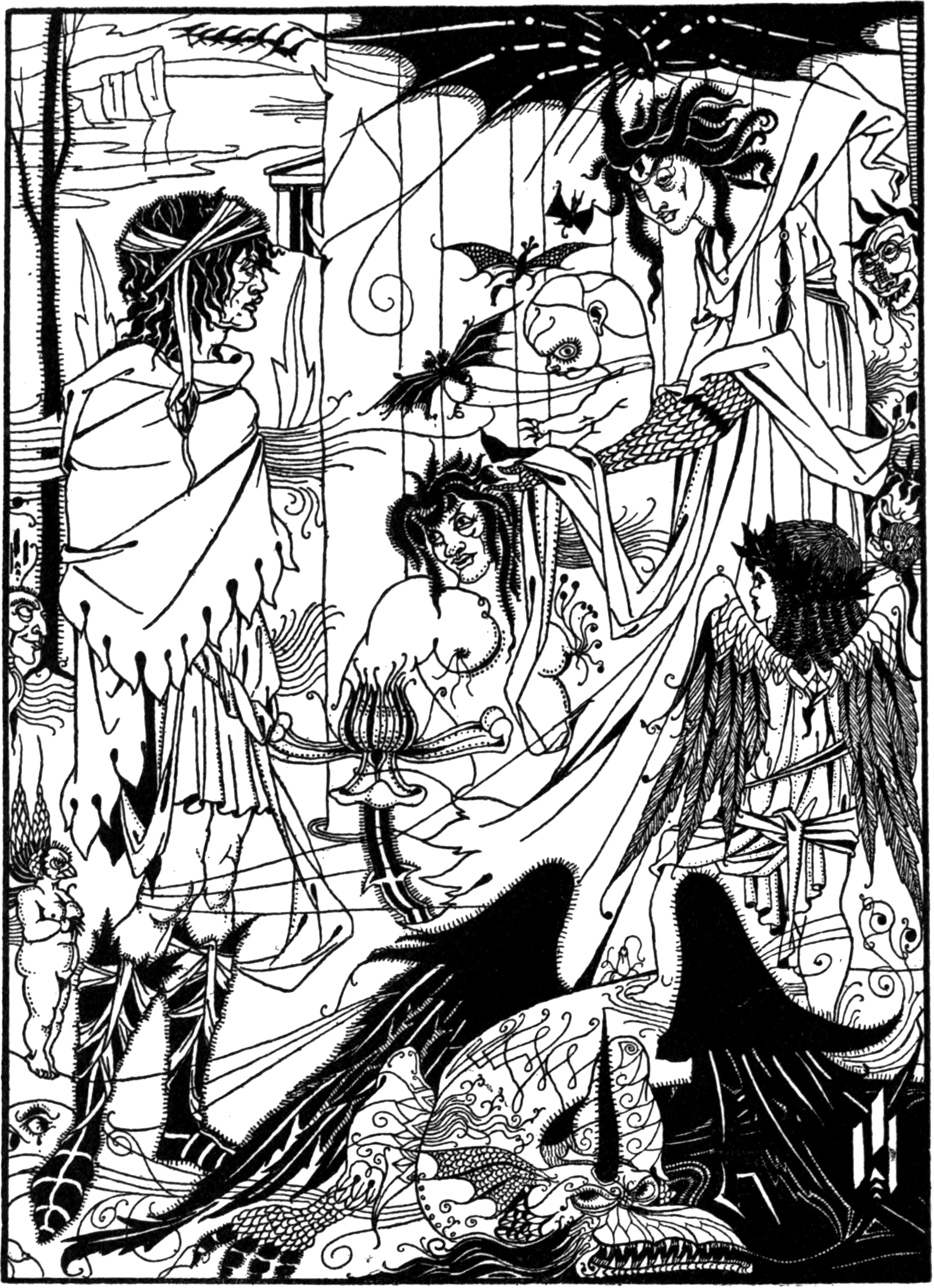
This clearly isn’t what we’d now call “hard” science fiction. So how, exactly, to label it? Such arguments erupt over every major work of genre fiction, even from antiquity. A True Story contains elements of what would become comedy sci-fi, military sci-fi, and even the fantasy-and-sci-fi-hybridizing “space opera” most popularly exemplified by Star Wars and its many sequels. Categorization quibbles aside, what matters about any work in the broader tradition of “speculative fiction” is whether it fires up the reader’s imagination, and Lucian’s work has done it for not just ancients but moderns like the 19th-century artists William Strang and Aubrey Beardsley, whose illustrations from 1894 editions of A True Story appear above. Now that “science fiction rules the cinematic landscape,” as McConnell puts it, who will adapt it for us postmoderns?
Related content:
When Astronomer Johannes Kepler Wrote the First Work of Science Fiction, The Dream (1609)
Mythos: An Animation Retells Timeless Greek Myths with Abstract Modern Designs
The Encyclopedia of Science Fiction: 17,500 Entries on All Things Sci-Fi Are Now Free Online
Isaac Asimov Recalls the Golden Age of Science Fiction (1937–1950)
Free Science Fiction Classics Available on the Web
Based in Seoul, Colin Marshall writes and broadcasts on cities, language, and culture. His projects include the Substack newsletter Books on Cities, the book The Stateless City: a Walk through 21st-Century Los Angeles and the video series The City in Cinema. Follow him on Twitter at @colinmarshall or on Facebook.
Read More...
When Rod Serling Turned TV Pitchman: See His Post-Twilight Zone Ads for Ford, Mazda, Gulf Oil & Smokey Bear
The Twilight Zone ran from 1959 to 1964, this concluding in a different culture than the one in which it had premiered. CBS broadcast the series’ first episode to an America that had neither heard of the Beatles nor elected John F. Kennedy to the presidency; its final episode went out to an America that had buried JFK and launched into a youth-oriented cultural revolution just months before. But Rod Serling, The Twilight Zone’s creator and host, managed to retain a degree of the recognizability and authority he’d enjoyed in the era we call the “long 1950s” well into the sharply contrasting one we call “the 60s.”
At the end of the 1950s, American network television offered a steady, bland diet of sitcoms, Westerns, and cop shows. The Twilight Zone appeared as something new, an anthology series not so genre-bound — or rather, permitted to switch genre every episode — because Serling set its limits at those of the human imagination.
Ghost stories, post-apocalyptic scenarios, tales of alien invasion, superpower fantasies both comic and tragic: all of these narrative forms and more fell within the show’s purview. No matter how brazenly unrealistic their premises, most of these stories had something to say about contemporary society, and all were tethered to reality by the presence of Serling himself.
Even if you’ve somehow never seen an episode of The Twilight Zone, you’ll have a ready mental image of Serling himself, or at least of the dark-suited, cigarette-pinching persona he took on in the opening of most broadcasts. His distinctive manner of speech, still oft-imitated but seldom quite nailed, has become a shorthand for a certain stripe of steady midcentury televisual authority in the midst of surreal or frightening circumstances. As this became a rare and thus in-demand quality in post-Twilight Zone America, no few corporations as well as government agencies must have seen in Serling a desirable spokesman indeed.
Serling, “television’s last angry man,” was notorious for writing scripts from his social and civic conscience. This made him an ideal human face to accompany the ursine one of Smokey Bear in the U.S. Forest Service’s “Only You Can Prevent Forest Fires” public service announcement of 1968. Its Serling-narrated introduction of Ed Morgan and his family as they motor through the woods, plays for all the world like the opening of a classic Twilight Zone episode, albeit in color. “They’ve driven this road a dozen times before, and nothing ever happened,” he says, “but today’s different: today, Ed will become a killer, and here’s his weapon”: a lit cigarette tossed unthinkingly out the window. Such a dire warning may sound a bit rich coming from a man who not only smoked onscreen in so many of his appearances, but personally endorsed Chesterfield Kings on air.
Yet irony was even more integral to The Twilight Zone than, say, space travel, a theme with which many of its episodes dealt. It was presumably Serling’s resulting sci-fi credibility that brought him the offer, just months after the actual Moon landing, of a spot for We Came in Peace, “a permanent 75-page book with full-color illustrations” about the history of “man’s quest in space,” available for one dollar at all participating Gulf Oil gas stations. In the following decade he would also advertise the cars you’d fill up at one, promoting features like Ford LTD’s quiet ride and the new Mazdas’ rotary engines. All these models would also have come with ashtrays, of course, and a responsible midcentury man like Serling would have made sure to use them.
Related Content:
Watch The Twilight Zone’s Pilot Episode, Pitched by Rod Serling Himself (1959)
Rod Serling: Where Do Ideas Come From? (1972)
Cigarette Commercials from David Lynch, the Coen Brothers and Jean Luc Godard
An Anti, Anti-Smoking Announcement from John Waters
Based in Seoul, Colin Marshall writes and broadcasts on cities, language, and culture. His projects include the Substack newsletter Books on Cities, the book The Stateless City: a Walk through 21st-Century Los Angeles and the video series The City in Cinema. Follow him on Twitter at @colinmarshall or on Facebook.
Read More...Watch a Very Nervous, 23-Year-Old David Byrne and Talking Heads Performing Live in NYC (1976)
“This is a person who is profoundly uncomfortable addressing an audience and yet puts himself in that position,” David Byrne told Studio 360’s Kurt Anderson in 2019, as they watched some of the above footage of his 23-year-old self fronting a live Talking Heads’ performance back in 1976.
Everything was pretty new back in that Bicentennial year.
Talking Heads had formed the year before, when Byrne and drummer Chris Frantz, who’d been bandmates at the Rhode Island College of Design, moved to New York City with Frantz’s girlfriend, bassist Tina Weymouth.
The venue hosting this live performance, New York City’s legendary experimental art space, The Kitchen, was slightly less wet behind the ears, having opened its doors in 1971. (Some 30 years later, elder statesman Byrne was the guest of honor at its annual spring gala.)
However you define it — New Wave, no wave, post-punk art pop — the band’s sound was also fresh, though Byrne suggests, in the interview with Anderson, there was nothing new about his youthful cockiness:
…like a lot of bands, artists, everything else, any period really, you tend to think that, um, the pervasive stuff around you is crap and you and your friends are…we’re doing the real stuff.
And optimistically, one might think, since we’re doing the real stuff and it has real soul and passion, and it’s of its moment, it represents its moment, and so immodestly, you think, “Of course! Things are just going to fall into your lap because you’re doing something that has some truth to it. Uh…that certainly doesn’t always happen.
It happened comparatively quickly for Talking Heads.
Several of the songs they performed as a trio that March night at the Kitchen made it onto Talking Heads: 77, the debut studio album recorded barely a year later, by which time a fourth member, Jerry Harrison, had joined on keyboards and guitar.
Of particular note above is Psycho Killer, which earned the band both notoriety, owing to the coincidental timing of 1976 and 1977’s Son of Sam murders, and their first Billboard Hot 100 spot.
“This song was written a long time ago,” the young Byrne stutters into the microphone at the Kitchen, then apologizes for fiddling with his clothes and equipment.
(“It’s all good!” Frantz calls out encouragingly from behind his drum kit.)
According to the liner notes of Once in a Lifetime: The Best of Talking Heads, Byrne began work on the song in college:
When I started writing this (I got help later), I imagined Alice Cooper doing a Randy Newman-type ballad. Both the Joker and Hannibal Lecter were much more fascinating than the good guys. Everybody sort of roots for the bad guys in movies.
Fans may note a disparity in the lyrics between this performance and recorded versions of the song. Here, the second verse goes:
Listen to me, now I’ve passed the test
I think I’m cute, I think I’m the best
Skirt tight, don’t like that style
Don’t criticize what I know is worthwhile
Psycho Killer stayed on the shelf for David Byrne’s American Utopia, the Broadway show recently filmed by Spike Lee. But it gave a far more polished Byrne an excellent opener for Talking Heads’ 1984 concert film, Stop Making Sense.
The uncomfortable young frontman dressed like a “proletariat everyman,” who the Kitchen’s press release described as “a cross between Ralph Nader, Lou Reed, and Tony Perkins.” And he has since managed to acquire some impressive performance chops over the course of a still flourishing career.
This is your chance to catch him at that awkward age when, as Byrne told Kirk Anderson, he performed “because he had to”:
There was this means of communication that was being a performer and writing songs and singing them (that) was a way of, kind of being present to other people — not just girls, but other people in general.
Setlist for The Kitchen, March 13, 1976:
00:00 — Introduction/soundcheck
02:13 — The Girls Want To Be With the Girls (Featured on More Songs About Buildings and Food in 1978)
06:05 — Psycho Killer (Featured on Talking Heads: 77 in 1977, with different lyrics)
The lyrics of the 2nd verse of Psycho Killer is different from the recorded version!
10:55 — I Feel It In My Heart (Featured on the deluxe version of Talking Heads: 77, with different lyrics)
15:28 — I Wish You Wouldn’t Say That (Featured on the deluxe version of Talking Heads: 77)
18:15 — Information about the recording
19:00 — Stay Hungry (Featured on More Songs About Buildings and Food)
24:35 — I Want To Live (Featured on compilations such as Sand in the Vaseline, 1992 and Bonus Rarities & Outtakes, 2006)
29:48 — Tentative Decisions (Featured on Talking Heads: 77)
32:55 — No Compassion (assumed, video ends before song starts)
Related Content
Watch the Talking Heads Play a Vintage Concert in Syracuse (1978)
The Talking Heads Play CBGB, the New York Club that Shaped Their Sound (1975)
- Ayun Halliday is the Chief Primatologist of the East Village Inky zine and author, most recently, of Creative, Not Famous: The Small Potato Manifesto. Follow her @AyunHalliday.
Read More...Russian Invasion of Ukraine Teach-Out: A Free Course from the University of Michigan

From the University of Michigan comes a free short course on the Russian Invasion of Ukraine. Here’s how they set the context for the course, which you can find on the Coursera platform:
“The armed conflict in Ukraine first started in the beginning of 2014, when Russia invaded and annexed the Ukrainian region of Crimea. Over the past eight years, there has been ongoing conflict between Ukraine and Russia, with regular shelling and skirmishes occurring along Russian and Ukrainian borders in the eastern part of the country. On February 24, 2022, Russia launched a full-scale military invasion of Ukraine, plunging the entire country into war and sending shockwaves across the world. With casualties mounting and over one million Ukrainians fleeing the country, the need for dialogue and de-escalation have never been higher. In this Teach-Out, you will learn from a diverse group of guest experts about the history and origins of war in Ukraine, its immediate and long-term impacts, and what you can do to support people in this growing humanitarian crisis. Specifically this Teach-Out will address the following questions:
- How did we get here? Why did Russia invade Ukraine?
— What historical and cultural contexts do we need to know about in order to understand this conflict?
— How is cyber and information warfare impacting the conflict in Ukraine?
— What can be done to stop this war?
— How can we support Ukrainian refugees and displaced peoples?”
Sign up for the course here.
If you would like to support the mission of Open Culture, consider making a donation to our site. It’s hard to rely 100% on ads, and your contributions will help us continue providing the best free cultural and educational materials to learners everywhere. You can contribute through PayPal, Patreon, and Venmo (@openculture). Thanks!
Related Content
1,700 Free Online Courses from Top UniversitiesPutin’s War on Ukraine Explained in 8 Minutes
Why Russia Invaded Ukraine: A Useful Primer
Read More...Ukrainians Playing Violin in Bunkers as Russians Bomb Them from the Sky
What we do in bomb shelters when they bomb us from the sky pic.twitter.com/SzielSRxIj
— Liubov Tsybulska (@TsybulskaLiubov) March 6, 2022
Vladimir Putin can bomb Ukraine. But he can’t destroy the human spirit.…
If you would like to support Ukrainians in desperate need, visit this page to find aid organizations doing good work on the ground.
For any Russian citizens visiting our site, you can see the atrocities being committed by your leader here, here, here, here, here and here. Also find advice on getting around Russian censorship of media here.
If you would like to support the mission of Open Culture, consider making a donation to our site. It’s hard to rely 100% on ads, and your contributions will help us continue providing the best free cultural and educational materials to learners everywhere. You can contribute through PayPal, Patreon, and Venmo (@openculture). Thanks!
Related Content
Pianist Plays “What a Wonderful World” for Ukrainian Refugees at Lviv Station
Russian Invasion of Ukraine Teach-Out: A Free Course from the University of Michigan
Putin’s War on Ukraine Explained in 8 Minutes
Why Russia Invaded Ukraine: A Useful Primer
Read More...Pianist Plays “What a Wonderful World” for Ukrainian Refugees at Lviv Station
Reuters journalist Andrew Marshall posted this on Twitter: “Outside Lviv station, which is thronging with exhausted refugees fleeing war in eastern Ukraine, an accomplished pianist is playing “What a Wonderful World.” It’s hauntingly beautiful.” Indeed.
If you would like to support Ukrainians in desperate need, visit this page to find aid organizations doing good work on the ground.
For any Russian citizens visiting our site, you can see the atrocities being committed by your leader here, here, here, here, here and here. Also find advice on getting around Russian censorship of media here.
Related Content
How Volodymyr Zelenskyy Went from Playing a President on a Comedy TV Show to Very Real Life
Read More...Support Us
We're hoping to rely on loyal readers, rather than erratic ads. Please click the Donate button and support Open Culture. You can use Paypal, Venmo, Patreon, even Crypto! We thank you!

About Us

Open Culture scours the web for the best educational media. We find the free courses and audio books you need, the language lessons & educational videos you want, and plenty of enlightenment in between.
Advertise With Us
FREE UPDATES!
GET OUR DAILY EMAIL
Get the best cultural and educational resources on the web curated for you in a daily email. We never spam. Unsubscribe at any time.
FOLLOW ON SOCIAL MEDIA
Open Culture editor Dan Colman scours the web for the best educational media. He finds the free courses and audio books you need, the language lessons & movies you want, and plenty of enlightenment in between.
Advertise With Us


