How to Be a Samurai: A 17th Century Code for Life & War
Many today draw inspiration from Bushidō, the Way of the Warrior, a comprehensive code of conduct for premodern Japan’s samurai (or bushi).
The above installment of History Brothers David and Pete Kelly’s primary source web series Voices of the Past suggests that some aspects of the samurai code are more applicable to 21st century life than others.
For instance, when was the last time you slaughtered someone for rendering offense to your Lord?
Not that the best practices surrounding such an assignment aren’t fascinating. Still, you’ll probably benefit more from incorporating the samurai approach to dealing with gossips or clueless colleagues.
If you want to adapt Master Ninja Natori Masazumi’s Edo period instructions for cleaning blood from long swords, without damaging the blade, to polishing your stainless steel fridge, have at it:
Place horse droppings inside some paper and wipe it over a blade that has been used to cut someone. This will leave traces of the wiping and the blood will no longer be seen. If there are no horse droppings available to wipe the blade with, use the back of your straw sandals or soil inside paper.
The video draws on historian Antony Cummins and translator Yoshie Minami’s The Book of Samurai: The Fundamental Teachings, a reproduction of two scrolls containing Natori Masazumi’s directives for samurai conduct in times of war and peace.
The second scroll, “Ippei Yoko,” contains some explicit marching orders for the former.
If you’re squeamish — or eating — you may want to duck out of the video before Natori Masazumi’s granular instructions on the severing of enemy heads. (15:30 onward.)
Alternatively, you could make like an inexperienced young samurai and harden yourself to the graphic realities of bloodshed by attending executions and violent punishments in your downtime.
Again, the more everyday wisdom of “Heika Jodan,” the first scroll, will likely prove more pertinent. A few chestnuts to get you started:
Don’t say something about someone behind their back that you are not prepared to repeat to their face.
Keep your distance from “stupid” associates, but also resist the urge to make fun of them.
Never shy away from an act of virtue.
In an emergency, exit in a swift, but orderly manner.
Compliment the food when you’re a guest in someone’s home, even if you don’t like it.
If you’re the host, and two guests begin fighting, try to help settle the matter discreetly, to avoid lasting injuries or grudges.
Don’t pass the buck to excuse your own misdeeds.
Don’t panic in an unexpected situation — the first thing you should do is take a breath and settle your mind.
Whether traveling or just out and about, be prepared with necessary items, including, pencil, paper, money, medications…
When tempted to regale others with any supernatural encounters you may have had, remember that less is more.
Watch more Voices of the Past on their YouTube channel.
Related Content:
A Hypnotic Look at How Japanese Samurai Swords Are Made
An Origami Samurai Made from a Single Sheet of Rice Paper, Without Any Cutting
A Demonstration of Perfect Samurai Swordsmanship
Ayun Halliday is the Chief Primaologist of the East Village Inky zine and author, most recently, of Creative, Not Famous: The Small Potato Manifesto. Follow her @AyunHalliday.
Read More...Dave Grohl & Greg Kurstin Cover Van Halen’s “Jump,” Celebrating David Lee Roth, One of the Hardest Rocking Jews, on the Fourth Night of Hannukah
For the second year in a row, Foo Fighters frontman Dave Grohl and producer Greg Kurstin have launched The Hanukkah Sessions, a festive music series where they cover a song–one for each night of Hanukkah–originally created by a Jewish musician. For the fourth night of Hanukkah this year, they celebrate “quite possibly the loudest and proudest of hard rocking Jews, David Lee Roth” with a rollicking version of Van Halen’s “Jump.” To watch their other celebratory tracks, click here.
If you would like to support the mission of Open Culture, consider making a donation to our site. It’s hard to rely 100% on ads, and your contributions will help us continue providing the best free cultural and educational materials to learners everywhere. You can contribute through PayPal, Patreon, and Venmo (@openculture). Thanks!
Related Content
Musical Comedian Reggie Watts Reinvents Van Halen’s Classic, “Panama”
Read More...Browse a Huge Collection of Prison Newspapers: 1800–2020

“By the end of the eighteenth and the beginning of the nineteenth century, the gloomy festival of punishment was dying out… Punishment, then, will tend to become the most hidden part of the penal process.” — Michel Foucault
The study of crime in the late 1800s began with racist pseudoscience like craniometry and phrenology, both of which have made a disturbing comeback in recent years. In his 1876 book, Criminal Man, the “father of criminology,” Cesare Lombrosco, defined “the criminal” as “an atavistic being who reproduces in his person the ferocious instincts of primitive humanity and the inferior of animals.” Lombrosco believed that certain cranial and facial features correspond to a “love of orgies and the irresistible craving for evil for its own sake, the desire not only to extinguish life in the victim, but to mutilate the corpse, tear its flesh, and drink its blood.” That such descriptions preceded Bram Stoker’s Dracula by several years may be no coincidence at all.
No such thing as a natural criminal type exists, but this has not stopped 19th century prejudices from embedding themselves in law enforcement, the prison system and the culture at large in the United States. Outside of the most sensationalist cases, however, we rarely hear from incarcerated people themselves, though they’ve had plenty say about their humanity in print since the turn of the 19th century, when the first prison newspaper, Forlorn Hope, was published in New York City on March 24, 1800.
“In the intervening 200 years,” notes JSTOR, “over 500 prison newspapers have been published from U.S. prisons.” A new collection, American Prison Newspapers: 1800–2020 — Voices from the Inside, “will bring together hundreds of these periodicals from across the country into one collection that will represent penal institutions of all kinds, with special attention paid to women-only institutions.”
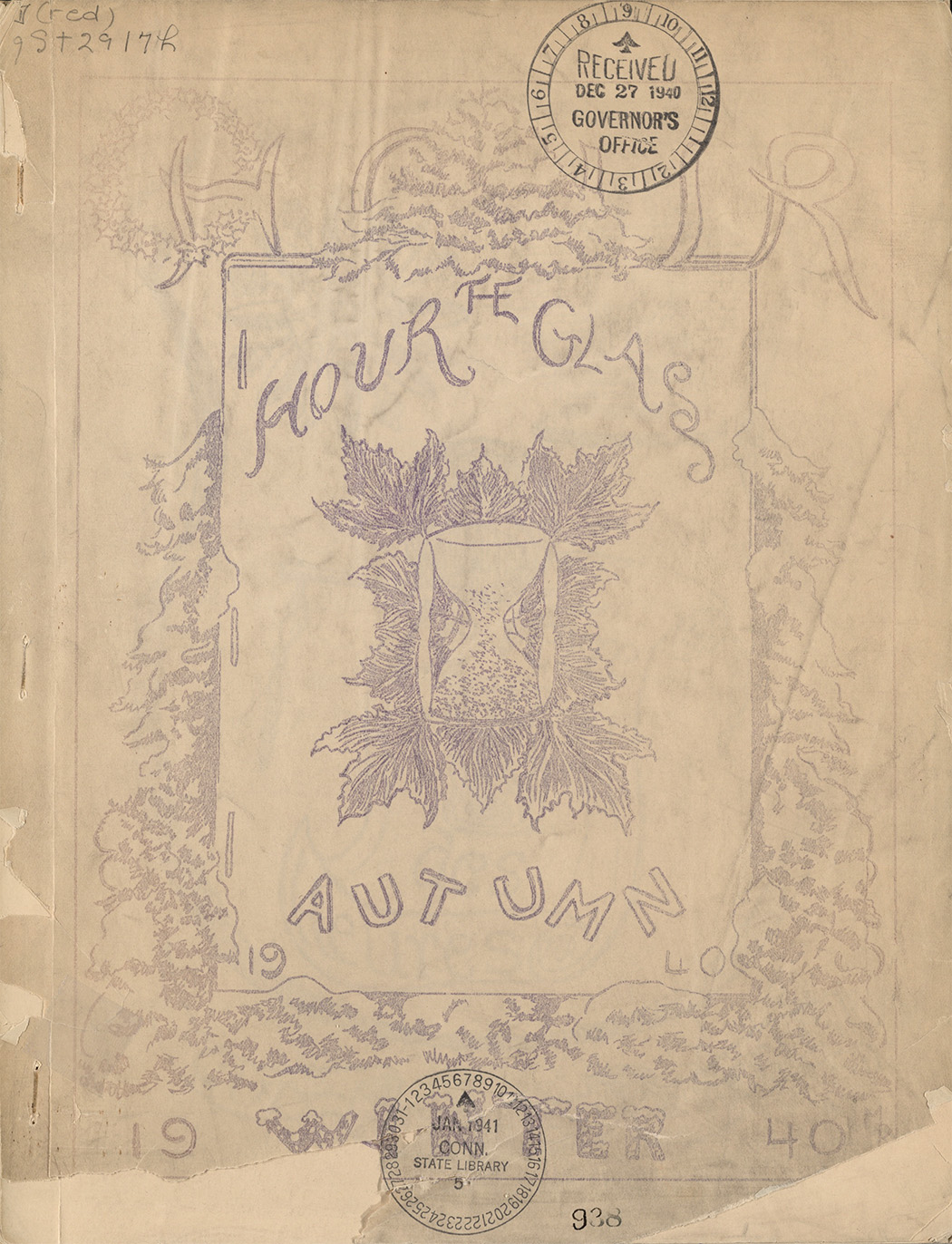
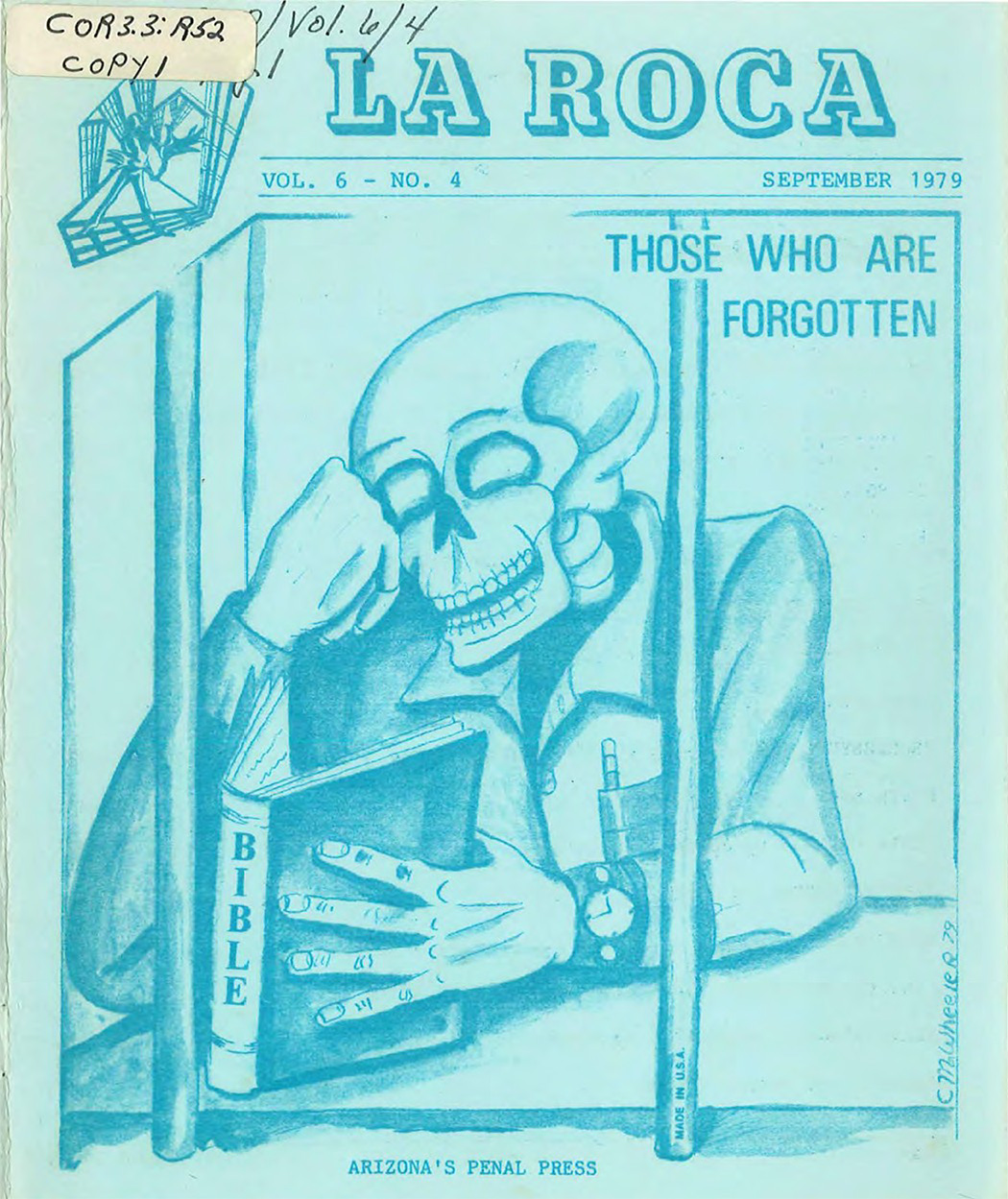
The U.S. incarcerates “over 2 million as of 2019” — and has produced some of the world’s most moving jail and prison literature, from Thoreau’s “Civil Disobedience” to Martin Luther King, Jr.‘s “Letter from a Birmingham Jail.” The newspapers in this collection do not often feature a similar level of literary bravura, but many show a high degree of professionalism and artistic quality. “Next to the faded, home-spun pages of The Hour Glass, published at the Farm for Women in Connecticut in the 1930s,” writes JSTOR Daily’s Kate McQueen, “readers will find polished staples of the 1970s like newspaper The Kentucky Inter-Prison Press and Arizona State Prison’s magazine La Roca.”
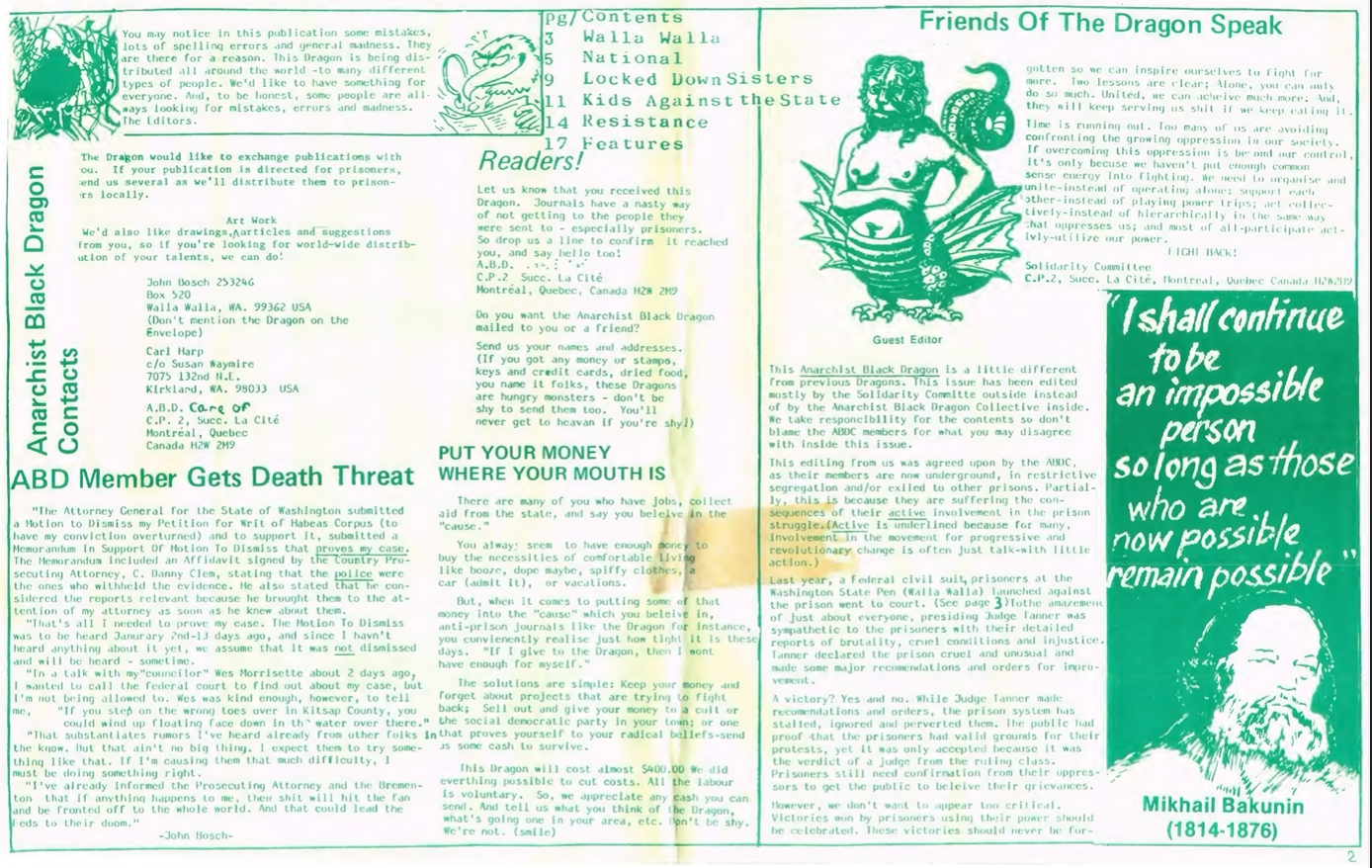
Many, if not most, of these publications were published with official sanction, and these “cover similar ground. They report on prison programing, profile locals of interest, and offer commentary on topics like parole and education” under the watchful gaze of the warden, whose photograph might appear on the masthead. “Incarcerated journalists walk a tightrope between oversight by administrations — even censorship — and seeking to report accurately on their experiences inside,” the collection points out. Prison newspapers gave inmates opportunities to share creative work and hone newly acquired literacy, literary, and legal skills. Those periodicals that circulated underground without the authorities’ permission had no need to equivocate about their politics. Washington State Penitentiary’s Anarchist Black Dragon, for example, took a fiercely radical stance on every page. Nowhere on the masthead will one find the names of correctional officers, or even a list of editors and contributors, or even a masthead.
Whether official, unofficial, or occupying a grey area, prison periodicals all hoped in some degree to “poke holes in the wall,” as Tom Runyon, editor of Iowa State Penitentiary’s Presidio wrote — reaching audiences outside the prison to refute criminological thinking. Arizona State Prison’s The Desert Press, led its January 1934 issue with the pressing headline “Are Convicts People?” (likely after Alice Duer Miller’s satirical 1904 “book of rhymes for suffrage times,” Are Women People?) Lawrence Snow, editor of Kentucky State Penitentiary’s Castle on the Cumberland, picked up the question with more formality in a 1964 column, asking, “How shall [a prison publication] go about its principal job of convincing the casual reader that convicts, although they have divorced themselves temporarily from society, still belong to the human race?” Given that the United States imprisons more people than any other nation in the world, the question seems more pertinent — urgent even — than ever before. Enter the American Prison Newspapers collection here.

via Kottke
Related Content:
On the Power of Teaching Philosophy in Prisons
Prisons Around the U.S. Are Banning and Restricting Access to Books
Bertrand Russell’s Prison Letters Are Now Digitized & Put Online (1918 – 1961)
Patti Smith Reads from Oscar Wilde’s De Profundis, the Love Letter He Wrote From Prison (1897)
Josh Jones is a writer and musician based in Durham, NC. Follow him at @jdmagness
Read More...How Drummer Moe Tucker Defined the Sound of the Velvet Underground
A high school girl from Levittown, New York, the country’s first suburb, Maureen “Moe” Tucker hardly fit the profile of a rock star in one of the most influential bands of the 1960s. Then again, neither did any of the members of the Velvet Underground. Lou Reed, John Cale, Sterling Morrison, and Tucker had barely begun before Andy Warhol introduced them to Nico and billed them as the Exploding Plastic Inevitable, and it was Warhol who helped turn them into cult heroes. But Tucker made them sound like no one else. “Her style of drumming, that she invented” Reed once remarked, “is amazing. I’ve tried to get a drummer to do what she did and it’s impossible.” Her approach to Reed’s songs was a “mix of African trance rhythms and Ringo-like arrangement genius,” Adam Budofsky writes at Modern Drummer. “Her playing style was hugely responsible for the Velvet’s singular personality.”
Listen, for example, to 1970’s Loaded – which Tucker sat out due to pregnancy — next to The Velvet Underground & Nico, White Light/White Heat, or The Velvet Underground. Loaded, the only Velvet Underground album never to go out of print, may be called by some a “near-perfect rock album,” but it’s also the least experimental and least interesting of the band’s four studio releases, the sound of the band without Cale and Tucker, reaching for radio hits. The Velvet Underground with Moe Tucker, on the other hand, was the sound of a band that was constantly falling apart while rooting down into a primal rock and roll that would outlast them. It’s sublime, and Tucker deserves her reputation as “one of the head hypnotists,” in the words of Jonathan Richman.
Her contribution was as much youthful enthusiasm and nerve as raw talent. Compelled to play the drums by a love for the Rolling Stones, the Beatles, and Nigerian drummer Babatunde Olatunji, she might have banged away in unremarkable Long Island cover bands in her youth, becoming a more traditional player, had not Reed, who knew her brother, given her the chance to play the first paying VU gig at Summit High School in New Jersey. As she remembers it in the punk oral history project Please Kill Me:
I was a nervous wreck when we played that show. We were allowed to play three songs and we had practiced them at John Cale’s loft. We played, “Waiting For the Man,” “Heroin,” and I think the third one was “Venus In Furs.”
Our set was only about 15 minutes at the most and in each song something of mine broke. All my stuff was falling apart! The foot pedal broke in one song, the leg of the floor tom started going loose. I thought, Oh shit, I’m going to ruin this!
Instead of ruin, what followed were more gigs and a period of experimentation in which Tucker, who started with only a snare, tried out different configurations of the drum kit in long jam sessions at Warhol’s Factory: playing her bass drum with mallets on the floor, then on chairs while standing up, eschewing cymbals altogether, making judicious use of tom toms and tambourines, playing a few memorable shows with trashcans when her drums were stolen.… She had no training, no one in the band told her she was doing it wrong, and so she was free to reinvent the drums her way.
As you’ll see in the thorough documentary above, Foundation Velvet, by Cam Forrester, Tucker’s way was exactly what the Velvets needed to recreate rock and roll in their image. She had a “discipline with regards to playing the song, and not the instrument,” Forrester says. You’ll also see him recreate Tucker’s instrumentation. In the timestamps below, click on the demonstrations to see her drum setup for each track on the band’s first three albums.
Quotes/Introduction — 0:00
Background & musical beginnings — 3:50
“Tucker’s sister plays drums?” — 6:14
Andy Warhol, ‘The Factory’, and Nico — 9:07
The ‘Exploding Plastic Inevitable’ Shows — 12:46
A female drummer? — 15:09
‘The Velvet Underground & Nico’ Sessions — 17:38
DRUM DEMONSTRATIONS — 21:22
Goodbye to Nico & Andy…hello to VOLUME! — 25:02
‘White Light/White Heat’ & DRUMMING DEMONSTRATIONS — 28:18
John Cale leaves, and Doug Yule joins — 34:35
The third album & DRUMMING DEMONSTRATIONS — 37:07
‘Loaded’, band breakup, and solo career — 43:09
Moe’s heroic return to the drums — 45:58
Retirement from the music business — 53:48
Influence & legacy — 54:28
“A natural drummer…” — 57:03
One can approximate Tucker’s style and reconstruct her influences, as Forrester has done here brilliantly, but there will never be another drummer like her.
Related Content:
Josh Jones is a writer and musician based in Durham, NC. Follow him at @jdmagness
Read More...What Movies Teach Us About Mozart: Exploring the Cinematic Uses of His Famous Lacrimosa
In the annals of surprisingly impressive IMDb pages, few can surpass that of Wolfgang Amadeus Mozart. Despite having died a century before the birth of cinema, he has racked up and continues to rack up more composer credits each and every year. Many of these owe to the use of one piece, indeed one movement, in particular: the Lacrimosa from his Requiem, which contains the very last notes he ever wrote. “We should probably expect some of these uses to have a somber, funereal quality, and they do,” says Evan Puschak, better known as the Nerdwriter, in the new video essay above. In Amadeus, Miloš Forman’s film about the composer himself, the piece accompanies a sequence showing “Mozart’s dead body being unceremoniously transported and dumped into a mass grave.”
The shortcomings of Mozart’s burial have surely been compensated for by the glories of his legacy. But that legacy includes all manner of uses of the Lacrimosa in film and television, both glorious and inglorious. Given its “sense of both suspense and inevitability, which is a unique and potent combo,” it typically scores scenes of violence and villainy.
“The repeated association of Lacrimosa with evil conditions us to think of evil when we hear it, to the point that filmmakers choose it as a kind of shorthand, drawing on our memories of its past uses.” Eventually this hardened into cinematic convention, ultimately becoming “such a trope that it works brilliantly for parody and satire too,” as in The Big Lebowski’s meeting of its two titular figures. (Note that the music becomes muffled when the Dude leaves the room, implying that Lebowski had actually put it on himself.)
Elsewhere, the Lacrimosa has been marshaled to evoke such emotions as loneliness, desperation, and reckoning — and even, in one of Puschak’s more recent examples, “the immense, unruly power of the social internet.” If such a phenomenon would be difficult to explain to Mozart himself, imagine showing him the television series The Good Fight, where “Lacrimosa amplifies the comedy of a scene in which the lawyers get their hands on Donald Trump’s alleged ‘pee tape.’ ” But Mozart obviously understood full well the underlying artistic principles at work: Amadeus also depicts him composing the Dies Irae, another of the Requiem’s movements, whose melody he adapts from a thirteenth-century Gregorian funeral mass. Even in his time, the music of the past offered a means of heightening the feelings of the present.
Related Content:
Hear All of Mozart in a Free 127-Hour Playlist
Based in Seoul, Colin Marshall writes and broadcasts on cities and culture. His projects include the book The Stateless City: a Walk through 21st-Century Los Angeles and the video series The City in Cinema. Follow him on Twitter at @colinmarshall or on Facebook.
Read More...Watch Paul McCartney Compose The Beatles Classic “Get Back” Out of Thin Air (1969)
In its nearly eight-hour runtime Peter Jackson’s new documentary series The Beatles: Get Back offers numerous minor revelations about the world’s favorite band. Among the filmmaker’s avowed aims was to show that, even on the verge of acrimonious dissolution, John, Paul, George, and Ringo enjoyed stretches of productiveness and conviviality. Much else comes out besides, including that the catering at Apple Corps headquarters was miserable (amounting most days to toast and digestive biscuits) and that, even amid the excesses of the late 1960s, the Beatles dressed more or less respectably (apart, that is, from George’s occasionally outlandish choices of outer- and footwear). But it also lays bare exactly how they created a song.
The Beatles went into these sessions with little material prepared. All they knew for sure was that they had to come up with a set of songs to be recorded live, without overdubs, in order to “get back” to the simplicity that had characterized their process before such aesthetically and technically convoluted albums as Revolver and Sgt. Pepper’s Lonely Hearts Club Band. These they would then perform in a concert film. The whole project was undertaken with what Rolling Stone’s Rob Sheffield calls a “magnificent arrogance. In a way, that’s what helped keep them together, through all their ups and downs. Without that level of arrogance, there’s no way an adventure as admirably daft as Get Back could happen in the first place.”
Somehow, to the very end, that arrogance always proved justified. For much of Jackson’s Get Back, the Beatles appear to be just screwing around, cracking jokes, drinking tea and beer, and launching into abortive performances in cartoon voices. And that’s when everyone shows up. “Lennon’s late again,” says Paul in the clip above. “I’m thinking of getting rid of him.” But instead of nursing resentment for his unpredictable musical partner, he sits down and starts playing. His first chords will sound familiar to any Beatles fan, though they belong to a song that doesn’t yet exist. Paul then adds to his strumming a bit of mostly non-verbal vocalization, which soon coheres into a melodic line: we (and a yawning George) are witness to the birth of “Get Back.”
During the lifetime of the Beatles, Paul seems to have been the most productive member. Even since the band’s end half a century ago, music has continued to flow unimpeded from his mind, shaped as if by pure instinct. In that time it has become ever more well-documented that he motivated the group to work, especially after the death of their manager Brian Epstein in 1967. While Get Back attests to a certain overbearing quality in his attitude toward the other Beatles, it also shows how McCartney’s hardworking-yet-freewheeling example encouraged each of them to express his own particular genius. When George gets stuck on the end of a lyric, for example, he, too, simply sings whatever comes to mind. Hence the temporary line “Something in the way she moves / Attracts me like a pomegranate” — and we all know how that tune eventually turned out.
Related Content:
Chaos & Creation at Abbey Road: Paul McCartney Revisits The Beatles’ Fabled Recording Studio
Based in Seoul, Colin Marshall writes and broadcasts on cities and culture. His projects include the book The Stateless City: a Walk through 21st-Century Los Angeles and the video series The City in Cinema. Follow him on Twitter at @colinmarshall or on Facebook.
Read More...How a Mosaic from Caligula’s Party Boat Became a Coffee Table in a New York City Apartment 50 Years Ago
Imagine owning Caligula’s coffee table — or, better yet, a coffee table made from the mosaic flooring that once covered the infamously cruel Roman Emperor’s party boats. Art dealer and Manhattanite Helen Fioratti owned such a table for 45 years, but she had no idea what it was until she happened to go to a 2013 book signing by author and Italian stone expert Dario Del Bufalo. There, a friend noticed her table in Del Bufalo’s coffee table book, Porphyry, “about the reddish-purple rock much used by Roman emperors,” notes Gloria Oladipo at The Guardian. Fioratti’s husband bought the piece from an aristocratic Italian family in the 1960s, then affixed it to a base and made into a table. “It was an innocent purchase,” Fioretti told The New York Times in 2017 after Italy’s Nemi museum seized the artifact and returned it to its home country. Del Bufalo agreed, and it pained him to have to take it, but the artifact, he says in an interview above with Anderson Cooper, is priceless.
Caligula had two luxurious wooden ships with elaborate tile floors built to float on Lake Nemi, just a few miles outside of Rome. “Stretching 230 feet and 240 feet long and mostly flat,” Brit McCandless Farmer writes for Sixty Minutes, it was said they were once “topped with silk sails and featured orchards, vineyards, and even bathrooms with running water.” They even boasted lead pipes “inscribed Gaius Caesar Augustus Germanicus, Caligula’s official name, according to a 1906 issue of Scientific American.” He was “once the most powerful man in the world,” says Anderson Cooper above, but Caligula became renowned for his brutality, self-indulgence, and possible insanity. The third Roman emperor was assassinated four years into his reign by a conspiracy of Praetorians and senators. So hated was he at the time that Romans attempted to “chisel him out of history.” The sinking of his party boats was one of many acts of vandalism committed against his wasteful, violent legacy.
Interest in the pleasure ships was only piqued again when divers found the wreckage in 1895. “The deck must have ben a marvelous sight to behold,” wrote Italian archaeologist Rodolfo Lanciani in 1898; “it goes beyond the power of imagination for its strength and elegance.” Lanciani described in detail “the pavement trodden by imperial feet, made of disks of porphyry and serpentine… framed in segments and lines of enamel, white and gold, white and red, or white, red, and green.” But it would be another few decades before the ships, submerged for almost 2,000 years, would see dry land again when Benito Mussolini, who was obsessed with Caligula, ordered Lake Nemi partially drained in the 30s and the boats resurrected and housed in a nearby museum built for that purpose. Then, in 1944, retreating Nazis allegedly set fire to the museum, after using it as a bomb shelter, destroying Caligula’s pleasure cruisers. No one knows how Fioretti’s mosaic made it out of Italy during this time.
It seems that the Emperor’s star has been on the rise once more the past few years, since the discovery of the mosaic and of Caligula’s imperial pleasure garden, Horti Lamiani, “the Mar-a-Lago of its day,” Franz Lidz writes at The New York Times. Unearthed in an excavation between 2006 and 2015, the now-subterranean ruins found beneath a “condemned 19th century apartment complex, yielded gems, coins, ceramics, jewelry, pottery, cameo glass, a theater mask, seeds of plants such as citron, apricot and acacia that had been imported from Asia, and bones of peacocks, deer, lions, bears, and ostriches.” The ruins opened to tourists this past spring. As for Mrs. Fioratti, “I felt very sorry for her,” said Del Bufalo, “but I couldn’t do anything different, knowing that my museum in Nemi is missing the best part.” He hopes to make a replica to return to her Park Avenue living room for beverage service. “I think my soul would feel a little better,” he says.
Related Content:
The History of Ancient Rome in 20 Quick Minutes: A Primer Narrated by Brian Cox
Josh Jones is a writer and musician based in Durham, NC. Follow him at @jdmagness
Read More...Hear Haruki Murakami Play Beatles Covers on His Radio Show, Murakami Radio

Now ramping up to a wide release is a film that will draw in no few fans of Haruki Murakami around the world: Drive My Car, adapted by filmmaker Ryusuke Hamaguchi from Murakami’s short story of the same name. That name itself comes, of course, from the Beatles song, their knockout opener to Rubber Soul. It wasn’t the first time Murakami had borrowed a title from the Fab Four. The novel that made him a household name, in his homeland of Japan and subsequently the rest of the world, was called Norwegian Wood.
The Beatles’ albums have also provided him with inspiration, as evidenced by his story “With the Beatles,” published in translation last year by The New Yorker. It takes place in 1965, when the Beatles had become hugely popular in not just the West but Japan as well. “Turn on the radio and chances were you’d hear one of their songs,” says the narrator. “I liked their songs myself and knew all their hits,” but “truth be told, I was never a fervent Beatles fan. I never actively sought out their songs. For me, it was passive listening, pop music flowing out of the tiny speakers of my Panasonic transistor radio.” Despite being a high-school, then college student in the 1960s, “I didn’t buy a single Beatles record. I was much more into jazz and classical music.”
This story is fictional; its narrator is not its author. Yet Murakami, who happened to come of age in the same era, made similar remarks about his experience with the Beatles a couple of years ago. His originally one-off session as a disc jockey on Tokyo FM has become a more or less full-fledged show, Murakami Radio. Each of its broadcasts he dedicates to a different musical theme, and it was thus only a matter of time before he got around to the Beatles.
Despite his early indifference, as Murakami explains between songs, he later, in his thirties, came to sense the genius of John, Paul, George, and Ringo, during a stay in Greece with their self-titled 1968 “White Album” on tape in his Walkman — which, despite lacking its title song, inspired him to start writing Norwegian Wood. Apart from that memory, the late-period Beatles figure only secondarily into Murakami’s “Beatles Night.” He focuses instead on their early, pre-Rubber Soul work, or rather, on a variety of lesser-known covers thereof.
If you listen to the actual broadcast on Japanese video-streaming site Niconico, you’ll also hear such additional Beatles covers as “Do You Want to Know a Secret” by Motown singer Mary Wells and “She Loves You” by Rita Lee of Brazilian rock titans Os Mutantes. Obviously, the appeal of the Beatles transcends cultural boundaries, as does that of the extensively translated Murakami. What explains it? Perhaps, in both cases, that they created their own genres — or rather, their own wondrous realities.
Related Content:
Hear 100 Amazing Cover Versions of Beatles Songs
Based in Seoul, Colin Marshall writes and broadcasts on cities and culture. His projects include the book The Stateless City: a Walk through 21st-Century Los Angeles and the video series The City in Cinema. Follow him on Twitter at @colinmarshall or on Facebook.
Read More...The 17th Century Japanese Samurai Who Sailed to Europe, Met the Pope & Became a Roman Citizen
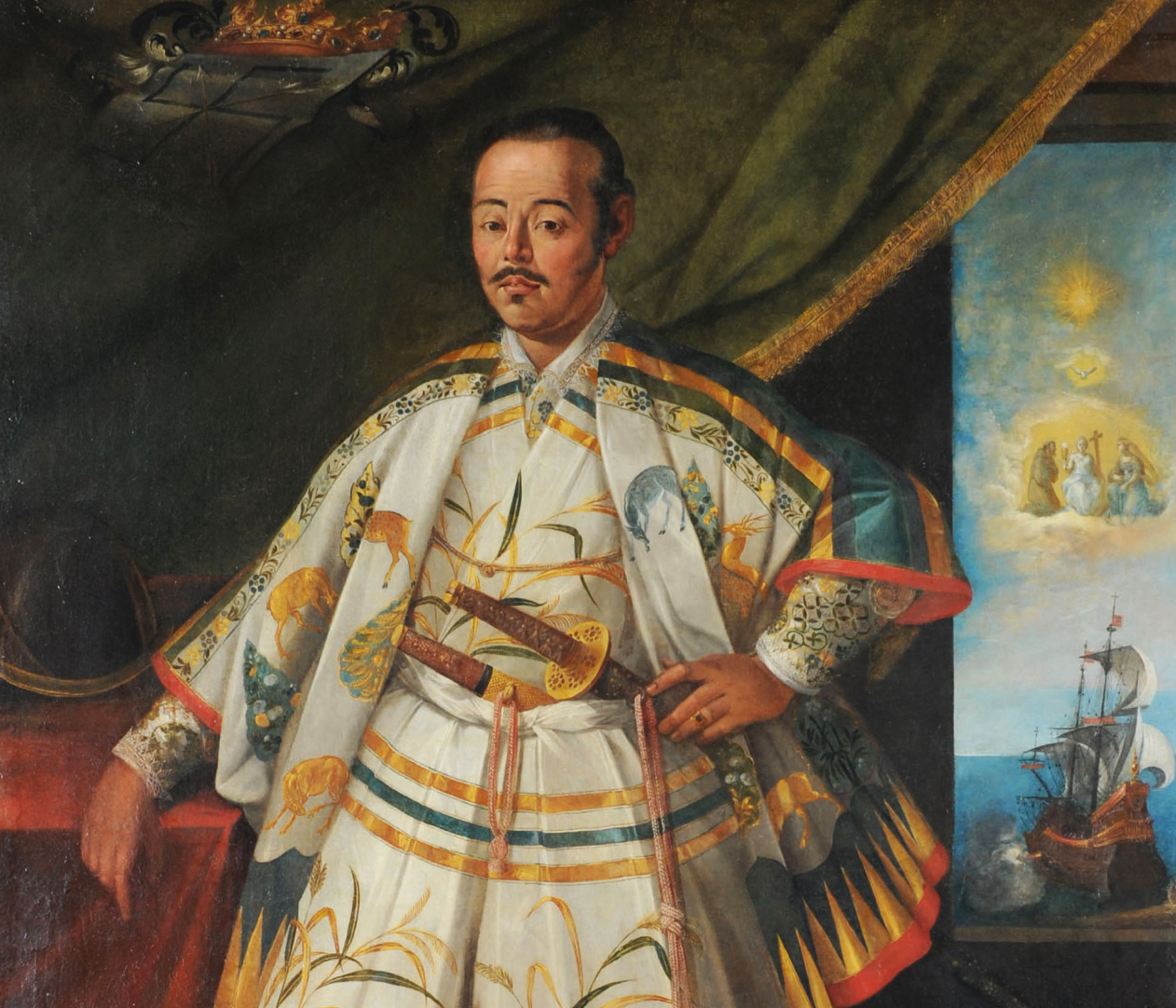
Image via Wikimedia Commons
We learn about intrepid Europeans who sought, and sometimes even found, trade and missionary routes to China and Japan during the centuries of exploration and empire. Rarely, if ever, do we hear about visitors from the East to the West, especially those as well-traveled as 17th-century samurai Hasekura Tsunenaga. Sent on a mission to Europe and America by his feudal lord, Date Masumune, Hasekura “set off on a quest to earn riches and spiritual guidance,” Andrew Milne writes at All that’s Interesting. “He circumnavigated the globe, became part of the first Japanese group in Cuba, met the Pope, helped begin a branch of Japanese settlers in Spain (still thriving today), and even became a Roman citizen.”
Hasekura was a battle-tested samurai who had acted on the daimyo’s behalf on many occasions. His mission to the West, however, was first and foremost a chance to redeem his honor and save his life. In 1612, Hasekura’s father was made to commit seppuku after an indictment for corruption. Stripped of lands and title, Hasekura could only avoid the same fate by going West, and so he did, just a few years before the period of sakoku, or national isolation, began in Japan. Traveling with Spanish missionary Luis Sotelo, Hasekura embarked from the small Japanese port of Tsukinoura in 1613 and first reached Cape Mendocino in California, then part of New Spain.
“Seven years before the Mayflower headed to the New World,” Marcel Theroux writes at The Guardian, Hasekura “crossed the Pacific, traveled overland through Mexico, then sailed all the way to Europe. He was accompanied by about 20 fellow countrymen — in all likelihood, the first Japanese to cross The Atlantic.” They set sail on a Japanese-built galleon — called Date Maru, then later San Juan Bautista by the Spanish. “The expedition spent seven years traveling one-third of the globe,” notes PBS in a description of “A Samurai in the Vatican,” an episode of Secrets of the Dead.
Sotelo and Hasekura made formal requests for more missionaries in Japan, delivering letters from from Hasekura’s lord, the daimyo of Sendai, to the King of Spain and Pope Paul V. But the samurai’s most pressing purpose was the establishment of trade links between Japan, New Spain (Mexico), and Europe. In his 1982 novel, The Samurai, Shusaku Endo dramatized the exchange the Spanish missionaries made for such introductions, having a priest say: “In order to spread God’s teaching in Japan… there is only one possible method. We must cajole them into it. Espana must offer to share its profits from trade on the Pacific with the Japanese in return for sweeping proselytizing privileges. The Japanese will sacrifice anything else for the sake of profits.” This was not to be, of course.
The Spanish gambled on trade opening up Japan for the kind of missionary colonization they had achieved elsewhere, using Hasekura’s mission as a proxy. Hasekura gambled on a Christian mission to save his life. Though his own accounts are lost, it seems he came to genuinely embrace the faith, becoming a confirmed Catholic under the name Philip Francis Faxecura. During his mission, however, the Shogun, Tokugawa Ieyasu, banned Christianity in Japan on penalty of death, in advance of the expulsion of the Spanish and Portuguese by his grandson, Tokugawa Iemitsu, in 1623. What became of the explorer samurai when he returned to Japan in 1620 is unknown, but his decedents were executed for practicing his newfound faith. He would be the last visitor to the West from Japan until the Tokugawa Shogunate sent the so-called “First Japanese Embassy to Europe” in 1862, over 200 years later.
Related Content:
Meet Yasuke, Japan’s First Black Samurai Warrior
Discover Japan’s Oldest Surviving Cookbook Ryori Monogatari (1643)
Josh Jones is a writer and musician based in Durham, NC. Follow him at @jdmagness
Read More...Watch John Cage’s 4′33″ Played by Musicians Around the World
Make sure to watch the video above with the sound on. In it musicians from around the world all play a well-known composition: 4′33″ by John Cage. “I spent weeks asking strangers on the internet to send me their radically different interpretations, and boy did they deliver,” writes the video’s creator Sam Vladimirsky. “My inbox filled with adaptations by an Austrian death metal band, a marimba player, a bunny rabbit, the Museum of Musical Instruments in Phoenix, a middle school music teacher, a version played on Guitar Hero and over Zoom.” Though originally composed for piano, 4′33″ is easily transposed to all these instruments and others, calling as it does for their players to do the very same thing: nothing.
“Inspired by Zen Buddhism, the Dada movement and Cage’s strong distaste for the ubiquitous muzak of the time,” says Aeon, “its score instructs performers not to play their instruments for the piece’s four-minute, thirty-three-second duration.” The result is not silence but “the unique ambient soundscape of the environment in which it’s performed, reflecting Cage’s belief that music is ever-present.”
Here the submitted performances take place in such environments as a classroom, a bedroom, a courtyard, a driveway, a bus, and a subway station. Vladimirsky pairs the videos, allowing us to enjoy not just parallel viewing experiences but a layered listening experience of these ambient soundscapes.
“Stuck inside,” writes Vladimirsky, “professional musicians, dedicated amateurs, awkward teens and college students found 4′33″ to be the music of our moment.” If the Rolling Stones could play “You Can’t Always Get What You Want” in lockdown, each from his separate home, then who’s to say this isn’t the next logical step? Each performance of 4′33″ reflects not just its immediate setting but its cultural period: compare the clip just above, in which Cage himself plays it in Harvard Square in 1973. Most of us haven’t seen the inside of a concert hall in quite some time, let alone heard the ambient sounds produced within it in the absence of proper music. But each of us can, at least, perform 4′33″ for ourselves whenever and wherever we like — one way of doing it being simply to play the video at the top of the post with the sound off.
Related Content:
Watch John Cage Play His “Silent” 4’33” in Harvard Square, Presented by Nam June Paik (1973)
The Curious Score for John Cage’s “Silent” Zen Composition 4’33”
John Cage’s Silent, Avant-Garde Piece 4’33” Gets Covered by a Death Metal Band
The 4’33” App Lets You Create Your Own Version of John Cage’s Classic Work
The Virtual Choir: Watch a Choir Conductor Digitally Unite 3500 Singers from Around the World
How to Find Silence in a Noisy World
Based in Seoul, Colin Marshall writes and broadcasts on cities and culture. His projects include the book The Stateless City: a Walk through 21st-Century Los Angeles and the video series The City in Cinema. Follow him on Twitter at @colinmarshall or on Facebook.
Read More...Support Us
We're hoping to rely on loyal readers, rather than erratic ads. Please click the Donate button and support Open Culture. You can use Paypal, Venmo, Patreon, even Crypto! We thank you!

About Us

Open Culture scours the web for the best educational media. We find the free courses and audio books you need, the language lessons & educational videos you want, and plenty of enlightenment in between.
Advertise With Us
FREE UPDATES!
GET OUR DAILY EMAIL
Get the best cultural and educational resources on the web curated for you in a daily email. We never spam. Unsubscribe at any time.
FOLLOW ON SOCIAL MEDIA
Open Culture editor Dan Colman scours the web for the best educational media. He finds the free courses and audio books you need, the language lessons & movies you want, and plenty of enlightenment in between.
Advertise With Us


