Google’s UX Design Professional Certificate: 7 Courses Will Help Prepare Students for an Entry-Level Job in 6 Months
During the pandemic, Google launched a series of Career Certificates that will “prepare learners for an entry-level role in under six months.” One such certificate focuses on User Experience Design, or what’s called UX Design, the process design teams use to create products that provide meaningful experiences to users.
Offered on the Coursera platform, the User Experience (UX) Design Professional Certificate features seven courses, including the Foundations of User Experience, Start the UX Design Process, Build Wireframes and Low-Fidelity Prototypes, and Conduct UX Research and Test Early Concepts. In total, this program “includes over 200 hours of instruction and hundreds of practice-based activities and assessments that simulate real-world UX design scenarios and are critical for success in the workplace. The content is highly interactive and developed by Google employees with decades of experience in UX design.” Upon completion, students can directly apply for jobs with Google and over 130 U.S. employers, including Walmart, Best Buy, and Astreya. You can start a 7‑day free trial and explore the courses. If you continue beyond that, Google/Coursera will charge $39 USD per month. That translates to about $235 after 6 months.
Explore the User Experience (UX) Design Professional Certificate by watching the video above. Learn more about the overall Google career certificate initiative here. And find other Google professional certificates here.
Note: Open Culture has a partnership with Coursera. If readers enroll in certain Coursera courses and programs, it helps support Open Culture.
Related Content:
Read More...Buddhist Monk Sings The Ramones: “Rock ’n’ Roll High School,” “Teenage Lobotomy” & “Beat on the Brat”
The Ramones restored speed and simplicity to 70s rock. It’s rare to find a Ramones tune clocking in over three minutes. The sweet spot’s closer to 2 1/2.
“We play short songs and short sets for people who don’t have a lot of spare time,” original drummer Tommy Ramone remarked.
It took them all of 2 minutes and 20 seconds to bomb through their single for “Rock ’n’ Roll High School.”
So why does Japanese Buddhist monk Kossan’s cover take more than twice that long?
Because meditation is an integral part of his music video practice.
Kossan, aka Kazutaka Yamada, plays drums, piano, and sanshin, and introduces a Tibetan singing bowl into his Ramones tributes.
His cover of 1976’s “Beat on the Brat” runs a whopping nine minutes and 15 seconds — a mindful approach to punk, and vice versa.
By comparison, “Weird Al” Yankovic’s accordion-enhanced cover hews far closer to the original adding just six seconds to the Ramones’ 2:30 time frame.
Kossan cut most of the meditation from “Teenage Lobotomy,” his earliest Ramones cover.
We’re glad he committed to preserving this element in subsequent uploads, including his takes on Metallica’s “Enter Sandman” and the Beatles’ “Yellow Submarine.”
It furthers his mission as a zazen teacher, and patient viewers will be rewarded with his bright smile in the final seconds as he resumes his discourse with the larger world.
You can hear Kossan play sanshin and more of his Western rock covers on his YouTube channel.
Related Content:
A Beatboxing Buddhist Monk Creates Music for Meditation
Buddhist Monk Covers Judas Priest’s “Breaking the Law,” Then Breaks Into Meditation
How Tibetan Monks Use Meditation to Raise Their Peripheral Body Temperature 16–17 Degrees
Ayun Halliday is an author, illustrator, theater maker and Chief Primatologist of the East Village Inky zine. Follow her @AyunHalliday.
Read More...Igor Stravinsky Appears on American Network TV & Tells Stories About His Unconventional Musical Life (1957)
One evening in 1957, viewers all across America tuned in to see Stravinsky. The broadcast wasn’t a performance of Stravinsky’s music, although those would continue to draw television audiences well into the following decade. It was a conversation with the man himself, Igor Fyodorovich Stravinsky, who even when he was still alive had become an institution by virtue of his industry and innovation. “For half a century, Stravinsky’s musical explorations have dominated modern music,” says the program’s narrator. “His nearly 100 works — ballets, symphonies, religious music, even jazz — have often outraged audiences at first hearing.”
The famously “riotous” audience reaction to the Paris debut of Stravinsky’s The Rite of Spring had happened 44 years earlier, back when the Russian-born composer was rising to international fame. But by 1957 he’d been an American citizen for years, and it’s in his Hollywood home — and on the eve of his 75th birthday — that NBC’s crew shot this episode of Wisdom.
Having debuted just that year, Wisdom would continue to run until 1965, broadcasting long-form interviews with figures like Marcel Duchamp, Pearl S. Buck, Robert Frost, Somerset Maugham, and Eleanor Roosevelt. Here Stravinsky speaks with his young protégé, the American conductor Robert Craft, who asks him to remember various chapters of his long musical life, which included encounters with the likes of Nikolai Rimsky-Korsakov, Dylan Thomas, and Pablo Picasso.
The story begins with Stravinsky’s first improvisations at the piano during his childhood in Russia (and his first lessons, taught by a woman of nineteen: “for me that was an old maid, but of course I was in love with this old maid”). All throughout, we see flashes of the invention-above-convention sensibility that made Stravinsky more a Homo faber, as he liked to say, than a Homo sapiens. “Who invented the scale?” he asks, rhetorically. “Somebody invented the scale. If somebody invented the scale, I can change something in the scale and invent something else.” And why is it, Craft asks, that every new work of yours arouses protests in the public? “Each time I have new problems, and this new problem requires a new approach,” Stravinsky explains, and but for the public, “the idea of a new approach, of a new problem, doesn’t come to their mind.” So you’re ahead of the public – including, implicitly, the American public viewing at home? “Inevitably.”
Related Content:
The Night When Charlie Parker Played for Igor Stravinsky (1951)
Stravinsky’s “Illegal” Arrangement of “The Star Spangled Banner” (1944)
Hear Igor Stravinsky’s Symphonies & Ballets in a Complete, 32-Hour, Chronological Playlist
Based in Seoul, Colin Marshall writes and broadcasts on cities, language, and culture. His projects include the Substack newsletter Books on Cities, the book The Stateless City: a Walk through 21st-Century Los Angeles and the video series The City in Cinema. Follow him on Twitter at @colinmarshall or on Facebook.
Read More...Modernizing Table-Top Role-Playing Games — Pretty Much Pop: A Culture Podcast #96
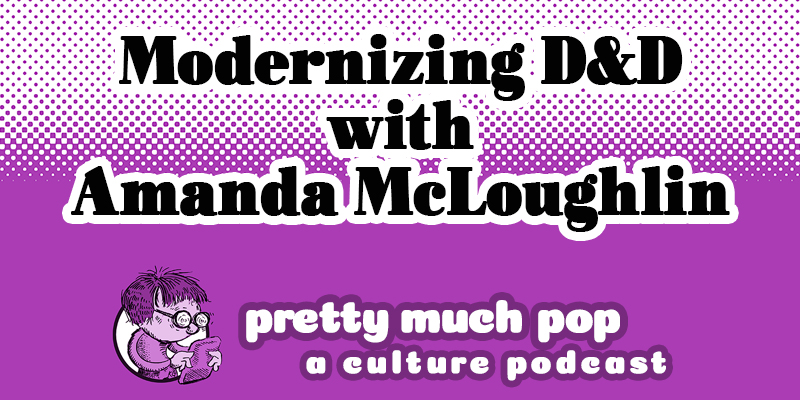
What’s the current status of table-top role-playing games like Dungeons and Dragons in pop culture? Thanks to D&D’s recent depiction in Stranger Things and the enormous popularity of fantasy properties like Game of Thrones and Lord of the Rings, interest in elves and magic and such is no longer fodder for Satanic panic, but the idea of actively pretending to be a character in this genre to engage in collaborative story-telling still seems foreign to many.
Your Pretty Much Pop hosts Mark Linsenmayer, Erica Spyres, and Brian Hirt are joined by Amanda McLoughlin, the host of Join the Party, a beginner-friendly, purposefully inclusive D&D real-play podcast, to go over some D&D basics, the dynamics of playing vs. spectating (by listening to her podcast, for instance), and the racism and imperialism built into the setting (adventure = going into a foreign land to kill often intelligent creatures and take their stuff). What is it to “act out your fantasy” in this way?
Some of the ways of witnessing others playing that we refer to include Critical Role, The Adventure Zone, and Dimension 20.
The Join the Party game master Eric Silver wrote the article “Dungeons & Dragons Has an Antisemitism Problem.” You can also look at Wikipedia’s “Dungeons and Dragons in Popular Culture” entry or get a flavor of the range of options by looking at Dicebreaker’s list of “10 Best Tabletop Roleplaying Games Out Right Now”, this list of “The 12 Best Actual Play Podcasts,” or this video of “Top D&D Channels that Aren’t Critical Role.”
Follow Amanda’s podcast @jointhepartypod on @MultitudeShows. She also hosts the Spirits Podcast about folklore and urban legends.
Hear more of this podcast at prettymuchpop.com. This episode includes bonus discussion that you can access by supporting the podcast at patreon.com/prettymuchpop. This podcast is part of the Partially Examined Life podcast network.
Pretty Much Pop: A Culture Podcast is the first podcast curated by Open Culture. Browse all Pretty Much Pop posts.
Read More...Umberto Eco’s 36 Rules for Writing Well (in English or Italian)
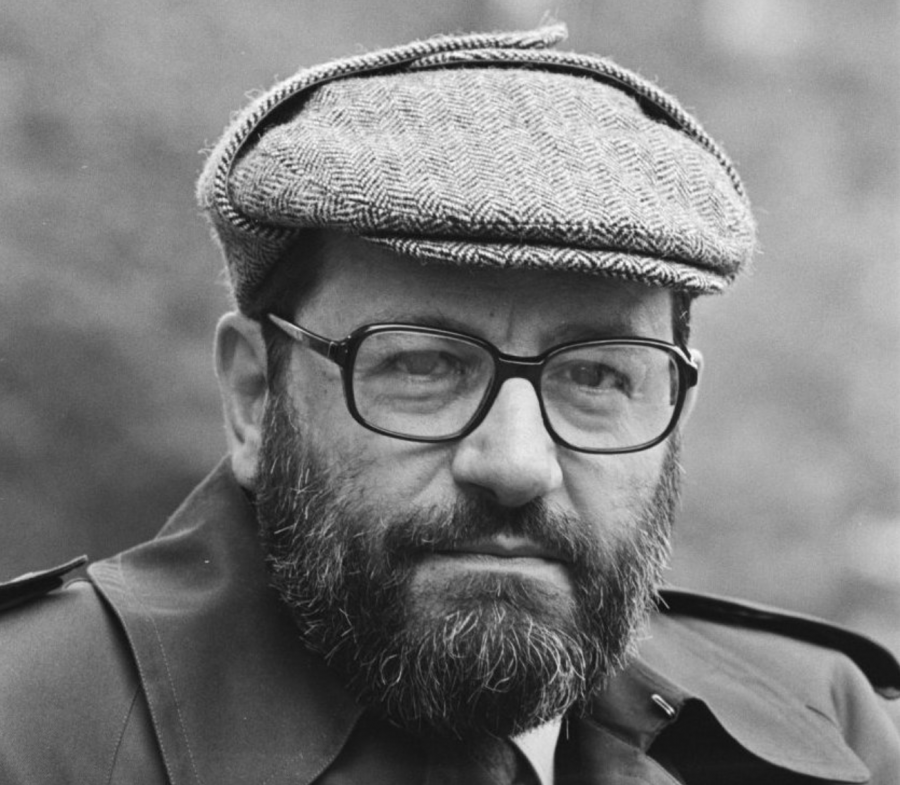
Creative Commons image by Rob Bogaerts, via the National Archives in Holland
Umberto Eco knew a great many things. Indeed too many things, at least according to his critics: “Eco knows everything there is to know and spews it in your face in the most blasé manner,” declared Pier Paolo Pasolini, “as if you were listening to a robot.” That line appears quoted in Tim Parks’ review of Pape Satàn Aleppe, a posthumous collection of essays from La Bustina di Minerva, the magazine column Eco had written since 1985. “This phrase means ‘Minerva’s Matchbook,’ ” Parks explains. “Minerva is a brand of matches, and, being a pipe smoker, Eco used to jot down notes on the inside flap of their packaging. His columns were to be equally extemporaneous, compulsive and incisive, each as illuminating and explosive as a struck match.”
At the same time, “the reference to the Roman goddess Minerva is important; it warns us that in the modern world we may struggle to distinguish between divinities and bric-a-brac.” This was as true, and remains as true, in the realm of letters as in any other. And of all the things Eco knew, he surely knew best how to use words; hence his La Bustina di Minerva column laying out 40 rules for speaking and writing.
This meant, of course, speaking and writing in Italian, his native tongue and the language of which he spent his career demonstrating complete mastery. But as translator Gio Clairval shows in her English rendition of Eco’s rules, most of them apply just as well to this language.
“I’ve found online a series of instructions on how to write well,” says Eco’s introduction to the list. “I adopt them with a few variations because I think they could be useful to writers, particularly those who attend creative writing classes.” A few examples will suffice to give a sense of his guidance:
- Avoid alliterations, even if they’re manna for morons.
- Avoid clichés: they’re like death warmed over.
- Never generalize.
- Hold those quotes. Emerson aptly said, “I hate quotes. Tell me only what you know.”
- Don’t write one-word sentences. Ever.
- Recognize the difference between the semicolon and the colon: even if it’s hard.
- Do you really need rhetorical questions?
- Be concise; try expressing your thoughts with the least possible number of words, avoiding long sentences– or sentences interrupted by incidental phrases that always confuse the casual reader– in order to avoid contributing to the general pollution of information, which is surely (particularly when it is uselessly ripe with unnecessary explanations, or at least non indispensable specifications) one of the tragedies of our media-dominated time.
- Don’t be emphatic! Be careful with exclamation marks!
- No need to tell you how cloying preteritions are.
Not only does each of Eco’s points offer a useful piece of writing advice, it elegantly demonstrates just how your writing will come off if you fail to follow it. In the event that “you can’t find the appropriate expression,” he writes, “refrain from using colloquial/dialectal expressions.” To this he appends, of course, a colloquial expression, Peso el tacòn del buso: “The patch is worse than the hole.” However clichéd it sounds in Italian, all of us would do well to bear it in mind no matter the language in which we write. (And if you write in Italian, be sure to read Eco’s original column, which contains additional rules applying only to that language: Non usare metafore incongruenti anche se ti paiono “cantare,” for instance. Sono come un cigno che deraglia.)
You can read all 36 of Eco’s English-relevant writing rules at Clairval’s site. If you’d like to hear more of his writing advice, watch the Louisiana Channel interview clip we featured after his death in 2016. And elsewhere in our archives, you can compare and contrast Eco’s list of rules for writing with those drawn up by the likes of Walter Benjamin, Steven Pinker, Stephen King, V.S. Naipaul, Friedrich Nietzsche, Elmore Leonard, and George Orwell. Though Eco could, in his writing, assume what Parks calls an “immeasurably superior” persona, he surely would have agreed with the final, thoroughly English point on Orwell’s list: “Break any of these rules sooner than say anything outright barbarous.”
Related content:
Umberto Eco Dies at 84; Leaves Behind Advice to Aspiring Writers
Umberto Eco Explains Why We Make Lists
Watch Umberto Eco Walk Through His Immense Private Library: It Goes On, and On, and On!
Based in Seoul, Colin Marshall writes and broadcasts on cities, language, and culture. His projects include the Substack newsletter Books on Cities, the book The Stateless City: a Walk through 21st-Century Los Angeles and the video series The City in Cinema. Follow him on Twitter at @colinmarshall or on Facebook.
Read More...The Horrors of Bull Island, “the Worst Music Festival of All Time” (1972)
It’s maybe a little unfair to compare 1972’s “Bull Island” Festival to Fyre Fest, the music festival scam so egregious it warranted dueling documentaries on Hulu and Netflix. But “Bull Island” — or what was originally called the Erie Canal Soda Pop Festival — was an epic catastrophe, maybe the worst in music festival history, and well deserving of its own media franchise. Still, its organizers had every intention of following through on the event. What happened wasn’t entirely their fault, but partly the result of a campaign to route thousands of hippies out of the state of Indiana.
Promoters Tom Duncan and Bob Alexander had previously staged a successful festival, the Bosse Field Freedom Fest, in Evansville, an event featuring Tina Turner, Edgar Winter, Dr. John, Howlin’ Wolf, and John Lee Hooker. Eager to top themselves and bring a “bigger-than-Woodstock”-sized happening to the Midwest, they booked “a blockbuster collection of artists” for their next event, writes Patrick Chamberlain at Everfest, “including Black Sabbath, The Allman Brothers, Fleetwood Mac, Ravi Shankar, The Eagles, and even Cheech and Chong.”
Before securing all the permits, they placed ads and started selling tickets. The two eager 20-something organizers both suffered from the tragic flaw of youthful overconfidence, which blinded them to the fact that there was no way their next festival was going to happen in Evansville, or anywhere in Indiana, for that matter. The error led to what may be, as Bandsplaining explains above, the worst music festival of all time. “The lack of preparedness, the lawlessness, the desperation of the crowd; it’s like the bad-acid trip version of Woodstock where [spoiler] everything burns down. [/spoiler].”
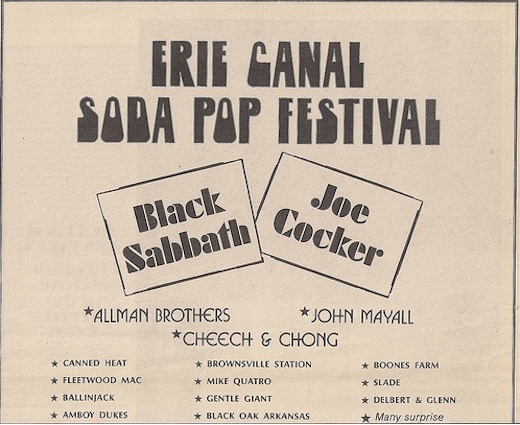
Although reports from locals mostly characterized the duo’s previous outdoor festival at Bosse Field as peaceful, Evansville Mayor Russell Lloyd vowed it would never happen again. Yet Duncan and Alexander plowed ahead with planning the Eerie Canal Soda Pop Festival, as Sean Mcdevitt writes at the Courier & Press:
Contracts were signed, helicopters were rented, and holes were being dug for some 500 portable toilets. More than 30 rock groups were booked, and tickets went on sale in several cities around the country.
Oblivious to their fate, the organizers sold almost 9,000 tickets. “Just eight days after its announcement, a restraining order was issued against the event,” followed by a string of similar ordinances in neighboring counties as other locales got wind of the projected 50,000 to 60,000 attendees expected to show up. Soon, those numbers swelled to the hundreds of thousands. Alexander and Duncan went on TV and begged authorities to let the show proceed to prevent mass civil unrest.
Forced to move the festival out of state, they settled on a place called Bull Island, “not in fact an island, but rather a collection of swampy fields,” Chamberlain notes, “under the legal jurisdiction of the town of Carmi, Illinois, but only accessible through Indiana.” When 200,000 hippies arrived on Labor Day weekend, it caused a traffic jam 30 miles long, and they were forced to abandon their cars and hike for miles on foot, resembling “a defeated army,” NBC Nightly News reporter Edwin Newman put it.
Some of the acts — including Ravi Shankar, Ted Nugent’s Amboy Dukes, and Black Oak Arkansas — did make it, choppering in to play a set, then swiftly leaving. “Cheech and Chong were helicoptered in, performed for fifteen minutes in a deluge of rain, cut their set short,” and got out, surely sensing bad vibes everywhere, caused by strychnine-laced acid. Big acts like Rod Stewart and Black Sabbath had already canceled, leaving long stretches of silence between sets.
For most festival attendees, the open-air drug markets stood out most in their memories. “The dope district looked like double rows of fish stands at the county fair!” one remembers. “It was easier to buy drugs than it was to buy water,” recalled another attendee. The police, vastly outnumbered, left well enough alone and stayed outside the fence. Jemayel Khawaja at Ozy paints the scene:
Inside, chaos was already in full swing. The stage was half constructed, and the campgrounds — crammed with over four times as many people as expected — were lined with open drug markets. Hawkers set up stalls selling marijuana, mescaline, LSD and heroin. “I never saw so many drugs in my life,” attendee Ray Kessler recalled to local newspaper The Mount Vernon Democrat. With only six outhouses and half-dug wells to serve as sanitation, thousands instead took to relieving themselves en masse in what became known as “The Turd Fields” and bathing in the Wabash River.
What happened was surely inevitable. Price gouging caused attendees, rabid with hunger and thirst, to attack vendors. Some caught pneumonia in the torrential rains on the third day. One attendee drowned in the Wabash, another was run over by a truck but survived, many were beaten and robbed, one overdosed, one gave birth. By that evening, “the crowd had endured enough,” Chamberlain writes. “The lasting image many have of the festival is the crowd setting the stage on fire. It was a fitting ending. By this point, the populous turned to mass exodus, during which common themes were intoxication, breakdowns, theft, long drives, and comedowns.”
Related Content:
Listen Online to Every Minute of the Original Woodstock Festival
Josh Jones is a writer and musician based in Durham, NC. Follow him at @jdmagness
Read More...Brian Eno Launches His Own Radio Station with Hundreds of Unreleased Tracks: Hear Two Programs

Creative Commons image via Wikimedia Commons
Back in 2013, Brian Eno gave a talk at the Red Bull Academy, the lecture series that has hosted fellow musicians like Tony Visconti, Debbie Harry, and Nile Rogers. Asked when he knew a piece of music was finished, Eno let drop that he currently had 200,809 works of unreleased music. (The actual answer though? “When there’s a deadline”).
Usually we have to wait for posthumous releases to hear such music, like what is currently happening now to Prince’s “vault” of music. Eno is not waiting. He got the deadline.
Sonos Radio HD, the music division of the speaker and audio system company, announced last week that Eno has curated a radio station that will play nothing but unreleased cuts from his five decades of making music. There’s so much material, the chance of a listener hearing a repeat is slim. (Still, the station promises hundreds of tracks, not hundreds of thousands.)
Now, this is not an advertisement for Sonos, but a heads up that in order to promote “The Lighthouse,” as Eno has called the radio station, Sonos has dropped two Eno-led radio shows where he shares just a fraction of the unreleased material, with a promise of two more episodes to come. One features an interviewer, and the other is just Eno talking about the tracks. (And you *can* get one month free at Sonos if you sign up.)
“(A radio station) is something I’ve been thinking about for years and years and years,” says Eno. “And it’s partly because I have far too much music in my life. I have so much stuff.”
The tracks have been purged of titles and have been instead given the utilitarian monikers of “Lighthouse Number (X)”. Anyway, titles suggest too much thought. “Some are pretty crap titles,” he says. “The problem with working on computers is that you have to give things titles before you’ve actually made them…Sometimes the pieces often quickly outgrow the titles.”
If you’re expecting nothing but ambient washes and generative music, you might be surprised at the variety. In the first Eno-hosted show, he plays a funky jam (“Lighthouse Number 002”) co-composed by Peter Chilvers and stuffed with r’n’b samples; and an almost-completed song featuring the Eurythmics’ Dave Stewart on guitar, called “All the Bloody Fighters,” aka “Lighthouse Number 106”.
Why call it “The Lighthouse”? “I like the idea of a sort of beacon calling you, telling you something, warning you perhaps, announcing something.” He also credits a friend who told him his unreleased music is like ships lost at sea. The lighthouse “is calling in some of those lost ships.”
As a bonus, listen below to Eno’s recent interview with Rick Rubin, where they talk about the Sonos project and much more.
Related Content:
Hear Brian Eno’s Rarely-Heard Cover of the Johnny Cash Classic, “Ring of Fire”
Ted Mills is a freelance writer on the arts who currently hosts the Notes from the Shed podcast and is the producer of KCRW’s Curious Coast. You can also follow him on Twitter at @tedmills, and/or watch his films here.
Read More...What Makes Leonardo’s Mona Lisa a Great Painting?: An Explanation in 15 Minutes
The Mona Lisa may be on display at the Louvre, but best of luck appreciating it there. The first obstacle, quite literally, is the crowd that’s always massed around it (or, in the time before social-distancing policies, was always massed around it). Even if you maneuver your way to the front of the camera-phoned throng, the painting itself hangs within a thick glass case — can’t have a repeat of the 1911 theft — and has dimensions in any event much smaller than people tend to imagine. After all, we come to know Leonardo da Vinci’s most famous painting through cultural reference and parody, but also through large-scale reproduction, the better to understand the painstaking and innovative artistic labor that makes the Mona Lisa worth flocking to in the first place.
Still, there are those who come away from the Mona Lisa — assuming they can manage to get back out through the mass of humanity — wondering what all the fuss is about. It was for them, presumably, that curator James Payne chose that painting as the first subject of his Youtube series Great Art Explained.
As he would in his subsequent episodes (such as his three-part series, previously featured here on Open Culture, about Hieronymus Bosch’s The Garden of Earthly Delights), Payne casts off the accumulated historical speculation and other various forms of cultural baggage to find the work’s artistic core. In the case of the Mona Lisa, not just “the greatest psychological portrait ever painted” but “the end product of the greatest inquisitive mind in history,” that still leaves much to discuss.
In under fifteen minutes, Payne explains a host of the techniques Leonardo employed in painting the Mona Lisa that no artist of his time and place had used before — and indeed, that in some cases no other artists mastered until long thereafter. These include working on top of an under-layer of white paint that appears to be “lighting Mona Lisa from within,” stripping his subject of “all the usual high-status symbols” usually seen in aristocratic portraiture, depicting her at three-quarters length rather than in full frame, making the background fade into the distance while also suggesting motion, and combining the techniques of low-contrast sfumato and high-contrast chiaroscuro. And only a painter with Leonardo’s anatomical knowledge could have executed that famously subtle smile, which appears and vanishes again depending on which part of the Mona Lisa we look at — no matter whether we’re doing it at the Louvre or on Youtube.
Related Content:
Did Leonardo da Vinci Paint a First Mona Lisa Before The Mona Lisa?
Original Portrait of the Mona Lisa Found Beneath the Paint Layers of da Vinci’s Masterpiece
When Pablo Picasso and Guillaume Apollinaire Were Accused of Stealing the Mona Lisa (1911)
Based in Seoul, Colin Marshall writes and broadcasts on cities, language, and culture. His projects include the Substack newsletter Books on Cities, the book The Stateless City: a Walk through 21st-Century Los Angeles and the video series The City in Cinema. Follow him on Twitter at @colinmarshall or on Facebook.
Read More...Hear an Excerpt from the Newly-Released, First Unabridged Audiobook of James Joyce’s Finnegans Wake
Need one go so far in digging out strata of meaning? Only if one wishes to; Finnegans Wake is a puzzle, just as a dream is a puzzle, but the puzzle element is less important than the thrust of the narrative and the shadowy majesty of the characters… and when our eyes grow bewildered with strange roots and incredible compounds, why, then we can switch on our ears. It is astonishing how much of the meaning is conveyed through music: the art of dim-sighted Joyce is, like that of Milton, mainly auditory. — Anthony Burgess
Finnegans Wake is not typically one of those books people pretend they have read, and even when they have read James Joyce’s last novel, no one’s likely to bring it up at dinner. It seems like making sense of Joyce’s polyglot prose — full of peculiar coinages and portmanteaus — takes special training and the kind of dedication and natural polymathic talents few readers possess. Critic, composer, linguist, poet, screenwriter, playwright, and novelist Anthony Burgess was one such reader, spending decades studying Joyce and publishing his first book on the Irish writer, Here Comes Everybody, in 1965.
Burgess published two more Joyce books, edited a shorter Finnegans Wake with his own critical commentary, and released documentary films about the novel, a book he made more approachable with his plain-spoken summaries. From the start, in the introduction to his first Joyce book — and against the evidence of most everyone’s experience with Finnegans Wake — Burgess insisted reading Joyce was not a rarified pursuit. “If ever there was a writer for the people,” Burgess argued, “Joyce was that writer.”
What’s important to keep in mind, Burgess emphasizes, even over and above considerations of meaning, is the music of Joyce’s language. One might go so far as to say, the book is nothing but language that must be read aloud, and, critically, sung. “[Joyce’s] writing is not about something,” wrote Samuel Beckett. “It is that something itself… . When the sense is sleep, the words go to sleep… When the sense is dancing the words dance.”
That quote comes from the liner notes of the very first unabridged commercial audiobook recording of Finnegans Wake, read by Irish actor Barry McGovern (handpicked by the Joyce estate), with Marcella Riordan. You can hear an excerpt further up, the first five paragraphs of the book, opening with the famous sentence fragment, “riverrun, past Eve and Adam’s, from swerve of shore to bend of bay, brings us by a commodius vicus of recirculation back to Howth Castle and Environs.” Rolling Stone writes:
As it progresses, McGovern expertly navigates seemingly unpronounceable words like “bababadalgharaghtakamminarronnkonnbronntonnerronntuonnthunntrovarrhounawnskawntoohoohoordenenthurnuk” (which contains 100 characters) and he enunciates every consonant in Joyce’s unusual word inventions like “duskt.”
Yes, in print, it’s daunting stuff, but we should remember that for all Finnegans Wake’s linguistic complexity, its attempts to capture all of human history, its illustrations of the obscure theories of Giambattista Vico and Giordano Bruno and so forth, at its heart, wrote Burgess, is song, which gave the book its title.
“Finnegan’s Wake” is a New York Irish ballad which tells of the death of Tim Finnegan, a builder’s labourer who, fond of the bottle, falls drunk from his ladder… This ballad may be taken as demotic resurrection myth and one can see why, with its core of profundity wrapped round with the language of ordinary people, it appealed so much to Joyce.
Joyce, the singer and lover of song, heard it everywhere he went, and it’s in every bewildering sentence and paragraph of Finnegans Wake. Hear the entire book, read unabridged for the first time, in the new recording, released on June 16th, Bloomsday, by Naxos Audiobooks. Free alternative versions can be found below…
Related Content:
Hear James Joyce’s Finnegans Wake Read Unabridged & Set to Music By 17 Different Artists
Hear All of Finnegans Wake Read Aloud: A 35 Hour Reading
1,000 Free Audio Books: Download Great Books for Free
Josh Jones is a writer and musician based in Durham, NC. Follow him at @jdmagness
Read More...Download Great Works of Art from 40+ Museums Worldwide: Explore Artvee, the New Art Search Engine
Dilbert creator Scott Adams once wrote of his early experiences introducing the World Wide Web to others. “In 1993, there were only a handful of Web sites you could access, such as the Smithsonian’s exhibit of gems. Those pages were slow to load and crashed as often as they worked.” But those who witnessed this technology in action would invariably “get out of their chairs their eyes like saucers, and they would approach the keyboard. They had to touch it themselves. There was something about the internet that was like catnip.” In the intervening decades, the technology powering the internet has only improved, and we’ve all felt how greatly that catnip-like effect has intensified. And the Smithsonian, as we’ve featured here on Open Culture, is still there — now with much more online than gems.
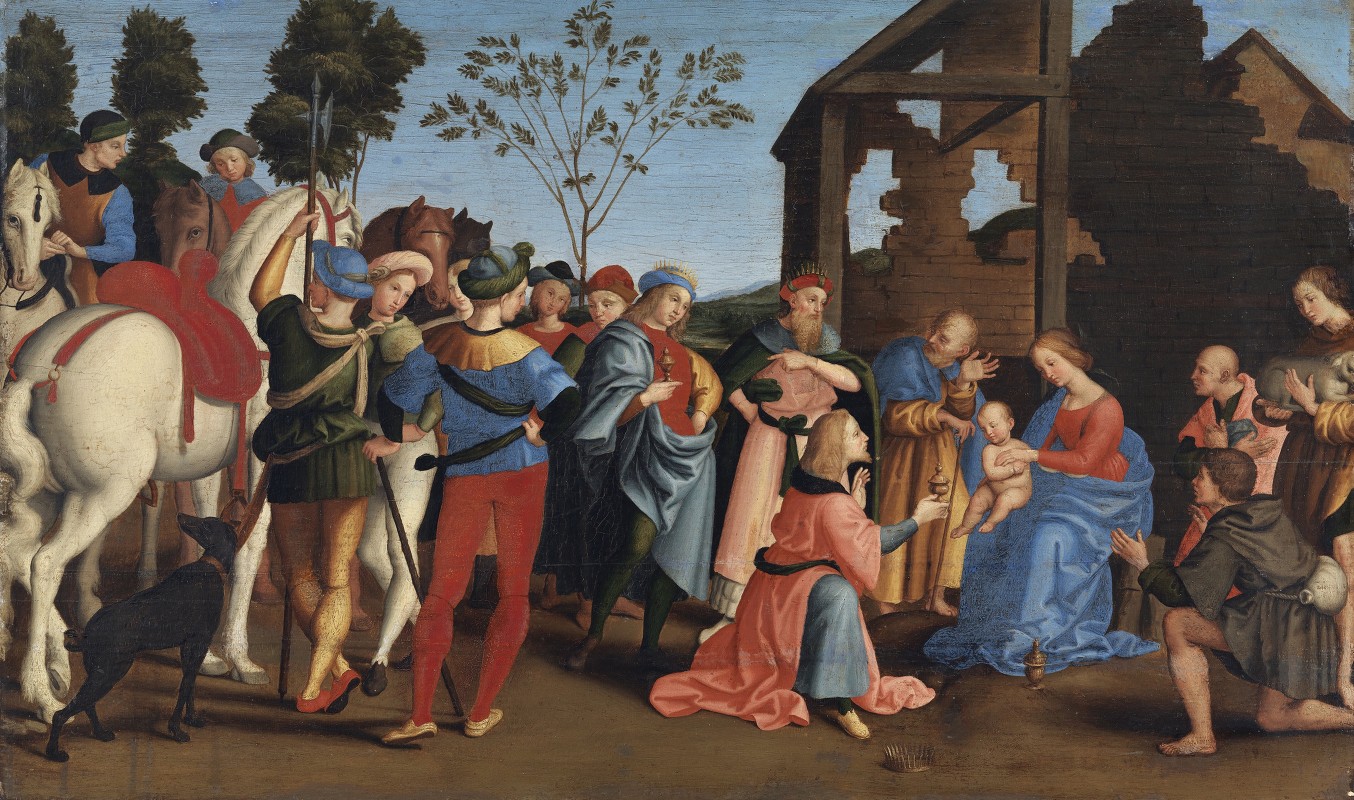
Today, the Smithsonian’s impressive online collections are accessible through Artvee, a new search engine for downloadable high-resolution, public domain artworks. So are the collections of more than 40 other international institutions, from the New York Public Library and the Art Institute of Chicago to the Rijksmuseum and Paris Musées, many of which had little or no online presence back in the early 1990s.
In recent years, they’ve gotten quite serious indeed about digitizing their holdings and making those digitizations freely available to the world, uploading them by the thousand, even by the million. With so many artworks and artifacts already up, and surely much more to come, the question becomes how best to navigate not just one of these collections, but all of them.
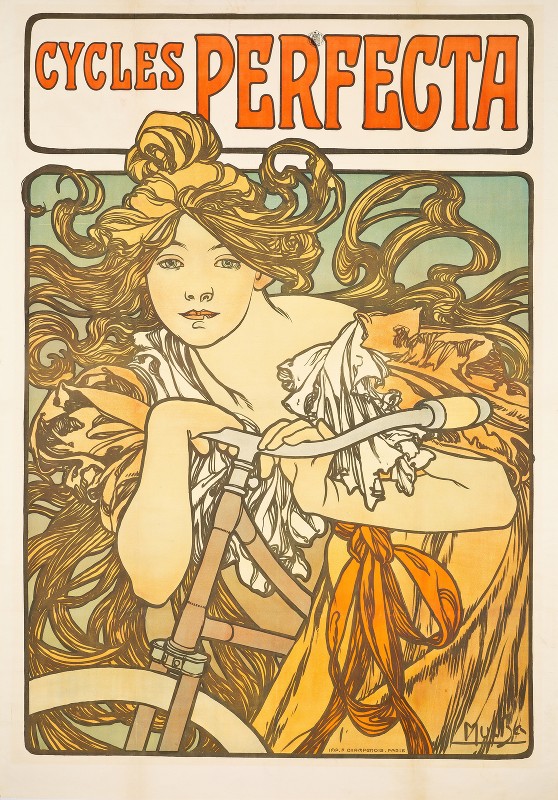
Artvee constitutes one answer to this question. Using its search engine, writes Denise Tempone at Domestika, “you can filter categories such as abstract art, landscape, mythology, drawings, illustrations, botany, fashion, figurative art, religion, animal, desserts, history, Japanese art, and still life. The site also gives you the option to search by artist. You will find works by Rembrandt van Rijn, Claude Monet, Raphael, and Sandro Botticelli in this amazing gallery.” Other collections, created by Artvee itself as well as by its users, include “illustrations from fairy tales; covers of popular American songs; and some even more peculiar ones, such as adverts selling bicycles that are over a hundred years old.”
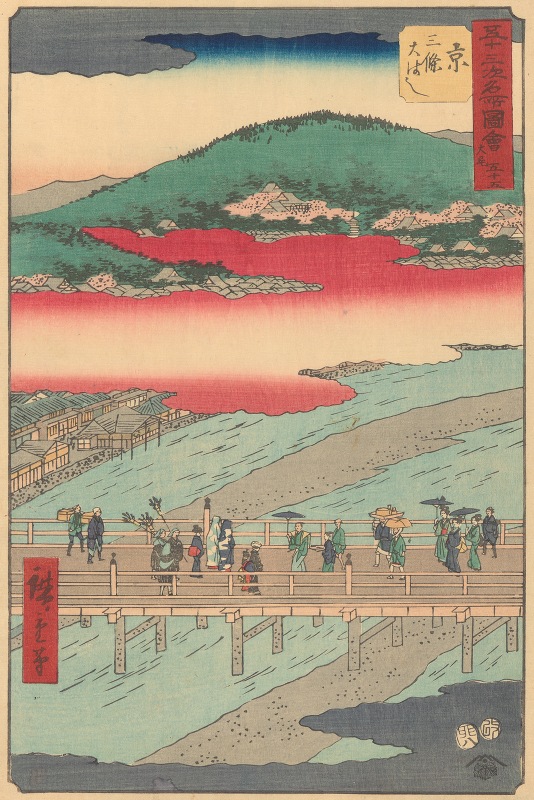
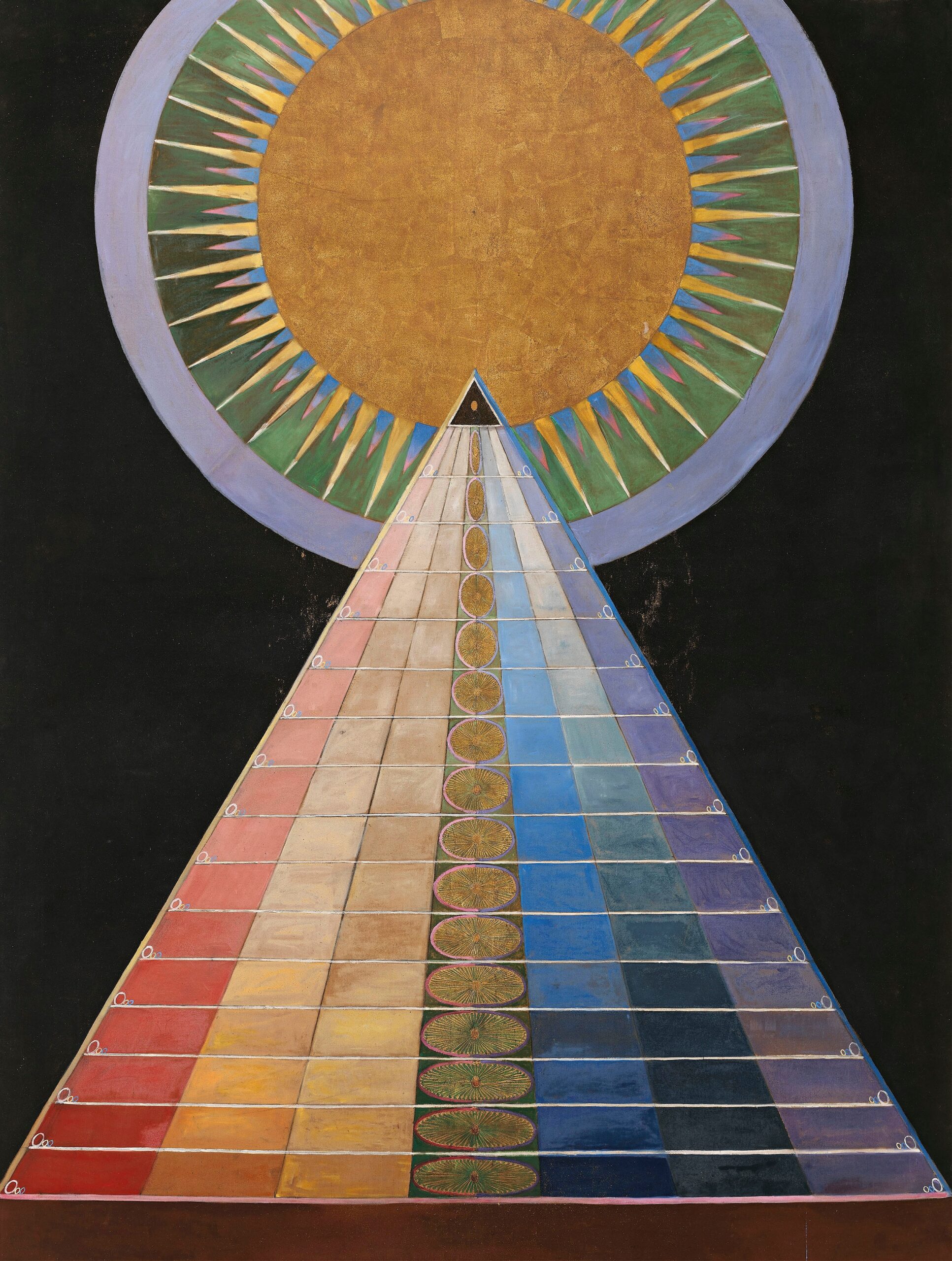
The variety of artists browsable on Artvee also includes Alphonse Mucha, Edvard Munch, and Hilma af Kint; other collections offer the wonders of political illustrations, book promo posters, and NASA’s visions of the future. All of the items within, it bears repeating, are in the public domain or distributed under a Creative Commons license, meaning you can use them not just as sources of inspiration but as ingredients in your own work as well, a possibility few us could have imagined at the dawn of the Web. Back then, you’ll recall, we all used a variety of different tools and portals to navigate the internet, according to personal preference. The emerging field of art search engines, which includes not just Artvee but other options like Museo, may remind us of those days — and how far the internet has come since.
Related Content:
A Search Engine for Finding Free, Public Domain Images from World-Class Museums
Visit 2+ Million Free Works of Art from 20 World-Class Museums Free Online
The Smithsonian Puts 2.8 Million High-Res Images Online and Into the Public Domain
14 Paris Museums Put 300,000 Works of Art Online: Download Classics by Monet, Cézanne & More
Flim: a New AI-Powered Movie-Screenshot Search Engine
Based in Seoul, Colin Marshall writes and broadcasts on cities, language, and culture. His projects include the Substack newsletter Books on Cities, the book The Stateless City: a Walk through 21st-Century Los Angeles and the video series The City in Cinema. Follow him on Twitter at @colinmarshall or on Facebook.
Read More...Support Us
We're hoping to rely on loyal readers, rather than erratic ads. Please click the Donate button and support Open Culture. You can use Paypal, Venmo, Patreon, even Crypto! We thank you!

About Us

Open Culture scours the web for the best educational media. We find the free courses and audio books you need, the language lessons & educational videos you want, and plenty of enlightenment in between.
Advertise With Us
FREE UPDATES!
GET OUR DAILY EMAIL
Get the best cultural and educational resources on the web curated for you in a daily email. We never spam. Unsubscribe at any time.
FOLLOW ON SOCIAL MEDIA
Open Culture editor Dan Colman scours the web for the best educational media. He finds the free courses and audio books you need, the language lessons & movies you want, and plenty of enlightenment in between.
Advertise With Us


