The Beatles Create an Abstract Collaborative Painting, Images of a Woman, During Three Days of Lockdown in Japan (1966)
One of the earliest known non-human visual artists, Congo the chimpanzee, learned to draw in 1956 at the age of two. Moody, fiercely protective of his work, and particular about his process, he made around 400 drawings and paintings in a style described as “lyrical abstract impressionism.” He appeared several times on British television before his death in 1964. He counted Picasso among his fans and, in a 2005 auction, outsold Warhol and Renoir.
One wonders if whoever gave the four-headed beast known as the Beatles canvas and paint (“possibly Brian Epstein or their Japanese promoter, Tats Nagashima”) remembered Congo as the fab four bounced off the walls in their hotel rooms in Tokyo during their last, 1966 tour, when extra security forced them to stay inside for three full days. Or perhaps their keepers were inspired by the humane practice of art therapy, coming into its own at the same time in mental health circles with the founding of the British Association of Art Therapists in 1964.
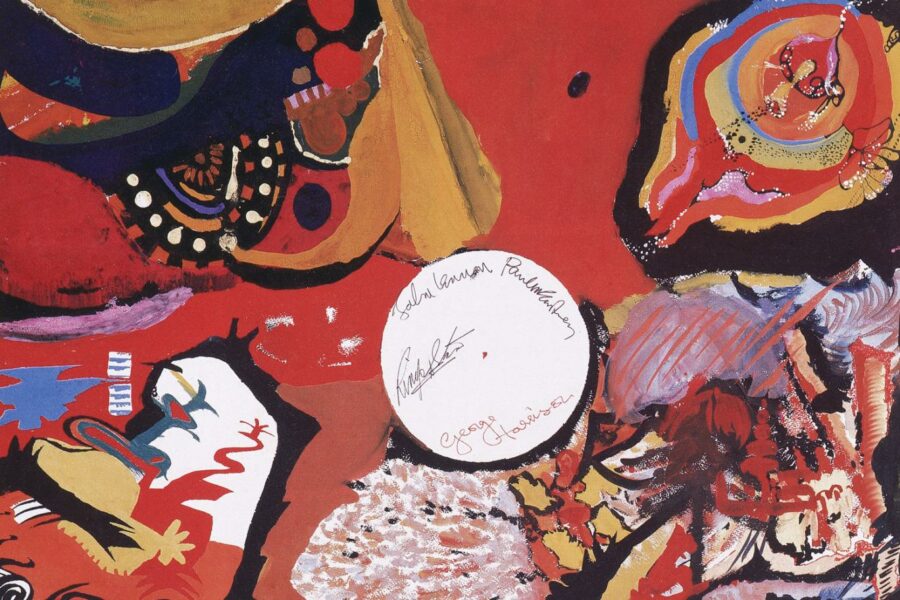
“According to photographer Robert Whitaker,” David Wolman writes at The Atlantic, the Beatles’ manager “brought the guys a bunch of art supplies to help pass the time. Then Epstein set a large canvas on a table and placed a lamp in the middle. Each member of the group set to work painting a corner—comic strippy for Ringo, psychedelic for John.” Paul’s corner resembles an oddly erotic sea creature, George’s the spiritual abstractions of Kandinsky. According to the Beatles Bible, it was Nagashima “who suggested that the completed painting be auctioned for charity.”
Whitaker documented the experiment and later pronounced it an immediate success: “I never saw them calmer, more contented than at this time… They’d stop, go and do a concert, and then it was ‘Let’s go back to the picture!’” Once finished, the lamp was lifted, all four signed their names in the center, and the painting was titled Images of A Woman, which may be no indication of the artists’ intentions. Who knows what kind of scouser humor passed between them as they worked.
The painting then passed to cinema executive Tetsusaburo Shimoyama, whose widow auctioned it in 1989 to wealthy record store owner Takao Nishino, who had seen them at Budokan in 1966 during the same historic tour that produced the painting. Then it ended up under a bed for twenty years before being auctioned again in 2012. It’s certainly true the band, most especially Paul and John, had always taken to visual art, as artists themselves or as collectors and appreciators. But this is something special. It represents their only collaborative artwork, aside from some doodles on a card sent to the Monterrey organizers.
When looking at Whitaker’s photographs of the band at work (see video montage above), one doesn’t, of course, think of Congo the chimp or the patients of a psychiatric hospital. Instead, they look like students in a ‘60s alternative school, set loose to create without interruption (but for the occasional mega-concert) to their hearts’ content. Maybe Epstein or Nagashima had just seen the 1966 National Film Board of Canada documentary Summerhill, about just such a school in England? Whatever inspired the zeitgeist‑y moment, we can see why it never came again. That year, they played their final concert and retired to the studio, where they could lock themselves away with their preferred means of creative distraction.
Related Content:
When the Beatles Refused to Play Before Segregated Audiences on Their First U.S. Tour (1964)
Meet Congo the Chimp, London’s Sensational 1950s Abstract Painter
How “Strawberry Fields Forever” Contains “the Craziest Edit” in Beatles History
Audio: The Beatles Play Their Final Concert at Candlestick Park, 1966
Josh Jones is a writer and musician based in Durham, NC. Follow him at @jdmagness
Read More...Nikon Offers Free Online Photography Courses During the Holidays

A quick heads up. From November 23rd through December 31st, you can stream for free all classes offered by Nikon School Online. Normally priced at $15-$50 per course, this 10-course offering covers Fundamentals of Photography, Dynamic Landscape Photography, Macro Photography, Photographing Children and Pets, and more.
Finding the courses on the Nikon site is not very intuitive. To access the courses, click here and then scroll down the page until you see a yellow button that says “Watch Full Version.” From there you will get a prompt that allows you to sign up for the courses…
If you would like to support the mission of Open Culture, consider making a donation to our site. It’s hard to rely 100% on ads, and your contributions will help us continue providing the best free cultural and educational materials to learners everywhere. You can contribute through PayPal, Patreon, and Venmo (@openculture). Thanks!
Related Content:
Annie Leibovitz Teaches Photography in Her First Online Course
Take a Free Course on Digital Photography from Stanford Prof Marc Levoy
Learn Digital Photography with Harvard University’s Free Course
1,700 Free Online Courses from Top Universities Read More...Stevie Ray Vaughan Gives a Blistering Demonstration of His Guitar Technique
What made Stevie Ray Vaughan such a great guitarist? If you ask Metallica’s Kirk Hammett, a devoted student of the blues, it’s “his timing, his tone, his feel, his vibrato, his phrasing–everything. Some people are just born to play guitar, and Stevie was definitely one of them.” This may come as disappointing news to guitar players who want to sound like SRV but weren’t born with his genes. Hammett assures them it’s possible to approximate his style, to some degree, with the right gear and mastery of his signature techniques. Hammett lays out the SRV repertoire thoroughly, but there is no substitute for the source.
SRV’s dual education in both the British blues and the American blues of his heroes gave him “less reservations and less reasons to be so-called a ‘purist,’” he says in the video above. He then proceeds to blow us away with imitations of the greats and his own particular spin on their techniques.
You could call it a guitar lesson, but as his student, you had better have advanced blues chops and a very good ear. As he runs through the styles of his idols, Vaughan doesn’t slow down or pause to explain what he’s doing. If you can keep up, you probably don’t need the lessons after all.
Although compared, favorably or otherwise, to his idol Jimi Hendrix during his life and after his tragic death at 35, Vaughan also “incorporated the jazz stylings of Django Reinhardt, Kenny Burrell and Wes Montgomery,” Guitar magazine notes, and was “a keen student of Muddy Waters, Albert King, Freddie King, Chuck Berry, Lonnie Mack and Otis Rush.” Muddy Waters, in turn, was a great admirer of Vaughan. “Stevie could perhaps be the greatest guitar player that ever lived,” the blues legend remarked in 1979. But like his hero Hendrix, Vaughan’s talent could be overshadowed by his addictions. “He won’t live to get 40 years old if he doesn’t leave that white powder alone,” Waters went on.
The drugs and alcohol nearly killed him, but they didn’t seem to cramp his playing. The video above comes from a January 1986 soundcheck, the same year Vaughan’s substance abuse hit its peak and he entered rehab after nearly dying of dehydration in Germany. He would get sober and survive, only to die in a helicopter crash four years later. While his early death may have something to do with the way he has been deified, what comes through in his albums and performances thirty years after he left us is the brute fact of his originality as a blues player.
Perhaps the the most concise statement of this comes from John Mayer’s Rock and Roll Hall of Fame induction speech:
There is an intensity about Stevie’s guitar playing that only he could achieve, still to this day. It’s a rage without anger, it’s devotional, it’s religious. He seamlessly melded the supernatural vibe of Jimi Hendrix, the intensity of Albert King, the best of British, Texas and Chicago Blues and the class and sharp shooter precision of his older brother Jimmie. Stevie is the ultimate guitar hero.
If you’ve ever had reason to doubt, see it for yourself above.
Related Content:
Josh Jones is a writer and musician based in Durham, NC. Follow him at @jdmagness
Read More...A Mysterious Monolith Appears in the Utah Desert, Channeling Kubrick’s 2001: A Space Odyssey
People do weird things in the desert. A spokesman for the Utah Division of Wildlife Resources acknowledges that widely understood truth in a recent New York Times article about a mysterious monolith discovered in Red Rock Country. “A team that was counting bighorn sheep by helicopter spotted something odd and landed to take a closer look,” writes Alan Yuhas. “It was a three-sided metal monolith, about 10 to 12 feet tall, planted firmly in the ground with no clear sign of where it came from or why it was there.” Whatever the differences in size, shape, and color, this still-unexplained object brings to mind nothing so much as 2001: A Space Odyssey, with its most famous monolith of all.
Though Stanley Kubrick shot that particular scene in London’s Shepperton Studios, plenty of other productions have made use of the Utah Desert, including installments of the spectacle-driven Indiana Jones and Mission: Impossible series. But as far as anyone knows, the monolith isn’t a piece of set dressing.
Crowdsourcing guesses on social media, the Utah Highway Patrol received such responses as “a ‘resonance deflector,’ ‘an eyesore,’ ‘some good metal.’ Some theorized, vaguely, that it was a satellite beacon. Others joked that it was a Wi-Fi router.” Whoever assembled and installed it, they did so with “human-made rivets” and a skilled enough hand to cut a perfectly shaped hole into the rock — the kind of combination of apparent skill and inexplicability that once stirred up so much fascination over crop circles.
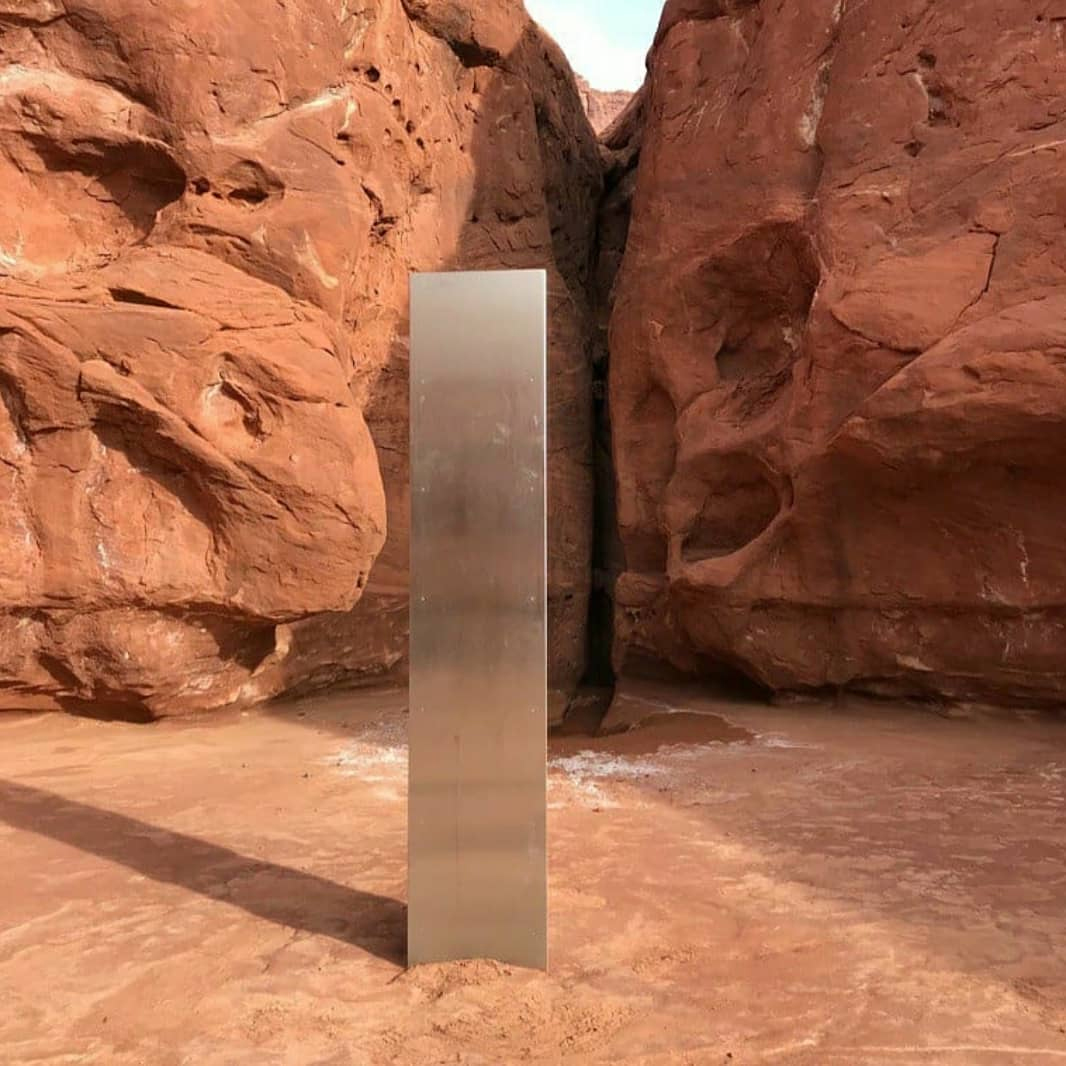
Image by Utah Department of Public Safety
The Art Newspaper’s Gabriella Angeleti describes the monolith as “resembling the freestanding plank sculptures of the late Minimalist artist John McCracken.” Though McCracken never officially made an installation in the Utah desert, he did spend the last years of his life not far away (at least by the standards of the southwestern United States) in northern New Mexico, and anyone familiar with his work will sense a certain affinity with it in this newly discovered object. “While this is not a work by the late American artist John McCracken,” says a spokesman for the gallery that represents him, “we suspect it is a work by a fellow artist paying homage.” Whether or not the monolith has an intended message, the reactions now going viral around the world already have many of us wondering how far we’ve really evolved past the apes.
The monolith is apparently viewable on Google Earth here.
Related Content:
Hear the Declassified, Eerie “Space Music” Heard During the Apollo 10 Mission (1969)
Watch a Newly-Created “Epilogue” For Stanley Kubrick’s 2001: A Space Odyssey
Based in Seoul, Colin Marshall writes and broadcasts on cities, language, and culture. His projects include the Substack newsletter Books on Cities, the book The Stateless City: a Walk through 21st-Century Los Angeles and the video series The City in Cinema. Follow him on Twitter at @colinmarshall, on Facebook, or on Instagram.
Read More...The Uncanny Children’s Book Illustrations of Sigmund’s Freud’s Niece, Tom Seidmann-Freud
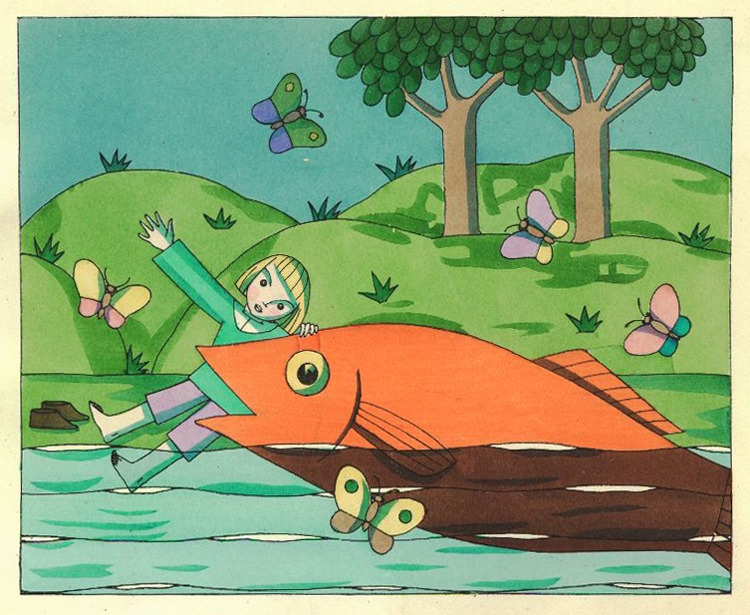
In 1919, Sigmund Freud published “The ‘Uncanny,’” his rare attempt as a psychoanalyst “to investigate the subject of aesthetics.” The essay arrived in the midst of a modernist revolution Freud himself unwittingly inspired in the work of Surrealists like Salvador Dali, Andre Breton, and many others. He also had an influence on another artist of the period: his niece Martha-Gertrud Freud, who started going by the name “Tom” after the age of 15, and who became known as children’s book author and illustrator Tom Seidmann-Freud after she married Jakob Seidmann and the two established their own publishing house in 1921.
Seidmann-Freud’s work cannot help but remind students of her uncle’s work of the unheimlich—that which is both frightening and familiar at once. Uncanniness is a feeling of traumatic dislocation: something is where it does not belong and yet it seems to have always been there. Perhaps it’s no coincidence that the Seidmann-Freud’s named their publishing company Peregrin, which comes from “the Latin, Peregrinos,” notes an exhibition catalogue, “meaning ‘foreigner,’ or ‘from abroad’—a title used during the Roman Empire to identify individuals who were not Roman citizens.”
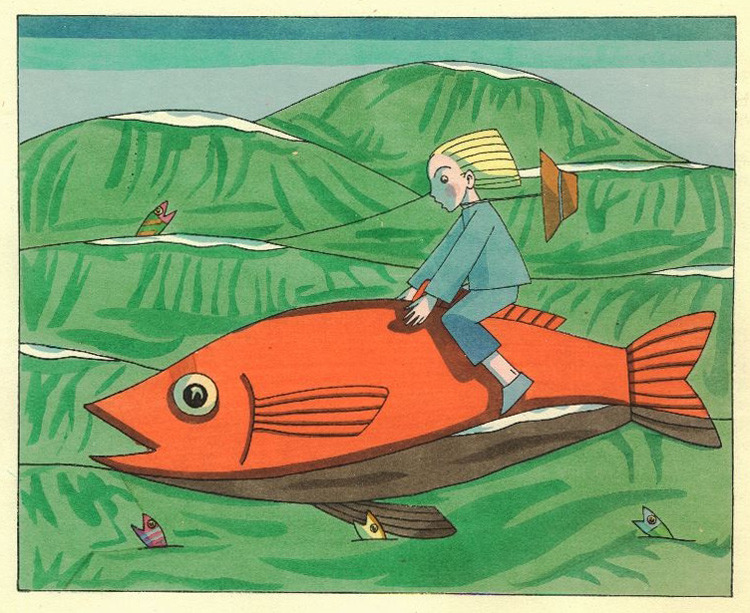
Uncanny dislocation was a theme explored by many an artist—many of them Jewish—who would later be labeled “decadent” by the Nazis and killed or forced into exile. Seidmann-Freud herself had migrated often in her young life, from Vienna to London, where she studied art, then to Munich to finish her studies, and finally to Berlin with her husband. She became familiar with the Jewish philosopher and mystic Gershom Scholem, who interested her in illustrating a Hebrew alphabet book. The project fell through, but she continued to write and publish her own children’s books in Hebrew.
In Berlin, the couple established themselves in the Charlottenburg neighborhood, the center of the Hebrew publishing industry. Seidmann-Freud’s books were part of a larger effort to establish a specifically Jewish modernism. Tom “was a typical example of the busy dawn of the 1920s,” Christine Brinck writes at Der Tagesspiegel. Scholem called the chain-smoking artist an “authentic Bohèmienne” and an “illustrator… bordering on genius.” Her work shows evidence of a “close familiarity with the world of dreams and the subconscious,” writes Hadar Ben-Yehuda, and a fascination with the fear and wonder of childhood.
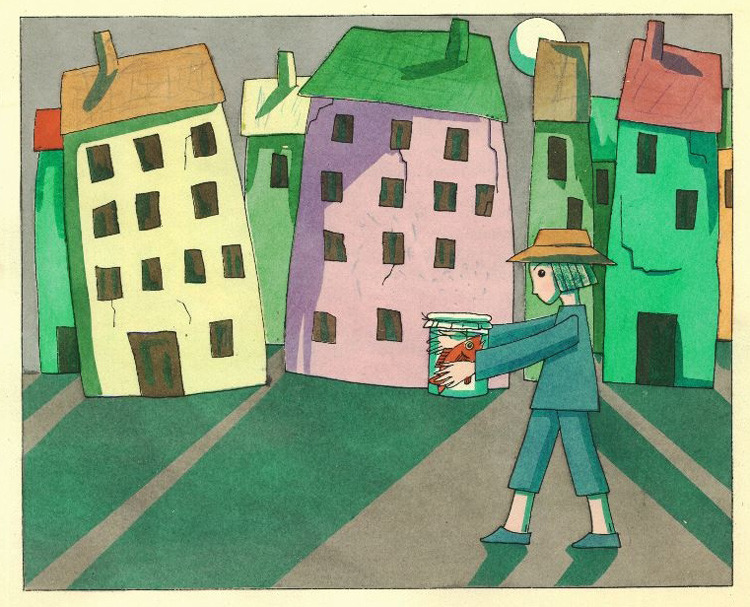
In her 1923 The Fish’s Journey, Seidmann-Freud draws on a personal trauma, “the first real tragedy to have struck her young life when her beloved brother Theodor died by drowning.” Other works illustrate texts—chosen by Jakob and the couple’s business partner, poet Hayim Nahman Bialik—by Hans Christian Andersen and the Brothers Grimm, “with drawings adapted to the landscapes of a Mediterranean community,” “a Jewish, socialist notion… added to the texts,” “and the difference between boys and girls made indecipherable,” the Seidmann-Freud exhibition catalogue points out.
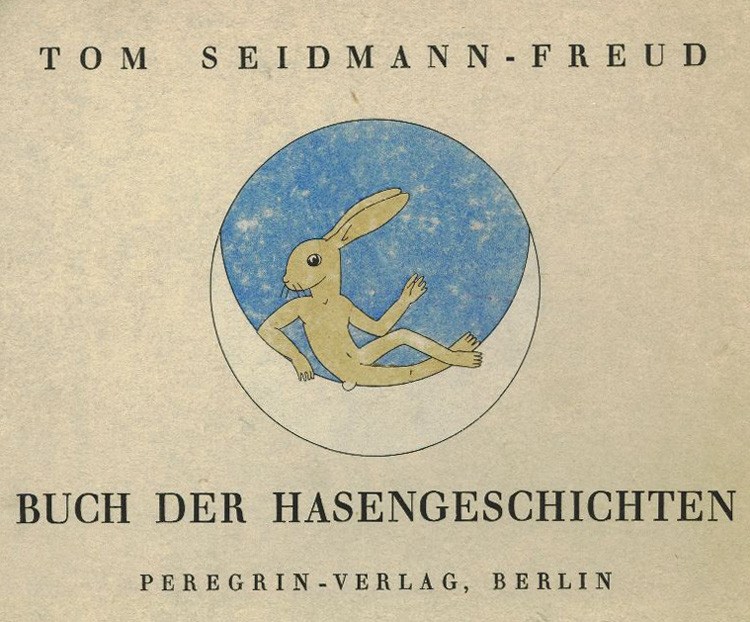
These books were part of a larger mission to “introduce Hebrew-speaking children to world literature, as part of establishing a modern Hebrew society in Palestine.” Tragically, the publishing venture failed, and Jakob hung himself, the event that precipitated Tom’s own tragic end, as Ben-Yehuda tells it:
The delicate, sensitive illustrator never recovered from her husband’s death. She fell into depression and stopped eating. She was hospitalized, but no one from her family and friends, not even her uncle Sigmund Freud who came to visit and to care for her was able to lift her spirits. After a few months, she died of anorexia at the age of thirty-eight.
Seidmann-Freud passed away in 1930, “the same year that the liberal democracy in Germany, the Weimar Republic, started it frenzied downward descent,” a biography written by her family points out. Her work was burned by the Nazis, but copies of her books survived in the hands of the couple’s only daughter, Angela, who changed her name to Aviva and “emigrated to Israel just before the outbreak of World War II.”
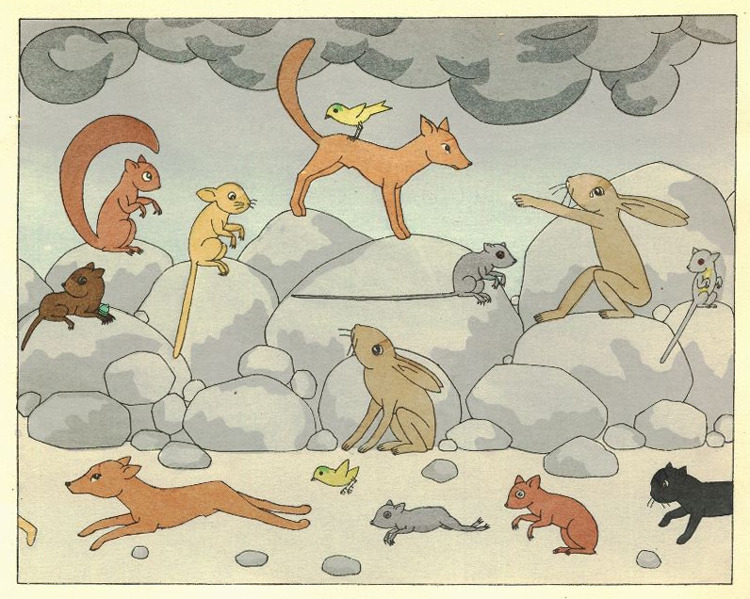
The “whimsically apocalyptic” illustrations in books like Buch Der Hasengeschichten, or The Book of Rabbit Stories from 1924, may seem more ominous in hindsight. But we can also say that Tom, like her uncle and like so many contemporary avant-garde artists, drew from a general sense of uncanniness that permeated the 1920s and often seemed to anticipate more full-blown horror. See more Seidmann-Freud illustrations at 50 Watts, the Freud Museum London, KulturPort, and at her family-maintained site, where you can also purchase prints of her many weird and wonderful scenes.
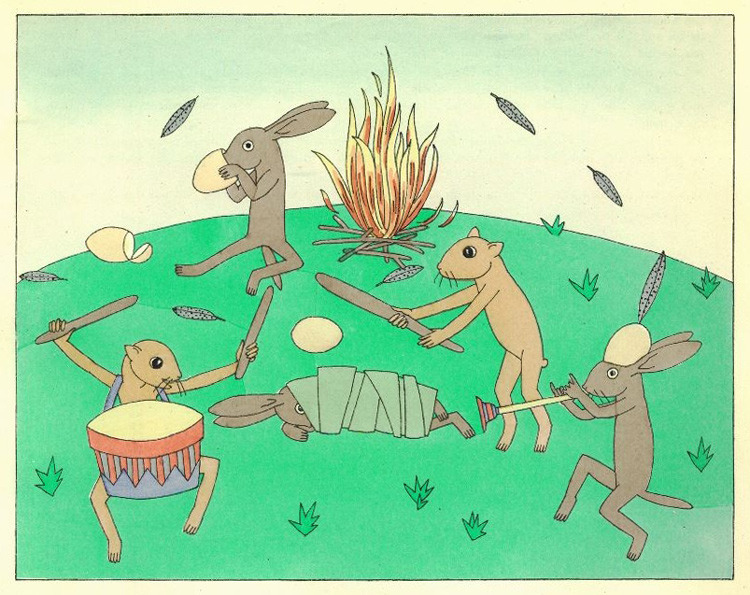
via 50 Watts
Related Content:
Sigmund Freud Speaks: Hear the Only Known Recording of His Voice, 1938
Enter an Archive of 6,000 Historical Children’s Books, All Digitized and Free to Read Online
Josh Jones is a writer and musician based in Durham, NC. Follow him at @jdmagness
Read More...Kevin Allison (The State, RISK!) Discusses Confessional Comedy on Pretty Much Pop: A Culture Podcast #70
Kevin was in the infamous, NYU-based sketch comedy group The State which had a show for a season on MTV and seemed like it was going to get picked up by CBS, but no. After several years getting over this disappointment, Kevin discovered a new outlet for his energies: He delivers, curates, and coaches personal stories (bordering on too personal, thus the “risk”) for his stage show and podcast RISK!
Kevin joins your hosts Mark Linsenmayer, Erica Spyres, and Brian Hirt to discuss this idiosyncratic form: Do the stories have to be funny? Can you change things? What’s the relation to autobiographical, humorous essays a la David Sedaris? What might be too personal or actually indicating trauma to actually share on RISK? This seems like something anyone can do, so what’s the role of craft and story-telling history?
Listen to RISK at risk-show.com, and watch many stories on the RISK! YouTube channel. Also: kevinallison.net, thestorystudio.org, and @thekevinallison. Kevin’s story about prostituting himself is about 14 minutes into this episode. Hear Kevin on Marc Maron’s WTF! Listen to that audio guide Kevin mentions, “What Every RISK! Storyteller Should Know.” Read about the four lies of storytelling.
Hear more of this podcast at prettymuchpop.com. This episode includes bonus discussion you can access by supporting the podcast at patreon.com/prettymuchpop. This time, the hosts tell (or at least outline) their own RISK!-like stories, and the result is predictably too personal for our public feed.
This podcast is part of the Partially Examined Life podcast network.
Pretty Much Pop: A Culture Podcast is the first podcast curated by Open Culture. Browse all Pretty Much Pop posts.
Read More...The Eden Project Built a Rainforest Ecosystem Inside Buckminster Fuller-Inspired Geodesic Domes
Buckminster Fuller had a difficult time as an inventor in his early years. “Having been expelled from Harvard for irresponsible conduct,” notes The Guardian, “he struggled to find a job and provide a living for his young family in his early 30s.” Despite later successes, and a later reputation as legendary as Nikola Tesla’s, he was often, like Tesla, seen by critics as a utopian visionary, whose visions were too impractical to really change the world.
But his body of work remains a testament to an imagination that rises above the trends of industrial design and engineering. After a period of decline, for example, Fuller’s geodesic domes experienced a revival in the early 2000’s when “aging baby-boomers across America” began “building dream homes in the shape of geodesic domes.” Meanwhile in Cornwall, England, a few years ahead of the curve, Dutch-born businessman and archaeologist-turned-successful-music-producer Sir Timothy Smit broke ground on what would become a far more British use of Fullerist principles.
In the late 90s, Smit started work on an enormous complex of geodesic biomes called the Eden Project, a facility “akin to a quintessentially Victorian creation: the English greenhouse,” which reached its apex in the famed “Crystal Palace” built for the Great Exhibition in Hyde Park in 1851. These were buildings “born out of a playful, decadent imagination—yet in their architecture and design they often opened new pathways for the future.” So too do Fuller’s designs, in an application melding Victorian and Fullerist ideas about curatorship and sustainability.
Looking like “clusters of soap bubbles” the Eden Project slowly rose above an exhausted clay pit and opened in 2001 (see a short time-lapse film of the construction above). Each of the two huge central domes recreates an ecosystem. The Rainforest Biome allows visitors to get lost in nearly 4 acres of tropical forest and includes banana, coffee, and rubber plants. The Mediterranean Biome houses an acre and a half of olives and grape vines. Smaller adjoining domes house thousands of additional plant species. There is a performance space and a yearly music festival; sculptures and art exhibitions in both the indoor and outdoor gardens. The facility has hosted well over a million visitors each year.
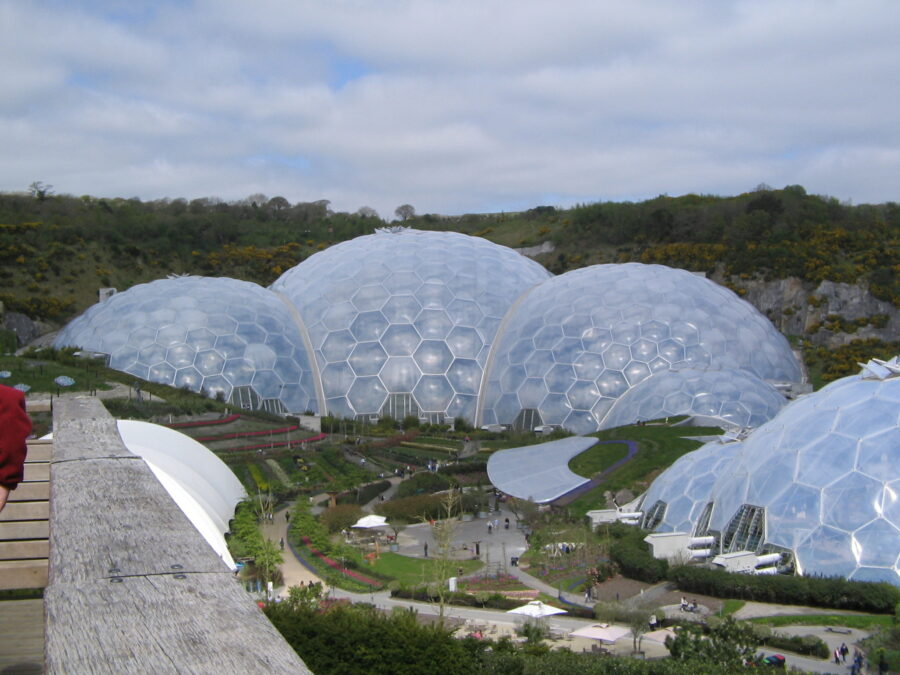
Photo via Wikimedia Commons
In 2016, the Eden Project began planting redwoods, introducing a forest of the North American trees to Europe for the first time. Next year, it will begin drilling for a geothermal energy project to turn heat from the granite underground into power, an undertaking that, unlike fracking, will not release contaminants into the water supply or additional fossil fuels into the air and could power and heat the facility and 5000 additional homes. In 2018, the project began construction on Eden Project North, in Morecambe, Lancashire, with buildings designed to look like giant mussels and a focus on marine environments.
Eden Project International aims to build unique facilities all around the world, “to create new attractions with a message of environmental, social and economic regeneration” and “to protect and rejuvenate natural landscapes.” None of these ambitious expansions use the geodesic domes of the original Eden Project, but that is not a reflection on the domes’ structural soundness. Many other transparent uses of Fuller’s design have encountered difficulties with water tightness and heat flow. The Eden Project’s domes use innovative inflatable, triangular panels instead of glass to solve those problems. Fuller surely would have approved.

The project also represents a poignant personal vindication for the Fuller family. Fuller “vowed to dedicate his life to improving standards of living through good design,” The Guardian writes, after his daughter Alexandra died in 1922. In 2009, his only surviving child, Allegra Fuller Snyder, then 82 and Chairwoman of the Buckminster Fuller Institute, visited the Eden Project. “Of all the projects related to my father’s work,” she remarked afterward, “I would say that this is the one I am most aware of as being a powerful, comprehensive project…. My father would have been just thrilled. He would feel that it is a marvellous application of his thinking.”
Learn more about the Eden Project, which reopens December 3, here. And learn how to “create Eden wherever you are” with the project’s free resources for gardeners at home.
Related Content:
Buckminster Fuller’s Map of the World: The Innovation that Revolutionized Map Design (1943)
The Life & Times of Buckminster Fuller’s Geodesic Dome: A Documentary
Josh Jones is a writer and musician based in Durham, NC. Follow him at @jdmagness
Read More...The Geometry of Sound: Watch Artist Kenichi Kanazawa Make Amazing Geometric Designs Out of Sand, Using Sound Waves Alone
Before our eyes, Japanese artist Kenichi Kanazawa creates crisp shapes and geometric patterns with no special tools but sand and sound, the kind of work that at first looks expressly designed to go viral on social media. But he’s been at it much longer than that: “Originally a sculptor by trade,” according to Spoon & Tamago’s Johnny Waldman, “Kanazawa began working with steel and sound in 1987 after collaborating with the late sound artist Hiroshi Yoshimura. Today, his work primarily involves elements like sound, vibration and heat: making the invisible, visible.” Or in other words, using what critic and music Ted Gioia calls, in a tweet of one of Kanazawa’s short tabletop performances, “the power of sound to create order out of chaos.”
Kanazawa doesn’t use just any old tables, but special ones made of steel, the better to resonate when he taps and strokes them with his variety of mallets. Nor does he use just any old sand, opting instead for either a pure white — for maximum visual starkness against the black steel — or a set of bright colors, as in the video at the top of the post.
Whatever its place on the spectrum, the stuff seems to rearrange itself across the surface in response to the tones created by the artist. The striking precision of the effects produced by this interaction of sand, steel, and sound gets viewers wondering what, scientifically, is going on here. The underlying set of phenomena has a name: cymatics, coined in the 1960s by a Swiss doctor named Hans Jenny.
In his book Healing Songs, Gioia calls Jenny’s study of cymatics “the most impressive and rigorous inquiry yet made into the nature of vibrations and their impact on physical objects of various sorts.” In such a medium sensitive to sonic vibrations, Jenny himself writes, “a pattern appears to take shape before the eye and, as long as the sound is spoken, to behave like something alive.” This also fairly describes Kanazawa’s dancing sand, whether seen from up close or at a distance. Physically speaking, sound is, of course, a form of vibration, which is itself a form of motion. But for an observer like Jenny — an adherent of esoteric philosopher Rudolf Steiner’s anthroposophy, a school of thought oriented toward the observation of the spiritual world through sensory experience — Kanazawa’s work would surely have, as it were, much deeper resonances.
via @TedGioia
Related Content:
The Geometry of Sound Waves Visualized
What Does Sound Look Like?: The Audible Rendered Visible Through Clever Technology
Based in Seoul, Colin Marshall writes and broadcasts on cities, language, and culture. His projects include the Substack newsletter Books on Cities, the book The Stateless City: a Walk through 21st-Century Los Angeles and the video series The City in Cinema. Follow him on Twitter at @colinmarshall, on Facebook, or on Instagram.
Read More...A Curious Herbal: 500 Beautiful Illustrations of Medicinal Plants Drawn by Elizabeth Blackwell in 1737 (to Save Her Family from Financial Ruin)
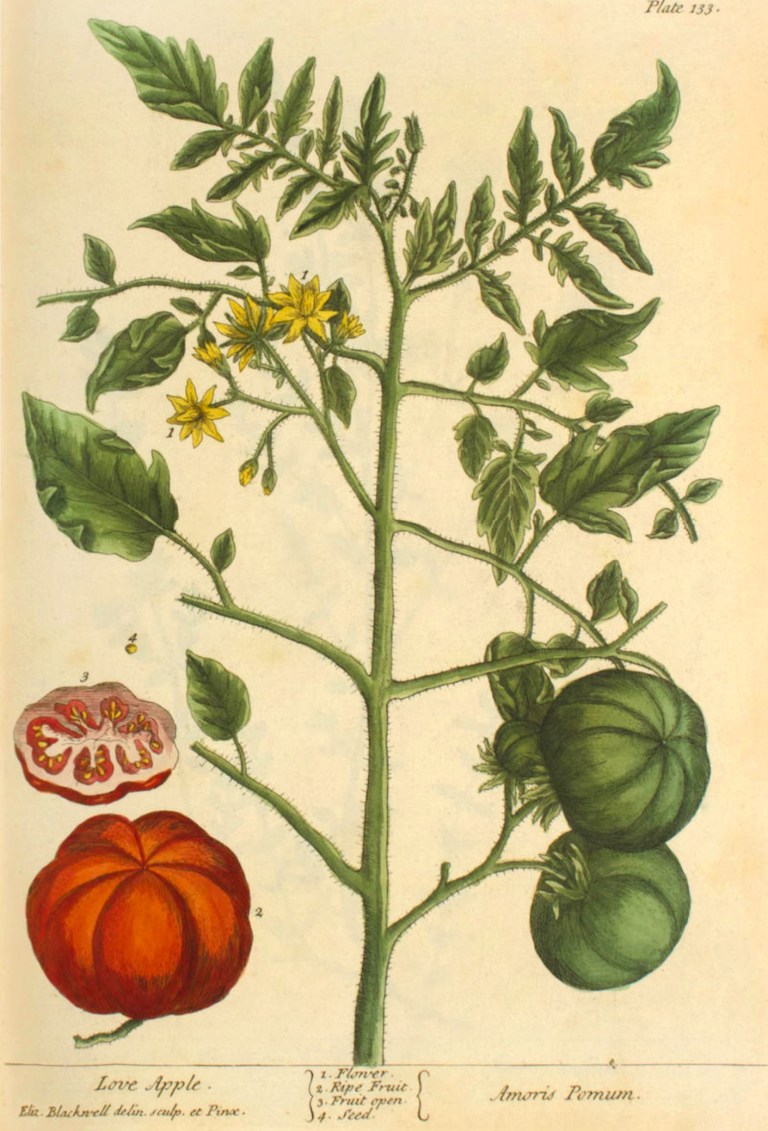
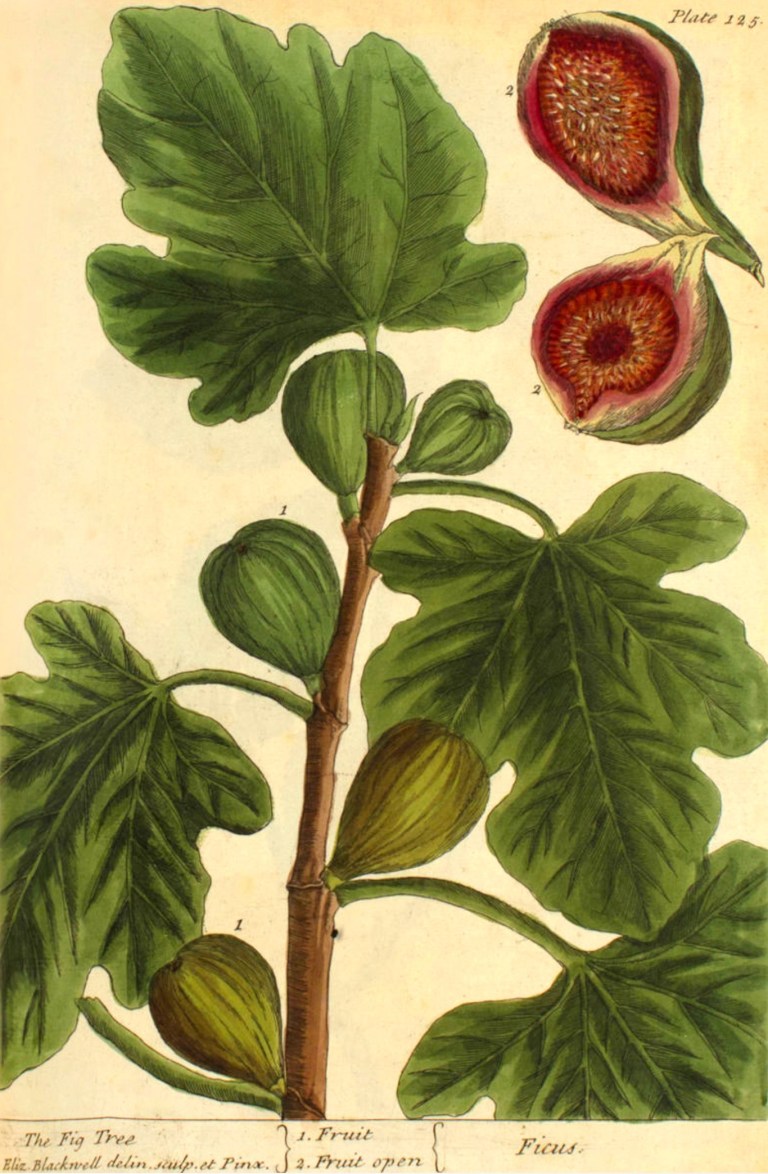
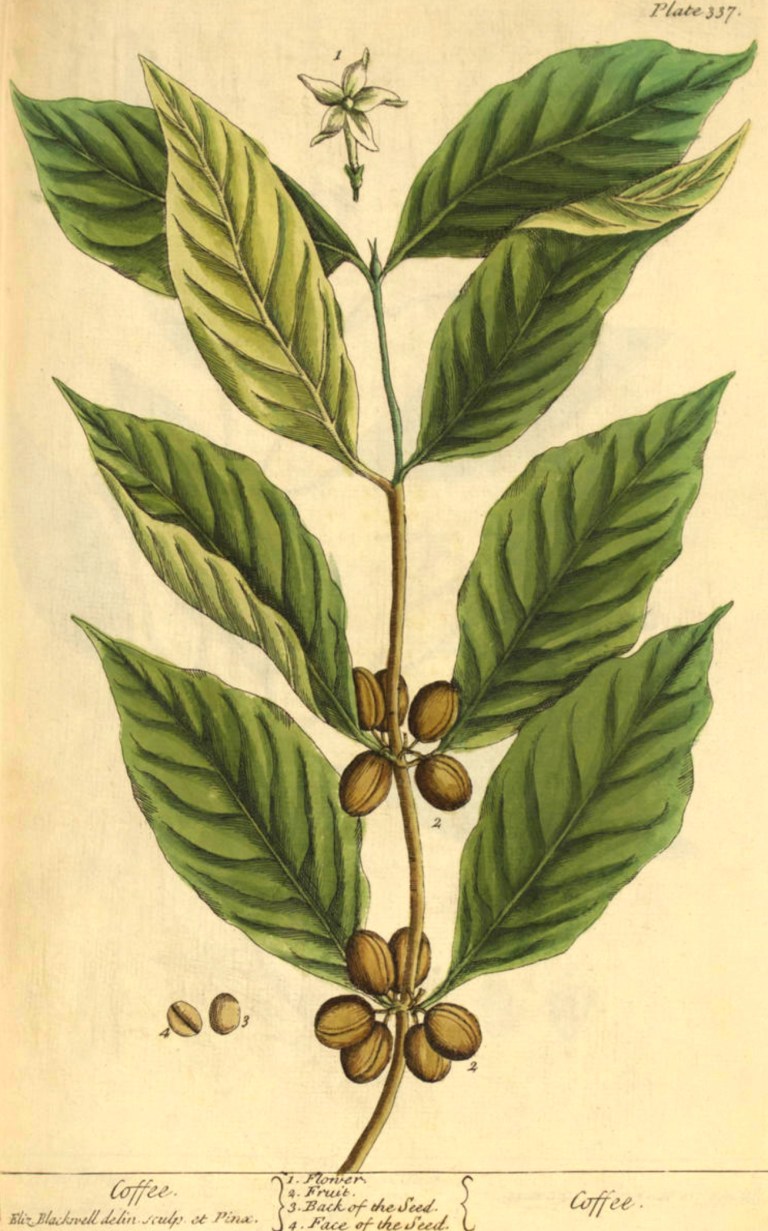
Sometimes beautiful things come out of terrible circumstances. This does not justify more terrible circumstances. But as evidence of the resilience, resourcefulness, and creativity of human beings—and more specifically of mothers in dire straits—we offer the following: A Curious Herbal, Elizabeth Blackwell’s finely illustrated, engraved, and colored “herbal,” the term for a “book of plants, describing their appearance, their properties and how they may be used for preparing ointments,” the British Library writes.
Born sometime around 1700 to a successful merchant family in Scotland, Elizabeth married Alexander Blackwell, a “shady character” who proceeded to drag her through a series of misadventures involving him posing as a doctor and a printer, despite the fact that he’d had no training in either profession.
Blackwell incurred several hefty fines from the authorities, which he could not pay, and he was finally remanded to debtor’s prison, an institution that often left women with young children to fend for themselves.
“With Alexander in prison, Elizabeth was forced to rely on her own resources to keep herself and her child.” Fortunately, she had been prepared with life skills during her prosperous upbringing, having learned a thing or two about business and “received tuition in drawing and painting, as many well-to-do young women then did.” Blackwell realized a publishing opportunity: finding no high-quality herbals available, she decided to make her own in “a rare triumph of turning desperation into inspiration,” Maria Popova writes.
After befriending the head curator Chelsea Physic Garden — a teaching facility for apprentice apothecaries established several decades earlier — she realized that there was a need for a handbook depicting and describing the garden’s new collection of mysterious plants from the New World. A keen observer, a gifted artist, and an entrepreneur by nature, she set about bridging the world’s need and her own.
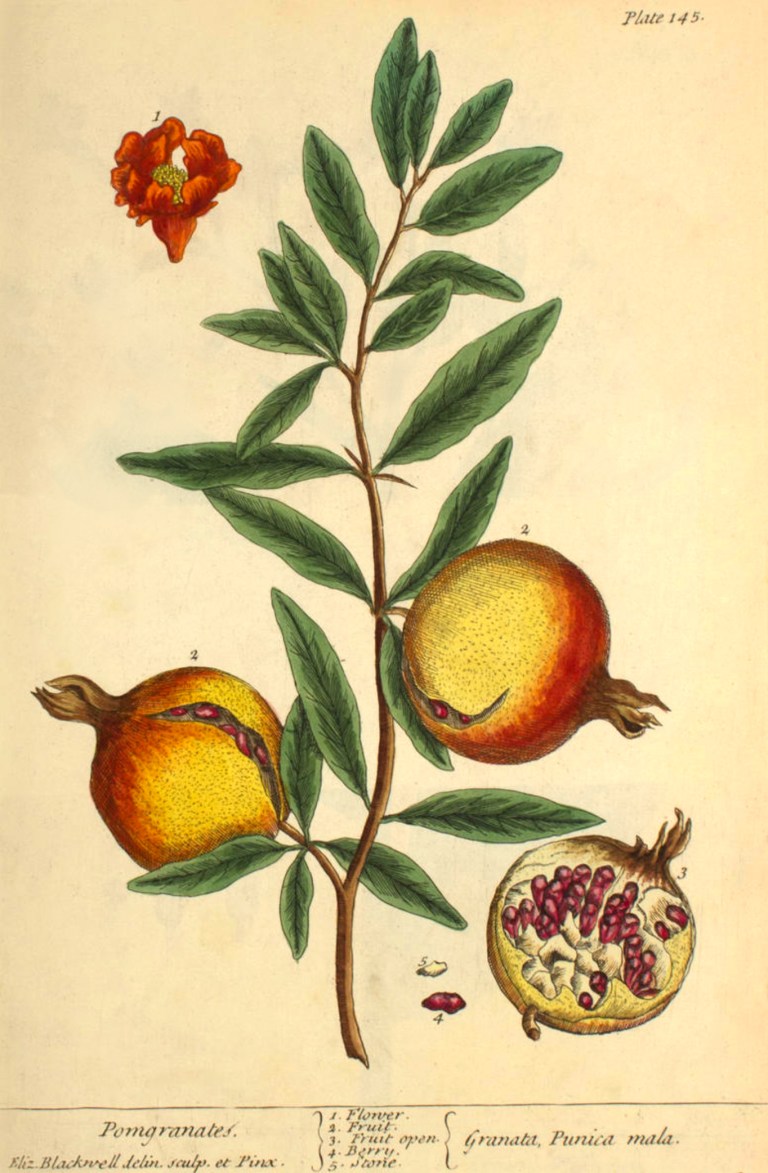
The gorgeous book, A Curious Herbal (1737–39), was not all Blackwell’s work, though she completed all of the illustrations from start to finish. She also enlisted her husband’s help, visiting his cell to have him “supply each plant’s name in Latin, Greek, Italian, Spanish, Dutch, and German.” Blackwell produced 500 illustrations in total. She advertised “by word of mouth,” notes the British Library, “and in several journals” and “showed herself an adept businesswoman, striking mutually advantageous deals with booksellers that ensured the financial success of the herbal.”
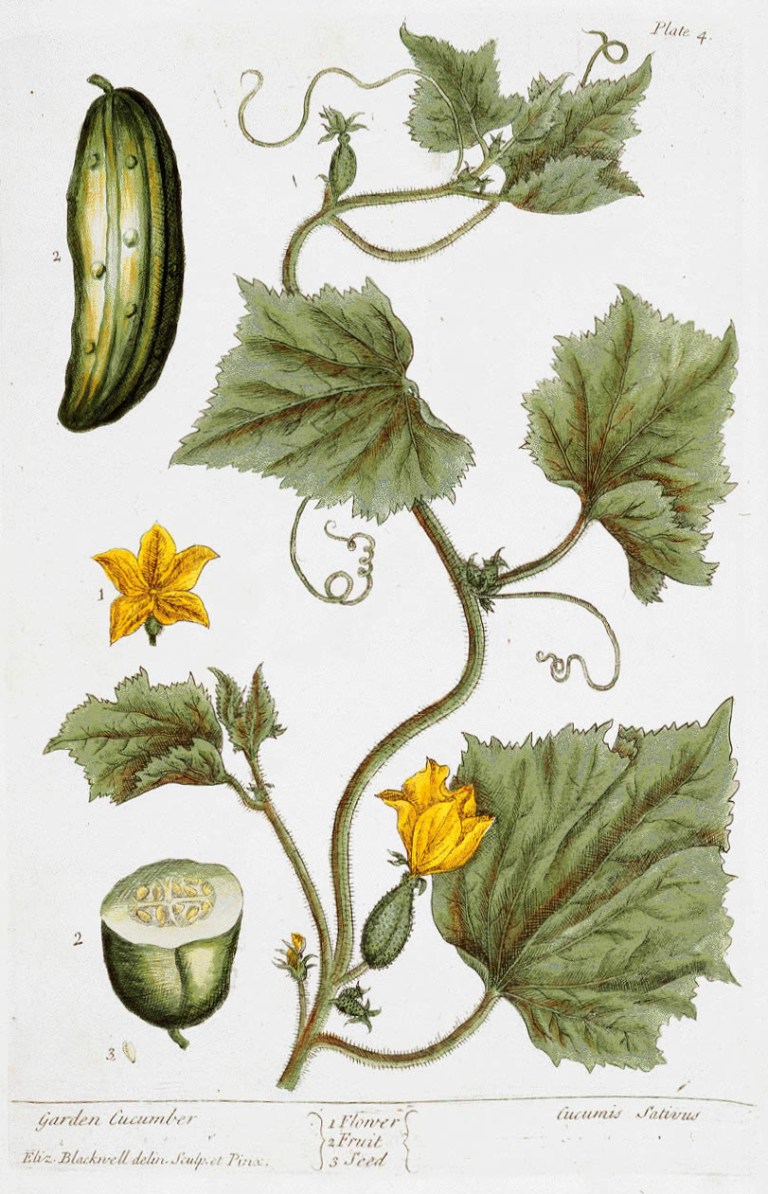
Blackwell not only benefited her family and her readers, but she also gave her book to posterity—though she couldn’t have known it at the time. Her herbal has been digitized in full by the Biodiversity Heritage Library. The herbal will also give back to the natural world she lovingly rendered (including plants that have since gone extinct). Popova has made a selection of the illustrations available as prints to benefit The Nature Conservancy. See Blackwell’s digitized book in full here and order prints at Brain Pickings.
Related Content:
Josh Jones is a writer and musician based in Durham, NC. Follow him at @jdmagness
Read More...Watch How to Be at Home, a Beautiful Short Animation on the Realities of Social Isolation in 2020
I think, as social primates, we want to feel a strong sense of belonging either in a relationship or to a community—or both. But also intrinsic to our humanity is a feeling that we are truly alone.
—Filmmaker Andrea Dorfman, 2010
When they first became friends, poet Tanya Davis and filmmaker Andrea Dorfman talked a lot about the pleasures and hardships of being alone. Davis had just gone through a break up, and Dorfman was just embarking on a relationship after four years of flying solo.
These conversations led to a collaboration, 2010’s How to Be At Alone (see below), a whimsical videopoem that combines live action and animation to consider some of solitude’s sweeter aspects, like sitting on a bench as signal to the universe that one is available for impromptu conversation with a stranger.
That bench reappears in their 2020 follow up, How to Be At Home, above. Now it is cordoned off with black and yellow caution tape, a familiar public health measure in 2020.
As with the earlier project, a large part of Davis’ purpose was to reflect and reassure, both herself, and by extension, others.
Although she has become a poster child for the joys of solitude, she also relishes human contact, and found herself missing it terribly while sheltering alone in the early days of the pandemic. Writing the new poem gave her “an anchor” and a place to put her anxiety.
Dorfman notes that the project, which was commissioned by the National Film Board of Canada as part of a short film collection about Canadians navigating life during the pandemic, was “essentially catalyzed by COVID.”
As she embarked on the project, she wondered if the pandemic would be over by the time it was complete. As she told the CBC’s Tom Power:
There was this feeling that this could go away in a month, so this better be finished soon, so it’s still relevant. So as an artist, as a filmmaker, I thought, “I have to crank this out” but there’s no fast and easy way to do animation. It just takes so long and as I got into it and realized that this was going to be a marathon, not a sprint, the images just kept coming to me and I really just made it up as I went along. I’d go into my studio every day not knowing what lay ahead and I’d think, “Okay, so, what do we have up next? What’s the next line? And I’d spend maybe a week on a line of the poem, animating it.
It appears to have been an effective approach.
Dorfman’s painted images ripple across the fast turning pages of an old book. The titles change from time to time, and the choices seem deliberate—The Lone Star Ranger, Le Secret du Manoir Hanté, a chapter in The Broken Halo—“Rosemary for Remembrance.”
“It’s almost as though the way the poem is written there are many chapters in the book. (Davis) moves from one subject to another so completely,” Dorfman told the University of King’s College student paper, The Signal.
In the new work, the absence of other people proves a much heavier burden than it does in How To Be Alone.
Davis flirts with many of the first poem’s settings, places where a lone individual might have gone to put themselves in proximity to other humans as recently as February 2020:
Public transportation
The gym
A dance club
A description from 2010:
The lunch counter, where you will be surrounded by chow-downers, employees who only have an hour and their spouses work across town, and they, like you, will be alone.
Resist the urge to hang out with your cell phone.
In 2020, she struggles to recreate that experience at home, her phone serving as her most vital link to the outside world, as she scrolls past images of a Black Lives Matter protests and a masked essential worker:
I miss lunch counters so much I’ve been eating [pickles and] toasted sandwiches while hanging unabashedly with my phone.
See How to Be at Home and the 29 other films that comprise The Curve, the National Film Board of Canada series about life in the era of COVID-19 here.
How to be at Home
By Tanya Davis
If you are, at first, really fucking anxious, just wait. It’ll get worse, and then you’ll get the hang of it. Maybe.
Start with the reasonable feelings – discomfort, lack of focus, the sadness of alone
you can try to do yoga
you can shut off the radio when it gets to you
you can message your family or your friends or your colleagues, you’re not supposed to leave your home anyway, so it’s safe for you
There’s also the gym
you can’t go there but you could pretend to
you could bendy by yourself in your bedroom
And there’s public transportation
probably best to avoid it
but there’s prayer and meditation, yes always
employ it
if you have pains in your chest ‘cause your anxiety won’t rest
take a moment, take a breath
Start simple
things you can handle based on your interests
your issues and your triggers
and your inner logistics
I miss lunch counters so much I’ve been eating [pickles and] toasted sandwiches while hanging unabashedly with my phone
When you are tired, again of still being alone
make yourself a dinner
but don’t invite anybody over
put something green in it, or maybe orange
chips are fine sometimes but they won’t keep you charged
feed your heart
if people are your nourishment, I get you
feel the feelings that undo you while you have to keep apart
Watch a movie, in the dark
and pretend someone is with you
watch all of the credits
because you have time, and not much else to do
or watch all of the credits to remember
how many people come together
just to tell a story
just to make a picture move
And then, set yourself up dancing
like it’s a club where everyone knows you
and they’re all gonna hold you
all night long
they’re gonna dance around you and with you and on their own
it’s your favourite song
with the hardest bass and the cathartic drums
your heart pumps along/hard, you belong
you put your hands up to feel it
With the come down comes the weeping
those downcast eyes and feelings
the truth is you can’t go dancing, not right now
not at any club or party in any town
The heartbreak of this astounds you
it joins old aches way down in you
you can visit them, but please don’t stay there
Go outside if you’re able, breathe the air
there are trees for hugging
don’t be embarrassed
it’s your friend, it’s your mother, it’s your new crush
lay your cheek against the bark, it’s a living thing to touch
Sadly, leave all benches empty
appreciate the kindness in the distance of strangers
as you pine for company and wave at your neighbours
savour the depths of your conversations
the layers uncovered
in this strange space and time
Society is afraid of change
and no one wants to die
not now, from a tiny virus
not later from the world on fire
But death is a truth we all hate to know
we all get to live, and then we all have to go
In the meantime, we’re surrounded, we’re alone
each a thread woven in the fabric, unravelling in moments though
each a solo entity spinning on its axis, forgetting that the galaxy includes us all
Herein our fall
from grace from each other from god whatever, doesn’t matter
the disaster is that we believe we’re separate
we’re not
As evidenced by viruses taking down societies
as proven by the loneliness inherent in no gatherings
as palpable as the vacancy in the space of one person hugging
If this disruption undoes you
if the absence of people unravels you
if touch was the tether that held you together
and now that it’s severed you’re fragile too
lean into loneliness and know you’re not alone in it
lean into loneliness like it is holding you
like it is a generous representative of a glaring truth
oh, we are connected
we forget this, yet we always knew.
How to Be at Home will be added to the Animation section of our collection, 4,000+ Free Movies Online: Great Classics, Indies, Noir, Westerns, Documentaries & More.
Related Content:
Watch “Ryan,” Winner of an Oscar and 60 Other Awards
Ayun Halliday is an author, illustrator, theater maker and Chief Primatologist of the East Village Inky zine. Follow her @AyunHalliday.
Read More...Support Us
We're hoping to rely on loyal readers, rather than erratic ads. Please click the Donate button and support Open Culture. You can use Paypal, Venmo, Patreon, even Crypto! We thank you!

About Us

Open Culture scours the web for the best educational media. We find the free courses and audio books you need, the language lessons & educational videos you want, and plenty of enlightenment in between.
Advertise With Us
FREE UPDATES!
GET OUR DAILY EMAIL
Get the best cultural and educational resources on the web curated for you in a daily email. We never spam. Unsubscribe at any time.
FOLLOW ON SOCIAL MEDIA
Open Culture editor Dan Colman scours the web for the best educational media. He finds the free courses and audio books you need, the language lessons & movies you want, and plenty of enlightenment in between.
Advertise With Us


