The Japanese Fairy Tale Series: The Illustrated Books That Introduced Western Readers to Japanese Tales (1885–1922)
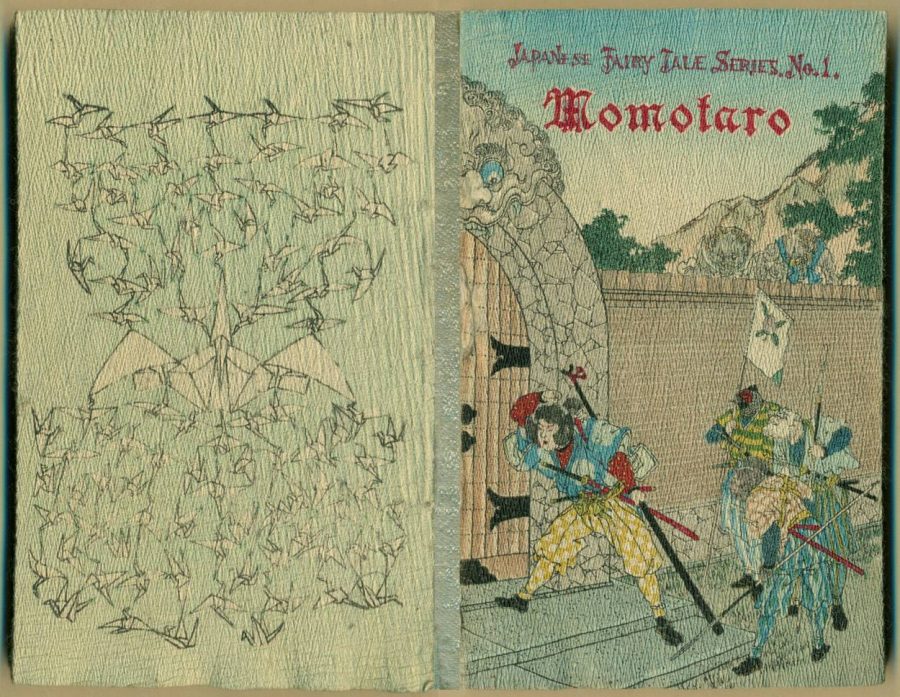
Everyone in Japan knows the story of Momotaro, the boy born from a peach who goes on to defeat the marauding ogres known as oni. The oldest known written versions of Momotaro’s adventures date back to the 17th century, but even then the tale almost certainly had a long history of passage through oral tradition. And though Momotaro may well be the best-known Japanese folk hero, his story is just one in a body of folklore vast enough that few, even among avid enthusiasts, can claim to have mastered it in its entirety.
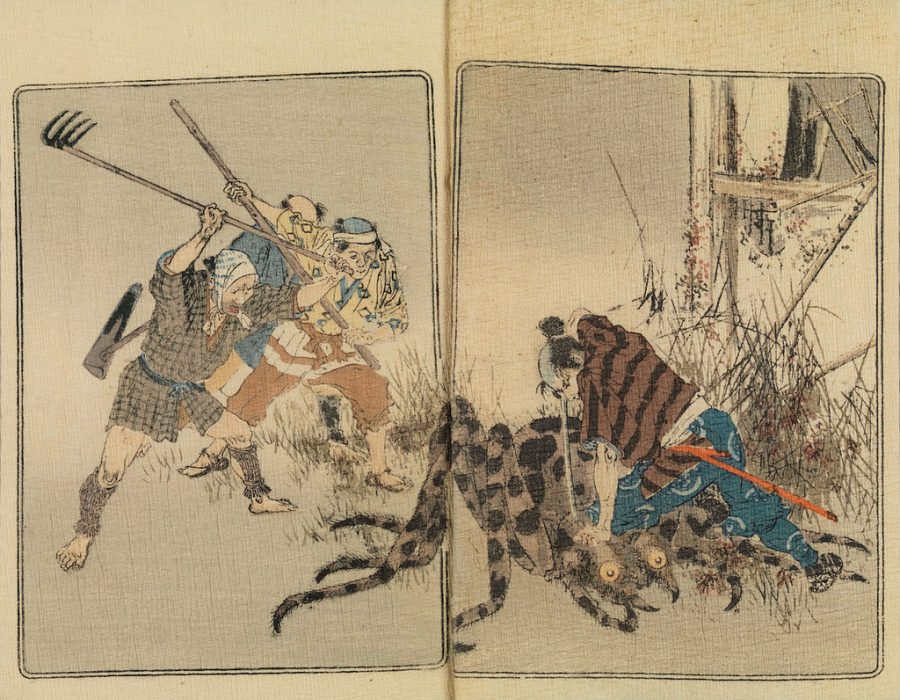
That vast body of Japanese folklore has provided no small amount of inspiration to comics, animation, and the other modern forms of storytelling that have brought many of these folktales to wider audiences — even global audiences, a project that began in the late 19th century.
Their Western popularization has no greater figurehead than Lafcadio Hearn. A Greek-British writer who moved to Japan in 1890, Hearn later became a naturalized Japanese citizen and wrote such books as Japanese Fairy Tales, Kwaidan: Stories and Studies of Strange Things, and The Boy Who Drew Cats.
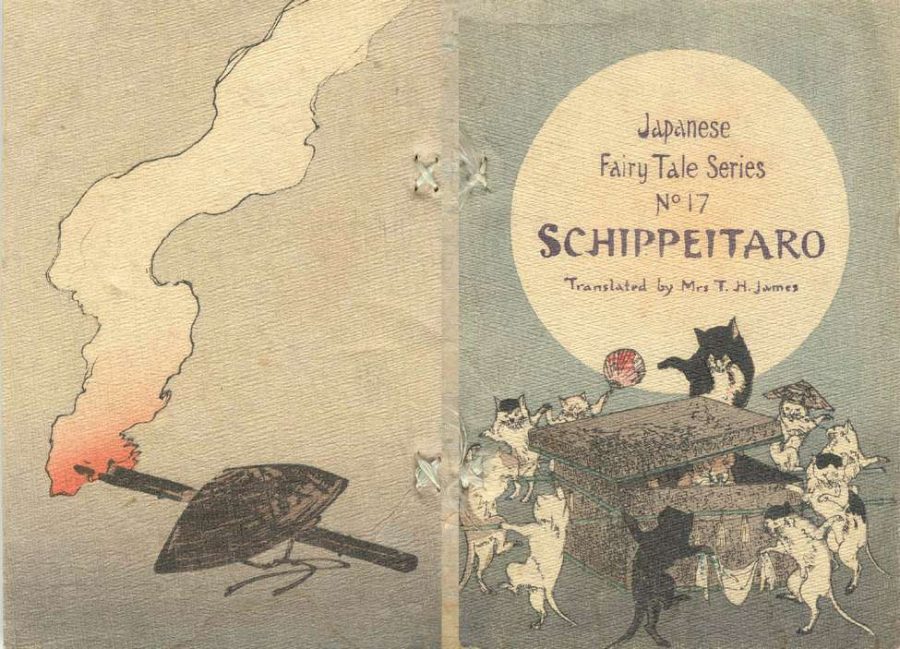
That last title, an English version of a Japanese folktale about a child who vanquishes a goblin rat in a monastery by drawing its natural enemies on the monastery walls, was also adapted in a series of beautifully illustrated crêpe-paper children’s books put out by an enterprising Japanese publisher named Takejiro Hasegawa. “In twenty volumes, published between 1885 and 1922, the Fairy Tale series introduced traditional Japanese folk tales, first to readers of English and French, and later to readers of German, Spanish, Portuguese, Dutch, and Russian,” writes the Public Domain Review’s Christopher DeCou.
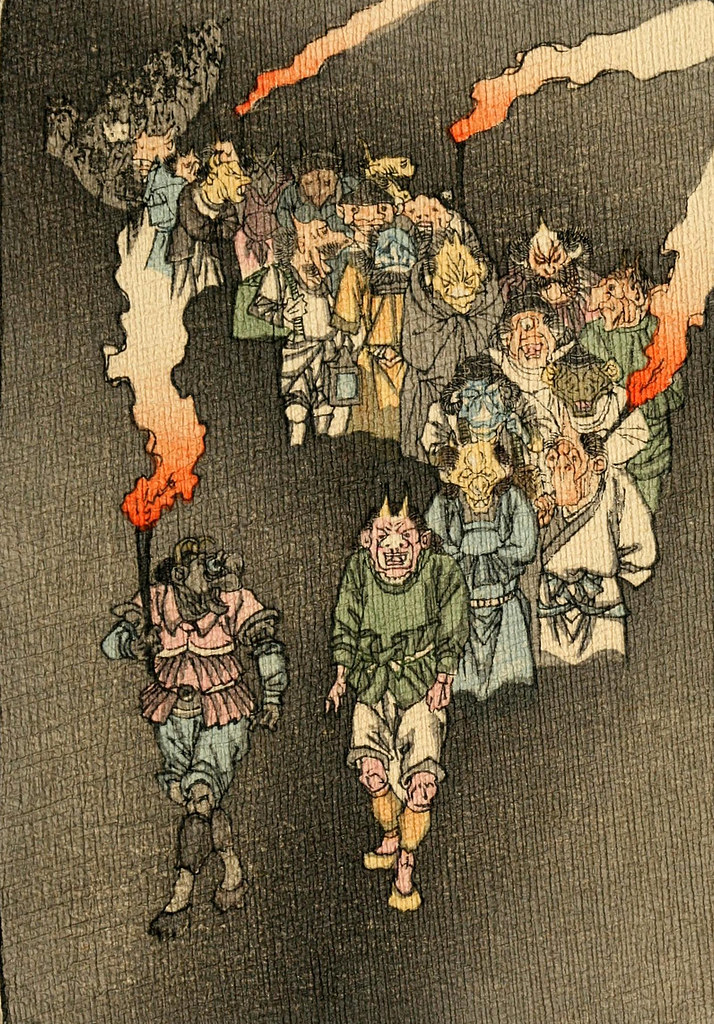
Wanting to model the books on Japanese anthologies published in the sixteenth century, Hasegawa hired traditional Japanese woodblock printers like Kobyashi Eitaku, Suzuki Kason, and Chikanobu to illustrate them. And, for the translation work, he drew on the local missionary community to which his own English education had put him in contact. “The earliest volumes in the Japanese Fairy Tale Series really were very much a product of Tokyo’s close-knit expat community,” DeCou writes. A growing Western interest in Japonisme, as well as “Hasewaga’s wheeling and dealing at World’s Fairs” and the good sense to bring the famous Hearn aboard the project, made the Japanese Fairy Tale Series into an enduring international success.
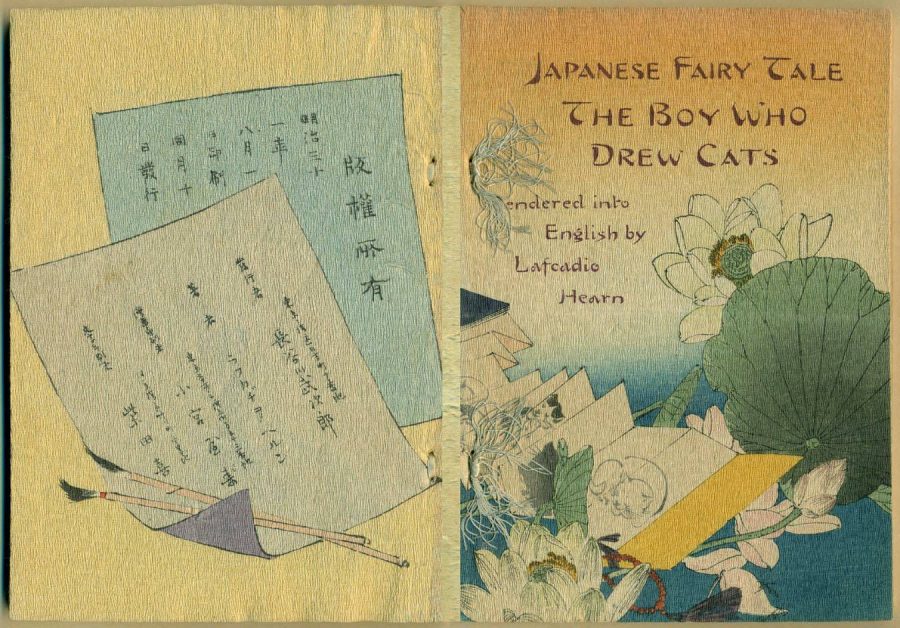
“At a time when publishing houses in London and New York dominated the market,” DeCou writes, “Hasegawa’s press in Tokyo was producing equally beautiful volumes using traditional Japanese craftwork and broadcasting Japan’s culture to the world.” You can see more pages of the Japanese Fairy Tale Books at the Public Domain Review, and complete digitizations at the site of book dealer George Baxley as well as at the Public Library of Cincinnati and Hamilton County and the Internet Archive. Like Hearn, Hasegawa understood that Japanese folklore had the appeal to cross temporal and cultural boundaries. But could even he have imagined that the very books in which he published them would still draw such fascination more than a century later?
Related Content:
The First Museum Dedicated to Japanese Folklore Monsters Is Now Open
Enter a Digital Archive of 213,000+ Beautiful Japanese Woodblock Prints
Based in Seoul, Colin Marshall writes and broadcasts on cities, language, and culture. His projects include the book The Stateless City: a Walk through 21st-Century Los Angeles and the video series The City in Cinema. Follow him on Twitter at @colinmarshall or on Facebook.
Read More...Robert Johnson Finally Gets an Obituary in The New York Times 81 Years After His Death
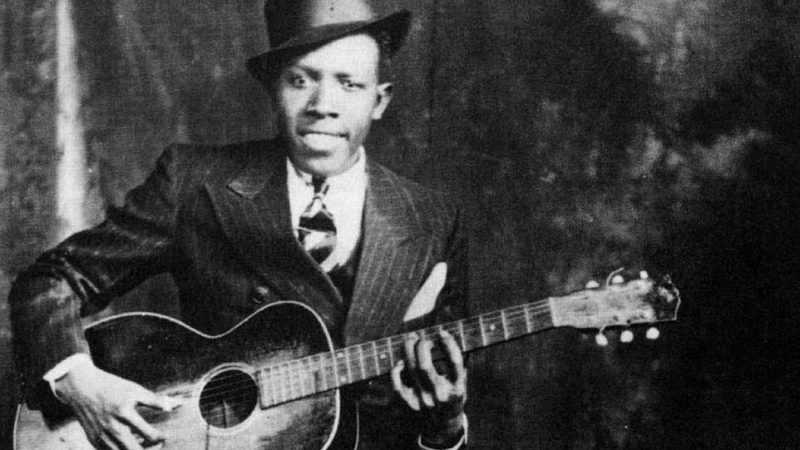
Whether you see it as a good faith effort to correct past mistakes or a bid to distract from more recent fumbles—the New York Times’ “Overlooked” obituary series has done its readers a service by recovering the bios of “remarkable people whose deaths… went unreported in The Times.” Most of the profiles are of people who were public figures at the time of their death. Some had achieved international recognition, like Alan Turing, and others were royalty, like Rani, queen of the kingdom of Jhansi in Northern India and one of the leaders of a revolt against the British in 1857.
The latest “Overlooked” is an oddity. Its subject may be the most famous person of all to get the belated Times obit since the series began. Robert Johnson’s alleged deal with the devil at the crossroads has become as foundational to U.S. mythology as John Henry’s hammer or George Washington’s cherry tree.
At the very same time, Johnson may be the most obscure figure to appear in “Overlooked.” And the person about whom the least is known. “What is known” about him, writes the Times, “can be summarized on a postcard.”
He is thought to have been born out of wedlock in May 1911 in Mississippi and raised there. School and census records indicated he lived for stretches in Tennessee and Arkansas. He took up guitar at a young age and became a traveling musician, eventually glimpsing the bustle of New York City. But he died in Mississippi [in 1938], with just over two dozen little-noticed recorded songs to his name.
There’s more to the story, but it gets hard to tell where the historical record ends and the mythology begins. Still, the paper of record can be forgiven for overlooking Johnson the first time around. Aside from a small number of Delta blues fans, most of whom actually lived in the Delta, hardly anyone knew who Robert Johnson was in life. By the time news of his mojo started to spread outside Mississippi, it was too late. John Hammond sought to bring him Carnegie Hall in 1938, the year of his death. Alan Lomax looked to record him 1941, only to find out he was gone.
His fame spread in the 1960s when British Blues invasionists picked up on his genius, cited him as a primary influence, and covered and adapted his songs. Bob Dylan wrote in his memoir Chronicles: Volume One that “hundreds of lines” of his derive from Johnson’s influence. The “advent of rock ’n’ roll would turn Johnson into a figure of legend,” among blues and rock and roll fans in the know. The legend, and recognition of Johnson’s greatness, exploded in subsequent decades.
Johnson was inducted into the Rock and Roll Hall of Fame in its first ceremony in 1986. His posthumous Complete Recordings won a Grammy in 1991. Many more honors followed, including a Grammy lifetime achievement award. By 2003, Rolling Stone could call Johnson “the undisputed king of the Mississippi Delta blues” and place him at #5 on their list of 100 greatest guitarists of all time. How is it possible that an obscurely minor figure in blues history became a founding grandfather of rock and roll?
“The chasm between the man Johnson was and the myth he became,” the Times admits “has marooned historians and conscientious listeners for more than a half-century.” Johnson’s story “is no more or less than the handiwork of the country in which it was written; a country where the legacy of African-Americans has often been shaped by others.” But those others have had good reason for appropriating Johnson’s infernal story and unique musical signatures.
A new Netflix documentary ReMastered: Devil at the Crossroads (see the trailer above) explores in interviews with rock and blues greats how Johnson became forever linked to a myth that stood in for the real circumstances of his short, difficult life. (He can be thought of as the founding member of rock’s tragically elite “27 club.”) Actual deal with the devil or no, “there was certainly a lot of daredevilry in his flouting of standard tempos and harmonics,” writes Rolling Stone. “His records are breathtaking displays of melodic development and acute brawn.”
While the Times, and most everyone else, passed over him in life, in death, he has more than received his due from musicians and fans. Johnson has not been overlooked so much as maybe overrepresented in the history of the blues. Find out why in his belated Times obituary, in the hundreds of tributes to him written and recorded since his death 81 years ago, and by immersing yourself in his own haunting recordings.
Related Content:
The Story of Bluesman Robert Johnson’s Famous Deal With the Devil Retold in Three Animations
The Legend of Bluesman Robert Johnson Animated
Josh Jones is a writer and musician based in Durham, NC. Follow him at @jdmagness
Read More...The Beatles Release the First Ever Video for “Here Comes the Sun”
It took a half century. But better late than never. Exactly 50 years after the release of Abbey Road, the Beatles have released the first official video of “Here Comes the Sun.” The clip, writes NME, “set to a new stereo mix of the George Harrison composition, captures a gorgeous sunrise illuminating Abbey Road Studios’ Studio Two, where the Fab Four recorded most of the legendary album.” Later today, the Beatles will release the 50th anniversary reissue of Abbey Road. It comes in CD and CD/Blu Ray versions.
If you would like to support the mission of Open Culture, consider making a donation to our site. It’s hard to rely 100% on ads, and your contributions will help us continue providing the best free cultural and educational materials to learners everywhere. You can contribute through PayPal, Patreon, and Venmo (@openculture). Thanks!
Related Content:
The Lost Guitar Solo for “Here Comes the Sun” by George Harrison, Discovered by George Martin
Flashmob Performs The Beatles’ ‘Here Comes the Sun’ in Madrid Unemployment Office
A Short Film on the Famous Crosswalk From the Beatles’ Abbey Road Album Cover
Read More...Free: A Professionally-Read Version of the Ukraine Whistleblower Complaint, Released by Penguin Random House Audio
Listen to the Whistleblower Complaint released by the House Intelligence Committee, as read by Saskia Maarleveld. Stream or download it above. Find more of Maarleveld’s narrated books on Audible.
This recording will be added to our collection, 1,000 Free Audio Books: Download Great Books for Free.
Read More...What’s the Key to American Gothic’s Enduring Fame? An Introduction to the Iconic American Painting
The Last Supper…
The Birth of Venus…
The Mona Lisa…
American Gothic, Grant Wood’s celebrated depiction of two Depression-era Iowa farmers, holds its own against those iconic European works as one of the world’s most parodied artworks.
Vox’s Phil Edwards dispenses with that status quickly in the above video for Overrated, a series that unpacks the reasons behind iconic works’ lasting fame.
By his reckoning, American Gothic’s success hinges on the dual nature of its creator, a native Iowan who traveled extensively in Europe, gravitating to such sophisticated fare as Impressionism, Pointillism, and the work of Flemish master Jan van Eyck.
While he didn’t express satirist and cultural critic H. L. Mencken’s overt disdain for his rural-dwelling subjects, his rendering suggests that he perceived them incapable of understanding the appeal of his own rarified pleasures.
As Karal Ann Marling, professor of art history and American studies at the University of Minnesota, writes in The Annals of Iowa:
In the early 1930s, many Iowa farmers suspected that Wood was making fun of them in American Gothic, that he was a pictorial H. L. Mencken castigating a Midwestern “booboisie.” (He had, after all, lived in Paris briefly and even grew a beard there!) But by 1933, when American Gothic was exhibited in conjunction with the Chicago Century of Progress Fair, the painting had become a beloved national symbol, second only to Whistler’s portrait of his mother in the affections of the public.
Wood, who staged the painting using his sister, his dentist and a “cardboardy frame house” typical of Iowa farms as models, admitted that his intentions weren’t entirely noble:
There is satire in it, but only as there is satire in any realistic statement. These are types of people I have known all my life. I tried to characterize them truthfully—to make them more like themselves than they were in actual life.
As the Art Institute of Chicago’s Judith Barter observes in an audio guide accompanying the painting, the dour, overall-clad farmer betrays a bit of vanity, gussying up in a dress shirt and Sunday-Go-To-Meeting jacket while his female companion—Wood never revealed if she was sister, wife, or daughter—accessorizes her tidy apron with a cameo brooch in anticipation of having their likeness captured.
Author Christopher Morley, who first saw American Gothic in 1930, when it won the Norman Wait Harris Bronze Medal at the forty-third Art Institute of Chicago Annual Exhibition of American Paintings and Sculpture, later wrote:
In those sad and yet fanatical faces may be read much of what is Right and what is Wrong with America.
Perhaps we are drawn to the reflection of our own foibles, whether we’re ascetic everyday folks or big-for-our-britches country-born city slickers…
The painting continues to delight the masses in the Art Institute of Chicago’s Gallery 263.
And when in Eldon, Iowa be sure to pose in front of the historic American Gothic House, with props kindly supplied by the adjacent American Gothic House Center.
Related Content:
The Models for “American Gothic” Pose in Front of the Iconic Painting (1942)
The Art Institute of Chicago Puts 44,000+ Works of Art Online: View Them in High Resolution
Ayun Halliday is an author, illustrator, theater maker and Chief Primatologist of the East Village Inky zine. Join her in NYC on Monday, October 7 when her monthly book-based variety show, Necromancers of the Public Domaincelebrates the art of Aubrey Beardsley. Follow her @AyunHalliday.
Read More...Libraries & Archivists Are Digitizing 480,000 Books Published in 20th Century That Are Secretly in the Public Domain

Image by Jason “Textfiles” Scott, via Wikimedia Commons
All books in the public domain are free. Most books in the public domain are, by definition, on the old side, and a great many aren’t easy to find in any case. But the books now being scanned and uploaded by libraries aren’t quite so old, and they’ll soon get much easier to find. They’ve fallen through a loophole because their copyright-holders never renewed their copyright, but until recently the technology wasn’t quite in place to reliably identify and digitally store them.
Now, though, as Vice’s Karl Bode writes, “a coalition of archivists, activists, and libraries are working overtime to make it easier to identify the many books that are secretly in the public domain, digitize them, and make them freely available online to everyone.” These were published between 1923 and 1964, and the goal of this digitization project is to upload all of these surprisingly out-of-copyright books to the Internet Archive, a glimpse of whose book-scanning operation appears above.
“Historically, it’s been fairly easy to tell whether a book published between 1923 and 1964 had its copyright renewed, because the renewal records were already digitized,” writes Bode. “But proving that a book hadn’t had its copyright renewed has historically been more difficult.” You can learn more about what it takes to do that from this blog post by New York Public Library Senior Product Manager Sean Redmond, who first crunched the numbers and estimated that 70 percent of the titles published over those 41 years may now be out of copyright: “around 480,000 public domain books, in other words.”
The first important stage is the conversion of copyright records into the XML format, a large part of which the New York Public Library has recently completed. Bode also mentions a software developer and science fiction author named Leonard Richardson who has written Python scripts to expedite the process (including a matching script to identify potentially non-renewed copyrights in the Internet Archive collection) and a bot that identifies newly discovered secretly public-domain books daily. Richardson himself underscores the necessity of volunteers to take on tasks like seeking out a copy of each such book, “scanning it, proofing it, then putting out HTML and plain-text editions.”
This work is now happening at American libraries and among volunteers from organizations like Project Gutenberg. The Internet Archive’s Jason Scott has also pitched in with his own resources, recently putting out a call for more help on the “very boring, VERY BORING (did I mention boring)” project of determining “which books are actually in the public domain to either surface them on @internetarchive or help make a hitlist.” Of course, many more obviously stimulating tasks exist even in the realm of digital archiving. But then, each secretly public-domain book identified, found, scanned, and uploaded brings humanity’s print and digital civilizations one step closer together. Whatever comes out of that union, it certainly won’t be boring.
Related Content:
11,000 Digitized Books From 1923 Are Now Available Online at the Internet Archive
British Library to Offer 65,000 Free eBooks
Download for Free 2.6 Million Images from Books Published Over Last 500 Years on Flickr
Free: You Can Now Read Classic Books by MIT Press on Archive.org
Based in Seoul, Colin Marshall writes and broadcasts on cities, language, and culture. His projects include the book The Stateless City: a Walk through 21st-Century Los Angeles and the video series The City in Cinema. Follow him on Twitter at @colinmarshall or on Facebook.
Read More...A New Kurt Vonnegut Museum Opens in Indianapolis … Right in Time for Banned Books Week
“All my jokes are Indianapolis,” Kurt Vonnegut once said. “All my attitudes are Indianapolis. My adenoids are Indianapolis. If I ever severed myself from Indianapolis, I would be out of business. What people like about me is Indianapolis.” He delivered those words to a high-school audience in his hometown of Indianapolis in 1986, and a decade later he made his feelings even clearer in a commencement speech at Butler University: “If I had to do it all over, I would choose to be born again in a hospital in Indianapolis. I would choose to spend my childhood again at 4365 North Illinois Street, about 10 blocks from here, and to again be a product of that city’s public schools.” Now, at 543 Indiana Avenue, we can experience the legacy of the man who wrote Slaughterhouse-Five, Cat’s Cradle, and Breakfast of Champions at the newly permanent Kurt Vonnegut Museum and Library.
The museum’s founder and CEO Julia Whitehead “conceived the idea for a Vonnegut museum in November of 2008, a year and a half after the author’s death, writes Atlas Obscura’s Susan Salaz. “The physical museum opened in a donated storefront in 2011, displaying items donated by friends or on loan from the Vonnegut family” — his Pall Malls, his drawings, a replica of his typewriter, his Purple Heart.
But the collection “has been homeless since January 2019.” A fundraising campaign this past spring raised $1.5 million in donations, putting the museum in a position to purchase the Indiana Avenue building, one capacious enough for visitors to, according to the museum’s about page, “view photos from family, friends, and fans that reveal Vonnegut as he lived; “ponder rejection letters Vonnegut received from editors”; and “rest a spell and listen to what friends and colleagues have to say about Vonnegut and his work.”
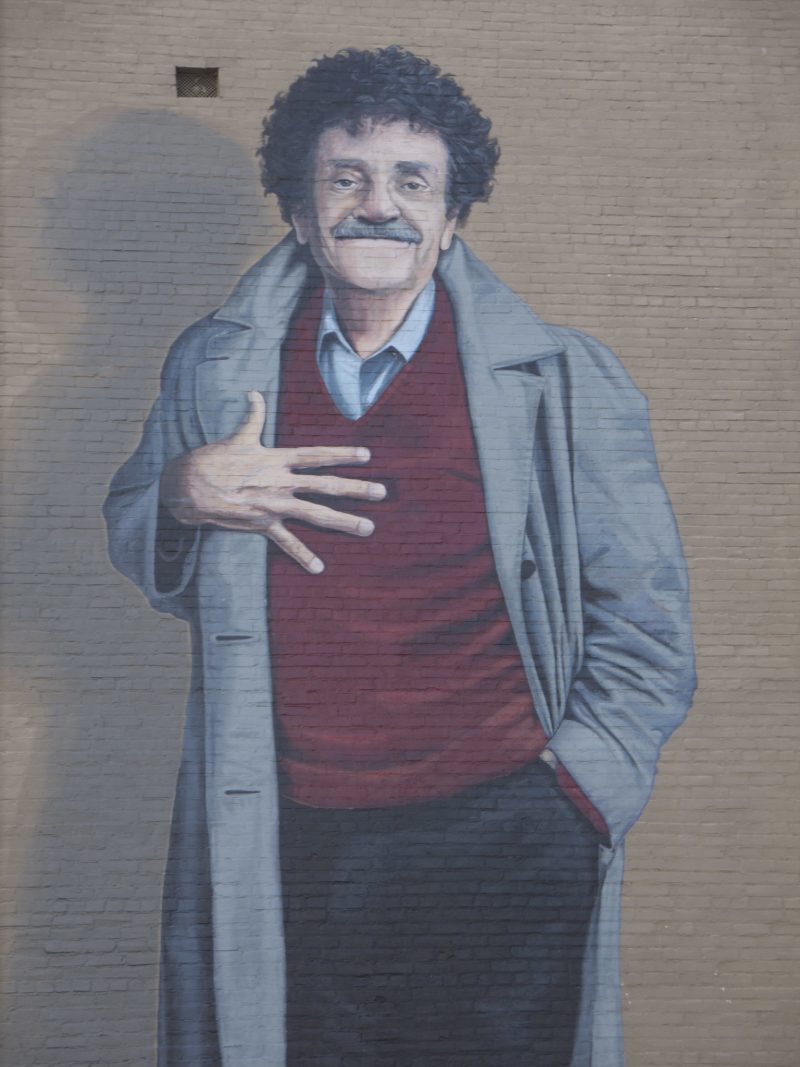
The newly re-opened Kurt Vonnegut Museum and Library will also pay tribute to the jazz-loving, censorship-loathing veteran of the Second World War with an outdoor tunnel playing the music of Wes Montgomery and other Indianapolis jazz greats, a “freedom of expression exhibition” that Salaz describes as featuring “the 100 books most frequently banned in libraries and schools across the nation,” and veteran-oriented book clubs, writing workshops, and art exhibitions. In the museum’s period of absence, Vonnegut pilgrims in Indianapolis had no place to go (apart from the town landmarks designed by the writer’s architect father and grandfather), but the 38-foot-tall mural on Massachusetts Avenue by artist Pamela Bliss. Having known nothing of Vonnegut’s work before, she fell in love with it after first visiting the museum herself, she’ll soon use its Indiana Avenue building as a canvas on which to triple the city’s number of Vonnegut murals.
You can see more of the new Kurt Vonnegut Museum and Library, which opened its doors for a sneak preview this past Banned Books Week, in the video at the top of the post, as well as in this four-part local news report. Though Vonnegut expressed appreciation for Indianapolis all throughout his life, he also left the place forever when he headed east to Cornell. He also satirically repurposed it as Midland City, the surreally flat and prosaic Midwestern setting of Breakfast of Champions whose citizens only speak seriously of “money or structures or travel or machinery,” their imaginations “flywheels on the ramshackle machinery of awful truth.” I happen to be planning a great American road trip that will take me through Indianapolis, and what with the presence of an institution like the Kurt Vonnegut Museum and Library — as well as all the cultural spots revealed by the Indianapolis-based The Art Assignment — it has become one of the cities I’m most excited to visit. Vonnegut, of all Indianapolitans, would surely appreciate the irony.
Related Content:
Why Should We Read Kurt Vonnegut? An Animated Video Makes the Case
Kurt Vonnegut Creates a Report Card for His Novels, Ranking Them From A+ to D
Kurt Vonnegut: Where Do I Get My Ideas From? My Disgust with Civilization
Behold Kurt Vonnegut’s Drawings: Writing is Hard. Art is Pure Pleasure
22-Year-Old P.O.W. Kurt Vonnegut Writes Home from World War II: “I’ll Be Damned If It Was Worth It”
Based in Seoul, Colin Marshall writes and broadcasts on cities, language, and culture. His projects include the book The Stateless City: a Walk through 21st-Century Los Angeles and the video series The City in Cinema. Follow him on Twitter at @colinmarshall or on Facebook.
Read More...Human All Too Human: A Roman Woman Visits the Great Pyramid in 120 AD, and Carves a Poem in Memory of Her Deceased Brother
The phrase “history is written by the victors” is a cliché, which means that it is at least half true; official histories are, to a significant degree “written,” or dictated, by ruling elites. But as far as the actual writing down, and excavating, narrating, arguing about, and revising of history goes… well, that is the work of historians, who may work for powerful institutions but who are not themselves—with several notable exceptions, of course—politicians, generals, or captains of industry.
This is all to the good. Historians, and Twitterstorians, can tell stories and present evidence that the victors might rather see disappear. And they can tell stories we never knew that we were missing, but which humanize the past by restoring the lives of ordinary people with ordinary concerns. Stories of everyday ancient Romans and Egyptians, for example, or of ancient Romans in Egypt, visiting and vandalizing the pyramids.
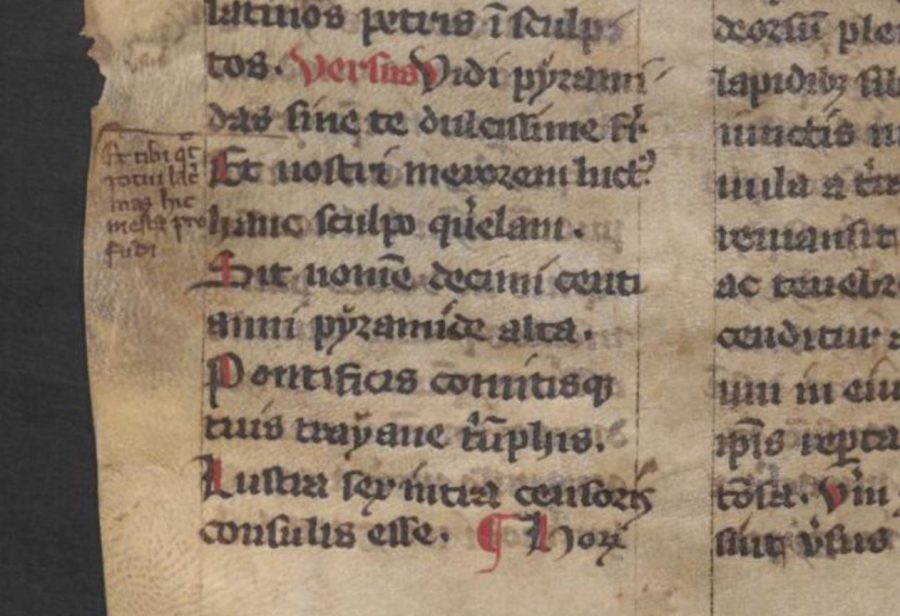
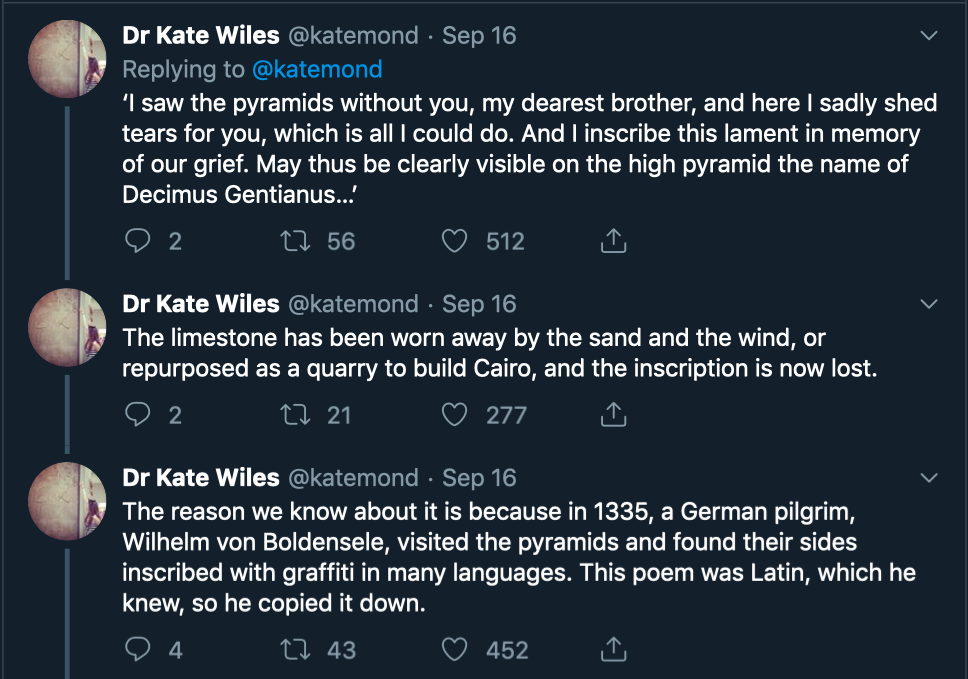
In one such poignant story, circulating on Twitter, a Roman woman named Terentia carved into the limestone facing of the Great Pyramid sometime around 120 AD a touching poem for her brother, who had just recently died. As told by medievalist, linguist, and Senior Editor at History Today Dr. Kate Wiles, the poem might have been lost to the ages had it not been discovered by German pilgrim Wilhelm von Boldensele in 1335.
Knowing Latin, Von Boldensele read the poem, found it moving, and copied it down. (See his manuscript at the top.) Wiles quotes a part of the prose English translation:
I saw the pyramids without you, my dearest brother, and here I sadly shed tears for you, which is all I could do. And I inscribe this lament in memory of our grief. May thus be clearly visible on the high pyramid the name of Decimus Gentianus….
We can surmise that Terentia must have had some means to travel, but in Wiles’ abridged Twitter version of the story, we also might assume she could be anyone at all, grieving the loss of a close relative. Terentia’s grief is no less moving or real when we learn that the inscription goes for on several lines Wiles cut for brevity.
Turning to Emily Ann Hemelrijk’s book Matrona Docta: Educated Women in the Roman Elite from Cornelia to Julia Domna, Dr. Wiles’ source for the Great Pyramid poem, we find that Terentia wasn’t just an educated, upper class woman, she was a very well-connected one. The inscription goes on to identify her brother as “a pontifex and companion to your triumphs, Trajan, and both censor and consul before his thirtieth year of age.”
In his anthology Women Writers of Ancient Greece and Rome, Ian Michael Plant provides even more historical context. Of Terentia, we know little to nothing save the Von Boldensele’s copy of her six hexameters (and possibly more that he ignored). Of Decimus Gentianus, however, we know that he not only served as a consul under Trajan but also as governor of Macedonia under Hadrian. Terentia “chose the pyramid for her epitaph to provide a suitably grand and everlasting site for her tribute to him,” writes Plant. (Cue Shelly’s “Ozymandias.”)
Not only is the poem about a victor, but it appears to shift its address from him to the ultimate victor, Emperor Trajan, in its final lines. Should this change our appreciation of the story as a slice of Roman tourist life and example of ancient women’s writing? No, but it shows us something about what history gets preserved and why. Despite historians’ best efforts, especially in public-facing work, to make the past more accessible and relatable, they, too, are limited by what other cultures chose to preserve and what to pass over.
Hemelrijk admits, “the poem is no literary masterpiece,” but Von Boldersele saw enough merit in its sentiments to record it for posterity. He also made a judgment about the inscription’s historical import, given its references, which is probably the reason we have it today.
via Dr. Kate Wiles
Related Content:
Play Caesar: Travel Ancient Rome with Stanford’s Interactive Map
How the Egyptian Pyramids Were Built: A New Theory in 3D Animation
Josh Jones is a writer and musician based in Durham, NC. Follow him at @jdmagness
Read More...20 Years Before John Cage’s 4′33″, a Man Named Hy Cage Created a Cartoon about a Silent Piano Composition (1932)
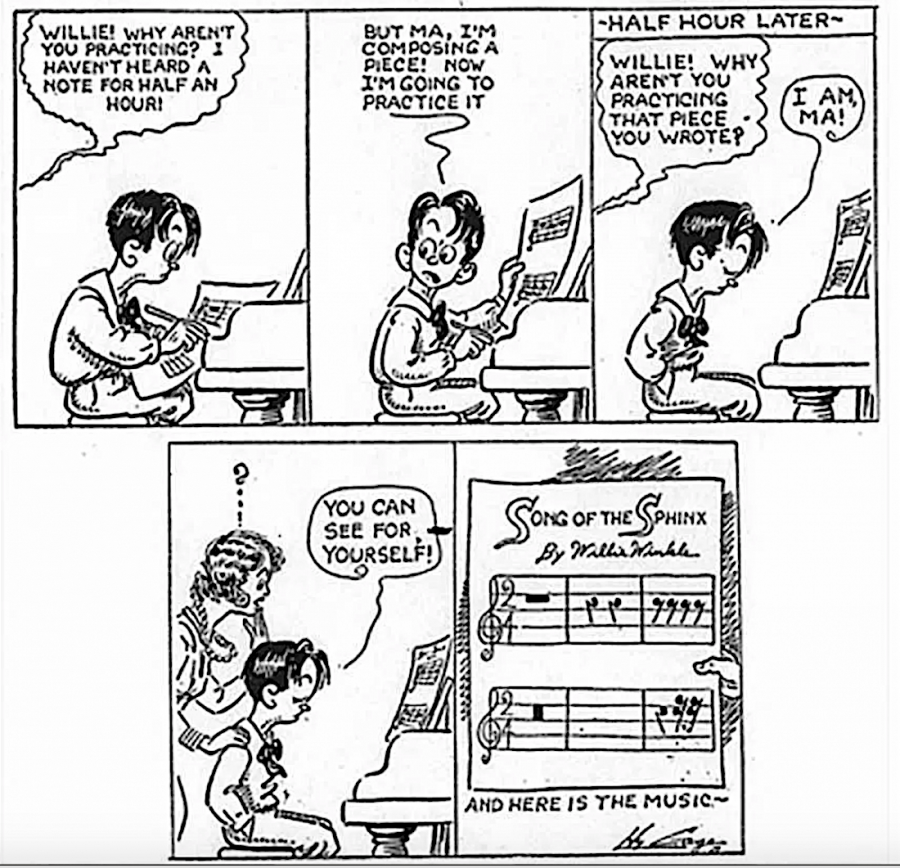
Quite a find by Futility Closet:
In John Cage’s 1952 composition 4’33”, the performer is instructed not to play his instrument.
American music critic Kyle Gann discovered this 1932 cartoon in The Etude, a magazine for pianists.
The cartoonist’s name, remarkably, is Hy Cage.
Need any background on Cage’s 4′33″? Explore the posts in the Relateds below.
Related Content:
John Cage’s Silent, Avant-Garde Piece 4’33” Gets Covered by a Death Metal Band
John Cage Performs His Avant-Garde Piano Piece 4’33” … in 1’22” (Harvard Square, 1973)
The Curious Score for John Cage’s “Silent” Zen Composition 4’33”
Read More...Watch Robert Hunter (RIP), Grateful Dead Lyricist, Perform His Legendary Songs “Bertha,” “Sugaree,” “Box of Rain,” “Friend of the Devil” & More
Even if you aren’t a fan, a mention of the Grateful Dead will conjure hirsute Jerry Garcia and band, lit by psychedelic lasers from without, hallucinogens from within. You’ll recall the Dead’s logo, the skull with a lightning bolt in its crown; you’ll remember tie-dye shirts with rose-crowned skeletons on them; you’ll see again those grinning, dancing bears your college roommate stuck all over her laptop and on the back of her beat-up 30-year-old Toyota.
You might call to mind these pictures with more or less fondness, but you need never to have heard a single song or have stepped into the parking lot of a Dead show to have imbibed all of the band’s iconic imagery.
Deadheads, however, will see these many signifiers as windows onto a richly textured extended universe, one filled with lore and trivia, and inhabited by-behind-the-scenes creatives who built the band’s look, stage show, and folk-occult mythology.
The Dead were at the center, but their legacy would never have carried such weight without Owsley Stanley, for example, nicknamed “Bear”—who inspired the dancing (actually, marching) bears and came up with the skull and lightning bolt (both drawn by artist Bob Thomas). Stanley also bankrolled the Dead with money from his LSD empire, built their “wall of sound” system, and served as producer, sound engineer, and all-around generative force.
No less critical to the band’s existence was Robert Hunter, the lyricist who penned the words to “Truckin’,” “Dark Star,” “Casey Jones,” “Uncle John’s Band,” “Terrapin Station,” “Ripple,” “Jack Straw,” “Friend of the Devil,” “Box of Rain,” “Touch of Grey,” and other songs central to their huge live and studio catalogue, including favorites like “Bertha,” a live-only tune “probably” about “some vaguer connotation of birth, death and reincarnation. Cycle of existences, some kind of such nonsense like that.”
So Hunter told an interviewer about “Bertha”’s origin, adding for clarification, “but then again, it might not be. I don’t remember.” The lyricist, who died yesterday, wrote “dreamlike variations on the American folk tradition,” notes Neil Genzlinger at The New York Times—songs that “meshed seamlessly with the band’s casual musical style, helping to define the Grateful Dead as a counterculture touchstone.”
Hunter earned the admiration not only of the band and its legions of fans, but also of fellow songwriters like Bob Dylan, who thought of Hunter as a peer and often collaborated with him. “He’s got a way with words and I do, too,” Dylan told Rolling Stone. “We both write a different type of song than what passes today for songwriting.” Like Dylan, Hunter worked in a mystical vein, “with a boundless knowledge of subjects running the gamut from classic literature to street life,” notes The Washington Post.
Hunter was a natural storyteller who wrote “authoritatively about everyone from card sharks and hustlers to poor dirt farmers and free-spirited lovers.” His narratives provided the Dead with a cohesive “weird American” folk center to anchor their free-form musical experimentation: a base to return to and exclaim, as Hunter famously wrote in “Truckin’,” “what a long, strange trip it’s been.” Though he was himself a musician, “proficient in a number of instruments including guitar, violin, cello, and trumpet,” he never appeared onstage with the band in all their 30 years.
He preferred to stand in the wings or “sit anonymously in the audience.” Like Stanley, he intended his creative efforts for the Grateful Dead, not the Grateful Dead featuring Robert Hunter. But that doesn’t mean he never took the stage to play those legendary songs—only that he waited until a couple decades after the band’s last gig. Here, you can see Hunter play fan favorite “Bertha” (top), and several other of his beloved Dead songs: “Sugaree,” “Scarlet Begonias,” “Box of Rain,” “Brown Eyed Women,” “Ripple,” and “Friend of the Devil.”
These performances come from appearances at the Stafford Palace Theater and Nashville’s Ryman Auditorium in 2013 and the Newport Folk Festival in 2014, before niche audiences who knew very well who Robert Hunter was. But while his name may never be as well-known in popular culture as the many artists he collaborated with and wrote for, Hunter nonetheless left an impression on American culture that will not soon fade away.
Related Content:
Josh Jones is a writer and musician based in Durham, NC. Follow him at @jdmagness
Read More...Support Us
We're hoping to rely on loyal readers, rather than erratic ads. Please click the Donate button and support Open Culture. You can use Paypal, Venmo, Patreon, even Crypto! We thank you!

About Us

Open Culture scours the web for the best educational media. We find the free courses and audio books you need, the language lessons & educational videos you want, and plenty of enlightenment in between.
Advertise With Us

FREE UPDATES!
GET OUR DAILY EMAIL
Get the best cultural and educational resources on the web curated for you in a daily email. We never spam. Unsubscribe at any time.
FOLLOW ON SOCIAL MEDIA

Open Culture editor Dan Colman scours the web for the best educational media. He finds the free courses and audio books you need, the language lessons & movies you want, and plenty of enlightenment in between.
Advertise With Us


