How Disney Fought Fascism with Propaganda Cartoons During World War II & Averted Financial Collapse
Today, the Walt Disney Company seems like one of those entities that’s “too big to fail” — but during the Second World War, fail it nearly did. Like the big-thinking entertainer-businessman he was, Walt Disney himself had been re-investing the company’s profits into ever more ambitious animated films. This practice took an unfortunate turn with Fantasia, which may now be regarded as a classic even by those of us without interest in Disney movies, but which didn’t bring in the expected box-office take when it was initially released in 1940. It followed the also-underperforming Pinocchio, which couldn’t reach audiences in war-torn Europe. The following year, Disney found itself at the edge of bankruptcy.
Then came the Japanese attack on Pearl Harbor, which resulted in the U.S. Army’s eight-month-long occupation of Walt Disney Studios. The idea was to protect a nearby Lockheed plant, but Disney, who’d already made inquiries about producing war films, used an opportunity to make a deal that saved his company.
Walt Disney Studios was contracted to make not just a variety of training films for military use, but also a series of war-themed cartoons for public exhibition. This was “total war,” after all, which required the mobilization of the public at home, and the mobilization of the public at home required domestic propaganda. Who better to stoke American desire for victory over the Axis than Disney’s biggest animated star at the time, Donald Duck?
In the most acclaimed of these cartoons, the Academy Award-winning Der Fuehrer’s Face from 1943, Donald Duck is employed at a munitions factory in Nutziland, some kind of Axis superstate ruled over by Hirohito, Mussolini, and especially Hitler. It’s something else to hear the phrase “Heil Hitler!” in Donald Duck’s voice, and throughout his day of humiliations and privations in Nutziland, he has to say it quite a lot. Just when all of this has put him in a tailspin toward madness, he wakes up in his bedroom back in the United States of America, stars-and-stripes curtains, miniature Statue of Liberty, and all. For Donald, the nightmare is over — but in real life, Allied victory remained far from a sure thing.
You can watch Der Fuehrer’s Face and seven other Disney-produced World War II propaganda cartoons (along with the Looney Tunes short The Ducktators, from Warner Bros.) in the playlist above. To be sure, some of them contain elements considered crude and even offensive here in the twenty-first century. But like all propaganda, they’re all of great historical value, in the realm of both political history and the history of animation. Consider how they found their way into Europe and Russia, finding audiences there even as the war raged on; consider, too, how well-loved Donald Duck and his compatriots have been by generations of German, Italian, and Japanese children. After this total war, no one enjoyed more total a victory than Disney.
Related content:
Neuroscience and Propaganda Come Together in Disney’s World War II Film Reason and Emotion
Before Creating the Moomins, Tove Jansson Drew Satirical Art Mocking Hitler & Stalin
Private Snafu: The World War II Propaganda Cartoons Created by Dr. Seuss, Frank Capra & Mel
“Evil Mickey Mouse” Invades Japan in a 1934 Japanese Anime Propaganda Film
“The Ducktators”: Loony Tunes Turns Animation into Wartime Propaganda (1942)
Based in Seoul, Colin Marshall writes and broadcasts on cities, language, and culture. His projects include the Substack newsletter Books on Cities and the book The Stateless City: a Walk through 21st-Century Los Angeles. Follow him on the social network formerly known as Twitter at @colinmarshall.
Read More...The Nazis’ 10 Control-Freak Rules for Jazz Performers: A Strange List from World War II
Like the rock and roll revolution of the 1950s, which shocked staid white audiences with translations of black rhythm and blues, the popularity of jazz caused all kinds of racial panic and social anxiety in the early part of the twentieth century. Long before the rise of European fascism, many American groups expressed extreme fear and agitation over the rise of minority cultural forms. But by World War II, jazz was intrinsically woven into the fabric of American majority culture, albeit often in versions scrubbed of blues undertones. This was not, of course, the case in Nazi occupied Europe, where jazz was suppressed; like most forms of modern art, it bore the stigma of impurity, innovation, passion… all qualities totalitarians frown on (even anti-fascist theorist Theodor Adorno had a serious beef with jazz).
And while it’s no great surprise that Nazis hated jazz, it seems they expressed their disapproval in a very oddly specific way, at least in the recollection of Czech writer and dissident Josef Skvorecky.
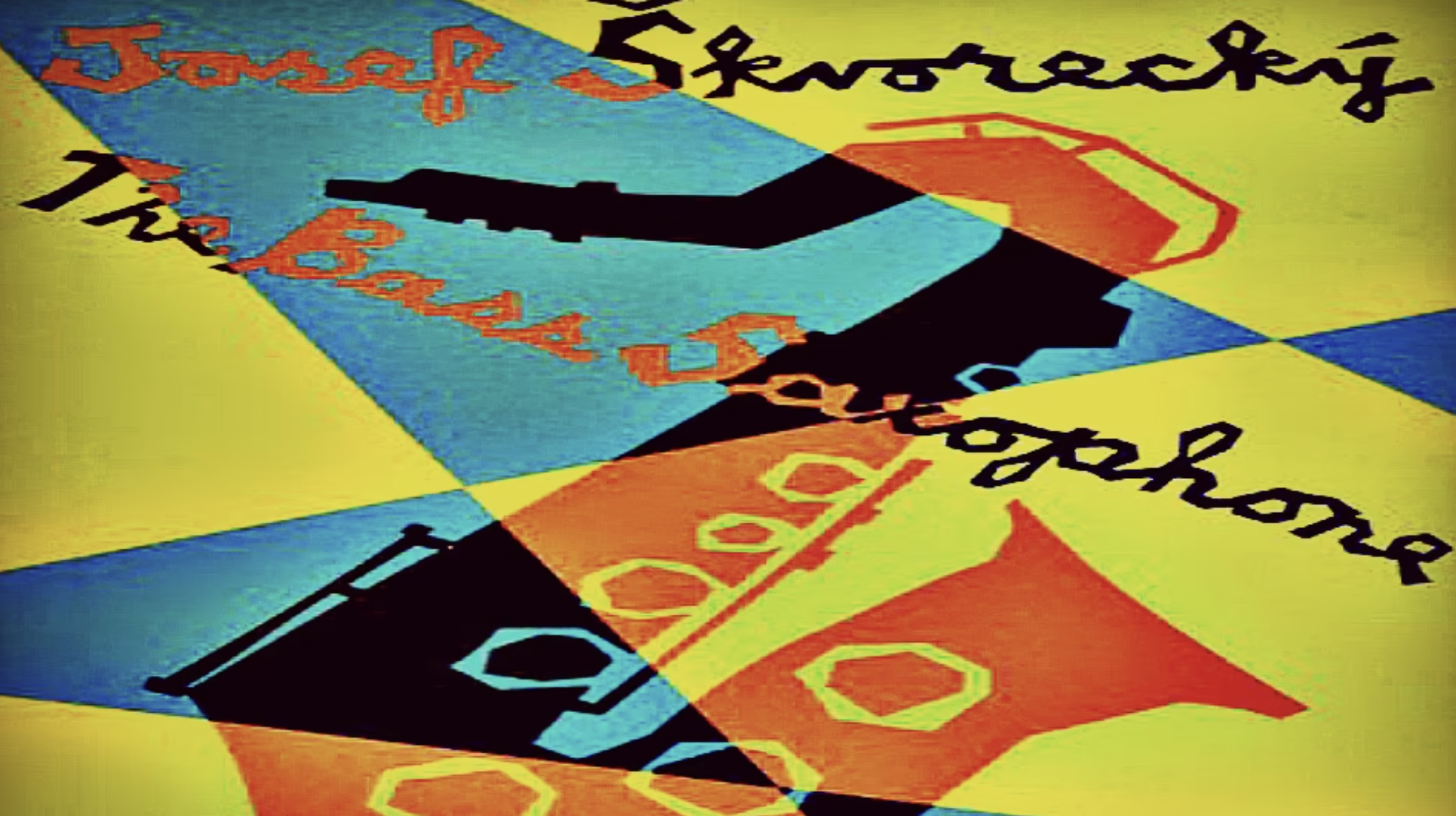
On the occasion of Skvorecky’s death, J.J. Gould pointed out in The Atlantic that the writer was himself one of the characters that so interested Kubrick. An aspiring tenor saxophone player living in Third Reich-occupied Czechoslovakia, Skvorecky had ample opportunity to experience the Nazis’ “control-freak hatred of jazz.” In the intro to his short novel The Bass Saxophone, he recounts from memory a set of ten bizarre regulations issued by a Gauleiter, a regional Nazi official, that bound local dance orchestras during the Czech occupation.
- Pieces in foxtrot rhythm (so-called swing) are not to exceed 20% of the repertoires of light orchestras and dance bands;
- In this so-called jazz type repertoire, preference is to be given to compositions in a major key and to lyrics expressing joy in life rather than Jewishly gloomy lyrics;
- As to tempo, preference is also to be given to brisk compositions over slow ones (so-called blues); however, the pace must not exceed a certain degree of allegro, commensurate with the Aryan sense of discipline and moderation. On no account will Negroid excesses in tempo (so-called hot jazz) or in solo performances (so-called breaks) be tolerated;
- So-called jazz compositions may contain at most 10% syncopation; the remainder must consist of a natural legato movement devoid of the hysterical rhythmic reverses characteristic of the barbarian races and conducive to dark instincts alien to the German people (so-called riffs);
- Strictly prohibited is the use of instruments alien to the German spirit (so-called cowbells, flexatone, brushes, etc.) as well as all mutes which turn the noble sound of wind and brass instruments into a Jewish-Freemasonic yowl (so-called wa-wa, hat, etc.);
- Also prohibited are so-called drum breaks longer than half a bar in four-quarter beat (except in stylized military marches);
- The double bass must be played solely with the bow in so-called jazz compositions;
- Plucking of the strings is prohibited, since it is damaging to the instrument and detrimental to Aryan musicality; if a so-called pizzicato effect is absolutely desirable for the character of the composition, strict care must be taken lest the string be allowed to patter on the sordine, which is henceforth forbidden;
- Musicians are likewise forbidden to make vocal improvisations (so-called scat);
- All light orchestras and dance bands are advised to restrict the use of saxophones of all keys and to substitute for them the violin-cello, the viola or possibly a suitable folk instrument.
As The Atlantic notes, “being a Nazi, this public servant obviously didn’t miss an opportunity to couch as many of these regulations as he could in racist or anti-Semitic terms.” This racialized fear and hatred was the source, after all, of the objection. It’s almost impossible for me to imagine what kind of music this set of restrictions could possibly produce, but it most certainly would not be anything people would want to dance to. And that was probably the point.
For more on Josef Skvorecky’s life as a writer under Nazism and his escape from Czechoslovakia after the Soviet invasion, read his illuminating Paris Review interview.
Note: An earlier version of this post appeared on our site in 2013.
Related Content:
Hear the Nazi’s Bizzaro Propaganda Jazz Band, “Charlie and His Orchestra” (1940–1943)
How France Hid the Mona Lisa & Other Louvre Masterpieces During World War II
When the Nazis Declared War on Expressionist Art (1937)
Josh Jones is a writer, editor, and musician based in Washington, DC. Follow him @jdmagness
Read More...Watch The Nine Lives of Ozzy Osbourne: A Free Documentary on the Heavy Metal Pioneer (RIP)
“This is supposed to be my farewell tour,” says Ozzy Osbourne in a clip included in the Biography television documentary above. He then gives the finger and adds, “We’ll see.” The year was 1993, and indeed, there turned out to have been much more to come for the former frontman of Black Sabbath, the band that opened the floodgates — or perhaps hellgates — of heavy metal. After an impoverished childhood spent playing in the bomb sites of postwar Birmingham, Osbourne hopped from job to job, including one failed stint at a slaughterhouse and another as a criminal. He then turned singer, receiving a PA system from his father and forming a blues group with a few local musicians. People pay good money to see scary movies, they one day reckoned, so why not make scary music?
The time was the late nineteen-sixties, when listeners approached record albums as quasi-cinematic experiences. Taking their name from Mario Bava’s anthology horror film, which had come out a few years before, Black Sabbath delivered on expectations many weren’t even aware they had. Today, anyone can put on an early Black Sabbath album and identify the music as heavy metal, not a world apart from any of its newer variants.
But more than half a century ago, the world had never heard anything quite like it: there was the much-intensified low end of the sound, with its tuned-down, distorted guitars liable to break into energetic riffs, as well as the flamboyantly dark themes. On top of it all, Osbourne somehow managed to imbue the words, even when delivered in a wallowing or mumbled manner, with a paradoxical clarity and exuberance.
Osbourne’s existing tendencies toward disorder were sent into self-destructive overdrive by success. Anyone would have put money on the odds of his early death, yet he managed to come back from disasters both personal and professional — many of them inflicted by his own substance-fueled Jekyll-and-Hyde personality — again and again. Hence the title of the Biography episode, The Nine Lives of Ozzy Osbourne. For fans who missed out on Black Sabbath’s reign, there was Ozzfest, Osbourne’s rock festival that occurred around the world between the mid-nineties and the late twenty-tens. The reality show The Osbournes made him a pop-cultural icon beloved even by viewers with no interest in his music. Ultimately, his real farewell didn’t come to pass until Black Sabbath’s final live set, which came as the culmination of a day-long festival put on in his hometown less than three weeks before his death. And though Ozzy Osbourne may now be gone, the Prince of Darkness persona he created will remain heavy metal’s animating spirit.
The Nine Lives of Ozzy Osbourne will be added to our collection of Free Documentaries, a subset of our collection, 4,000+ Free Movies Online: Great Classics, Indies, Noir, Westerns, Documentaries & More.
Related content:
Ozzy Osbourne’s Guitarist Zakk Wylde Plays Black Sabbath on a Hello Kitty Guitar
Who Invented Heavy Metal Music?: A Search for Origins
Kids Orchestra Plays Ozzy Osbourne’s “Crazy Train” and Zeppelin’s “Kashmir”
1980s Metalhead Kids Are Alright: Scientific Study Shows That They Became Well-Adjusted Adults
Based in Seoul, Colin Marshall writes and broadcasts on cities, language, and culture. His projects include the Substack newsletter Books on Cities and the book The Stateless City: a Walk through 21st-Century Los Angeles. Follow him on the social network formerly known as Twitter at @colinmarshall.
Read More...Salvador Dalí Goes to Hollywood & Creates a Wild Dream Sequence for Alfred Hitchcock
Salvador Dalí and Luis Buñuel reportedly carried rocks in their pockets during the premiere of their first film Un Chien Andalou, anticipating a violent reaction from the audience.
It was a fair concern. The movie might be almost 90 years old but it still has the power to provoke – the film features a shot of a woman getting her eye slashed open with a straight razor after all. As it turned out, rocks weren’t needed. The audience, filled with such avant-garde luminaries as Pablo Picasso and André Breton liked the film. A disappointed Dalí later reported that the night was “less exciting” than he had hoped.
Un Chien Andalou featured many of Dalí’s visual obsessions – eyeballs, ants crawling out of orifices and rotting animals. Dalí delighted in shocking and inciting people with his gorgeous, disturbing images. And he loved grandiose spectacles like a riot at a movie theater.
Dalí and Buñuel’s next movie, the caustic L’Age d’or, exposed the differences between the two artists and their creative partnership imploded in pre-production. Buñuel went on to make a string of subversive masterpieces like Land Without Bread, The Exterminating Angel and The Discreet Charm of the Bourgeoisie; Dalí largely quit film in favor of his beautifully crafted paintings.
Then Hollywood came calling.
Alfred Hitchcock hired Dalí to create a dream sequence for his 1945 movie Spellbound. Dalí crafted over 20 minutes of footage of which roughly four and a half minutes made it into the movie. “I wanted to convey the dream with great visual sharpness and clarity–sharper than film itself,” Hitchcock explained to Francois Truffaut in 1962. The sequence, which you can see up top, is filled with all sorts of Daliesque motifs – slashed eyeballs, naked women and phantasmagoric landscapes. It is also the most memorable part of an otherwise minor work by Hitchcock.
Dalí’s follow-up film work was for, of all things, the Vincente Minnelli comedy Father of the Bride (1950). Spencer Tracy plays Stanley Banks whose beautiful daughter (Elizabeth Taylor, no less) is getting married. As Stanley’s anxiety over the impending nuptials spirals, he has one very weird nightmare. Cue Dalí. Stanley is late to the wedding. As he rushes down the aisle, his clothes mysteriously get shredded by the tiled floor that bounces and contorts like a piece of flesh.
This dream sequence, which you can see immediately above, has few of the visual flourishes of Spellbound, but it still has plenty of Dalí’s trademark weirdness. Those floating accusatory eyes. The way that Tracy’s leg seems to stretch. That floor.
Father of the Bride marked the end of Dalí’s work in Hollywood, though there were a couple potential collaborations that would have been amazing had they actually happened. Dalí had an idea for a movie with the Marx Brothers called Giraffes on Horseback Salad. The movie would have “included a scene of giraffes wearing gas masks and one of Chico sporting a deep-diving suit while playing the piano.” Though Harpo was reportedly enthusiastic about the proposed idea, Groucho wasn’t and the idea sadly came to nothing.
Later in life, Dalí became a fixture on the talk show circuit. On the Dick Cavett Show in 1970, he flung an anteater at Lillian Gish.
Note: An earlier version of this post appeared on our site in 2014.
Related Content:
Alfred Hitchcock Recalls Working with Salvador Dali on Spellbound
37 Hitchcock Cameo Appearances Over 50 Years: All in One Video
Two Vintage Films by Salvador Dalí and Luis Buñuel: Un Chien Andalou and L’Age d’Or
Jonathan Crow is a writer and filmmaker whose work has appeared in Yahoo!, The Hollywood Reporter, and other publications. Y
Read More...A New 20-Minute Supercut of David Letterman Slamming CBS: “You Can’t Spell CBS Without BS”
The cancellation of The Late Show with Stephen Colbert—CBS insists it was purely a “financial decision,” the result of declining ad revenue in late night television. While some buy this argument, others see it as a different kind of “financial decision,” a decision by Paramount (the parent company of CBS) to sacrifice Colbert so that the American president won’t cancel a lucrative $28-billion merger. Yesterday, David Letterman, the previous host of CBS’ The Late Show, released a 20-minute supercut featuring the many times he took CBS to task over the years. The subtext? He doesn’t seem to buy CBS’s talking points. Nor does Jon Stewart. More direct than Letterman, Stewart gives his own take on why CBS canceled Colbert: “I think the answer is in the fear and pre-compliance that is gripping all of America’s institutions at this very moment, institutions that have chosen not to fight the vengeful and vindictive actions of our pubic-hair-doodling commander-in-chief. This is not the moment to give in. I’m not giving in. I’m not going anywhere.” Note to reader: Jon Stewart’s The Daily Show airs on Comedy Central, which is owned by Paramount.
If you would like to support the mission of Open Culture, consider making a donation to our site. It’s hard to rely 100% on ads, and your contributions will help us continue providing the best free cultural and educational materials to learners everywhere. You can contribute through PayPal, Patreon, and Venmo (@openculture). Thanks!
Related Content
Stephen Colbert Reads Flannery O’Connor’s Darkly Comedic Story, “The Enduring Chill”
Isaac Asimov Predicts the Future on The David Letterman Show (1980)
Hunter S. Thompson’s Many Strange, Unpredictable Appearances on The David Letterman Show
Read More...The Iconic Glass House Built by Ludwig Mies van der Rohe—and the Lawsuit That Cast a Shadow Over It
It’s tempting, in telling the story of the Edith Farnsworth House, to break out clichés like “People who live in glass houses shouldn’t throw stones.” For the residence in question is made predominantly of glass, or rather glass and steel, and its first owner turned out to have more than a few stones for its architect: Ludwig Mies van der Rohe, the last director of the Bauhaus, who’d immigrated from Nazi Germany to the United States in the late nineteen-thirties. It was at a dinner party in 1945 that he happened to meet the forward-thinking Chicago doctor Edith Farnsworth, who expressed an interest in building a wholly modern retreat well outside the city. Asked if one of his apprentices could do the job, Mies offered to take it on himself.
The task, as Mies conceived of architecture in his time, was to build for an era in which high and rapidly advancing industrial technology was becoming unavoidable in ordinary lives. Such lives, properly lived, would require new frames, and thoroughly considered ones at that. The shape ultimately taken by the Farnsworth House is one such frame: orderly, and to a degree that could be called extreme, while on another level maximally permissive of human freedom.
That was, in any case, the idea: in physical reality, Farnsworth herself had a long list of practical complaints about what she began to call “my Mies-conception,” not least to do with its attraction of insects and greenhouse-like heat retention (uncompensated for, in true European style, by air conditioning).
Chroniclers of the Farnsworth House saga tend to mention that the central relationship appears to have exceeded that of architect and client, at least for a time. But whatever affection had once existed between them had surely evaporated by the time they were suing each other toward the end of construction, with Mies alleging non-payment and Farnsworth alleging malpractice. In the event, Farnsworth lost in court and used the house as a weekend retreat for a couple of decades before selling it to the British developer and architectural enthusiast Peter Palumbo, who especially enjoyed its ambience during thunderstorms. Today it operates as a museum, as explained by its executive director Scott Mahaffey in the new Open Space video above. Hearing about all the turmoil behind the Farnsworth House’s conception, the attendees of its tours might find themselves thinking that hell hath no fury like a client scorned.
Related content:
A Quick Animated Tour of Iconic Modernist Houses
The Modernist Gas Stations of Frank Lloyd Wright and Mies van der Rohe
Why Do People Hate Modern Architecture?: A Video Essay
How This Chicago Skyscraper Barely Touches the Ground
Based in Seoul, Colin Marshall writes and broadcasts on cities, language, and culture. His projects include the Substack newsletter Books on Cities and the book The Stateless City: a Walk through 21st-Century Los Angeles. Follow him on the social network formerly known as Twitter at @colinmarshall.
Read More...The Life & Death of an Espresso Shot in Super Slow Motion
Some YouTuber posted online a pretty nice clip of an espresso shot being pulled from a La Marzocco FB80 espresso machine at 120 frames per second. They recommend muting the sound, then putting on your own music. I gave it a quick shot with the famous soundtrack for Kubrick’s 2001: A Space Odyssey. And I’ll be damned, it syncs up pretty well. Have a better soundtrack to recommend? Feel free to let us know in the comments section below.
If you would like to support the mission of Open Culture, consider making a donation to our site. It’s hard to rely 100% on ads, and your contributions will help us continue providing the best free cultural and educational materials to learners everywhere. You can contribute through PayPal, Patreon, and Venmo (@openculture). Thanks!
Related Content:
The Birth of Espresso: The Story Behind the Coffee Shots That Fuel Modern Life
Understanding Espresso: A Six-Part Series Explaining What It Takes to Pull the Ideal Shot
Coffee Entrepreneur Renato Bialetti Gets Buried in the Espresso Maker He Made Famous
Philosophers Drinking Coffee: The Excessive Habits of Kant, Voltaire & Kierkegaard
Read More...
The Devilish History of the 1980s Parental Advisory Sticker: When Heavy Metal & Satanic Lyrics Collided with the Religious Right
Frank Zappa called them the “Mothers of Prevention,” the group of wives married to members of Congress who decided in the mid-80s to go to war against rock lyrics and whip up some good ol’ conservative hysteria.
We’ve talked about this time before on this site, especially as Zappa himself testified in front of Congress and sparred on the Sunday Beltway shows like Crossfire.
Vox’s Earworm series tackles this moment in a time that would have little ramification before the design-ugly “Parental Advisory: Explicit Content” sticker. (Just an aside: I know their headline is click-baity, but really? Heavy metal and Satan gave us this sticker? More like Tipper Gore and their family’s presidential ambitions gave us it. Oy.)
Anyway, Gore’s Parents Music Resource Center (PMRC) gave us a list of the “Filthy Fifteen,” including songs like Sheena Easton’s “Sugar Walls” and Madonna’s “Dress You Up,” which either contained lyrics “promoting” violence, sexual references, drugs and alcohol, and Satan’s favorite, the “occult.”
Estelle Caswell explores that last category and dives into the increasing popularity during the ‘80s of heavy metal music, which was often invoking Satan in its lyrics, or creating occult-like atmospheres in its production.
This campy, horrorshow culture ran right into the growing power of conservative Christians and evangelical preachers who made a *lot* of money whipping up “Satanic Panic” among their national flock. They listened to rock records backwards, believing they heard subliminal messages.
Of course, none of this would have gone much further than churches if it wasn’t for the major networks turning a nothing story into headlines–the Vox video reminds us how complicit Ted Koppel, Barbara Walters, Geraldo Rivera, et al were in promoting it. They also looked at the rising teenage suicide rate and used heavy metal as a scapegoat, instead of–as the video explains–family breakups, drug abuse, economic uncertainty, and increasing access to guns.
The warning label itself appeared in 1990, just as rap was taking off and a new lyrical boogeyman appeared. Digital media and file sharing, along with YouTube and other sites, muted this kind of censorship. And parents, in the end, still need to do the job over what their children see or don’t.
However, censorship is back, but there are no Washington Wives acting as scolds. Now it is the whims of capital, or it is a faulty algorithm that censors old master paintings filled with nudity, just as guilty as porn, that are our new decency guardians. Where are those congressional hearings?
Note: An earlier version of this post appeared on our site in 2019.
Related Content:
1980s Metalhead Kids Are Alright: Scientific Study Shows That They Became Well-Adjusted Adults
A Brief History of Hollywood Censorship and the Ratings System
Ted Mills is a freelance writer on the arts.
Read More...Revisit One of the Most Polarizing Albums in Rock History: Lou Reed’s Metal Machine Music, Which Came Out 50 Years Ago
Fifty years ago this month, Lou Reed nearly destroyed his own career with one double album. Metal Machine Music sold 100,000 copies during the three weeks of summer 1975 between its release and its removal from the market. More than a few of the many buyers who promptly returned it would have been expecting something like Sally Can’t Dance, Reed’s solo album from the previous year, whose slickly produced songs went down easier than anything he’d recorded with the Velvet Underground. What they heard when they put the new album on their turntables (or inserted the Quadrophonic 8‑track tape into their decks) was “nothing, absolutely nothing but screaming feedback noise recorded at various frequencies, played back against various other noise layers, split down the middle into two totally separate channels of utterly inhuman shrieks and hisses.”
That description comes from voluble Creem rock critic and avowed enthusiast of decadence Lester Bangs, who also happened to be one of Metal Machine Music’s most fervent defenders. At one point he declared it “the greatest record ever made in the history of the human eardrum.” (“Number Two: Kiss Alive!”)
Much of what we know about the intentions behind this baffling album come from Bangs’ writings, including those that purport to transcribe conversations with Reed himself, who’d been one of the critic’s readiest verbal sparring partners. The inspiration, as Reed explained to Bangs, came from listening to composers Iannis Xenakis and La Monte Young, who dared to go beyond the boundaries of what most listeners would consider music at all. Reed also insisted that he’d deliberately inserted bits and pieces of Mozart, Beethoven, and other classical masters into his sonic maelstrom, though Bangs clearly didn’t buy it.
“Metal Machine Music doesn’t seem so weird now, does it?” asked an interviewer on Night Flight just a decade or so after the album’s release. “No, it doesn’t, does it?” Reed says. “In light of Eno and all this stuff that came out now, it’s not nearly as insane and crazy as they said it was then.” Indeed, it sounds almost of a piece with an influential work of ambient music like Brian Eno’s Music for Airports, though that album was meant to calm its listeners rather than drive them from the room. Over the half-century since its release, Metal Machine Music has accrued enough appreciation to be paid tributes like the live performances by German ensemble Zeitkratzer that have continued long after Reed’s death. The legacy of his “electronic instrumental composition,” as he said after one such concert in 2007, also includes a namesake clause in recording contracts stipulating that “the artist must turn in a record that sound like the artist that the record company signed — not come in with Metal Machine Music.”
Related content:
Teenage Lou Reed Sings Doo-Wop Music (1958–1962)
Hear Ornette Coleman Collaborate with Lou Reed, Which Lou Called “One of My Greatest Moments”
David Bowie and Lou Reed Perform Live Together for the First and Last Time: 1972 and 1997
Lou Reed Creates a List of the 10 Best Records of All Time
Based in Seoul, Colin Marshall writes and broadcasts on cities, language, and culture. His projects include the Substack newsletter Books on Cities and the book The Stateless City: a Walk through 21st-Century Los Angeles. Follow him on the social network formerly known as Twitter at @colinmarshall.
Read More...The Story Told on the Famous Bayeux Tapestry Explained from Start to Finish
They say that history is written by the victors, but that isn’t always true: sometimes it’s embroidered by the victors. Such was the case with the Bayeux Tapestry, which commemorates the build-up to and successful execution of the Norman conquest of England in 1066. Created not long after the events it depicts in what we now call the United Kingdom, the nearly 230-foot-long cloth has been kept in France for most of its existence. But as reported by Hyperallergic’s Isa Farfan, the Bayeux Tapestry is now set for a yearlong sojourn back in its homeland, and at no less an august institution than the British Museum, after spending the better part of a millennium abroad.
In a style that may strike twenty-first-century viewers as a predecessor to the graphic novel — or even to the straight-ahead comic book, with its grotesque exaggerations — the Bayeux Tapestry’s embroidery tells the story, writes Farfan, of “the victory of William the Conqueror, the Duke of Normandy, over England in the Battle of Hastings. William assembled a fleet of ships filled with thousands of men and horses to cross the English Channel and successfully claimed the throne from the last Anglo-Saxon king, Harold Godwinson.”
All this takes place over “58 scenes featuring more than 600 wool-threaded people and 200 horses. Though it focuses on the historical battle, the embroidery also reveals fixtures of broader eleventh-century life, including architecture and armor, and includes almost 400 Latin words accompanying the images.”
Those words are interpreted by YouTuber Lindybeige in the video above, which offers a humorous animated tour of the full length of the Bayeux Tapestry — or, in any case, a very close replica made in England in the mid-nineteenth century. The elaborateness of its treatment underscores that the Norman conquest was one of the most momentous events, if not the most momentous event, in all of English history; the extent of its glorification underscores how much the conquerors felt the need to legitimize their rule. Nothing would ever be the same for English culture, English law, and even, as recently featured here on Open Culture, the English language. If you go to London next year to behold the Bayeux Tapestry for yourself, you’ll hear the usual ambient grumbling about the state of England — with a refreshed emphasis, perhaps, on how wrong it all went after 1066.
Related content:
Behold a Creative Animation of the Bayeux Tapestry
How England First Became England: An Animated History
The Bayeux Tapestry Animated
The Entire History of the British Isles Animated: 42,000 BCE to Today
Construct Your Own Bayeux Tapestry with This Free Online App
Based in Seoul, Colin Marshall writes and broadcasts on cities, language, and culture. His projects include the Substack newsletter Books on Cities and the book The Stateless City: a Walk through 21st-Century Los Angeles. Follow him on the social network formerly known as Twitter at @colinmarshall.
Read More...Support Us
We're hoping to rely on loyal readers, rather than erratic ads. Please click the Donate button and support Open Culture. You can use Paypal, Venmo, Patreon, even Crypto! We thank you!

About Us

Open Culture scours the web for the best educational media. We find the free courses and audio books you need, the language lessons & educational videos you want, and plenty of enlightenment in between.
Advertise With Us

FREE UPDATES!
GET OUR DAILY EMAIL
Get the best cultural and educational resources on the web curated for you in a daily email. We never spam. Unsubscribe at any time.
FOLLOW ON SOCIAL MEDIA

Open Culture editor Dan Colman scours the web for the best educational media. He finds the free courses and audio books you need, the language lessons & movies you want, and plenty of enlightenment in between.
Advertise With Us

