The Real Story of Easter: How We Got from the First Easter in the Bible to Bunnies, Eggs & Chocolate
Popular culture has long since claimed Easter as an occasion for trickster rabbits, dyed-egg hunts, and marshmallow chicks of unnatural hues — none of which are actually in the Bible. Though that probably doesn’t surprise you, you may not be aware of just how far the modern holiday has drifted from its textual origins. In the new Hochelaga video above, that Youtube channel’s Tommie Trelawny recounts first the Biblical story at the basis of all this, that of the death and resurrection of Jesus. Then he examines how the latter event has since been commemorated, an evolution that has led to the Easter we know today.
“Jesus’ resurrection would have been celebrated in the very earliest days of Christianity,” Trelawny explains. “Initially, it was held on the feast of Passover, but eventually, it branched off into its own distinct holiday.” That initial overlap is reflected in the resemblance between Pesach, the Hebrew word for Passover, and the Spanish and French names for Easter, Pascua and Pâques.
As for the English word Easter itself, it resonates with the name of “the Ancient Saxon goddess Ēostre, deity of spring and fertility.” Much as the Roman mid-winter festival Saturnalia may have inspired Christmas, could the pre-Christian holiday for Ēostre have inspired Easter?
To an extent, perhaps, though as Trelawny underscores, Easter was very much derived from Passover. Yet its associations with springtime go well beyond the time of year in which it occurs, not least in the form of all those eggs. In fact, “decorated eggs are an ancient custom that predates Christianity by many centuries.” Having stood as “a universal symbol for new life,” they also offered Christians an easily legible “metaphor for Jesus’ sealed tomb, and cracking it open as a symbol of his resurrection.” As for the Easter Bunny, he has a precedent in the Germanic Easter Hare, who “judged children on whether they’ve been good or bad” — now softened up, predictably, after so many years in America.
Related content:
Download Beautiful Free Vintage Easter Cards from the New York Public Library
Stream Andrea Bocelli’s Easter Concert from Milan
A Map of All the Countries Mentioned in the Bible: What The Countries Were Called Then, and Now
A Survival Guide to the Biblical Apocalypse
Did the Tower of Babel Actually Exist?: A Look at the Archaeological Evidence
The Ark Before Noah: Discover the Ancient Flood Myths That Came Before the Bible
Based in Seoul, Colin Marshall writes and broadcasts on cities, language, and culture. His projects include the Substack newsletter Books on Cities and the book The Stateless City: a Walk through 21st-Century Los Angeles. Follow him on the social network formerly known as Twitter at @colinmarshall.
Read More...How to Evade Taxes in Ancient Rome: A 1,900-Year-Old Papyrus Reveals an Ancient Tax Evasion Scheme
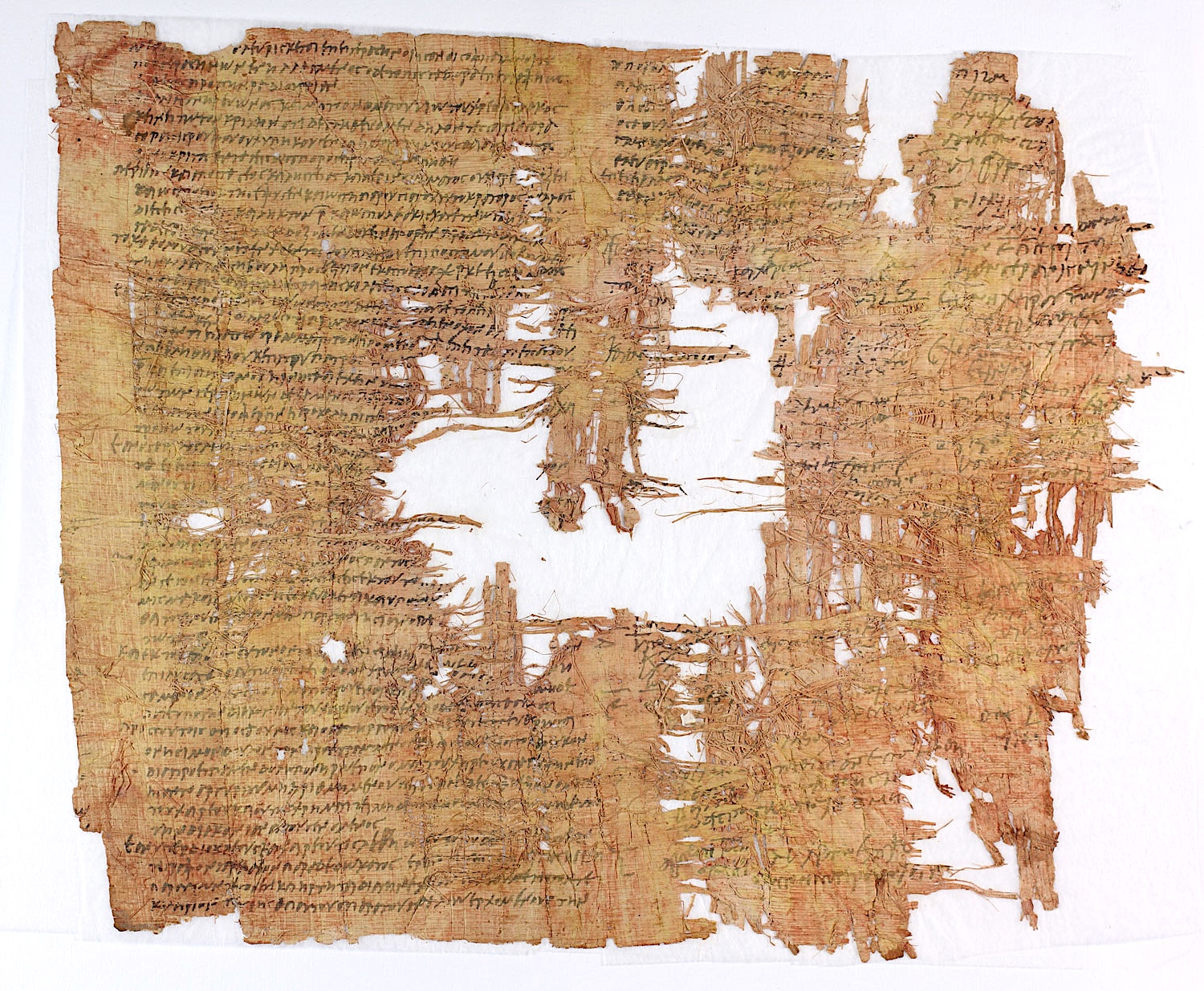
It was surely not a coincidence that the New York Times published its story on the trial of a certain Gadalias and Saulos this past Monday, April 14th. The defendants, as their names suggest, did not live in modernity: the papyrus documenting their legal troubles dates to the reign of Hadrian, around 130 AD. These men were charged, writes the Times’ Franz Lidz, with “the falsification of documents and the illicit sale and manumission, or freeing, of slaves — all to avoid paying duties in the far-flung Roman provinces of Judea and Arabia, a region roughly corresponding to present-day Israel and Jordan.”
In other words, Gadalias and Saulos were accused of tax evasion, a subject always on the mind of Americans under the shadow of their tax-return due date, April 15th. While the prospect of an IRS audit keeps more than a few of them awake at night, ancient Roman law went, predictably, quite a bit harsher.
“Penalties ranged from heavy fines and permanent exile to hard labor in the salt mines and, in the worst case, damnatio ad bestias, a public execution in which the condemned were devoured by wild animals,” writes Lidz. Such a fate presumably wouldn’t have been out of the question for those convicted of a crime of these proportions.
The long-misclassified document of this case was only properly deciphered, and even understood to have been written in ancient Greek, after its rediscovery in 2014. “A team of scholars was assembled to conduct a detailed physical examination and cross-reference names and locations with other historical sources,” which resulted in this paper published this past January. For any scholar of Roman law, such an opportunity to get into the minds of both that civilization’s judges and its criminals could hardly be passed up. Even out on the edge of the empire, prosecutors turn out to have employed “deft rhetorical strategies worthy of Cicero and Quintilian and displayed an excellent command of Roman legal terms and concepts in Greek.” This will no doubt get today’s law students speculating: specifically, about the existence of an ancient ChatGPT.
via NYTimes
Related content:
Donald Duck Wants You to Pay Your Taxes (1943)
Based in Seoul, Colin Marshall writes and broadcasts on cities, language, and culture. His projects include the Substack newsletter Books on Cities and the book The Stateless City: a Walk through 21st-Century Los Angeles. Follow him on the social network formerly known as Twitter at @colinmarshall.
Read More...How to Enter a ‘Flow State’ on Command: Peak Performance Mind Hack Explained in 7 Minutes
You can be forgiven for thinking the concept of “flow” was cooked up and popularized by yoga teachers. That word gets a lot of play when one is moving from Downward-Facing Dog on through Warrior One and Two.
Actually, flow — the state of “effortless effort” — was coined by Goethe, from the German “rausch”, a dizzying sort of ecstasy.
Friedrich Nietzsche and psychologist William James both considered the flow state in depth, but social theorist Mihaly Csikszentmihalyi, author of Creativity: Flow and the Psychology of Discovery and Invention, is the true giant in the field. Here’s one of his definitions of flow:
Being completely involved in an activity for its own sake. The ego falls away. Time flies. Every action, movement, and thought follows inevitably from the previous one, like playing jazz. Your whole being is involved, and you’re using your skills to the utmost.
Author Steven Kotler, Executive Director of the Flow Research Collective, not only seems to spend a lot of time thinking about flow, as a leading expert on human performance, he inhabits the state on a fairly regular basis, too.
Chalk it up to good luck?
Good genes? (Some researchers, including retired NIH geneticist Dean Hamer and psychologist C. Robert Cloninger, think genetics play a part…)
As Kotler points out above, anyone can hedge their bets by clearing away distractions — all the usual baddies that interfere with sleep, performance, or productivity.
It’s also important to know thyself. Kotler’s an early bird, who gets crackin’ well before sunrise:
I don’t just open my eyes at 4:00 AM, I try to go from bed to desk before my brain even kicks out of its Alpha wave state. I don’t check any emails. I turn everything off at the end of the day including unplugging my phones and all that stuff so that the next morning there’s nobody jumping into my inbox or assaulting me emotionally with something, you know what I mean?… I really protect that early morning time.
By contrast, his night owl wife doesn’t start clearing the cobwebs ’til early evening.
In the above video for Big Think, Kotler notes that 22 flow triggers have been discovered, pre-conditions that keep attention focused in the present moment.
His website lists many of those triggers:
- Complete Concentration in the Present Moment
- Immediate Feedback
- Clear Goals
- The Challenge-Skills Ratio (ie: the challenge should seem slightly out of reach
- High consequences
- Deep Embodiment
- Rich Environment
- Creativity (specifically, pattern recognition, or the linking together of new ideas)
Kotler also shares University of North Carolina psychologist Keith Sawyer’s trigger list for groups hoping to flow like a well-oiled machine:
- Shared Goals
- Close Listening
- “Yes And” (additive, rather than combative conversations)
- Complete Concentration (total focus in the right here, right now)
- A sense of control (each member of the group feels in control, but still)
- Blending Egos (each person can submerge their ego needs into the group’s)
- Equal Participation (skills levels are roughly and equal everyone is involved)
- Familiarity (people know one another and understand their tics and tendencies)
- Constant Communication (a group version of immediate feedback)
- Shared, Group Risk
One might think people in the flow state would be floating around with an expression of ecstatic bliss on their faces. Not so, according to Kotler. Rather, they tend to frown slightly. Good news for anyone with resting bitch face!
(We’ll thank you to refer to it as resting flow state face from here on out.)
Note: An earlier version of this post appeared on our site in 2022.
Related Content
How to Get into a Creative “Flow State”: A Short Masterclass
David Lynch Explains How Simple Daily Habits Enhance His Creativity
“The Philosophy of “Flow”: A Brief Introduction to Taoism
- Ayun Halliday is the Chief Primatologist of the East Village Inky zine and author, most recently, of Creative, Not Famous: The Small Potato Manifesto. Follow her @AyunHalliday.
Read More...A Forgotten 16th-Century Manuscript Reveals the First Designs for Modern Rockets
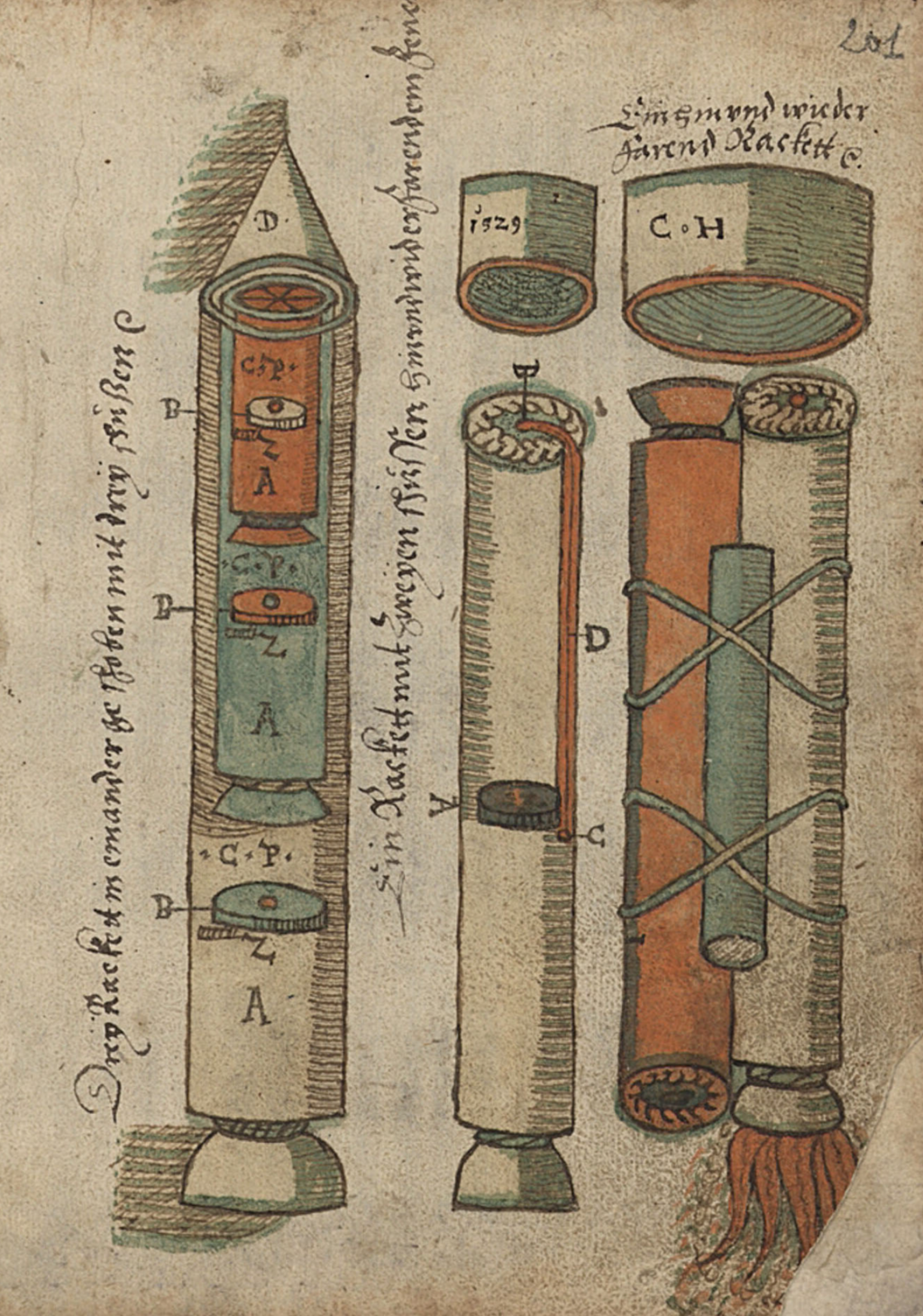
The Austrian military engineer Conrad Haas was a man ahead of his time — indeed, about 400 years ahead, considering that he was working on rockets aimed for outer space back in the mid-sixteenth century. Needless to say, he never actually managed to launch anything into the upper atmosphere. But you have to give him credit for getting as far as he did with the idea, a considerable progress documented in his treatise “How You Must Make Quite a Nice Rocket That Can Travel Itself into the Heights,” which no doubt sounds better in the original German. As Kaushik Patowary notes at Amusing Planet, its 450 pages are “filled with drawings and technical data on artillery, ballistics and detailed descriptions of multistage rockets.”
“Born in 1509 in Dornbach, now part of Vienna, to a German family from Bavaria,” Haas moved to Transylvania, then part of the Austrian Empire, early in his adulthood. “In 1551, Haas was invited by Stephen Báthory, the grand prince of Transylvania, to Hermannstadt (now Sibiu, Romania), where he became the commander of the artillery barracks and a weapons engineer.”
It was in this professional capacity that he began his research into rocketry, which led him to discover the concept of “a cylindrical thrust chamber filled with a powder propellant, with a conical hole to progressively increase the combustion area and consequently the thrust,” a clear intellectual ancestor of the multi-stage design “still used in modern rockets.”
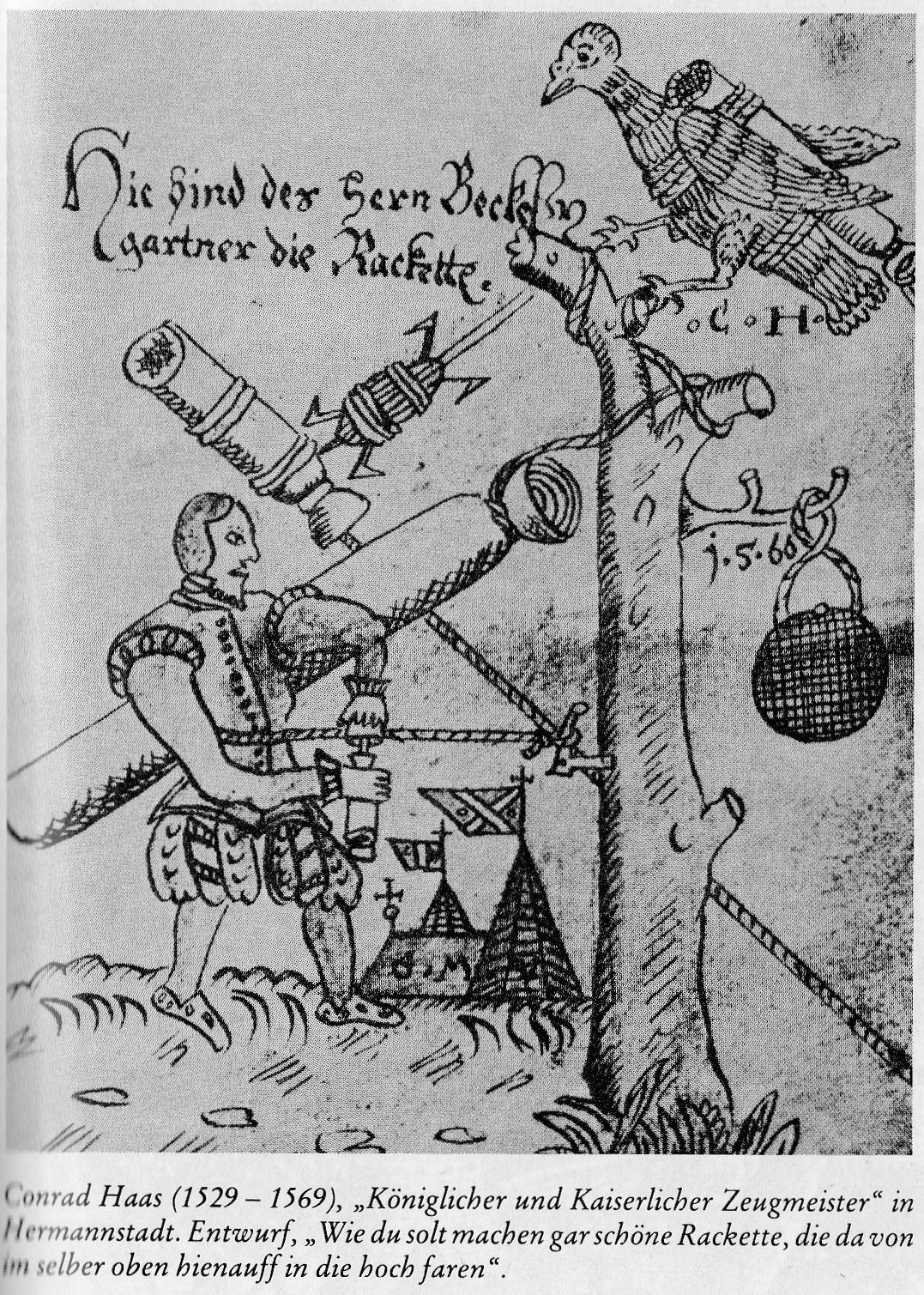
Haas’ is the earliest scientific work on rockets known to have been undertaken in Europe. And until fairly recently, it had been forgotten: only in 1961 was his manuscript found in Sibiu’s public archives, which motivated Romania to claim Haas as the first rocket scientist. Though anachronistic, that designation does underscore the far-sightedness of Haas’ worldview. So do the personal words he included in his chapter about the military use of rockets. “My advice is for more peace and no war, leaving the rifles calmly in storage, so the bullet is not fired, the gunpowder is not burned or wet, so the prince keeps his money, the arsenal master his life,” he wrote. But given what he must have learned while living in politically unstable European borderlands, he surely understood, on some level, that it would be easier to get to the moon.
Related content:
Leonardo da Vinci Draws Designs of Future War Machines: Tanks, Machine Guns & More
Meet the Mysterious Genius Who Patented the UFO
Based in Seoul, Colin Marshall writes and broadcasts on cities, language, and culture. His projects include the Substack newsletter Books on Cities and the book The Stateless City: a Walk through 21st-Century Los Angeles. Follow him on the social network formerly known as Twitter at @colinmarshall.
Read More...Why Most Ancient Civilizations Had No Word for the Color Blue
In an old Zen story, two monks argue over whether a flag is waving or whether it’s the wind that waves. Their teacher strikes them both dumb, saying, “It is your mind that moves.” The centuries-old koan illustrates a point Zen masters — and later philosophers, psychologists, and neuroscientists — have all emphasized at one time or another: human experience happens in the mind, but we share reality through language and culture, and these in turn set the terms for how we perceive what we experience.
Such observations bring us to another koan-like question: if a language lacks a word for something like the color blue, can the thing be said to exist in the speaker’s mind? We can dispense with the idea that there’s a color blue “out there” in the world. Color is a collaboration between light, the eye, the optic nerve, and the visual cortex. And yet, claims Maria Michela Sassi, professor of ancient philosophy at Pisa University, “every culture has its own way of naming and categorizing colours.”
The most famous example comes from the ancient Greeks. Since the 18th century, scholars have pointed out that in the thousands of words in the Iliad and Odyssey, Homer never once describes anything — sea, sky, you name it — as blue. It wasn’t only the Greeks who didn’t see blue, or didn’t see it as we do, Sassi writes:
There is a specific Greek chromatic culture, just as there is an Egyptian one, an Indian one, a European one, and the like, each of them being reflected in a vocabulary that has its own peculiarity, and not to be measured only by the scientific meter of the Newtonian paradigm.
It was once thought cultural color differences had to do with stages of evolutionary development — that more “primitive” peoples had a less developed biological visual sense. But differences in color perception are “not due to varying anatomical structures of the human eye,” writes Sassi, “but to the fact that different ocular areas are stimulated, which triggers different emotional responses, all according to different cultural contexts.”
As the AsapSCIENCE video above explains, the evidence of ancient Greek literature and philosophy shows that since blue was not part of Homer and his readers’ shared vocabulary (yellow and green do not appear either), it may not have been part of their perceptual experience, either. The spread of blue ink across the world as a relatively recent phenomenon has to do with its availability. “If you think about it,” writes Business Insider’s Kevin Loria, “blue doesn’t appear much in nature — there aren’t blue animals, blue eyes are rare, and blue flowers are mostly human creations.”
The color blue took hold in modern times with the development of substances that could act as blue pigment, like Prussian Blue, invented in Berlin, manufactured in China and exported to Japan in the 19th century. “The only ancient culture to develop a word for blue was the Egyptians — and as it happens, they were also the only culture that had a way to produce a blue dye.” Color is not only cultural, it is also technological. But first, perhaps, it could be a linguistic phenomenon.
One modern researcher, Jules Davidoff, found this to be true in experiments with a Namibian people whose language makes no distinction between blue and green (but names many finer shades of green than English does). “Davidoff says that without a word for a colour,” Loria writes, “without a way of identifying it as different, it’s much harder for us to notice what’s unique about it.” Unless we’re color blind, we all “see” the same things when we look at the world because of the basic biology of human eyes and brains. But whether certain colors appear, it seems, has to do less with what we see than with what we’re already primed to expect.
Note: An earlier version of this post appeared on our site in 2021.
Related Content:
How the Ancient Greeks & Romans Made Beautiful Purple Dye from Snail Glands
Discover the Cyanometer, the Device Invented in 1789 Just to Measure the Blueness of the Sky
YInMn Blue, the First Shade of Blue Discovered in 200 Years, Is Now Available for Artists
How Ancient Greek Statues Really Looked: Research Reveals Their Bold, Bright Colors and Patterns
Josh Jones is a writer and musician based in Durham, NC. Follow him at @jdmagness
Read More...William Faulkner’s Review of Hemingway’s The Old Man and the Sea (1952)
Images via Wikimedia Commons
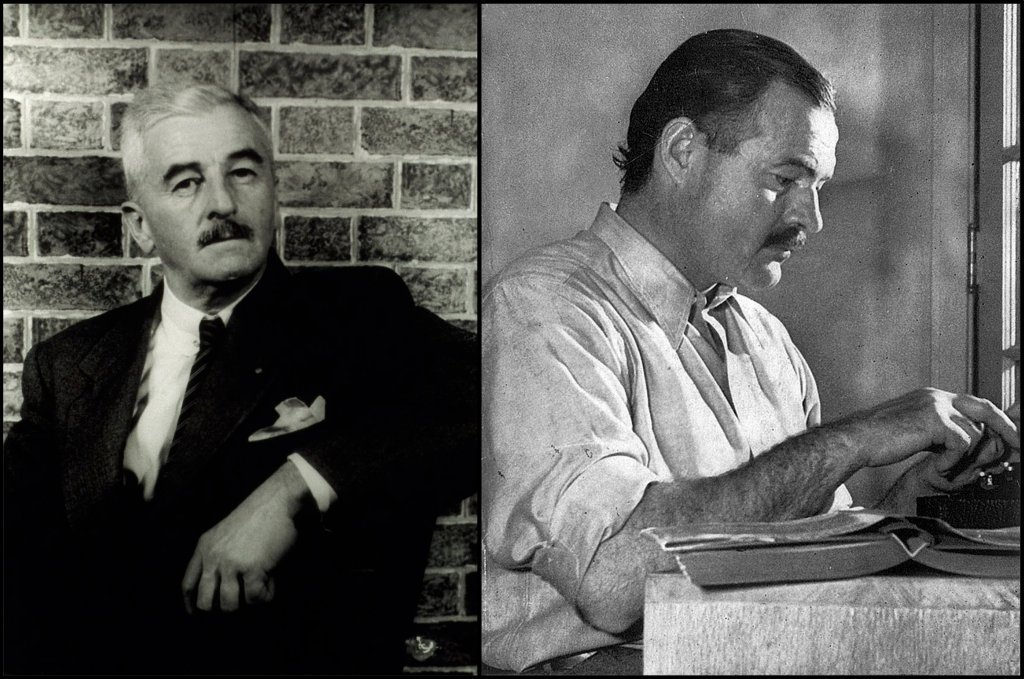
In the mid-20th century, the two big dogs in the American literary scene were William Faulkner and Ernest Hemingway. Both were internationally revered, both were masters of the novel and the short story, and both won Nobel Prizes.
Born in Mississippi, Faulkner wrote allegorical histories of the South in a style that is both elliptical and challenging. His works were marked by uses of stream-of-consciousness and shifting points of view. He also favored titanically long sentences, holding the record for having, according to the Guinness Book of Records, the longest sentence in literature. Open your copy of Absalom! Absalom! to chapter 6 and you’ll find it. Hemingway, on the other hand, famously sandblasted the florid prose of Victorian-era books into short, terse, deceptively simple sentences. His stories were about rootless, damaged, cosmopolitan people in exotic locations like Paris or the Serengeti.
If you type in “Faulkner and Hemingway” in your favorite search engine, you’ll likely stumble upon this famous exchange — Faulkner on Hemingway: “He has never been known to use a word that might send a reader to the dictionary.” Hemingway: “Poor Faulkner. Does he really think big emotions come from big words?” Zing! Faulkner reportedly didn’t mean for the line to come off as an insult but Hemingway took it as one. The incident ended up being the most acrimonious in the two authors’ complicated relationship.
While Faulkner and Hemingway never formally met, they were regular correspondents, and each was keenly aware of the other’s talents. And they were competitive with each other, especially Hemingway who was much more insecure than you might surmise from his macho persona. While Hemingway regularly called Faulkner “the best of us all,” marveling at his natural abilities, he also hammered Faulkner for resorting to tricks. As he wrote to Harvey Breit, the famed critic for The New York Times, “If you have to write the longest sentence in the world to give a book distinction, the next thing you should hire Bill Veek [sic] and use midgets.”
Faulkner, on his end, was no less competitive. He once told the New York Herald Tribune, “I think he’s the best we’ve got.” On the other hand, he bristled when an editor mentioned getting Hemingway to write the preface for The Portable Faulkner in 1946. “It seems to me in bad taste to ask him to write a preface to my stuff. It’s like asking one race horse in the middle of a race to broadcast a blurb on another horse in the same running field.”
When Breit asked Faulkner to write a review of Hemingway’s 1952 novella The Old Man and the Sea, he refused. Yet when a couple months later he got the same request from Washington and Lee University’s literary journal, Shenandoah, Faulkner relented, giving guarded praise to the novel in a one-paragraph-long review. You can read it below.
His best. Time may show it to be the best single piece of any of us, I mean his and my contemporaries. This time, he discovered God, a Creator. Until now, his men and women had made themselves, shaped themselves out of their own clay; their victories and defeats were at the hands of each other, just to prove to themselves or one another how tough they could be. But this time, he wrote about pity: about something somewhere that made them all: the old man who had to catch the fish and then lose it, the fish that had to be caught and then lost, the sharks which had to rob the old man of his fish; made them all and loved them all and pitied them all. It’s all right. Praise God that whatever made and loves and pities Hemingway and me kept him from touching it any further.
And you can also watch below a fascinating talk by scholar Joseph Fruscione about how Faulkner and Hemingway competed and influenced each other. He wrote the book, Faulkner and Hemingway: Biography of a Literary Rivalry.
Note: An earlier version of this post appeared on our site in 2014.
Related Content:
The Art of William Faulkner: Drawings from 1916–1925
Ernest Hemingway Creates a Reading List for a Young Writer, 1934
‘Never Be Afraid’: William Faulkner’s Speech to His Daughter’s Graduating Class in 1951
Seven Tips From William Faulkner on How to Write Fiction
Rare 1952 Film: William Faulkner on His Native Soil in Oxford, Mississippi
Jonathan Crow is a writer and filmmaker whose work has appeared in Yahoo!, The Hollywood Reporter, and other publications.
Read More...What the World Will Look Like in 250 Million Years: Mapping the Distant Future
Most of us now accept the idea that all of Earth’s continents were once part of a single, enormous land mass. That wasn’t the case in the early nineteen-tens, when the geologist Alfred Wegener (1880–1930) first publicized his theory of not just the supercontinent Pangea, but also of the phenomenon of continental drift that caused it to break apart into the series of shapes we all know from classroom world maps. But as humorously explained in the Map Men video above, Wegener didn’t live to see these ideas convince the world. Only after his death did other scientists figure out just how the geological churning under the planet’s surface caused the continents to drift apart in the first place.
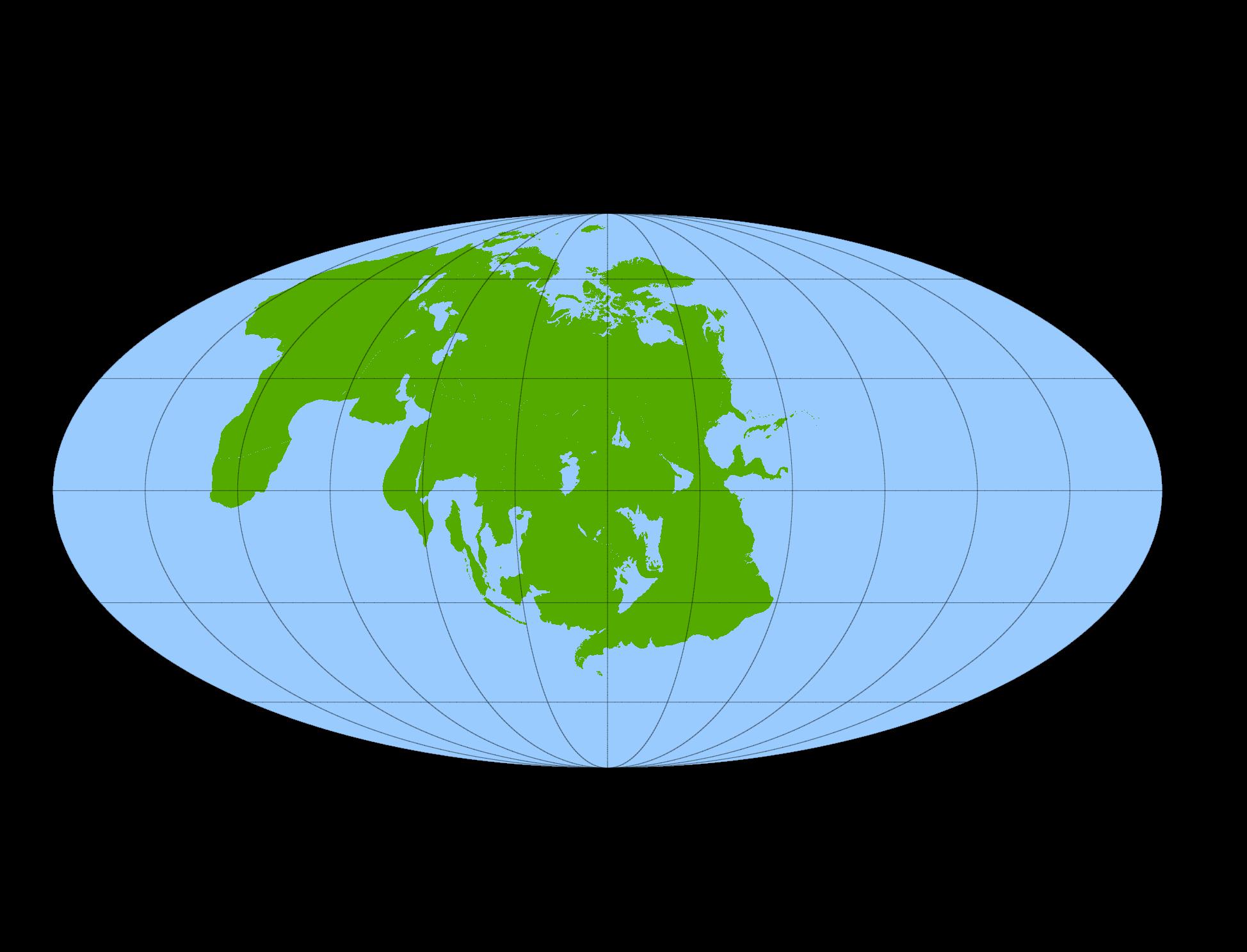
With that information in place, Pangea no longer seemed like the crackpot notion it had when Wegener initially proposed it. Less widely appreciated, even today, is the determination that, as the Map Men put it, “Pangea, far from being the original supercontinent, was actually the eleventh to have formed in Earth’s history.”
It seems that the continents have been cyclically breaking apart and coming together again, with no sign of the process stopping. When, then, will we next find ourselves back on a supercontinent? Perhaps in 250 million years or so, according to the “Novopangea” model explained in the video, which has the Pacific ocean closing up as Australia slots into East Asia and North America while Antarctica drifts north.
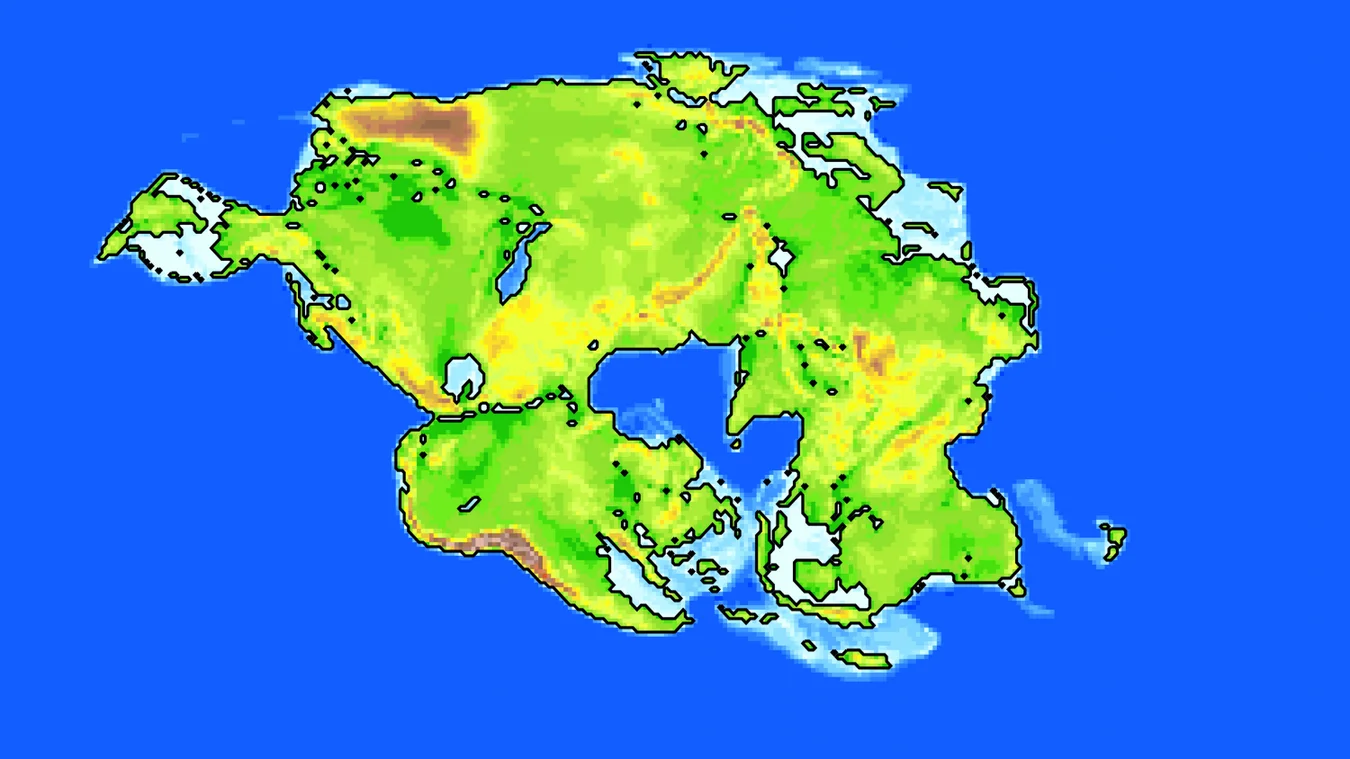
Other models also exist, including Aurica, “where Eurasia splits in half, and both the Pacific and Atlantic oceans close up”; Pangea Ultima, “where Britain gets closer to America”; and Amasia, “where all the continents congregate around the North Pole, except Antarctica” (whose drift patterns make it seem like “the laziest continent”). At this kind of time scale, small changes in the basic assumptions can result in very different-looking supercontinents indeed, not that any of us will be around to see how the next Pangea really takes shape. Nevertheless, in this age when we can hardly go a week without encountering predictions of humanity’s imminent extinction, it’s refreshing to find a subject that lets us even consider looking a quarter-billion years down the road.
Related Content:
Map Showing Where Today’s Countries Would Be Located on Pangea
A Web Site That Lets You Find Your Home Address on Pangea
Based in Seoul, Colin Marshall writes and broadcasts on cities, language, and culture. His projects include the Substack newsletter Books on Cities and the book The Stateless City: a Walk through 21st-Century Los Angeles. Follow him on the social network formerly known as Twitter at @colinmarshall.
Read More...How Chinese Characters Work: The Evolution of a Three-Millennia-Old Writing System
Contrary to somewhat popular belief, Chinese characters aren’t just little pictures. In fact, most of them aren’t pictures at all. The very oldest, whose evolution can be traced back to the “oracle bone” script of thirteenth century BC etched directly onto the remains of turtles and oxen, do bear traces of their pictograph ancestors. But most Chinese characters, or hanzi, are logographic, which means that each one represents a different morpheme, or distinct unit of language: a word, or a single part of a word that has no independent meaning. Nobody knows for sure how many hanzi exist, but nearly 100,000 have been documented so far.
Not that you need to learn all of them to attain literacy: for that, a mere 3,000 to 5,000 will do. While it’s technically possible to memorize that many characters by rote, you’d do better to begin by familiarizing yourself with their basic nature and structure — and in so doing, you’ll naturally learn more than a little about their long history.
The TED-Ed lesson at the top of the post provides a brief but illuminating overview of “how Chinese characters work,” using animation to show how ancient symbols for concrete things like a person, a tree, the sun, and water became versatile enough to be combined into representations of everything else — including abstract concepts.
In the Mandarin Blueprint video just above, host Luke Neale goes deeper into the structure of the hanzi in use today. Whether they be simplified versions of mainland China or the traditional ones of Taiwan, Hong Kong, and elsewhere, they’re for the most part constructed not out of whole cloth, he stresses, but from a set of existing components. That may make a prospective learner feel slightly less daunted, as may the fact that roughly 80 percent of Chinese characters are “semantic-phonetic compounds”: one component of the character provides a clue to its meaning, and another a clue to its pronunciation. (Not that it necessarily makes deciphering them an effortless task.)
In the distant past, hanzi were also the only means of recording other Asian languages, like Vietnamese and Korean. Still today, they remain central to the Japanese writing system, but like any other cultural form transplanted to Japan, they’ve hardly gone unaltered there: the NativLang video just above explains the transformation they’ve undergone over millennia of interaction with the Japanese language. It wasn’t so very long ago that, even in their homeland, hanzi were threatened with the prospect of being scrapped in the dubious name of modern efficiency. Now, with those aforementioned almost-100,000 characters incorporated into Unicode, making them usable throughout our 21st-century digital universe, it seems they’ll stick around — even longer, perhaps, than the Latin alphabet you’re reading right now.
Related content:
What Ancient Chinese Sounded Like — and How We Know It: An Animated Introduction
Discover Nüshu, a 19th-Century Chinese Writing System That Only Women Knew How to Write
The Writing Systems of the World Explained, from the Latin Alphabet to the Abugidas of India
Based in Seoul, Colin Marshall writes and broadcasts on cities, language, and culture. His projects include the Substack newsletter Books on Cities and the book The Stateless City: a Walk through 21st-Century Los Angeles. Follow him on the social network formerly known as Twitter at @colinmarshall.
Read More...Hear the World’s Oldest Known Song, “Hurrian Hymn No. 6” Written 3,400 Years Ago
Do you like old timey music?
Splendid.
You can’t get more old timey than Hurrian Hymn No. 6, which was discovered on a clay tablet in the ancient Syrian port city of Ugarit in the 1950s, and is over 3400 years old.
Actually, you can — a similar tablet, which references a hymn glorifying Lipit-Ishtar, the 5th king of the First Dynasty of Isin (in what is now Iraq), is older by some 600 years. But as CMUSE reports, it “contains little more than tuning instructions for the lyre.”
Hurrian Hymn No. 6 offers meatier content, and unlike five other tablets discovered in the same location, is sufficiently well preserved to allow archaeologists, and others, to take a crack at reconstructing its song, though it was by no means easy.
University of California emeritus professor of Assyriology, Anne Kilmer spent 15 years researching the tablet, before transcribing it into modern musical notation in 1972.
Hers is one of several interpretations YouTuber Hochelaga samples in the above video.
While the original tablet gives specific details on how the musician should place their fingers on the lyre, other elements, like tuning or how long notes should be held, are absent, giving modern arrangers some room for creativity.
Below archaeomusicologist Richard Dumbrill explains his interpretation from 1998, in which vocalist Lara Jokhader assumes the part of a young woman privately appealing to the goddess Nikkal to make her fertile:
Here’s a particularly lovely classical guitar spin, courtesy of Syrian musicologist Raoul Vitale and composer Feras Rada…
And a haunting piano version, by Syrian-American composer Malek Jandali, founder of Pianos for Peace:
And who can resist a chance to hear Hurrian Hymn No. 6 on a replica of an ancient lyre by “new ancestral” composer Michael Levy, who considers it his musical mission to “open a portal to a time that has been all but forgotten:”
I dream to rekindle the very spirit of our ancient ancestors. To capture, for just a few moments, a time when people imagined the fabric of the universe was woven from harmonies and notes. To luxuriate in a gentler time when the fragility of life was truly appreciated and its every action was performed in the almighty sense of awe felt for the ancient gods.
Samurai Guitarist Steve Onotera channels the mystery of antiquity too, by combining Dr. Dumbrill’s melody with Dr. Kilmer’s, trying and discarding a number of approaches — synthwave, lo-fi hip hop, reggae dub (“an absolute disaster”) — before deciding it was best rendered as a solo for his Fender electric.
Amaranth Publishing has several MIDI files of Hurrian Hymn No. 6, including Dr. Kilmer’s, that you can download for free here.
Open them in the music notation software program of your choice, and should it please the goddess, perhaps yours will be the next interpretation of Hurrian Hymn No. 6 to be featured here on Open Culture…
Note: An earlier version of this post appeared on our site in 2022.
Related Content
What Ancient Greek Music Sounded Like: Hear a Reconstruction That is ‘100% Accurate’
The Evolution of Music: 40,000 Years of Music History Covered in 8 Minutes
A Modern Drummer Plays a Rock Gong, a Percussion Instrument from Prehistoric Times
- Ayun Halliday is the Chief Primatologist of the East Village Inky zine and author, most recently, of Creative, Not Famous: The Small Potato Manifesto. Follow her @AyunHalliday.
Read More...What Is Kafkaesque?: The Philosophy of Franz Kafka
It’s difficult to imagine that there was ever a time without the word “Kafkaesque.” Yet the term would have meant nothing at all to anyone alive at the same time as Franz Kafka — including, in all probability, Kafka himself. Born in Prague in 1883, he grew up under a stern, demanding, and perpetually disappointed father, then made his way through college and entered the workforce. He ended up at the Workers’ Accident Insurance Institute, where he was “subject to long hours, unpaid overtime, massive amounts of paperwork, and absurd, complex, bureaucratic systems,” says the narrator of the Pursuit of Wonder video above. But it was during that same period that he wrote The Trial, The Castle, and Amerika.
Of course, Kafka didn’t actually publish those eventually acclaimed books in his lifetime. After his death, that task would fall to Max Brod, the writer’s only real friend, and it entailed violating the author’s explicitly stated wishes. On his deathbed, Kafka “instructed Max Brod to burn all of his unpublished manuscripts”; instead, Brod “spent the following year or so working to organize and publish his notes and manuscripts.” Now that he’s been gone more than a century, Kafka’s reputation as one of the greatest literary figures of the twentieth century is more than secure, and it would take a dedicated contrarian indeed to argue that Brod did wrong not to toss his papers onto the bonfire.
Perhaps Kafka’s reputation would have found a way to grow one way or another, respond as his writing does to a psychological discomfort we’ve all felt to one degree or another, in one setting or another: doing our taxes, waiting in airport security lines, calling tech support. On such occasions, we reach for the term “Kafkaesque,” which “tends to refer to the bureaucratic nature of capitalistic, judiciary, and government systems, the sort of complex, unclear processes in which no one individual ever has a comprehensive grasp on what is going on, and the system doesn’t really care.” Typical Kafka protagonists are “faced with sudden, absurd circumstances. There are no explanations, and in the end, there is no real chance of overcoming them.”
These characters are “outmatched by the arbitrary, senseless obstacles they face, in part because they can’t understand or control any of what is happening.” They feel “the unyielding desire for answers in conquest over the existential problems of anxiety, guilt, absurdity, and suffering, paired with an inability to ever really understand or control the source of the problems and effectively overcome them.” Yet “even in the face of absurd, despairing circumstances, Kafka’s characters don’t give up. At least initially, they continue on and fight against their situations, trying to reason, understand, or work their way out of the senselessness, but in the end, it is ultimately to no avail.” To Kafka, it was all part of another day in modernity. Here in the twenty-first century, it seems we may need to start looking for an even more powerful adjective.
Related content:
What Does “Kafkaesque” Really Mean? A Short Animated Video Explains
Franz Kafka’s Kafkaesque Love Letters
Based in Seoul, Colin Marshall writes and broadcasts on cities, language, and culture. His projects include the Substack newsletter Books on Cities and the book The Stateless City: a Walk through 21st-Century Los Angeles. Follow him on the social network formerly known as Twitter at @colinmarshall.
Read More...Support Us
We're hoping to rely on loyal readers, rather than erratic ads. Please click the Donate button and support Open Culture. You can use Paypal, Venmo, Patreon, even Crypto! We thank you!

About Us

Open Culture scours the web for the best educational media. We find the free courses and audio books you need, the language lessons & educational videos you want, and plenty of enlightenment in between.
Advertise With Us

FREE UPDATES!
GET OUR DAILY EMAIL
Get the best cultural and educational resources on the web curated for you in a daily email. We never spam. Unsubscribe at any time.
FOLLOW ON SOCIAL MEDIA

Open Culture editor Dan Colman scours the web for the best educational media. He finds the free courses and audio books you need, the language lessons & movies you want, and plenty of enlightenment in between.
Advertise With Us


