The British Library Puts Online 1,200 Literary Treasures From Great Romantic & Victorian Writers
We’ve long known the internet’s power to facilitate access to the great books (see, for instance, our collection of 600 eBooks free online), but recent projects like the British Library’s Discovering Literature have shown us that it can also help us engage with those great books. The site, says a MetaFilter user who goes under Horace Rumpole, offers “a portal to digitized collections and supporting material. The first installment, Romantics and Victorians, includes work from Austen, the Brontës, Dickens, and Blake, and forthcoming modules will expand coverage of the site to encompass everything from Beowulf to the present day.” For now, if you enjoy classic English Romantic and Victorian novels, prepare to take that enjoyment to a higher level by immersing yourself in all manner of early manuscripts, authors’ papers and personal effects, and related pieces of contemporary media.
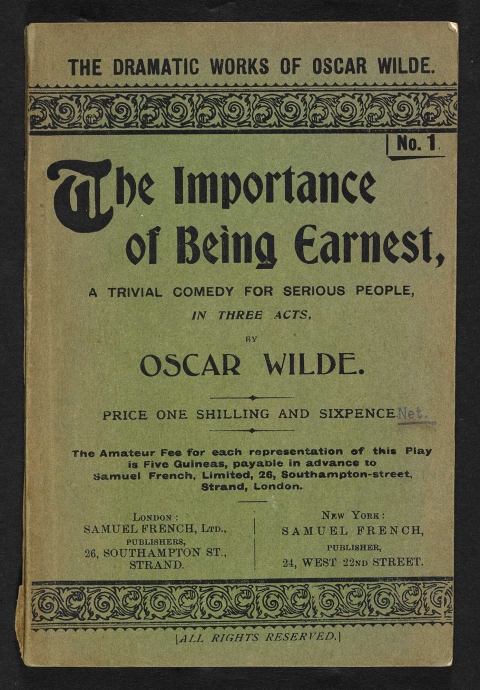
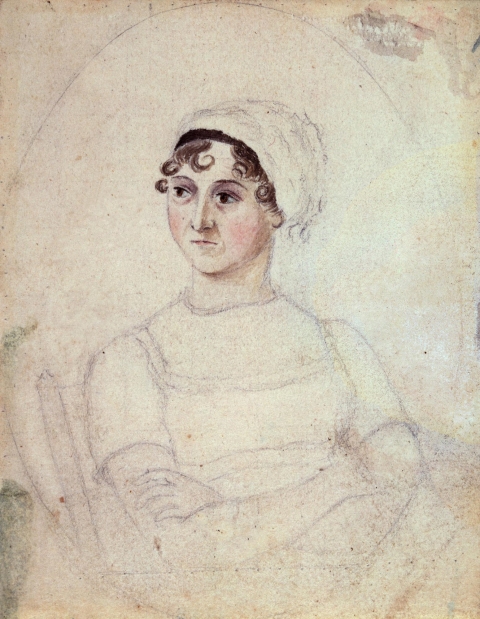
If you count yourself a Jane Austen fan, for instance, you can now scroll down her Discovering Literature author page and find “a host of texts” to do with her life, her work, and the intersection between them, “including the opinions — mostly positive — her friends and family had of her novels, copied out by the author (though ‘her immediate family is shown to have disagreed over which of her books was better’).” That comes from The Guardian’s Alison Flood, writing up the site’s collection of not just Austen accoutrements but items from writers like William Wordsworth, Oscar Wilde, and Mary Shelley, “as well as diaries, letters, newspaper clippings from the time and photographs, in an attempt to bring the period to life.”
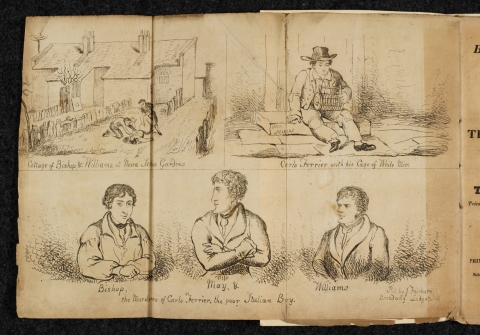
Flood cites “a survey of more than 500 English teachers, which found that 82% believe secondary school students ‘find it hard to identify’ with classic authors” on their classes’ syllabi. In response, Discovering Literature appears to have given special attention to oft-assigned writers like Charles Dickens, whose collection of materials on the site includes a literary sketch published at age 23, color illustrations for both an 1885 and 1911 edition of Oliver Twist (as well as the 1848 review that destroyed his relationship with the book’s previous illustrator), and “The Italian Boy,” an early work of journalism on “a brutal crime that occurred in London in 1831, a ‘copy-cat’ murder following upon those of the infamous Burke and Hare in Edinburgh.” The site’s archives also contain analytical essays on each writer’s body of work, like “Oliver Twist and the Workhouse” and “Status, Rank, and Class in Jane Austen’s Novels” — ideal for when these re-enthused students, previously unable to connect to the Romantic and Victorian eras’ most respected authors, reach grad school.
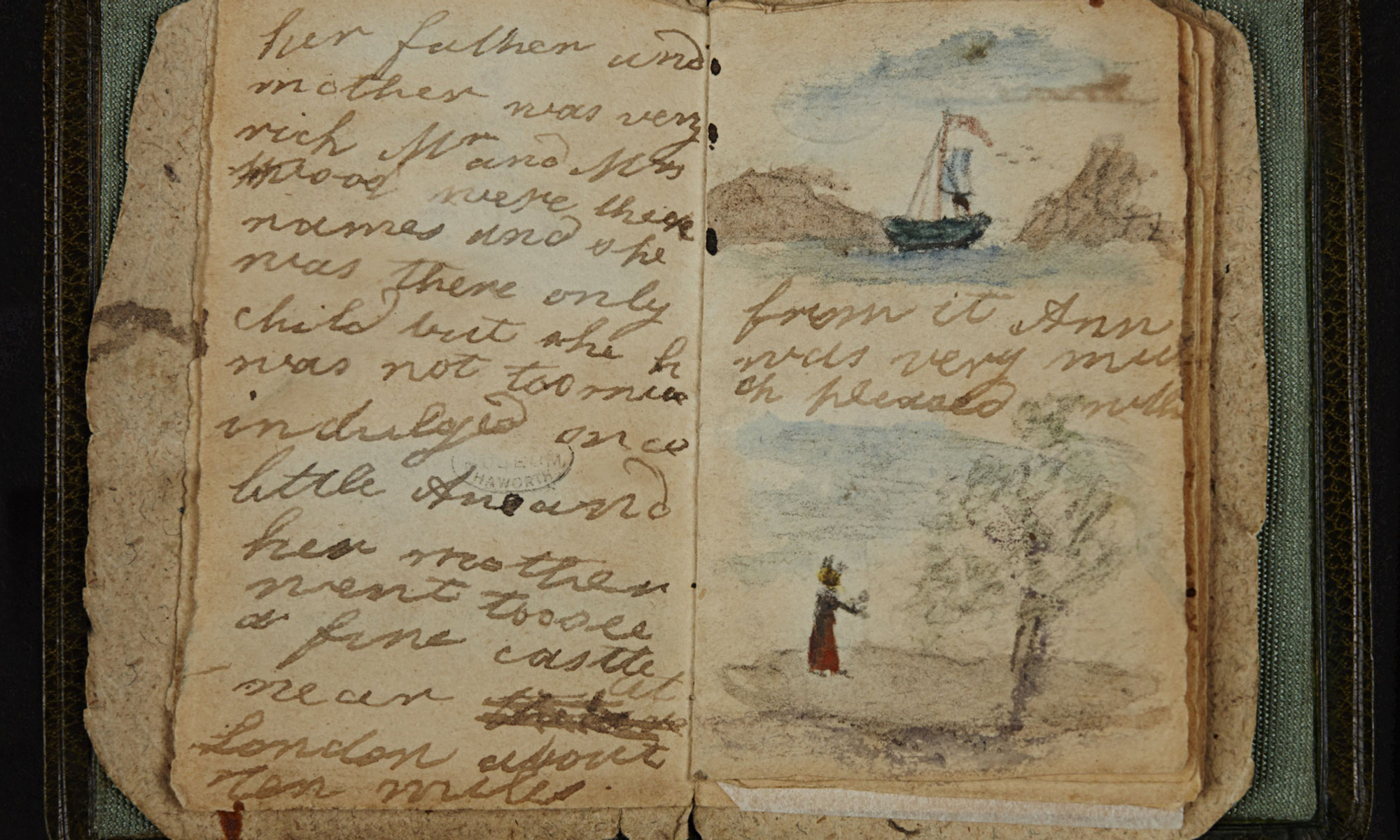
The image at the very top shows the earliest known writings of Charlotte Brontë.
Related Content:
Read Jane Austen’s Manuscripts Online
Charles Dickens’ Hand-Edited Copy of His Classic Holiday Tale, A Christmas Carol
Colin Marshall hosts and produces Notebook on Cities and Culture and writes essays on cities, language, Asia, and men’s style. He’s at work on a book about Los Angeles, A Los Angeles Primer. Follow him on Twitter at @colinmarshall or on Facebook.
Read More...Philip K. Dick Takes You Inside His Life-Changing Mystical Experience
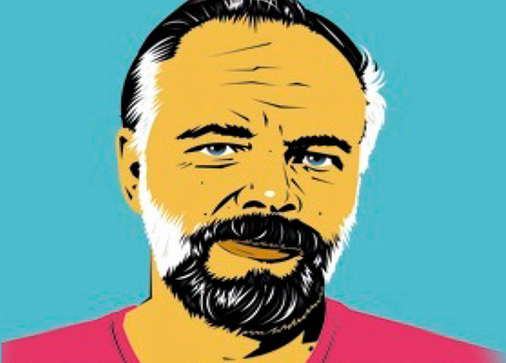
Image by Pete Welsch, via Wikimedia Commons
Philip K. Dick’s mind was invaded in 1974.
It happened following surgery for an impacted wisdom tooth. While recovering, the author of Ubik and The Man in the High Castle, received a delivery of pain medication. The delivery girl wore a Jesus fish around her neck, which in Dick’s perception was emitting a pink beam. Soon after, Dick’s brain was invaded by… something. Dick never quite figured out what.
He later described the experience to interviewer Charles Platt as “an invasion of my mind by a transcendentally rational mind. It was almost as if I had been insane all of my life and suddenly I had become sane.”
The experience profoundly affected him and it made up the core of his book VALIS. The title is an acronym for Vast Active Living Intelligence System, which pretty much describes how Dick thought of this mind.
In 1979, Platt interviewed Dick in depth for his book Dream Makers. You can listen to an extended clip of Dick recounting his transcendental experience below:
“On Thursdays and Saturdays I’d think it was God,” he told Platt. “On Tuesdays and Wednesdays, I’d think it was extraterrestrials. Some times I’d think it was the Soviet Union Academy of Sciences trying out their psychotronic microwave telepathic transmissions.”
Whatever it was, this mind took control of Dick when he was at a low ebb and, like a loving parent or an exceptionally talented personal assistant, cleaned up his life. “I was a spectator,” said Dick. This mind, which Dick characterized as female, fired his agent, tracked down editors who were late sending checks and modified his diet.
She also revealed that his young son had an undiagnosed birth defect that was potentially fatal. And the revelation proved to be true. The child’s life was saved.
That said, he did have a couple minor complaints about the entity: she kept calling his baffled wife “Ma’am” and she had a tendency to lapse into Koine Greek. Nobody, even a God-like vision, is perfect. Above, we have a drawing by R. Crumb.
You can listen to Platt’s full interview with Dick below:
Related Content:
Robert Crumb Illustrates Philip K. Dick’s Infamous, Hallucinatory Meeting with God (1974)
Download 14 Great Sci-Fi Stories by Philip K. Dick as Free Audio Books and Free eBooks
Jonathan Crow is a Los Angeles-based writer and filmmaker whose work has appeared in Yahoo!, The Hollywood Reporter, and other publications. You can follow him at @jonccrow.
Read More...Salvador Dalí’s Haunting 1975 Illustrations for Shakespeare’s Romeo and Juliet
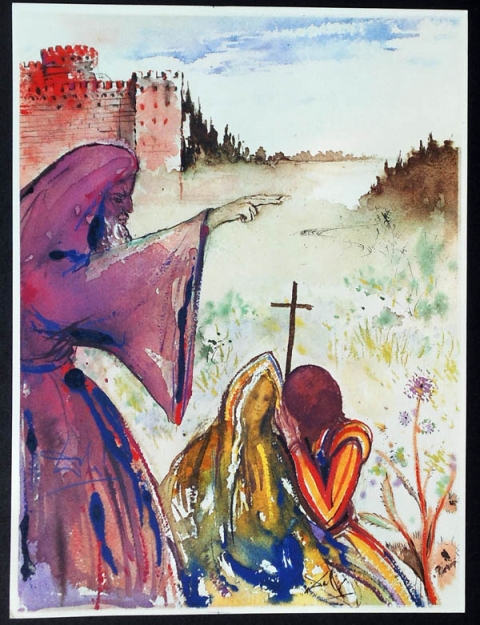
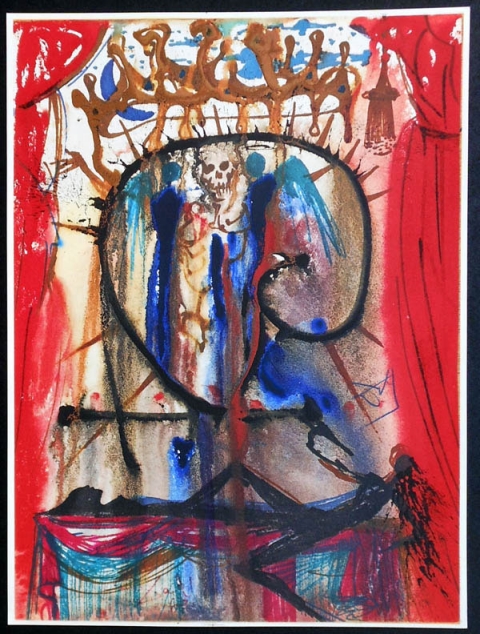
Even from just what we’ve posted about Salvador Dalí, you can tell he had a mission to spread his distinctive sensibility far and wide: he made films with Luis Buñuel, collaborated with Walt Disney and Alfred Hitchcock, showed up for Andy Warhol’s “screen tests,” and illustrated some of the best-known texts in western history, like Dante’s Divine Comedy, Lewis Carroll’s Alice’s Adventures in Wonderland, and Shakespeare’s Macbeth. All those projects might seem well suited to the Spanish surrealist’s famous skill at artistically rendering the torn edges of human consciousness, but what would he do when presented with something more psychologically straightforward — Romeo and Juliet, say? You can see the results of just such a project at Twisted Sifter, which presents ten notable illustrations from Dalí’s second Shakespearean project.
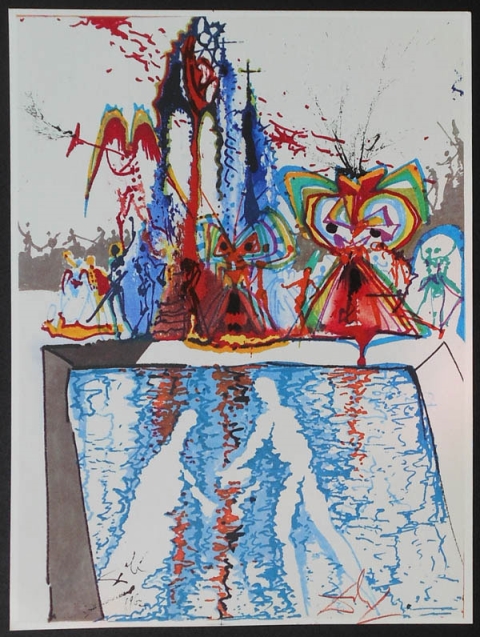
These images come from a 1975 Rizzoli and Rizzoli edition consisting of “ten off-set lithographs on heavy paper with 99 pages of bound text contained in a red/burgundy silk slipcase with the lithographs signed in the place.” You can find out more about this book at the site of Plainfield, Illinois’ Lockport Street Gallery, which offers the copy for sale and a warning against all the “fake prints” (inauthentic Dalí having long constituted a robust industry of its own) in circulation. Romeo and Juliet, perhaps due to its tendency to get assigned in high school, can come off as one of Shakespeare’s milder, more familiar plays, and modern interpretations of the material fall flat as often as they rise up to it. But Dalí’s contribution makes the old tale of star-crossed lovers strange and haunting again — exactly the specialty, I suppose, that would attract anybody to him with an offer of collaboration in the first place.
Related Content:
Two Vintage Films by Salvador Dalí and Luis Buñuel: Un Chien Andalou and L’Age d’Or
See Salvador Dali’s Illustrations for the 1969 Edition of Alice’s Adventures in Wonderland
Salvador Dalí’s 100 Illustrations of Dante’s The Divine Comedy
Destino: The Salvador Dalí – Disney Collaboration 57 Years in the Making
Alfred Hitchcock Recalls Working with Salvador Dali on Spellbound
Free Online Shakespeare Courses: Primers on the Bard from Oxford, Harvard, Berkeley & More
Colin Marshall hosts and produces Notebook on Cities and Culture and writes essays on cities, language, Asia, and men’s style. He’s at work on a book about Los Angeles, A Los Angeles Primer. Follow him on Twitter at @colinmarshall or on Facebook.
Read More...13 Lectures from Allen Ginsberg’s “History of Poetry” Course (1975)
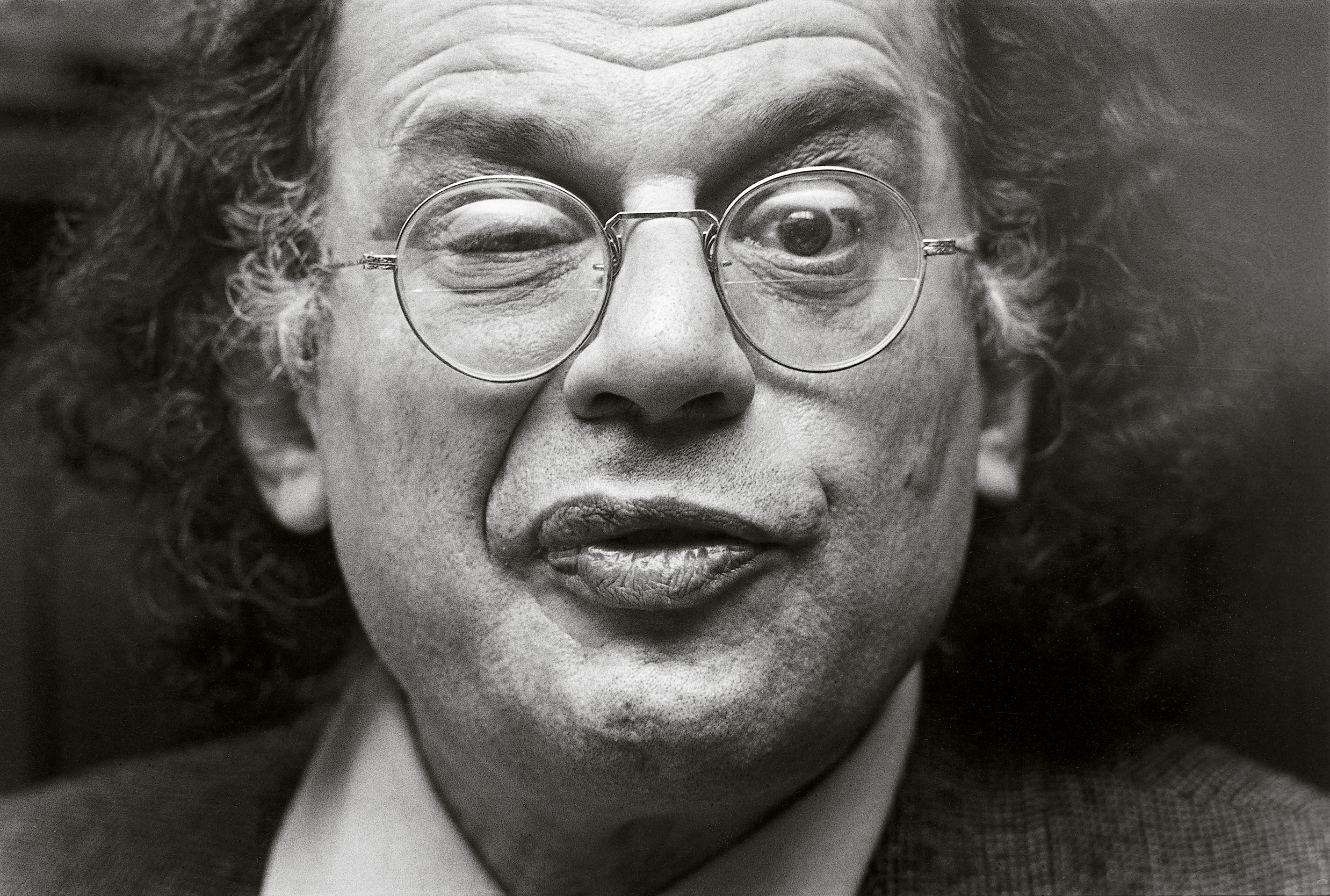
Image by Michiel Hendryckx, via Wikimedia Commons
If you want to understand poetry, ask a poet. “What is this?” you ask, “some kind of Zen saying?” Obvious, but subtle? Maybe. What I mean to say is that I have found poetry one of those distinctive practices of which the practitioners themselves—rather than scholars and critics—make the best expositors, even in such seemingly academic subject areas as the history of poetry. Of course, poets, like critics, get things wrong, and not every poet is a natural teacher, but only poets understand poetry from the inside out, as a living, breathing exercise practiced the world over by every culture for all recorded history, linked by common insights into the nature of language and existence. Certainly Allen Ginsberg understood, and taught, poetry this way, in his summer lectures at the Jack Kerouac School of Disembodied poetics, which he co-founded with Anne Waldman at Chogyam Trungpa Rinpoche’s Naropa University in 1974.
We’ve previously featured some of Ginsberg’s Naropa lectures here at Open Culture, including his 1980 short course on Shakespeare’s The Tempest and his lecture on “Expansive Poetics” from 1981. Today, we bring you several selections from his lengthy series of lectures on the “History of Poetry,” which he delivered in 1975. Currently, thirteen of Ginsberg’s lectures in the series are available online through the Internet Archive, and they are each well worth an attentive listen. Actually, we should say there are twelve Ginsberg lectures available, since Ginsberg’s fellow Beat Gregory Corso led the first class in the series while Ginsberg was ill.
Corso taught the class in a “Socratic” style, allowing students to ask him any questions they liked and describing his own process and his relationships with other Beat poets. You can hear his lectures here. When Ginsberg took over the “History of Poetry” lectures, he began (above) with discussion of another natural poet-educator, the idiosyncratic scholar Ezra Pound, whose formally precise interpretation of the Anglo-Saxon poem “The Seafarer” introduced many modern readers to ancient alliterative Old English poetics. (Poet W.S. Merwin sits in on the lecture and offers occasional laconic commentary and correction.)
Ginsberg references Pound’s pithy text The ABC of Reading and discusses his penchant for “ransack[ing] the world’s literature, looking for usable verse forms.” Pound, says Ginsberg—“the most heroic poet of the century”—taught poetry in his own “cranky and personal” way, and Ginsberg, less cranky, does something similar, teaching “just the poems that I like (or the poems I found in my own ear,” though he is “much less systematic than Pound.” He goes on to discuss 18th and 19th century poetics and sound and rhythm in poetry. One of the personal quirks of Ginsberg’s style is his insistence that his students take meditation classes and his claim that “the English verse that was taught in high school” is very close to the “primary Buddhist understanding of transiency.” But one can leave aside Ginsberg’s Buddhist preoccupations—appropriate to his teaching at a Buddhist university, of course—and still profit greatly from his lectures. Below, find links to eleven more of Ginsberg’s “History of Poetry” lectures, with descriptions from the Internet Archive. Unfortunately, it appears that several of the lecture recordings have not been preserved, or at least haven’t made it to the archive, but there’s more than enough material here for a thorough immersion in Ginsberg’s historical poetics. Also, be sure to see AllenGinsberg.org for transcriptions of his “History of Poetry” lectures. You can find these lectures listed in our collection of Free Literature Courses, part of our larger list, 1,700 Free Online Courses from Top Universities.
Part 3: class on the history of poetry by Allen Ginsberg, in a series of classes in the Summer of 1975. Gregory Corso helps teach the class. Percy Bysshe Shelley and Thomas Hood are discussed extensively. The class reads from Shelley, and Ginsberg recites Shelley’s “Ode to the west wind.”
Part 10: A class on the history of poetry by Allen Ginsberg, in a series of classes from 1975. Ginsburg discusses William Shakespeare and Ben Johnson in detail. Putting poetry to music, and the poet James Shirley are also discussed.
Part 11: A class on the history of poetry by Allen Ginsberg, in a series of classes by Ginsberg in the summer of 1975. Ginsberg discusses the metaphysical poets during the seventeenth century, specifically John Donne and Andrew Marvell. Ginsberg reads and discusses several of Donne’s and Marvell’s poems. There is also a discussion of the metaphysical poets and Gnosticism.
Part 12: [Ginsberg continues his discussion of Gnosticism and talks about Milton and Wordsworth]
Part 14: Second half of a class on the history of poetry by Allen Ginsberg, from a series of classes during the summer of 1975. Ginsberg talks about the songs of the poet William Blake. He sings to the class accompanied with his harmonium, performing several selections from Blake’s “Songs of innocence” and “Songs of experience.”
Part 15: First half of a class on the history of poetry by Allen Ginsberg. from a series of classes during the summer of 1975. Ginsberg discusses the 19th century American poet, Walt Whitman, and a French poet of the same period, Arthur Rimbaud. He also discusses the poets’ biographies and their innovative approaches to style and poetics, followed by a reading by Ginsberg of a selection of Whitman’s and Rimbaud’s work.
Part 16: Second half of a class, and first half of the following class, on the history of poetry by Allen Ginsberg, from a class series during the summer of 1975. The first twenty minutes continues a class from the previous recording, on the work and innovation of the American poet Walt Whitman and the French poet Arthur Rimbaud. The remainder of the recording begins an introduction and analysis of the French poet Guillaume Apollinaire.
Part 17: A class on the history of poetry by Allen Ginsberg, from a series of classes during the summer of 1975. Ginsberg discusses the poets Guillaume Apollinaire, Vladimir Mayakovsky, and Federico Garcia Lorca. The New York School poet Frank O’Hara is also briefly discussed. Ginsberg reads a selection of poems from the their works, followed by a class discussion.
Part 18: First half of a class about the history of poetry by Allen Ginsberg, from a series of classes during the summer of 1975. Ginsberg discusses the American poet, and one of his mentors, William Carlos Williams. Ginsberg reads selections from Williams’ work, and discusses his style and background.
Part 19: Second half of a class on the history of poetry by Allen Ginsberg, from a series of classes during the summer of 1975. Ginsberg discusses the poets William Carlos Williams, Gregory Corso and Jack Kerouac. He includes several personal anecdotes about the poets and reads selections from their works. A class discussion follows.
Part 20: A snippet of material that may conclude a class on the history of poetry by Allen Ginsberg, from a class series during the summer of 1975. The recording includes three minutes and six seconds of Ginsberg talking about the morality of William Carlos Williams and the subject of poetry and perception
Related Content:
Hear Allen Ginsberg’s Short Free Course on Shakespeare’s Play, The Tempest (1980)
“Expansive Poetics” by Allen Ginsberg: A Free Course from 1981
Josh Jones is a writer and musician based in Durham, NC. Follow him at @jdmagness.
Read More...Bob Dylan Releases a New Cover of Frank Sinatra’s “Full Moon and Empty Arms”
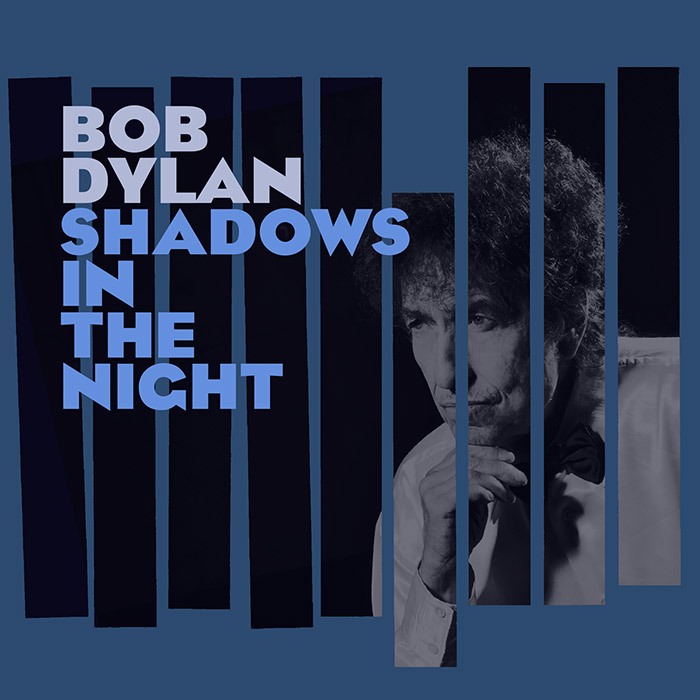
Yesterday, much to their delight, visitors to bobdylan.com discovered that the singer-songwriter had posted a new track — a cover of “Full Moon and Empty Arms,” a song recorded by Frank Sinatra back in 1946. Although details remains scarce, it looks as if the new track will appear on a forthcoming album called Shadows in the Night, for which you can already see some cover art. The new track appears below.
Related Content:
Bob Dylan Reads From T.S. Eliot’s Great Modernist Poem The Waste Land
Bob Dylan and The Grateful Dead Rehearse Together in Summer 1987. Listen to 74 Tracks.
Two Legends Together: A Young Bob Dylan Talks and Plays on The Studs Terkel Program, 1963
Read More...Teenage Lou Reed Sings Doo-Wop Music (1958–1962)
The Andy Warhol-masterminded avant-garde rock group The Velvet Underground brought Lou Reed to the attention of a generation — it and all of Reed’s artistically wide-ranging projects would draw notice from generations thereafter. But such a singular personality couldn’t have simply appeared, fully formed, along with the Velvets. What, then, had he done before that epochal band began playing together in 1965?
The answer, as you can hear in 1962’s “Merry Go Round” and “Your Love,” the pair of singles embedded at the top of the post: doo-wop. Though not released in their day, the songs find a certain “Lewis Reed” laying down his very first lead vocals. Years before, in 1958, the producer of those songs put out a 45 by the The Jades, the high-school band in which Reed had played but not sung. You can hear the doo-wop trio’s “So Blue” below:
“The Jades wasn’t a band, it was just one guitar and two other guys singing,” Reed later said. “I was in the background. I wrote the stuff, I didn’t sing it. We would play shopping malls and some really bad violent places. I was always, like, tremendously under age, which was pretty cool.” You can hear more reminiscences of The Jades’ heyday, such as they had, in this interview with lead singer (and Reed’s high-school classmate) Phil Harris. “One evening, at Lou’s house, we started fooling around with some lyrics and during that evening, both ‘So Blue’ and ‘Leave Her for Me’ were written. In those days, it didn’t take much imagination to come up with something. You just thought of an experience that you might have gone through and wrote it down.” Instead of continuing with music, Harris opted for the U.S. Navy and what he calls “a typical life in the work-a-day world.” His bandmate, on the other hand, went on to a long career that seemed to demand no small amount of imagination: being Lou Reed.
Related Content:
Watch Red Shirley, Lou Reed’s Short Documentary on His Fascinating 100-Year-Old Cousin (2010)
Nico, Lou Reed & John Cale Sing the Classic Velvet Underground Song ‘Femme Fatale’ (Paris, 1972)
Lou Reed Rewrites Edgar Allan Poe’s “The Raven.” See Readings by Reed and Willem Dafoe
Selling Cool: Lou Reed’s Classic Honda Scooter Commercial, 1984
Colin Marshall hosts and produces Notebook on Cities and Culture and writes essays on cities, language, Asia, and men’s style. He’s at work on a book about Los Angeles, A Los Angeles Primer. Follow him on Twitter at @colinmarshall or on Facebook.
Read More...The Rehearsal Sessions For Nirvana’s MTV Unplugged Appearance (1993)
Debuting in 1989, MTV’s Unplugged promised to cure the culture’s slick 80s hangover with acoustic guitars and earnest, coffee-shop intimacy from the 90s biggest stars (Mariah Carey) and a select few classic giants (McCartney, Clapton, Dylan, a reformed Kiss). In a series documenting some iconic last or near-last performances—from 10,000 Maniacs, Alice in Chains—perhaps the most iconic was the November, 1993 appearance of Nirvana (below), whose troubled singer/guitarist overdosed just weeks into the band’s 1994 European tour, then took his life in April of that year. For children of the decade, Nirvana’s Unplugged appearance, though hard to watch in hindsight, perhaps defines the 90s more than any other TV moment. And yet, writes Andrew Wallace Chamings in The Atlantic, “it’s worth considering the performance as a work of music, not mythology. Because as music, it’s incredible.”
You want intimacy? “Parts of the Nirvana set,” writes Chamings, “feel so personal it’s awkward.” Cobain is cranky in between-song banter, hunched over his guitar in his puke green thrift-store cardigan, snapping at his bandmates and the audience. His performances are intense and eerie, particularly his cover of Lead Belly’s “Where Did You Sleep Last Night,” the last song of the evening, which Neil Young described as “unearthly, like a werewolf.” The band never hid behind a pre-fabricated mystique, but their acoustic set highlights just how emotionally invested Cobain was in music—his own and others. Joined by Germs (and later Foo Fighers) guitarist Pat Smear, they mostly eschewed the hits, and played covers by Cobain’s favorite bands: Meat Puppets, Bowie, The Vaselines. You want even more intimacy? Watch the Unplugged rehearsal sessions at the top of the post.
Where the televised Unplugged episode has the loose, informal vibe of band practice with an audience, this rehearsal footage is more of a soundcheck, but with some truly beautiful performances. Cobain tweaks technical details and gets snippy with the engineer. According to several people involved, the rehearsal sessions were especially difficult, with Cobain suffering from withdrawal and generally nervous and unhappy, almost bailing on the show at the last minute. Cobain biographer Charles Cross quotes one observer as saying “There was no joking, no smiles, no fun coming from him.” Cobain’s request that the studio be decorated with black candles and stargazer lilies prompted the producer to ask, “You mean like a funeral?” “Exactly,” he said, “like a funeral.” But it’s the band’s insistence that the show be tailored to their anti-rock star personality that makes the performances so memorable. “We’d seen the other Unpluggeds and didn’t like many of them,” recalled Dave Grohl, “because most bands would treat them like rock shows… except with acoustic guitars.” Nirvana’s Unplugged was something entirely different. A televised swan song that was also, in Chaming’s words, “the prettiest noise the band has ever made.”
Related Content:
Nirvana Plays in a Radio Shack, the Day After Recording its First Demo Tape (1988)
Nirvana’s Home Videos: An Intimate Look at the Band’s Life Away From the Spotlight (1988)
The First Live Performance of Nirvana’s “Smells Like Teen Spirit” (1991)
Josh Jones is a writer and musician based in Durham, NC. Follow him at @jdmagness.
Read More...Tim Burton’s Early Student Films: King and Octopus & Stalk of the Celery Monster
Tim Burton started his live-action directing career making Pee-wee’s Big Adventure and went on to direct a string of blockbusters including a CG-heavy version of Alice in Wonderland that featured a lot more sword fighting than Lewis Carroll’s original story. Burton has crafted a couple movies that could be called masterpieces (Ed Wood, Beetlejuice) and alot more that decidedly could not (Hello, Planet of the Apes). Yet whatever project he takes on, his movies always look stunning, distinctive and, well, a bit ghoulish.
Burton started his career studying animation at the California Institute of the Arts (CalArts) – an art school almost as famous for being the training ground of the likes of Burton, John Lasseter and Brad Bird as it is for its clothing-optional swimming pool. You can see fragments of a couple of Burton’s movies he did at CalArts above. One is from a short called King and Octopus and it shows a cephalopod looking quite bored on a king’s throne while a guy (presumably the king) shouts abuse from a dungeon.
The clip is missing its soundtrack so your guess is as good as mine as to what the story is about. The second is Stalk of the Celery Monster, a movie about the worst dentist this side of Marathon Man. Burton’s obsession with the macabre is clearly evident even in these early works, especially Celery Monster, which has the sort of Frankenstein-like mad scientist that would pop up over and over in his later work.
Based off of Celery Monster, Burton was hired by Disney as an animator and he was soon put to work on the very unmacabre feature-length movie The Fox and the Hound (1981). It wasn’t his cup of tea. “At first I thought, ‘Wow, this is incredible,’” he told the Chicago Tribune back in 1992. “But once I got into it, I realized I wasn’t cut out for it. I didn’t have the patience and I didn’t like what they [Disney] was doing.”
Fortunately, Disney let Burton make his own shorts. He ultimately made three movies there including Frankenweenie (1984), which got him the attention of producers in Warner Brothers and which was later adapted into a 2012 feature. The first short he produced, however, was Vincent (1982), a stop-motion animated film about a Calvin-like seven-year-old boy who fantasizes that he’s Vincent Price. Check it out below. It displays all the traits that would come to be known as “Burtonesque.” Many more great animated shorts can be found on our list of Free Animated Films, part of our bigger collection 4,000+ Free Movies Online: Great Classics, Indies, Noir, Westerns, Documentaries & More.
Related Content:
Tim Burton: A Look Inside His Visual Imagination
Tim Burton’s The World of Stainboy: Watch the Complete Animated Series
Vincent: Tim Burton’s Early Animated Film
Six Early Short Films By Tim Burton
Jonathan Crow is a Los Angeles-based writer and filmmaker whose work has appeared in Yahoo!, The Hollywood Reporter, and other publications. You can follow him at @jonccrow.
Read More...Jimmy Page Gives Commencement Address at Berklee; Students Perform Led Zep Classics for Him
Graduation season is upon us and, last weekend, the great Jimmy Page had a busy weekend at the Berklee College of Music in Boston. The school gave the Led Zeppelin guitarist an honorary doctoral degree in music, before letting him present — or rather “busk” — a short commencement address to nearly 900 hundred graduates at the Agganis Arena. But probably the highlight came the night before, when Berklee students performed for Page, playing renditions of Kashmir, Stairway to Heaven, Dazed and Confused and Whole Lotta Love, among other Led Zeppelin classics. Happily, some footage from that performance has popped up on Facebook. Watch it right below:
Related Content:
Jimmy Page Tells the Story of “Kashmir”
Jimmy Page, 13, Plays Guitar on BBC Talent Show (1957)
Led Zeppelin Plays One of Its Earliest Concerts (Danish TV, 1969)
Read More...London Mashed Up: Footage of the City from 1924 Layered Onto Footage from 2013
Great cities are highly changeable by nature, though certain skyline-dominating landmarks endure. Visitors and residents alike romanticize the Eiffel Tower, the Empire State Building, and the Colosseum. (That last one’s got real staying power)
In Wonderful London in 1924 and 2014, above, filmmaker Simon Smith goes with the flow established by his predecessors, Harry B. Parkinson and Frank Miller, who featured St. Paul’s Cathedral on the title cards of their short documentary series, “Wonderful London.” That iconic dome makes for a lovely and sentimental view. These days, it can be taken in from the Millennium Bridge or 6th floor cafe of the Tate Modern (housed in the former Bankside Power Station).
Time has altered all of Parkinson’s and Miller’s locations over the last 90 years, as Miller’s 2013 footage shows. The iconic architecture may remain, but Covent Garden now caters to tourists, a rack of Boris Bikes flanks the Haymarket, and the West End reflects the sensibilities of ladies who dare appear in public in trousers.
Using Gustav Mahler’s Fourth Symphony as a sort of sonic mortar, Smith bricks the present day onto the British Film Institute’s recent restoration of Parkinson and Miller’s work. Actually, it’s more of a keyhole effect, through which viewers can peep into the past.
Assuming the medium (and species) survives, we may one day seem as quaint and the sepia-toned figures bustling through the earlier film. Unthinkable? What will the modern world surrounding our keyhole look like?
Related Content:
Prize-Winning Animation Lets You Fly Through 17th Century London
A Journey Back in Time: Vintage Travelogues
Ayun Halliday recommends the working man’s caff E Pellici in London’s East End the next time you’re in the mood for lunch with a side of history. Follow her @AyunHalliday
Read More...Support Us
We're hoping to rely on loyal readers, rather than erratic ads. Please click the Donate button and support Open Culture. You can use Paypal, Venmo, Patreon, even Crypto! We thank you!

About Us

Open Culture scours the web for the best educational media. We find the free courses and audio books you need, the language lessons & educational videos you want, and plenty of enlightenment in between.
Advertise With Us

FREE UPDATES!
GET OUR DAILY EMAIL
Get the best cultural and educational resources on the web curated for you in a daily email. We never spam. Unsubscribe at any time.
FOLLOW ON SOCIAL MEDIA

Open Culture editor Dan Colman scours the web for the best educational media. He finds the free courses and audio books you need, the language lessons & movies you want, and plenty of enlightenment in between.
Advertise With Us


