Watch Dinner for One, the Short Film That Has Become a Baffling New Year’s Tradition in Europe
There are myriad New Year’s Eve customs worldwide. In Japan, toshikoshi soba noodles are eaten to bring in the coming year. In North America, finding someone to share a New Year’s Eve kiss with as the clock winds down has become a boon to the romantically-challenged. In Germany, however, a different tradition has taken form: every year on December 31st, TV networks broadcast an 18-minute-long black and white two-hander comedy skit.
In 1963, Germany’s Norddeutscher Rundfunk television station recorded a sketch entitled Dinner For One, performed by the British comics Freddie Frinton and May Warden. The duo depicted an aging butler serving his aristocratic mistress, Miss Sophie, dinner on the occasion of her 90th birthday.
Although four additional spots have been set at the table, the nonagenarian’s friends have long since passed away, and the butler is forced to take their places in drinking copious amounts of alcohol while toasting Miss Sophie’s health. Hilarity, as it is wont to do in such cases, ensues.
Since its initial recording, the clip has become a New Year’s Eve staple in Germany. Although Dinner For One has never been broadcast in the U. S. or Canada, the clip has spread throughout Europe to Norway, Finland, Estonia, Lithuania, Austria, Switzerland, and beyond the continent’s shores, to South Africa and Australia. In Sweden, a bowdlerized 11-minute version of the clip has been produced, where, for decency’s sake, much of the butler’s boozing was excised alongside its attendant comedic effect. In Denmark, after the national television network failed to broadcast the sketch in 1985, an avalanche of viewer complaints has guaranteed its subsequent yearly appearance. Although the category is now defunct, the clip held the Guinness World Record for Most Frequently Repeated TV Program. As for why the video’s garnered so much attention? No one’s really sure. The Wall Street Journal’s Todd Buell posits that the sketch’s easy to understand English combined with a German longing for security and simplicity may have led to its iconic status. To me, however, it seems that the finely tuned physical comedy translates readily beyond any linguistic boundaries, and simply hit the right note at the right time.
Above, you can view the original 18-minute comedic opus and celebrate New Year’s day in the same way that much of Europe brought in 2014 (don’t mind the German introduction — the video is in English). In future years, you can always find Dinner for One in our collection 4,000+ Free Movies Online: Great Classics, Indies, Noir, Westerns, Documentaries & More.
From all of us at Open Culture to you, have a happy new year!
Related Content:
The Ramones Play New Year’s Eve Concert in London, 1977
A New Year’s Wish from Neil Gaiman
The Top 10 New Year’s Resolutions Read by Bob Dylan
Read More...
The 15 Most Popular Posts from Open Culture in 2013

In 2013, we published 1300+ posts on a wide range of cultural subjects. Looking back through our logs we were able to identify the 15 posts that resonated most widely with our readers. We hope you enjoy this recap, and share some of the items with friends. And we look forward to seeing you in 2014. Happy New Year to you all.
Noam Chomsky Slams Žižek and Lacan: Empty ‘Posturing’: A little spat broke out between Chomsky and Žižek this summer. Chomsky got the debate going after he accused Jacques Lacan of being a “total charlatan” and Slavoj Žižek of posturing rather than offering real intellectual substance. Žižek replied sharply. Chomsky rebutted. Žižek countered again. Some scored it a draw.
The 10 Greatest Films of All Time According to 846 Film Critics: Throughout the year, our resident film scholar Colin Marshall revisited the favorite films of some of the greatest filmmakers — Stanley Kubrick, Martin Scorsese, Woody Allen, and Quentin Tarantino, to name a few. But it also made sense to take a more global view of things, to survey the films loved by 800+ directors and film critics. That’s what you can find here.
Listen to Freddie Mercury and David Bowie on the Isolated Vocal Track for the Queen Hit ‘Under Pressure,’ 1981: In 2013, we featured a series of isolated tracks that offer unique insights into classic songs. You might recall Kurt Cobain’s Vocals From ‘Smells Like Teen Spirit,’ Eric Clapton’s Isolated Guitar Track From ‘While My Guitar Gently Weeps’, and Merry Clayton’s Haunting Background Vocals on the Rolling Stones’ ‘Gimme Shelter’. But your favorite was Freddie Mercury and David Bowie’s unforgettable performance on Queen’s Under Pressure. You have good taste. Bowie fans should also check his list of his Top 100 Books.
Read 18 Short Stories From Nobel Prize-Winning Writer Alice Munro Free Online: When Alice Munro won the Nobel Prize on the strength of her many short stories, Josh Jones gathered for you 18 free short stories written by the now 82-year-old author. They’re all free to read online. During the year, we also put together collections of 10 Free Stories by George Saunders, 10 Free Articles by Hunter S. Thompson, Four Stories by Jennifer Egan, and 30 Free Essays & Stories by David Foster Wallace. Be sure to enjoy them as well.
Free: The Metropolitan Museum of Art and the Guggenheim Offer 474 Free Art Books Online: Art catalogues from museums can be downright expensive. That’s why we were excited when The Met and the Guggenheim put an archive of art catalogues online for free. For no cost, you can read highly visual introductions to the work of Alexander Calder, Edvard Munch, Francis Bacon, Gustav Klimt & Egon Schiele, Wassily Kandinsky, Georgia O’Keeffe, Frank Lloyd Wright and many other influential artists.
The British Library Puts 1,000,000 Images into the Public Domain, Making Them Free to Reuse & Remix: Some of the world’s great libraries are also opening access to our cultural heritage. Take for example the British Library, which announced this month that it has released over a million images onto Flickr Commons for anyone to use, remix and repurpose. Culled from the pages of 17th, 18th and 19th century books, the images include a dizzying array of “maps, geological diagrams, beautiful illustrations, comical satire, illuminated and decorative letters, colorful illustrations, landscapes, wall-paintings” and more.
John Coltrane’s Handwritten Outline for His Masterpiece A Love Supreme: To celebrate Trane’s birthday, we featured a rare document from the Smithsonian’s National Museum of American History: Coltrane’s handwritten outline of his groundbreaking jazz composition A Love Supreme. In terms of popularity, this post was just about tied with another great (but very different) jazz document: Thelonious Monk’s List of Tips for Playing a Gig.
The Genius of J.S. Bach’s “Crab Canon” Visualized on a Möbius Strip: Bach wrote his “Crab Canon” in such a way that it could be played backwards as well as forwards. But prepare yourself for the mind-blowing coup de grâce when mathematical image-maker Jos Ley lays the piece out on a Möbius strip.
Seven Tips From Ernest Hemingway on How to Write Fiction: Hemingway never wrote a treatise on the art of writing fiction. He did, however, leave behind a great many passages in letters, articles and books with opinions and advice on writing. Some of the best of those were assembled in 1984 by Larry W. Phillips into a book, Ernest Hemingway on Writing. We’ve selected seven of our favorite quotations from the book and placed them, along with our own commentary, on this page. Readers will also want to peruse these related posts: 18 (Free) Books Ernest Hemingway Wished He Could Read Again for the First Time and Hemingway Creates a Reading List for a Young Writer, 1934, plus F. Scott Fitzgerald Creates a List of 22 Essential Books, 1936.
Pink Floyd’s David Gilmour Sings Shakespeare’s Sonnet 18: In the early 2000s, Pink Floyd guitarist and singer David Gilmour recorded a musical interpretation of William Shakespeare’s “Sonnet 18″ at his home studio aboard the historic, 90-foot houseboat the Astoria. This video of Gilmour singing the sonnet was released as an extra on the 2002 DVD David Gilmour in Concert, and it’s pretty sublime.
Learn to Code with Harvard’s Intro to Computer Science Course And Other Free Tech Classes: These days, it could never hurt to make sure you have some good tech chops. Many of you understand that, and that’s why you jumped on Harvard’s free, introductory computer science course. Taught by David Malan, the introductory course covers “abstraction, algorithms, encapsulation, data structures, databases, memory management, security, software development, virtualization, and websites. Languages include C, PHP, and JavaScript plus SQL, CSS, and HTML.” You can always find the course listed in the Computer Science section of our collection of 800 Free Courses Online.
Michelangelo’s Illustrated 16th-Century Grocery List: Very few of Michelangelo’s papers survive today, but we do oddly have the grocery lists that he had his servant bring to the food market. “Because the servant he was sending to market was illiterate,” writes the Oregonian‘s Steve Duin, “Michelangelo illustrated the shopping lists — a herring, tortelli, two fennel soups, four anchovies and ‘a small quarter of a rough wine’ — with rushed … caricatures in pen and ink.” It’s a unique historical item, certainly worth checking out.
Prize-Winning Animation Lets You Fly Through 17th Century London: Six students from De Montfort University created a stellar 3D representation of 17th century London, as it existed before The Great Fire of 1666. The three-minute video provides a realistic animation of Tudor London, and particularly a section called Pudding Lane where the fire started. Grab a small handful of popcorn, and sit back and enjoy.
Hermann Rorschach’s Original Rorschach Test: What Do You See?: In honor of Hermann Rorschach’s birthday in November, we highlighted the original images used in his famous psychology test back in 1921. And we invited you to say what you saw in these images. The answers were often amusing, sometimes perplexing.
Simone de Beauvoir Explains “Why I’m a Feminist” in a Rare TV Interview (1975): In a 1975 interview, Simone de Beauvoir picked up on ideas she explored in The Second Sex. This revealing clip can be watched alongside other 2013 posts featuring de Beauvoir and her partner Jean-Paul Sartre. See Lovers and Philosophers — Jean-Paul Sartre & Simone de Beauvoir Together in 1967 and Philosophy’s Power Couple, Jean-Paul Sartre and Simone de Beauvoir, Featured in 1967 TV Interview.
Bonus: Fill Your New Kindle, iPad, iPhone, eReader with Free eBooks, Movies, Audio Books, Online Courses & More: Just last week, we told you where to load up your new iPads, Kindles, and other devices with free intelligent media. If you missed it the first time around, it’s not too late to circle back.
Don’t miss anything from Open Culture in 2014. Sign up for our Daily Email or RSS Feed. And we’ll send cultural curiosities your way, every day.
Read More...Free Fun: Play Donkey Kong, Pac Man, Frogger & Other Golden Age Video Games In Your Web Browser

While I was growing up in the 1990s, my parents’ refusal to purchase gaming consoles gave me no choice but to navigate the age of Nintendo 64 with a doddering, nearly decade-old PC. As my friends were enthralled by the then-dazzling graphics of Mario 64, I was using my lumbering mastodon of a 486/66 mhz computer as a way to re-experience some of the best console games of years past. Having downloaded programs that turned my computer into a keyboard-controlled Atari, Nintendo, Super Nintendo, or Sega Genesis, and having sought out the websites that hosted the game files, I was mollified by playing Pac Man (1980), Castlevania (1986), and Asteroids (1979), amongst dozens of others.
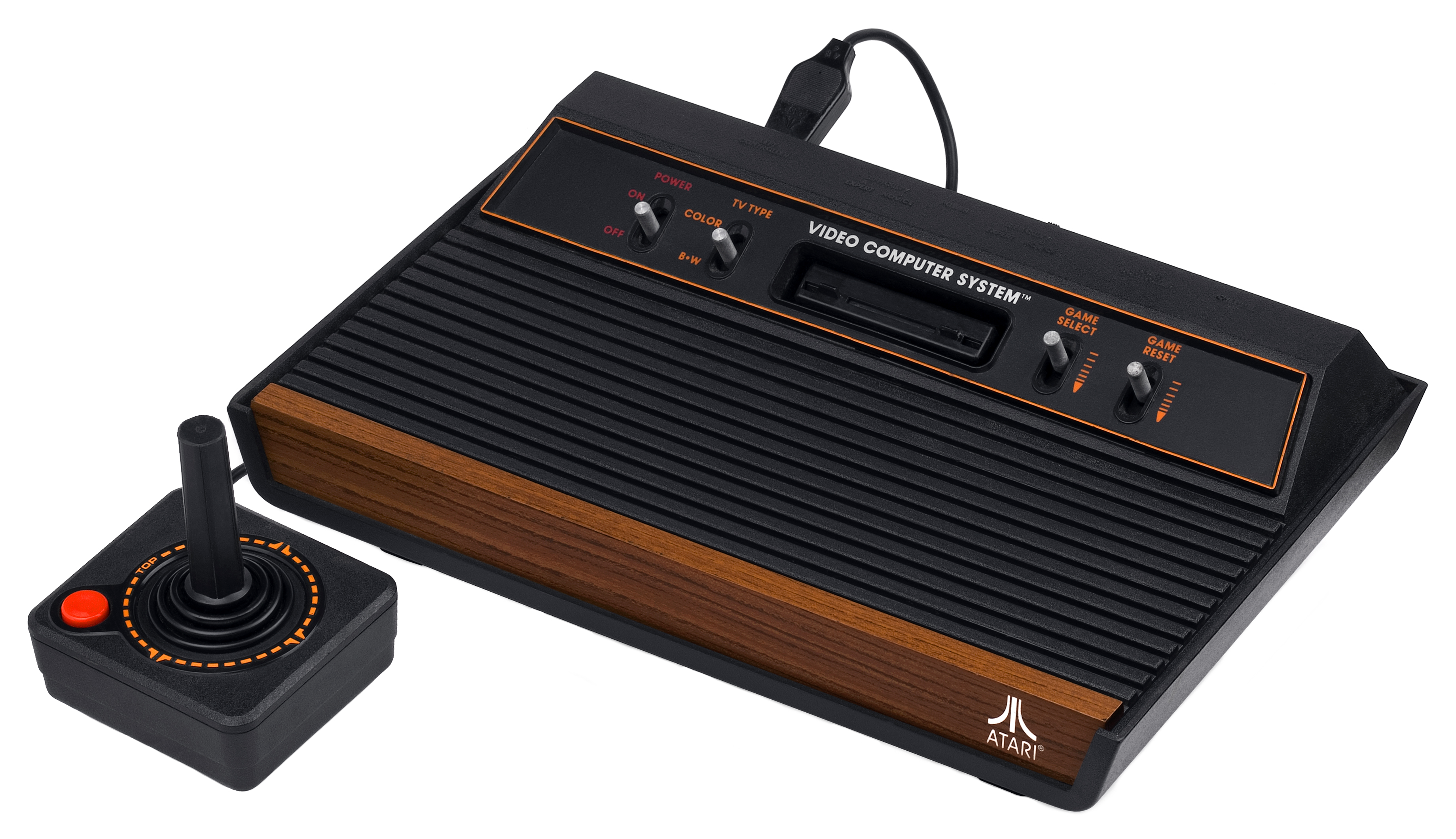
Earlier this year, the Internet Archive set aflame the hearts of nostalgic gamers everywhere by opening the Historical Software Collection, making classics such as Karateka (1984) and Akalabeth (1980) freely available and removing the need to download any additional software components. On Boxing Day, the generous souls at the Internet Archive announced a follow-up: the Console Living Room. For those wishing to relive the joys of early consoles, sourcing classic titles and downloading emulation programs to turn your computer into a virtual console is no longer necessary. Using nothing more than their browser (Firefox is recommended), users can enjoy the full (albeit temporarily soundless) experience of ‘70s and ‘80s classics and rarities on the Atari 2600, Atari 7800 ProSystem, ColecoVision, Magnavox Odyssey², and Astrocade consoles. Quick sessions of Donkey Kong (1981), Asteroids (1987), and Mario Bros. (1988) have never been easier.
For a full list of games, including Dig Dug (1984), Frogger (1982), and Pac Man (1983), head over to the Internet Archive’s Console Living Room. For further information, check out their initial announcement.
Ilia Blinderman is a Montreal-based culture and science writer. Follow him at @iliablinderman.
Related Content:
Long Live Glitch! The Art & Code from the Game Now Released into the Public Domain
Read More...Google Puts Over 57,000 Works of Art on the Web
In its art preservationist wing, the Cultural Institute, Google houses an enormous digital collection of artwork spanning centuries and continents in what it calls the Art Project. Google’s collection, writes Drue Kataoka at Wired, is part of a “big deal […] it signals a broader, emerging ‘open content’ art movement.” “Besides the Getty,” Kataoka notes, this movement to digitize fine art collections includes efforts by “Los Angeles’ LACMA… as well as D.C.’s National Gallery of Art, the Dallas Museum of Art, Baltimore’s Walters Art Museum, and the Yale University Art Gallery. And Google. Yes, Google.” Google is working hard to defuse this “yes, Google” reaction, posting frequent updates to its collection, already a magnificent phenomenon: “Imagine seeing an image of the Fall of the Rebel Angels by Pieter Breuegel the Elder,” writes Kataoka, “or Vincent van Gogh’s Irises, in high resolution.” Now, you can, thanks to Google’s astonishingly vast digital archive.
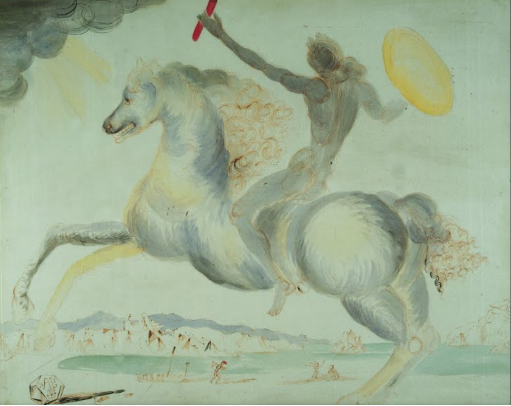
In the Art Project, you can stroll on over to Portugal’s Museu do Caramulo, for example, which Google describes as “an unusual museum in a small town” off the beaten path. There, you can see this macabre 1947 Picasso still life or this 1954 Salvador Dali portrait of a Roman horseman in Iberia (above). Then head over to the other side of the world, where the Adachi Museum of Art in Japan contains 165,000 square meters of Japanese garden: “The Dry Landscape Garden, The White Gravel and Pine Garden, the Moss Garden, and The Pond Garden.” It also features gorgeous paintings like Yokoyama Taikan’s 1931 Autumn Leaves and Hishida Shunso’s adorable 1906 Cat and Plum Blossoms. Dozens of smaller collections like these sit comfortably alongside such extensive and well-known collections as New York’s MoMA and Metropolitan Museum of Art and Florence’s Uffizi. See a tiny sampler of the Art Project in the video teaser above.

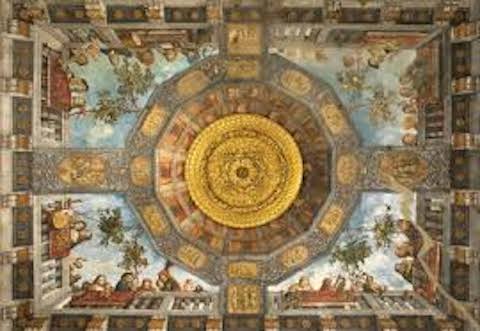
Google’s collection has greatly expanded since its comparatively modest 2011 roll-out. The company signed partnership agreements with 151 institutions in 2012 and the Art Project has grown since then to include over 57,000 digital representations of famous and not-so-famous works of art. Most recently, it has added work to the online collections of 34 different partner institutions. Google’s announcement on its official blog takes a themed approach, presenting versions of several trompe l’oeil (“fool the eye”) works that have just joined the Art Project. Trompe l’oeil is a gimmick as old as antiquity, and Google gives us several examples, beginning with the stylish, understated Brazilian train station mural right above by Adriana Varejao. Below, see the ceiling of Italy’s National Archaeological Museum of Ferrara, a much more classical (or Baroque) approach to trompe l’oeil that displays some typical elements of the period, including elaborate geometric designs, lots of gold, and well-dressed figures staring down at viewers or floating off into the heavens. See more trompe l’oeil works on Google’s blog, and access their full digital collection here.
Related Content:
The Rijksmuseum Puts 125,000 Dutch Masterpieces Online, and Lets You Remix Its Art
The Getty Puts 4600 Art Images Into the Public Domain (and There’s More to Come)
Free: The Metropolitan Museum of Art and the Guggenheim Offer 474 Free Art Books Online
Josh Jones is a writer and musician based in Durham, NC. Follow him at @jdmagness
Read More...Read an 18th-Century Eyewitness Account of 8‑Year-Old Mozart’s Extraordinary Musical Skills

‘Tis the very nature of parenthood to view one’s children as exceptional.
Another aspect of the condition is spending time in the company of other parents, some of whom have yet to master the art of self-restraint. Their babies are the most physically adroit, their toddlers the most generous, their elementary schoolers the most culinarily daring.
Pride in one’s children’s gifts is understandable. A straightforward brag or two is permissible. But after that, I’d really like some corroborating evidence, such as the Honourable Daines Barrington’s account of meeting a “very remarkable young musician” whose father had been dragging him around the continent on a 3‑and-a-half year concert tour.
Clearly, Johannes Chrysostomus Wolfgangus Theophilus Mozart (1756–1791) was a very accomplished kid, but the term “prodigy” must have stuck in Friend of the Royal Society Barrington’s craw, even after he’d attended some of the boy’s public performances. Determined to let science be the judge, he devised a series of on-the-spot challenges designed to evaluate the boy’s musicianship beyond the rigorous practice schedule imposed by his disciplinarian father. (We all saw Amadeus, right?)
Barrington’s detailed description of these experiments would make a gimcrack Science Fair project for any little Einstein smart enough to get through 18th-century typography without throwing a tantrum because the s’s all look like f’s (see the 18th century text below). It might take a recreational mathemusician on the order of Vi Hart to truly appreciate the complexity of the tasks that Barrington assigned his young subject (something to do with having him play five contradictory lines simultaneously…).
I can interpret the data with regard to some of Barrington’s other findings. Mozart, he wrote, not only looked like a young child, he ditched his harpsichord to chase around a cat and ran about the room “with a stick between his legs by way of a horse.” So it’s not the classical period equivalent of a stage mom lying about her kid’s age to better his chances at an audition. Actually, it’s always a relief to hear about these super-kids acting like… well, my kids.
Read Barrington’s letter to the Royal Society — Account of a Very Remarkable Young Musician — in its entirety here or below. And by all means share it with the worst offenders on your PTA.
via Rebecca Onion and her Slate blog, The Vault
Related Content:
Newly Discovered Piece by Mozart Performed on His Own Fortepiano
Great Violinists Playing as Kids: Itzhak Perlman, Anne-Sophie Mutter, & More
The Musical Mind of Albert Einstein: Great Physicist, Amateur Violinist and Devotee of Mozart
Ayun Halliday provided an honest account of homeschooling her 12-year-old son in The East Village Inky #51 Follow her @AyunHalliday
Read More...Every Appearance James Brown Ever Made On Soul Train. So Nice, So Nice!
Are you ready for some Super Brother Music for the Soul?
Yes? How fortuitous! We just happen to have 45 minutes worth of James Brown Soul Train appearances from the early-to-mid-’70s to share. Get down!
It’s worth noting that Brown’s band, the JBs, were the only ones in the history of the show who host Don Cornelius trusted to play live. The Godfather of Soul ran a tight ship, fining band members for sour notes and untidy costumes, and it shows. The dance show’s stage was tight, but the performances here are even tighter, as lean and mean as those funkadelic Curtis Gibson ensembles!
If your New Year’s Eve plans pale in comparison with the playlist below, cancel them and stay in. Feel good. So good. We got you.
Hot Pants
Get Up (I Feel Like A) Sex Machine 2:36
Get On The Good Foot 4:06
Soul Power 6:51
Make It Funky 9:53
Cold Sweat 11:07
Try Me 14:22
Please Please, Please 17:21
Say It Loud I’m Black and I’m Proud 17:57
Super Bad 23:53 (featuring Soul Train Gang dancer Damita Jo Freeman’s insane Robot)
Papa Don’t Take No Mess 26:18
My Thang 29:57
Hell 33:33 (the little girl sharing the stage is Brown’s daughter, Deanna)
The Payback 35:57
Damn Right, I Am Somebody 40:25 (with Fred Wesley & the JB’s)
via That Eric Alper
Related Content:
James Brown Gives You Dancing Lessons: From The Funky Chicken to The Boogaloo
James Brown Saves Boston After MLK’s Assassination, Calls for Peace Across America (1968)
James Brown Brings Down the House at the Paris Olympia, 1971
Ayun Halliday is the author of seven books, including No Touch Monkey! And Other Travel Lessons Learned Too Late and the Zinester’s Guide to NYC. Follow her @AyunHalliday
Read More...The International Children’s Digital Library Offers Free eBooks for Kids in Over 40 Languages
For all of the free literature and essays available online, a surprisingly small amount is geared toward children. Even less is aimed at children who speak foreign languages.
The International Children’s Digital Library offers children ages 3–13 free access to the best available children’s literature in more than 40 languages. Librarians find and digitize books published around the world and present them in their original languages.
The site acts as a meta learning tool. It is designed to be easy for children to use by themselves—by simply clicking “Read Books,” a list of favorite titles pops up—but kids can learn how to search too, by their own age, types of characters, genre, book length, language and geographical region.
The homepage features recommended and popular titles, like Tyrone the Horrible, written in Spanish. Where translation rights exist, the library works with volunteer translators to provide additional language versions.
The library is a project of the University of Maryland’s Human-Computer Interaction Lab and there is a research component to the project. Working with children in New Zealand, Honduras, Germany, and the United States, researchers are looking at how children perceive other cultures outside their own.
The library’s broader mission is to make it possible for children all over the world to learn to use a library system and read a range of quality literature. The interface aims as much at international children as it does immigrant children in American cities and rural areas.
Books are available for free and without an account. An account, however, allows a child to create their own bookshelf of favorites that can be shared with other users. A guide for teachers includes a training manual and tips for how to use the library to teach creative writing, library search skills and foreign languages.
You will find the International Children’s Digital Library in our collection 200 Free Kids Educational Resources: Video Lessons, Apps, Books, Websites & More.
More digitized children’s books can be found at the Library of Congress.
Adults, don’t miss our other collection, 800 Free eBooks for iPad, Kindle & Other Devices.
Related Content:
Hear the Classic Winnie-the-Pooh Read by Author A.A. Milne in 1929
Watch Animations of Oscar Wilde’s Children’s Stories “The Happy Prince” and “The Selfish Giant”
The Classic 1956 Oscar-Winning Children’s Film, The Red Balloon
Read More...
Read 9 Free Articles by Hunter S. Thompson That Span His Gonzo Journalist Career (1965–2005)

Image via Wikimedia Commons
Most readers know Hunter S. Thompson for his 1971 book Fear and Loathing in Las Vegas: A Savage Journey to the Heart of the American Dream. But in over 45 years of writing, this prolific observer of the American scene wrote voluminously, often hilariously, and usually with deceptively clear-eyed vitriol on sports, politics, media, and other viciously addictive pursuits. (“I hate to advocate drugs, alcohol, violence, or insanity to anyone,” he famously said, “but they’ve always worked for me.”) His distinctive style, often imitated but never replicated, all but forced the coining of the term “gonzo” journalism. But what could define it? One clue comes in Fear and Loathing in Las Vegas itself, when Thompson reflects on his experience in the city, ostensibly as a reporter: “What was the story? Nobody had bothered to say. So we would have to drum it up on our own. Free Enterprise. The American Dream. Horatio Alger gone mad on drugs in Las Vegas. Do it now: pure Gonzo journalism.”
You’ll find out more in the Paris Review’s interview with Thompson, in which he recounts once feeling that “journalism was just a ticket to ride out, that I was basically meant for higher things. Novels.” Sitting down to begin his proper literary career, Thompson took a quick job writing up the Hell’s Angels, which let him get over “the idea that journalism was a lower calling. Journalism is fun because it offers immediate work. You get hired and at least you can cover the f&cking City Hall. It’s exciting.” And then came the real epiphany, after he went to cover the Kentucky Derby for Scanlan’s: “Most depressing days of my life. I’d lie in my tub at the Royalton. I thought I had failed completely as a journalist. Finally, in desperation and embarrassment, I began to rip the pages out of my notebook and give them to a copyboy to take to a fax machine down the street. When I left I was a broken man, failed totally, and convinced I’d be exposed when the stuff came out.”
Indeed, the exposure came, but not in the way he expected. Below, we’ve collected ten of Thompson’s articles freely available online, from those early pieces on the Hell’s Angels and the Kentucky Derby to others on the 1972 Presidential race, the Honolulu Marathon, Richard Nixon, and wee-hour conversations with Bill Murray. But don’t take these subjects too literally; Thompson always had a way of finding something even more interesting in exactly the opposite direction from whatever he’d initially meant to write about. And that, perhaps, reveals more about the gonzo method than anything else.
“The Motorcycle Gangs: Losers and Outsiders” (The Nation, 1965) The article that would become the basis for Thompson’s first book, Hell’s Angels: The Strange and Terrible Saga of the Outlaw Motorcycle Gangs. “When you get in an argument with a group of outlaw motorcyclists, you can generally count your chances of emerging unmaimed by the number of heavy-handed allies you can muster in the time it takes to smash a beer bottle. In this league, sportsmanship is for old liberals and young fools.”
Fear and Loathing in Las Vegas (Rolling Stone, 1971) The Gonzo journalism classic first appeared as a two-part series in Rolling Stone magazine in November 1971, complete with illustrations from Ralph Steadman, before being published as a book in 1972. Rolling Stone has posted the original version on its web site.
“Fear and Loathing on the Campaign Trail in ’72″ (Rolling Stone, 1973) Excerpts from Thompson’s book of nearly the same name, an examination of Democratic Party candidate George McGovern’s unsuccessful bid for the Presidency that McGovern’s campaign manager Frank Mankiewicz called “the least factual, most accurate account” in print. “My own theory, which sounds like madness, is that McGovern would have been better off running against Nixon with the same kind of neo-‘radical’ campaign he ran in the primaries. Not radical in the left/right sense, but radical in a sense that he was coming on with a new… a different type of politician… a person who actually would grab the system by the ears and shake it.”
“The Curse of Lono” (Playboy, 1983) Thompson and Steadman’s assignment from Running magazine to cover the Honololu marathon turns into a characteristically “terrible misadventure,” this one even involving the old Hawaiian gods. “It was not easy for me, either, to accept the fact that I was born 1700 years ago in an ocean-going canoe somewhere off the Kona Coast of Hawaii, a prince of royal Polynesian blood, and lived my first life as King Lono, ruler of all the islands, god of excess, undefeated boxer. How’s that for roots?”
“He Was a Crook” (Rolling Stone, 1994) Thompson’s obituary of, and personal history of his hatred for, President Richard M. Nixon. “Some people will say that words like scum and rotten are wrong for Objective Journalism — which is true, but they miss the point. It was the built-in blind spots of the Objective rules and dogma that allowed Nixon to slither into the White House in the first place.
“Doomed Love at the Taco Stand” (Time, 2001) Thompson’s adventures in California, to which he has returned for the production of Terry Gilliam’s film adaptation of Fear and Loathing in Las Vegas starring Johnny Depp. “I had to settle for half of Depp’s trailer, along with his C4 Porsche and his wig, so I could look more like myself when I drove around Beverly Hills and stared at people when we rolled to a halt at stoplights on Rodeo Drive.”
“Fear & Loathing in America” (ESPN.com, 2001) In the immediate aftermath of 9/11, Thompson looks out onto the grim and paranoid future he sees ahead. “This is going to be a very expensive war, and Victory is not guaranteed — for anyone, and certainly not for anyone as baffled as George W. Bush.”
“Prisoner of Denver” (Vanity Fair, 2004) A chronicle of Thompson’s (posthumously successful) involvement in the case of Lisl Auman, a young woman he believed wrongfully imprisoned for the murder of a police officer. “ ‘We’ is the most powerful word in politics. Today it’s Lisl Auman, but tomorrow it could be you, me, us.”
“Shotgun Golf with Bill Murray” (ESPN.com, 2005) Thompson’s final piece of writing, in which he runs an idea for a new sport —combining golf, Japanese multistory driving ranges, and the discharging of shotguns — by the comedy legend at 3:30 in the morning. “It was Bill Murray who taught me how to mortify your opponents in any sporting contest, honest or otherwise. He taught me my humiliating PGA fadeaway shot, which has earned me a lot of money… after that, I taught him how to swim, and then I introduced him to the shooting arts, and now he wins everything he touches.”
Related Content:
Hunter S. Thompson’s Harrowing, Chemical-Filled Daily Routine
Hunter S. Thompson Calls Tech Support, Unleashes a Tirade Full of Fear and Loathing (NSFW)
Johnny Depp Reads Letters from Hunter S. Thompson (NSFW)
Hunter S. Thompson Remembers Jimmy Carter’s Captivating Bob Dylan Speech (1974)
Colin Marshall hosts and produces Notebook on Cities and Culture and writes essays on cities, Asia, film, literature, and aesthetics. He’s at work on a book about Los Angeles, A Los Angeles Primer. Follow him on Twitter at @colinmarshall or on his brand new Facebook page.
Read More...Sherlock Holmes Is Now in the Public Domain, Declares US Judge
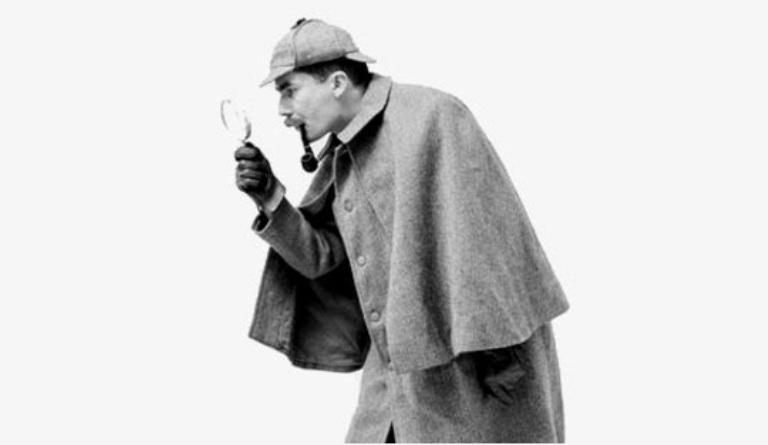
Chief Judge Rubén Castillo of the United States District Court of the Northern District of Illinois has ruled that the characters and story lines used in 50 Sherlock Holmes texts published by Arthur Conan Doyle before Jan. 1, 1923 “are no longer covered by United States copyright law and can be freely used by creators without paying any licensing fee to the Conan Doyle estate,” reports The New York Times. This gives contemporary authors the ability to write their own Sherlock Holmes mystery stories and keep contributing to a rich tradition of detective fiction. It would also seemingly put pre-1923 texts firmly in the public domain. (You can find The Adventures of Sherlock Holmes and other related stories in our Free eBooks and Free Audio Books collections. ) Leslie S. Klinger, the editor of The Complete Annotated Sherlock Holmes, who filed the civil suit, praised the judge’s decision, saying “People want to celebrate Holmes and Watson, and now they can do that without fear.” Now it’s time for them to write something that can hold a candle to what Conan Doyle created those many years ago.
Don’t miss anything from Open Culture. Sign up for our Daily Email or RSS Feed. And we’ll send cultural curiosities your way, every day.
via Arts Beat
Related Content:
Arthur Conan Doyle Discusses Sherlock Holmes and Psychics in a Rare Filmed Interview (1927)
Arthur Conan Doyle Fills Out the Questionnaire Made Famous By Marcel Proust (1899)
Read More...William Blake’s Hallucinatory Illustrations of John Milton’s Paradise Lost
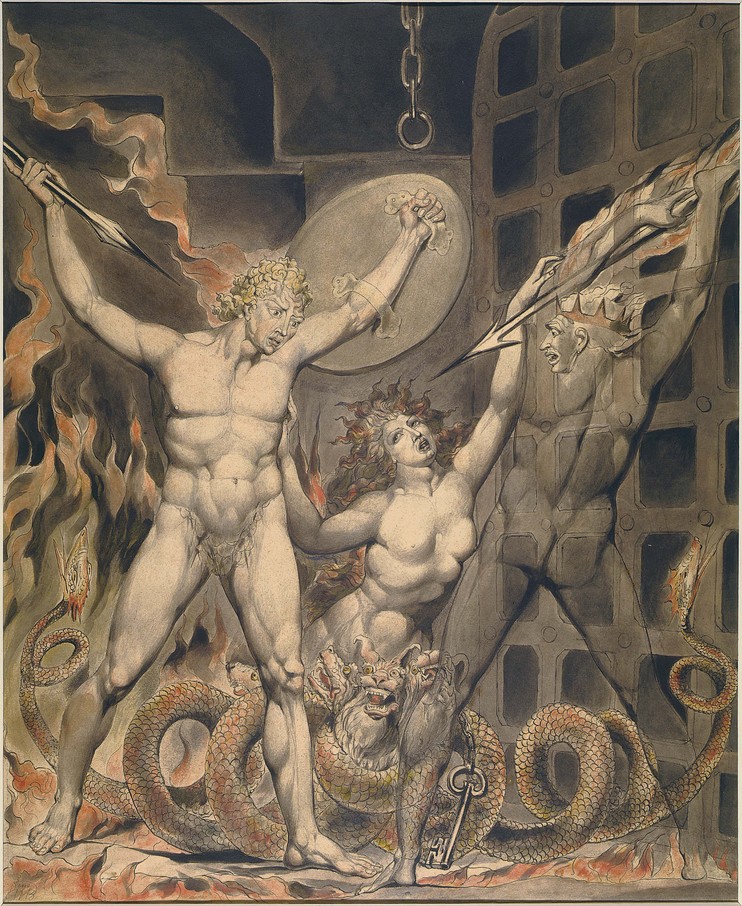
When I saw William Blake’s illustrations for the book of Job and for John Milton’s L’Allegro and Il Penseroso at the Morgan Library a few years ago, I was first struck by how small the intricate watercolors are. This should not have been surprising—these are book illustrations, after all. But William Blake (1757–1827) is such a tremendous force, his work so monumentally strange and beautiful, that one expects to be overpowered by it. In person, his drawings are indeed impressive, but they are equally so for their careful attention to design and composition as for their heavy, often quite terrifying subjects.
Look, for example, at the play of patterns behind the figures in the illustration above, from an edition of Milton’s Paradise Lost. The figure in the center depicts Milton’s grotesquely graphic allegorical construction of Sin. In Milton, this character “seemed woman to the waist, and fair,”
But ended foul in many a scaly fold
Voluminous and vast, a serpent armed
With mortal sting: about her middle round
A cry of hell hounds never ceasing barked
With wide Cerberian mouths full loud, and rung
A hideous peal: yet, when they list, would creep,
If ought disturbed their noise, into her womb,
And kennel there, yet there still barked and howled,
Within unseen.
Blake spares us the horror of the latter image—in fact he gets a little vague on the details of the creature’s netherparts, which were always difficult to imagine, and emphasizes the “fair” parts above (in the version below, the serpent/dog thing looks like a costume prop). Milton’s description always seemed to me one of the cruelest, most misogynistic renderings of the female body in literature. Blake’s portrait relieves Milton’s nastiness, making Sin sympathetic and, well, kinda hot, a Blakean feat for sure. The characters to her left and right are Satan and Death, respectively.
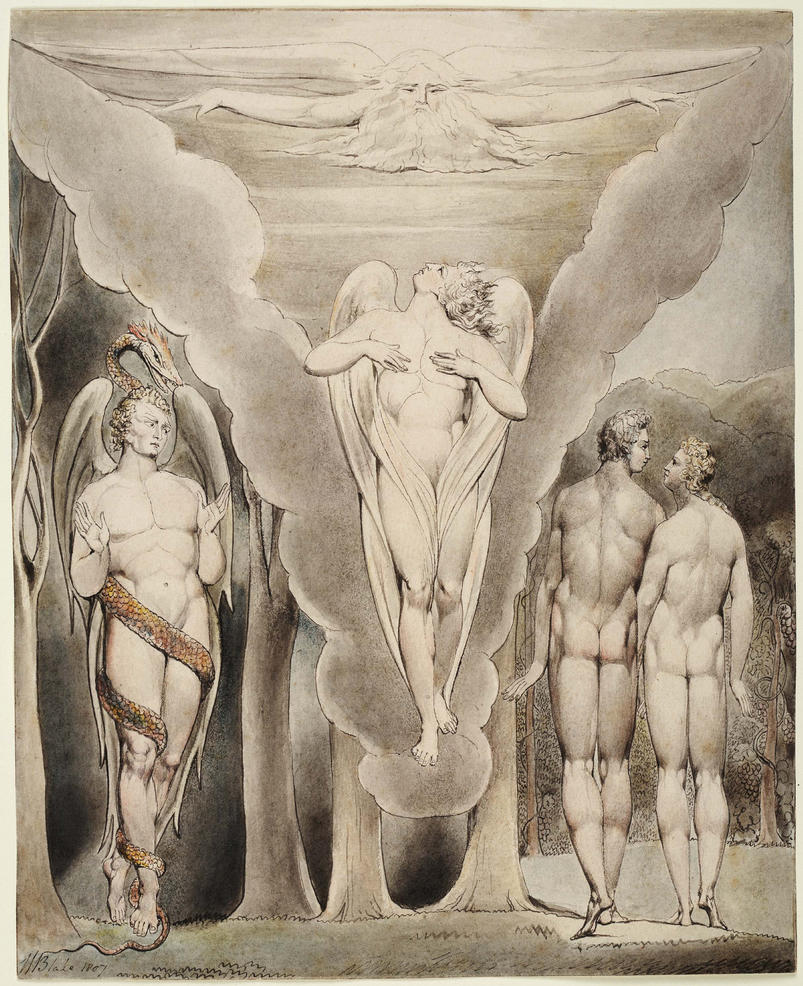
Blake loved Milton, and illustrated his work more than any other author. And he illustrated Paradise Lost more than any other Milton, in three separate commissions (peruse them all here). The first set dates from 1807, commissioned by Joseph Thomas. (The Satan, Sin, and Death scene above comes from the Thomas set.) The second set, from which the image at the top comes, was commissioned in 1808 by Thomas Butts. Blake patron John Linnell commissioned the third set of illustrations in 1822. Only three of the Linnell paintings survive—none of the scene above. In one of the 1822 illustrations (below), Satan spies on Adam and Eve as they canoodle in the garden.
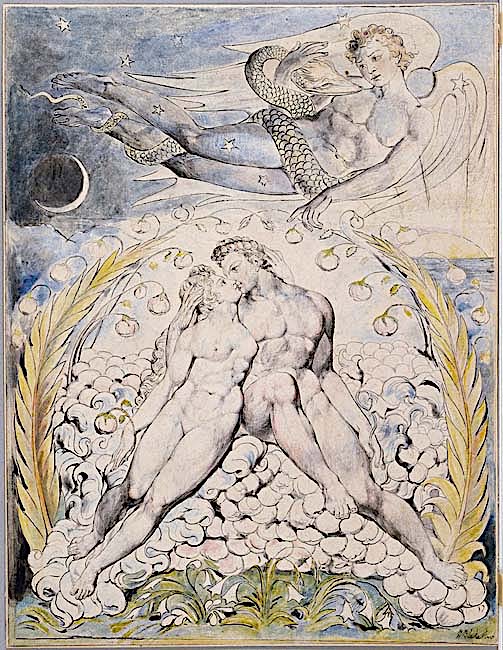
Blake’s obsession with Paradise Lost inspired his own cracked theological fable, Milton: a Poem in Two Books, with its bizarre preamble in which Blake promises to “buil[d] Jerusalem / In England’s green and pleasant land.” One writer calls Blake’s Milton “a lengthy and difficult apocalyptic poem with a fascinating hallucinatory quality.” The poem caused many of Blake’s contemporaries to conclude that “he was quite mad.” But I think his work shows us a man with all of his faculties, and maybe a few extra besides, although his paintings, like his weirder poetry, can also seem like crazed hallucinations. He meant his various Paradise Lost illustrations to correct earlier renderings by other artists, including a political satire by cartoonist James Gillray in 1792 and a 1740 painting by William Hogarth that today resembles the cover of a bad fantasy novel. See both of those earlier versions here.
via Bibliokept
Related Content:
Gustave Doré’s Dramatic Illustrations of Dante’s Divine Comedy
Alberto Martini’s Haunting Illustrations of Dante’s Divine Comedy (1901–1944)
Spenser and Milton (Free Course)
Find Works by Milton in our Free Audio Books and Free eBooks Collections
Josh Jones is a writer and musician based in Durham, NC. Follow him at @jdmagness
Read More...Support Us
We're hoping to rely on loyal readers, rather than erratic ads. Please click the Donate button and support Open Culture. You can use Paypal, Venmo, Patreon, even Crypto! We thank you!

About Us

Open Culture scours the web for the best educational media. We find the free courses and audio books you need, the language lessons & educational videos you want, and plenty of enlightenment in between.
Advertise With Us

FREE UPDATES!
GET OUR DAILY EMAIL
Get the best cultural and educational resources on the web curated for you in a daily email. We never spam. Unsubscribe at any time.
FOLLOW ON SOCIAL MEDIA

Open Culture editor Dan Colman scours the web for the best educational media. He finds the free courses and audio books you need, the language lessons & movies you want, and plenty of enlightenment in between.
Advertise With Us


