You have seen The Ukulele Orchestra of Great Britain (UOGB) pay tribute to The Clash, Nirvana and Bowie. Now, it’s time for The Ramones and their 1978 classic, “I Wanna Be Sedated.” The UOGB took shape in 1985, and they’ve been performing creative covers of popular songs and musical pieces ever since. Enjoy this one, and find a long playlist of their other covers here.
If you would like to sign up for Open Culture’s free email newsletter, please find it here. It’s a great way to see our new posts, all bundled in one email, each day.
If you would like to support the mission of Open Culture, consider making a donation to our site. It’s hard to rely 100% on ads, and your contributions will help us continue providing the best free cultural and educational materials to learners everywhere. You can contribute through PayPal, Patreon, and Venmo (@openculture). Thanks!
Last year, the fates handed the New York Times’ Maria Cramer an enviably striking lede: “Humanity is 100 seconds away from total annihilation. Again.” That we all know immediately what she was writing about speaks to the power of graphic design. Specifically, it speaks to the power of graphic design as practiced by Martyl Langsdorf, who happened to be married to ex-Manhattan Project physicist Alexander Langsdorf. This connection got her the gig of creating a cover for the June 1947 issue of the Bulletin of the Atomic Scientists. She came up with a simpleimage: the upper-left corner of a clock, its hands at seven minutes to midnight.
Asked later why she set the clock to that time in particular, Langsdorf explained that “it looked good to my eye.” That quote appears in a post at the Bulletin addressing frequently asked questions about what’s now known as the Doomsday Clock, “a design that warns the public about how close we are to destroying our world with dangerous technologies of our own making. It is a metaphor, a reminder of the perils we must address if we are to survive on the planet.” In the 75 years since its introduction, its minute hand has been moved backward eight times and forward sixteen times; currently it still stands where Cramer reported it as having remained last January, at 100 seconds to midnight.
To the public of 1947, “midnight” signified above all the prospect of humanity’s self-destruction through the use of nuclear weapons. But as technology itself has advanced and proliferated, the means of auto-annihilation have grown more diverse. This year’s Doomsday Clock statement cites not just nukes but carbon emissions, infectious diseases, and “internet-enabled misinformation and disinformation.” Earlier this month, the Bulletin reminded us that even as 2022 began, “we called out Ukraine as a potential flashpoint in an increasingly tense international security landscape. For many years, we and others have warned that the most likely way nuclear weapons might be used is through an unwanted or unintended escalation from a conventional conflict.”
Now that “Russia’s invasion of Ukraine has brought this nightmare scenario to life,” many have found themselves glancing nervously at the Doomsday Clock once again. This also happened after the election of Donald Trump, which prompted the Vox video above on the Clock’s history and purpose. Its iconic status, as celebrated in the new book The Doomsday Clock at 75, has long outlasted the Cold War, but the device itself isn’t without its critics. Bulletin co-founder Eugene Rabinowitch once articulated the latter as meant “to preserve civilization by scaring men into rationality,” a somewhat controversial intention. One could also raise objections to using an inherently linear and unidirectional concept like time to represent a probability resulting from human action. Yet somehow more technically suitable images — “100 centimeters from the edge,” say — don’t have quite the same ring.
Based in Seoul, Colin Marshall writes and broadcasts on cities, language, and culture. His projects include the Substack newsletterBooks on Cities, the book The Stateless City: a Walk through 21st-Century Los Angeles and the video series The City in Cinema. Follow him on Twitter at @colinmarshall or on Facebook.

The original rock supergroup, Cream, lasted two years, changed the course of rock music, barely held together because of rancor between members and said goodbye in 1968. Their farewell concert at the Royal Albert Hall in London was one for the ages. Maybe not their best performance, but one of their most energetic. And inside the cavernous Hall, the three men laid down a wall of undeniable sound.
Too bad that it wasn’t properly documented, despite a series of cameras there that evening. A Youtube denizen called Mike Lefton has tried to rectify the history by assembling a cut of the 70-minute concert that plays in real time. It’s the kind of fan project for which YouTube is designed—something not professional enough for official release, but vitally important for the fans.
Go on to the BezosBorg site (you know, it rhymes with Glamazon), and you can find a concert film offered on Blu-Ray. What’s wrong with that, you might ask? Cream fans will tell you. Instead of letting the band play, the official Farewell Concert leaves off several songs, and includes a “totally square voiceover by Patrick Allen (who refers to the band as “The Cream” throughout),” according to the moviesteve.com website, while another reviewer notes this could be the genesis of Spinal Tap’s intentionally bad interviews. (But let’s be fair, the 1960s in general were filled with non-rock journalists interviewing musicians as if they were alien life forms. D.A. Pennebaker’s Don’t Look Back is a compendium of such cringey moments.)
On top of that, director Allen really overdid the zoom lens, which was everywhere those days. It’s funny to see how it was used to “spice up” rock band footage, where really you could just hold the camera on Ginger Baker playing drums.
This edit cuts Allen’s footage together with black and white footage from the BBC, and generally does a fair job filling in the gaps, letting the concert stand on its own merits. It had plenty—the aforementioned Ginger Baker’s drum solo on “The Toad.” The repetition of footage is easy to spot—Jack Bruce tunes his guitar quite a lot, Eric Clapton looks offstage, and Baker smokes the final half-inch of a rollie over the hour—but Mike Lefton made this one for the fans, which is more than you can say for Allen, who made it for frightened BBC viewers still unsure about what all this “rock and roll” music was about. Enjoy.
Ted Mills is a freelance writer on the arts who currently hosts the Notes from the Shed podcast and is the producer of KCRW’s Curious Coast. You can also follow him on Twitter at @tedmills, and/or watch his films here.
Last week we featured the recent discovery of Ernest Shackleton’s ship Endurance, which has spent more than a century at the bottom of the Weddell Sea off Antarctica. It sank there in 1915, after having been entrapped and slowly crushed by pack ice for the most of a year. That marked the end of what had started as the 1914–1917 Imperial Trans-Antarctic Expedition, but it certainly wasn’t the end of the story. When it had become clear that there was no hope for Endurance, writes Rain Noe at Core77, “Shackleton and five of the crew then sailed 800 miles in a lifeboat to Stromness, an inhabited island and whaling station in the South Atlantic, where they were able to organize a rescue party. Shackleton located and rescued his crew four months later.”
Today we can watch the Endurance’s demise on film, as shot by expedition photographer Frank Hurley. “How is it possible that the film footage survived this ordeal?” Noe writes. “After the crew abandoned ship, food was the main thing to be carried away by the men, and Hurley had to decide which photo negatives and film reels to salvage.” Hurley himself later described this agonizing process, at the end of which “about 400 plates were jettisoned and 120 retained. Later I had to preserve them almost with my life; for a time came when we had to choose between heaving them overboard or throwing away our surplus food — and the food went over!”
Even relatively early in the era of cinema, Hurley must have understood the power of the image — as, it seems, did his captain. The footage Hurley could salvage retained a striking clarity, and it went into 1919’s South, which is now considered to be the very first documentary feature. “South was first exhibited by Ernest Shackleton in 1919 to accompany his lectures,” writes Ann Ogidi at the BFI’s Screenonline, “and it has some of the quality of a lecture. Excerpts of the journey are interspersed with scientific and biological observations.” And “just when the dramatic tension reaches its height, there are almost 20 inexplicable minutes of nature footage, showing sea lions gamboling, penguins and other birds.”
Crisply restored in the 1990s, South “is best thought of as that multi-media documentary lecture that Shackleton would have presented with stills, paintings, film and music woven together to spin the yarn, and for Hurley’s exquisite photography that keeps alive the story of that group of extraordinary men.” So writes BFI curator Bryony Dixon in a recent piece on the miraculous survival of not just Shackleton and his men, but of Hurley’s handiwork. And it was Hurley who then went right back out to the island of South Georgia to “take wildlife footage that the newspaper editor Ernest Perris, who sponsored the film, was convinced was needed to make the film interesting to the public.” Perris was daring enough to fund the first documentary feature, but also prescient in his conception of the form — a conception proven definitively right, more than eighty years later, by the box-office performance of March of the Penguins.
Based in Seoul, Colin Marshall writes and broadcasts on cities, language, and culture. His projects include the Substack newsletterBooks on Cities, the book The Stateless City: a Walk through 21st-Century Los Angeles and the video series The City in Cinema. Follow him on Twitter at @colinmarshall or on Facebook.

There was a period in the late 20th-century when having hair long enough to sit on was considered something of an accomplishment.
Judging by the long hair pins unearthed from Austria’s Hallstatt burial site, extreme length was an early Iron Age hair goal, too, possibly because a coronet of thick braids made it easier to balance a basket on your head or keep your veil securely fastened.
Gromer, the vice-head of the Vienna Natural History Museum’s Department of Prehistory, published precise diagrams showing the position of the hair ornaments in relation to the occupants of various graves.
For example, the skeleton in grave 45, below, was discovered with “10 bronze needles to the left of and below the skull, (and) parts of a bronze spiral roll in the neck area.”
Although no hair fibers survive, researchers cross-referencing the pins’ position against figural representations from period artifacts, have made a pretty educated guess as to the sort of hair do this individual may have sported in life, or more accurately, given the context, death.
As to the “bronze spiral roll” — which Donner persists in referring to as a spiral “doobly doo” — it functioned much like a modern day elastic band, preventing the braid from unravelling.
Donner twists hers from wire, after arranging to have replica hairpins custom made to historically accurate dimensions. (The manufacturer, perhaps misunderstanding her interest in history, coated them with an antiquing agent that had to be removed with “brass cleaner and a bit of rubbing.”
Most of the styles are variants on a bun. All withstand the “shake test” and would look right at home in a bridal magazine.
Star Wars fans will be gratified to find not one, but two iconic Princess Leia looks.
Our favorites were the braided loops and double buns meant to be sported beneath a veil.
“The braids do kind of act nicely as an anchor point for the veil to sit on,” Donner reports, “Not a lot of modern application per se for this particular style but it’s cute. It’s fun.”
Either would give you some serious Medieval Festival street cred, even if you have to resort to extensions.
Donner’s video gets a lot of love in the comments from a number of archaeology professionals, including a funerary archaeologist who praises the way she deals with the “inherent issues of preservation bias.”
The final nine minutes contain a DIY tutorial for those who’d like to make their own hairpins, as well as the spiral “doobly doo”.
If you’re of a less crafty bent, a jewelry designer in Finland is selling replicas based on the grave finds of Hallstatt culture on Etsy.
Watch a playlist of Donner’s historical hair experiments and tutorials, though a peek at her Instagram reveals that she got a buzzcut last fall, currently grown out to pixie-ish length.
Download Grömer’s illustrated article on Hallstatt period hairstyles and veils for free (in German) here.
Violinist Kerenza Peacock writes: “I befriended some young violinists in Ukraine via Instagram and discovered some were in basement shelters but had their violins. So I asked colleagues across the world to accompany them in harmony. And I got sent videos from 94 violinists in 29 countries in 48 hours!! An astonishing collaboration forming an international violin choir of support for Ukraine. Illia Bondarenko had to film this between explosions, because he could not hear himself play.
We play an old Ukrainian folk song called Verbovaya Doschechka. Nine other young violinists sheltering in Ukraine join in unison, and are accompanied in harmony by players from London Symphony Orchestra, Tokyo Symphony, Oslo Philharmonic, the Hollywood Studios, and top violinists from all over the world including Ireland, the Netherlands, New Zealand, Belgium, Georgia, Poland, South Korea, South Africa, Moldova, Denmark, India, and the entire violin section of the Munich Chamber Orchestra!”
Jack Kerouac was born 100 years ago today (March 12, 1922). And to mark the occasion, you can hear him read from his 1957 Beat classic,On the Road. This 28-minute recitation was apparently recorded on an acetate disc in the 1950s but thought lost for decades. It re-surfaced during the late 1990s. Enjoy.
If you would like to sign up for Open Culture’s free email newsletter, please find it here. It’s a great way to see our new posts, all bundled in one email, each day.
If you would like to support the mission of Open Culture, consider making a donation to our site. It’s hard to rely 100% on ads, and your contributions will help us continue providing the best free cultural and educational materials to learners everywhere. You can contribute through PayPal, Patreon, and Venmo (@openculture). Thanks!
You can slide up, pull off and hammer like a beast, but be forewarned. It’s unlikely you’ll be able to keep pace with Heart’s Nancy Wilson, as she demonstrates how to play the introduction to 1975’s “Crazy On You,” one of the greatest — and trickiest — opening guitar solos in rock history.
“I really wanted people to know right up front what I could do,” Wilson revealed in a 1999 interview withAcoustic Guitar:
It was the same thing as sitting in the Bandwagon music store and playing (Paul Simon’s) Anji. It was like, “Check me out, I know some stuff.”
As hard rocking female musicians in the 70s and 80s, Wilson and her bandmate/sister, lead vocalist- and songwriter, Ann found themselves having to prove themselves constantly.
Back then, especially in the 70s, there was no filter on how women were sexualized – hyper-sexualized – in order to sell their images. Now at least it looks like women have control over their own filters. Back then, they didn’t. It was just like: “Hey, here’s a sexy chick. We know how we can sell her.”
Let’s all observe Women’s History Month by insisting that every bonehead who ever dismissed these pioneering women as a ‘chick band’ pay close attention to Nancy’s intricate “hybrid picking”.
“Crazy On You” finds her picking a rhythm on the A‑string while using her bare fingers to pull off notes on the B and G strings.
And by her own admission, she tends never to play it the same way twice (“which makes it real easy, right?”)
While we’re at it, how about we celebrate Heart’s 50th anniversary by introducing the next generation to “Crazy On You”?
The times have changed in significant ways, but the emotions that inspired the song will strike close to home for many young people, as per Ann’s description on the Professor of Rock’s YouTube channel:
I wrote the words about the state of the world, and the stress effect it was having on me. Back then, we thought the world was really messed up, right? Because the Vietnam War was going on and we were choosing to, but staying out of our own country…we were homesick. Crime was rising, gas was expensive, gas shortage, all this horrible stuff. We had no idea what was going to happen in later years so it seemed to be, at that time, y’know, this is the end of the world. This close to the apocalypse. It’s very very stressful when you’re in your 20’s and you don’t see a good future.
If you’re committed to learning Nancy Wilson’s guitar intro to “Crazy On You,” we recommend Shutup & Play’s video tutorial and tabs.
Before becoming a filmmaker, Jean-Pierre Grumbach participated in the French Resistance during World War II. It was then that he took the nom de guerre of Jean-Pierre Melville, under which he would later inspire the French New Wave. Just as he never made a film under another name, his work never quite abandoned the themes provided by his wartime experience in Nazi-occupied France, which comes through most clearly in his feature debut Le Silence de la mer. Released just four years after V‑E Day, it tells the story of a German lieutenant billeted in a French household, an admirer of French culture who holds forth nightly of his anticipation of the “marriage” of the German and French civilizations.
The day comes for the German to make a much-anticipated trip to Paris. After worshipfully taking in the sights of the capital — the Arc de Triomphe, Notre-Dame de Paris, the Monument à Jeanne d’Arc — he meets with his Nazi superiors. And so he discovers, to his great shock, that what the occupiers have planned is not a marriage but a demolition. “Do you think we’re so stupid as to allow France ever to rise again?” asks one of the other officers. “We have the opportunity to destroy France and we will do so,” says another. “Not only its might, but also its spirit,” which requires the complete extirpation of all “works of culture” — for “to conquer, violence is sufficient, but not to rule.”
81 years later, the events of Le Silence de la mer have returned to mind. “Russia’s war on Ukraine has been an all-round disaster,” writes the Guardian’s Luke Harding and Harriet Sherwood. “Its army has shelled densely populated cities, killing hundreds. More than 2 million refugees have fled abroad in Europe’s biggest exodus since the second world war.” Ukrainian cities have set about hiding what pieces they can of their cultural heritage: in Lviv, for example, these included “a precious wooden alter-piece showing Jesus, Mary and Mary Magdalene. It was removed from Lviv’s 14th century Armenian church and transported to a bunker. The sculpture was last removed from its courtyard spot shortly before the Nazis swept into the city in 1941.”
Such efforts are taking place in not just the physical realm, but the digital one as well. Saving Ukrainian Cultural Heritage Online (SUCHO) describe themselves as “a group of cultural heritage professionals – librarians, archivists, researchers, programmers – working together to identify and archive at-risk sites, digital content, and data in Ukrainian cultural heritage institutions while the country is under attack.” This project involves “a combination of technologies to crawl and archive sites and content, including the Internet Archive’s Wayback Machine, the Browsertrix crawler and the ArchiveWeb.page browser extension and app of the Webrecorder project,” and now has the help of more than a thousand volunteers.
If you’re reading this, you may possess the skill SUCHO needs. Though “we are currently at capacity for people to help with Wayback Machine / Internet Archive tasks or manual Webrecorder tasks,” says their site, “you can still help by submitting URLs” of sites containing Ukrainian cultural content. “If you can read Ukrainian or Russian, or if you can run the Browsertrix crawler (check out our Browsertrix documentation to see if it’s something you’d be up for trying), fill out the volunteer form.” (Even if not, have a look at their documentation of their workflow and orientation for new volunteers.) At some point, the violence of the invasion of Ukraine will come to an end. When it does, the more of the country’s culture survives, the less its invaders can rule.
Based in Seoul, Colin Marshall writes and broadcasts on cities, language, and culture. His projects include the Substack newsletterBooks on Cities, the book The Stateless City: a Walk through 21st-Century Los Angeles and the video series The City in Cinema. Follow him on Twitter at @colinmarshall or on Facebook.
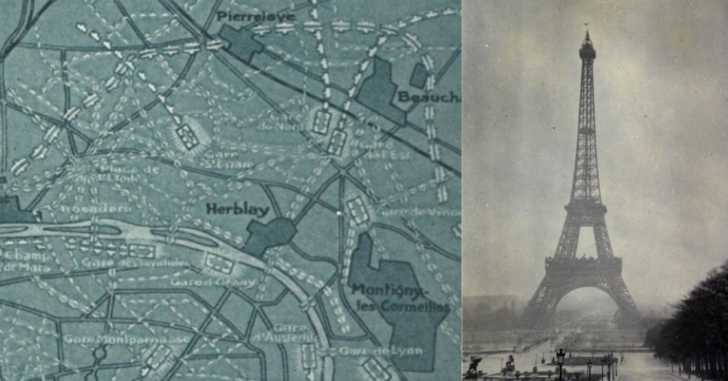
110 years after its first and last voyage, we remember the RMS Titanic and its touted “unsinkability” as one of the resounding ironies of maritime history. But 1912 also saw the launch of another newly built yet ill-fated ship whose name proved all too apt: Endurance, as it was rechristened by Sir Ernest Shackleton when he purchased it to use on his Imperial Trans-Antarctic Expedition of 1914. In January of the following year, Endurance got stuck in the ice of the Weddell Sea off Antarctica, and over the following ten months that ice slowly crushed and ultimately sank the ship. But her whole crew survived, thanks to Shackleton’s leading them more than 800 miles over the open ocean to safety.
Shackleton and his men have been celebrated for their endurance; as for Endurance herself, it has spent more than a century unseen at the bottom of the ocean — unseen, that is, until now. “A team of adventurers, marine archaeologists and technicians located the wreck at the bottom of the Weddell Sea, east of the Antarctic Peninsula, using undersea drones,” writes the New York Times’ Henry Fountain. “Battling sea ice and freezing temperatures, the team had been searching for more than two weeks in a 150-square-mile area around where the ship went down in 1915.”
Time turns out to have been kind to Shackleton’s ship: “Endurance’s relatively pristine appearance was not unexpected, given the cold water and the lack of wood-eating marine organisms in the Weddell Sea that have ravaged shipwrecks elsewhere.” You can glimpse Endurance in her watery grave in the Marine Technology TV video at the top of the post. But you’ll also see a lot more of another impressive ship: Agulhas II, the South African icebreaker used by Endurance22, as the $10 million research expedition was called. Whatever the challenges posed by finally tracking down Endurance, their brunt wasn’t borne by that mighty vessel.
“Aside from a few technical glitches involving the two submersibles, and part of a day spent icebound when operations were suspended, the search proceeded relatively smoothly,” reports Fountain. The nature of this expedition, especially in its use of submersibles to observe the wreckage without disturbing it, may bring back to mind (for those of us of a certain age) the 1992 documentary Titanica, which astonished us with the first up-close, IMAX-sized views of the sunken Titanic. Considering the advancements in exploratory and photographic technology in the three decades since — and the condition of Endurance itself — the film that eventually results from Endurance22 should astonish us all over again.
Based in Seoul, Colin Marshall writes and broadcasts on cities, language, and culture. His projects include the Substack newsletterBooks on Cities, the book The Stateless City: a Walk through 21st-Century Los Angeles and the video series The City in Cinema. Follow him on Twitter at @colinmarshall or on Facebook.
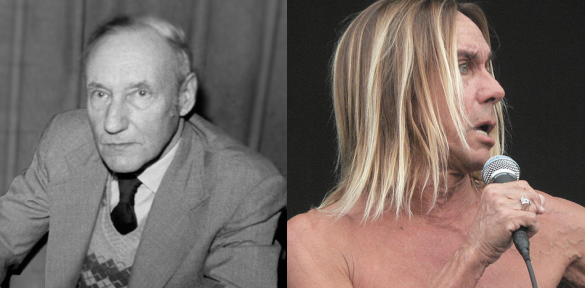
Artist and music producer Brian Eno wrote one of my very favorite books: A Year with Swollen Appendices, which takes the form of his personal diary of the year 1995 with essayistic chapters (the “swollen appendices”) on topics like “edge culture,” generative music, new ways of , pretension, CD-ROMs (a relevant topic back then), and payment structures for recording artists (a relevant topic again today). It also includes a fair bit of Eno’s correspondence with Stewart Brand, once editor of the Whole Earth Catalog and now president of the Long Now Foundation, “a counterpoint to today’s accelerating culture” meant to “help make long-term thinking more common” and “creatively foster responsibility in the framework of the next 10,000 years.”
It so happens that Eno now sits on the Long Now Foundation’s board and has had a hand in some of its projects. Naturally, he contributed suggested reading material to the foundation’s Manual of Civilization, a collection of books humanity could use to rebuild civilization, should it need rebuilding. Eno’s full list, which spans history, politics, philosophy, sociology, architecture, design, nature, and literature, runs as follows:
We're hoping to rely on loyal readers, rather than erratic ads. Please click the Donate button and support Open Culture. You can use Paypal, Venmo, Patreon, even Crypto! We thank you!
Open Culture scours the web for the best educational media. We find the free courses and audio books you need, the language lessons & educational videos you want, and plenty of enlightenment in between.