The Boy and the Heron, the latest feature from master animator Hayao Miyazaki, opened in Japan this past summer. In that it marks his latest emergence from his supposed “retirement,” we could label it not just as late Miyazaki, but perhaps even “post-late” Miyazaki. But the film nevertheless shares significant qualities with his earlier work, not least a score composed by Joe Hisaishi. Since Nausicaä of the Valley of theWind — which opened in 1984, even before the foundation of Studio Ghibli — Hisaishi’s music has done nearly as much to establish the sensibility of Miyazaki’s films as their lavish, imaginative animation, and you can stream hundreds of hours of it with this Youtube playlist.
Each of the playlist’s 121 two-hour videos offers musical selections from a mix of Ghibli movies, including Miyazaki favorites like My Neighbor Totoro, Porco Rosso, and Spirited Away, and also the works of other directors: Yoshifumi Kondō’s Whisper of the Heart, Hiromasa Yonebayashi’s Arrietty, Gorō Miyazaki’s From Up on Poppy Hill.
If you’ve seen those pictures, these quiet, often minimal renditions of their music will surely bring their animated fantasies right back to mind. Even if you haven’t, they can still fulfill the function promised by the videos’ titles of setting a mood conducive to study, work, or simple relaxation.
So beloved are Hisaishi’s scores, for Miyazaki and others (most notably comedian-auteur Takeshi Kitano), that it’s possible to know the music long before you’ve seen the movies. And even in performances considerably different from the versions heard on the actual soundtracks, they always sound immediately recognizable as Hisaishi’s work. Shaped by an eclectic set of influences (born Mamoru Fujisawa, he took on his professional name as an homage to Quincy Jones), he developed a compositional style neither strictly Eastern nor Western. The same can be said about Ghibli movies themselves, which often possess both fairy-tale European settings and Japanese philosophical underpinnings. Wherever you place yourself on the cultural map, you’d do well to make their music the soundtrack of your own life.
Based in Seoul, Colin Marshall writes and broadcasts on cities, language, and culture. His projects include the Substack newsletterBooks on Cities, the book The Stateless City: a Walk through 21st-Century Los Angeles and the video series The City in Cinema. Follow him on Twitter at @colinmarshall or on Facebook.
Still, whichever outside-the-box Victorian thinker had the bright idea to attract tourists by expanding the village’s original name — Pwllgwyngyll — by 46 letters was onto something.
Turns out you don’t need natural wonders or world-renowned cultural attractions to stake a claim, when out-of-towners will make the trip just to take photos of the local signage.
Wikipedia throws doubt on these origin stories by citing an entry in an ecclesiastical directory published a few years prior to 1869, which gave the full parish name as “Llanfairpwllgwyngyllgogerbwlltysiliogogo.”
(Close enough!)
Someone in the tourist information office told travel writer Dave Fox that it translates to “St. Mary’s Church in the hollow of white hazel near a rapid whirlpool and the Church of St. Tysilio near the red cave.”
It’s tempting to think this little Welsh town has the longest name in the world, but that honor actually goes to Bangkok.
Wait, what?
The name by which most foreigners know Thailand’s capital city is actually an archaic reference to its pre-1782 location.
It means “City of angels, great city of immortals, magnificent city of the nine gems, seat of the king, city of royal palaces, home of gods incarnate, erected by Vishvakarman at Indra’s behest” and looks like this, when written in Thai script:
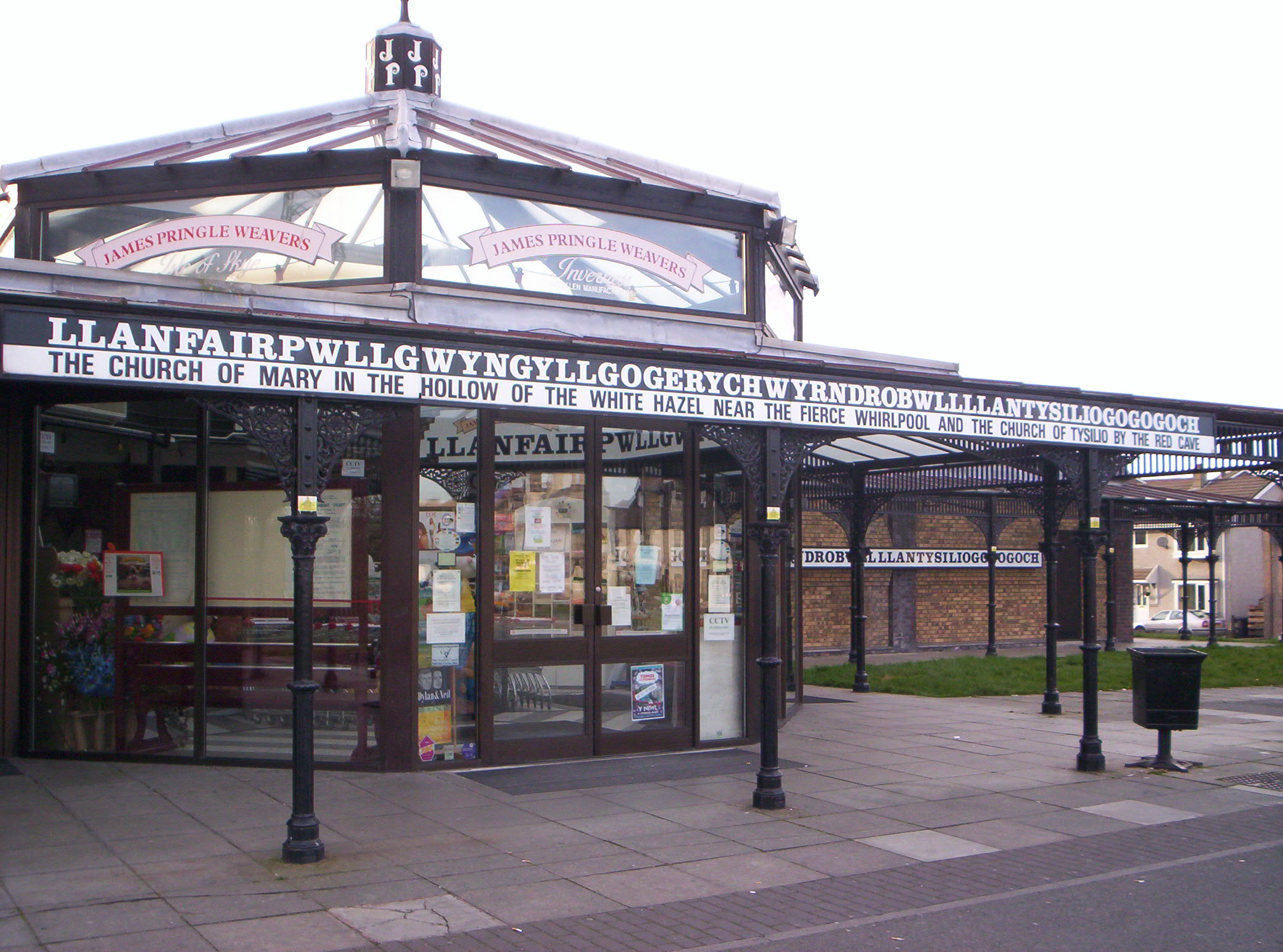
Llanfairpwllgwyngyllgogerychwyrndrobwllllantysiliogogogochians still get to brag that they have the longest town name in Europe.
Their football club, Clwb Pêl Droed Llanfairpwllgwyngyllgogerychwyrndrobwllllantysiliogogogoch Football Club — CPD Llanfairpwll FC for short — might well be the longest named football club in the world if it weren’t for that damn Amon Rattanakosin Krung Thep Mahanakhon Mahinthara Mahadilok Phop Noppharat Ratchathani Ayuthaya Burirom Udomratchaniwet Mahasathan Amon Piman Awatan Sathit Sakkathattiya Witsanukam Prasit Bravo Association Football Club (aka Bangkok Bravo FC).
Some of the fun of living in a town with such a cumbersome name must be amazing tourists by how casually it rolls off local tongues.
Pub owner Kevin Bryant obliges visitors from The Great Big Story by downing a pint on camera before rapping it out.
This month, more than a few TikTok-using women have asked the men in their lives how often they think about the Roman Empire. And to the astonishment of these women, more than a few of these men have responded that they think about it on a daily basis, or even more often than that. By now, this particular manifestation of mutual incomprehension between the sexes has swept several social-media platforms, and according to reportage in the New YorkTimes and WashingtonPost, it actually began on Instagram. “Ladies, many of you do not realize how often men think about the Roman Empire,” posted a Swedish ancient-Rome reenactor who calls himself Gaius Flavius. “Ask your husband/boyfriend/father/brother — you will be surprised by their answers!”
Even if you’re not a husband, boyfriend, father, or brother, you may count yourself among these Rome-enraptured men. You may think about Rome practically all day, every day, and not be a man at all. Or perhaps you’re one of the women who, hitherto unaware of the apparently widespread Roman intellectual proclivities among the opposite sex, have begun to feel a twinge of curiosity about the subject.
If so, you could do worse than start your historical journey to antiquity’s mightiest empire — the ancestor of today’s Western civilization — with this twenty-minute primer narrated by Succession’s Brian Cox. Consider also accompanying it with this animated map visualizing both the Roman Empire’s rise to cover half the known world and its subsequent fall — or this version with a scrolling timeline of the face of every emperor.
The word “Rome” commonly stands for the Roman Empire, but, of course, it can also refer to the great capital itself. Here on Open Culture, we’ve previously featured virtual tours and flyovers, as well as a physical scale model, of the ancient city of Rome at its peak. You can also watch a re-creation of the destruction of Pompeii, whose ash-preserved ruins have taught us a great deal about life in the Roman Empire. That empire could hardly have extended as far as it did without the technological marvel of Roman roads, which you can learn about through videos on their construction, subway-style maps, and even a trip-planning web application. Even the concrete used to build those roads — not to mention the Roman Empire’s formidable aqueducts — has been an object of fascination, not least because the secret of their durability has only recently come to light.
If Rome was about nothing but conquering emperors and sprawling infrastructure, it would be easy to explain its being a predominantly male interest. But we’ve also featured numerous other aspects of its culture, from the sound of Roman music and the Latin language to the colors of its statues. Like all human beings, ancient Romans ate food — whether by following recipes at home or going out to “snack bars” — and wore shoes (and sandals, alas, with socks). Our own fascination with its civilization has its own historical roots, as underscored by these nineteenth-century photographs of Roman ruins. Nor does that fascination know cultural boundaries. I live in Korea, and recently a man told me about his younger days as a soldier in KATUSA, the Korean Augmentation to the United States Army. Why did he enlist in that particular program? “I wanted to know what it would be like to serve the modern Roman Empire.”
Based in Seoul, Colin Marshall writes and broadcasts on cities, language, and culture. His projects include the Substack newsletterBooks on Cities, the book The Stateless City: a Walk through 21st-Century Los Angeles and the video series The City in Cinema. Follow him on Twitter at @colinmarshall or on Facebook.
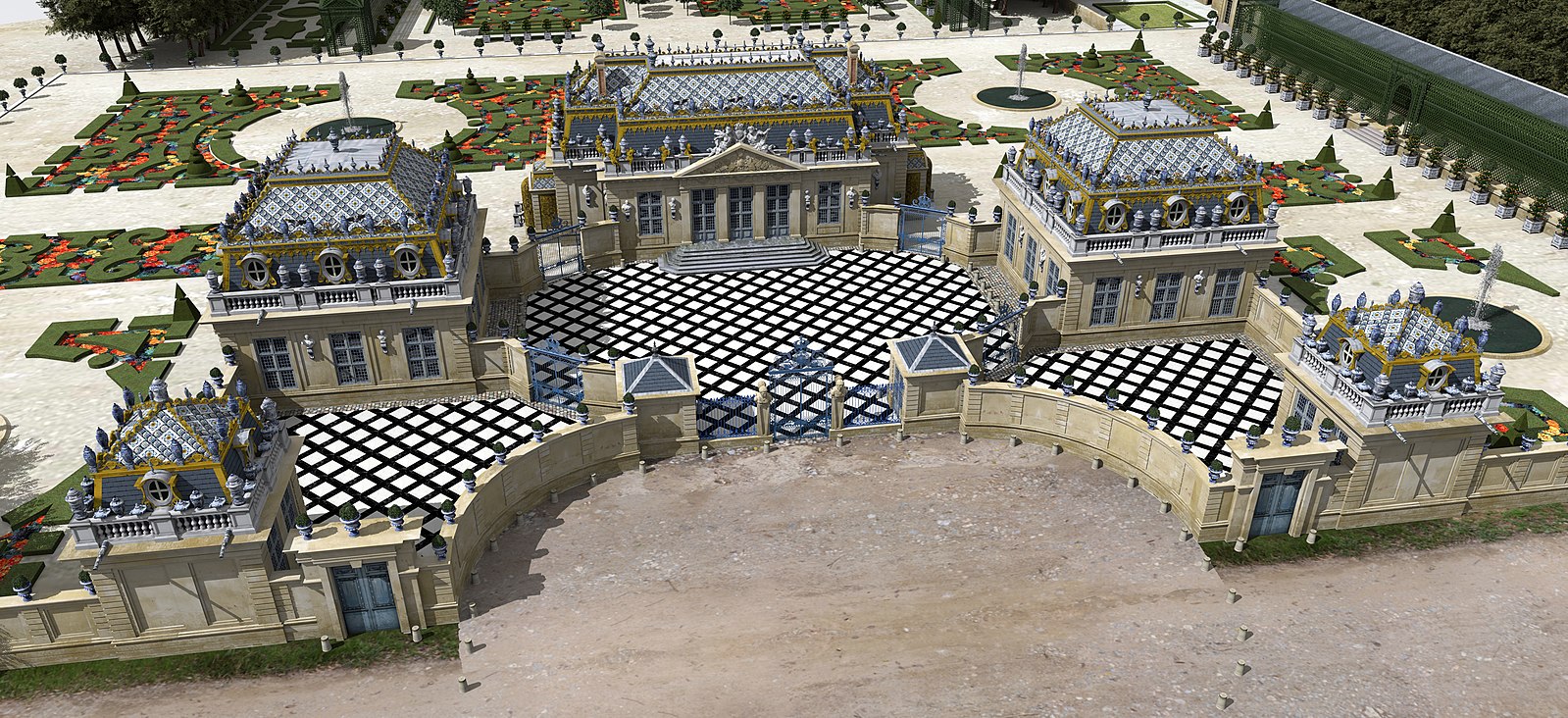
Today it would be viewed as cultural appropriation writ large, but when Louis XIV ordered the construction of a 5‑building pleasure pavilion inspired by the Porcelain Tower of Nanjing (a 7th Wonder of the World few French citizens had viewed in person) as an escape from Versailles, and an exotic love nest in which to romp with the Marquise de Montespan, he ignited a craze that spread throughout the West.
Chinoiserie was an aristocratic European fantasy of luxurious Eastern design, what Dung Ngo, founder of AUGUST: A Journal of Travel + Design, describes as “a Western thing that has nothing to do with actual Asian culture:”
Chinoiserie is a little bit like chop suey. It was wholesale invented in the West, based on certain perceptions of Asian culture at the time. It’s very watered down.
And also way over the top, to judge by the rapturous descriptions of the interiors and gardens of Louis XIV’s Trianon de Porcelaine, which stood for less than 20 years.
The blue-and-white Delft tiles meant to mimic Chinese porcelain swiftly fell into disrepair and Madame de Montespan’s successor, her children’s former governess, the Marquise de Maintenon, urged Louis to tear the place down because it was “too cold.”
Her lover did as requested, but elsewhere, the West’s imagination had been captured in a big way.
The burgeoning tea trade between China and the West provided access to Chinese porcelain, textiles, furnishings, and lacquerware, inspiring Western imitations that blur the boundaries between Chinoiserie and Rococo styles
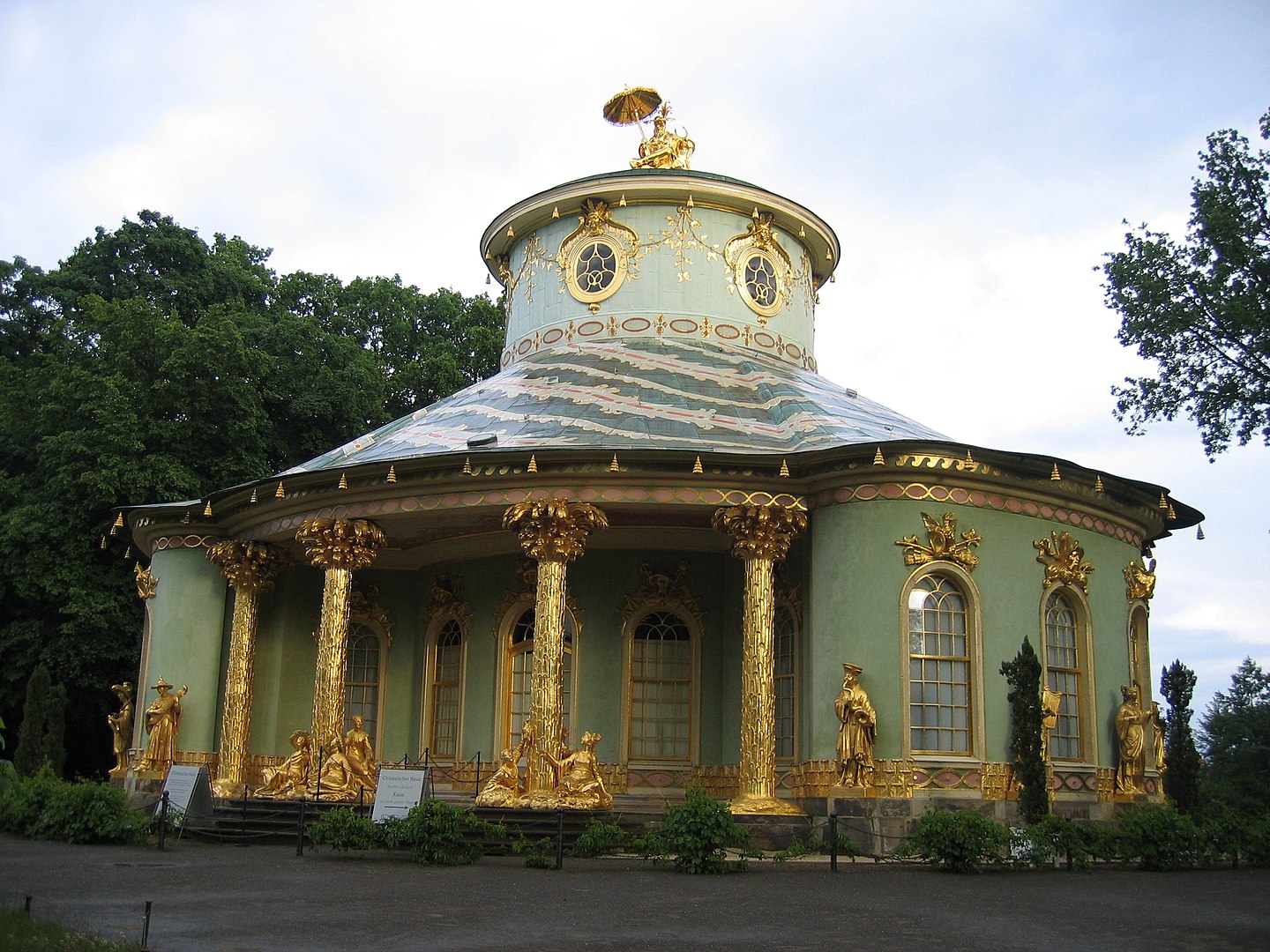
This blend is in evidence in Frederick the Great’s Chinese House in the gardens of Sanssouci (below).
Dr Samuel Wittwer, Director of Palaces and Collections at the Prussian Palaces and Gardens Foundation, describes how the gilded figure atop the roof “is a mixture of the Greek God Hermes and the Chinese philosopher Confucius:”
His European face is more than just a symbol of intellectual union between Asia and Europe…The figure on the roof has an umbrella, an Asian symbol of social dignity, which he holds in an eastern direction. So the famous ex oriente lux, the good and wise Confucian light from the far east, is blocked by the umbrella. Further down, we notice that the foundations of the building seem to be made of feathers and the Chinese heads over the windows, resting on cushions like trophies, turn into a monkey band in the interior. The frescoes in the cupola mainly depict monkeys and parrots. As we know, these particular animals are great imitators without understanding.
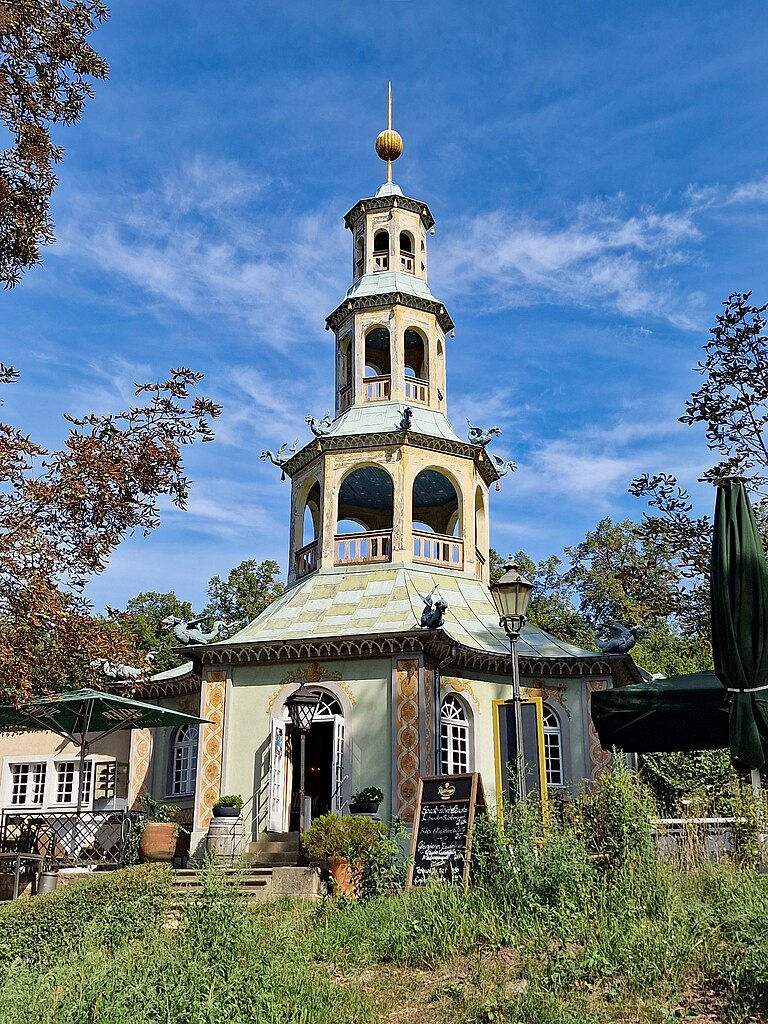
Frederick’s enthusiasm for chinoiserie led him to engage architect Carl von Gontard to follow up the Chinese House with a pagoda-shaped structure he named the Dragon House (below) after the sixteen creatures adorning its roof.
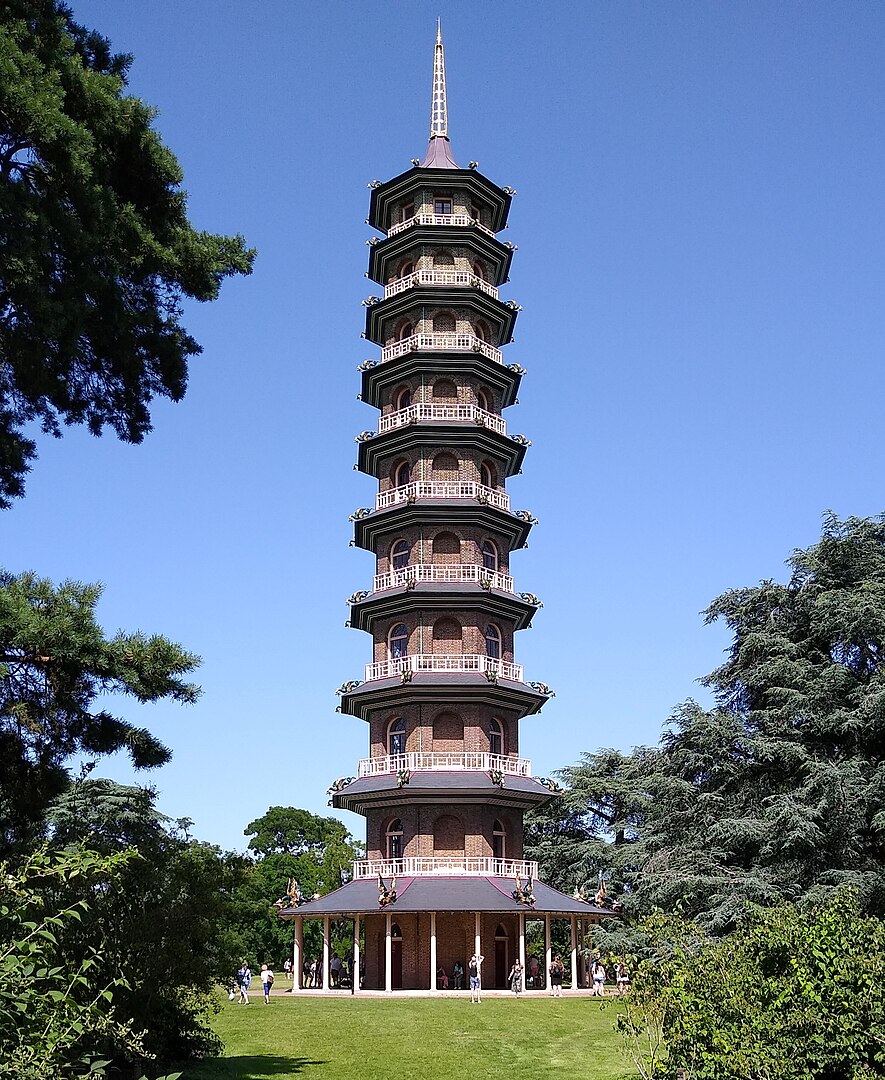
Dragons also decorate the roof of the Great Pagoda in London’s Kew Gardens, though the gilded wooden originals either succumbed to the elements or were sold off to settle George IV’s gambling debts in the late 18th century.
There are even more dragons to be found on the Chinese Pavilion at Drottningholm, Sweden, an architectural confection constructed by King Adolf Fredrik as a birthday surprise for his queen, Louisa. The queen was met by the entire court, cosplaying in Chinese (or more likely, Chinese-inspired) garments.
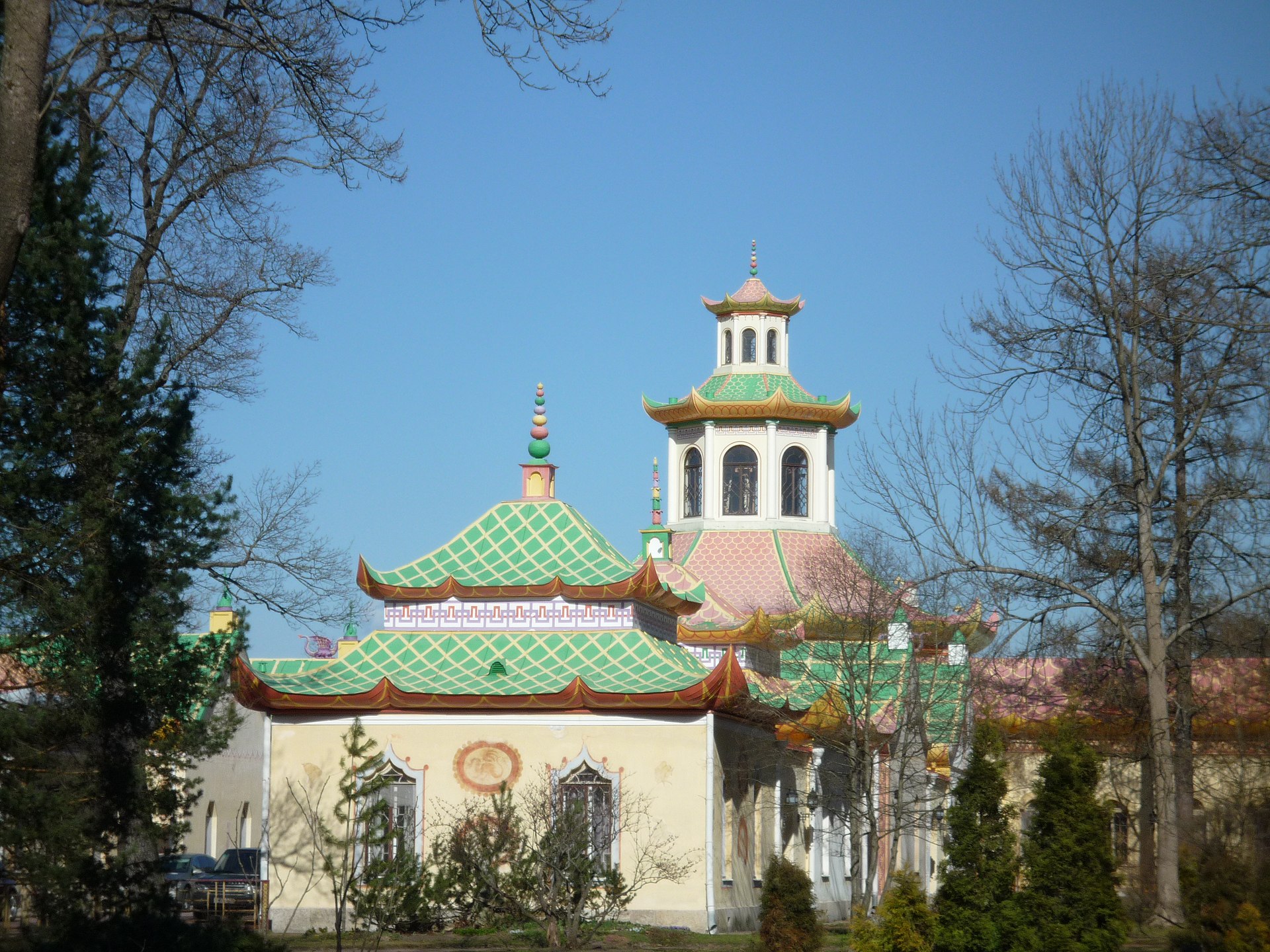
Not to be outdone, Russia’s Catherine the Great resolved to “capture by caprice” by building a Chinese Village outside of St. Petersburg.
Architect Charles Cameron drew up plans for a series of pavilions surrounding a never-realized octagonal-domed observatory. Instead, eight fewer pavilions than Cameron originally envisioned surround a pagoda based on one in Kew Gardens.
Having survived the Nazi occupation and the Soviet era, the Chinese Village is once again a fantasy plaything for the wealthy. A St. Petersburg real estate developer modernized one of the pavilions to serve as a two-bedroom “weekend cottage.”
Given that no record of the original interiors exists, designer Kirill Istomin wasn’t hamstrung by a mandate to stick close to history, but he and his client still went with “numerous chinoiserie touches” as per a feature in Elle Decor:
Panels of antique wallpapers were framed in gilded bamboo for the master bedroom, and vintage Chinese lanterns, purchased in Paris, hang in the dining and living rooms. The star pieces, however, are a set of 18th-century porcelain teapots, which came from the estate of the late New York socialite and philanthropist Brooke Astor.
If asked to name the best-known tower in London, one could, perhaps, make a fair case for the likes of the Shard or the Gherkin. But whatever their current prominence on the skyline, those works of twenty-first-century starchitecture have yet to develop much value as symbols of the city. If sheer age were the deciding factor, then the Tower of London, the oldest intact building in the capital, would take the top spot, but for how many people outside England does its name call a clear image to mind? No, to find London’s most beloved vertical icon, we must look to the Victorian era, the only historical period that could have given rise to Big Ben.
We must first clarify that Big Ben is not a tower. The building you’re thinking of has been called the Elizabeth Tower since Queen Elizabeth II’s Diamond Jubilee in 2012, but before that its name was the Clock Tower. That was apt enough, since tower’s defining feature has always been the clock at the top — or rather, the four clocks at the top, one for each face.
You can see how they work in the animated video from Youtuber Jared Owen above, which provides a detailed visual and verbal explanation of both the structure’s context and its content, including a tour of the mechanisms that have kept it running nearly without interruption for more than a century and a half.
Only by looking into the tower’s belfry can you see Big Ben, which, as Owens says, is actually the name of the largest of its bells. Its announcement of each hour on the hour — as well as the ringing of the other, smaller bells — is activated by a system of gear trains ultimately driven by gravity, harnessed by the swinging of a large pendulum (to which occasional speed adjustments have always been made with the reliable method of placing pennies on top of it). Owens doesn’t clarify whether or not this is the same pendulum Roger Miller sang about back in the sixties, but at least now we know that, technically speaking, we should interpret the following lyrics as not “the tower, Big Ben” but “the tower; Big Ben.”
Based in Seoul, Colin Marshall writes and broadcasts on cities, language, and culture. His projects include the Substack newsletterBooks on Cities, the book The Stateless City: a Walk through 21st-Century Los Angeles and the video series The City in Cinema. Follow him on Twitter at @colinmarshall or on Facebook.
Before her literary fame, her stormy relationship with Ted Hughes and her crippling battles with depression, Sylvia Plath was an enthusiastic student at Smith College. “The world is splitting open at my feet like a ripe, juicy watermelon,” she wrote to her mother. “If only I can work, work, work to justify all of my opportunities.”
During her junior year, she broke her leg on a skiing trip in upstate New York. The accident landed her briefly in the hospital and she wound up with a cast on her leg. Her mood darkened.
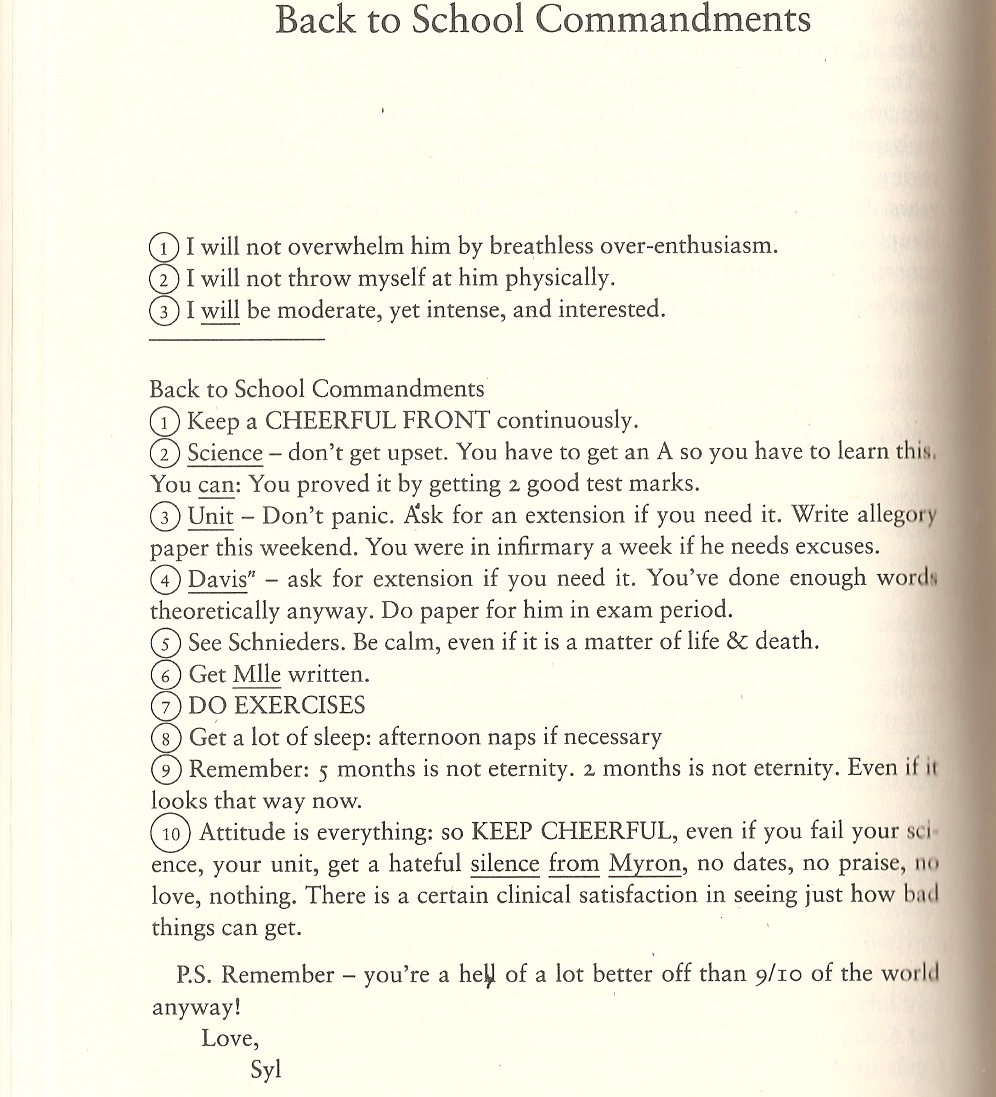
Psyching herself out for her return to college, she wrote in her diary a pair of lists.
The first list is a short series of rules about how to behave around her new beau, Myron Lotz. All three points are good advice for anyone who is utterly smitten, particularly number two – “I will not throw myself at him physically.” In the end, Plath’s relationship with Lotz didn’t amount to much. She reportedly commemorated him within her poem “Mad Girl’s Love Song” with the refrain “I think I made you up inside my head.”
The second list is a collection of “Back to School Commandments.” These commandments included asking her English prof Robert Gorham Davis for an extension; consulting with her German teacher Marie Schnieders (“Be calm,” she writes mysteriously, “even it is a matter of life & death.”); and completing her application to be a guest editor for Mademoiselle magazine. (She nailed that last task.)
The list’s final commandment comes off bleaker than the mildly panicky motivational tone of the rest of the list. “Attitude is everything: so KEEP CHEERFUL, even if you fail your science, your unit, get a hateful silence from Myron, no dates, no praise, no love, nothing. There is a certain clinical satisfaction in seeing just how bad things can get.”
Note: An earlier version of this post appeared on our site in 2015.
Jonathan Crow is a Los Angeles-based writer and filmmaker whose work has appeared in Yahoo!, The Hollywood Reporter, and other publications. You can follow him at @jonccrow. And check out his blog Veeptopus, featuring lots of pictures of vice presidents with octopuses on their heads. The Veeptopus store is here.
In the small town of Cloquet, Minnesota stands a piece of urban utopia. It takes the surprising form of a gas station, albeit one designed by no less a visionary of American architecture than Frank Lloyd Wright. He originally conceived it as an element of Broadacre City, a form of mechanized rural settlement intended as a Jeffersonian democracy-inspired rebuke against what Wright saw as the evils of the overgrown twentieth century city, first publicly presented in his 1932 book The Disappearing City. “That’s an aspirational title,” says architectural historian Richard Kronick in the Twin Cities PBS video above. “He thought that cities should go away.”
Cities didn’t go away, and Broadacre City remained speculative, though Wright did pursue every opportunity he could identify to bring it closer to reality. “In 1952, Ray and Emma Lindholm commissioned Frank Lloyd Wright to build them a home on the south side of Cloquet,” writes photographer Susan Tregoning.
When Wright “discovered that Mr. Lindholm was in the petroleum business, he mentioned that he was quite interested in gas station design.” When Lindholm decided to rebuild a Phillips 66 station a few years later, he accepted Wright’s design proposal, calling it “an experiment to see if a little beauty couldn’t be incorporated in something as commonplace as a service station” — though Wright himself, characteristically, wasn’t thinking in quite such humble terms.
Wright’s R. W. Lindholm Service Station incorporates a cantilevered upper-level “customer lounge,” and the idea, as Kronick puts it, “was that customers would sit up here and while their time away waiting for their cars to be repaired,” and no doubt “discuss the issues of the day.” In Wright’s mind, “this little room is where the details of democracy would be worked out.” As with Southdale Center, Victor Gruen’s pioneering shopping mall that had opened two years earlier in Minneapolis, two hours south of Cloquet, the community aspect of the design never came to fruition: though its windows offer a distinctively American (or to use Wright’s language, Usonian) vista, the customer lounge has a bare, disused look in the pictures visitors take today.
There are many such visitors, who arrive from not just all around the country but all around the world. But when it was last sold in 2018, the buyer it found was relatively local: Minnesota-born Andrew Volna, owner of such Minneapolis operations as vinyl-record manufacturer Noiseland Industries and the once-abandoned, now-renovated Hollywood Theater. “Wright saw the station as a cultural center, somewhere to meet a friend, get your car fixed, and have a cup of coffee while you waited,” writes Tregoning, though he never did make it back out to the finished building before he died in 1959. These sixty-odd years later, perhaps Volna will be the one to turn this unlikely architectural hot spot into an even less likely social one as well.
Based in Seoul, Colin Marshall writes and broadcasts on cities, language, and culture. His projects include the Substack newsletterBooks on Cities, the book The Stateless City: a Walk through 21st-Century Los Angeles and the video series The City in Cinema. Follow him on Twitter at @colinmarshall or on Facebook.
In high school, the language I most fell in love with happened to be a dead one: Latin. Sure, it’s spoken at the Vatican, and when I first began to study the tongue of Virgil and Catullus, friends joked that I could only use it if I moved to Rome. Tempting, but church Latin barely resembles the classical written language, a highly formal grammar full of symmetries and puzzles. You don’t speak classical Latin; you solve it, labor over it, and gloat, to no one in particular, when you’ve rendered it somewhat intelligible. Given that the study of an ancient language is rarely a conversational art, it can sometimes feel a little alienating.
And so you might imagine how pleased I was to discover what looked like classical Latin in the real world: the text known to designers around the globe as “Lorem Ipsum,” also called “filler text” and (erroneously) “Greek copy.”
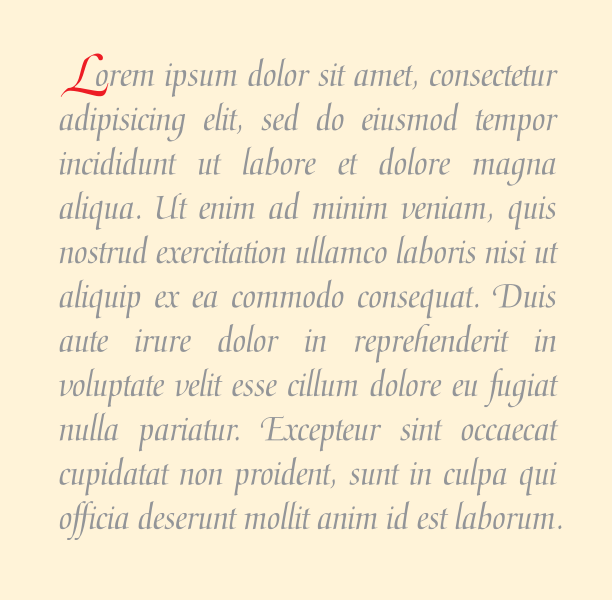
The idea, Priceonomics informs us, is to force people to look at the layout and font, not read the words. Also, “nobody would mistake it for their native language,” therefore Lorem Ipsum is “less likely than other filler text to be mistaken for final copy and published by accident.” If you’ve done any web design, you’ve probably seen it, looking something like this:
Lorem ipsum dolor sit amet, consectetur adipiscing elit, sed do eiusmod tempor incididunt ut labore et dolore magna aliqua. Ut enim ad minim veniam, quis nostrud exercitation ullamco laboris nisi ut aliquip ex ea commodo consequat. Duis aute irure dolor in reprehenderit in voluptate velit esse cillum dolore eu fugiat nulla pariatur. Excepteur sint occaecat cupidatat non proident, sunt in culpa qui officia deserunt mollit anim id est laborum.
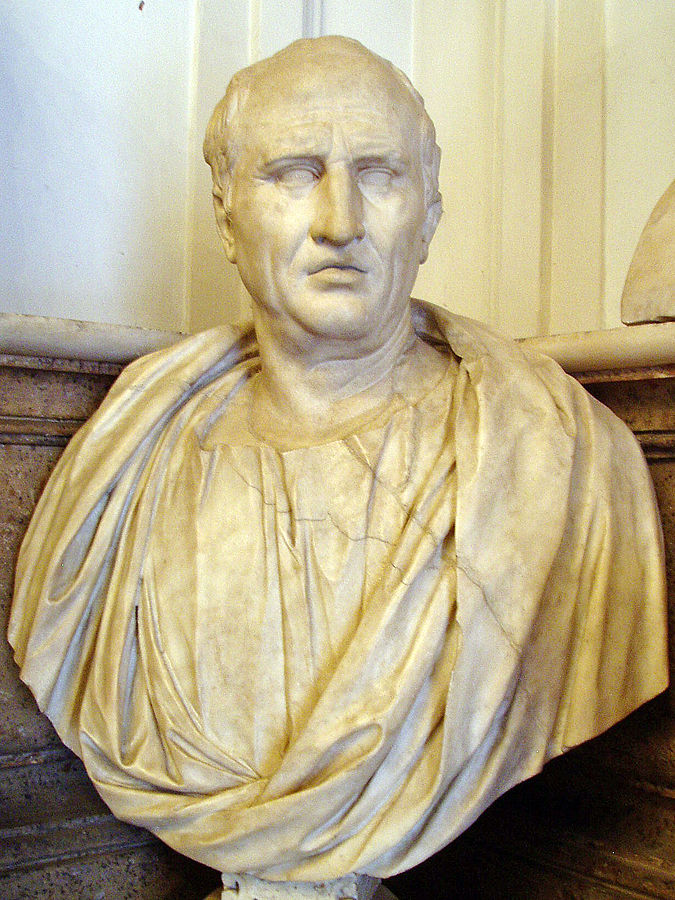
When I first encountered this text, I did what any Latin geek will—set about trying to translate it. But it wasn’t long before I realized that Lorem Ipsum is mostly gibberish, a garbling of Latin that makes no real sense. The first word, “Lorem,” isn’t even a word; instead it’s a piece of the word “dolorem,” meaning pain, suffering, or sorrow. So where did this mash-up of Latin-like syntax come from, and how did it get so scrambled? First, the source of Lorem Ipsum—tracked down by Hampden-Sydney Director of Publications Richard McClintock—is Roman lawyer, statesmen, and philosopher Cicero, from an essay called “On the Extremes of Good and Evil,” or De Finibus Bonorum et Malorum.
Why Cicero? Put most simply, writes Priceonomics, “for a long time, Cicero was everywhere.” His fame as the most skilled of Roman rhetoricians meant that his writing became the benchmark for prose in Latin, the standard European language of the Middle Ages. The passage that generated Lorem Ipsum translates in part to a sentiment Latinists will well understand:
Nor is there anyone who loves or pursues or desires to obtain pain of itself, because it is pain, but occasionally circumstances occur in which toil and pain can procure him some great pleasure.
Dolorem Ipsum, “pain in and of itself,” sums up the tortuous feeling of trying to render some of Cicero’s complex, verbose sentences into English. Doing so with tolerable proficiency is, for some of us, “great pleasure” indeed.
But how did Cicero, that master stylist, come to be so badly manhandled as to be nearly unrecognizable? Lorem Ipsum has a history that long predates online content management. It has been used as filler text since the sixteenth century when—as McClintock theorized—“some typesetter had to make a type specimen book, to demo different fonts” and decided that “the text should be insensible, so as not to distract from the page’s graphical features.” It appears that this enterprising craftsman snatched up a page of Cicero he had lying around and turned it into nonsense. The text, says McClintock, “has survived not only four centuries of letter-by-letter resetting but even the leap into electronic typesetting, essentially unchanged.”
The story of Lorem Ipsum is a fascinating one—if you’re into that kind of thing—but its longevity raises a further question: should we still be using it at all, this mangling of a dead language, in a medium as vital and dynamic as web publishing, where “content” refers to hundreds of design elements besides font. Is Lorem Ipsum a quaint piece of nostalgia that’s outlived its usefulness? In answer, you may wish to read Karen McGrane’s spirited defense of the practice. Or, if you feel it’s time to let the garbled Latin go the way of manual typesetting machines, consider perhaps as an alternative “Nietzsche Ipsum,” which generates random paragraphs of mostly verb-less, incoherent Nietzsche-like text, in English. Hey, at least it looks like a real language.
Note: An earlier version of this post appeared on our site in 2015.
We're hoping to rely on loyal readers, rather than erratic ads. Please click the Donate button and support Open Culture. You can use Paypal, Venmo, Patreon, even Crypto! We thank you!
Open Culture scours the web for the best educational media. We find the free courses and audio books you need, the language lessons & educational videos you want, and plenty of enlightenment in between.