How New Yorkers Dodged Pre-Prohibition Drinking Laws by Inventing the World’s Worst Sandwich

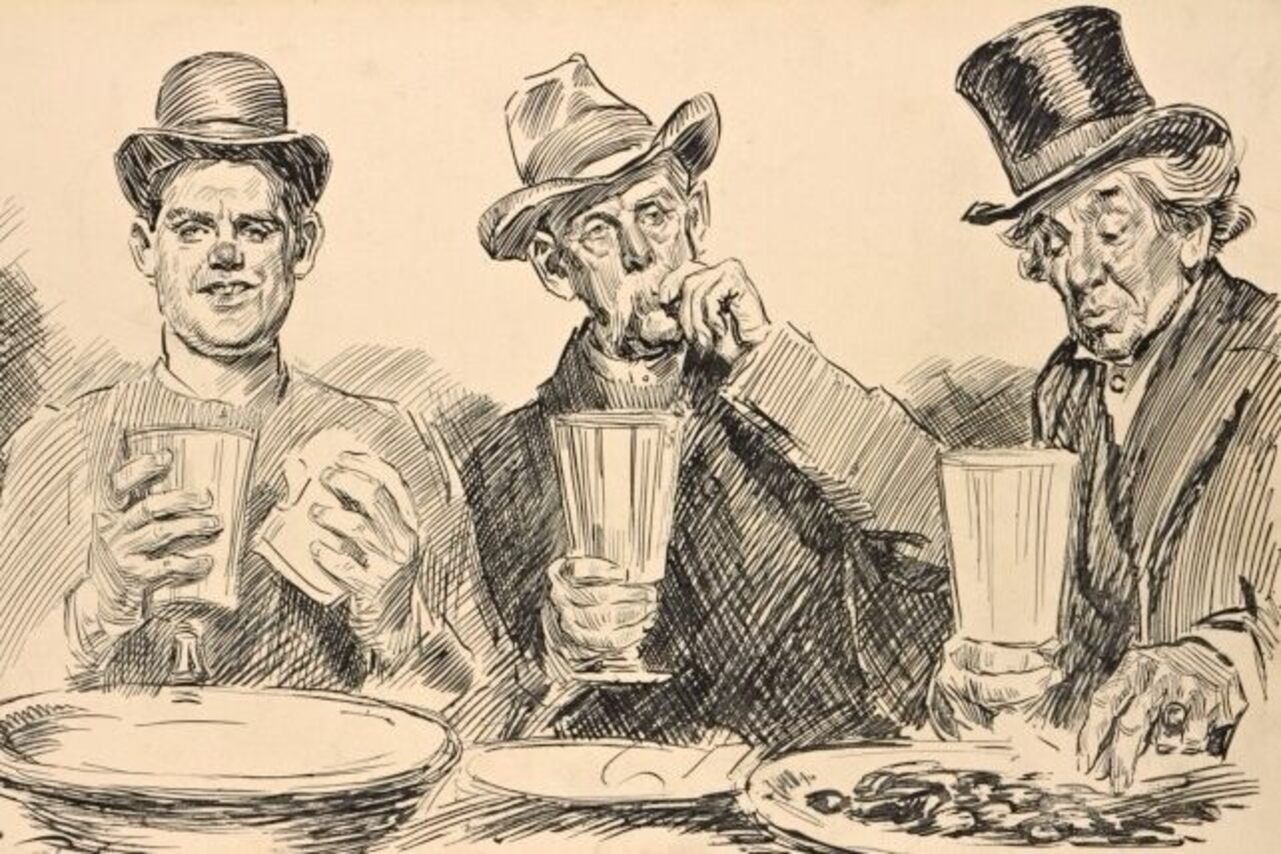
Three men feast on free lunch in a draw­ing by Charles Dana Gib­son

In one of my favorite episodes of The Simp­sons, beer-swill­ing Homer falls in love with a sand­wich. He spends his days nib­bling away at the “sick­en­ing, fes­ter­ing remains of a 10-foot hoagie,” Nathan Rabin writes, “long after decen­cy, self-respect, and sur­vival would all seem to dic­tate throw­ing it out.” The sand­wich may be yet anoth­er instance of the show pulling some obscure detail from Amer­i­can his­to­ry for com­ic effect — or maybe writer David M. Stern read Eugene O’Neill’s The Ice­man Cometh, in which the play­wright describes “an old des­ic­cat­ed ruin of dust-laden bread and mum­mi­fied ham or cheese.”

O’Neill’s sand­wich is so his­tor­i­cal, it has a name, the Raines Sand­wich, named after New York State Sen­a­tor John Raines, the author of an 1896 law that raised the cost of liquor licens­es sub­stan­tial­ly, upped the drink­ing age from six­teen to eigh­teen, and banned alco­holic bev­er­ages on Sun­days except in large hotels and lodg­ing hous­es which served a com­pli­men­ta­ry meal with their drinks. The law tar­get­ed work­ing peo­ple and their one day of respite, and it hit bar own­ers hard. “After all,” writes the Irish Exam­in­er, “labour­ers most­ly worked six days a week, with Sun­day their only full day for drink­ing, and Sun­day was the most prof­itable day for saloons.”

The com­pli­men­ta­ry-meal-with-drinks man­date, as it were, was designed so that wealthy patrons at lux­u­ry hotels could drink on Sun­days, but low-rent saloon own­ers seized on the loop­hole, trans­form­ing dive bars into room­ing hous­es overnight with table­cloths and “alleged bed­rooms” made from attics and base­ments. “It was then that the loos­est pos­si­ble def­i­n­i­tion of a ‘sub­stan­tial meal’ became the Raines Sand­wich.” The sand­wich might be made of any­thing, even a brick between two slices of bread; it was rarely eat­en. Some­times, it would be served to a guest with their beer or whiskey, then whisked away and giv­en to some­one else. A sin­gle Raines Sand­wich might last the day, or even the whole week.

Some estab­lish­ments tried to get away with serv­ing crack­ers and moldy cheese alone (stal­wart New York Irish pub McSor­ley’s gave away crack­ers, cheese, and onions — a dish for which they now charge). But the courts required a sand­wich, at the very least to be served, and the city enforced the law with right­eous vig­or — thanks in large part to a young Theodore Roo­sevelt. As Dar­rell Hart­man writes at Atlas Obscu­ra, New York Repub­li­cans in Albany “spoke for a con­stituen­cy large­ly com­prised of rur­al small-town church­go­ers” wor­ried about urban vice. But Raines had a city ally in Roo­sevelt, then a “37-year-old fire­brand… push­ing a law-and-order agen­da as pres­i­dent of the city’s new­ly orga­nized police com­mis­sion.”

Roo­sevelt can­vassed the Low­er East Side with patrol­man Frank Rathge­ber, send­ing him into saloons in plain clothes to inves­ti­gate. “Rathge­ber said he saw many sand­wich­es but only one bed,” writes author Richard Zacks in Island of Vice. The sand­wich­es were moldy, and were tak­en away uneat­en. “He nev­er was asked to buy a sec­ond sand­wich” with sub­se­quent drinks, “or even to eat the first one.” Despite the reform crack­downs, the shady busi­ness of the Raines Sand­wich let saloon own­ers skirt the law until it was repealed, final­ly, in 1924. As Hart­man notes, behind the pur­port­ed good inten­tions of the Tem­per­ance move­ment lay a deter­mined cul­ture war:

Those in favor of the Sun­day ban, gen­er­al­ly mid­dle-class and Protes­tant, saw it as a cor­ner­stone of social improve­ment. For those against, includ­ing the city’s tide of Ger­man and Irish immi­grants, it was an act of repression—an espe­cial­ly spite­ful one because it lim­it­ed how the aver­age labor­er could enjoy him­self on his one day off. The Sun­day ban was not pop­u­lar, to say the least, among the city’s Jews, who’d already observed their Sab­bath the day before.

The Raines Law was as much about enforc­ing reli­gious obser­vance and cul­tur­al con­for­mi­ty on immi­grants as it was an attempt to com­bat crime, pover­ty, and vio­lence in the city. Those whose beliefs did not pre­vent them from enjoy­ing them­selves on Sun­day saw no rea­son to take the law any more seri­ous­ly than they would a rot­ting week-old sand­wich or a brick between two slices of moldy bread.

via Atlas Obscu­ra

Relat­ed Con­tent:

Explore Thou­sands of Free Vin­tage Cock­tail Recipes Online (1705–1951)

The First Known Pho­to­graph of Peo­ple Shar­ing a Beer (1843)

The Sci­ence of Beer: A New Free Online Course Promis­es to Enhance Your Appre­ci­a­tion of the Time­less Bev­er­age

Josh Jones is a writer and musi­cian based in Durham, NC. Fol­low him at @jdmagness

Andy Warhol’s Vibrant, Impractical, Illustrated Cookbook from 1959: A Feast for the Eyes


Gor­geous­ly illus­trat­ed cook­books fea­tur­ing sump­tu­ous images of fan­cy desserts and oth­er spe­cial occa­sion food can be quite an intim­i­dat­ing propo­si­tion to self-doubt­ing begin­ners.

The recipes them­selves are daunt­ing, and as every Great British Bak­ing Show view­er learns, watch­ing the top con­tes­tants squirm in advance of co-host Paul Hol­ly­wood’s icy judg­ment, fla­vor can’t save an edi­ble cre­ation that fails as art.

Andy Warhol’s approach to cook­ery appears rather more blithe.

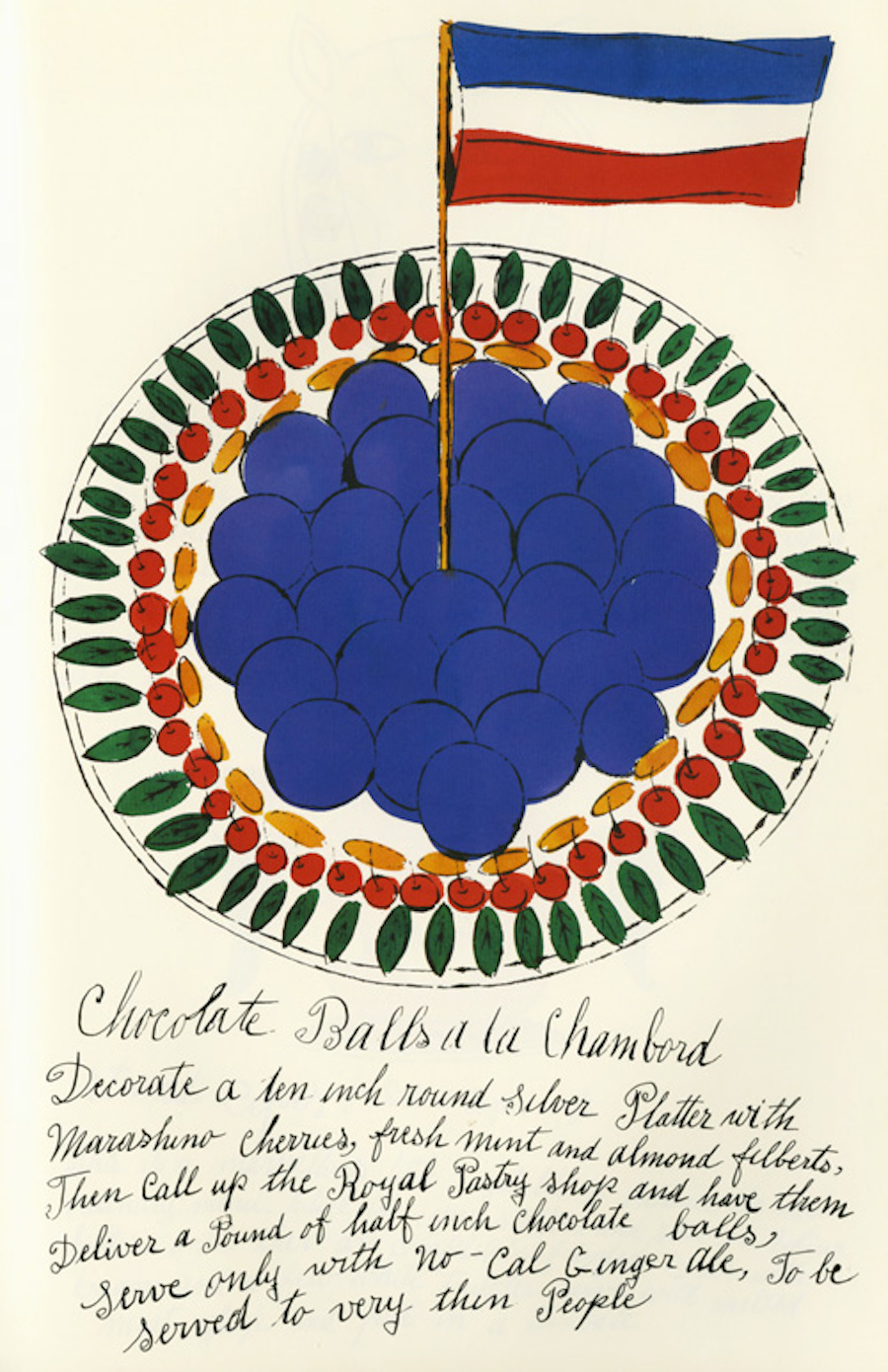
His 1959 cook­book, Wild Rasp­ber­ries — the title is a play on Ing­mar Bergman’s Wild Straw­ber­ries — dis­plays lit­tle inter­est in its read­ers’ cook­ing abil­i­ty… or, for that mat­ter, its authors.

Fan­ci­ful rep­re­sen­ta­tions of such del­i­ca­cies as Gar­doons a la Mous­se­line are pret­ty as a pic­ture… and stress free giv­en that no one is actu­al­ly expect­ed to make them.

Wild Rasp­ber­ries is all about atti­tude… and ambi­tion of a pure­ly social nature.

Warhol’s co-author, inte­ri­or dec­o­ra­tor and soci­ety host­ess Suzie Frank­furt, recalled hatch­ing the idea for this col­lab­o­ra­tion, short­ly after encoun­ter­ing the young artist at New York City’s fabled sweet spot, Serendip­i­ty: “We thought it would be a mas­ter­piece and we’d sell thou­sands. I think we sold 20.”

It’s pos­si­ble the endeav­or was a few decades ahead of its time. We can imag­ine Wild Rasp­ber­ries doing quite well as an impul­sive lifestyle type buy at Urban Out­fit­ters.

Sec­ond­hand copies of a 1997 reprint occa­sion­al­ly resur­face, as do auc­tion lots of the orig­i­nal 34 lith­o­graph sets, hand-col­ored by four school­boys who lived upstairs from Warhol, pri­or to hand-bind­ing by rab­bis on the Low­er East Side.

After con­sign­ing a few copies to Dou­ble­day and Riz­zoli book­stores, Warhol and Frank­furt gave the bulk of the first edi­tion away as Christ­mas presents to friends, who were no doubt well equipped to appre­ci­ate the tongue-in-cheek nature of its “recipes,” hand-let­tered by Warhol’s moth­er, Julia — whose spelling boo-boos were pur­pose­ful­ly allowed to stand.

The instruc­tions eschew crass men­tion of mea­sure­ments or cook­ing times… per­fect for any­one with hired staff, stand­ing reser­va­tions at Upper East Side hot spots, or a social X‑Ray diet reg­i­men.

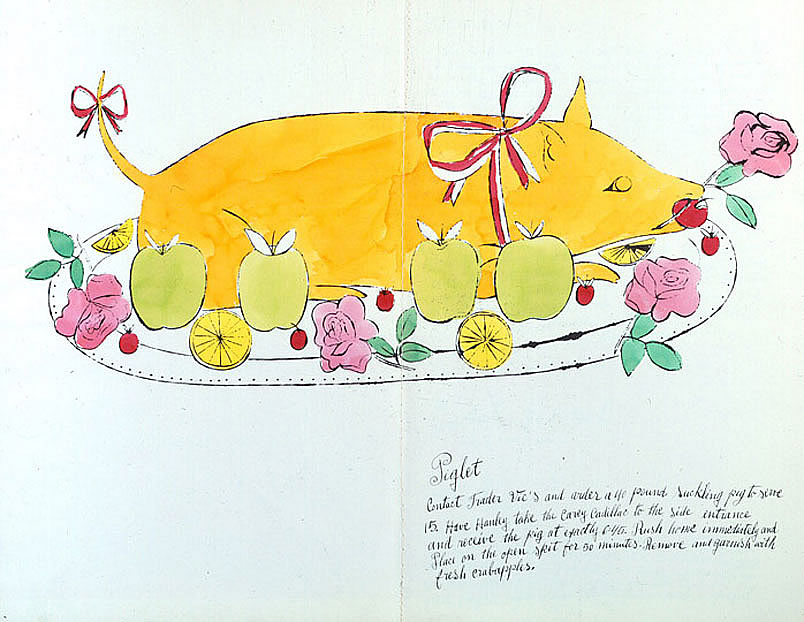
Instead, read­ers are direct­ed to send the Cadil­lac round to Trad­er Vic’s tiki bar for a suck­ling pig of suf­fi­cient size for a par­ty of 15, or to gath­er morels should they find them­selves hol­i­day­ing in the vicin­i­ty of Nor­mandy.

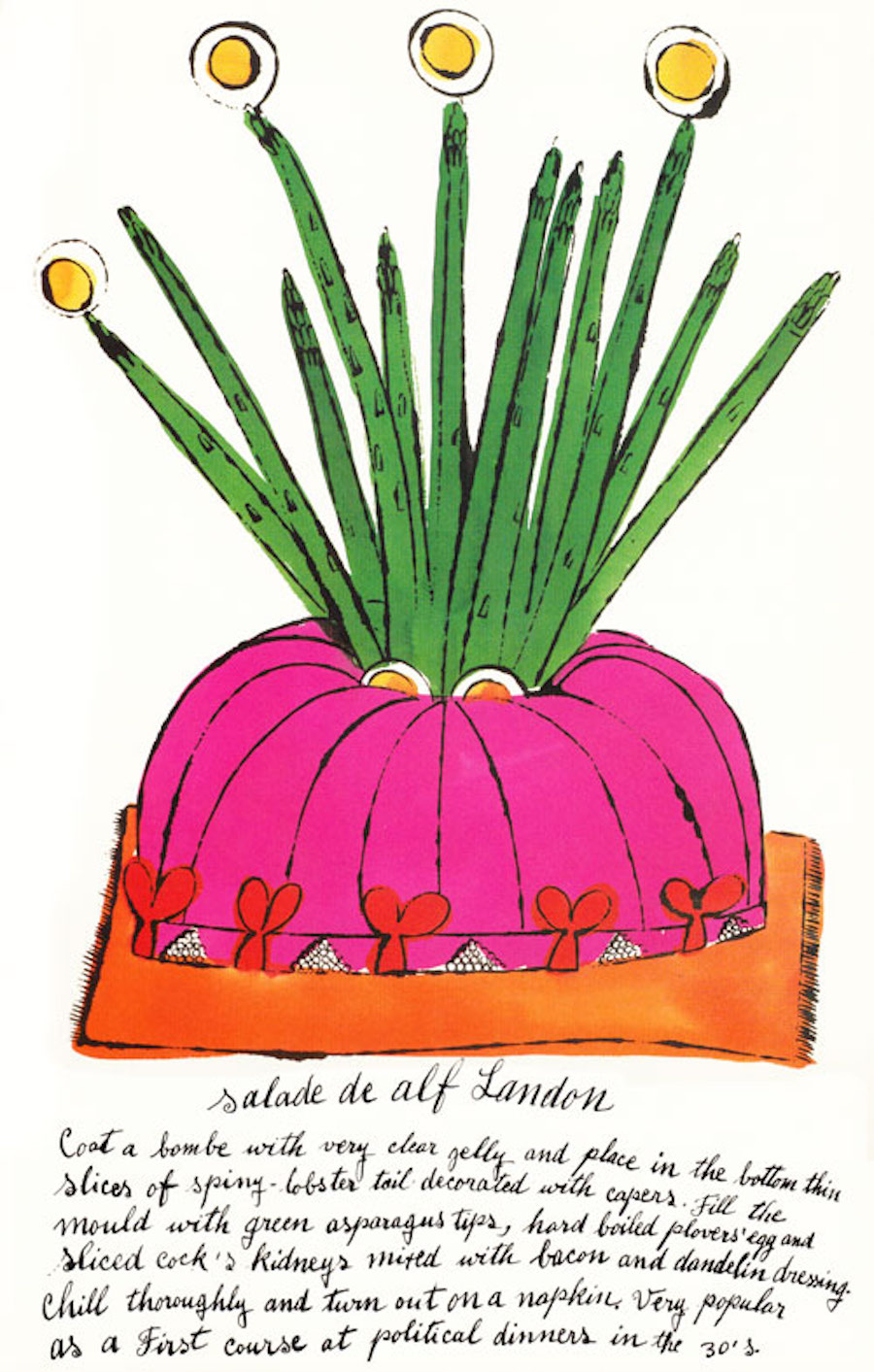
Salade de Alf Lan­don, a bombe of lob­ster tails named for FDR’s oppo­nent in the 1936 Pres­i­den­tial elec­tion, crowned with aspara­gus tips and hard­boiled plover eggs, seems like it could dou­ble as a fetch­ing cha­peau, espe­cial­ly when paired with one of Warhol’s whim­si­cal fan­ta­sy  for footwear com­pa­ny I. Miller’s week­ly ads in The New York Times.

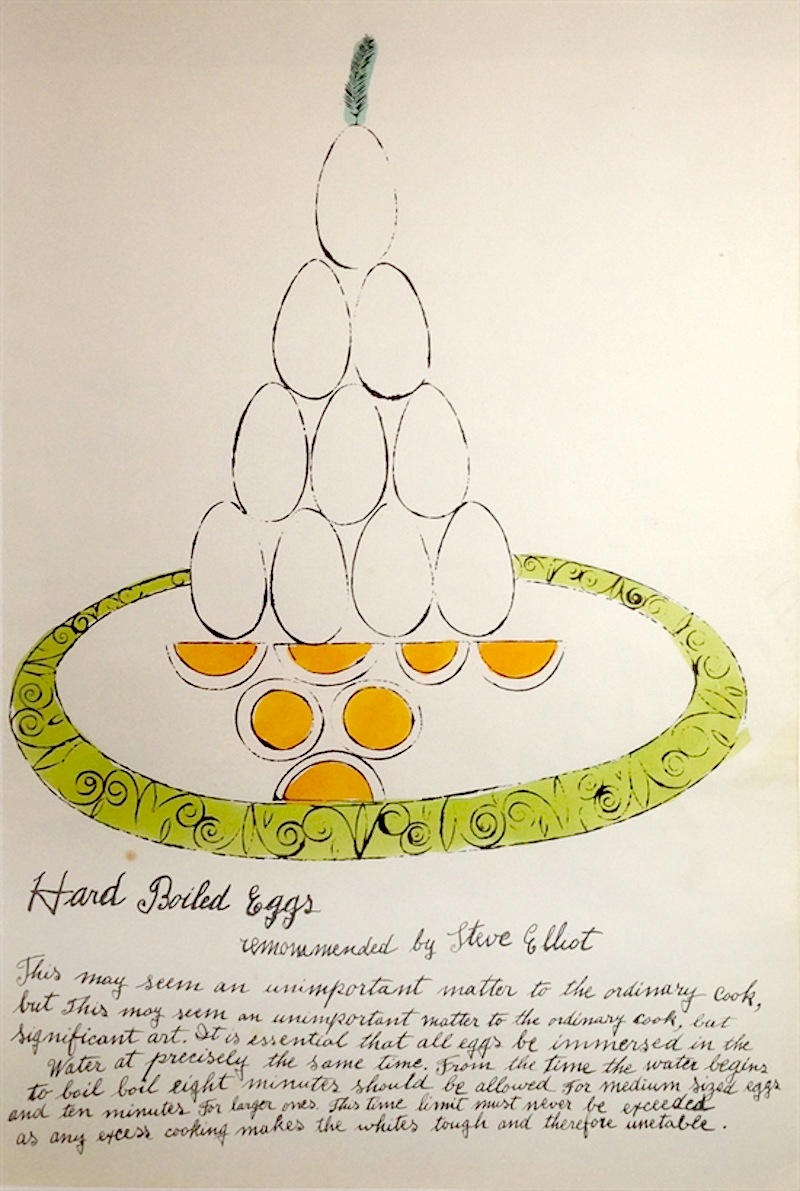
In fact, near­ly every­thing in this vibrant­ly hand col­ored “cook­book” makes for plau­si­ble mid-cen­tu­ry millinery, from Torte a la Dobosch to an imprac­ti­cal­ly ver­ti­cal arrange­ment of Hard Boiled Eggs.


Wild Rasp­ber­ries may have been a swipe at aspi­ra­tional, host­ess-ori­ent­ed late-50s cook­books, but Green­gages a la Warhol’s ref­er­ence to hyper­local pro­duce would fit right in with with Portlandia’s 21st cen­tu­ry food­ie spoofs.

High and low com­bine to great effect with wink­ing ref­er­ences to Gre­ta Gar­bo and gos­sip colum­nist Dorothy Kil­gallenLucky Whip dessert top­ping, a “Seared Roe­buck,” and store-bought super­mar­ket sponge cake (the lat­ter in Wild Rasp­ber­ries’ most legit-sound­ing recipe, some­thing of an upgrade from the recipe for “cake” Warhol shared in The Phi­los­o­phy of Andy Warhol — a choco­late bar served between slices of bread.

Relat­ed Con­tent: 

MoMA’s Artists’ Cook­book (1978) Reveals the Meals of Sal­vador Dalí, Willem de Koon­ing, Andy Warhol, Louise Bour­geois & More

300 Rarely-Seen, Risqué Draw­ings by Andy Warhol Pub­lished in the New Book, Andy Warhol: Love, Sex, and Desire. Draw­ings (1950–1962)

130,000 Pho­tographs by Andy Warhol Are Now Avail­able Online, Cour­tesy of Stan­ford Uni­ver­si­ty

Ayun Hal­l­i­day is an author, illus­tra­tor, the­ater mak­er and Chief Pri­ma­tol­o­gist of the East Vil­lage Inky zine.  Fol­low her @AyunHalliday.

The Very First Webcam Was Invented to Keep an Eye on a Coffee Pot at Cambridge University

The inter­net as we know it today began with a cof­fee pot. Despite the ring of exag­ger­a­tion, that claim isn’t actu­al­ly so far-fetched. When most of us go online, we expect some­thing new: often not just some­thing new to read, but some­thing new to watch. This, as those of us past a cer­tain age will recall, was not the case with the ear­ly World Wide Web, con­sist­ing as it most­ly did of sta­t­ic pages of text, updat­ed irreg­u­lar­ly if at all. Younger read­ers will have to imag­ine even that being a cut­ting-edge thrill, but we did­n’t real­ly feel like we were liv­ing in the future until the fall of 1993, when XCof­fee first went live.

This ground­break­ing tech­no­log­i­cal project “start­ed back in the dark days of 1991,” writes co-cre­ator Quentin Stafford-Fras­er, “when the World Wide Web was lit­tle more than a glint in CERN’s eye.” At the time, Stafford-Fras­er was employed as one of fif­teen researchers in the “Tro­jan Room” of the Uni­ver­si­ty of Cam­bridge Com­put­er Lab. “Being poor, impov­er­ished aca­d­e­mics, we only had one cof­fee fil­ter machine between us, which lived in the cor­ri­dor just out­side the Tro­jan Room. How­ev­er, being high­ly ded­i­cat­ed and hard-work­ing aca­d­e­mics, we got through a lot of cof­fee, and when a fresh pot was brewed, it often did­n’t last long.”

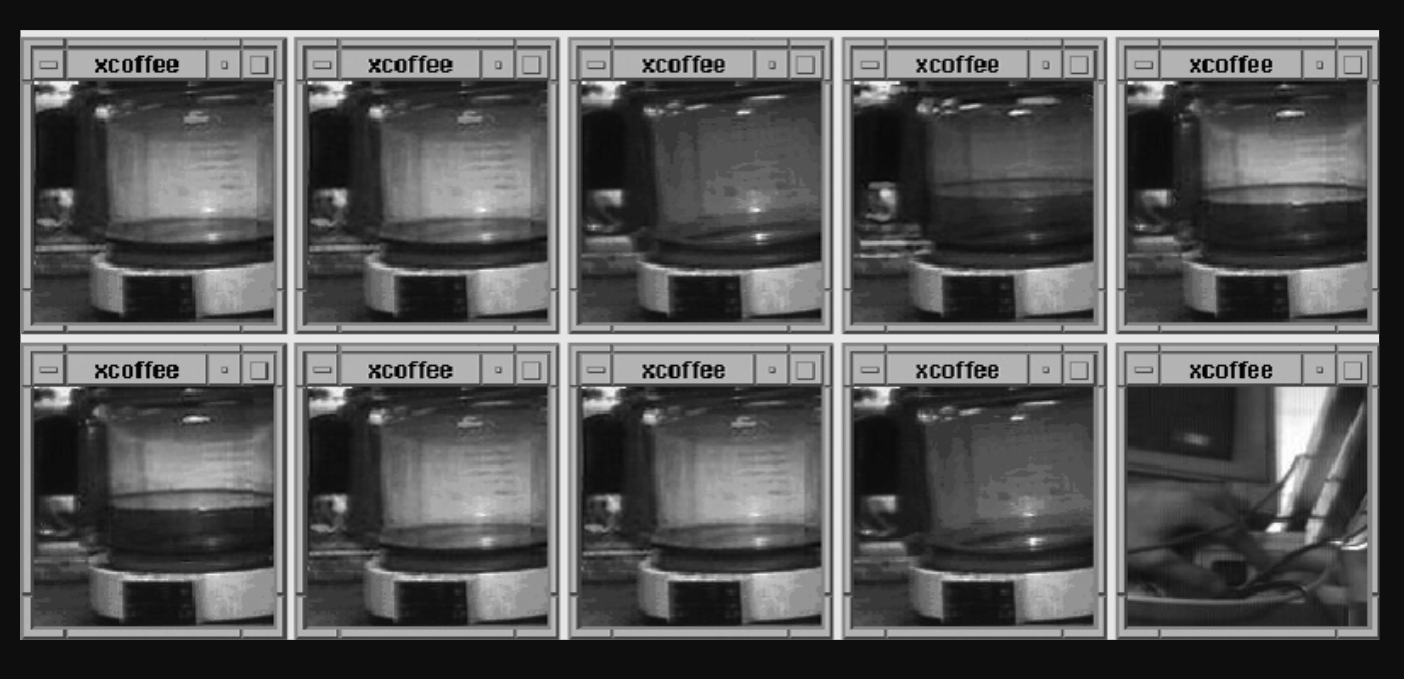
It occurred to Stafford-Fras­er to train an unused video cam­era from the Tro­jan Room on the cof­fee pot (and thus the amount of cof­fee avail­able with­in), then con­nect it to a com­put­er, specif­i­cal­ly an Acorn Archimedes. His col­league Paul Jardet­zky “wrote a ‘serv­er’ pro­gram, which ran on that machine and cap­tured images of the pot every few sec­onds at var­i­ous res­o­lu­tions, and I wrote a ‘client’ pro­gram which every­body could run, which con­nect­ed to the serv­er and dis­played an icon-sized image of the pot in the cor­ner of the screen. The image was only updat­ed about three times a minute, but that was fine because the pot filled rather slow­ly, and it was only greyscale, which was also fine, because so was the cof­fee.”

XCof­fee, the result­ing pro­gram, was meant only to pro­vide this much-need­ed infor­ma­tion to Com­put­er Lab mem­bers else­where in the build­ing. But after the release of image-dis­play­ing web browsers in 1993, it found a much wider audi­ence as the world’s first stream­ing web­cam. Stafford-Fraser’s suc­ces­sors “res­ur­rect­ed the sys­tem, treat­ed it to a new frame grab­ber, and made the images avail­able on the World Wide Web. Since then, hun­dreds of thou­sands of peo­ple have looked at the cof­fee pot, mak­ing it undoubt­ed­ly the most famous in the world.” Stafford-Fras­er wrote these words in 1995; in the years there­after XCof­fee went on to receive mil­lions of views before its even­tu­al shut­down in 2001.

In the Cen­tre for Com­put­ing His­to­ry video above, Stafford-Fras­er shows the very Olivet­ti cam­era he orig­i­nal­ly used to mon­i­tor the cof­fee lev­el. (He’d pre­vi­ous­ly worked at the Olivet­ti Research Lab­o­ra­to­ry, whose par­ent com­pa­ny also owned Acorn Com­put­ers.) “We could see things at a dis­tance before,” he says. “We could view tele­vi­sion pro­grams, we could look through tele­scopes.” But only after the Tro­jan Room’s cof­fee pot hit the inter­net could we “see what’s hap­pen­ing now, some­where else in the world,” on demand. Thir­ty years after XCof­fee’s devel­op­ment, we’re mes­mer­ized by live-stream­ing stars and sur­round­ed by “smart” home appli­ances, hop­ing for noth­ing so much as way to con­cen­trate on our imme­di­ate sur­round­ings again — to wake up, if you like, and smell the cof­fee.

via Boing­Bo­ing

Relat­ed Con­tent:

See Web Cams of Sur­re­al­ly Emp­ty City Streets in Venice, New York, Lon­don & Beyond

Sci-Fi “Por­tal” Con­nects Cit­i­zens of Lublin & Vil­nius, Allow­ing Passers­by Sep­a­rat­ed by 376 Miles to Inter­act in Real Time

George Orwell Pre­dict­ed Cam­eras Would Watch Us in Our Homes; He Nev­er Imag­ined We’d Glad­ly Buy and Install Them Our­selves

The Cof­fee Pot That Fueled Hon­oré de Balzac’s Cof­fee Addic­tion

The Hertel­la Cof­fee Machine Mount­ed on a Volk­swa­gen Dash­board (1959): The Most Euro­pean Car Acces­so­ry Ever Made

Based in Seoul, Col­in Mar­shall writes and broad­casts on cities, lan­guage, and cul­ture. His projects include the Sub­stack newslet­ter Books on Cities, the book The State­less City: a Walk through 21st-Cen­tu­ry Los Ange­les and the video series The City in Cin­e­ma. Fol­low him on Twit­ter at @colinmarshall or on Face­book.

An Archaeologist Creates the Definitive Guide to Beer Cans

Image via Wiki­me­dia Com­mons

As a bev­er­age of choice and neces­si­ty for much of the pop­u­la­tion in parts of the ancient world, beer has played an impor­tant role in archae­ol­o­gy. Beer cans, on the oth­er hand, have not. Unlike mil­len­nia-old recipes, beer cans seem like no more than trash, even in a field where trash is high­ly trea­sured. This is a mis­take, says arche­ol­o­gist Jane Busch. “The his­tor­i­cal archae­ol­o­gist who ignores the beer can at his site is like the pre­his­toric arche­ol­o­gist who ignores his­toric pot­tery.”

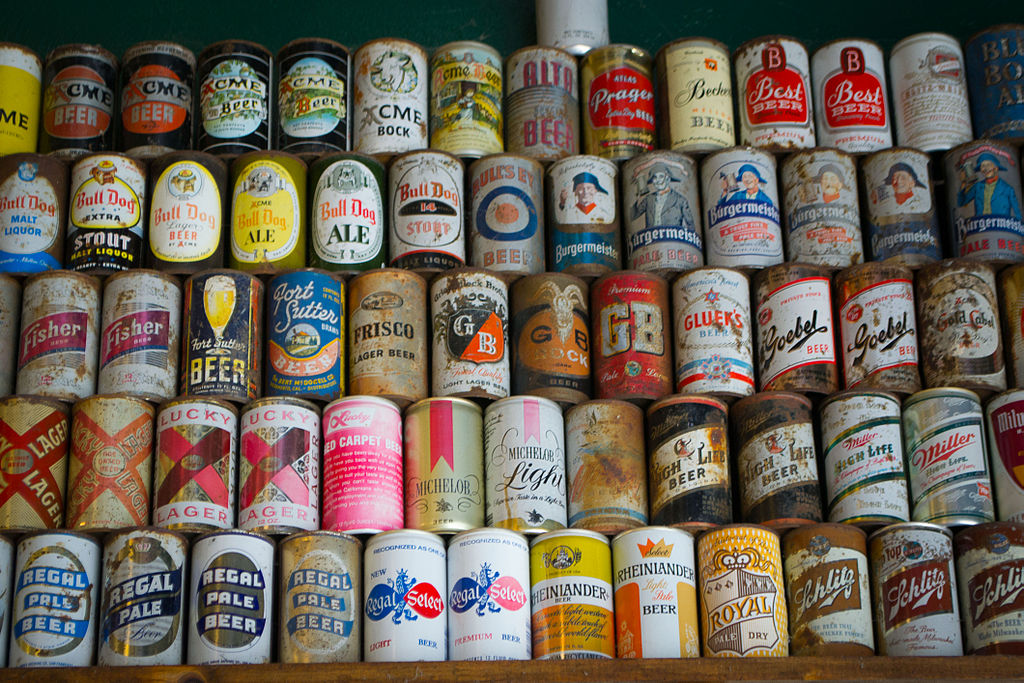
David Maxwell, an expert in ani­mal bones who trained as a Mayanist, has rec­og­nized the truth of this state­ment by turn­ing his pas­sion for beer can col­lect­ing into beer can archae­ol­o­gy, a tiny niche with­in the small­er field of “tin can archae­ol­o­gy.” Maxwell became the reign­ing expert on beer can dat­ing when “in 1993, he pub­lished a field-iden­ti­fi­ca­tion guide in His­tor­i­cal Archae­ol­o­gy,” notes Jes­si­ca Gin­grich at Atlas Obscu­ra, “which has since become an indus­try stan­dard and his most-read work.”

The first com­mer­cial canned beer appeared in 1935, after sev­er­al unsuc­cess­ful exper­i­ments start­ing in 1909. Exper­i­ments in beer can­ning took a hia­tus dur­ing Pro­hi­bi­tion, and canned beer itself went off the mar­ket dur­ing WWII as sup­plies of tin plate were rerout­ed to the war effort. Dur­ing that inter­reg­num, only the mil­i­tary shipped canned beer, to sol­diers over­seas in olive and camo-col­ored cans. When sales resumed after the war, beer cans assumed more rou­tinized design ele­ments. Maxwell him­self became fas­ci­nat­ed with beer cans from afar. “While canned beer sales explod­ed in the Unit­ed States after World War II, Gin­grich writes, “the indus­try failed to take off in Cana­da until the 1980s.”

As a child in Cana­da, Maxwell col­lect­ed bot­tle caps. “All the beer came in the same shape bot­tle,” he says. Cans seemed exot­ic, espe­cial­ly those of an old­er vin­tage. “They had punch­es to open them instead of pull rings, and all I knew was that they pre­dat­ed me.” The val­ue of dis­pos­able arti­facts less than 100 years old isn’t imme­di­ate­ly appar­ent to most peo­ple, says Jim Rock, a pio­neer of tin can stud­ies who calls cans “the Rod­ney Dan­ger­field of arche­ol­o­gy. They just don’t get any respect.” But the fact is “all arche­ol­o­gy is garbage,” says Maxwell.

Dat­ing cans gives arche­ol­o­gists a pic­ture of mod­ern con­sump­tion pat­terns — and pat­terns of eco­log­i­cal destruc­tion — in the refuse tossed on high­ways and the stra­ta of trash found in con­struc­tion sites, land­fills, and even ancient dig sites, where dat­ing beer cans can tell arche­ol­o­gists when ear­li­er tres­passers might have arrived, removed or altered arti­facts, and left their trash behind. Maxwell, who has recent­ly down­sized his col­lec­tion from 4500 to 1700 cans to save space, admits that a nar­row focus on the beer can takes a spe­cial com­bi­na­tion of skills.

“Col­lec­tors are a fab­u­lous resource for aca­d­e­mics,” he says. “These are the guys who do the grunt work” — the end­less­ly curi­ous cit­i­zen sci­en­tists of archae­ol­o­gy. “I can’t think of any­one else who would do that except some­one who is obses­sive about what it is that they are col­lect­ing.” In Maxwell, the obses­sive col­lec­tor and rig­or­ous aca­d­e­m­ic just hap­pened to come togeth­er to pro­duce the defin­i­tive guide. (See Beer Cans: A Guide for the Archae­ol­o­gist online.) But even he has had to “face the ques­tion of what deserves to be archived and kept,” Nico­la Jones writes at Sapi­ens. In dis­card­ing 3,000 of his own cans, most of them acquired through col­lec­tors online, he had to admit that “though the rusty cans were a part of his­to­ry, they weren’t worth much to the rest of the world.”

Relat­ed Con­tent:

Beer Archae­ol­o­gy: Yes, It’s a Thing

The Sci­ence of Beer: A New Free Online Course Promis­es to Enhance Your Appre­ci­a­tion of the Time­less Bev­er­age

The First Known Pho­to­graph of Peo­ple Shar­ing a Beer (1843)

Josh Jones is a writer and musi­cian based in Durham, NC. Fol­low him at @jdmagness

Watch Anthony Bourdain’s First Food-and-Travel Series A Cook’s Tour Free Online (2002–03)

At the time of his death in 2018, Antho­ny Bour­dain was quite pos­si­bly the most famous cook in the world. With­out ques­tion he held the title of the most famous cook-trav­el­er, a sta­tus rest­ing pri­mar­i­ly on No Reser­va­tions and Parts Unknown, the tele­vi­sion shows he host­ed on the Trav­el Chanel and CNN, respec­tive­ly. But it all began with A Cook’s Tour, which the Food Net­work orig­i­nal­ly broad­cast in 2002 and 2003. That series, Bour­dain’s very first, took him from Japan to Moroc­co to Mex­i­co to Aus­tralia to Thai­land — and through many points in between — in search of the world’s most stim­u­lat­ing eat­ing expe­ri­ences.

Now A Cook’s Tour has come avail­able free to watch on Youtube, thanks to the stream­ing chan­nel GoTrav­el­er (who also offer the show through their own ser­vice).

A Por­tuguese slaugh­ter­ing-and-roast­ing par­ty; vod­ka-fueled ice fish­ing in St. Peters­burg; an explo­ration of the Amer­i­can “Bar­be­cue Tri­an­gle” con­sti­tut­ed by Kansas City, Hous­ton, and North Car­oli­na; and a best-faith effort to lose him­self in Chi­ang Mai: if you caught these or oth­er of Bour­dain’s ear­ly inter­na­tion­al culi­nary adven­tures those near­ly twen­ty years ago, you can relive them, and if you missed out, you can enjoy them for the first time.

Dur­ing the launch phase of his rise to fame (after decades of restau­rant work and years of writ­ing, an effort that first pro­duced a cou­ple of food-themed mur­der-mys­tery nov­els), Bour­dain man­aged to tap into a new wave of gas­tro­nom­ic inter­est then ris­ing in Amer­i­ca. He did so with a street-smart sense of humor that appealed even to view­ers with no par­tic­u­lar invest­ment in the world of cook­ing and din­ing, as long as they had an inter­est in the world itself. With A Cook’s Tour, he took food tele­vi­sion out of the kitchen — way out of the kitchen — and over the eigh­teen years since its con­clu­sion, the series’ influ­ence has become so per­va­sive as almost to be invis­i­ble. Antho­ny Bour­dain may be gone, but parts of his per­son­al­i­ty live on in every high-pro­file trav­el­er out there cook­ing, eat­ing, and get­ting lost today.

Relat­ed Con­tent:

Watch Antho­ny Bourdain’s Free Show Raw Craft, Where He Vis­its Crafts­men Mak­ing Gui­tars, Tat­toos, Motor­cy­cles & More (RIP)

Antho­ny Bour­dain Talks About the Big Break That Changed His Life — at Age 44

Life Lessons from Antho­ny Bour­dain: How He Devel­oped His Iron Pro­fes­sion­al­ism, Achieved Cre­ative Free­dom & Learned from Fail­ure

Al Jazeera Trav­el Show Explores World Cities Through Their Street Food

Watch 26 Free Episodes of Jacques Pépin’s TV Show, More Fast Food My Way

Based in Seoul, Col­in Mar­shall writes and broad­casts on cities, lan­guage, and cul­ture. His projects include the Sub­stack newslet­ter Books on Cities, the book The State­less City: a Walk through 21st-Cen­tu­ry Los Ange­les and the video series The City in Cin­e­ma. Fol­low him on Twit­ter at @colinmarshall or on Face­book.

How Caffeine Fueled the Enlightenment, Industrial Revolution & the Modern World: An Introduction by Michael Pollan

Accord­ing to the cur­rent research, caf­feine, “con­tributes much more to your health than it takes away.” These words come from a thinker no less vig­i­lant about the state of food-and-drink sci­ence than Michael Pol­lan, and per­haps they’re all you feel you need to know on the sub­ject. In fact, you’re prob­a­bly tak­ing in some form of caf­feine even while read­ing this now. I know I’m doing so while writ­ing it, and this, accord­ing to the Pol­lan-star­ring Wired video above, gives us some­thing in com­mon with the cen­tral fig­ures of the Enlight­en­ment. “Isaac New­ton was a big cof­fee fan,” says Pol­lan, and Voltaire “appar­ent­ly had 72 cups a day. I don’t know quite how you do that.”

The Enlight­en­ment, the Age of Rea­son, and the Indus­tri­al Rev­o­lu­tion also owe much to the intel­lec­tu­al and com­mer­cial churn of the cof­fee house, an insti­tu­tion that emerged in 17th-cen­tu­ry Lon­don. “There were cof­fee hous­es ded­i­cat­ed to lit­er­a­ture, and writ­ers and poets would con­gre­gate there,” says Pol­lan.

“There was a cof­fee house ded­i­cat­ed to sell­ing stock, and that turned into the Lon­don Stock Exchange even­tu­al­ly. There was anoth­er one ded­i­cat­ed to sci­ence, tied to the Roy­al Insti­tu­tion, where great sci­en­tists of the peri­od would get togeth­er.” Con­sumed in ded­i­cat­ed hous­es or else­where, the “new, sober, more civ­il drink was chang­ing the way peo­ple thought and the way they worked.”

The rel­e­vant con­trast is with alco­hol, once an ele­ment of prac­ti­cal­ly all bev­er­ages in Europe. Before caf­feine got there, “peo­ple were drunk or buzzed most of the day. Peo­ple would have alco­hol with break­fast” — chil­dren includ­ed, since it was still health­i­er than con­t­a­m­i­nat­ed water. This cus­tom hard­ly encour­aged clear, lin­ear thought; Diderot, Pol­lan tells us, wrote the Ency­clopédie while drink­ing cof­fee, but imag­ine the result, if any, had he been drink­ing wine. More than a quar­ter-mil­len­ni­um lat­er, we have sol­id evi­dence that caf­feine “does improve focus and mem­o­ry, and the abil­i­ty to learn,” if at the cost of a decent night’s sleep. Not that this seems to have both­ered cof­fee-pound­ing Enlight­en­ment thinkers: what’s a lit­tle toss­ing and turn­ing, after all, when there’s a world­view to be rev­o­lu­tion­ized?

Pol­lan elab­o­rates on the role cof­fee plays in our lives in his new book, This Is Your Mind on Plants. And sep­a­rate­ly see his short audio book, Caf­feine: How Caf­feine Cre­at­ed the Mod­ern World.

Relat­ed Con­tent:

The Curi­ous Sto­ry of London’s First Cof­fee­hous­es (1650–1675)

Philoso­phers Drink­ing Cof­fee: The Exces­sive Habits of Kant, Voltaire & Kierkegaard

Hon­oré de Balzac Writes About “The Plea­sures and Pains of Cof­fee,” and His Epic Cof­fee Addic­tion

“The Virtues of Cof­fee” Explained in 1690 Ad: The Cure for Lethar­gy, Scurvy, Drop­sy, Gout & More

The Hertel­la Cof­fee Machine Mount­ed on a Volk­swa­gen Dash­board (1959): The Most Euro­pean Car Acces­so­ry Ever Made

Michael Pol­lan Explains How Cook­ing Can Change Your Life; Rec­om­mends Cook­ing Books, Videos & Recipes

Based in Seoul, Col­in Mar­shall writes and broad­casts on cities, lan­guage, and cul­ture. His projects include the Sub­stack newslet­ter Books on Cities, the book The State­less City: a Walk through 21st-Cen­tu­ry Los Ange­les and the video series The City in Cin­e­ma. Fol­low him on Twit­ter at @colinmarshall or on Face­book.

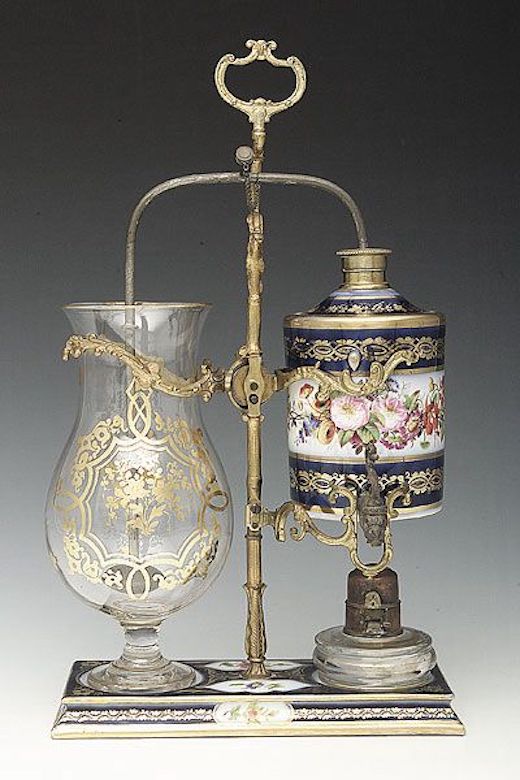
Watch an Exquisite 19th Century Coffee Maker in Action

Pourover

Cold brew

Sin­gle ori­gin

Cof­fee snob­bery may seem like a recent phe­nom­e­non, but the quest for the per­fect­ly brewed cup has been going on for a very long time.

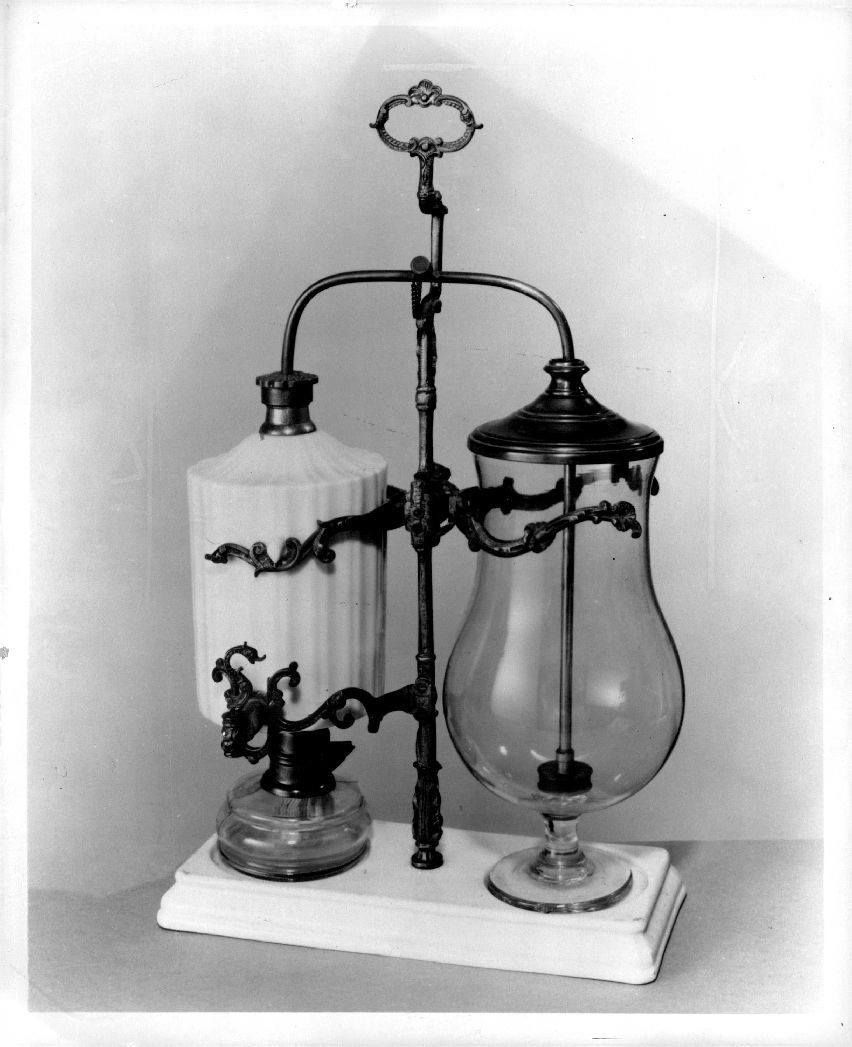
Behold the Con­ti­nen­tal Bal­anc­ing Siphon, above — a com­plete­ly auto­mat­ic, 19th-cen­tu­ry table top vac­u­um brew­er.

There’s an unmis­tak­able ele­ment of cof­fee mak­ing as the­ater here… but also, a fas­ci­nat­ing demon­stra­tion of phys­i­cal prin­ci­ples in action.

Vin­tage vac­u­um pot col­lec­tor Bri­an Har­ris breaks down how the bal­anc­ing siphon works:

Two ves­sels are arranged side-by-side, with a siphon tube con­nect­ing the two.

Cof­fee is placed in one side (usu­al­ly glass), and water in the oth­er (usu­al­ly ceram­ic). 

A spir­it lamp heats the water, forc­ing it through the tube and into the oth­er ves­sel, where it mix­es with the cof­fee. 

As the water is trans­ferred from one ves­sel to the oth­er, a bal­anc­ing sys­tem based on a coun­ter­weight or spring mech­a­nism is acti­vat­ed by the change in weight. This in turn trig­gers the extin­guish­ing of the lamp. A par­tial vac­u­um is formed, which siphons the brewed cof­fee through a fil­ter and back into the first ves­sel, from which is dis­pensed by means of a spig­ot.

(Still curi­ous? We direct you to Har­ris’ web­site for a length­i­er, more egghead­ed expla­na­tion, com­plete with equa­tions, graphs, and cal­cu­la­tions for sat­u­rat­ed vapor pres­sure and the approx­i­mate tem­per­a­ture at which down­ward flow begins.)

The bal­anc­ing siphon was to 1850’s Paris and Vien­na what Blue Bottle’s three-foot tall Japan­ese slow-drip iced cof­fee-mak­ing devices are to ear­ly 21st-cen­tu­ry Brook­lyn and Oak­land.

Does the fla­vor of cof­fee brewed in a bal­ance siphon mer­it the time and, if pur­chased in a cafe, expense?

Yes, accord­ing to Maria Tin­de­mans, the CEO of Roy­al Paris, whose 24-carat gold and Bacar­rat glass bal­anc­ing siphon retails for between $17,500 and $24,000:

The cof­fee from a syphon can best be described as “crys­tal clear,” with great puri­ty of fla­vor and aro­ma and no bit­ter­ness added by the brew­ing process.

More afford­able bal­anc­ing siphons can be found online, though be fore­warned, all siphons are a bitch to clean, accord­ing to Red­dit.

If you do invest, be sure to up the cof­fee snob­bery by telling your cap­tive audi­ence that you’ve named your new device “Gabet,” in hon­or of Parisian Louis Gabet, whose 1844 patent for a coun­ter­weight mech­a­nism kicked off the bal­anc­ing siphon craze.

via Boing Boing

Relat­ed Con­tent:

How to Make the World’s Small­est Cup of Cof­fee, from Just One Cof­fee Bean

The Life Cycle of a Cup of Cof­fee: The Jour­ney from Cof­fee Bean, to Cof­fee Cup

Wake Up & Smell the Cof­fee: The New All-in-One Cof­fee-Mak­er/Alarm Clock is Final­ly Here!

Ayun Hal­l­i­day is an author, illus­tra­tor, the­ater mak­er and Chief Pri­ma­tol­o­gist of the East Vil­lage Inky zine.  Fol­low her @AyunHalliday

Kurt Vonnegut’s Recipes in Deadeye Dick: Polka-Dot Brownies, Linzer Torte & Haitian Banana Soup

Author Kurt Von­negut incor­po­rat­ed sev­er­al recipes into his 1982 nov­el Dead­eye Dick, inspired by James Beard’s Amer­i­can Cook­ery, Mar­cel­la Hazan’s The Clas­sic Ital­ian Cook Book, and Bea Sandler’s The African Cook­book.

He writes in the pref­ace that these recipes are intend­ed to pro­vide “musi­cal inter­ludes for the sali­vary glands,” warn­ing read­ers that “no one should use this nov­el for a cook­book. Any seri­ous cook should have the reli­able orig­i­nals in his or her library any­way.”

So with that caveat in mind…

Ear­ly on, the narrator/titular char­ac­ter, née Rudy Waltz, shares a recipe from his family’s for­mer cook, Mary Hoobler, who taught him “every­thing she knew about cook­ing and bak­ing”:


MARY HOOBLER’S CORN BREAD

Mix togeth­er in a bowl half a cup of flour, one and a half cups of yel­low corn-meal, a tea­spoon of salt, a tea­spoon of sug­ar, and three tea­spoons of bak­ing pow­der.

Add three beat­en eggs, a cup of milk, a half cup of cream, and a half cup of melt­ed but­ter.

Pour it into a well-but­tered pan and bake it at four hun­dred degrees for fif­teen min­utes.

Cut it into squares while it is still hot. Bring the squares to the table while they are still hot, and fold­ed in a nap­kin.

Bare­ly two para­graphs lat­er, he’s shar­ing her bar­be­cue sauce. It sounds deli­cious, easy to pre­pare, and its place­ment gives it a strong fla­vor of Slaughterhouse-Five’s “so it goes” and “Poo-tee-weet?” — as iron­ic punc­tu­a­tion to Father Waltz’s full on embrace of Hitler, a seem­ing non sequitur that forces read­ers to think about what comes before:

When we all posed in the street for our pic­ture in the paper, Father was forty-two. Accord­ing to Moth­er, he had under­gone a pro­found spir­i­tu­al change in Ger­many. He had a new sense of pur­pose in life. It was no longer enough to be an artist. He would become a teacher and polit­i­cal activist. He would become a spokesman in Amer­i­ca for the new social order which was being born in Ger­many, but which in time would be the sal­va­tion of the world.

This was quite a mis­take.

MARY HOOBLER’S BARBECUE SAUCE

Sauté a cup of chopped onions and three chopped gar­lic cloves in a quar­ter of a pound of but­ter until ten­der.

Add a half cup of cat­sup, a quar­ter cup of brown sug­ar, a tea­spoon of salt, two tea­spoons of fresh­ly ground pep­per, a dash of Tabas­co, a table­spoon of lemon juice, a tea­spoon of basil, and a table­spoon of chili pow­der.

Bring to a boil and sim­mer for five min­utes.

Rudy’s father is not the only char­ac­ter to fal­ter.

Rudy’s mis­take hap­pens in the blink of an eye, and man­ages to upend a num­ber of lives in Mid­land City, a stand in for Indi­anapo­lis, Vonnegut’s home­town.

His fam­i­ly los­es their mon­ey in an ensu­ing law­suit, and can no longer engage Mary Hoobler and the rest of the staff.

Young Rudy, who’s spent his child­hood hang­ing out with the ser­vants in Mary’s cozy kitchen, finds it “easy and nat­ur­al” to cater to his par­ents in the man­ner to which they were accus­tomed:

As long as they lived, they nev­er had to pre­pare a meal or wash a dish or make a bed or do the laun­dry or dust or vac­u­um or sweep, or shop for food. I did all that, and main­tained a B aver­age in school, as well. 

What a good boy was I!

EGGS À LA RUDY WALTZ (age thir­teen)

Chop, cook, and drain two cups of spinach.

Blend with two table­spoons of but­ter, a tea­spoon of salt, and a pinch of nut­meg.

Heat and put into three oven-proof bowls or cups.

Put a poached egg on top of each one, and sprin­kle with grat­ed cheese.

Bake for five min­utes at 375 degrees. Serves three: the papa bear, the mama bear, and the baby bear who cooked it—and who will clean up after­wards.

By high school, Rudy’s heavy domes­tic bur­den has him falling asleep in class and repro­duc­ing  com­pli­cat­ed desserts from  recipes in the local paper. (“Father roused him­self from liv­ing death suf­fi­cient­ly to say that the dessert took him back forty years.”)


LINZER TORTE (from the Bugle-Observ­er)

Mix half a cup of sug­ar with a cup of but­ter until fluffy.

Beat in two egg yolks and half a tea­spoon of grat­ed lemon rind.

Sift a cup of flour togeth­er with a quar­ter tea­spoon of salt, a tea­spoon of cin­na­mon, and a quar­ter tea­spoon of cloves. Add this to the sug­ar-and-but­ter mix­ture.

Add one cup of unblanched almonds and one cup of toast­ed fil­berts, both chopped fine.

Roll out two-thirds of the dough until a quar­ter of an inch thick.

Line the bot­tom and sides of an eight-inch pan with dough.

Slather in a cup and a half of rasp­ber­ry jam.

Roll out the rest of the dough, make it into eight thin pen­cil shapes about ten inch­es long. Twist them a lit­tle, and lay them across the top in a dec­o­ra­tive man­ner. Crimp the edges.

Bake in a pre­heat­ed 350-degree oven for about an hour, and then cool at room tem­per­a­ture.

A great favorite in Vien­na, Aus­tria, before the First World War!

Rudy even­tu­al­ly relo­cates to the Grand Hotel Oloff­son in Port au Prince, Haiti, which is how he man­ages to sur­vive the — SPOILER — neu­tron bomb that destroys Mid­land City.

Here is a recipe for choco­late seafoams,  cour­tesy of one of Mid­land City’s fic­tion­al res­i­dents:


MRS. GINO MARTIMO’S SPUMA DI CIOCCOLATA 

Break up six ounces of semi­sweet choco­late in a saucepan.

Melt it in a 250-degree oven.

Add two tea­spoons of sug­ar to four egg yolks, and beat the mix­ture until it is pale yel­low.

Then mix in the melt­ed choco­late, a quar­ter cup of strong cof­fee, and two table­spoons of rum.

Whip two-thirds of a cup of cold, heavy whip­ping cream until it is stiff. Fold it into the mix­ture.

Whip four egg whites until they form stiff peaks, then fold them into the mix­ture.

Stir the mix­ture ever so gen­tly, then spoon it into cups, each cup a serv­ing.

Refrig­er­ate for twelve hours.

Serves six.

Oth­er recipes in Rudy’s reper­toire orig­i­nate with the Grand Hotel Oloff­son’s most valu­able employ­ee, head­wait­er and Vodou prac­ti­tion­er Hip­poly­te Paul De Mille, who “claims to be eighty and have fifty-nine descen­dants”:

He said that if there was any ghost we thought should haunt Mid­land City for the next few hun­dred years, he would raise it from its grave and turn it loose, to wan­der where it would. 

We tried very hard not to believe that he could do that. 

But he could, he could.

HAITIAN FRESH FISH IN COCONUT CREAM

Put two cups of grat­ed coconut in cheese­cloth over a bowl.

Pour a cup of hot milk over it, and squeeze it dry.

Repeat this with two more cups of hot milk. The stuff in the bowl is the sauce.

Mix a pound of sliced onions, a tea­spoon of salt, a half tea­spoon of black pep­per, and a tea­spoon of crushed pep­per.

Sauté the mix­ture in but­ter until soft but not brown.

Add four pounds of fresh fish chunks, and cook them for about a minute on each side.

Pour the sauce over the fish, cov­er the pan, and sim­mer for ten min­utes. Uncov­er the pan and baste the fish until it is done—and the sauce has become creamy.

Serves eight vague­ly dis­grun­tled guests at the Grand Hotel Oloff­son.

HAITIAN BANANA SOUP

Stew two pounds of goat or chick­en with a half cup of chopped onions, a tea­spoon of salt, half a tea­spoon of black pep­per, and a pinch of crushed red pep­per. Use two quarts of water.

Stew for an hour.

Add three peeled yams and three peeled bananas, cut into chunks.

Sim­mer until the meat is ten­der. Take out the meat. What is left is eight serv­ings of Hait­ian banana soup.

Bon appétit!

The recipe that clos­es the nov­el is couched in an anec­dote that’s equal parts scat­ol­ogy and epiphany.

As a daugh­ter of Indi­anapo­lis who was a junior in high school the year Dead­eye Dick was pub­lished, I can attest that Pol­ka-Dot Brown­ies would have been a hit at the bake sales of my youth:


POLKA-DOT BROWNIES

Melt half a cup of but­ter and a pound of light-brown sug­ar in a two-quart saucepan. Stir over a low fire until just bub­bly.

Cool to room tem­per­a­ture.

Beat in two eggs and a tea­spoon of vanil­la.

Stir in a cup of sift­ed flour, a half tea­spoon of salt, a cup of chopped fil­berts, and a cup of semi­sweet choco­late in small chunks.

Spread into a well-greased nine-by-eleven bak­ing pan.

Bake at two hun­dred and thir­ty-five degrees for about thir­ty-five min­utes.

Cool to room tem­per­a­ture, and cut into squares with a well-greased knife.

Enjoy, in mod­er­a­tion of course.

I was wear­ing my best suit, which was as tight as the skin of a knack­wurst. I had put on a lot of weight recent­ly. It was the fault of my own good cook­ing. I had been try­ing out a lot of new recipes, with con­sid­er­able suc­cess. — Rudy Waltz

Relat­ed Con­tent: 

Why Should We Read Kurt Von­negut? An Ani­mat­ed Video Makes the Case

Watch a Sweet Film Adap­ta­tion of Kurt Vonnegut’s Sto­ry, “Long Walk to For­ev­er”

The Recipes of Icon­ic Authors: Jane Austen, Sylvia Plath, Roald Dahl, the Mar­quis de Sade & More

Ayun Hal­l­i­day is an author, illus­tra­tor, the­ater mak­er and Chief Pri­ma­tol­o­gist of the East Vil­lage Inky zine.  Fol­low her @AyunHalliday

« Go BackMore in this category... »
Quantcast