I’ve often called documentary my favorite kind of film, knowing full well that the label designates less a defined genre than a usefully malleable description. What does a documentary have? An unscripted, nonfictional story; interviews; footage candidly shot — maybe. It may also include scripted, staged, fictional material, and may treat real events in a fictionalized manner or search for the reality in events clouded by fiction. For fine examples of the last, see the works of Errol Morris, four of which — A Brief History of Timeon Stephen Hawking (above), November 22, 1963on JFK, They Were Thereon IBM, and Werner Herzog Eats His Shoe on, well, subject obvious– you can see right here in our collection of 200 free documentaries online. And speaking of Herzog, the other living filmmaker doing the most to push outward the boundaries of documentary, we have From One Second to theNext, on the dangers of texting while driving, and Portrait Werner Herzog, on his own life and work.
But cinema had the documentary long before it had the likes of Morris and Herzog, and our collection includes a diversity of such pictures from all over the past century. 1958’s Ansel Adams: Photographer, for instance, profiles in motion the practice of the man whose work in still imagery anticipated, in many ways, the modern nature documentary. Documentary films have arguably provided the richest means of viewing every kind of creative mind at work, from Alfred Hitchcock (The Men Who Made the Movies: Hitchcock, Dial H for Hitchcock) to James Joyce (The Trials of Ulysses) to Joni Mitchell (Woman of Heart and Mind) to Charles Bukowski (Born Into This). Some of them even came as early entries from not-yet famous directors, including Stanley Kubrick (Day of the Flight, Flying Padre, The Seafarers), Jean-Luc Godard (Operation Concrete), and Kevin Smith (Mae Day: The Crumbling of a Documentary). Nobody can ever say where the documentary form will go next, but watch these 200 and you’ll have a pretty fair idea of all the exciting places — geographical, intellectual, personal, and artistic — it’s gone already.
French New Wave filmmaker Alain Resnais, who died at the age of 91 last week, changed cinema forever with a string of intellectually rigorous, nonlinear masterpieces like Hiroshima Mon Amour (1959) and Last Year at Marienbad (1961). Both films are about Resnais’s two obsessions – time and memory. Hiroshima is about a doomed relationship between a French actress and a Japanese architect who are both haunted by the war. Marienbad is an enigmatic puzzle of a movie that sharply divided audiences – either you were mesmerized by the movie or you were bored and infuriated by it. For better or worse, Marienbad influenced generations of fashion photographers; Calvin Klein’s Obsession ads were directly influenced by the film.
Resnais got his start just after the war making short documentaries. His best known is Night and Fog (1955), a meditation on both the Holocaust and the memory of the Holocaust. And above you can see another one of his documentaries – his 1956 short Toute la mémoire du monde (All the World’s Memories). It was put online by Criterion.
While the movie beautifully shows off the labyrinthine expanse of the Bibliothèque nationale de France – its vast collection of books, manuscripts and documents along with herculean efforts to compile and organize all of its information – the film becomes a rumination on the lengths that humanity will go to keep from forgetting. The film features some gorgeous cinematography by Ghislain Cloquet and a soundtrack by Maurice Jarre. Check it out.
Jonathan Crow is a Los Angeles-based writer and filmmaker whose work has appeared in Yahoo!, The Hollywood Reporter, and other publications. You can follow him at @jonccrow.
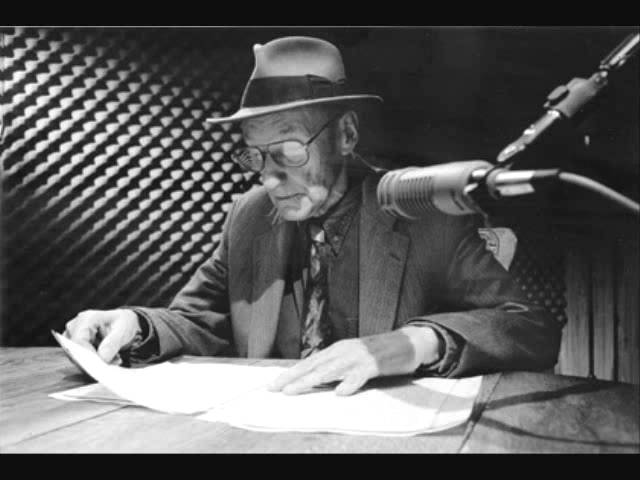
Published in 1959, Williams S. Burroughs’ Naked Lunch ranks with other mid-twentieth century books like Henry Miller’s Tropic of Cancer and the works of Jean Genet as literature that sharply divided both critical and legal opinion in arguments over style and in questions of obscenity. Among its disturbing and subversive characters is the sociopathic surgeon Dr. Benway, who inspired the medical horrors of J.G. Ballard and was inspired in turn by Aldous Huxley’s Brave New World. Benway provides some of the more satirical moments in the book, as you can hear in the section below, which Burroughs reads straight with his distinctive nasally Midwestern twang. A short film of the scene (sadly unembeddable), called “Dr. Benway Operates,” has Burroughs himself playing the doctor, in a dramatization that looks like low rent farce as directed by John Waters.
A series of loosely connected chapters that Burroughs said could be read in any order, Naked Lunch seems both fascinated and repelled by the grisly medicalized violence in scenes like those above (one vignette, for example, presents “a tract against capital punishment”). This ambivalence was not lost on writers like Norman Mailer. The highest praise of the novel probably came from Mailer during the novel’s 1966 obscenity trial before the Massachusetts Supreme Court. In one among a handful of literary depositions, including one from Allen Ginsberg, Mailer described Burroughs’ “extraordinary style,” and “exquisite poetic sense.” Despite the fact that its images were “often disgusting,” Mailer called the book “a deep work, a calculated work” that “captures that speech [‘gutter talk’] like no American writer I know.”
Perhaps one of the work’s most damning pieces of criticism comes from the Judicial Officer for the U.S. Postal Service, who called for the book’s banning, appraising the writing as “undisciplined prose, far more akin to the early work of experimental adolescents than to anything of literary merit.” Mailer, Ginsberg, and the book’s other supporters won out, a fact beat essayist Jed Birmingham laments, for a surprising reason: The unbanning of Naked Lunch led to the book’s taming, its gentrification, as it were: “The wild, exuberant offensiveness of the novel fades,” he writes, “in the face of all the legal arguments and the process of canonization.” In fact, the full novel may never have been published at all had it not been for the Post Office in Chicago seizing several hundred copies of The Chicago Review, which contained some few Naked Lunch sections. Hearing of the controversy, French publisher Maurice Girodias hastily threw together a manuscript of the first 1959 text.
And yet, prior to the mid-sixties, the decision to ban Naked Lunch, “even before it was published in book form,” meant “that questions of obscenity and censorship dictated the academic and public reception” of the book. Burroughs commented on the effects of such censorship—using an analogy to “the junk virus”—in part of a new preface to the 50th edition called “Afterthoughts on a Deposition.” The heath risks of opiates “in controlled doses,” he writes,“maybe be minimal,” yet the effects of criminalization are outsized “anti-drug hysteria,” which “poses a threat to personal freedoms and due-process protections of the law everywhere.”
Since the novel’s vindication, critical consensus has centered around sober, reverent judgments like Mailer’s—and to some lesser extent Ginsberg’s terse, irritable testimony. While there are still those who despise the book, it’s significant that Burroughs’ work—which the Washington Post called the first of his “homosexual planet-operas”—has achieved such widespread admiration amidst the notoriety. The novel deals in themes we’re still adjudicating daily in courts legal and public some 55 years later, pointing perhaps to the continued gulf between the thoughts and aims of the reading public and those of hysterical authoritarians and “the media and narcotics officials,” as Burroughs has it. After all, at its 50th anniversary in 2009, Naked Lunch was pronounced “still fresh” by such mainstream outlets as NPR and The Guardian, evidence of its persistent power, and maybe also of its domestication.
Surely you’ve seen Stanley Kubrick’s version of A Clockwork Orange. But have you seen Andy Warhol’s? Anthony Burgess’ 1962 novel of the robust culture of teenage violence in our freakish dystopian future caught the eye of not just the man who had previously made 2001: A Space Odyssey, but that of the man who had previously made the eight-hour still shot Empireas well. Warhol and Kubrick’s sensibilities differed, you might say, as did the means of production to which they had access, and a comparison of their Clockwork Orange adaptations highlights both. Using three shots in this 70-minute film instead of Empire’s one, Warhol creates, in the words of Ed Howard at Only the Cinema, “a strange and intriguing film which, like most of Warhol’s movies, often toes the line between slow and downright boring, a piece of “alienating, attitude-based cinema” that “provides no easy pleasures,” “replacing the conventional narrative drive with a cluttered mise-en-scene of bodies.” For all its cheapness, Warhol’s lo-fi cinematic rendition did at least come first, in 1965 to Kubrick’s 1971 — plus, you can watch it free on Youtube above.
“Vinyl is such a loose adaptation of the source novel that even people who have seen it should be forgiven for not realising that it is built on Burgess’s literary scaffold,” says the web site of the International Anthony Burgess Foundation. “The film is presented as a series of images of brutality, beatings, torture and masochism all performed by a group of men under the gaze of a glamorous woman. In its preoccupations with pornography and violence, it bears many of the oblique hallmarks of Warhol’s work, along with a familiar cast of Factory regulars such as Gerard Malanga, Edie Sedgwick and Ondine. The finished film is disturbing, contains unsimulated violent acts and is not very audience-friendly.” Either a strong disrecommendation or a strong recommendation, depending on your proclivities. And if none of that draws you, maybe the soundtrack including Martha and the Vandellas, The Kinks, The Rolling Stones, and the The Isley Brothers will. Did Warhol pay to license their songs? Given that he certainly didn’t look into obtaining the rights even to A Clockwork Orange, something inside me doubts it.
The number of Beatles bootlegs—in every possible medium and state of quality—must approach infinity. A person could spend a lifetime acquiring, cataloguing, scrutinizing, and discussing the relative merits of various outtakes, live recordings, demos, and studio goof-offs from the band and its individual members. It should go without saying that a great many of these artifacts have more historical than musical interest, given their fragmentary and unserious nature—and the simple barriers posed by bad recording. But while I imagine some angry antiquarian or zealous devotee interjecting here to tell me that absolutely everything the fab four touched turned directly to gold, I remain unsold on this article of faith.
So where are we average fans to place A Toot and a Snore in ’74, the bootleg album (above) recorded at Burbank Studios and featuring musical contributions from Stevie Wonder, Harry Nilsson, Jesse Ed Davis, and Bobby Keys? Well, its historical value is beyond question, since it represents the only known record of John Lennon and Paul McCartney playing together after the Beatles’ breakup. Though their mutual dislike at this time was well-established and they hadn’t seen each other in three years, the tapes document a very laid-back session with the two legends—John on lead vocal and guitar, Paul singing harmonies and playing Ringo’s drumkit—letting go of the past and having some fun again. Lennon first mentioned the recording while discussing the possibility of reunion in the 1975 interview below (he’s surprisingly warm to the idea). At 1:45, he says, “I jammed with Paul. We did a lot of stuff in LA. There was 50 other people playing, but they were all just watching me and Paul.”
How does McCartney remember the session? “Hazy,” he said in a 1997 interview, “for a number of reasons.” The drugs were surely one of them. The title refers to Lennon offering Stevie Wonder coke in the opening track: “do you want a snort Steve? A toot? It’s going round….” The impromptu gathering convened on March 28 during the recording of Harry Nilsson’s Pussy Cats, which Lennon was producing. This was during Lennon’s so-called “lost weekend,” the year and a half during which he separated from Yoko, lived with their assistant May Pang, and did some serious drinking and drugs (as well as recording three albums).
Pang, who was present and plays tambourine, recalls it as a night of “joyous music” in her 1983 book Loving John, but you probably had to be there to fully appreciate it. As Richard Metzger at Dangerous Minds notes, “it’s basically just a drunk, coked-up jam session.” But, he adds, “a drunk, coked-up jam session of great historical significance.” And for that reason alone, it’s worth a listen. Or, if you like, you can read a transcript of the ramble and banter over at Bootleg Zone. Consisting of lots of studio crosstalk, noodling improv, and a few attempted covers, the session was released by Germany’s Mistral Music in 1992, credited simply to “John and Paul.”
Founded in 1997, Getty Images has made a business out of licensing stock photography to web sites. But, in recent years, the company has struggled, facing stiffer competition from other companies .… and from online piracy. Quoted in the British Journal of Photography, Craig Peters, a Senior VP at Getty Images, observes that Getty is “really starting to see the extent of online infringement. In essence, everybody today is a publisher thanks to social media and self-publishing platforms. And it’s incredibly easy to find content online and simply right-click to utilise it.” All of this becomes a problem, for Getty, when cash-strapped “self publishers, who typically don’t know anything about copyright and licensing,” start right clicking and using the company’s images without attribution or payment.
Fighting a losing battle against infringers, Getty Images surprised consumers and competitors yesterday when it announced that it would make 35 million images free for publishers to use, with a few strings attached. Publishers, broadly defined, are now allowed to add certain Getty images to their sites, on the condition that they use embed code provided by the company. That embed code (find instructions here) will ensure that “there will be attribution around that image,” that “images will link back to [Getty’s] site and directly to the image’s details page,” and that Getty will receive information on how the images are being used and viewed.
Not every Getty image can be embedded — only 35,000,000 of the 80,000,000 images in Getty’s archive. And, to be sure, many of those 35 million Getty images are stock photos that will leave you uninspired. But if you’re willing to sift patiently through the collection, you can find some gems, like the shots featured above of some great jazz legends — Miles Davis, Billie Holiday and John Coltrane.
There’s something oddly soothing about listening to music on vinyl. Regardless of what digital music lovers say, and irrespective of the fact that the same sound may be produced digitally, die-hard vinyl fans will tell you that nothing compares to the warm scratchiness of a needle on a record. I don’t have a horse in the race, but having grown up with a record player in my bedroom, I can’t help but slip into a brief reverie whenever I hear an old Satchmo record spinning on a turntable.
In an elegant twist on the digital/analog battle, German-born Bartholomäus Traubeck has created Years, a “record player that plays slices of wood,” using a process that translates the data from the tree’s year rings into music. This process is, however, completely digital. Instead of using a needle to pick up the sound from the record’s grooves, Traubeck used a tiny camera to capture the image of the wood, and digitally transformed this data into piano tones. More than merely a clever contraption, however, Years is also an intriguing interaction between the physical and the temporal. As Traubeck notes,
“On regular vinyl, there is this groove that represents however long the track is. There’s a physical representation of the length of the audio track that’s imprinted on the record. The year rings are very similar because it takes a very long time to actually grow this structure because it depends on which record you put on of those I made. It’s usually 30 to 60 or 70 years in that amount of space. It was really interesting for me to have this visual representation of time and then translate it back into a song which it wouldn’t originally be.”
A little convoluted? Don’t worry. Play the video above, and enjoy the eerie melody.
San Quentin State Prison, California’s only male-inmate death row, has a reputation for having contained some of the most fearsome murderers to make headlines, up to and including Charles Manson. But some non-serial-killing cultural figures have also passed through it gates: country singer-songwriter Merle Haggard, for car theft and armed robbery in his youth; actor Danny Trejo, who did a few years in the sixties; jazz saxophonist Art Pepper, who served two sentences there in that decade; and Neal Cassady, the inspiration for Dean Moriarty in Jack Kerouac’s On the Road, locked up for marijuana possession in 1958. The following year would see the construction, up north at the University of Oregon, of the very first full-sphere “continuous tension-discontinuous compression” geodesic dome. What on Earth could link these these two structures, one brutally utilitarian with a name that spooks even hardened outlaws, and the other a technologically forward-thinking, utopian attempt at architecturally bringing about a better world?
The connection comes in the form of Buckminster Fuller himself, the architect, inventor, writer, and much else besides responsible for the design of the geodesic dome. (He also invented the Dymaxion Car, Dymaxion House, Dymaxion Map… and the list goes on.) He came to San Quentin that same year, not as an inmate — one imagines him as far too busy spinning off new theories or keeping the Dymaxion Chronofile to so much as consider committing a crime — but as a lecturer. Described as “a talk given to inmates on general semantics,” Fuller’s address, which you can hear above, starting around the 20:30 minute mark, takes on an even more general breadth of subjects than that, including his own biography and the experiences that originated the ideas that drove him to live his life as “an experiment to find what a single individual can contribute to changing the world and benefiting all humanity.” Through that concern with humanity, he could relate to prisoners just as well as he could to anyone else. “There are no throw-away resources,” he says at one point, “and no throw-away people.” At over three hours long, the lecture gets into some detail, but if you want a still more thorough look into Fuller’s mind, consider following it up with the 42-hour Everything I Know.
Now we can share an interactive tool that is using some of those Landsat images to stop illegal deforestation.
With help from Google Earth Engine, the World Resources Institute launched Global Forest Watch, an online forest monitoring and alert system that allows individual computer users to watch forests around the world change in an almost real-time stream of imagery.
Whistle blowers are making powerful use of the Global Forest Watch tool. Using spatial data streams available on the site to observe forest changes in southeastern Peru, a number of users submitted alerts about rapidly escalating deforestation near a gold mine and river valley. In another case, observers submitted an alert about illegal logging in the Republic of the Congo.
Five years ago, NASA and the U.S. Geological Survey lifted protocols that kept Landsat images proprietary. Now, agencies like the World Resources Institute—and even tiny citizen watchdog groups around the world—have access to incredibly rich tools and data. Some of the imagery is hard to interpret. Global Forest Watch developed a number of different data layers for users to apply, making it possible to monitor forest areas for trends or illegal logging. The video at the top of this page gives a good overview of how the site works. This one gives more detail about how to use the maps on the Global Forest Watch site.
Select an area of the world and then select a data set that interests you. Choose to look at terrain, satellite, road, tree height, or composite images of a particular region. Data layers can be layered on top of one another to show trends in forest management. In Indonesia, for example, you can use the FORMA alerts button to see what has already been reported in that area of the humid tropics.
How can you tell if forest change is due to illegal logging? Turn on the Forest Use filters to see which areas are authorized for logging and mining and which are protected. In Indonesia, many areas are designated for oil palm production, but expansion of those crops are often associated with loss of natural forest.
Do your own sleuthing. The site is designed to harness data from government and academic scientists, along with observation from individuals (us). There is even information about companies that are growing oil palm trees, so it’s possible that a diligent user could catch an over-aggressive grower stepping over the forest boundary.
It may seem that we live in an era so technologically advanced that our daily concerns differ vastly from those of our ancestors. Nothing could be farther from the truth: we still wonder about the best ways to talk to the opposite sex, still devise outlandish hangover cures, and still obsess over how to lose weight. Considering that our forebears have, by now, repeatedly faced these niggling problems, would it not be wise to consult their wisdom? If you’re more inclined to take the advice of an ancient monk than write Dear Abby, you’re in luck. Ask The Past is here to help.
Run by Johns Hopkins’ Elizabeth Archibald, Ask The Past is a compendium of wisdom from the history books. Below, we’ve selected several pieces of ancient wisdom that may (or may not) help our readers overcome some common problems:
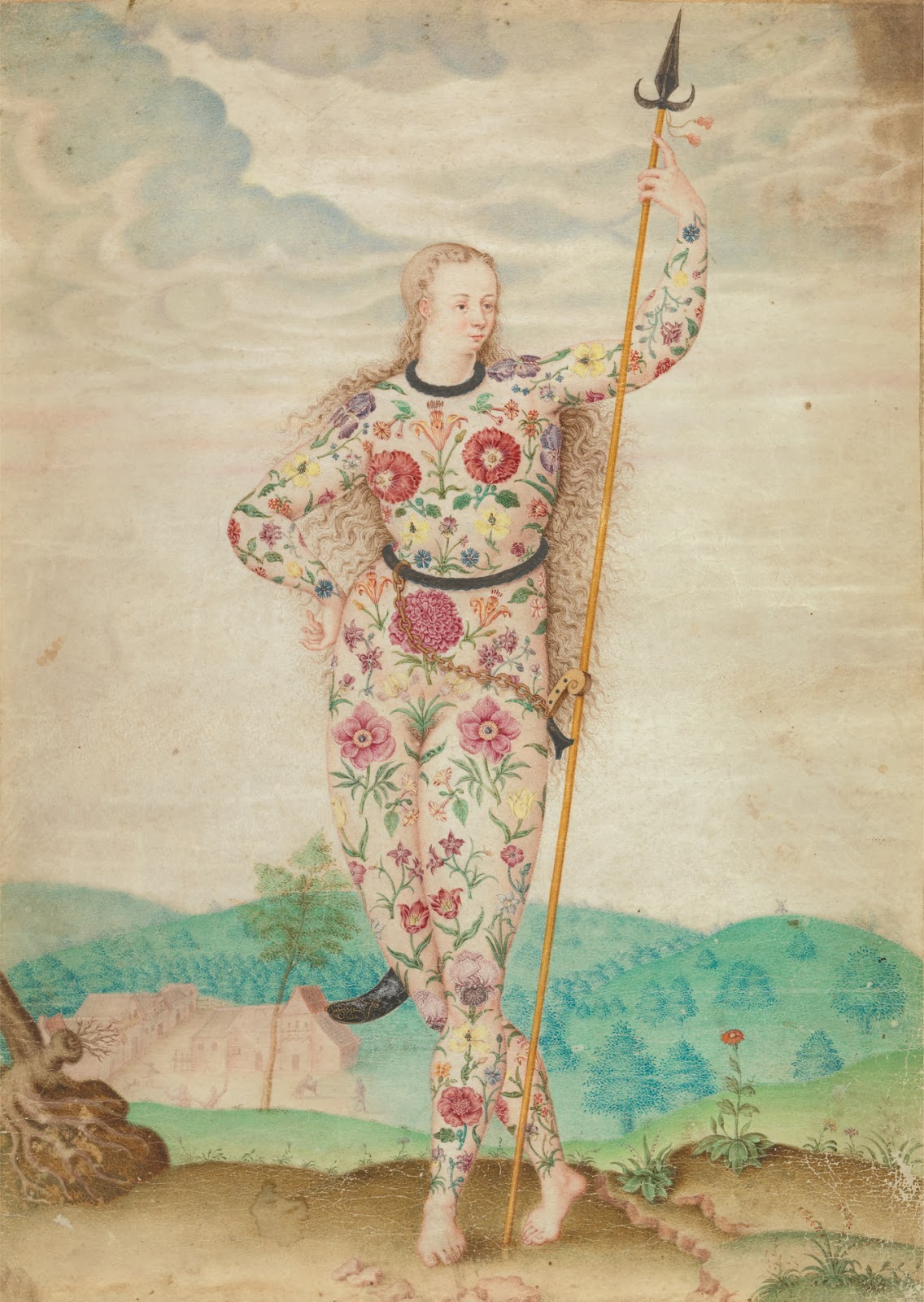
“They call stigmata things inscribed on the face or some other part of the body, for example on the hands of soldiers… In cases where we wish to remove such stigmata, we must use the following preparation… When applying, first clean thestigmata with niter, smear them with resin of terebinth, and bandage for five days… The stigmata are removed in twenty days, without great ulceration and without a scar.”
“That one shall not be drunke. Drink the iuyce of Yerrow fasting, and ye shall not be drunke, for no drinke; and if you were drunke it will make you sober: or else take the marrow of porke fasting, and ye shall not be drunke; and if you be drunke annoint your privie members in vineger, and ye shall waxe sober.”
“An excellent and approved thing to make them slender, that are grosse. Let them eate three or foure cloves of Garlick, with as much of Bread and butter every morning and evening, first and last, neither eating nor drinking of three or foure howres after their taking of it in the morning for the space of fourteene days at the least: and drinke every day three draughts of the decoction of Fennell: that is, of the water wherein Fennell is sod, and well strained, fourteene dayes after the least, at morning, noone and night. I knewe a man that was marveilous grosse, & could not go a quarter of a mile, but was enforst to rest him a dosen times at the least: that with this medicine tooke away his grossenesse, and after could iourney verye well on foote.”
“To make hair and beard grow. Take honeybees in quantity and dry them in a basket by the fire, then make a powder of them, which you thin out with olive oil, and with this ointment, dab several times the place where you would like to have hair, and you will see miracles.”
Traicté nouveau, intitulé, bastiment de receptes (1539)
Wes Anderson’s latest, The Grand Budapest Hotel, opens this week and next in selected theaters, and reviews of the film seem to follow what at this point in the director’s career almost feels like a template: discuss the oddities and perfections of Anderson’s stalwart band of actors (always Bill Murray, natch, and often a standout young newcomer); dissect the use of music as a kind of mood ring for the deadpan dialogue; marvel at the intricate scenery and costuming; frost with a thesaurus’s worth of variations on the word “quirky.”
The Guardian gives us descriptors like “nostalgia-tinted” and “gently charming.” NPR writes “weird and wonderful,” “a tumble down a rabbit hole,” and “like a trio of Russian nesting dolls.” And Dave Itzkoff in The New York Times refers to the film’s “pastel color schemes, baroque costumes and delicate pastries.” Itzkoff goes further and wonders what we might find if we opened up Anderson’s head. Among other options, he imagines “a junk drawer crammed with kite string, Swiss Army knives, and remote-controlled toys” and “a well-organized tackle box.”
The Times review comes closest to evoking the tactile and hyper-specific Andersonian mise-en-scène, but few of his reviewers, it seems, dare attempt the difficult task of fitting the filmmaker into cinema history. Were we to chart the aesthetic interconnections of a few-hundred well-known auteurs, just where, exactly, would we put Wes Anderson? It’s a little hard to say—the worlds he creates feel sui generis, sprung fully formed from his “junk drawer, tackle box” of a mind. While his work has certain affinities with contemporary stylists like Spike Jonze and Michel Gondry, it also seems to emerge, like an isolated only child, from (writes Itzkoff) “a memory palace assembled ad hoc from brownstone apartments, underground caves and submarine compartments.”
But of course, like every artist, Anderson has many connections to history and tradition, and works through his influences to make them his own. And he hasn’t been shy about naming his favorite films and directors. In fact, the Texas-born filmmaker has compiled several lists of favorites in the past couple years. Below, find excerpts culled from three such lists.
Asked about his five favorite movies, Anderson quipped, “you may have to call it ‘The five movies that I just say, for whatever reason’… the five I manage to think up right now.” Here are the “top three” of that arbitrary list:
Rosemary’s Baby (Roman Polanski, 1968): “This has always been a big influence on me, or a source of ideas; and it’s always been one of my favorites.”
A Clockwork Orange (Stanley Kubrick, 1971): “It’s a movie that’s very particularly designed and, you know, conjures up this world that you’ve never seen quite this way in a movie before.”
Trouble in Paradise (Ernst Lubitsch, 1932): “I don’t know if anybody can make a movie like that anymore—that perfect tone, like a “soufflé”-type of move. A confection, I guess.”
Anderson, says the Daily News, “always fancied himself a New Yorker” even before he’d set foot in Manhattan. Below are a few of his top films set in his adopted city (Rosemary’s Baby is number 7).
4. Moonstruck (Norman Jewison, 1987): “I’ve always loved this script. It’s a very well-done Hollywood take on New York.”
6.Sweet Smell of Success (Alexander Mackendrick, 1957): “Here’s a classic staple of New York movies. The look of it is this distilled black-and-white New York and Clifford Odets writes great dialogue.”
8. Next Stop, Greenwich Village (Paul Mazursky, 1976): “I saw the movie many years ago and I don’t really remember much other than loving it. I love Paul Mazursky’s films. He’s a New Yorker who is a great writer-director.”
Anderson prefaces this list with: “I thought my take on a top-ten list might be to simply quote myself from the brief fan letters I periodically write to the Criterion Collection team.” Here are a few of his picks:
4. The Taking of Power by Louis XIV (Roberto Rossellini, 1966): “The man who plays Louis cannot give a convincing line reading, even to the ears of someone who can’t speak French—and yet he is fascinating…. What does good acting actually mean? Who is this Tag Gallagher?”
7. Classe tous risques (Claude Sautet, 1960): “I am a great fan of Claude Sautet, especially Un coeur en hiver.”
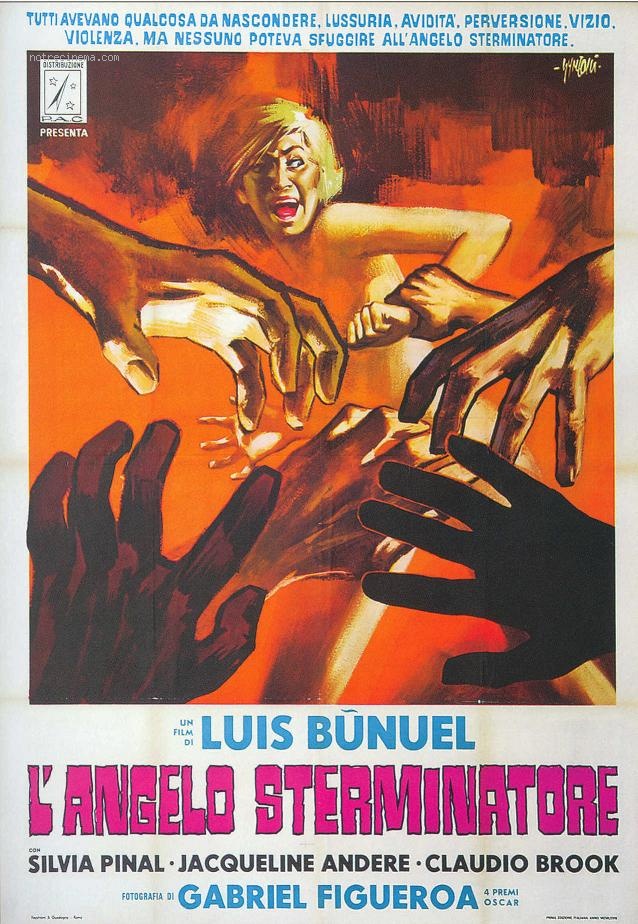
10. The Exterminating Angel(Luis Buñuel, 1962): “He is my hero. Mike Nichols said in the newspaper he thinks of Buñuel every day, which I believe I do, too, or at least every other.”
So there you have… at least some of it (I am surprised to find no Georges Méliès). Depending on your familiarity with Anderson’s choices, a perusal of his favorites’ lists may give you some special appreciation of The Grand Budapest Hotel. Then again, it may just be the case that the only real context for any Wes Anderson film is other Wes Anderson films.
We're hoping to rely on loyal readers, rather than erratic ads. Please click the Donate button and support Open Culture. You can use Paypal, Venmo, Patreon, even Crypto! We thank you!
Open Culture scours the web for the best educational media. We find the free courses and audio books you need, the language lessons & educational videos you want, and plenty of enlightenment in between.