Yes’ Rick Wakeman Explores Vivaldi’s Four Seasons, and Why It Was the First Concept Album
In this 2015 production, Yes keyboardist Rick Wakeman revisits Antonio Vivaldi’s The Four Seasons, and makes the case for why “it was so far ahead of its time that it was actually the first ever concept album, making Vivaldi the world’s first rock superstar.”
“Uncovering the dark rumours surrounding the churches, orphanages and canals of Venice, Rick Wakeman sets out to investigate the extraordinary life of Antonio Vivaldi. From 18th century scandals to interviews with fellow musician Mike Rutherford, uncover the mystery behind one of the world’s favourite composers.” Rick Wakeman: Vivaldi’s Four Seasons appears on the “Rick Wakeman’s World” YouTube channel.
If you would like to support the mission of Open Culture, consider making a donation to our site. It’s hard to rely 100% on ads, and your contributions will help us continue providing the best free cultural and educational materials to learners everywhere. You can contribute through PayPal, Patreon, and Venmo (@openculture). Thanks!
Related Content:
Rick Wakeman’s Prog-Rock Opera Adaptation of George Orwell’s 1984
14-Year-Old Girl’s Blistering Heavy Metal Performance of Vivaldi
Vivaldi’s Four Seasons Brought to Life in Sand Animations by the Hungarian Artist Ferenc Cakó
Read More...
Why Do Tech Billionaires Make for Good TV Villains? Pretty Much Pop #93 Considers “Made for Love,” et al.

The tech genius has become the go-to bad guy in recent films: They’re our modern mad scientists with all imaginable resources and science at their command, able to release dystopic technology to surveil, control, and possibly murder us. Even Lex Luthor was made into a “tech bro” in Batman v. Superman.
Your Pretty Much Pop hosts Mark Linsenmayer, Erica Spyres, and Brian discuss the HBO Max series Made for Love starring Cristin Milioti, as well as Alex Garland’s Devs, Mike Judge’s Silicon Valley, and Jed Rothestein’s documentary WeWork: Or the Making and Breaking of a $47 Billion Unicorn. How does this trope work in comedy vs. serious media? How does it relate to real-life tech moguls? Can women be villains of this sort, or is a critique of toxic masculinity part of this sort of depiction?
To learn more, read what we read:
- “HBO’s New Series Found a Better Way to Satirize Silicon Valley” by Matthew Dessem
- “Made for Love’s Billy Magnussen Is Deconstructing Douchebags and Other Toxic Tech Men” by Jackson McHenry
- “‘Made for Love’ and the Rise of the Tech-Bro Billionaire Villain” by Kayleigh Donaldson
- “Why Made For Love Changed Byron Gogol (& The Book’s Dolphin Lust Storyline) For HBO Max” by Shannon Carlin
- “10 Movies and TV Shows You Can Watch to Understand Why Tech is One of the Most Powerful Industries in History” by Katie Canales
- “9 Entertaining Movies and Shows Based on Silicon Valley, on Netflix, Disney + Hotstar and Amazon Prime Video” by Deepali Singh
- “Hollywood’s Best and Worst Depictions of Silicon Valley” by Chandra Steele
Hear more of this podcast at prettymuchpop.com. This episode includes bonus discussion that you can access by supporting the podcast at patreon.com/prettymuchpop. This podcast is part of the Partially Examined Life podcast network.
Pretty Much Pop: A Culture Podcast is the first podcast curated by Open Culture. Browse all Pretty Much Pop posts.
Read More...Cryptocurrency and Blockchain: An Introduction to Digital Currencies–A Free Online Courses from the University of Pennsylvania
From Jessica Wachter (Professor in Quantitative Finance at the Wharton School of Business at the University of Pennsylvania) comes Cryptocurrency and Blockchain: An Introduction to Digital Currencies. The course description for Cryptocurrency and Blockchain reads:
What is Cryptocurrency and how is it an innovative and effective method of currency? This course was designed for individuals and organizations who want to learn how to navigate investment in cryptocurrencies. Professors Jessica Wachter and Sarah Hammer will guide you through developing a framework for understanding both Cryptocurrency and Blockchain. You’ll learn how to define a currency, analyze the foundations of digital signatures and blockchain technology in cryptocurrency, and accurately assess the risks of cryptocurrency in a modern investment portfolio. By the end of this course, you’ll have a deep understanding of the realities of Cryptocurrency, the intricacies of Blockchain technology, and an effective strategy for incorporating Cryptocurrency into your investment plans. No prerequisites are required, although “Fintech: Foundations, Payments, and Regulations” from Wharton’s Fintech Specialization is recommended.
You can take Cryptocurrency and Blockchain for free by selecting the audit option upon enrolling. If you want to take the course for a certificate, you will need to pay a fee.
Cryptocurrency and Blockchain has been added to our list of Free Finance and Economics Courses, a subset of our collection, 1,700 Free Online Courses from Top Universities.
Related Content:
Bitcoin and Cryptocurrency Technologies: A Free Course from Princeton
The Princeton Bitcoin Textbook Is Now Free Online
What Is Blockchain? Three Videos Explain the New Technology That Promises to Change Our World
Read More...The Changing Landscape of Ancient Rome: A Free Online Course from Sapienza University of Rome
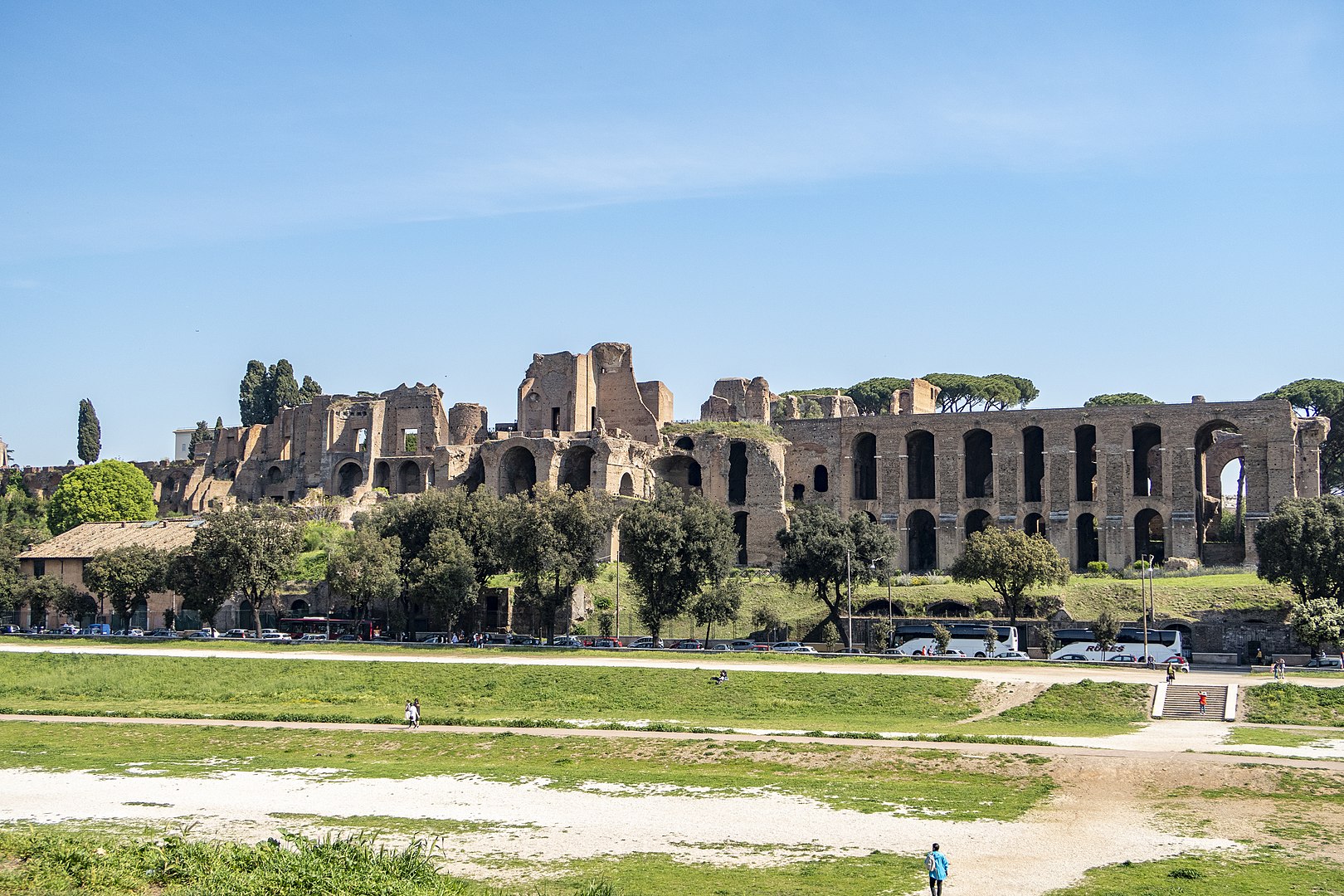
Image by Lil Herodotus, via Wikimedia Commons
From Paolo Carafa, a professor at Sapienza University of Rome, comes a free course that explores the archaeology of ancient Rome. The course description for The Changing Landscape of Ancient Rome. Archaeology and History of the Palatine Hill reads:
Studying ancient — as well as medieval or modern — cities basically means telling local urban stories based on the reconstruction of changing landscapes through the centuries. Given the fragmentary nature of archaeological evidence, it is necessary to create new images that would give back the physical aspect of the urban landscape and that would bring it to life again. We are not just content with analyzing the many elements still visible of the ancient city. The connections between objects and architectures, visible and non visible buildings, which have been broken through time have to be rejoined, to acknowledge the elements that compose the urban landscape.
Landscape and its content are a very relevant and still vital part of any national cultural heritage. The course will introduce students to the way we have been reflecting on over the last twenty years and still are engaged with the study of the past of our cities, beginning from the most complex case in the ancient Mediterranean World: the core of Italy and of Roman Empire. On the other hand, knowledge means also preservation and defense of material remains and cultural memory.
You can take The Changing Landscape of Ancient Rome for free by selecting the audit option upon enrolling. If you want to take the course for a certificate, you will need to pay a fee.
The Changing Landscape of Ancient Rome will be added to our list, 1,700 Free Online Courses from Top Universities.
Related Content:
For a complete list of online courses, please visit our complete collection, 1,700 Free Online Courses from Top Universities.
For a list of online certificate programs, visit 200 Online Certificate & Microcredential Programs from Leading Universities & Companies, which features programs from our partners Coursera, Udacity, FutureLearn and edX.
And if you’re interested in Online Mini-Masters and Master’s Degrees programs from universities, see our collection: Online Degrees & Mini Degrees: Explore Masters, Mini Masters, Bachelors & Mini Bachelors from Top Universities.
Read More...Leonardo da Vinci Designs the Ideal City: See 3D Models of His Radical Design
Le Corbusier, Frank Lloyd Wright, Ray Bradbury: they and other 20th-century notables all gave serious thought to the ideal city, what it would include and what it would exclude. To that extent we could describe them, in 21st-century parlance, as urbanists. But the roots of the discipline — or area of research, or profession, or obsession — we call urbanism run all the way back to the 15th century. At that time, early in the European Renaissance, thinkers were reconsidering a host of conditions taken for granted in the medieval period, from man’s place in the universe (and indeed the universe itself) to the disposal of his garbage. Few of these figures thought as far ahead, or across as many fields as Leonardo da Vinci.
In addition to his accomplishments in art, science, engineering, and architecture, the quintessential “Renaissance man” also tried his hand at urbanism. More specifically, he included in his notebooks designs for what he saw as an ideal city. “Leonardo was 30 when he moved to Milan in around 1482,” writes Engineering and Technology’s Hilary Clarke.
“The city he found was a crowded medieval warren of buildings, with no sanitation. Soon after the young painter had arrived, it was hit by an outbreak of the bubonic plague that killed 50,000 people — more than a third of the city’s population at the time.” This could well have prompted him to draw up his plan, which dates between 1487 and 1490, for a cleaner and more efficient urban environment.
While it wouldn’t have been particularly hard to envision a less dirty and disordered setting than the late medieval European city, Leonardo, true to form, performed a thoroughgoing act of reimagination. “Drawing on the knowledge he had gained from studying Milan’s canals, Leonardo wanted to use water to connect the city like a circulatory system,” writes Clarke, who adds that Leonardo was also studying human anatomy at the time. “His ideal town-planning principle was to have a multi-tiered city, which also included an underground waterway to flush away effluent.” The top tier would have all the houses, squares and other public buildings; “the bottom tier was for the poor, goods and traffic — horses and carts — and ran on the same level as the canals and basins, so wagons could be easily offloaded.”
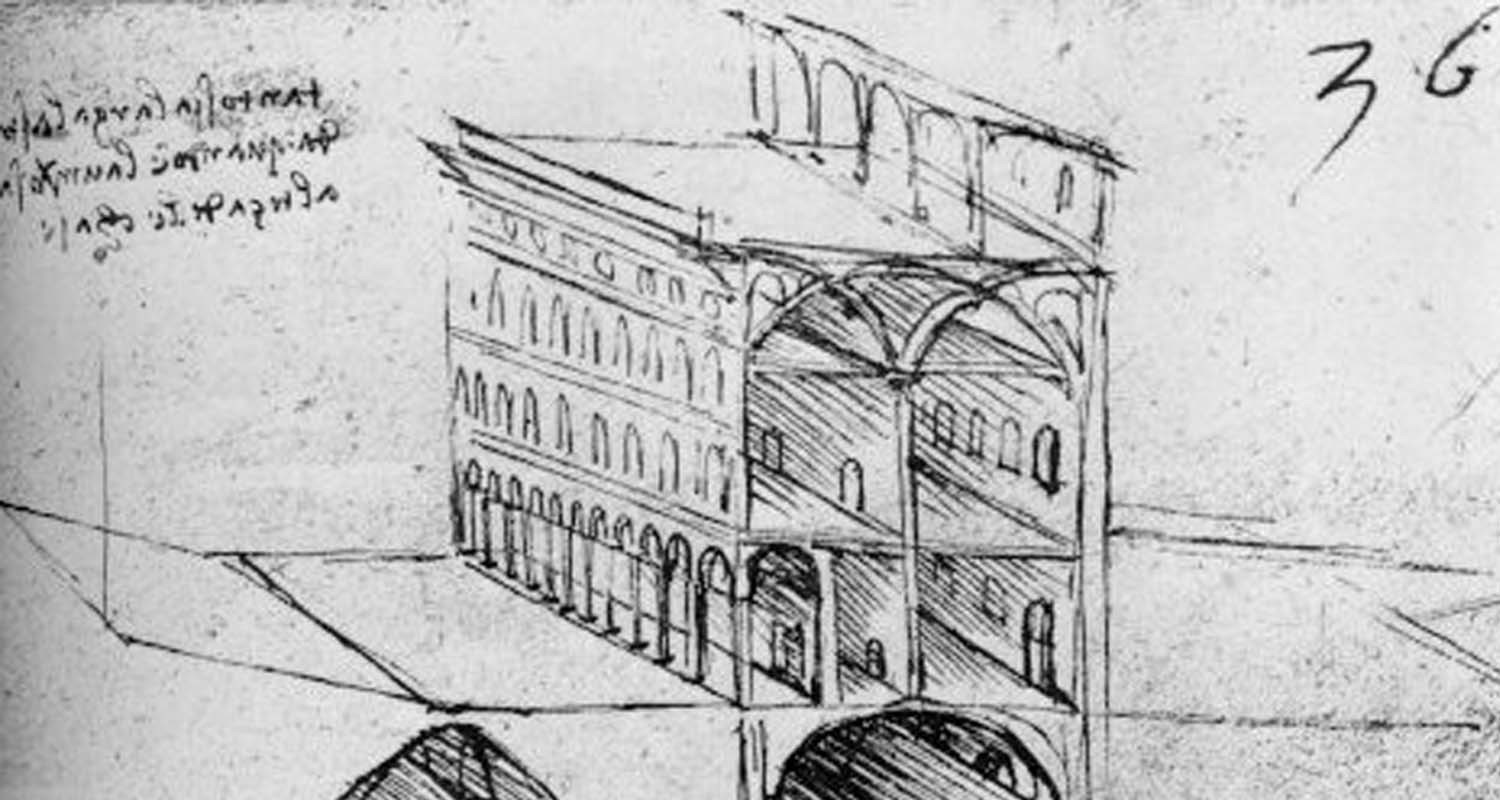
Though its ambition would have seemed fantastical in the 15th century, Leonardo’s city plan everywhere marshals his considerable engineering knowledge to address practical problems. He had a real location in mind — along the Ticino River, which runs through modern-day Italy and Switzerland — and planned details right down to the spiral staircases in every building. He insisted on spirals, Clarke notes, “because they lacked corners, making it harder for men to urinate,” but they also add an elegance to his vision of the vertical city, a notion that strikes us as obvious today but was unknown then. Of course, Leonardo was a man ahead of his time, and the 3D-rendered and physical models of his ideal city in these videos from the Ideal Spaces Working Group and Italy’s Museo Nazionale della Scienza e della Tecnologia Leonardo da Vinci make one wonder if his plan wouldn’t look both alluring and impossibly radical to urbanists even today.
Related Content:
How Leonardo da Vinci Drew an Accurate Satellite Map of an Italian City (1502)
The Medieval City Plan Generator: A Fun Way to Create Your Own Imaginary Medieval Cities
Frank Lloyd Wright Designs an Urban Utopia: See His Hand-Drawn Sketches of Broadacre City (1932)
The Utopian, Socialist Designs of Soviet Cities
Based in Seoul, Colin Marshall writes and broadcasts on cities, language, and culture. His projects include the Substack newsletter Books on Cities, the book The Stateless City: a Walk through 21st-Century Los Angeles and the video series The City in Cinema. Follow him on Twitter at @colinmarshall or on Facebook.
Read More...Behold the Astronomicum Caesareum, “Perhaps the Most Beautiful Scientific Book Ever Printed” (1540)
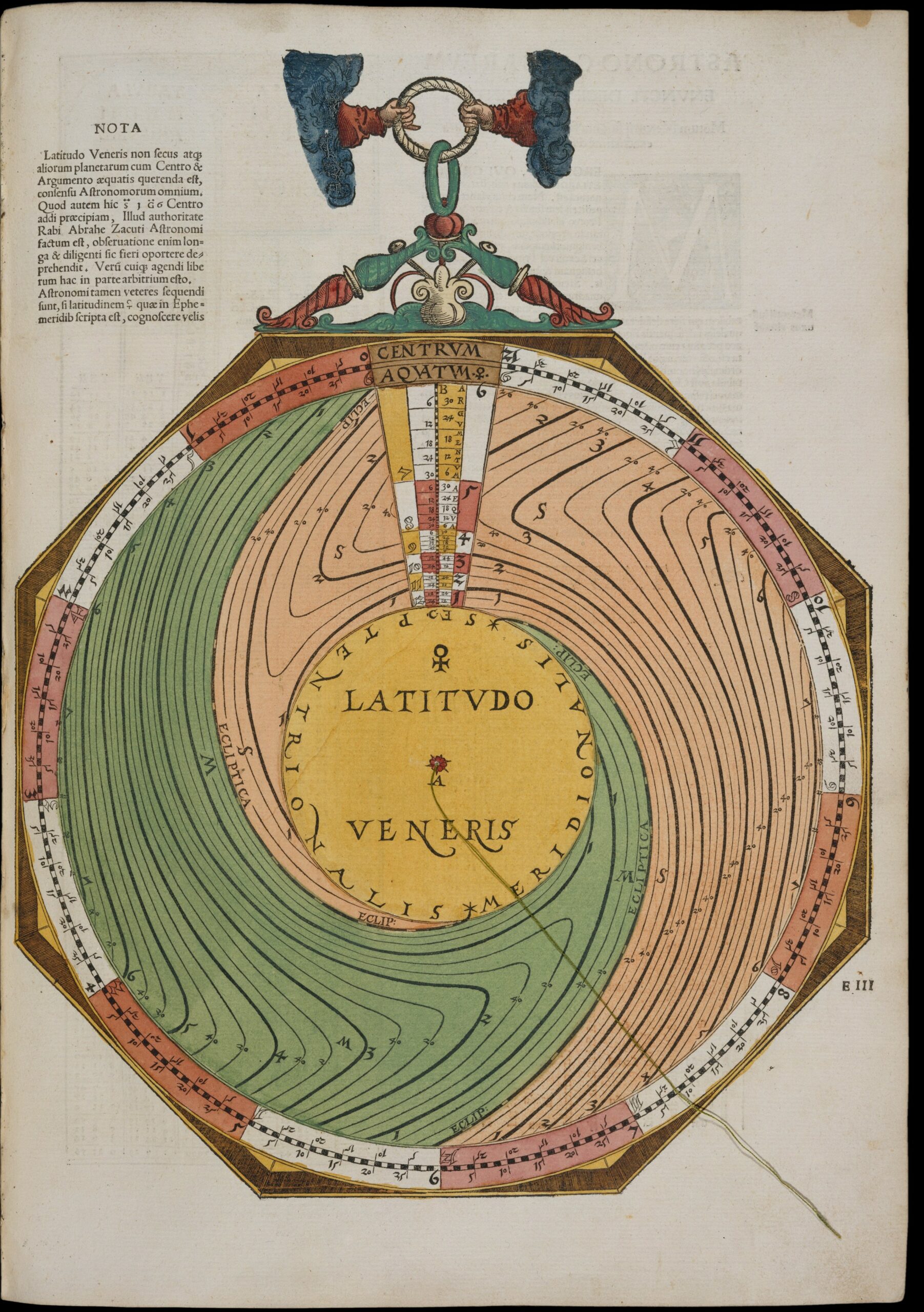
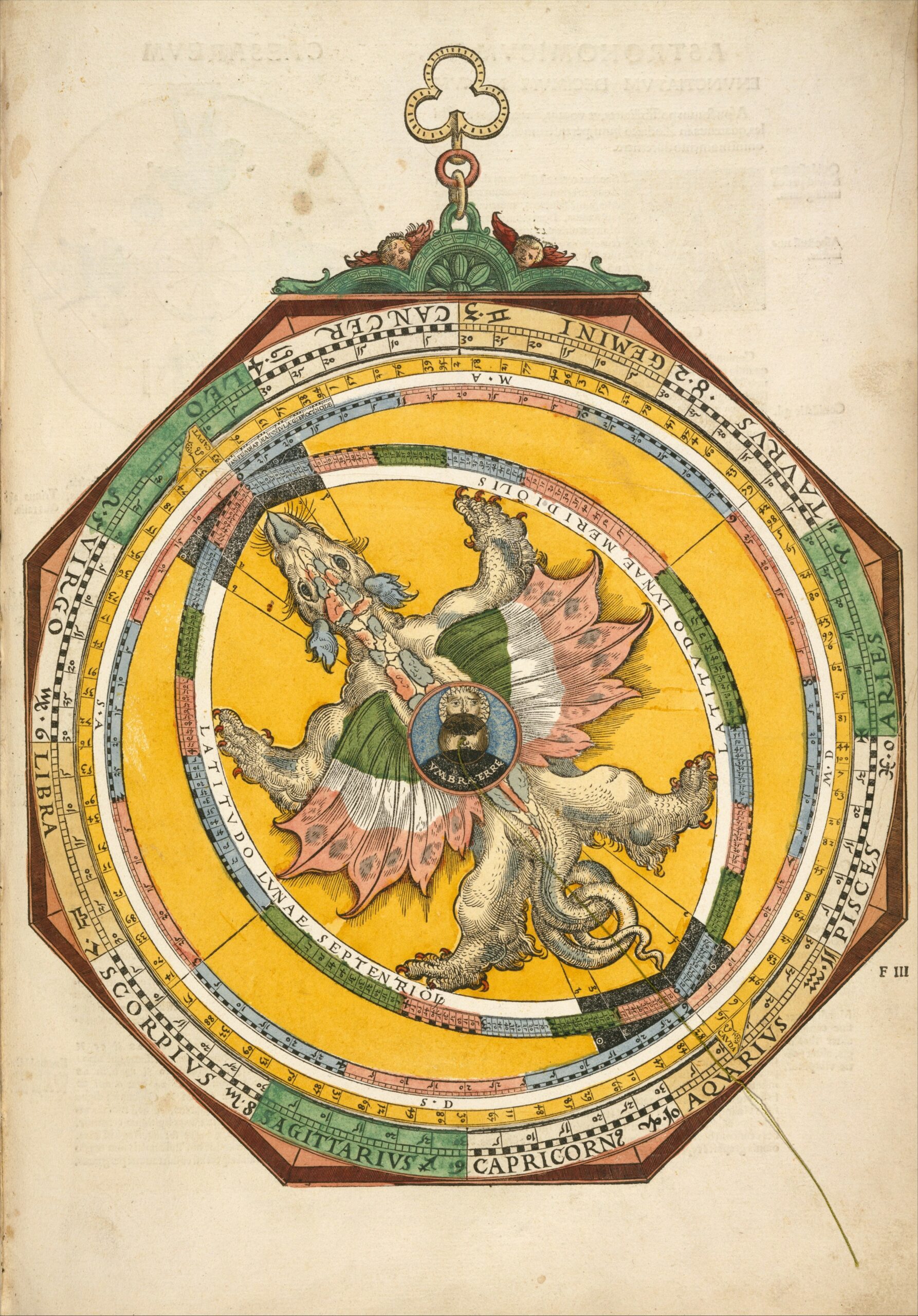
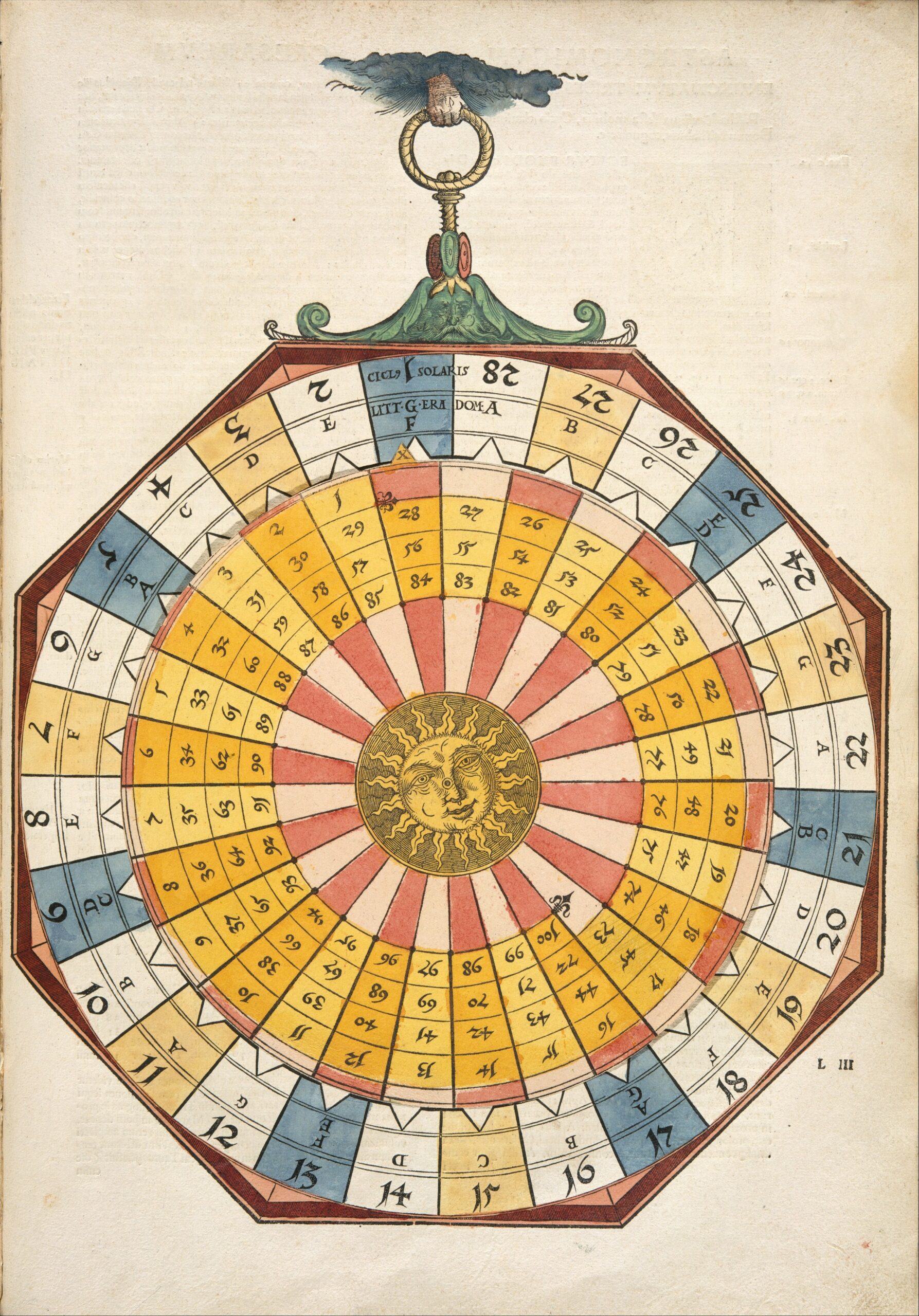
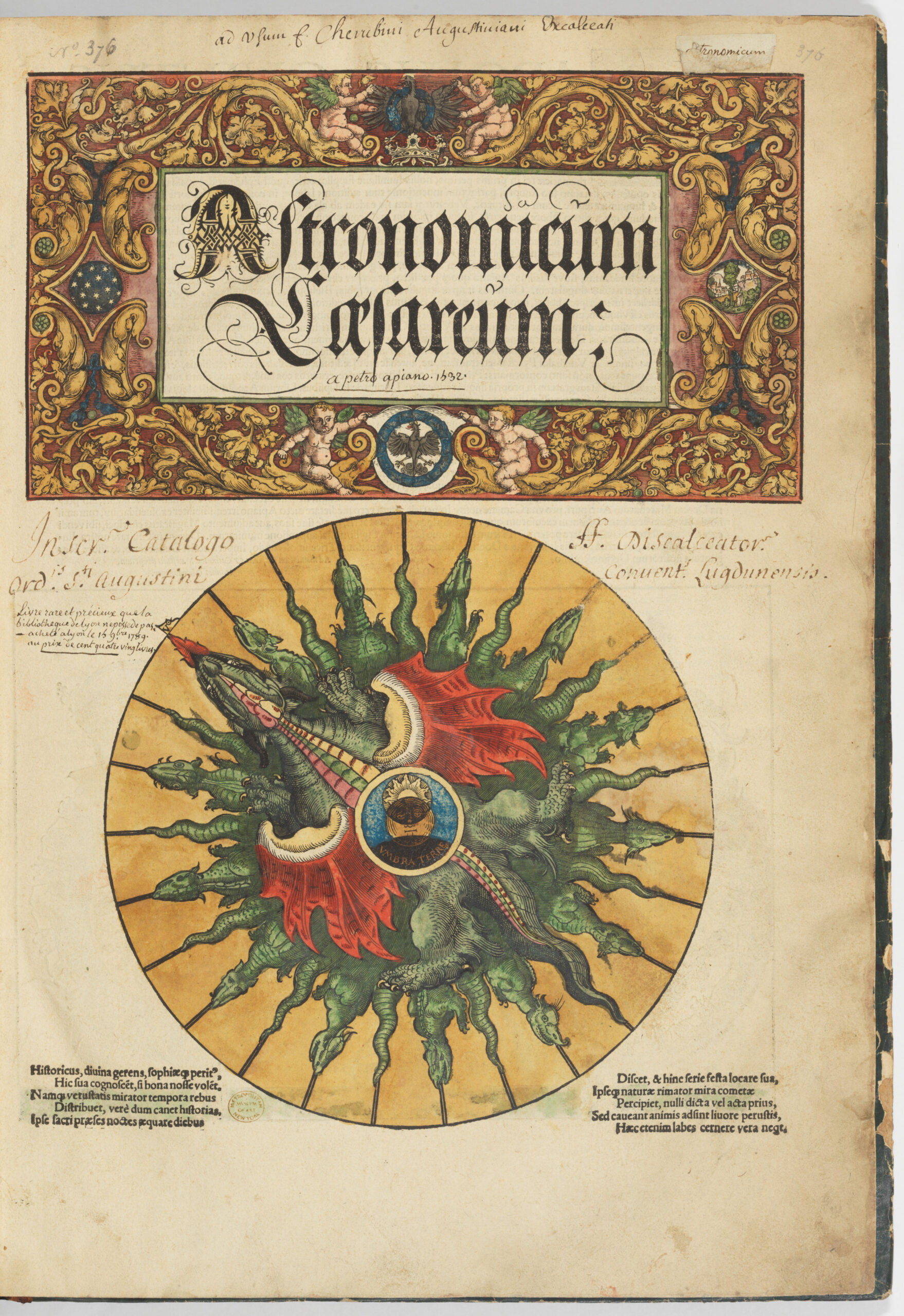
Art, science, and magic seem to have been rarely far apart during the Renaissance, as evidenced by the elaborate 1540 Astronomicum Caesareum — or “Emperor’s Astronomy” — seen here. “The most sumptuous of all Renaissance instructive manuals, ” the Metropolitan Museum of Art notes, the book was created over a period of 8 years by Petrus Apianus, also known as Apian, an astronomy professor at the University of Ingolstadt. Modern-day astronomer Owen Gingerich, professor emeritus at Harvard University, calls it “the most spectacular contribution of the book-maker’s art to sixteenth-century science.”
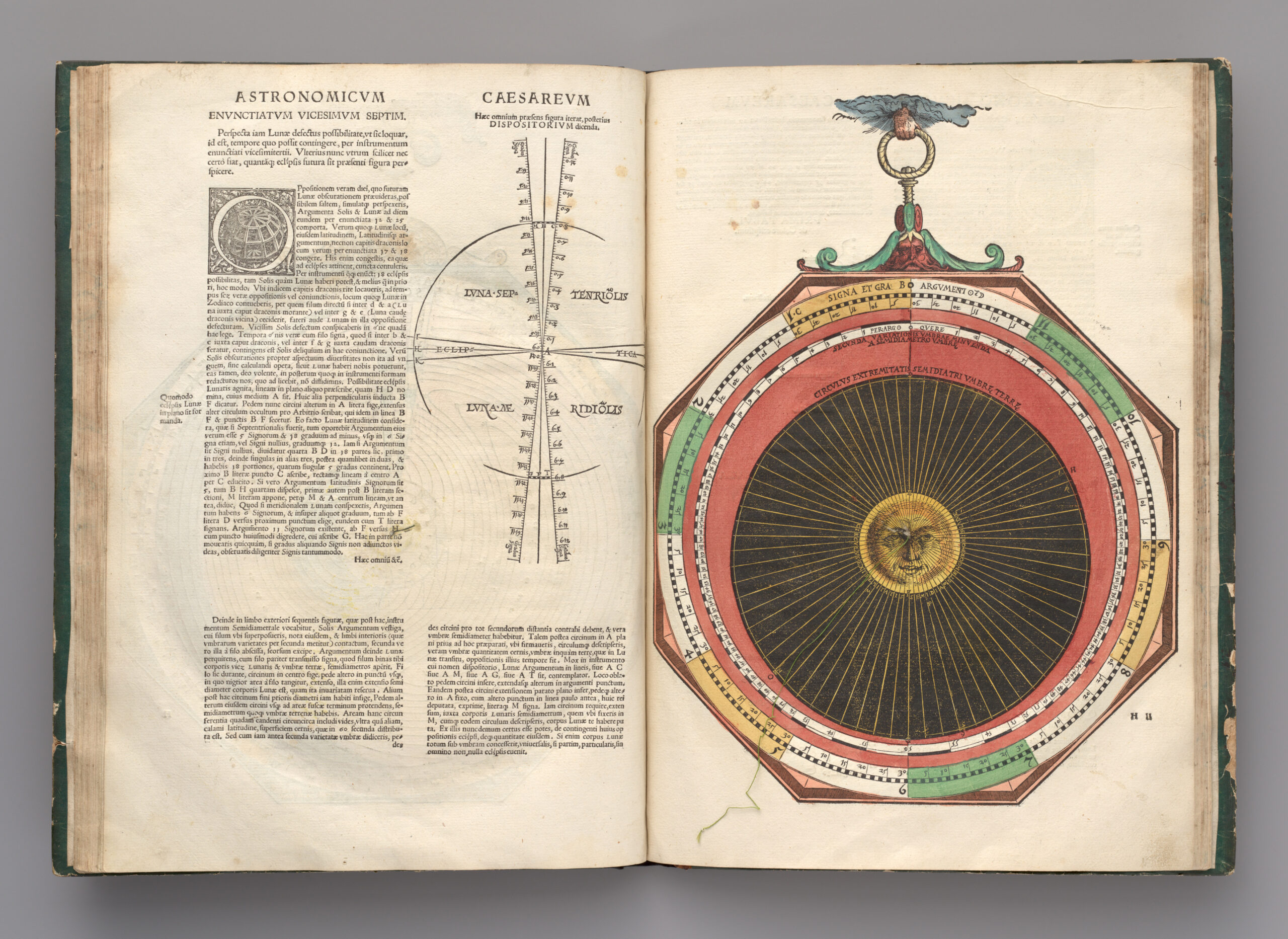
Apian’s book was mainly designed for what is now considered pseudoscience. “The main contemporary use of the book would have been to cast horoscopes,” Robert Batteridge writes at the National Library of Scotland. Apian used as examples the birthdays of his patrons: Holy Roman Emperor Charles V and his brother Ferdinand I. But the Astronomicum Caesareum did more than calculate the future.
Despite the fact that the geocentric model on which Apian based his system “would begin to be overtaken just 3 years after the book’s publication,” he accurately described five comets, including what would come to be called Halley’s Comet.
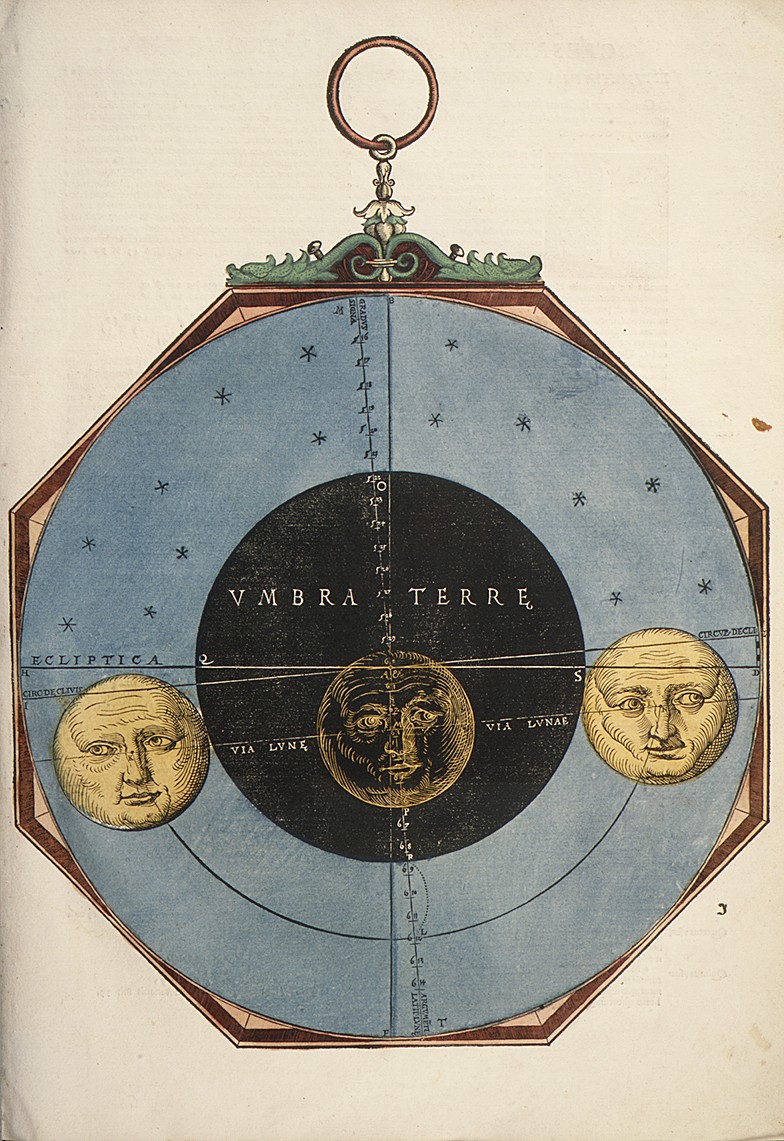
Apian also “observed that a comet’s tail always points away from the sun,” Fine Books and Collections writes, “a discovery for which he is credited.” He used his book “to calculate eclipses,” notes Gingerich in an introduction, including a partial lunar eclipse in the year of Charles’ birth. And, “in a pioneering use of astronomical chronology, he takes up the circumstances of several historical eclipses.” These discussions are accompanied by “several movable devices” called volvelles, designed “for an assortment of chronological and astrological inquiries.”
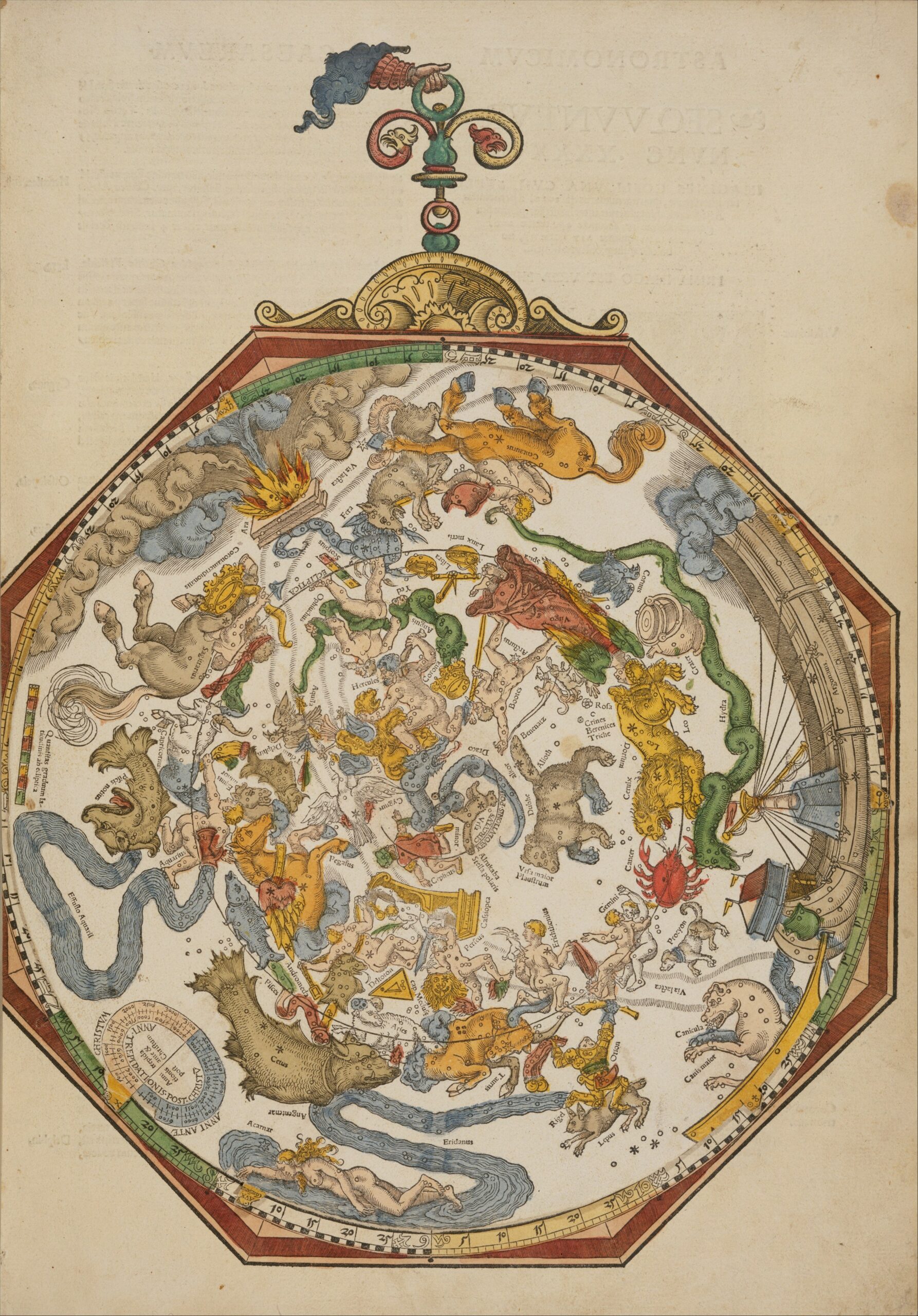
Medieval volvelles were first introduced by artist and writer Ramón Llull in 1274. A “cousin of the astrolabe,” Getty writes, the devices consist of “layered circles of parchment… held together at the center by a tie.” They were considered “a form of ‘artificial memory,’” called by Lund University’s Lars Gislén “a kind of paper computer.” Apian was a specialist of the form, publishing several books containing volvelles from his own Ingolstadt printing press. The Astronomicum Caesareum became the pinnacle of such scientific art, using its hand-colored paper devices to simulate the movements of the astrolabe. “The great volume grew and changed in the course of the printing,” Gingerich writes, “eventually comprising fifty-five leaves, of which twenty-one contain moving parts.”
Apian was rewarded handsomely for his work. “Emperor Charles V granted the professor a new coat of arms,” and “the right to appoint poets laureate and to pronounce as legitimate children born out of wedlock.” He was also appointed court mathematician, and copies of his extraordinary book lived on in the collections of European aristocrats for centuries, “a triumph of the printer’s art,” writes Gingerich, and an astronomy, and astrology, “fit for an emperor.”
Related Content:
A Medieval Book That Opens Six Different Ways, Revealing Six Different Books in One
160,000+ Medieval Manuscripts Online: Where to Find Them
Josh Jones is a writer and musician based in Durham, NC. Follow him at @jdmagness
Read More...De-Mystifying Mindfulness: A Free Online Course by Leiden University
From Chris Goto-Jones–now Dean of Humanities and Professor of Philosophy at the University of Victoria–comes a free course which was named ‘one of the best online courses of all time’ in 2020. The course description for De-Mystifying Mindfulness reads:
Interest in meditation, mindfulness, and contemplation has grown exponentially in recent years. Rather than being seen as mystical practices from ancient Buddhism or esoteric philosophy, they are increasingly seen as technologies rooted in evidence from psychology and neuroscience. Mindfulness has become the basis for numerous therapeutic interventions, both as a treatment in healthcare and as a means of enhancing well-being and happiness. For millions around the world, mindfulness has become a life-style choice, enhancing and enriching everyday experience. Mindfulness is big business.
But, what actually is mindfulness? Is it really good for you? Can anyone learn it? How can you recognize charlatans? Would you want to live in a mindful society, and would it smell like sandalwood? What does it feel like to be mindful? Are you mindful already, and how would you know?
Evolving from the popular Honours Academy course at Leiden University [in the Netherlands], this innovative course combines conventional scholarly inquiry from multiple disciplines (ranging from psychology, through philosophy, to politics) with experiential learning (including specially designed ‘meditation labs,’ in which you’ll get chance to practice and analyze mindfulness on yourself). In the end, the course aims to provide a responsible, comprehensive, and inclusive education about (and in) mindfulness as a contemporary phenomenon.
You can take De-Mystifying Mindfulness for free by selecting the audit option upon enrolling. If you want to take the course for a certificate, you will need to pay a fee.
De-Mystifying Mindfulness will be added to our list, 1,700 Free Online Courses from Top Universities.
Related Content:
Free Guided Meditations From UCLA: Boost Your Awareness & Ease Your Stress
Philosopher Sam Harris Leads You Through a 26-Minute Guided Meditation
Stream 18 Hours of Free Guided Meditations
Listen to Bill Murray Lead a Guided Meditation on How It Feels to Be Bill Murray
Read More...Who Decides What Words Get Into the Dictionary?
DICTIONARY, n. A malevolent literary device for cramping the growth of a language and making it hard and inelastic. — Ambrose Bierce, The Devil’s Dictionary
Once upon a time, we were made to believe that words could never acquire sticks and stones’ capacity to wound.
Talk about a maxim no longer worth the paper it was printed on!
Language is organic. Definitions, usage, and our response to particular words evolve over time.
Lexicographer Ilan Stavans’ TED-Ed lesson, Who Decides What’s in the Dictionary?, rolls the clock back to 1604, when schoolmaster Robert Cawdrey assembled the first English language dictionary “for the benefit of Ladies, Gentlewomen, and other unskilled folk.”
Other English dictionaries soon followed, expanding on the 2,543 words Cawdrey had seen fit to include. His fellow authors shared Cawdrey’s prescriptive goal of educating the rabble, to keep them from butchering the high-minded tongue the self-appointed guardian considered it his duty to protect.
Wordsmith Samuel Johnson, the primary author of 1775’s massive A Dictionary of the English Language, described his mission as one in which “the pronunciation of our language may be fixed, and its attainment facilitated; by which its purity may be preserved, its use ascertained, and its duration lengthened.”
Lest we think Johnson overly impressed with the importance of his lofty mission, he submitted the following gently self-mocking definition of Lexicographer:
A writer of dictionaries; a harmless drudge that busies himself in tracing the original, and detailing the signification of words.
150 years later, Ambrose Bierce offered an opposing view in his delightfully wicked dictionary:
LEXICOGRAPHER, n. A pestilent fellow who, under the pretense of recording some particular stage in the development of a language, does what he can to arrest its growth, stiffen its flexibility and mechanize its methods.
Stavans points to brothers George and Charles Merriam’s acquisition of the rights to Noah Webster’s An American Dictionary of the English Language (1828) as a moment when our concept of what a dictionary should be began to shift.
Webster, working by himself, set out to collect and document English as it was used on these shores.
The Merriams engaged a group of language experts to curate subsequent editions, striking a blow for the idiom by including slang and regional variants.
A good start, though they excluded anything they found unfit for the general consumption at the time, including expressions born in the Black community.
Their editorializing was of a piece with prevailing views — see “wife.”
But humans, like language, evolve.
These days, lexicographers monitor the Internet for new words to be considered for upcoming editions, including profanity and racial slurs.
If a word’s use is judged to be widespread, sustained and meaningful, in it goes… even though some might find it objectionable, or even, yes, hurtful.
Stavans wraps his lesson up by drawing our attention to Merriam-Webster’s tradition of anointing one entry to Word of the Year, drawn from statistical analysis of the words people look up in extremely high numbers.
“They” got the nod in 2019, a testament to how deeply non-binary gender expression has permeated the collective consciousness and national conversation.
The runner up?
Impeach.
Care to guess which word 2020 placed in the dictionary’s path?
Related Content:
How a Word Enters the Dictionary: A Quick Primer
Ayun Halliday is an author, illustrator, theater maker and Chief Primatologist of the East Village Inky zine. Follow her @AyunHalliday.
Read More...De-Mystifying Mindfulness: A Free Online Course by Leiden University
From Chris Goto-Jones–now Dean of Humanities and Professor of Philosophy at the University of Victoria–comes a free course which was named ‘one of the best online courses of all time’ in 2020. The course description for De-Mystifying Mindfulness reads:
Interest in meditation, mindfulness, and contemplation has grown exponentially in recent years. Rather than being seen as mystical practices from ancient Buddhism or esoteric philosophy, they are increasingly seen as technologies rooted in evidence from psychology and neuroscience. Mindfulness has become the basis for numerous therapeutic interventions, both as a treatment in healthcare and as a means of enhancing well-being and happiness. For millions around the world, mindfulness has become a life-style choice, enhancing and enriching everyday experience. Mindfulness is big business.
But, what actually is mindfulness? Is it really good for you? Can anyone learn it? How can you recognize charlatans? Would you want to live in a mindful society, and would it smell like sandalwood? What does it feel like to be mindful? Are you mindful already, and how would you know?
Evolving from the popular Honours Academy course at Leiden University [in the Netherlands], this innovative course combines conventional scholarly inquiry from multiple disciplines (ranging from psychology, through philosophy, to politics) with experiential learning (including specially designed ‘meditation labs,’ in which you’ll get chance to practice and analyze mindfulness on yourself). In the end, the course aims to provide a responsible, comprehensive, and inclusive education about (and in) mindfulness as a contemporary phenomenon.
You can take De-Mystifying Mindfulness for free by selecting the audit option upon enrolling. If you want to take the course for a certificate, you will need to pay a fee.
De-Mystifying Mindfulness will be added to our list, 1,700 Free Online Courses from Top Universities.
Related Content:
Free Guided Meditations From UCLA: Boost Your Awareness & Ease Your Stress
Philosopher Sam Harris Leads You Through a 26-Minute Guided Meditation
Stream 18 Hours of Free Guided Meditations
Read More...The Story of Elizebeth Friedman, the Pioneering Cryptologist Who Thwarted the Nazis & Got Burned by J. Edgar Hoover
Elizebeth S. Friedman: Suburban Mom or Ninja Nazi Hunter?
Both, though in her lifetime, the press was far more inclined to fixate on her ladylike aspect and homemaking duties than her career as a self-taught cryptoanalyst, with headlines such as “Pretty Woman Who Protects United States” and “Solved By Woman.”
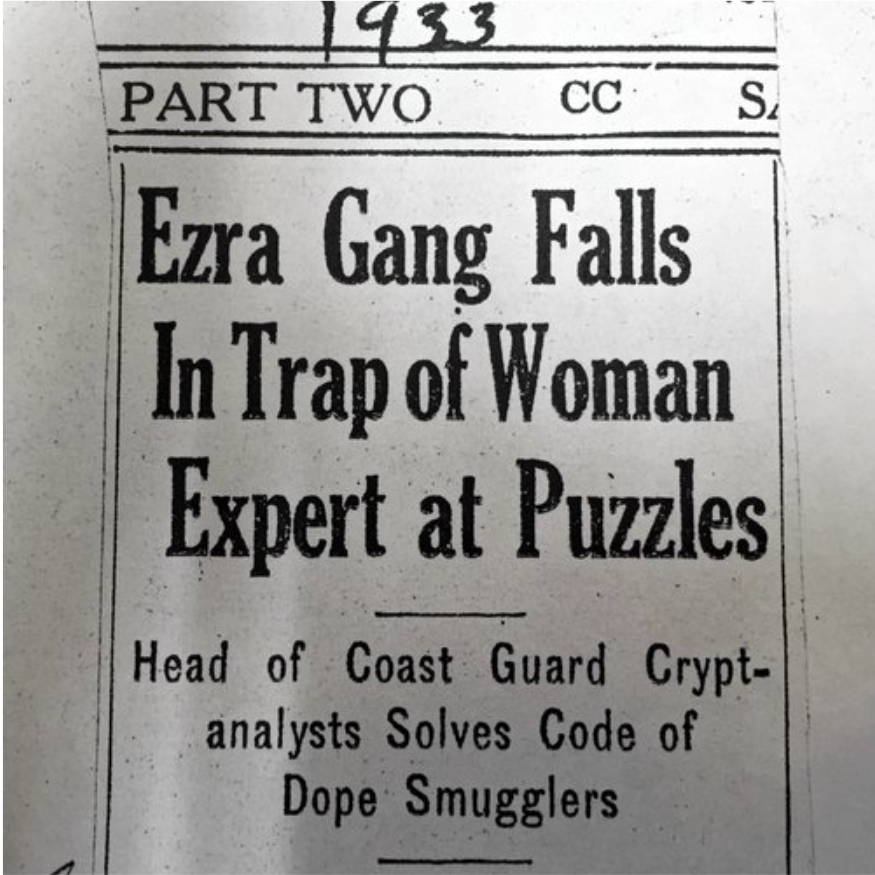
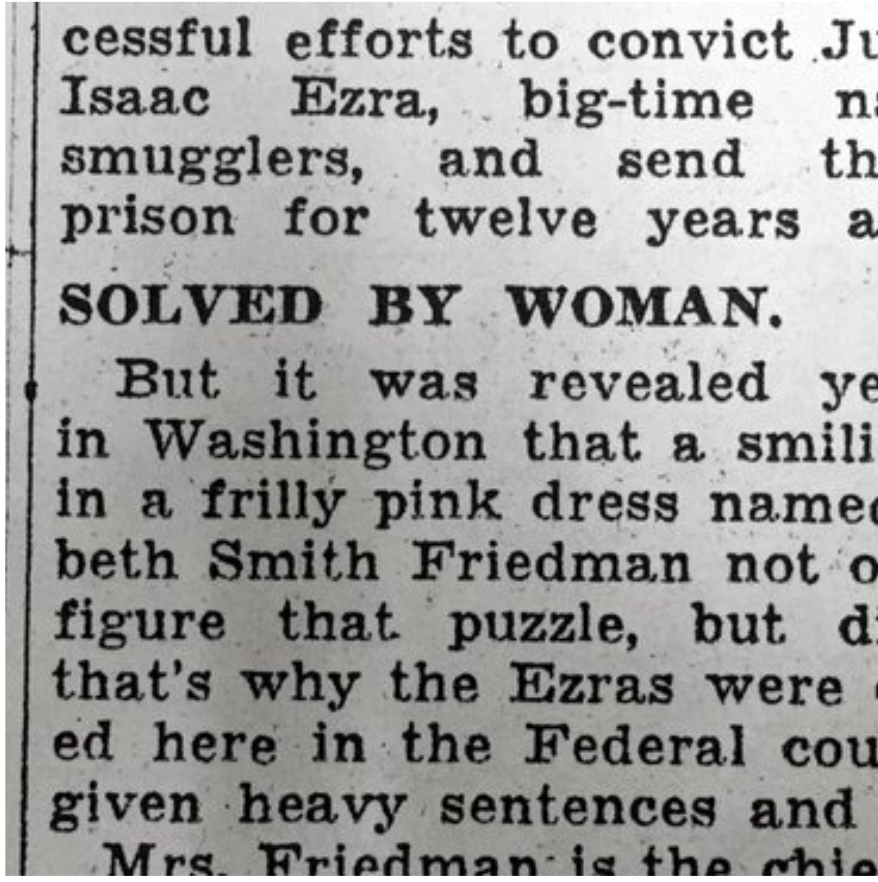
The novelty of her gender led to a brief stint as America’s most recognizable codebreaker, more famous even than her fellow cryptologist, husband William Friedman, who was instrumental in the founding of the National Security Agency during the Cold War.
Renowned though she was, the highly classified nature of her work exposed her to a security threat in the person of FBI director J. Edgar Hoover.
Hoover credited the FBI, and by extension, himself, for deciphering some 50 Nazi radio circuits’ codes, at least two of them protected with Enigma machines.

He also rushed to raid South American sources in his zeal to make an impression and advance his career, scuppering Friedman’s mission by causing Berlin to put a stop to all transmissions to that area.
Too bad no one asked him to demonstrate the methods he’d used to crack these impossible nuts.
The German agents used the same codes and radio techniques as the Consolidated Exporters Corporation, a mob-backed rum-running operation whose codes and ciphers Elizebeth had translated as chief cryptologist for the U.S. Treasury Department during Prohibition.
As an expert witness in the criminal trial of international rumrunner Bert Morrison and his associates, she modestly asserted that it was “really quite simple to decode their messages if you know what to look for,” but the sample decryption she provided the jury made it plain that her work required tremendous skill. The Mob Museum’s Jeff Burbank sets the scene:
She read a sample message, referring to a brand of whiskey: “Out of Old Colonel in Pints.” She showed how the three “o” and “l” letters in “Colonel” had identical cipher code letters. From the cipher’s letters for “Colonel” she could figure out the letter the racketeers chose for “e,” the most frequently occurring letter in English, based on other brand names of liquor they mentioned in other messages. The “o” and “l” letters in “alcohol,” she said, had the same cipher letters as “Colonel.”
Cinchy, right?
Elizebeth’s biographer, Jason Fagone, notes that in discovering the identity, codename and ciphers used by German spy network Operation Bolívar’s leader, Johannes Siegfried Becker, she succeeded where “every other law enforcement agency and intelligence agency failed. She did what the FBI could not do.”
Sexism and Hoover were not the only enemies.
William Friedman’s criticism of the NSA for classifying documents he thought should be a matter of public record led to a rift resulting in the confiscation of dozens of papers from the couple’s home that documented their work.
This, together with the 50-year “TOP SECRET ULTRA” classification of her WWII records, ensured that Elizebeth’s life would end beneath “a vast dome of silence.”
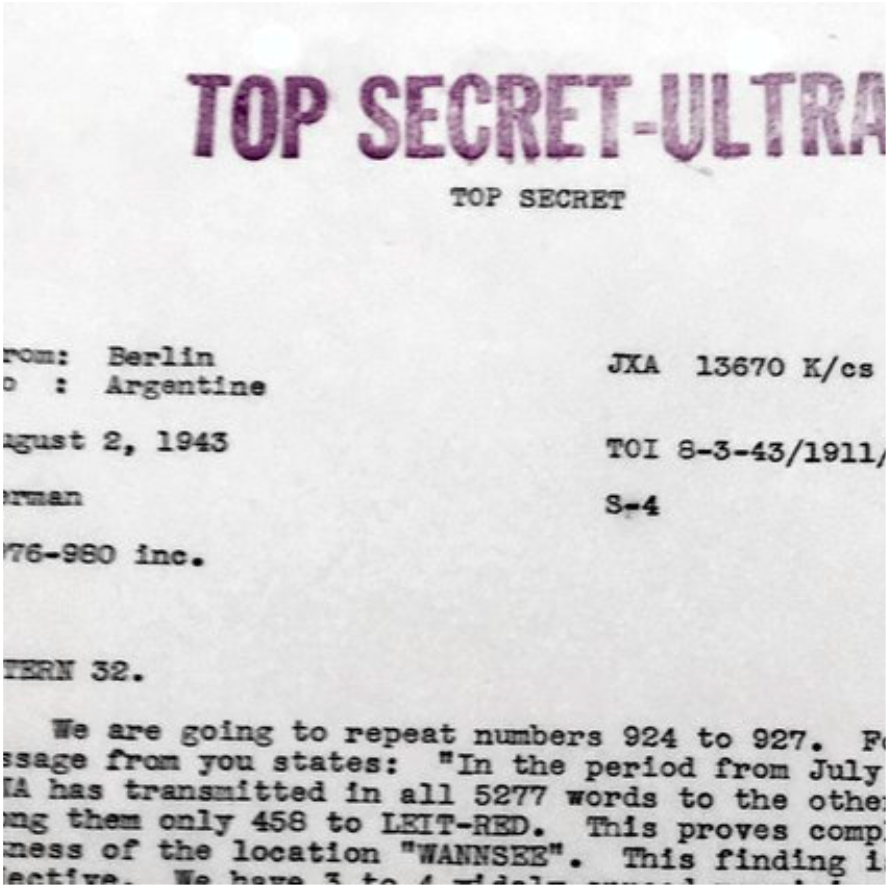
Recognition is mounting, however.
Nearly 20 years after her 1980 death, she was inducted into the National Security Agency’s Cryptologic Hall of Honor as “a pioneer in code breaking.”
A National Security Agency building now bears both Friedmans’ names.
The U.S. Coast Guard will soon be adding a Legend Class Cutter named the USCGC Friedman to their fleet.
In addition to Fagone’s biography, a picture book, Code Breaker, Spy Hunter: How Elizebeth Friedman Changed the Course of Two World Wars, was published earlier this year.
As far as we know, there are no picture books dedicated to the pioneering work of J. Edgar Hoover….
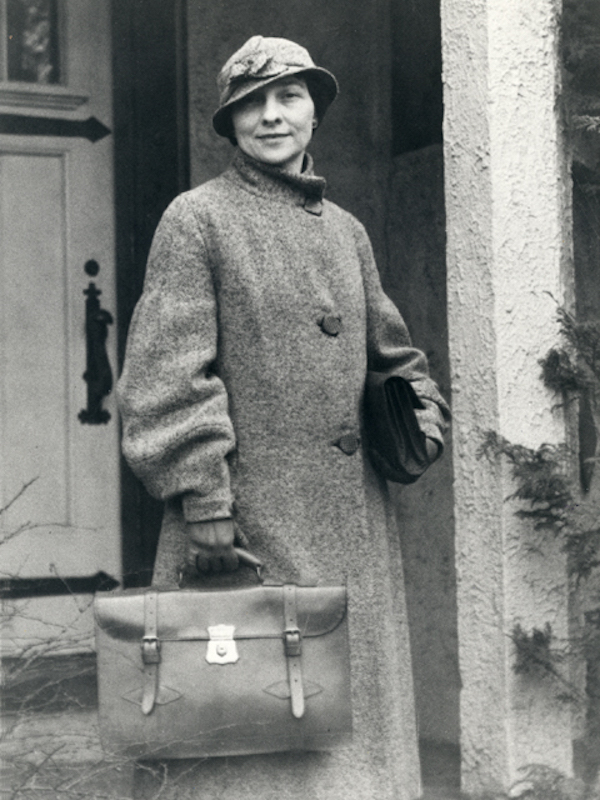
Elizebeth Friedman, via Wikimedia Commons
Watch The Codebreaker, PBS’s American Experience biography of Elizebeth Friedman here.
Related Content:
The Enigma Machine: How Alan Turing Helped Break the Unbreakable Nazi Code
How British Codebreakers Built the First Electronic Computer
Ayun Halliday is an author, illustrator, theater maker and Chief Primatologist of the East Village Inky zine. Join her June 7 for a Necromancers of the Public Domain: The Periodical Cicada, a free virtual variety honoring the 17-Year Cicadas of Brood X. Follow her @AyunHalliday.
Read More...Support Us
We're hoping to rely on loyal readers, rather than erratic ads. Please click the Donate button and support Open Culture. You can use Paypal, Venmo, Patreon, even Crypto! We thank you!

About Us

Open Culture scours the web for the best educational media. We find the free courses and audio books you need, the language lessons & educational videos you want, and plenty of enlightenment in between.
Advertise With Us
FREE UPDATES!
GET OUR DAILY EMAIL
Get the best cultural and educational resources on the web curated for you in a daily email. We never spam. Unsubscribe at any time.
FOLLOW ON SOCIAL MEDIA
Open Culture editor Dan Colman scours the web for the best educational media. He finds the free courses and audio books you need, the language lessons & movies you want, and plenty of enlightenment in between.
Advertise With Us


