How Medieval Cathedrals Were Built Without Science, or Even Mathematics
Science and engineering may be conflated to some degree in the public mind, but anyone who’s spent much time in an academic department belonging to one or the other of those branches of endeavor knows how insistently distinctions can be drawn between them. Bill Hammack, a professor of engineering at the University of Illinois Urbana-Champaign who’s been there since he was a master’s student in 1986, surely has his own thoughts on the subject. The video above from his popular YouTube channel Engineerguy explains how cathedrals were designed in the Middle Ages, using the example of Sainte-Chapelle in Paris. Specifically, it gets into how such a building’s arches and supporting walls could have been engineered without the aid of science at all, or even the use of mathematics.
Compared to today, the scope of knowledge humanity commanded back in medieval times may have been impossibly narrow — to say nothing of the knowledge possessed by any given human, especially outside the literate elite. Yet what was then known proved more than sufficient to build structures that still stand, and indeed impress, many centuries (and in some cases, more than a millennium) later.
Hammack explains that, in the place of making calculations, their builders would perform actions. For instance, a medieval mason would have made a life-size chalk drawing of the arch, laid a rope along its form, and cut the rope’s length to match that of the arch. He could then use the rope to determine just how thick the wall would need to be, between a fourth and a fifth of the arch’s span, without a number ever being involved.
Hammack notes that the Romans, too, understood this necessary proportion for arch construction. “The proportional rule doesn’t come from some scientific analysis of stone and its properties,” he says. “It comes from centuries of experience, from trial and error.” Such heuristics, or rules of thumb, constitute “an imprecise method used as a shortcut to find a solution to a problem, often by narrowing the range of possible solutions.” They’re also employed in the engineering method to “cause the best change in a poorly understood situation using available resources.” Its thoroughgoing practicality would seem to have little to do with the different sort of rigors that apply in science, where establishing truth, or at least the absence of falseness, is all. Belief in the engineering approach to problems like this doesn’t require faith in the religious sense, but if you like, you can find proof of its effectiveness in houses of worship from Sainte-Chapelle to the Pantheon to Hagia Sophia — or at least in their arches.
Related Content:
Göbekli Tepe: The 12,000-Year-Old Ruins That Rewrite the Story of Civilization
The Creation & Restoration of Notre-Dame Cathedral, Animated
Based in Seoul, Colin Marshall writes and broadcasts on cities, language, and culture. He’s the author of the newsletter Books on Cities as well as the books 한국 요약 금지 (No Summarizing Korea) and Korean Newtro. Follow him on the social network formerly known as Twitter at @colinmarshall.
Read More...The Ingenious Engineering of Silk: How the 2,000-Year-Old Pattern Loom Powered the Silk Road and the Wealth of Ancient China
The Silk Road’s long period of high activity spanned the second century BC and the fifteenth century AD, but its name wasn’t coined until more than 400 years after that. Scholars have argued it practically ever since, given that the referent wasn’t just one road but a vast and ever-changing network of them, and that silk was hardly the only commodity carried by its traders. Yet the name persists, and not only due to Marco Polo-type romanticism. Silk may not have been the highest-volume item on its eponymous road — more business was surely done in everyday textiles, to say nothing of spices, grains, or dyes — but it was perhaps the most visible, and surely the most glamorous. From the perspective of Chinese civilization, it can also look like the most important.
In the new Primal Space video above, you can hear the story of “the machine that made China rich”: the pattern loom, that is, a model of which was unearthed in 2017 during subway construction in the city of Chengdu. At somewhere between 2,100 and 2,200 years old, they represent the earliest known evidence of pattern loom technology, of which China made highly productive use during the time of its three-millennium monopoly on silk.
As far away as the Roman Empire, those who had the means couldn’t get enough of the stuff, especially when it came in designs never before seen in human history. Hence the high priority China placed on keeping knowledge of its harvesting and weaving proprietary — at least until a couple of Roman monks managed to smuggle silkworm larvae back to Europe in the middle of the sixth century.
Yet even having lost its status as the only land capable of producing silk, China retained a great advantage in the form of its sheer manufacturing capacity. (This story rings somewhat familiar about a millennium and a half later, when none of us can dispute which country holds the title of “the world’s factory.”) Its silk industry could achieve that scale thanks to the relative ease of use of the pattern loom, which required no special skills to operate. The most complex aspect would have been “programming” the patterns to be formed by the strands, which, though an entirely analog process, has its basic similarities with the digital computer programming we know today. China’s trade networks have greatly multiplied since the days of Marco Polo, and the technology it uses has developed to a previously unimaginable degree. Yet somehow, the “Electric Vehicle Road” doesn’t have quite the same ring, does it?
Related Content:
Discover the World’s First Earthquake Detector, Invented in China 2,000 Years Ago
How the Ornate Tapestries from the Age of Louis XIV Were Made (and Are Still Made Today)
Based in Seoul, Colin Marshall writes and broadcasts on cities, language, and culture. He’s the author of the newsletter Books on Cities as well as the books 한국 요약 금지 (No Summarizing Korea) and Korean Newtro. Follow him on the social network formerly known as Twitter at @colinmarshall.
Read More...Hear Aldous Huxley Read Brave New World. Plus 84 Classic Radio Dramas from CBS Radio Workshop (1956–57)

We seem to be living through yet another major moment for podcasting. Over the past two decades, the medium has gone from niche experiment to mainstream habit, becoming a regular part of how we learn, entertain ourselves, and pass the time. The popularity of podcasts—in an age of ubiquitous screens and perpetual distractions—speaks to something deep within us. Oral storytelling, as old as human speech, never really disappears. The medium evolves, platforms shift, distribution changes—but the basic appeal remains constant.
But the differences between this golden age of podcasting and the golden age of radio are still significant. Where the podcast is often off-the-cuff, and often very intimate and personal—sometimes seen as “too personal”—radio programs were almost always carefully scripted and featured professional talent. Even those programs with man-on-the street features or interviews with ordinary folks were carefully orchestrated and mediated by producers, actors, and presenters. And the business of scoring music and sound effects for radio programs was a very serious one indeed. All of these formalities—in addition to the limited frequency range of old analog recording technology—contribute to what we immediately recognize as the sound of “old time radio.” It is a quaint sound, but also one with a certain gravitas, an echo of a bygone age.
That golden age waned as television came into its own in the mid-fifties, but near its end, some broadcast companies made every effort to put together the highest quality radio programming they could in order to retain their audience. One such program, the CBS Radio Workshop, which ran from January, 1956 to September, 1957, may have been “too little too late”—as radio preservationist site Digital Deli writes—but it nonetheless was “every bit as innovative and cutting edge” as the programs that came before it.
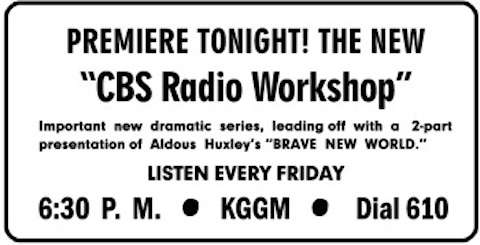
The first two episodes, right below, were dramatizations of Aldous Huxley’s Brave New World, read by the author himself. The series’ remaining 84 programs drew from the work of Antoine de Saint-Exupéry, James Thurber, H.L. Mencken, Mark Twain, Robert Heinlein, Eugene O’Neill, Balzac, Carl Sandburg, and so many more. It also featured original comedy, drama, music, and This American Life-style profiles and storytelling.
Huxley returned in program #12, with a story called “Jacob’s Hands,” written in collaboration with and read by Christopher Isherwood. The great Ray Bradbury made an appearance, in program #4, introducing his stories “Season of Disbelief” and “Hail and Farewell,” read by John Dehner and Stacy Harris, and scored by future film and TV composer Jerry Goldsmith. Other programs, like #10, “The Exurbanites,” narrated by famous war correspondent Eric Sevareid, conducted probing investigations of modern life—in this case the growth of suburbia and its relationship to the advertising industry. The above is but a tiny sampling of the wealth of quality programming the CBS Radio Workshop produced, and you can hear all of it—all 86 episodes—courtesy of the Internet Archive.
Sample streaming episodes in the player above, or download individual programs as MP3s and enjoy them at your leisure, almost like, well, a podcast. See Digital Deli for a complete rundown of each program’s content and cast, as well as an extensive history of the series. This is the swan song of golden age radio, which, it seems, maybe never really left, given the incredible number of listening experiences we still have at our disposal. Yes, someday our podcasts will sound quaint and curious to the ears of more advanced listeners, but even then, I’d bet, people will still be telling and recording stories, and the sound of human voices will continue to captivate us as it always has.
Note: An earlier version of this post appeared on our site in 2014.
Related Content:
X Minus One: Hear Classic Sci-Fi Radio Stories from Asimov, Heinlein, Bradbury & Dick
Hear 90+ Episodes of Suspense, the Iconic Golden Age Radio Show Launched by Alfred Hitchcock
Hear 149 Vintage Halloween Radio Shows from the Golden Age of Radio
Josh Jones is a writer and musician based in Durham, NC.
Read More...Were the Egyptian Pyramids Not Built Up, But Carved Down?: A Bold New Theory Explains Their Construction
We know more or less everything we could possibly know about ancient Egyptian civilization. That owes in large part to the advanced state of record-keeping it achieved, and how many of its writings have survived, up to and including — as previously featured here on Open Culture — a homework assignment and a list of excuses given by builders who missed work. There just happens to be one especially glaring gap in our knowledge: exactly how the ancient Egyptians built the Pyramids of Giza. This intersection of relative ignorance and extreme fascination has, as architecture YouTuber Dami Lee acknowledges in the video above, inspired no end of crackpot-ism. Nothing could be as unpromising as unsolicited contact from someone claiming to have discovered the secret of the pyramids.
The case of a Korean independent researcher called Huni Choi proved to be different, for reasons Lee uses the video to lay out. Conventional assumptions about how the pyramids were built hold that workers would have had to drag the stones up one or more ramps, though the dimensions of the structures dictate that the project would necessitate huge, complex, or huge and complex ramp systems — whose own construction has somehow left behind not a trace of evidence.
According to Choi, “the Great Pyramid wasn’t built on its own, but through a chain of ‘sacrificial’ structures” designed to be “cannibalized.” The idea is that the pyramids were “overbuilt,” starting with a gigantic “trapezoidal mass” with an integrated ramp system, which, after being topped out, was then carved down into the pyramid shape we still find so familiar and compelling.
If true, Choi’s theory would solve the long-intractable problem of the pointed tops, which posed such a thorny engineering problem that even other pyramid-building civilizations seemingly avoided even attempting them. It also accounts for how the Egyptian designers and builders could have kept an eye on the angles all the while, in order to make sure the things were going up straight. And what of the leftover stone cut away from each pyramid? Why, it would simply have been re-used for the construction of the next one. This all squares not just with the estimated mass of the Giza complex, but also with apparent ancient Egyptian attitudes toward the natural and built environment. Alas, unlike in, say, physics, an archaeological theory like this one remains difficult to prove dispositively, barring another technological breakthrough that enables a new form of analysis of the pyramids themselves. Still, it’s a lot more satisfying than just assuming some ancient aliens did it.
Related content:
Pyramids of Giza: Ancient Egyptian Art and Archaeology–a Free Online Course from Harvard
A Walking Tour Around the Pyramids of Giza: 2 Hours in Hi Def
Who Really Built the Egyptian Pyramids — and How Did They Do It?
How Did They Build the Great Pyramid of Giza?: An Animated Introduction
Based in Seoul, Colin Marshall writes and broadcasts on cities, language, and culture. He’s the author of the newsletter Books on Cities as well as the books 한국 요약 금지 (No Summarizing Korea) and Korean Newtro. Follow him on the social network formerly known as Twitter at @colinmarshall.
Read More...The Rohonc Codex: Hungary’s Mysterious Manuscript That No One Can Read
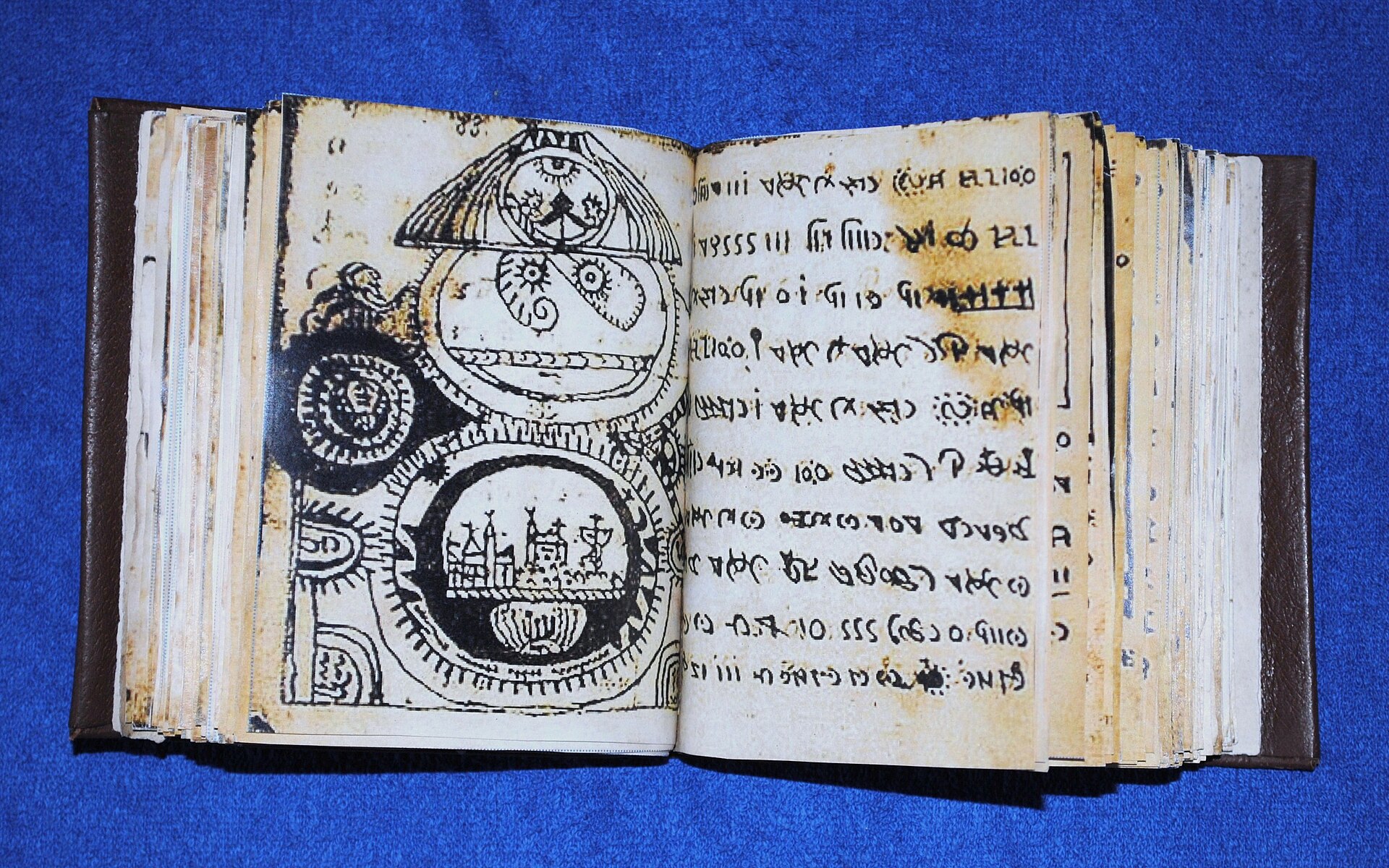
Image by Klaus Schmeh, via Wikimedia Commons
Magyar, which is spoken and written in Hungary, ranks among the hardest European languages to learn. (The U.S. Foreign Service Institute puts it in the second-to-highest level, accompanied by the dreaded asterisk labeling it as “usually more difficult than other languages in the same category.”) But once you master its vowel harmony system, its definite and indefinite conjugation, and its eighteen grammatical cases, among other notorious features, you can finally enjoy the work of writers like Nobel Laureates Imre Kertész and László Krasznahorkai in the original. Alas, no degree of mastery will be much help if you want to understand a much older — and, in its way, much more notorious — Hungarian text, the Rohonc Codex.
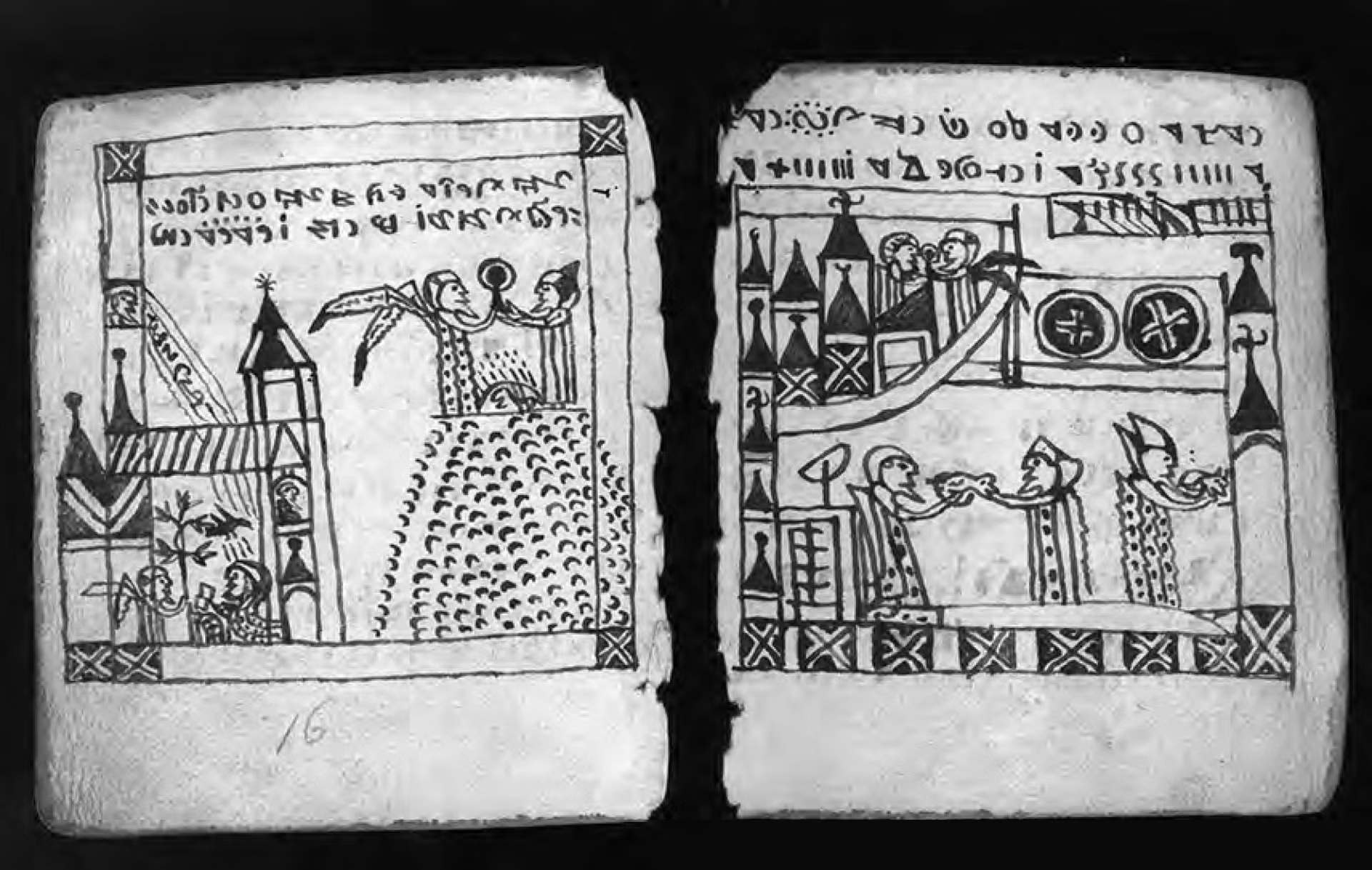
“Little is known about this book before it was bequeathed to the Hungarian Academy of Sciences in 1838,” writes The Art Newspaper’s Garry Shaw. “Its 448 pages bear illustrations covering Biblical themes and an as yet unreadable text, written using around 150 different symbols.”
Like the famously cryptic Voynich Manuscript, much covered here on Open Culture, “there has been much speculation over what language, if any, is encoded — ranging from old Hungarian to Sanskrit, or even a specially invented one — as well as debate over the book’s origin and date of creation.” Most colorfully, some attribute it to the notorious nineteenth-century forger Sámuel Literáti Nemes.
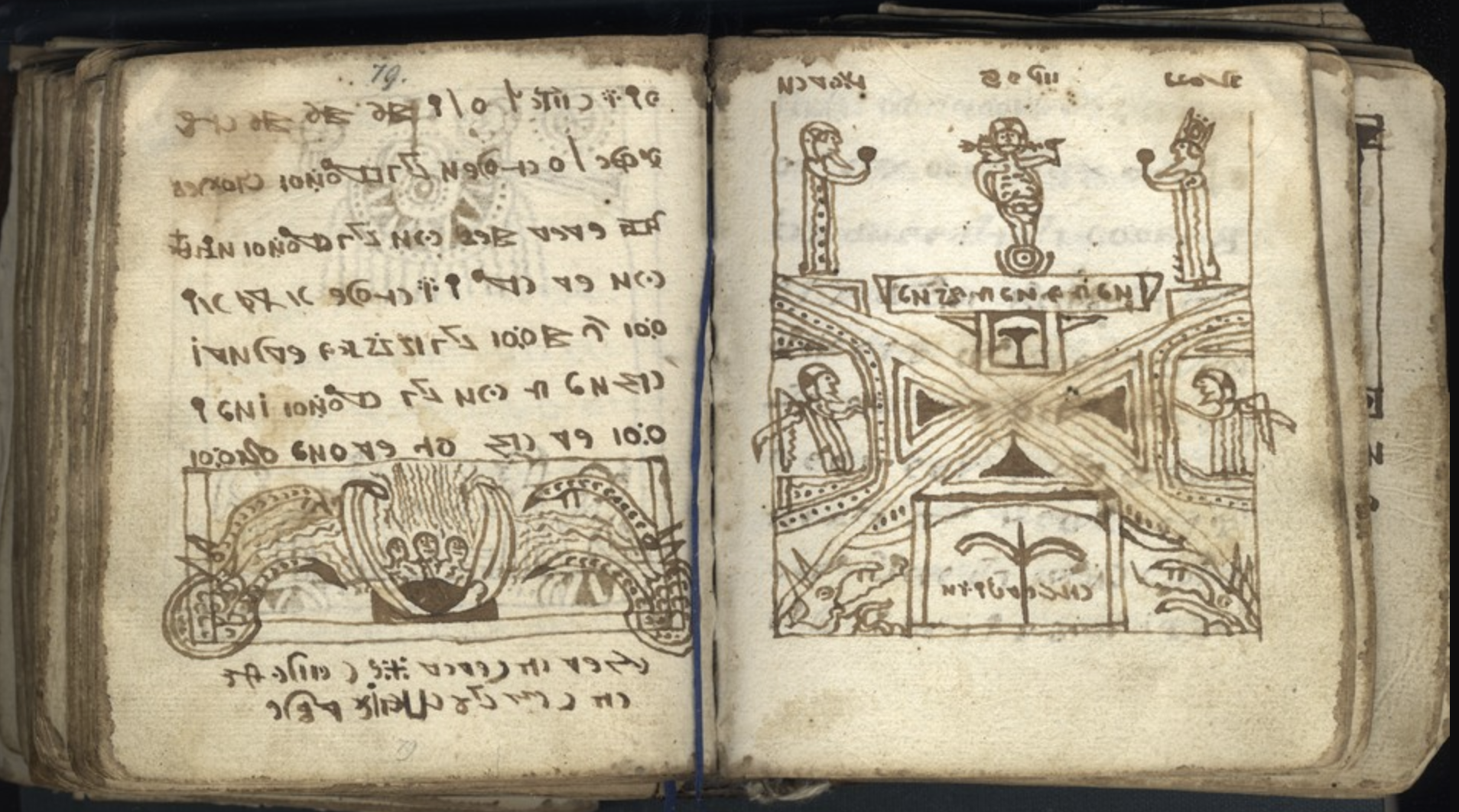
Download this PDF scan of the Rohonc Codex, and you can behold for yourself both its often charmingly simple medieval-style illustrations — many of which exhibit a mixture of Christian, Pagan, and Muslim symbolism — and the fiendishly regular-looking script against which generations of would-be decipherers have banged their heads. Here in the twenty-twenties, perhaps artificial intelligence can do its part, as has been attempted with the Voynich Manuscript, to build upon earlier analyses. One of those, conducted in the early nineteen-seventies, determined that, whatever the language in which the Rohonc Codex was written, it shows no traces of case endings. To enthusiasts of bizarre manuscripts, that discovery probably means little, but to students of Magyar, nothing could come as a greater relief.
Related Content:
Explore a Digitized Edition of the Voynich Manuscript, “the World’s Most Mysterious Book”
An Introduction to the Voynich Manuscript, the World’s Most Mysterious Book
An Introduction to the Codex Seraphinianus, the Strangest Book Ever Published
Solving a 2,500-Year-Old Puzzle: How a Cambridge Student Cracked an Ancient Sanskrit Code
The Foot-Licking Demons & Other Strange Things in a 1921 Illustrated Manuscript from Iran
Based in Seoul, Colin Marshall writes and broadcasts on cities, language, and culture. He’s the author of the newsletter Books on Cities as well as the books 한국 요약 금지 (No Summarizing Korea) and Korean Newtro. Follow him on the social network formerly known as Twitter at @colinmarshall.
Read More...How the Beatles Wrote Their Songs: From Early Demos to Final Recordings
More than a few of us can claim, with some confidence, to know every Beatles song. And indeed it may be true, in that we’ve heard every track of all their studio albums. But as decade after decade of Beatles scholarship has demonstrated, there’s knowing their songs, and then there’s knowing their songs. Musician and YouTuber David Bennett has made it his project to attain the second kind of knowledge, and on his dedicated series UnBeatled, to share it with the public. In each UnBeatled video he analyzes just one song — “Help!,” “Here Comes the Sun,” “Penny Lane,” and so on — at a level of detail fine enough to necessitate not just breaking it down to its component tracks, but also examining the demos and unreleased takes recorded in the studio.
This process can reveal a great deal about the Beatles’ songwriting process, as Bennett explains in the video at the top of the post. In the course of twenty minutes, he covers eleven songs, a selection not necessarily limited to the group’s universally praised compositions.
Take the first, “Yellow Submarine,” whose early recordings differ both lyrically, melodically, and in time signature from the version we know (and may or may not love), beginning with an idea of John’s and being further shaped by Paul through its iterations. Another of John’s musical seeds is “Everybody Had a Hard Year,” whose fingerpicking pattern (originally learned from Donovan in India) is also heard in “Julia” and “Dear Prudence,” and which evolved, with different chords, into the middle section of “I’ve Got a Feeling.”
Such interconnections come as rewards of close and deep listening to the Beatles canon. And certain songs turn out to be worlds of their own: “Strawberry Fields Forever,” for instance, was assembled out of two completely different recordings, then adjusted in tempo and pitch to match in the middle. One of those takes includes the voice of producer George Martin counting in the orchestra, the pitch of which suggests that its members had originally played in a different key than the one we hear. As Bennett notes, using the then relatively novel technology of “vari-speed” had become practically standard in the Beatles’ studio process, as such technological layering and adjustment itself became a key part of their songwriting process. It contributed much to their signature “vibey, psychedelic, uncanny sound”: sought after by many bands over the past six decades, but never truly replicated.
Related Content:
How John Lennon Wrote the Beatles’ Best Song, “A Day in the Life”
The “Strawberry Fields Forever” Demos: The Making of a Beatles Classic (1966)
How the Beatles Experimented with Indian Music & Pioneered a New Rock and Roll Sound
Based in Seoul, Colin Marshall writes and broadcasts on cities, language, and culture. He’s the author of the newsletter Books on Cities as well as the books 한국 요약 금지 (No Summarizing Korea) and Korean Newtro. Follow him on the social network formerly known as Twitter at @colinmarshall.
Read More...Bruce Springsteen Revives the Protest Song, Condemns ICE Violence in “Streets of Minneapolis”
If there’s a silver lining to our tumultuous times, it’s that musicians are reviving the protest song, a tradition that has withered since the end of the Vietnam War. Credence Clearwater Revival’s “Fortunate Son,” Arlo Guthrie’s “Alice’s Restaurant,” Jimi Hendrix’s “Machine Gun”—these songs all took aim at the Johnson and Nixon administrations’ increasingly misguided war effort. But it was Neil Young who wrote the most damning protest song. When the Ohio National Guard shot and killed four students at Kent State in 1970, Young disappeared for a few hours and returned with the haunting lyrics of “Ohio.”
Tin soldiers and Nixon coming,
We’re finally on our own.
This summer I hear the drumming,
Four dead in Ohio.Gotta get down to it
Soldiers are cutting us down
Should have been done long ago.
What if you knew her
And found her dead on the ground
How can you run when you know?
With his new song released this week, Bruce Springsteen picks up this thread. “Streets Of Minneapolis” documents the murder of civilians in Minnesota’s largest city. On January 7, ICE agent Jonathan Ross shot Renee Good repeatedly in the head, leaving the mother of three dead. On January 24, two federal agents fired at least 10 shots at Alex Pretti, killing the ICU nurse instantly. Days later, the identity of these murderers remains hidden—something that news organizations oddly don’t seem troubled by, almost as if we’re quietly accepting that we’re living in a police state. When was the last time American agents could wear masks before killing civilians, and then hide behind a veil of anonymity after? Yeah, that’s normal.
On social media, Springsteen wrote: “I wrote this song on Saturday, recorded it yesterday and released it to you today in response to the state terror being visited on the city of Minneapolis. It’s dedicated to the people of Minneapolis, our innocent immigrant neighbors and in memory of Alex Pretti and Renee Good.” You can read the lyrics below.
Through the winter’s ice and cold
Down Nicollet Avenue
A city aflame fought fire and ice
‘Neath an occupier’s boots
King Trump’s private army from the DHS
Guns belted to their coats
Came to Minneapolis to enforce the law
Or so their story goes
Against smoke and rubber bullets
By the dawn’s early light
Citizens stood for justice
Their voices ringing through the night
And there were bloody footprints
Where mercy should have stood
And two dead left to die on snow-filled streets
Alex Pretti and Renee Good
Oh our Minneapolis, I hear your voice
Singing through the bloody mist
We’ll take our stand for this land
And the stranger in our midst
Here in our home they killed and roamed
In the winter of ’26
We’ll remember the names of those who died
On the streets of Minneapolis
Trump’s federal thugs beat up on
His face and his chest
Then we heard the gunshots
And Alex Pretti lay in the snow, dead
Their claim was self defense, sir
Just don’t believe your eyes
It’s our blood and bones
And these whistles and phones
Against Miller and Noem’s dirty lies
Oh our Minneapolis, I hear your voice
Crying through the bloody mist
We’ll remember the names of those who died
On the streets of Minneapolis
Now they say they’re here to uphold the law
But they trample on our rights
If your skin is black or brown my friend
You can be questioned or deported on sight
In chants of ICE out now
Our city’s heart and soul persists
Through broken glass and bloody tears
On the streets of Minneapolis
Oh our Minneapolis, I hear your voice
Singing through the bloody mist
Here in our home they killed and roamed
In the winter of ’26
We’ll take our stand for this land
And the stranger in our midst
We’ll remember the names of those who died
On the streets of Minneapolis
We’ll remember the names of those who died
On the streets of Minneapolis
Related Content
Nina Simone’s Live Performances of Her Poignant Civil Rights Protest Songs
Read More...Walter Benjamin Explains How Fascism Uses Mass Media to Turn Politics Into Spectacle (1935)
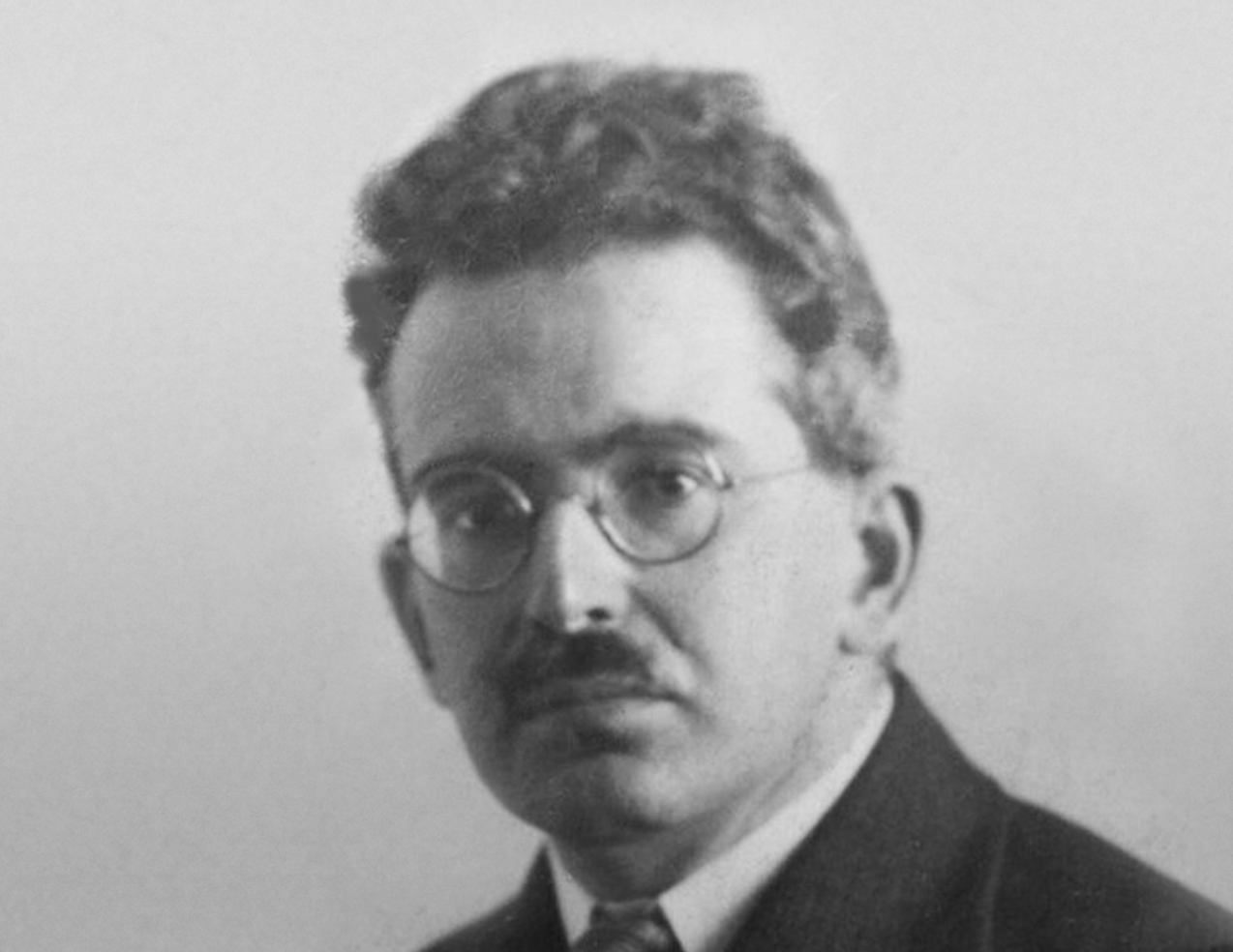
Image via Wikimedia Commons
In his 1935 essay, “The Work of Art in the Age of Mechanical Reproducibility,” influential German-Jewish critic Walter Benjamin introduced the term “aura” to describe an authentic experience of art. Aura relates to the physical proximity between objects and their viewers. Its loss, Benjamin argued, was a distinctly 20th-century phenomenon caused by mass media’s imposition of distance between object and viewer, though it appears to bring art closer through a simulation of intimacy.
The essay makes for potent reading today. Mass media — which for Benjamin meant radio, photography, and film — turns us all into potential actors, critics, experts, he wrote, and takes art out of the realm of the sacred and into the realm of the spectacle. Yet it retains the pretense of ritual. We make offerings to cults of personality, expanded in our time to include influencers and revered and reviled billionaires and political figures who joust in the headlines like professional wrestlers, led around by the chief of all heels. As Benjamin writes:
The film responds to the shriveling of the aura with an artificial build-up of the “personality” outside the studio. The cult of the movie star, fostered by the money of the film industry, preserves not the unique aura of the person but the “spell of the personality,” the phony spell of a commodity.
Benjamin’s focus on the medium as not only expressive but constitutive of meaning has made his essay a staple on communications and media theory course syllabi, next to the work of Marshall McLuhan. Many readings tend to leave aside the politics of its epilogue, likely since “his remedy,” writes Martin Jay — “the politicization of art by Communism — was forgotten by all but his most militant Marxist interpreters,” and hardly seemed like much of a remedy during the Cold War, when Benjamin became more widely available in translation.
Benjamin’s own idiosyncratic politics aside, his essay anticipates a crisis of authorship and authority currently surfacing in the use of social media as a dominant form of political spectacle.
With the increasing extension of the press, which kept placing new political, religious, scientific, professional, and local organs before the readers, an increasing number of readers became writers—at first, occasional ones. It began with the daily press opening to its readers space for “letters to the editor.” And today there is hardly a gainfully employed European who could not, in principle, find an opportunity to publish somewhere or other comments on his work, grievances, documentary reports, or that sort of thing. Thus, the distinction between author and public is about to lose its basic character.
Benjamin’s analysis of conventional film, especially, leads him to conclude that its reception required so little of viewers that they easily become distracted. Everyone’s a critic, but “at the movies this position requires no attention. The public is an examiner, but an absent-minded one.” Passive consumption and habitual distraction do not make for considered, informed opinion or a healthy sense of proportion.
What Benjamin referred to (in translation) as mechanical reproducibility we might now just call The Internet (and the coteries of “things” it haunts poltergeist-like). Later theorists influenced by Benjamin foresaw our age of digital reproducibility doing away with the need for authentic objects, and real people, altogether. Benjamin himself might characterize a medium that can fully detach from the physical world and the material conditions of its users — a medium in which everyone gets a column, public photo gallery, and video production studio — as ideally suited to the aims of fascism.
Fascism attempts to organize the newly created proletarian masses without affecting the property structure which the masses strive to eliminate. Fascism sees its salvation in giving these masses not their right, but instead a chance to express themselves. The masses have a right to change property relations; Fascism seeks to give them an expression while preserving property. The logical result of Fascism is the introduction of aesthetics into political life.
The logical result of turning politics into spectacle for the sake of preserving inequality, writes Benjamin, is the romanticization of war and slaughter, glorified plainly in the Italian Futurist manifesto of Filippo Marinetti and the literary work of Nazi intellectuals like Ernst Jünger. Benjamin ends the essay with a discussion of how fascism aestheticizes politics to one end: the annihilation of aura by more permanent means.
Under the rise of fascism in Europe, Benjamin saw that human “self-alienation has reached such a degree that it can experience its own destruction as an aesthetic pleasure of the first order. This is the situation of politics which Fascism is rendering aesthetic.” Those who participate in this spectacle seek mass violence “to supply the artistic gratification of a sense perception that has been changed by technology.” Distracted and desensitized, they seek, that is, to compensate for profound disembodiment and the loss of meaningful, authentic experience.
You can read Benjamin’s essay here, or find it in this collected volume.
Note: An earlier version of this post appeared on our site in 2022.
Related Content:
Umberto Eco Makes a List of the 14 Common Features of Fascism
Toni Morrison Lists the 10 Steps That Lead Countries to Fascism (1995)
Read More...The World’s Oldest Cave Art, Discovered in Indonesia, Is at Least 67,800 Years Old
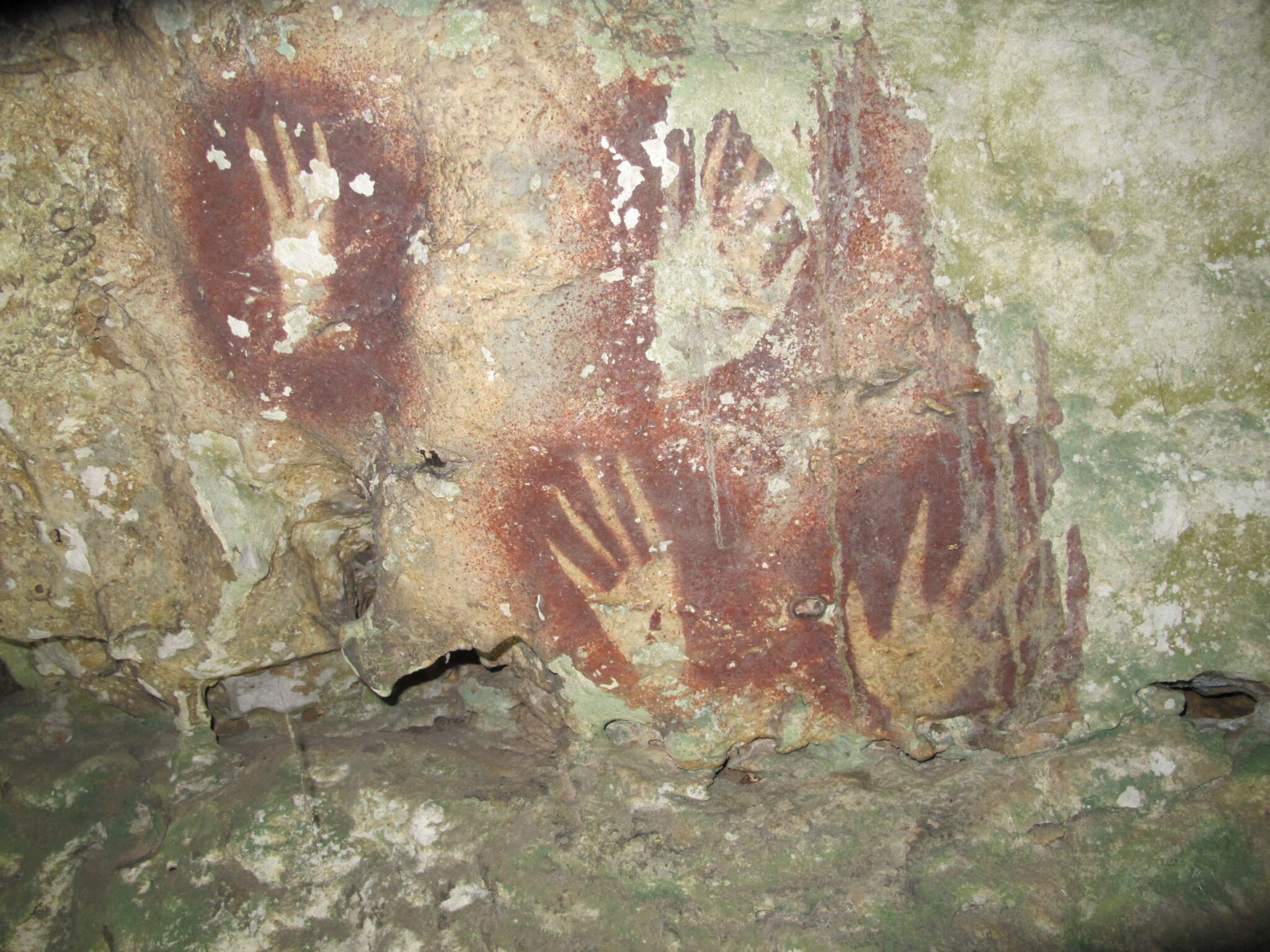
Image by Ahdi Agus Oktaviana
Over the centuries, a variety of places have laid credible claim to being the world’s art center: Constantinople, Florence, Paris, New York. But on the scale of, say, ten millennia, the hot spots become rather less recognizable. Up until about 20,000 years ago, it seems that creators and viewers of art alike spent a good deal in one particular cave: Liang Metanduno, located on Muna Island in Indonesia’s Southeast Sulawesi province. The many paintings on its walls of recognizable humans, animals, and boats have brought it fame in our times as a kind of ancient art gallery. But in recent years, a much older piece of work has been discovered there, one whose creation occurred at least 67,800 years ago.
The creation in question is a handprint, faint but detectable, probably made by blowing a mixture of ochre and water over an actual human hand. To determine its age, researchers performed what’s called uranium-series analysis on the deposits of calcium carbonate that had built up on and around it.
The number of 67,800 years is, of course, not exact, but it’s also just a minimum: in fact, the handprint could well be much older. In a paper published last week in Nature, the researchers point out that its age exceeds both that of the oldest similar rock art found elsewhere in Indonesia and that of a hand stencil in Spain attributed to Neanderthals, “which until now represented the oldest demonstrated minimum-age constraint for cave art worldwide.”
It isn’t impossible that this at least 67,800-year-old handprint could also have been made by Neanderthals. The obvious modification of the hand’s shape, however, an extension and tapering of the fingers that brings to mind animal claws (or the clutches of Nosferatu), suggests to certain scientific eyes the kind of cognition attributable specifically to Homo sapiens. This discovery has great potential relevance not just to art history, but even more so to other fields concerned with the development of our species. While it had previously been thought, for instance, that the first human settlers of Australia made their way there through Indonesia (in a time of much lower sea levels) between 50,000 and 65,000 years ago, the handprint’s existence in Liang Metanduno suggests that the migration took place even earlier. All these millennia later, Australia remains a favored destination for a variety of immigrants — some of whom do their part to keep Sydney’s art scene interesting.
Related Content:
Algerian Cave Paintings Suggest Humans Did Magic Mushrooms 9,000 Years Ago
Was a 32,000-Year-Old Cave Painting the Earliest Form of Cinema?
A Recently Discovered 44,000-Year-Old Cave Painting Tells the Oldest Known Story
40,000-Year-Old Symbols Found in Caves Worldwide May Be the Earliest Written Language
Based in Seoul, Colin Marshall writes and broadcasts on cities, language, and culture. He’s the author of the newsletter Books on Cities as well as the books 한국 요약 금지 (No Summarizing Korea) and Korean Newtro. Follow him on the social network formerly known as Twitter at @colinmarshall.
Read More...
Hannah Arendt Explains How Propaganda Uses Lies to Erode All Truth & Morality: Insights from The Origins of Totalitarianism

Image by Bernd Schwabe, via Wikimedia Commons
At least when I was in grade school, we learned the very basics of how the Third Reich came to power in the early 1930s. Paramilitary gangs terrorizing the opposition, the incompetence and opportunism of German conservatives, the Reichstag Fire. And we learned about the critical importance of propaganda, the deliberate misinforming of the public in order to sway opinions en masse and achieve popular support (or at least the appearance of it). While Minister of Propaganda Joseph Goebbels purged Jewish and leftist artists and writers, he built a massive media infrastructure that played, writes PBS, “probably the most important role in creating an atmosphere in Germany that made it possible for the Nazis to commit terrible atrocities against Jews, homosexuals, and other minorities.”
How did the minority party of Hitler and Goebbels take over and break the will of the German people so thoroughly that they would allow and participate in mass murder? Post-war scholars of totalitarianism like Theodor Adorno and Hannah Arendt asked that question over and over, for several decades afterward. Their earliest studies on the subject looked at two sides of the equation. Adorno contributed to a massive volume of social psychology called The Authoritarian Personality, which studied individuals predisposed to the appeals of totalitarianism. He invented what he called the F‑Scale (“F” for “fascism”), one of several measures he used to theorize the Authoritarian Personality Type.
Arendt, on the other hand, looked closely at the regimes of Hitler and Stalin and their functionaries, at the ideology of scientific racism, and at the mechanism of propaganda in fostering “a curiously varying mixture of gullibility and cynicism with which each member… is expected to react to the changing lying statements of the leaders.” So she wrote in her 1951 Origins of Totalitarianism, going on to elaborate that this “mixture of gullibility and cynicism… is prevalent in all ranks of totalitarian movements”:
In an ever-changing, incomprehensible world the masses had reached the point where they would, at the same time, believe everything and nothing, think that everything was possible and nothing was true… The totalitarian mass leaders based their propaganda on the correct psychological assumption that, under such conditions, one could make people believe the most fantastic statements one day, and trust that if the next day they were given irrefutable proof of their falsehood, they would take refuge in cynicism; instead of deserting the leaders who had lied to them, they would protest that they had known all along that the statement was a lie and would admire the leaders for their superior tactical cleverness.
Why the constant, often blatant lying? For one thing, it functioned as a means of fully dominating subordinates, who would have to cast aside all their integrity to repeat outrageous falsehoods and would then be bound to the leader by shame and complicity. “The great analysts of truth and language in politics”—writes McGill University political philosophy professor Jacob T. Levy—including “George Orwell, Hannah Arendt, Vaclav Havel—can help us recognize this kind of lie for what it is.… Saying something obviously untrue, and making your subordinates repeat it with a straight face in their own voice, is a particularly startling display of power over them. It’s something that was endemic to totalitarianism.”
Arendt and others recognized, writes Levy, that “being made to repeat an obvious lie makes it clear that you’re powerless.” She also recognized the function of an avalanche of lies to render a populace powerless to resist, the phenomenon we now refer to as “gaslighting”:
The result of a consistent and total substitution of lies for factual truth is not that the lie will now be accepted as truth and truth be defamed as a lie, but that the sense by which we take our bearings in the real world—and the category of truth versus falsehood is among the mental means to this end—is being destroyed.
The epistemological ground thus pulled out from under them, most would depend on whatever the leader said, no matter its relation to truth. “The essential conviction shared by all ranks,” Arendt concluded, “from fellow traveler to leader, is that politics is a game of cheating and that the ‘first commandment’ of the movement: ‘The Fuehrer is always right,’ is as necessary for the purposes of world politics, i.e., world-wide cheating, as the rules of military discipline are for the purposes of war.”
Arendt wrote Origins of Totalitarianism from research and observations gathered during the 1940s, a very specific historical period. Nonetheless the book, Jeffrey Isaacs remarks at The Washington Post, “raises a set of fundamental questions about how tyranny can arise and the dangerous forms of inhumanity to which it can lead.” Arendt’s analysis of propaganda and the function of lies seems particularly relevant at this moment. The kinds of blatant lies she wrote of might become so commonplace as to become banal. We might begin to think they are an irrelevant sideshow. This, she suggests, would be a mistake.
Note: An earlier version of this post appeared on our site in 2017.
Related Content:
Umberto Eco’s List of the 14 Common Features of Fascism
Read More...Support Us
We're hoping to rely on loyal readers, rather than erratic ads. Please click the Donate button and support Open Culture. You can use Paypal, Venmo, Patreon, even Crypto! We thank you!

About Us

Open Culture scours the web for the best educational media. We find the free courses and audio books you need, the language lessons & educational videos you want, and plenty of enlightenment in between.
Advertise With Us
FREE UPDATES!
GET OUR DAILY EMAIL
Get the best cultural and educational resources on the web curated for you in a daily email. We never spam. Unsubscribe at any time.
FOLLOW ON SOCIAL MEDIA
Open Culture editor Dan Colman scours the web for the best educational media. He finds the free courses and audio books you need, the language lessons & movies you want, and plenty of enlightenment in between.
Advertise With Us



