What Makes Salvador Dalí’s Iconic Surrealist Painting “The Persistence of Memory” a Great Work of Art
Salvador Dalí painted melting clocks. This is not as drastic an oversimplification as it sounds: after first painting such a counterintuitive image, “Dalí, who knew the importance of branding, would use the melting clocks for his entire career.” So says no less an expert than James Payne, the gallerist and video essayist behind the Youtube channel Great Art Explained. In its latest episode Payne takes on the unrelentingly prolific Dalí’s most famous canvas of all, The Persistence of Memory. Completed in 1931, this work of art has by now spent about half a century adorning the walls of college dorm rooms, among other spaces inhabited by viewers interested in the alteration of their own perceptive faculties.
The Persistence of Memory doesn’t mark Dalí’s first use of melting clocks, though it’s without doubt his most important. Yet “despite its huge cultural impact,” says Payne, the painting is “quite small, about the size of a sheet of paper.” Against the background of “a huge desert landscape with vast depths of field, reduced to a shrunken world” — one harboring references to Goya, De Chirico, and Bosch — it vividly realizes a moment in the process of metamorphosis.
“A key concept in the Surrealist movement,” metamorphosis is here “exemplified by the paradox of Dalí’s rendering of the hardest and most mechanical objects, watches, into a soft and flaccid form.” Like all of the artist’s best work, it thus “exploits the ambiguity of our perceptual process and plays with our own fears.” But what do the melting clocks mean?
That, to Dalí’s own mind, is the wrong question: “I am against any kind of message,” he declared in one of his many television appearances. Indeed, his frequent appearances on television (What’s My Line?, The Mike Wallace Interview, The Dick Cavett Show) and in other media assured that, at a certain point, “Dalí the artist had become a prisoner of Dalí the celebrity.” But his appearances in the spotlight also gave him the chance to disseminate the chaff of conflicting explanations of his own work. Perhaps the melting clocks refer to Einstein’s then-novel theory of relativity; perhaps they symbolize impotence. Or it may all come down to Dalí’s obsession with death, which even in 1931 had long since taken both his mother and the younger brother of whom he believed himself a reincarnation. In the event, Dalí couldn’t escape mortality. None of us can, of course, and that, as much as anything else, may illuminate why The Persistence of Memory never quite passes into the realm of kitsch.
Related Content:
Walk Inside a Surrealist Salvador Dalí Painting with This 360º Virtual Reality Video
Salvador Dalí Explains Why He Was a “Bad Painter” and Contributed “Nothing” to Art (1986)
Salvador Dalí’s Melting Clocks Painted on a Latte
Based in Seoul, Colin Marshall writes and broadcasts on cities and culture. His projects include the book The Stateless City: a Walk through 21st-Century Los Angeles and the video series The City in Cinema. Follow him on Twitter at @colinmarshall or on Facebook.
Read More...Hear Haruki Murakami Play Beatles Covers on His Radio Show, Murakami Radio

Now ramping up to a wide release is a film that will draw in no few fans of Haruki Murakami around the world: Drive My Car, adapted by filmmaker Ryusuke Hamaguchi from Murakami’s short story of the same name. That name itself comes, of course, from the Beatles song, their knockout opener to Rubber Soul. It wasn’t the first time Murakami had borrowed a title from the Fab Four. The novel that made him a household name, in his homeland of Japan and subsequently the rest of the world, was called Norwegian Wood.
The Beatles’ albums have also provided him with inspiration, as evidenced by his story “With the Beatles,” published in translation last year by The New Yorker. It takes place in 1965, when the Beatles had become hugely popular in not just the West but Japan as well. “Turn on the radio and chances were you’d hear one of their songs,” says the narrator. “I liked their songs myself and knew all their hits,” but “truth be told, I was never a fervent Beatles fan. I never actively sought out their songs. For me, it was passive listening, pop music flowing out of the tiny speakers of my Panasonic transistor radio.” Despite being a high-school, then college student in the 1960s, “I didn’t buy a single Beatles record. I was much more into jazz and classical music.”
This story is fictional; its narrator is not its author. Yet Murakami, who happened to come of age in the same era, made similar remarks about his experience with the Beatles a couple of years ago. His originally one-off session as a disc jockey on Tokyo FM has become a more or less full-fledged show, Murakami Radio. Each of its broadcasts he dedicates to a different musical theme, and it was thus only a matter of time before he got around to the Beatles.
Despite his early indifference, as Murakami explains between songs, he later, in his thirties, came to sense the genius of John, Paul, George, and Ringo, during a stay in Greece with their self-titled 1968 “White Album” on tape in his Walkman — which, despite lacking its title song, inspired him to start writing Norwegian Wood. Apart from that memory, the late-period Beatles figure only secondarily into Murakami’s “Beatles Night.” He focuses instead on their early, pre-Rubber Soul work, or rather, on a variety of lesser-known covers thereof.
If you listen to the actual broadcast on Japanese video-streaming site Niconico, you’ll also hear such additional Beatles covers as “Do You Want to Know a Secret” by Motown singer Mary Wells and “She Loves You” by Rita Lee of Brazilian rock titans Os Mutantes. Obviously, the appeal of the Beatles transcends cultural boundaries, as does that of the extensively translated Murakami. What explains it? Perhaps, in both cases, that they created their own genres — or rather, their own wondrous realities.
Related Content:
Hear 100 Amazing Cover Versions of Beatles Songs
Based in Seoul, Colin Marshall writes and broadcasts on cities and culture. His projects include the book The Stateless City: a Walk through 21st-Century Los Angeles and the video series The City in Cinema. Follow him on Twitter at @colinmarshall or on Facebook.
Read More...Watch John Cage’s 4′33″ Played by Musicians Around the World
Make sure to watch the video above with the sound on. In it musicians from around the world all play a well-known composition: 4′33″ by John Cage. “I spent weeks asking strangers on the internet to send me their radically different interpretations, and boy did they deliver,” writes the video’s creator Sam Vladimirsky. “My inbox filled with adaptations by an Austrian death metal band, a marimba player, a bunny rabbit, the Museum of Musical Instruments in Phoenix, a middle school music teacher, a version played on Guitar Hero and over Zoom.” Though originally composed for piano, 4′33″ is easily transposed to all these instruments and others, calling as it does for their players to do the very same thing: nothing.
“Inspired by Zen Buddhism, the Dada movement and Cage’s strong distaste for the ubiquitous muzak of the time,” says Aeon, “its score instructs performers not to play their instruments for the piece’s four-minute, thirty-three-second duration.” The result is not silence but “the unique ambient soundscape of the environment in which it’s performed, reflecting Cage’s belief that music is ever-present.”
Here the submitted performances take place in such environments as a classroom, a bedroom, a courtyard, a driveway, a bus, and a subway station. Vladimirsky pairs the videos, allowing us to enjoy not just parallel viewing experiences but a layered listening experience of these ambient soundscapes.
“Stuck inside,” writes Vladimirsky, “professional musicians, dedicated amateurs, awkward teens and college students found 4′33″ to be the music of our moment.” If the Rolling Stones could play “You Can’t Always Get What You Want” in lockdown, each from his separate home, then who’s to say this isn’t the next logical step? Each performance of 4′33″ reflects not just its immediate setting but its cultural period: compare the clip just above, in which Cage himself plays it in Harvard Square in 1973. Most of us haven’t seen the inside of a concert hall in quite some time, let alone heard the ambient sounds produced within it in the absence of proper music. But each of us can, at least, perform 4′33″ for ourselves whenever and wherever we like — one way of doing it being simply to play the video at the top of the post with the sound off.
Related Content:
Watch John Cage Play His “Silent” 4’33” in Harvard Square, Presented by Nam June Paik (1973)
The Curious Score for John Cage’s “Silent” Zen Composition 4’33”
John Cage’s Silent, Avant-Garde Piece 4’33” Gets Covered by a Death Metal Band
The 4’33” App Lets You Create Your Own Version of John Cage’s Classic Work
The Virtual Choir: Watch a Choir Conductor Digitally Unite 3500 Singers from Around the World
How to Find Silence in a Noisy World
Based in Seoul, Colin Marshall writes and broadcasts on cities and culture. His projects include the book The Stateless City: a Walk through 21st-Century Los Angeles and the video series The City in Cinema. Follow him on Twitter at @colinmarshall or on Facebook.
Read More...In 1997, Wired Magazine Predicts 10 Things That Could Go Wrong in the 21st Century: “An Uncontrollable Plague,” Climate Crisis, Russia Becomes a Kleptocracy & More
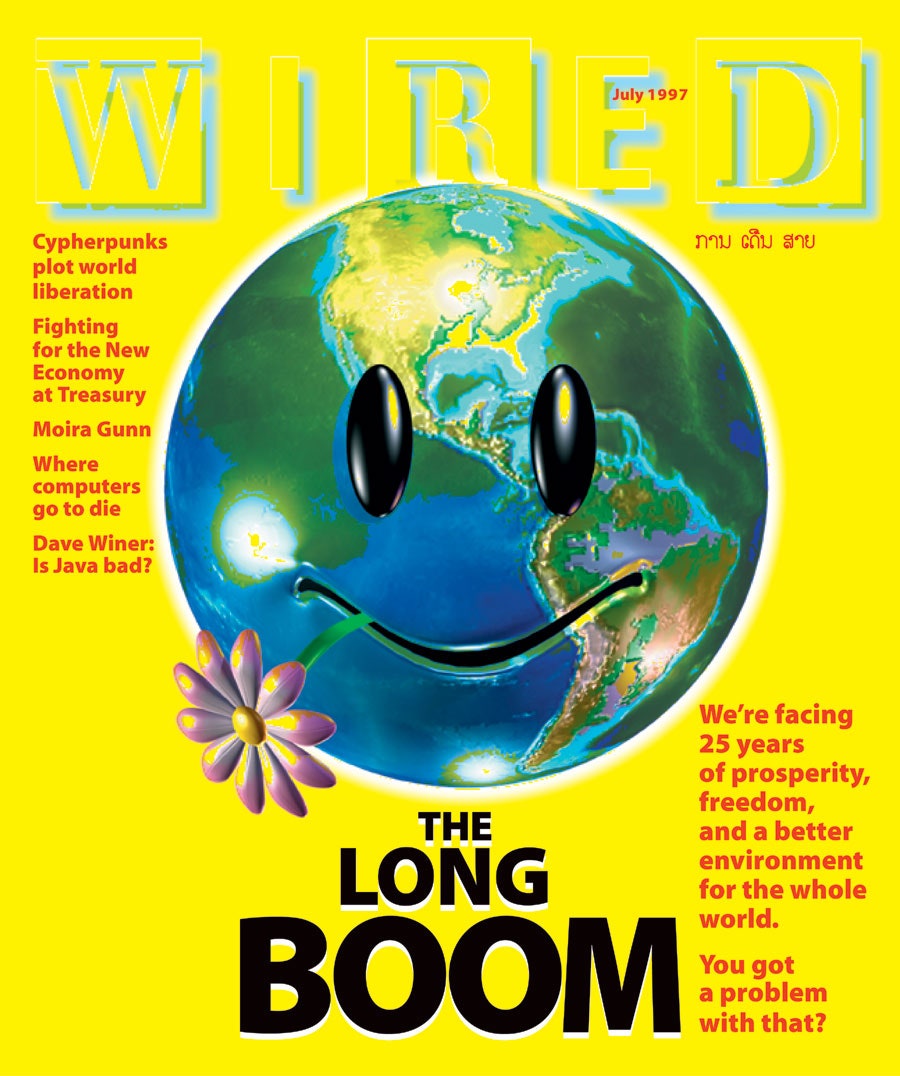
Hydrogen-powered cars. Biological, then quantum computing. Gene-therapy cancer treatments. An end to the War on Drugs. Reliable automatic translation. The impending end of the nation-state. Man setting foot on Mars. These are just a few of the developments in store for our world by the year 2020 — or so, at any rate, predicts “The Long Boom,” the cover story of a 1997 issue of Wired magazine, the official organ of 1990s techno-optimism. “We’re facing 25 years of prosperity, freedom, and a better environment for the whole world,” declares the cover itself. “You got a problem with that?”
Since the actual year 2020, this image has been smirkingly re-circulated as a prime example of blinkered End-of-History triumphalism. From the vantage of 2021, it’s fair to say that the predictions of the article’s authors Peter Schwartz and Peter Leyden (who expanded their thesis into a 2000 book) went wide of the mark.
But their vision of the 21st century hasn’t proven risible in every aspect: a rising China, hybrid cars, video calls, and online grocery-shopping have become familiar enough hardly to merit comment, as has the internet’s status as “the main medium of the 21st century.” And who among us would describe the cost of university as anything but “absurd”?
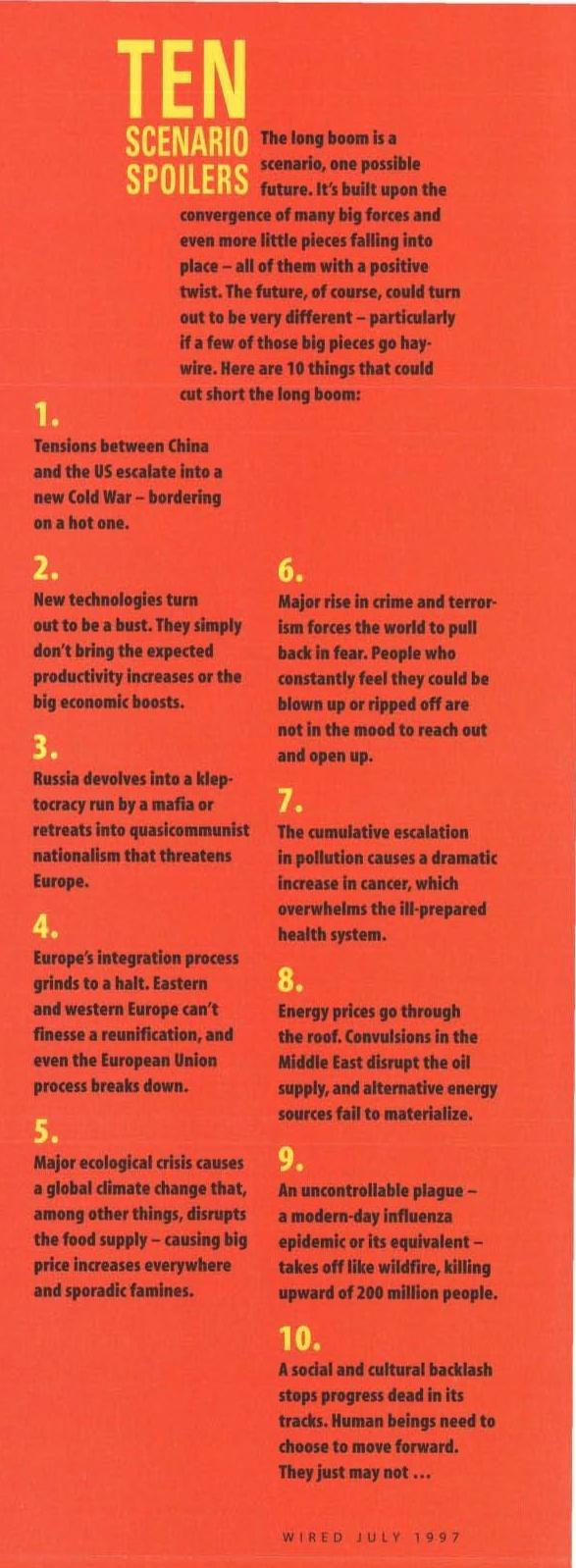
Schwartz and Leyden do allow for darker possibilities than their things-can-only-get-better rhetoric make it seem. Some of these they enumerate in a sidebar (remember sidebars?) headlined “Ten Scenario Spoilers.” Though not included in the article as archived on Wired’s web site, it has recently been scanned and posted to social media, with viral results. A “new Cold War” between the U.S. and China; a “global climate change that, among other things, disrupts the food supply”; a “major rise in crime and terrorism forces the world to pull back in fear”; an “uncontrollable plague — a modern-day influenza epidemic or its equivalent”: to one degree or another, every single one of these ten dire developments seems in our time to have come to pass.
“We’re still on the front edge of the great global boom,” we’re reminded in the piece’s conclusion. “A hell of a lot of things could go wrong.” You don’t say. Yet for all of the 21st-century troubles that few riding the wave of first-dot-com-boom utopianism would have credited, we today run the risk of seeing our world as too dystopian. Now as then, “the vast array of problems to solve and the sheer magnitude of the changes that need to take place are enough to make any global organization give up, any nation back down, any reasonable person curl up in a ball.” We could use a fresh infusion of what Schwartz and Leyden frame as the boom’s key ingredient: American optimism. “Americans don’t understand limits. They have boundless confidence in their ability to solve problems. And they have an amazing capacity to think they really can change the world.” In that particular sense, perhaps we all should become Americans after all.
Related Content:
Pioneering Sci-Fi Author William Gibson Predicts in 1997 How the Internet Will Change Our World
In 1926, Nikola Tesla Predicts the World of 2026
From the Annals of Optimism: The Newspaper Industry in 1981 Imagines its Digital Future
Based in Seoul, Colin Marshall writes and broadcasts on cities and culture. His projects include the book The Stateless City: a Walk through 21st-Century Los Angeles and the video series The City in Cinema. Follow him on Twitter at @colinmarshall or on Facebook.
Read More...Carl Sagan Warns Congress about Climate Change (1985)
Without climate change, we couldn’t inhabit the Earth as we do today. The greenhouse effect, by which gases in a planet’s atmosphere increase the heat of that planet’s surface, “makes life on Earth possible.” So says Carl Sagan in the video above. He adds that without it, the temperature would be about 30 degrees centigrade cooler: “That’s well below the freezing point of water everywhere on the planet. The oceans would be solid.” A little of the climate change induced by the greenhouse effect, then, is a good thing, but “here we are pouring enormous quantities of CO2 and these other gases into the atmosphere every year, with hardly any concern about its long-term and global consequences.”
It’s fair to say that the level of concern has increased since Sagan spoke these words in 1985, when “climate change” wasn’t yet a household term. But even then, his audience was Congress, and his fifteen-minute address, preserved by C‑SPAN, remains a succinct and persuasive case for more research into the phenomenon as well as strategies and action to mitigate it.
What audience would expect less from Sagan, who just five years earlier had hosted the hit PBS television series Cosmos, based on his book of the same name. Its broadcast made contagious his enthusiasm for scientific inquiry in general and the nature of the planets in particular. Who could forget, for example, his introduction to the “thoroughly nasty place” that is Venus, research into whose atmosphere Sagan had conducted in the early 1960s?
Venus is “the nearest planet — a planet of about the same mass, radius, density, as the Earth,” Sagan tells Congress, but it has a “surface temperature about 470 degrees centigrade, 900 Fahrenheit.” The reason? “A massive greenhouse effect in which carbon dioxide plays the major role.” As for our planet, estimates then held that, without changes in the rates of fossil fuel-burning and “infrared-absorbing” gases released into the atmosphere, there will be “a several-centigrade-degree temperature increase” on average “by the middle to the end of the next century.” Given the potential effects of such a rise, “if we don’t do the right thing now, there are very serious problems that our children and grandchildren will have to face.” It’s impossible to know how many listeners these words convinced at the time, though they certainly seem to have stuck with a young senator in the room by the name of Al Gore.
Related Content:
A Century of Global Warming Visualized in a 35 Second Video
Based in Seoul, Colin Marshall writes and broadcasts on cities, language, and culture. His projects include the Substack newsletter Books on Cities, the book The Stateless City: a Walk through 21st-Century Los Angeles and the video series The City in Cinema. Follow him on Twitter at @colinmarshall or on Facebook.
Read More...How the World’s First Anti-Vax Movement Started with the First Vaccine for Smallpox in 1796, and Spread Fears of People Getting Turned into Half-Cow Babies
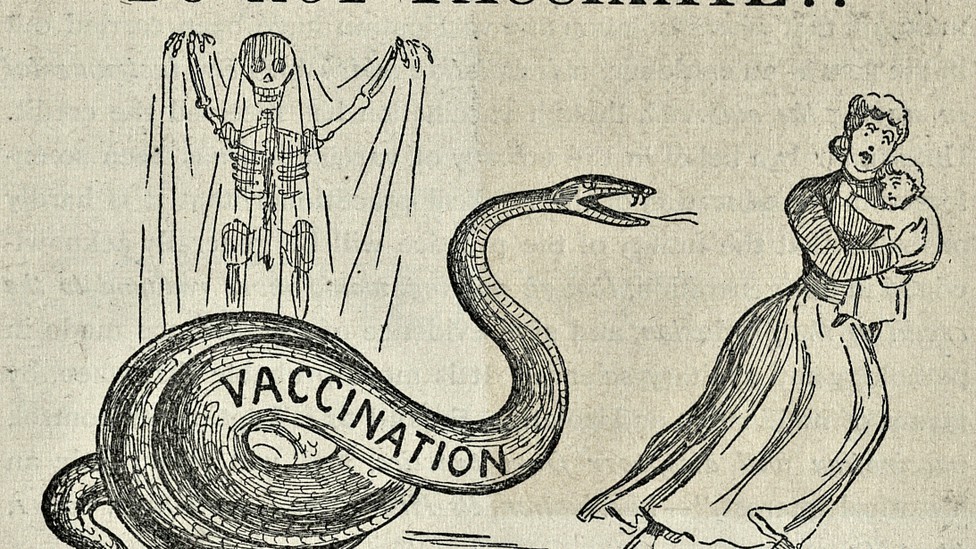
A cartoon from a December 1894 anti-vaccination publication (Courtesy of The Historical Medical Library of The College of Physicians of Philadelphia)
For well over a century people have queued up to get vaccinated against polio, smallpox, measles, mumps, rubella, the flu or other epidemic diseases. And they have done so because they were mandated by schools, workplaces, armed forces, and other institutions committed to using science to fight disease. As a result, deadly viral epidemics began to disappear in the developed world. Indeed, the vast majority of people now protesting mandatory vaccinations were themselves vaccinated (by mandate) against polio, smallpox, measles, mumps, rubella, etc., and hardly any of them have contracted those once-common diseases. The historical argument for vaccines may not be the most scientific (the science is readily available online). But history can act as a reliable guide for understanding patterns of human behavior.
In 1796, Scottish physician Edward Jenner discovered how an injection of cowpox-infected human biological material could make humans immune to smallpox. For the next 100 years after this breakthrough, resistance to inoculation grew into “an enormous mass movement,” says Yale historian of medicine Frank Snowden. “There was a rejection of vaccination on political grounds that it was widely considered as another form of tyranny.”
Fears that injections of cowpox would turn people into mutants with cow-like growths were satirized as early as 1802 by cartoonist James Gilray (below). While the anti-vaccination movement may seem relatively new, the resistance, refusal, and denialism are as old as vaccinations to infectious disease in the West.
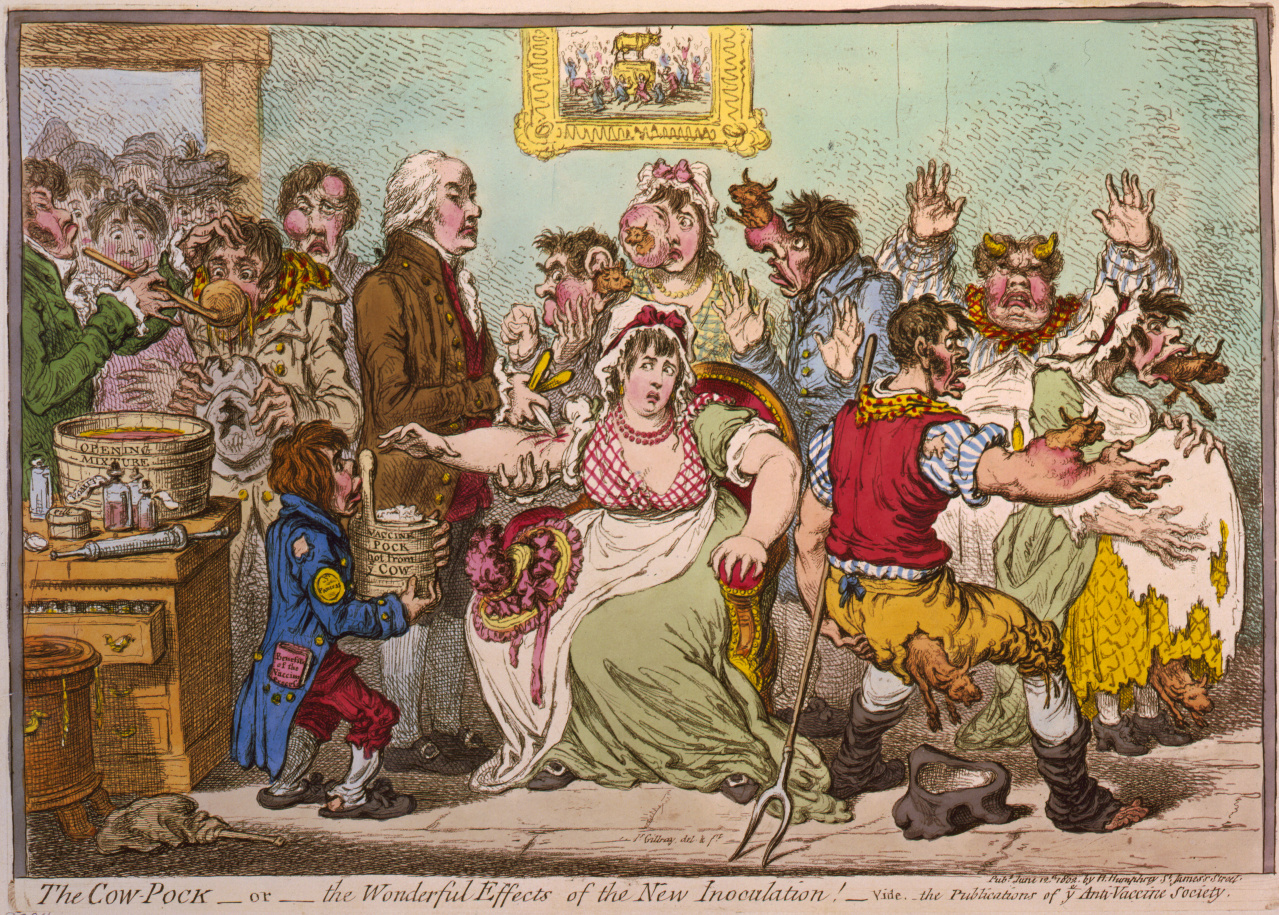
Image via Wikimedia Commons
“In the early 19th century, British people finally had access to the first vaccine in history, one that promised to protect them from smallpox, among the deadliest diseases in the era,” writes Jess McHugh at The Washington Post. Smallpox killed around 4,000 people a year in the UK and left hundreds more disfigured or blinded. Nonetheless, “many Britons were skeptical of the vaccine.… The side effects they dreaded were far more terrifying: blindness, deafness, ulcers, a gruesome skin condition called ‘cowpox mange’ — even sprouting hoofs and horns.” Giving a person one disease to frighten off another one probably seemed just as absurd a notion as turning into a human/cow hybrid.
Jenner’s method, called variolation, was outlawed in 1840 as safer vaccinations replaced it. By 1867, all British children up to age 14 were required by law to be vaccinated against smallpox. Widespread outrage resulted, even among prominent physicians and scientists, and continued for decades. “Every day the vaccination laws remain in force,” wrote scientist Alfred Russel Wallace in 1898, “parents are being punished, infants are being killed.” In fact, it was smallpox claiming lives, “more than 400,000 lives per year throughout the 19th century, according to the World Health Organization,” writes Elizabeth Earl at The Atlantic. “Epidemic disease was a fact of life at the time.” And so it is again. Covid has killed almost 800,000 people in the U.S. alone over the past two years.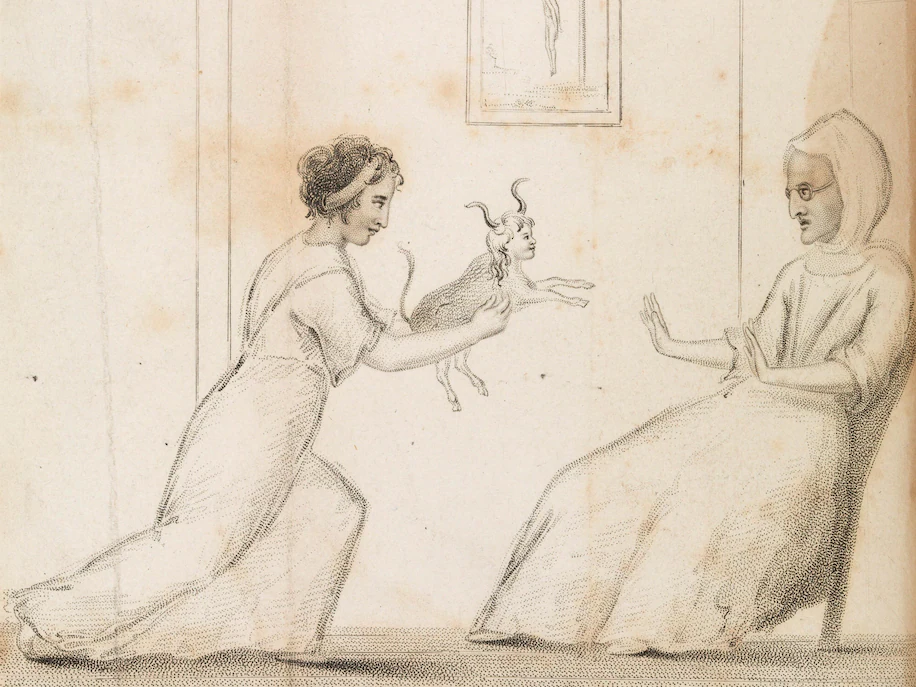
Then as now, medical quackery played its part in vaccine refusal — in this case a much larger part. “Never was the lie of ‘the good old days’ more clear than in medicine,” Greig Watson writes at BBC News. “The 1841 UK census suggested a third of doctors were unqualified.” Common causes of illness in an 1848 medical textbook included “wet feet,” “passionate fear or rage,” and “diseased parents.” Among the many fiery lectures, caricatures, and pamphlets issued by opponents of vaccination, one 1805 tract by William Rowley, a member of the Royal College of Physicians, alleged that the injection of cowpox could mar an entire bloodline. “Who would marry into any family, at the risk of their offspring having filthy beastly diseases?” it asked hysterically.
Then, as now, religion was a motivating factor. “One can see it in biblical terms as human beings created in the image of God,” says Snowden. “The vaccination movement injecting into human bodies this material from an inferior animal was seen as irreligious, blasphemous and medically wrong.” Granted, those who volunteered to get vaccinated had to place their faith in the institutions of science and government. After medical scandals of the recent past like the Tuskegee experiments or Thalidomide, that can be a big ask. In the 19th century, says medical historian Kristin Hussey, “people were asking questions about rights, especially working-class rights. There was a sense the upper class were trying to take advantage, a feeling of distrust.”
The deep distrust of institutions now seems intractable and fully endemic in our current political climate, and much of it may be fully warranted. But no virus has evolved — since the time of the Jenner’s first smallpox inoculation — to care about our politics, religious beliefs, or feelings about authority or individual rights. Without widespread vaccination, viruses are more than happy to exploit our lack of immunity, and they do so without pity or compunction.
Related Content:
Dying in the Name of Vaccine Freedom
How Vaccines Improved Our World In One Graphic
How Do Vaccines (Including the COVID-19 Vaccines) Work?: Watch Animated Introductions
Josh Jones is a writer and musician based in Durham, NC. Follow him at @jdmagness
Read More...John Cleese Presents His 5‑Step Plan for Shorter, More Productive Meetings (1976)
Let’s face it, meetings are boring at best and at worst, chaotic, volatile, and potentially violent. And let’s also face it: to get through life as functioning adults, we’re going to have to sit through one or two of them — or even one or two of them a week.
Maybe we’re the one who calls the meetings, and maybe they all feel like a waste of time. One solution is to have more informal meetings. This can be especially tempting in the age of work-from-home, when it’s impossible to know how many meeting attendees are wearing pants. Fewer rules can raise the spontaneity quotient, but allowing for the unexpected can invite disaster as well as epiphany.
On the other end of the scale, we have the formality of parliamentary rules of order, such as those introduced by U.S. Army officer Henry Martyn Robert in 1876. Robert, whose father was the first president of Morehouse College, gained a wealth of experience with unproductive meetings as he traveled around the country with the Army. One particular meeting became a defining experience, as one account has it:
While in San Francisco, the local leader of his community didn’t show up for a church meeting. Henry Robert was asked to preside over the town hall (without any prior notice). Let’s just say that on this particular evening in 1876, he did a bad job. An hour into the meeting, people were screaming and the church actually erupted into open conflict.
Sadly, this sort of thing has become almost routine at town halls and school board meetings. But it needn’t be so at the office. Nor, says John Cleese in the brief video above, do meetings need to follow the formality of parliamentary procedure.
Cleese’s rules are simpler even than the simplified Roberts or Rosenberg’s Rules of Order, an even more simplified version of Robert’s Rules. Furthermore, Cleese avoids using words like “Rules” which can be a turn-off in our egalitarian times. Instead, he presents us with a “5‑Step Plan” for holding better and shorter meetings.
1. Plan — Clear your mind about the precise objectives of the meeting. Be clear why you need it and list the subjects.
2. Inform — Make sure everyone knows exactly what is being discussed, why, and what you want from the discussion. Anticipate what information and people may be needed and make sure they’re there.
3. Prepare — Prepare the logical sequence items. Prepare the time allocation to each item on the basis of its importance not its urgency.
4. Structure and Control — Take the evidence stage before the interpretation stage and that before the action stage and stop people jumping ahead or going back over ground.
5. Summarize all decision and record them straight away with the name of the person responsible for any action
Easy, right? Well, maybe not so easy in practice, but these steps can, at the very least, illuminate what’s wrong with your meetings, which may currently resemble one of Cleese’s many parodies of business culture. Nobody videophoned it in at the time, but trying to figure out who’s supposed to be doing what can still take up an afternoon. Let Cleese’s five steps bring order to the chaos.
Related Content:
Monty Python’s John Cleese Creates Ads for the American Philosophical Association
John Cleese’s Very Favorite Comedy Sketches
Josh Jones is a writer and musician based in Durham, NC. Follow him at @jdmagness
Read More...Mozart Sonatas Can Help Treat Epilepsy: A New Study from Dartmouth
Many and bold are the claims made for the power of classical music: not just that it can enrich your aesthetic sensibility, but that it can do everything from deter juvenile delinquency to boost infant intelligence. Making claims for the latter are CDs with titles like Baby Mozart: Music to Stimulate Your Baby’s Brain, a case of trading on the name of one of the most beloved composers in music history. Alas, the proposition that classical music in general can make anyone smarter has yet to pass the most rigorous scientific trials. But recent research does suggest that Mozart’s music in particular has desirable effects on the brain: his Sonata for Two Pianos in D Major on epilepsy-afflicted brains in particular.
For about 30 years the piece has been thought to reduce symptoms of epilepsy in the brain, a phenomenon known as the “K448 effect” (the number being a reference to its place in the Köchel catalogue). Recent work by researchers at the Geisel School of Medicine, Dartmouth-Hitchcock Medical Center (DHMC) and Dartmouth College’s Bregman Music and Affective Sound Lab has gone deep into the workings of that effect, and you can read the results free online: the paper “Musical Components Important for the Mozart K448 Effect in Epilepsy,” published just last month in Nature. What they’ve found suggests that the K448 effect is real: that the piece is effective, to be more specific, in “reducing ictal and interictal epileptiform activity.”
Writing for non-neuroscientists, Madeleine Mudzakis at My Modern Met explains that when the researchers “played the tune while monitoring brain implant sensors in the subjects,” they detected “events known as interictal epileptiform discharges (IEDs). These brain events are a symptom of epilepsy and are harmful to the brain.” But “after 30 seconds of listening to the sonata, the subjects experienced noticeably fewer IEDs,” and “transitions between musical phases lead to larger effects, possibly because of anticipation being created which culminates in the pleasant nature of a shifted tune.” These neurologically soothing qualities may also have something to do with the pleasure all Mozart aficionados, epileptics or otherwise, feel when they hear the Sonata for Two Pianos in D Major — or what they don’t feel when they hear Wagner, whose music was here employed as the control that every proper scientific experiment needs.
Related Content:
Hear All of Mozart in a Free 127-Hour Playlist
Mozart’s Diary Where He Composed His Final Masterpieces Is Now Digitized and Available Online
How Music Can Awaken Patients with Alzheimer’s and Dementia
Based in Seoul, Colin Marshall writes and broadcasts on cities, language, and culture. His projects include the Substack newsletter Books on Cities, the book The Stateless City: a Walk through 21st-Century Los Angeles and the video series The City in Cinema. Follow him on Twitter at @colinmarshall or on Facebook.
Read More...Quentin Tarantino Gives a Tour of Video Archives, the Store Where He Worked Before Becoming a Filmmaker
When Quentin Tarantino hit it big in the 1990s with Reservoir Dogs, and then much bigger with Pulp Fiction, he became known as the auteur who’d received his film education by working as a video-store clerk. But like much Hollywood hype, that story wasn’t quite true. “No, I was already a movie expert,” says the man himself in a clip from the 1994 BBC documentary Quentin Tarantino: Hollywood’s Boy Wonder. “That’s how I got hired at Video Archives.” Located in the South Bay — a comparatively little-seen region of Los Angeles County later paid loving tribute with Jackie Brown — the store was, in the words of one of its owners, “one of the few places that Quentin could come as a regular guy and get a job and become like a star.”
“Me and the other guys would walk into the local movie theater and we’d be heading toward our seats and we’d hear, ‘There go the guys from Video Archives,’ ” says Tarantino in Tom Roston’s I Lost It at the Video Store. On one level, the experience constituted “a primer to what it would be like to be famous.” Having begun as a Video Archives customer, Tarantino wound up working there for five years, offering voluminous and forceful recommendations by day and, after closing, putting on staff-only film festivals by night. “That time is captured perfectly in True Romance,” which Tony Scott directed but Tarantino wrote, and one of those co-workers, Roger Avary, would collaborate with him on the screenplay for Pulp Fiction.
Video Archives was a beacon to all the South Bay’s “film geeks.” Then as now, most such people “devote a lot of money and they devote a lot of their life to the following of film, but they don’t really have that much to show for all this devotion,” other than their strongly held cinematic opinions. “What you find out fairly quickly in Hollywood is, this is a community where hardly anybody trusts their own opinion. People want people to tell them what is good, what to like, what not to like.” Hence the ability of the young Tarantino, brimming with opinions and unafraid to state them and possessed of an unwavering resolve to make movies of his own, to go from video-store clerking practically straight to the top of the industry. Though he didn’t need film school — nor college, or indeed high school — he could hardly have found a more suitable alma mater.
Related Content:
Quentin Tarantino Picks the 12 Best Films of All Time; Watch Two of His Favorites Free Online
Quentin Tarantino’s Handwritten List of the 11 “Greatest Movies”
Based in Seoul, Colin Marshall writes and broadcasts on cities, language, and culture. His projects include the Substack newsletter Books on Cities, the book The Stateless City: a Walk through 21st-Century Los Angeles and the video series The City in Cinema. Follow him on Twitter at @colinmarshall or on Facebook.
Read More...A Brilliant Demonstration of Magnets & the Promise of Levitating Trains (1975)
For a brief time in the 1980s, it seemed like trains powered by maglev — magnetic levitation — might just solve transportation problems everywhere, maybe even replacing air travel, thereby eliminating one of the most vexing sources of carbon emissions. Maglev trains don’t use fuel; they don’t require very much power by comparison with other sources of high speed travel; they don’t produce emissions; they’re quiet, require less maintenance than other trains, and can travel at speeds of 300 mph and more. In fact, the fastest maglev train to date, unveiled this past summer in Qingdao, China, can reach speeds of up to 373 miles per hour (600 kph).
So, why isn’t the planet criss-crossed by maglev trains? asks Dave Hall at The Guardian, citing the fact that the first maglev train was launched in the UK in 1984, after which Germany, Japan, and China followed suit. It seems to come down, as such things do, to “political will.” Without significant commitment from governments to reshape the transportation infrastructure of their countries, maglev trains remain a dream, the monorails of the future that never materialize. Even in China, where government mandate can institute mass changes at will, the development of maglev trains has not meant their deployment. The new train could, theoretically, ferry travelers between Shanghai to Beijing in 2.5 hours… if it had the track.
Perhaps someday the world will catch up with maglev trains, an idea over a century old. (The first patents for maglev technology were filed by a French-born American engineer named Emile Bachelet in the 1910s.) Until then, the rest of us can educate ourselves on the technology of trains that use magnetic levitation with the 1975 video lesson above from British engineer and professor Eric Laithwaite (Imperial College London), who “deconstructs the fascinating physics at work behind his plans for a maglev trains, which he first modelled in the 1940s and perfected in the 1970s,” notes Aeon. “Well-regarded in his time as both a lecturer and an engineer, Laithwaite presents a series of demonstrations that build, step by step, until he finally unveils a small maglev train model.”
Laithwaite’s small-scale demonstration would eventually culminate in the first commercial maglev train almost a decade later at Birmingham Airport. Here, he begins where science begins, with an admission of ignorance. “Permanent magnets are difficult things to understand,” he says. “In fact, if we’re absolutely honest with ourselves, we don’t understand them.” The good professor then briskly moves on to demonstrate what he does know — enough to build a levitating train. Learn much more about the history and technology of maglev trains at How Stuff Works, and keep your eyes on the Northeast Maglev project, a developing Superconducting Maglev train that promises travel between New York and Washington, DC in one hour flat.
via Aeon
Related Content:
The Flying Train: A 1902 Film Captures a Futuristic Ride on a Suspended Railway in Germany
Josh Jones is a writer and musician based in Durham, NC. Follow him at @jdmagness
Read More...Support Us
We're hoping to rely on loyal readers, rather than erratic ads. Please click the Donate button and support Open Culture. You can use Paypal, Venmo, Patreon, even Crypto! We thank you!

About Us

Open Culture scours the web for the best educational media. We find the free courses and audio books you need, the language lessons & educational videos you want, and plenty of enlightenment in between.
Advertise With Us
FREE UPDATES!
GET OUR DAILY EMAIL
Get the best cultural and educational resources on the web curated for you in a daily email. We never spam. Unsubscribe at any time.
FOLLOW ON SOCIAL MEDIA
Open Culture editor Dan Colman scours the web for the best educational media. He finds the free courses and audio books you need, the language lessons & movies you want, and plenty of enlightenment in between.
Advertise With Us

