How to Make Comics: A Four-Part Series from the Museum of Modern Art
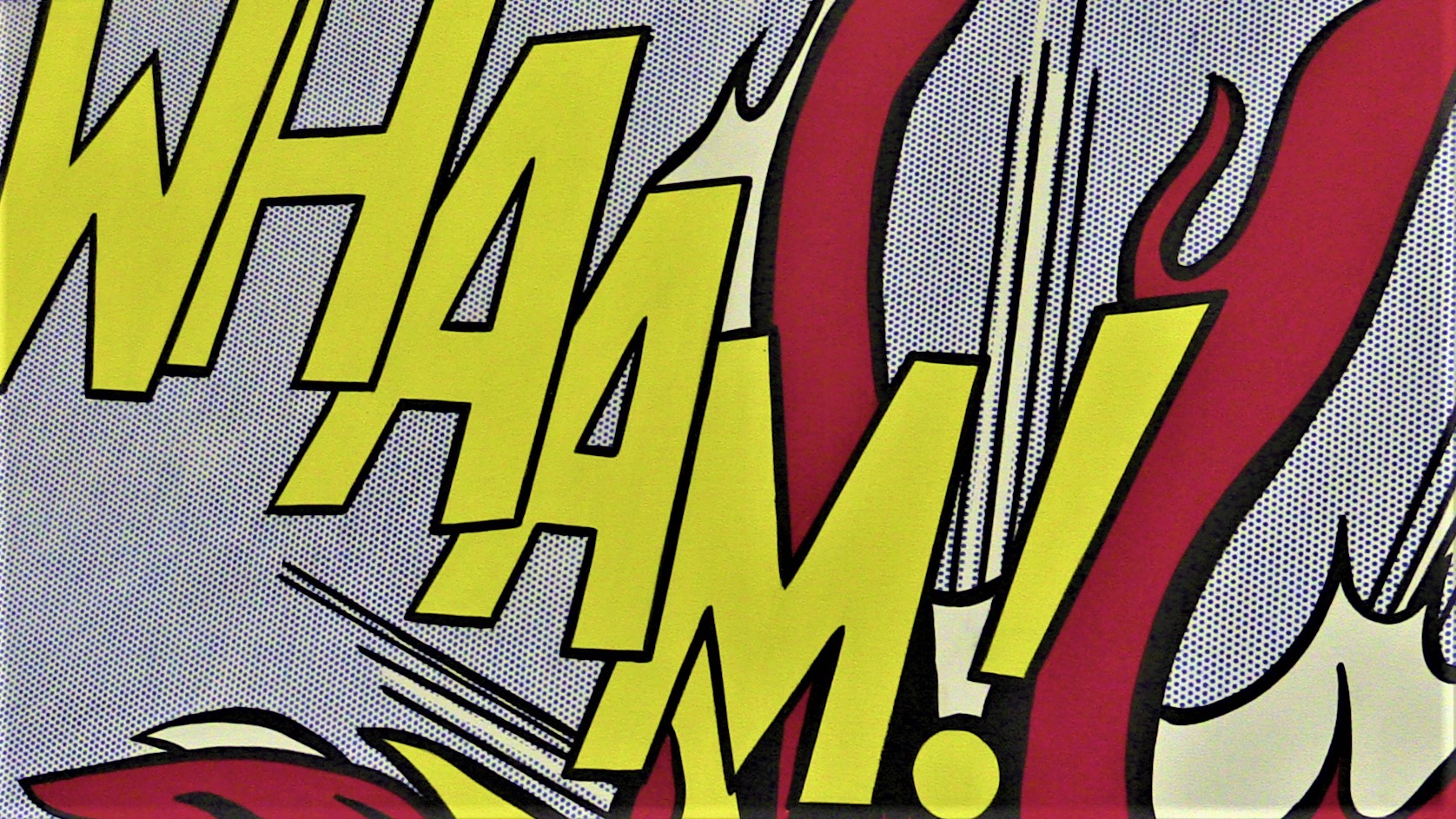
A painting? “Moving. Spiritually enriching. Sublime. ‘High’ art.” The comic strip? “Vapid. Juvenile. Commercial hack work. ‘Low’ art.” A painting of a comic strip panel? “Sophisticated irony. Philosophically challenging. ‘High’ art.” So says Calvin of Bill Watterson’s Calvin and Hobbes, whose ten-year run constitutes one of the greatest artistic achievements in the history of the newspaper comic strip. The larger medium of comics goes well beyond the funny pages, as any number of trend pieces have told us, but as an art form it remains less than perfectly understood. Perhaps, as elsewhere, one must learn by doing: hence “How to Make Comics,” a “four-part journey through the art of comics” from the Museum of Modern Art.
Created by comics scholar and writer Chris Gavaler, this educational series begins with the broadest possible question: “What Are Comics?” That section offers two answers, the first being that comics are “cartoons in the funnies sections of newspapers and the pages of comic books” telling stories “about superheroes or talking animals” — or they’re longer-format “graphic novels,” which “can be more serious and include personal memoirs.”
The second, broader answer conceives of comics as nothing more specific than “juxtaposed images. Any work of art that divides into two or more side-by-side parts is formally a comic. So if an artist creates two images and places them next to each other, they’re working in the comics form.”
That second definition of comics includes, say, Andy Warhol’s Jacqueline Kennedy III — a work of art that conveniently happens to be owned by MoMA. The museum’s visual resources figure heavily into the whole “How to Make Comics,” in which Gavaler explains not just the process of creating comics but the relationship between comics and other (often longer institutionally approved) forms of art. And to whatever degree they juxtapose images, the works of art in MoMA’s online collection — rich as so many of them are with action, character, narrative, humor, and even words — offer inspiration to comic artists budding and experienced alike. The better part of two centuries into its development, this thoroughly modern medium has the power to incorporate ideas from any other art form; the high-and-low distinctions can take care of themselves. Enter “How to Make Comics” here.
Related Content:
Watch Cartoonist Lynda Barry’s Two-Hour Drawing Workshop
Download Over 22,000 Golden & Silver Age Comic Books from the Comic Book Plus Archive
Download 15,000+ Free Golden Age Comics from the Digital Comic Museum
MoMA’s Online Courses Let You Study Modern & Contemporary Art and Earn a Certificate
Based in Seoul, Colin Marshall writes and broadcasts on cities, language, and culture. His projects include the Substack newsletter Books on Cities, the book The Stateless City: a Walk through 21st-Century Los Angeles and the video series The City in Cinema. Follow him on Twitter at @colinmarshall or on Facebook.
Read More...The Medieval Ban Against the “Devil’s Tritone”: Debunking a Great Myth in Music Theory
Music lives deep within us, in the marrow of our evolutionary bones, tapping into “this very primitive system,” says British musicologist John Deathridge, “which identifies emotion on the basis of a violation of expectancy.” In other words, our brains are predisposed to hear certain combinations of sounds as soothing and others as disturbing. When we plot those sounds on a staff, we find one of the most dissonant, yet intriguing, combinations, what can be called an augmented 4th or diminished 5th but isn’t quite either one. But it’s much better known by its medieval nickname, “the devil’s tritone” (or “devil’s interval”), a sequence of notes so sinister, they were once banned in the belief that they might conjure Lucifer himself…. Or so the story goes.
The truth is less sensational. “To the chagrin of many a musician wanting to tap into a badass rebel streak in music’s DNA,” James Bennett writes at WQXR, “there aren’t any records to suggest any rogue medieval composers took a hike to Perdition after using this spooky, devilish interval.” In other words, no one seems to have been tortured, imprisoned, or excommunicated for a musical arrangement, all internet assertions to the contrary notwithstanding. But the association with the devil is historical. In the 18th century, the tritone acquired the name diabolus in musica, or “the devil in music,” part of a mnemonic: “Mi contra fa est diabolus in musica” or “mi against fa is the devil in music.”
If you’re already versed in music theory, you’ll find this technical explanation of the “devil’s interval” by musician Jerry Tachoir helpful. In the video above, bass player Adam Neely debunks the myth of the devil’s tritone as an actual curse. But his explanation is more than “one long, ‘Um, Actually,’ ” he says. Instead, he tells us why the tritone is a musical blessing, and was thought of as such a thousand years ago. His explanation also gets a little technical, but his visual and musical demonstrations make it fairly easy to follow, and if you don’t absorb the theory, you’ll pick up the true history of the “devil’s tritone,” beginning with the Greek thinker Aristoxenus of Tarentum, one of the first to write about the uncomfortable dissonance of a note sitting between two others.
The tritone is what musicologist Carl E. Gardner called a “dependent” chord, one characteristic of tension. We may not register it consciously, but it primes our brains with anxious expectation. “The reason it’s unsettling is that it’s ambiguous, unresolved,” says Gerald Moshell, Professor of Music at Trinity College in Hartford, Conn. “It wants to go somewhere. It wants to settle here, or [there]. You don’t know where it’ll go, but it can’t stop where it is.” We hear this irresolution, this “devil” of musical doubt in compositions ranging from The Simpsons theme to the chorus of Pearl Jam’s “Evenflow” to Camille Saint-Saëns’ “Danse macabre,” a piece of music that may not actually conjure evil, but sure sounds like it could if it wanted to.
Related Content:
How to Listen to Music: A Free Course from Yale University
John Coltrane Draws a Picture Illustrating the Mathematics of Music
How Ornette Coleman Freed Jazz with His Theory of Harmolodics
Josh Jones is a writer and musician based in Durham, NC. Follow him at @jdmagness
Read More...Nirvana Refuses to Mime Along to “Smells Like Teen Spirit” on Top of the Pops (1991)
This month marks the 30th anniversary of Nirvana’s Nevermind, first released on September 24, 1991, “the day,” writes Michael Tedder at Stereogum, “that college radio-nurtured types and arty hard rock officially became rebranded as Alternative Rock, and, according to legend, everything changed forever.” You might believe that legend even if you remember the reality. Yes, “Smells Like Teen Spirit” was just as huge as everybody says — and, yes, you likely recall where you were when you first saw the video or heard the song explode with Pixies-inspired quiet-loud ferocity from the radio. But the change was already on the way.
Nirvana emerged in a pop music landscape slowly becoming saturated with alternative music. You might also remember where you were the first time you saw the video for Depeche Mode’s “Enjoy the Silence,” for example, or R.E.M.’s “Losing My Religion,” or Sinéad O’Connor’s “Nothing Compares 2 U” — or when you first experienced the dynamic/melodic assault of the aforementioned Pixies, virtual alt-rock elders by the time they released Trompe Le Monde, their fourth studio album, in the same September week that Nevermind appeared. (You may remember where you were the first time you heard the word “Lollapalooza,” first organized in 1991.)
The fateful week in September also saw the release of 90s-defining albums like Primal Scream’s Screamadelica, Red Hot Chili Peppers’ Blood Sugar Sex Magik, and A Tribe Called Quest’s Low End Theory. In the year that Nevermind supposedly single-handedly invented “grunge,” Soundgarden released Badmotorfinger and Pearl Jam released Ten. It’s fair to say Nirvana were one of just many bands reinventing themselves and the culture. Even the hair metal bands and teen pop idols Nirvana put out of business were already trying to make more serious, “authentic” music before Nevermind turned every executive’s head.
Kurt Cobain was already well aware — and wary — of the dangers of hero worship and blind allegiance to style over substance. It was an attitude he came by naturally given that, in 1991, his friends in Olympia, Washington founded an indie record label called Kill Rock Stars. He’d written an anthem, “In Bloom,” about it before anyone heard the opening power chords of “Smells Like Teen Spirit.” As he pursued, with rigorous ambition, the power of rock stardom, he rejected its trappings and pretensions, as when the band appeared on Top of the Pops and took the piss out of the show, rather than mime along dutifully, as Mark Beaumont writes at NME:
Pretending to strum his guitar like a robot and making no attempt to go anywhere near an actual chord – presumably a statement about being asked to perform like a mechanical puppet – Kurt launches into his vocal in deep, theatrical baritone, an homage to Morrissey that comes across more like Jim Morrison on mogadon. Meanwhile Krist Novoselic flails his bass around his head like he’s wrestling a live wolf and Dave Grohl’s ‘drumming’ is more like an interpretive dance to represent ‘goofy imp’. Oh, and heaven knows what the TOTP censors thought of Kurt changing the opening lyrics to “load up on drugs, kill your friends” before trying to eat the microphone.
In light of the groundswell of alternative bands emerging — or still plugging away — at the time of Nevermind’s release, the myth of Nirvana as the single-handed inventors of 90s alt-rock is more than a little overblown. This is especially so in a decade that saw electronic dance music and hip hop cross over into rock and vice-versa, a trend Nirvana had nothing to do with. They were a thunderingly great band, and Kurt Cobain was a rare and gifted songwriter, but the heart of Nirvana’s popular appeal was extra-musical. The band — meaning, principally, Cobain — most honestly embodied the spirit of the time: painfully ambivalent and at war with its aspirations. “Kurt — I would call him a windmill,” says bassist Krist Novoselic. “He wanted to be a rock star — and he hated it.”
Related Content:
The Recording Secrets of Nirvana’s Nevermind Revealed by Producer Butch Vig
Josh Jones is a writer and musician based in Durham, NC. Follow him at @jdmagness
Read More...A 10-Course Introduction to Data Science from Johns Hopkins
Data is now everywhere. And those who can harness data effectively stand poised to innovate and make impactful decisions. This holds true in business, medicine, healthcare, education and other spheres of life.
Enter the 10-course Introduction to Data Science from Johns Hopkins. Offered on the Coursera platform, this course sequence covers “the concepts and tools you’ll need throughout the entire data science pipeline, from asking the right kinds of questions to making inferences and publishing results.” The program includes courses covering The Data Scientist’s Toolbox, R Programming, Getting and Cleaning Data, Developing Data Products and more. There’s also a Capstone Project where students can build a data product using real-world data.
Students can formally enroll in the Introduction to Data Science specialization and receive a certificate for each course they complete–a certificate they can share with prospective employers and their professional networks. They’ll also leave with a portfolio demonstrating mastery of the material covered in the sequence. Hopkins estimates that most learners can complete the sequence in 3–7 months, during which time students will be charged $49 per month.
Alternatively, students can audit individual courses for free. When you enroll in a course, look carefully for the Audit option. Note: Auditors cannot receive a certificate for each completed course.
If would like to formally enroll in the Introduction to Data Science sequence, you can start a 7‑Day Free Trial and size things up here.
Open Culture has a partnership with Coursera. If readers enroll in certain Coursera courses and programs, it helps support Open Culture.
Related Content:
Read More...100 Days of Dante: Join the Largest Divine Comedy Reading Group in the World (Starts September 8)
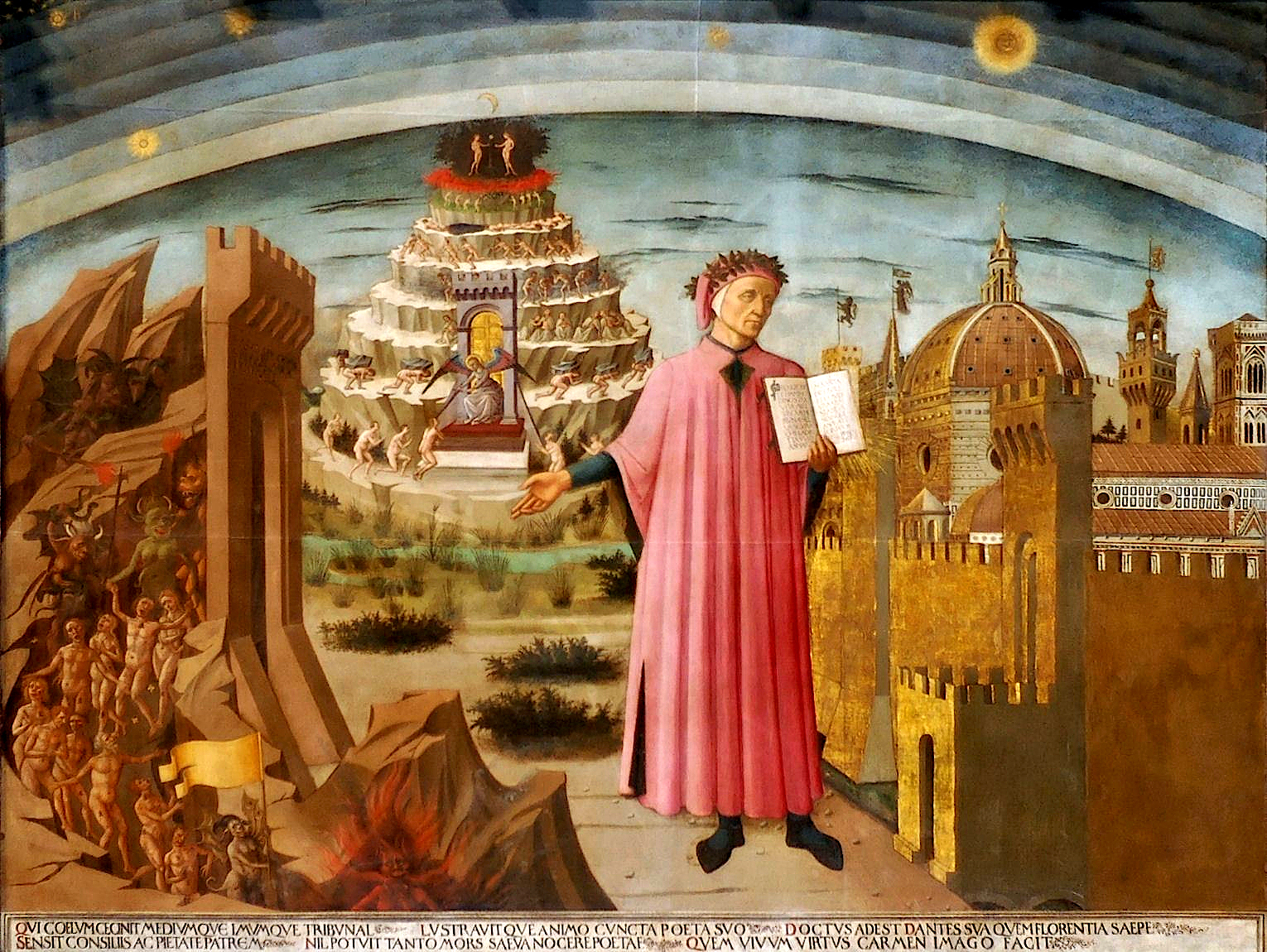
This year marks the 700th anniversary of Dante Alighieri’s death — which means it also marks the 701st anniversary of his great work the Divina Commedia, known in English as the Divine Comedy. We’ve all got to go some time, and it’s somehow suitable that Dante went not long after telling the tale of his own journey through the afterlife, complete with stops in Hell, Purgatory, and Paradise. It remains a journey we can all take and re-take — and interpretively grapple with — still these seven centuries later. Starting this month, you can take it as a group tour, so to speak, by joining 100 Days of Dante, the largest Dante reading group in the world.
A project of Baylor University’s Honors College (with support from several other American educational institutions), 100 Days of Dante has launched a web site “through which modern seekers and pilgrims can follow the great epic poem with free video presentations three times a week.”
So writes Aleteia’s John Burger, who explains that “the three books of the Divine Comedy, known in Italian as Inferno, Purgatorio, and Paradiso, are divided into 33 chapters known as cantos. [Inferno actually had 34.] Each video will present one canto, with commentary on it from leading experts in Dante studies.” You can also read the entire work on 100 Days of Dante’s web site, in English or Italian — a language Dante’s own poetry did much to shape.
Nobody interested in the language of Italy, let alone the country’s history and culture, can do without experiencing the Divine Comedy. One of 100 Days of Dante’s aims is a re-emphasis of its nature as a thoroughly religious work, one that renders in vivid, sometimes harrowing detail the worldview held by Christians of Dante’s place and time. But believer or otherwise, you can join in the reading from when it begins on September 8, to when it concludes on Easter 2022. You may well find, as the long Italy-resident English writer and translator Tim Parks observes, that Dante has a way of slipping through convenient interpretative frameworks cultural, historical, and even religious. “Long after the fires of Hell have burned themselves out,” he writes, “the debate about the Divina Commedia rages on.” Find more educational resources on Dante and The Divine Comedy below.
Related Content:
A Free Online Course on Dante’s Divine Comedy from Yale University
A Digital Archive of the Earliest Illustrated Editions of Dante’s Divine Comedy (1487–1568)
Why Should We Read Dante’s Divine Comedy? An Animated Video Makes the Case
Based in Seoul, Colin Marshall writes and broadcasts on cities, language, and culture. His projects include the Substack newsletter Books on Cities, the book The Stateless City: a Walk through 21st-Century Los Angeles and the video series The City in Cinema. Follow him on Twitter at @colinmarshall or on Facebook.
Read More...Google Data Analytics Certificate: 8 Courses Will Help Prepare Students for an Entry-Level Job in 6 Months
During the pandemic, Google launched a series of Career Certificates that will “prepare learners for an entry-level role in under six months.” The new career initiative includes certificates concentrating on Project Management and UX Design. And now also Data Analytics, a burgeoning field that focuses on “the collection, transformation, and organization of data in order to draw conclusions, make predictions, and drive informed decision making.”
Offered on the Coursera platform, the Data Analytics Professional Certificate consists of eight courses, including “Foundations: Data, Data, Everywhere,” “Prepare Data for Exploration,” “Data Analysis with R Programming,” and “Share Data Through the Art of Visualization.” Overall this program “includes over 180 hours of instruction and hundreds of practice-based assessments, which will help you simulate real-world data analytics scenarios that are critical for success in the workplace. The content is highly interactive and exclusively developed by Google employees with decades of experience in data analytics.”
Upon completion, students–even those who haven’t pursued a college degree–can directly apply for jobs (e.g., junior or associate data analyst, database administrator, etc.) with Google and over 130 U.S. employers, including Walmart, Best Buy, and Astreya. You can start a 7‑day free trial and explore the courses here. If you continue beyond the free trial, Google/Coursera will charge $39 USD per month. That translates to about $235 after 6 months, the time estimated to complete the certificate.
Explore the Data Analytics Certificate by watching the video above. Learn more about the overall Google career certificate initiative here. And find other Google professional certificates here.
Note: Open Culture has a partnership with Coursera. If readers enroll in certain Coursera courses and programs, it helps support Open Culture.
Related Content:
Read More...The Brilliant 19th-Century Astronomical Drawings of Étienne Léopold Trouvelot
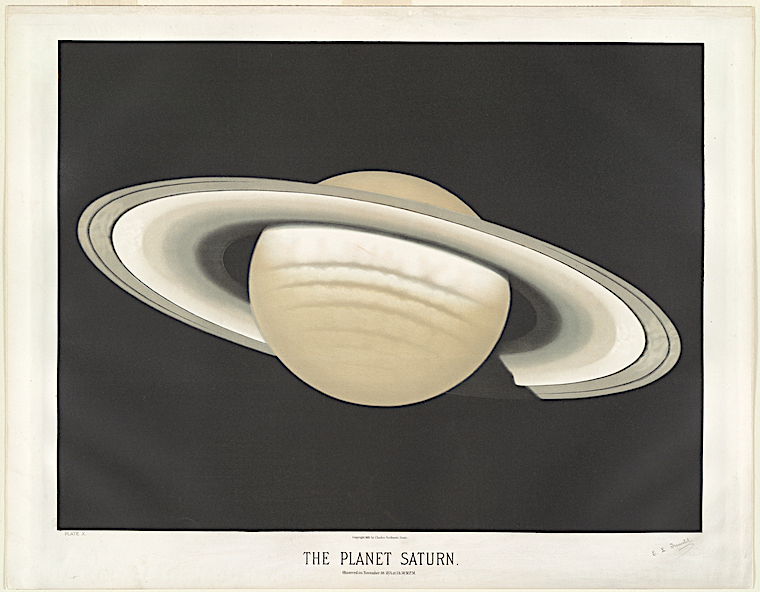
The first photo of the moon was taken in 1850 by Louis Daguerre, from whom the daguerrotype gets its name. We have no idea what that first image looked like as it was lost in a studio fire. But the need to catalog the heavens with modern tools had started, and was both fascinating as it was lacking. Into this evolution of science and art stepped Étienne Léopold Trouvelot, the French immigrant, living in the States, an amateur scientist and an illustrator. He would dismiss photography of the heavens as “so blurred and indistinct that no details of any great value can be secured.” And by illustrating instead by he saw through telescopes, he secured a place in art *and* science history.
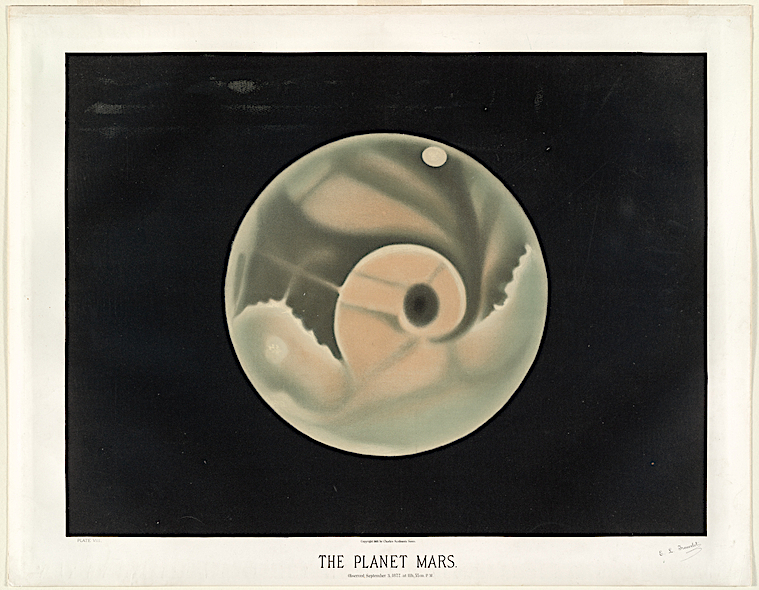
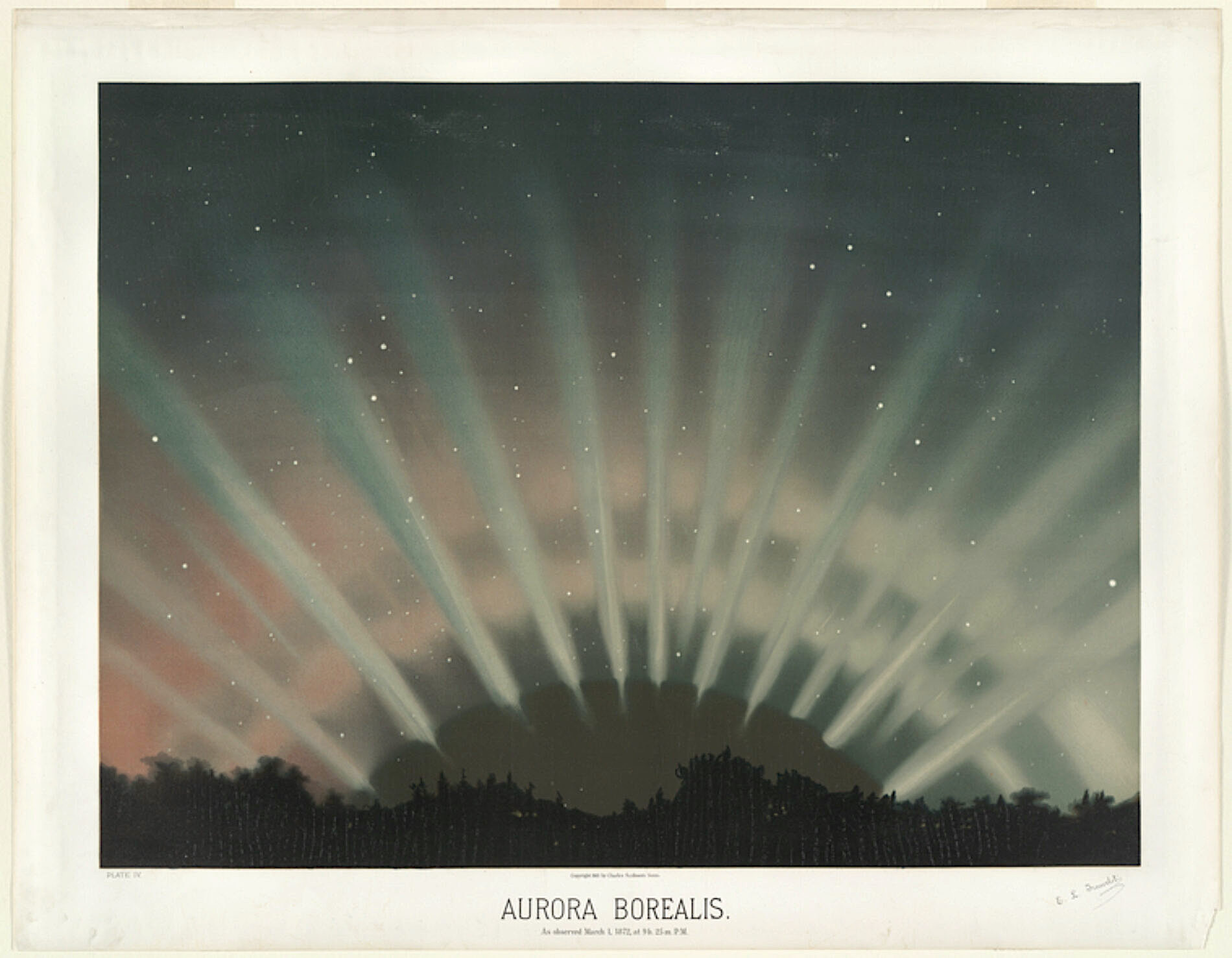
Trouvelot might have thought his scientific papers would be his legacy. He wrote fifty in his lifetime. Instead it is his roughly 7,000 illustrations of planets, comets, and other phenomena that still please us to this day. The New York Public Library has put 15 of his best up on their site, and over at this page, you can compare what Trouvelot saw—-the great astronomer Emma Converse called Trouvelot the “prince of observers”—-to photos from NASA’s archive.
Even if his Mars is a bit fanciful, looking translucent like a fish egg, his understanding of the planet echoes in the following century of sci-fi paranoia. Something strange must be there, he suggests.
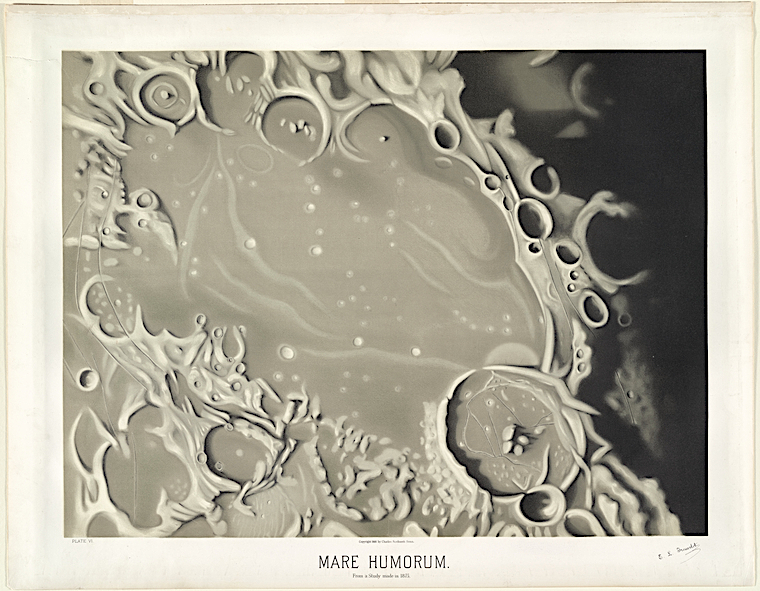
Harvard hired him to sketch at their college’s observatory, and he used pastels to bring the planets to life. Engraving or ink would not have worked as well as these soft shapes and determined lines. His rendering of the moon surface is accurate but also fanciful, like whipped cream. And his sun spots might not be accurate, but they replicated the god-like forces at work on its tumultuous surface. His Saturn is the most realistic of them all. Even the NASA image doesn’t look too different to Trouvelot’s art.

These images also help rehabilitate Trouvelot’s other legacy—-the dreaded Gypsy Moth. Before his stint as amateur scientist, he was also an amateur entomologist, and while researching silkworms and silk production, accidentally let European gypsy moths into North America, where they wreaked havoc on the forests of North America. Saturn’s rings may look the same back then as they do now, but so does the damage of the gypsy moth, which according to Wikipedia is up to $868 million in damages per year.
Related Content:
A 9th Century Manuscript Teaches Astronomy by Making Sublime Pictures Out of Words
Jocelyn Bell Burnell Changed Astronomy Forever; Her Ph.D. Advisor Won the Nobel Prize for It
Ted Mills is a freelance writer on the arts who currently hosts the Notes from the Shed podcast and is the producer of KCRW’s Curious Coast. You can also follow him on Twitter at @tedmills, and/or watch his films here.
Read More...Listen to Plato Invent the Myth of Atlantis (360 B.C)
Myths emerge from the murky depths of human prehistory, leaving their sources shrouded in mystery. But on rare occasions, we can trace them to a single point of origin. The myth of Atlantis, for example, the ancient civilization that supposedly sank into the sea, has one and only one source — Plato — who told the story in both the Timaeus and Critias, sometime around 360 BC, as an allegory for corruption and civilizational decay.
Plato puts the tale of Atlantis nesos, the “island of Atlas,” in the mouth of the aged Critias, a character in both dialogues, who says he heard the story second-hand from Solon — “not only the wisest of men, but also the noblest of poets” — who in turn brought it from Egypt, where he supposedly heard it from a priest in a city called Sais.
As you can hear in the dialogue that bears his name, read above in the Voices of the Past video, Critias gives a lengthy description of the island’s size (in Timaeus it is “larger than Libya and Asia put together”), its location (“the Pillars of Heracles”), and its geography, cities, peoples, and so forth. In Timaeus, Socrates declares that this tale (unlike his imaginary republics) “has the very great advantage of being fact not fiction.”
But there was never such a place in the ancient world. While islands have disappeared after earthquakes or volcanoes, “I don’t think there’s any question,” says geologist Patrick Nunn, “that the story of Atlantis is a myth.” Plato made up the lost civilization and formidable rival to Athens, who soundly defeated the Atlanteans, as a dramatic foil. “It’s a story that captures the imagination,” says Bard College professor of classics James Romm. Its purpose is illustrative, not historical.
[Plato] was dealing with a number of issues, themes that run throughout his work. His ideas about divine versus human nature, ideal societies, the gradual corruption of human society — these ideas are all found in many of his works. Atlantis was a different vehicle to get at some of his favorite themes.
Why has there been so much desire to find Plato’s account credible? Early modern European readers of Plato like Francis Bacon and Thomas More — authors of The New Atlantis and Utopia, respectively — treated Atlantis as philosophical allegory, a fiction like their own invented societies. But later interpreters believed it, from amateur scholars to colonial adventurers, explorers, and treasure hunters. Atlantis, wherever it is, some thought, must be full of sunken gold.
National Geographic quotes Charles Orser, curator of history at the New York State Museum in Albany, who says, “Pick a spot on the map, and someone has said that Atlantis was there. Every place you can imagine.” Yet whatever similarities it may have had to a real place, Plato’s yarn was strictly parable: Its inhabitants were once divine. “Sired and ruled over by Poseidon, and thus half-gods and half-mortals,” writes Aeon, they “despised everything but virtue.”
But Atlantis grew corrupt in time, Critias tells us, “when the divine portion began to fade away, and became diluted too often and too much with the mortal admixture, and the human nature got the upper hand, they then, being unable to bear their fortune, behaved unseemly, and to him who had an eye to see grew visibly debased, for they were losing the fairest of their precious gifts; but to those who had no eye to see the true happiness, they appeared glorious and blessed at the very time when they were full of avarice and unrighteous power.”
Related Content:
Mythos: An Animation Retells Timeless Greek Myths with Abstract Modern Designs
Ancient Philosophy: Free Online Course from the University of Pennsylvania
What is the Good Life? Plato, Aristotle, Nietzsche, & Kant’s Ideas in 4 Animated Videos
Josh Jones is a writer and musician based in Durham, NC. Follow him at @jdmagness.
Read More...200 Comic Book Adaptations of Classic Novels Created (1941–1971): Frankenstein, Moby Dick, Hamlet & More
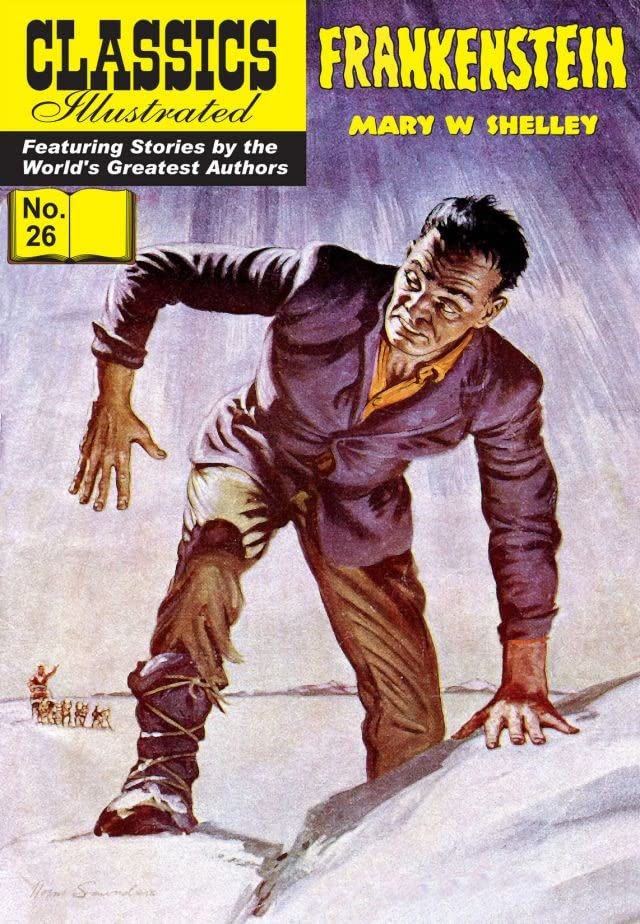
Thanks to “the rise of comics as a ‘respectable’ medium,” Ross Johnson writes at Barnes and Noble, graphic novel adaptations now constantly reimagine literary classics for young readers. One Goodreads list collects over 200 recent graphic adaptations of classics from Austen to Kafka. These adaptations “aim to honor and embellish rather than replace the books on which they are based,” writes Johnson, “because how could they?” They do, however, allow us to “see, literally and figuratively, the stories we love from new angles.” They also give kids and adults who may not fancy themselves readers new ways to access and enjoy literary classics.
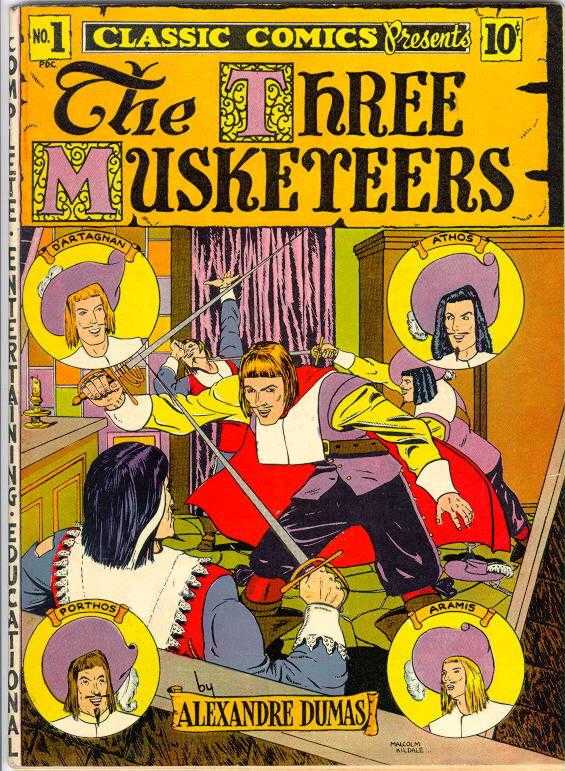
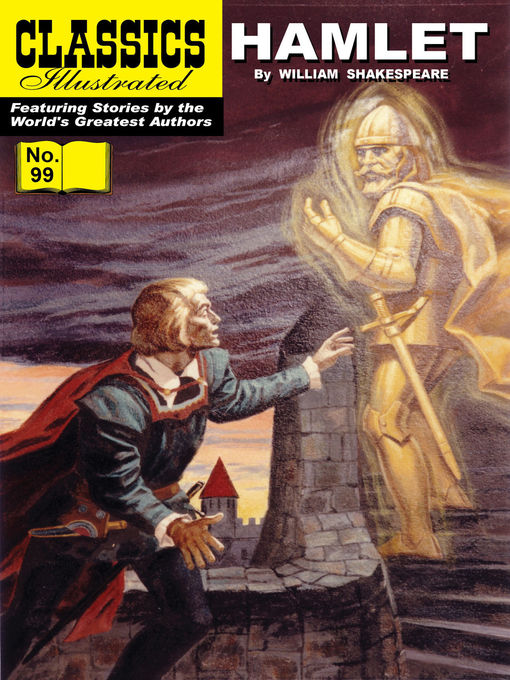
But are graphic adaptations really a new phenomenon? They may be newly respectable, but they’ve been around since the very dawn of comic books as a medium. Superman debuted in 1938, Batman in 1939, and in 1941, the first issue of Classics Illustrated appeared — an adaptation of The Three Musketeers, followed by Ivanhoe and The Count of Monte Cristo. The series was founded by Russian-born publisher Albert Kanter, who immediately seized on the potential of comic books as educational tools during what is now known as the Golden Age of Comics.
Even as a prestige series supposedly promoting “great literature,” Classics Illustrated did not escape the notice of Dr. Fredric Wertham, whose book Seduction of the Innocent began the moral panic over comic books in the 1950s. Wertham found fault with the graphic adaptations of Dr. Jekyll and Mr. Hyde and Uncle Tom’s Cabin for reducing the novels to their most stereotypical and sensationalist elements. It’s the kind of criticism we might find levied against graphic adaptations of literature today, and in many cases, it may be warranted.
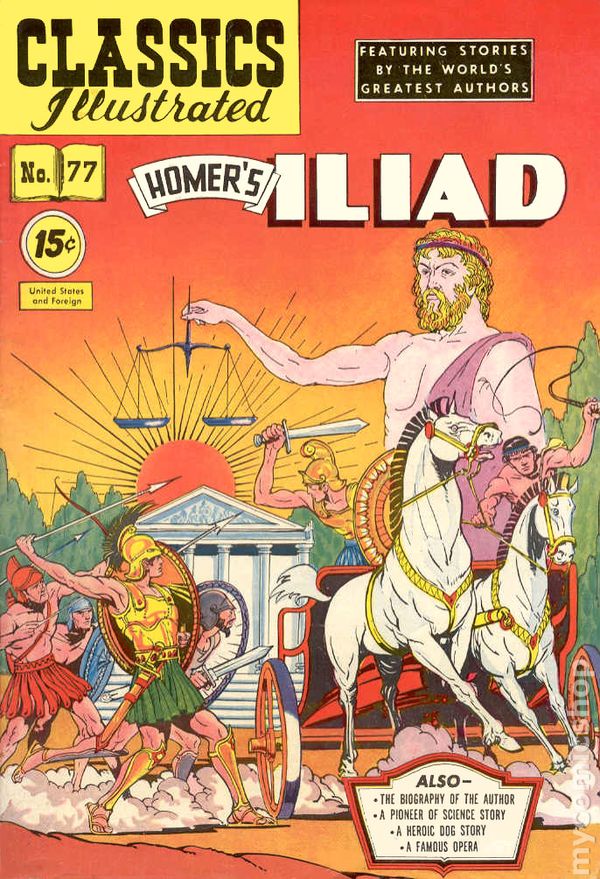
Few accused these graphic literary adaptations of being great art in their own right. But they accomplished Kanter’s purpose of getting comics readers excited about classic novels. The series ran for 30 years, ending in 1971, and became an international phenomenon. In Brazil and Greece, it published adaptations of authors from those countries.
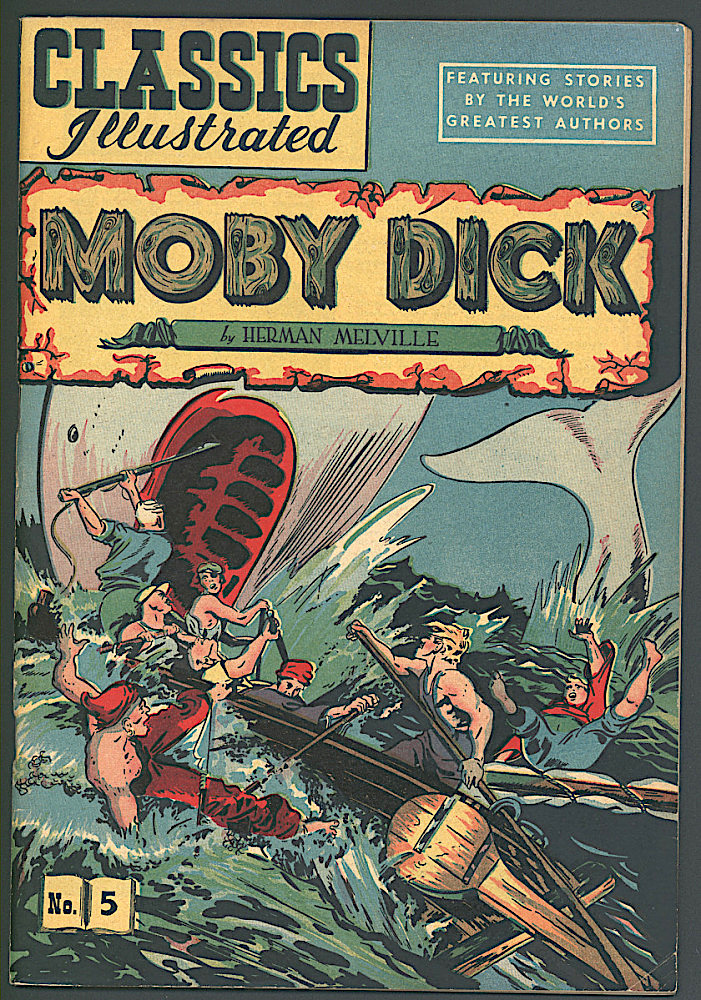
A Classics Illustrated Junior series appeared in 1953, bringing children comics versions of folktales and myths. After the series first run, special issues, reprints, and revivals appeared in later decades, as well a series of television films in the 70s and 80s. You can peruse over 200 of these adaptations digitally scanned at the Internet Archive, artifacts of the Golden Age and ancestors of our current explosion of graphic novel adaptations of classic literature. For a deeper study of this publication, you can purchase the 2017 book, Classics Illustrated: A Cultural History.
Related Content:
Free: Download 15,000+ Free Golden Age Comics from the Digital Comic Museum
Free Comic Books Turns Kids Onto Physics: Start With the Adventures of Nikola Tesla
Josh Jones is a writer and musician based in Durham, NC. Follow him at @jdmagness
Read More...How Ramen Became the Currency of Choice in Prison, Beating Out Cigarettes
The last decade ushered in a slew of traditional Japanese-style ramen restaurants — enough to justify ramen maps to New York City, Chicago, and the Bay Area.
Yet most Americans still conceive of ramen as the pack of seasoning and dehydrated instant noodles that have long sustained broke artists and college students.
Add incarcerated persons to the list of packaged ramen’s most ardent consumers.
In the above episode of Vox’s series, The Goods, we learn how those ubiquitous cellophane packages have outstripped cigarettes and postage stamps as the preferred form of prison currency.
Ramen is durable, portable, packaged in standard units, available in the prison commissary, and highly prized by those with a deep need to pad their chow hall meals.
Ramen can be used to pay for clothing and hygiene products, or services like laundry, bunk cleaning, dictation, or custom illustration. Gamblers can use it in lieu of chips.
Ramen’s status as the preferred form of exchange also speaks to a sharp decline in the quantity and quality of food in American penal institutions.
Ethnographer Michael Gibson-Light, who spent a year studying homegrown monetary practices among incarcerated populations, notes that slashed prison budgets have created a culture of “punitive frugality.”
Called upon to model a demonstrably tough on crime stance and cut back on expenditures, the institutions are unofficially shunting many of their traditional costs onto the prisoners themselves.
In response, those on the inside have pivoted to edible currency:
What we are seeing is a collective response — across inmate populations and security levels, across prison cliques and racial groups, and even across states — to changes and cutbacks in prison food services…The form of money is not something that changes often or easily, even in the prison underground economy; it takes a major issue or shock to initiate such a change. The use of cigarettes as money in U.S. prisons happened in American Civil War military prisons and likely far earlier. The fact that this practice has suddenly changed has potentially serious implications.
Ramen may be a relatively new development in the prison landscape, but culinary experimentation behind bars is not. From Pruno prison wine to Martha Stewart’s prison grounds crabapple jelly, it’s a nothing ventured, nothing gained type of deal. Work with what you’ve got.
Gustavo “Goose” Alvarez, who appears in Vox’s video, collected a number of the most adventurous recipes in his book, Prison Ramen: Recipes and Stories from Behind Bars. Anyone can bring some variety on the spur of the moment by sprinkling some of your ramen’s seasoning packet into your drinking water, but amassing the ingredients for an ambitious dish like Orange Porkies — chili ramen plus white rice plus ½ bag of pork skins plus orange-flavored punch — takes patience and perseverance.
Alvarez’s Egg Ramen Salad Sandwich recipe earns praise from actor Shia LeBoeuf, whose time served is both multiple and minimal.

Someone serving a longer sentence has a more compelling reason to search for the ramen-centered sense of harmony and wellbeing on display in Tampopo, the first “ramen western”:
Appreciate its gestalt. Savor the aromas.
Joe Guerrero, host of YouTube’s AfterPrisonShow, is not immune to the pleasures of some of his ramen-based concoctions, below, despite being on the outside for several years now.
You’re free to wrinkle your nose at the thought of snacking on a crumbled brick of uncooked ramen, but Guerrero points out that someone serving a long sentence craves variety in any form they can get. Experiencing it can tap into the same sense of pride as self-governance.
Guerrero’s recipes require a microwave (and a block of ramen).
Even if you’re not particularly keen on eating the finished product, there’s a science project appeal to his Ramen Noodle Cookie. It calls for no additional ingredients, just ten minutes cooking time, an outrageous prospect in a communal setting with only one microwave.
Related Content:
The Proper Way to Eat Ramen: A Meditation from the Classic Japanese Comedy Tampopo (1985)
What Goes Into Ramen Noodles, and What Happens When Ramen Noodles Go Into You
Japanese Animation Director Hayao Miyazaki Shows Us How to Make Instant Ramen
Ayun Halliday is an author, illustrator, theater maker and Chief Primatologist of the East Village Inky zine. Follow her @AyunHalliday.
Read More...Support Us
We're hoping to rely on loyal readers, rather than erratic ads. Please click the Donate button and support Open Culture. You can use Paypal, Venmo, Patreon, even Crypto! We thank you!

About Us

Open Culture scours the web for the best educational media. We find the free courses and audio books you need, the language lessons & educational videos you want, and plenty of enlightenment in between.
Advertise With Us
FREE UPDATES!
GET OUR DAILY EMAIL
Get the best cultural and educational resources on the web curated for you in a daily email. We never spam. Unsubscribe at any time.
FOLLOW ON SOCIAL MEDIA
Open Culture editor Dan Colman scours the web for the best educational media. He finds the free courses and audio books you need, the language lessons & movies you want, and plenty of enlightenment in between.
Advertise With Us


