An Early Version of Mickey Mouse Enters the Public Domain on January 1, 2024
Happy New Year!
We can now “do to Disney what Disney did to the great works of the public domain before him,” according to Harvard law professor and public domain expert, Lawrence Lessig, hailed by The New Yorker as “the most important thinker on intellectual property in the Internet era.”
On January 1, Mickey Mouse and his consort, Minnie, wriggled free of their creator’s iron fist for the first time in corporate history, as their debut performance in Steamboat Willie entered the public domain along with thousands of other 1928 works — Lady Chatterley’s Lover, All Quiet on the Western Front, and The House at Pooh Corner to name but a starry few.
Disney has been notoriously protective of its control over its spokesmouse, successfully pushing Congress to adopt the Sonny Bono Copyright Extension Act of 1998, which kept the public’s mitts off of Steamboat Willie, and, more to the point, Mickey Mouse, for 25 years beyond the terms of the Copyright Act of 1976.
But now our day has come…
Don’t be shy!
Dig in!
Disney always did.
As Lessig remarked in a 2003 lecture at Princeton University:
Walt Disney embraced the freedom to take, change and return ideas from our popular culture. The rip, mix and burn culture of the Internet is Disney-familiar.
Cinderella, Snow White, Pinocchio — Uncle Walt knew how to take liberties and make money with captivating source material, a tradition that continued through such later cartoon blockbusters as The Little Mermaid and Disney’s Snow Queen update, Frozen.
Steamboat Willie wasn’t conjured from thin air either. Its plot and title character were inspired by Buster Keaton’s Steamboat Bill, released two months before Disney’s animated short went into production.
A few caveats for those eager to take a crack at the Mouse…
Steamboat Willie’s newfound public domain status doesn’t give you carte blanche to mess around with Mickey and Minnie in all their many forms.
Stick to the music-loving black-and-white trickster with rubberhose arms, button-trimmed short-shorts, and the distinctly rodent-like tail that went by the wayside for Mickey’s appearance in 1941’s The Little Whirlwind.
Nor can Steamboat Willie-era Mickey become your new logo. Plop the character down in new narratives, yes. Use him in a recognizable way for purposes of advertising unrelated products, no.
Mislead viewers into thinking your mash up is Disney-approved at your own risk. A Disney spokesperson told CNN:
We will, of course, continue to protect our rights in the more modern versions of Mickey Mouse and other works that remain subject to copyright, and we will work to safeguard against consumer confusion caused by unauthorized uses of Mickey and our other iconic characters.
Don’t think they don’t mean it.
Author Robert Thompson, the founding director of Syracuse University’s Bleier Center for Television and Popular Culture told The Guardian that even though “the original Mickey isn’t the one we all think of and have on our T‑shirts or pillowcases up in the attic someplace,” the company is hypervigilant about protecting its assets:
Symbolically of course, copyright is important to Disney and it has been very careful about their copyrights to the extent that laws have changed to protect them. This is the only place I know that some obscure high school in the middle of nowhere can put on The Lion King and the Disney copyright people show up.
Perhaps your best bet is to make sure your work skews toward satire or parody, a la the infamous horror film Winnie the Pooh: Blood and Honey, which capitalized on author A.A. Milne’s 1926 book, Winnie the Pooh’s entrance into the public domain, while trafficking in some familiar character design. Disney ultimately let it slide.
Fumi Games is already poised to take a similar gamble with MOUSE, a blood-soaked, “gritty, jazz-fueled shooter” set to drop in 2025:
If you’re not yet ready to take the plunge, Mickey’s pals Pluto and Donald Duck will join him in the public domain later this decade, so don your thinking caps and mark your calendars.
For a more in-depth look at the ways you can — and cannot — use Steamboat Willie-era Mickey Mouse in your own work, Duke University’s Center for the Study of the Public Domain supplies a very thorough guide here.
Related Content
The Disney Cartoon That Introduced Mickey Mouse & Animation with Sound (1928)
“Evil Mickey Mouse” Invades Japan in a 1934 Japanese Anime Propaganda Film
– Ayun Halliday is the Chief Primatologist of the East Village Inky zine and author of Creative, Not Famous: The Small Potato Manifesto. Her variety show, Necromancers of the Public Domain, returns to New York City on February 29, 2024. Follow her @AyunHalliday.
Read More...A New Database Captures the Smells of European History, from 16th-Century to the Early 20th-Century
But when from a long-distant past nothing subsists, after the people are dead, after the things are broken and scattered, still, alone, more fragile, but with more vitality, more unsubstantial, more persistent, more faithful, the smell and taste of things remain poised a long time, like souls, ready to remind us, waiting and hoping for their moment, amid the ruins of all the rest; and bear unfaltering, in the tiny and almost impalpable drop of their essence, the vast structure of recollection. — Marcel Proust, Swann’s Way
History favors the eyes.
Visual art can tell us what individuals who died long before the advent of photography looked like, as well as the sort of fashions, food and decor one might encounter in households both opulent and humble.
Our ears are also privileged in this regard, whether we’re listening to a Gregorian chant performed in a cathedral or an ace sound designer’s cinematic recreation of the D‑Day landings.
With a few judicious ingredient substitutions, we can even get a sense of what an Ancient Roman salad, a 4000-year-old Babylonian stew, and a 5000-year-old Chinese beer tasted like.
Pity the poor neglected nose. Scents are ephemeral! How often have we wondered what Versailles really smelled back in the 17th century, when unbathed aristocrats in unlaundered finery packed into high society’s unventilated salons?
On the other hand, given the opportunity, do we really want to know?
Odeuropa, the European olfactory heritage project, answers with a resounding yes.
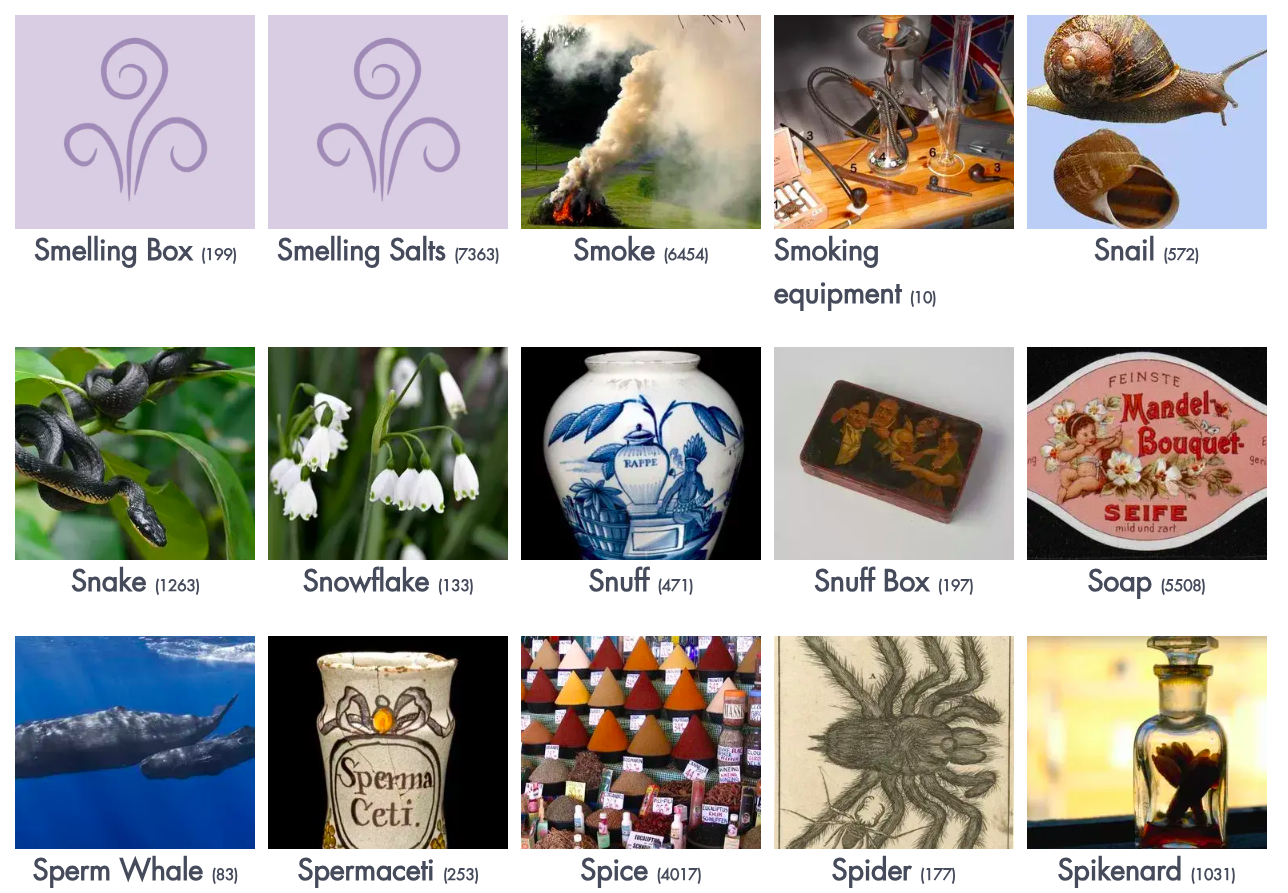
Among its initiatives is an interactive Smell Explorer that invites visitors to dive deep into smells as cultural phenomena.
Developed by an international team of computer scientists, AI experts and humanities scholars, the Smell Explorer is a vast compendium of smells as represented in 23,000 images and 62,000 public domain texts, including novels, theatrical scripts, travelogues, botanical textbooks, court records, sanitary reports, sermons, and medical handbooks.
This resource offers a fresh lens for considering the past through our noses, an unflinching look at various olfactory realities of life in Europe from the 15th through early 20th centuries.
Survivors of earlier plagues and pandemics might have associated their trials with the purifying aromas of burning rosemary and hot tar, just as the scents of sourdough and the way a handsewn cotton face mask’s interior smelled after several hours of wear conjure the early days of the Covid-19 pandemic for many of us.
There are a number of interesting ways to explore this scent-rich database — by geographic location, time period, associated emotion, or aromatic quality.
Of course, you could go straight to a smell source.
“Chamber pot” returns 18,152 results, “cadaver“266…

The squeamish are advised to steer clear of vomit (421 results) in favor of the Smell Explorer’s pleasurable and abundant food-related entries — bread, chocolate, coffee, pomegranate, pastry, and wine, to name but a few.
Each scent is built as a collection of cards or “nose witness reports” with information as to the title of the work cited, its author or artist, year of creation and characterization (“good”, “rank”, “peculiarly unpleasant and permanent”…)
Even more ambitiously, Odeuropa aims to give 21st-century noses an actual whiff of Europe’s olfactory heritage by enlisting perfumers and scent designers to recreate over a hundred historic odors and aromas.
Odeuropa has also created a downloadable Olfactory Storytelling Toolkit to give museum curators ideas for integrating culturally significant odors into exhibits, a trend that is gaining traction worldwide.
While everyone stands to benefit from the added olfactory dimension of such exhibits, this initiative is of particular service to blind and visually-impaired visitors. Expertise is no doubt required to get it right.
We’re reminded of satirist PJ O’Rourke early-80’s visit to the Exxon-sponsored Universe of Energy Pavilion in Walt Disney World’s EPCOT center, where animatronic dinosaurs were “depicted without accuracy and much too close to your face:”
One of the few real novelties at Epcot is the use of smell to aggravate illusions. Of course, no one knows what dinosaurs smelled like, but Exxon has decided they smelled bad.

Enter the Odeuropa Smell Explorer here.
Related Content
The Chemistry Behind the Smell of Old Books: Explained with a Free Infographic
– Ayun Halliday is the Chief Primatologist of the East Village Inky zine and author, most recently, of Creative, Not Famous: The Small Potato Manifesto and Creative, Not Famous Activity Book. Follow her @AyunHalliday.
Read More...When The Who (Literally) Blew Up The Smothers Brothers Comedy Hour in 1967
From 1967 to 1969, Tom and Dick Smothers hosted The Smothers Brothers Comedy Hour, a politely edgy comedy show that tested the boundaries of mainstream television and the patience of CBS executives. Playing to a younger demographic, the show took positions against the Vietnam War and for the Civil Rights Movement, while featuring musical acts that challenged the norms of the era–everyone from Joan Baez and Pete Seeger, to the Doors and Jefferson Airplane, to Buffalo Springfield and Simon and Garfunkel.
Then came The Who in September 1967. Making its American network TV debut, the band picked up where they left off a few months ago at the Monterey Pop Festival. They performed “My Generation” and went into auto-destruction mode, smashing their guitars, toppling their drums, and creating general mayhem, before bringing the song to a close. But for The Smothers Brothers Comedy Hour, The Who added a special twist, packing Keith Moon’s drum kit with explosives, a few too many, it turns out.
Here’s how Allan Blye, a producer-writer for the show, remembers it:
The Who wanted to do a big explosion at the end of their performance. In dress rehearsal, it was a powder puff. So, I say to the special effects guy, “We have to make a bigger boom.” Unbeknownst to us, The Who had told their own guy the same thing. When the explosion went off, it affected Pete Townshend’s hearing permanently. Keith Moon got blown off his drumstand, but was too out of it to know.
Stunned yet poised, Tom Smothers walked onto the stage, only to find his acoustic guitar snatched from his hands and smashed to smithereens too. He later recalled: “Everyone was so shocked.” “When Townshend came over and grabbed my guitar, I was busy just seeing where the bodies were, seeing if anyone was injured. He picked the guitar up, and people kept saying, ‘Did he really ruin your guitar? It looked so real!’ And I’d say. ‘Well it was real! I was confused as hell!’ ”
The suits at CBS abruptly canceled The Smothers Brothers Comedy Hour in 1969, leading the brothers to file a breach of contract lawsuit, which they eventually won. (They discuss the sting of that whole experience with David Letterman here.)
Tom Smothers died yesterday at age 86, “following a recent battle with cancer.” His brother Dick announced his passing, stating: “Tom was not only the loving older brother that everyone would want in their life, he was a one-of-a-kind creative partner. I am forever grateful to have spent a lifetime together with him, on and off stage, for over 60 years. Our relationship was like a good marriage – the longer we were together, the more we loved and respected one another. We were truly blessed.” And so were the rest of us.
Related Content
Watch Steve Martin Make His First TV Appearance: The Smothers Brothers Comedy Hour (1968)
Janis Joplin & Tom Jones Bring the House Down in an Unlikely Duet of “Raise Your Hand” (1969)
Keith Moon, Drummer of The Who, Passes Out at 1973 Concert; 19-Year-Old Fan Takes Over
Read More...
For 500 Years, Every Student Who Attained a BA from Oxford Had to Swear Enmity Towards a Person Named Henry Symeonis
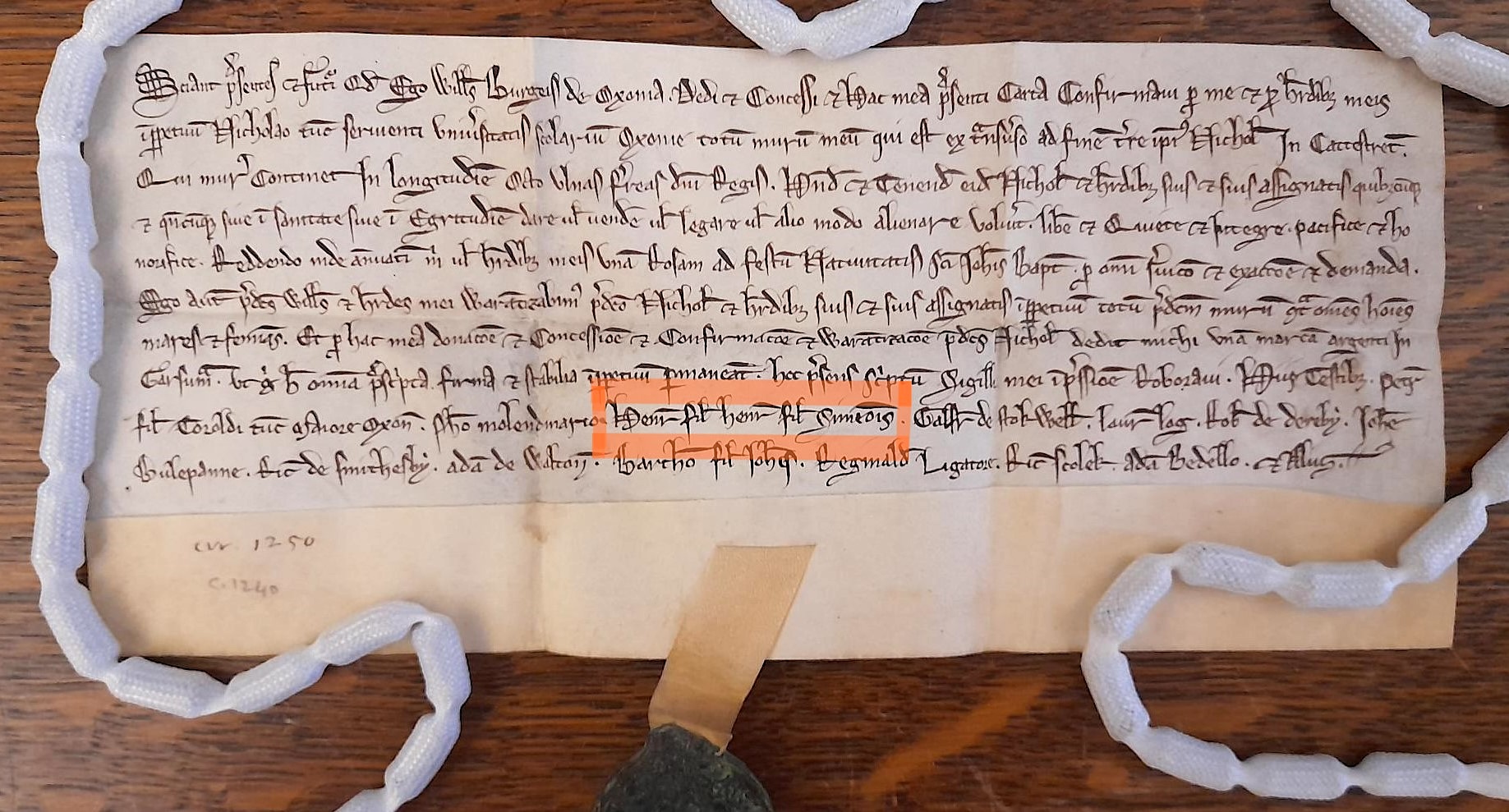
Image via The Bodleian Library
If you were to ask a certain kind of Englishman what sets his homeland apart from the rest of the world, he might point to the strength of its traditions. And what holds true for England itself holds even truer for its most renowned institutions, especially its most prestigious universities. Those who dream of attending Oxford dream not least of its distinctive traditions: from the relatively frequent Formal Hall, to the various ceremonial rituals on Ascension Day, to the Mallard Song sung just once per century by the elites of All Souls College, dating back to that college’s foundation in 1438— which was still long after the time of Oxford’s ultimate persona non grata, a long-mysterious figure named Henry Symeonis.
As recently as the time of Dickens (or at least the era in which he set his novels), Bachelors of Arts students turning Master of Arts students at Oxford were, according to the blog of the Archives and Manuscripts at the Bodleian Library, “required to swear that they would observe the University’s statutes, privileges, liberties and customs, as you might expect; and not to lecture elsewhere, or resume their bachelor studies after getting their MA.” But they “also had to swear that they would never agree to the reconciliation of Henry Symeonis,” whoever that was. “Nowhere in the statutes did it explain who this Henry Symeonis (or Simeonis) was, what he was supposed to have done or why those getting their MAs should never agree to be reconciled with him.”
The clause in question came up for review in the early 1650s, but “even by that time, one suspects that the oath was of such antiquity that no-one knew anything about it and it was thought best to leave it be.” Not until 1912 did Reginald Lane Poole, Keeper of the University Archives, determine that Symeonis was the son of “a very wealthy townsman of Oxford.” In 1242, “he and a number of other men of the town of Oxford were found guilty of murdering a student of the University. Henry and his accomplices were fined £80 by King Henry III in May 1242 and were made to leave Oxford as a result.” Two decades after the murder, Henry III issued Symeonis (who had, in any case, long since returned to town) an official pardon.
“The Government was aware of the volatile relationship between town and gown and was concerned, in 1264, at the prospect of the University leaving Oxford in protest if Henry was allowed to return.” What seems to have happened is that “Henry Symeonis had bought the King’s pardon and his permission to return to Oxford. The King was willing to allow his return if the University agreed to it. But the University refused and chose to ignore the King’s order” — and even “gave Henry Symeonis the unique honor of being named in its own statutes, making the University’s dislike of him official and perpetual.” There his name stayed, receiving the sworn enmity of five and a half centuries’ worth of Oxford students, until the removal of the relevant oath in 1827. “No background information nor reason for the decision is recorded,” notes the Bodleian’s blog, possibly because “nobody knew exactly what they were abolishing.”
via Archives and Manuscripts at the Bodleian Library
Related Content:
New Interactive “Murder Map” Reveals the Meanest Streets of Medieval London
Oxford University Presents the 550-Year-Old Gutenberg Bible in Spectacular, High-Res Detail
Based in Seoul, Colin Marshall writes and broadcasts on cities, language, and culture. His projects include the Substack newsletter Books on Cities, the book The Stateless City: a Walk through 21st-Century Los Angeles and the video series The City in Cinema. Follow him on Twitter at @colinmarshall or on Facebook.
Read More...A Man Hiding from the Nazis Made 95 Issues of a Highly Creative Zine (1943–1945)
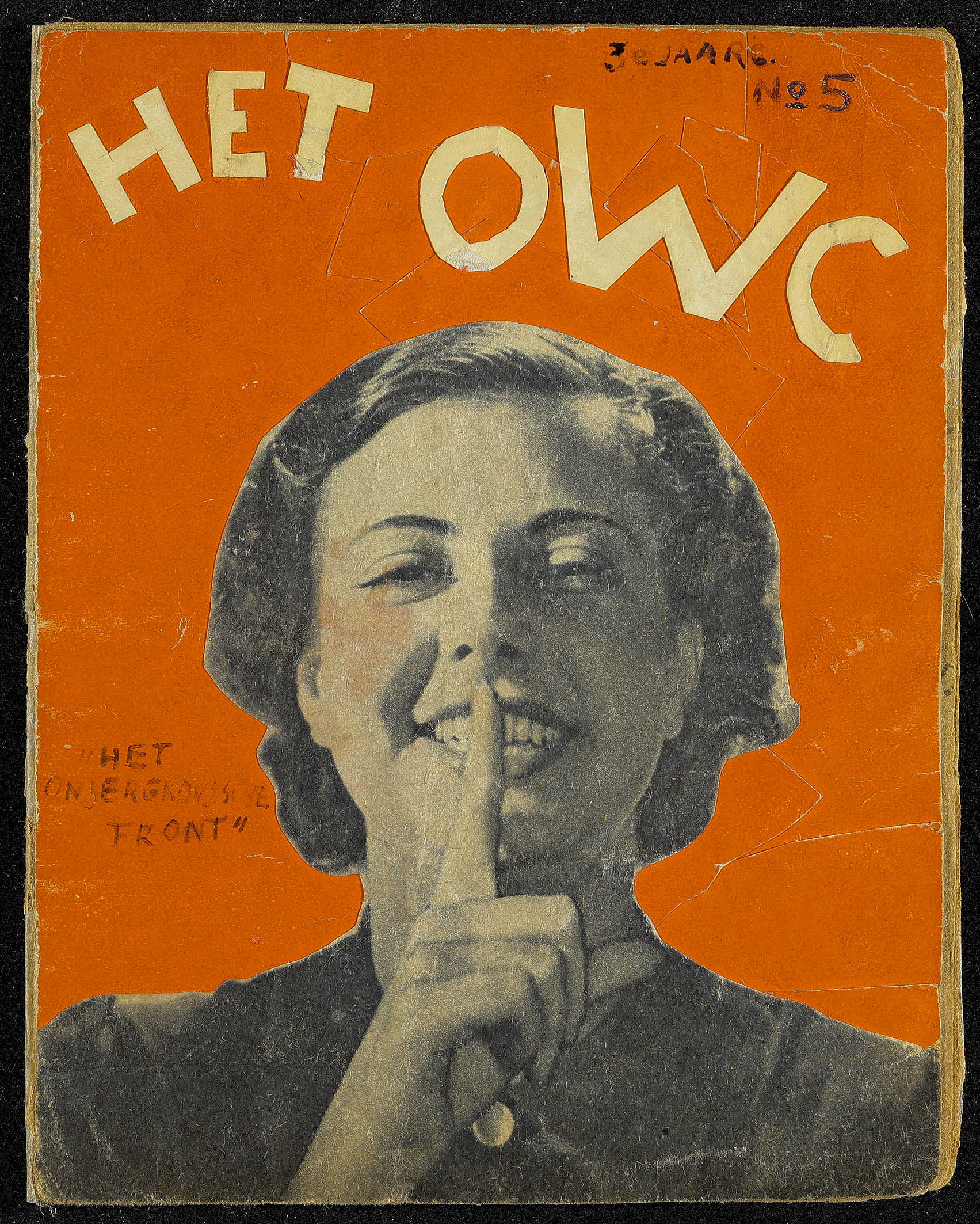
Copyright by Charities Aid Foundation America thanks to the generous support of the Bloch family; restoration and digitization: Jewish Museum Berlin. This pertains to all images on this page.
Perhaps at some point in the future,
the poems in your tongue I composed,
will be brought to your notice,
and if so, to delight will I then be disposed.
— Curt Bloch, Het Onderwater Cabaret
Zines typically tend toward the ephemeral, owing to their small circulations, erratic publication schedules, and the unpredictable lives of their creators.
Curt Bloch’s zine, Het Onderwater Cabaret (The Underwater Cabaret) defies these odds.
Bloch not only produced an impressive 95 issues between August 1943 and April 1945, he did so as a German Jew hiding from the Nazis in the rafters of a private home in the Dutch city of Enschede, not far from the German border.
His cut-and-paste illustrations are part of a long-standing zine continuum, made possible in part by helpers who furnished him with pens, glue, newspapers and other collage-worthy materials, in addition to food and other necessities.
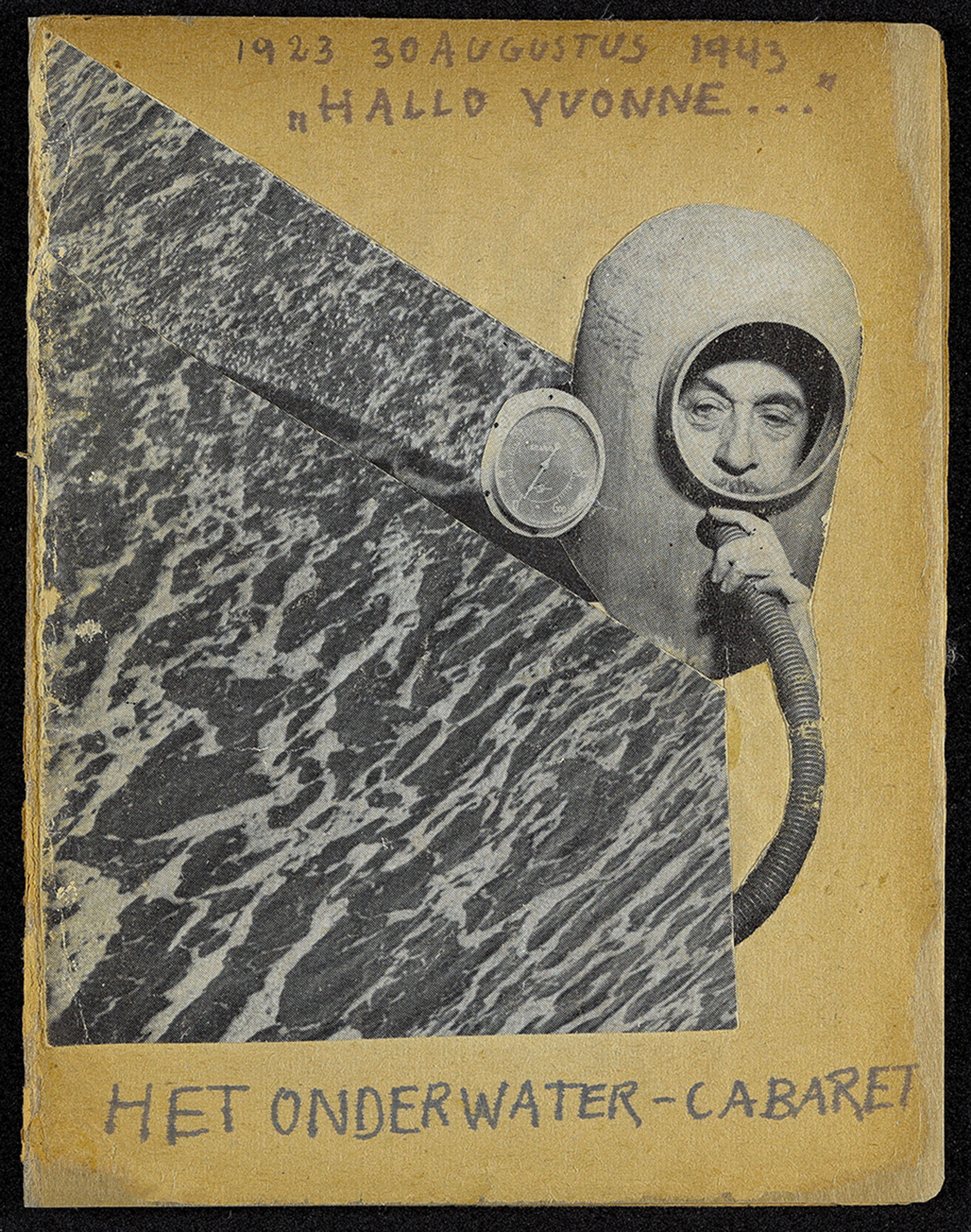
His print run was sub-miniscule. Duplicating his work was not an option, so Het Onderwater Cabaret circulated in its original form, passed from hand to hand at great risk.
The zine’s title is a play on onderduiken (to dive under), which Dutch people understood as a reference to the 10,000 Jews hiding from the Nazis in their country.
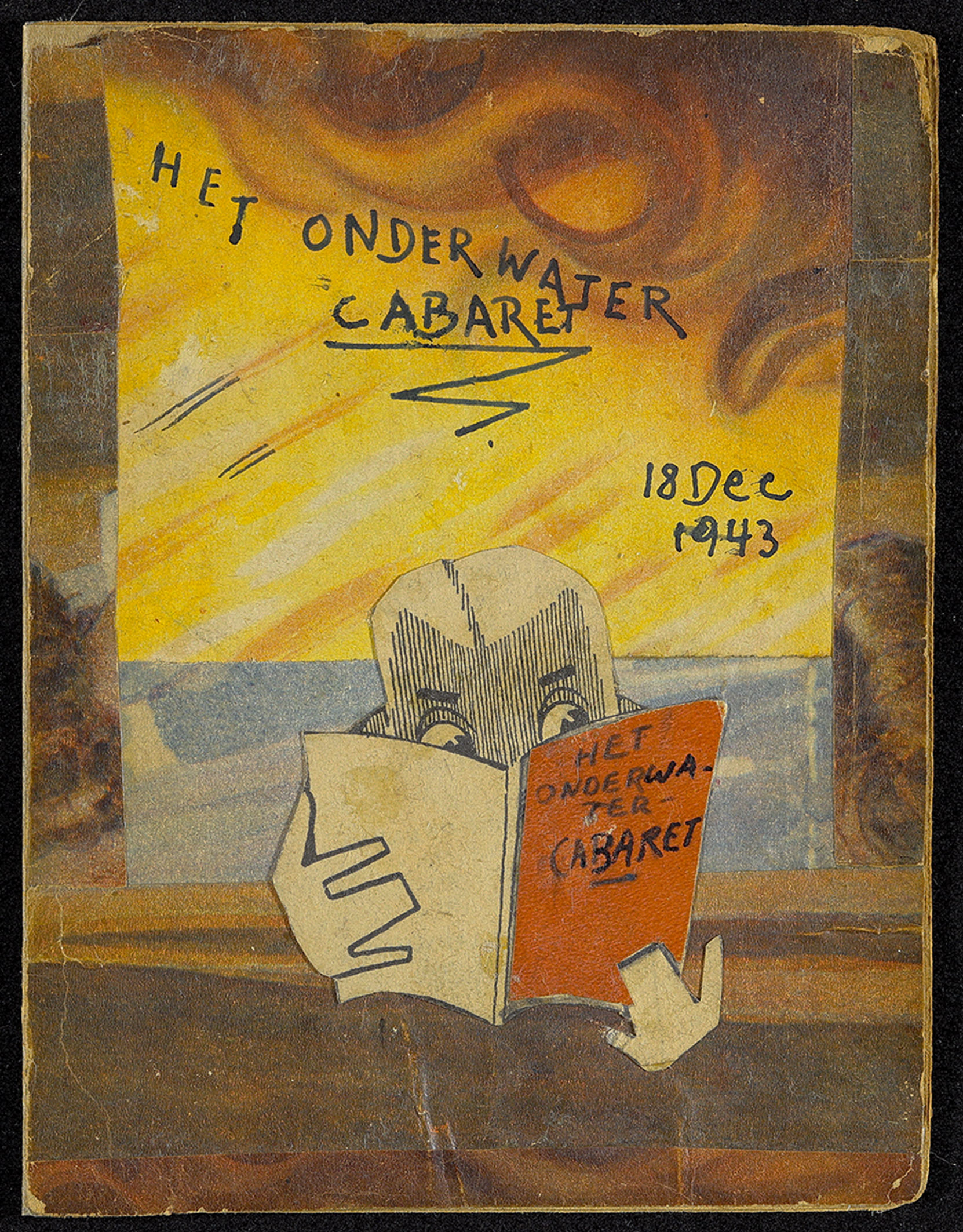
Gerard Groeneveld, author of The Underwater Cabaret: The Satirical Resistance of Curt Bloch, credits the “huge organization” who helped Bloch and others sequestered Jews with circulating the zine:
(It) included couriers, who brought food, but who could also bring the magazine out, to share with other people in the group who could be trusted. The magazines are very small, you can easily put one in your pocket or hide it in a book. He got them all back. They must have also returned them in some way.
It’s nothing short of a miracle that all 95 installments survive. Many zinesters fall short of preserving their work, but Bloch could not ignore this project’s personal and historical significance.
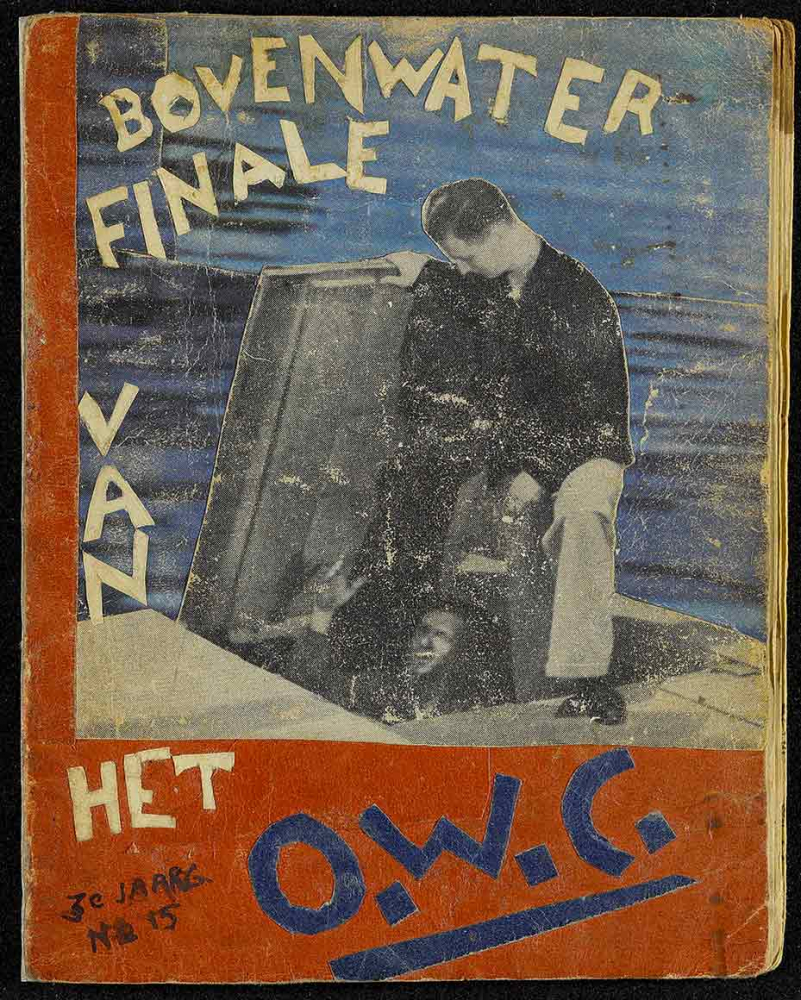
Aubrey Pomerance, co-curator of the Jüdisches Museum Berlin’s upcoming exhibit, “My Verses Are Like Dynamite, Curt Bloch’s Het Onderwater Cabaret”, notes that “the overwhelming majority of writings that were created in hiding were destroyed.”
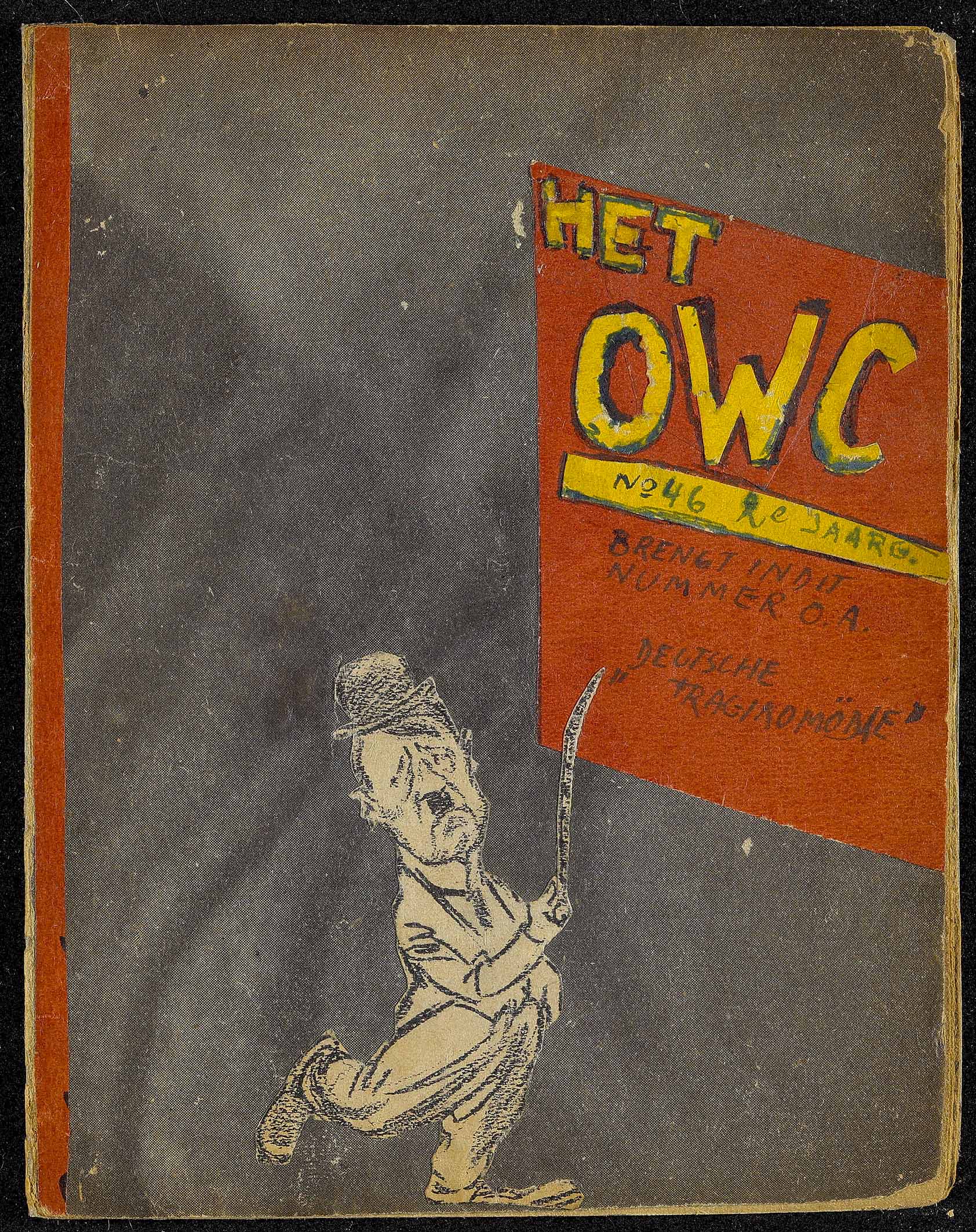
For half a century, these zines were known to a select few — family members, their original readers, and a handful of guests whom Bloch entertained by reading passages aloud after dinner parties in the family’s New York home.
Pomerance suspects that Bloch always intended for his work to have a performance aspect, and that the couple who shared his crawlspace quarters may well have been his first audience for ditties like the one below.
Hyenas and jackals
Look on with jealousy
For they now seem as choirboys
Compared to humanity.
Bloch’s daughter, Simone, who describes her dad as a smartass, is working on a website dedicated to his work. Read more about Bloch’s zine at The New York Times.
The images on this page thanks to the generous support of the Bloch family; restoration and digitization comes thanks to the Jewish Museum Berlin.
– Ayun Halliday is the Chief Primatologist of the East Village Inky zine and author, most recently, of Creative, Not Famous: The Small Potato Manifesto and Creative, Not Famous Activity Book. Follow her @AyunHalliday.
Read More...John Waters’ Hand-Made, Oddball Christmas Cards: 1964-Present

Ten years ago, we featured John Waters’ handmade Christmas cards, which he’s been making since he was a high-school student in 1964, long before William S. Burroughs deemed him the “Pope of Trash” (also the title of a retrospective exhibition at the Academy of Motion Pictures in Los Angeles this past fall). It was Waters’ films that qualified him for that honor, of course, but his regular season’s greetings are no less a medium for his career-long artistic reclamation of bad taste. Christmas cards also have the advantage of being even more “underground” than his early features, directed as they are to only a select group of recipients, large though Waters’ mailing list has grown in recent decades: he mentioned to the New York Times that he sends out over 2,000 cards, and that was back in 2013.

“Christmas cards are your first duty and you must send one (with a personal, handwritten message) to every single person you ever met, no matter how briefly,” Waters wrote in a 1980s essay: “Give Me Another Present! Why I Love Christmas”. “Of course, you must make your own cards by hand. ‘I don’t have time,’ you may whine, but since the whole purpose of life is Christmas, you’d better make time, buster.”
As you can see at this gallery and this recent Twitter thread, Waters has made the time: the time to get his mugshot taken by the Baltimore Police Department, to stuff dead cockroaches into tree ornaments, to commission a painting of himself as a pipe-smoking patriarch (with a Divine-looking wife) presiding over an askew nineteen-fifties Christmas morning, and, last year, to produce blow-up dolls in his own likeness.
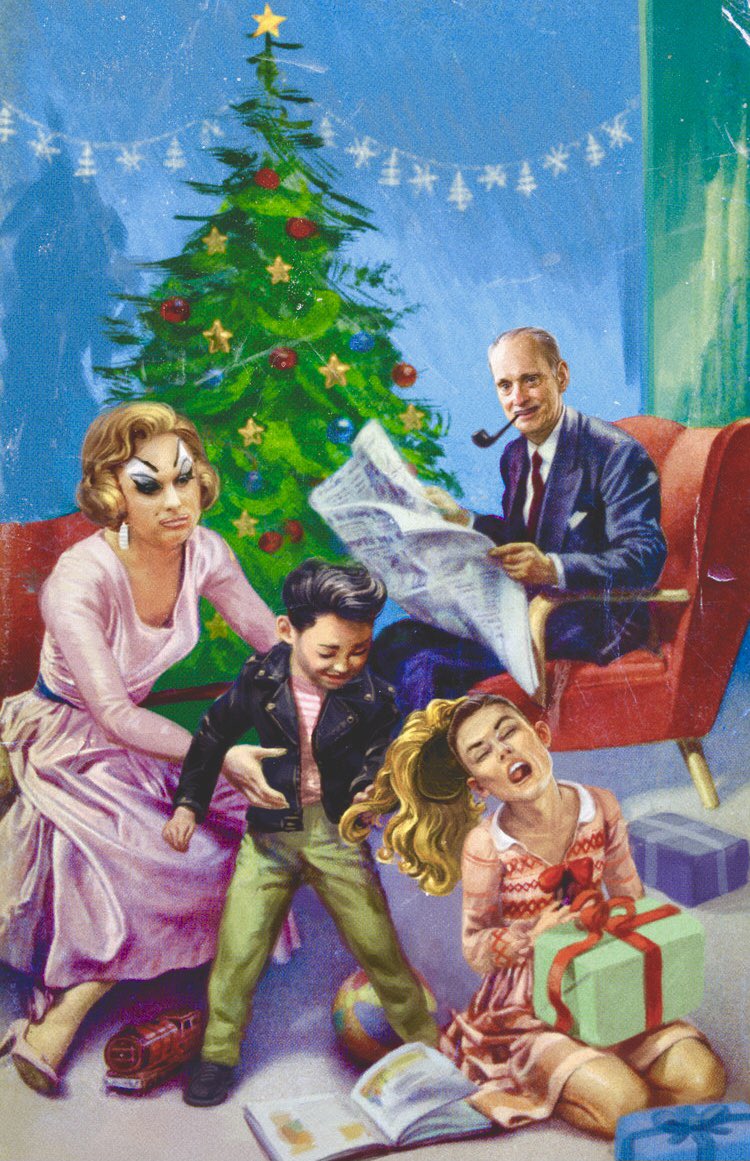
In the decade since we last looked at them, Waters’ Christmas cards have also depicted him putting an eye out with a candy cane, feasting on Rudolph the Red-Nosed Reindeer, and decked out in Christmas-thug regalia, complete with tattoos promising “chimney invasions” and “season’s beatings.” This Christmas, Waters opted for a more technical complexity, appearing as a distressed toddler in the lap of a department-store Santa (a fairly common fifties tableau, I gather) who, as a separate component attached by some kind of spring, flails wildly when flicked. Fans who haven’t received one of their own can at least console themselves with the prospect of Waters’ next film, which will be his first in twenty years — and bring to the screen Waters’ own novel Liarmouth, which more than a few of them probably found in their stockings last Christmas. See a gallery of his Christmas cards here.

Related Content:
John Waters Makes Handmade Christmas Cards, Says the “Whole Purpose of Life is Christmas”
When Salvador Dalí Created Christmas Cards That Were Too Avant Garde for Hallmark (1960)
Watch Terry Gilliam’s Animated Short, The Christmas Card (1968)
John Waters Designs a Witty Poster for the New York Film Festival
Based in Seoul, Colin Marshall writes and broadcasts on cities, language, and culture. His projects include the Substack newsletter Books on Cities, the book The Stateless City: a Walk through 21st-Century Los Angeles and the video series The City in Cinema. Follow him on Twitter at @colinmarshall or on Facebook.
Read More...Why Abel Gance’s 1927 Napoléon Is “the Most Creative Film Ever Made”
Since it came out this past November, Ridley Scott’s Napoleon has drawn a variety of critical reactions. Whatever else can be said about it, it certainly takes a different tack from past depictions of that particular French Emperor. It was, perhaps, Scott’s good luck not to have to go up against the Napoleon picture that Stanley Kubrick dreamed of making, but even so, there are plenty of other precedents dating from throughout cinema history. The most formidable must surely be Napoléon, from 1927, also known as Napoléon vu par Abel Gance (Abel Gance being one of France’s foremost silent-era auteurs), which depicts the protagonist’s early years over the course of, in at least one of its many versions, five and a half hours.
Granted that, almost a century later, a silent historical epic as long as three average movies may be considered something of a “hard sell.” But if you’re intrigued, consider starting with the half-hour-long introduction to Napoléon above by The Cinema Cartography’s Lewis Bond, previously featured here on Open Culture for his exegesis of everything from the rule-breaking of the French New Wave to the poetry of Andrei Tarkovsky and the copycat-ism of Quentin Tarantino to the aesthetic of anime. We can thus rest assured that when Bond says that Napoléon, “without hyperbole, is the most inventive cinematic endeavor in the history of the medium,” he doesn’t do so lightly.
Like any good video essayist, Bond first provides context, framing Gance as a kind of early nineteenth-century Romantic artist working in the early twentieth, a descendant of Victor Hugo working in film rather than literature. But whatever this information may do to enrich your viewing experience, “many of the great works don’t hide their greatness away,” and Napoléon is one of the works in which that greatness is “visible from the moment you set your eyes to it.” Even its very first sequence, in which a young Napoleon leads his military-school compatriots in a large-scale snowball fight, is executed with the kind of camera moves and image dissolves that would only find their way into standard cinematic grammar decades later.
This technical and formal ingenuity continues throughout the film: “with the sheer breadth of techniques, and just how ostentatious they are, it’s difficult to pack everything Napoléon presents us into a cohesive package.” This makes Gance, who always had “a penchant for displeasing his producers due to his constant desire to disrupt film language,” look like a Nouvelle Vague filmmaker avant la lettre. It also reveals his understanding that cinema, far from the novelty entertainment some had dismissed in his time, “was to be the medium in which our next great Homeric epic will emerge.” With Napoléon, Gance and his collaborators created not just a movie but a “panorama of existence, which would entrance the viewers in an almost religious delirium” — an experience sure to be intensified, for those whose religious leanings tend toward the cinematic, by the restored seven-hour cut scheduled to debut next year.
Related content:
Watch the Newly Released Trailer for Ridley Scott’s Napoleon, Starring Joaquin Phoenix
Napoleon: The Greatest Movie Stanley Kubrick Never Made
Vintage Photos of Veterans of the Napoleonic Wars, Taken Circa 1858
Why Is Napoleon’s Hand Always in His Waistcoat?: The Origins of This Distinctive Pose Explained
Based in Seoul, Colin Marshall writes and broadcasts on cities, language, and culture. His projects include the Substack newsletter Books on Cities, the book The Stateless City: a Walk through 21st-Century Los Angeles and the video series The City in Cinema. Follow him on Twitter at @colinmarshall or on Facebook.
Read More...
The History of Cartography, the “Most Ambitious Overview of Map Making Ever,” Is Free Online
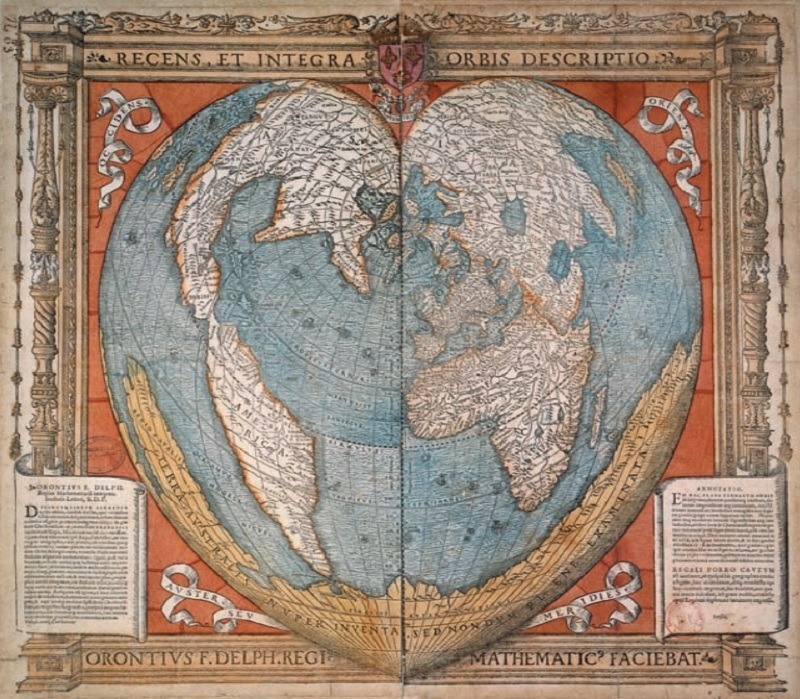
FYI: The University of Chicago Press has made available online — at no cost –five volumes of The History of Cartography. Or what Edward Rothstein, of The New York Times, called “the most ambitious overview of map making ever undertaken.” He continues:
People come to know the world the way they come to map it—through their perceptions of how its elements are connected and of how they should move among them. This is precisely what the series is attempting by situating the map at the heart of cultural life and revealing its relationship to society, science, and religion…. It is trying to define a new set of relationships between maps and the physical world that involve more than geometric correspondence. It is in essence a new map of human attempts to chart the world.
If you head over to this page, you will see links (in the left margin) to five volumes available in a free PDF format. The image above, appearing in Vol. 2, dates back to 1534. Created by Oronce Fine, the first chair of mathematics in the Collège Royal (aka the Collège de France), the map features the world drawn in the shape of a heart. A pretty beautiful design. Below you can find links to the individual volumes available online.
Volume 1
Volume 2: Book 1
Cartography in the Traditional Islamic and South Asian Societies
Volume 2: Book 2
Cartography in the Traditional East and Southeast Asian Societies
Volume 2: Part 3
Volume 3:
Cartography in the European Renaissance: Part 1
Cartography in the European Renaissance, Part 2
Volume 4:
Cartography in the European Enlightenment
Volume 5:
Cartography in the Nineteenth Century, Forthcoming
Volume 6:
Cartography in the Twentieth Century
If you buy any of the printed versions on Amazon, each edition will cost you $400-$500. As beautiful as the book probably is, you’ll likely appreciate this free digital offering.
If you would like to support the mission of Open Culture, consider making a donation to our site. It’s hard to rely 100% on ads, and your contributions will help us continue providing the best free cultural and educational materials to learners everywhere. You can contribute through PayPal, Patreon, and Venmo (@openculture). Thanks!
Related Content:
Download 91,000 Historic Maps from the Massive David Rumsey Map Collection
40,000 Early Modern Maps Are Now Freely Available Online (Courtesy of the British Library)
Behold an Incredibly Detailed, Handmade Map Of Medieval Trade Routes
The World Map That Introduced Scientific Mapmaking to the Medieval Islamic World (1154 AD)
Read More...
Two Tiny Rembrandt Paintings Have Been Rediscovered & Put On Display in Amsterdam
Many first-time visitors to the Louvre experience a letdown to discover how small the Mona Lisa is -just 21” x 30”.
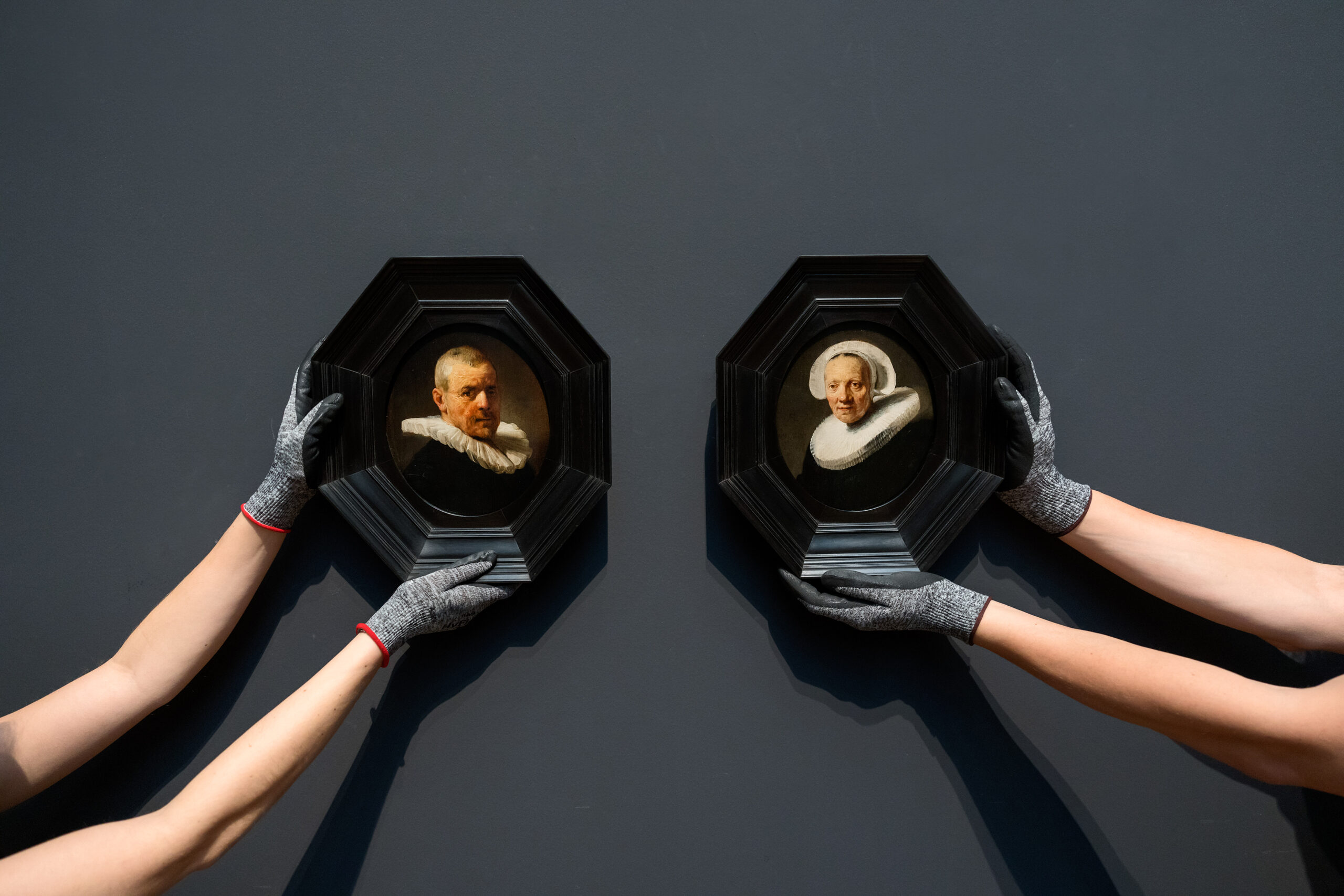
Meanwhile, over in Amsterdam, visitors have been flocking to the Rijksmuseum, eager to lay eyes on the two smallest formal works in the museum’s collection.
Measuring slightly less than 8” tall, they are about as tall as the average retail banana as per US Department of Agriculture estimates.
It’s not just the matching oval portraits’ size that’s packing ’em in.
The recently rediscovered paintings have been identified as the work of Rembrandt Harmenszoon van Rijn, the leading artist of the Dutch Golden Age.
Painted in 1635, the portraits feature Jan Willemsz van der Pluym, a wealthy 17th-century plumber and his wife, Jaapgen Caerlsdr, dressed in black with stiff white ruffs. The couple owned the garden next to the painter’s mother, and he was distantly related to them through a marriage on her side.
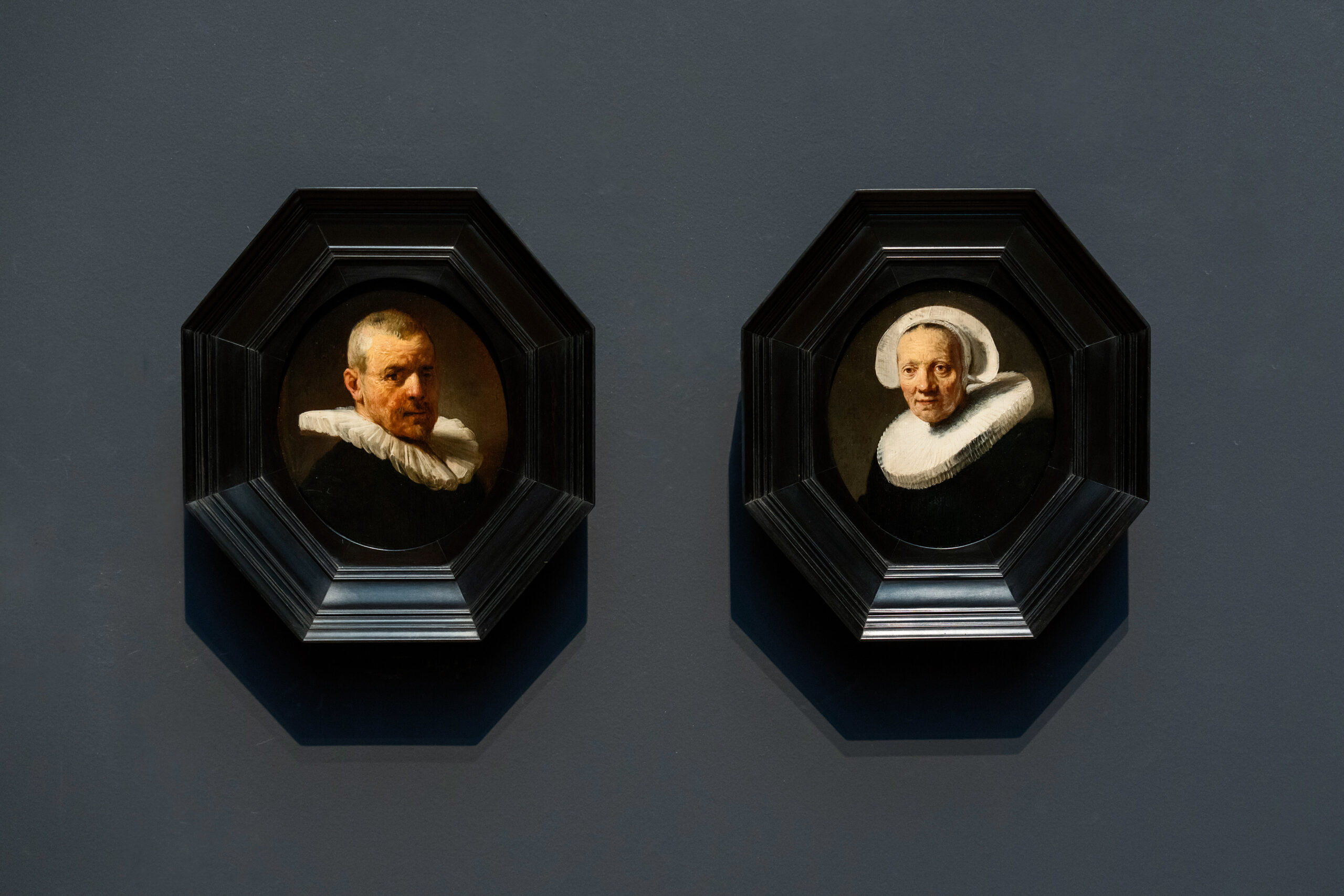
Their triple-great-grandchildren put the portraits up for auction in 1760, after which they passed through several private collections, before dropping entirely from public view following an auction in the summer of 1824.
Nearly two hundred years later, Jan and Jaapgen’s portraits weren’t making much of an impression on that winning bidder’s descendants.
As Henry Pettifer, an Old Master Paintings specialist at Christies, which conducted both the 1824 auction and the one last summer, where the portraits fetched 14.3 million dollars, told the Washington Post, “the family liked the pictures but were never certain that they were by Rembrandt and never really looked into that:”
The pictures were completely absent from the Rembrandt literature in the 19th and 20th centuries, which was extraordinary. They have intimacy about them, a dignity. They’re extraordinary… They’re unlike some of his grand, formal commissioned portraits, and they are something much more spontaneous and intimate. I think the reason for that is that the sitters were very closely connected to Rembrandt. They were very much from Rembrandt’s own inner circle. We should regard them as personal documents rather than formal commissions.
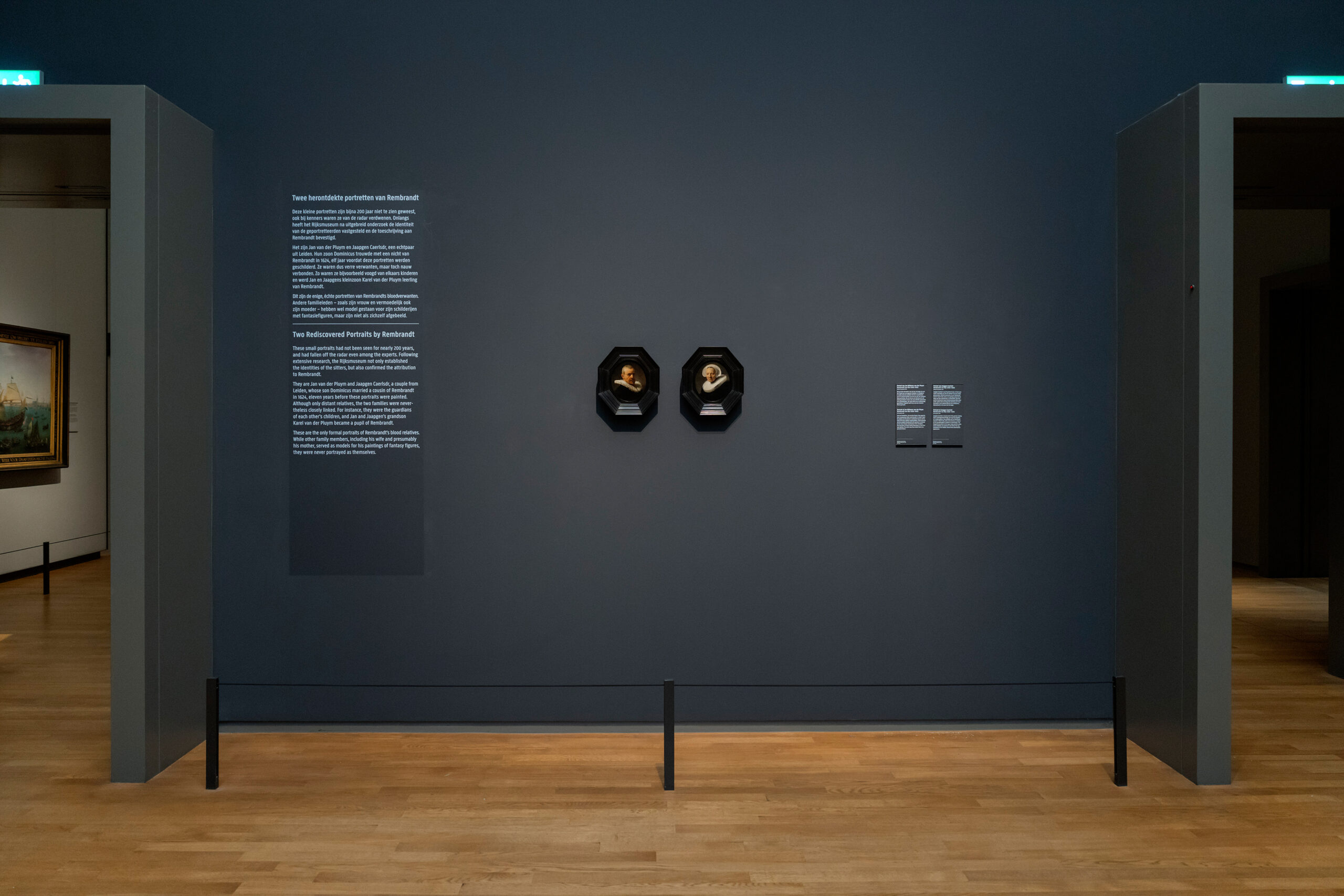
The most recent winning bidder is committed to keeping the paintings in the public eye with a long term-loan to the Rijksmuseum, where extensive research using X‑radiography, infrared photography, infrared reflectography, macro X‑ray fluorescence, stereomicroscopy and paint sample analysis confirmed their provenance.
Experts have also noted similarities in composition, color, and painting technique between these works and larger portraits Rembrandt executed during the same period.
Jonathan Bikker, the Rijksmuseum’s curator of 17th-century Dutch painting, describes the verification of provenance as “mindblowing:”
Totally unknown works hardly ever happen. We really wanted to be able to show them.
Related Content
300+ Etchings by Rembrandt Now Free Online, Thanks to the Morgan Library & Museum
The Rembrandt Book Bracelet: Behold a Functional Bracelet Featuring 1400 Rembrandt Drawings
– Ayun Halliday is the Chief Primatologist of the East Village Inky zine and author, most recently, of Creative, Not Famous: The Small Potato Manifesto and Creative, Not Famous Activity Book. Follow her @AyunHalliday.
Read More...The Origin Story of Rudolph the Red-Nosed Reindeer: How a 1939 Marketing Gimmick Launched a Beloved Christmas Character
It’s time to forget nearly everything you know about Rudolph the Red-Nosed Reindeer…at least as established by the 1964 Rankin/Bass stop motion animated television special.
You can hang onto the source of Rudolph’s shame and eventual triumph — the glowing red nose that got him bounced from his playmates’ reindeer games before saving Christmas.
Lose all those other now-iconic elements — the Island of Misfit Toys, long-lashed love interest Clarice, the Abominable Snow Monster of the North, Yukon Cornelius, Sam the Snowman, and Hermey the aspirant dentist elf.
As originally conceived, Rudolph (runner up names: Rollo, Rodney, Roland, Roderick and Reginald) wasn’t even a resident of the North Pole.
He lived with a bunch of other reindeer in an unremarkable house somewhere along Santa’s delivery route.
Santa treated Rudolph’s household as if it were a human address, coming down the chimney with presents while the occupants were asleep in their beds.
To get to Rudolph’s origin story we must travel back in time to January 1939, when a Montgomery Ward department head was already looking for a nationwide holiday promotion to draw customers to its stores during the December holidays.
He settled on a book to be produced in house and given away free of charge to any child accompanying their parent to the store.
Copywriter Robert L. May was charged with coming up with a holiday narrative starring an animal similar to Ferdinand the Bull.
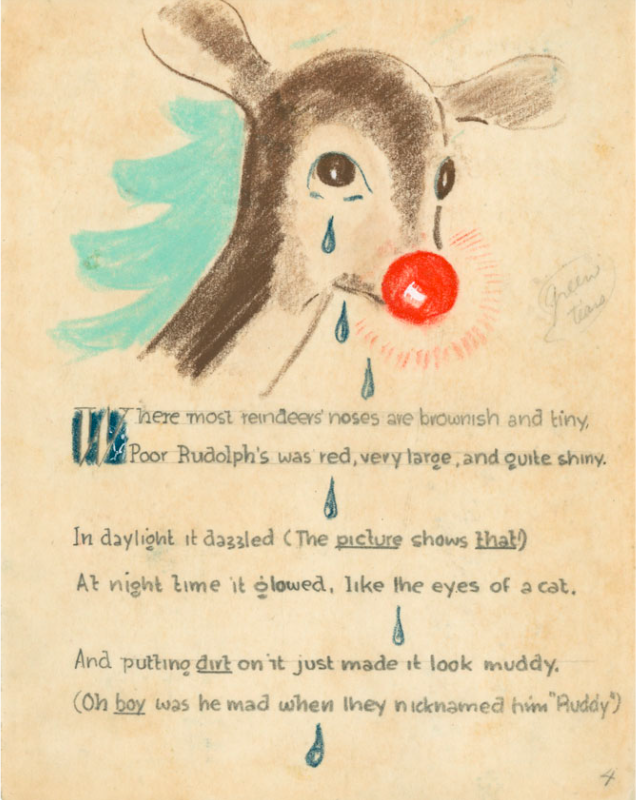
After giving the matter some thought, May tapped Denver Gillen, a pal in Montgomery Ward’s art department, to draw his underdog hero, an appealing-looking young deer with a red nose big enough to guide a sleigh through thick fog.
(That schnozz is not without controversy. Prior to Caitlin Flanagan’s 2020 essay in the Atlantic chafing at the television special’s explicitly cruel depictions of othering the oddball, Montgomery Ward fretted that customers would interpret a red nose as drunkenness. In May’s telling, Santa is so uncomfortable bringing up the true nature of the deer’s abnormality, he pretends that Rudolph’s “wonderful forehead” is the necessary headlamp for his sleigh…)
On the strength of Gillen’s sketches, May was given the go-ahead to write the text.
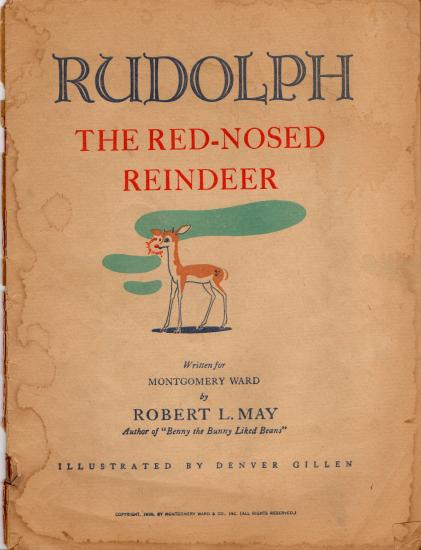
His rhyming couplets weren’t exactly the stuff of great children’s literature. A sampling:
Twas the day before Christmas, and all through the hills,
The reindeer were playing, enjoying the spills.
Of skating and coasting, and climbing the willows,
And hopscotch and leapfrog, protected by pillows.
___
And Santa was right (as he usually is)
The fog was as thick as a soda’s white fizz
—-
The room he came down in was blacker than ink
He went for a chair and then found it a sink!
No matter.
May’s employer wasn’t much concerned with the artfulness of the tale. It was far more interested in its potential as a marketing tool.
“We believe that an exclusive story like this aggressively advertised in our newspaper ads and circulars…can bring every store an incalculable amount of publicity, and, far more important, a tremendous amount of Christmas traffic,” read the announcement that the Retail Sales Department sent to all Montgomery Ward retail store managers on September 1, 1939.
Over 800 stores opted in, ordering 2,365,016 copies at 1½¢ per unit.
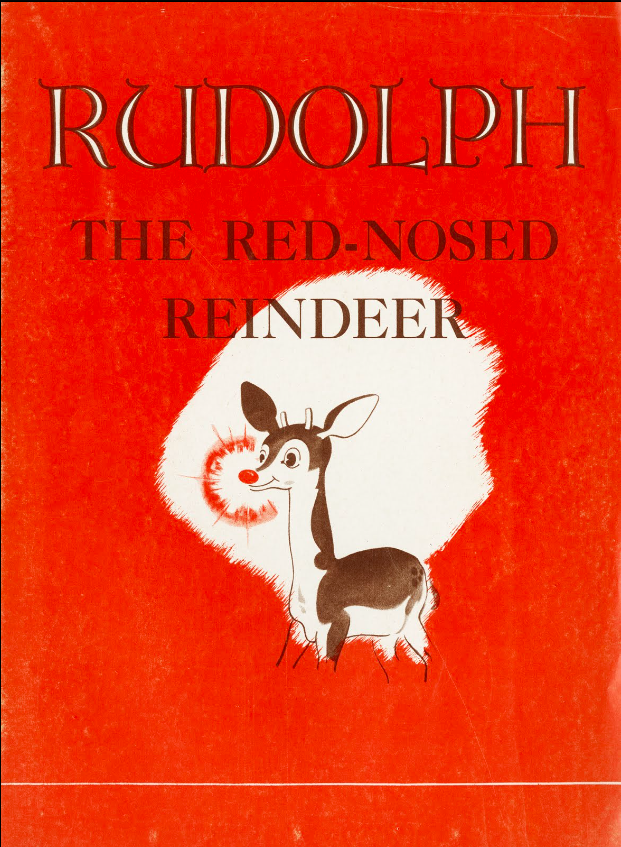
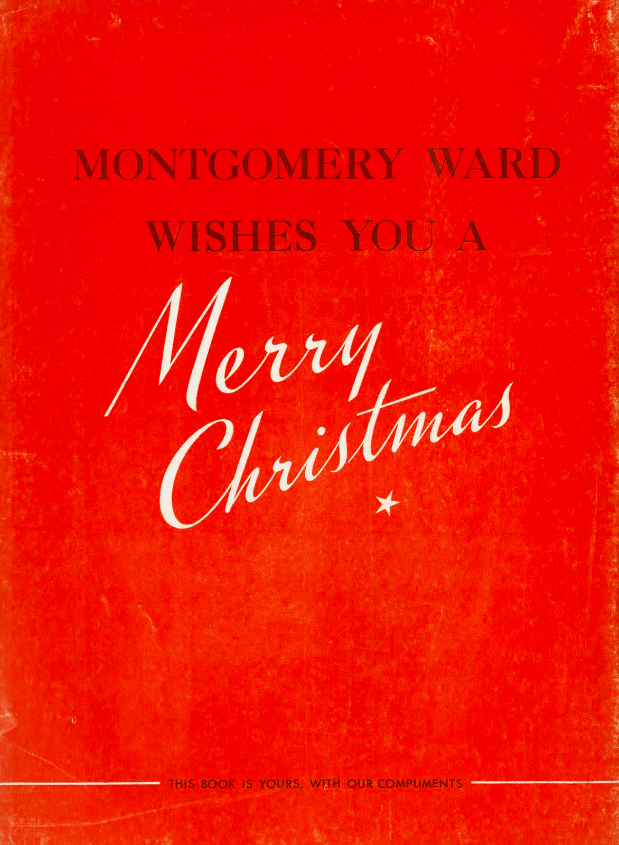
Promotional posters touted the 32-page freebie as “the rollickingest, rip-roaringest, riot-provokingest, Christmas give-away your town has ever seen!”
The advertising manager of Iowa’s Clinton Herald formally apologized for the paper’s failure to cover the Rudolph phenomenon — its local Montgomery Ward branch had opted out of the promotion and there was a sense that any story it ran might indeed create a riot on the sales floor.
His letter is just but one piece of Rudolph-related ephemera preserved in a 54-page scrapbook that is now part of the Robert Lewis May Collection at Dartmouth, May’s alma mater.
Another page boasts a letter from a boy named Robert Rosenbaum, who wrote to thank Montgomery Ward for his copy:
I enjoyed the book very much. My sister could not read it so I read it to her. The man that wrote it done better than I could in all my born days, and that’s nine years.
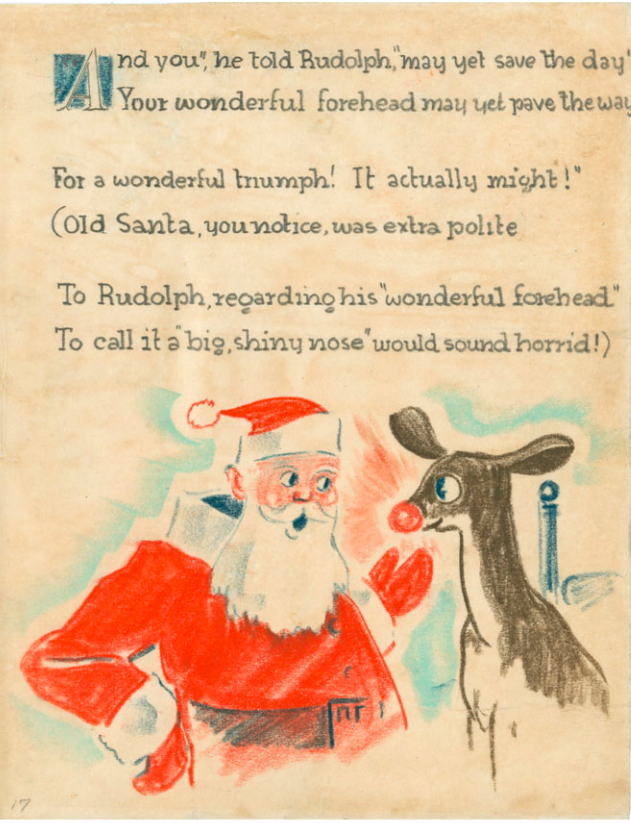
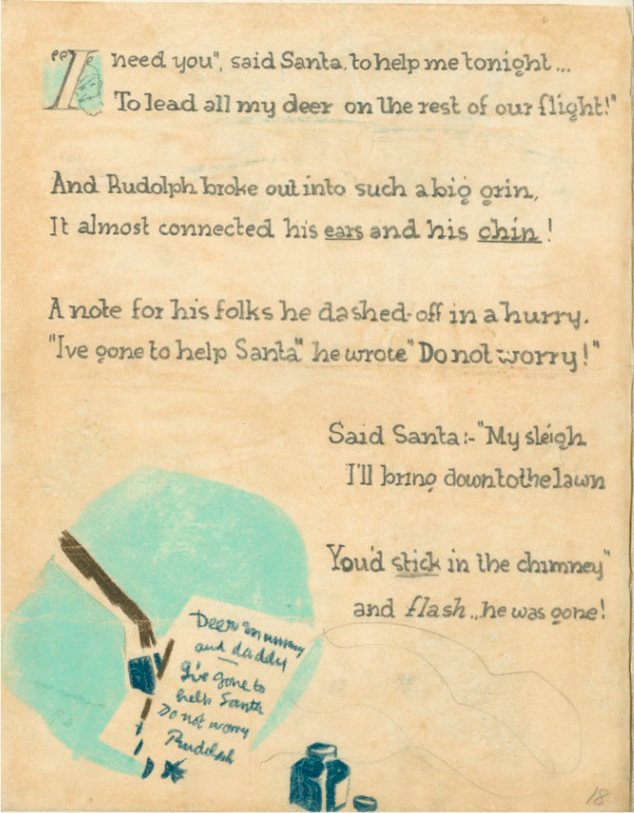
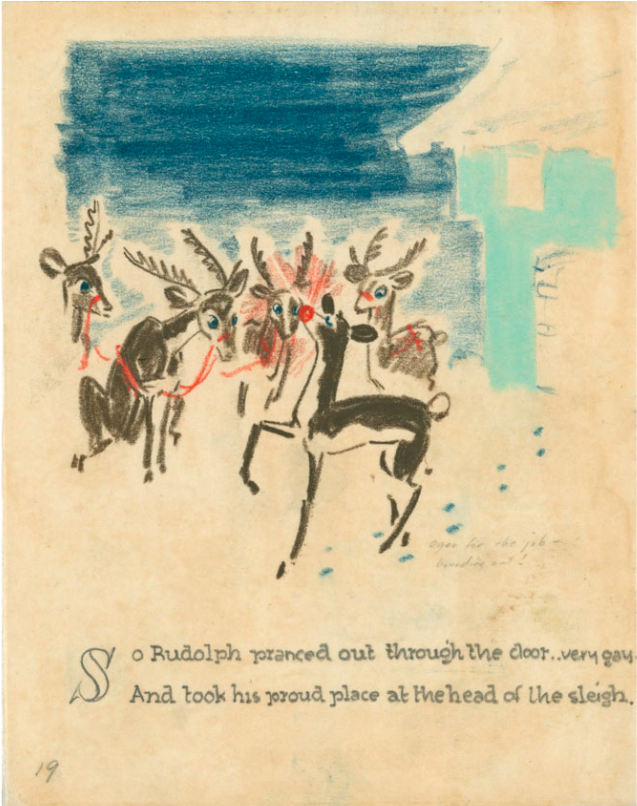
The magic ingredient that transformed a marketing scheme into an evergreen if not universally beloved Christmas tradition is a song …with an unexpected side order of corporate generosity.
May’s wife died of cancer when he was working on Rudolph, leaving him a single parent with a pile of medical bills. After Montgomery Ward repeated the Rudolph promotion in 1946, distributing an additional 3,600,000 copies, its Board of Directors voted to ease his burden by granting him the copyright to his creation.
Once he held the reins to the “most famous reindeer of all”, May enlisted his songwriter brother-in-law, Johnny Marks, to adapt Rudolph’s story.
The simple lyrics, made famous by singing cowboy Gene Autry’s 1949 hit recording, provided May with a revenue stream and Rankin/Bass with a skeletal outline for its 1964 stop-animation special.
Screenwriter Romeo Muller, the driving force behind the Island of Misfit Toys, Sam the Snowman, Clarice, et al revealed that he would have based his teleplay on May’s original book, had he been able to find a copy.
Read a close-to-final draft of Robert L. May’s Rudolph the Red-Nosed Reindeer, illustrated by Denver Gillen here.
Bonus content: Max Fleischer’s animated Rudolph The Red-Nosed Reindeer from 1948, which preserves some of May’s original text.
Related Content
Hear Neil Gaiman Read A Christmas Carol Just Like Charles Dickens Read It
Hear Paul McCartney’s Experimental Christmas Mixtape: A Rare & Forgotten Recording from 1965
– Ayun Halliday is the Chief Primatologist of the East Village Inky zine and author, most recently, of Creative, Not Famous: The Small Potato Manifesto and Creative, Not Famous Activity Book. Follow her @AyunHalliday.
Read More...
Support Us
We're hoping to rely on loyal readers, rather than erratic ads. Please click the Donate button and support Open Culture. You can use Paypal, Venmo, Patreon, even Crypto! We thank you!

About Us

Open Culture scours the web for the best educational media. We find the free courses and audio books you need, the language lessons & educational videos you want, and plenty of enlightenment in between.
Advertise With Us
FREE UPDATES!
GET OUR DAILY EMAIL
Get the best cultural and educational resources on the web curated for you in a daily email. We never spam. Unsubscribe at any time.
FOLLOW ON SOCIAL MEDIA
Open Culture editor Dan Colman scours the web for the best educational media. He finds the free courses and audio books you need, the language lessons & movies you want, and plenty of enlightenment in between.
Advertise With Us

