Introduction to Ancient Greek History: A Free Online Course by Yale Historian Donald Kagan (RIP)
Earlier this month, Yale historian Donald Kagan passed away at age 89 in Washington D.C. In their obituary, The New York Times writes:
Professor Kagan was considered among the country’s leading historians. His four-volume account of the Peloponnesian War, from 431 B.C. to 404 B.C., was hailed by the critic George Steiner as “the foremost work of history produced in North America in the 20th century.”
He was equally renowned for his classroom style, in which he peppered nuanced readings of ancient texts with references to his beloved New York Yankees and inventive, sometimes comic exercises in class participation, like having students form a hoplite phalanx to demonstrate how Greek soldiers marched into combat.
If you never sat in Kagan’s classroom, you can still experience his teaching style online. Recorded in 2007, Kagan’s course Introduction to Ancient Greek History traces “the development of Greek civilization as manifested in political, intellectual, and creative achievements from the Bronze Age to the end of the classical period.” You can watch the 24 video lectures above, or find them on YouTube. The lectures also appear on iTunes in audio and video. Find the texts used in the course below. More information about the course, including the syllabus, can be found on this Yale website.
- Pomeroy, Burstein, Donlan and Roberts. Ancient Greece. Oxford University Press: New York, 1999.
- Kagan, Donald. “Problems in Ancient History.” In The Ancient Near East and Greece. 2nd ed., vol. 1. Prentice-Hall: New York, 1975.
- Herodotus, The Histories.
- Plutarch, The Rise and Fall of the Athens.
- Thucydides, The Peloponnesian War.
Introduction to Ancient Greek History will be added to our collection of Free Online History courses, a subset of our collection, 1,700 Free Online Courses from Top Universities.
If you would like to support the mission of Open Culture, consider making a donation to our site. It’s hard to rely 100% on ads, and your contributions will help us continue providing the best free cultural and educational materials to learners everywhere. You can contribute through PayPal, Patreon, and Venmo (@openculture). Thanks!
Related Content
Learn Ancient Greek in 64 Free Lessons: A Free Online Course from Brandeis & Harvard
Roman Architecture: A Free Online Course from Yale University
The Ancient Greeks: A Free Online Course from Wesleyan University
Read More...Take a Trip to the LSD Museum, the Largest Collection of “Blotter Art” in the World
When Ken Kesey and his Merry Pranksters kicked off Haight-Ashbury’s counterculture in the 1960s, LSD was the key ingredient in their potent mix of drugs, the Hell’s Angels, the Beat poets, and their local band The Warlocks (soon to become The Grateful Dead). Kesey administered the drug in “Acid Tests” to find out who could handle it (and who couldn’t) after he stole the substance from Army doctors, who themselves administered it as part of the CIA’s MKUltra experiments. Not long afterward, Grateful Dead soundman Owsley “Bear” Stanley synthesized “the purest form of LSD ever to hit the street,” writes Rolling Stone, and became the country’s biggest supplier, the “king of acid.”
Whatever uses it might have had in psychiatric settings — and there were many known at the time — LSD was made illegal in 1968 by the U.S. government, repressing what the government had itself helped bring into being. But it has since returned with newfound respectability. “Once dismissed as the dangerous dalliances of the counterculture,” writes Nature, psychedelic drugs are “gaining mainstream acceptance” in clinical treatment. Psilocybin, MDMA, and LSD “have been steadily making their way back into the lab,” notes Scientific American. “Scientists are rediscovering what many see as the substances’ astonishing therapeutic potential.”
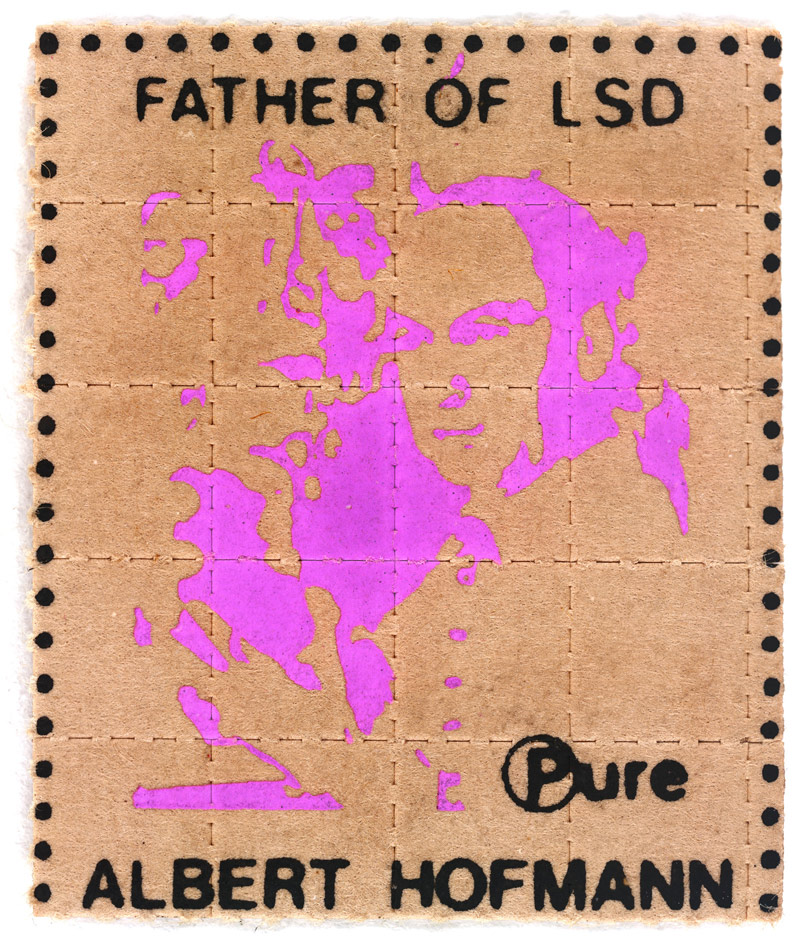
None of this comes as news to San Francisco fixture Mark McCloud. “In the same moralistic manner many San Franciscans pontificate on the health benefits of marijuana,” writes Gregory Thomas at Mission Local, “McCloud and his friends tout the merits of acid.” Next to curing “anxiety, depression and ‘marital problems,’” it is also an important source of folk art, says McCloud, the owner and sole proprietor of the informally-named “LSD Museum” housed in his three-story Victorian home in San Francisco.
His mission in creating and maintaining the museum formally called the Institute of Illegal Images, he says, is to “preserve a ‘skeletal’ remnant of San Francisco’s drug-induced 1960s legacy, ‘so maybe our children can better understand us.’”
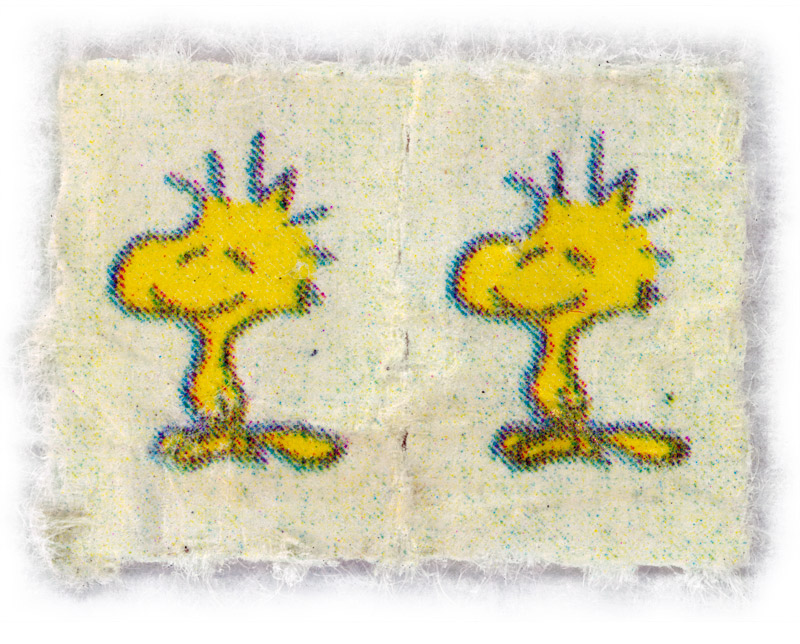
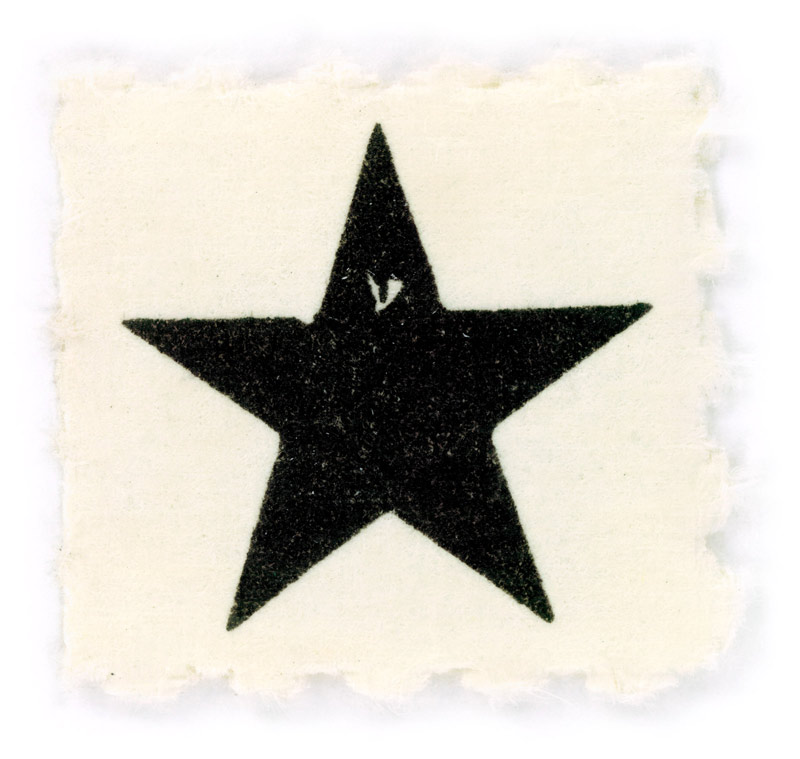
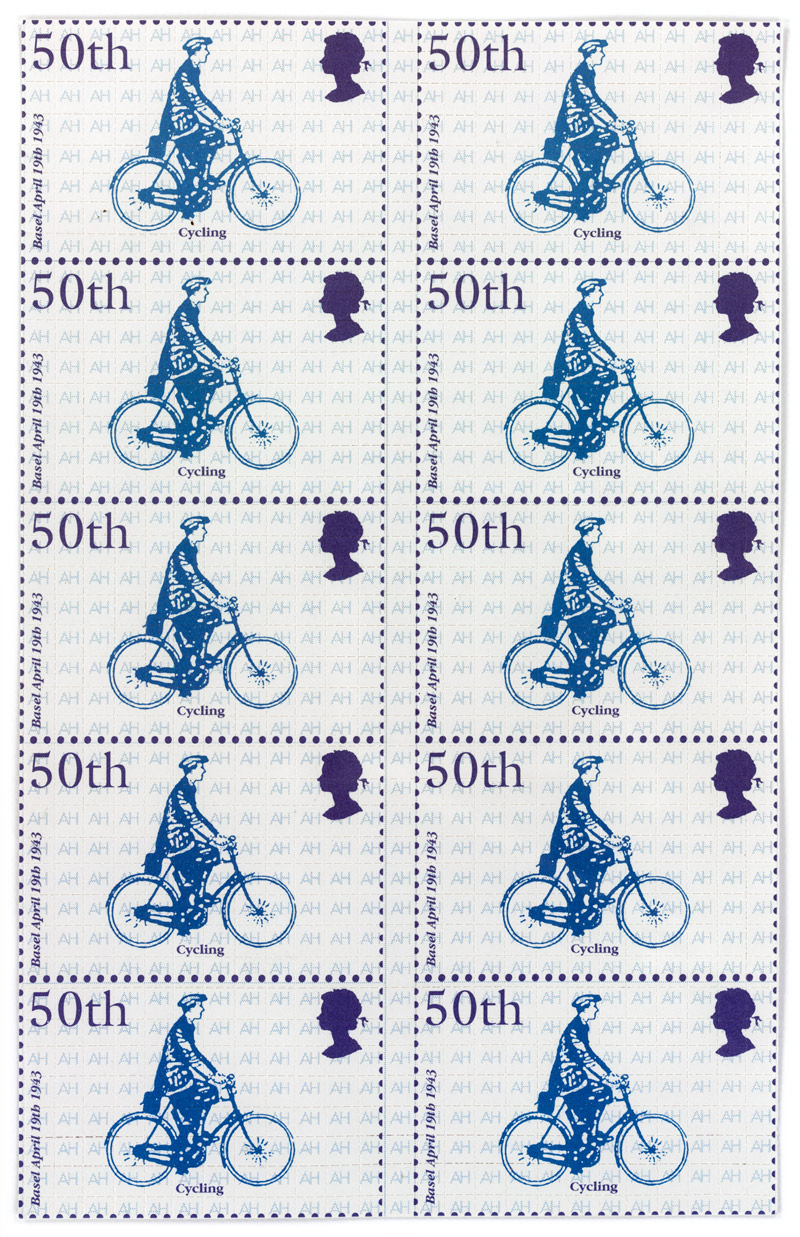
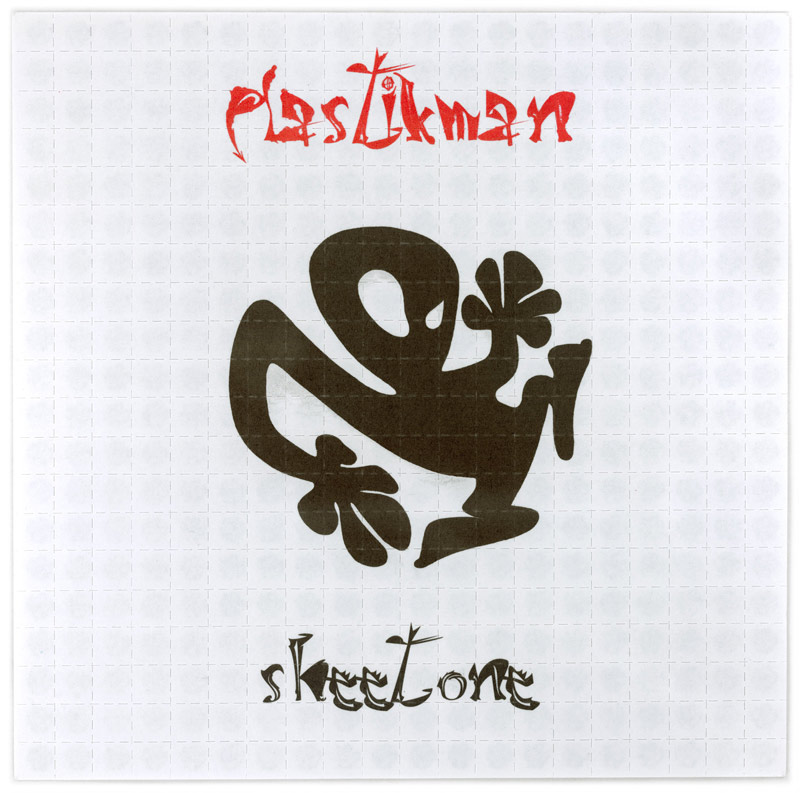
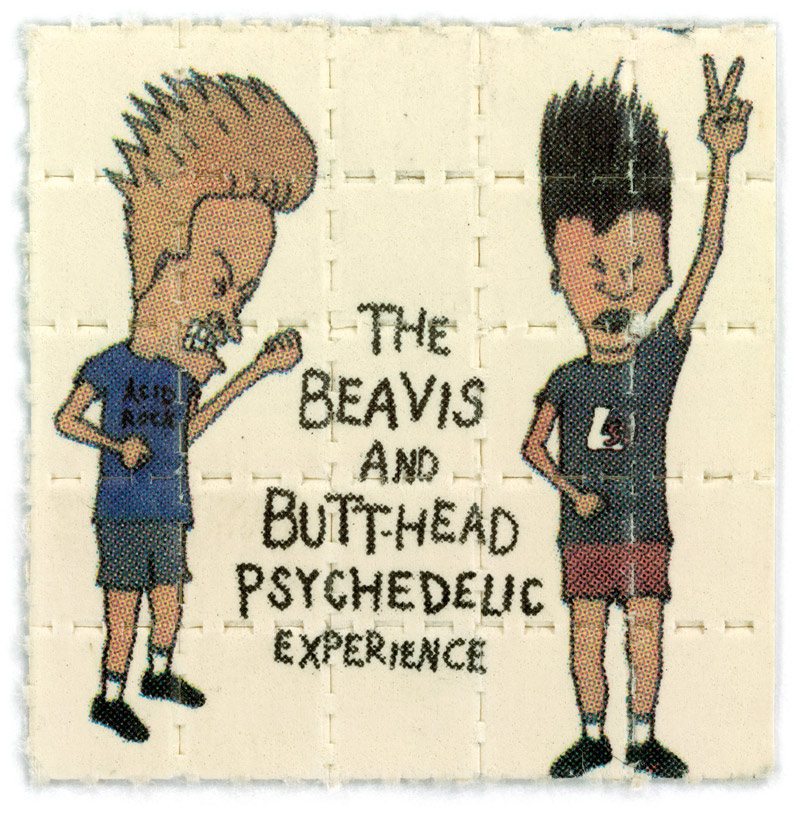
Specifically, as Culture Trip explains, McCloud preserves the art on sheets of blotter acid. As is clear from the many pop cultural references on blotter art — like Beavis and Butthead and techno artist Plastikman (who named his debut album Sheet One) — the 60s blotter acid legacy extended far beyond its founders’ vision in underground scenes throughout the 70s, 80s, 90s, and oughts.
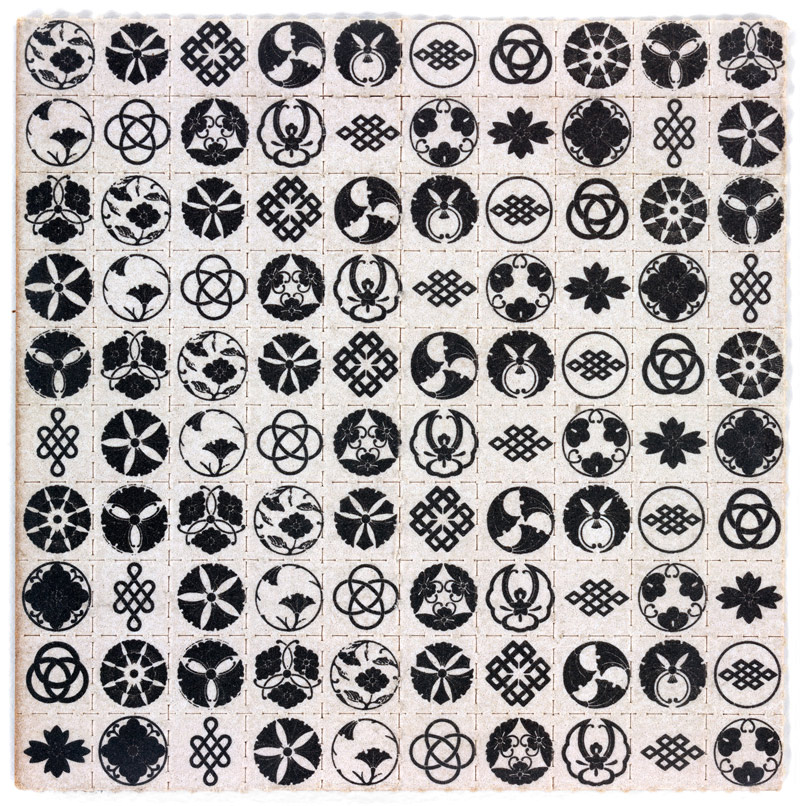
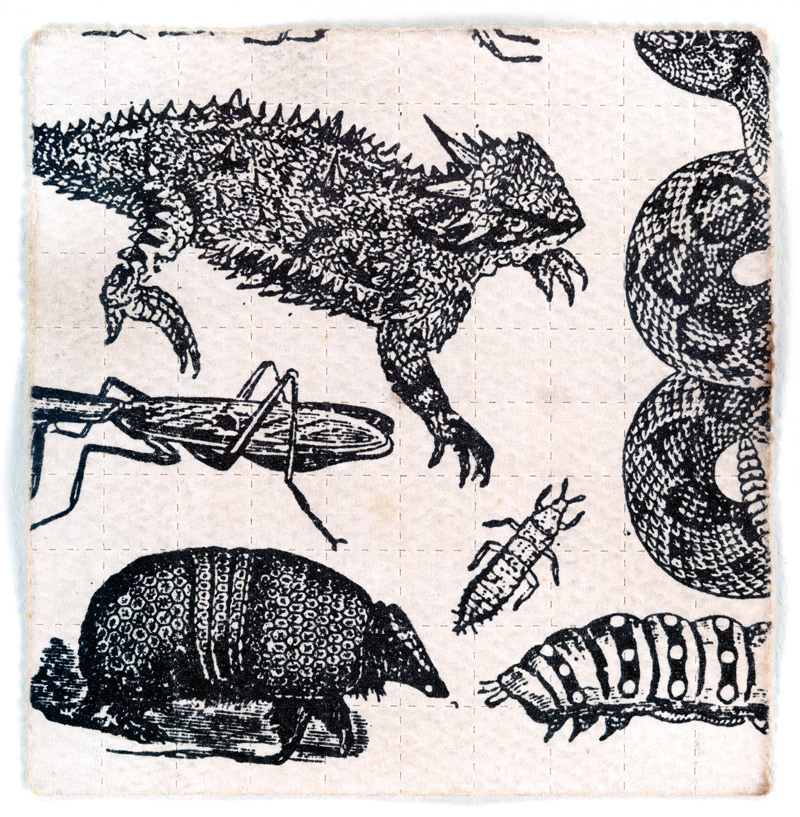
Also known as the Blotter Barn or the Institute of Illegal Images, McCloud’s house is located on 20th Street between Mission and Capp. The house preserves over 33,000 sheets of LSD blotter, treating them like tiny little works of art. Most of the sheets are framed and hanging on McCloud’s walls, decorating the home with vibrant colors and patterns, and the rest are kept safe in binders. The house also features a perforation board, allowing McCloud to turn any work of art sized 7.5 by 7.5 inches into 900 pieces, as is typical for LSD blotter sheets.
McCloud has faced intense scrutiny from the FBI, and on a couple of occasions — in 1992 and again in 2001 — arrest and trial by “not very sympathetic” juries, who nonetheless acquitted him both times. Despite the fact that he has a larger collection of blotter acid sheets than the DEA, he and his museum have withstood prosecution and attempts to shut them down, since all the sheets in his possession have either never been dipped in LSD or have become chemically inactive over time. (The museum’s website explains the origins of “blotter” paper as a means of preparing LSD doses after the drug was criminalized in California in 1966.)
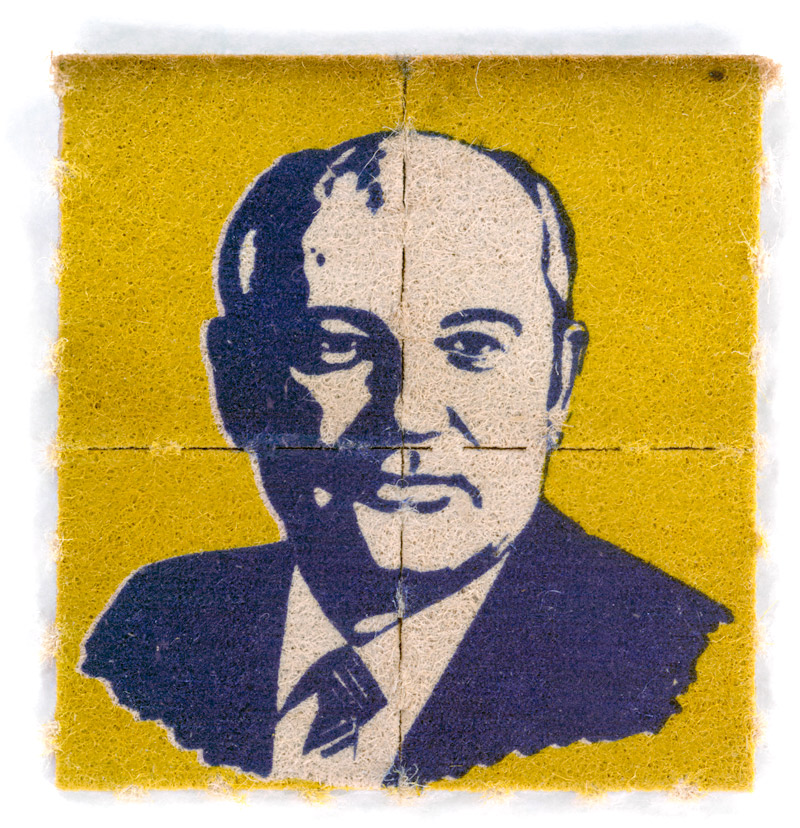
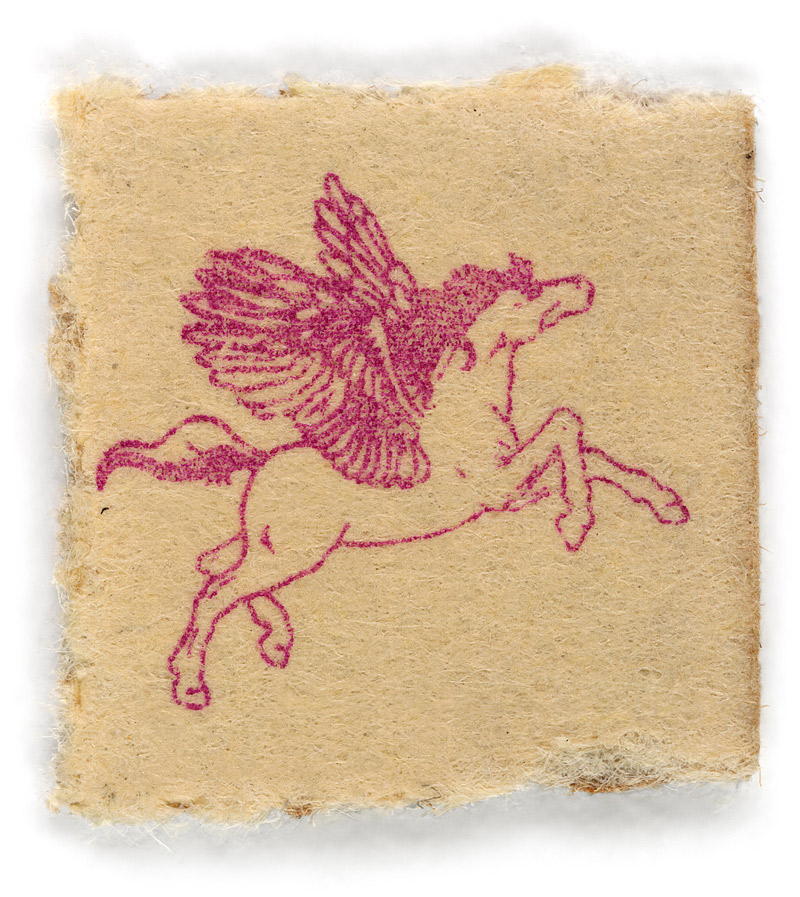
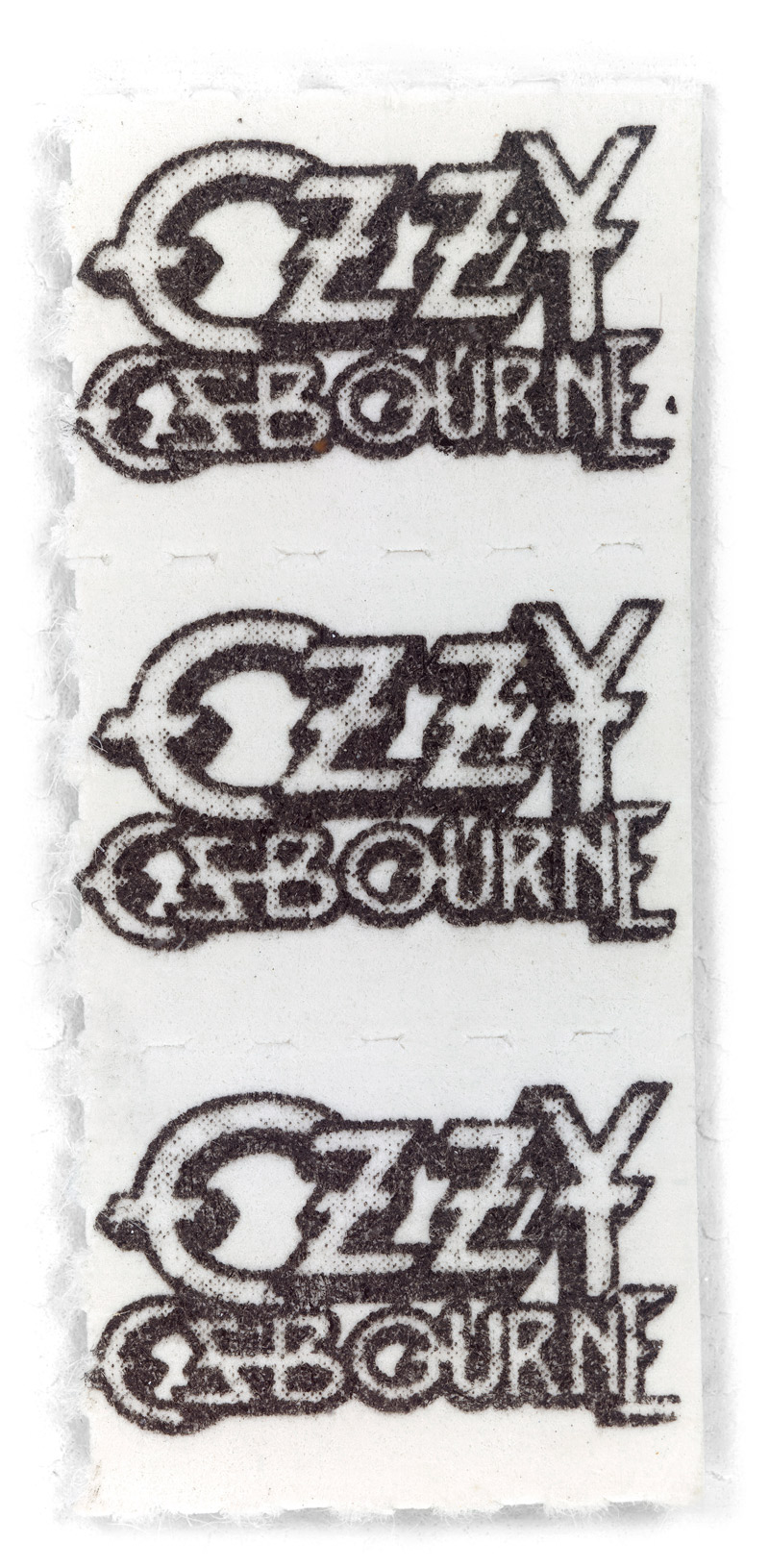
“What fascinates me about blotter is what fascinates me about all art. It changes your mind,” says McCloud in the Wired video at the top of the post. None of his museum’s artwork will change your mind in quite the way it was intended, but the mere association with hallucinogenic experiences is enough to inspire the artists “to build the myriad of subject matter appearing on the blotters,” Atlas Obscura writes, “ranging from the spiritual (Hindu gods, lotus flowers) to whimsical (cartoon characters), as well as cultural commentary (Gorbachev) and the just plain demented (Ozzy Osbourne).”
The museum does not keep regular hours and was only open by appointment before COVID-19. These days, it’s probably best to make a virtual visit at blotterbarn.com, where you’ll find dozens of images of acid blotter paper like those above and learn much more about the history and culture of LSD during long years of prohibition — a condition that seems poised to finally end as governments give up the wasteful, punishing War on Drugs and allow scientists and psychonauts to study and explore altered states of consciousness again.

Related Content:
Josh Jones is a writer and musician based in Durham, NC. Follow him at @jdmagness
Read More...The Sound of Subways Around the World: A Global Collection of Subway Door Closing Announcements, Beeps & Chimes
The next L train is now arriving on the Manhattan bound track. Please stand away from the platform edge.
Thus begins Brooklyn saxophone-percussion trio Moon Hooch’s “Number 9.”
Anyone who’s taken the train into the city from Bushwick or Williamsburg two or three times, you should be able to chant along with no trouble.
“Mind the gap!” is a sentimental favorite of both native Londoners and first time visitors navigating The Tube with freshly purchased Oyster Cards.
Residents of Montreal are justly proud that their Metro’s closing doors signal is a near twin of Aaron Copland’s “Fanfare for the Common Man.”
Civil engineer Ted Green has been documenting the mass transit sounds that cue passengers that the subway doors are about to close since 2004, when he logged 26 seconds on the Piccadilly Line in London’s Russell Square Station:
In 2003 I used the Russell Square station daily for a week and it’s the first announcement that caught my attention… Back then the Piccadilly Line did not have on-train station and door closing announcements, it had the beeps, but the stations in central London had automatic announcements from platform speakers aimed at the open train door. Once the Piccadilly Line received on-train announcements a few years later, this announcement was phased out.
Over the course of a decade, the project has expanded to encompass announcements on suburban rail, railways, trams, and light rail.
His travels have taken him to Asia, Australia, Europe, and North America, where curiosity compels him to document what happens during “dwell time,” the brief period when a train is disgorging some riders and taking on others.
Whether the canned recording is verbal or non-verbal, the intent is to keep things moving smoothly, and prevent injuries, though passengers can become blasé, attempting to force their way on or off by thrusting a limb between closing doors at the absolute last minute.
Green’s incredibly popular video compilations aren’t nearly so harrowing.
As he told The New York Times’ Sophie Haigney and Denise Lu:
I think the appeal is the simplicity. You wonder, how can there be so many different variations of beeps? And then you listen, and they’re all so different.
The pandemic only increased his audience, as locked down commuters found themselves longing for the soundtrack of normal life.
It’s the same impulse that led software developer Evan Lewis to make an app of New York City subway sounds.
For those who want to bone up on their lines, information designer Ilya Birman, author of Designing Transit Maps, has scripted lists of London Underground and New York City subway announcements.
And Brooklyn-based Metropolitan Transit Authority worker Fred Argoff’s zine Watch the Closing Doors ushered civilians behind the scenes, sometimes exploring other cities’ subway systems or, in the case of Cincinnati, lack thereof.
Readers, do you have a fondness for a particular underground sound? Tell us what and why in the comments.
Related Content:
Designer Massimo Vignelli Revisits and Defends His Iconic 1972 New York City Subway Map
Ayun Halliday is an author, illustrator, theater maker and Chief Primatologist of the East Village Inky zine. Follow her @AyunHalliday
Read More...Kurt Vonnegut’s Recipes in Deadeye Dick: Polka-Dot Brownies, Linzer Torte & Haitian Banana Soup
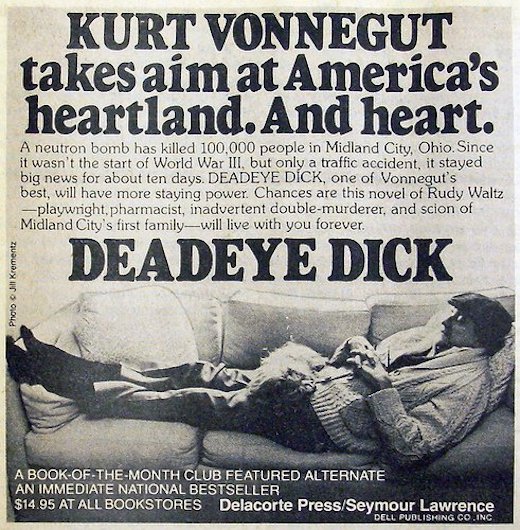
Author Kurt Vonnegut incorporated several recipes into his 1982 novel Deadeye Dick, inspired by James Beard’s American Cookery, Marcella Hazan’s The Classic Italian Cook Book, and Bea Sandler’s The African Cookbook.
He writes in the preface that these recipes are intended to provide “musical interludes for the salivary glands,” warning readers that “no one should use this novel for a cookbook. Any serious cook should have the reliable originals in his or her library anyway.”
So with that caveat in mind…
Early on, the narrator/titular character, née Rudy Waltz, shares a recipe from his family’s former cook, Mary Hoobler, who taught him “everything she knew about cooking and baking”:
MARY HOOBLER’S CORN BREAD
Mix together in a bowl half a cup of flour, one and a half cups of yellow corn-meal, a teaspoon of salt, a teaspoon of sugar, and three teaspoons of baking powder.
Add three beaten eggs, a cup of milk, a half cup of cream, and a half cup of melted butter.
Pour it into a well-buttered pan and bake it at four hundred degrees for fifteen minutes.
Cut it into squares while it is still hot. Bring the squares to the table while they are still hot, and folded in a napkin.
Barely two paragraphs later, he’s sharing her barbecue sauce. It sounds delicious, easy to prepare, and its placement gives it a strong flavor of Slaughterhouse-Five’s “so it goes” and “Poo-tee-weet?” — as ironic punctuation to Father Waltz’s full on embrace of Hitler, a seeming non sequitur that forces readers to think about what comes before:
When we all posed in the street for our picture in the paper, Father was forty-two. According to Mother, he had undergone a profound spiritual change in Germany. He had a new sense of purpose in life. It was no longer enough to be an artist. He would become a teacher and political activist. He would become a spokesman in America for the new social order which was being born in Germany, but which in time would be the salvation of the world.
This was quite a mistake.
MARY HOOBLER’S BARBECUE SAUCE
Sauté a cup of chopped onions and three chopped garlic cloves in a quarter of a pound of butter until tender.
Add a half cup of catsup, a quarter cup of brown sugar, a teaspoon of salt, two teaspoons of freshly ground pepper, a dash of Tabasco, a tablespoon of lemon juice, a teaspoon of basil, and a tablespoon of chili powder.
Bring to a boil and simmer for five minutes.
Rudy’s father is not the only character to falter.
Rudy’s mistake happens in the blink of an eye, and manages to upend a number of lives in Midland City, a stand in for Indianapolis, Vonnegut’s hometown.
His family loses their money in an ensuing lawsuit, and can no longer engage Mary Hoobler and the rest of the staff.
Young Rudy, who’s spent his childhood hanging out with the servants in Mary’s cozy kitchen, finds it “easy and natural” to cater to his parents in the manner to which they were accustomed:
As long as they lived, they never had to prepare a meal or wash a dish or make a bed or do the laundry or dust or vacuum or sweep, or shop for food. I did all that, and maintained a B average in school, as well.
What a good boy was I!
EGGS À LA RUDY WALTZ (age thirteen)
Chop, cook, and drain two cups of spinach.
Blend with two tablespoons of butter, a teaspoon of salt, and a pinch of nutmeg.
Heat and put into three oven-proof bowls or cups.
Put a poached egg on top of each one, and sprinkle with grated cheese.
Bake for five minutes at 375 degrees. Serves three: the papa bear, the mama bear, and the baby bear who cooked it—and who will clean up afterwards.
By high school, Rudy’s heavy domestic burden has him falling asleep in class and reproducing complicated desserts from recipes in the local paper. (“Father roused himself from living death sufficiently to say that the dessert took him back forty years.”)
LINZER TORTE (from the Bugle-Observer)
Mix half a cup of sugar with a cup of butter until fluffy.
Beat in two egg yolks and half a teaspoon of grated lemon rind.
Sift a cup of flour together with a quarter teaspoon of salt, a teaspoon of cinnamon, and a quarter teaspoon of cloves. Add this to the sugar-and-butter mixture.
Add one cup of unblanched almonds and one cup of toasted filberts, both chopped fine.
Roll out two-thirds of the dough until a quarter of an inch thick.
Line the bottom and sides of an eight-inch pan with dough.
Slather in a cup and a half of raspberry jam.
Roll out the rest of the dough, make it into eight thin pencil shapes about ten inches long. Twist them a little, and lay them across the top in a decorative manner. Crimp the edges.
Bake in a preheated 350-degree oven for about an hour, and then cool at room temperature.
A great favorite in Vienna, Austria, before the First World War!
Rudy eventually relocates to the Grand Hotel Oloffson in Port au Prince, Haiti, which is how he manages to survive the — SPOILER — neutron bomb that destroys Midland City.
Here is a recipe for chocolate seafoams, courtesy of one of Midland City’s fictional residents:
MRS. GINO MARTIMO’S SPUMA DI CIOCCOLATA
Break up six ounces of semisweet chocolate in a saucepan.
Melt it in a 250-degree oven.
Add two teaspoons of sugar to four egg yolks, and beat the mixture until it is pale yellow.
Then mix in the melted chocolate, a quarter cup of strong coffee, and two tablespoons of rum.
Whip two-thirds of a cup of cold, heavy whipping cream until it is stiff. Fold it into the mixture.
Whip four egg whites until they form stiff peaks, then fold them into the mixture.
Stir the mixture ever so gently, then spoon it into cups, each cup a serving.
Refrigerate for twelve hours.
Serves six.
Other recipes in Rudy’s repertoire originate with the Grand Hotel Oloffson’s most valuable employee, headwaiter and Vodou practitioner Hippolyte Paul De Mille, who “claims to be eighty and have fifty-nine descendants”:
He said that if there was any ghost we thought should haunt Midland City for the next few hundred years, he would raise it from its grave and turn it loose, to wander where it would.
We tried very hard not to believe that he could do that.
But he could, he could.
HAITIAN FRESH FISH IN COCONUT CREAM
Put two cups of grated coconut in cheesecloth over a bowl.
Pour a cup of hot milk over it, and squeeze it dry.
Repeat this with two more cups of hot milk. The stuff in the bowl is the sauce.
Mix a pound of sliced onions, a teaspoon of salt, a half teaspoon of black pepper, and a teaspoon of crushed pepper.
Sauté the mixture in butter until soft but not brown.
Add four pounds of fresh fish chunks, and cook them for about a minute on each side.
Pour the sauce over the fish, cover the pan, and simmer for ten minutes. Uncover the pan and baste the fish until it is done—and the sauce has become creamy.
Serves eight vaguely disgruntled guests at the Grand Hotel Oloffson.
HAITIAN BANANA SOUP
Stew two pounds of goat or chicken with a half cup of chopped onions, a teaspoon of salt, half a teaspoon of black pepper, and a pinch of crushed red pepper. Use two quarts of water.
Stew for an hour.
Add three peeled yams and three peeled bananas, cut into chunks.
Simmer until the meat is tender. Take out the meat. What is left is eight servings of Haitian banana soup.
Bon appétit!
The recipe that closes the novel is couched in an anecdote that’s equal parts scatology and epiphany.
As a daughter of Indianapolis who was a junior in high school the year Deadeye Dick was published, I can attest that Polka-Dot Brownies would have been a hit at the bake sales of my youth:
POLKA-DOT BROWNIES
Melt half a cup of butter and a pound of light-brown sugar in a two-quart saucepan. Stir over a low fire until just bubbly.
Cool to room temperature.
Beat in two eggs and a teaspoon of vanilla.
Stir in a cup of sifted flour, a half teaspoon of salt, a cup of chopped filberts, and a cup of semisweet chocolate in small chunks.
Spread into a well-greased nine-by-eleven baking pan.
Bake at two hundred and thirty-five degrees for about thirty-five minutes.
Cool to room temperature, and cut into squares with a well-greased knife.
Enjoy, in moderation of course.
I was wearing my best suit, which was as tight as the skin of a knackwurst. I had put on a lot of weight recently. It was the fault of my own good cooking. I had been trying out a lot of new recipes, with considerable success. — Rudy Waltz
Related Content:
Why Should We Read Kurt Vonnegut? An Animated Video Makes the Case
Watch a Sweet Film Adaptation of Kurt Vonnegut’s Story, “Long Walk to Forever”
The Recipes of Iconic Authors: Jane Austen, Sylvia Plath, Roald Dahl, the Marquis de Sade & More
Ayun Halliday is an author, illustrator, theater maker and Chief Primatologist of the East Village Inky zine. Follow her @AyunHalliday
Read More...The Only Footage of Bruce Lee Fighting for Real (1967)
Two years after the release of Quentin Tarantino’s Once Upon a Time in Hollywood, people are still arguing about its brief portrayal of Bruce Lee. Whether it accurately represented his personality is one debate, but much more important for martial-arts enthusiasts is whether it accurately represented his fighting skills. This could easily be determined by holding the scene in question up against footage of the real Bruce Lee in action, but almost no such footage exists. While Lee’s performances in films like Enter the Dragon and Game of Death continue to win him fans 48 years after his death, their fights — however physically demanding — are, of course, thoroughly choreographed and rehearsed performances.
Hence the way, in Once Upon a Time in Hollywood, Brad Pitt’s rough-hewn stuntman Cliff Booth dismisses screen martial artists like Lee as “dancers.” Those are fighting words, and indeed a fight ensues, though one meant to get laughs (and to illuminate the characters’ opposing physical and emotional natures) rather than seriously to recreate a contest between trained martial artist and simple bruiser.
As for how Lee handled himself in actual fights, we have no surviving visual evidence but the clips above, shot during a couple of matches in 1967. The event was the Long Beach International Karate Championships, where three years earlier Lee’s demonstration of such improbable physical feats as two-finger push-ups and one-inch punches got him the attention in the U.S. that led to the role of Kato on The Green Hornet.
In these 1967 bouts, the now-famous Lee uses the techniques of Jeet Kune Do, his own hybrid martial-arts philosophy emphasizing usefulness in real-life combat. “First he fights Ted Wong, one of his top Jeet Kune Do students,” says Twisted Sifter. “They are allegedly wearing protective gear because they weren’t allowed to fight without them as per California state regulations.” Lee is the one wearing the gear with white straps — as if he weren’t identifiable by sheer speed and control alone. Seen today, his fighting style in this footage reminds many of modern-day mixed martial arts, a sport that might not come into existence had Lee never popularized the practical combination of elements drawn from all fighting styles. Whether the man himself was as arrogant as Tarantino made him out to be, he must have suspected that martial-arts would only be catching up with him half a century later.
Related Content:
Bruce Lee’s Only Surviving TV Interview, 1971: Lost and Now Found
Bruce Lee Auditions for The Green Hornet (1964)
The Philosophy of Bruce Lee Gets Explored in a New Podcast
The Poetry of Bruce Lee: Discover the Artistic Life of the Martial Arts Icon
Watch 10-Year-Old Bruce Lee in His First Starring Role (1950)
Based in Seoul, Colin Marshall writes and broadcasts on cities, language, and culture. His projects include the Substack newsletter Books on Cities, the book The Stateless City: a Walk through 21st-Century Los Angeles and the video series The City in Cinema. Follow him on Twitter at @colinmarshall or on Facebook.
Read More...How West Magazine Created a Southern-California Pop-Culture Aesthetic with the Help of Milton Glaser, Gahan Wilson, and Others (1967–1972)
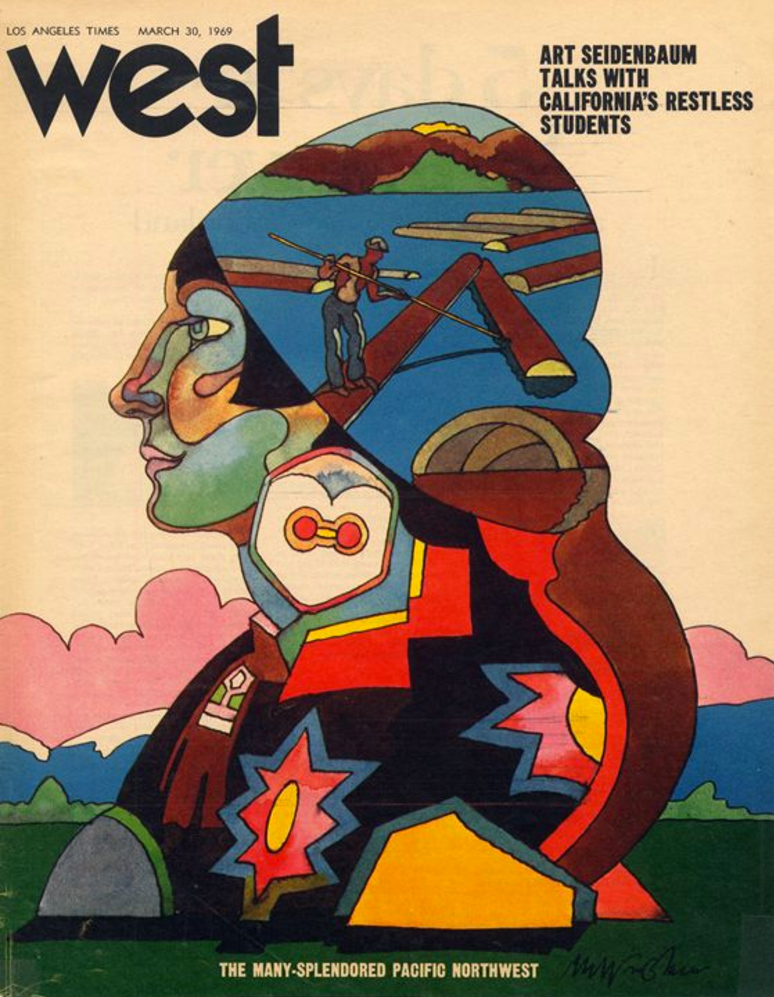
In the late 1960s, a counterculture-minded media professional could surely have imagined more appealing places to work than the Los Angeles Times. Widely derided as the official organ of the Southern California Babbitt, the paper also put out a bland Sunday supplement called West magazine. But West had the potential to evolve into something more vital — or so seemed to think its editor, Jim Bellows. The creator of “the original New York magazine in the early 1960s,” writes Design Observer’s Steven Heller, Bellows convinced a young adman named Mike Salisbury, “who worked for Carson Roberts Advertising in L.A. (where Ed Ruscha and Terry Gilliam worked), to accept the job as art director.”
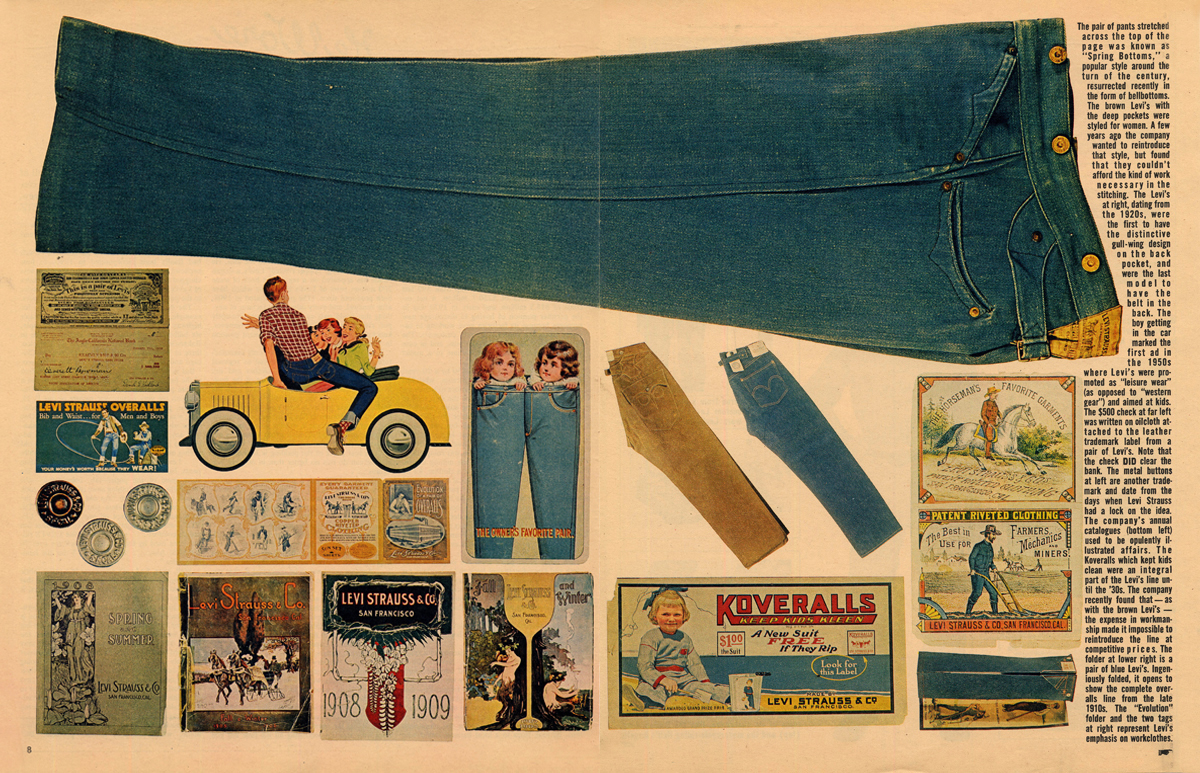
Salisbury injected West “with such an abundance of pop culture visual richness that it was more like a miniature museum than weekly gazette.” Its weekly issues “covered a wide range of themes — mostly reflecting Salisbury’s insatiable curiosities — from a feature on basketball that illustrated the tremendous size of center forwards by showing a life-size photograph of Wilt Chamberlin’s Converse sneaker, to a pictorial history of movie star pinups with a bevy of gorgeous silhouettes fanning on the page, to an array of souped-up VW Beetles in all shapes and sizes.”
On any given Sunday, subscribers might find themselves treated to “the history of Mickey Mouse, Coca-Cola art (the first time it was published as ‘art’), the visual history of Levis, Hollywood garden apartments, Raymond Chandler locations, and Kustom Kars.”
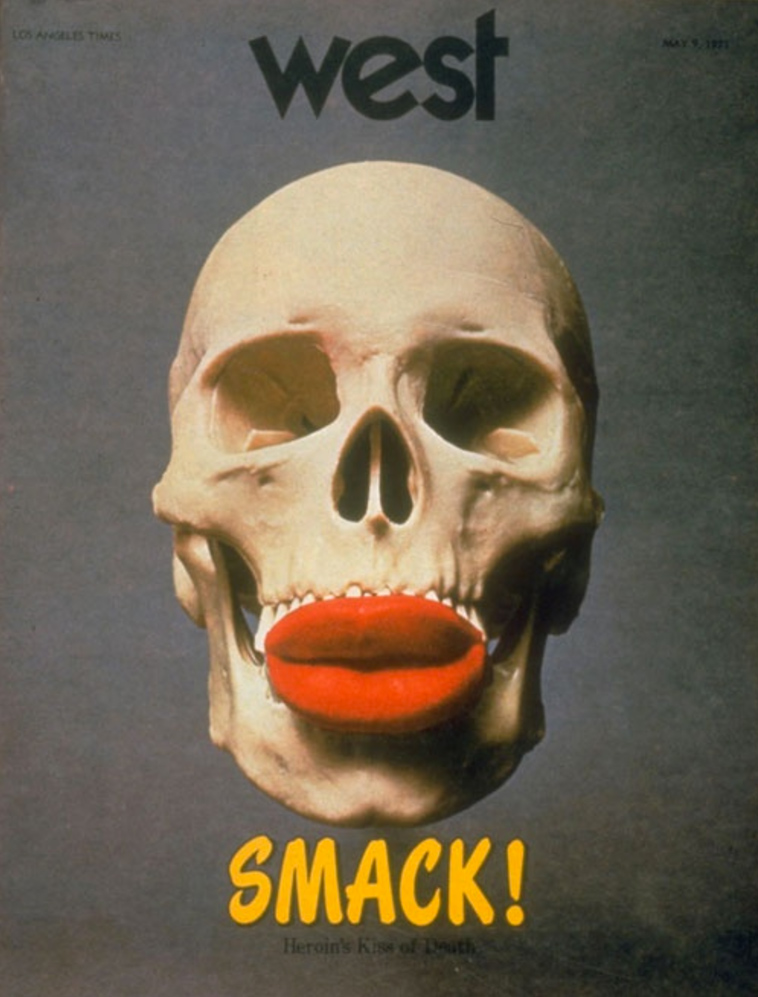
“I was the writer on the Coca-Cola ‘art’ piece as well as the first ‘programmatic’ architecture article to see print,” says a commenter under the Design Observer retrospective named Larry Dietz. He also claims to have written the feature on Raymond Chandler’s Los Angeles; much later, he adds, Chinatown screenwriter “Robert Towne said that he was inspired to learn about L.A. history from that piece, but that the writing was crappy.” But then, the main impact of Salisbury’s West was never meant to be textual. Heller quotes Salisbury as saying that “design was not my sole objective: cinema-graphic information is a better definition.” Of all the covers he designed, he remembers the one just above, promoting an exposé on heroin, as having been the most controversial: “Don’t give me too much reality over Sunday breakfast,” he heard readers grumbling.
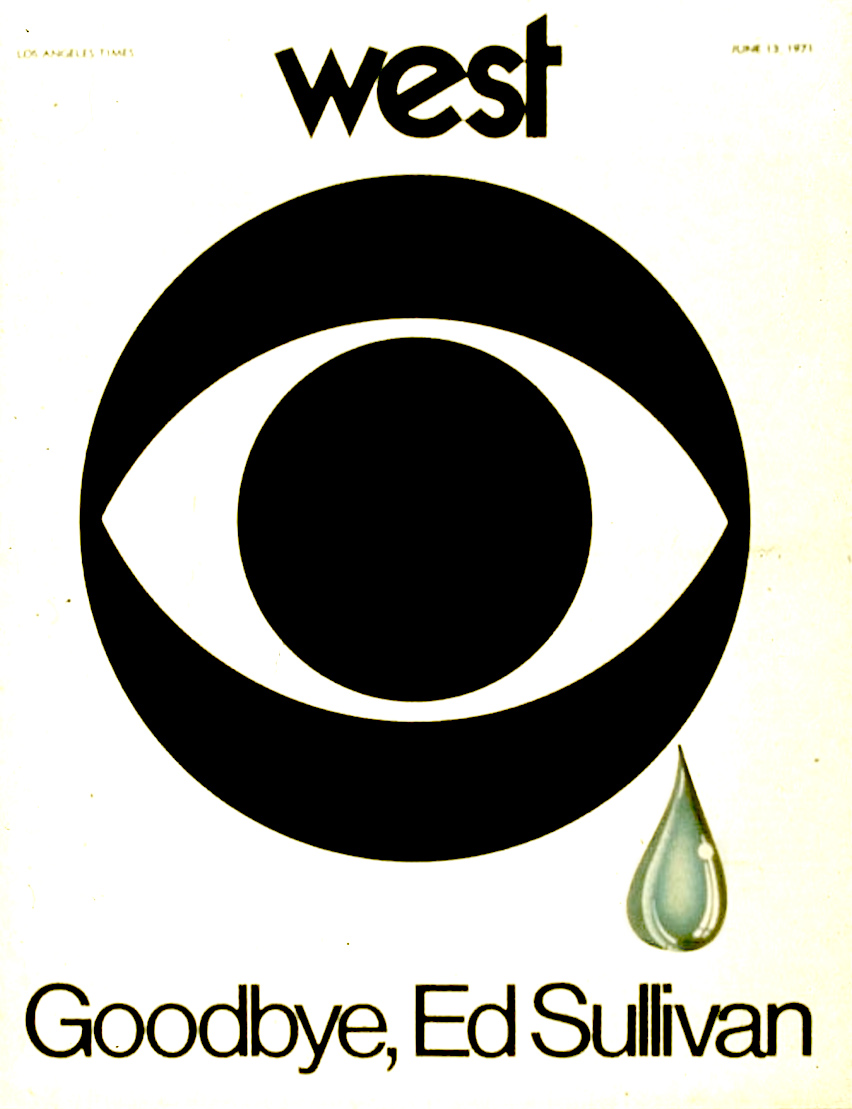
Other memorable West covers include the magazine’s tribute to the just-canceled Ed Sullivan show in 1971, as well as contributions by artists and designers like Victor Moscoso, Gahan Wilson, John Van Hamersveld, and Milton Glaser, all figures who did a great deal to craft the American zeitgeist of the 1960s and 70s. The magazine as a whole consolidated the Southern Californian pop-cultural aesthetic of its period, as distinct from what Salisbury calls the “quasi-Victorian” look and feel of San Francisco to the north and the “Rococo or Baroque” New York to the east. Los Angeles, to his mind, was “streamline,” emblematized by the culture and industry of motorcycle customization and its “belief in Futurism.”
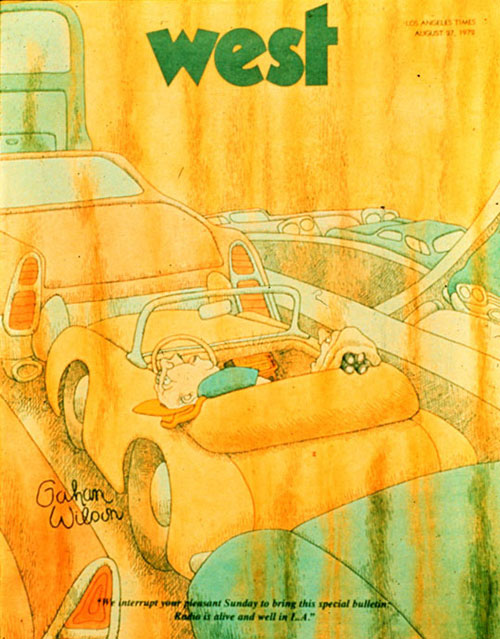
West was a product of the Los Angeles Times under Otis Chandler, publisher from 1960 to 1980, who dedicated his career to expanding the scope and ambition of the newspaper his great-grandfather had once run. His labors paid off in retrospect, especially from readers as astute as Joan Didion, who praised Chandler’s Times to the skies. But by 1972, West seemed to have become too much of an extravagance even for him. After the magazine’s cancellation, Salisbury moved on to Rolling Stone, then in the process of converting from a newspaper to a magazine format. No small part of that magazine’s pop-cultural power in the 70s must have owed to his art direction.
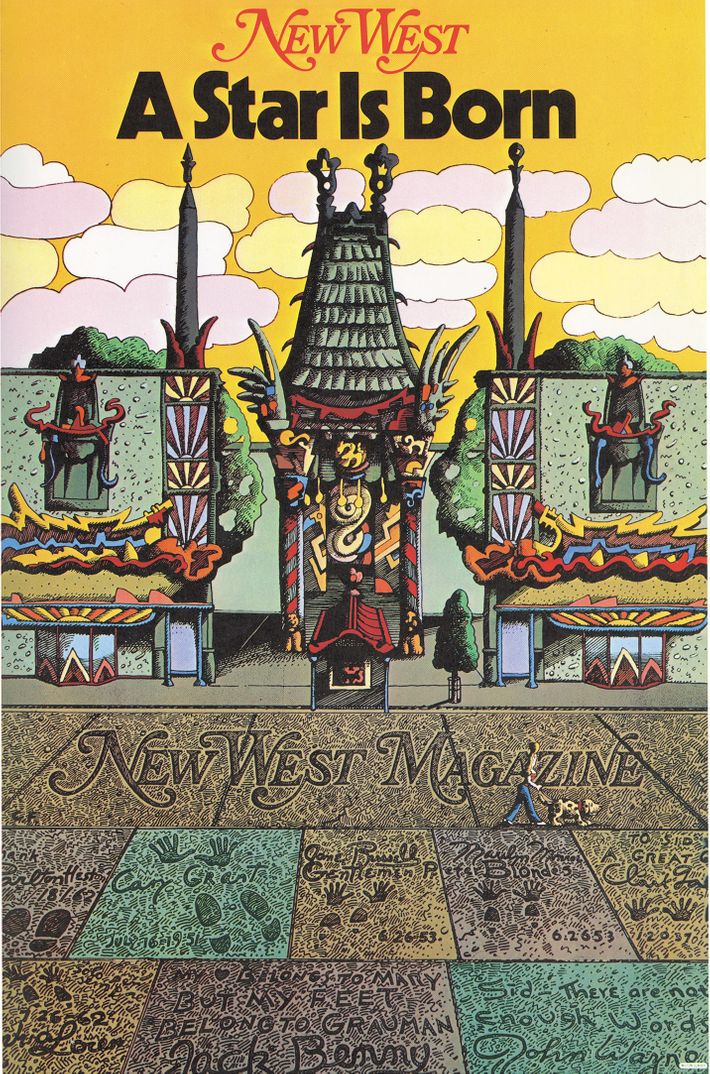
Later in the decade, both Salisbury and Glaser would bring their talents to the just-launched New West magazine. It had no direct connection with West or the Los Angeles Times, but was conceived as the sister publication of New York Magazine, which itself had been re-invented by Glaser and publisher Clay Felker in the mid-1960s. Its debut cover, just above, featured Glaser’s artwork; three years later, in 1979, Salisbury designed a cover on California’s water crisis that the American Institute of Graphic Arts’ Steven Brower calls “prescient.” At that same time, he notes, Salisbury “worked with Francis Ford Coppola on the set design for Apocalypse Now; he designed Michael Jackson’s breakthrough album, Off the Wall,” and he even collaborated with George Harrison on his eponymous album.” But when “veteran magazine art directors” get together and “reminisce about the glory years,” writes Heller, it’s West they inevitably talk about.
Related Content:
Milton Glaser’s Stylish Album Covers for The Band, Nina Simone, John Cage & Many More
Based in Seoul, Colin Marshall writes and broadcasts on cities, language, and culture. His projects include the Substack newsletter Books on Cities, the book The Stateless City: a Walk through 21st-Century Los Angeles and the video series The City in Cinema. Follow him on Twitter at @colinmarshall or on Facebook.
Read More...What Made Marcel Duchamp’s Urinal Art Famous–and an Inventive Prank
To our way of thinking, the question is not whether Marcel Duchamp conceived of Fountain, history’s most famous urinal, as art or prank.
Nor is it the ongoing controversy as to whether the piece should be attributed to Duchamp or his friend, avant-garde poet and artist Baroness Elsa von Freytag-Loringhoven.
The question is why more civilians don’t head for the men’s room armed with black paint pens (or alternatively, die-cut stickers) to enhance every urinal they encounter with the signature of the non-existent “R. Mutt.”
The art world bias that was being tested in 1917, when the signed urinal was unsuccessfully submitted to an unjuried exhibition at the Society of Independent Artists, has not vanished entirely, but as curator Sarah Urist Green explains in the above episode of The Art Assignment, the past hundred years has witnessed a lot of conceptual art afforded space in even the most staid institutions.
Fountain was a premeditated piece, but sometimes, these artworks, or pranks, if you prefer — Green favors letting each viewer reach their own conclusions — are more spontaneous in nature.
She references the case of two teenaged boys who, underwhelmed by a Mike Kelley stuffed animal installation at the San Francisco Museum of Modern Art, positioned a pair of eyeglasses in such a way that other visitors assumed they, too, were part of an exhibit.
One of the boys told The New York Times that “when art is more abstract, it is more difficult to interpret,” causing him to lose interest.
“We had a good laugh about it,” the other added.
And that, for us, gets to the heart of Fountain’s enduring power.
Plenty of art world stunts, whether their intention was to shock, critique, or screw with the gatekeepers have been lost to the ages.
Fountain, at heart, is a particularly memorable kind of funny…
Funny in the same way poet Russell Edson’s “With Sincerest Regrets” is funny:
WITH SINCEREST REGRETS
for Charles Simic
Like a white snail the toilet slides into the living room, demanding to be loved. It is impossible, and we tender our sincerest regrets.In the book of the heart there is no mention made of plumbing.
And though we have spent our intimacy many times with you, you belong to a rather unfortunate reference, which we would rather not embrace…
The toilet slides out of the living room like a white snail, flushing with grief…
More recent art world controversies — Chris Ofili’s “The Holy Virgin Mary” and Andres Serrano’s Piss Christ — arose from the juxtaposition of serious religious subject matter with bodily fluids.
By contrast, Fountain took the piss out of a secular high church — the established art world.
And it did so with a factory-fresh urinal, no more gross than a porcelain dinner plate.
No wonder people couldn’t stop talking about it!
We still are.
Green recounts how performance artists Cai Yuan and Jian Jun Xi attempted to “celebrate the spirit of modern art” by urinating on the Tate Modern’s Fountain replica in 2000.
That performance, titled “Two artists piss on Duchamp’s Urinal” was “intended to make people re-evaluate what constituted art itself and how an act could be art.”
Their action might have made a more elegant — and funnier — statement had the Fountain replica not been displayed inside a vitrine.
Still, drawing attention to their inability to hit the target might, as Green suggests, highlight how museum culture “fetishizes and protects the objects” it, or history, deems worthy.
Related Content:
When Brian Eno & Other Artists Peed in Marcel Duchamp’s Famous Urinal
Ayun Halliday is an author, illustrator, theater maker and Chief Primatologist of the East Village Inky zine. Follow her @AyunHalliday.
Read More...The Cramps Legendary Concert at a California Psychiatric Hospital Gets Revisited in the New Documentary, We Were There to Be There: Watch It Online
“Somebody told me you people are crazy, but I’m not so sure about that. You seem to be all right to me.” — Lux Interior
In the late 1970s and early 1980s, “San Francisco was a much more conservative place,” says Columbia University’s Lincoln Mitchell in the documentary above, We Were There to Be There. The new film chronicles the legendary 1978 appearance of psychobilly punks The Cramps and SF-based art-rockers The Mutants at the Napa State Hospital, an historic psychiatric facility in the famous wine-growing area. At the time, California’s former governor Ronald Reagan was contending for the presidency after slashing social services at the state level.
There were few political sympathies in the area for those confined to Napa State, as the new documentary above by Mike Plante and Jason Willis shows. Produced by Field of Vision, the film “explores the events that led to CBGB mainstays the Cramps driving over 3,000 miles to perform,” notes Rolling Stone’s Claire Shaffer. We Were There to Be There begins with this crucial socio-political context, remembering the show as “both a landmark moment for punk rock and for the perception of mental health care within U.S. popular culture.”
The doc also explores how the performances could have made such an impact, when they were “seen by almost no one,” as Phil Barber writes at Vice: “about a dozen devoted punkers who drove up with the bands from San Francisco, and perhaps 100 or 200 patients.” Indeed, the show’s memory only survived thanks to “about 20 minutes of footage of The Cramps’ set shot by a small operation called Target Video,” a collective formed the previous year by video artist Joe Rees and collaborators Jill Hoffman, Jackie Sharp, and Sam Edwards.
The show came about through Howie Klein, a fixture of the San Francisco punk scene who wrote for local zines and booked the club Mabuhay Gardens before becoming president of Reprise Records. Napa State’s new director Bart Swain had been staging concerts for the residents. Klein promised to send an early new wave band but sent The Mutants and The Cramps instead, to Swain’s initial dismay. (He was sure he would be fired after the show.)
Released in 1984, the edited Target release opens with a shot of an atomic blast and doesn’t let up. “Maybe you’ve seen the video. If so, you haven’t forgotten it,” writes Barber: “The black-and-white images are distorted and poorly lit. The audio is rough. It’s a transfixing spectacle. The Cramps make no attempt to pacify their mentally ill admirers. Nor do they wink at some inside joke. They just rip.”
Target Video toured the U.S. and Europe, screening its politically-charged punk concert films for eager young kids in the Reagan/Thatcher era, who saw a very different approach to treating people suffering from mental illness in the footage from Napa State. The documentary includes interviews with the Mutants, whose performance didn’t make it on film, and fixtures of the San Francisco scene like Vicky Vale, publisher of RE/Search, who provide critical commentary on the event.
Despite its reputation as a bizarre novelty gig, the show came off as controlled chaos — just like any other Cramps gig. “It was a beautiful, beautiful thing,” says Jill Hoffman-Kowal of Target Video. “What we did for those people, it was liberating. They had so much fun. They pretended they were singing, they were jumping on stage. It was a couple hours of total freedom. They didn’t judge the band, and the band didn’t judge them.”
We Were There to Be There will be added to our collection of Free Online Documentaries, a subset of our collection, 4,000+ Free Movies Online: Great Classics, Indies, Noir, Westerns, Documentaries & More
via Aeon
Related Content:
The Cramps Play a Mental Hospital in Napa, California in 1978: The Punkest of Punk Concerts
Josh Jones is a writer and musician based in Durham, NC. Follow him at @jdmagness
Read More...Take an Intellectual Odyssey with a Free MIT Course on Douglas Hofstadter’s Pulitzer Prize-Winning Book Gödel, Escher, Bach: An Eternal Golden Braid
In 1979, mathematician Kurt Gödel, artist M.C. Escher, and composer J.S. Bach walked into a book title, and you may well know the rest. Douglas R. Hofstadter won a Pulitzer Prize for Gödel, Escher, Bach: an Eternal Golden Braid, his first book, thenceforth (and henceforth) known as GEB. The extraordinary work is not a treatise on mathematics, art, or music, but an essay on cognition through an exploration of all three — and of formal systems, recursion, self-reference, artificial intelligence, etc. Its publisher settled on the pithy description, “a metaphorical fugue on minds and machines in the spirit of Lewis Carroll.”
GEB attempted to reveal the mind at work; the minds of extraordinary individuals, for sure, but also all human minds, which behave in similarly unfathomable ways. One might also describe the book as operating in the spirit — and the practice — of Herman Hesse’s Glass Bead Game, a novel Hesse wrote in response to the data-driven machinations of fascism and their threat to an intellectual tradition he held particularly dear. An alternate title (and key phrase in the book) Magister Ludi, puns on both “game” and “school,” and alludes to the importance of play and free association in the life of the mind.
Hesse’s esoteric game, writes his biographer Ralph Freedman, consists of “contemplation, the secrets of the Chinese I Ching and Western mathematics and music” and seems similar enough to Hofstadter’s approach and that of the instructors of MIT’s open course, Gödel, Escher, Bach: A Mental Space Odyssey. Offered through the High School Studies Program as a non-credit enrichment course, it promises “an intellectual vacation” through “Zen Buddhism, Logic, Metamathematics, Computer Science, Artificial Intelligence, Recursion, Complex Systems, Consciousness, Music and Art.”
Students will not study directly the work of Gödel, Escher, and Bach but rather “find their spirits aboard our mental ship,” the course description notes, through contemplations of canons, fugues, strange loops, and tangled hierarchies. How do meaning and form arise in systems like math and music? What is the relationship of figure to ground in art? “Can recursion explain creativity,” as one of the course notes asks. Hofstadter himself has pursued the question beyond the entrenchment of AI research in big data and brute force machine learning. For all his daunting erudition and challenging syntheses, we must remember that he is playing a highly intellectual game, one that replicates his own experience of thinking.
Hofstadter suggests that before we can understand intelligence, we must first understand creativity. It may reveal its secrets in comparative analyses of the highest forms of intellectual play, where we see the clever formal rules that govern the mind’s operations; the blind alleys that explain its failures and limitations; and the possibility of ever actually reproducing workings in a machine. Watch the lectures above, grab a copy of Hofstadter’s book, and find course notes, readings, and other resources for the fascinating course Gödel, Escher, Bach: A Mental Space Odyssey archived here. The course will be added to our list, 1,700 Free Online Courses from Top Universities.
Related Content:
How a Bach Canon Works. Brilliant.
Mathematics Made Visible: The Extraordinary Mathematical Art of M.C. Escher
Josh Jones is a writer and musician based in Durham, NC. Follow him at @jdmagness
Read More...Watch the Live TV Adaptation of George Orwell’s Nineteen Eighty-Four, the Most Controversial TV Drama of Its Time (1954)
“Wife Dies as She Watches,” announced a Daily Express headline after the broadcast of Nineteen Eighty-Four, a BBC adaptation of George Orwell’s novel. The article seems to have attributed the sudden collapse and death of a 42-year-old Herne Bay Woman to the production’s shocking content. That was the most dramatic of the many accusations leveled against the BBC of inflicting distress on the viewing public with Orwell’s bleak and harrowing vision of a totalitarian future. Yet that same public also wanted more, demanding a second broadcast that drew seven million viewers, the largest television audience in Britain since the Coronation of Elizabeth II, which had happened the previous year; Orwell’s book had been published just four years before that.
This was the mid-1950s, a time when standards of televisual decency remained almost wholly up for debate — and when most of what aired on television was broadcast live, not produced in advance. Daring not just in its content but its technical and artistic complexity, a project like Nineteen Eighty-Four pushed the limits of the medium, with a live orchestral score as well as fourteen pre-filmed segments meant to establish the unrelentingly grim surrounding reality (and to provide time for scene changes back in the studio).
“This unusual freedom,” says the British Film Institute, “helped make Nineteen Eighty-Four the most expensive TV drama of its day,” though the production’s effectiveness owes to much more than its budget.
“The careful use of close-ups, accompanied by recorded voice-over, allows us a window into Winston’s inner torment” as he “struggles to disguise his ‘thoughtcrimes’, while effectively representing Big Brother’s frightening omniscience.” It also demonstrates star Peter Cushing’s “grasp of small screen performance,” though he would go on to greater renown on the big screen in Hammer Horror pictures, and later as Star Wars’ Grand Moff Tarkin. (Wilfrid Brambell, who plays two minor parts, would for his part be immortalized as Paul McCartney’s very clean grandfather in A Hard Day’s Night.) Though it got producer-director Rudolph Cartier death threats at the time — perhaps because Orwell’s implicit indictment of a grubby, diminished postwar Britain hit too close to home — this adaptation of Nineteen Eighty-Four holds its own alongside the many made before and since. That’s true even now that its titular year is decades behind us rather than decades ahead.
Related Content:
Hear a Radio Drama of George Orwell’s 1984, Starring Patrick Troughton, of Doctor Who Fame (1965)
A Complete Reading of George Orwell’s 1984: Aired on Pacifica Radio, 1975
Rick Wakeman’s Prog-Rock Opera Adaptation of George Orwell’s 1984
Based in Seoul, Colin Marshall writes and broadcasts on cities, language, and culture. His projects include the Substack newsletter Books on Cities, the book The Stateless City: a Walk through 21st-Century Los Angeles and the video series The City in Cinema. Follow him on Twitter at @colinmarshall or on Facebook.
Read More...Support Us
We're hoping to rely on loyal readers, rather than erratic ads. Please click the Donate button and support Open Culture. You can use Paypal, Venmo, Patreon, even Crypto! We thank you!

About Us

Open Culture scours the web for the best educational media. We find the free courses and audio books you need, the language lessons & educational videos you want, and plenty of enlightenment in between.
Advertise With Us
FREE UPDATES!
GET OUR DAILY EMAIL
Get the best cultural and educational resources on the web curated for you in a daily email. We never spam. Unsubscribe at any time.
FOLLOW ON SOCIAL MEDIA
Open Culture editor Dan Colman scours the web for the best educational media. He finds the free courses and audio books you need, the language lessons & movies you want, and plenty of enlightenment in between.
Advertise With Us


