How Rocky Horror Became a Cult Phenomenon
Call us old fashioned but invoking pumpkin spice and The Rocky Horror Picture Show in the same breath feels transgressive to the point of sacrilege.
The creator of the Polyphonic video, above, is on much firmer footing tying the film to queer liberation.
Prior to its now famous cinematic adaptation, The Rocky Horror Show was a low budget theatrical success, with nearly 3,000 performances and the 1973 Evening Standard Theatre Award for Best Musical to its name.
Reviewer Michael Billington lauded Tim Curry’s “garishly Bowiesque performance” as Dr. Frank-N-Furter, the self-proclaimed Sweet Transvestite from Transsexual, Transylvania, but also acknowledged some drabber peacocks defying gender expectations in that production:
…for me the actor of the evening was Jonathan Adams as the Narrator: a bulky, heavy-jowled Kissinger-like figure who enters into the rock numbers with the stately aplomb of a dowager duchess doing a strip.
Playwright Richard O’Brien, who doubled as Frank-N-Furter’s sepulchral butler, Riff Raff, conceived of the show as a spoof on campy sci fi and gothic horror films in the Hammer Productions vein. He also owed a debt to glam rock, which “allowed me to be myself more.”
(Hats off, here, to Polyphonic for one of the best nutshell descriptions of glam rock we’ve ever encountered:
Glam rock was a queer led movement that was built on the back of gender non-conformity. Visually it was a hodgepodge of style from early Hollywood glamour to 50s pinups and cabaret theater augmented by touches of ancient civilizations sci-fi and and the occult.)
“The element of transvestism wasn’t intended as a major theme,” O’Brien told interviewer Patricia Morrisroe, “although it turned out to be one:”
I’ve always thought of Frank as a cross between Ivan the Terrible and Cruella de Ville of Walt Disney’s 101 Dalmations. It’s that sort of evil beauty that’s attractive. I found Brad and Janet very appealing too, especially the whole fifties image of boy-girl relationships. In the end, you see that Janet is not the weak little thing that society demands her to be and Brad is not the pillar of strength.
Audiences and critics may have loved the original show, but the film version did not find immediate favor. Reviewer Roger Ebert reflected that “it would be more fun, I suspect, if it weren’t a picture show:
It belongs on a stage, with the performers and audience joining in a collective send-up…The choreography, the compositions and even the attitudes of the cast imply a stage ambiance. And it invites the kind of laughter and audience participation that makes sense only if the performers are there on the stage, creating mutual karma.
A prophetic statement, as it turns out…
Once the producers began marketing the film as a midnight movie, repeat customers started coming up with the snarky callbacks that have become a de rigueur part of the experience.
“All the characters appear to be sophisticated, knowledgeable people but they’re really not,” O’Brien observed:
That allows people of a similar adolescent nature to feel they could be part of the whole thing. And now, in fact, they are.
Shadow casts positioned themselves in front of the screen, mimicking the action in cobbled together versions of designer Sue Blane’s costumes.
Audiences also afforded themselves the opportunity to dress outside the norm, creating a safe space where attendees could mess around with their gender expressions. The film may not end happily but that final scene is a great excuse for anyone who wants to take a lap in a corset and fishnets.
Rocky Horror’s flamboyance, humor, and defiance of the mainstream made it a natural fit with the queer community, with folks costumed as Frank-N-Furter, Riff Raff, Magenta and Columbia regularly turning up at fundraisers and pride events.
The film also deserves some activist street cred for saving a number of small indie movie theaters by fattening midnight box office receipts, a trend that continues nearly 50 years after the original release.
Admittedly, certain aspects of the script haven’t aged well.
“Virgins” attending their first live screening may be more shocked at the dearth of consent than the spectacle of Frank-n-Furter murdering Columbia’s rocker boyfriend Eddy with a pickaxe, then serving his remains for dinner.
Will they also recoil from Frank as an embodiment of toxic masculity in the queer space?
Quoth Columbia:
My God! I can’t stand any more of this! First you spurn me for Eddie, and then you throw him like an old overcoat for Rocky! You chew people up and then you spit them out again… I loved you… do you hear me? I loved you! And what did it get me? Yeah, I’ll tell you: a big nothing. You’re like a sponge. You take, take, take, and drain others of their love and emotion.
We’re hoping Frank, problematic though he may now seem, won’t ultimately be consigned to the dust bin of history.
For context, O’Brien recently told The Hollywood Reporter that the character was informed by his own experiences of cross-dressing as he tried to get a grip on his gender identity in the early 70s:
I used to beat myself up about the hand I was dealt. I don’t know how it works. I have no idea. I’ve read many tomes about the subject of the transvestic nature. It’s the cards you’re dealt. In a binary world it’s a bit of curse, really. Especially in those days when homosexuality was a crime. It’s just one of those things that western society wasn’t very keen on.
Real Content
1978 News Report on the Rocky Horror Craze Captures a Teenage Michael Stipe in Drag
– Ayun Halliday is the Chief Primatologist of the East Village Inky zine and author, most recently, of Creative, Not Famous: The Small Potato Manifesto and Creative, Not Famous Activity Book. Follow her @AyunHalliday.
Read More...A Secret Room with Drawings Attributed to Michelangelo Opens to Visitors in Florence
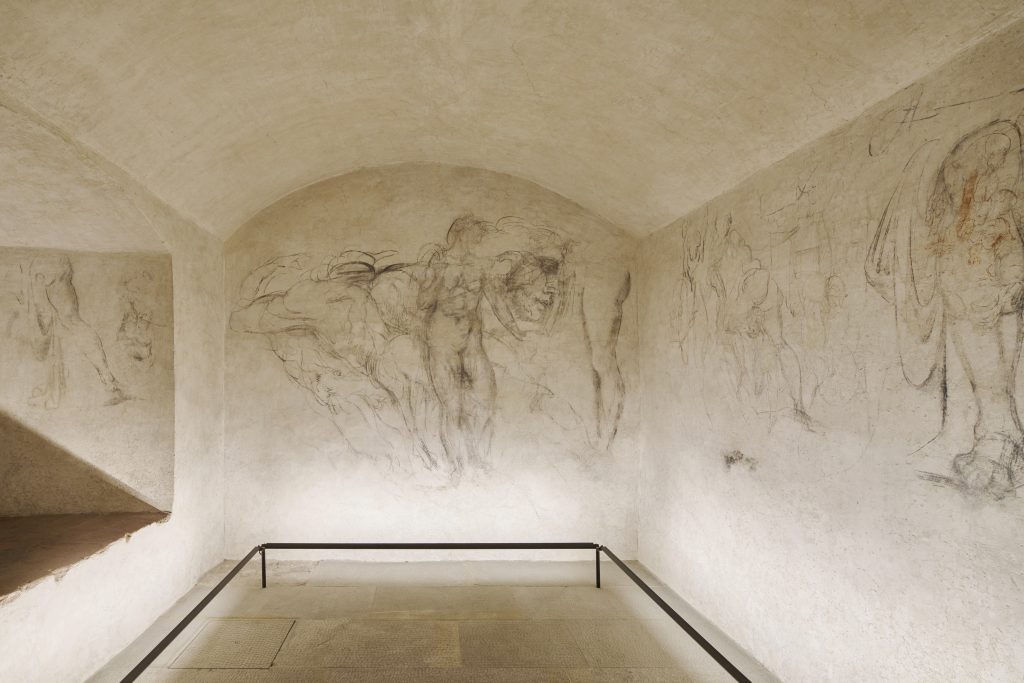
Images on this page come courtesy of the Musei del Bargello
In the year 1530, Michelangelo was sentenced to death by Pope Clement VII — who, not coincidentally, was born Giulio de’ Medici. That famous dynasty, which once seemed to hold absolute economic and political power in Florence, had just seen off a violent challenge to its rule by republican-minded Florentines who, emboldened by the sack of Rome in 1527, took their city from the House of Medici that same year. Alas, that particular Republic of Florence proved short-lived, thanks to the pope and Emperor Charles V’s agreement agreed to use military power to return it to Medici hands.
During the struggles against the Medici, the Florence-born Michelangelo had come to the aid of his hometown by working on its fortifications. It seems to have been his participation in the revolt that drew the ire of the Medici, despite their court’s on-and-off patronage of his work for the preceding four decades.
Mercifully, they never actually executed Michelangelo, and indeed pardoned him before long–not least so he could finish his work on the Sistine Chapel and the Medici family tomb. But how did he occupy himself while still living under the death sentence?
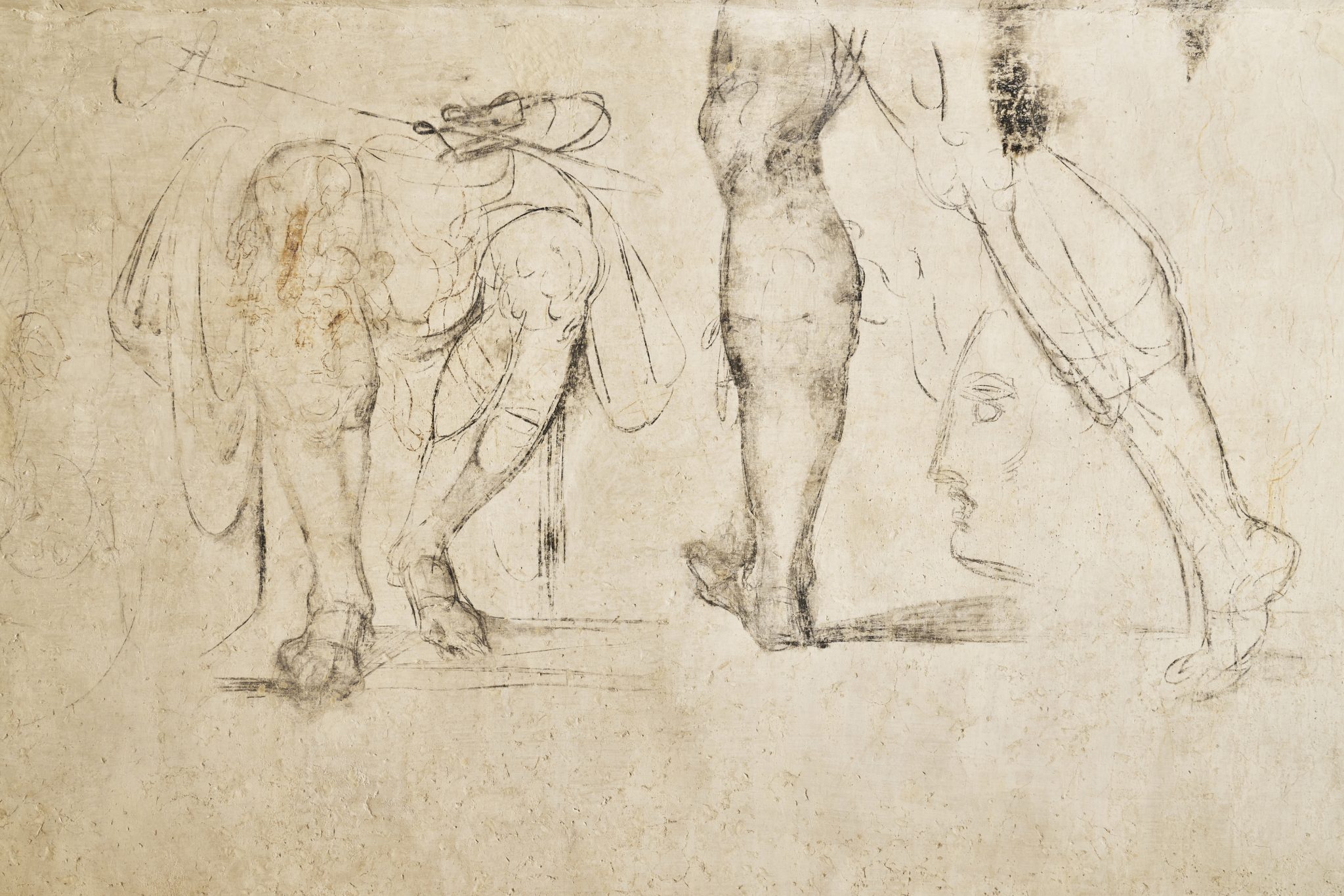
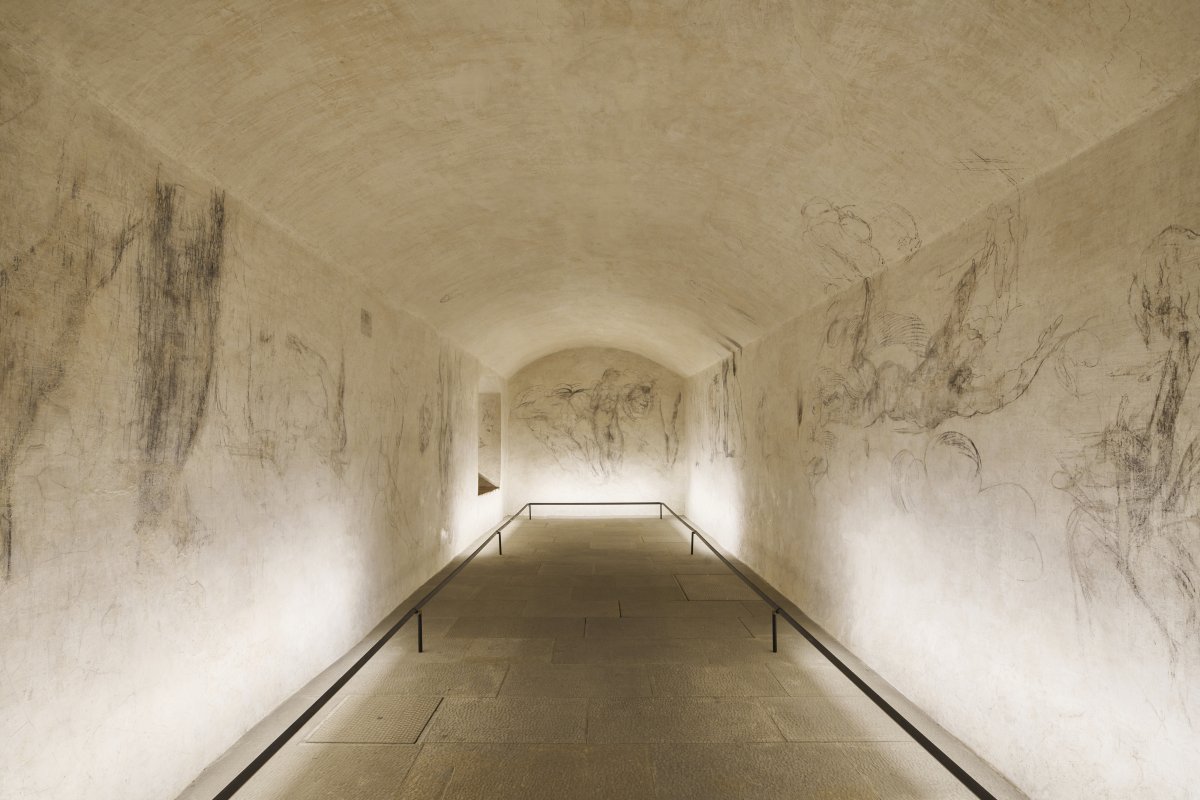
As one theory has it, he simply hid out — and in a corner of what’s now the Medici Chapels Museum at that. In a “tiny chamber beneath the Medici Chapels in the Basilica of San Lorenzo in 1530,” writes the Guardian’s Angela Giuffrida, Michelangelo spent a couple months “making dozens of drawings that are reminiscent of his previous works, including a drawing of Leda and the Swan, a painting produced during the same year that was later lost.” All of these he drew directly on the walls, and their existence “remained unknown until 1975 when Paolo Dal Poggetto, then the director of the Medici Chapels, one of five museums that make up the Bargello Museums, was searching for a suitable space to create a new exit for the museum.”
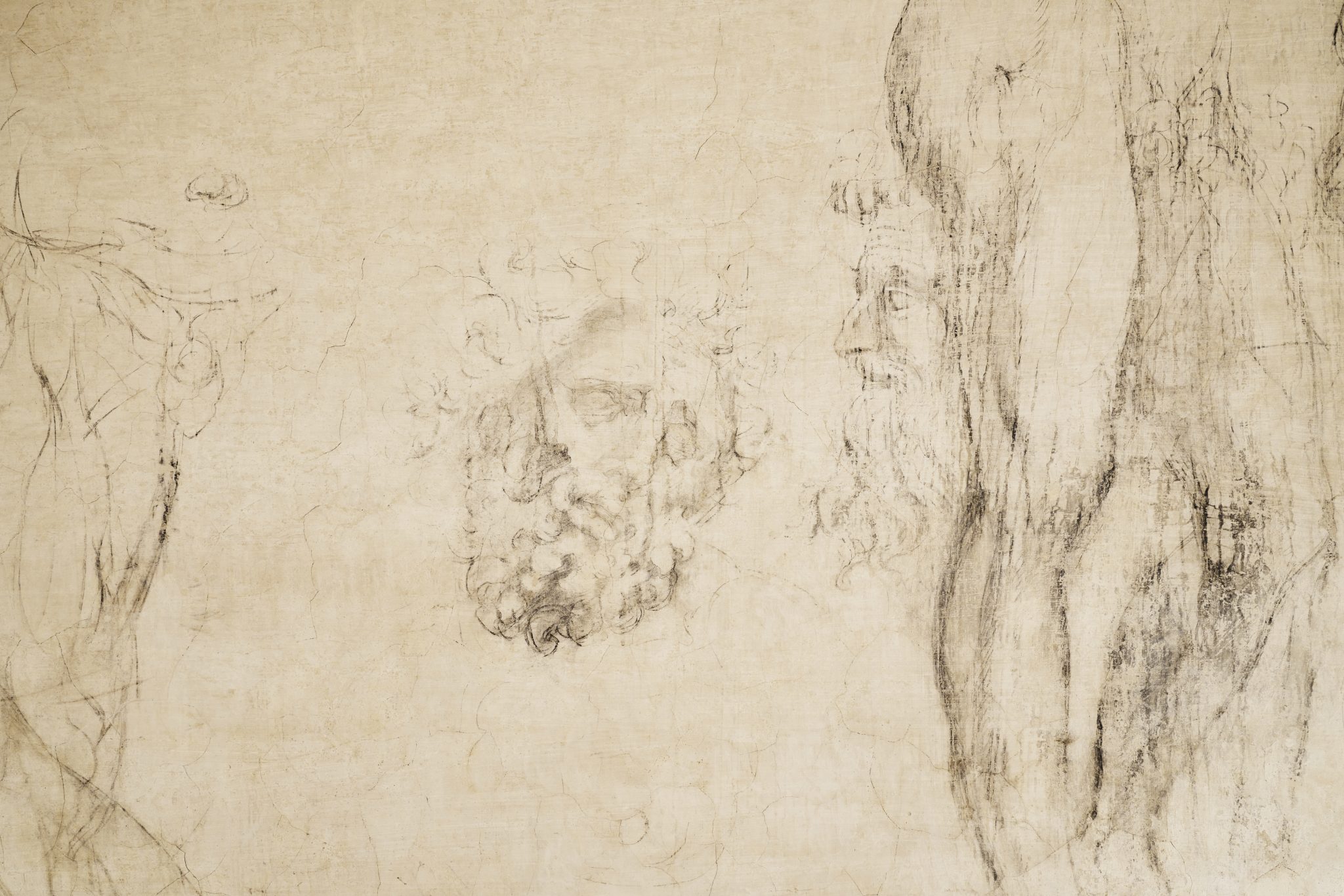
“Others doubt that Michelangelo, already in his 50s and an acclaimed artist with powerful patrons, would have spent time in such a dingy hide out,” writes the New York Times’ Jason Horowitz. “But many scholars believe that the sketches show his hand”: the “imposing nude near the entrance” that evokes The Resurrection of Christ; the sketches that “resemble the central figure of his The Fall of Phaeton. Some even think a flexed and disembodied arm on the wall evokes his David statue.” And starting next week, visitors will be able to judge these very drawings for themselves.
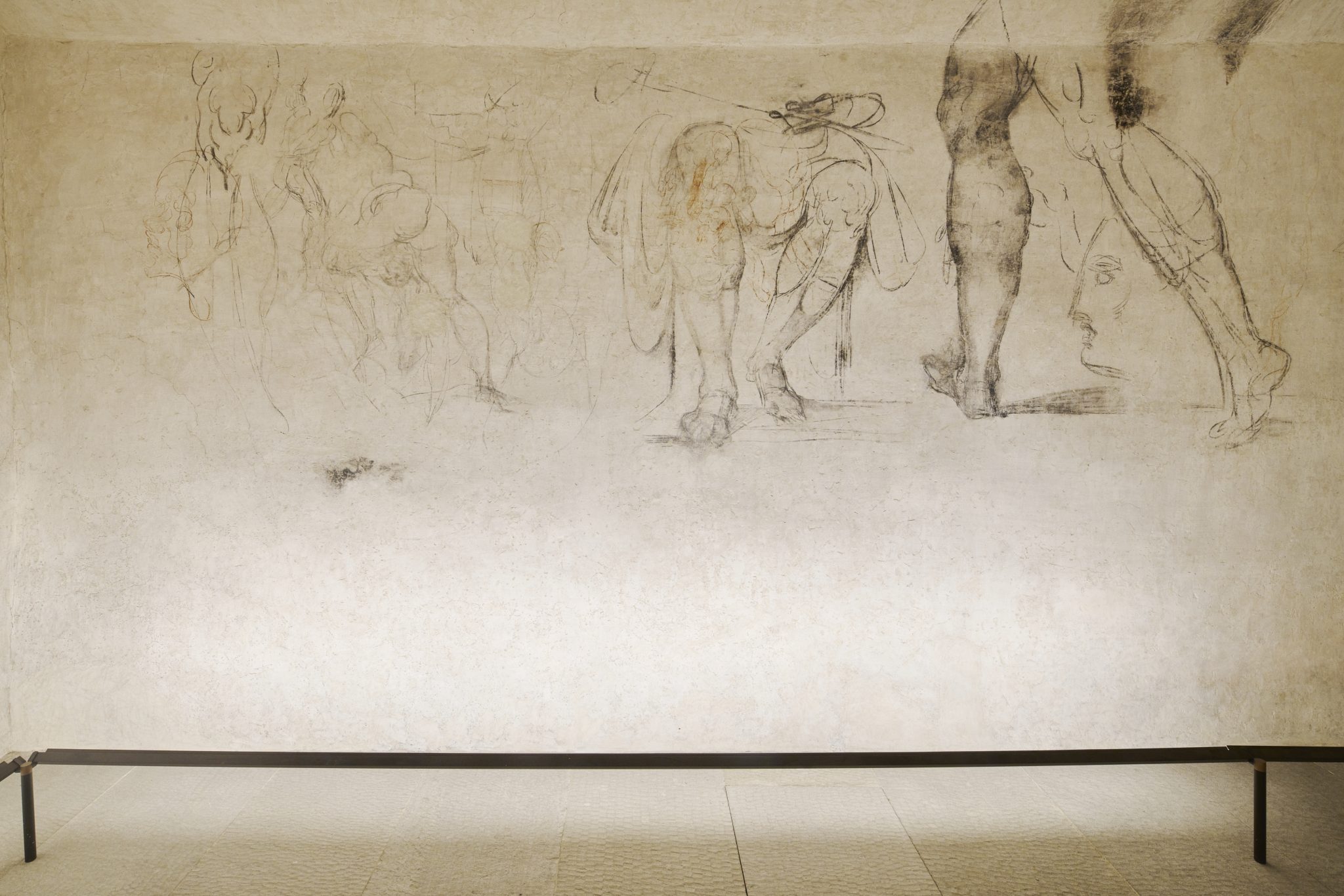
Not that you can just waltz into this stanza segreta: “Visits will be kept to groups of four and limited to 15 minutes, with 45 minute lights-out periods in between to protect the drawings,” Horowitz writes. ‘Tickets, each connected to a specific person whose I.D. will be checked to prevent tour operators from gobbling them up, will cost 32 euros (about $34), and include access to the Medici tombs.” During your own fifteen minutes in this cramped, obscure room turned tastefully-lit gallery, you may or may not feel the presence of Michelangelo, but you’ll surely find yourself reminded that a true artist never stops creating, no matter the circumstances in which he finds himself.
Related Content:
Watch the Painstaking and Nerve-Racking Process of Restoring a Drawing by Michelangelo
Michelangelo’s David: The Fascinating Story Behind the Renaissance Marble Creation
New Video Shows What May Be Michelangelo’s Lost & Now Found Bronze Sculptures
Michelangelo’s Illustrated Grocery List
Based in Seoul, Colin Marshall writes and broadcasts on cities, language, and culture. His projects include the Substack newsletter Books on Cities, the book The Stateless City: a Walk through 21st-Century Los Angeles and the video series The City in Cinema. Follow him on Twitter at @colinmarshall or on Facebook.
Read More...Watch David Bowie Perform “Starman” on Top of the Pops: Voted the Greatest Music Performance Ever on the BBC (1972)
The Beatles were made for black-and-white television, as evidenced by the immediacy with which their 1964 performance on The Ed Sullivan Show launched them into permanent international superstardom. Though only a few years younger than the Fab Four, their countryman David Bowie arose in a different era: that of color television, with its vastly expanded aesthetic range. Bowie is known to have carried himself as if his own international superstardom was guaranteed, even during his early years of struggle. But it was only when he took full, lurid advantage of the technologically-expanded sonic and visual palettes available to him that he truly became an icon.
“It’s deceptively easy to forget that in the summer of 1972 David Bowie was still yesterday’s news to the average Top of the Pops viewer, a one-hit wonder who’d had a novelty single about an astronaut at the end of the previous decade,” writes Nicholas Pegg in The Complete David Bowie. But his taking the stage of that BBC pop-musical institution “in a rainbow jumpsuit and shocking red hair put paid to that forever. Having made no commercial impact in the two months since its release, ‘Starman’ stormed up the chart.” As with “Space Oddity,” “the subtext is all: this is less a science-fiction story than a self-aggrandizing announcement that there’s a new star in town.”
“It is hard to reconstruct the drabness, the visual depletion of Britain in 1972, which filtered into the music papers to form the grey and grubby backdrop to Bowie’s physical and sartorial splendor,” writes Simon Reynolds in Shock and Awe: Glam Rock and Its Legacy, from the Seventies to the Twenty-first Century. But to understand the impact and meaning of Bowie — and in particular, Bowie of the Ziggy Stardust era that had only just begun — we must imagine the sheer exhilaration of new possibility a young, artistically inclined Top of the Pops viewer must have felt as Bowie-as-Ziggy and the Spiders from Mars overtook their television sets for “Starman“ ‘s three minutes and 55 seconds.
“No matter how weird and alien you felt, you couldn’t have been as weird and alien as David Bowie and his bandmates looked,” writes the Guardian’s Alexis Petridis. The occasion is that paper’s new list of the 100 greatest BBC music performances, whose range includes Bob Dylan, Prince, the Pixies, Talking Heads, Patti Smith, and Dizzy Gillespie. But the top spot goes to Bowie’s 1972 Top of the Pops gig, due not least to the fact that “umpteen viewers have testified to the life-changing, he’s‑talking-to-me effect of the moment when Bowie points down the camera as he sings the line ‘I had to phone someone so I picked on you.’ ” CNN’s Todd Leopold likens the Beatles to “aliens dropped into the United States of 1964,” but as Bowie would vividly demonstrate eight years later, the real invasion from outer space was yet to come.
Related content:
8 Hours of David Bowie’s Historic 1980 Floor Show: Complete & Uncut Footage
Based in Seoul, Colin Marshall writes and broadcasts on cities, language, and culture. His projects include the Substack newsletter Books on Cities, the book The Stateless City: a Walk through 21st-Century Los Angeles and the video series The City in Cinema. Follow him on Twitter at @colinmarshall or on Facebook.
Read More...Dorothea Tanning: The Artist Who Pushed the Boundaries of Surrealism
As Great Art Explained’s James Payne notes in the above profile of Surrealist Dorothea Tanning, the emotional and psychological complexity of her work invites interpretation, particularly when it comes to one of best known paintings, 1943’s Eine Kleine Nachtmusik.
Its doors, young girls (femme-enfants, if you prefer) and sunflower were recurrent themes for her.
What’s it mean?
Tanning maintained the painting is about “confrontation:”
Everyone believes he/she is his/her drama. While they don’t always have giant sunflowers (most aggressive of flowers) to contend with, there are always stairways, hallways, even very private theaters where the suffocations and the finalities are being played out, the blood red carpet or cruel yellows, the attacker, the delighted victim….
Art historian Whitney Chadwick, author of Women Artists and the Surrealist Movement, dared to compare Eine Kleine Nachtmusik to Pierre Roy’s 1927 work Danger on the Stairs, which Tanning may have encountered during her life changing visit to the Museum of Modern Art’s ground breaking 1936 exhibit Fantastic Art, Dada, Surrealism.
Both paintings unfold on narrow, windowless landings. Roy’s features a snake, that harbinger of “Freudian symbolic content”, slithering down a staircase; Tanning’s two long-haired girls in Victorian deshabille and a “torn and writhing sunflower, an image strongly identified with Tanning’s Midwestern origins, close to nature and capable of conveying impressions of both fecundity and menace.”
Tanning bridled at the temerity of Chadwick’s characterization:
To compare my vision with the perfectly proportioned and very photographic depiction of a snake (anaconda) on a stair, neatly painted, somewhat in the manner of Magritte, is simple-minded. The scene, though infrequent, is possible in the natural outside world. Mine is not.
Could it be that the sunflower is a trap set for experts unable to resist the pull of publicly interpreting a Surrealist scene?
Tanning died in 2012 at the age of 101, but Eine Kleine Nachtmusik’s sunflower continues to exert its siren pull.
Art historian, Catriona McAra, author of A Surrealist Stratigraphy of Dorothea Tanning’s Chasm sees it as a symbol of “defloration, menstruation and erotic nocturnal knowledge”, while art historian Selin Genc pegs it as “the unknown the child senses within herself: a source of concern and fascination.”
Far be it from us to hazard a guess in the public forum, though we’d be keen to get an adolescent girl’s unofficial take on it, particularly if she shares Tanning’s fascination for Alice’s Adventures in Wonderland and is as yet unacquainted with the Surrealists, female or otherwise.
Given that many young teens understand gender to be a non-binary proposition, our hypothetical interviewee might appreciate Tanning’s staunch rejection of the label ‘woman artist’, insisting that “there is no such thing or person” and it is “just as much a contradiction in terms as ‘man artist’ or ‘elephant artist’.”
21st-century artists of all ages, genders and genres could benefit from her advice to “keep your eye on your inner world and keep away from ads, idiots and movie stars.”
That, friends, is how you make Eine Kleine Nachtmusik.
In a 2001 article in ARTnews titled The Oldest Living Surrealist Tells (Almost) All, Tanning, then 91 and “still alive in every way” spelled it out:
(Art) should make us feel good about life, or at least make us think about the big questions, the things that people don’t want to ask themselves anymore.”
Here’s some more of Dorothea Tanning’s work to get you started on those questions.
Related Content
The Fantastic Women Of Surrealism: An Introduction
An Introduction to Surrealism: The Big Aesthetic Ideas Presented in Three Videos
Discover Leonora Carrington, Britain’s Lost Surrealist Painter
– Ayun Halliday is the Chief Primatologist of the East Village Inky zine and author, most recently, of Creative, Not Famous: The Small Potato Manifesto and Creative, Not Famous Activity Book. Follow her @AyunHalliday.
Read More...The Israeli-Palestinian Conflict: Historical Primers That Help Explain the Century-Long Conflict
On October 7th, Hamas invaded Israel and brutally massacred 1,400 Israelis, mostly civilians. On a per capita basis, the attack amounted to twelve 9/11s (per The Economist). It also marked the single bloodiest attack on Jews since the Holocaust. Faced with an existential threat, Israel has launched its own devastating invasion of Gaza, with the goal of destroying Hamas leadership. Already, the assault has left 9,000 civilians dead and tipped the population into a humanitarian crisis. Barring a ceasefire, the casualties will almost certainly mount from here.
This explosion of violence represents the latest chapter in a century-long struggle between Jews and Arabs in the region. For those who have a tenuous grasp of the history of this conflict (it’s admittedly long and complicated), we’ve pulled together some helpful resources that explain key turning points in the struggle. Overall, these resources strive to offer a balanced account of the conflict, meaning they try to recognize the perspective of both sides and avoid offering a nakedly partisan account. While not perfect or comprehensive, the resources offer a starting point for putting today’s events in historical context.
To start, the Vox primer above traces the arc of the conflict, starting with the rise of nationalism and Zionism in the early 20th century, and the Balfour Declaration (1917) that announced support for the establishment of a “national home for the Jewish people” in Palestine. From there, the video covers the rising tension between Jews and Arabs during the 1930s, then the Holocaust and the United Nations’ plan (1947) to divide the contested territory into two states, one for Jews and one for Arabs. The Jews accepted the plan. The Arabs didn’t and launched an attack on the Jewish population, starting the 1948 Arab–Israeli War. Israel won, achieved statehood, seized lands originally delegated to the Palestinians and expelled residents, sometimes violently, from their homes. Next comes the Six-Day War of 1967 and the 1973 Yom Kippur War (oddly not mentioned by Vox). Then, we have the rise of the PLO and later Hamas (two organizations that have denied Israel’s right to exist); the vexing Israeli settler movement; the start of the first Intifada in 1987; attempts to make peace culminating in the Oslo Accords in 1993; and finally the breakdown of those peace efforts, thanks to extremists on both sides. Vox ends the narrative in about 2015, wondering about the future–the future we’re experiencing right now.
Immediately above, you can listen to a recent podcast hosted by The Atlantic’s Derek Thompson. Featuring a conversation with two historians (Benny Morris and Zachary Foster), the podcast walks us through “the origins of the Israeli-Palestinian conflict, from antiquity to October 7”–reinforcing and elaborating on points made in the Vox video. Eventually, the host and historians also “share their thoughts on Israel’s military response, the future of the conflict, and the ‘missing moderate middle’ on both sides.”
We come next to a New York Times interview with David K. Shipler, author of the Pulitzer Prize-winning book, Arab and Jew: Wounded Spirits in a Promised Land. Here, the conversation focuses on the pivotal events of 1948, and how the Israelis and Palestinians have developed their own narratives of the events that took place that year. As Shipler explains, these narratives have shaped the Israeli-Palestinian struggle ever since, and they continue to shape the events on the ground in Gaza today. To understand the narratives is to understand why the conflict has endured for so long.
?si=8GHuZeoxc9pKivQi
Finally, we’re adding a video designed for a younger audience from John Green’s World History Crash Course. Completed in 2015, the video doesn’t cover the current crisis. But it provides another overview of the deeper historical conflict, while touching on the same narratives that Shipler outlines above.
We’ll try to post more resources as we find them…
If you would like to support the mission of Open Culture, consider making a donation to our site. It’s hard to rely 100% on ads, and your contributions will help us continue providing the best free cultural and educational materials to learners everywhere. You can contribute through PayPal, Patreon, and Venmo (@openculture). Thanks!
Read More...The Beatles Release Their Final Song, “Now and Then”: Hear the Song & Watch the Music Video Directed by Peter Jackson
The average music fan of the nineteen-sixties would surely have found it hard to believe that the Rolling Stones would put out a new album in 2023, let alone an album including a performance by Paul McCartney. Here in the twenty-twenties, of course, we’ve long since known that the “rivalry” between the young Stones and Beatles was ginned up by music media. Still, not to be outdone more than half a century after their breakup, the latter have put out the newly completed “Now and Then,” the last song featuring all the Fab Four that will ever be released.
“Now and Then,” or at least its title, will ring a bell in the minds of serious Beatles enthusiasts. For decades, it has been known as one of several promising songs John Lennon recorded without finishing. Others include “Free as a Bird” and “Real Love,” which McCartney, George Harrison, and Ringo Starr built upon in the studio and released in the mid-nineties to accompany the documentary The Beatles Anthology. At that time, Lennon’s home demo of “Now and Then” proved trickier to work with: “the piano was a little hard to hear,” says McCartney in its short making-of film, “and in those days, of course, we didn’t have the technology to do the separation” of one instrument or voice from the others.
Enter Peter Jackson, a Beatlemaniac possessed of uncommon resources and technological know-how. It turns out that the artificial intelligence-based system developed to separate out the audio tracks for the Get Back documentary project, which he directed, could also be used to salvage the muddy “Now and Then.” At last, McCartney says, “we could mix it and make a proper record of it,” a task that also included his laying down a new bass part and Starr doing the same for the drums. Each element led to another: “I’d been vaguely thinking, ‘Strings might be a good thing.’ The Beatles did lots of strings, you know?” This was a job for none other than Giles Martin, son of George. (See the making-of video below.)
As luck would have it, Harrison, who died in 2001, also recorded a guitar part back in 1995, which inspired McCartney to add a slide guitar solo in the same style. The New York Times Jon Pareles also notes “backing vocals from ‘Here, There and Everywhere,’ ‘Eleanor Rigby’ and ‘Because’: ‘oohs’ and ‘ahs’ in harmony.” The result is a genuine Beatles song as well as a genuine Beatles recording, not just in personnel but also in spirit. No sooner did the band get famous, remember, than they began incorporating into their work every advanced studio device and technique at their command. If high technology was a vital factor in their music then, it’s even more of one now.
Note: The official music video above was directed by Peter Jackson.
Related content:
The Making of the Last Beatles Song, “Now and Then”: A Short Film
Watch Paul McCartney Compose The Beatles Classic “Get Back” Out of Thin Air (1969)
A Sneak Peek of Peter Jackson’s New Beatles Documentary Get Back: Watch the New Trailer
Based in Seoul, Colin Marshall writes and broadcasts on cities, language, and culture. His projects include the Substack newsletter Books on Cities, the book The Stateless City: a Walk through 21st-Century Los Angeles and the video series The City in Cinema. Follow him on Twitter at @colinmarshall or on Facebook.
Read More...Alain de Botton Presents an ASMR Reading of Proust’s Swann’s Way
Marcel Proust wrote Remembrance of Things Past (À la recherche du temps perdu) over many years. The first volume, Swann’s Way (Du côté de chez Swann), came out in 1913, and the last volume, Time Regained (Le Temps retrouvé), was published posthumously in 1927. A monumental exploration of memory, time, and human experience, the seven-volume novel consists of 1,267,069 words. That doubles those in Tolstoy’s War and Peace, making it one of the longest novels ever written.
Above, you can hear Alain de Botton (author of How Proust Can Change Your Life) read the opening lines of Swann’s Way, with the goal of … well… putting you to sleep. His YouTube channel writes: Proust’s novel “is very beautiful — and in a way a little boring too. This is for all those among us who suffer from insomnia — to send you into the best kind of sleep.” Make sure you add this 26-minute recording to your sleep/ASMR playlist. For de Botton’s introduction to the literary philosophy of Marcel Proust, watch this video here.
If you would like to support the mission of Open Culture, consider making a donation to our site. It’s hard to rely 100% on ads, and your contributions will help us continue providing the best free cultural and educational materials to learners everywhere. You can contribute through PayPal, Patreon, and Venmo (@openculture). Thanks!
Related Content
Marcel Proust Fills Out a Questionnaire in 1890: The Manuscript of the ‘Proust Questionnaire’
The First Known Footage of Marcel Proust Discovered: Watch It Online
6,000 Letters by Marcel Proust to Be Digitized & Put Online
Read More...Leonardo da Vinci Created the Design for the Miter Lock, Which Is Still Used in the Panama and Suez Canals
“A Man, a Plan, a Canal — Panama”: we all know the piece of infrastructure to which this famous palindrome refers. But who, exactly, is the man? Some might imagine President Theodore Roosevelt in the role, given his oversight of the project’s acquisition by the United States of America. But it’s more commonly thought to be George W. Goethals, the Roosevelt-appointed chief engineer who brought it to completion two years early. Then again, one could also make the case for French diplomat Ferdinand de Lesseps, who originally conceived of not only the Panama Canal but also the Suez Canal. And as long as we’re reaching back in history, how does Leonardo da Vinci strike you?
True, Leonardo died roughly four centuries before the Panama Canal broke ground. But that its mechanism works at all owes to one of his many inventions: the miter lock, documented in one of his notebooks from 1497. The design, as explained in the Lesics video above, involves “two V‑shaped wooden gates” attached with hinges to the sides of a river.
Given their shape, the water flowing through the river naturally forces the gates to close, one side forming a neat joint with the other. Inside, “as the water level rises, the pressure on the gate increases,” which seals it even more tightly. To facilitate re-opening the “perfect watertight lock” thus formed, Leonardo also specified a set of sluice valves in the gates that can be opened to even out the water levels again.
The twentieth-century builders of the Panama Canal benefited from technologies unavailable in Leonardo’s time: powerful motors, for instance, that could open and close the gates more efficiently than human muscle. And though it has undergone improvements over the past century (such as the replacement of the geared system attached to those motors with even more effective hydraulic cylinders), its structure and operation remain visibly derived from Leonardo’s elegant miter lock, as do those of the Suez Canal. About 80 ships pass through those two famous waterways each and every day, and ships of a size scarcely imaginable in the fifteenth century at that: not bad for a couple pieces of 500-year-old engineering.
Related content:
Explore the Largest Online Archive Exploring the Genius of Leonardo da Vinci
The Ingenious Inventions of Leonardo da Vinci Recreated with 3D Animation
Leonardo da Vinci Draws Designs of Future War Machines: Tanks, Machine Guns & More
Based in Seoul, Colin Marshall writes and broadcasts on cities, language, and culture. His projects include the Substack newsletter Books on Cities, the book The Stateless City: a Walk through 21st-Century Los Angeles and the video series The City in Cinema. Follow him on Twitter at @colinmarshall or on Facebook.
Read More...Meet the Man Who Created the Iconic Emblem of the Day of the Dead: José Guadalupe Posada
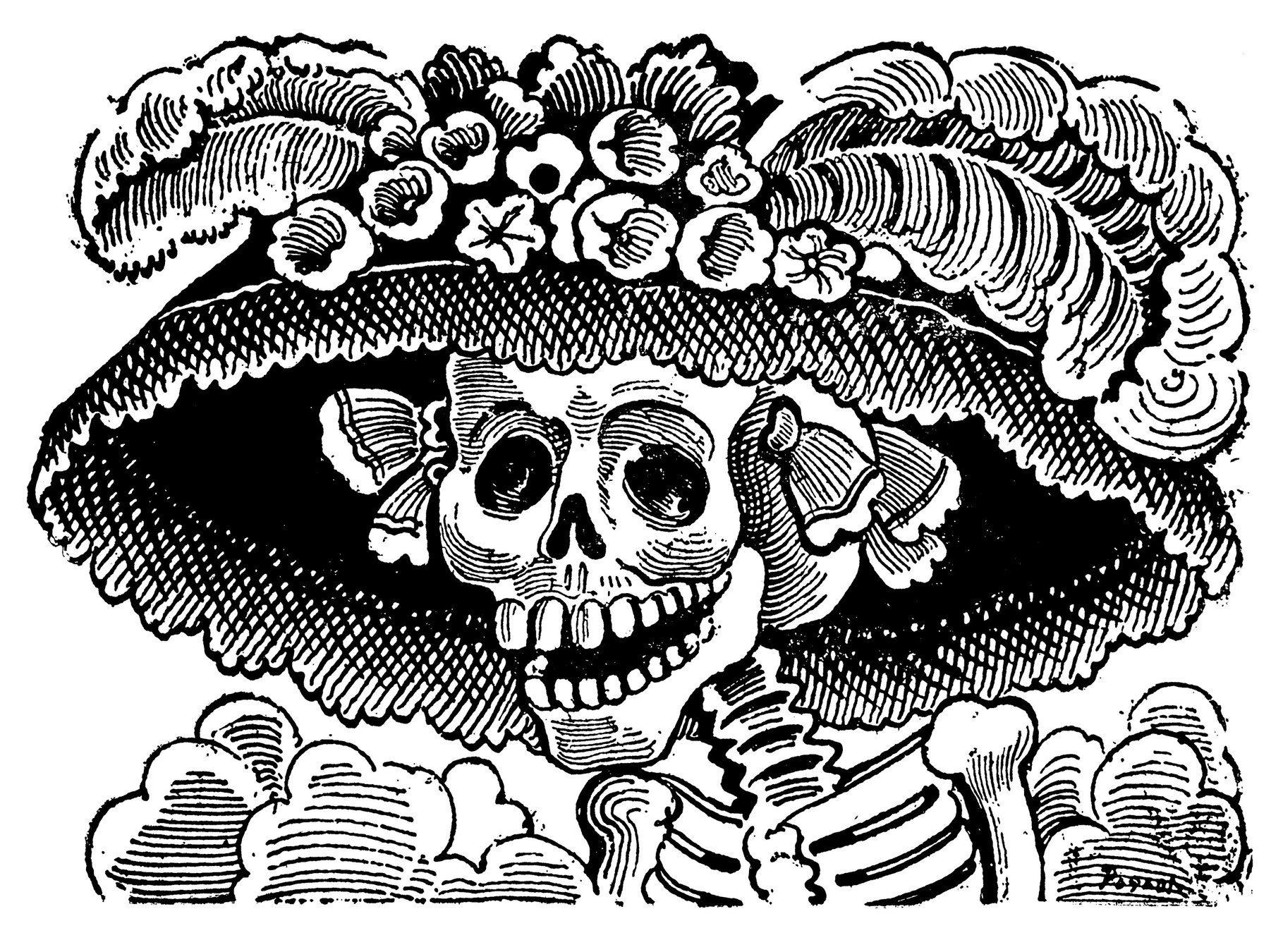
Odds are you’re acquainted with the lady pictured above.
She’s called La Catrina, and her likeness adorns countless t‑shirts and tote bags.
She is a popular Halloween costume and a mainstay of Day of the Dead celebrations.
She pops up in the animated family feature, Coco, to guide its young hero to the Land of the Dead.
She’s spent the better part of a century making cameos in numerous artists works, most famously Diego Rivera’s surreal 1947 mural, Sueño de una Tarde Dominical en la Alameda Central, a fever dream that places her front and center, arm in arm with a distinguished-looking, mustachioed gent in a bowler hat.
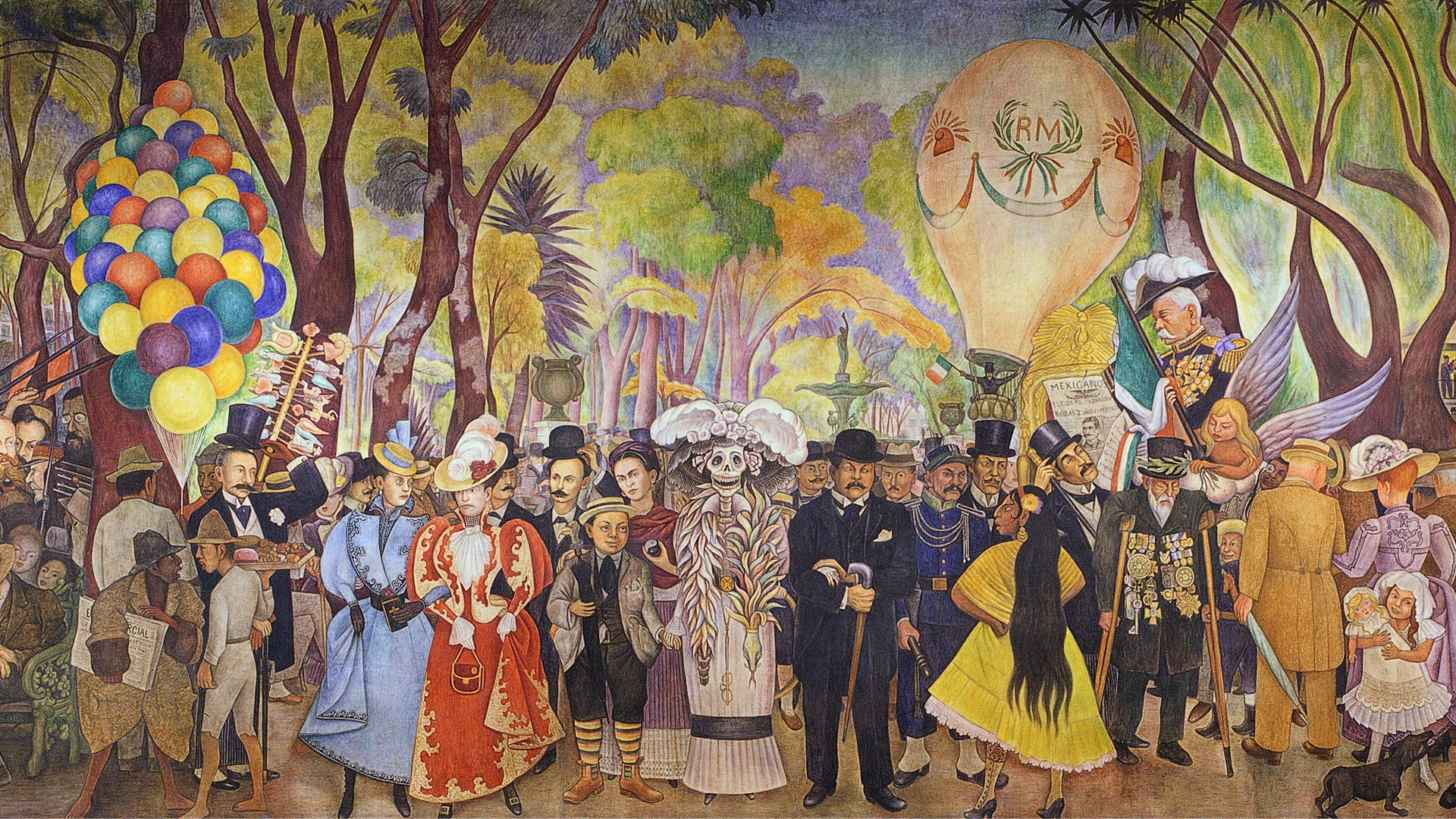
That gent is her original creator, José Guadalupe Posada, a hardworking printmaker and political cartoonist who produced over 20,000 images during his lifetime, on subjects ranging from the Mexican Revolution and other events, both current and historical, to popular entertainment and the daily lives of average men and women.
The artist frequently hammered his point home by depicting the parties in his works as calaveras - exuberant skeletons seemingly unaware they had lost all flesh and blood.
Posada was still a teenager in 1871 when a hometown paper picked up his first cartoons. One reportedly enraged a local politician to such a degree that the paper was forced to cease publication.
La Catrina was published posthumously in 1913, as a broadsheet illustration accompanying a satirical poem about chickpea vendors. It’s believed that Posada intended his image to be a jab at upper class Mexican women obsessed with European fashions.
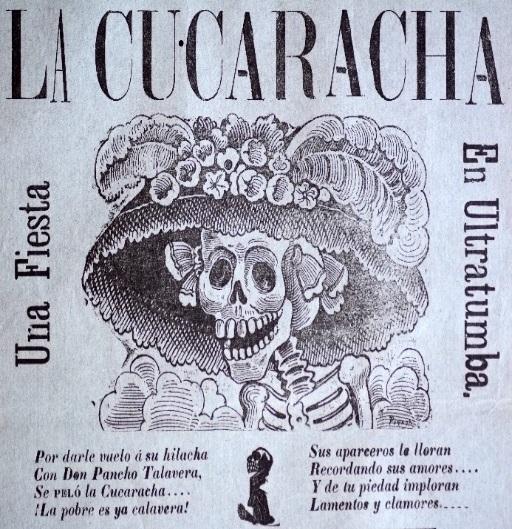
(Rivera was the one who changed her name from La Cucaracha — the cockroach — to the much more lyrical La Catrina. He also planted the seed that Posada, who died penniless and largely forgotten, had been a revolutionary. The Mexican progressive printmaking collective El Taller Grafica Popular took graphic inspiration from his calaveras, while embracing and disseminating this myth.
What’s that they say about imitation being the sincerest form of flattery?
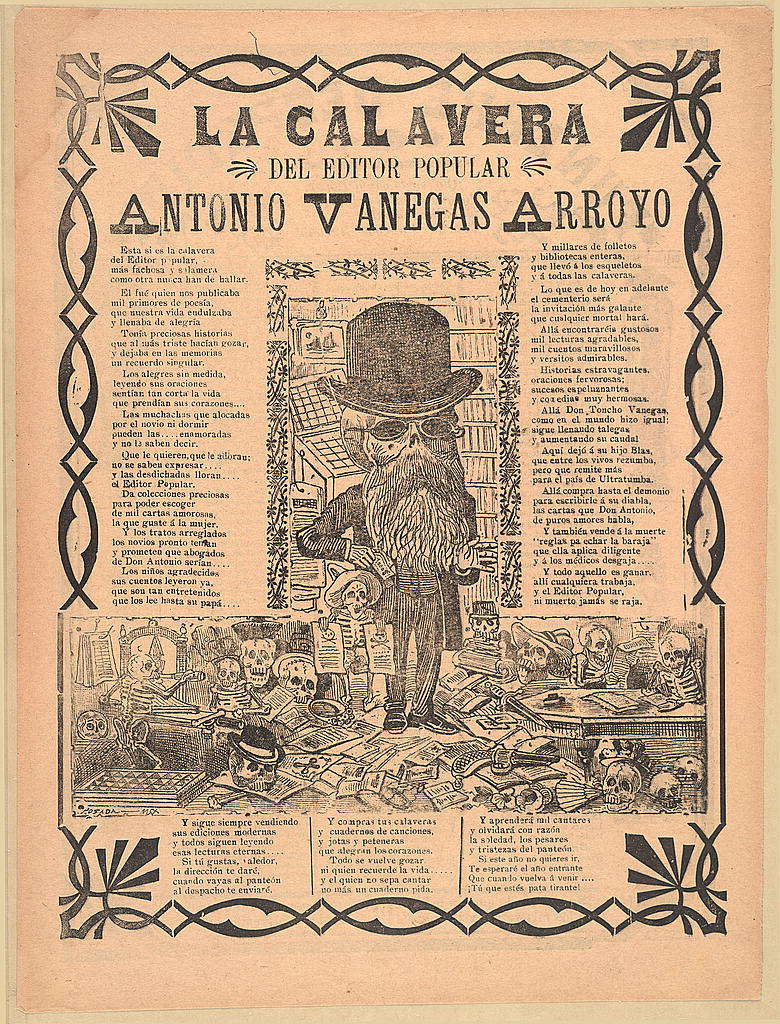
After Posada’s death, his colleagues at the publishing firm of Antonio Vanegas Arroyor, saved time and money by continuing to produce work from his blocks and plates.
As Jim Nikas, founding director of the Posada Art Foundation told Atlas Obscura “If the image was neutral enough, you could change the text and use it as an illustration for any story.”
Whether increasing public awareness of harmful agricultural pesticides, protesting American immigration policies, or, uh, selling tequila, 21st century artists, activists, and entrepreneurs continue to harness Posada’s vision for their own purposes.

Nikas, who sampled Posada’s La Calavera de Don Quixote for an Occupy Wall Street collaboration with Art Hazelwood and Marsha Shaw writes that “the calavera is something we all have biologically in common and, accordingly, may be used to convey messages:
Posada and his publishers used depictions of calaveras not only to remind us of our collective mortality but also to shed light. His illustrations were often satirical caricatures uprooted from the current political climate and used to poke fun at our human condition. This use was evolutionary, occurring over time, and as applicable today as it was over a century ago.
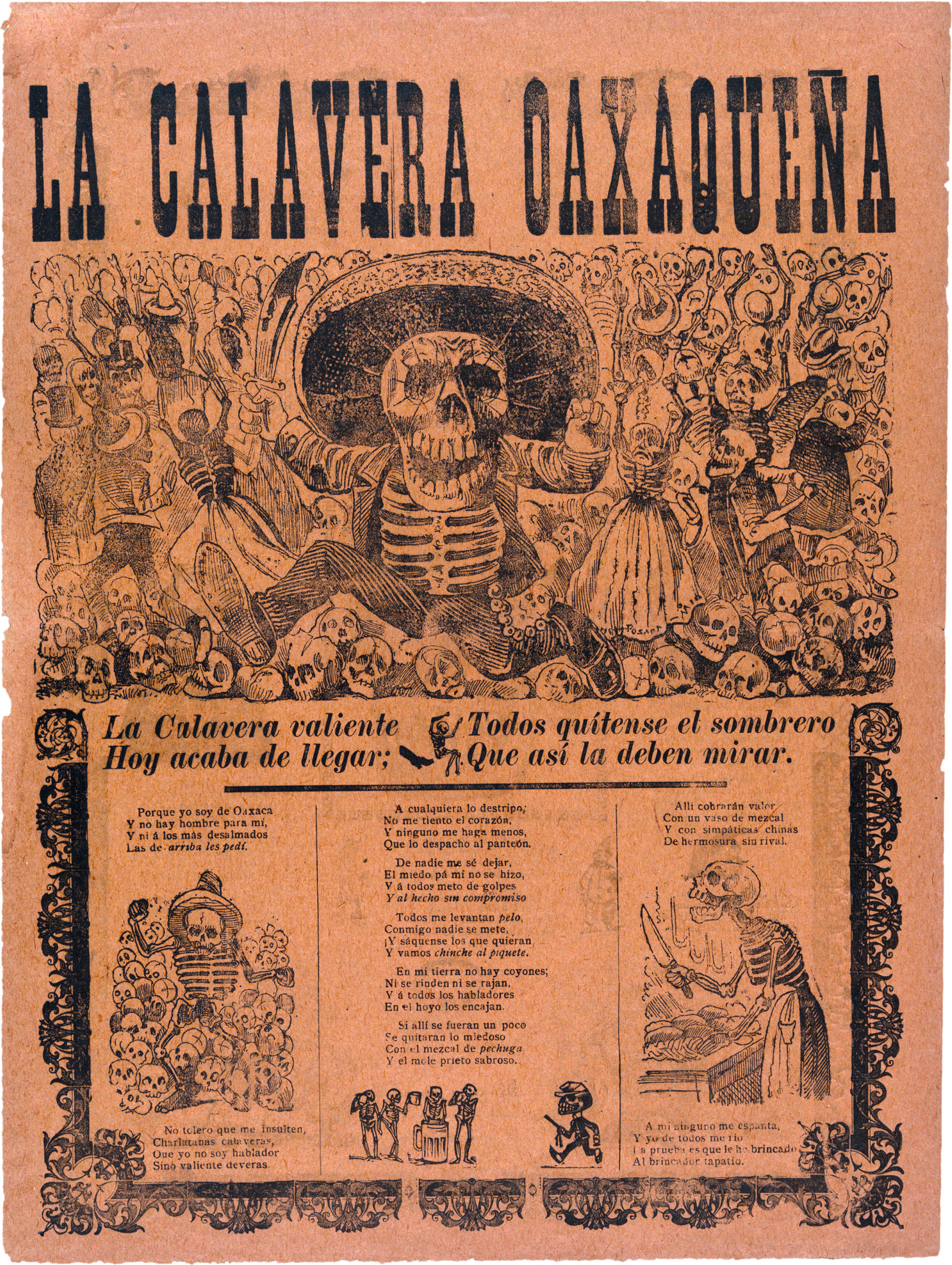
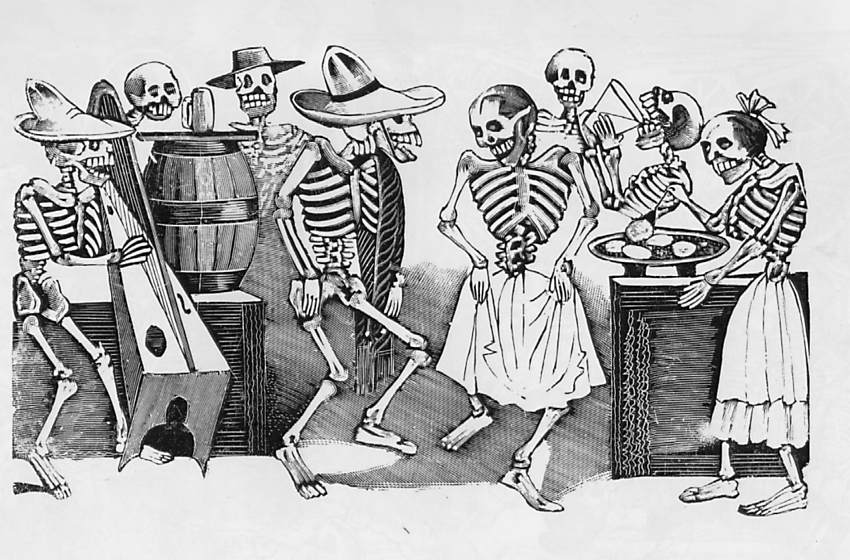
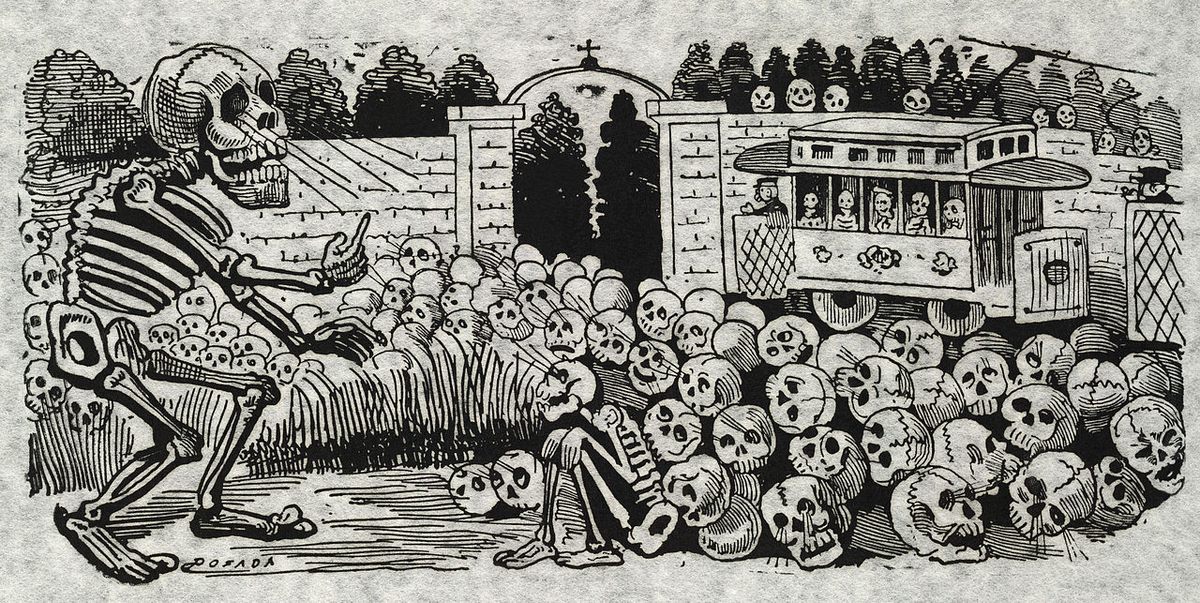
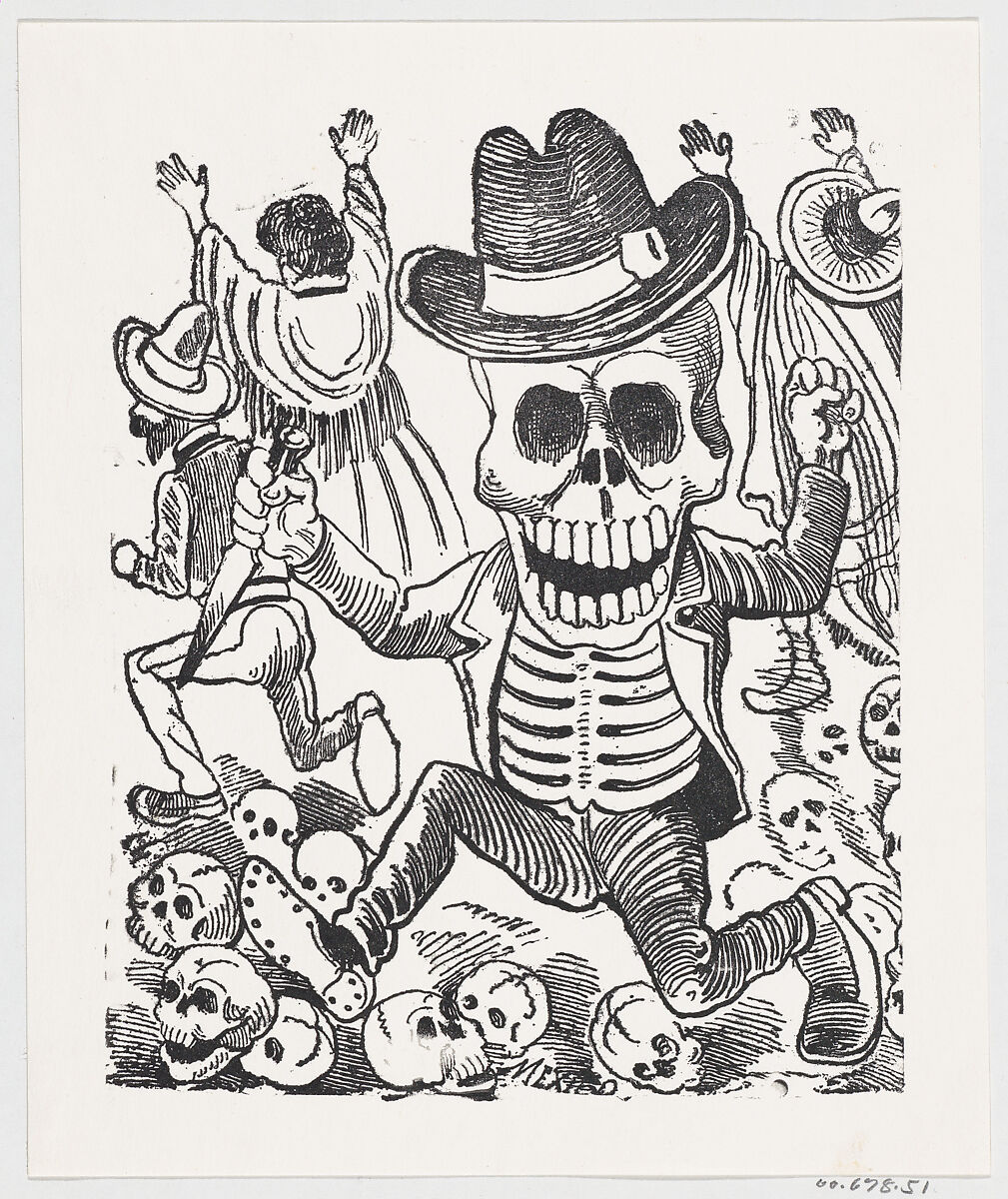
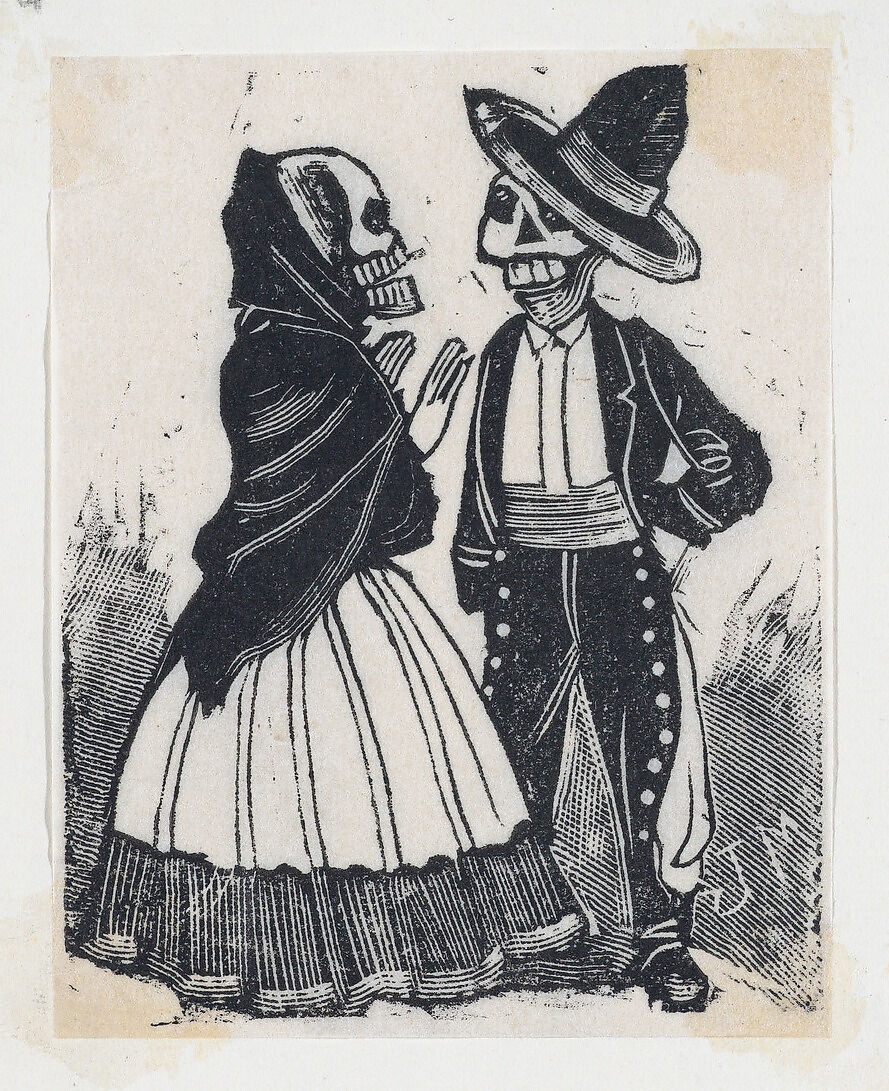
See more of José Guadalupe Posada’s calaveras in the Library of Congress’ Prints and Photographs Division collection.
– Ayun Halliday is the Chief Primatologist of the East Village Inky zine and author, most recently, of Creative, Not Famous: The Small Potato Manifesto and Creative, Not Famous Activity Book. Follow her @AyunHalliday.
Read More...The Writing Systems of the World Explained, from the Latin Alphabet to the Abugidas of India
The Korean alphabet, hangul, is “the most scientific writing system.” One often hears that in South Korea, a society that has taken to heart Asia scholar Edwin O. Reischauer’s description of hangul as “perhaps the most scientific system of writing in general use in any country.” But whatever their scientific credentials, all the other writing systems in use (and indeed out of use) have fascinating qualities of their own, a range of which are explained in the UsefulCharts video above on the writing systems of the world — not just the alphabets of the world, mind you, but also the abjads, the syllabaries, the logo-syllabaries, and the abugidas.
The symbols used in an abjad, like that of Hebrew or Arabic (or ancient Egyptian hieroglyphs), represent only consonants; as for vowels, “the readers are expected to add them in on their own, based on context.” In a syllabary, like the hiragana and katakana used in Japanese, each character represents a syllable: に for “ni,” ほ for “ho,” ん for “n” (though linguists no doubt argue about whether that last should really count as a syllable).
But most of the Japanese writing is adapted from the Chinese one, a logo-syllabary in which “a single character can stand for a unique syllable or an entire word or idea,” which results in “thousands of characters that need to be learned for basic literacy.”
Abugidas, primarily used in Indian and southeast Asian languages (but also to write Amharic, the language of Ethiopia), “have unique characters both for vowels and for consonants. However, these vowel letters are generally only used in situations where a word begins with a vowel.” Otherwise, a “small change” made to a consonant character indicates which vowel follows. However mechanically or aesthetically diverse they may appear, none of these writing systems (all pictured on a poster from UsefulCharts, available for $19.95 USD) are so fundamentally different that they can’t be mastered by a non-native with time and effort. Not that they’re all as easy as hangul, which — as its commissioner King Sejong the Great put it, in another quotable quote — a wise man can learn before the morning is over, and a stupid man can learn in ten days.
Related Content:
How Writing Has Spread Across the World, from 3000 BC to This Year: An Animated Map
How to Read Ancient Egyptian Hieroglyphs: A British Museum Curator Explains
Discover Nüshu, a 19th-Century Chinese Writing System That Only Women Knew How to Write
Based in Seoul, Colin Marshall writes and broadcasts on cities, language, and culture. His projects include the Substack newsletter Books on Cities, the book The Stateless City: a Walk through 21st-Century Los Angeles and the video series The City in Cinema. Follow him on Twitter at @colinmarshall or on Facebook.
Read More...
Support Us
We're hoping to rely on loyal readers, rather than erratic ads. Please click the Donate button and support Open Culture. You can use Paypal, Venmo, Patreon, even Crypto! We thank you!

About Us

Open Culture scours the web for the best educational media. We find the free courses and audio books you need, the language lessons & educational videos you want, and plenty of enlightenment in between.
Advertise With Us
FREE UPDATES!
GET OUR DAILY EMAIL
Get the best cultural and educational resources on the web curated for you in a daily email. We never spam. Unsubscribe at any time.
FOLLOW ON SOCIAL MEDIA
Open Culture editor Dan Colman scours the web for the best educational media. He finds the free courses and audio books you need, the language lessons & movies you want, and plenty of enlightenment in between.
Advertise With Us

