50+ Free Charlie Chaplin Films Online
A few things to know about Charlie Chaplin. He starred in over 80 films, reeling off most during the silent film era. In 1914 alone, he acted in 40 films, then another 15 in 1915. By the 1920s, Chaplin had emerged as the first larger-than-life movie star and director, if not the most recognizable person in the world. Thanks to YouTube, you can watch 50+ Chaplin films on the web. Above, you will find a Chaplin mini-film festival that brings together four movies shot in 1917: The Adventurer, The Cure, Easy Street and The Immigrant. And then below you’ll find 50+ other films arranged in a neat list. Many can be otherwise found in our collection, 4,000+ Free Movies Online: Great Classics, Indies, Noir, Westerns, Documentaries & More.
- A Burlesque On Carmen — Free — Original two-reel parody of Bizet’s Carmen by Charlie Chaplin. Also stars Leo White & Edna Purviance. (1915)
- A Busy Day — Free — Chaplin plays a wife jealous of her husband’s interest in another woman, played by Phyllis Allen. On her way to attack the couple, the wife interrupts the set of a film, knocking over a film director, played by Mack Sennett, and a policeman, played by Billy Gilbert. (1914)
- A Day’s Pleasure — Free — “Chaplin’s fourth film for First National Films. It was created at the Chaplin Studio. It was a quickly made two-reeler to help fill a gap while working on his first feature The Kid. It is about a day outing with his wife and the kids and things don’t go smoothly.” (1919)
- A Dog’s Life — Free – This endearing short Chaplin film tells the story of underdogs, human and canine, succeeding despite the odds. (1918)
- A Fair Exchange — Free — Originally released as Getting Acquainted, the film’s plot has been summarized as follows: “Charlie and his wife are walking in the park when they encounter Ambrose and his wife. The partners become fond of their counterparts and begin chasing each other around. A policeman looking for a professional Don Juan becomes involved, as does a Turk.” (1914)
- A Film Johnnie - Free — Charlie goes to the movie and falls in love with a girl on the screen. (1914)
- A Night in the Show — Free — Chaplin played two roles: one as Mr. Pest and one as Mr. Rowdy. The film was created from Chaplin’s stage work from a play called Mumming Birds. (1915)
- A Night Out — Free — “After a visit to a pub, Charlie and Ben cause a ruckus at a posh restaurant. Charlie later finds himself in a compromising position at a hotel with the head waiter’s wife.” (1915)
- A Woman — Free — This Chaplin film starts with Charlie meeting Edna (Edna Purviance) and her parents in a park; the mother is played by Marta Golden and the father by Charles Insley. (1915)
- Behind the Screen – Free – A short film written and directed by Chaplin, the film is long on slapstick, but it also gets into themes dealing with gender bending and homosexuality. (1916)
- Between Showers - Free — A short Keystone film from 1914 starring Charlie Chaplin, Ford Sterling, and Emma Bell Clifton.
- By the Sea — Free — “It is windy at a bathing resort. After fighting with one of the two husbands, Charlie approaches Edna while the two husbands themselves fight over ice cream. Driven away by her husband, Charlie turns to the other’s wife.” (1915)
- Caught in a Cabaret — Free — Charlie is a clumsy waiter in a cheap cabaret, suffering the strict orders from his boss. He’ll meet a pretty girl in the park, pretending to be a fancy ambassador, despite the jealousy of her fiancée. (1914)
- Charlie Shanghaied — Free — Charlie Chaplin and his Tramp character gets shanghaied by crooks. (1915)
- Charlie’s Recreation — Free — Out of costume, Charlie is a clean-shaven dandy who, somewhat drunk, visits a dance hall. There the wardrobe girl has three rival admirers: the band leader, one of the musicians, and now Charlie. (1914).
- Charlotte et Le Mannequin — Free — Also known as Mabel’s Married Life, the film’s plot is summarized as follows: “Accosted by a masher in the park and unable to motivate husband Charlie into taking action, Mabel gets him a boxing mannequin to sharpen his fighting skills.” (1914)
- Cruel Cruel Love - Free — Chaplin plays a rich, upper-class gentleman whose romance is endangered when his girlfriend oversees him being embraced by a maid. (1914)
- Face on a Barroom Floor — Free — “The plot is a satire derived from Hugh Antoine D’Arcy’s poem of the same title. The painter courts Madeleine but loses to the wealthy client who sits for his portrait. The despairing artist draws the girl’s portrait on the barroom floor and gets tossed out. Years later he sees her, her husband and their horde of children. Unrecognized by her, Charlie shakes off his troubles and walks off into the future.” (1914)
- Gentlemen of Nerve — Free — “Mabel and her beau go to an auto race and are joined by Charlie and his friend. As Charlie’s friend is attempting to enter the raceway through a hole, the friend gets stuck and a policeman shows up. Charlie sprays the policeman with soda until [his] friends makes it through the hole. In the grandstand, Mabel abandons her beau for Charlie. Both Charlie’s friend and Mabel’s are arrested and hauled away.” (1914)
- His Favorite Pastime — Free — Charlie gets drunk in the bar. He steps outside, meets a pretty woman, tries to flirt with her, only to retreat after the woman’s father returns. (1914)
- His New Job — Free — “Charlie is trying to get a job in a movie. After causing difficulty on the set he is told to help the carpenter. When one of the actors doesn’t show, Charlie is given a chance to act but instead enters a dice game. When he does finally act he ruins the scene, wrecks the set and tears the skirt from the star.” (1915)
- His Prehistoric Past — Free — “Charlie dreams he is in the stone age. There King Low-Brow rules a harem of wives. Charlie, in skins and a bowler, falls in love with the king’s favorite wife, Sum-Babee. During a hunting trip the king is pushed over a cliff. Charlie proclaims himself king, but Ku-Ku discovers the real king alive. They return to find Charlie and Sum- Babee together.” (1914)
- His Trysting Place — Free — “Charlie’s wife sends him to the store for a baby bottle with milk. Elsewhere, Ambrose offers to post a love letter for a woman in his boarding house. The two men meet at a restaurant and each takes the other’s coat by mistake. Charlie’s wife thinks he has a lover; Ambrose’s believes he has an illegitimate child.” (1914)
- In the Park — Free — “A tramp steals a girl’s handbag, but when he tries to pick Charlie’s pocket loses his cigarettes and matches. He rescues a hot dog man from a thug, but takes a few with his walking stick. When the thief tries to take some of Charlie’s sausages, Charlie gets the handbag. The handbag makes its way from person to person to its owner, who is angry with her boyfriend who didn’t protect her in the first place. The boyfriend decides to throw himself in the lake in despair, so Charlie helps him out.” (1915)
- Kid Auto Races at Venice – Free – It’s the first film in which Charlie Chaplin’s iconic “Little Tramp” character makes his appearance. (1914)
- Laughing Gas - Free — Film starring Chaplin is sometimes known as “Busy Little Dentist”, “Down and Out”, “Laffing Gas”, “The Dentist”, and “Tuning His Ivories”.
- Mabel’s Busy Day — Free — “A hotdog girl gives one to a policeman who then allows her into a race track. While other customers swipe her hotdogs, Charlie runs off with the whole box, pretending to sell them while actually giving them away. She calls her policeman who battles Charlie.” (1914)
- Mabel’s Strange Predicament — Free — Watch lots and lots of high jinks go down in a hotel. (1914)
- Making a Living — Free – Premiering on February 2, 1914, Making a Living marks the first film appearance by Charlie Chaplin.
- Musical Tramps — Free — “Charlie and his partner are to deliver a piano to 666 Prospect St. and repossess one from 999 Prospect St. They confuse the addresses. The difficulties of delivering the piano by mule cart, and most of the specific gags, appeared later in Laurel and Hardy’s ‘The Music Box’.” (1914)
- One A.M. — Free — The first silent film Charlie Chaplin starred in alone. (1916)
- Police — Free — “Police was Charlie Chaplin’s 14th released film from Essanay. It was made at the Majestic Studio in Los Angeles. Charlie playing an ex-convict finds life on the outside not to his liking and leads him to breaking into a home with another thief (Wesley Ruggles). Edna Purviance plays the girl living in the home who tries to change him.” (1916)
- Shoulder Arms — Free — Charlie is a boot camp private who has a dream of being a hero who goes on a daring mission behind enemy lines. (1918)
- Sunnyside — Free — “Charlie works on a farm from 4am to late at night. He gets his food on the run (milking a cow into his coffee, holding an chicken over the frying pan to get fried eggs). He loves the neighbor’s daughter Edna but is disliked by her father. He rides a cow into a stream and is kicked off. Unconscious, he dreams of a nymph dance. Back in reality a city slicker is hurt in a car crash and is being cared for by Edna. When Charlie is rejected after attempting to imitate the slicker, the result is ambiguous–either tragic or a happy ending. Critics have long argued as to whether the final scene is real or a dream.” (1919)
- The Bank — Free — “Charlie does everything but an efficient job as janitor. Edna buys her fiance, the cashier, a birthday present. Charlie thinks “To Charles with Love” is for him. He presents her a rose which she throws in the garbage. Depressed, Charlie dreams of a bank robbery and his heroic role in saving the manager and Edna … but it is only a dream.”
- The Bond — Free — A propaganda film created and funded by Chaplin for theatrical release to help sell U.S. Liberty Bonds during World War I. (1918)
- The Champion — Free — “Walking along with his bulldog, Charlie finds a “good luck” horseshoe just as he passes a training camp advertising for a boxing partner “who can take a beating.” After watching others lose, Charlie puts the horseshoe in his glove and wins. The trainer prepares Charlie to fight the world champion. A gambler wants Charlie to throw the fight. He and the trainer’s daughter fall in love.” (1915)
- The Count — Free — The Count was Charlie Chaplin’s 5th film for Mutual Films. Co-starring Eric Campbell and Edna Purviance, it is a story about Charlie and his boss finding an invitation to a party from a real Count. (1916)
- The Fatal Mallet — Free — Three men will fight for the love of a charming girl. Charlie will play dirty, throwing bricks to his contender, and using a huge hammer to hurt one of them. But a precocious kid will be the fourth suitor in discord. (1914)
- The Fireman — Free — Charlie Chaplin’s second short for Mutual continued his focus on gags and situations—as the title suggests, Chaplin plays the role of an inept firefighter. (1916)
- The Floorwalker — Free — “The Floorwalker was Charlie Chaplin’s first Mutual Film Company made in 1916. It starred Chaplin as a customer in a department store who finds out the manager is stealing money from the store. It was noted for the first ‘running staircase’ used in films.” (1916)
- The Good for Nothing — Free — Made at the Keystone Studios, the film involves Chaplin taking care of a man in a wheelchair. (1914)
- The Immigrant — Free — Chaplin, in the role of the Tramp character, plays an immigrant coming to the United States. He gets accused of theft while on a voyage across the Atlantic Ocean. (1917)
- The Kid - Free — The Kid is a 1921 American silent comedy-drama film written, produced, directed and starring Charlie Chaplin, and features Jackie Coogan as his foundling baby, adopted son and sidekick. This was Chaplin’s first full-length film as a director. (1921)
- The Knockout — Free — Charlie Chaplin’s seventeenth film for Keystone Studios. Chaplin only has a small role, and Fatty Arbuckle takes up the main role. (1914)
- The Landlady’s Pet — Free — Otherwise known as The Star Boarder, the film turns around this theme: A brat’s magic lantern show exposes an indiscreet moment between a landlady and her star boarder. (1914)
- The Masquerader — Free — “Charlie is an actor in a film studio. He messes up several scenes and is tossed out. Returning dressed as a lady, he charms the director. Even so, Charlie never makes it into film, winding up at the bottom of a well.” (1914)
- The New Janitor — Free — “Charlie is janitor for a firm the manager of which receives a threatening note about his gambling debts. He throws a bucket of water out the window which lands on his boss and costs him his job. The boss, attempting to steal the money heeds from the office safe, is caught by his secretary and Charlie comes to save her and the money. He is briefly accused of being the thief but ultimately triumphs.” (1914)
- The Pawnshop – Free – Rich in slapstick, The Pawnshop was one of Chaplin’s more popular movies for Mutual Film, the producer of many fine Chaplin comedies. (1916)
- The Property Man — Free — “Charlie has trouble with actors’ luggage and conflicts over who gets the star’s dressing room. There are further difficulties with frequent scene changes, wrong entries and a fireman’s hose. At one point he juggles an athlete’s supposed weights. The humor is still rough: he kicks an older assistant in the face and allows him to be run over by a truck.” (1914)
- The Rink – Free – The Rink, Chaplin’s 8th film for Mutual Films, showcases the actor’s roller skating abilities. (1916)
- The Rival Mashers — Free — “Charlie and a rival vie for the favors of their landlady. In the park they each fall different girls, though Charlie’s has a male friend already. Charlie considers suicide, is talked out of it by a policeman, and later throws his girl’s friend into the lake. Frightened, the girls go off to a movie. Charlie shows up there and flirts with them. Later both rivals substitute themselves for the girls and attack the unwitting Charlie. In an audience-wide fight, Charlie is tossed from the screen.” (1914)
- The Rounders — Free — Writes IMDB: “Two drunks live in the same hotel. One beats his wife, the other is beaten by his. They go off and get drunk together. They try to sleep in a restaurant using tables as beds and are thrown out. They lie down in a row boat which fills with water, drowning them (a fate apparently better than going home to their wives).” (1914)
- The Tramp - Free — The film made Chaplin’s great Tramp character famous. (1915)
- The Vagabond — Free — A silent film by Charlie Chaplin that co-starred Edna Purviance, Eric Campbell, Leo White and Lloyd Bacon, with Chaplin appearing as The Tramp. The British Film Institute calls it the “pivotal work” of his Mutual period – “and his most touching.” (1916)
- Tillie’s Punctured Romance – Free – Among other things, the film is notable for being the last film that Chaplin didn’t write or direct by himself. (1914)
- Triple Trouble — Free — “As Colonel Nutt is experimenting with explosives, a new janitor is joining his household. The inept janitor proceeds to make life difficult for the rest of the staff. Meanwhile, a foreign agent arrives at the house in hopes of getting Col. Nutt’s latest invention. The inventor throws him out, so the agent then employs a thug to get the formula. When police head to the Nutt home to start an investigation, a complicated fracas ensues.” (1918)
- Twenty Minutes of Love — Free — IMDB summarizes thusly: “Charlie is hanging around in the park, finding problems with a jealous suitor, a man who thinks that Charlie has robbed him of a watch, a policeman and even a little boy, all because our friend can’t stop snooping.” (1914)
- Work — Free — “Charlie and his boss have difficulties just getting to the house they are going to wallpaper. The householder is angry because he can’t get breakfast and his wife is screaming at the maid as they arrive. The kitchen gas stove explodes, and Charlie offers to fix it. The wife’s secret lover arrives and is passed off as the workers’ supervisor, but the husband doesn’t buy this and fires shots. The stove explodes violently, destroying the house.” (1915)
Most of the quoted summaries above were written by Ed Stephan on IMDB.
Note: An earlier version of this post appeared on our site in 2011. Some of the links and text have been updated.
Related Content
When Charlie Chaplin Entered a Chaplin Look-Alike Contest & Came in 20th Place
Charlie Chaplin Films a Scene Inside a Lion’s Cage in 200 Takes
Read More...The World’s Oldest Cookbook: Discover 4,000-Year-Old Recipes from Ancient Babylon
If asked about your favorite dish, you’d do well to name something exotic. Gone are the days when a taste for the likes of Italian, Mexican, or Chinese cuisine could qualify you as an adventurous eater. Even expeditions to the very edges of the menus at Peruvian, Ethiopian, or Laotian restaurants, say, would be unlikely to draw much respect from serious twenty-first-century eaters. One solution is to take your culinary voyages through not just space but also time, seeking out the meals of centuries and even millennia past. This has lately become somewhat easier to do, thanks to the work of Harvard- and Yale-associated researchers like Gojko Barjamovic, Patricia Jurado Gonzalez, Chelsea A. Graham, Agnete W. Lassen, Nawal Nasrallah, and Pia M. Sörensen.
A few years ago, that interdisciplinary research team participated in a Lapham’s Quarterly roundtable on making and eating the ancient Mesopotamian recipes contained on what are known as the “Yale Culinary Tablets.” Dating from between 1730 BC and the sixth or seventh century BC, their Cuneiform inscriptions offer only broad and fragmentary guidance on the preparation of once-common dishes, none of which, luckily, are particularly complex.
The vegetarian soup pašrūtum, or “unwinding,” involves flavors no bolder than those of cilantro, leek, garlic, and dried sourdough. The stew puhādi, which uses lamb as well as milk, turns out to be “delicious when served with the peppery garnish of crushed leek and garlic.”
The Yale Culinary Tablets reveal that the Babylonians, too, enjoyed tucking into the occasional foreign meal — which, four millennia ago, could have meant a bowl of elamūtum, or “Elamite broth,” named for its origin in Elam in modern-day Iran. Another dish made with milk, it also calls for sheep’s blood (“the mixture of sour milk and blood may sound odd,” the roundtable article assures us, “but the combination produces a rich soup with a slight tartness”) and dill, which seems to have been the height of exotic ingredients at the time. Tuh’u, a leg-meat stew, has an identifiable descendant still eaten in Iraq today, but that dish uses white turnip instead of the ancient recipe’s red beet. Given that “Jews of Baghdad before their expulsion used red beet,” it’s “tempting to link the recipe to the continental European borscht.”
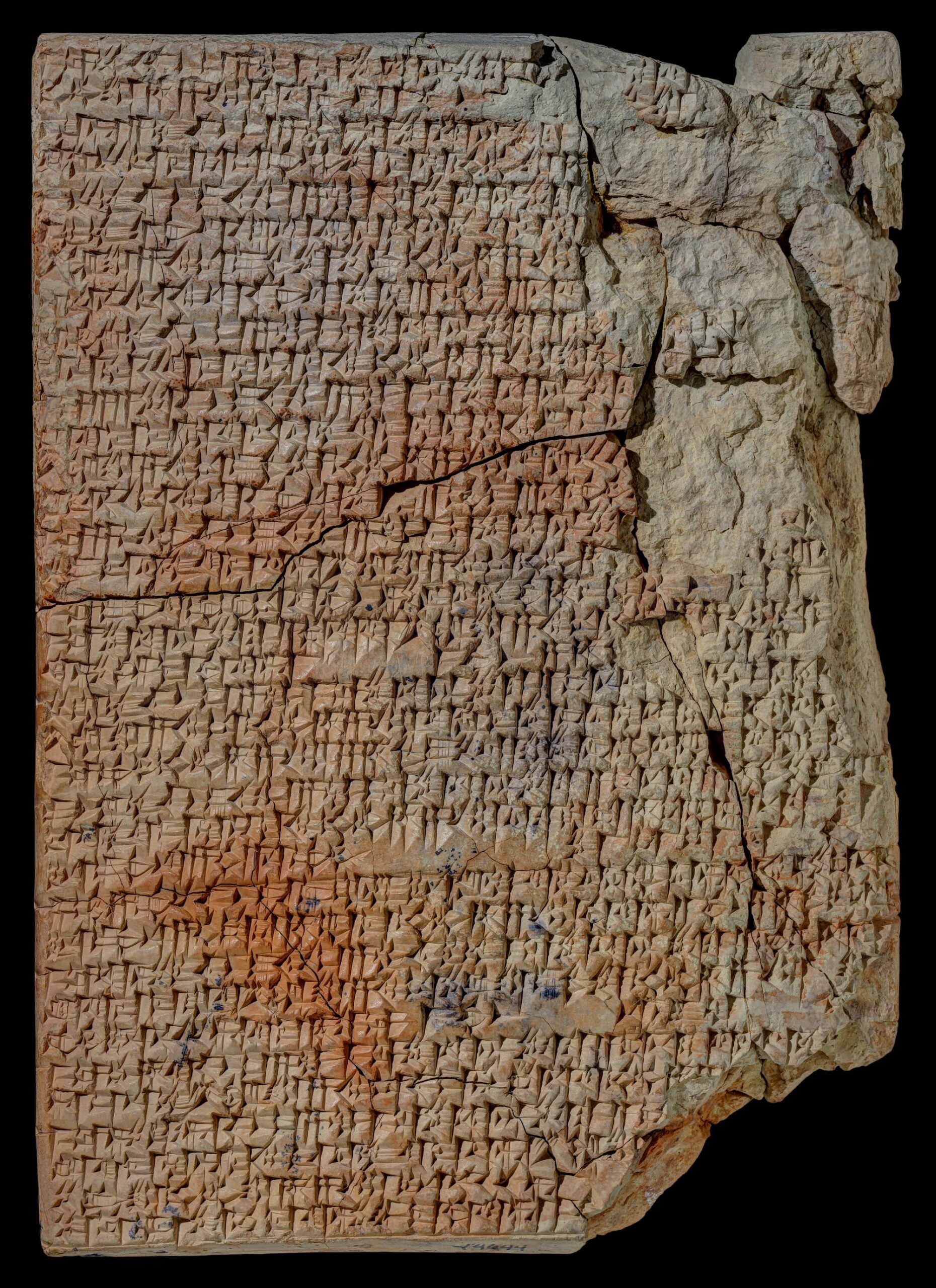
Image via Wikimedia Commons
Reconstructing these recipes, which tend to lack quantities or procedural details, has involved educated guesswork. But no other texts in existence can get you closer to reconstructing ancient Mesopotamian cuisine in your own kitchen. If you’d like to see how that’s done before giving it a try yourself, watch the videos above and below from Max Miller, whose Youtube channel Tasting History specializes in preparing dishes from earlier stages of civilization. Not that departure from the recipes as originally dictated by tradition would have any consequences. Most of these recipes may date from an era close to the reign of King Hammurabi, but there’s nothing in his famous Code about what happens to cooks who make the occasional substitution.
Related content:
How to Make Ancient Mesopotamian Beer: See the 4,000-Year-Old Brewing Method Put to the Test
How to Make the Oldest Recipe in the World: A Recipe for Nettle Pudding Dating Back 6,000 BC
Behold the Oldest Written Text in the World: The Kish Tablet, Circa 3500 BC
Based in Seoul, Colin Marshall writes and broadcasts on cities, language, and culture. His projects include the Substack newsletter Books on Cities and the book The Stateless City: a Walk through 21st-Century Los Angeles. Follow him on the social network formerly known as Twitter at @colinmarshall.
Read More...Stephen King’s Top 10 All-Time Favorite Books

Image by The USO, via Flickr Commons
So you might think that if Stephen King – the guy who wrote such horror classics like Carrie and The Stand – were to rattle off his top ten favorite books, it would feature works by the likes of Edgar Allan Poe, H. P. Lovecraft or maybe J. R. R. Tolkien — authors who have, like King, created enduring dark, Gothic worlds filled with supernatural events and malevolent forces. But you’d be wrong. Author J. Peder Zane asked scores of writers about their favorite novels for his 2007 book The Top Ten: Writers Pick Their Favorite Books. The list King submitted in reply appears below. When possible, we’ve added links to the texts that you can read for free online.
1. The Golden Argosy, The Most Celebrated Short Stories in the English Language – edited by Van Cartmell and Charles Grayson
2. The Adventures of Huckleberry Finn – Mark Twain
3. The Satanic Verses – Salman Rushdie
4. McTeague – Frank Norris
5. Lord of the Flies – William Golding
6. Bleak House – Charles Dickens
7. 1984 – George Orwell
8. The Raj Quartet – Paul Scott
9. Light in August – William Faulkner
10. Blood Meridian – Cormac McCarthy
King, it seems, prefers books that explore basic defects in the human character to spooky tales of fantasy. In other words, he’s interested in stories that are actually terrifying. Orwell’s portrait of a man breaking under the pressure of totalitarianism or William Golding’s parable about a group of boys devolving into beasts are downright troubling. Frank Norris’s saga about the mendacious McTeague isn’t exactly comforting either. And McCarthy’s grim and spectacularly violent masterpiece Blood Meridian might make you crawl into a fetal position and weep for humanity. (That was my reaction, anyway.)
The most striking thing about the list, however, is how uniformly highbrow it is. All books would fit right in on the syllabus of an upper level English college course. On the other hand, David Foster Wallace, when asked for his top ten, filled his list with such mass market crowd pleasers as The Silence of the Lambs by Thomas Harris, The Sum of All Fears by Tom Clancy and, at number two, King’s The Stand.
If you would like to support the mission of Open Culture, consider making a donation to our site. It’s hard to rely 100% on ads, and your contributions will help us continue providing the best free cultural and educational materials to learners everywhere. You can contribute through PayPal, Patreon, and Venmo (@openculture). Thanks!
Note: An earlier version of this post appeared on our site in 2014.
Related Content:
Stephen King Recommends 96 Books for Aspiring Writers to Read
How Stephen King Predicted the Rise of Trump in a 1979 Novel
Stephen King’s 20 Rules for Writers
Jonathan Crow is a Los Angeles-based writer and filmmaker whose work has appeared in Yahoo!, The Hollywood Reporter, and other publications. You can follow him at @jonccrow. And check out his blog Veeptopus, featuring lots of pictures of vice presidents with octopuses on their heads. The Veeptopus store is here.
Read More...J. R. R. Tolkien Reads from The Hobbit, The Lord of the Rings & Other Works
If you wanted to hear the voice of your favorite writer in the nineteen-sixties — a time before audiobooks, let alone podcasts — you consulted the catalog of Caedmon Records. That label specialized in LPs of literary eminences reading their own work. This may or may not be the kind of company in which you’d expect to find a writer of high fantasy like J. R. R. Tolkien. But in 1967, just as The Lord of the Rings was enjoying a burst of counterculture-driven popularity, the label put out the album Poems and Songs of Middle-Earth, which you can sample above.
Tolkien’s voice had been put on a commercial record just once before, in 1930, years before he’d published even The Hobbit. That was for a series of English lessons by Arthur Lloyd James, the ill-fated phonetician who pioneered standards of pronunciation in broadcasting. Tolkien had already established himself at Oxford as a philologist, which may have had something to do with his selection to participate in such a project.
Not that Tolkien himself sounded quite like the ideal BBC announcer, but then, the vast readership he would later accrue with his novels wouldn’t have wanted him to — and indeed, they’d thrill particularly to the recordings he would make not in English at all, but in Quenya and Sindarin, two Elvish languages of his own invention. The album’s second side is taken up by The Road Goes Ever On, a song cycle adapted from Tolkien’s poems of Middle-Earth by prolific composer and performer Donald Swann.
Later, in the seventies, the now defunct label would assemble the material for two more releases featuring the author’s voice and the author’s voice alone, one with selections from The Hobbit and The Fellowship of the Ring and another with selections from The Two Towers and The Return of The King. By that time, there was a large and receptive market for such product. “I presume that most people who buy this record will already have read Professor Tolkien’s tetralogy,” say the liner notes for Poems and Songs of Middle-Earth, describing that tetralogy as “a work that will either totally enthrall you or leave you stone cold, and, whichever your response, nothing and nobody will ever change it.” The writer adds that, “as a member of the enchanted party, I have found by experience that it is quite useless to argue with the unconverted.” His name: W. H. Auden.
Related content:
J. R. R. Tolkien Writes & Speaks in Elvish, a Language He Invented for The Lord of the Rings
110 Drawings and Paintings by J.R.R. Tolkien: Of Middle-Earth and Beyond
J. R. R. Tolkien in His Own Words
Based in Seoul, Colin Marshall writes and broadcasts on cities, language, and culture. His projects include the Substack newsletter Books on Cities and the book The Stateless City: a Walk through 21st-Century Los Angeles. Follow him on the social network formerly known as Twitter at @colinmarshall.
Read More...Igor Stravinsky’s “Illegal” Arrangement of “The Star Spangled Banner” (1944)
In 1939, Igor Stravinsky emigrated to the United States, first arriving in New York City, before settling in Cambridge, Massachusetts, where he delivered the Charles Eliot Norton lectures at Harvard during the 1939–40 academic year. While living in Boston, the composer conducted the Boston Symphony and, on one famous occasion, he decided to conduct his own arrangement of “The Star-Spangled Banner,” which he made out of a “desire to do my bit in these grievous times toward fostering and preserving the spirit of patriotism in this country.” The date was January 1944. And he was, of course, referring to America’s role in World War II.
As you might expect, Stravinsky’s version of “The Star-Spangled Banner” wasn’t entirely conventional, seeing that it added a dominant seventh chord to the arrangement. And the Boston police, not exactly an organization with avant-garde sensibilities, issued Stravinsky a warning, claiming there was a law against tampering with the national anthem. (They were misreading the statute.) Grudgingly, Stravinsky pulled it from the bill.
You can hear Stravinsky’s “Star-Spangled Banner” above, apparently performed by the London Symphony Orchestra, and conducted by Michael Tilson Thomas. The YouTube video features an apocryphal mugshot of Stravinsky. Despite the mythology created around this event, Stravinsky was never arrested.
If you would like to support the mission of Open Culture, consider making a donation to our site. It’s hard to rely 100% on ads, and your contributions will help us continue providing the best free cultural and educational materials to learners everywhere. You can contribute through PayPal, Patreon, and Venmo (@openculture). Thanks!
Related Content:
Hear The Rite of Spring Conducted by Igor Stravinsky Himself: A Vintage Recording from 1929
How Stravinsky’s The Rite of Spring Incited a Riot? An Animated Introduction
Read More...Listen to Never-Before-Heard Works by Erik Satie, Performed 100 Years After His Death
If asked to name our favorite French composer of the late nineteenth or early twentieth century, most of us would reach straight for Erik Satie, being able to bring to mind only his most famous pieces, the Gymnopédies and perhaps the Gnossiennes. We may not know that those works all date from the same few years of his career between the late eighteen-eighties and the early nineties. They also represent only a small portion indeed of his artistic output, which includes a great deal of instrumental and vocal music as well as compositions for dramatic works, written between 1886 and his death in 1925 — the coming hundredth anniversary of which is being celebrated with the recording of newly discovered pieces.
As the Guardian’s Dalya Alberge writes, these “twenty-seven previously unheard works by Erik Satie, from playful cabaret songs to minimalist nocturnes” have been “painstakingly pieced together from hundreds of small notebooks,” most of them written “in the bohemian bistros of Montmartre in Paris where Satie worked as a pianist.”
Their rediscovery owes to the efforts of two composers, James Nye and Sato Matsui, who “tracked down the lost material in various archival collections, including the Bibliothèque Nationale de France.” They’ve now been recorded by pianist Alexandre Tharaud, and you can hear the resulting album, Satie: Discoveries, in the Youtube playlist at the top of the post.
Famous in his native France and elsewhere, Tharaud’s professional involvement with the work of his esteemed predecessor and countryman goes back to at least 2009, when he organized a Satie Day at Paris’ Cité de la Musique. That same year, he recorded Satie’s 1915 compositions Avant-dernières Pensées, or “Penultimate Thoughts. Once dismissed as minor, even by the composer’s enthusiasts, the Avant-dernières Pensées have since risen in status to become some of his most often performed later works. With the 27 short pieces that constitute Discoveries, Tharaud’s challenge wasn’t to come up with a fresh reinterpretation, but the very first interpretation any of us will ever have heard, leaving it to the next century of pianists to put their own spins on them.
Related content:
How Erik Satie’s ‘Furniture Music’ Was Designed to Be Ignored and Paved the Way for Ambient Music
The Velvet Underground’s John Cale Plays Erik Satie’s Vexations on I’ve Got a Secret (1963)
Based in Seoul, Colin Marshall writes and broadcasts on cities, language, and culture. His projects include the Substack newsletter Books on Cities and the book The Stateless City: a Walk through 21st-Century Los Angeles. Follow him on the social network formerly known as Twitter at @colinmarshall.
Read More...The Very First Coloring Book, The Little Folks’ Painting Book (Circa 1879)
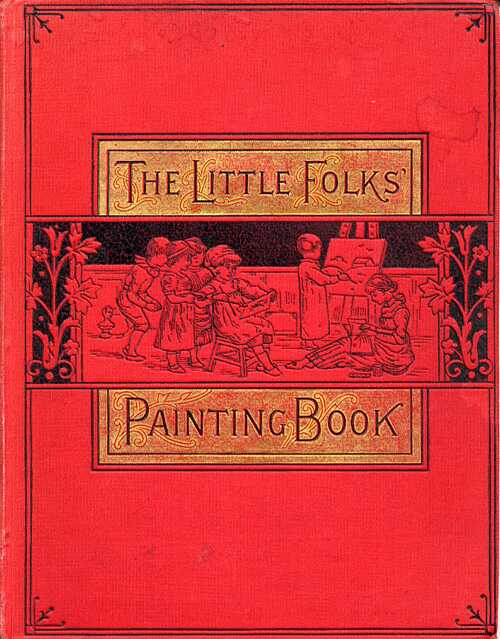
Funny how not that long ago coloring books were considered the exclusive domain of children. How times have changed. If you are the sort of adult who unwinds with a big box of Crayolas and pages of mandalas or outlines of Ryan Gosling, you owe a debt of gratitude to the McLoughlin Brothers and illustrator Kate Greenaway.
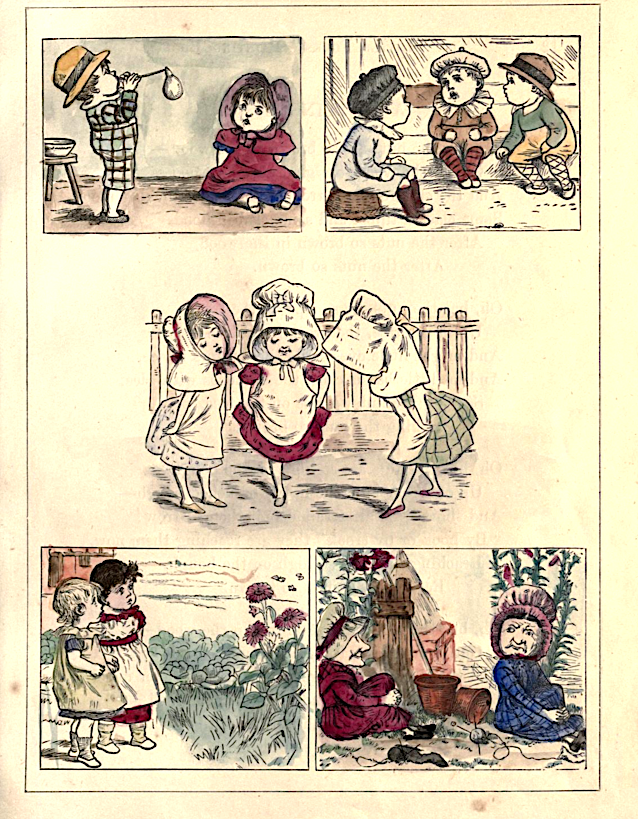
Their Little Folks’ Painting Book burst onto the scene in around 1879 with such fun-to-color outline engravings as “The Owl’s Advice,” “A Flower Fairy,” and “Little Miss Pride,” each accompanied by nursery rhymes and stories. The abundance of mob caps, pinafores, and breeches is of a piece with Greenaway’s enduring takes on nursery rhymes, though grown-up manual dexterity seems almost mandatory given the tiny patterns and other details.
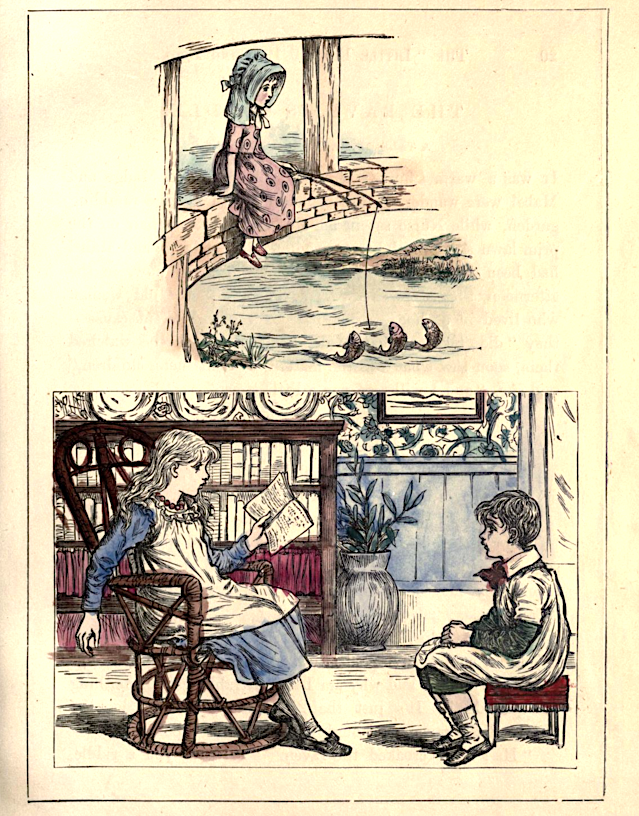
Seeing as how there was no precedent, the publishers of the world’s first coloring book went ahead and filled in the frontispiece so that those tackling the other hundred drawings would know what to do. (Hint: Stay inside the lines and don’t get too creative with skin or hair color.)
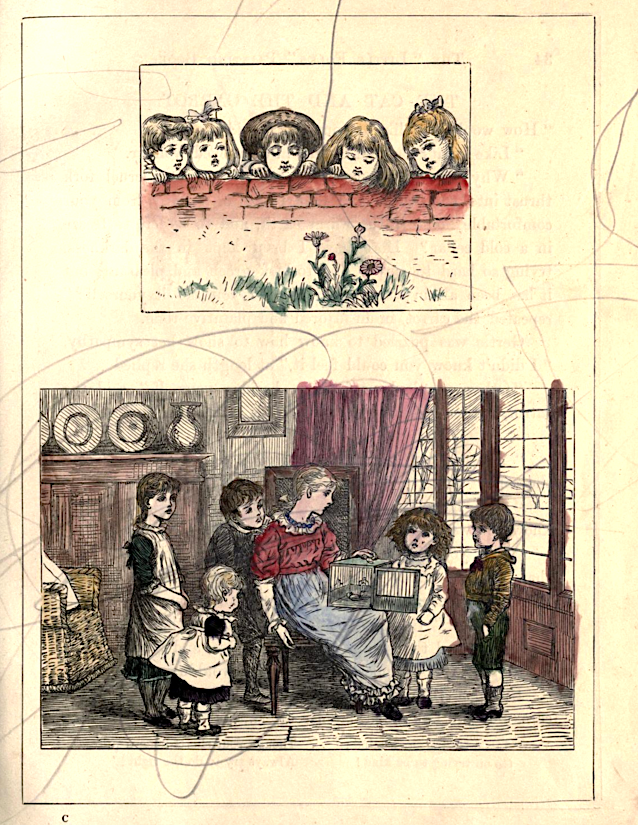
Also note: the copy represented here has been carefully hand-colored by the previous owners, with one contributing some exuberant scribbles in pencil. See the full book, and download it in various formats, at Archive.org.
Note: An earlier version of this post appeared on our site in 2016.
Related Content:
Free Coloring Books from Libraries & Museums: Download & Color Thousands of Free Images (2024)
The First Adult Coloring Book: See the Subversive Executive Coloring Book From 1961
Read More...How Art Conservators Restore Old Paintings & Revive Their Original Colors
We tend to imagine old paintings as having a muted, yellow-brown cast, and not without reason. Many of the examples we’ve seen in life really do look that way, though usually not because the artist intended it. As Julian Baumgartner of Chicago’s Baumgartner Fine Art Restoration explains in the video above, these paintings’ colors have changed over the decades, or in any case appeared to change, because of the layer of resin on top of them. When that kind of coating is first applied, it actually makes the hues underneath look richer. As time passes, alas, chemical changes and the accumulation of dirt and grime can result in a dull, even sickly appearance.
“A lot of people say that the varnish should never be removed, “that that’s a patina that is on the surface of the painting and that it adds to the painting’s quality: it makes the painting look better, it makes it look more serious,” says Baumgartner.
“Those are all interesting opinions, but they’re all inaccurate. If the artist wanted to apply a patina to their painting, they could apply a patina and tone down the colors. But most artists, when they apply a varnish, do not envision that that varnish will ever become yellow or brown, or will crack or become cloudy.” The idea is to get the colors back to how the artist would have seen them when the work first attained its finished state.
Therein lies the difference between a painting and, say, a cast-iron skillet. But on some level, the actual labor of cleaning a work of art — as Baumgartner demonstrates, sped-up, in the video — differs less than one might imagine from that of cleaning a kitchen implement. The result, however, can certainly be more striking, especially with a canvas like this one, whose twin-sister subjects provide an ideal means of showing the contrast between colors long covered by varnish and those same colors newly exhumed. Though there now exist formulas that don’t turn yellow in quite the same way, more than a few artists stick to the classic damar varnish, which does have advantages of its own — not least keeping a few more generations of conservators in business.
Related content:
The Art of Restoring a 400-Year-Old Painting: A Five-Minute Primer
Based in Seoul, Colin Marshall writes and broadcasts on cities, language, and culture. His projects include the Substack newsletter Books on Cities and the book The Stateless City: a Walk through 21st-Century Los Angeles. Follow him on the social network formerly known as Twitter at @colinmarshall.
Read More...Enter an Archive of 10,000+ Historical Children’s Books, All Digitized & Free to Read Online
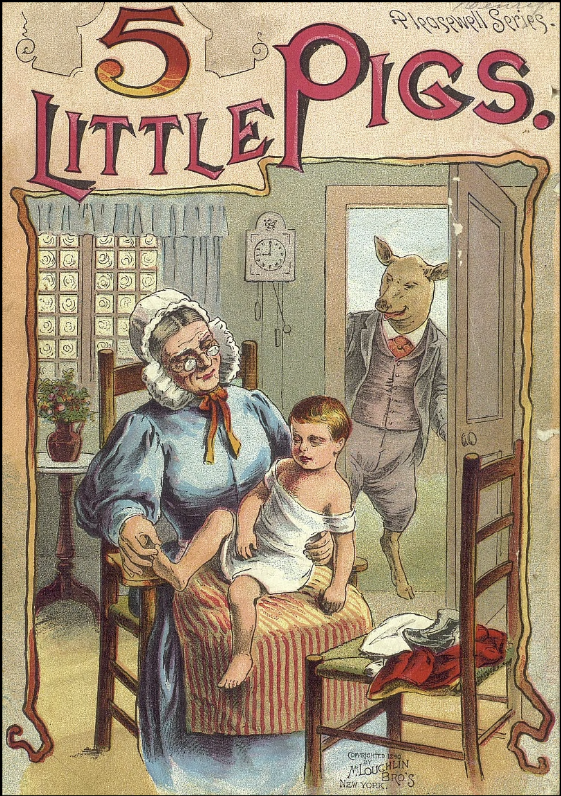
We can learn much about how a historical period viewed the abilities of its children by studying its children’s literature. Occupying a space somewhere between the purely didactic and the nonsensical, most children’s books published in the past few hundred years have attempted to find a line between the two poles, seeking a balance between entertainment and instruction. However, that line seems to move closer to one pole or another depending on the prevailing cultural sentiments of the time. And the very fact that children’s books were hardly published at all before the early 18th century tells us a lot about when and how modern ideas of childhood as a separate category of existence began.
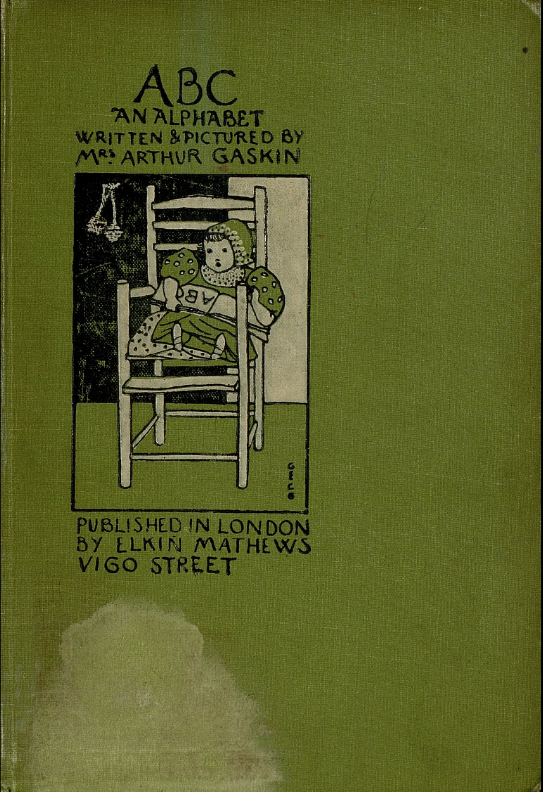
“By the end of the 18th century,” writes Newcastle University professor M.O. Grenby, “children’s literature was a flourishing, separate and secure part of the publishing industry in Britain.” The trend accelerated rapidly and has never ceased—children’s and young adult books now drive sales in publishing (with 80% of YA books bought by grown-ups for themselves).
Grenby notes that “the reasons for this sudden rise of children’s literature” and its rapid expansion into a booming market by the early 1800s “have never been fully explained.” We are free to speculate about the social and pedagogical winds that pushed this historical change.
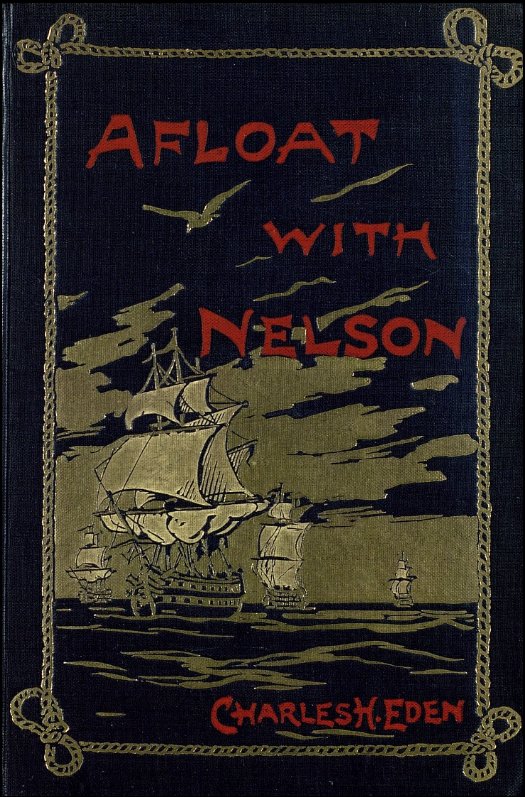
Or we might do so, at least, by examining the children’s literature of the Victorian era, perhaps the most innovative and diverse period for children’s literature thus far by the standards of the time. And we can do so most thoroughly by surveying the thousands of mid- to late 19th century titles at the University of Florida’s Baldwin Library of Historical Children’s Literature. Their digitized collection currently holds over 10,000 books free to read online from cover to cover, allowing you to get a sense of what adults in Britain and the U.S. wanted children to know and believe.
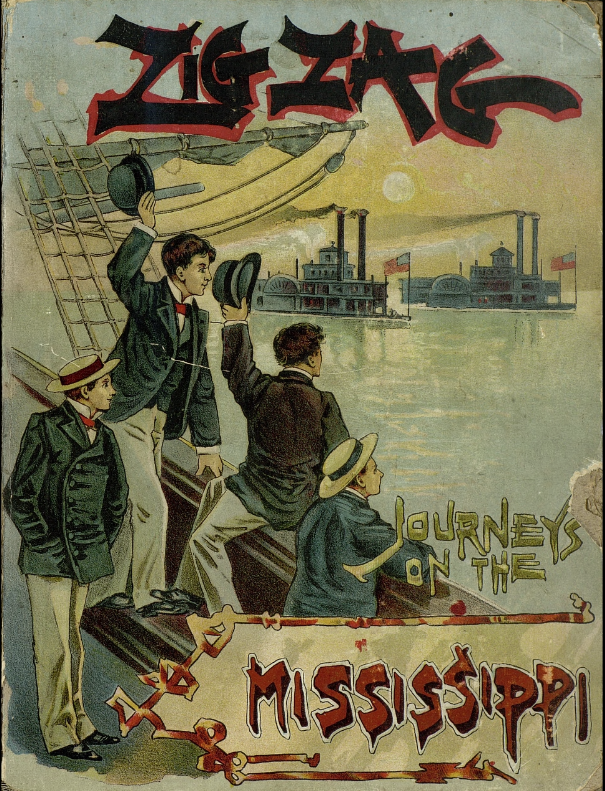
Several genres flourished at the time: religious instruction, naturally, but also language and spelling books, fairy tales, codes of conduct, and, especially, adventure stories—pre-Hardy Boys and Nancy Drew examples of what we would call young adult fiction, these published principally for boys. Adventure stories offered a (very colonialist) view of the wide world; in series like the Boston-published Zig Zag and English books like Afloat with Nelson, both from the 1890s, fact mingled with fiction, natural history and science with battle and travel accounts. But there is another distinctive strain in the children’s literature of the time, one which to us—but not necessarily to the Victorians—would seem contrary to the imperialist young adult novel.
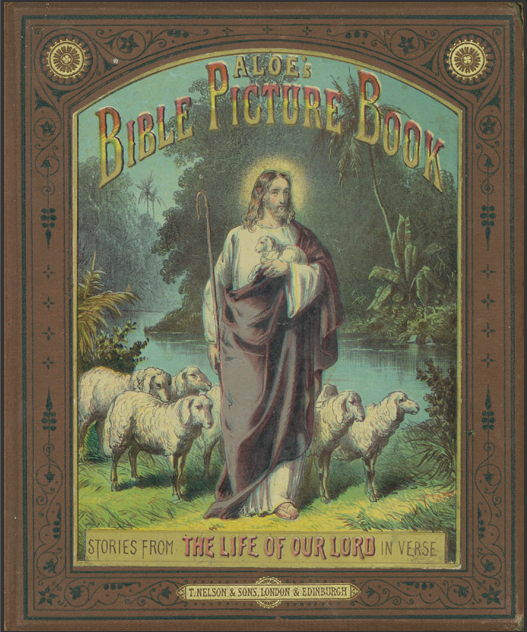
For most Victorian students and readers, poetry was a daily part of life, and it was a central instructional and storytelling form in children’s lit. The A.L.O.E.’s Bible Picture Book from 1871, above, presents “Stories from the Life of Our Lord in Verse,” written “simply for the Lord’s lambs, rhymes more readily than prose attracting the attention of children, and fastening themselves on their memories.” Children and adults regularly memorized poetry, after all. Yet after the explosion in children’s publishing the former readers were often given inferior examples of it. The author of the Bible Picture Book admits as much, begging the indulgence of older readers in the preface for “defects in my work,” given that “the verses were made for the pictures, not the pictures for the verses.”
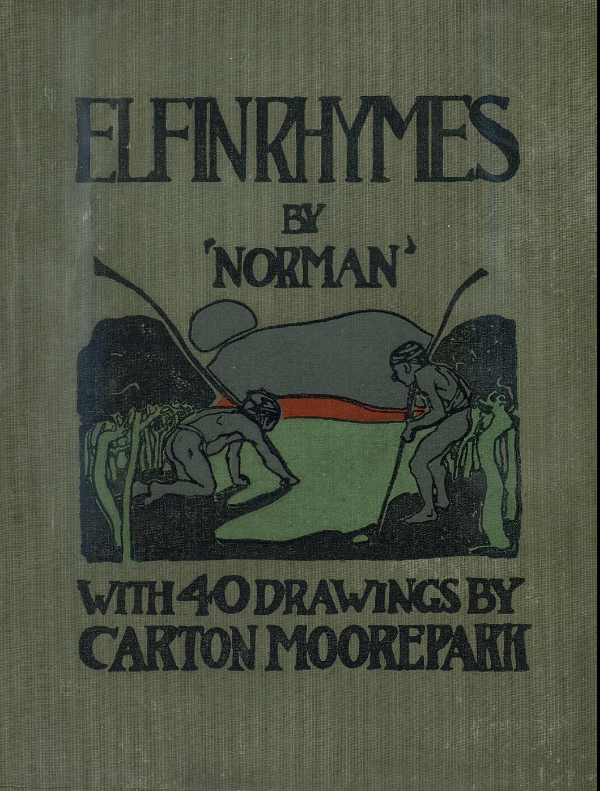
This is not an author, or perhaps a type of literature, one might suspect, that thinks highly of children’s aesthetic sensibilities. We find precisely the opposite to be the case in the wonderful Elfin Rhymes from 1900, written by the mysterious “Norman” with “40 drawings by Carton Moorepark.” Whoever “Norman” may be (or why his one-word name appears in quotation marks), he gives his readers poems that might be mistaken at first glance for unpublished Christina Rossetti verses; and Mr. Moorepark’s illustrations rival those of the finest book illustrators of the time, presaging the high quality of Caldecott Medal-winning books of later decades. Elfin Rhymes seems like a rare oddity, likely published in a small print run; the care and attention of its layout and design shows a very high opinion of its readers’ imaginative capabilities.
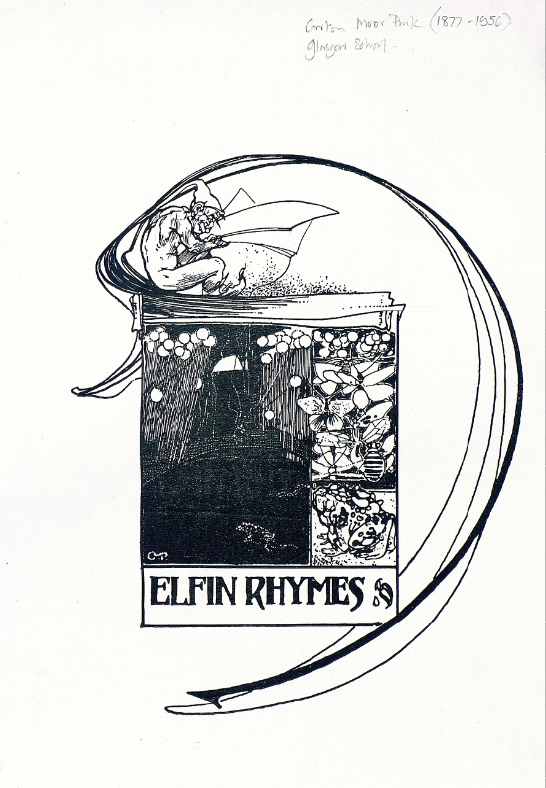
This title is representative of an emerging genre of late Victorian children’s literature, which still tended on the whole, as it does now, to fall into the trite and formulaic. Elfin Rhymes sits astride the fantasy boom at the turn of the century, heralded by hugely popular books like Frank L. Baum’s Wizard of Oz series and J.M. Barrie’s Peter Pan. These, the Harry Potters of their day, made millions of young people passionate readers of modern fairy tales, representing a slide even further away from the once quite narrow, “remorselessly instructional… or deeply pious” categories available in early writing for children, as Grenby points out.
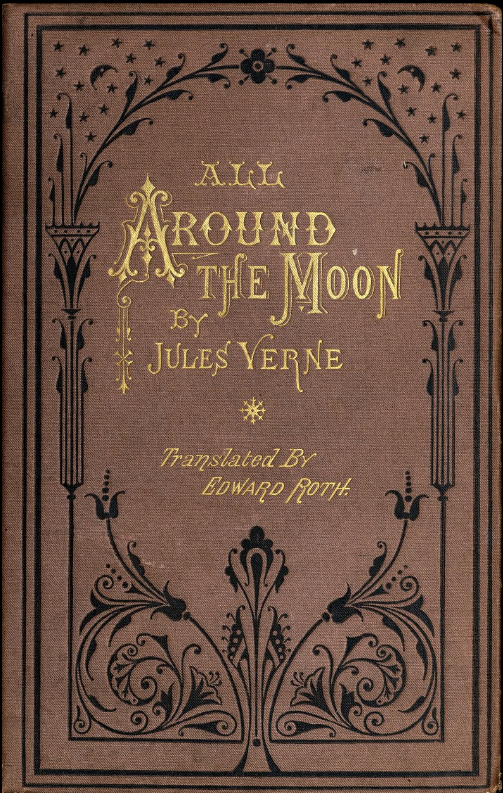
Where the boundaries for kids’ literature had once been narrowly fixed by Latin grammar books and Pilgrim’s Progress, by the end of the 19th century, the influence of science fiction like Jules Verne’s, and of popular supernatural tales and poems, prepared the ground for comic books, YA dystopias, magician fiction, and dozens of other children’s literature genres we now take for granted, or—in increasingly large numbers—we buy to read for ourselves. Enter the Baldwin Library of Historical Children’s Literature here, where you can browse several categories, search for subjects, authors, titles, etc, see full-screen, zoomable images of book covers, download XML versions, and read all of the over 10,000+ books in the collection with comfortable reader views.
Note: This is an updated version of a post that originally appeared on our site in 2016.
Related Content:
The First Children’s Picture Book, 1658’s Orbis Sensualium Pictus
Hayao Miyazaki Selects His 50 Favorite Children’s Books
The 100 Greatest Children’s Books of All Time, According to 177 Books Experts from 56 Countries
A Digital Archive of 1,800+ Children’s Books from UCLA
Josh Jones is a writer and musician based in Durham, NC. Follow him at @jdmagness
Read More...Read the Original 32-Page Program for Fritz Lang’s Metropolis (1927)
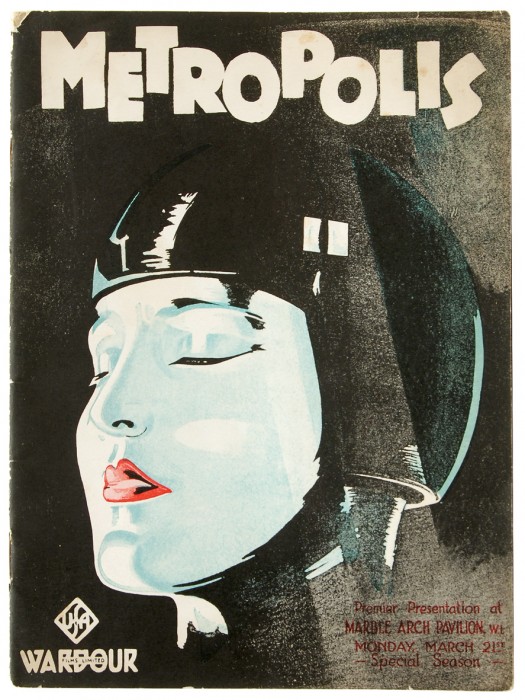
One of the very first feature-length sci-fi films ever made, Fritz Lang’s Metropolis took a daring visual approach for its time, incorporating Bauhaus and Futurist influences in thrillingly designed sets and costumes. Lang’s visual language resonated strongly in later decades. The film’s rather stunning alchemical-electric transference of a woman’s physical traits onto the body of a destructive android—the so-called Maschinenmensch— began a very long trend of female robots in film and television, most of them as dangerous and inscrutable as Lang’s. And yet, for all its many imitators, Metropolis continues to deliver surprises. Here, we bring you a new find: a 32-page program distributed at the film’s 1927 premiere in London and recently re-discovered.
In addition to underwriting almost one hundred years of science fiction film and television tropes, Metropolis has had a very long life in other ways: Inspiring an all-star soundtrack produced by Giorgio Moroder in 1984, with Freddie Mercury, Loverboy, and Adam Ant, and a Kraftwerk album.
In 2001, a reconstructed version of Metropolis received a screening at the Berlin Film Festival, and UNESCO’s Memory of the World Register added it to their roster. 2002 saw the release of an exceptional Metropolis-inspired anime with the same title. And in 2010 an almost fully restored print of the long-incomplete film—recut from footage found in Argentina in 2008—appeared, adding a little more sophistication and coherence to the simplistic storyline.
Even at the film’s initial reception, without any missing footage, critics did not warm to its story. For all its intense visual futurism, it has always seemed like a very quaint, naïve tale, struck through with earnest religiosity and inexplicable archaisms. Contemporary reviewers found its narrative of generational and class conflict unconvincing. H.G. Wells—“something of an authority on science fiction”—pronounced it “the silliest film” full of “every possible foolishness, cliché, platitude, and muddlement about mechanical progress and progress in general served up with a sauce of sentimentality that is all its own.” Few were kinder when it came to the story, and despite its overt religious themes, many saw it as Communist propaganda.
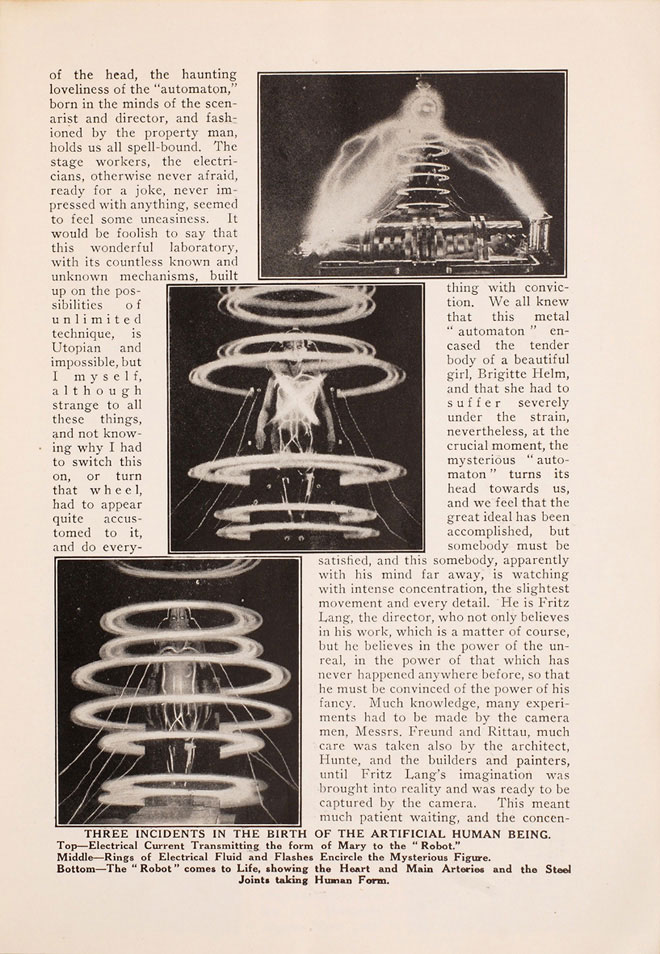
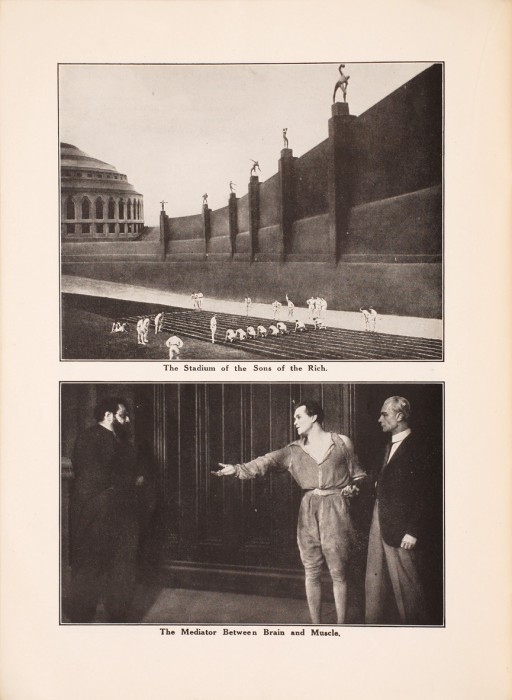
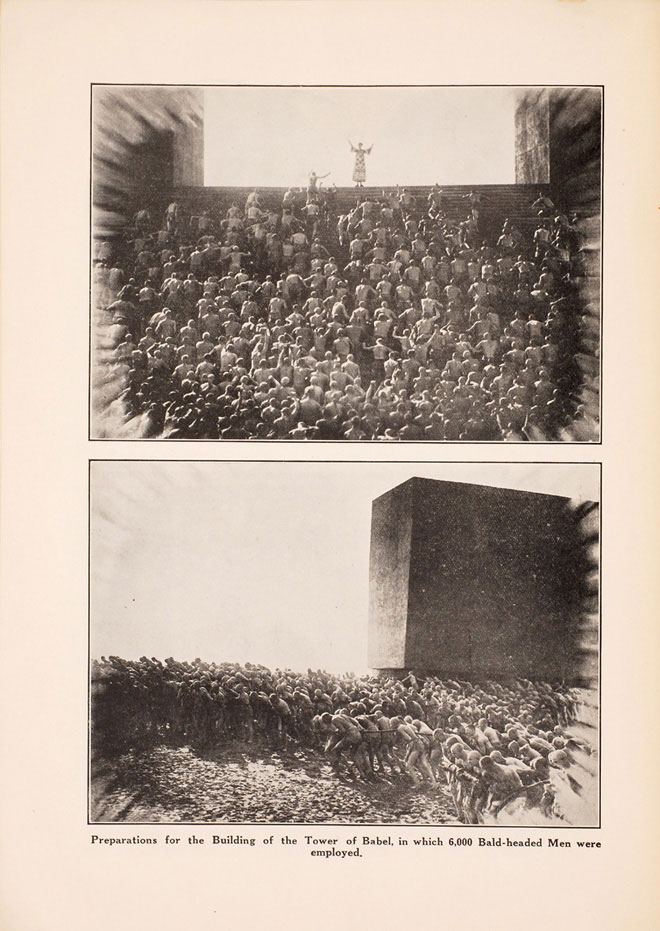
Viewed after subsequent events in 20th century Germany, many of the film’s scenes appear “disturbingly prescient,” writes the Unaffiliated Critic, such as the vision of a huge industrial machine as Moloch, in which “bald, underfed humans are led in chains to a furnace.” Lang and his wife Thea von Harbou—who wrote the novel, then screenplay—were of course commenting on industrialization, labor conditions, and poverty in Weimar Germany. Metropolis’s “clear message of classism,” as io9 writes, comes through most clearly in its arresting imagery, like that horrifying, monstrous furnace and the “looming symbol of wealth in the Tower of Babel.”
The visual effects and spectacular set pieces have worked their magic on almost everyone (Wells excluded) who has seen Metropolis. And they remain, for all its silliness, the primary reason for the movie’s cultural prevalence. Wired calls it “probably the most influential sci-fi movie in history,” remarking that “a single movie poster from the original release sold for $690,000 seven years ago, and is expected to fetch even more at an auction later this year.”
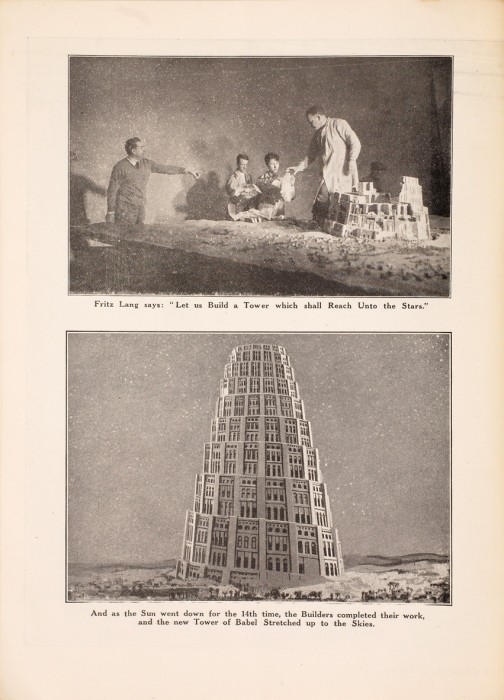
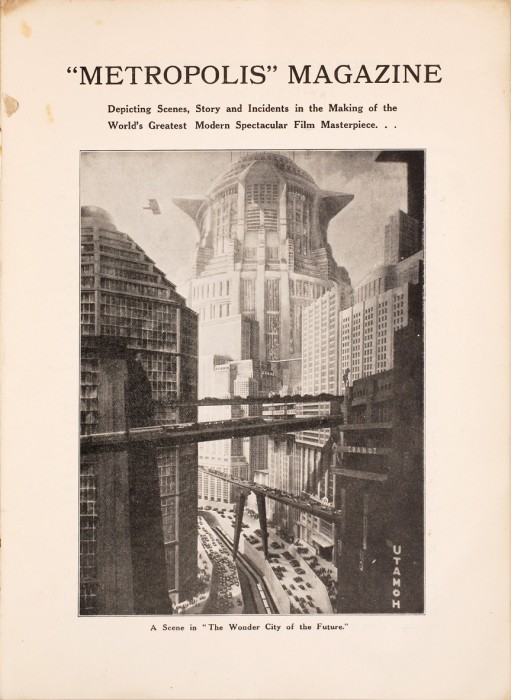
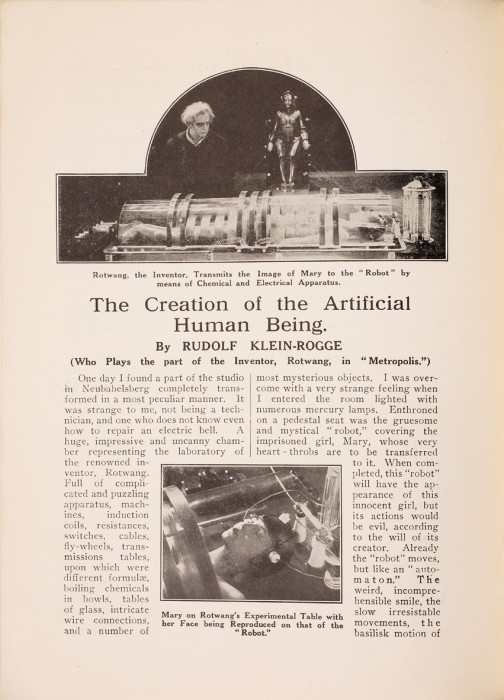
We now have another artifact from the movie’s premiere, this 32-page program, appropriately called “Metropolis” Magazine, that offers a rich feast for audiences, and text at times more interesting than the film’s script. (You can view the program in full here.) One imagines had they possessed backlit smart phones, those early moviegoers might have found themselves struggling not to browse their programs while the film screened. But, of course, Metropolis’s visual excesses would hold their attention as they still do ours. Its scenes of a futuristic city have always enthralled viewers, filmmakers, and (most) critics, such that Roger Ebert could write of “vast futuristic cities” as a staple of some of the best science fiction in his review of the 21st-century animated Metropolis—“visions… goofy and yet at the same time exhilarating.”
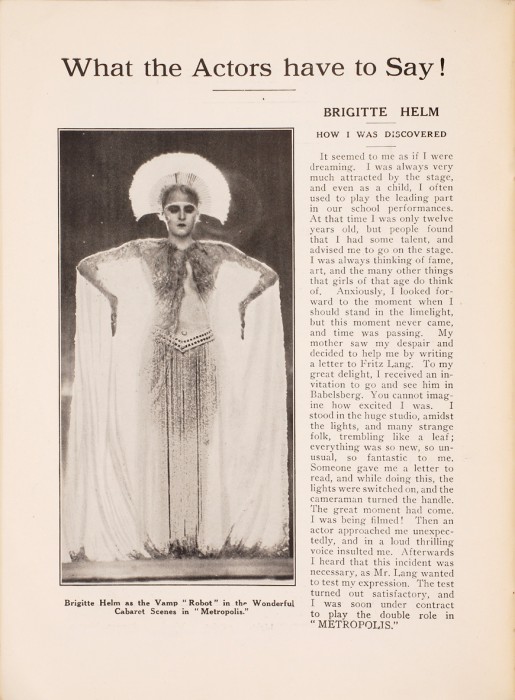
The program really is an astonishing document, a treasure for fans of the film and for scholars. It’s full of production stills, behind-the-scenes articles and photos, technical minutiae, short columns by the actors, a bio of Thea von Harbou, the “authoress,” excerpts from her novel and screenplay placed side-by-side, and a short article by her. There’s a page called “Figures that Speak” that tallies the production costs and cast and crew numbers (including very crude drawings and numbers of “Negroes” and “Chinese”). Lang himself weighs in, laconically, with a breezy introduction followed by a classic silent-era line: “if I cannot succeed in finding expression on the picture, I certainly cannot find it in speech.” Film history agrees, Lang found his expression “on the picture.”
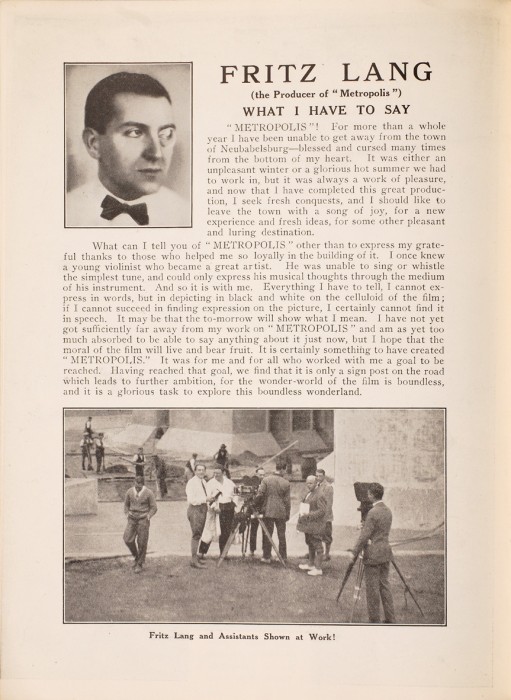
“Only three surviving copies of this program are known to exist,” writes Wired, and one of them, from which these pages come, has gone on sale at the Peter Harrington rare book shop for 2,750 pounds ($4,244)—which seems rather low, given what an original Metropolis poster went for. But markets are fickle, and whatever its current or future price, ”Metropolis” Magazine is invaluable to cineastes. See all 32 pages of the program at Peter Harrington’s website.
Note: An earlier version of this post appeared on our site in 2016.
Related Content:
If Fritz Lang’s Iconic Film Metropolis Had a Kraftwerk Soundtrack
Josh Jones is a writer and musician based in Durham, NC. Follow him at @jdmagness
Read More...Support Us
We're hoping to rely on loyal readers, rather than erratic ads. Please click the Donate button and support Open Culture. You can use Paypal, Venmo, Patreon, even Crypto! We thank you!

About Us

Open Culture scours the web for the best educational media. We find the free courses and audio books you need, the language lessons & educational videos you want, and plenty of enlightenment in between.
Advertise With Us

FREE UPDATES!
GET OUR DAILY EMAIL
Get the best cultural and educational resources on the web curated for you in a daily email. We never spam. Unsubscribe at any time.
FOLLOW ON SOCIAL MEDIA

Open Culture editor Dan Colman scours the web for the best educational media. He finds the free courses and audio books you need, the language lessons & movies you want, and plenty of enlightenment in between.
Advertise With Us


