A Page of Madness: The Lost, Avant Garde Masterpiece from Early Japanese Cinema (1926)
It’s a sad fact that the vast majority of silent movies in Japan have been lost thanks to human carelessness, earthquakes and the grim efficiency of the United States Air Force. The first films of hugely important figures like Kenji Mizoguchi, Yasujiro Ozu, and Hiroshi Shimizu have simply vanished. So we should consider ourselves fortunate that Teinosuke Kinugasa’s Kuretta Ippei — a 1926 film known in the States as A Page of Madness – has somehow managed to survive the vagaries of fate. Kinugasa sought to make a European-style experimental movie in Japan and, in the process, he made one of the great landmarks of silent cinema. You can watch it above.
Born in 1896, Kinugasa started his adult life working as an onnagata, an actor who specializes in playing female roles. In 1926, after working for a few years behind the camera under pioneering director Shozo Makino, Kinugasa bought a film camera and set up a lab in his house in order to create his own independently financed movies. He then approached members of the Shinkankaku (new impressionists) literary group to help him come up with a story. Author Yasunari Kawabata wrote a treatment that would eventually become the basis for A Page of Madness.
Though the synopsis of the plot doesn’t really do justice to the movie — a retired sailor who works at an insane asylum to care for his wife who tried to kill their child — the visual audacity of Page is still startling today. The opening sequence rhythmically cuts between shots of a torrential downpour and gushing water before dissolving into a hallucinatorily odd scene of a young woman in a rhomboid headdress dancing in front of a massive spinning ball. The woman is, of course, an inmate at the asylum dressed in rags. As her dance becomes more and more frenzied, the film cuts faster and faster, using superimpositions, spinning cameras and just about every other trick in the book.
While Kinugasa was clearly influenced by The Cabinet of Dr. Caligari, which also visualizes the inner world of the insane, the movie is also reminiscent of the works of French avant-garde filmmakers like Abel Gance, Russian montage masters like Sergei Eisenstein and, in particular, the subjective camerawork of F. W. Murnau in Der Letzte Mann. Kinugasa incorporated all of these influences seamlessly, creating an exhilarating, disturbing and ultimately sad tour de force of filmmaking. The great Japanese film critic Akira Iwasaki called the movie “the first film-like film born in Japan.”
When A Page of Madness was released, it played at a theater in Tokyo that specialized in foreign movies. Page was indeed pretty foreign compared to most other Japanese films at the time. The movie was regarded, film scholar Aaron Gerow notes, as “one of the few Japanese works to be treated as the ‘equal’ of foreign motion pictures in a culture that still looked down on domestic productions.” Yet it didn’t change the course of Japanese cinema, and it was thought of as a curiosity at a time when most films in Japan were kabuki adaptations and samurai stories.
Page disappeared not long after its release and, for over 50 years, was thought lost until Kinugasa found it in his own storehouse in 1971. During that time Kinugasa received a Palme d’Or and an Oscar for his splashy samurai spectacle The Gate of Hell (1953) and Kawabata, who wrote the treatment, got a Nobel Prize in Literature for writing books like Snow Country about a lovelorn geisha.
You can find A Page of Madness on our list of Free Silent Films, which is part of our collection, 4,000+ Free Movies Online: Great Classics, Indies, Noir, Westerns, Documentaries & More.
Note: An earlier version of this post appeared on our site in 2014.
Related Content:
The Golden Age of Japanese Cinema: Kurosawa, Ozu, Mizoguchi & Beyond
Essential Japanese Cinema: A Journey Through 50 of Japan’s Beautiful, Often Bizarre Films
Akira Kurosawa’s List of His 100 Favorite Movies
Jonathan Crow is a writer and filmmaker whose work has appeared in Yahoo!, The Hollywood Reporter, and other publications.
Read More...Watch Meshes of the Afternoon, the Experimental Short Voted the 16th Best Film of All Time
It seems not to be documented whether the Santa Ana winds were blowing when Maya Deren and Alexander Hackenschmied shot Meshes of the Afternoon. But everything about the film itself suggests that they must have been, so vivid does its atmosphere of luxuriantly arid paranoia remain these 62 years later. Despite its runtime of less than fifteen minutes and the obviously modest means of its production, it’s long been canonized as not just a standard introduction to experimentalism in film studies classes, but also a critical favorite. In fact, it placed in the last Sight and Sound critics poll of the best films of all time at a respectable #16, above Abbas Kiarostami’s Close‑Up and below John Ford’s The Searchers.
Meshes of the Afternoon ranks at #62 on the directors poll, a spot that sounds low until you consider that it’s shared with the likes of Late Spring, Some Like It Hot, Sátántangó, Blade Runner, and Lawrence of Arabia. Still, it’s a bit surprising that it didn’t come in higher, given the obvious influence both direct and indirect of its early Los Angeles-noir surrealism on so many subsequent major motion pictures.
“Had Californian sunlight ever looked as suggestive or sinister before the sharply etched dream world of Meshes of the Afternoon?” asks Ian Christie in his short accompanying essay at the British Film Institute’s site. “Certainly, it soon would, in Billy Wilder’s Double Indemnity and many later films noirs” — not to mention the “many traditions over eight decades” it has inspired since.
Those include the oeuvre of the late David Lynch, which constitutes a tradition unto itself, but even the most casual filmgoer could hardly watch Meshes of the Afternoon without feeling deep resonances between it and a great many of the non-experimental movies they’ve seen since. The story, such as one can decipher it, has to do with a woman alone at home, haunted by a glimpse of a hooded figure with a mirror for a face and unable to tell whether she’s on the inside or outside of a dream. By the end, she is dead, but on which plane of reality? There are, of course, no answers, just as there is no dialogue, explanatory or otherwise. But Deren and Hackenschmied knew they didn’t need it, being fully aware that they were working in a medium where everything important can be conveyed visually — and, ideally, experienced by viewers just as if they were dreaming it themselves.
The film will be added to our collection, 4,000+ Free Movies Online: Great Classics, Indies, Noir, Westerns, Documentaries & More.
Related Content:
A Page of Madness: The Lost, Avant Garde Masterpiece from Early Japanese Cinema (1926)
Watch Dziga Vertov’s A Man with a Movie Camera: The 8th Best Film Ever Made
Based in Seoul, Colin Marshall writes and broadcasts on cities, language, and culture. His projects include the Substack newsletter Books on Cities and the book The Stateless City: a Walk through 21st-Century Los Angeles. Follow him on the social network formerly known as Twitter at @colinmarshall.
Read More...A Man Read 3,599 Books Over 60 Years, and Now His Family Has Shared the Entire List Online
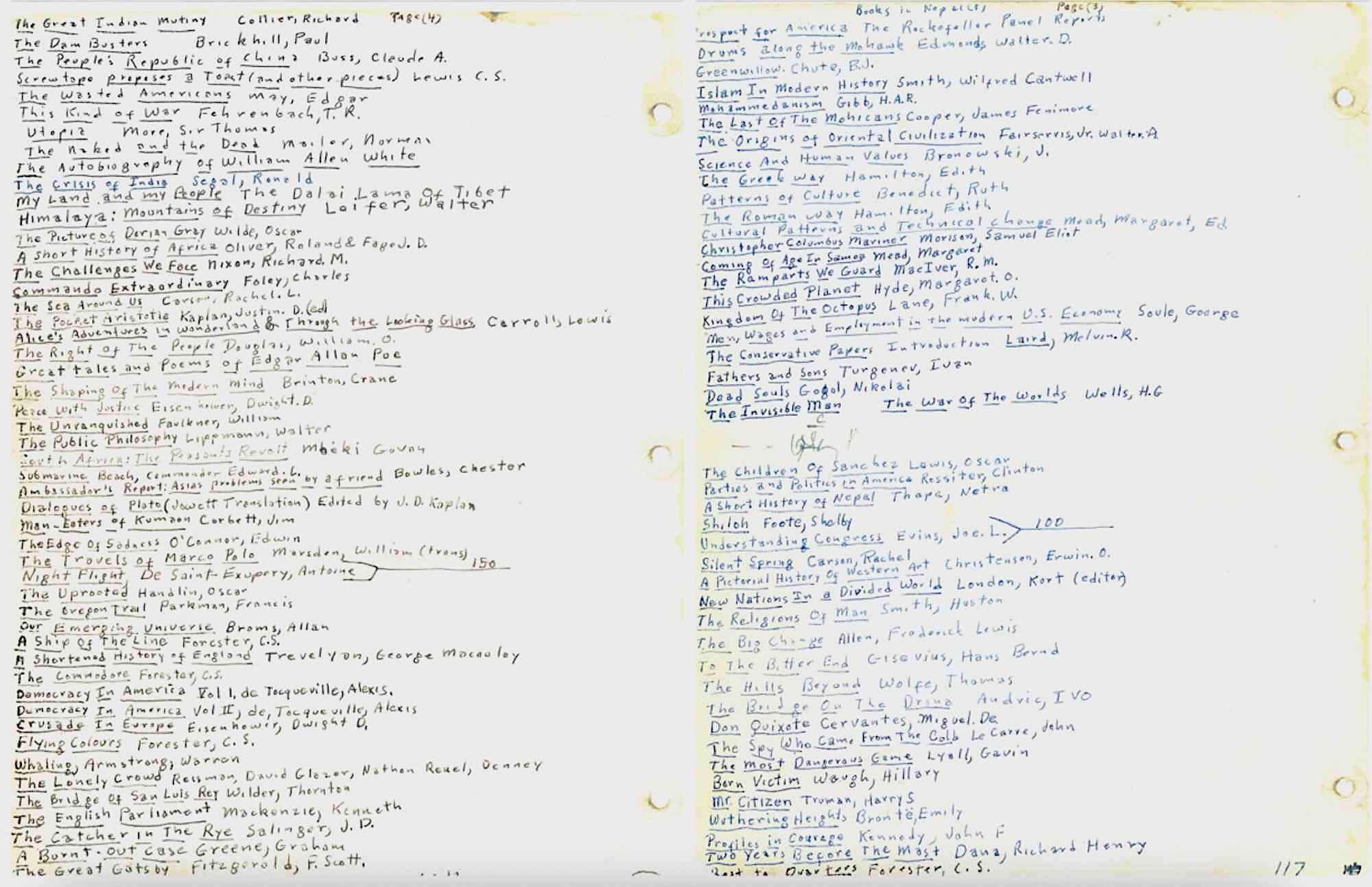
Dan Pelzer died earlier this year at the age of 92, leaving behind a handwritten list of all the books he’d read since 1962. His family had it digitized, put it online, and now it’s gone viral, somewhat to the surprise of those of us who’d never heard of him before. But that, it seems, is how the unprepossessing Pelzer himself would have wanted it, according to the impression given by his grown children when interviewed about the popularity of their father’s more than 100-page-long reading list. He began keeping it when he was stationed in Nepal as a Peace Corps volunteer, and kept it up until the end of his reading days in 2023, long after he retired from his job as a social worker at an Ohio juvenile correctional facility.
Examined together, whether in the form of a complete scan or a searchable PDF, the 3,599 books, most of them checked out from the library, that Pelzer recorded having read constitute a personal cultural history of the past six decades. Described as a devout Catholic, he certainly seems to have been consistent in his pursuit of an interest in not just the history of Christianity in particular, but the history of western civilization in general.
It comes as no surprise to see him dig into Will and Ariel Durant’s The Story of Civilization series in the early nineteen-eighties, slightly startling though it is that he read its eleven volumes in an apparently random order. This habit turns out to be characteristic: though reputed to finish every book he started, he only got around to six volumes of Anthony Powell’s A Dance to the Music of Time, starting with the eleventh and ending with the tenth.
Interspersed with the books of The Story of Civilization are the likes of Philip Caputo’s A Rumor of War, John Irving’s The World According to Garp, and three novels by Ken Follett. Though abidingly concerned with the story of mankind, Pelzer appears also to have had a weakness for genre thrillers (he’s remembered as a big John Grisham fan) and topical books-of-the-moment. But whether reading at high‑, low‑, or middlebrow level, he seems to have been willing to give all major religions and political philosophies, as well as some minor ones, a fair hearing — or rather, a fair reading. This makes for striking juxtapositions in his list: Ayn Rand followed by L. Ron Hubbard, Ta-Nehisi Coates by Jonathan Haidt. In that respect, he was, perhaps, the ideal of the engaged, “democratic” common reader one imagines populating America while somehow never encountering. If his list raises the question of why he didn’t go into a more intellectually ambitious line of work, it also, in a way, answers it: what time would that have left him to read?
Related content:
Joseph Brodsky’s List of 83 Books You Should Read to Have an Intelligent Conversation
David Foster Wallace’s Surprising List of His 10 Favorite Books, from C. S. Lewis to Tom Clancy
100 Books to Read in a Lifetime
Based in Seoul, Colin Marshall writes and broadcasts on cities, language, and culture. His projects include the Substack newsletter Books on Cities and the book The Stateless City: a Walk through 21st-Century Los Angeles. Follow him on the social network formerly known as Twitter at @colinmarshall.
Read More...Hear the Pieces Mozart Composed When He Was Only 5 Years Old
A preternaturally talented, precocious child, barely out of toddlerhood, in powdered wig and knee-breeches, capering around the great houses of 18th century Europe between virtuoso performances on the harpsichord. A young boy who can play any piece anyone puts in front of him, and compose symphonies extemporaneously with ease…. Few scenes better capture the mythos of the child prodigy than those reported from the childhood of Wolfgang Amadeus Mozart.
If Milos Forman’s Amadeus is any reliable guide to his character, if not his history, Mozart may never have lost his boyish charm and exuberance, but his musical ability seemed to mature exponentially as he composed hundreds of sonatas, quartets, concertos, and operas, ending with the Requiem, an astonishing piece of work by any measure, despite remaining unfinished in the year of his death, 1791, at the age of 35.
While those feverish scenes of Requiem’s composition in Forman’s film may be tenuously attached to the truth, the stories of Mozart the preschool and boyhood genius are well attested. Not only did he play with unbelievable skill for “emperors and empresses in the courts of Europe,” but “by the time he was six he had composed dozens of remarkable pieces for the keyboard as well as for other instruments,” notes Willard Palmer in an introduction to Mozart’s most popular works. “His first efforts at composition began when he was only four years old.”
He composed several short pieces the following year, and you can hear them all performed above. At the Morgan Library’s site you can also see a scanned manuscript image of four of those compositions, written in Mozart’s father’s hand. Leopold Mozart—the driving stage-parental force, as we know, behind Wolfgang’s childhood career as a touring marvel—notated these first attempts, crediting them to “Wolfgangerl,” in what is known as the Nannerl Notebook, from the nickname of Mozart’s older sister, Maria Anna.
Leopold, Kapellmeister of the Salzburg court orchestra, recognized not only Wolfgang’s musical talents, but also those of Nannerl, and he devoted his time to overseeing both his children’s training. For sadly obvious reasons, the elder Mozart did not continue to perform, and the notebook named for her does not contain any of her compositions, only Leopold’s exercises for the children and her brother’s first original work. In addition to Mozart’s earliest pieces, it may also contain music composed by him at 7 or 8 years old—more extensive works that might, says Mozarteum researcher Ulrich Leisinger, bridge the short, simple first pieces and his first major compositions.
Nonetheless, we have dozens of Mozart’s compositions throughout his childhood and teenage years. Several of those earlier pieces come from the so-called London Notebook, a sketchbook kept during Mozart’s time in England between 1764–65. Here, writes Elena Abend, we find him “extending his musical themes compared to his earlier compositions.” And yet the music “almost always has a playfulness about it.” It’s a quality that never left Mozart’s work, excluding the awesome Requiem, of course, but then this final masterwork was completed by other composers, none of them with Mozart’s lightness of spirit, which we can trace all the way back to that first piece, “a courtly little composition.” Writes Abend, “gracefulness is essential in performing the piece.”
Note: An earlier version of this post appeared on our site in 2017.
Related Content:
Watch the First Performance of a Mozart Composition That Had Been Lost for Centuries
Hear the Evolution of Mozart’s Music, Composed from Ages 5 to 35
Mozart’s Diary Where He Composed His Final Masterpieces Is Now Digitized and Available Online
Josh Jones is a writer and musician based in Durham, NC. Follow him at @jdmagness
Read More...
Isaac Asimov Predicts in 1964 What the World Will Look Like in 2014
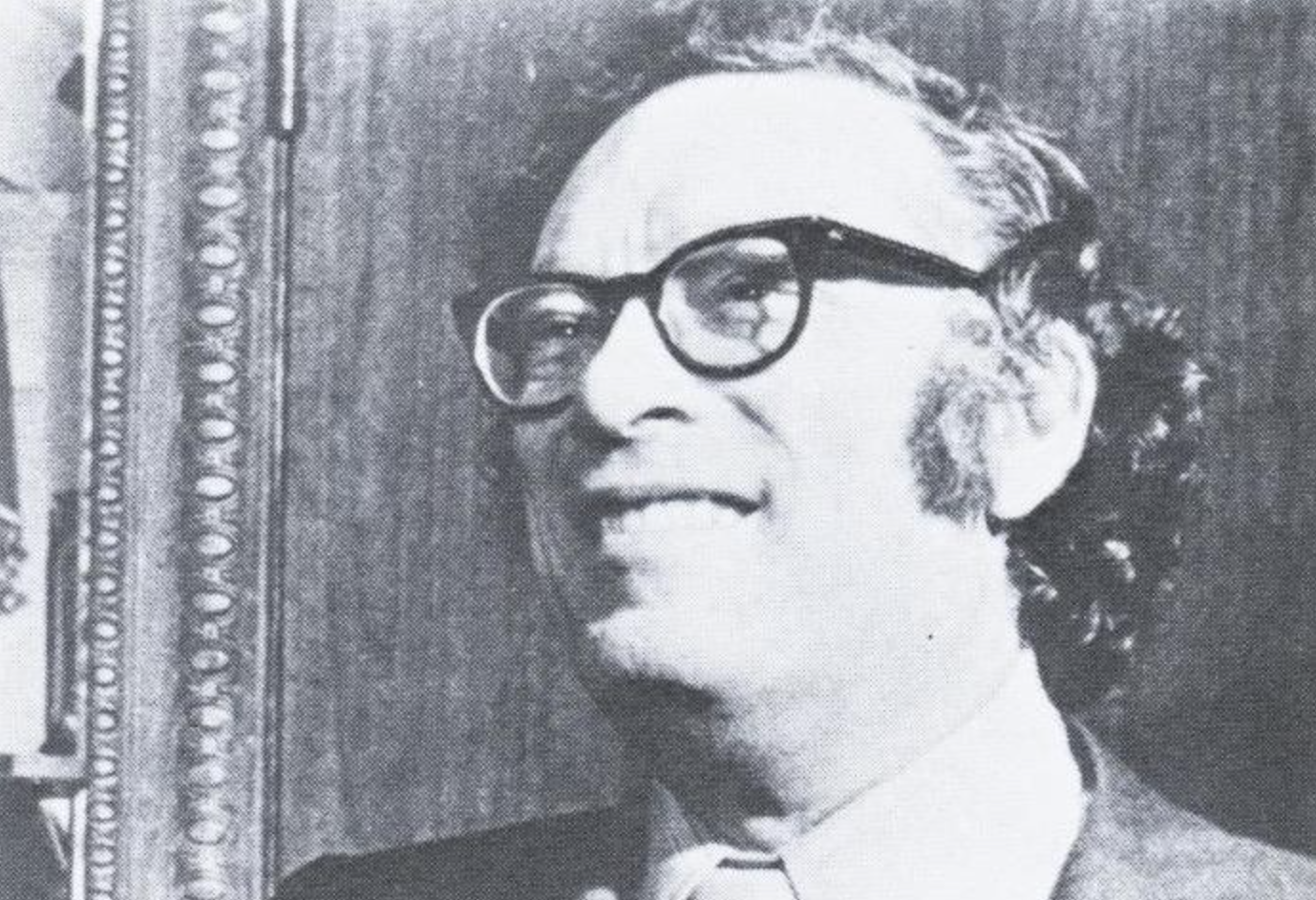
Image by Rochester Institute of Technology, via Wikimedia Commons
When New York City hosted The World’s Fair in 1964, Isaac Asimov, the prolific sci-fi author and professor of biochemistry at Boston University, took the opportunity to wonder what the world would look like 50 years hence — assuming the world survived the nuclear threats of the Cold War. Writing in The New York Times, Asimov imagined a world that you might partly recognize today, a world where:
- “Gadgetry will continue to relieve mankind of tedious jobs. Kitchen units will be devised that will prepare ‘automeals,’ heating water and converting it to coffee; toasting bread; frying, poaching or scrambling eggs, grilling bacon, and so on. Breakfasts will be ‘ordered’ the night before to be ready by a specified hour the next morning.”
- “Communications will become sight-sound and you will see as well as hear the person you telephone. The screen can be used not only to see the people you call but also for studying documents and photographs and reading passages from books. Synchronous satellites, hovering in space will make it possible for you to direct-dial any spot on earth, including the weather stations in Antarctica.”
- “[M]en will continue to withdraw from nature in order to create an environment that will suit them better. By 2014, electroluminescent panels will be in common use. Ceilings and walls will glow softly, and in a variety of colors that will change at the touch of a push button.”
- “Robots will neither be common nor very good in 2014, but they will be in existence.”
- “The appliances of 2014 will have no electric cords, of course, for they will be powered by long-lived batteries running on radioisotopes.”
- “[H]ighways … in the more advanced sections of the world will have passed their peak in 2014; there will be increasing emphasis on transportation that makes the least possible contact with the surface. There will be aircraft, of course, but even ground travel will increasingly take to the air a foot or two off the ground.”
- “[V]ehicles with ‘Robot-brains’ … can be set for particular destinations … that will then proceed there without interference by the slow reflexes of a human driver.”
- “[W]all screens will have replaced the ordinary set; but transparent cubes will be making their appearance in which three-dimensional viewing will be possible.”
- “[T]he world population will be 6,500,000,000 and the population of the United States will be 350,000,000.” And later he warns that if the population growth continues unchecked, “All earth will be a single choked Manhattan by A.D. 2450 and society will collapse long before that!” As a result, “There will, therefore, be a worldwide propaganda drive in favor of birth control by rational and humane methods and, by 2014, it will undoubtedly have taken serious effect.” [See our Walt Disney Family Planning cartoon from earlier this week.]
- “Ordinary agriculture will keep up with great difficulty and there will be ‘farms’ turning to the more efficient micro-organisms. Processed yeast and algae products will be available in a variety of flavors.”
- “The world of A.D. 2014 will have few routine jobs that cannot be done better by some machine than by any human being. Mankind will therefore have become largely a race of machine tenders. Schools will have to be oriented in this direction.… All the high-school students will be taught the fundamentals of computer technology will become proficient in binary arithmetic and will be trained to perfection in the use of the computer languages that will have developed out of those like the contemporary “Fortran.”
- “[M]ankind will suffer badly from the disease of boredom, a disease spreading more widely each year and growing in intensity. This will have serious mental, emotional and sociological consequences, and I dare say that psychiatry will be far and away the most important medical specialty in 2014.”
- “[T]he most glorious single word in the vocabulary will have become work!” in our “a society of enforced leisure.”
Isaac Asimov wasn’t the only person during the 60s who peered into the future in a fairly prescient way. You can find a few more on-the-mark predictions from contemporaries below:
Sci-Fi Writer Arthur C. Clarke Predicts the Future in 1964
Walter Cronkite Imagines the Home of the 21st Century … Back in 1967
The Internet Imagined in 1969
Note: An earlier version of this post appeared on our site in 2014.
If you would like to support the mission of Open Culture, consider making a donation to our site. It’s hard to rely 100% on ads, and your contributions will help us continue providing the best free cultural and educational materials to learners everywhere. You can contribute through PayPal, Patreon, and Venmo (@openculture). Thanks!
Read More...Tom Lehrer, RIP: Hear All of His Witty, Satirical Songs in One Playlist
Tom Lehrer died last weekend, more than four decades after rumors of his death had first gone into circulation. He didn’t bother to contradict them, publicly claiming that he figured they would “cut down on the junk mail.” That quip proved not just that he was still alive, but that his wit was intact. And it was his wit, combined with a facility on the piano, that made him famous: mercilessly satirizing everything from the Boy Scouts to Harvard, his alma mater, to New Math to Vatican II to World War III, his lively show-tune pastiches became defining pieces of Cold War-era comedy — or in any case, defining pieces of early Cold War-era comedy.
A professor of mathematics for most of his career, he performed and recorded music mostly in the nineteen-fifties and sixties, beginning with his first concert, given as a graduate student in 1950, and ending with another in Copenhagen in 1967.
There was also an early-seventies coda in the form of a few songs written for PBS’ children’s show The Electric Company and a performance at a George S. McGovern rally. But by then, the frame of American culture had shifted. “The Vietnam War is what changed it,” Lehrer said in 1981. “Everybody got earnest. My purpose was to make people laugh and not applaud. If the audience applauds, they’re just showing they agree with me”: an observation today’s would-be satirists would do well to bear in mind.
Whether or not you have any aspirations of your own in that tradition, you can listen through the entirety of Lehrer’s recorded work in the YouTube playlist above and understand why his comic star burned so brightly — and, through the nearly sixty years that have followed, never quite burned out. Though clearly written in the spirit of Eisenhower-era liberalism, these songs (released by their author into the public domain a few years ago) don’t shy away from the absurdities of what Lehrer himself would not, with a straight face, be able to call the human condition. First tested out on campus, they also developed an early form of what we’ve come to think of as the “college” sensibility in popular music. In some sense, Lehrer never left that way of seeing the world behind — nor, like a true student, did he ever get around to finishing his Ph.D.
Related content:
Tom Lehrer Releases His All of Catchy and Savage Musical Satire Into the Public Domain
Hear Tom Lehrer Sing the Names of 102 Chemical Elements to the Tune of Gilbert & Sullivan
Based in Seoul, Colin Marshall writes and broadcasts on cities, language, and culture. His projects include the Substack newsletter Books on Cities and the book The Stateless City: a Walk through 21st-Century Los Angeles. Follow him on the social network formerly known as Twitter at @colinmarshall.
Read More...Plato, Aristotle & Other Greek Philosophers in Raphael’s Renaissance Masterpiece, The School of Athens
Among the wonders to behold at the Vatican Museums are the larger-than-life forms of the titans of Greek philosophy. It’s widely known that at the center of Raphael’s fresco The School of Athens, which dominates one wall of the twelve Stanze di Raffaello in the Apostolic Palace, stand Plato and Aristotle. In reality, of course, the two were not contemporaries: more than three decades separated the former’s death from the latter’s birth. But in Raphael’s artistic vision, great men (and possibly a great woman) of all generations come together under the banner of learning, from Anaximander to Averroes, Epicurus to Euclid, and Parmenides to Pythagoras.
Even in this company, the figure sitting at the bottom of the steps catches one’s eye. There are several reasons for this, and gallerist-YouTuber James Payne lays them out in his new Great Art Explained video on The School of Athens above.
It appears to represent Heraclitus, the pre-Socratic philosopher associated with ideas like change and the unity of opposites, and a natural candidate for inclusion in what amounts to a trans-temporal class portrait of philosophy. But Raphael seems to have added him later, after that section of the picture was already complete. An astute viewer may also notice Heraclitus’ having been rendered in a slightly different, more muscular style than that of the other philosophers in the frame — a style more like the one on display over in the Sistine Chapel.
In fact, Michelangelo was at work on his Sistine Chapel frescoes at the very same time Raphael was painting The School of Athens. It’s entirely possible, as Payne tells it, for Raphael to have stolen a glimpse of Michelangelo’s stunning work, then gone back and added Michelangelo-as-Heraclitus to his own composition in tribute. There was precedent for this choice: Raphael had already modeled Socrates after Leonardo da Vinci (who was, incredibly, also alive and active at the time), and even rendered the ancient painter Apelles as a self-portrait. With The School of Athens, Payne says, Raphael was “positioning ancient philosophers as precursors to Christian truth,” in line with the thinking of the Renaissance. In subtler ways, he was also emphasizing how the genius of the past lives on — or is, rather, reborn — in the present.
Related content:
Take a 3D Virtual Tour of the Sistine Chapel & Explore Michelangelo’s Masterpieces Up Close
Ancient Philosophy: Free Online Course from the University of Pennsylvania
Based in Seoul, Colin Marshall writes and broadcasts on cities, language, and culture. His projects include the Substack newsletter Books on Cities and the book The Stateless City: a Walk through 21st-Century Los Angeles. Follow him on the social network formerly known as Twitter at @colinmarshall.
Read More...The Real Science Experiments That Inspired Frankenstein
With the Halloween season mere months away, the time has come to start thinking about what frightening reads to line up for ourselves this year. Some of us may reach for Mary Shelley’s Frankenstein; or, The Modern Prometheus, a story we all think we know. But a look into its context reveals that what’s now regarded as a timeless classic was, in its day, quite a topical novel. Introducing the 1931 James Whale film adaptation, the regular horror-movie player Edward Van Sloan describes Frankenstein as dealing with “the two great mysteries of creation: life and death” — which, when Shelley’s novel was published more than a century earlier, were yet more mysterious still.
“Worried by the potential inability to distinguish between the states of life and death, two doctors, William Hawes and Thomas Cogan, set up the Royal Humane Society in London in 1774,” writes Sharon Ruston at The Public Domain Review. At the time, it was actually called the Society for the Recovery of Persons Apparently Drowned, a name that would’ve doubled neatly as a mission statement. Falling into the rivers and canals of London was, it seems, a common occurrence in those days, and few members of the public possessed the swimming skills to save themselves. Thus the Society’s members took it upon themselves to devise methods of reviving those “persons apparently drowned,” whether their plunges were accidentally or deliberately taken.
One such attempted suicide, writes Ruston, “seems to have been Mary Shelley’s mother, the feminist, Mary Wollstonecraft,” who later complained about how, after leaping into the Thames, she was “inhumanly brought back to life and misery.” That incident could well have done its part to inspire Frankenstein, though notions of reviving the dead were very much in the air at the time, not least due to the attention being paid to the practice of “Galvanism,” which involved stimulating the muscles of dead animals and human bodies to movement using the then-novel phenomenon of electricity. In the England of that historical moment, it wasn’t entirely far-fetched to believe that the dead really could be brought back to life.
You can learn more about the scientific developments, social changes, and human anxieties (including about the possibility of being buried alive) that formed Frankenstein’s cultural background from the Vox History Club video above. In a way, it seems inevitable that someone in the early nineteenth century would write about a scientist avant la lettre who dares to create life from death. It just happened to be the teenage Shelley, to whom the idea came while engaged in a competition with Lord Byron, the writer-physician John Polidori, and her soon-to-be husband Percy Bysshe Shelley to see who could write the scariest story. Two centuries later, the story of Frankenstein may no longer scare us, but as told by Shelley, it still has a way of sounding strangely plausible.
Related content:
Based in Seoul, Colin Marshall writes and broadcasts on cities, language, and culture. His projects include the Substack newsletter Books on Cities and the book The Stateless City: a Walk through 21st-Century Los Angeles. Follow him on the social network formerly known as Twitter at @colinmarshall.
Read More...How Jackie Chan Filmed the Best Fight Scene in Cinema History
Though now in his seventies, Jackie Chan continues to appear on the big screen with regularity. For most world-famous actors, that’s hardly notable, but it’s not as if Sir John Gielgud, say, had spent decades filming scenes of hand-to-hand combat and sustaining severe injuries in the performance of elaborate stunts. Viewers of New Police Story 2 and Rush Hour 4, to name just two upcoming franchise projects, will surely delight, as always, in Chan’s very screen presence. But it goes without saying that he won’t be attempting anything like what he did in his breakout Hong Kong films of the seventies and eighties, which required a singular dedication both physical and cinematic.
There are also fans who argue that Chan reached his peak in the nineties, most of whom would adduce the climactic fight scene above from Drunken Master II. Made in 1994, when Chan was 40 years old, it came as the ostensible sequel to Drunken Master, from 1978, in which Chan’s portrayal of the titular Qing dynasty folk hero launched him to stardom in Asia.
Released in the U.S. as The Legend of Drunken Master in 2000 — after Chan had finally made it stateside with Rumble in the Bronx and the first Rush Hour — Drunken Master II met with critical astonishment. “It involves some of the most intricate, difficult and joyfully executed action sequences I have ever seen,” wrote Roger Ebert. His judgment of the final, steel-forge-set showdown: “It may not be possible to film a better fight scene.” The Rossatron video below explains how the scene has drawn such reactions.
One element has been key to Chan’s success from the beginning: his humor, visibly descended from the physical comedy of Western silent stars like Charlie Chaplin and Buster Keaton, which comes through even in the midst of the most intense hand-to-hand combat. In Drunken Master II, it’s “not only a pleasing addition to the film, but a necessary part of the story itself,” through the course of which Chan’s protagonist must gain control over the style of “drunken boxing” born of his own fondness for the bottle. It is controlled drunkenness, of course, that eventually brings him victory in his both cartoonish and masterful last fight, which required four months to shoot under the direction of the star himself (the film’s actual director Lau Kar-leung having ceded control of the scene due to stylistic differences). Today, there may be no action-comedy performer equal to Jackie Chan in his prime. But even if there were, would any studio allow him so much of the other secret ingredient, time?
via Metafilter
Related content:
Kung Fu & Martial Arts Movies Online
The Only Footage of Bruce Lee Fighting for Real (1967)
The Graceful Movements of Kung Fu & Modern Dance Revealed in Stunning Motion Visualizations
Radical French Philosophy Meets Kung-Fu Cinema in Can Dialectics Break Bricks? (1973)
Why Is Jackie Chan the King of Action Comedy? A Video Essay Masterfully Makes the Case
Based in Seoul, Colin Marshall writes and broadcasts on cities, language, and culture. His projects include the Substack newsletter Books on Cities and the book The Stateless City: a Walk through 21st-Century Los Angeles. Follow him on the social network formerly known as Twitter at @colinmarshall.
Read More...The First Photograph Ever Taken (1826)
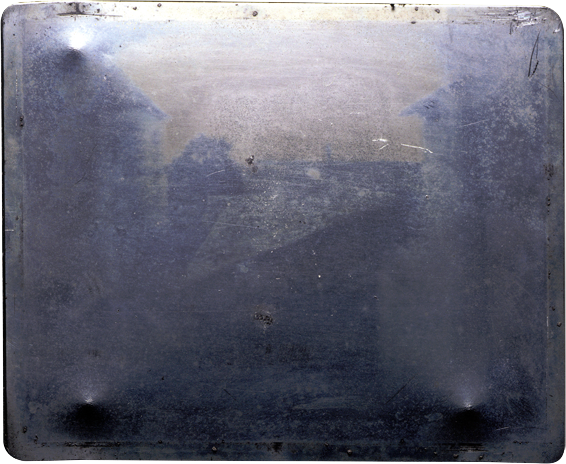
In histories of early photography, Louis Daguerre faithfully appears as one of the fathers of the medium. His patented process, the daguerreotype, in wide use for nearly twenty years in the early 19th century, produced so many of the images we associate with the period, including famous photographs of Abraham Lincoln, Edgar Allan Poe, Emily Dickinson, and John Brown. But had things gone differently, we might know better the harder-to-pronounce name of his onetime partner Joseph Nicéphore Niépce, who produced the first known photograph ever, taken in 1826.
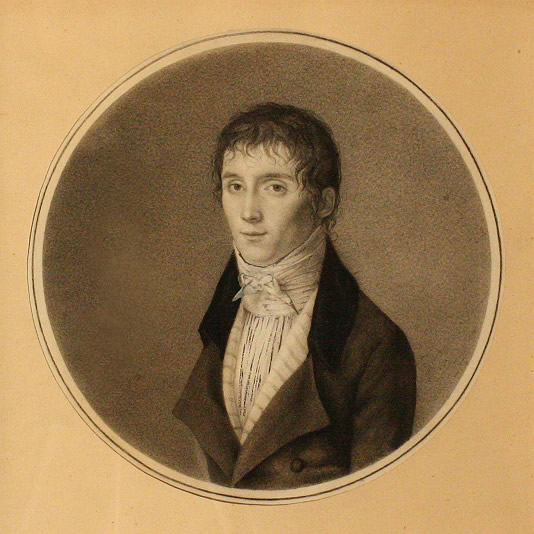
Something of a gentleman inventor, Niépce (below) began experimenting with lithography and with that ancient device, the camera obscura, in 1816. Eventually, after much trial and error, Niépce developed his own photographic process, which he called “heliography.”
He began by mixing chemicals on a flat pewter plate, then placing it inside a camera. After exposing the plate to light for eight hours, the inventor then washed and dried it. What remained was the image we see above, taken, as Niépce wrote, from “the room where I work” on his country estate and now housed at the University of Texas at Austin’s Harry Ransom Center.
At the Ransom Center website, you can see a short video describing Niépce’s house and showing how scholars recreated the vantage point from which he took the picture. Another video offers insight into the process Niépce invented to create his “heliograph.” In 1827, Niépce traveled to England to visit his brother. While there, with the assistance of English botanist Francis Bauer, he presented a paper on his new invention to the Royal Society. His findings were rejected, however, because he opted not to fully reveal the details, hoping to make economic gains with a proprietary method. Niépce left the pewter image with Bauer and returned to France, where he shortly after agreed to a ten-year partnership with Daguerre in 1829.
Sadly for Niépce, his heliograph would not produce the financial or technological success he envisioned, and he died just four years later in 1833. Daguerre, of course, went on to develop his famous process in 1839 and passed into history, but we should remember Niépce’s efforts, and marvel at what he was able to achieve on his own with limited materials and no training or precedent. Daguerre may receive much of the credit, but it was the “scientifically-minded gentleman” Niépce and his heliography that led—writes the Ransom Center’s Head of Photographic Conservation Barbara Brown—to “the invention of the new medium.”
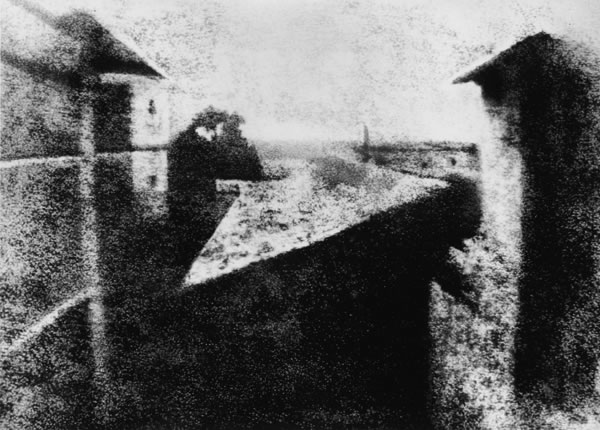
Niépce’s pewter plate image was re-discovered in 1952 by Helmut and Alison Gernsheim, who published an article on the find in The Photographic Journal. Thereafter, the Gernsheims had the Eastman Kodak Company create the reproduction above. This image’s “pointillistic effect,” writes Brown, “is due to the reproduction process,” and the image “was touched up with watercolors by [Helmut] Gernsheim himself in order to bring it as close as possible to his approximation of how he felt the original should appear in reproduction.”
Note: An earlier version of this post appeared on our site in 2015.
Related Content:
The First “Selfie” In History Taken by Robert Cornelius, a Philadelphia Chemist, in 1839
The First Known Photograph of People Having a Beer (1843)
The Oldest Known Photographs of Rome (1841–1871)
Josh Jones is a writer and musician based in Durham, NC. Follow him at @jdmagness
Read More...Support Us
We're hoping to rely on loyal readers, rather than erratic ads. Please click the Donate button and support Open Culture. You can use Paypal, Venmo, Patreon, even Crypto! We thank you!

About Us

Open Culture scours the web for the best educational media. We find the free courses and audio books you need, the language lessons & educational videos you want, and plenty of enlightenment in between.
Advertise With Us

FREE UPDATES!
GET OUR DAILY EMAIL
Get the best cultural and educational resources on the web curated for you in a daily email. We never spam. Unsubscribe at any time.
FOLLOW ON SOCIAL MEDIA

Open Culture editor Dan Colman scours the web for the best educational media. He finds the free courses and audio books you need, the language lessons & movies you want, and plenty of enlightenment in between.
Advertise With Us


