Mary Tyler Moore Accidentally Nails a Perfect Pool Shot on The Dick Van Dyke Show (1962)
Let’s rewind the videotape and revisit a classic moment in The Dick Van Dyke Show. In the 1962 episode called “Hustling the Hustler,” Mary Tyler Moore (as Laura Petrie) plays pool and sinks three balls in a single shot. The original plan was to splice in footage of a professional pool player making the shot, but Moore surprised everyone, including herself, by nailing it on the first try. Watching Moore and Van Dyke recover from their astonishment and improvise through the scene is priceless—a perfect way to start your Monday.
If you would like to support the mission of Open Culture, consider making a donation to our site. It’s hard to rely 100% on ads, and your contributions will help us continue providing the best free cultural and educational materials to learners everywhere. You can contribute through PayPal, Patreon, and Venmo (@openculture). Thanks!
via Zaibatsu and Slash Film
Related Content
Jack Kerouac Plays Pool, 1967
Dick Van Dyke Still Dancing at 96!
Read More...The Most Iconic Hip-Hop Sample of Every Year (1973–2023)
Hip-hop was once a subculture, but by now it’s long since been one of the unquestionably dominant forms of popular music — not just in America, and not just among young people. There are, of course, still a fair few hip-hop holdouts, but even they’ve come to know a thing or two about it through cultural osmosis alone. They’re aware, for example — whether or not they approve of it — that rappers usually perform over music constructed through sampling: that is, stitched together out of pieces of other songs. If you’re not sure how it works, you can see the process clearly visualized in the video above from sample provider Tracklib.
Offering a breakdown of sampling as it’s happened through “fifty years of hip-hop,” the video begins even before the genre really took shape, in 1973. It was then that DJ Kool Herc developed what he called “the ‘Merry-Go-Round’ Technique,” an early example of which involved using dual turntables to switch back and forth between the instrumental breaks of James Brown’s “Give It Up or Turnit a Loose” and the Incredible Bongo Band’s “Bongo Rock.” The original idea was to give dancers more time to do their thing, but when the MCs picked up their microphones and started getting creative, a new music took shape almost immediately.
Mainstream America got its first taste of hip-hop in 1979, with the release of “Rapper’s Delight” by the Sugarhill Gang. In its repeating rhythm part, many would have recognized Chic’s “Good Times,” which actually wasn’t a sample but an interpolation, i.e. a re-recording. This drew a lawsuit — hardly the last of its kind in hip-hop — but it also set thousands of DJs-to-be digging through their record collections in search of usable breaks. Disco proved a fount of inspiration for early hip-hop, but so did jazz and even electronic music, as demonstrated by Afrika Bambaataa and the Soul Sonic Force’s “Planet Rock,” which sampled Kraftwerk’s “Trans-Europe Express.”
As sampling goes, nothing is artistically off-limits; in some sense, the less immediately recognizable, the better. With the evolution of audio editing technology, hip-hop artists have long gone even further in making these borrowed clips their own by slowing them down; speeding them up; chopping them into pieces and rearranging them; and layering them one atop another. This sometimes causes problems, as when the difficulty of licensing De La Soul’s many and varied source materials kept their catalog out of official availability. Along with A Tribe Called Quest, also featured in this video, De La Soul are, of course, known as hip-hop groups beloved by music nerds. But if you seriously break down any major work of hip-hop, you’ll find that all its artists are music nerds at heart.
via Kottke
Related Content:
A Brief History of Sampling: From the Beatles to the Beastie Boys
The “Amen Break”: The Most Famous 6‑Second Drum Loop & How It Spawned a Sampling Revolution
Based in Seoul, Colin Marshall writes and broadcasts on cities, language, and culture. His projects include the Substack newsletter Books on Cities and the book The Stateless City: a Walk through 21st-Century Los Angeles. Follow him on Twitter at @colinmarshall.
Read More...How Georges Méliès A Trip to the Moon Became the First Sci-Fi Film & Changed Cinema Forever (1902)
If you happen to visit the Cinémathèque Française in Paris, do take the time to see the Musée Méliès located inside it. Dedicated to la Magie du cinéma, it contains artifacts from throughout the history of film-as-spectacle, which includes such pictures as 2001: A Space Odyssey and Blade Runner. Its focus on the evolution of visual effects guarantees a certain prominence to science fiction, which, as a genre of “the seventh art,” has its origins in France: specifically, in the work of the museum’s namesake Georges Méliès, whose A Trip to the Moon (Le voyage dans la lune) from 1902 we now recognize as the very first sci-fi movie.
Everyone has seen at least one image from A Trip to the Moon: that of the landing capsule crashed into the irritated man-on-the-moon’s eye. But if you watch the film at its full length — which, in the version above, runs about fifteen minutes — you can better understand its importance to the development of cinema.
For Méliès didn’t pioneer just a genre, but also a range of techniques that expanded the visual vocabulary of his medium. Take the approach to the moon (played by the director himself) immediately before the landing, a kind of shot never before seen in those days of practically immobile movie cameras — and one that necessitated real technical inventiveness to pull off.
What someone watching A Trip to the Moon in the twenty-first century will first notice, of course, is less the ways in which it feels familiar than the ways in which it doesn’t. In an era when theater was still the dominant form of entertainment, Méliès adhered to theatrical forms of staging: he uses few cuts, and practically no variety in the camera angles. It would hardly seem worth noting that a film from 1902 is silent and in black-and-white, but what few know is that colorized prints — laboriously hand-painted, frame by frame, on an assembly line — existed even at the time of its original release; one such restored version appears just above.
In truth, Méliès opened up much deeper possibilities for cinema than most of us acknowledge. As pointed out in the A Matter of Film video above, the motion pictures made before this amounted to exhibits of daily life: impressive as technological demonstrations (and, so the legend goes, harrowing for the viewers of 1896, who feared a train approaching onscreen would run them over), but nothing as narratives. Like Méliès’ other work, A Trip to the Moon proved that a movie could tell a story. It also proved something more central to the medium’s power: that it could tell that story in such a way that its images linger more than 120 years later, even when the details of what happens have long since lost their interest.
Related content:
The Art of Creating Special Effects in Silent Movies: Ingenuity Before the Age of CGI
The First Horror Film, Georges Méliès’ The Haunted Castle (1896)
101 Free Silent Films: The Great Classics
Based in Seoul, Colin Marshall writes and broadcasts on cities, language, and culture. His projects include the Substack newsletter Books on Cities and the book The Stateless City: a Walk through 21st-Century Los Angeles. Follow him on Twitter at @colinmarshall.
Read More...Isaac Newton Creates a List of His 57 Sins (Circa 1662)

Sir Isaac Newton, arguably the most important and influential scientist in history, discovered the laws of motion and the universal force of gravity. For the first time ever, the rules of the universe could be described with the supremely rational language of mathematics. Newton’s elegant equations proved to be one of the inspirations for the Enlightenment, a shift away from the God-centered dogma of the Church in favor of a worldview that placed reason at its center. The many leaders of the Enlightenment turned to deism if not outright atheism. But not Newton.
In 1936, a document of Newton’s dating from around 1662 was sold at a Sotheby’s auction and eventually wound up at the Fitzwilliam Museum in Cambridge, England. The Fitzwilliam Manuscript has long been a source of fascination for Newton scholars. Not only does the notebook feature a series of increasingly difficult mathematical problems but also a cryptic string of letters reading:
Nabed Efyhik
Wfnzo Cpmfke
If you can solve this, there are some people in Cambridge who would like to talk to you.
But what makes the document really interesting is how incredibly personal it is. Newton rattles off a laundry list of sins he committed during his relatively short life – he was around 20 when he wrote this, still a student at Cambridge. He splits the list into two categories, before Whitsunday 1662 and after. (Whitsunday is, by the way, the Sunday of the feast of Whitsun, which is celebrated seven weeks after Easter.) Why he decided on that particular date to bifurcate his timeline isn’t immediately clear.
Some of the sins are rather opaque. I’m not sure what, for instance, “Making a feather while on Thy day” means exactly but it sure sounds like a long-lost euphemism. Other sins like “Peevishness with my mother” are immediately relatable as good old-fashioned teenage churlishness. You can see the full list below. And you can read the full document over at the Newton Project here.
Before Whitsunday 1662
1. Vsing the word (God) openly
2. Eating an apple at Thy house
3. Making a feather while on Thy day
4. Denying that I made it.
5. Making a mousetrap on Thy day
6. Contriving of the chimes on Thy day
7. Squirting water on Thy day
8. Making pies on Sunday night
9. Swimming in a kimnel on Thy day
10. Putting a pin in Iohn Keys hat on Thy day to pick him.
11. Carelessly hearing and committing many sermons
12. Refusing to go to the close at my mothers command.
13. Threatning my father and mother Smith to burne them and the house over them
14. Wishing death and hoping it to some
15. Striking many
16. Having uncleane thoughts words and actions and dreamese.
17. Stealing cherry cobs from Eduard Storer
18. Denying that I did so
19. Denying a crossbow to my mother and grandmother though I knew of it
20. Setting my heart on money learning pleasure more than Thee
21. A relapse
22. A relapse
23. A breaking again of my covenant renued in the Lords Supper.
24. Punching my sister
25. Robbing my mothers box of plums and sugar
26. Calling Dorothy Rose a jade
27. Glutiny in my sickness.
28. Peevishness with my mother.
29. With my sister.
30. Falling out with the servants
31. Divers commissions of alle my duties
32. Idle discourse on Thy day and at other times
33. Not turning nearer to Thee for my affections
34. Not living according to my belief
35. Not loving Thee for Thy self.
36. Not loving Thee for Thy goodness to us
37. Not desiring Thy ordinances
38. Not long {longing} for Thee in {illeg}
39. Fearing man above Thee
40. Vsing unlawful means to bring us out of distresses
41. Caring for worldly things more than God
42. Not craving a blessing from God on our honest endeavors.
43. Missing chapel.
44. Beating Arthur Storer.
45. Peevishness at Master Clarks for a piece of bread and butter.
46. Striving to cheat with a brass halfe crowne.
47. Twisting a cord on Sunday morning
48. Reading the history of the Christian champions on SundaySince Whitsunday 1662
49. Glutony
50. Glutony
51. Vsing Wilfords towel to spare my own
52. Negligence at the chapel.
53. Sermons at Saint Marys (4)
54. Lying about a louse
55. Denying my chamberfellow of the knowledge of him that took him for a sot.
56. Neglecting to pray 3
57. Helping Pettit to make his water watch at 12 of the clock on Saturday night
via JF Ptak Science Books/Public Domain Review
Related Content:
In 1704, Isaac Newton Predicted That the World Will End in 2060
Jonathan Crow is a writer and filmmaker whose work has appeared in Yahoo!, The Hollywood Reporter, and other publications.
Read More...Explore the World’s First 3D Replica of St. Peter’s Basilica, Made with AI
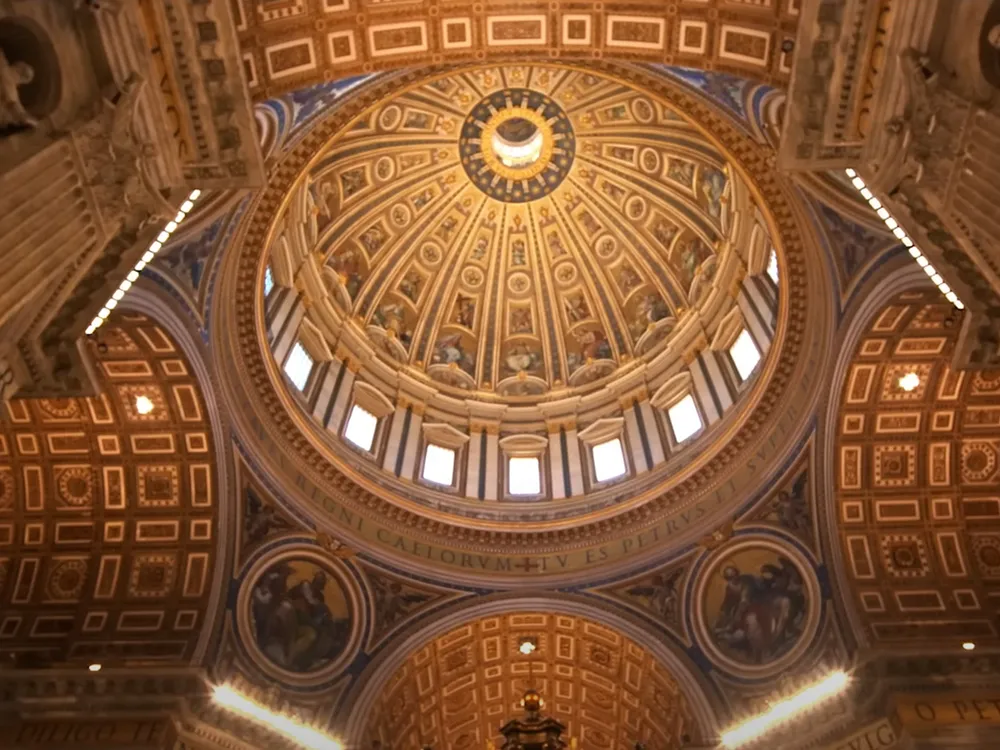
In the trailer below for the world’s first 3D replica of St. Peter’s Basilica, Yves Ubelmann speaks of using “AI for Good,” which isn’t just an ideal, but also the name of a lab at Microsoft. Microsoft and Ubelman’s digital-preservation company Iconem were two of the participants in that ambitious project, along with the Vatican itself. Pope Francis, writes AP’s Nicole Winfield, “has called for the ethical use of AI and used his annual World Message of Peace this year to urge an international treaty to regulate it, arguing that technology lacking human values of compassion, mercy, morality and forgiveness were too great.”
What better show of good faith in the technology than to allow AI to be used to bring the center of the faith Pope Francis represents to the world? In the nearly 400 years since its completion, of course, the world has always come to the current St. Peter’s Basilica, and will continue to do so.
The 3D-replica project “has been launched ahead of the Vatican’s 2025 Jubilee, a holy year in which more than 30 million pilgrims are expected to pass through the basilica’s Holy Door, on top of the 50,000 who visit on a normal day,” Winfield writes. But no matter where in the world you happen to be, you can virtually enter St. Peter’s Basilica right now, and spend as long as you like, admiring the basilica itself, the cupola, Bernini’s St. Peter’s Baldachin, and Michelangelo’s Pietà, among other features.

However important (and attention-drawing) artificial intelligence was as a tool in the creation of this ultra-precise “digital twin” of St. Peter’s Basilica, the four-week process of capturing every detail of the real structure that could be captured also necessitated the use of drones, lasers, and cameras taking more than 400,000 digital photos. The “AI for Good Lab contributed advanced tools that refined the digital twin with millimeter-level accuracy, and used AI to help detect and map structural vulnerabilities like cracks and missing mosaic tiles,” says Microsoft’s site. “The Vatican oversaw the collaboration, ensuring the preservation of the Basilica as a cultural, spiritual, and historically significant site for years to come.”
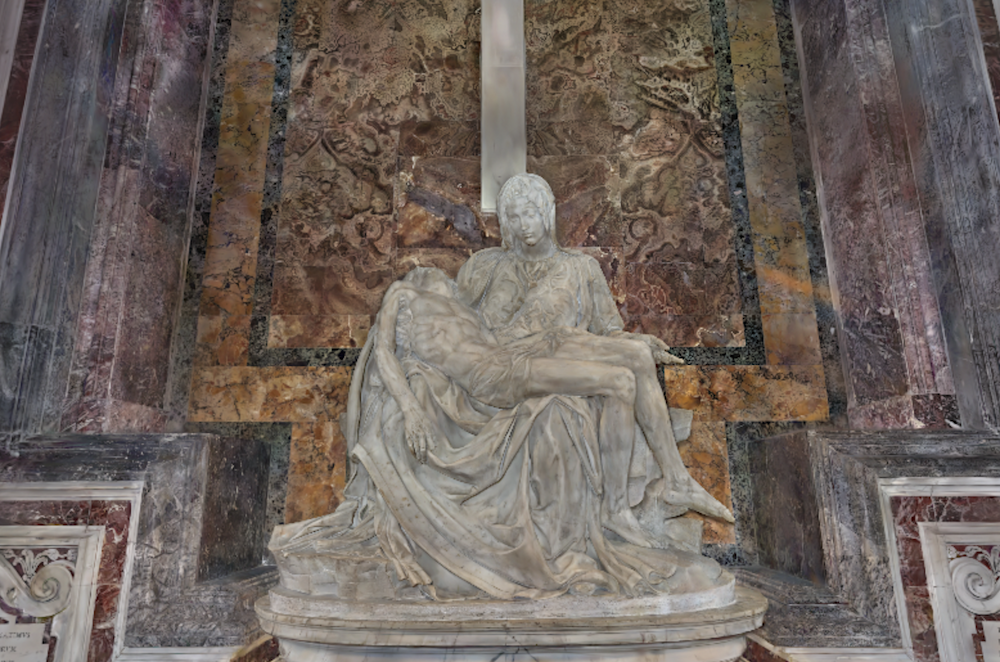
It makes a certain sense to apply the highest technology of our time for the benefit of a building known as the greatest architectural marvel of its time. But in order to better appreciate the kind of knowledge that will be revealed by the 22 petabytes of information that went into the digital model (which offers its own guided tour) we’d do well to immerse ourselves first in what was already known about St. Peter’s Basilica. For a brief introduction to the conception and evolution of this grand church as it stands today, we could do much worse than architecture-and-history YouTuber Manuel Bravo’s video “St Peter’s Basilica Explained.” If you watch it, don’t be surprised if you find yourself tempted to engage in prolonged exploration of the model — or indeed, to book a visit to the real thing. Enter the digital St. Peter’s here.
Related content:
Rome Reborn: A New 3D Virtual Model Lets You Fly Over the Great Monuments of Ancient Rome
Based in Seoul, Colin Marshall writes and broadcasts on cities, language, and culture. His projects include the Substack newsletter Books on Cities and the book The Stateless City: a Walk through 21st-Century Los Angeles. Follow him on Twitter at @colinmarshall.
Read More...Bambi Meets Godzilla: #38 on the List of The 50 Greatest Cartoons of All Time (1969)
In 1994, Jerry Beck edited the book, The 50 Greatest Cartoons: As Selected by 1,000 Animation Professionals, which challenged experts to create a ranking of the best short, cel animated cartoons ever made. To no one’s surprise, the experts chose 10 Warner Bros. animations crafted by Chuck Jones. They also gave a nod to Fleischer Studios’ original Superman cartoon, Disney’s first animation with Mickey Mouse (1928’s “Steamboat Willie”), and the Donald Duck-starring WWII propaganda film,“Der Fuehrer’s Face.”
Yes, the big animation studios (Warner Bros., Disney, etc.) dominate the list. But a few “indies” manage to squeak in there. Take for example Winsor McCay’s seminal 1914 creation “Gertie the Dinosaur.” Or Bambi Meets Godzilla. A student film created by Marv Newland in 1969, Bambi Meets Godzilla (above) runs only 90 seconds. Of which, 48 seconds are devoted to the opening credits, and 27 seconds to the closing credits, leaving only 12 seconds of “action,” which is mostly stillness. The timing is the funny.
The short film circulated in theaters across the U.S., shown before screenings of Philippe de Broca’s feature film King of Hearts. Over the years the publicly-available versions of Bambi Meets Godzilla became worn and faded. So, in 2013, Coda Gardner produced a frame-for-frame HD re-creation. You can watch it below.
If you would like to support the mission of Open Culture, consider making a donation to our site. It’s hard to rely 100% on ads, and your contributions will help us continue providing the best free cultural and educational materials to learners everywhere. You can contribute through PayPal, Patreon, and Venmo (@openculture). Thanks!
Related Content:
The Disney Cartoon That Introduced Mickey Mouse & Animation with Sound (1928)
Donald Duck & Friends Star in World War II Propaganda Cartoons
Read More...Behold the Oldest Written Text in the World: The Kish Tablet, Circa 3500 BC
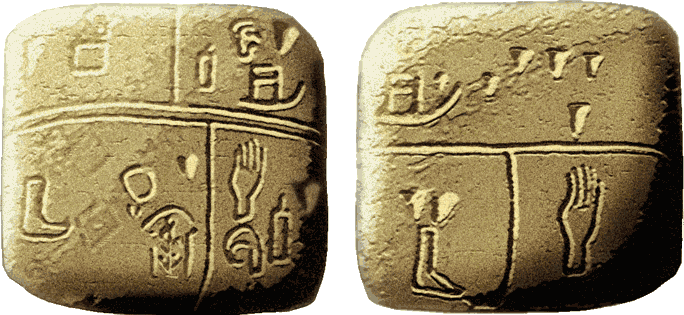
Image by José-Manuel Benito, via Wikimedia Commons
Some refer to the written Chinese language as ideographic: that is, structured according to a system in which each symbol represents a particular idea or concept, whether abstract or concrete. That’s true of certain Chinese characters, but only a small minority. Most of them are actually logographs, each of which represents a word or part of a word. But if you dig deep enough into their history — and the history of other Asian languages that use Chinese-derived vocabulary — you’ll find that some started out long ago as pictographs, designed visually to represent the thing to which they referred.
That doesn’t hold true for Chinese alone: it appears, in fact, that all written languages began as forms of pictographic “proto-writing,” at least judging by the earliest texts currently known to man. If we look at the oldest of them all, the limestone “Kish tablet” unearthed from the site of the eponymous ancient Sumerian city in modern-day Iraq, we can in some sense “read” several of the symbols in its text, even five and a half millennia after it was written. “The writing on its surface is purely pictographic,” says the narrator of the brief IFLScience video below, “and represents a midpoint between proto-writing and the more sophisticated writing of the cuneiform.”
Cuneiform, previously featured here on Open Culture, was used by the ancient Babylonians to label maps and record stew recipes, among other important tasks. “First developed around 3200 B.C. by Sumerian scribes in the ancient city-state of Uruk, in present-day Iraq, as a means of recording transactions, cuneiform writing was created by using a reed stylus to make wedge-shaped indentations in clay tablets,” says Archaeology magazine. Over 3,000 years, this earliest proper script “was used by scribes of multiple cultures over that time to write a number of languages other than Sumerian, most notably Akkadian, a Semitic language that was the lingua franca of the Assyrian and Babylonian Empires.”
Cuneiform was also used to write the Scheil dynastic tablet, which dates from the early second millennium BC. That means we can read it, and thus know that it comprises a literary-historical text that lists off the reigns of various rulers of Sumerian cities. We should note that the Scheil dynastic tablet is also, sometimes, referred to as the “Kish tablet,” which surely causes some confusion. But for the anonymous writer of the earlier Kish tablet, who would have lived about two millennia earlier, the emergence of cuneiform and all the civilizational developments it would make possible lay far in the future. His pictographic text may never be deciphered properly or mapped to a historically documented language, but at least we can tell that he must surely have had hands and feet more or less like our own.
Related content:
How Writing Has Spread Across the World, from 3000 BC to This Year: An Animated Map
40,000-Year-Old Symbols Found in Caves Worldwide May Be the Earliest Written Language
Based in Seoul, Colin Marshall writes and broadcasts on cities, language, and culture. His projects include the Substack newsletter Books on Cities and the book The Stateless City: a Walk through 21st-Century Los Angeles. Follow him on Twitter at @colinmarshall or on Facebook.
Read More...How Car Chase Scenes Have Evolved Over 100 Years
For many a classic action-movie enthusiast, no car chase will ever top the one in Bullitt. The narrator of the Insider video above describes it as “the scene that set the standard for all modern car chases,” one made “iconic partly because of the characters, but also because of their cars.” The pursuer drives a Dodge Charger, a muscle car that “exploded in popularity during the late sixties in the U.S.,” with a V‑8 engine and rear-wheel drive that made it “basically built for informal drag racing.” The pursued, Steve McQueen’s detective protagonist Frank Bullitt, drives an instantly recognizable Highland Green Ford Mustang, “the first major pony car, a more compact, sporty take on the muscle car.”
Bullitt could change the game, as they say, thanks not just to the cars but also the cameras available at the time, not least the Arriflex 35 II. “Smaller and more rugged” than the bulky rigs of earlier generations, it made it possible to shoot on actual city streets rather than just studio sets and rear-projection setups. (To get a sense of the difference in feel that resulted, simply compare the Bullitt chase to the one in Dr. No, the first James Bond picture, from six years before.)
This threw down the gauntlet before all action filmmakers, who over the subsequent decades would take advantage of every technological development that could possibly heighten the thrills of their own car chases.
The video also includes vehicular action movies from The French Connection and Vanishing Point to Ronin and Drive. But the most important development in recent decades actually owes to the horse-racing movie Seabiscuit, whose production necessitated a rig, now known as “the biscuit,” that “makes it look like an actor is doing the driving, while a stunt person actually steers from the driver’s pod.” Gone are the days when a star like Steve McQueen, a genuine racer of both motorcycles and cars, could handle some of the stunt driving himself; gone, too, is the era of the muscle car not programmed to shut down automatically when it goes into a drift. But for viewers in constant need of ever more spectacular, technically complex, and expensive car chases, it seems the Fast and the Furious series will always come through.
Related content:
The Dark Knight: Anatomy of a Flawed Action Scene
Take a Drive Through 1940s, 50s & 60s Los Angeles with Vintage Through-the-Car-Window Films
Some of Buster Keaton’s Great, Death-Defying Stunts Captured in Animated Gifs
Based in Seoul, Colin Marshall writes and broadcasts on cities, language, and culture. His projects include the Substack newsletter Books on Cities and the book The Stateless City: a Walk through 21st-Century Los Angeles. Follow him on Twitter at @colinmarshall or on Facebook.
Read More...Destino: The Salvador Dalí — Walt Disney Animation That Took 57 Years to Complete
In 2003, Disney released a six minute animated short called Destino, finally bringing closure to a project that began 57 years earlier. The story of Destino goes way back to 1946 when two very different cultural icons, Walt Disney and Salvador Dalí, decided to work together on a cartoon. The film was storyboarded by Dalí and John Hench (a Disney studio artist) over the course of eight months. But then, rather abruptly, the project got tabled when The Walt Disney Company ran into financial problems.
Now fast forward 53 years, to 1999. While working on Fantasia 2000, Walt Disney’s nephew rediscovered the project and 17 seconds of original animation. Using this clip and the original storyboards, 25 animators brought the film to completion and premiered it at The New York Film Festival in 2003. Destino would receive an Oscar nomination for the Best Animated Short Film, among other accolades from critics.
The clip runs 6+ minutes and features music written by Mexican songwriter Armando Dominguez and performed by Dora Luz. In our archive, we also have another version that features a soundtrack by Pink Floyd.
NPR has more on the Disney-Dalí collaboration. Listen to their audio report here.
Note: this video originally appeared on our site in 2011.
If you would like to support the mission of Open Culture, consider making a donation to our site. It’s hard to rely 100% on ads, and your contributions will help us continue providing the best free cultural and educational materials to learners everywhere. You can contribute through PayPal, Patreon, and Venmo (@openculture). Thanks!
Related Content:
How Walt Disney Cartoons Are Made: 1939 Documentary Gives an Inside Look
Disney’s 12 Timeless Principles of Animation
Read More...The Hand: An Anti-Totalitarian Animation, Banned for Two Decades & Now Considered One of the Greatest Animations (1965)
For obvious reasons, most art produced under oppressive regimes comes off as painstakingly inoffensive. For equally obvious reasons, the rare works that criticize the regime tend to do so rather obliquely. This wasn’t so much the case with The Hand, the most famous short by Czech artist and stop-motion animator Jiří Trnka, “the Walt Disney of Eastern Europe.” In its central conflict between a humble harlequin who just wants to sculpt flower pots and a giant, invasive gloved hand that forces him to make representations of itself, one senses a certain allegory to do with the dynamic between the artist and the state.
“Trnka’s personal experience of totalitarianism under the communist regime is projected and rearticulated in the meaning and knowledge he transmits through his short,” writes Renée-Marie Pizzardi in an essay at Fantasy Animation. “The state-run studios had the power to approve or censor certain topics and control funding accordingly. Trnka was thus dependent on their funding, yet resistant to their politics, and this ambiguity limited the freedom of expression in his work.”
In the harlequin, “Trnka crafts a character through which he not only portrays himself as the artist, but any free-thinking individual who gets robbed of their agency and induced into following and acting according to an ideology and regime.”
Completed in 1965, The Hand would turn out to be Trnka’s final film before his death four years later, by which time the rulers in power were hardly eager to have his animated indictment in circulation. 1968 had brought the “Prague Spring” under Alexander Dubček, a period of liberalization that turned out to be brief: about a year later, Dubček was replaced, his reforms reversed, and the Czechoslovak Socialist Republic “normalized” back to the ways of the bad old days. Banned after Trnka died in 1969, The Hand would remain not legally viewable in his homeland for two decades. But today, it’s appreciated by animation enthusiasts the world over, and its expression of yearning for creative freedom still resonates. In the late sixties or here in the twenty-first century, fear the government that fears your puppets.
Related content:
Watch The Idea, the First Animated Film to Deal with Big, Philosophical Ideas (1932)
The Hobbit: The First Animation & Film Adaptation of Tolkien’s Classic (1966)
4 Franz Kafka Animations: Watch Creative Animated Shorts from Poland, Japan, Russia & Canada
An Archive of 20,000 Movie Posters from Czechoslovakia (1930–1989)
Based in Seoul, Colin Marshall writes and broadcasts on cities, language, and culture. His projects include the Substack newsletter Books on Cities and the book The Stateless City: a Walk through 21st-Century Los Angeles. Follow him on Twitter at @colinmarshall or on Facebook.
Read More...Support Us
We're hoping to rely on loyal readers, rather than erratic ads. Please click the Donate button and support Open Culture. You can use Paypal, Venmo, Patreon, even Crypto! We thank you!

About Us

Open Culture scours the web for the best educational media. We find the free courses and audio books you need, the language lessons & educational videos you want, and plenty of enlightenment in between.
Advertise With Us

FREE UPDATES!
GET OUR DAILY EMAIL
Get the best cultural and educational resources on the web curated for you in a daily email. We never spam. Unsubscribe at any time.
FOLLOW ON SOCIAL MEDIA

Open Culture editor Dan Colman scours the web for the best educational media. He finds the free courses and audio books you need, the language lessons & movies you want, and plenty of enlightenment in between.
Advertise With Us


