When James Brown Played Rikers Island Prison 50 Years Ago (1972)
Though not as well known as Johnny Cash’s concerts at Folsom and San Quentin prisons, James Brown’s 1972 concert at Rikers Island equally quelled rising tensions, and displayed the humility of the artist at the top of his game. Fifty years ago on March 16, Brown and his full band played two sets in front of a crowd of around 550. And until a better source is found, the above video is the only moving record of that event, a shot from a television news broadcast. How did this concert come about? According to the research of New York Times writer Billy Heller, a lot comes down to the tenacity of Gloria Bond, who worked at the New York Board of Corrections.
Earlier in 1972, Rikers Island had seen major unrest. Inhumane conditions and overcrowding had led to a riot that injured 75 inmates and 20 guards. The post-riot atmosphere was a “pressure cooker”. The Board had previously brought in Coretta Scott King to speak to prisoners, and Harry Belafonte to perform. But James Brown was somebody different, with music that was revolutionary, and lyrics that were influenced by, and an influence on, the Black Power movement.
Brown’s manager Charles Bobbit told Gloria Bond that the Godfather of Soul was a hard man to get a hold of and rarely came to the office. According to Bond’s daughter Anna, Gloria replied:
“She says to him: ‘Well, Mr. Bobbit, I’ll tell you what I’ll do. I’ll bring my knitting and I’ll sit in that corner over there,’” Anna Bond said. “‘I won’t bother anybody. I’ll just wait till he comes.’”
Gloria Bond did just that. “Everybody in the office got to know her, and they’d bring her coffee,” Anna Bond said. “She became part of the entourage by sitting in her little corner, knitting.” Eventually, Brown arrived at the office and came face to face with Gloria Bond. “And the rest is history,” Anna Bond said.
It helped that Brown was on a musical crusade to save kids from drugs and a fast track to prison. Having once served time in his younger days, Brown saw too many Black youth going to jail for drug-related crimes. He had recorded a song, a spoken poem in the style of “It’s a Man’s, Man’s, Man’s World” called “King Heroin.” The drug was decimating communities by the turn of the decade.
At Rikers he told the mostly young audience: “When you leave here, you can have a good life or you can have a bad life. However you do it when you get out is up to you.” Brown used his own life as a model of rising above adversity. He also brought his full game (and his full ensemble to the show), treating this gig as important as a show at the Apollo, maybe more so.
The photographer Diana Mara Henry shot several rolls of film that day and documented in black and white Brown and his band. Her quote from the short video below (note the incorrect year) serves as a vibe for the whole experience:
“As an artist, you put everything you can into a performance and at some point you turn it over to the audience.”
Related Content:
James Brown Gives You Dancing Lessons: From The Funky Chicken to The Boogaloo
The Best Commercial Ever? James Brown Sells Miso Soup (1992)
Ted Mills is a freelance writer on the arts who currently hosts the Notes from the Shed podcast and is the producer of KCRW’s Curious Coast. You can also follow him on Twitter at @tedmills, and/or watch his films here.
Read More...Meet Anita Berber, the Cabaret Star Who Scandalized Weimar-Era Berlin
Anita Berber, the taboo-busting, sexually omnivorous, fashion forward, frequently naked star of the Weimar Republic cabaret scene, tops our list of performers we really wish we’d been able to see live.
While Berber acted in 27 films, including Prostitution, director Fritz Lang’s Dr. Mabuse: The Gambler, and Different from the Others, which film critic Dennis Harvey describes as “the first movie to portray homosexual characters beyond the usual innuendo and ridicule,” we have a strong hunch that none of these appearances can compete with the sheer audacity of her stage work.
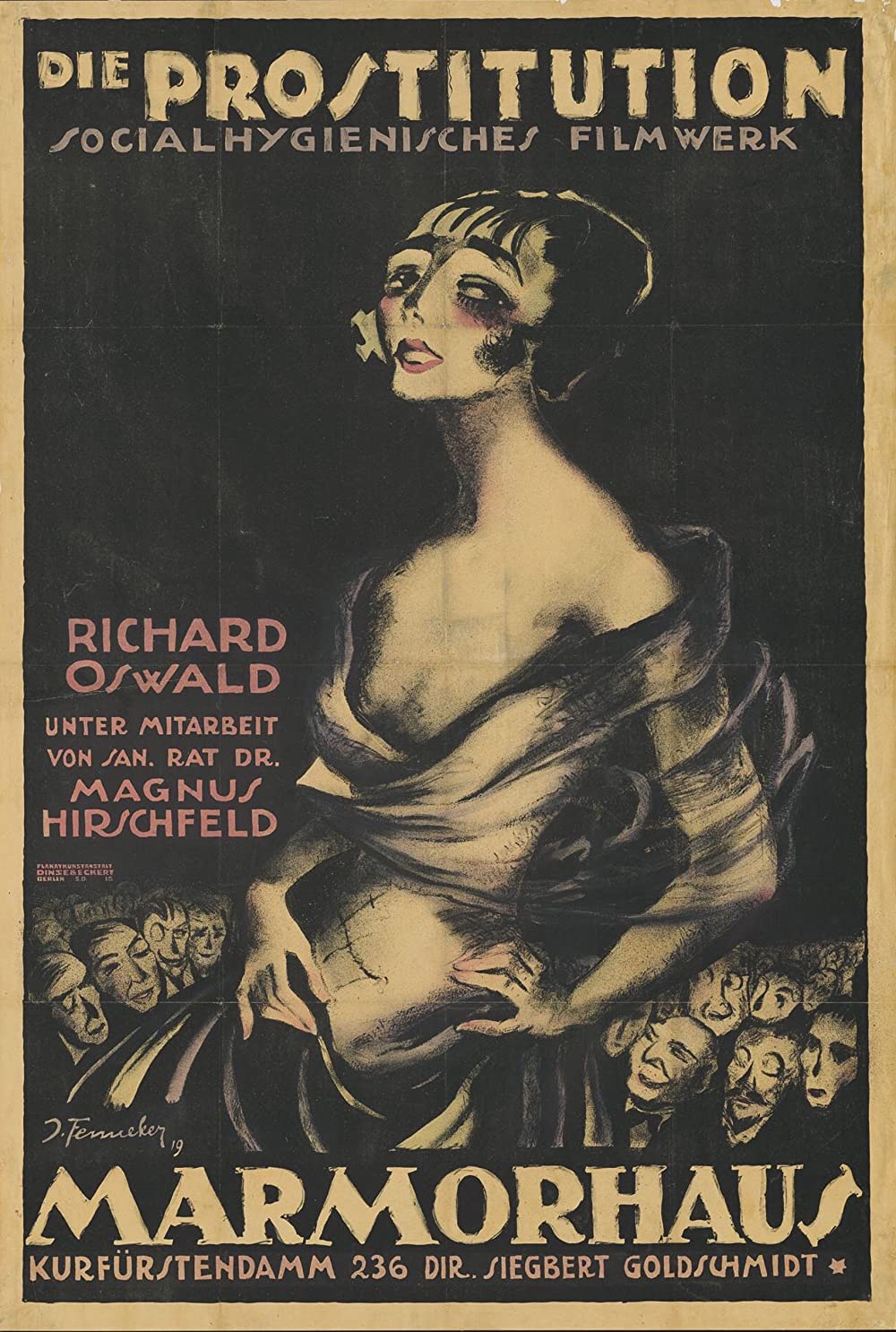
Audiences at Berlin’s White Mouse cabaret (some wearing black or white masks to conceal their identities) were titillated by her Expressionistic nude solo choreography, as well as the troupe of six teenaged dancers under her command.
As biographer Mel Gordon writes in The Seven Addictions and Five Professions of Anita Berber: Weimar Berlin’s Priestess of Depravity, Berber, often described as a “stripper”, displayed the passion of a serious artist, “respond(ing) to the audience’s heckling with show-stopping obscenities and indecent provocations:”
Berber had been known to spit brandy on them or stand naked on their tables, dousing herself in wine whilst simultaneously urinating… It was not long before the entire cabaret one night sank into a groundswell of shouting, screams and laughter. Anita jumped off the stage in fuming rage, grabbed the nearest champagne bottle and smashed it over a businessman’s head.
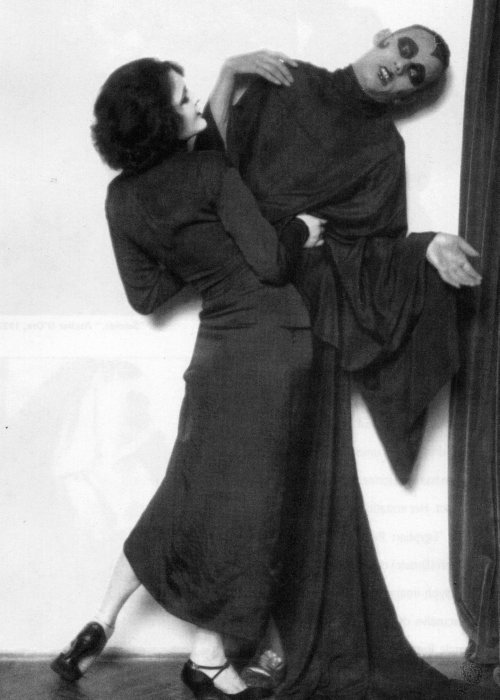
Her collaborations with her second husband, dancer Sebastian Droste, carried Berber into increasingly transgressive territory, both onstage and off.
According to translator Merrill Cole, in the introduction to the 2012 reissue of Dances of Vice, Horror and Ecstasy, a book of Expressionist poems, essays, photographs, and stage designs which Droste and Berber co-authored, “even the biographical details seduce:”
…a bisexual sometimes-prostitute and a shady figure from the male homosexual underworld, united in addiction to cocaine and disdain for bourgeois respectability, both highly talented, Expressionist-trained dancers, both beautiful exhibitionists, set out to provide the Babylon on the Spree with the ultimate experience of depravity, using an art form they had helped to invent for this purpose. Their brief marriage and artistic interaction ended when Droste became desperate for drugs and absconded with Berber’s jewel collection.
This, and the description of Berber’s penchant for “haunt(ing) Weimar Berlin’s hotel lobbies, nightclubs and casinos, radiantly naked except for an elegant sable wrap, a pet monkey hanging from her neck, and a silver brooch packed with cocaine,” do a far more evocative job of resurrecting Berber, the Weimar sensation, than any wordy, blow-by-blow attempt to recreate her shocking performances, though we can’t fault author Karl Toepfer, Professor Emeritus of Theater Arts at San Jose State University, for trying.
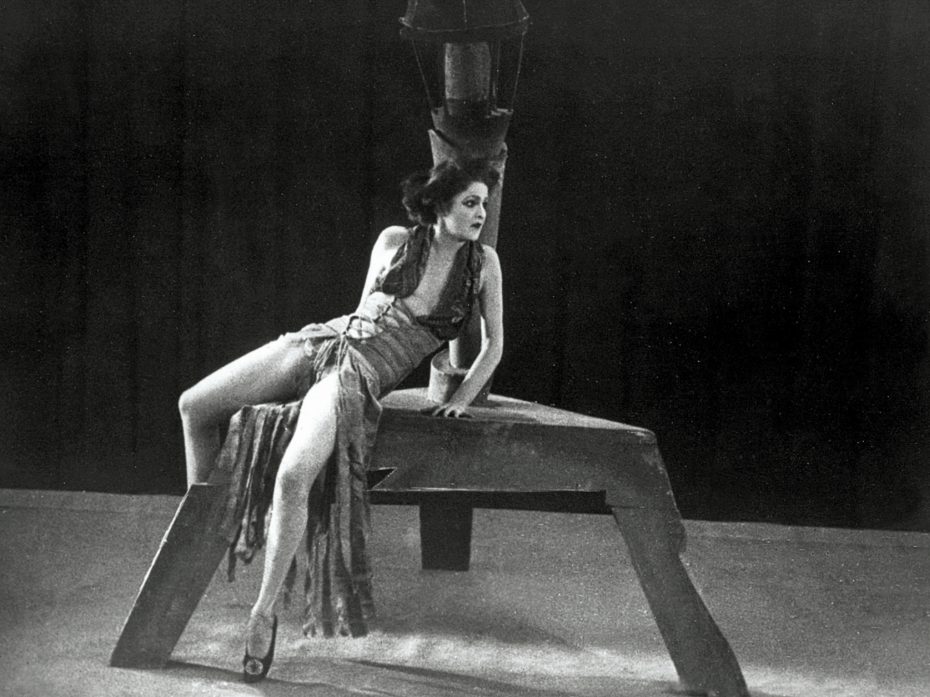
In Empire of Ecstasy: Nudity and Movement in German Body Culture, 1910–1935, Toepfer draws heavily on Czech choreographer Joe Jenčík’s eyewitness observations, to reconstruct Berber’s most notorious dance, Cocaine, beginning with the “ominous scenery by Harry Täuber featuring a tall lamp on a low, cloth-covered table:”
This lamp was an expressionist sculpture with an ambiguous form that one could read as a sign of the phallus, an abstraction of the female dancer’s body, or a monumental image of a syringe, for a long, shiny needle protruded from the top of it…It is not clear how nude Berber was when she performed the dance. Jenčík, writing in 1929, flatly stated that she was nude, but the famous Viennese photographer Madame D’Ora (Dora Kalmus) took a picture entitled “Kokain” in which Berber appears in a long black dress that exposes her breasts and whose lacing, up the front, reveals her flesh to below her navel.
In any case, according to Jenčík, she displayed “a simple technique of natural steps and unforced poses.” But though the technique was simple, the dance itself, one of Berber’s most successful creations, was apparently quite complex. Rising from an initial condition of paralysis on the floor (or possibly from the table, as indicated by Täuber’s scenographic notes), she adopted a primal movement involving a slow, sculptured turning of her body, a kind of slow-motion effect. The turning represented the unraveling of a “knot of flesh.” But as the body uncoiled, it convulsed into “separate parts,” producing a variety of rhythms within itself. Berber used all parts of her body to construct a “tragic” conflict between the healthy body and the poisoned body: she made distinct rhythms out of the movement of her muscles; she used “unexpected counter-movements” of her head to create an anguished sense of balance; her “porcelain-colored arms” made hypnotic, pendulumlike movements, like a marionette’s; within the primal turning of her body, there appeared contradictory turns of her wrists, torso, ankles; the rhythm of her breathing fluctuated with dramatic effect; her intense dark eyes followed yet another, slower rhythm; and she introduced the “most refined nuances of agility” in making spasms of sensation ripple through her fingers, nostrils, and lips. Yet, despite all this complexity, she was not afraid of seeming “ridiculous” or “painfully swollen.” The dance concluded when the convulsed dancer attempted to cry out (with the “blood-red opening of the mouth”) and could not. The dancer then hurled herself to the floor and assumed a pose of motionless, drugged sleep. Berber’s dance dramatized the intense ambiguity involved in linking the ecstatic liberation of the body to nudity and rhythmic consciousness. The dance tied ecstatic experience to an encounter with vice (addiction) and horror (acute awareness of death).
A noble attempt, but forgive us if we can’t quite picture it…
And what little evidence has been preserved of her screen appearances exists at a similar remove from the dark subject matter she explicitly referenced in her choreographed work — Morphine, Suicide, The Corpse on the Dissecting Table…
Cole opines:
There are a number of narrative accounts of her dances, some pinned by professional critics, and almost all commending her talent, finesse, and mesmerizing stage presence. We also have film images from the various silent films in which she played bit parts. There exist, too, many still photographs of Berber and Droste, as well as renditions of Berber by other artists, most prominently the Dadaist Otto Dix’s famous scarlet-saturated portrait. In regard to the naked dances, unfortunately, we have no moving images, no way to watch directly how they were performed.
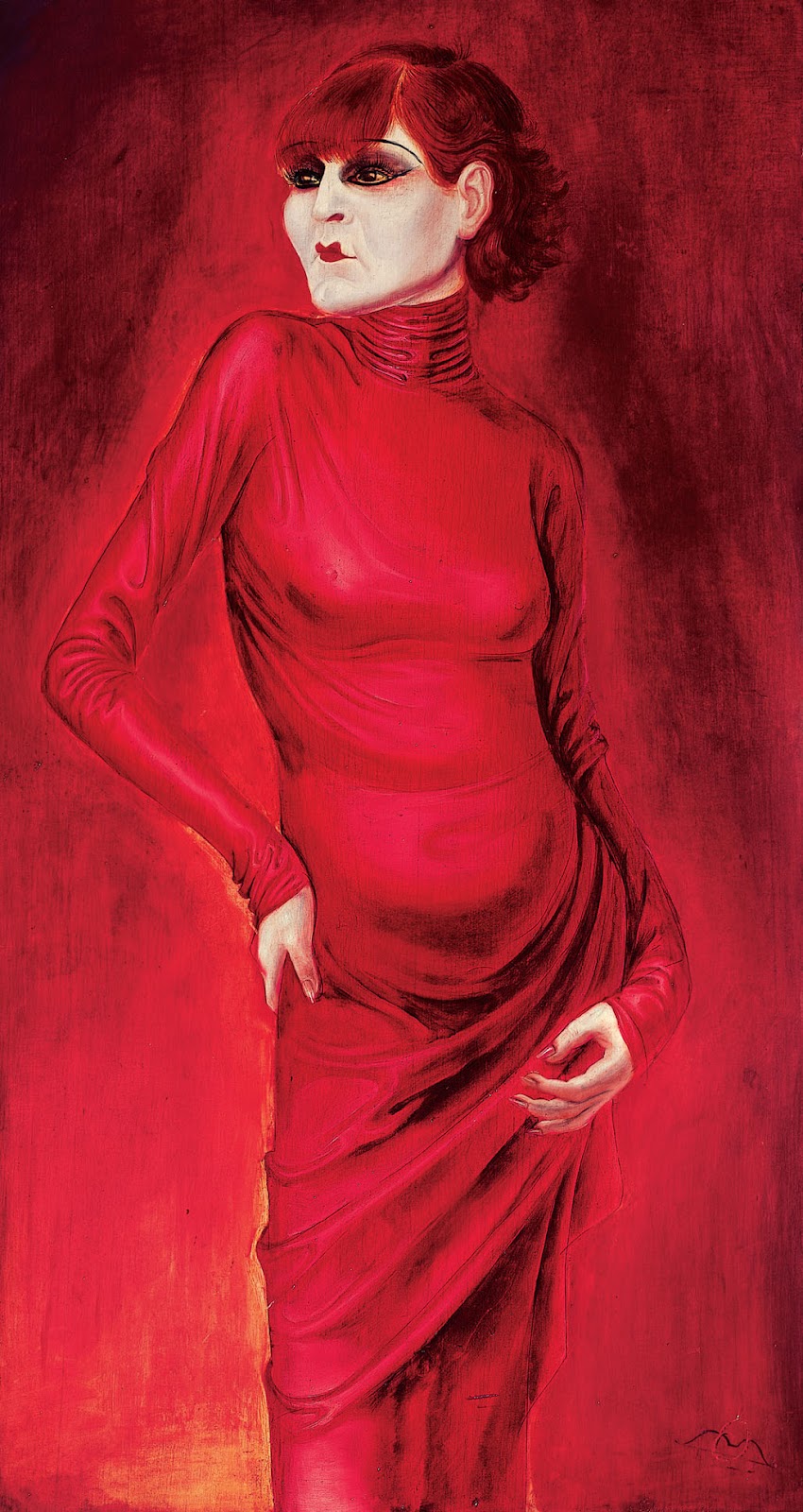
For a dishy overview of Anita Berber’s personal life, including her alleged dalliances with actress Marlene Dietrich, author Lawrence Durrell, and the King of Yugoslavia, her influential effect on director Leni Riefenstahl, and her sad demise at the age of 29, a “carrion soul that even the hyenas ignored,” take a peek at Victoria Linchong’s biographical essay for Messy Nessy Chic, or better yet, Iron Spike’s Twitter thread.
Berber was addicted to alcohol, cocaine, opium, and morphine. But one of her favorite drugs was chloroform and ether, mixed in a bowl. She would stir the bowl with the bloom of a white rose, and then eat the petals.
Have you ever heard anything so extra in your ENTIRE LIFE. pic.twitter.com/sh9xL3it0E
— Iron Spike (@Iron_Spike) January 11, 2020
- Ayun Halliday is the Chief Primatologist of the East Village Inky zine and author, most recently, of Creative, Not Famous: The Small Potato Manifesto. Follow her @AyunHalliday.
Related Content
The Nazis’ 10 Control-Freak Rules for Jazz Performers: A Strange List from World War II
Download Hundreds of Issues of Jugend, Germany’s Pioneering Art Nouveau Magazine (1896–1940)
Read More...The Iconic Design of the Doomsday Clock Was Created 75 Years Ago: It Now Says We’re 100 Seconds to Midnight

Image via The Bulletin of the Atomic Scientists
Last year, the fates handed the New York Times’ Maria Cramer an enviably striking lede: “Humanity is 100 seconds away from total annihilation. Again.” That we all know immediately what she was writing about speaks to the power of graphic design. Specifically, it speaks to the power of graphic design as practiced by Martyl Langsdorf, who happened to be married to ex-Manhattan Project physicist Alexander Langsdorf. This connection got her the gig of creating a cover for the June 1947 issue of the Bulletin of the Atomic Scientists. She came up with a simple image: the upper-left corner of a clock, its hands at seven minutes to midnight.
Asked later why she set the clock to that time in particular, Langsdorf explained that “it looked good to my eye.” That quote appears in a post at the Bulletin addressing frequently asked questions about what’s now known as the Doomsday Clock, “a design that warns the public about how close we are to destroying our world with dangerous technologies of our own making. It is a metaphor, a reminder of the perils we must address if we are to survive on the planet.” In the 75 years since its introduction, its minute hand has been moved backward eight times and forward sixteen times; currently it still stands where Cramer reported it as having remained last January, at 100 seconds to midnight.
To the public of 1947, “midnight” signified above all the prospect of humanity’s self-destruction through the use of nuclear weapons. But as technology itself has advanced and proliferated, the means of auto-annihilation have grown more diverse. This year’s Doomsday Clock statement cites not just nukes but carbon emissions, infectious diseases, and “internet-enabled misinformation and disinformation.” Earlier this month, the Bulletin reminded us that even as 2022 began, “we called out Ukraine as a potential flashpoint in an increasingly tense international security landscape. For many years, we and others have warned that the most likely way nuclear weapons might be used is through an unwanted or unintended escalation from a conventional conflict.”
Now that “Russia’s invasion of Ukraine has brought this nightmare scenario to life,” many have found themselves glancing nervously at the Doomsday Clock once again. This also happened after the election of Donald Trump, which prompted the Vox video above on the Clock’s history and purpose. Its iconic status, as celebrated in the new book The Doomsday Clock at 75, has long outlasted the Cold War, but the device itself isn’t without its critics. Bulletin co-founder Eugene Rabinowitch once articulated the latter as meant “to preserve civilization by scaring men into rationality,” a somewhat controversial intention. One could also raise objections to using an inherently linear and unidirectional concept like time to represent a probability resulting from human action. Yet somehow more technically suitable images — “100 centimeters from the edge,” say — don’t have quite the same ring.
Related content:
53 Years of Nuclear Testing in 14 Minutes: A Time Lapse Film by Japanese Artist Isao Hashimoto
Protect and Survive: 1970s British Instructional Films on How to Live Through a Nuclear Attack
How Clocks Changed Humanity Forever, Making Us Masters and Slaves of Time
Based in Seoul, Colin Marshall writes and broadcasts on cities, language, and culture. His projects include the Substack newsletter Books on Cities, the book The Stateless City: a Walk through 21st-Century Los Angeles and the video series The City in Cinema. Follow him on Twitter at @colinmarshall or on Facebook.
Read More...When Movies Came on Vinyl: The Early-80s Engineering Marvel and Marketing Disaster That Was RCA’s SelectaVision
Anyone over 30 remembers a time when it was impossible to imagine home video without physical media. But anyone over 50 remembers a time when it was difficult to choose which kind of media to bet on. Just as the “computer zoo” of the early 1980s forced home-computing enthusiasts to choose between Apple, IBM, Commodore, Texas Instruments, and a host of other brands, each with its own technological specifications, the market for home-video hardware presented several different alternatives. You’ve heard of Sony’s Betamax, for example, which has been a punchline ever since it lost out to JVC’s VHS. But that was just the realm of video tape; have you ever watched a movie on a vinyl record?
Four decades ago, it was difficult for most consumers to imagine home video at all. “Get records that let you have John Travolta dancing on your floor, Gene Hackman driving though your living room, the Godfather staying at your house,” booms the narrator of the television commercial above.
How, you ask? By purchasing a SelectaVision player and compatible video discs, which allow you to “see the entertainment you really want, when you want, uninterrupted.” In our age of streaming-on-demand this sounds like a laughably pedestrian claim, but at the time it represented the culmination of seventeen years and $600 million of intensive research and development at the Radio Company of America, better known as RCA.
Radio, and even more so its successor television, made RCA an enormous (and enormously profitable) conglomerate in the first half of the twentieth century. By the 1960s, it commanded the resources to work seriously on such projects as a vinyl record that could contain not just music, but full motion pictures in color and stereo. This turned out to be even harder than it sounded: after numerous delays, RCA could only bring SelectaVision to market in the spring of 1981, four years after the internal target. By that time, after the company had been commissioning content for the better part of a decade (D. A. Pennebaker shot David Bowie’s final Ziggy Stardust concert in 1973 on commission from RCA, who’d intended to make a SelectaVision disc out of it), the format faced competition from not just VHS and Betamax but the cutting-edge LaserDisc as well.
Nevertheless, the SelectaVision’s ultra-densely encoded vinyl video discs — officially known as capacitance electronic discs, or CEDs — were, in their way, marvels of engineering. You can take a deep dive into exactly what makes the system so impressive, which involves not just a breakdown of its components but a complete retelling of the history of RCA, though the five-part Technology Connections miniseries at the top of the post. True completists can also watch RCA’s video tour of its SelectaVision production facilities, as well as its live dealer-introduction broadcast hosted by Tom Brokaw and featuring a Broadway-style musical number. SelectaVision was also rolled out in the United Kingdom in 1983, thus qualifying for a hands-on examination by British retro-tech Youtuber Techmoan.
SelectaVision lasted just three years. Its failure was perhaps overdetermined, and not just by the bad timing resulting from its troubled development. In the early 1980s, the idea of buying pre-recorded video media lacked the immediate appeal of “time-shifting” television, which had become possible only with video tape. Nor did RCA, whose marketing centered on the possibility of building a permanent home-video library in the manner of one’s music library, foresee the possibility of rental. And though CEDs were ultimately made functional, they remained cumbersome, able to hold just one hour of video per side and notoriously subject to jitters even on the first play. Yet as RCA’s ad campaigns emphasized, there really was a “magic” in being able to watch the movies you wanted at home, whenever you wanted to. In that sense, at least, we now live in a magical world indeed.
Related content:
The Story of the MiniDisc, Sony’s 1990s Audio Format That’s Gone But Not Forgotten
A Celebration of Retro Media: Vinyl, Cassettes, VHS, and Polaroid Too
Based in Seoul, Colin Marshall writes and broadcasts on cities, language, and culture. His projects include the Substack newsletter Books on Cities, the book The Stateless City: a Walk through 21st-Century Los Angeles and the video series The City in Cinema. Follow him on Twitter at @colinmarshall or on Facebook.
Read More...Behold the Strandbeest, the Mechanical Animals That Roam the Beaches of Holland
No cartoon Dutch landscape omits a windmill. With their wooden frames and large blades, those mechanical structures have been used in the Netherlands since at least the twelfth century, first to pump water out of potentially arable lowlands, and later for such uses as sawing wood and pounding grain. Today, of course, there exist much more efficient technologies for those jobs, but the windmill nevertheless remains a Dutch cultural icon. In the Netherlands the wind itself also blows as strong as ever, just waiting to be harnessed: if not by industry, then perhaps by art. Enter Theo Jansen, inventor of the strandbeest — Dutch for “beach beast,” an apt description of its nature.

Elaborately constructed with off-the-shelf materials like wood, PVC piping, and sheets of fabric, Jansen’s large and fantastical-looking strandbeesten walk through the sand as if moving under their own volition. In fact they’re wind-powered kinetic sculptures, articulated in such a way as to make their movements look wholly organic.
Created for more than thirty years now through Jansen’s intelligent design, the strandbeesten are also subject to a process not unlike biological evolution. You can see it in the artist’s clip compilation at the top of the post and Taschen’s new book Strandbeest: The Dream Machines of Theo Jansen by photographer Lena Herzog (wife, incidentally, of Werner Herzog, a known appreciator of such “conquests of the useless”). You can also purchase mini models of the Strandbeest online.
“I make skeletons that are able to walk on the wind,” Jansen once said. “Over time, these skeletons have become increasingly better at surviving the elements such as storms and water and eventually I want to put these animals out in herds on the beaches, so they will live their own lives.” His goals also include equipping future generations of strandbeesten with a kind of mechanical artificial intelligence, which would let them avoid the kind of dangers that got their ancestors toppled or stuck. But in their sheer uncanny magnificence, even the least intelligent examples have fascinated the world. A few years ago Jansen and one of his creations even appeared on The Simpsons, suggesting that one day, cartoon Dutch landscapes may be incomplete without a strandbeest.
Related content:
Existential Moments with Theo Jansen and His Amazing Kinetic Sculptures, the Strandbeests
Behold the Kinetic, 39-Ton Statue of Franz Kafka’s Head, Erected in Prague
Metropolis II: Discover the Amazing, Fritz Lang-Inspired Kinetic Sculpture by Chris Burden
A Perfect Springtime Animation: The Windmill Farmer by Joaquin Baldwin
Alexander Calder’s Archive Goes Online: Explore 1400 Works of Art by the Modernist Sculptor
Pendulum Waves as Kinetic Art
Based in Seoul, Colin Marshall writes and broadcasts on cities, language, and culture. His projects include the Substack newsletter Books on Cities, the book The Stateless City: a Walk through 21st-Century Los Angeles and the video series The City in Cinema. Follow him on Twitter at @colinmarshall or on Facebook.
Read More...How Volodymyr Zelenskyy Went from Playing a President on a Comedy TV Show to Very Real Life
To the great dismay of West Wing fans, Josiah Bartlet never actually became President of the United States of America. At some point, one suspects they’d even have settled for Martin Sheen. Alas, playing the role of the president on television hasn’t yet become a qualifying experience for playing it in real life — or at least not in the U.S. But things work differently in Ukraine, which in 2019 elected to its presidency the star of Servant of the People (Слуга народу), a comedy series about a high-school teacher who becomes president on the back of an anti-establishment rant gone viral. His name, Volodymyr Zelenskyy, is one we’ve all become familiar with indeed since last week, when Russian president Vladimir Putin ordered an invasion of his country.
For as unlikely a head of state as Zelenskyy, a more formidable test could hardly be imagined. The seriousness of the conflict contrasts starkly with the tone of Servant of the People, in light of which Zelenskyy’s ascendance looks less like Martin Sheen becoming President than Veep’s Julia Louis-Dreyfus becoming Vice President, or Yes Minister’s Paul Eddington becoming Prime Minister.
Still, the past decade’s further blurring of the lines between televisual fiction and political fact made the Zelenskyy candidacy look less like a stunt than a genuinely viable campaign. During that campaign the BBC produced the segment at the top of the post, which calls him “the comedian who could be President”; Vice published the more detailed view above as election day approached.
Most officials of Zelenskyy’s rank are famous by definition. He had the advantage of already being well-known and well-liked in his homeland, but his performance so far under the harrowing conditions of Putin’s invasion has won him respect across the world. There is now, in addition to the fascination about his rise to power, an equally great fascination about that of Vasyl Holoborodko, the thirty-something history teacher he plays on Servant of the People. This Youtube playlist offers 23 episodes of the show, complete with English subtitles. Give it a watch, and you’ll better understand not just Zelenskyy’s appeal to the Ukrainian people, but that people’s distinctive sense of humor — a vital strategic asset indeed in such trying times.
Related content:
Why Russia Invaded Ukraine: A Useful Primer
Why is Ukraine in Crisis?: A Quick Primer For Those Too Embarrassed to Ask (2014)
“Borat” on Politics and Embarrassment — Pretty Much Pop: A Culture Podcast Discussion #67
Comedians Speaking Truth to Power: Lenny Bruce, George Carlin & Richard Pryor (NSFW)
Based in Seoul, Colin Marshall writes and broadcasts on cities, language, and culture. His projects include the Substack newsletter Books on Cities, the book The Stateless City: a Walk through 21st-Century Los Angeles and the video series The City in Cinema. Follow him on Twitter at @colinmarshall or on Facebook.
Read More...Dick Van Dyke Still Dancing at 96!
Beloved comic actress Betty White left some big shoes to fill last New Year’s Eve when she shocked the world by dying at the tender age of 99.
Who could possibly match her zest for life so many years into it?
Paging Dick Van Dyke…
The nimble-footed 96-year-old has yet to host Saturday Night Live, but remains culturally relevant nonetheless, thanks to the enduring popularity of his early work.
His early 60s sitcom, The Dick Van Dyke Show, was a staple of ‘90s-era Nick at Nite.
Even Generation Alpha knows who he is, thanks to his evergreen turn as Bert, the dancing chimneysweep in Mary Poppins (1964).
The physical grace he brought to such musical fare as Bye Bye Birdie and Chitty Chitty Bang Bang is something he deliberately strived for as a fan of silent comedy’s greats, and at 96, it’s not something he takes for granted. He began strength training many decades ago, after observing Broadway dancers’ work outs, and maintains a daily regimen of crunches, leg lifts, and hip openers.
Like White, he thrives in the company of younger people.
He’s by far the oldest member of The Vantastix, a barbershop quartet he formed in 2020.
And for those keeping score, he’s 46 years older than his bride of ten years, Arlene Silver, who sings and dances with him in the above video (and directs, too.)
Yes, Van Dyke’s shoulders and torso may have stiffened a bit in the four years since Mary Poppins Returns found him hopping atop a desk for a spritely soft shoe, but the ease with which he propels himself from a low slung wingback chair at the one-minute mark will strike many viewers as nothing short of miraculous.
(For those admiring the decor, Fallen Fruit’s recent SUPERSHOW installation provided the video’s younger-than-springtime set.)
Van Dyke’s loose limbed appeal is accompanied by a refreshingly flexible attitude, another way in which he models health aging.
A year into his marriage to Silver, he told Parade that they’re so well suited because “she’s very mature for her age, and I’m very immature for my age.”
“Immature in a good way, Silver clarified to HuffPost, “with the wonder of a child”:
He’s just fun, he’s open minded. He’s not stuck in his ways at all.
We take very good care of each other. But, I’m very aware that I have a national treasure on my hands.
No wonder people love him. As proof, witness the twenty-something leaping to their feet to give him an ovation, as he makes his entrance in Disneyland’s 60th-anniversary special six years ago.
12 seconds later, the 90-year-old Van Dyke was also leaping.
“When people tell you you look good in your 90s, what they mean is you don’t look dead,” Van Dyke confided in the late Carl Reiner’s 2017 documentary, If You’re Not in the Obit, Eat Breakfast:
At 30, I exercised to look good. In my 50s, I exercised to stay fit. In my 70s, to stay ambulatory. In my 80s, to avoid assisted living. Now, in my 90s, I’m just doing it out of pure defiance.
Related Content
- Ayun Halliday is the Chief Primatologist of the East Village Inky zine and author, most recently, of Creative, Not Famous: The Small Potato Manifesto. Follow her @AyunHalliday.
Read More...
Watch “Pass the Ball,” a Collaborative Animation Made by 40 Animators Across the Globe
Over 40 months, 40 animators contributed to making a short animation. The process went something like this: An animator created a three second segment, then passed it to another animator in a different country. Then, that next animator made a new contribution, inching things forward.
Above you can watch the final product. It’s the brainchild of Nathan Boey. Enjoy.
If you would like to support the mission of Open Culture, consider making a donation to our site. It’s hard to rely 100% on ads, and your contributions will help us continue providing the best free cultural and educational materials to learners everywhere. You can contribute through PayPal, Patreon, and Venmo (@openculture). Thanks!
Read More...Howard Zinn’s Recommended Reading List for Activists Who Want to Change the World

Image by via Wikimedia Commons
Back in college, I spotted A People’s History of the United States in the bags and on the bookshelves of many a fellow undergraduate. By that time, Howard Zinn’s alternative telling of the American story had been popular reading material for a couple of decades, just as it presumably remains a couple more decades on. Even now, a dozen years after Zinn’s death, his ideas about how to approach U.S. history through non-standard points of view remain widely influential. Just last month, Radical Reads featured the reading list he originally drew up for the Socialist Worker, pitched at “activists interested in making their own history.”
Zinn’s recommendations naturally include the work of other historians, from Gary Nash’s Red, White and Black: The Peoples of Early America (“a pioneering work of ‘multiculturalism’ dealing with racial interactions in the colonial period”) to Vincent Harding’s There Is a River: The Black Struggle for Freedom in America (an “excellent start on Black history”) to Samuel Yellen’s American Labor Struggles (which “brings to life the great labor conflicts of American history”).
His suggested books cover not just the 20th century but eras like the Civil War, and even, extensively, the time of Christopher Columbus. For those who take their analyses of the past in comically illustrated form, Zinn also highlights Larry Gonick’s The Cartoon History of the United States as “funny and remarkably rich in its content.”
Certain Zinn picks stand out as being of special interest to Open Culture readers. These include Noam Chomsky’s Year 501, in which “the nation’s most distinguished intellectual rebel gives us huge amounts of information about recent American foreign policy”; Richard Hofstadter’s The American Political Tradition, with its “iconoclastic view of American political leaders, including Jefferson, Jackson, Lincoln, Wilson and the two Roosevelts, suggesting more consensus than difference at the top of the political hierarchy”; and W.E.B. DuBois’ Black Reconstruction, “a direct counter to the traditional racist accounts of Reconstruction, presenting the narrative from the Black point of view.” Zinn also praises The Sixties, “a vivid history, well-written, thoughtful, by one of the activists of that era”: Todd Gitlin, who died earlier this month.
Despite its understandable inclination toward nonfiction, Zinn’s list also has room for several classic American novels like John Steinbeck’s The Grapes of Wrath, Richard Wright’s Black Boy, and Zora Neale Hurston’s Their Eyes Were Watching God. You may remember some of these books from your own high-school and university days, but whatever you got out of them back then, you’ll experience them more richly by revisiting them now, deeper into your own intellectual journey. As Zinn’s own life and work demonstrated, you can always find more angles from which to view the political, social, and cultural history of your county — the farther removed from those you were shown in school, the better.
via Radical Reads
Related content:
African-American History: Modern Freedom Struggle (A Free Course from Stanford)
American Literature, From the Beginnings to the Civil War: A Free Online Course from NYU
Noam Chomsky Defines What It Means to Be a Truly Educated Person
Adorn Your Garden with Howard the Zinn Monk
Based in Seoul, Colin Marshall writes and broadcasts on cities, language, and culture. His projects include the Substack newsletter Books on Cities, the book The Stateless City: a Walk through 21st-Century Los Angeles and the video series The City in Cinema. Follow him on Twitter at @colinmarshall or on Facebook.
Read More...Ivan Reitman’s First Film “Orientation” (1968)
Last night, we sadly learned of the passing of Ivan Reitman, director of many beloved comedies–Meatballs (1979), Stripes (1981), Ghostbusters (1984), and beyond.
Born in Czechoslovakia in 1946–his mother an Auschwitz survivor and his father an underground resistance fighter–Reitman moved to Canada as a young child, where he eventually attended McMaster University. And there he “produced and directed Orientation [in 1968], the most successful student film ever made in Canada,” writes Macleans. “Produced at a cost of $1,800 while Reitman was president of the McMaster University Film Board, Orientation — the story of a freshman during his first week at university — was acquired by Twentieth CenturyFox of Canada as a “featurette” to accompany John And Mary in first-run engagements across the country.” “It earned $15,000 in rentals and continues to be in demand…” You can watch it above, or on McMaster’s website.
For anyone interested in hearing Reitman discuss his development as a filmmaker, we’d recommend listening to his 2014 interview with Marc Maron.
Related Content
Watch 3,000+ Films Free Online from the National Film Board of Canada
Listen to Bill Murray Lead a Guided Meditation on How It Feels to Be Bill Murray
Bill Murray Explains How a 19th-Century Painting Saved His Life
Read More...
Support Us
We're hoping to rely on loyal readers, rather than erratic ads. Please click the Donate button and support Open Culture. You can use Paypal, Venmo, Patreon, even Crypto! We thank you!

About Us

Open Culture scours the web for the best educational media. We find the free courses and audio books you need, the language lessons & educational videos you want, and plenty of enlightenment in between.
Advertise With Us

FREE UPDATES!
GET OUR DAILY EMAIL
Get the best cultural and educational resources on the web curated for you in a daily email. We never spam. Unsubscribe at any time.
FOLLOW ON SOCIAL MEDIA

Open Culture editor Dan Colman scours the web for the best educational media. He finds the free courses and audio books you need, the language lessons & movies you want, and plenty of enlightenment in between.
Advertise With Us